
Archetype: Seeker Archetype

  • Way Of The Peaceful Warrior – A Book That Changes Lives (1980)

    Way Of The Peaceful Warrior – A Book That Changes Lives (1980)

    INTRODUCTION

    Way Of The Peaceful Warrior A Book That Changes Lives (1980) by Dan Millman
    Spiritual memoir · generally under 300 pages · United States


    This is a book about a young man who has everything that is supposed to make him happy — talent, a scholarship, the prospect of success — and still lies awake at 3 a.m. Way Of The Peaceful Warrior opens on that insomnia and never fully leaves it. The rest is an argument about what to do with the ache underneath achievement.

    The recurring motif of the gas station at night, with humming fluorescent lights and the smell of oil, becomes a threshold between ordinary striving and something harsher, more awake. The feel is restless, bruised hope: enlightenment here is not a glow but a stripping away. Millman’s encounter with the old attendant he nicknames Socrates begins a long unmaking, told with the intimacy of confession rather than the distance of doctrine.

    PLOT & THEMES

    The plot is deceptively simple. Dan, a star gymnast at UC Berkeley, wanders into an all-night gas station and meets Socrates, an ageless, sharp-tongued attendant who seems to know his thoughts. What begins as banter turns into a demanding apprenticeship. Socrates assigns humiliating exercises and strange ordeals — fasting, late-night runs, attention drills — designed to dismantle ego rather than build skill.

    The book’s central trope is the mentor as trickster sage. Socrates lies, withholds, and stage-manages lessons, pushing Dan toward direct experience instead of explanation. Dreams and visions recur — nightmares of falling, lucid memory sequences, threshold moments where fear becomes instruction — blurring the line between psychological breakdown and spiritual initiation.

    A severe injury pivots the story from athletic ambition to reckoning. The body’s failure becomes the forcing mechanism: it strips Dan of the identity built on performance and forces him to confront how he relates to pain, fear, and control. That’s why this book sits naturally beside Athletic Discipline As Spiritual Practice and Awakening Through Physical Injury in your cluster logic: training becomes inner work, and injury becomes the hard stop that makes the work non-optional.

    The ending focuses on a shift in awareness rather than a trophy. The “win” is internal: the gradual discovery that presence matters more than applause, and that the next moment is always the real arena. Compared with the film adaptation, which tends to compress and dramatize the arc into a neater sports-redemption shape, the book keeps returning to relapse and stubbornness, insisting that the path is spiral-shaped, not linear.

    PROSE & NARRATIVE STRUCTURE

    Millman uses a straightforward first-person memoir frame but keeps tilting it toward fable. The technique blends retrospective commentary with present-tense immediacy: older Dan reflects on younger arrogance, then drops the reader into a late-night run through fog or a silent attention drill in the gas station’s back room. The prose is clean and plain, which makes sudden visionary passages hit harder.

    Structurally, the book moves in spirals. Each apparent breakthrough is followed by regression. Dan has a moment of stillness, then falls back into old patterns of striving and anxiety. Chapters often end on a line of Socratic dialogue or a small shock, keeping the pacing brisk even when the text becomes didactic. Sensory detail — chalk dust, soreness, fluorescent hum, fog, exhaustion — keeps the spiritual language anchored in the body.
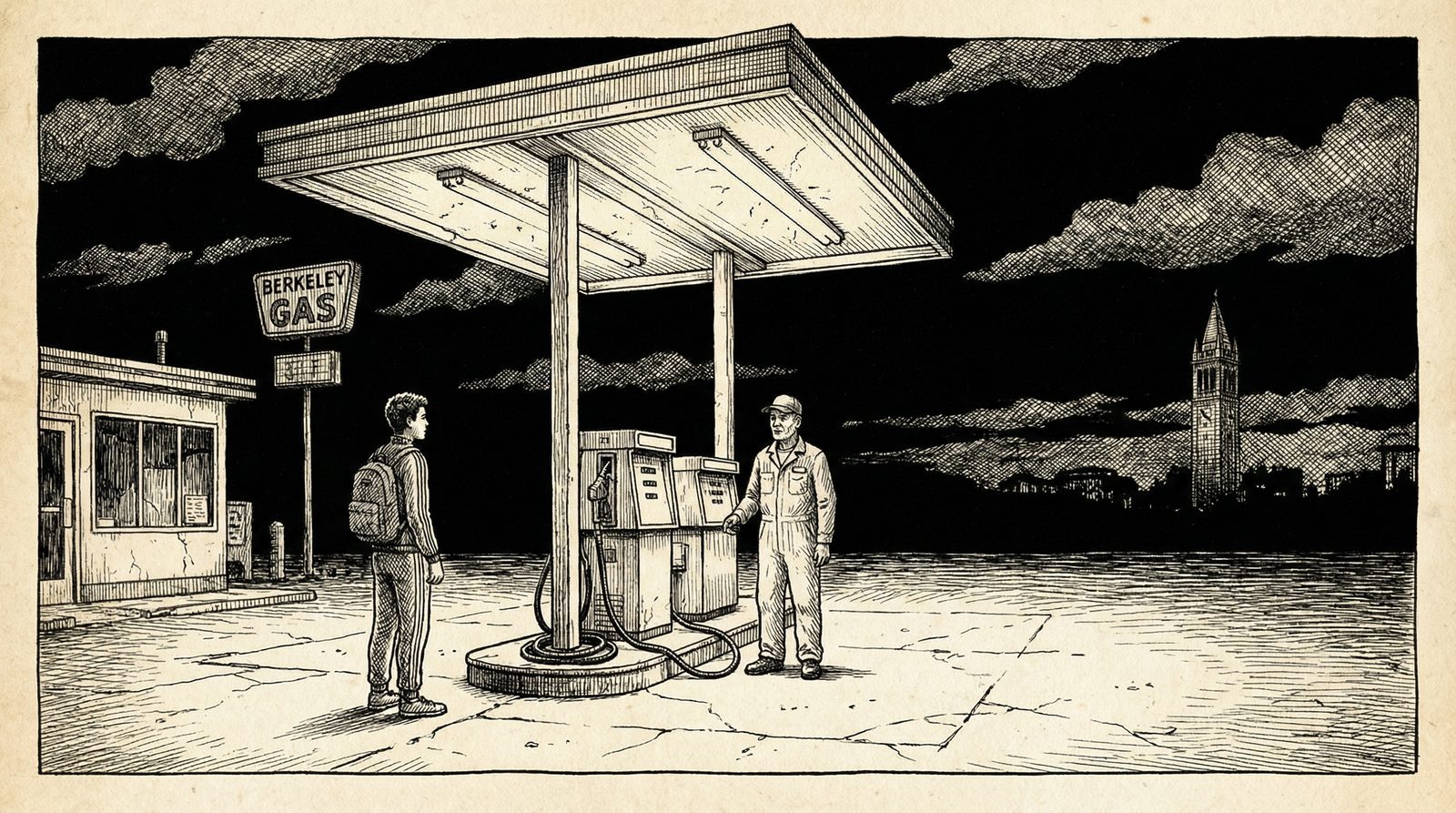
    Conceptual editorial illustration inspired by 'Way Of The Peaceful Warrior A Book That Changes Lives (1980)'

    CHARACTERS & INTERIORITY

    Dan is the classic seeker archetype. His interior monologue is crowded with comparison: against teammates, against imagined future versions of himself, against the serene ideal he projects onto Socrates. That constant self-measurement is the psychological engine of the book. We watch him resent the mentor, idolize him, then see through him — only to realize the real struggle is fear of ordinariness.

    Socrates is less a fully rounded character than a deliberately constructed mirror. He shifts from gruff mechanic to almost otherworldly presence, appearing in dreams and unlikely places. Millman still slips in humanizing details — tea in the cluttered back room, small acts of quiet service — to keep the figure from dissolving into pure symbol. Joy functions as a softer counterpoint: the teaching embodied without the mentor’s drama, a glimpse of ease Dan wants but cannot yet live.
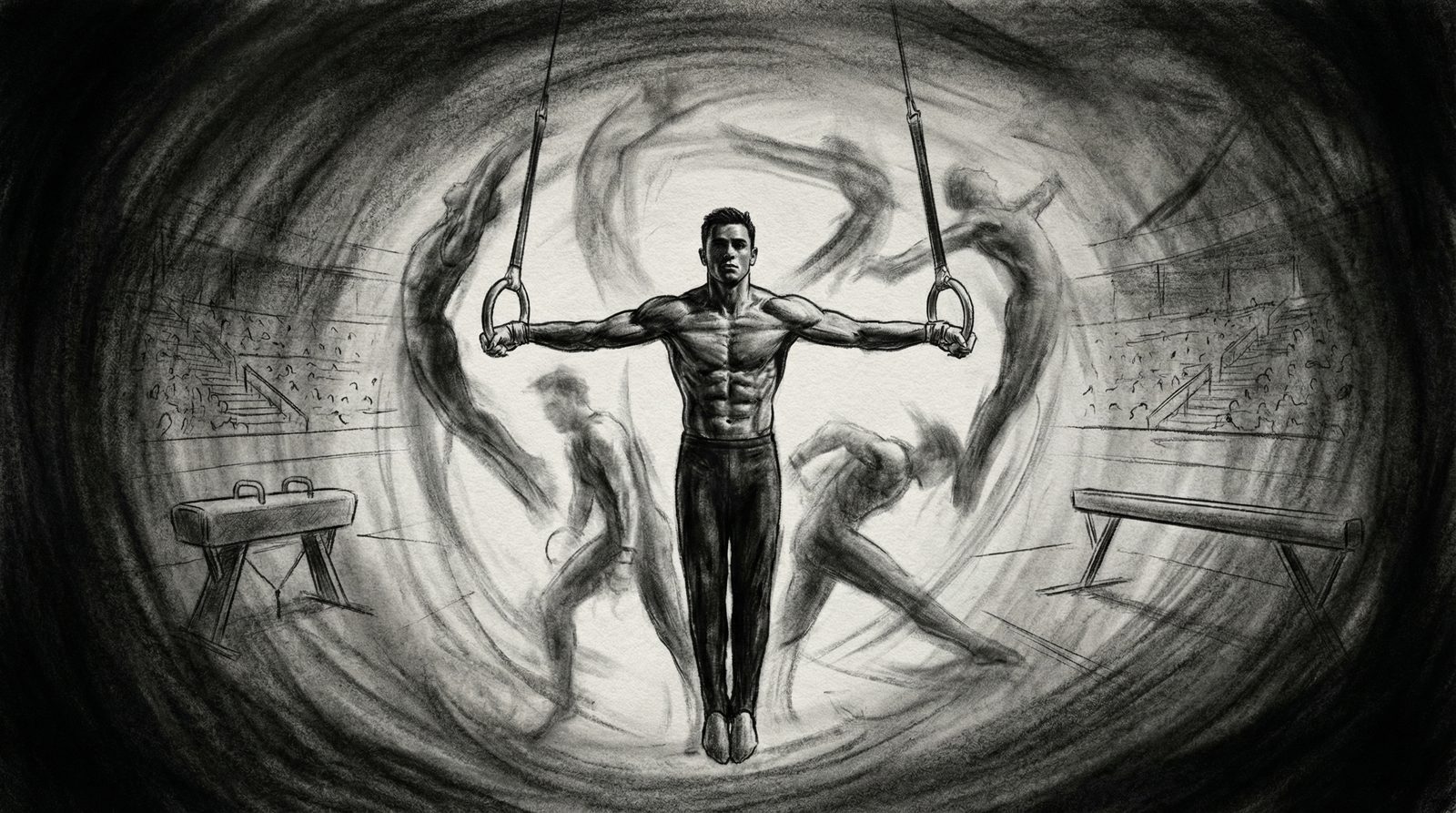
    Illustration inspired by 'Way Of The Peaceful Warrior A Book That Changes Lives (1980)'

    LEGACY & RECEPTION

    Since 1980, Way Of The Peaceful Warrior has lived a double life: modestly reviewed on release, then passed hand to hand in gyms, yoga studios, and college dorms. It occupies a similar shelf-space to other late-20th-century “mind-body” books, but with a distinctly athletic frame. The book’s continued circulation owes a lot to its refusal to end in easy victory. It offers sustained awareness rather than a career-defining moment, and that choice has made it both beloved and frustrating depending on what a reader expects.

    IS IT WORTH READING?

    It depends on your tolerance for earnestness and didactic dialogue. If you want a tightly plotted sports narrative, you’ll likely be frustrated. If you’re interested in how ambition corrodes from the inside and how a life might be rebuilt around presence rather than achievement, it still has bite. Read it not as a manual but as one flawed person’s record of stumbling toward a different way of being.

    TRIVIA & AUTHOR FACTS

    Millman draws heavily from his own background in collegiate athletics. Many readers treat Socrates as a real mentor figure filtered through spiritual allegory, and Millman has described the character as composite rather than simple reportage. The subtitle “A Book That Changes Lives” was not part of the original small-press edition and was added as the book gained a following through reissues.

    SIMILAR BOOKS

    If this resonates, you may prefer other narratives where spiritual inquiry is grounded in bodily discipline and everyday struggle. The strongest neighbors tend to share the same premise: transformation is not a vision; it’s a practice lived under pressure.

    DISCOVERABILITY & LINKS

  • The Laws Of Spirit (1995)

    The Laws Of Spirit (1995)

    INTRODUCTION

    The Laws Of Spirit (1995) by Dan Millman
    Spiritual fable · 108 pages · United States


    The Laws Of Spirit is a quiet, walking book. A nameless traveler hikes into the mountains, exhausted by the noise of late 20th-century life, and meets an ageless woman who introduces herself simply as the Sage. Over the course of a single day and night, they walk ridgelines, cross streams, and talk through ten laws that supposedly govern inner freedom. The mood is gentle but insistent, a stripped-down clarity rather than mystical fireworks.

    This is not a novel in the conventional sense. It’s a spiritual allegory that borrows the motif of pilgrimage and pares it down to two voices and a trail. Millman uses the landscape itself — wind in the pines, moon on snowmelt, the physical difficulty of footing — as a third presence, a reminder that the answers here are meant to feel elemental rather than esoteric.

    PLOT & THEMES

    The “plot” is deliberately skeletal. A hiker escapes into the mountains and meets the Sage in a high meadow. She leads him along a simple circuit through forest, river gorge, and a small lakeside town, using each stop to embody one of the ten laws: Balance, Choice, Process, Presence, Compassion, Faith, Expectation, Integrity, Action, and Surrender. The trope is familiar — wise guide leading a seeker through staged lessons — but Millman keeps the scale intimate. There are no miracles, only small, charged encounters.

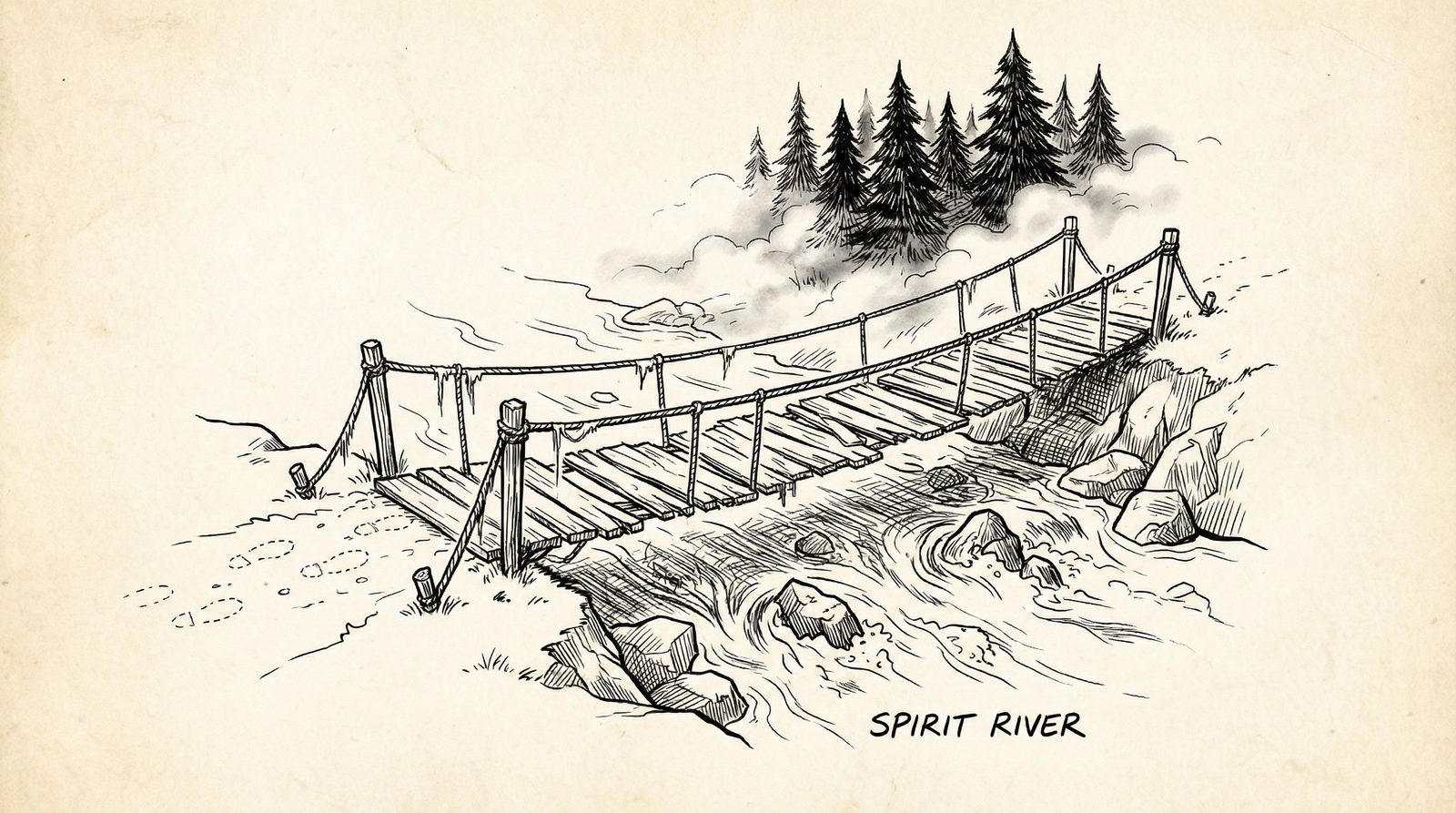
    What makes the book work is how it anchors abstraction in physical friction. A rickety bridge becomes the Law of Balance. A diner becomes the Law of Compassion without sentimentality. A fire lookout layered with decades of carved names becomes the Law of Process: lives as trace, not as finish line. The central motif is pilgrimage as inner cartography: every turn in the trail mirrors a shift in the traveler’s orientation to choice and fear.

    Unlike cosmology-heavy spiritual books, The Laws Of Spirit stays practice-forward. It frames the laws as ways of responding to layoffs, divorce, illness, and ordinary adulthood rather than as metaphysical claims you must accept. By the end, the Sage makes it explicit: the laws do not guarantee comfort; they describe how meaning can be made inside uncertainty.

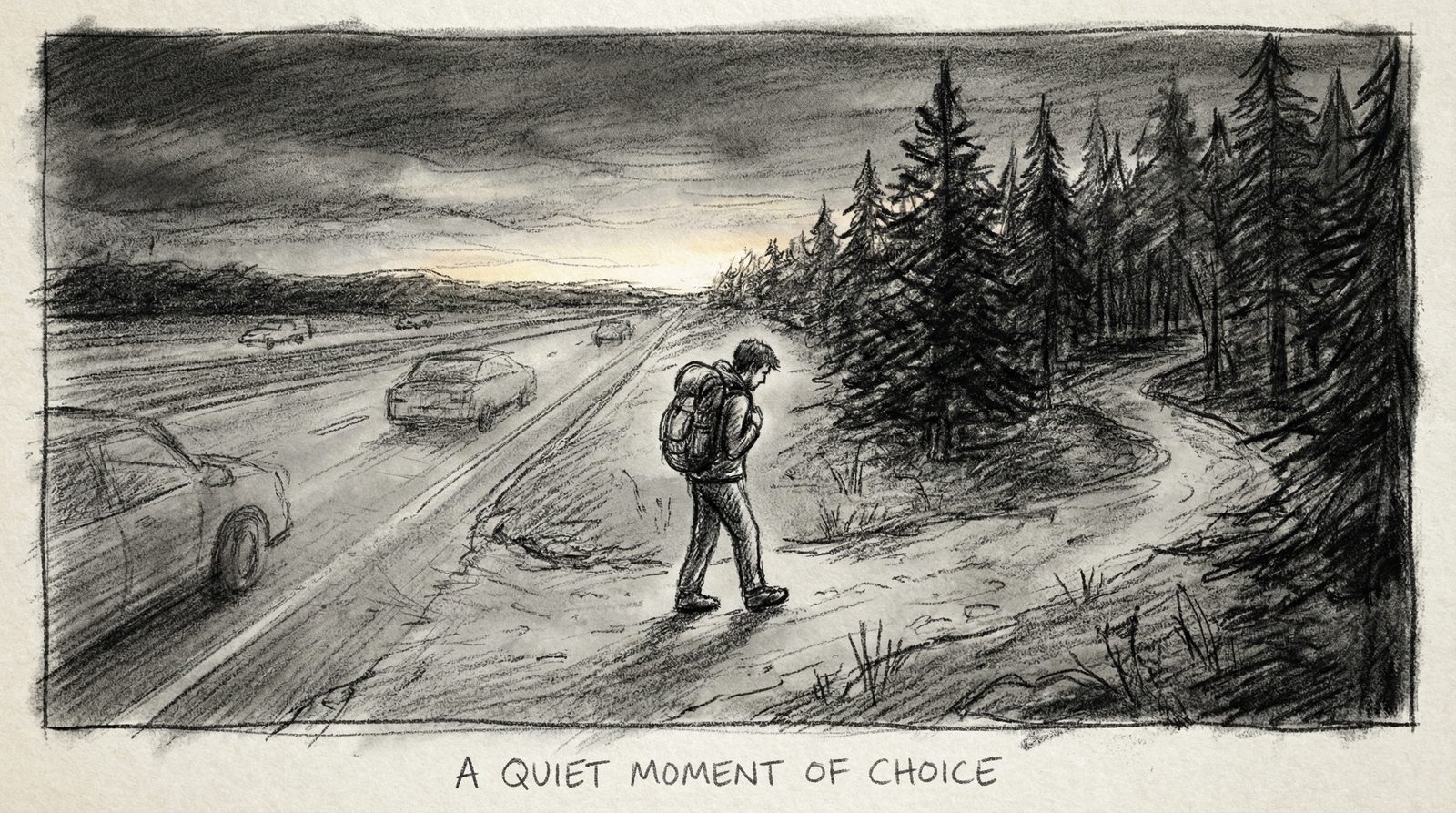
    The ending is unflashy but decisive. After a night conversation under meteor showers, the Sage walks the narrator back to the trailhead at first light and disappears into the trees without explanation. The traveler drives back toward the city, traffic thickening, repeating the Law of Action to himself and choosing to change his work and relationships rather than escaping back to the mountains again.

    PROSE & NARRATIVE STRUCTURE

    The book uses a simple frame narrative: an older narrator recalling a formative encounter years earlier. This lets Millman alternate between the immediacy of the hike and reflective distance. The prose is plainspoken and spare. Sentences are short, verbs concrete. When Presence is introduced beside a river, the description stays tactile: pine scent, bootlaces, the glint of water through branches.

    Each chapter is structured around a single law with a consistent pattern: encounter, metaphor, integration. That modular structure makes the book easy to re-enter; you can open to Integrity or Surrender and get a complete arc in miniature. The didacticism is softened by unhurried pacing and the steady return to dirt, sky, weather, and breath.

    Conceptual editorial illustration inspired by 'The Laws Of Spirit (1995)'

    CHARACTERS & INTERIORITY

    The narrator is a seeker archetype: competent enough in ordinary life but inwardly frayed. We learn scraps — a recent breakup, work that pays but feels hollow, a sense of wasted time — and his interiority is carried through resistance followed by recognition. He bristles, then admits the Sage is right. That pattern becomes the psychological rhythm of the book.

    The Sage is a classic mentor archetype with a wry, almost grandmotherly edge. She teases, contradicts herself, and occasionally uses her own impulsiveness to illustrate choice. Her backstory appears only in quick glimpses, keeping her human enough to feel present while still operating as a parable figure. Minor characters are thin but functional mirrors that force the traveler to notice reflex judgment and fear in small, everyday interactions.

    Interiority here is less about deep excavation than about catching micro-moments of choice. The book insists those moments are the true sites of transformation: not the mountaintop vision, but the second you decide how to respond.

    Illustration inspired by 'The Laws Of Spirit (1995)'

    LEGACY & RECEPTION

    The Laws Of Spirit arrived in the mid-1990s, when spiritual memoirs and parables were thick on bookstore shelves. It never reached the mass cultural saturation of blockbuster spiritual adventure, but within Millman’s readership it became a pocket companion: often handed to friends going through divorce, burnout, or a crisis of meaning. Its brevity and lack of institutional religion make it portable across belief systems, which has helped it stay quietly in circulation.

    Its ending — the Sage simply walking away and the traveler returning to traffic — is a quiet rebuke to spiritual escapism. The point is not to stay on the mountain. The point is to carry the laws into the mess of ordinary days.

    IS IT WORTH READING?

    If you’re looking for dense theology or complex plotting, no. This is closer to a long, thoughtful walk with an older friend than to a conventional narrative. Its value lies in how cleanly it frames familiar dilemmas. The structure is easy to revisit, the language accessible, and the imagery — bridges, rivers, ridgelines — simple enough to stick.

    For readers allergic to jargon but open to reflective, quietly directive prose, this slim book can land with surprising force. For others, it may feel like a gentle echo of insights they’ve already met elsewhere.

    TRIVIA & AUTHOR FACTS

    Dan Millman is best known as a former world-champion gymnast and coach who turned to writing and teaching about personal growth. The Laws Of Spirit sits mid-bibliography, after more autobiographical work and before later, more systematized teaching formats. The book’s compact length was intentional: designed to be read in one sitting or carried on an actual hike.

    SIMILAR BOOKS

    If this book resonates, you may prefer other spare, journey-based spiritual narratives where a single encounter reshapes how life is lived afterward. The closest neighbors tend to use pilgrimage and mentorship as structure, keeping spiritual insight grounded in ordinary decision-making rather than in spectacle.

    DISCOVERABILITY & LINKS

  • Zen And The Art Of Motorcycle Maintenance (1974)

    Zen And The Art Of Motorcycle Maintenance (1974)

    INTRODUCTION

    Zen and the Art of Motorcycle Maintenance (1974) by Robert M. Pirsig
    Philosophical novel · 434 pages · United States


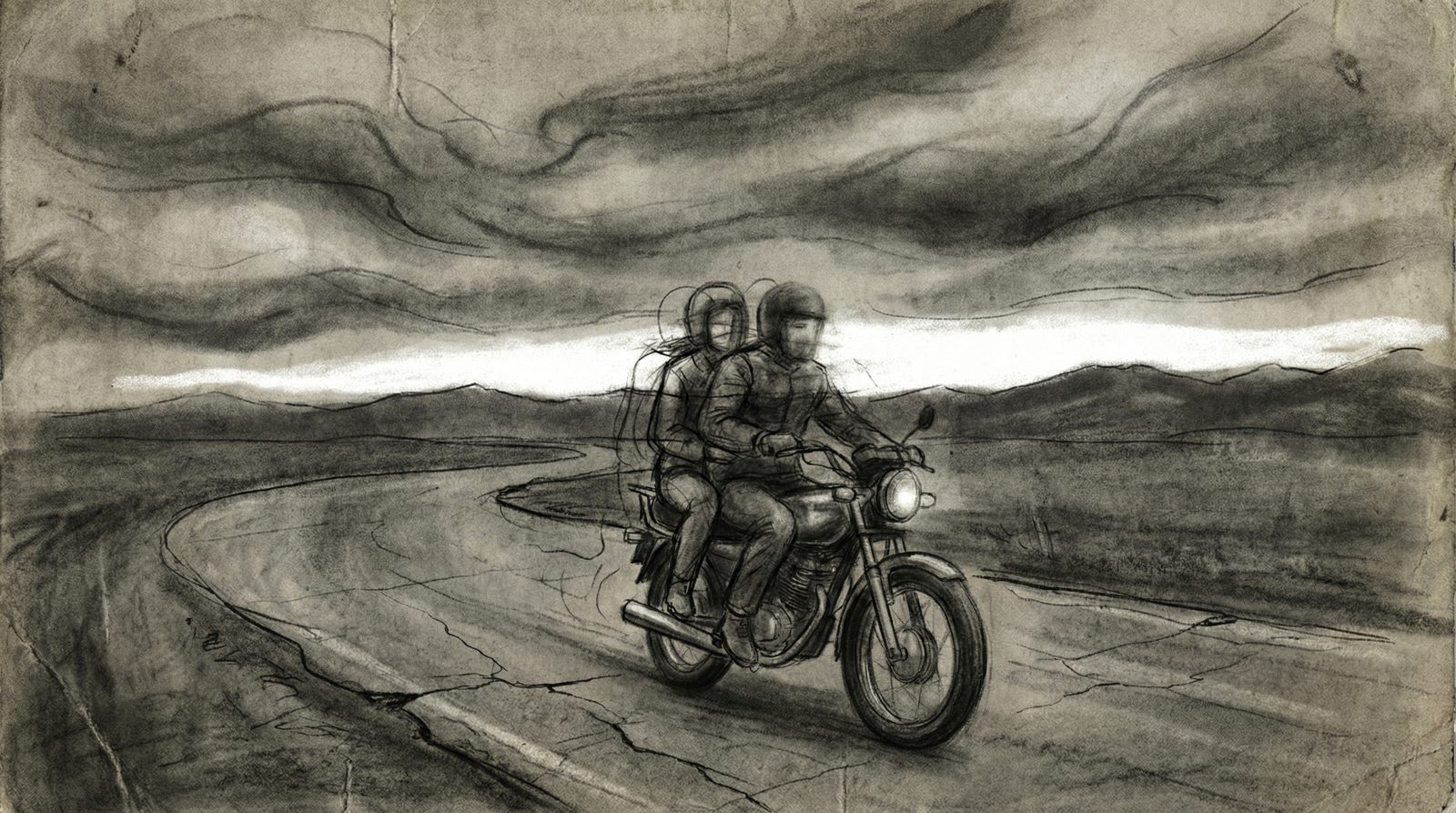
    Zen and the Art of Motorcycle Maintenance is one of those books people claim to have read when what they really remember is the title. It is not a manual and not quite a novel. It uses the open road as a frame: a father and his young son ride a Honda across the American West while, inside the father’s mind, an older self named Phaedrus keeps stirring.

    The mood is uneasy and faintly feverish. There is sun on asphalt, engine vibration, and the nagging sense that something in modern life has gone badly out of tune. Pirsig uses the motorcycle as both machine and moral mirror, asking whether sanity is possible in a culture that worships efficiency but forgets meaning.

    PLOT & THEMES

    On the surface, the plot is simple. A nameless narrator rides from Minneapolis toward the Pacific Northwest with his son, Chris. Their friends John and Sylvia Sutherland join them along the way. They cross the Dakotas, move into Montana, and eventually reach the coast. Practical lessons punctuate the ride: valve clearances, chain tension, how to listen for what an engine is trying to tell you.

    But the road trip is a decoy. The real story happens inside the narrator, where memories of Phaedrus begin to reassemble. Phaedrus was a brilliant, obsessive teacher who became consumed by the idea of “Quality.” His pursuit spiraled from intellectual argument into breakdown, ending in institutionalization and electroshock therapy. The book’s central tension is whether the narrator can live without becoming that man again, and whether the narrator can be honest about the fact that Phaedrus never entirely vanished.

    Quality becomes the book’s governing concept: a way to heal the split between classical, rational analysis and romantic, intuitive experience. Pirsig insists that the divide is not just philosophical. It is lived. It shows up in how you fix a machine, how you teach a student, how you talk to your child, and how you survive your own mind when it starts to fracture.

    By the time father and son reach the ocean, the past has broken through. In a motel room, Chris confronts his father about the gaps in their shared history and the fear that he will “go crazy again.” The narrator finally admits what he has been circling for hundreds of pages: he is Phaedrus returned, or at least the person who must now carry Phaedrus’s memories without pretending they belong to someone else. The ending is not a cure narrative. It is a fragile reconciliation, tentative and incomplete, and that incompleteness is the book’s honesty.

    PROSE & NARRATIVE STRUCTURE

    Pirsig structures the book as a braid, alternating scenes from the trip with philosophical “Chautauquas,” long improvised talks delivered directly to the reader. This technique keeps one wheel on the pavement and one in abstraction. A description of cleaning a clogged jet or adjusting ignition points can slide, almost imperceptibly, into a discussion of Plato, Aristotle, or the problem of defining value.

    The prose is plainspoken but elastic. When Pirsig writes about the high plains at dawn or rain near the mountains, there is a quiet lyricism that matches the rhythm of the road. When he writes about breakdown and “stuckness,” the tone tightens into claustrophobia. He becomes precise about the moment before a mind gives way, and about the strange relief that sometimes follows when resistance collapses.

    When he describes the motorcycle as an assemblage of functions, he is not trying to be poetic. He is trying to show that attention can be an ethic. Caring about how something works is a way of caring about the world. Neglect is not neutral. It is a posture toward life, and it spreads.

    Structurally, the argument moves in tightening spirals rather than straight lines. Each day’s ride returns to the same questions, what Quality is, whether analysis can coexist with direct experience, whether the mind can survive its own hunger for certainty. The narrative never fully resolves those questions. It stages them as a lifelong condition, something you learn to live inside rather than something you solve once.

    Conceptual editorial illustration inspired by 'Zen and the Art of Motorcycle Maintenance'

    CHARACTERS & INTERIORITY

    The narrator is an unusual seeker figure: someone who has already broken in pursuit of meaning and now circles back cautiously, wary of his own intensity. His interiority is dense. He appears as careful mechanic, anxious father, and former zealot, sometimes in the same paragraph. The split between “narrator” and “Phaedrus” is not merely a device. It is how he experiences himself, as if his own past were an alien intelligence pressing at the edge of consciousness.

    Chris is written with raw opacity. He is moody, easily hurt, sometimes exhilarated by the trip and sometimes bored. His stomach aches, his fear of abandonment, and his questions about madness carry the emotional weight the philosophy can occasionally evade. Their relationship gives the book its human stakes. You do not need to accept the metaphysics of Quality to feel the ache of a child trying to understand whether his father will remain stable.

    John and Sylvia Sutherland function as foils. John refuses to touch his own BMW’s maintenance, preferring machines to remain mysterious. Sylvia senses that something is off in the narrator’s intensity and detachment. Even minor figures, colleagues who bristle at Phaedrus’s ideas, mechanics who mishandle a bolt, serve as examples of different relationships to care, competence, and attention.

    LEGACY & RECEPTION

    Published after more than a hundred rejections, the book became an unlikely bestseller. It caught a particular American restlessness: the desire for meaning without rejecting technology, the craving for transcendence without surrendering craftsmanship. Engineers saw their pride in workmanship honored. Philosophers argued over whether the “Metaphysics of Quality” was rigorous or naïve. Ordinary readers simply recognized the feeling of being out of tune with modern life and wanting to repair the instrument from the inside.

    Its ending has remained central to its reputation. The father and son bond is only tentatively restored. The narrator accepts that the intensity that once destroyed his life is also bound up with his deepest insight, and that Chris may have inherited some of that dangerous voltage. The unresolved tension between sanity and vision is why the book keeps returning. It refuses to become a tidy inspirational story.

    IS IT WORTH READING?

    This is not a quick read, and it does not pretend to be. If you want a straightforward plot, you will get impatient. If you are willing to sit with long arguments about Quality intercut with roadside coffee and carburetor details, you may find it oddly absorbing.

    Its blind spots are real. The density can feel relentless, and the philosophical passages can occasionally flatten the emotional life around them. Still, the book offers something rare: a serious attempt to think through how to live well in a world of machines without worshiping them and without fleeing from them. If that tension already lives inside you, the ride is worth taking.

    Illustration inspired by a core idea from 'Zen and the Art of Motorcycle Maintenance'

    TRIVIA & AUTHOR FACTS

    Pirsig reportedly received more than 120 rejections before a publisher took a chance on the manuscript. He worked as a technical writer and teacher, and his familiarity with manuals and lab-report precision shapes the maintenance scenes. The “Chautauqua” framing nods to the American tradition of traveling lectures, repurposed here for the highway era.

    The narrator’s Honda is based on Pirsig’s own machine, and many of the mechanical details reflect lived experience rather than symbolic decoration. After the book’s success, Pirsig largely withdrew from public life, publishing one later philosophical novel and resisting the role of guru. That reluctance fits the book’s suspicion of any fixed system, including its own.

    SIMILAR BOOKS

    If this blend of narrative and inquiry works for you, Lila extends Pirsig’s ideas into a different journey. Readers drawn to spiritual searching and interior crisis often find kinship with Siddhartha. For a more chaotic portrait of American seeking, The Electric Kool-Aid Acid Test offers an opposite energy. And for a grounded nonfiction meditation on manual work and meaning, Shop Class as Soulcraft can feel like a distant cousin to Pirsig’s long ride west.

    DISCOVERABILITY & LINKS

    DISCOVERABILITY & LINKS

  • The Tenth Insight (1996)

    The Tenth Insight (1996)

    INTRODUCTION

    The Tenth Insight (1996) by James Redfield
    Spiritual fiction · 236 pages · United States


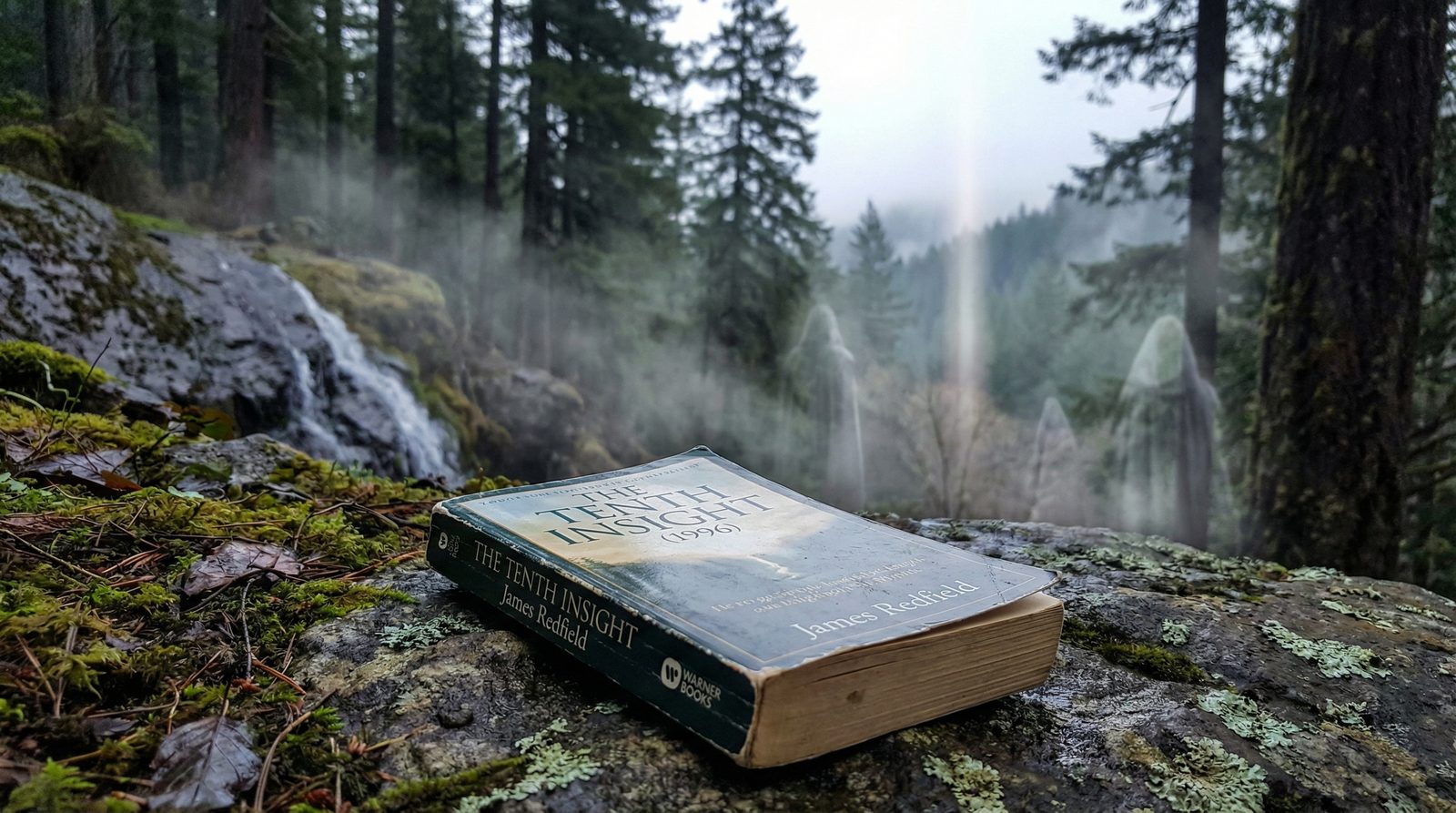
    The Tenth Insight arrives as both sequel and escalation. Where The Celestine Prophecy moved through Peruvian jungle myth and social tension, this book shifts into a colder, more haunted register. Much of it unfolds in a remote Appalachian valley where fog, ruined cabins, and forgotten logging roads create a mood of unfinished business.

    The emotional tone is hushed urgency. The novel insists that private choices carry historical weight, that a personal awakening can brush against war memory, corporate greed, and environmental collapse. Redfield is not subtle about his intention. This is not conventional fiction so much as a spiritual field report disguised as an adventure story. It asks the reader to treat intuition as seriously as physical survival.

    PLOT & THEMES

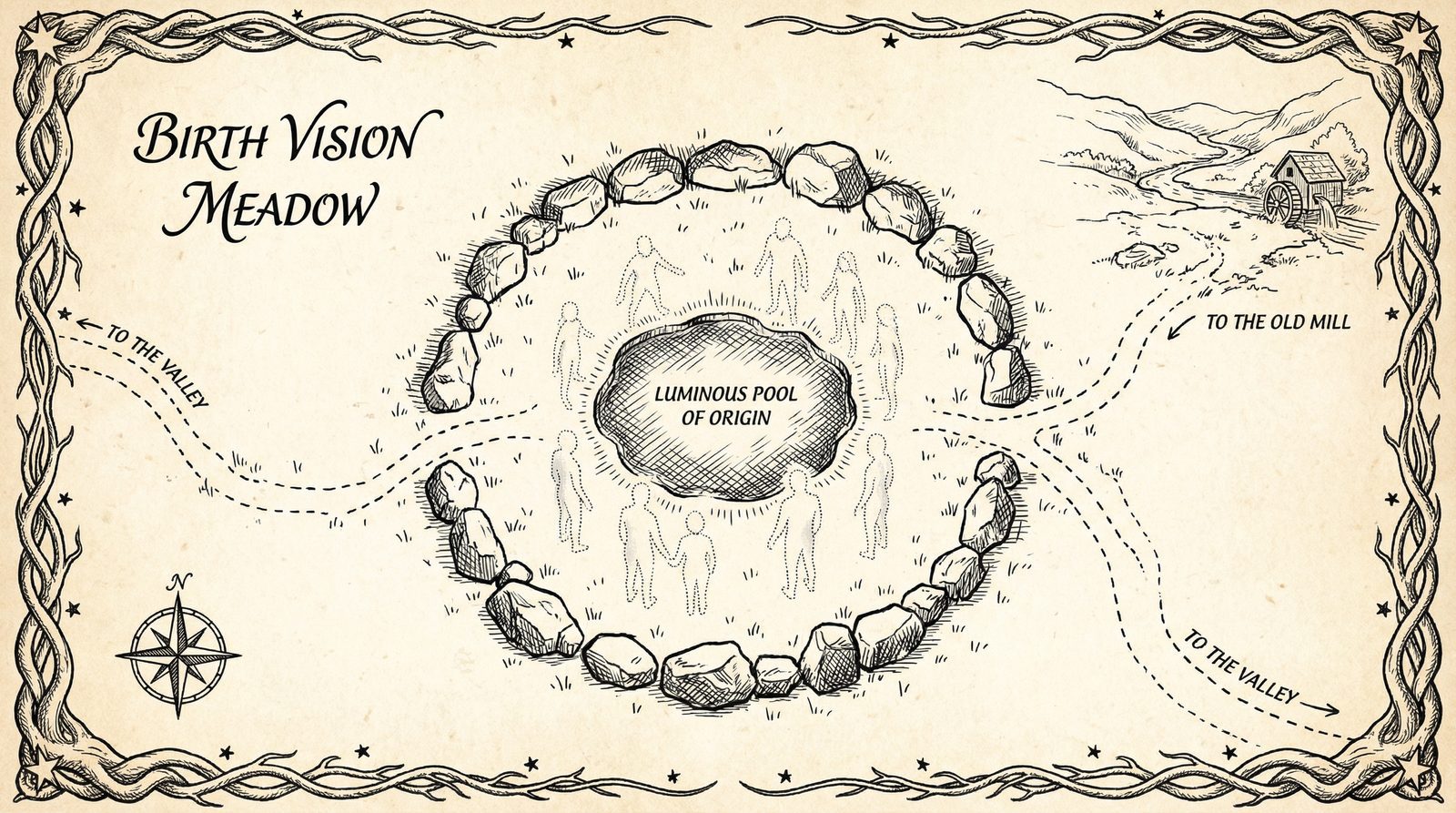
    The story begins when the unnamed narrator returns to the valley from the earlier book, searching for his missing friend Charlene. The setting is presented as a liminal zone where physical and spiritual realities overlap. He encounters Feyman, a young boy with fragmented memories of a pre-birth vision, and Wil, a bitter war veteran trapped in a kind of spiritual numbness.

    The quest structure is straightforward. The narrator follows clues through the valley, meets guides who clarify the metaphysics, and repeatedly crosses into altered states where memory and spirit become tangible. What matters is less the suspense than the framework the book builds: life is not random, suffering is not meaningless, and fear distorts the intentions we supposedly chose before we arrived.

    The central idea is the “birth vision”: the notion that souls choose parents, challenges, and historical eras before incarnation. Through life reviews and glimpses of an afterlife dimension, the narrator witnesses souls preparing for their lives and then watching how those intentions are warped by anxiety, resentment, and control dramas once embodied. The metaphysics are explicit. Redfield wants the reader to see personal psychology and social crisis as part of the same energetic chain.

    That chain is anchored to something concrete. The valley is threatened by an energy project tied to corporate interests, linking spiritual stakes to environmental activism. The climax is not an abstract “ascension” but a confrontation with fear itself. Charlene is found at the edge of leaving life behind, and the resolution hinges on recommitment: choosing to stay incarnate, to keep working inside the imperfect world rather than escaping it.

    Like the earlier book, the novel suggests humanity is on a threshold. But it refuses a clean apocalypse or a clean salvation. The future remains open. The point is practice, not fireworks.

    PROSE & NARRATIVE STRUCTURE

    Redfield’s prose is functional and deliberately geared toward instruction. Action scenes often pause so a guide figure can explain the mechanics of synchronicity, soul memory, and the energetic consequences of fear. It can feel schematic, but the clarity matches the book’s purpose. It wants to be applied, not merely admired.

    Structurally, the novel alternates between physical movement through the valley and excursions into an afterlife dimension. Transitions are triggered by attention and bodily sensation: a chill, pressure in the forehead, a sudden pull toward a memory. These shifts are abrupt on the page, yet they are designed to normalize the book’s premise that boundaries between worlds are thin.

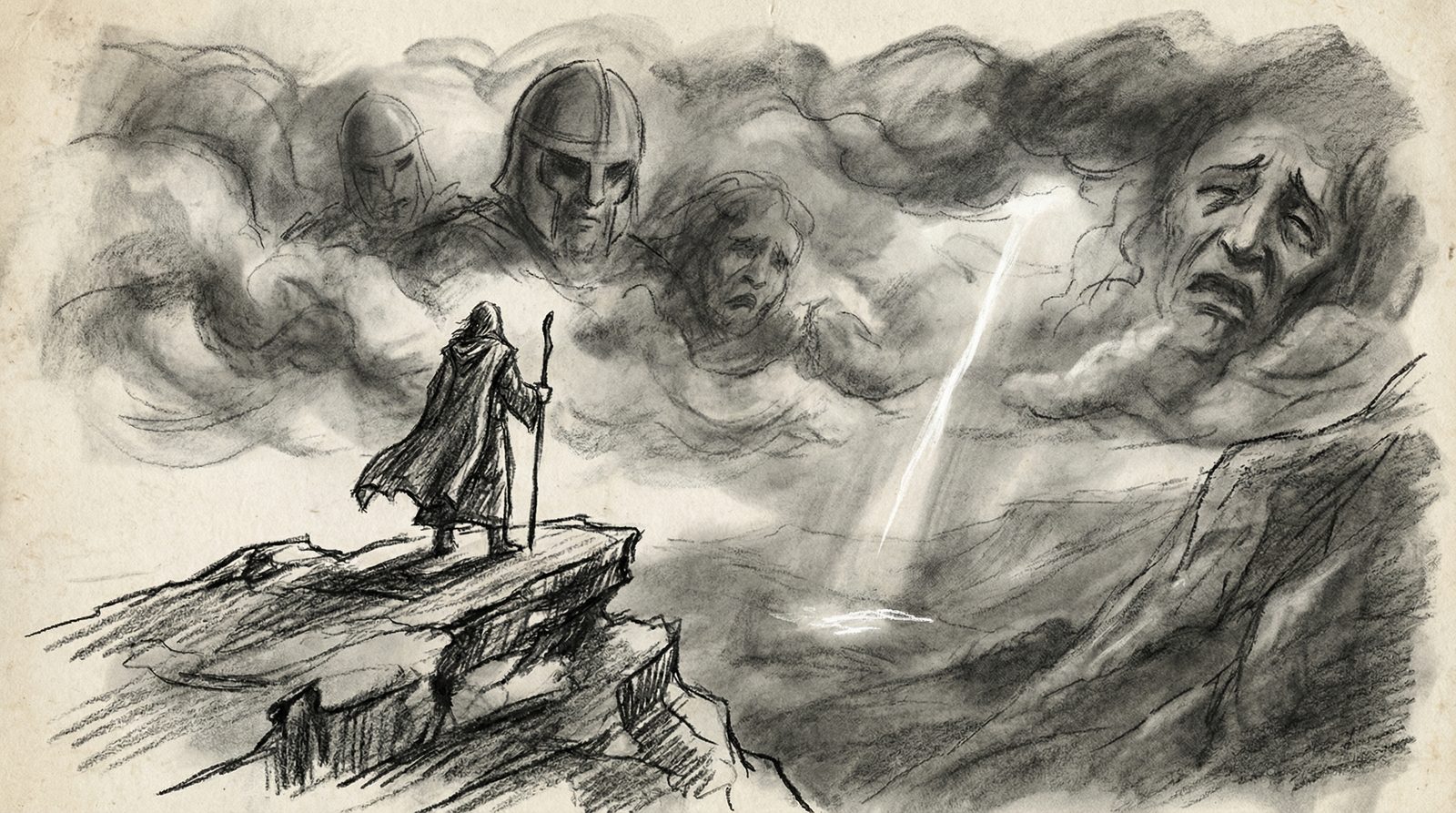
    The most effective passages are the panoramic “world vision” sequences, where the narrator sees human history as a field shaped by collective intention. Industry, war, and ecological collapse are framed as outcomes of accumulated fear. Whether you accept that claim or not, the structure briefly clicks into place. The metaphysical scenes are not escapist fantasies. They are Redfield’s way of forcing moral responsibility onto the reader.

    When the language lands, it does so through simple sensory hooks: light rising from the valley floor, resentment described as a sticky grey aura, trauma replaying like a looped film. The book’s strongest instinct is always the same: abstract belief must be given a texture you can picture.

    Conceptual editorial illustration inspired by 'The Tenth Insight'

    CHARACTERS & INTERIORITY

    Characterization is intentionally archetypal. The narrator is defined less by biography than by openness to guidance. Charlene is the resistant seeker, intellectually skeptical but intuitively sensitive. Wil embodies unresolved war trauma, a man whose fear and guilt have hardened into a spiritual paralysis.

    The minor characters do much of the emotional work. Feyman’s insistence that he chose his troubled father gives the metaphysics a raw edge, because it drags the theory into the realm of family pain. Several figures who first appear as obstacles or officials gradually reveal their own half-conscious connection to the valley’s larger pattern.

    Interior life is mostly handled through shared visions rather than subtle psychological shading. When the narrator is pulled into another person’s memory, we are literally inside their fear. This can flatten nuance, with trauma sometimes “resolved” quickly by a single insight. Still, the method is consistent with the book’s claim that consciousness is not private property. The emotional through-line is fear turning into responsibility, and responsibility turning into recommitment.

    LEGACY & RECEPTION

    Published after the runaway success of The Celestine Prophecy, this sequel appealed most to readers who wanted more cosmology and less jungle chase. Some embraced the expansion into pre-birth planning, soul groups, and collective intention. Others found the didactic dialogue heavy and the characters too thin to carry the metaphysical weight.

    Its most durable contribution is the popularization of the “birth vision” idea and its linkage to social change. The book frames environmental activism and historical responsibility as spiritual tasks, not political hobbies. Whether one reads that as inspiring or simplistic, it explains why the novel has stayed alive as a hopeful myth: not transcendence as escape, but awakening as a reason to stay.

    IS IT WORTH READING?

    It is worth reading if you are open to narrative as a vehicle for metaphysical speculation. As a novel, it is uneven. As a framework, it is unusually coherent for the genre. The Appalachian setting gives the ideas physical grounding, and the war memory material adds a darker emotional register than the first book.

    If you want deep character realism, look elsewhere. If you want a story that asks, with complete seriousness, why you might have chosen this life, this era, and these fears, the book still has force.

    Illustration inspired by a core idea from 'The Tenth Insight'

    TRIVIA & AUTHOR FACTS

    Redfield wrote this novel after the unexpected commercial success of his earlier spiritual adventure, leaning more openly into his background in counseling and his interest in both Eastern and Western mysticism. Many of the concepts here, especially soul groups and pre-birth planning, were also discussed in workshops and reader circles around the first book.

    Some editions include the subtitle “Holding the Vision,” which reflects the book’s emphasis on collective focus as a driver of outcomes. The “control drama” concept introduced earlier returns in expanded form, pushed into an explicitly spiritual dimension where fear takes on a more literal, confrontable shape.

    SIMILAR BOOKS

    If this blend of spiritual instruction and story appeals to you, consider Siddhartha for a more literary meditation on awakening, Jonathan Livingston Seagull for a compressed fable of self-mastery, or The Alchemist for a symbolic, parable-style exploration of omens and purpose. Each treats inner experience as a force that shapes outward life, even when their tones and ambitions differ.

    DISCOVERABILITY & LINKS

  • The Pilgrimage (1987)

    The Pilgrimage (1987)

    INTRODUCTION

    The Pilgrimage (1987) by Paulo Coelho
    Spiritual fiction · 276 pages · Spain


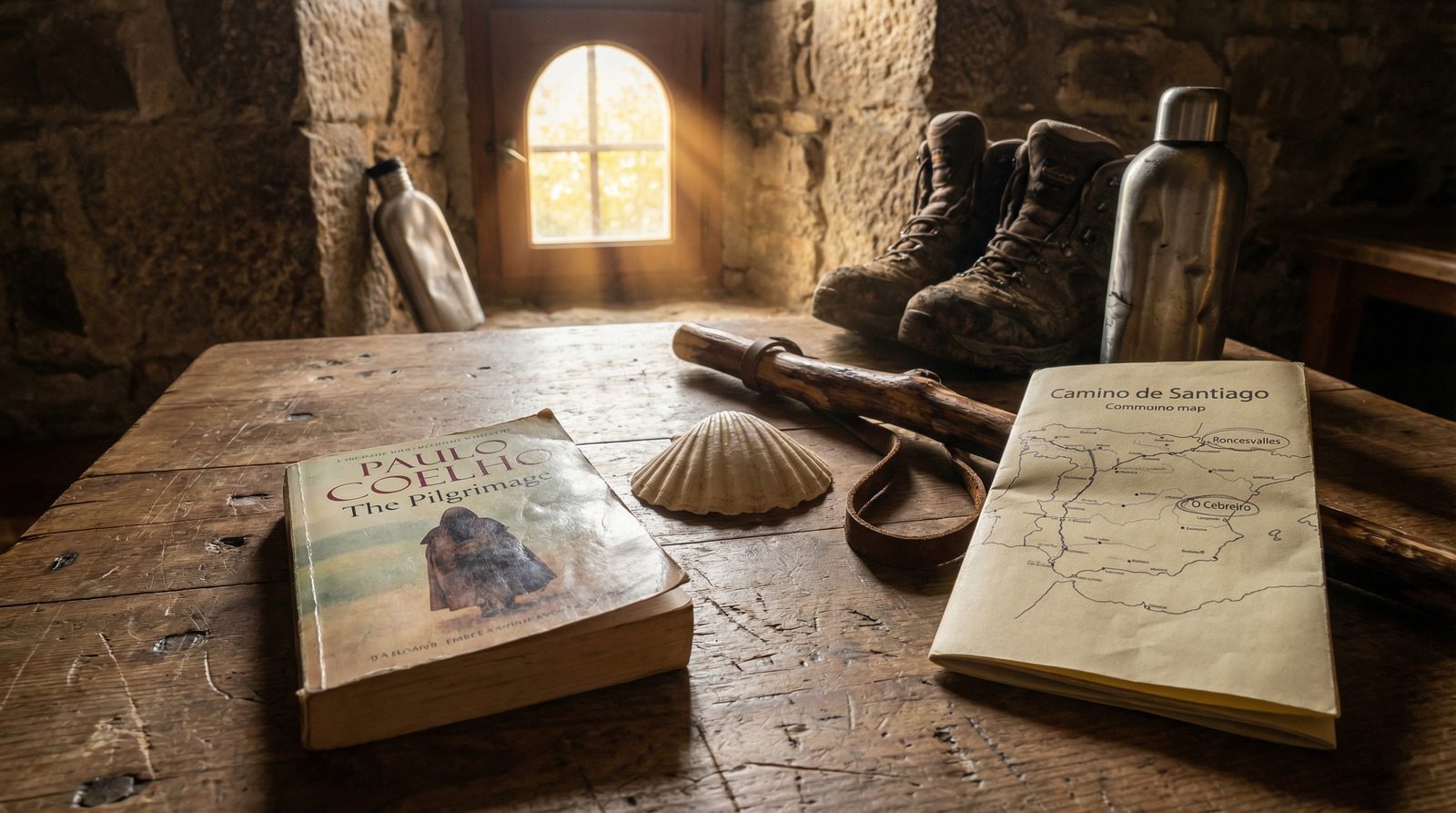
    The Pilgrimage is Coelho before The Alchemist turned him into a global brand. Set along the Camino de Santiago in late twentieth-century Spain, it follows “Paulo” as he walks toward Compostela under the stern guidance of his master, Petrus. What begins as a journey across Spain becomes a chain of humiliations, occult drills, and small, piercing moments of clarity.

    The road works as an inner mirror. Crowded streets, empty stretches of the Meseta, and awkward encounters with strangers become tests of vanity, fear, and attention. The tone is restless and self-critical. This is a spiritual quest narrative that keeps tripping over ego, and that is exactly where it becomes interesting.

    PLOT & THEMES

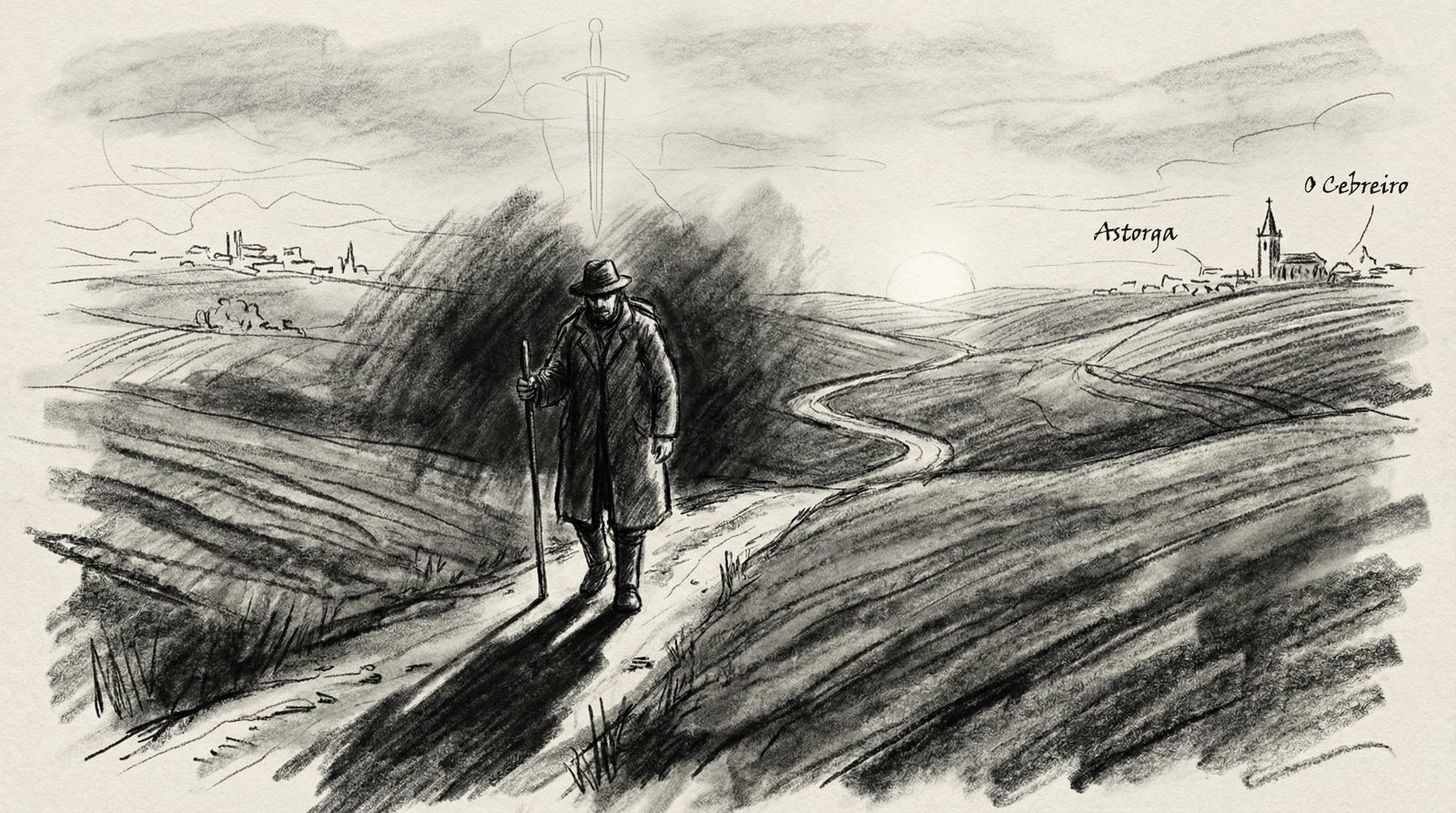
    The plot is disarmingly simple. Paulo has failed an initiation within his esoteric order, RAM, and must walk the Camino to recover a lost sword that symbolizes spiritual authority. Petrus leads him from town to town, and the journey becomes a sequence of exercises that look, at first glance, like New Age party tricks. In practice they function as slow, stubborn methods for stripping pride and building discipline.

    Several rituals recur in the reader’s memory the way blisters do after a long day of walking. The Seed Exercise asks Paulo to imagine himself buried in darkness before growth. The Speed Exercise forces him to walk excruciatingly slowly while everyone else rushes past. The point is not power. The point is humiliation as instruction, and attention as the only real “skill” being trained.

    The book uses the familiar pilgrimage framework but keeps undercutting the heroic arc. Paulo becomes jealous of a dog, terrified by a madman near a ruined village, and nearly seduced off the path by an encounter that reads like temptation made flesh. The sword remains present as an absence: a symbol of authority that Paulo wants to possess, but does not yet deserve. Themes of obedience, everyday miracles, and spiritual pride run through the journey, but Coelho insists that the holy is found in missed buses, bad wine, aching feet, and arguments with the guide.

    The ending is resolutely uncinematic. Near the end of the Camino, Paulo is forced into a confrontation that feels like a ritualized fight with fear itself. Only after that does Petrus reveal the sword, and the revelation is almost wry: it has been near Paulo all along. The final lesson is not that Santiago grants miracles. It is that practice must continue. The journey is not completed once. It repeats, in different forms, for the rest of a life.

    PROSE & NARRATIVE STRUCTURE

    The book is written as first-person memoir, and that choice matters. Paulo is not an omniscient sage looking back with smug clarity. He is defensive, hungry for approval, and frequently irritated by his teacher. The sentences are short and blunt, and the rhythm can feel awkward until you realize it mirrors the act of walking: repetition, fatigue, and sudden flashes of lucidity.

    Episodes are arranged as parables rather than as a tightly plotted arc. Each town offers a new exercise, a new failure, and a new fragment of insight. Coelho also includes manual-like sections that explain practices directly. This interrupts the narrative spell, but it clarifies the book’s ambition: it wants to be used, not merely read.

    Structurally, the memoir circles back on itself. The opening failure in Brazil is mirrored by Paulo’s near-failure at the end, creating a loop rather than a straight line. The Camino becomes less a path across Spain than a track inside Paulo’s mind, where the same fears return until they are finally faced without performance.

    Conceptual editorial illustration inspired by 'The Pilgrimage'

    CHARACTERS & INTERIORITY

    Paulo is a seeker figure stripped of glamour. He is vain about spiritual rank, sulky when Petrus withholds praise, and occasionally cruel in his private judgments of other pilgrims. This imperfection gives the spiritual material friction. We are not watching a saint in the making. We are watching a person wrestling with the desire for meaning and the desire for status, and trying to pretend they are the same thing.

    Petrus is a trickster mentor who alternates tenderness with mockery. He engineers situations that feel pointless or humiliating, because humiliation is the tool. Minor figures appear briefly but function as mirrors: the pilgrim who quits after losing a bag, the farmer who explains an exercise without mysticism, the stranger who passes Paulo effortlessly, reminding him that pride is often just a story told to cover weakness.

    Interior life is the book’s real arena. Paulo’s obsessive self-monitoring can be exhausting, but it is also the most honest part of the memoir. The drama is not the landscape. It is the mind trying to keep control of the story while the walk keeps undoing it.

    LEGACY & RECEPTION

    In hindsight, this book is often read as the seed of Coelho’s later work. Where The Alchemist turns the quest into a smooth fable, The Pilgrimage keeps the blisters and the awkward pauses. It helped popularize the Camino de Santiago for readers who had never heard of Compostela, and it contributed to the late twentieth-century boom in spiritual memoirs that treat personal crisis as narrative engine.

    Reception has always been split. Some dismiss it as occult tourism. Others value its willingness to show spiritual vanity and failure without disguising them as wisdom. The ending, with the sword revealed in an ordinary field rather than inside a cathedral, has aged well. It refuses the fantasy that holiness lives in famous buildings. The climax is internal: authority is conditional, dependent on ongoing practice, and never finally earned.

    IS IT WORTH READING?

    If you want a polished parable with all rough edges sanded off, this is not it. The memoir is uneven, occasionally naïve, and sometimes embarrassing. That is also why it works. The mix of ritual, Catholic imagery, and blunt self-critique feels like a real person groping toward meaning rather than a guru dispensing aphorisms.

    Readers interested in spiritual practice, in the psychology of faith, or in the Camino as lived from the inside will find plenty to chew on. If you have no patience for mysticism, the book may grate. But as a portrait of stubborn searching, it remains strangely compelling.

    Illustration inspired by a core idea from 'The Pilgrimage'

    TRIVIA & AUTHOR FACTS

    Coelho did walk the Camino de Santiago in the 1980s after a turbulent period that included time in a mental institution and years working as a lyricist in Brazil. The order RAM is presented as real but partially fictionalized and deliberately obscured. The exercises described, including the Seed Exercise and the Blue Sphere Exercise, are framed as practices he claims to have done rather than as invented fantasy.

    The book was first published in Portuguese as O Diário de um Mago (“Diary of a Magus”), emphasizing the occult angle more than the walking-tour aspect. The manual-like appendix has inspired informal study circles and solitary readers who treat the book as a workbook as much as a narrative.

    SIMILAR BOOKS

    If this blend of outer travel and inner upheaval appeals to you, Siddhartha offers a more distilled spiritual journey, while Wild turns the walk into a contemporary reckoning with grief and self. Readers drawn to the Christian mystical angle may also find resonance in conversion narratives like The Seven Storey Mountain, where the road is traded for a monastery but the hunger for transformation remains.

    DISCOVERABILITY & LINKS