
Archetype: Seeker

  • The Celestine Prophecy (2006)

    The Celestine Prophecy (2006)

    The Celestine Prophecy (2006) directed by Armand Mastroianni. Spiritual drama · 99 minutes · United States. Released April 21, 2006.


    INTRODUCTION

    The Celestine Prophecy (2006) is a spiritual drama adapted from James Redfield’s bestselling novel, attempting to turn a sequence of New Age ideas into a cinematic journey. The film’s defining quality is its “illustrated lecture” structure: scenes exist primarily to deliver concepts about intuition, “energy,” and meaningful coincidence, with Peru framed as a contemplative backdrop even when the script sprinkles in gunmen and chase beats.

    The mood stays calm and meditative more often than suspenseful. For viewers who want a visual companion to the book’s worldview, that steadiness can feel like a guided workshop in narrative form. For viewers expecting a thriller with spiritual seasoning, the same steadiness can feel like the movie is constantly interrupting itself to explain what it means.

    PLOT & THEMES

    The plot follows John, a disillusioned schoolteacher, who is pulled toward Peru through a chain of coincidences that the film treats as evidence rather than convenience. He learns of an ancient manuscript describing Nine Insights about human evolution and spiritual perception. The story is structured as a staircase of lessons: each new guide introduces an Insight, John absorbs it, and the narrative advances to the next checkpoint.

    The film’s main themes are spiritual awakening and the tension between control and surrender. Synchronicity functions as plot armor and worldview proof at the same time: John’s “progress” depends less on tactics than on alignment, attention, and willingness to be guided. The journey itself is the inner transformation. Physical movement through jungle ruins is mainly there to keep the teaching structure in motion.

    There is also a mild institutional critique. Authority figures—religious, military, corporate—are framed as forces that fear the manuscript because it loosens control. This conflict exists mostly to provide pressure between lessons; the real escalation is conceptual. The script doesn’t raise stakes by deepening danger so much as by deepening explanation, which is exactly why the film feels more like instruction than suspense.

    CINEMATIC TECHNIQUE & AESTHETICS

    Mastroianni leans hard on natural lighting and wide location framing to create an atmosphere of sanctuary. The Peruvian setting is photographed with stillness in mind, which produces a tonal friction: the camera wants contemplation even when the plot wants urgency. That mismatch is one reason the film’s action beats can feel airy or weightless.

    The movie uses voiceover frequently as a safety net, compressing and clarifying the Nine Insights so the “lesson” does not get lost. Dialogue scenes tend to be staged in simple two-shots with minimal blocking, prioritizing clarity of speech over visual dynamism. When the script turns to “energy fields,” the film uses soft-focus glow and restrained effects that suggest metaphor more than physics.

    Editing remains unhurried. The rhythm favors conversation and reflection, which supports the film’s instructional goals but weakens conventional tension. The overall experience is closer to a filmed retreat session than a genre adventure, and the film’s success depends on whether a viewer wants that.
    Editorial illustration inspired by 'The Celestine Prophecy (2006)'

    CHARACTERS & PERFORMANCE

    John is built as a Seeker archetype: decent, skeptical, and primed for change. The performance is intentionally low-key, keeping him receptive rather than commanding. That passivity fits the film’s worldview—follow the signs—but it can make the protagonist feel more like a viewpoint character than a driver of events.

    Supporting characters arrive as functional archetypes: mentors who deliver each Insight, skeptics who voice audience resistance, and authority figures who represent control. Performances stay calm and seminar-like, even in danger. This helps preserve the film’s meditative feel, but it also flattens suspense because characters rarely behave like people who believe they might die.

    CONTEXT & LEGACY

    The core challenge of this adaptation is structural. The novel’s appeal is idea-first revelation: readers can linger inside interior “insights” without needing behavior to carry them. Film is less forgiving. Here, the adaptation chooses doctrinal fidelity over cinematic transformation, leaning into explanation even when that reduces drama.

    Commercially, the film failed to convert the book’s massive readership into a mainstream movie audience, and it became a cautionary example of how difficult it is to adapt a didactic self-help narrative without either turning it into a sermon or betraying its point. Its lasting impact is mostly within spiritual/self-help circles, where it continues to function as a reference object for synchronicity language and “energy” framing rather than as a widely admired piece of cinema.

    IS IT WORTH WATCHING?

    It depends on what you want. If you’re already invested in Redfield’s worldview, the film can work as a calm, visual companion piece, giving landscape and faces to ideas you may have first encountered on the page.

    If you’re looking for a gripping adventure or a spiritually themed thriller, it will likely disappoint. The jungle setting and chases are secondary. The primary experience is listening to a worldview explained repeatedly, with the story serving as delivery mechanism.

    Symbolic illustration inspired by 'The Celestine Prophecy (2006)'

    TRIVIA & PRODUCTION NOTES

    The film was produced with direct involvement from James Redfield, which helps explain its fidelity to the terminology and teaching structure of the novel. Much of the dialogue about the Nine Insights is close to the book’s wording, prioritizing doctrinal clarity over naturalistic speech.

    Depicting invisible “energy” on a modest budget led to soft, restrained visual choices: glow, bloom, and subtle aura-like effects rather than heavy CGI. Voiceover is used to tie together the episodic lesson structure and keep the didactic spine explicit.

    SIMILAR FILMS

    If you respond to the film as a spiritual-journey object rather than a thriller, you may prefer other works where travel and encounter produce gradual inner change. In this site’s current cluster, the closest neighbors are films that treat movement as moral pressure rather than spectacle.

    DISCOVERABILITY & LINKS

  • Neale Donald Walsch

    Neale Donald Walsch

    ORIGINS & BACKGROUND

    Neale Donald Walsch is best known as a contemporary spiritual writer whose work sits at the crossroads of memoir, theology, and personal growth. He emerged in the 1990s in the same broad wave of spiritual publishing that brought readers books like The Celestine Prophecy and The Alchemist. His signature move is to present spirituality as an ongoing, candid conversation rather than a fixed set of doctrines, which made him a major reference point in modern New Age and personal transformation circles.

    The public origin story of Walsch’s career begins in crisis. Before he became widely known as a spiritual author, he cycled through ordinary jobs, personal setbacks, and a period of homelessness that left him angry and disillusioned. Out of that low point, he describes writing an anguished letter to God and unexpectedly experiencing a flowing, dialogic response. That experience became the seed of Conversations With God: An Uncommon Dialogue, Book 1, the work that would define his career.

    Walsch writes as someone raised within conventional Western religious ideas but no longer satisfied with inherited beliefs. His background is less about formal theological training and more about lived frustration with institutions, work, and relationships. That tension—between traditional religion and direct experience—is central to his books. It places him alongside writers like Dan Millman and Don Miguel Ruiz, where the emphasis shifts from belonging to a church toward cultivating a personal relationship with the divine.

    Rather than positioning himself as a guru, Walsch frames his life as a case study in spiritual trial and error. Failure and collapse become narrative proof that the later insights are not abstract theories but hard-won realizations. This biographical framing underlines his recurring themes of personal transformation, direct dialogue with God, and the idea that crisis itself can function as invitation.

    Editorial illustration inspired by 'Neale Donald Walsch'

    THEMES & MOTIFS

    The defining motif in Walsch’s work is direct dialogue with the divine. Rather than presenting God as distant or unreachable, he portrays the divine as conversational and accessible, willing to engage in plain language about money, relationships, fear, sex, politics, and everyday frustration. The dialogue format is not only a narrative choice; it is the claim that spiritual access is immediate, personal, and available in ordinary life.

    A second recurring thread is spiritual questioning. Walsch treats doubt, anger, and confusion as legitimate starting points rather than signs of failure. His narrator argues, pushes back, and admits resistance, and the text frames this conflict as part of the path. The effect is less a tidy lesson and more a sustained conversation where beliefs are revised in motion.

    Personal transformation runs through everything. Walsch’s books trace a movement from victim consciousness toward intentional co-creation. The idea that thoughts, beliefs, and choices shape experience echoes the broader New Age movement, but Walsch’s method is intimate: the spiritual material is tested against bills, grief, failed relationships, and daily shame rather than staged as mythic adventure.

    Another motif is everyday spirituality. Walsch repeatedly insists that spirituality is not confined to churches, rituals, or retreats. It shows up in how you talk to your partner, how you handle a job loss, and how you respond to fear. In his framing, the sacred is not a separate domain. It is the texture of ordinary choices.

    Finally, a strong thread of unity consciousness runs through his “God” voice: separation is treated as illusion, interconnectedness as reality, love as the underlying condition. This places him firmly in the New Age lineage while the conversational format keeps the philosophy anchored in personal dilemmas rather than abstract metaphysics.

    Symbolic illustration inspired by 'Neale Donald Walsch'

    STYLE & VOICE

    Walsch writes in a confessional tone that feels closer to a late-night conversation than a sermon. His signature structure is the back-and-forth between his own questioning voice and the voice of God, presented as dialogue. This script-like rhythm keeps pacing brisk even when the subject matter becomes metaphysical.

    The “God” voice is conversational and occasionally playful, mixing spiritual claims with colloquial language. This strips away the solemnity of traditional religious writing and replaces it with a mentoring presence that is meant to feel intimate rather than authoritarian.

    Walsch favors clear, direct prose over literary flourish. Ideas are often restated in slightly different forms, anticipating the reader’s objections and trying to translate concepts into usable daily guidance. The result is didactic but personal, with a recurring emphasis on applying spiritual insight to everyday relationships, work stress, and fear.

    Emotionally, his books aim for reassurance with a sharpened edge of accountability. The tone is comforting, but readers are also pressed to take responsibility for beliefs and choices, which gives the voice a subtle insistence beneath its warmth.

    KEY WORKS & LEGACY

    Conversations With God: An Uncommon Dialogue, Book 1 (1995) is the defining work of Neale Donald Walsch. It introduces his core premise of direct conversation with God and lays out his major themes of personal transformation, unity consciousness, and everyday spirituality. The book’s success led to sequels and spin-offs, but this first volume remains the entry point for most readers and the clearest expression of his approach.

    In the broader landscape of late twentieth-century spiritual writing, Walsch sits alongside authors like Dan Millman, Don Miguel Ruiz, and James Redfield. Where The Alchemist uses parable and where narrative seekers use adventure structures, Walsch’s distinctive legacy is the normalization of spiritual dialogue as a practice: “talking to God” becomes something a reader can attempt, not merely something saints or prophets claim.

    His influence shows up in how many readers now treat spirituality less as adherence to a system and more as an ongoing, personal conversation. Even critics who question his claims often acknowledge the emotional impact of his framing: it gives permission to question, to argue, and to seek without needing institutional approval.

  • Dan Millman

    Dan Millman

    ORIGINS & BACKGROUND

    Dan Millman is best known as the author of Way Of The Peaceful Warrior (1980), a hybrid of memoir and spiritual fable that turns competitive athletics into a story about inner transformation. Before he became a spiritual teacher on the page, he was an elite athlete and coach, and that history quietly shapes everything he writes. Millman’s spirituality stays close to the body and to routine: the daily grind of training, work, and relationships rather than abstract cosmology.

    Rather than building a dense philosophical system, Millman uses crisis as an entry point into questions of purpose and identity. A sudden rupture—especially Awakening Through Physical Injury—forces the character to confront what achievement has been propping up. In his core myth, the injury is not treated as random tragedy but as a forced stop that exposes the cost of ambition and the fragility of the self built around performance.

    Millman writes for readers who feel split between outer success and inner restlessness. His work sits on the same shelf as spiritual adventure narratives like The Celestine Prophecy and The Alchemist, but his sensibility is more gym-floor than mystical. Meaning arrives through repetition, fatigue, fear, and the small negotiations that happen when the body is pushed to its edge.

    The crucial fact about Millman’s background is that he began as an athlete, not as a theorist. High-level gymnastics and coaching gave him an intimate understanding of technical repetition and mental pressure, and that becomes the engine of his storytelling. His signature idea—Athletic Discipline As Spiritual Practice—grows directly out of hours spent in training environments where a minor adjustment can mean the difference between control and a fall.

    Over time, Millman moved from telling a formative story to articulating broader principles. In The Laws Of Spirit, he distills his worldview into practical guidelines while retaining a coach’s sensibility: break big change into doable steps, keep returning to basics, and treat attention as a discipline rather than a mood.

    Editorial illustration inspired by 'Dan Millman'

    THEMES & MOTIFS

    The most persistent thread in Millman’s work is Athletic Discipline As Spiritual Practice. Training drills, conditioning, and competition are treated as inner work made visible. The gym becomes a kind of dojo where ego, fear, and doubt are confronted as tangibly as sore muscles. The qualities needed to stay with a difficult routine—patience, resilience, presence—become the same qualities needed to stay with a spiritual path.

    Another central motif is Awakening Through Physical Injury. In Millman’s narratives, the body breaking down is rarely the end of the story. Injury strips away familiar identities and exposes how much worth has been tied to performance. The forced pause becomes the space where new questions surface: who are you without your role, your achievements, or your body’s reliability?

    Millman also relies on the wise mentor pattern. In Way Of The Peaceful Warrior, the mentor figure functions as tough-love guidance, using paradox, chores, and blunt honesty to disrupt the protagonist’s certainty. The lessons are less “belief” than practice: attention, humility, and the willingness to stop negotiating with reality.

    Across his work, Millman returns to the tension between ambition and peace, the search for purpose beyond external success, and the need to integrate insight into ordinary schedules. Even when he writes in a more didactic mode, his underlying promise stays consistent: the everyday discipline you already live with can become a doorway into steadier awareness.

    Symbolic illustration inspired by 'Dan Millman'

    STYLE & VOICE

    Millman’s style sits between memoir, parable, and self-help manual. In narrative books like Way Of The Peaceful Warrior, he uses a conversational first-person voice that makes spiritual questions feel like late-night talks in a dorm room or locker room. The tone is direct and unpretentious, often punctured by dry humor from the mentor figure who undercuts the protagonist’s drama with a simple task.

    Structurally, he favors clear episodic scenes. Each episode tends to revolve around a single insight, reinforced by dialogue or a physical challenge. When he shifts into principle-driven writing in The Laws Of Spirit, the voice becomes calmer and more didactic, but retains the same clarity and coaching cadence.

    Emotionally, his work carries steady compassion for people who are striving and exhausted. He writes with familiarity about anxiety, perfectionism, and fear of failure, and he rarely glamorizes transcendence. Moments of insight are usually small and practical, arriving in the middle of practice, injury, or everyday frustration.

    KEY WORKS & LEGACY

    Way Of The Peaceful Warrior is the defining entry point into Millman’s world. It introduces the core pattern of a driven young athlete who meets an unconventional mentor and is forced to reconsider what success means. The book’s enduring appeal lies in how it translates spiritual ideas into the concrete language of training, fatigue, and fear.

    The Laws Of Spirit shifts from story to principle, distilling lessons into practical guidance about balance, service, and attention. Together, these works map a trajectory from personal crisis through teaching to reflection, showing how a formative rupture can be revisited as a lifelong practice rather than a single breakthrough.

    In the broader landscape of contemporary spirituality, Millman occupies a middle ground between narrative-driven seekers and more doctrinal teachers. His legacy is less about a unique cosmology and more about a stance: for readers living through the collapse of a cherished identity, he offers language for turning rupture into practice and practice into a steadier way of being.

  • The Alchemist (1988)

    The Alchemist (1988)

    INTRODUCTION

    The Alchemist (1988) by Paulo Coelho
    Philosophical fiction · 166 pages · Spain / Egypt


    The Alchemist has been quoted on posters, mugs, and social feeds so relentlessly that it is easy to forget there is a small, quietly odd novel beneath the slogans. On the surface, it reads like a simple fable about following your dreams. Underneath, it is more fragile and ambivalent than its reputation suggests.

    Set in a loosely sketched, almost timeless world, the book follows a young Andalusian shepherd who trades pastoral safety for the uncertainty of travel across North Africa. The images linger: a boy sleeping in a ruined church beneath a sycamore tree, the repeated language of omens, the idea of a “Personal Legend” that both comforts and unsettles. Strip away the inspirational framing, and what remains is a story about restlessness, loss, and the uneasy cost of believing that life has a single, discoverable meaning.

    PLOT & THEMES

    The plot is deliberately spare. Santiago, a shepherd from Andalusia, dreams twice of treasure buried near the Egyptian pyramids. A strange old man calling himself Melchizedek, king of Salem, urges him to pursue the dream, speaking of Personal Legends and asking for a tenth of the treasure in advance. The encounter feels less like divine revelation than a streetwise push toward risk.

    Santiago sells his sheep, crosses to Tangier, and is immediately robbed. This early loss establishes one of the book’s central patterns: progress is inseparable from disorientation. Working for a crystal merchant overlooking the marketplace, Santiago learns how fear of change can slowly fossilize a life. The merchant’s unrealized pilgrimage to Mecca becomes a quiet warning about dreams postponed until they no longer feel possible.

    As Santiago joins a caravan crossing the Sahara, the novel widens. The Englishman obsessed with alchemical texts introduces the tension between book knowledge and lived experience. War between desert tribes, Santiago’s time at the Al-Fayoum oasis, and his love for Fatima sharpen the central question: when does commitment to a path become an excuse to avoid attachment, and when does attachment become a reason to stop seeking?

    The Alchemist himself appears late, more riddle than person. He insists that the oft-quoted idea that “the universe conspires” only holds if one is willing to risk everything. The ending is bluntly circular. Santiago learns that the treasure was buried back in Spain, at the very church where his journey began. The irony is not softened. The novel insists that the journey was necessary, even if the destination never moved.

    PROSE & NARRATIVE STRUCTURE

    Coelho’s prose is famously spare, closer to parable than to realist fiction. The narration moves in clean, declarative sentences that summarize inner change rather than dramatize it. This can feel hypnotic or thin, depending on the reader’s patience for abstraction.

    The structure is linear and episodic. Each location functions as a moral vignette: the church, the port of Tarifa, the crystal shop, the caravan, the oasis, the desert. Symbolic objects recur with near-ritual regularity: the Urim and Thummim stones, the hawks at Al-Fayoum, the desert itself as a listening presence. The repetition of phrases like “Personal Legend,” “Soul of the World,” and “Maktub” creates a chant-like rhythm that is central to the book’s effect.

    Formally, the novel takes few risks. Its power, when it works, comes from compression rather than complexity. It is designed to be read quickly and remembered vaguely, carried more as an atmosphere than as a sequence of scenes.

    Conceptual editorial illustration inspired by 'The Alchemist'

    CHARACTERS & INTERIORITY

    Santiago is not written as a psychologically complex figure. He functions as a clean archetype: open, curious, and capable of doubt without becoming paralyzed by it. His small attachments, his sheep, the memory of a merchant’s daughter, his fear when he first sees the sea, provide just enough texture to anchor the fable.

    The supporting figures operate as embodiments of choice. The crystal merchant represents resignation disguised as prudence. Fatima embodies a love that insists seeking and commitment need not cancel each other out. The Alchemist himself acts as a pressure point, forcing Santiago to risk annihilation rather than settle for symbolic understanding.

    Interior life is conveyed through parable rather than introspection. Feelings are named, not excavated. Yet moments of loss and fear, especially after the robbery in Tangier and during the desert ordeal, cut through the abstraction. The simplicity is intentional. The book asks the reader to project their own doubts into the spaces left open.

    LEGACY & RECEPTION

    Since its publication, The Alchemist has become one of the most translated and commercially successful novels of the late twentieth century. It sits alongside works like Jonathan Livingston Seagull as a foundational text of modern spiritual fiction. Critical response has been sharply divided, with some praising its mythic clarity and others dismissing it as aphoristic mysticism.

    The novel’s language of Personal Legends and cosmic conspiracy has seeped deeply into popular culture. Its endurance lies not in literary innovation but in its ability to function as a mirror. Readers return to it at different moments of life and read different instructions into the same slender story.

    IS IT WORTH READING?

    If you are looking for dense characterization or stylistic experimentation, this will feel thin. If you approach it as a modern fable, a compressed meditation on risk, desire, and return, it can still resonate. Reading it now is also an act of reclamation, separating the novel from its motivational afterlife.

    The lingering question it leaves is not inspirational but quietly unsettling: what would you have to give up to find out whether the life you imagine is actually yours?

    Illustration inspired by a core idea from 'The Alchemist'

    TRIVIA & AUTHOR FACTS

    Paulo Coelho wrote the novel quickly, later describing the process as intuitive rather than planned. It was initially a commercial failure in Brazil, and its first publisher dropped it. Only after being taken on by another house did it begin its gradual rise to global success.

    The book synthesizes Coelho’s long-standing interests in pilgrimage, omens, and Western esoteric traditions. Despite the title, its use of alchemy is symbolic rather than historical, drawing more from myth and metaphor than from chemical practice.

    SIMILAR BOOKS

    Readers drawn to this style of allegorical journey may also explore Siddhartha by Hermann Hesse, Jonathan Livingston Seagull by Richard Bach, or Shusaku Endo’s Silence, which offers a far harsher meditation on faith and failure. Each examines what is gained and lost when belief becomes a guiding structure.

    DISCOVERABILITY & LINKS

    DISCOVERABILITY & LINKS

  • Brida (1990)

    Brida (1990)

    INTRODUCTION

    Brida (1990) by Paulo Coelho
    Spiritual fiction · novel-length (typically over 200 pages) · Brazil


    Brida is one of Paulo Coelho’s quieter novels. Set largely in Ireland in the late twentieth century, it follows a young woman who believes that learning magic might help her understand who she is, and whom she is meant to love. Coelho treats witchcraft not as gothic spectacle but as a vocabulary for anxiety, vocation, and longing.

    The tone is hushed and a little lonely. The novel often feels like walking alone through a forest at dusk and realizing you are being watched kindly, not hunted. It is a slight book in terms of plot, but it lingers because it treats ordinary decisions, career, romance, faith, as if they were rituals that change the structure of reality. For Brida, they are.

    PLOT & THEMES

    The plot is deliberately simple. Brida begins as an ordinary young woman living in Ireland who feels an unnamed lack. She seeks out a hermit known as the Magus and asks him to teach her the Tradition of the Sun. He senses that she is his soulmate, but withholds that knowledge, guiding her instead through solitude, discipline, and fear.

    In parallel, Brida studies the Tradition of the Moon with Wicca, a powerful practitioner who introduces her to trance, tarot, and the idea of reincarnation as a web of unfinished lessons. The novel’s chosen-student pattern is constantly complicated. Brida is “special” less because she has supernatural gifts than because she is willing to stay with discomfort long enough for it to become instruction.

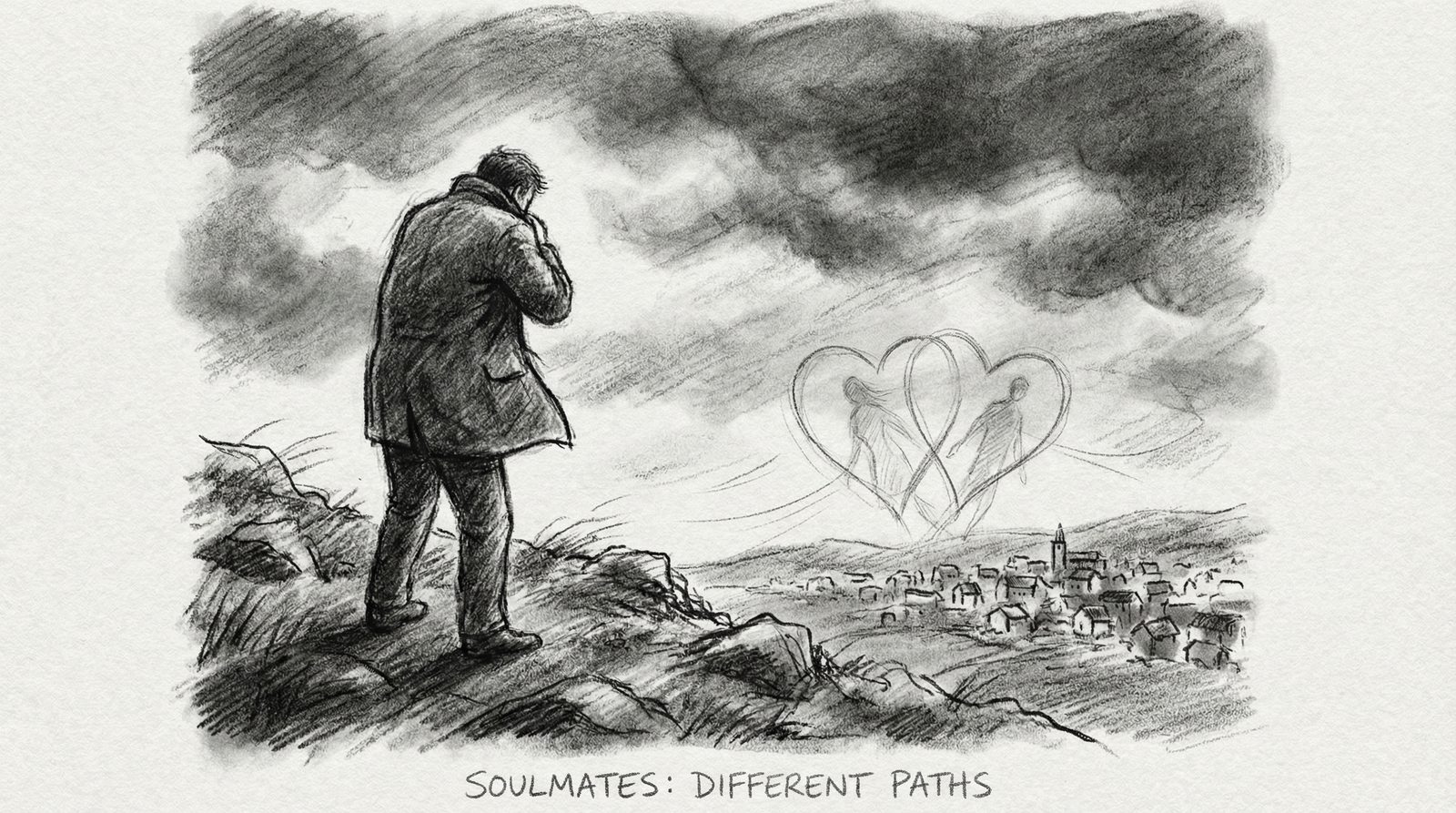
    Coelho builds much of the drama around the soulmate idea, both blessing and burden. Recognition can feel like destiny, but it can also destroy an existing life. This tension plays out between Brida and the Magus, and also in her domestic scenes with her boyfriend, Lorens, who offers a grounded future that does not require mystical completion.

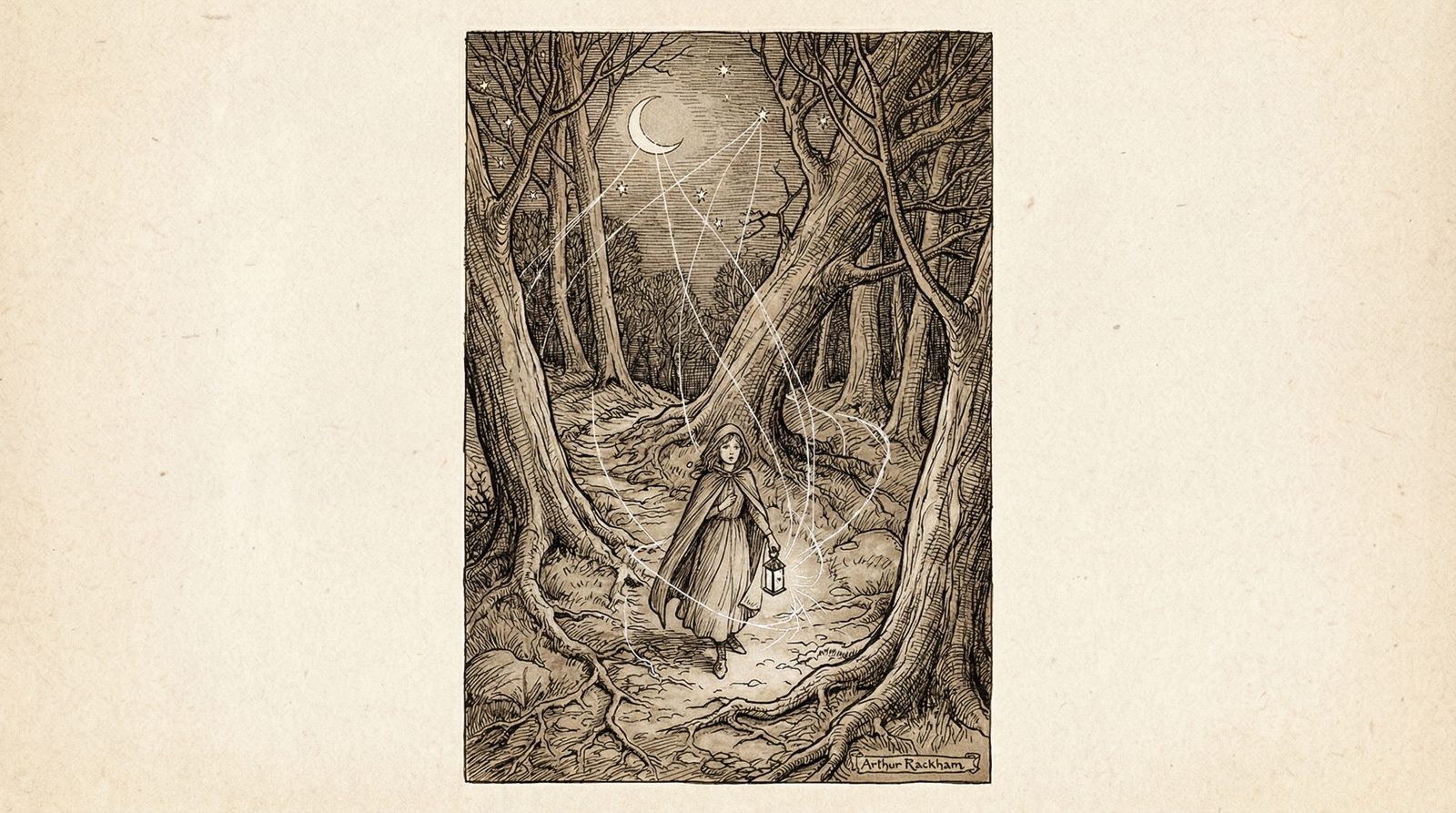
    A central sequence is Brida’s initiation in the forest, where she must walk alone at night and resist the urge to flee until the world’s “voice” becomes audible. Later, Wicca’s ritual in an abandoned church forces Brida to confront the cost of knowledge: she can glimpse other lives and hidden patterns, but she cannot force certainty. The ending is not parabolic. It is a decision. Brida recognizes the Magus as her soulmate, yet chooses to remain with Lorens, choosing a human, imperfect love over a destiny that feels absolute. The Magus releases her quietly, accepting that love sometimes means stepping aside.

    PROSE & NARRATIVE STRUCTURE

    The prose is stripped down and declarative. Coelho favors short sentences that sometimes read like fragments from a spiritual notebook. That simplicity can feel flat if you want lush description, but it suits the book’s mood of quiet searching.

    The narrative stays close to Brida while occasionally slipping into the Magus or Wicca, revealing how much they withhold from her. Structurally, the book moves through lessons and encounters: cafes with Lorens, visits to Wicca, solitary walks, the Sabbath on the hill. Each chapter feels like a small ritual with an intention. Coelho also pauses for brief explanatory passages on fear, faith, and practice. These moments can drift toward sermon, but they are usually short enough to feel like marginal notes rather than lectures.

    Symbolic objects recur with quiet insistence: tarot cards on a kitchen table, wine shared during initiation, the plain watch on Lorens’s wrist anchoring Brida to ordinary time. Coelho’s style is closer to a spiritual diary than to an elaborate occult system. The magic is kept deliberately human-scale, measured in hesitation, choice, and the aftertaste of a conversation.

    Conceptual editorial illustration inspired by 'Brida'

    CHARACTERS & INTERIORITY

    Brida is a seeker figure, but what saves her from abstraction is her ordinariness. She worries about work, about whether Lorens understands her, about looking foolish in front of Wicca’s circle. Her spiritual hunger never cancels her social awkwardness. Fear is her most consistent inner weather, fear of the forest, fear of choosing wrongly, fear of losing the life she already has.

    The Magus is written as a wounded mentor. His restraint is not aloofness so much as self-punishment, shaped by earlier failures and missed chances. Wicca, by contrast, is pragmatic and unembarrassed by power. Her scenes carry warmth and blunt clarity, undercutting the stereotype of the cold sorceress.

    Lorens might seem quieter than the other two teachers, but that is partly the point. He represents the life Brida already inhabits: shared meals, shared time, compromise, tenderness without cosmic fireworks. The emotional geometry between these three relationships is the book’s real drama, more than any ritual or spell.

    LEGACY & RECEPTION

    Brida has long lived in the shadow of Coelho’s more famous work, especially The Alchemist. It lacks that novel’s neat fable structure and global parable simplicity. Its focus on Western esoteric traditions, tarot, Wicca, reincarnation filtered through Irish landscapes, makes it more idiosyncratic and less easily packaged.

    Still, it has kept a steady following among readers drawn to spiritual apprenticeship rather than triumphant revelation. Its ending is central to its reputation. There is no miraculous reunion of soulmates, no cosmic reward for sacrifice. There is only the ache of choosing a life you can actually live, even when something in you insists another path is “meant.” That quiet refusal of fantasy closure is what gives the novel its sting.

    IS IT WORTH READING?

    Whether it is worth your time depends on what you want from the occult angle. If you are looking for intricate lore and elaborate worldbuilding, you will be frustrated. The magic here is more emotional than technical. But if you are interested in how spiritual longing collides with ordinary love, the novel can be surprisingly sharp.

    The prose is plain, sometimes blunt, yet certain scenes linger: the night walk in the forest, the quiet rituals, the final silent parting on the hill. It is a brief read, but not a light one, and it rewards readers willing to sit with ambiguity rather than tidy miracles.

    Illustration inspired by a core idea from 'Brida'

    TRIVIA & AUTHOR FACTS

    Coelho wrote Brida early in his career, drawing on his long-standing interest in esoteric traditions and spiritual searching. The Irish setting let him explore European witchcraft lore through an outsider’s gaze. The character of Wicca has often been described as inspired by a real person Coelho encountered, though details have been kept deliberately vague.

    Small details, Brida reading on bus routes, the forest as a threshold between city and countryside, reflect Coelho’s fascination with turning points where an ordinary life can tip into a different kind of awareness. The soulmate theme, which later became a recurring idea in his work, receives one of its earliest and most bittersweet treatments here.

    SIMILAR BOOKS

    If this novel speaks to you, you might seek out other stories where spiritual search intersects with ordinary love. The Alchemist offers a more fable-like journey built around omens and purpose. Foucault’s Pendulum is a denser, more ironic exploration of occult systems and the human hunger for meaning. And other Coelho novels return to similar questions: what it costs to pursue vocation, and what it costs to refuse it.

    DISCOVERABILITY & LINKS