Archetype: Trickster Mentor

  • One Touch of Venus (1948)

    One Touch of Venus (1948)

    One Touch Of Venus (1948) directed by William A. Seiter. Romantic fantasy · 82 minutes · United States. Released August 1948.


    INTRODUCTION

    One Touch Of Venus (1948) is a romantic fantasy that treats desire like a prank the gods play on a cautious man. Set inside a glossy New York department store, it imagines what happens when a marble statue of Venus briefly becomes the most alive person in the room. The feel is fizzy and escapist, closer to a champagne buzz than a full intoxication. Under the wisecracks and musical numbers, there is a quiet ache about compromise and the way routine can harden into something stone-like.

    The film borrows the lightness of screwball comedy but adds a supernatural twist, turning the showroom into a temple where mannequins, mirrors, and display lights become part of a modern myth. It’s a story about the shock of being seen by someone who embodies everything you secretly want and are slightly afraid to reach for.

    PLOT & THEMES

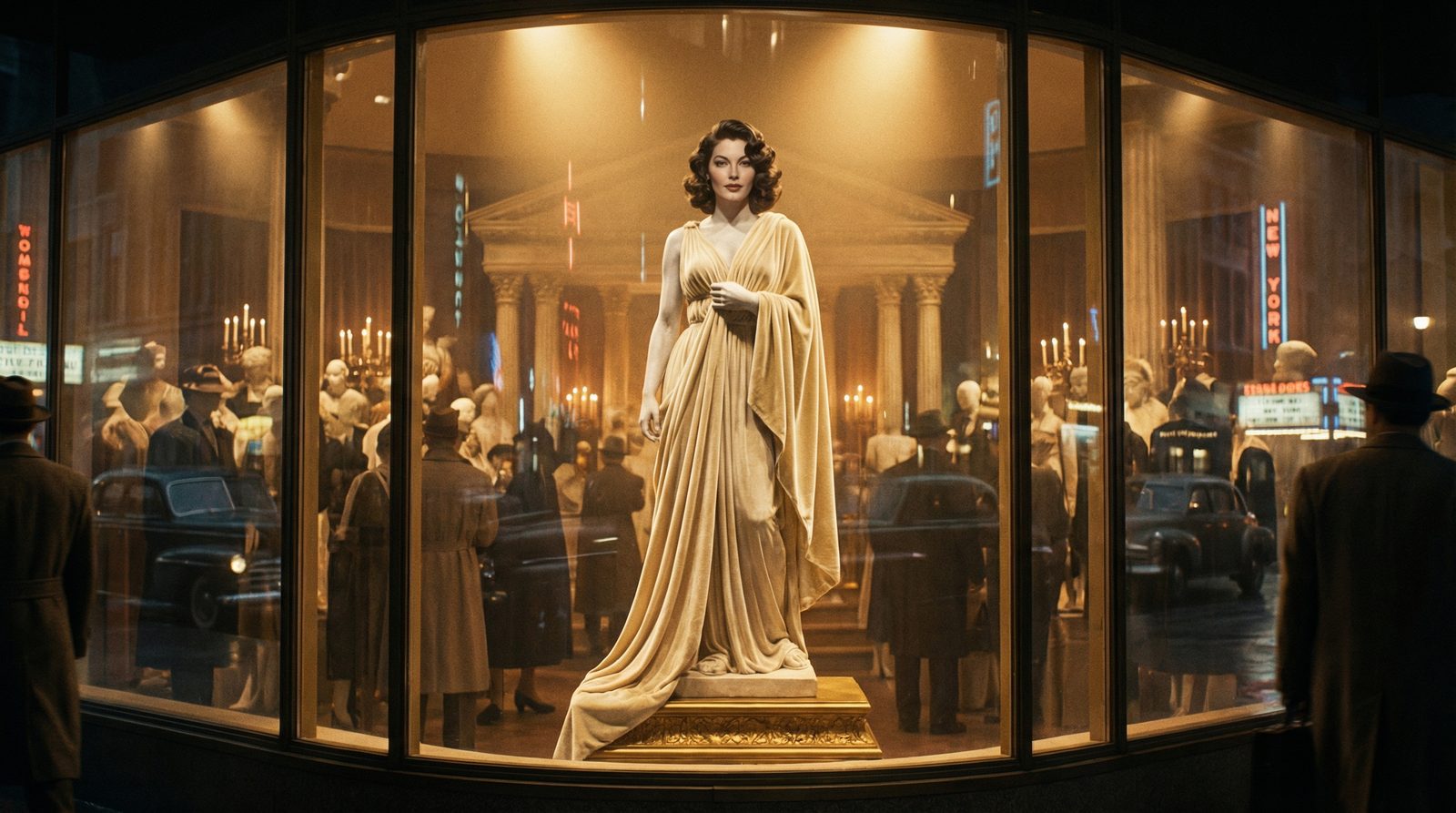
    The plot follows Eddie Hatch, a mild window dresser engaged to a sensible co-worker, Gloria. Asked to prepare a display around a newly acquired statue of Venus, he impulsively kisses the marble lips. This act awakens the goddess, who steps down from her pedestal and into his life. What follows is a supernatural romance built on a reverse-Pygmalion logic: the “ideal” tries to reshape the ordinary man into someone bolder and more honest.

    Complications pile up. The statue appears to have been stolen, Eddie is suspected, and his engagement begins to crumble as Venus shadows him through the city. The film keeps testing fantasy versus security. Venus represents the intoxicating promise of living fully in the moment, while the store and Eddie’s engagement represent routine, approval, and the comfort of predictability. The story repeatedly asks whether the true miracle is the goddess herself or the courage she provokes in a man who has accepted too small a life.

    Beneath the farce, there is a gentle critique of consumer culture. The store treats Venus as a luxury object, while the film insists she is a disruptive force that refuses to stay in a case. The recurring motif of statues and mannequins implies that most people are already half-petrified by habit. Venus’s presence is less about conquest than about waking Eddie up.

    CINEMATIC TECHNIQUE & AESTHETICS

    One Touch Of Venus is built on Classical Hollywood craft: continuity editing, unfussy camera work, and staging that prioritizes timing and performance. Venus is frequently framed in medium shots that allow stillness and gaze to carry the supernatural charge. When she first awakens, soft focus and careful lighting give her a dreamlike halo without resorting to heavy spectacle.

    The department store interiors are staged almost theatrically, with corridors of merchandise and mirrored surfaces that support a secondary motif of reflection. Eddie is repeatedly framed between Venus and Gloria, turning blocking into a visual diagram of divided loyalties. Musical numbers are integrated as emotional punctuation rather than set-piece spectacle.

    Special effects are restrained: match cuts, dissolves, and modest tricks that let performance do the heavy lifting. The magical elements feel intimate and psychological because the film doesn’t insist on “proving” them. It asks the viewer to accept the miracle as a change in emotional temperature, not a technical event.

    Editorial illustration inspired by 'One Touch Of Venus (1948)'

    CHARACTERS & PERFORMANCE

    Venus functions as a trickster mentor. She is not a nurturing guide so much as a teasing provocateur who disrupts Eddie’s self-image and forces choice. Ava Gardner plays her with languor and sly amusement, letting flickers of loneliness show through so immortality feels like both power and boredom.

    Eddie is an Everyman: timid, earnest, and quietly resigned. His arc is not heroic conquest but movement from passivity toward agency. Gloria fills the role of sensible stability; the film is not always fair to her, but she is written as a real person rather than a pure obstacle. The supporting cast provides a chorus of social pressure, which makes Venus’s freedom look even more radical.

    CONTEXT & LEGACY

    Adapted from the 1943 Broadway musical, One Touch Of Venus arrived at the tail end of the 1940s when Hollywood romantic fantasy offered audiences gentle escape from postwar reality. It belongs to a small cycle of films where supernatural visitors drift into urban professional life and quietly expose domestic complacency.

    Its legacy is modest but persistent. The image of a literal ideal stepping off a pedestal has lingered, and later retail-based fantasies echo its logic. Today the film reads as both a charming romantic time capsule and a window into mid-century fantasies about gender, desire, and the costs of “settling.”

    IS IT WORTH WATCHING?

    If you want light, urbane romantic fantasy with classical studio-era craft, One Touch Of Venus is worth watching. The stakes stay low and the darker implications of mortal/goddess romance are mostly sidestepped, but Ava Gardner’s performance and the film’s gentle wit make it an easy, charming experience.

    If you’re looking for a more emotionally intense or philosophically probing myth story, it may feel too airy. The pleasure here is in timing, tone, and the small sting of realizing how quickly comfort can become petrification.
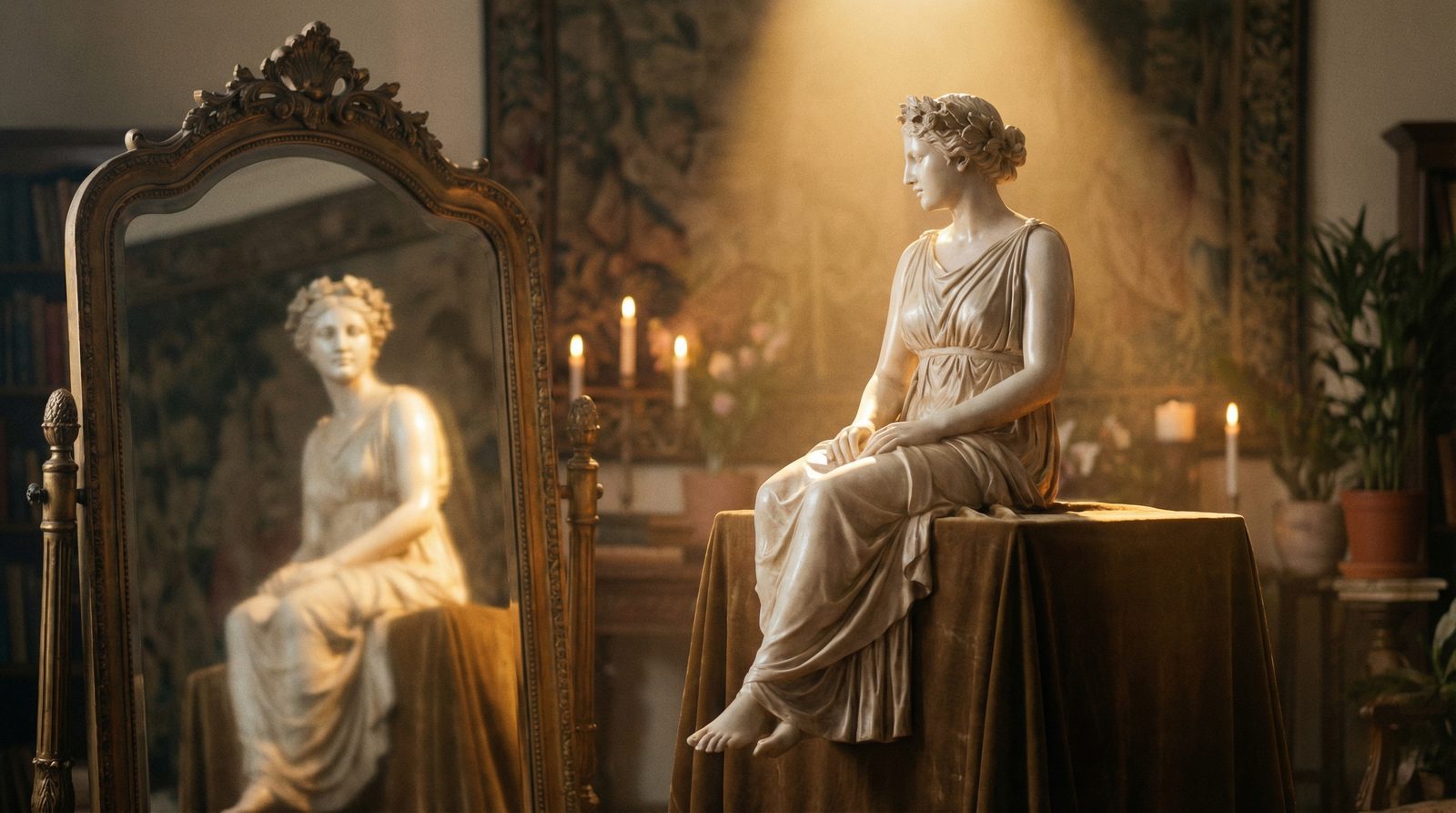
    Symbolic illustration inspired by 'One Touch Of Venus (1948)'

    TRIVIA & PRODUCTION NOTES

    The film is based on the 1943 Broadway musical One Touch Of Venus, with music by Kurt Weill. The adaptation trims and reshapes much of the score, shifting emphasis toward dialogue and situational comedy. The department store setting is staged as both a temple of consumption and a playground for a bored goddess.

    The statue-to-human illusion is achieved mostly through classical studio-era craft: match cuts, dissolves, careful lighting, and performance rather than heavy effects. The short runtime keeps the farce brisk, even when the myth logic is deliberately light.

    SIMILAR FILMS

    If One Touch Of Venus appeals to you, look for other romantic fantasies where an extraordinary figure interrupts domestic routine and forces a choice between safety and aliveness. These films tend to treat magic as emotional pressure rather than spectacle.

    DISCOVERABILITY & LINKS

  • The Pilgrimage (1987)

    The Pilgrimage (1987)

    INTRODUCTION

    The Pilgrimage (1987) by Paulo Coelho
    Spiritual fiction · 276 pages · Spain


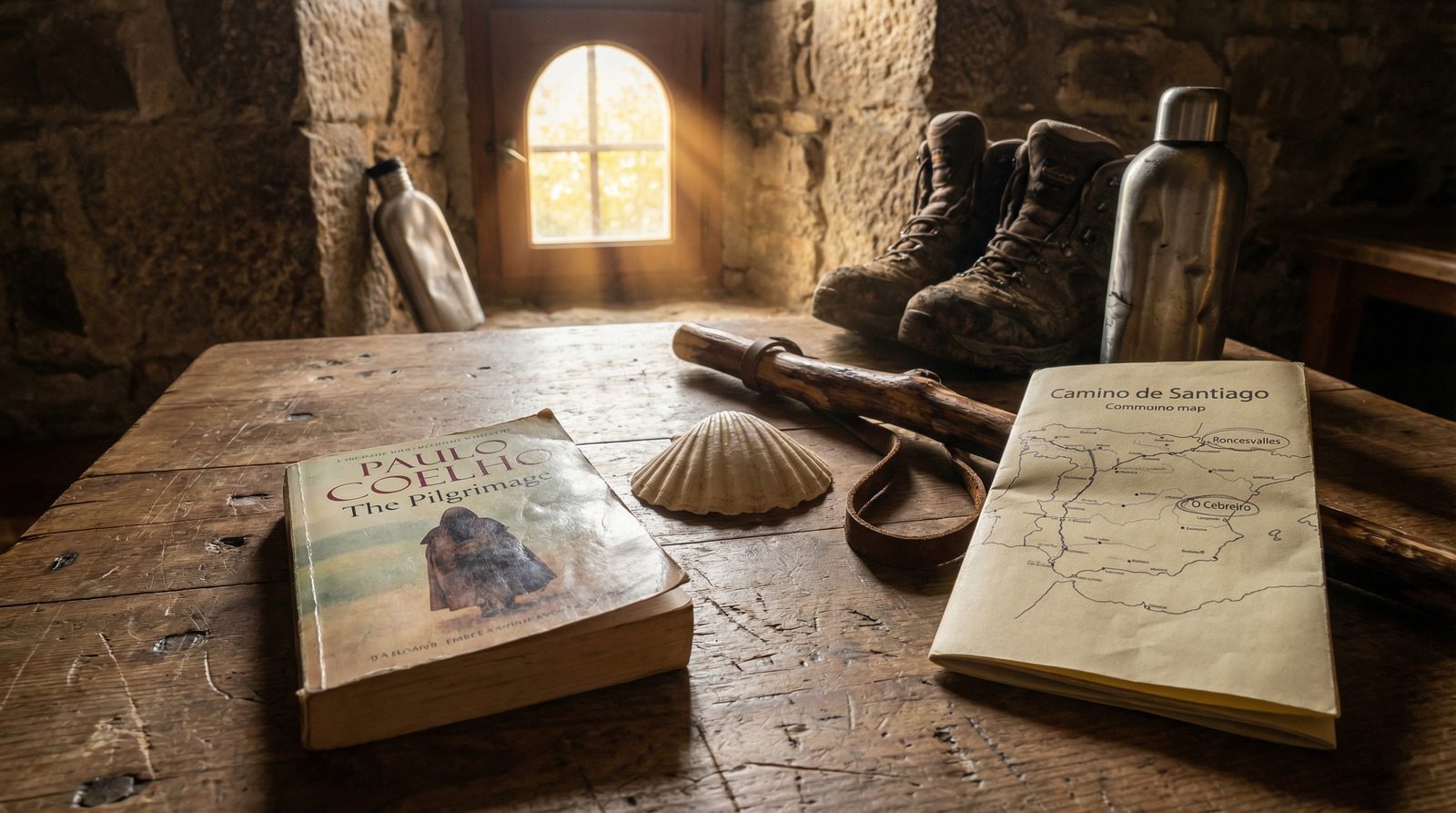
    The Pilgrimage is Coelho before The Alchemist turned him into a global brand. Set along the Camino de Santiago in late twentieth-century Spain, it follows “Paulo” as he walks toward Compostela under the stern guidance of his master, Petrus. What begins as a journey across Spain becomes a chain of humiliations, occult drills, and small, piercing moments of clarity.

    The road works as an inner mirror. Crowded streets, empty stretches of the Meseta, and awkward encounters with strangers become tests of vanity, fear, and attention. The tone is restless and self-critical. This is a spiritual quest narrative that keeps tripping over ego, and that is exactly where it becomes interesting.

    PLOT & THEMES

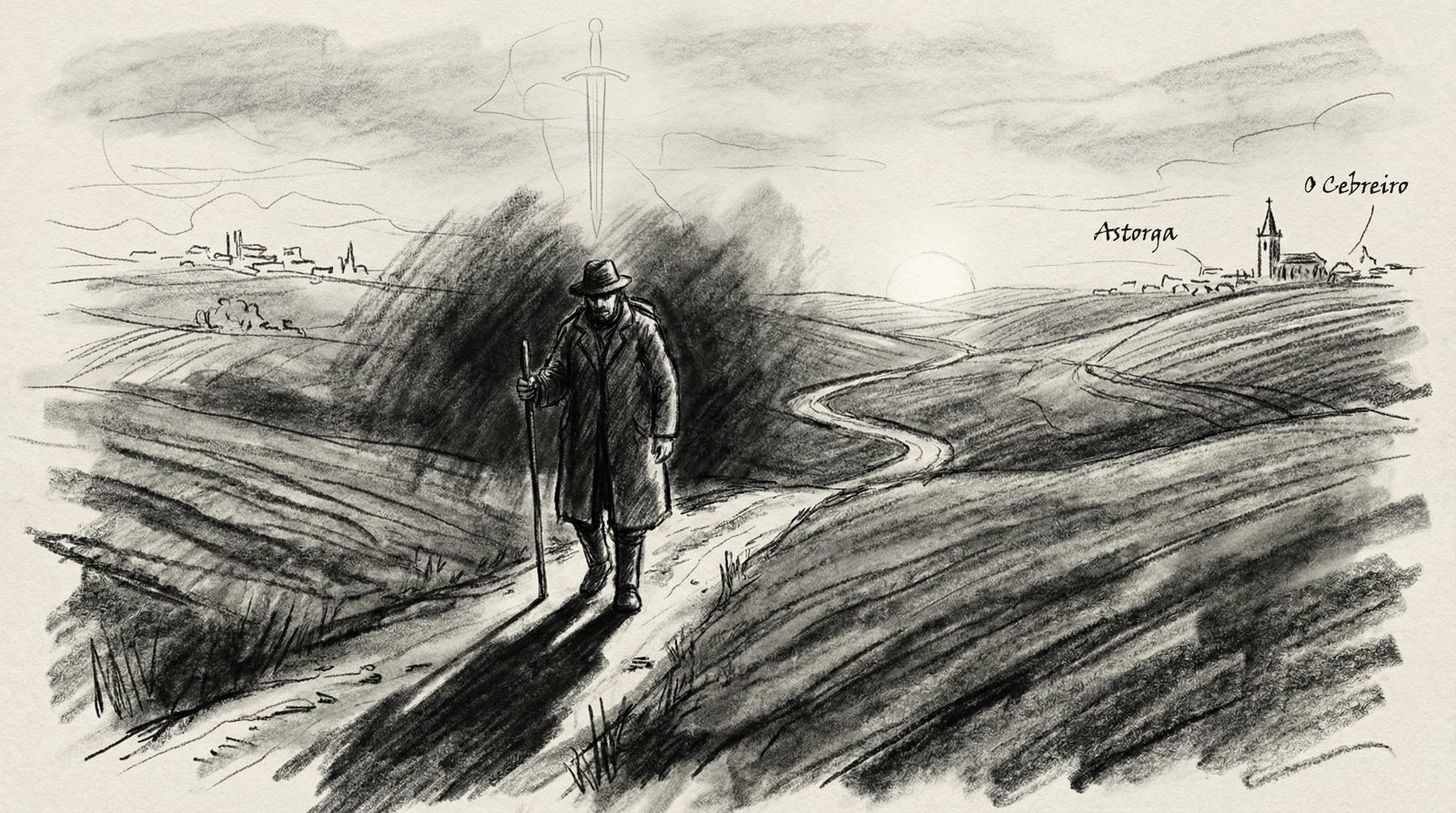
    The plot is disarmingly simple. Paulo has failed an initiation within his esoteric order, RAM, and must walk the Camino to recover a lost sword that symbolizes spiritual authority. Petrus leads him from town to town, and the journey becomes a sequence of exercises that look, at first glance, like New Age party tricks. In practice they function as slow, stubborn methods for stripping pride and building discipline.

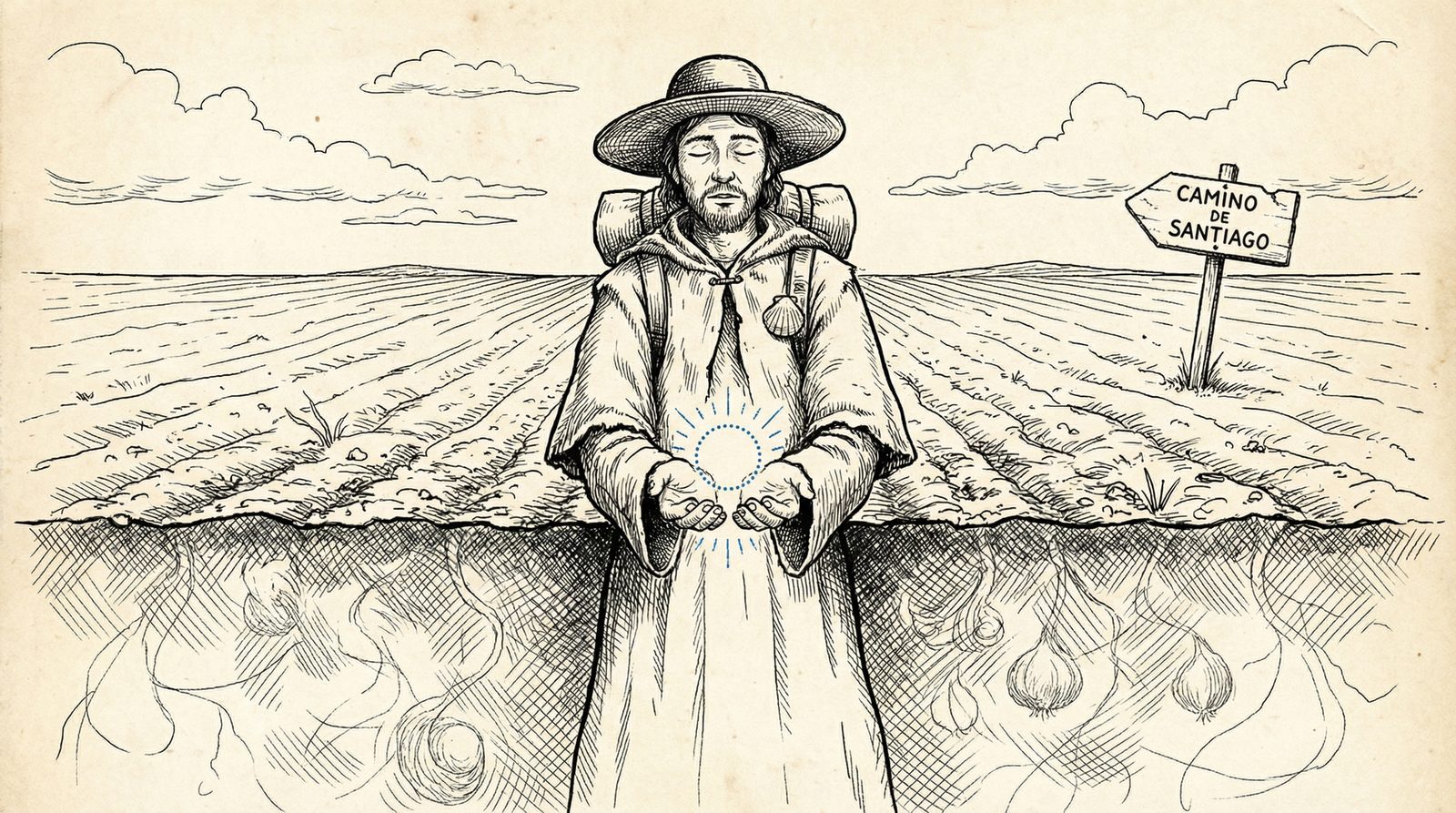
    Several rituals recur in the reader’s memory the way blisters do after a long day of walking. The Seed Exercise asks Paulo to imagine himself buried in darkness before growth. The Speed Exercise forces him to walk excruciatingly slowly while everyone else rushes past. The point is not power. The point is humiliation as instruction, and attention as the only real “skill” being trained.

    The book uses the familiar pilgrimage framework but keeps undercutting the heroic arc. Paulo becomes jealous of a dog, terrified by a madman near a ruined village, and nearly seduced off the path by an encounter that reads like temptation made flesh. The sword remains present as an absence: a symbol of authority that Paulo wants to possess, but does not yet deserve. Themes of obedience, everyday miracles, and spiritual pride run through the journey, but Coelho insists that the holy is found in missed buses, bad wine, aching feet, and arguments with the guide.

    The ending is resolutely uncinematic. Near the end of the Camino, Paulo is forced into a confrontation that feels like a ritualized fight with fear itself. Only after that does Petrus reveal the sword, and the revelation is almost wry: it has been near Paulo all along. The final lesson is not that Santiago grants miracles. It is that practice must continue. The journey is not completed once. It repeats, in different forms, for the rest of a life.

    PROSE & NARRATIVE STRUCTURE

    The book is written as first-person memoir, and that choice matters. Paulo is not an omniscient sage looking back with smug clarity. He is defensive, hungry for approval, and frequently irritated by his teacher. The sentences are short and blunt, and the rhythm can feel awkward until you realize it mirrors the act of walking: repetition, fatigue, and sudden flashes of lucidity.

    Episodes are arranged as parables rather than as a tightly plotted arc. Each town offers a new exercise, a new failure, and a new fragment of insight. Coelho also includes manual-like sections that explain practices directly. This interrupts the narrative spell, but it clarifies the book’s ambition: it wants to be used, not merely read.

    Structurally, the memoir circles back on itself. The opening failure in Brazil is mirrored by Paulo’s near-failure at the end, creating a loop rather than a straight line. The Camino becomes less a path across Spain than a track inside Paulo’s mind, where the same fears return until they are finally faced without performance.

    Conceptual editorial illustration inspired by 'The Pilgrimage'

    CHARACTERS & INTERIORITY

    Paulo is a seeker figure stripped of glamour. He is vain about spiritual rank, sulky when Petrus withholds praise, and occasionally cruel in his private judgments of other pilgrims. This imperfection gives the spiritual material friction. We are not watching a saint in the making. We are watching a person wrestling with the desire for meaning and the desire for status, and trying to pretend they are the same thing.

    Petrus is a trickster mentor who alternates tenderness with mockery. He engineers situations that feel pointless or humiliating, because humiliation is the tool. Minor figures appear briefly but function as mirrors: the pilgrim who quits after losing a bag, the farmer who explains an exercise without mysticism, the stranger who passes Paulo effortlessly, reminding him that pride is often just a story told to cover weakness.

    Interior life is the book’s real arena. Paulo’s obsessive self-monitoring can be exhausting, but it is also the most honest part of the memoir. The drama is not the landscape. It is the mind trying to keep control of the story while the walk keeps undoing it.

    LEGACY & RECEPTION

    In hindsight, this book is often read as the seed of Coelho’s later work. Where The Alchemist turns the quest into a smooth fable, The Pilgrimage keeps the blisters and the awkward pauses. It helped popularize the Camino de Santiago for readers who had never heard of Compostela, and it contributed to the late twentieth-century boom in spiritual memoirs that treat personal crisis as narrative engine.

    Reception has always been split. Some dismiss it as occult tourism. Others value its willingness to show spiritual vanity and failure without disguising them as wisdom. The ending, with the sword revealed in an ordinary field rather than inside a cathedral, has aged well. It refuses the fantasy that holiness lives in famous buildings. The climax is internal: authority is conditional, dependent on ongoing practice, and never finally earned.

    IS IT WORTH READING?

    If you want a polished parable with all rough edges sanded off, this is not it. The memoir is uneven, occasionally naïve, and sometimes embarrassing. That is also why it works. The mix of ritual, Catholic imagery, and blunt self-critique feels like a real person groping toward meaning rather than a guru dispensing aphorisms.

    Readers interested in spiritual practice, in the psychology of faith, or in the Camino as lived from the inside will find plenty to chew on. If you have no patience for mysticism, the book may grate. But as a portrait of stubborn searching, it remains strangely compelling.

    Illustration inspired by a core idea from 'The Pilgrimage'

    TRIVIA & AUTHOR FACTS

    Coelho did walk the Camino de Santiago in the 1980s after a turbulent period that included time in a mental institution and years working as a lyricist in Brazil. The order RAM is presented as real but partially fictionalized and deliberately obscured. The exercises described, including the Seed Exercise and the Blue Sphere Exercise, are framed as practices he claims to have done rather than as invented fantasy.

    The book was first published in Portuguese as O Diário de um Mago (“Diary of a Magus”), emphasizing the occult angle more than the walking-tour aspect. The manual-like appendix has inspired informal study circles and solitary readers who treat the book as a workbook as much as a narrative.

    SIMILAR BOOKS

    If this blend of outer travel and inner upheaval appeals to you, Siddhartha offers a more distilled spiritual journey, while Wild turns the walk into a contemporary reckoning with grief and self. Readers drawn to the Christian mystical angle may also find resonance in conversion narratives like The Seven Storey Mountain, where the road is traded for a monastery but the hunger for transformation remains.

    DISCOVERABILITY & LINKS