
Country: Japan

  • Zen Mind, Beginner’s Mind (1970)

    Zen Mind, Beginner’s Mind (1970)

    INTRODUCTION

    Zen Mind, Beginner’s Mind (1970) by Shunryu Suzuki
    Spirituality · 20th Century · United States


    Zen Mind, Beginner’s Mind (1970) is a slim book that feels bottomless. Drawn from talks Shunryu Suzuki gave to students at the San Francisco Zen Center in the late 1960s, it reads like a series of small, clear windows opening in a fogged room. The prevailing feel is quiet astonishment. Emptiness appears not as a void but as spacious hospitality, a mental room where everything can enter and leave freely. Suzuki keeps circling “beginner’s mind” until it becomes less a slogan and more a way of meeting each moment without armor.

    PLOT & THEMES

    There is no plot in the conventional sense. The book is arranged in three loose sections—“Right Practice,” “Right Attitude,” and “Right Understanding”—each a cluster of short talks given to American students at Sokoji and later at Tassajara. The closest thing to narrative is the rhythm of a day in practice: sit, breathe, notice the mind wander, return.

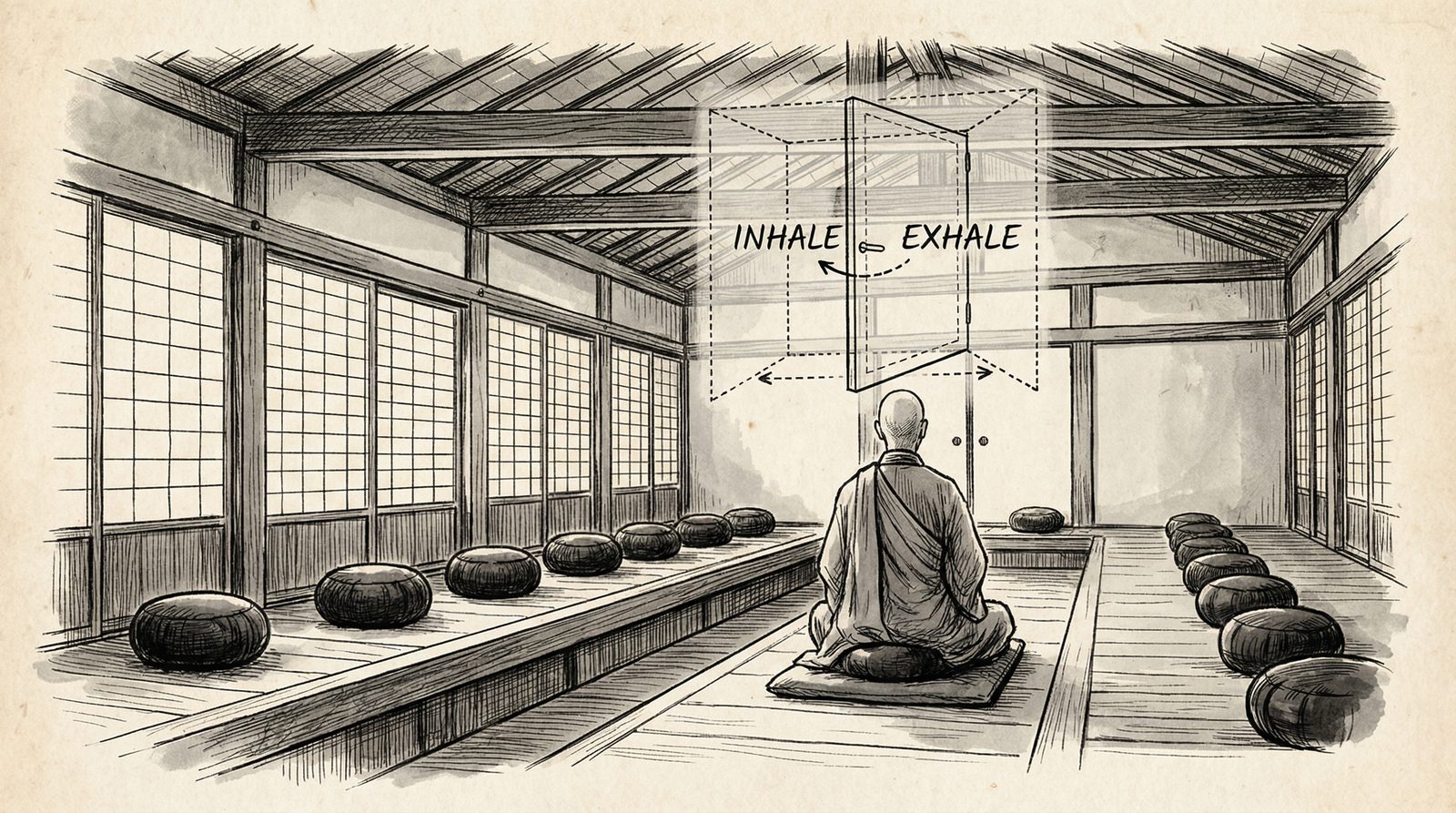
    Breath anchors everything. Suzuki returns again and again to counting, following, and finally just breathing as the most ordinary and most radical act. Themes of non-duality and non-striving run through the text. Instead of promising a heroic breakthrough, he insists there is no gap between practice and enlightenment. Each inhale and exhale becomes the self appearing and disappearing like a swinging door.

    Unlike more narrative or explanatory Zen books, this one ends without a grand revelation. That anti-climax is the point. Enlightenment is not a final scene; it’s how you meet the next moment of boredom or irritation on the cushion. The teaching keeps returning to ordinariness as the only available home for awakening.

    PROSE & NARRATIVE STRUCTURE

    The prose is deceptively simple. Shaped from oral talks but pared down in transcription, it uses repetition as a technique rather than a flaw. Phrases like “just to sit” and “beginner’s mind” recur with mantra-like insistence, wearing grooves into the reader’s habits of thought. Chapters such as “Posture,” “Nothing Special,” and “Bowing” stand alone, but echoes between them create slow cumulative resonance.

    Suzuki’s English can feel slightly off-kilter, and that skew is part of the charm. Sentences tilt into paradox and then land with a dry shrug. The voice feels intimate, as if he is speaking to a small group in a drafty meditation hall rather than to a general audience. The structure enacts the teaching: ideas are approached, released, and approached again from another angle.
    Conceptual editorial illustration inspired by 'Zen Mind, Beginner’s Mind (1970)'

    CHARACTERS & INTERIORITY

    There are no characters in a novelistic sense, but Suzuki himself emerges as a gentle sage archetype with disarming vulnerability. He undercuts spiritual celebrity by admitting impatience, describing sweeping in the rain, or acknowledging that sometimes his practice “is not so good.” Those small confessions build trust because they refuse the posture of perfection.

    The students appear mostly as a collective, glimpsed through the questions they ask: whether bowing is “idolatry,” whether enlightenment should feel like “experience,” whether discipline can coexist with freedom. Interiority here is less psychological than phenomenological. The book trains the reader to watch their own mind with soft persistence, treating thoughts as weather rather than identity.

    LEGACY & RECEPTION

    Since its publication in 1970, Zen Mind, Beginner’s Mind has become a foundational Western Zen text, especially in the United States. It offers relief from “gaining mind,” the pressure to optimize spiritual life into a ladder of achievement. The book remains stubbornly un-slick: it refuses to package awakening as a hack or a climax.

    Readers often find the first encounter disorienting because there is no narrative payoff. That disorientation is the teaching. The book keeps insisting that even enlightenment must be let go of. In a culture that measures value by progress, its refusal to promise transformation-by-milestone is one of its most radical gestures.

    IS IT WORTH READING?

    If you want techniques, hacks, or a clear ladder of advancement, this book will frustrate you. Zen Mind, Beginner’s Mind is worth reading if you are willing to be gently but persistently stripped of expectations. It’s short enough to finish quickly and deep enough to reread for years. It works best not as inspiration but as a companion to actual sitting, returning like a voice in the room whenever you breathe.
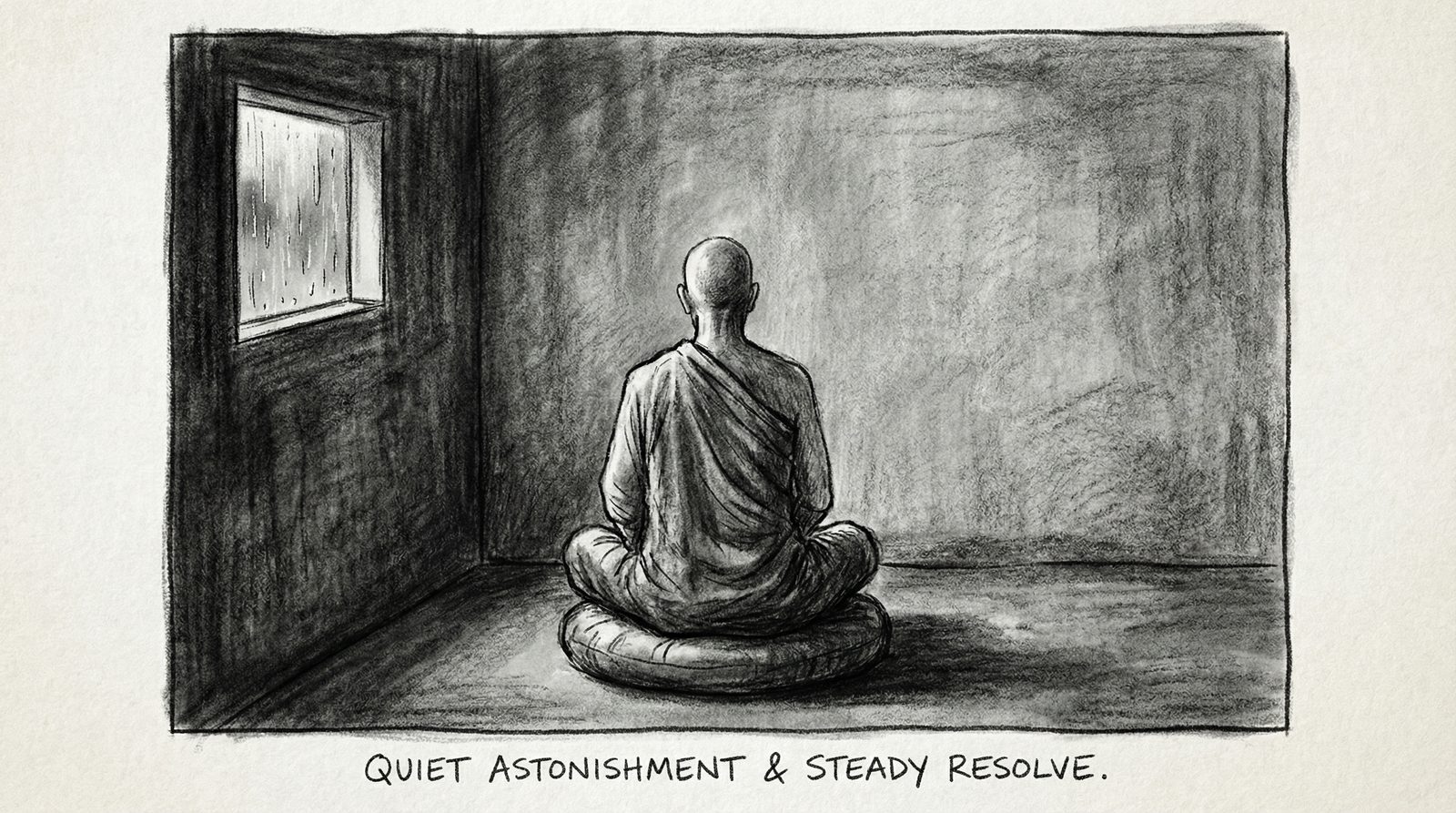
    Illustration of a core idea or motif from 'Zen Mind, Beginner’s Mind (1970)'

    TRIVIA & AUTHOR FACTS

    Shunryu Suzuki was a Soto Zen priest who came to San Francisco in 1959 to serve the small Japanese-American congregation at Sokoji. The talks that became Zen Mind, Beginner’s Mind were recorded by students on reel-to-reel tapes, often in drafty rooms above the temple or later at Tassajara Zen Mountain Center. The book was assembled and edited posthumously by students including Richard Baker, which helps explain why certain phrases and themes recur: the text preserves a living teaching voice more than it polishes argument.

    SIMILAR BOOKS

    If Zen Mind, Beginner’s Mind speaks to you, you might look toward other practice-centered texts and East-West bridges. Some offer more historical framing, others more narrative movement, but the strongest neighbors share Suzuki’s insistence that the ordinary mind—washing dishes, walking, breathing—is not the obstacle to awakening but its only possible home.

    DISCOVERABILITY & LINKS

  • Valets And Butlers

    Valets And Butlers

    DEFINITION & CORE IDEA

    Valets And Butlers is a motif built around the personal servant who is close enough to see everything, disciplined enough to say almost nothing, and competent enough to keep a household (or a protagonist) from collapsing. On the surface, valets and butlers exist to perform routine tasks: managing clothing, announcing visitors, maintaining schedules, smoothing over small social frictions. In narrative terms, they often function as the story’s most reliable intelligence inside a world of performative status.

    The motif’s charge comes from inversion. The servant holds the lowest formal rank while possessing the highest practical awareness. Because they are expected to be discreet, people speak freely around them, treat them as part of the room, and underestimate how much they notice. That gap between visibility and knowledge turns service into a form of power: quiet, deniable, and structurally essential.

    In the comic tradition shaped by P. G. Wodehouse, this inversion becomes the engine of farce. In Right Ho, Jeeves and The Code Of The Woosters, the socially superior employer repeatedly creates the mess while the valet quietly contains it. The humor is not simply that the servant is smarter. It is that the entire social order depends on someone who is never meant to be credited.

    At its core, Valets And Butlers explores what it means to serve and what service costs. It asks who truly holds power in a room, how much control can exist without recognition, and what kind of intimacy forms when one person’s job is to manage another’s life more competently than they ever could themselves.


    HOW IT WORKS IN STORIES

    Most stories using this motif keep the servant constantly present but rarely centered. Valets and butlers move through scenes performing routine actions while absorbing information, witnessing private failures, and tracking social pressure points. Writers use this access to make the servant a natural witness, confidant, and stabilizer inside a household that would otherwise fracture under its own ego and etiquette.

    Structurally, these characters often function as corrective force. When the plot threatens to spin into scandal or humiliation, the servant intervenes indirectly: shifting timing, redirecting people, removing evidence, arranging encounters, limiting damage. The employer may believe they are in control, but the narrative repeatedly demonstrates that outcomes depend on the servant’s judgment, restraint, and ability to act without being seen acting.

    This same architecture works outside pure comedy. In a mystery or a socially sharper story, the servant may be the only person with complete situational awareness because they were present during the moments others dismissed as background. Even when they say little, their position reveals how much labor is required to maintain the illusion of order and how dependent “status” is on invisible work.

    Dialogue becomes a tool of power without confrontation. Formal speech and minimal responses allow valets and butlers to communicate warning, irony, or correction while preserving the hierarchy’s appearance. A phrase like “Very good, sir” can carry obedience, exasperation, or quiet judgment depending on context. That ambiguity lets the motif explore control without turning the story into a lecture about class.

    Because these characters move freely between rooms, conversations, and social layers, they also serve as narrative connective tissue. Information passes through them. Emotional shifts register with them first. The household feels coherent because one figure circulates through all its compartments while everyone else remains trapped inside their own priorities.


    Editorial illustration inspired by 'Valets And Butlers'

    EMOTIONAL EFFECT ON THE READER

    This motif produces a blend of reassurance and unease. There is comfort in knowing that someone competent is present when authority figures are impulsive, naive, or self-absorbed. In a Jeeves-style story, readers relax slightly because they trust the servant will contain the chaos even when characters cannot manage themselves.

    At the same time, the motif carries quiet tension. The servant sees everything and remembers it. Readers understand that the social order depends on continued discretion and goodwill. Beneath the comedy sits an unspoken question: what happens if the person holding the system together decides to stop?

    The emotional intimacy of service deepens that effect. A valet or butler assists with private routines, hears confessions, and observes vulnerability without reciprocity. That closeness can feel protective or quietly tragic, especially when the servant’s own inner life remains unspoken and structurally suppressed.

    The motif also taps into a powerful fantasy: being understood so well that problems are solved before they need to be explained. The Jeeves and Wooster (TV Series) version makes that fantasy playful, turning competence into a safety net the viewer can rely on. Even when stories handle the motif with sharper satire, the same comfort remains: someone is paying attention, even if the people in charge are not.


    Symbolic illustration inspired by 'Valets And Butlers'

    VARIATIONS & RELATED MOTIFS

    Several variations recur within Valets And Butlers. The best-known is the hyper-competent servant whose intelligence far exceeds that of their employer, producing comedy through contrast: authority fails publicly while competence operates quietly in the background. Another variation is the stoic butler whose restraint becomes the drama, where the emotional payoff comes from what is withheld rather than expressed.

    A darker variation reframes the servant as an active manipulator. Because they stand at the intersection of information and access, they can redirect events for personal advantage, shifting the motif toward suspense or moral ambiguity. A satirical variation turns the servant into a mirror held up to the ruling class, exposing how fragile “refinement” becomes once it relies on invisible labor to remain believable.

    This motif overlaps naturally with Country House Comedy and Comic Misunderstandings And Farce, where servants often become the stabilizing intelligence inside a house full of schemes. It also connects to Victorian And Edwardian Social Satire, where the upstairs-downstairs perspective turns manners into a pressure system. In broader comedy-of-manners traditions, writers like Evelyn Waugh and Nancy Mitford echo the same logic: social status performs authority, but real control often sits with the people expected not to speak.

  • Spiritual Awakening

    Spiritual Awakening

    DEFINITION & CORE IDEA

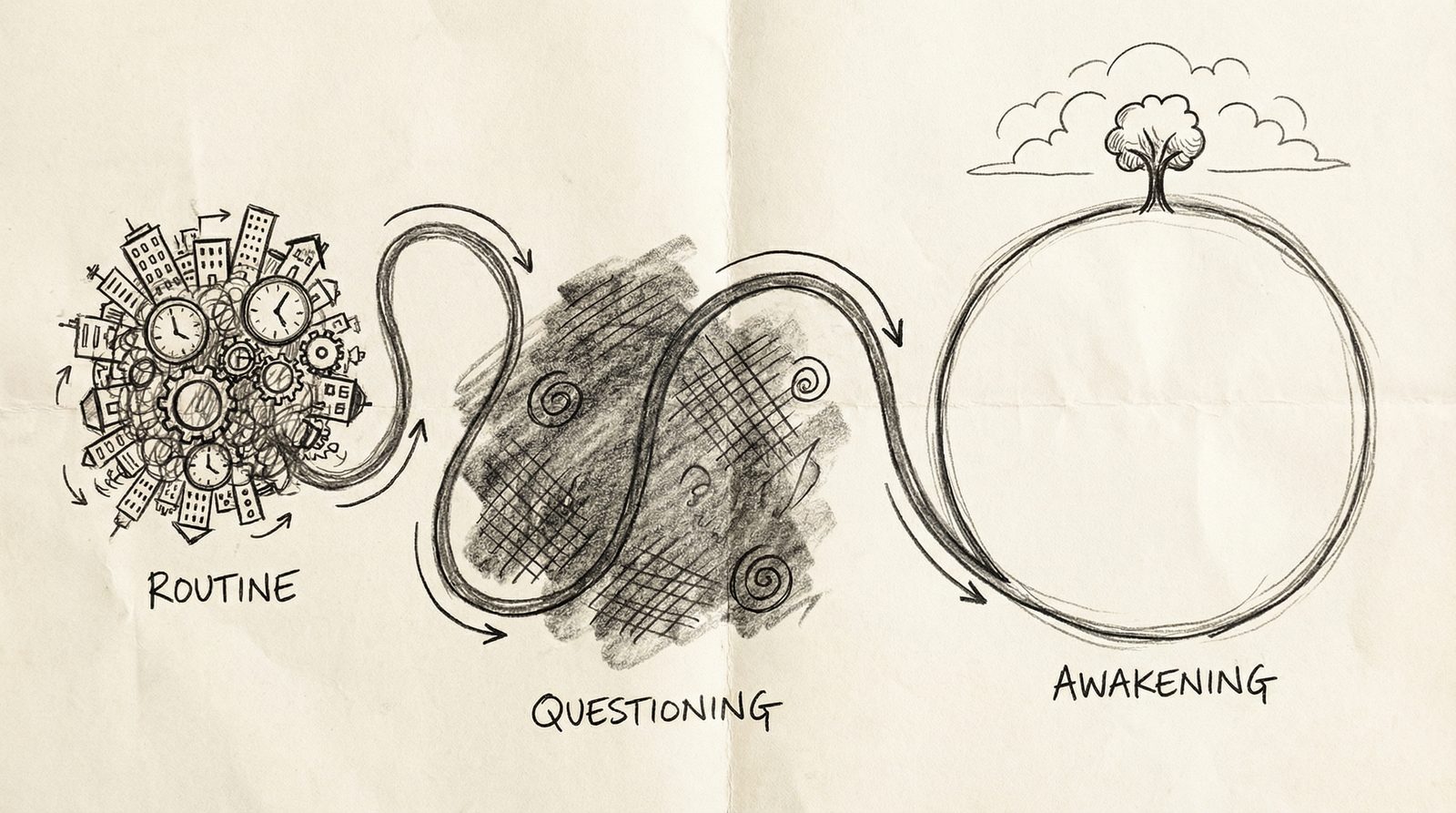
    Spiritual Awakening is the motif where a character’s interpretive frame breaks and re-forms. The person who could previously live on routine, status, or habit begins to perceive meaning, pattern, or selfhood differently. The story treats this shift as real change, not a cosmetic mood swing. What matters is not adopting a label or joining a religion, but the reorganization of attention, value, and identity.

    In awakening narratives, the protagonist often begins inside a life that “works” externally but fails internally. They may chase achievement, romance, or control and discover it does not answer the underlying question of purpose. The plot then follows the conversion process: a new vocabulary for reality appears, the character tests it, and their old identity starts to fail under the new pressure.

    Books such as The Celestine Prophecy, The Tenth Insight, The Alchemist, Way Of The Peaceful Warrior, and Siddhartha are classic examples. The “event” is internal: perception shifts, and that shift changes what the same world means.


    HOW IT WORKS IN STORIES

    Spiritual Awakening usually begins with an existential breach. The character feels restless, stuck, or out of place in a life that looks fine from the outside. A promotion feels hollow, a relationship stops fitting, or a loss cracks certainty. The important point is structural: the old worldview stops functioning as a complete explanation.

    Next, a threshold event provides a new interpretive system. This can be a guide figure, a text, a vision, or a sequence of “coincidences” that the character begins to treat as communication. In The Celestine Prophecy and The Tenth Insight, the engine is sequential insights delivered through encounters that mix guidance with risk. In The Alchemist, a dream and a meeting function as permission to leave the old life and treat omens as navigational data. In Way Of The Peaceful Warrior, a teacher figure reframes discipline and attention as a daily practice rather than an abstract belief.

    The middle phase is testing and attrition. The character tries new practices, interpretations, and choices, then pays the cost of inconsistency. Old identities fall away faster than new ones stabilize. A “dark night” phase is common: the character feels more lost than before because certainty has collapsed but insight is still incomplete.

    Resolution is usually a return to ordinary life with a changed relationship to it. Work, love, and struggle remain, but they are held inside a wider frame. The story closes when the character can sustain the new perception without needing constant signs or external validation.


    Editorial illustration inspired by 'Spiritual Awakening'

    EMOTIONAL EFFECT ON THE READER

    This motif is built to feel personal. The reader is invited to project their own restlessness onto the protagonist’s shift, using the character as a safe container for questions about meaning, purpose, and identity.

    It often produces a “synchronicity high” in the reading experience. The plot rewards attention by making small events feel linked: a conversation, a symbol, or a coincidence lands as guidance rather than noise. That can feel reassuring, because it implies the world is readable.

    The cost is loss. Awakening narratives usually require the character to abandon a comforting interpretation of their life. Relationships strain, identity becomes unstable, and certainty is traded for a framework that is truer but harder to live inside.

    When the motif works, the after-effect is practical rather than sentimental. The reader finishes with heightened awareness of attention itself: what they ignore, what they treat as “just life,” and what patterns they might be using to avoid change.


    Symbolic illustration inspired by 'Spiritual Awakening'

    VARIATIONS & RELATED MOTIFS

    Spiritual Awakening appears in several common variations. The solitary seeker version follows a character cycling through teachers and lifestyles until a stable insight forms, as in Siddhartha. The reluctant mystic version forces awakening through crisis or loss, where the character resists the new frame until resistance becomes impossible. Another variation frames awakening as part of a larger system of human evolution, expanding the personal shift into a collective one, as in the Redfield sequence.

    The motif also has practical variants, where the new awareness is tested in daily routine rather than on mountaintops. Here, the story cares less about visions and more about whether the character can keep behaving differently when the world remains the same.

    This motif commonly overlaps with Synchronicity And Meaningful Coincidence, because meaning is delivered through “pattern recognition” in events. It also pairs naturally with Spiritual Pilgrimage and Inner Journey, where travel or reflection supplies the friction that forces change.

  • Inner Journey

    Inner Journey

    DEFINITION & CORE IDEA

    The Inner Journey motif is about a character whose most important travel happens inside their own mind and heart. The outside world can be busy, dangerous, or beautiful, but the core story is the shift in how this person understands themselves, other people, or reality itself. In Siddhartha, the river, the city, and the forest matter, but the real movement is the protagonist’s changing sense of identity and meaning.

    Writers use the Inner Journey to examine belief, self-concept, and value. The plot might involve travel, romance, work, or crisis, but events function as mirrors: the character encounters situations that reveal what they avoid, what they rationalize, and what they cannot keep pretending.

    This motif often includes reflection, doubt, and contradiction. A character may be pulled between comfort and risk, duty and desire, faith and skepticism. Works such as Zen And The Art Of Motorcycle Maintenance and Demian use daily life, travel, and relationships as the surface action while the real stakes remain internal: whether the character can become honest with themselves.


    HOW IT WORKS IN STORIES

    The Inner Journey usually starts with a fracture of self. The character feels that something is off: success feels empty, a relationship feels misaligned, grief breaks old habits, or a change exposes how little their previous identity can hold. This discomfort becomes the trigger for looking inward.

    Writers often pair the Inner Journey with an outer journey so the reader has concrete scenes to track. In Zen And The Art Of Motorcycle Maintenance, the road trip gives shape to a philosophical search. In Siddhartha, distinct stages of life function as stages of internal change. The external plot provides milestones, but the turning points happen in private moments where the character’s interpretation of the world shifts.

    Structurally, the Inner Journey often moves through cycles of hope, confusion, and partial clarity. The character tries on beliefs or identities, then discovers their limits. They may swing between extremes, such as total freedom and heavy responsibility, intense longing and cool detachment, spiritual devotion and cynical withdrawal. The story tracks how those opposites are integrated into something more stable.

    Small details carry a lot of weight. A recurring object, repeated phrase, or familiar setting can show internal movement without a dramatic plot beat. The same kitchen table or street appears early and late, but it reads differently because the person looking at it has changed. The ending can be quiet, with no grand victory, yet the inner landscape is measurably transformed.


    Editorial illustration inspired by 'Inner Journey'

    EMOTIONAL EFFECT ON THE READER

    Inner Journey stories create recognition rather than suspense. The reader is invited into the space where the character stops lying to themselves. That can feel intimate and uncomfortable, because the questions the character cannot avoid are often questions the reader recognizes.

    The mood is often reflective. Even when events are dramatic, the narrative keeps returning to interpretation: what does this mean, and what does it reveal about who I am? The emotional intensity comes less from plot twists than from the slow accumulation of self-knowledge.

    These stories also create a specific kind of tension: the character may refuse closure. Instead of giving a clean answer, the narrative shows the cost of uncertainty and the cost of certainty, and asks the reader to sit with the same unresolved pressure.

    When the motif works, the after-effect is practical. The reader leaves with a sharper awareness of how a person’s internal frame can change what the same world means. The story does not just entertain; it reorients.


    Symbolic illustration inspired by 'Inner Journey'

    VARIATIONS & RELATED MOTIFS

    The Inner Journey appears in multiple genres. In coming-of-age stories, it is a search for identity and separation from inherited scripts. In spiritual narratives, the focus is on insight, faith, or a direct experience of the sacred. In midlife and late-life stories, the inner journey becomes reevaluation: regret, responsibility, and the attempt to make peace with the person one has been.

    Some versions are explicitly philosophical, using dialogue, essays, or long conversations to argue ideas. Others stay close to daily routine, showing inner change through small acts, habits, and repetitions. The pace can be slow and reflective, or tense, especially when the character’s developing self clashes with obligations and old roles.

    This motif often overlaps with Spiritual Awakening and Spiritual Pilgrimage, where external movement supplies the friction needed for internal change. It also pairs naturally with Intimacy as Healing, where a relationship becomes the mirror that forces honesty and makes transformation possible.

  • Personal Legend And Destiny

    Personal Legend And Destiny

    DEFINITION & CORE IDEA

    Personal Legend And Destiny is the motif where a character believes there is a specific path, mission, or role that is uniquely theirs. It is not ordinary ambition. The calling is treated as a teleological claim: the character’s life has a “correct” direction, and the plot measures whether they recognize it and commit when commitment demands sacrifice.

    In The Alchemist, Paulo Coelho makes the idea explicit, turning “Personal Legend” into a named rule of the story’s world. The same structure appears in quieter forms as well. A character is pulled toward a vocation, an art, or a responsibility they cannot fully explain, and every attempt to live safely produces restlessness rather than relief.

    Writers use this motif to give everyday choices narrative gravity. Changing jobs, leaving home, or refusing a stable life becomes more than preference. It becomes alignment or refusal. The story is the argument between the calling and everything that pressures the character to compromise, delay, or shrink it into something acceptable.


    HOW IT WORKS IN STORIES

    The motif usually begins with restlessness. The character feels out of place. Their job, hometown, and relationships feel deadening or ill-fitting. This discomfort is treated as signal, not mood. The story often externalizes it through signs, recurring dreams, prophecies, or chance encounters that the character reads as communication rather than coincidence.

    Then comes the call to action. A letter arrives, a stranger offers an opportunity, or a crisis forces a choice. Saying yes usually means leaving comfort and social approval behind. Saying no may preserve stability in the short term, but the narrative increases the cost of refusal until staying becomes its own form of loss.

    As the character moves toward the calling, they meet helpers and tempters. Mentors, spiritual guides, and friends validate the direction and offer methods. Opposing them are institutions and relationships that reward safety. The motif thrives on the tug-of-war between the mythic pressure to pursue the irrational calling and the social pressure to remain “reasonable.”

    Structurally, this motif often maps onto a journey. Sometimes that journey is literal travel; sometimes it is an inner program of practice, work, or discipline. The character advances, loses faith, is tempted to accept a smaller dream, and then faces a point of no return where compromise becomes a defining choice.

    By the end, the story usually resolves through alignment or refusal. Either the character commits to the calling and accepts the cost, or they choose safety and live with the residue of what was not attempted. The motif’s claim is not that destiny is guaranteed. It is that destiny demands a decision.


    Editorial illustration inspired by 'Personal Legend And Destiny'

    EMOTIONAL EFFECT ON THE READER

    This motif targets the fear of insignificance. It offers a counter-claim: that a specific life can have a readable direction. The reader is invited to measure their own choices against the character’s willingness to commit.

    The unease comes from sunk cost. The story forces a private inventory of missed exits and deferred risks. Even optimistic versions create pressure because they imply that safety is not neutral; it is a decision with consequences.

    When the character chooses alignment, the reader often feels relief mixed with grief for what was sacrificed. When the character refuses, the emotion is quieter and sharper: the sense of a life narrowing, not through tragedy, but through avoidance.


    Symbolic illustration inspired by 'Personal Legend And Destiny'

    VARIATIONS & RELATED MOTIFS

    In allegorical or spiritual stories, the calling is framed as a cosmic assignment, and coincidence is treated as guidance. In grounded fiction, the same structure is reframed as authenticity without supernatural endorsement, with the “signs” replaced by pattern recognition and self-knowledge.

    One variation treats destiny as burden. The character is named “chosen” early, and the conflict becomes whether the script is theirs or someone else’s. Another variation delays recognition until late life, where the calling is discovered after years of compromise, turning the motif into a reckoning rather than a quest.

    This motif often overlaps with Spiritual Pilgrimage and Synchronicity and Meaningful Coincidence, since both motifs rely on the idea that events can be read as communication. It also pairs naturally with coming-of-age and redemption arcs, where the calling functions as a test of identity.

    In darker uses, the “destiny” can be misread or weaponized. The character follows the wrong calling, or a true calling arrives too late to be lived cleanly. The story then becomes a warning about interpretation rather than a promise about fulfillment.

  • Spiritual Pilgrimage

    Spiritual Pilgrimage

    DEFINITION & CORE IDEA

    A Spiritual Pilgrimage is a journey narrative where the stated destination is secondary to internal change. The protagonist may travel to a sacred site, follow a prophecy, or chase a promised revelation, but the journey functions as a structured sequence of tests designed to produce belief change, moral recalibration, or a new self-concept. The road is not backdrop. It is the mechanism.

    Stories like The Pilgrimage, The Alchemist, Siddhartha, and The Celestine Prophecy use travel as a didactic structure. Encounters are not random. Each guide, stranger, or obstacle is positioned to challenge a specific assumption and force a decision. The motif is built to convert movement into meaning through repeated, concrete choices.

    At its core, a Spiritual Pilgrimage treats geography as allegory. Terrain and logistics mirror internal states. A detour becomes a correction, a delay becomes a test of attachment, and reaching the destination often reveals that the “goal” was a sustaining pretext for transformation. The real arrival is a changed interpretive frame, not a point on a map.


    HOW IT WORKS IN STORIES

    The trigger is usually a sense of lack. The protagonist begins with spiritual numbness, restlessness, grief, or moral confusion. A call to travel appears, and the character steps away from familiar structures into uncertainty. This transition matters because the motif requires removal from the old context before the belief system can be tested.

    The journey then unfolds as iterative lessons. In The Pilgrimage and The Alchemist, the road is populated with omens, mentors, and small reversals that challenge the hero’s assumptions about success and failure. In Siddhartha, the river functions as a persistent teacher, reshaping the protagonist’s understanding of time, suffering, and enlightenment. The Celestine Prophecy builds its arc around sequential “insights” delivered through encounters that mix guidance with threat.

    Obstacles are rarely only physical. Hunger, fatigue, getting lost, and missed connections work on two tracks at once: logistics and revelation. A storm can be a crisis of faith. A wrong turn can be a confrontation with ego. Temptations to stop often arrive as comfort—safety, certainty, and social approval—so continuing becomes a deliberate act of change rather than mere endurance.

    The end state is usually “quiet arrival.” The protagonist may return home with altered perception, or reach the destination and discover it matters less than the internal shift already achieved. The motif closes by demonstrating integration: a new interpretive frame that changes how the character reads the same world.

    Writers use Spiritual Pilgrimage because it keeps philosophy grounded in events. Instead of abstract debate, the story forces ideas to survive contact with heat, fear, hunger, misunderstanding, and human inconsistency. The road supplies friction. Friction produces the change.


    Editorial illustration inspired by 'Spiritual Pilgrimage'

    EMOTIONAL EFFECT ON THE READER

    This motif invites projection. The reader maps personal uncertainty onto the pilgrim’s movement, using the journey as a safe container for questions about meaning, faith, and purpose.

    The emotional arc typically moves through three phases. First, resistance or naivety, where the pilgrim overestimates the literal goal. Second, a “dark night” phase, where the journey fails to deliver easy answers and the protagonist confronts doubt, fatigue, and disillusionment. Third, integration, where relief arrives not through conquest but through acceptance and clarity.

    Even in optimistic versions, the motif carries a controlled unease. It implies that comfort and certainty are often incompatible with change. In harsher variants, the pilgrimage can feel like attrition, where the lesson is not illumination but endurance. In either case, the payoff is the same: the reader finishes with a sharper sense of what the character is willing to become.


    Symbolic illustration inspired by 'Spiritual Pilgrimage'

    VARIATIONS & RELATED MOTIFS

    A Spiritual Pilgrimage can be overtly religious, centered on shrines, relics, or monasteries, or it can be framed as a secular search for meaning. Some stories emphasize discipline and deprivation, where the road is a controlled program of hardship. Others emphasize interpretation, where coincidences, symbols, and mentors form a readable pattern across the landscape.

    One common variation is the reluctant pilgrim, dragged into travel by circumstance and changed despite resistance. Another is the failed pilgrimage, where the character reaches the physical goal but refuses the internal shift, producing a bitter or ironic ending. Group pilgrimages expand the motif into social dynamics, using the shared road to expose competing belief systems.

    This motif often overlaps with Personal Legend And Destiny, where the journey outward is tied to the idea that each person has a unique path they are meant to recognize and commit to. It also connects naturally to motifs about mentors and guides, prophetic dreams, and the idea that “home” must be left in order to be understood.

    It can also be questioned or subverted. Some stories show how easily tourism can be mistaken for transformation, or how spiritual language can become a substitute for the harder work of change. Even then, the structural tension remains: the road tests what the character believes, and what they are willing to become.

  • Eastwest Philosophical Synthesis

    Eastwest Philosophical Synthesis

    DEFINITION & CORE IDEA

    East-West Philosophical Synthesis is a motif in which Eastern and Western ideas about life, morality, and meaning are brought into direct conversation and gradually woven together. Instead of treating East and West as fixed or exotic opposites, stories using this motif allow characters to test Buddhist detachment against capitalist ambition, Confucian duty against individual freedom, or Western rationalism against mystical insight. The point is not that one side wins, but that both are altered through sustained contact.

    In practice, East-West Philosophical Synthesis often appears when a character moves between cultures, studies within a foreign tradition, or grows up inside a mixed philosophical inheritance. They might try to apply meditation and non-attachment to modern work pressure, or use Western psychology to interpret karma, desire, and rebirth. The narrative becomes a kind of laboratory where everyday problems like love, family, work, and grief are approached using tools drawn from more than one civilizational story about what humans are and what they owe each other.

    This motif is especially visible in modern spiritual literature that seeks to translate non-Western traditions into a language accessible to contemporary readers. In Zen and the Art of Motorcycle Maintenance: An Inquiry Into Values, Robert M. Pirsig uses the act of motorcycle maintenance as a bridge between Eastern ideas of presence and Western rational analysis. Quality becomes not a technical metric but a lived experience, discovered through attention rather than theory.

    Editorial illustration inspired by 'Eastwest Philosophical Synthesis'

    HOW IT WORKS IN STORIES

    East-West Philosophical Synthesis usually begins with contact, and early scenes often highlight misunderstanding. A Western-trained professional dismisses traditional practices as superstition. A spiritual teacher views Western self-focus as indulgent. A child of immigrants is told to follow their heart at school while being expected to honor the family at home.

    The story then develops situations where neither a purely Eastern nor a purely Western response feels sufficient. A character raised on individualism may find relief in ideas of interdependence and community. Someone taught to suppress desire for the sake of harmony may discover that Western concepts of boundaries and selfhood provide tools for resistance. Tensions such as fate versus free will, duty versus authenticity, and mind versus body are reopened through lived consequence.

    Over time, the motif shifts from argument to experiment. Characters begin trying hybrid approaches, often clumsily. The synthesis is rarely elegant. It involves compromise, partial misunderstanding, and moments of recognition where a character realizes they have simplified a deep tradition into something more convenient than true.

    Some stories lean toward philosophical rigor, as in the inward journeys of Hermann Hesse. Others move toward accessible spiritual narrative. In Way of the Peaceful Warrior, Eastern ideas of discipline and presence are filtered through a distinctly Western self-help structure, emphasizing personal transformation over metaphysical coherence.

    Symbolic illustration inspired by 'Eastwest Philosophical Synthesis'
    Symbolic illustration inspired by ‘Eastwest Philosophical Synthesis’

    EMOTIONAL EFFECT ON THE READER

    Reading a story shaped by East-West Philosophical Synthesis often feels like sitting in on a long, intimate conversation about how to live. There is pleasure in seeing familiar ideas reframed, where spiritual concepts become practical tools and everyday decisions become moral experiments.

    The motif can also be unsettling. It invites readers to notice how much of their moral intuition is inherited rather than chosen. When characters sincerely try practices drawn from outside their native culture, the reader is asked to imagine doing the same, feeling both curiosity and resistance.

    At its most effective, the motif produces a sense of widened possibility. Cultures are not treated as sealed containers but as living systems capable of dialogue and change. Even when the synthesis fails or remains incomplete, the effort itself carries meaning.


    VARIATIONS & RELATED MOTIFS

    East-West Philosophical Synthesis appears in several distinct modes. In literary fiction, it often takes the form of a demanding inner journey, as in Siddhartha and Demian, where spiritual insight must be earned through suffering and self-confrontation. In popular spiritual fiction, the synthesis becomes more approachable but also more ambiguous.

    In The Celestine Prophecy and The Tenth Insight, James Redfield presents a New Age-inflected synthesis, where Eastern concepts of energy and synchronicity are adapted to Western narrative expectations of clarity, progress, and personal destiny. The result is less philosophically rigorous than Pirsig or Hesse, but emotionally accessible to a broad audience.

    Across these variations, the core remains the same. East-West Philosophical Synthesis is about what happens when different civilizational accounts of meaning, duty, and selfhood are forced to coexist within a single human life.

  • Craftsmanship And Quality Of Work

    Craftsmanship And Quality Of Work

    DEFINITION & CORE IDEA

    “Craftsmanship And Quality Of Work” is the motif where the way a character performs their work becomes a direct expression of their inner life. It is not simply about employment or productivity. The focus is on care, precision, pride, and the satisfaction of doing something properly, even when no one is watching. Whether the task is tuning an engine, preparing a meal, writing software, or shaping wood, the work itself carries moral weight.

    Stories built around this motif slow down and pay attention to process. In Zen And The Art Of Motorcycle Maintenance: An Inquiry Into Values (1974), motorcycle maintenance becomes a way of examining “Quality” as something experienced rather than defined. In Lila: An Inquiry Into Morals (1991), that concern expands into ethics and social life, still grounded in the idea that values are revealed through attention and care.

    At its core, this motif treats work as a moral and emotional discipline. It asks where standards come from, how they are practiced, and what is lost when integrity collides with systems that reward speed, scale, or convenience.


    HOW IT WORKS IN STORIES

    Craftsmanship And Quality Of Work usually appears through the rhythms of daily labor. Writers linger on routines: opening a workspace each morning, laying out tools, repeating movements until they become instinctive, inspecting the final result with quiet seriousness. The story may not be overtly “about” the job, but the way the work is done reveals character more clearly than dialogue alone.

    Sometimes the work itself becomes the teacher. In Shop Class As Soulcraft: An Inquiry Into The Value Of Work (2009), written by Matthew B. Crawford, manual problem-solving is framed as intellectually demanding and ethically grounding. Stories echo this idea when characters develop patience, humility, or self-respect through repeated, concrete tasks. A flawed repair or failed attempt is not just a setback, but a test of standards.

    Conflict often enters when the surrounding world does not value quality in the same way. A supervisor pushes for speed over care, a system rewards shortcuts, or customers demand something cheap and disposable. The character must decide whether to compromise, resist, or walk away. That decision becomes a clear statement of identity.

    This motif allows writers to make abstract ideas tangible. In the work of Robert M. Pirsig, the road, the machine, and the act of maintenance become tools for thinking about attention, rationality, and lived experience. Meaning is not explained. It is encountered through effort, failure, and care.

    Even in intimate or domestic narratives, the motif shapes relationships. A parent teaching a child a careful technique, or a mentor guiding an apprentice, passes on more than skill. They transmit a way of engaging with the world that can become a form of trust or love.


    EMOTIONAL EFFECT ON THE READER

    Stories shaped by this motif often feel grounding. There is comfort in watching someone care deeply about what they are doing, especially in a culture that feels rushed and disposable. Attention to tools, textures, and small decisions can be quietly absorbing.

    At the same time, the motif can provoke sadness or anger. When care is dismissed or punished, the loss feels personal. Stories about disappearing skills or neglected standards often carry a sense of dignity under threat.

    For many readers, this motif turns inward. It encourages reflection on everyday effort and responsibility. The question it raises is simple but unsettling: where does quality still matter in your own life, and what does it cost to protect it?

    There is also intimacy in this focus. Watching a character work carefully is like watching them unguarded. Habits and rituals reveal who they are when performance drops away, making later choices feel heavier and more personal.


    VARIATIONS & RELATED MOTIFS

    Craftsmanship And Quality Of Work takes many forms. In some stories, it centers on manual trades. In others, the craft is intellectual or emotional, such as teaching, caregiving, or programming. What unites them is the same pattern: the character treats their work as something deserving of attention, and their sense of self is bound to doing it properly.

    A common variation is the “lost craft” narrative, where older ways of working are disappearing. Another focuses on the collision between personal standards and impersonal systems, where care is labeled inefficient or excessive.

    This motif often pairs with Eastwest Philosophical Synthesis. In Pirsig’s writing, the road and the act of maintenance bridge Western analysis and Eastern presence. In Crawford’s work, the workshop becomes a site of moral clarity. Different settings, the same question: how should attention be lived?

    Across its variations, the motif returns to a single concern: when people invest genuine care in their work, how does that shape who they become?

  • Battle Royale (2000)

    Battle Royale (2000)

    Battle Royale (2000), directed by Kinji Fukasaku. Thriller · 114 minutes · Japan.


    INTRODUCTION

    Battle Royale arrives like a dare: what if the petty cruelties of high school were given live ammunition and televised approval? Kinji Fukasaku’s film traps a class of junior high students on an island and forces them to kill each other until only one survives, but the shock premise is a delivery system for something more corrosive. The mood is a mix of bleak satire and raw adolescent panic, with moments of tenderness that feel almost indecent inside the carnage. The film moves between deadpan government announcements and messy, hormonal outbursts, creating a feel of mounting dread that never quite lets the viewer settle. It is violent, yes, but the violence is pointed: a study of how institutions convert teenage anxiety into spectacle and control. Watching it now, after years of imitators, it still feels uncomfortably direct, like a bad dream that remembers your school’s seating chart.

    PLOT & THEMES

    In a near-future Japan plagued by youth crime and economic malaise, the government passes the BR Act, a law that annually selects a school class for a state-run death game. A bus of ninth-graders on a class trip is gassed and shipped to a remote island. There, their former teacher Kitano explains the rules with bureaucratic calm: each student wears an explosive collar; they receive a random weapon and three days to kill each other. If more than one survives, everyone dies. This is the classic survival game trope, but rendered with a bitter sense of civic ritual.

    The story tracks several clusters of students: Shuya and Noriko trying to preserve their humanity; Kawada, a transfer student with prior Battle Royale experience; and various classmates who splinter into alliances, vendettas, and doomed utopian schemes. The island becomes a map of adolescent archetypes under pressure. Themes of state violence and institutional betrayal run through every interaction. Authority has literally weaponized the classroom, turning attendance into a death sentence.

    Fukasaku keeps returning to the motif of childhood innocence colliding with militarized discipline. The cheerful instructional video explaining the rules feels like a parody of educational TV, while the students’ roll call deaths are announced over a PA system like exam results. The motif of the island as a closed system under surveillance echoes later works like The Hunger Games, but here the satire is less heroic and more despairing. Friendship pacts curdle into paranoia, crushes into fatal hesitation. The film keeps asking whether any bond can survive when the state has turned trust into a liability.

    CINEMATIC TECHNIQUE & AESTHETICS

    Battle Royale is shot with a rough, almost documentary immediacy that undercuts its sensational premise. Fukasaku favors handheld camera work during the skirmishes, letting the frame jitter with the students’ panic. This technique, combined with abrupt cutting, keeps the geography slightly unstable so that every corner of the island can feel like an ambush. Yet the film also uses classical framing in the briefing scenes, with Kitano centered and static, to stress the cold order behind the chaos.

    The editing leans on jump cuts and sudden tonal shifts. A quiet confession can snap into a gunshot, then to a blackly comic death report. This creates a feel of whiplash that mirrors teenage emotional volatility. The use of classical music on the soundtrack, including grand choral pieces over the opening text and the final tally, rubs against the low-tech brutality on screen. It suggests that the state sees this slaughter as a noble civic ceremony, not a crime.

    Color is used sparingly but effectively. The school uniforms, with their muted tones, make the bursts of blood and the bright weaponry stand out. The island’s drab buildings and overgrown fields evoke a forgotten military base, reinforcing the motif of the island as a closed system under surveillance. The sound design emphasizes breathing, footsteps, and the electronic beeping of collars, so that technology and fear are always audible. Compared with something like The Hunger Games, which often romanticizes rebellion, Battle Royale keeps its technique grounded and abrasive, closer in feel to the grim tension of Cube or a war film about frightened conscripts.

    Editorial illustration inspired by 'Battle Royale (2000)'

    CHARACTERS & PERFORMANCE

    Shuya Nanahara functions as a reluctant hero archetype, but the film never lets him become a clean-cut savior. He is traumatized, confused, and often reactive, clinging to memories of his dead father and to Noriko as a fragile anchor. Tatsuya Fujiwara plays him with a mix of earnestness and shell shock, which keeps the character from feeling like a standard action lead. Noriko is closer to an innocent archetype, though the world around her keeps testing that innocence by showing how quickly gentleness can be targeted as weakness.

    Kawada, the transfer student, is the hardened survivor archetype, a veteran of a previous game who carries both tactical knowledge and deep grief. His presence injects a noir flavor; he speaks like someone already half outside the story, guiding the others while expecting the worst. By contrast, the two transfer “ringers” who revel in killing embody the predator archetype, almost slasher villains dropped into a class roster. Their stylized menace contrasts with the more mundane panic of the regular students.

    Beat Takeshi as Kitano is the film’s most unsettling presence. He plays the disillusioned teacher as a mix of wounded authority figure and petty tyrant, an authority archetype who has given up on pedagogy and embraced punishment. His quiet scenes, including a surreal phone call and a late domestic interlude, hint at a lonely, failed adult life that curdles into cruelty toward his students. The ensemble of classmates gets limited screen time, but the film sketches them sharply enough that each death feels like a specific loss rather than a statistic.

    CONTEXT & LEGACY

    Released in 2000, Battle Royale landed at a moment of anxiety about youth culture, school violence, and economic stagnation in Japan. Fukasaku, who had lived through wartime bombing as a child, reportedly saw the film as a way to talk about how states sacrifice the young for abstract stability. That wartime memory haunts the story, turning the classroom into a conscription office. The film’s controversy at home, including restricted distribution, only sharpened its reputation abroad.

    Its influence is obvious in later works like The Hunger Games, which borrowed the survival game trope and the spectacle of children forced to kill each other for a watching society. Yet Battle Royale remains harsher and more cynical, less interested in organized rebellion than in the intimate betrayals between friends. You can also feel its DNA in ensemble survival films and games, from Cube to multiplayer battle royale games that took its title but often stripped away its political sting. Over two decades on, it still feels like a provocation, not a franchise template.

    IS IT WORTH WATCHING?

    Battle Royale is worth watching if you can handle its blunt violence and moral bleakness. The film is not coy about what it is doing: it wants you to feel complicit as you watch teenagers strategize, panic, and die under a government’s indifferent gaze. As a thriller, it is tense and unpredictable, with a pace that rarely slackens once the game begins. As a social satire, it is sharper than many of its descendants, skewering both adult hypocrisy and adolescent cruelty.

    If you are looking for a comforting narrative of resistance, this will frustrate you. Its feel is closer to a war film than a young adult adventure. But if you are interested in how genre can be used to interrogate power, peer pressure, and the fragility of loyalty, it remains one of the defining Japanese thrillers of its era.

    Symbolic illustration inspired by 'Battle Royale (2000)'

    TRIVIA & PRODUCTION NOTES

    Kinji Fukasaku directed Battle Royale late in a long career that included yakuza films, and his experience with ensemble crime stories shows in how he juggles the large cast. He reportedly connected the material to his own memories of being a teenager during World War II, working in munitions factories under bombardment, which shaped the film’s view of adults as callous managers of youth suffering.

    The production used real junior high school uniforms and shot on an actual island location, which adds to the sense of realism despite the heightened premise. Beat Takeshi’s involvement brought extra attention, and his dry improvisations colored several of Kitano’s stranger moments. The film’s graphic content led to ratings battles and limited theatrical runs in some territories, which paradoxically helped build its cult status through imports and home video. Its title later inspired the naming of battle royale games, though those games usually drop the political context and focus on the survival game trope as a pure competitive structure.

    SIMILAR FILMS

    If Battle Royale grips you, several other works explore similar territory. The Hunger Games offers a more polished, Hollywood take on the survival game trope, with a stronger emphasis on rebellion and media manipulation. Cube strips the idea down to strangers trapped in a lethal maze, focusing on paranoia and group dynamics. Fans of the ensemble under pressure structure might also look at Japanese thrillers that pit classmates or colleagues against each other, or at war films that treat conscripted youth with the same grim attention to fear and indoctrination. While many later survival stories soften their blows with clearer heroes and villains, Battle Royale sits with the messier truth that in a rigged system, survival often means accepting a role you never wanted.

    DISCOVERABILITY & LINKS

    On AllReaders.com, Battle Royale connects to clusters about state violence, ensemble survival stories, and Japanese thrillers that blur the line between satire and horror. Its motifs of childhood innocence colliding with militarized discipline and the island as a closed system under surveillance link it to other narratives of controlled environments and rigged contests. Readers drawn to stories where institutions turn ordinary people into unwilling contestants will find this film sitting near works that probe similar anxieties about power, spectacle, and the cost of staying human under pressure.