
Country: Spain

  • Synchronicity And Meaningful Coincidence

    Synchronicity And Meaningful Coincidence

    DEFINITION & CORE IDEA

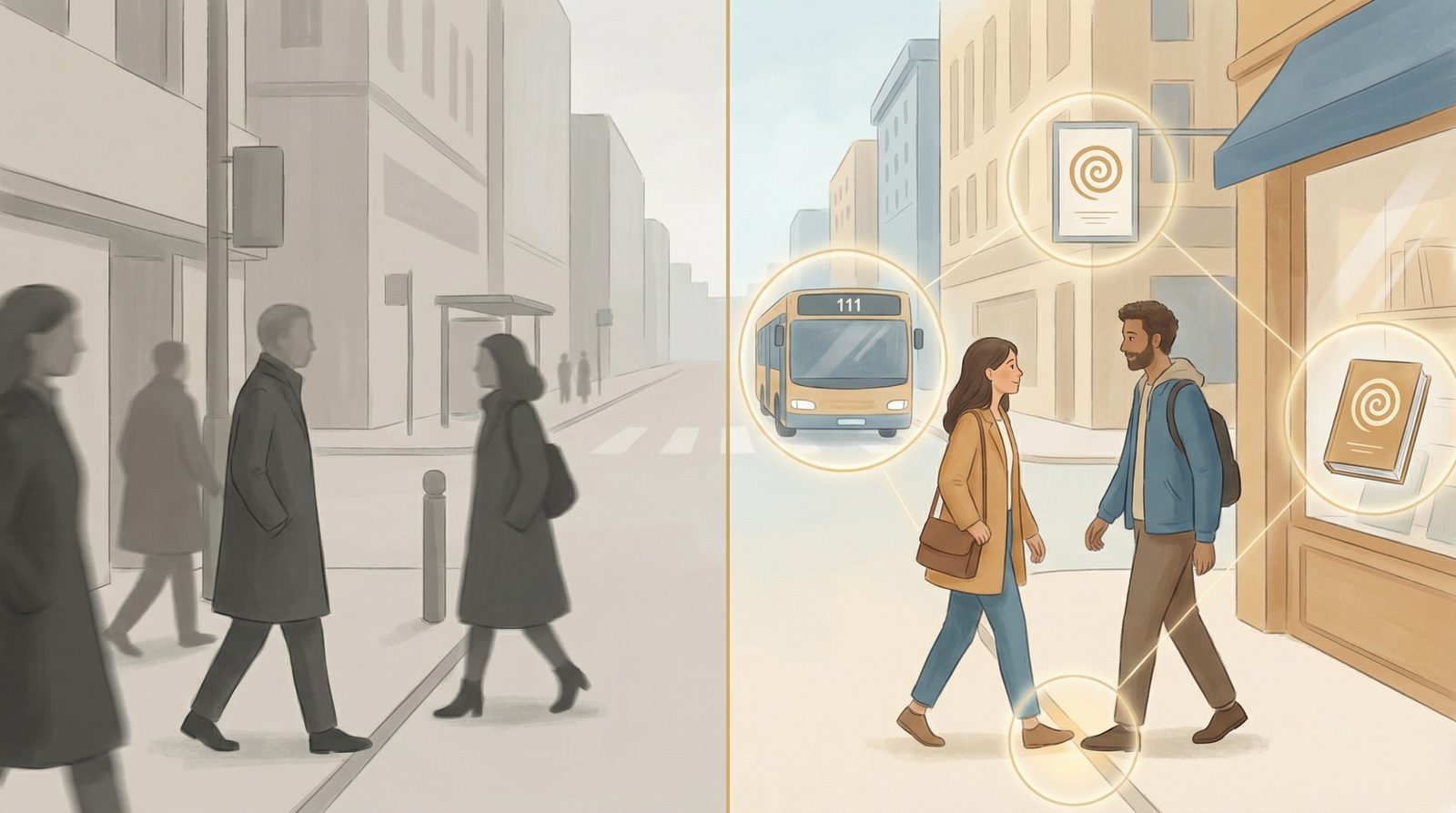
    Synchronicity And Meaningful Coincidence is the motif where events align with a precision that feels narratively excessive if everything is truly random. A stranger says the exact phrase the protagonist has been circling internally. A missed train leads to the only meeting that matters. The same symbol appears across unrelated places and moments. The story does not need to prove the supernatural; what matters is that the character experiences these alignments as communication rather than noise.

    In stories built around this motif, coincidence becomes information. The protagonist begins to treat timing, repetition, and interruption as meaningful data rather than background chaos. The explanation may vary — fate, God, a hidden order, the unconscious mind — but structurally the coincidences function the same way: they influence choice. Once the character starts acting as if meaning is real, the story has crossed its threshold.

    This logic is explicit in The Celestine Prophecy, where sequential encounters operate as instructions disguised as chance. In The Tenth Insight, the same mechanism is expanded into a system, training characters to read coincidence as guidance rather than accident. The Alchemist reframes this dynamic more quietly: dreams, omens, and chance meetings grant permission to abandon a stable life in favor of a meaningful one. In Way Of The Peaceful Warrior, coincidence is less mystical and more instructional, nudging attention back to discipline, presence, and embodied awareness.


    HOW IT WORKS IN STORIES

    Synchronicity usually enters a story quietly. The protagonist notices something small and easily dismissible: a repeated number, a perfectly timed interruption, an overheard sentence that lands too close to home. Early scenes preserve plausible deniability so the reader can remain skeptical without breaking immersion.

    The engine activates when coincidences begin to cluster. One coincidence is texture; several in close succession create pressure. These clusters tend to appear at decision points, moments when the protagonist is stuck between options or close to abandoning a path. In narratives like The Celestine Prophecy, each encounter functions as a breadcrumb that must be followed or consciously rejected. In The Alchemist, ignoring omens does not trigger punishment, but it stalls the story, draining momentum until attention realigns.

    Effective uses of this motif always impose cost. Following a “sign” risks embarrassment, loss of stability, or the appearance of irrationality. The character must accept the possibility of being wrong, foolish, or delusional. This risk is essential. Without it, synchronicity collapses into wish fulfillment. The choice to trust coincidence must feel dangerous enough to matter.

    Resolution typically arrives in one of two forms. In affirming narratives, the character learns to live inside a world where meaning does not need constant confirmation. In more ambiguous stories — as in I Origins — coincidences remain interpretable rather than proven, and the payoff is psychological. What changes is not the universe, but the character’s relationship to uncertainty.


    Editorial illustration inspired by 'Synchronicity And Meaningful Coincidence'

    EMOTIONAL EFFECT ON THE READER

    This motif is designed to feel intimate. The reader becomes a co-interpreter, scanning scenes for repetition, echo, and timing. When an early detail reappears in a charged moment, it produces a quiet jolt of recognition, as if the story is rewarding attention.

    At its most comforting, synchronicity offers relief from randomness. Detours feel purposeful. Delays feel protective. In books like The Alchemist, this reassurance is central to the reading experience, allowing setbacks to be reinterpreted as alignment rather than failure. The world feels readable, and the reader is invited to believe that attention itself has value.

    The same mechanics can also generate unease. Too many coincidences create the sense of being watched or guided too forcefully. In more psychological versions of the motif, the reader begins to question whether meaning is emerging organically or being imposed as a defense against chaos. That tension between enchantment and suspicion keeps the motif from becoming sentimental.

    When the motif works, the after-effect is practical. The reader finishes with heightened awareness of how easily meaning can arise once repetition and timing are framed as communication — and how much depends on where attention is placed.

    Symbolic illustration inspired by 'Synchronicity And Meaningful Coincidence'

    VARIATIONS & RELATED MOTIFS

    Synchronicity And Meaningful Coincidence appears in several recognizable variations. The spiritual guidance version treats coincidence as instruction, rewarding trust and punishing inattention. Romantic and literary versions soften the logic into serendipity, where repeated encounters transform chance into inevitability. Philosophical variants retain the pattern but refuse explanation, letting the reader decide whether meaning is discovered or constructed.

    A darker variation reframes synchronicity as a trap. Here, pattern recognition becomes exploitable, and “signs” function as lures rather than help. The story’s tension comes from uncertainty: is the universe speaking, is someone engineering the coincidences, or is the protagonist assembling meaning to avoid confronting randomness?

    This motif naturally overlaps with Spiritual Awakening, where heightened attention makes coincidence feel louder and more personal. It also pairs with Spiritual Pilgrimage and Inner Journey, where movement and reflection create the friction that makes “signs” feel necessary. When coincidence is framed as destiny language, it often converges with Personal Legend And Destiny.

  • Personal Legend And Destiny

    Personal Legend And Destiny

    DEFINITION & CORE IDEA

    Personal Legend And Destiny is the motif where a character believes there is a specific path, mission, or role that is uniquely theirs. It is not ordinary ambition. The calling is treated as a teleological claim: the character’s life has a “correct” direction, and the plot measures whether they recognize it and commit when commitment demands sacrifice.

    In The Alchemist, Paulo Coelho makes the idea explicit, turning “Personal Legend” into a named rule of the story’s world. The same structure appears in quieter forms as well. A character is pulled toward a vocation, an art, or a responsibility they cannot fully explain, and every attempt to live safely produces restlessness rather than relief.

    Writers use this motif to give everyday choices narrative gravity. Changing jobs, leaving home, or refusing a stable life becomes more than preference. It becomes alignment or refusal. The story is the argument between the calling and everything that pressures the character to compromise, delay, or shrink it into something acceptable.


    HOW IT WORKS IN STORIES

    The motif usually begins with restlessness. The character feels out of place. Their job, hometown, and relationships feel deadening or ill-fitting. This discomfort is treated as signal, not mood. The story often externalizes it through signs, recurring dreams, prophecies, or chance encounters that the character reads as communication rather than coincidence.

    Then comes the call to action. A letter arrives, a stranger offers an opportunity, or a crisis forces a choice. Saying yes usually means leaving comfort and social approval behind. Saying no may preserve stability in the short term, but the narrative increases the cost of refusal until staying becomes its own form of loss.

    As the character moves toward the calling, they meet helpers and tempters. Mentors, spiritual guides, and friends validate the direction and offer methods. Opposing them are institutions and relationships that reward safety. The motif thrives on the tug-of-war between the mythic pressure to pursue the irrational calling and the social pressure to remain “reasonable.”

    Structurally, this motif often maps onto a journey. Sometimes that journey is literal travel; sometimes it is an inner program of practice, work, or discipline. The character advances, loses faith, is tempted to accept a smaller dream, and then faces a point of no return where compromise becomes a defining choice.

    By the end, the story usually resolves through alignment or refusal. Either the character commits to the calling and accepts the cost, or they choose safety and live with the residue of what was not attempted. The motif’s claim is not that destiny is guaranteed. It is that destiny demands a decision.


    Editorial illustration inspired by 'Personal Legend And Destiny'

    EMOTIONAL EFFECT ON THE READER

    This motif targets the fear of insignificance. It offers a counter-claim: that a specific life can have a readable direction. The reader is invited to measure their own choices against the character’s willingness to commit.

    The unease comes from sunk cost. The story forces a private inventory of missed exits and deferred risks. Even optimistic versions create pressure because they imply that safety is not neutral; it is a decision with consequences.

    When the character chooses alignment, the reader often feels relief mixed with grief for what was sacrificed. When the character refuses, the emotion is quieter and sharper: the sense of a life narrowing, not through tragedy, but through avoidance.


    Symbolic illustration inspired by 'Personal Legend And Destiny'

    VARIATIONS & RELATED MOTIFS

    In allegorical or spiritual stories, the calling is framed as a cosmic assignment, and coincidence is treated as guidance. In grounded fiction, the same structure is reframed as authenticity without supernatural endorsement, with the “signs” replaced by pattern recognition and self-knowledge.

    One variation treats destiny as burden. The character is named “chosen” early, and the conflict becomes whether the script is theirs or someone else’s. Another variation delays recognition until late life, where the calling is discovered after years of compromise, turning the motif into a reckoning rather than a quest.

    This motif often overlaps with Spiritual Pilgrimage and Synchronicity and Meaningful Coincidence, since both motifs rely on the idea that events can be read as communication. It also pairs naturally with coming-of-age and redemption arcs, where the calling functions as a test of identity.

    In darker uses, the “destiny” can be misread or weaponized. The character follows the wrong calling, or a true calling arrives too late to be lived cleanly. The story then becomes a warning about interpretation rather than a promise about fulfillment.

  • Spiritual Pilgrimage

    Spiritual Pilgrimage

    DEFINITION & CORE IDEA

    A Spiritual Pilgrimage is a journey narrative where the stated destination is secondary to internal change. The protagonist may travel to a sacred site, follow a prophecy, or chase a promised revelation, but the journey functions as a structured sequence of tests designed to produce belief change, moral recalibration, or a new self-concept. The road is not backdrop. It is the mechanism.

    Stories like The Pilgrimage, The Alchemist, Siddhartha, and The Celestine Prophecy use travel as a didactic structure. Encounters are not random. Each guide, stranger, or obstacle is positioned to challenge a specific assumption and force a decision. The motif is built to convert movement into meaning through repeated, concrete choices.

    At its core, a Spiritual Pilgrimage treats geography as allegory. Terrain and logistics mirror internal states. A detour becomes a correction, a delay becomes a test of attachment, and reaching the destination often reveals that the “goal” was a sustaining pretext for transformation. The real arrival is a changed interpretive frame, not a point on a map.


    HOW IT WORKS IN STORIES

    The trigger is usually a sense of lack. The protagonist begins with spiritual numbness, restlessness, grief, or moral confusion. A call to travel appears, and the character steps away from familiar structures into uncertainty. This transition matters because the motif requires removal from the old context before the belief system can be tested.

    The journey then unfolds as iterative lessons. In The Pilgrimage and The Alchemist, the road is populated with omens, mentors, and small reversals that challenge the hero’s assumptions about success and failure. In Siddhartha, the river functions as a persistent teacher, reshaping the protagonist’s understanding of time, suffering, and enlightenment. The Celestine Prophecy builds its arc around sequential “insights” delivered through encounters that mix guidance with threat.

    Obstacles are rarely only physical. Hunger, fatigue, getting lost, and missed connections work on two tracks at once: logistics and revelation. A storm can be a crisis of faith. A wrong turn can be a confrontation with ego. Temptations to stop often arrive as comfort—safety, certainty, and social approval—so continuing becomes a deliberate act of change rather than mere endurance.

    The end state is usually “quiet arrival.” The protagonist may return home with altered perception, or reach the destination and discover it matters less than the internal shift already achieved. The motif closes by demonstrating integration: a new interpretive frame that changes how the character reads the same world.

    Writers use Spiritual Pilgrimage because it keeps philosophy grounded in events. Instead of abstract debate, the story forces ideas to survive contact with heat, fear, hunger, misunderstanding, and human inconsistency. The road supplies friction. Friction produces the change.


    Editorial illustration inspired by 'Spiritual Pilgrimage'

    EMOTIONAL EFFECT ON THE READER

    This motif invites projection. The reader maps personal uncertainty onto the pilgrim’s movement, using the journey as a safe container for questions about meaning, faith, and purpose.

    The emotional arc typically moves through three phases. First, resistance or naivety, where the pilgrim overestimates the literal goal. Second, a “dark night” phase, where the journey fails to deliver easy answers and the protagonist confronts doubt, fatigue, and disillusionment. Third, integration, where relief arrives not through conquest but through acceptance and clarity.

    Even in optimistic versions, the motif carries a controlled unease. It implies that comfort and certainty are often incompatible with change. In harsher variants, the pilgrimage can feel like attrition, where the lesson is not illumination but endurance. In either case, the payoff is the same: the reader finishes with a sharper sense of what the character is willing to become.


    Symbolic illustration inspired by 'Spiritual Pilgrimage'

    VARIATIONS & RELATED MOTIFS

    A Spiritual Pilgrimage can be overtly religious, centered on shrines, relics, or monasteries, or it can be framed as a secular search for meaning. Some stories emphasize discipline and deprivation, where the road is a controlled program of hardship. Others emphasize interpretation, where coincidences, symbols, and mentors form a readable pattern across the landscape.

    One common variation is the reluctant pilgrim, dragged into travel by circumstance and changed despite resistance. Another is the failed pilgrimage, where the character reaches the physical goal but refuses the internal shift, producing a bitter or ironic ending. Group pilgrimages expand the motif into social dynamics, using the shared road to expose competing belief systems.

    This motif often overlaps with Personal Legend And Destiny, where the journey outward is tied to the idea that each person has a unique path they are meant to recognize and commit to. It also connects naturally to motifs about mentors and guides, prophetic dreams, and the idea that “home” must be left in order to be understood.

    It can also be questioned or subverted. Some stories show how easily tourism can be mistaken for transformation, or how spiritual language can become a substitute for the harder work of change. Even then, the structural tension remains: the road tests what the character believes, and what they are willing to become.

  • The Alchemist (1988)

    The Alchemist (1988)

    INTRODUCTION

    The Alchemist (1988) by Paulo Coelho
    Philosophical fiction · 166 pages · Spain / Egypt


    The Alchemist has been quoted on posters, mugs, and social feeds so relentlessly that it is easy to forget there is a small, quietly odd novel beneath the slogans. On the surface, it reads like a simple fable about following your dreams. Underneath, it is more fragile and ambivalent than its reputation suggests.

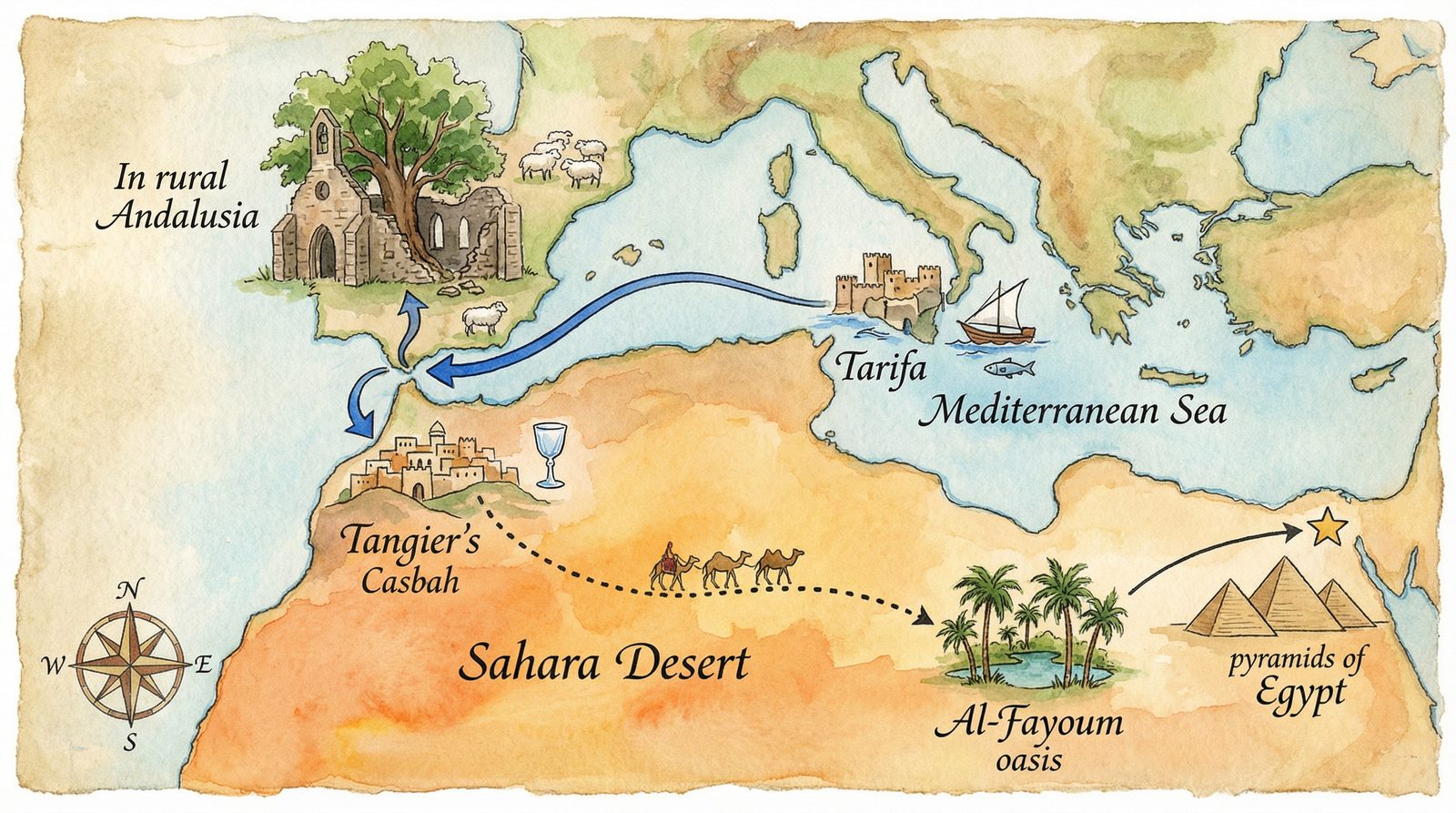
    Set in a loosely sketched, almost timeless world, the book follows a young Andalusian shepherd who trades pastoral safety for the uncertainty of travel across North Africa. The images linger: a boy sleeping in a ruined church beneath a sycamore tree, the repeated language of omens, the idea of a “Personal Legend” that both comforts and unsettles. Strip away the inspirational framing, and what remains is a story about restlessness, loss, and the uneasy cost of believing that life has a single, discoverable meaning.

    PLOT & THEMES

    The plot is deliberately spare. Santiago, a shepherd from Andalusia, dreams twice of treasure buried near the Egyptian pyramids. A strange old man calling himself Melchizedek, king of Salem, urges him to pursue the dream, speaking of Personal Legends and asking for a tenth of the treasure in advance. The encounter feels less like divine revelation than a streetwise push toward risk.

    Santiago sells his sheep, crosses to Tangier, and is immediately robbed. This early loss establishes one of the book’s central patterns: progress is inseparable from disorientation. Working for a crystal merchant overlooking the marketplace, Santiago learns how fear of change can slowly fossilize a life. The merchant’s unrealized pilgrimage to Mecca becomes a quiet warning about dreams postponed until they no longer feel possible.

    As Santiago joins a caravan crossing the Sahara, the novel widens. The Englishman obsessed with alchemical texts introduces the tension between book knowledge and lived experience. War between desert tribes, Santiago’s time at the Al-Fayoum oasis, and his love for Fatima sharpen the central question: when does commitment to a path become an excuse to avoid attachment, and when does attachment become a reason to stop seeking?

    The Alchemist himself appears late, more riddle than person. He insists that the oft-quoted idea that “the universe conspires” only holds if one is willing to risk everything. The ending is bluntly circular. Santiago learns that the treasure was buried back in Spain, at the very church where his journey began. The irony is not softened. The novel insists that the journey was necessary, even if the destination never moved.

    PROSE & NARRATIVE STRUCTURE

    Coelho’s prose is famously spare, closer to parable than to realist fiction. The narration moves in clean, declarative sentences that summarize inner change rather than dramatize it. This can feel hypnotic or thin, depending on the reader’s patience for abstraction.

    The structure is linear and episodic. Each location functions as a moral vignette: the church, the port of Tarifa, the crystal shop, the caravan, the oasis, the desert. Symbolic objects recur with near-ritual regularity: the Urim and Thummim stones, the hawks at Al-Fayoum, the desert itself as a listening presence. The repetition of phrases like “Personal Legend,” “Soul of the World,” and “Maktub” creates a chant-like rhythm that is central to the book’s effect.

    Formally, the novel takes few risks. Its power, when it works, comes from compression rather than complexity. It is designed to be read quickly and remembered vaguely, carried more as an atmosphere than as a sequence of scenes.

    Conceptual editorial illustration inspired by 'The Alchemist'

    CHARACTERS & INTERIORITY

    Santiago is not written as a psychologically complex figure. He functions as a clean archetype: open, curious, and capable of doubt without becoming paralyzed by it. His small attachments, his sheep, the memory of a merchant’s daughter, his fear when he first sees the sea, provide just enough texture to anchor the fable.

    The supporting figures operate as embodiments of choice. The crystal merchant represents resignation disguised as prudence. Fatima embodies a love that insists seeking and commitment need not cancel each other out. The Alchemist himself acts as a pressure point, forcing Santiago to risk annihilation rather than settle for symbolic understanding.

    Interior life is conveyed through parable rather than introspection. Feelings are named, not excavated. Yet moments of loss and fear, especially after the robbery in Tangier and during the desert ordeal, cut through the abstraction. The simplicity is intentional. The book asks the reader to project their own doubts into the spaces left open.

    LEGACY & RECEPTION

    Since its publication, The Alchemist has become one of the most translated and commercially successful novels of the late twentieth century. It sits alongside works like Jonathan Livingston Seagull as a foundational text of modern spiritual fiction. Critical response has been sharply divided, with some praising its mythic clarity and others dismissing it as aphoristic mysticism.

    The novel’s language of Personal Legends and cosmic conspiracy has seeped deeply into popular culture. Its endurance lies not in literary innovation but in its ability to function as a mirror. Readers return to it at different moments of life and read different instructions into the same slender story.

    IS IT WORTH READING?

    If you are looking for dense characterization or stylistic experimentation, this will feel thin. If you approach it as a modern fable, a compressed meditation on risk, desire, and return, it can still resonate. Reading it now is also an act of reclamation, separating the novel from its motivational afterlife.

    The lingering question it leaves is not inspirational but quietly unsettling: what would you have to give up to find out whether the life you imagine is actually yours?

    Illustration inspired by a core idea from 'The Alchemist'

    TRIVIA & AUTHOR FACTS

    Paulo Coelho wrote the novel quickly, later describing the process as intuitive rather than planned. It was initially a commercial failure in Brazil, and its first publisher dropped it. Only after being taken on by another house did it begin its gradual rise to global success.

    The book synthesizes Coelho’s long-standing interests in pilgrimage, omens, and Western esoteric traditions. Despite the title, its use of alchemy is symbolic rather than historical, drawing more from myth and metaphor than from chemical practice.

    SIMILAR BOOKS

    Readers drawn to this style of allegorical journey may also explore Siddhartha by Hermann Hesse, Jonathan Livingston Seagull by Richard Bach, or Shusaku Endo’s Silence, which offers a far harsher meditation on faith and failure. Each examines what is gained and lost when belief becomes a guiding structure.

    DISCOVERABILITY & LINKS

    DISCOVERABILITY & LINKS

  • The Pilgrimage (1987)

    The Pilgrimage (1987)

    INTRODUCTION

    The Pilgrimage (1987) by Paulo Coelho
    Spiritual fiction · 276 pages · Spain


    The Pilgrimage is Coelho before The Alchemist turned him into a global brand. Set along the Camino de Santiago in late twentieth-century Spain, it follows “Paulo” as he walks toward Compostela under the stern guidance of his master, Petrus. What begins as a journey across Spain becomes a chain of humiliations, occult drills, and small, piercing moments of clarity.

    The road works as an inner mirror. Crowded streets, empty stretches of the Meseta, and awkward encounters with strangers become tests of vanity, fear, and attention. The tone is restless and self-critical. This is a spiritual quest narrative that keeps tripping over ego, and that is exactly where it becomes interesting.

    PLOT & THEMES

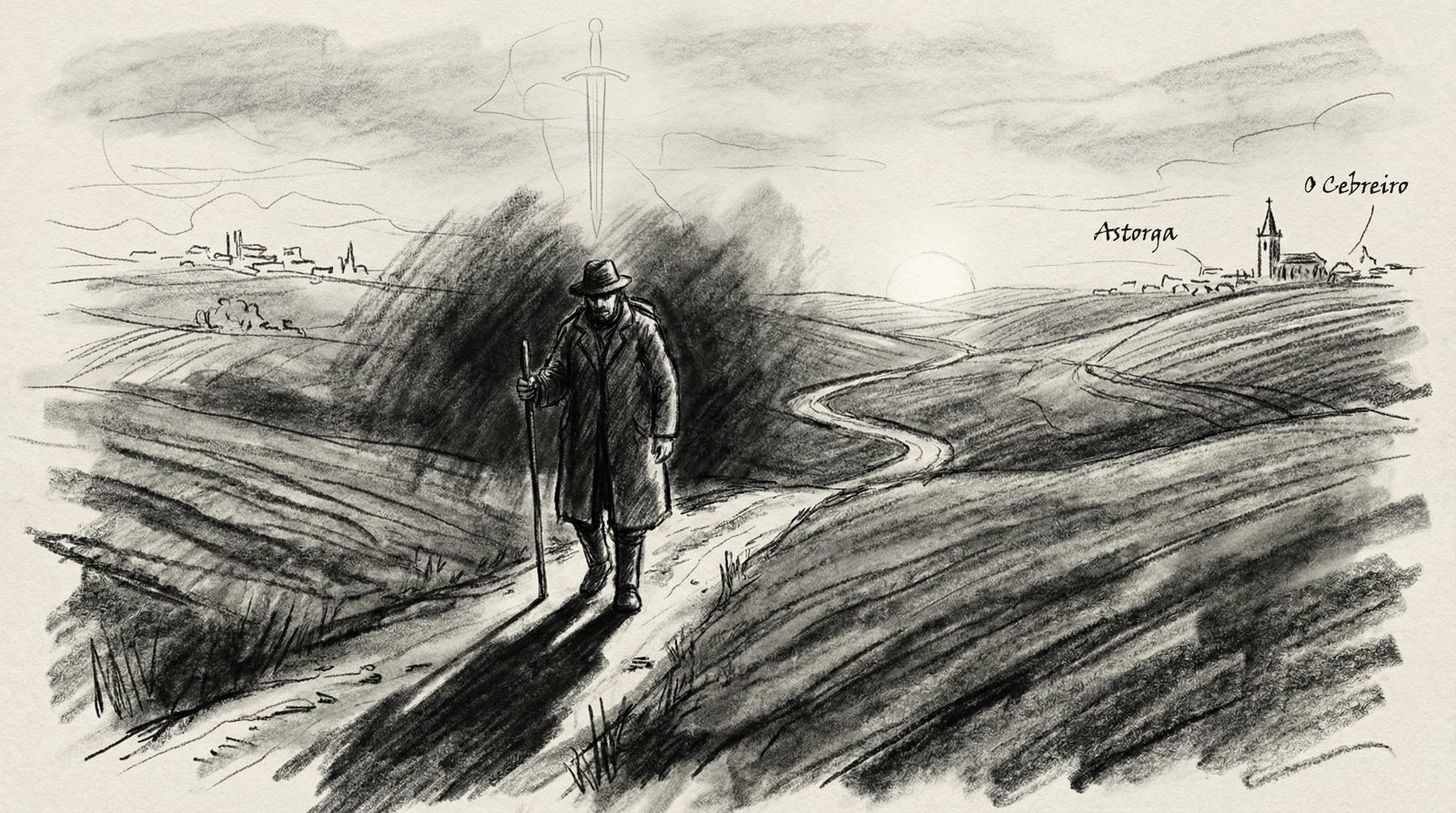
    The plot is disarmingly simple. Paulo has failed an initiation within his esoteric order, RAM, and must walk the Camino to recover a lost sword that symbolizes spiritual authority. Petrus leads him from town to town, and the journey becomes a sequence of exercises that look, at first glance, like New Age party tricks. In practice they function as slow, stubborn methods for stripping pride and building discipline.

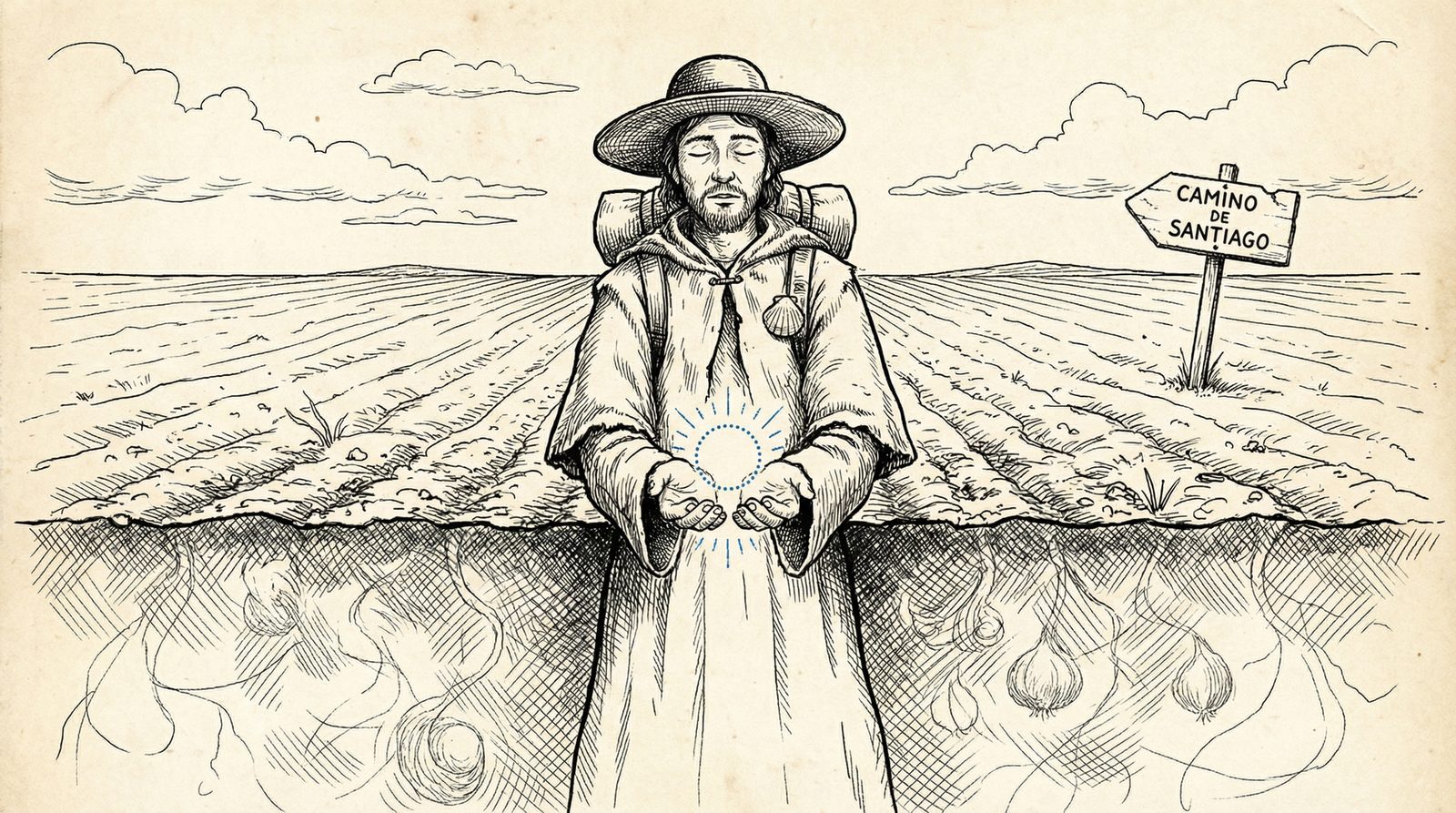
    Several rituals recur in the reader’s memory the way blisters do after a long day of walking. The Seed Exercise asks Paulo to imagine himself buried in darkness before growth. The Speed Exercise forces him to walk excruciatingly slowly while everyone else rushes past. The point is not power. The point is humiliation as instruction, and attention as the only real “skill” being trained.

    The book uses the familiar pilgrimage framework but keeps undercutting the heroic arc. Paulo becomes jealous of a dog, terrified by a madman near a ruined village, and nearly seduced off the path by an encounter that reads like temptation made flesh. The sword remains present as an absence: a symbol of authority that Paulo wants to possess, but does not yet deserve. Themes of obedience, everyday miracles, and spiritual pride run through the journey, but Coelho insists that the holy is found in missed buses, bad wine, aching feet, and arguments with the guide.

    The ending is resolutely uncinematic. Near the end of the Camino, Paulo is forced into a confrontation that feels like a ritualized fight with fear itself. Only after that does Petrus reveal the sword, and the revelation is almost wry: it has been near Paulo all along. The final lesson is not that Santiago grants miracles. It is that practice must continue. The journey is not completed once. It repeats, in different forms, for the rest of a life.

    PROSE & NARRATIVE STRUCTURE

    The book is written as first-person memoir, and that choice matters. Paulo is not an omniscient sage looking back with smug clarity. He is defensive, hungry for approval, and frequently irritated by his teacher. The sentences are short and blunt, and the rhythm can feel awkward until you realize it mirrors the act of walking: repetition, fatigue, and sudden flashes of lucidity.

    Episodes are arranged as parables rather than as a tightly plotted arc. Each town offers a new exercise, a new failure, and a new fragment of insight. Coelho also includes manual-like sections that explain practices directly. This interrupts the narrative spell, but it clarifies the book’s ambition: it wants to be used, not merely read.

    Structurally, the memoir circles back on itself. The opening failure in Brazil is mirrored by Paulo’s near-failure at the end, creating a loop rather than a straight line. The Camino becomes less a path across Spain than a track inside Paulo’s mind, where the same fears return until they are finally faced without performance.

    Conceptual editorial illustration inspired by 'The Pilgrimage'

    CHARACTERS & INTERIORITY

    Paulo is a seeker figure stripped of glamour. He is vain about spiritual rank, sulky when Petrus withholds praise, and occasionally cruel in his private judgments of other pilgrims. This imperfection gives the spiritual material friction. We are not watching a saint in the making. We are watching a person wrestling with the desire for meaning and the desire for status, and trying to pretend they are the same thing.

    Petrus is a trickster mentor who alternates tenderness with mockery. He engineers situations that feel pointless or humiliating, because humiliation is the tool. Minor figures appear briefly but function as mirrors: the pilgrim who quits after losing a bag, the farmer who explains an exercise without mysticism, the stranger who passes Paulo effortlessly, reminding him that pride is often just a story told to cover weakness.

    Interior life is the book’s real arena. Paulo’s obsessive self-monitoring can be exhausting, but it is also the most honest part of the memoir. The drama is not the landscape. It is the mind trying to keep control of the story while the walk keeps undoing it.

    LEGACY & RECEPTION

    In hindsight, this book is often read as the seed of Coelho’s later work. Where The Alchemist turns the quest into a smooth fable, The Pilgrimage keeps the blisters and the awkward pauses. It helped popularize the Camino de Santiago for readers who had never heard of Compostela, and it contributed to the late twentieth-century boom in spiritual memoirs that treat personal crisis as narrative engine.

    Reception has always been split. Some dismiss it as occult tourism. Others value its willingness to show spiritual vanity and failure without disguising them as wisdom. The ending, with the sword revealed in an ordinary field rather than inside a cathedral, has aged well. It refuses the fantasy that holiness lives in famous buildings. The climax is internal: authority is conditional, dependent on ongoing practice, and never finally earned.

    IS IT WORTH READING?

    If you want a polished parable with all rough edges sanded off, this is not it. The memoir is uneven, occasionally naïve, and sometimes embarrassing. That is also why it works. The mix of ritual, Catholic imagery, and blunt self-critique feels like a real person groping toward meaning rather than a guru dispensing aphorisms.

    Readers interested in spiritual practice, in the psychology of faith, or in the Camino as lived from the inside will find plenty to chew on. If you have no patience for mysticism, the book may grate. But as a portrait of stubborn searching, it remains strangely compelling.

    Illustration inspired by a core idea from 'The Pilgrimage'

    TRIVIA & AUTHOR FACTS

    Coelho did walk the Camino de Santiago in the 1980s after a turbulent period that included time in a mental institution and years working as a lyricist in Brazil. The order RAM is presented as real but partially fictionalized and deliberately obscured. The exercises described, including the Seed Exercise and the Blue Sphere Exercise, are framed as practices he claims to have done rather than as invented fantasy.

    The book was first published in Portuguese as O Diário de um Mago (“Diary of a Magus”), emphasizing the occult angle more than the walking-tour aspect. The manual-like appendix has inspired informal study circles and solitary readers who treat the book as a workbook as much as a narrative.

    SIMILAR BOOKS

    If this blend of outer travel and inner upheaval appeals to you, Siddhartha offers a more distilled spiritual journey, while Wild turns the walk into a contemporary reckoning with grief and self. Readers drawn to the Christian mystical angle may also find resonance in conversion narratives like The Seven Storey Mountain, where the road is traded for a monastery but the hunger for transformation remains.

    DISCOVERABILITY & LINKS

  • Rapid Weight Loss And Body Decay

    Rapid Weight Loss And Body Decay

    DEFINITION & CORE IDEA

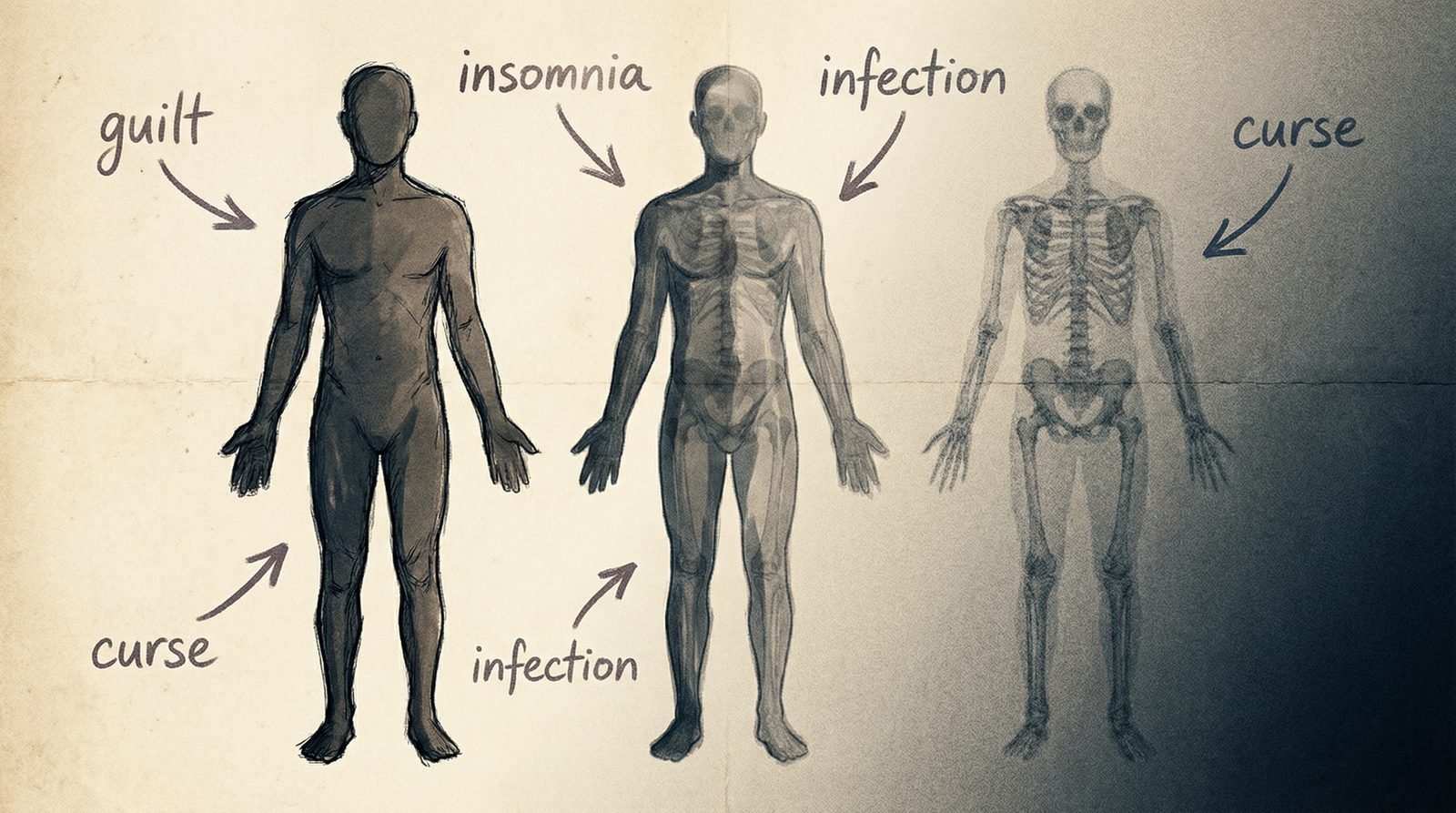
    Rapid Weight Loss And Body Decay is a motif where a character’s body starts to waste away at an unnaturally fast pace. Flesh shrinks, bones jut out, skin discolors or hangs loose, teeth loosen, hair falls out. The change is visible, undeniable, and usually unstoppable. It is not just about being thin; it is about the body clearly failing, like a machine burning itself out.

    Stories use Rapid Weight Loss And Body Decay to make inner problems show up on the outside. A curse, a disease, a parasite, an experiment gone wrong, or untreated guilt can all manifest as a body that is literally disappearing. In Thinner (1984) and its film adaptation, the wasting is a supernatural punishment that keeps going no matter how much the character eats. In The Machinist, the main character’s skeletal frame mirrors his insomnia, paranoia, and buried secrets. In The Troop, the body decay comes from an invasive horror that turns hunger and weight loss into something monstrous.

    This motif sits at the intersection of body horror and psychological terror. It takes something many people quietly fear – illness, aging, loss of control over their own body – and accelerates it. The body becomes a visible countdown clock, a daily reminder that time is running out and that something is deeply wrong, whether in the world, in the mind, or in the character’s past.


    HOW IT WORKS IN STORIES

    Rapid Weight Loss And Body Decay usually begins with small, easy-to-dismiss signs. A character drops a few pounds without trying, feels oddly tired, or notices their clothes hanging looser. At first they may be flattered or mildly concerned. The reader knows better, because every sentence about a loose waistband or hollowed cheek feels like the start of something worse.

    The story then escalates. The character eats constantly and still loses weight, or they cannot keep food down, or something inside them is devouring every calorie. Medical tests come back normal, or show something baffling. Doctors shrug, or the hospital becomes another stage for humiliation as strangers comment on the character’s appearance. The ordinary logic of diet and health breaks down, which is part of the horror.

    Writers often tie the decay to a specific cause. In supernatural horror like Thinner, the wasting is a curse laid on a guilty protagonist, a physical form of judgment that cannot be reasoned with. In psychological stories like The Machinist, the body reflects an inner collapse: sleeplessness, guilt, and trauma etch themselves into bone and skin. In creature or infection horror like The Troop, the decay comes from a parasite or experiment, turning the human body into a laboratory for something hungry and inhuman.

    As the Rapid Weight Loss And Body Decay accelerates, relationships strain. Friends and family may stage interventions, accuse the character of having an eating disorder, drug problem, or mental break. The character might lie about their condition, hide their body under layers of clothing, or isolate to avoid pitying or horrified stares. Everyday tasks become exhausting. Mirrors turn into enemies.

    Structurally, the motif gives the story a built-in ticking clock. The reader can see the stakes rising just by how the character looks and moves. Each chapter can mark a new threshold – another notch on the belt, another comment from a stranger, another failed attempt to reverse the process. The question becomes how far the body will go before the character breaks, confesses, or is consumed.


    Editorial illustration inspired by 'Rapid Weight Loss And Body Decay'

    EMOTIONAL EFFECT ON THE READER

    Rapid Weight Loss And Body Decay hits readers in a very physical way. It is hard not to imagine your own body when you read about someone else’s shrinking, bruising, or failing. The descriptions can trigger a mix of disgust, fascination, and dread. You may want to look away, but you also want to know how far it will go.

    There is also a strong current of helplessness. Watching a character do everything right – eating, resting, seeking help – and still deteriorate taps into fears about cancer, wasting diseases, or any illness that does not care how “good” you are. When the decay is tied to guilt or punishment, as in Thinner, the feeling gets even more complicated: you might think the character deserves it, yet still flinch at every new detail of their suffering.

    Shame is another powerful note. As the body changes, the character often feels exposed and judged. Scenes where they try to hide their frame, avoid being touched, or endure comments about their appearance can be more painful than the outright horror. Readers who have ever felt out of control in their own bodies may recognize that embarrassment and anxiety, even if the story itself is fantastical.

    At the same time, Rapid Weight Loss And Body Decay can stir a strange sympathy. The character is literally stripped down, defenses and vanity falling away along with the pounds. That vulnerability can make their confessions, reconciliations, or last acts hit harder. Even in the bleakest horror, there is often a moment where the reader feels the full weight of the character’s humanity, right as the body is failing them most.


    Symbolic illustration inspired by 'Rapid Weight Loss And Body Decay'

    VARIATIONS & RELATED MOTIFS

    Rapid Weight Loss And Body Decay shows up in several distinct flavors. One common variation is the cursed punishment story, like in Thinner, where the wasting is a moral sentence. The character’s shrinking body becomes a public confession of their crime. This can intersect with motifs about guilt made visible or supernatural justice, where the body tells the truth the character would rather hide.

    Another variation is the psychological spiral, as in The Machinist. Here, the focus is less on gore and more on how mental strain writes itself onto the body. Rapid Weight Loss And Body Decay overlaps with motifs about unreliable narrators, trauma resurfacing, and insomnia as unraveling. The reader is left wondering how much of the decay is real and how much is filtered through a damaged mind.

    There is also the parasitic or scientific horror version, like The Troop, where the decay is caused by infection, experiment, or alien biology. This ties Rapid Weight Loss And Body Decay to motifs such as body as laboratory, contagion, and the commodified body, where human flesh is just another resource to be used, altered, or consumed.

    Finally, the motif can blend with more grounded narratives: medical dramas about aggressive illness, or realistic stories about eating disorders and self-destruction. In those cases, Rapid Weight Loss And Body Decay intersects with motifs of survival as performance, family caretaking, and the failing body. The horror is quieter but often more emotionally devastating, because it feels so close to real life.

    Across all these variations, the core remains the same: a body that is vanishing too quickly, turning private fears and hidden sins into something you cannot help but see.