Feel: mounting dread

  • The Whispering Skull (2014)

    The Whispering Skull (2014)

    INTRODUCTION

    The Whispering Skull (2014) by Jonathan Stroud
    Young adult fantasy · 448 pages (UK hardcover) · United Kingdom


    The Whispering Skull is where Lockwood & Co. stops feeling like a clever ghost-hunting premise and starts to feel like a haunted friendship. Stroud takes his alternate 2010s London and leans into bones, relics, and buried history. The tone stays brisk and funny, but there’s a persistent melancholy under the banter, as if every joke is being told with the cemetery gates still swinging behind you. This second book tightens focus on the small agency at 35 Portland Row and pushes them into direct conflict with both spectral threats and the petty cruelties of adult institutions.

    It’s not just about defeating Visitors. It’s about what happens to children who grow up with iron chains in one hand and a ghost-lantern in the other, and how long they can keep pretending that’s normal.

    PLOT & THEMES

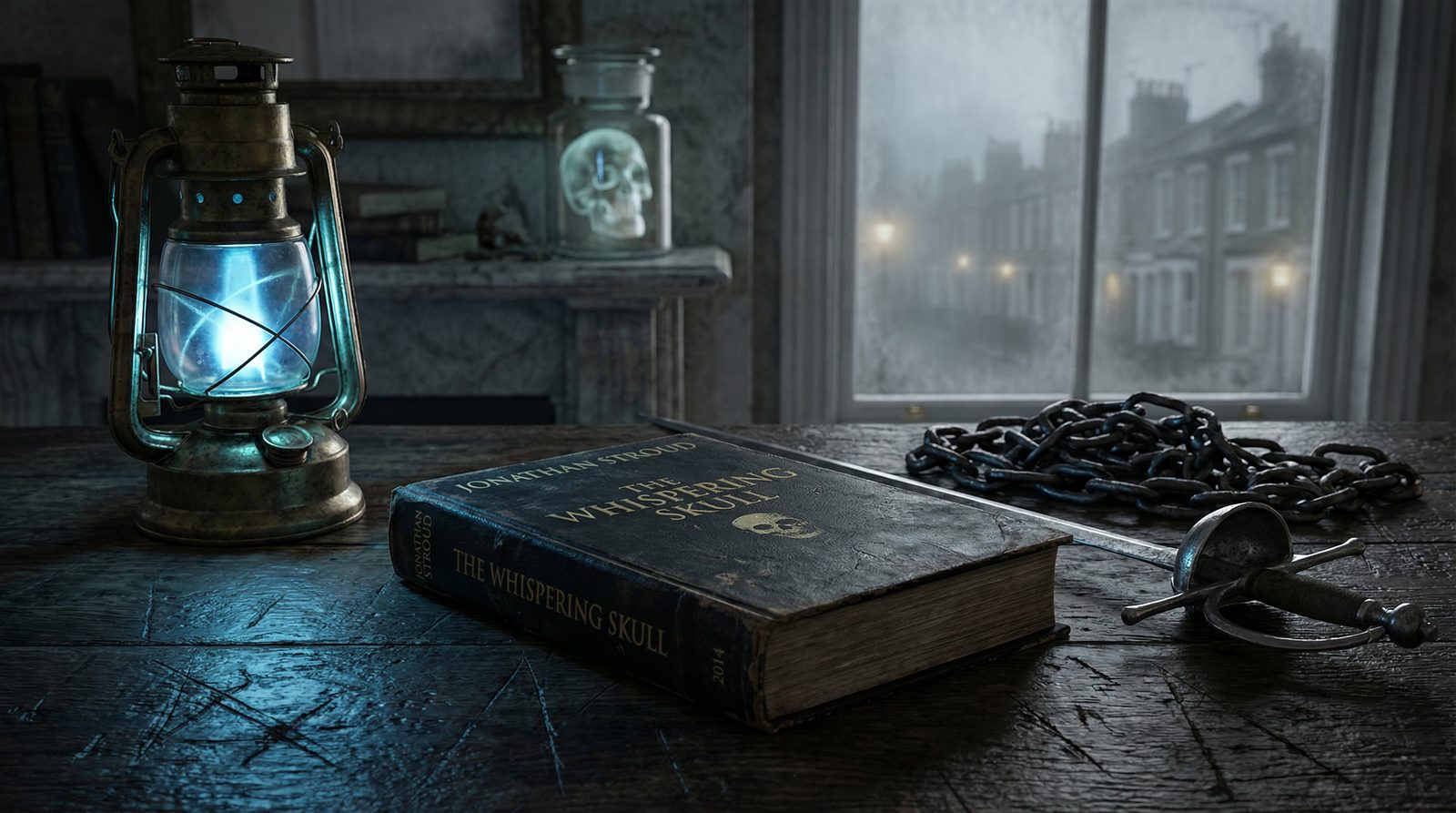
    The plot hinges on two dangerous objects: a stolen bone mirror taken from the grave of the Victorian occultist Edmund Bickerstaff, and the titular Whispering Skull, a communicative ghost sealed in a glass jar in Lockwood’s basement. The rivalry with the larger Fittes agency continues, turning every case into a contest for prestige and survival. Quill Kipps and his squad are comic foils, but they also remind the reader that Lockwood’s outfit is underfunded and one serious mistake away from ruin.

    Mirrors and reflection become the book’s central symbolic logic. The bone mirror does not merely show the past; it shows unbearable truths and functions like a psychic trap. That’s why the story keeps returning to private looking as a form of danger. The mirror’s influence on George becomes increasingly insidious, culminating in a near-fatal compulsion to face its visions alone.

    The institutional layer expands. Visits to cemeteries, research facilities, and agency strongholds hint at a wider exploitation of the Problem: not only fear management, but profit, secrecy, and competitive sabotage. The book’s procedural spine keeps the world grounded in rules and consequences, which ties naturally to the Ghost Hunting Agency motif and brushes up against Magical Bureaucracy whenever oversight and institutional obstruction enter the frame.

    The ending is clean and decisive. Lockwood, Lucy, and George confront the mirror in the catacombs and destroy it with Greek Fire, denying its power to everyone who wants to weaponize it. The final sting comes back at home: the Skull retaliates by revealing it knows something about Lockwood’s locked room and his dead sister, turning a solved case into a deeper future threat.

    PROSE & NARRATIVE STRUCTURE

    Stroud’s prose is deceptively light, and Lucy’s first-person retrospective narration gives everything a double edge. We are in the moment with a frightened, stubborn teenager, but we are also listening to a voice that already understands which mistakes will echo. That distance lets Stroud slide from kitchen banter at Portland Row into a chilling description of the bone mirror’s surface without changing gears.

    The structure alternates between set-piece hauntings and slower investigative passages: cemetery missions, mausoleum sequences, and the final catacomb descent, broken up by research in George’s paper-strewn basement and Lucy’s late-night conversations with the Skull. Those Skull scenes feel like a dangerous kind of therapy: comfort mixed with coercion. Domestic rituals — tea, toast, Lockwood’s immaculate suits — become a fragile defense against the encroaching dead.

    Action is cleanly choreographed and tactile: iron chains on stone, salt and flame, the sudden drop in temperature when a Visitor arrives. The pacing is confident because the book knows what it is doing: it keeps feeding casework forward while quietly tightening the emotional screws inside the house.
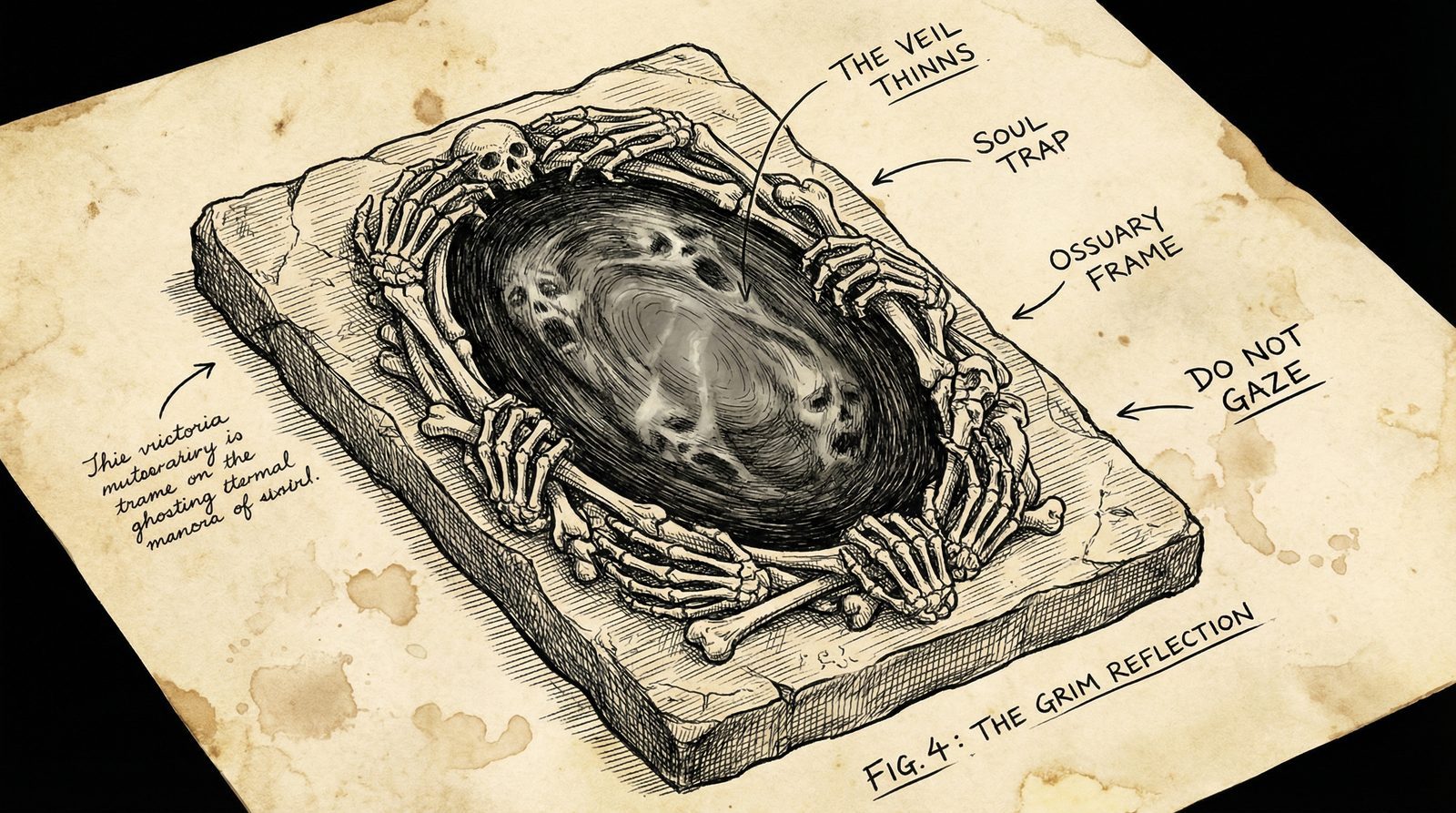
    Conceptual editorial illustration inspired by 'The Whispering Skull (2014)'

    CHARACTERS & INTERIORITY

    At the center is Lucy Carlyle, a haunted-heroine variation who is both weapon and witness. Her Listening talent makes her uniquely vulnerable to the Skull’s taunts, and Stroud lets the reader feel her mix of pride and fear whenever she pushes her ability further. Her prickliness and jealousy, especially toward rival agency figures, ground the character in mid-teen social pain rather than generic heroism.

    Anthony Lockwood remains charmingly opaque. We glimpse grief through fissures: his fury at institutional threats, his tight-lipped silence about the locked room, the way he flinches when certain names surface. George Cubbins gains sharper interiority here, with the mirror’s pull revealing how the Problem corrodes even the researcher’s sense of control. The Skull becomes the most unsettling presence of all because Lucy begins to seek its validation even as she knows it is malicious.

    LEGACY & RECEPTION

    The Whispering Skull is often remembered as the installment where the series “locks in.” The world of iron chains, ghost-fog, and child agents becomes not just a setting but a coherent system with rules and moral cost. The later screen adaptation rearranges material, but the book’s quieter achievements remain hard to replicate: Lucy’s voice, George’s creeping obsession, and the Skull’s final revelation that lands like a stone in still water.

    Within YA supernatural fiction, the novel stands out for combining procedural casework with emotional fracture. It trusts readers to sit with unresolved questions while still delivering a clean, satisfying case conclusion.

    IS IT WORTH READING?

    If you liked the first book but wanted more emotional weight and stranger ghosts, this is worth your time. It balances spectral action with character work and lets jokes coexist with dread. The horror isn’t gore; it’s standing in the dark with something whispering in your ear, telling you what you most want — and fear — to hear. If Lucy’s voice and her uneasy bond with the Skull click for you here, the rest of the series will reward you.

    Illustration inspired by 'The Whispering Skull (2014)'

    TRIVIA & AUTHOR FACTS

    Stroud’s experience with voice-driven fantasy in the Bartimaeus books shows in the Skull’s sardonic commentary. This installment continues his interest in pairing young protagonists with dangerous, talkative supernatural entities. The novel also deepens the series’ working-world logic: agencies, relic markets, regulation, and institutional secrecy layered over classic ghost story fear.

    Real London locations are tilted into the uncanny, and Stroud’s material toolkit — iron, salt, Greek Fire, sealed jars — keeps the magic tactile rather than abstract. The procedural clarity is part of the series’ signature: the rules matter, and so do the consequences of breaking them.

    SIMILAR BOOKS

    If you enjoy the mix of banter, ghosts, and real peril here, you may like other series that combine investigative structure with a strong voice and a dangerous partnership. The best matches tend to treat supernatural rules as work rules and use humor as a survival strategy rather than a mood.

    DISCOVERABILITY & LINKS

  • Battle Royale (2000)

    Battle Royale (2000)

    Battle Royale (2000), directed by Kinji Fukasaku. Thriller · 114 minutes · Japan.


    INTRODUCTION

    Battle Royale arrives like a dare: what if the petty cruelties of high school were given live ammunition and televised approval? Kinji Fukasaku’s film traps a class of junior high students on an island and forces them to kill each other until only one survives, but the shock premise is a delivery system for something more corrosive. The mood is a mix of bleak satire and raw adolescent panic, with moments of tenderness that feel almost indecent inside the carnage. The film moves between deadpan government announcements and messy, hormonal outbursts, creating a feel of mounting dread that never quite lets the viewer settle. It is violent, yes, but the violence is pointed: a study of how institutions convert teenage anxiety into spectacle and control. Watching it now, after years of imitators, it still feels uncomfortably direct, like a bad dream that remembers your school’s seating chart.

    PLOT & THEMES

    In a near-future Japan plagued by youth crime and economic malaise, the government passes the BR Act, a law that annually selects a school class for a state-run death game. A bus of ninth-graders on a class trip is gassed and shipped to a remote island. There, their former teacher Kitano explains the rules with bureaucratic calm: each student wears an explosive collar; they receive a random weapon and three days to kill each other. If more than one survives, everyone dies. This is the classic survival game trope, but rendered with a bitter sense of civic ritual.

    The story tracks several clusters of students: Shuya and Noriko trying to preserve their humanity; Kawada, a transfer student with prior Battle Royale experience; and various classmates who splinter into alliances, vendettas, and doomed utopian schemes. The island becomes a map of adolescent archetypes under pressure. Themes of state violence and institutional betrayal run through every interaction. Authority has literally weaponized the classroom, turning attendance into a death sentence.

    Fukasaku keeps returning to the motif of childhood innocence colliding with militarized discipline. The cheerful instructional video explaining the rules feels like a parody of educational TV, while the students’ roll call deaths are announced over a PA system like exam results. The motif of the island as a closed system under surveillance echoes later works like The Hunger Games, but here the satire is less heroic and more despairing. Friendship pacts curdle into paranoia, crushes into fatal hesitation. The film keeps asking whether any bond can survive when the state has turned trust into a liability.

    CINEMATIC TECHNIQUE & AESTHETICS

    Battle Royale is shot with a rough, almost documentary immediacy that undercuts its sensational premise. Fukasaku favors handheld camera work during the skirmishes, letting the frame jitter with the students’ panic. This technique, combined with abrupt cutting, keeps the geography slightly unstable so that every corner of the island can feel like an ambush. Yet the film also uses classical framing in the briefing scenes, with Kitano centered and static, to stress the cold order behind the chaos.

    The editing leans on jump cuts and sudden tonal shifts. A quiet confession can snap into a gunshot, then to a blackly comic death report. This creates a feel of whiplash that mirrors teenage emotional volatility. The use of classical music on the soundtrack, including grand choral pieces over the opening text and the final tally, rubs against the low-tech brutality on screen. It suggests that the state sees this slaughter as a noble civic ceremony, not a crime.

    Color is used sparingly but effectively. The school uniforms, with their muted tones, make the bursts of blood and the bright weaponry stand out. The island’s drab buildings and overgrown fields evoke a forgotten military base, reinforcing the motif of the island as a closed system under surveillance. The sound design emphasizes breathing, footsteps, and the electronic beeping of collars, so that technology and fear are always audible. Compared with something like The Hunger Games, which often romanticizes rebellion, Battle Royale keeps its technique grounded and abrasive, closer in feel to the grim tension of Cube or a war film about frightened conscripts.

    Editorial illustration inspired by 'Battle Royale (2000)'

    CHARACTERS & PERFORMANCE

    Shuya Nanahara functions as a reluctant hero archetype, but the film never lets him become a clean-cut savior. He is traumatized, confused, and often reactive, clinging to memories of his dead father and to Noriko as a fragile anchor. Tatsuya Fujiwara plays him with a mix of earnestness and shell shock, which keeps the character from feeling like a standard action lead. Noriko is closer to an innocent archetype, though the world around her keeps testing that innocence by showing how quickly gentleness can be targeted as weakness.

    Kawada, the transfer student, is the hardened survivor archetype, a veteran of a previous game who carries both tactical knowledge and deep grief. His presence injects a noir flavor; he speaks like someone already half outside the story, guiding the others while expecting the worst. By contrast, the two transfer “ringers” who revel in killing embody the predator archetype, almost slasher villains dropped into a class roster. Their stylized menace contrasts with the more mundane panic of the regular students.

    Beat Takeshi as Kitano is the film’s most unsettling presence. He plays the disillusioned teacher as a mix of wounded authority figure and petty tyrant, an authority archetype who has given up on pedagogy and embraced punishment. His quiet scenes, including a surreal phone call and a late domestic interlude, hint at a lonely, failed adult life that curdles into cruelty toward his students. The ensemble of classmates gets limited screen time, but the film sketches them sharply enough that each death feels like a specific loss rather than a statistic.

    CONTEXT & LEGACY

    Released in 2000, Battle Royale landed at a moment of anxiety about youth culture, school violence, and economic stagnation in Japan. Fukasaku, who had lived through wartime bombing as a child, reportedly saw the film as a way to talk about how states sacrifice the young for abstract stability. That wartime memory haunts the story, turning the classroom into a conscription office. The film’s controversy at home, including restricted distribution, only sharpened its reputation abroad.

    Its influence is obvious in later works like The Hunger Games, which borrowed the survival game trope and the spectacle of children forced to kill each other for a watching society. Yet Battle Royale remains harsher and more cynical, less interested in organized rebellion than in the intimate betrayals between friends. You can also feel its DNA in ensemble survival films and games, from Cube to multiplayer battle royale games that took its title but often stripped away its political sting. Over two decades on, it still feels like a provocation, not a franchise template.

    IS IT WORTH WATCHING?

    Battle Royale is worth watching if you can handle its blunt violence and moral bleakness. The film is not coy about what it is doing: it wants you to feel complicit as you watch teenagers strategize, panic, and die under a government’s indifferent gaze. As a thriller, it is tense and unpredictable, with a pace that rarely slackens once the game begins. As a social satire, it is sharper than many of its descendants, skewering both adult hypocrisy and adolescent cruelty.

    If you are looking for a comforting narrative of resistance, this will frustrate you. Its feel is closer to a war film than a young adult adventure. But if you are interested in how genre can be used to interrogate power, peer pressure, and the fragility of loyalty, it remains one of the defining Japanese thrillers of its era.

    Symbolic illustration inspired by 'Battle Royale (2000)'

    TRIVIA & PRODUCTION NOTES

    Kinji Fukasaku directed Battle Royale late in a long career that included yakuza films, and his experience with ensemble crime stories shows in how he juggles the large cast. He reportedly connected the material to his own memories of being a teenager during World War II, working in munitions factories under bombardment, which shaped the film’s view of adults as callous managers of youth suffering.

    The production used real junior high school uniforms and shot on an actual island location, which adds to the sense of realism despite the heightened premise. Beat Takeshi’s involvement brought extra attention, and his dry improvisations colored several of Kitano’s stranger moments. The film’s graphic content led to ratings battles and limited theatrical runs in some territories, which paradoxically helped build its cult status through imports and home video. Its title later inspired the naming of battle royale games, though those games usually drop the political context and focus on the survival game trope as a pure competitive structure.

    SIMILAR FILMS

    If Battle Royale grips you, several other works explore similar territory. The Hunger Games offers a more polished, Hollywood take on the survival game trope, with a stronger emphasis on rebellion and media manipulation. Cube strips the idea down to strangers trapped in a lethal maze, focusing on paranoia and group dynamics. Fans of the ensemble under pressure structure might also look at Japanese thrillers that pit classmates or colleagues against each other, or at war films that treat conscripted youth with the same grim attention to fear and indoctrination. While many later survival stories soften their blows with clearer heroes and villains, Battle Royale sits with the messier truth that in a rigged system, survival often means accepting a role you never wanted.

    DISCOVERABILITY & LINKS

    On AllReaders.com, Battle Royale connects to clusters about state violence, ensemble survival stories, and Japanese thrillers that blur the line between satire and horror. Its motifs of childhood innocence colliding with militarized discipline and the island as a closed system under surveillance link it to other narratives of controlled environments and rigged contests. Readers drawn to stories where institutions turn ordinary people into unwilling contestants will find this film sitting near works that probe similar anxieties about power, spectacle, and the cost of staying human under pressure.

  • Thinner (1984)

    Thinner (1984)

    By: Stephen King (as Richard Bachman)
    Genre: Horror
    Country: United States


    INTRODUCTION

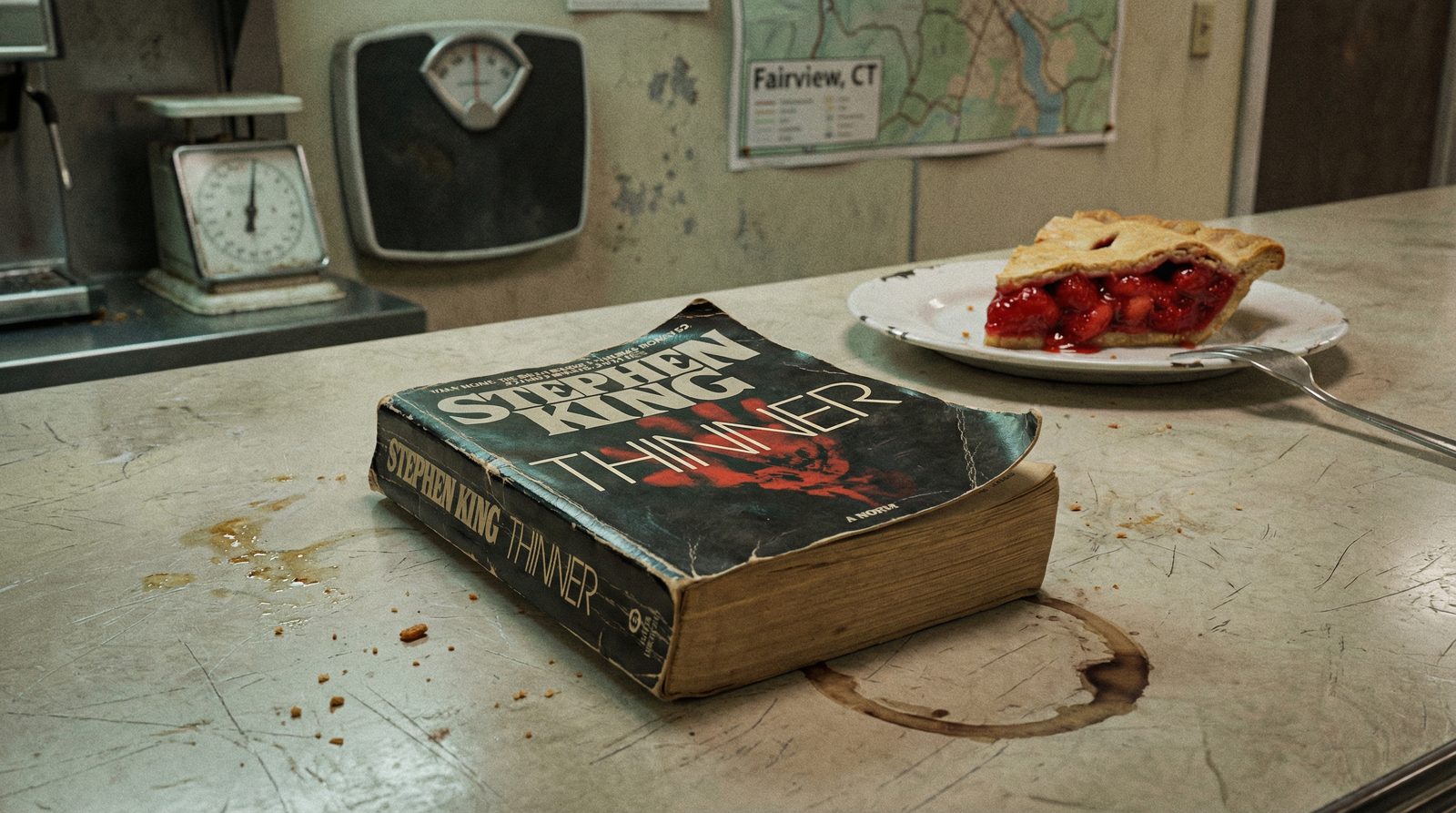
    Thinner (1984) is a curse story that feels like it could have been overheard in a bar in the late twentieth century. The motif of bodily decay is obvious, but what lingers is the quieter erosion of excuses. Billy Halleck, a comfortable Connecticut lawyer, runs over an old Romani woman on a dark street, and the whole town helps him walk away clean. Judge, cops, the local power structure closing ranks. When the old man Taduz Lemke brushes Billy’s cheek and whispers “thinner,” the horror is less about magic than about a conscience finally cornered. The feel here is mounting dread, the sense that the bill for years of entitlement has finally come due.


    PLOT & THEMES

    The plot is a classic trope: a Faustian curse that can’t simply be out-argued. After killing an old Romani woman with his car on a street in Fairview, Billy is shielded by his connections, Judge Cary Rossington, Chief Hopley, and the ingrained racism toward the “gypsy” caravan. Taduz Lemke’s touch marks Billy, and the weight begins to drop. Parallel hexes hit Rossington (his face turns into a grotesque hive of scales) and Dr. Mike Houston (he develops painful boils), reinforcing the motif of corrupted bodies as moral scorecards.

    As Billy confronts the caravan from Fairview into New England resort towns and finally onto Maine backroads, the book worries at American privilege. The motif of appetite (food, sex, power) runs through every scene, from Heidi’s furtive affair with Houston to Ginelli’s relish in psychological warfare against the Lemkes (dead animals in trailers, night-time gunfire, sugar in gas tanks).

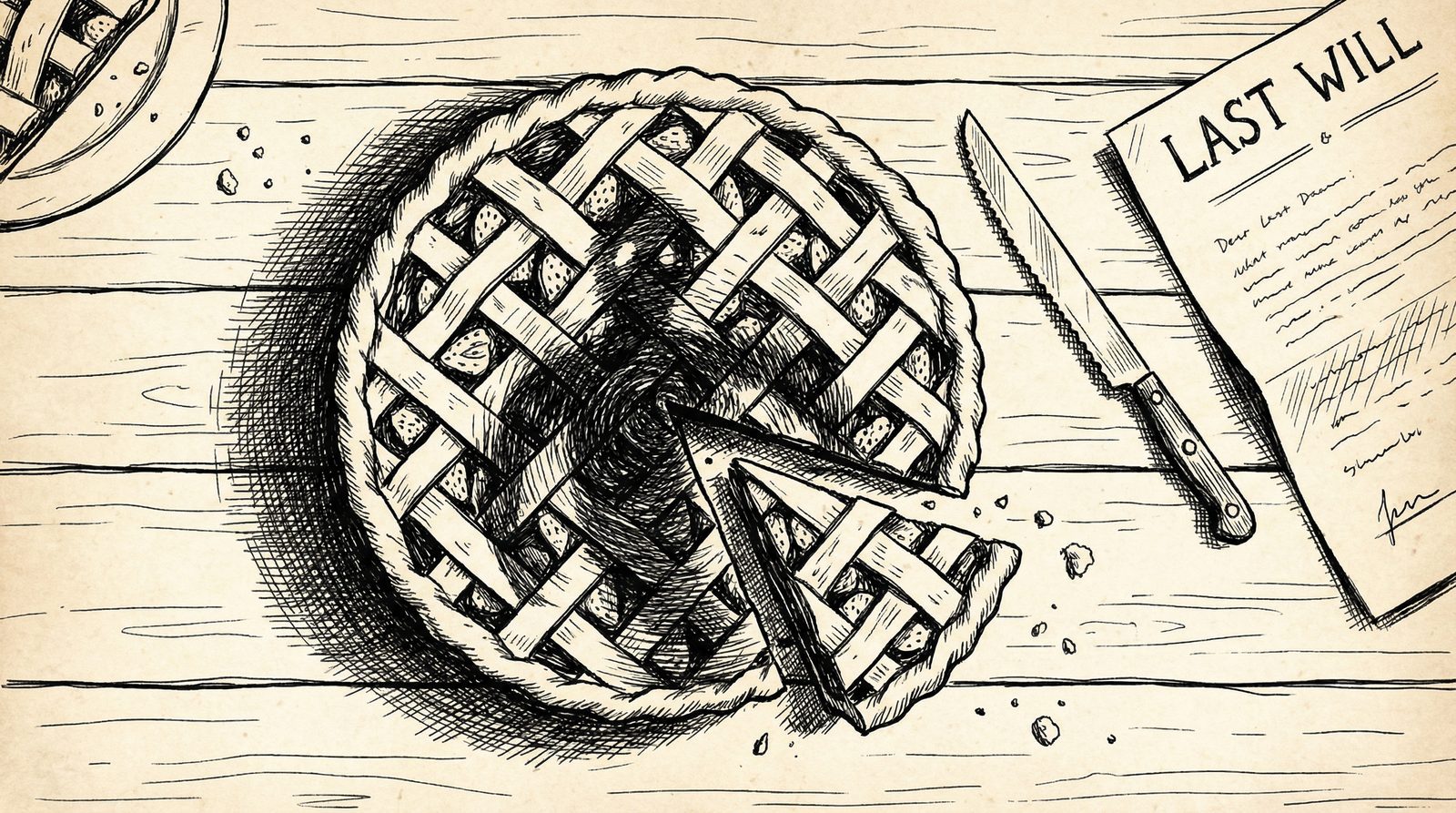
    Unlike the film adaptation, which softens and sensationalizes some of Ginelli’s campaign, the novel lingers on his methodical harassment and on Billy’s own moral slide as he accepts collateral damage. The book’s ending is brutally clear: Lemke agrees to move the curse into a strawberry pie that Billy must feed to someone else. Billy brings it home, intending to give it to Heidi. He later discovers that she has eaten a slice for breakfast. Realizing what he has done, he sits at the table in the final pages, cutting himself a generous slice of the cursed pie, ready to finish what he started.

    In its sour way, Thinner (1984) rhymes with works like Pet Sematary (1983) and the moral reckonings of The Twilight Zone (1959), where bargains are always paid in full, just not in the currency you expected.


    PROSE & NARRATIVE STRUCTURE

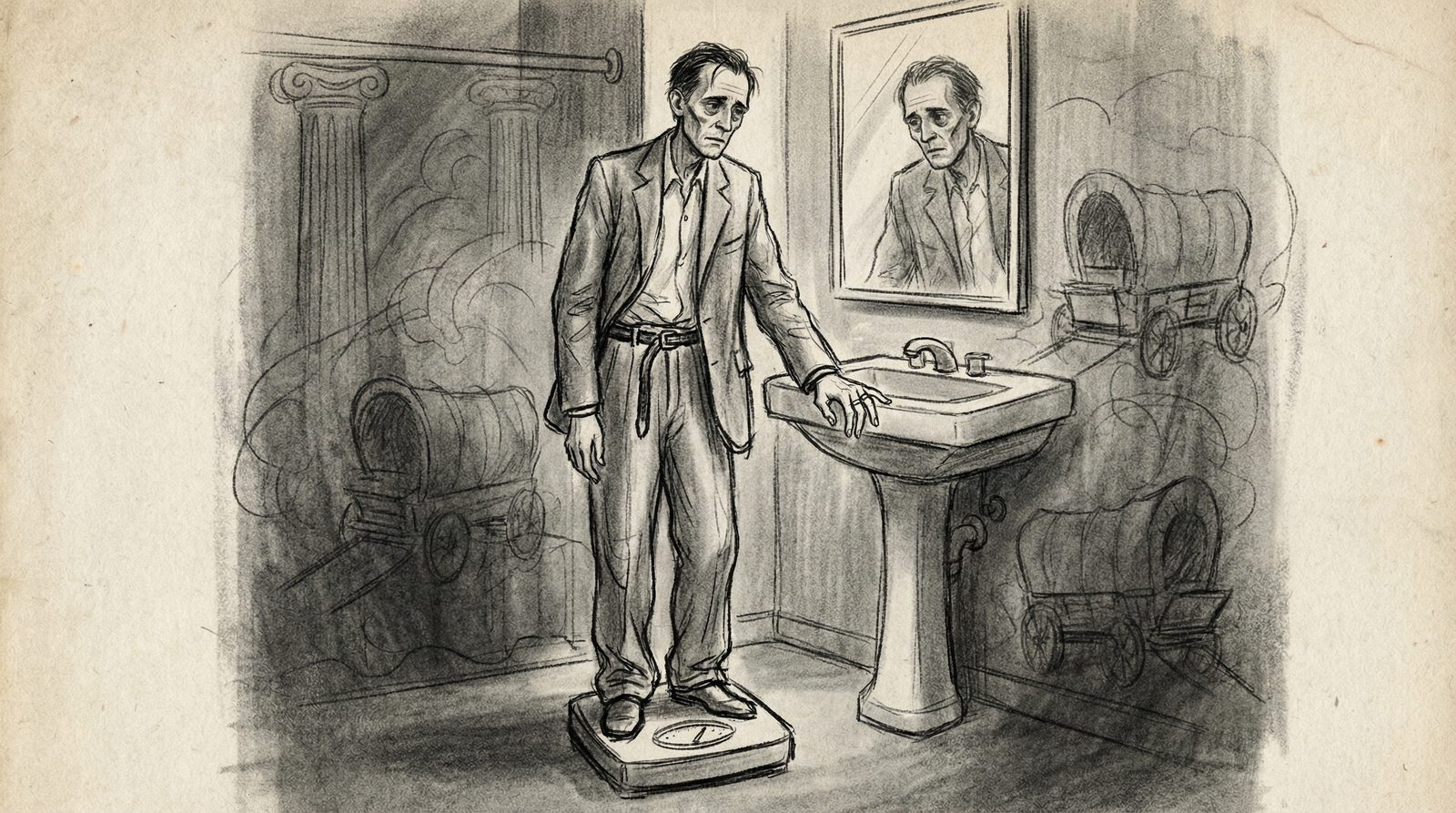
    Written under the Bachman mask, the prose is leaner and meaner than mid-1980s King. The narrative technique of close third-person limited pins us inside Billy’s increasingly frantic mind, but the voice keeps a hard, almost pulp edge. There are no baroque flourishes; that plainness sharpens the feeling of claustrophobic anxiety. Billy counting calories in reverse, watching the bathroom scale like a death clock.

    Structurally, the novel moves in three acts: the crime and cover-up in Fairview; the medical and legal rationalizations as Billy consults Dr. Houston and half-heartedly sues Lemke; and finally the road novel–cum–war story as Ginelli joins the fray. King uses short, punchy chapters that often end on a physical detail. A notch on Billy’s belt, the way his wedding ring slides loose on his finger. King uses it to reinforce the motif of bodily decay. Interludes from other perspectives, like Ginelli’s cool internal monologues about “pressure” and “messages,” widen the frame without losing momentum.

    One of the book’s subtler moves is how the narrative keeps trying to revert to normalcy. Billy returns to his law office on Main Street, goes through motions with clients, even plays golf, but the prose undercuts these scenes with intrusive bodily sensations. This repetition functions almost like a legal brief being revised; each new draft admits more guilt. Compared with the more sprawling horror of ’Salem’s Lot (1975), Thinner (1984) is stripped down to a single throughline: a man shrinking into the size of his crime.

    Conceptual editorial illustration inspired by 'Thinner (1984)'

    CHARACTERS & INTERIORITY

    Billy Halleck begins as the archetype of the comfortable sinner. His interiority is a steady slide from rationalization to obsession. Early on, he frames the accident as “her fault” for darting into the road; later, as the pounds vanish, his thoughts narrow to the scale and the next pound lost, even as the people around him fall apart.

    Heidi is more than a stock unfaithful wife. Her fear of Billy’s changing body and her retreat into Dr. Houston’s arms come off as a panicked grab at normal touch, not simple betrayal. Judge Rossington and Chief Hopley embody institutional rot — men who think a fixed trial is just “common sense.” Taduz Lemke, with his bottle of white dust and his slingshot-carrying granddaughter Gina, is not romanticized. The caravan community, especially Gina’s hard-eyed contempt for Billy, gives the curse a human face rather than a mystical abstraction.

    The most intriguing presence is Richie Ginelli, an underworld fixer who treats the whole affair as a problem of leverage. His interior monologues about “messages” and “counter-messages” echo Billy’s legal mindset, but stripped of illusion. Ginelli’s willingness to wage a small war on the Lemkes — accepting that he himself may be marked — throws Billy’s cowardice into sharper relief. By the time Billy sits with the strawberry pie, the interior landscape is scorched.


    LEGACY & RECEPTION

    First published as a Richard Bachman novel in the 1980s, Thinner (1984) initially puzzled some readers. It lacked the supernatural sprawl of The Stand (1978) or the nostalgic warmth of It (1986). What it offered instead was a nastier, more focused moral fable. Once King’s authorship was exposed, the book was reabsorbed into the larger King canon, often cited as one of his purest examples of the “monkey’s paw” story — every wish granted, every loophole closed.

    The later film adaptation sanded off some of the book’s bleakness and shifted emphases, but the novel’s ending remains one of King’s most vicious: the casual breakfast that kills a family, the quiet decision to eat the rest of the pie. Critics have since read the book as an early, nasty cousin to later explorations of guilt and consequence in American horror fiction. Its reputation has grown less on jump scares than on its willingness to follow a morally compromised man all the way to the logical, bitter end of his choices, without offering redemption or cosmic comfort.


    IS IT WORTH READING?

    If you want sprawling mythology or sympathetic heroes, this is not the book. Thinner (1984) is short, mean, and morally airless, a story that starts with a bad decision and refuses to look away as the bill comes due. Its horror is intimate — bathroom scales, loosened belts, a pie on a kitchen table — rather than cosmic. The prose is brisk, the plot unrelenting, and the final pages land like a punch to the gut. For readers interested in how horror can interrogate privilege, guilt, and the stories we tell ourselves after we do something unforgivable, it’s absolutely worth the time. Just don’t expect to like anyone very much by the end, including the man wasting away at the center.

    Illustration of a core idea or motif from 'Thinner (1984)'

    TRIVIA & AUTHOR FACTS

    Thinner (1984) was the last novel published under the Richard Bachman pseudonym before a bookstore clerk famously connected the dots between King and Bachman via Library of Congress records. The book’s focus on weight and appetite came from King’s own anxieties about his body and his growing fame in the mid-1980s. Fairview, the Connecticut town where Billy lives, is one of King’s less fantastical suburbs — no haunted hotels or vampire-infested villages, just country clubs and backroom deals.

    Ginelli’s Italian restaurant and his off-the-books “friends” nod to King’s interest in how organized crime mirrors small-town power structures. The recurring image of white powder — Lemke’s curse dust — prefigures King’s later, more literal engagements with addiction and substances. And the strawberry pie, so ordinary and homey, is one of King’s most quietly vicious symbolic objects: a dessert that turns domestic comfort into a weapon, sitting innocently on the kitchen table while lives end around it.


    SIMILAR BOOKS

    If Thinner (1984) hooks you, you might look toward other tight, morally focused horror novels. Pet Sematary (1983) offers a different kind of curse, trading weight loss for resurrection and parental grief. Needful Things (1991) stretches the “deal with the devil” structure across an entire town, showing how small compromises add up. Outside King, Clive Barker’s The Hellbound Heart (1986) shares the same interest in bodily punishment as a mirror of desire, while Jack Ketchum’s The Girl Next Door (1989) pushes the idea of community-sanctioned cruelty into even more brutal territory. All of them, like Thinner (1984), ask how far ordinary people will go to avoid admitting what they’ve done.


    DISCOVERABILITY & LINKS

    This review connects Thinner (1984) to wider motifs of bodily decay, appetite, and cursed bargains across horror fiction. Our indexing links these themes, tropes, and related works so you can move easily from this novel’s lean, bitter morality tale to other stories that gnaw at similar questions of guilt, consequence, and the prices we pay.