
Feel: Raw Vulnerability

  • Way Of The Peaceful Warrior – A Book That Changes Lives (1980)

    Way Of The Peaceful Warrior – A Book That Changes Lives (1980)

    INTRODUCTION

    Way Of The Peaceful Warrior A Book That Changes Lives (1980) by Dan Millman
    Spiritual memoir · generally under 300 pages · United States


    This is a book about a young man who has everything that is supposed to make him happy — talent, a scholarship, the prospect of success — and still lies awake at 3 a.m. Way Of The Peaceful Warrior opens on that insomnia and never fully leaves it. The rest is an argument about what to do with the ache underneath achievement.

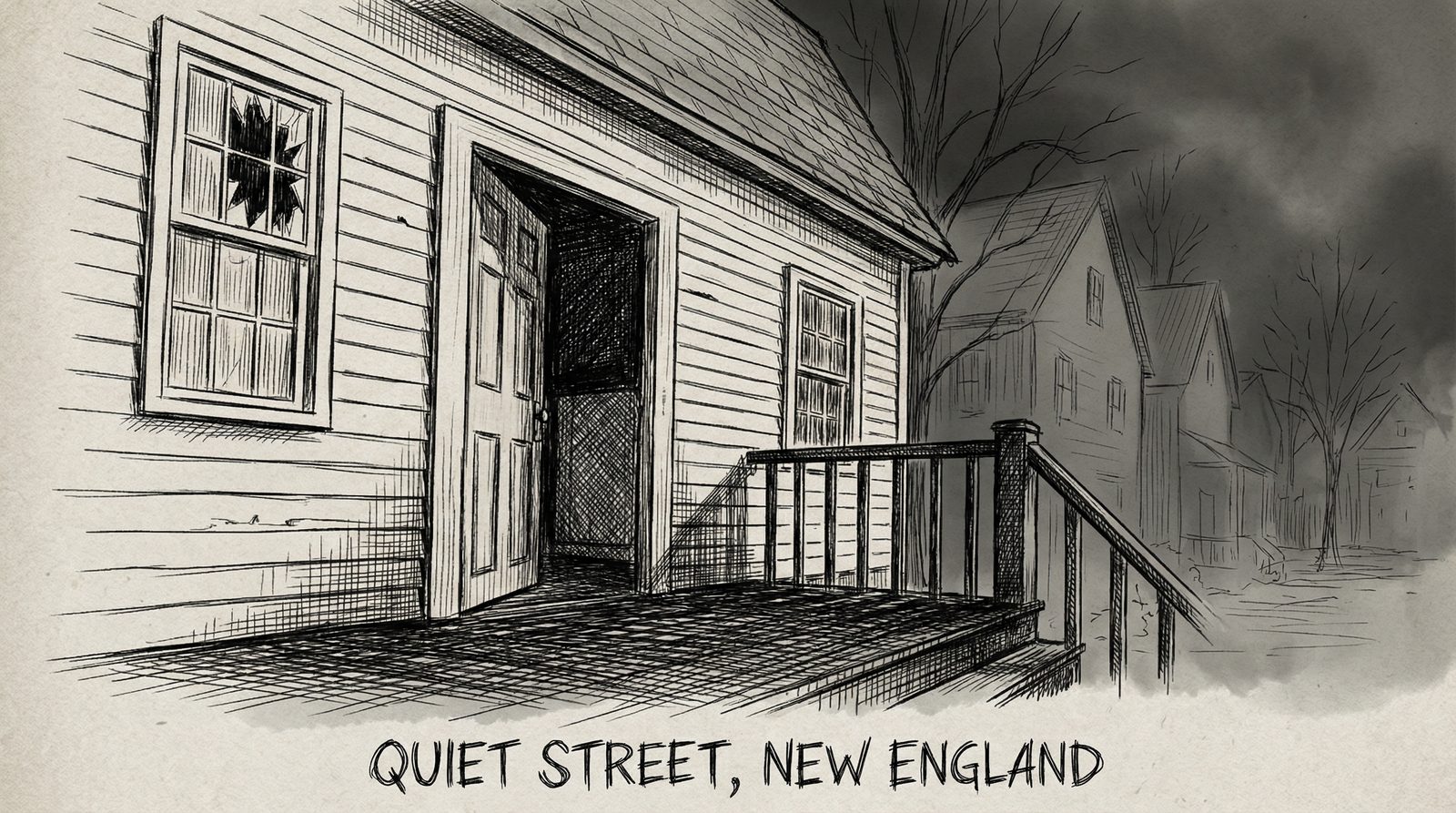
    The recurring motif of the gas station at night, with humming fluorescent lights and the smell of oil, becomes a threshold between ordinary striving and something harsher, more awake. The feel is restless, bruised hope: enlightenment here is not a glow but a stripping away. Millman’s encounter with the old attendant he nicknames Socrates begins a long unmaking, told with the intimacy of confession rather than the distance of doctrine.

    PLOT & THEMES

    The plot is deceptively simple. Dan, a star gymnast at UC Berkeley, wanders into an all-night gas station and meets Socrates, an ageless, sharp-tongued attendant who seems to know his thoughts. What begins as banter turns into a demanding apprenticeship. Socrates assigns humiliating exercises and strange ordeals — fasting, late-night runs, attention drills — designed to dismantle ego rather than build skill.

    The book’s central trope is the mentor as trickster sage. Socrates lies, withholds, and stage-manages lessons, pushing Dan toward direct experience instead of explanation. Dreams and visions recur — nightmares of falling, lucid memory sequences, threshold moments where fear becomes instruction — blurring the line between psychological breakdown and spiritual initiation.

    A severe injury pivots the story from athletic ambition to reckoning. The body’s failure becomes the forcing mechanism: it strips Dan of the identity built on performance and forces him to confront how he relates to pain, fear, and control. That’s why this book sits naturally beside Athletic Discipline As Spiritual Practice and Awakening Through Physical Injury in your cluster logic: training becomes inner work, and injury becomes the hard stop that makes the work non-optional.

    The ending focuses on a shift in awareness rather than a trophy. The “win” is internal: the gradual discovery that presence matters more than applause, and that the next moment is always the real arena. Compared with the film adaptation, which tends to compress and dramatize the arc into a neater sports-redemption shape, the book keeps returning to relapse and stubbornness, insisting that the path is spiral-shaped, not linear.

    PROSE & NARRATIVE STRUCTURE

    Millman uses a straightforward first-person memoir frame but keeps tilting it toward fable. The technique blends retrospective commentary with present-tense immediacy: older Dan reflects on younger arrogance, then drops the reader into a late-night run through fog or a silent attention drill in the gas station’s back room. The prose is clean and plain, which makes sudden visionary passages hit harder.

    Structurally, the book moves in spirals. Each apparent breakthrough is followed by regression. Dan has a moment of stillness, then falls back into old patterns of striving and anxiety. Chapters often end on a line of Socratic dialogue or a small shock, keeping the pacing brisk even when the text becomes didactic. Sensory detail — chalk dust, soreness, fluorescent hum, fog, exhaustion — keeps the spiritual language anchored in the body.

    Conceptual editorial illustration inspired by 'Way Of The Peaceful Warrior A Book That Changes Lives (1980)'

    CHARACTERS & INTERIORITY

    Dan is the classic seeker archetype. His interior monologue is crowded with comparison: against teammates, against imagined future versions of himself, against the serene ideal he projects onto Socrates. That constant self-measurement is the psychological engine of the book. We watch him resent the mentor, idolize him, then see through him — only to realize the real struggle is fear of ordinariness.

    Socrates is less a fully rounded character than a deliberately constructed mirror. He shifts from gruff mechanic to almost otherworldly presence, appearing in dreams and unlikely places. Millman still slips in humanizing details — tea in the cluttered back room, small acts of quiet service — to keep the figure from dissolving into pure symbol. Joy functions as a softer counterpoint: the teaching embodied without the mentor’s drama, a glimpse of ease Dan wants but cannot yet live.
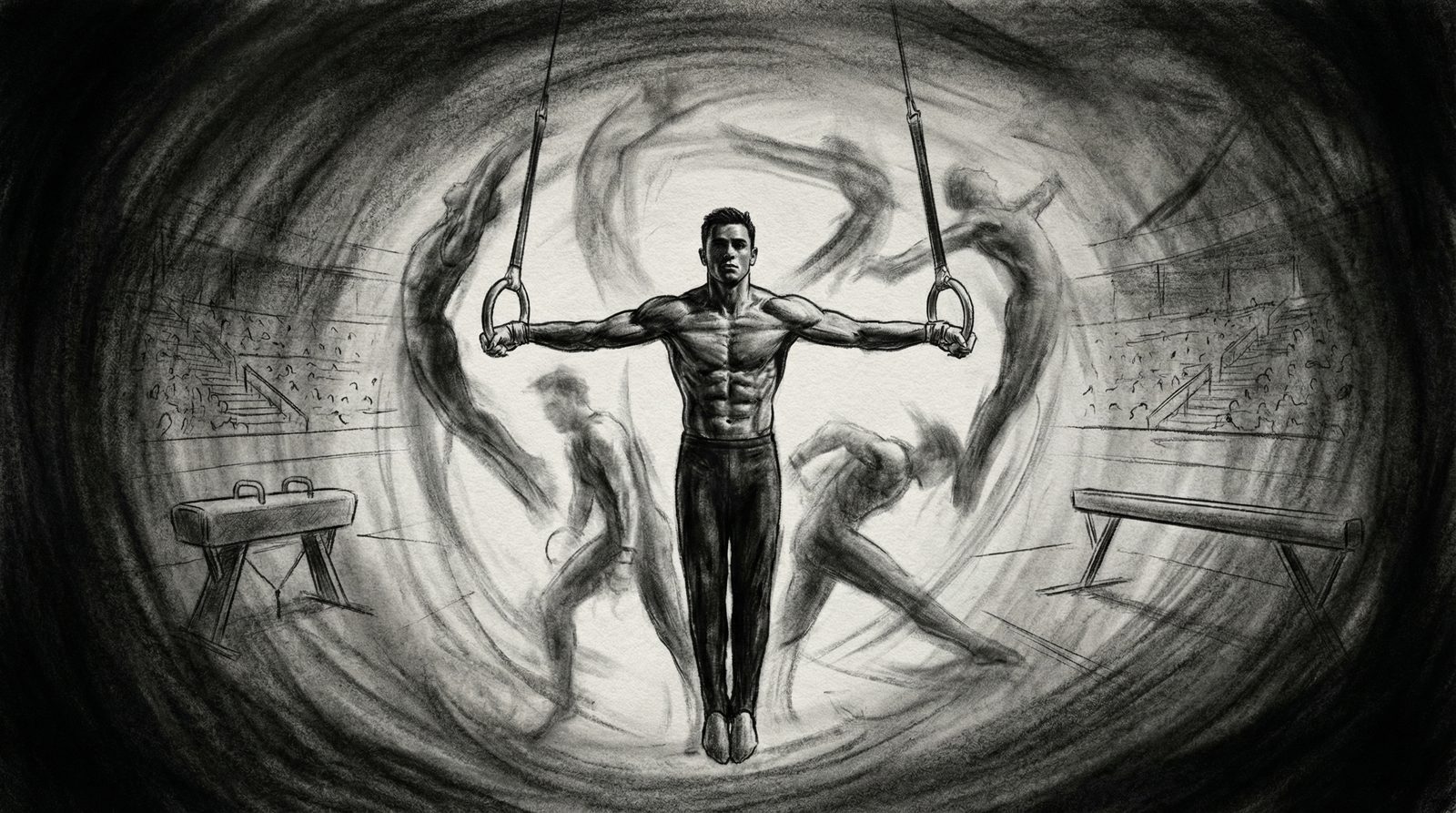
    Illustration inspired by 'Way Of The Peaceful Warrior A Book That Changes Lives (1980)'

    LEGACY & RECEPTION

    Since 1980, Way Of The Peaceful Warrior has lived a double life: modestly reviewed on release, then passed hand to hand in gyms, yoga studios, and college dorms. It occupies a similar shelf-space to other late-20th-century “mind-body” books, but with a distinctly athletic frame. The book’s continued circulation owes a lot to its refusal to end in easy victory. It offers sustained awareness rather than a career-defining moment, and that choice has made it both beloved and frustrating depending on what a reader expects.

    IS IT WORTH READING?

    It depends on your tolerance for earnestness and didactic dialogue. If you want a tightly plotted sports narrative, you’ll likely be frustrated. If you’re interested in how ambition corrodes from the inside and how a life might be rebuilt around presence rather than achievement, it still has bite. Read it not as a manual but as one flawed person’s record of stumbling toward a different way of being.

    TRIVIA & AUTHOR FACTS

    Millman draws heavily from his own background in collegiate athletics. Many readers treat Socrates as a real mentor figure filtered through spiritual allegory, and Millman has described the character as composite rather than simple reportage. The subtitle “A Book That Changes Lives” was not part of the original small-press edition and was added as the book gained a following through reissues.

    SIMILAR BOOKS

    If this resonates, you may prefer other narratives where spiritual inquiry is grounded in bodily discipline and everyday struggle. The strongest neighbors tend to share the same premise: transformation is not a vision; it’s a practice lived under pressure.

    DISCOVERABILITY & LINKS

  • Survivor (1997)

    Survivor (1997)

    By: Tabitha King
    Genre: Domestic Psychological Fiction, Literary Fiction
    Country: United States


    INTRODUCTION

    Survivor is one of Tabitha King’s most emotionally concentrated novels. It avoids neat catharsis and instead follows the long, uneven work of recovery after a single life-altering moment. First published in 1997, the book steps away from the wide social tapestries of the Nodd’s Ridge cycle and turns its attention to a college campus shaken by a terrible accident. What emerges is a story about guilt, memory, reputation, and the fragile ways people try to move forward while others continue to see them through an outdated and distorted lens.

    Where One on One traces adolescence under pressure and Pearl examines adult identity inside a small community, Survivor asks what happens when the story of your life is abruptly cut in half. The book is quieter than some of King’s earlier work, yet the psychological focus is sharper, and that precision makes it one of her most memorable novels.


    PLOT & THEMES

    The novel centers on A. P. Hill, a student whose life is divided into a before and an after by a catastrophic accident at college. The details of what happened do not arrive in a single exposition dump. Instead, they surface in fragments, scattered across memories, conversations, and moments of intrusive thought. That structure mirrors Hill’s own attempts to make sense of the event and to place it somewhere she can live with.

    When Hill returns to campus, she walks into a community that has already decided what it thinks it knows. She passes through corridors full of whispers, half-truths, and unresolved grief. King writes trauma without spectacle. The damage shows up in sleepless nights, in strained small talk, and in the effort it takes to pretend that everything is fine just so other people can feel more comfortable. This connects closely to the motif Identity Collapse in Isolation, since Hill has to rebuild a sense of self inside an environment that feels both crowded and profoundly lonely.

    King also returns to one of her recurring interests: the way apparently safe spaces can become threatening. The campus should function as a protective setting, a place dedicated to learning and support. Instead, it turns into a maze of watchful eyes and secondhand stories. Even friendships cannot be trusted without hesitation. There is no supernatural threat in Survivor, only the ongoing consequences of a single moment that nobody can erase.


    STYLE & LANGUAGE

    King’s prose in Survivor is stripped back and deliberate. Compared to the more expansive style of the Nodd’s Ridge novels, this book feels tighter and more contained, which suits its psychological focus. Interior monologue plays a major role. Readers spend a great deal of time inside Hill’s thought patterns, watching her circle the same fears and questions while trying to decide which dangers are real and which are echoes.

    Scenes often cut away at the moment when emotions spike, which reflects Hill’s own tendency to withdraw when a situation becomes too charged. Dialogue is full of missed signals and partial truths. People want to help but lack the language. Others avoid the subject altogether, afraid that the wrong phrase might cause more pain, and end up making the silence heavier instead.

    One of King’s strengths here is her sense of how trauma warps time. Ordinary days stretch out and feel strangely hollow, while memories arrive with a clarity that pushes the present aside. The pacing of the novel, sometimes slow and sometimes suddenly sharp, reflects the uneven rhythm of recovery.

    Conceptual editorial illustration inspired by 'survivor (1997)'

    CHARACTERS & RELATIONSHIPS

    A. P. Hill is one of King’s most carefully drawn protagonists. She is not presented as a symbol or a lesson. She is a young woman trying to gather the scattered pieces of her identity while everyone around her has an opinion about what she should feel. Her anger, numbness, and occasional flashes of dark humor make her feel fully human rather than emblematic.

    Her classmates and professors orbit around her in ways that reveal the institution’s limits. Some hover with well-meaning concern that never quite turns into real understanding. Others view her as a problem to manage or a reminder of something they would rather not face. A few characters project their own guilt and fear onto her survival. Together, they echo the motif Domestic Vulnerability as Horror, recast here as institutional vulnerability, where the system assumes that students can absorb anything and keep going.

    Her family appears in concentrated, emotionally charged scenes. They care about her and want explanations, but their need for clarity sometimes clashes with her need for space and privacy. King captures the way love, fear, and frustration can sit in the same room without finding a comfortable arrangement.


    CULTURAL CONTEXT & LEGACY

    When Survivor appeared in the late 1990s, campus novels were beginning to take on darker and more psychologically complex subjects. King’s approach stands out because of how quietly she handles her material. There is no final courtroom scene, no neat confession, no dramatic twist that reorders everything. The focus stays on aftermath and on the way trauma seeps into daily life.

    Within King’s body of work, Survivor feels like a close cousin to One on One, although the scope is narrower. Instead of showing how an entire community responds to pressure, King stays close to a single internal journey and lets the wider world remain slightly out of reach. The novel also anticipates later psychological and domestic fiction that centers on women whose trauma shapes how others see them, often in ways they cannot control.


    IS IT WORTH READING?

    Survivor is not an easy read, but it is a deeply honest one. Readers who appreciate character-driven psychological fiction, domestic or institutional suspense without sensational twists, and stories about the slow work of rebuilding after crisis will find it compelling. It also serves as a strong companion to Pearl and The Trap, offering a more tightly focused exploration of themes that run throughout King’s work, such as pressure, visibility, and the struggle to feel safe in one’s own life.


    SIMILAR BOOKS

    Readers drawn to novels about trauma, recovery, and the social aftershocks of a single event may find a strong echo in Laurie Halse Anderson’s Catalyst, which also follows a young woman navigating pressure and expectation in a close-knit environment. Within Tabitha King’s own work, One on One offers another look at vulnerability and defiance in youth, while Pearl explores identity struggles in a more community-rooted setting.