
Feel: Unease

  • Synchronicity And Meaningful Coincidence

    Synchronicity And Meaningful Coincidence

    DEFINITION & CORE IDEA

    Synchronicity And Meaningful Coincidence is the motif where events align with a precision that feels narratively excessive if everything is truly random. A stranger says the exact phrase the protagonist has been circling internally. A missed train leads to the only meeting that matters. The same symbol appears across unrelated places and moments. The story does not need to prove the supernatural; what matters is that the character experiences these alignments as communication rather than noise.

    In stories built around this motif, coincidence becomes information. The protagonist begins to treat timing, repetition, and interruption as meaningful data rather than background chaos. The explanation may vary — fate, God, a hidden order, the unconscious mind — but structurally the coincidences function the same way: they influence choice. Once the character starts acting as if meaning is real, the story has crossed its threshold.

    This logic is explicit in The Celestine Prophecy, where sequential encounters operate as instructions disguised as chance. In The Tenth Insight, the same mechanism is expanded into a system, training characters to read coincidence as guidance rather than accident. The Alchemist reframes this dynamic more quietly: dreams, omens, and chance meetings grant permission to abandon a stable life in favor of a meaningful one. In Way Of The Peaceful Warrior, coincidence is less mystical and more instructional, nudging attention back to discipline, presence, and embodied awareness.


    HOW IT WORKS IN STORIES

    Synchronicity usually enters a story quietly. The protagonist notices something small and easily dismissible: a repeated number, a perfectly timed interruption, an overheard sentence that lands too close to home. Early scenes preserve plausible deniability so the reader can remain skeptical without breaking immersion.

    The engine activates when coincidences begin to cluster. One coincidence is texture; several in close succession create pressure. These clusters tend to appear at decision points, moments when the protagonist is stuck between options or close to abandoning a path. In narratives like The Celestine Prophecy, each encounter functions as a breadcrumb that must be followed or consciously rejected. In The Alchemist, ignoring omens does not trigger punishment, but it stalls the story, draining momentum until attention realigns.

    Effective uses of this motif always impose cost. Following a “sign” risks embarrassment, loss of stability, or the appearance of irrationality. The character must accept the possibility of being wrong, foolish, or delusional. This risk is essential. Without it, synchronicity collapses into wish fulfillment. The choice to trust coincidence must feel dangerous enough to matter.

    Resolution typically arrives in one of two forms. In affirming narratives, the character learns to live inside a world where meaning does not need constant confirmation. In more ambiguous stories — as in I Origins — coincidences remain interpretable rather than proven, and the payoff is psychological. What changes is not the universe, but the character’s relationship to uncertainty.
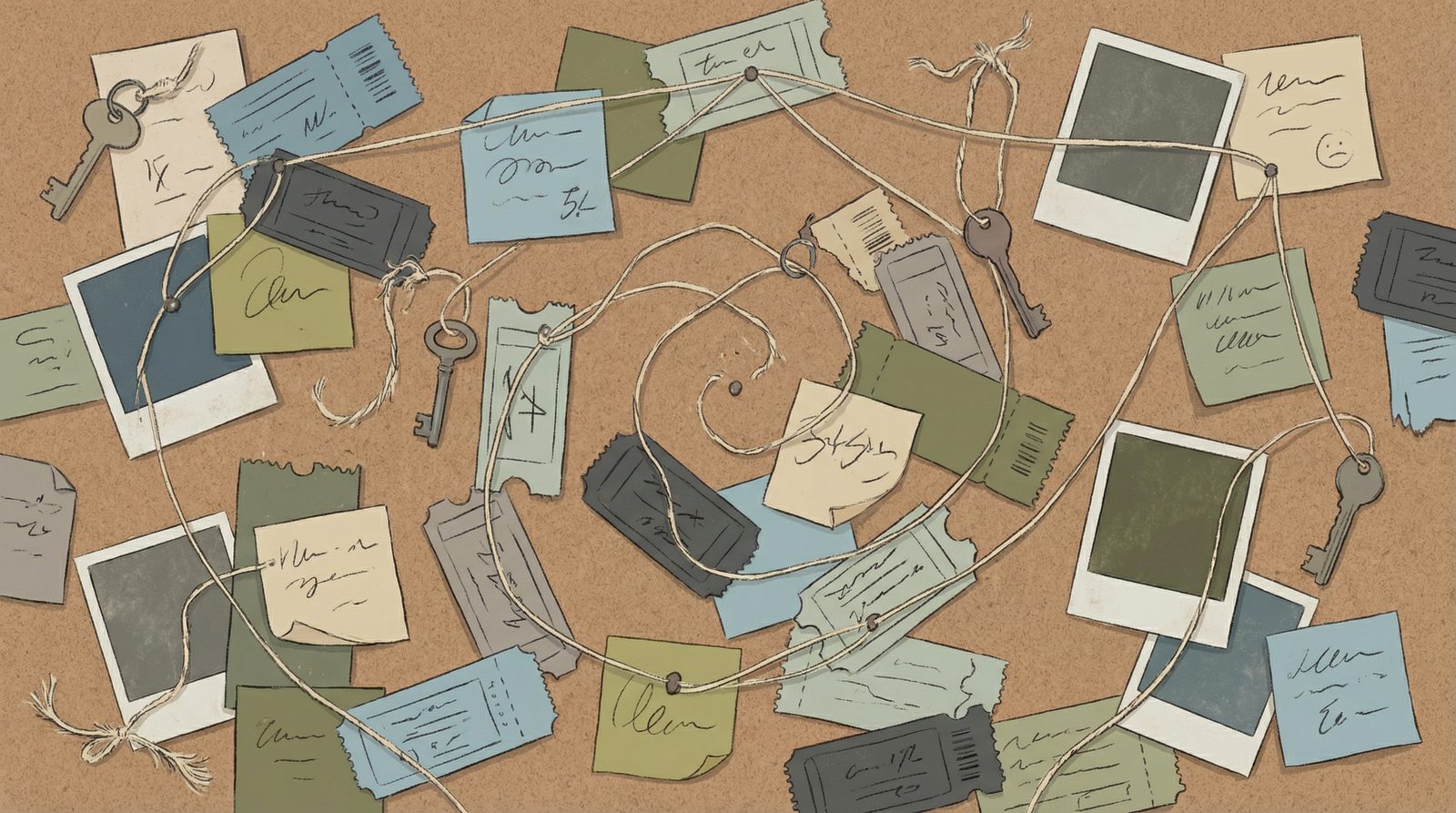

    Editorial illustration inspired by 'Synchronicity And Meaningful Coincidence'

    EMOTIONAL EFFECT ON THE READER

    This motif is designed to feel intimate. The reader becomes a co-interpreter, scanning scenes for repetition, echo, and timing. When an early detail reappears in a charged moment, it produces a quiet jolt of recognition, as if the story is rewarding attention.

    At its most comforting, synchronicity offers relief from randomness. Detours feel purposeful. Delays feel protective. In books like The Alchemist, this reassurance is central to the reading experience, allowing setbacks to be reinterpreted as alignment rather than failure. The world feels readable, and the reader is invited to believe that attention itself has value.

    The same mechanics can also generate unease. Too many coincidences create the sense of being watched or guided too forcefully. In more psychological versions of the motif, the reader begins to question whether meaning is emerging organically or being imposed as a defense against chaos. That tension between enchantment and suspicion keeps the motif from becoming sentimental.

    When the motif works, the after-effect is practical. The reader finishes with heightened awareness of how easily meaning can arise once repetition and timing are framed as communication — and how much depends on where attention is placed.
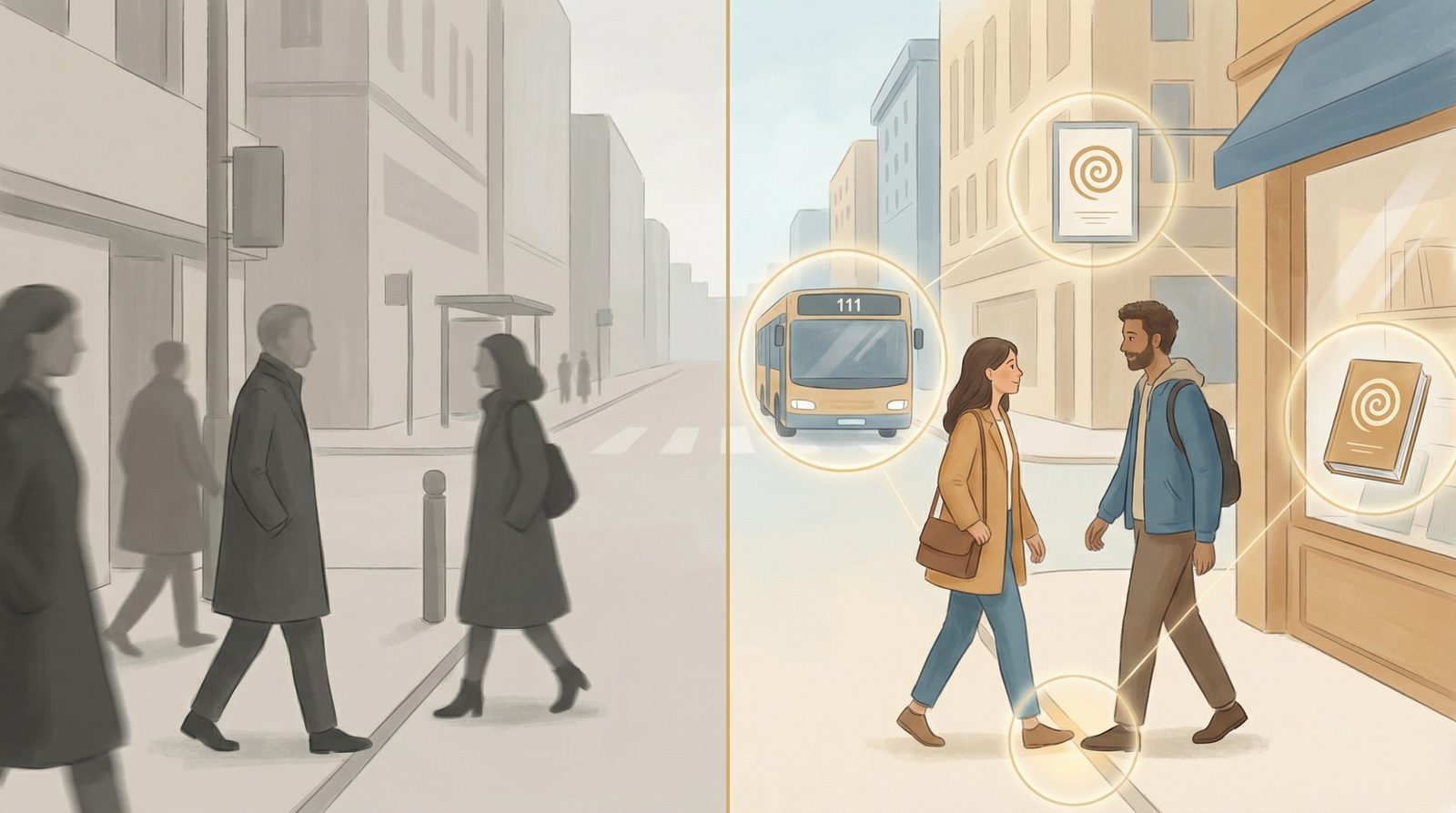

    Symbolic illustration inspired by 'Synchronicity And Meaningful Coincidence'

    VARIATIONS & RELATED MOTIFS

    Synchronicity And Meaningful Coincidence appears in several recognizable variations. The spiritual guidance version treats coincidence as instruction, rewarding trust and punishing inattention. Romantic and literary versions soften the logic into serendipity, where repeated encounters transform chance into inevitability. Philosophical variants retain the pattern but refuse explanation, letting the reader decide whether meaning is discovered or constructed.

    A darker variation reframes synchronicity as a trap. Here, pattern recognition becomes exploitable, and “signs” function as lures rather than help. The story’s tension comes from uncertainty: is the universe speaking, is someone engineering the coincidences, or is the protagonist assembling meaning to avoid confronting randomness?

    This motif naturally overlaps with Spiritual Awakening, where heightened attention makes coincidence feel louder and more personal. It also pairs with Spiritual Pilgrimage and Inner Journey, where movement and reflection create the friction that makes “signs” feel necessary. When coincidence is framed as destiny language, it often converges with Personal Legend And Destiny.

  • Genie Or Djinn Released From A Bottle

    Genie Or Djinn Released From A Bottle

    DEFINITION AND CORE IDEA

    The Genie Or Djinn Released From A Bottle motif begins with a simple act: someone finds an object they should probably leave alone. It might be a genie in a bottle, a djinn in a lamp, or a spirit sealed into an ordinary-looking container, but the core idea is the same. An ordinary person suddenly gains access to impossible power, usually in the form of wishes.

    This motif is less about flashy magic and more about what happens when human desire meets an ancient, alien intelligence. The genie or djinn is often bound by rules, resentments, and centuries of captivity. The person who finds the bottle is usually naive about both magic and consequences. Stories built on this setup explore how quickly “everything you want” can twist into something frightening, absurd, or unexpectedly honest.

    Writers love the bottle because it is portable power. It can drop into any setting, from a Victorian drawing room to a modern kitchen, and instantly turns private longing into public consequence. The motif asks, in a concrete way, what someone truly wants and what they are willing to pay for it, whether that price is moral, emotional, or literal.


    HOW IT WORKS IN STORIES

    Most stories with this motif start with an accident or a small, greedy choice. A character stumbles on a lamp at a market, inherits a dusty bottle, or fiddles with a strange object that looks harmless. In The Brass Bottle, a seemingly ordinary antique releases a djinn-like figure into everyday life, and the “help” that follows creates embarrassment, confusion, and escalating disruption.

    Once released, the genie or djinn usually announces a set number of wishes and a set of rules, often with loopholes. The wisher might be a child, as in Five Children And It (1902), where daily wishes unravel and backfire in ways that expose how careless desire can be. Or the wisher might be caught in higher-stakes schemes, as in The Amulet Of Samarkand, where a bound djinn becomes a lever of power, politics, and danger. In either case, the narrative settles into a rhythm of wish, distorted outcome, and frantic attempts to fix the damage.

    The genie or djinn is rarely a neutral tool. It may be sarcastic, vengeful, lonely, or constrained by harsh magical laws. Its personality shapes the plot. A literal-minded spirit twists wishes into ironic punishments, while a weary, morally ambiguous djinn quietly tests the summoner’s character. The bottle-bound spirit often understands human weakness better than the human does, and that imbalance drives both comedy and tragedy.

    Structurally, each wish acts like a short story nested inside the larger one. A wish sets up a scenario, the spirit executes it, and the fallout reveals something about the wisher. Over time, the character either learns to wish more wisely, refuses to wish at all, or tries to renegotiate their relationship with power itself.


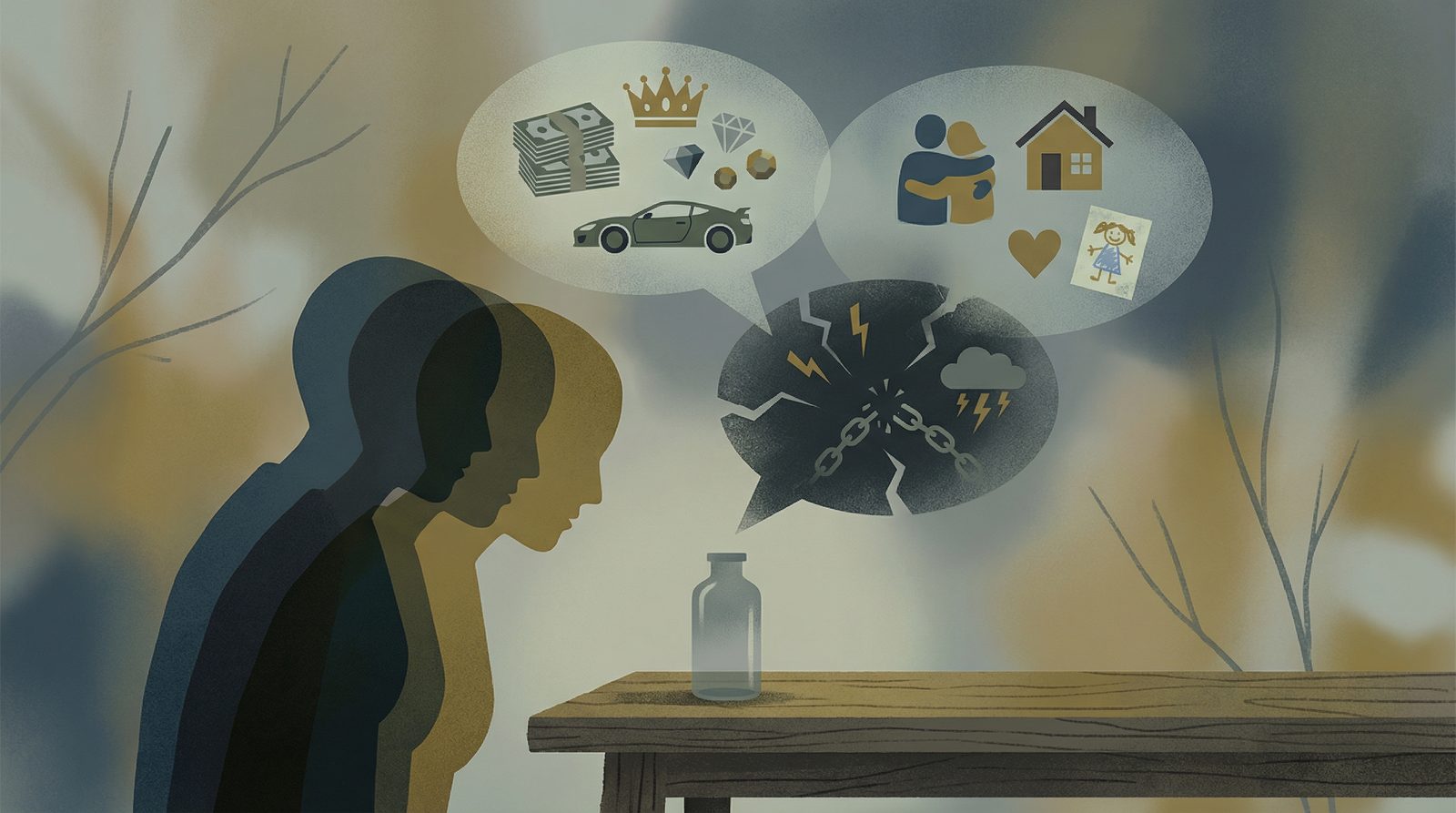
    Editorial illustration inspired by 'Genie Or Djinn Released From A Bottle'

    EMOTIONAL EFFECT ON THE READER

    This motif taps straight into private daydreams. It asks “What would you wish for?” long before any character answers. There is an immediate thrill in watching desire become real. When a struggling family suddenly becomes rich or an awkward child suddenly gains power, the reader shares the rush of possibility.

    That thrill quickly tangles with anxiety. The reader can usually see the flaw in a wish before the character does, which creates anticipation and dread at the same time. Watching a wish backfire feels like watching someone send a risky message they cannot unsend.

    Emotionally, these stories move between wonder, comedy, and unease. The comic chaos in Five Children And It (1902) can be funny precisely because wishes are interpreted so literally. The Amulet Of Samarkand can feel sharper and darker, because power is used casually and cruelty becomes a practical tool. Either way, the motif encourages readers to reconsider fantasies of escape, revenge, or instant success.

    When the story ends, the feeling is often bittersweet. Saying goodbye to a bottle-bound spirit can feel like closing the door on childhood wishes. If the spirit is freed, there is relief. If it is trapped again, there may be lingering discomfort about cycles of power and captivity.


    Symbolic illustration inspired by 'Genie Or Djinn Released From A Bottle'

    VARIATIONS AND RELATED MOTIFS

    This motif has several recognizable variations. In comic versions, the genie is playful or bureaucratic, and the wishes create escalating social disorder. The Brass Bottle leans into this tone, where magical intervention complicates ordinary life rather than perfecting it.

    Darker versions portray the djinn as ancient, dangerous, and resentful. In The Amulet Of Samarkand, the bound spirit is a tool of power in human conflict, and the damage spreads beyond the wisher’s private life into politics and violence. The wish-granting process is stricter and more limited, but far more destructive.

    Other stories replace the bottle with an amulet, ring, or creature that fills the same role. In Five Children And It (1902), the structure becomes a repeating cycle of desire, regret, and correction. The emotional pattern remains consistent: power arrives too easily, and the cost arrives right after.

    This motif frequently overlaps with Magical Object Disrupting Ordinary Life, Unintended Consequences of Wishes, Supernatural Bargains With Hidden Costs, and Ordinary People In Extreme Situations.

  • A Fallen Idol (1886)

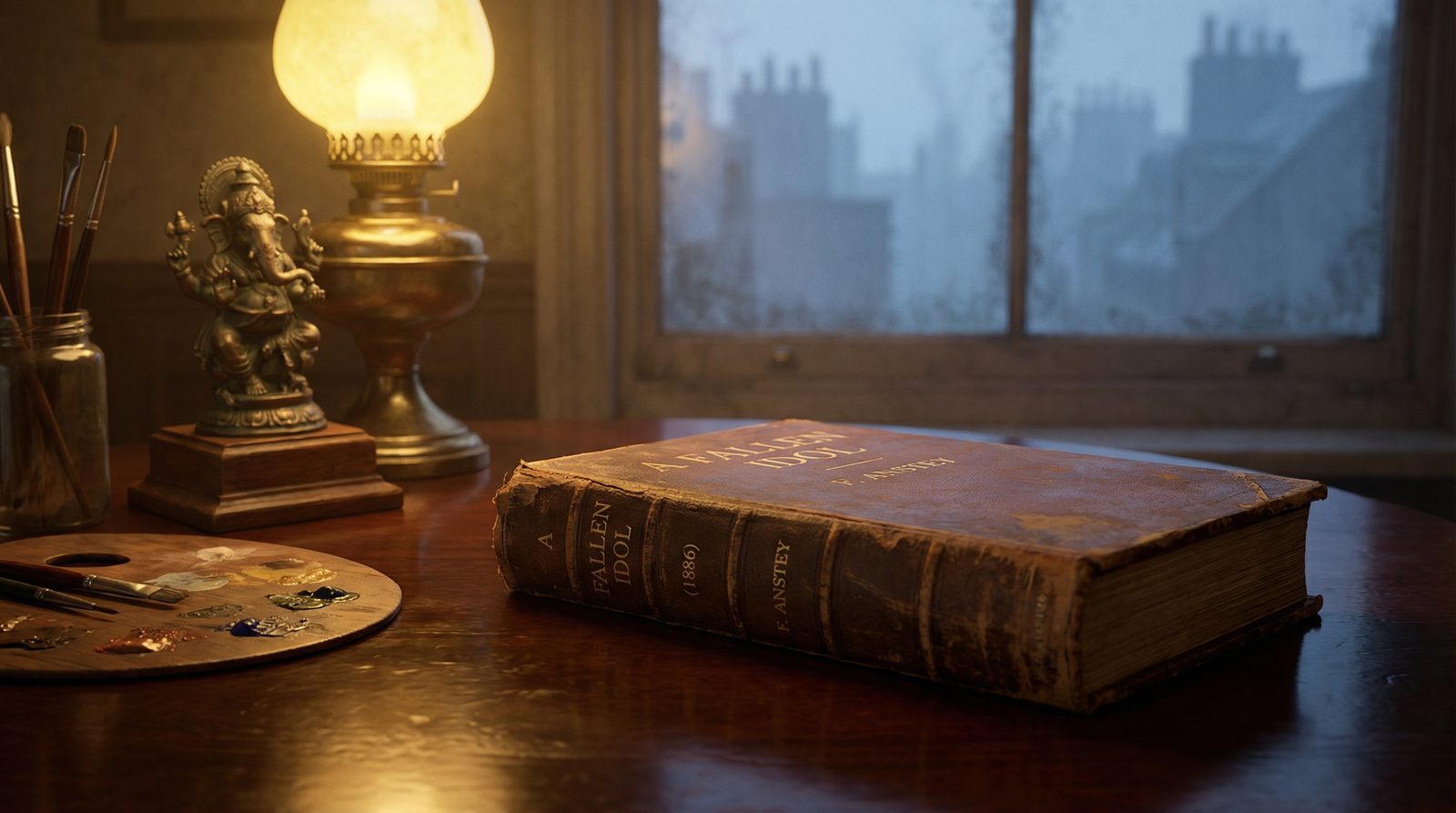
    A Fallen Idol (1886)

    INTRODUCTION

    A Fallen Idol (1886) by F. Anstey (Thomas Anstey Guthrie)
    Psychological fiction · United Kingdom


    A Fallen Idol begins like a drawing-room curiosity and steadily curdles into something colder. At first glance it looks like a fashionable Victorian entertainment, a touch of occult glamour enlivening polite society. Beneath that surface, Anstey is conducting a pointed examination of belief, imposture, and the damage done when spiritual hunger collides with social ambition.

    The supernatural element is unmistakable, but it is never allowed to dominate the book in the way a conventional horror story might. Instead, the idol operates as a crooked mirror, reflecting vanity, cowardice, and moral compromise back at the people who claim to revere it. The prevailing mood is unease rather than terror. Anstey is less interested in demons than in how quickly ordinary people betray themselves when mystery becomes fashionable.

    PLOT & THEMES

    The story opens in colonial India, where the young barrister Harold Caffyn acquires a strange idol after a violent scene at a temple in Bhowanipore. The circumstances are murky, a worshipper is killed, and whispers of a curse follow the object. Harold brings the idol back to London, where it finds its way into the studio of the painter Mark Ashburn.

    From there, the idol works slowly and indirectly. Mark’s portraits, especially his painting of the charming Dolly Tredwell, begin to attract attention that feels unearned and unsettling. A circle of fashionable spiritualists gathers around the studio, led by the solemn Mrs. Fothergill and the excitable Miss Tyrell, eager to believe that something ancient and powerful is at work.

    The novel combines the cursed-object tradition with social imposture. Harold, who knows more about the idol’s bloody history than he admits, manipulates its reputation to his advantage, nudging Mark into becoming a reluctant medium. The séances staged in the dim studio become performances of projection. The sitters see what they want to see, while Mark feels himself hollowed out by a role he never meant to play.

    A colonial undercurrent runs through the book, recalling earlier stories of stolen relics such as The Moonstone. The idol is treated as both exotic curiosity and drawing-room entertainment, stripped of context and consequence until the damage is already done. When exposure finally looms, Harold recklessly handles the idol to prove it harmless. The result is disaster rather than vindication.

    The ending is bleakly ironic. Mark survives physically but not ethically. He burns the painting that brought him acclaim, abandons the séances, and returns the idol to a museum, where it is neutralized behind glass and catalog numbers. No one is cleansed of guilt. Reputations remain bruised. The harm lingers quietly, unresolved.

    PROSE & NARRATIVE STRUCTURE

    Anstey writes with a lightness that disguises how carefully the novel is engineered. Free indirect discourse allows the narrative to drift between Mark’s self-doubt, Harold’s cynical calculation, and the eager credulity of the spiritualist circle without heavy-handed transitions.

    Dialogue does much of the work. Characters expose themselves through polished evasions, nervous enthusiasm, and pious certainty. The narrator’s occasional asides sharpen the satire, particularly when séances are squeezed between tea and supper, or when moral outrage coexists comfortably with voyeuristic curiosity.

    Structurally, the novel alternates between scenes of social comedy and increasingly claustrophobic séances in Mark’s studio. Each sitting raises the stakes: gossip spreads, reputations wobble, and belief hardens into expectation. Notably, the idol itself rarely acts in any overt way. Its power lies in what people are willing to do in its presence.

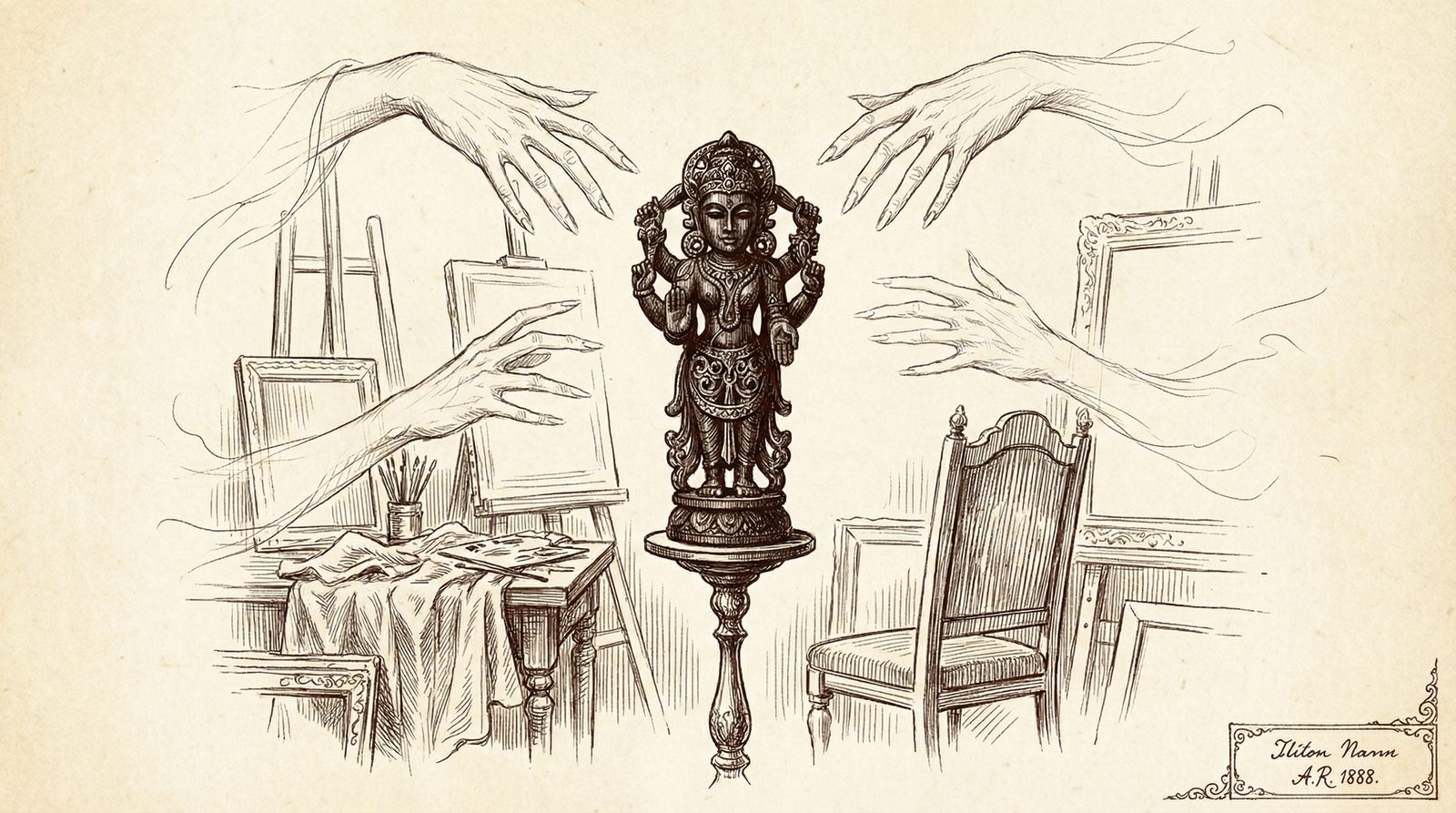
    Conceptual editorial illustration inspired by 'A Fallen Idol'

    CHARACTERS & INTERIORITY

    Mark Ashburn is a reluctant medium, not by conviction but by weakness. He is decent, talented, and insecure enough to be swayed. His interior monologue reveals how easily vanity disguises itself as generosity. During the séances he repeatedly tells himself that he is only humoring others, even as he profits from their belief.

    Harold Caffyn feels strikingly modern. He half believes his own deceptions and treats danger as something to be managed theatrically. Moments of genuine fear break through his composure, but his instinct is always to convert panic into control.

    Dolly Tredwell and the surrounding social figures are sketched with less depth, yet Anstey allows flashes of private disillusionment to surface. In particular, Dolly’s overheard humiliation after a disastrous séance reminds the reader how easily a young woman’s reputation becomes collateral damage in fashionable folly.

    LEGACY & RECEPTION

    A Fallen Idol never matched the popularity of Anstey’s comic successes, and it is often treated as a minor occult curiosity. Victorian reviewers were divided, intrigued by the ingenuity of the séance scenes but unsettled by the novel’s refusal to clarify whether the idol was truly supernatural or merely a catalyst for fraud and hysteria.

    That ambiguity has aged well. The book now reads as a bridge between moralized ghost stories and later psychological hauntings. Its final image, the idol inert in a museum case while the characters quietly absorb their shame, feels unexpectedly modern in its skepticism toward spectacle and belief.

    IS IT WORTH READING?

    If you prefer supernatural fiction that unsettles through psychology rather than shocks, this novel is worth your attention. It moves at a Victorian pace, heavy with conversation and social maneuvering, but the unease accumulates steadily.

    The séances are disturbing not because of what appears, but because of what people are willing to believe. Readers interested in spiritualism, colonial guilt, and the performance of belief will find the novel sharp and quietly corrosive.

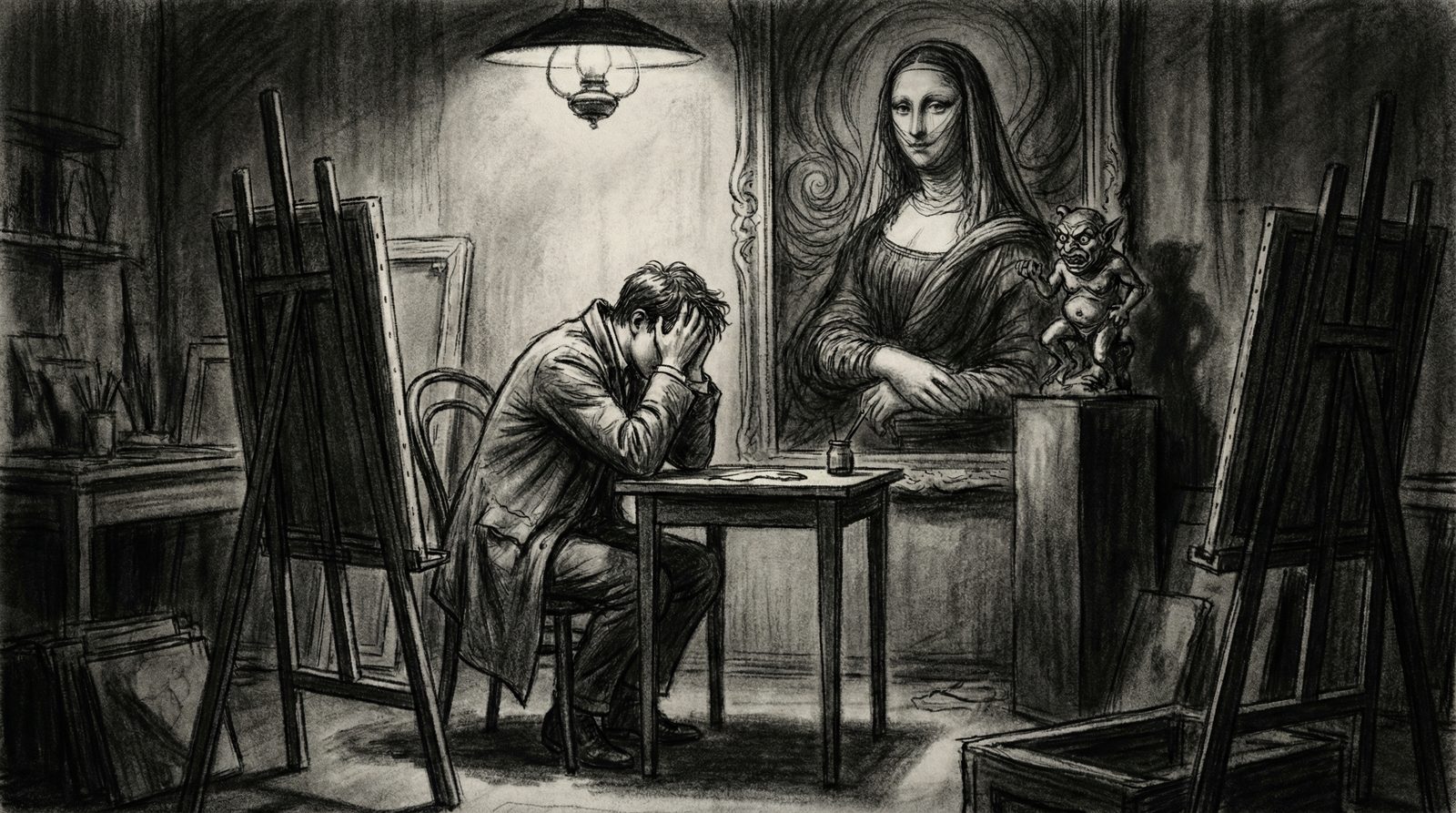
    Illustration inspired by a core idea from 'A Fallen Idol'

    TRIVIA & AUTHOR FACTS

    F. Anstey was the pen name of Thomas Anstey Guthrie, a barrister-turned-writer whose legal training shows in the careful sequencing of cause and consequence throughout the novel. The early Indian chapters draw on contemporary travel writing, though filtered through satire.

    Anstey attended real séances in London, and his fascination with spiritualism and fraud informs the novel’s tone. The museum ending reflects his interest in how institutions neutralize danger by classification, turning objects of fear into labeled curiosities.

    SIMILAR BOOKS

    Readers interested in supernatural objects with moral weight may also enjoy The Moonstone for its colonial relic and social fallout, or The Turn of the Screw for a later, more psychological ambiguity. For Victorian skepticism toward spiritual fashion, the earnest writings of Arthur Conan Doyle on séances offer a revealing real-world counterpoint to Anstey’s fiction.

    DISCOVERABILITY & LINKS

  • Domestic Vulnerability as Horror

    Domestic Vulnerability as Horror

    WHAT THIS MOTIF MEANS

    Domestic Vulnerability as Horror is the fear that comes not from the supernatural or the unknown, but from the places that should be safest. Homes, families, bedrooms, kitchens, schools — the everyday environments where people sleep, eat, and share their lives — become pressure chambers where danger grows quietly. The horror here is emotional, social, and psychological. It’s the dread of being unprotected in the one space where you expect comfort.

    The motif appears across genres: literary fiction, YA realism, psychological dramas, and even soft sci-fi. It’s the threat of being misunderstood by the people closest to you, of being trapped in routines or roles that hurt, of having nowhere to escape because everything that frightens you is already inside the house.


    HOW IT WORKS

    This motif relies on tension, not spectacle. The unsettling moments usually come from subtle shifts: a parent’s silence that suddenly feels hostile, a partner’s smile that hides resentment, an expectation that becomes a burden, or a home that starts feeling like a cage instead of a sanctuary.

    The horror emerges when characters lose agency within familiar walls. Emotional safety erodes. Control slips away. Intimacy becomes danger. The motif often overlaps with psychological collapse, family pressure, and the erosion of identity — especially for characters who have no external support network.

    Domestic Vulnerability as Horror inline concept image

    WHERE WE SEE IT

    This motif shows up repeatedly across our current clusters. In Tabitha King’s Pearl, the home becomes the stage for social scrutiny and inherited tension. In One on One, Deanie’s house — and the adults inside it — offers no protection from predatory attention or community pressure.

    Laurie Halse Anderson uses the motif heavily in Catalyst, where the Malone household is loving but brittle, and the emotional expectations placed on Kate become suffocating. Even a soft sci-fi novel like Jill Paton Walsh’s The Green Book brushes this motif: the colonists’ improvised shelters on a new planet are fragile, constantly threatening their safety and identity.

    The strength of this motif lies in how universal it is. Everyone understands what it feels like when a supposedly safe environment starts to feel threatening — whether emotionally, socially, or physically.


    WHY IT MATTERS

    Domestic Vulnerability as Horror matters because it exposes the power structures inside families and tight-knit communities. It reveals how protection can flip into danger when trust is broken or when roles harden into traps. The motif forces characters — and readers — to confront uncomfortable truths about dependence, intimacy, and the fear of not being believed or understood.

    In fiction, this motif is often where the deepest emotional work happens. It’s where characters confront the pressure to perform normalcy, the pain of unmet expectations, and the fight to reclaim space that belongs to them.

    Domestic Vulnerability as Horror inline diagram image

    ARCHETYPES & VARIANTS

    The motif often intersects with archetypes like The Double Self — characters who present one face to their family and another to themselves — and The Survivor Confessor, who must speak their truth after being harmed or misunderstood inside the home.

    Variants include:

    • The suffocating home – where control masquerades as love.
    • The brittle family – where silence becomes a weapon.
    • The unsafe childhood space – where adults fail to protect or actively harm.
    • The collapsing sanctuary – when a home becomes a psychological burden.


    RELATED MOTIFS & WORKS

    This motif connects directly to Identity Collapse in Isolation and the more speculative Future Shock as Transformation. Together, they form a triad about pressure, environment, and the ways external structures reshape the self.

    Key works using this motif include Tabitha King’s One on One, Pearl, and Survivor, Laurie Halse Anderson’s Catalyst, and even elements of Jill Paton Walsh’s The Green Book.

  • Small World (1981)

    Small World (1981)

    By: Tabitha King
    Genre: Literary Fiction, Domestic Psychological Fiction
    Country: United States


    INTRODUCTION

    Small World is Tabitha King’s debut novel, published in 1981, and it immediately sets her apart from the mainstream horror boom of the early eighties. Instead of supernatural thrills or big set pieces, King leans into something far stranger and more intimate: a psychological pressure cooker about obsession, control, and the lengths people go to when they think fate owes them something. It’s a messy, ambitious first novel, sometimes brilliant, sometimes uneven, but unmistakably hers.

    The story revolves around a woman who wins a house in a contest, only to find that ownership brings out the worst in herself and the people around her. If that sounds like the setup for a satirical fairy tale, the book plays it straighter and darker. King takes an almost ordinary premise and pushes it toward social commentary, edging into surreal territory without ever fully leaving realism behind.


    PLOT & THEMES

    At the centre is Dorothy “Doll” Carter, a young woman who unexpectedly wins a house in the fictional town of Nodd’s Ridge. What should be a fresh start slowly becomes a trap as Doll’s relationships, responsibilities, and self-image begin to twist in uncomfortable ways. King uses the premise to explore how sudden opportunity can destabilise people who were already balancing on emotional knife-edges.

    Themes of envy, resentment, and social scrutiny run strong. The town resents Doll for receiving something unearned, and Doll resents the town for refusing to let her grow into her new identity. This gives the book a sharp psychological edge, resonating with the motif Identity Collapse in Isolation as Doll’s sense of self starts to fracture under the town’s gaze.

    There is also an early form of the motif Domestic Vulnerability as Horror. The house becomes less a prize and more a space of anxiety — a physical representation of expectations Doll can’t meet. The tension comes not from ghosts or monsters but from the oppressive weight of other people’s assumptions.

    Conceptual editorial illustration inspired by 'small world (1981)'

    STYLE & LANGUAGE

    The novel’s style is jagged and experimental compared to King’s later work. She jumps between points of view, plays with psychological interiority, and occasionally leans into melodrama. Not all of it lands, but when it does, it lands hard. You can feel her testing the boundaries of what a small-town novel can do.

    The prose alternates between elegant restraint and raw emotional bluntness. Scenes can pivot quickly from quiet domestic detail to moments of striking intensity. For some readers, this tonal oscillation is part of the book’s charm; for others, it’s a sign of a writer still finding her centre. Both interpretations feel fair.

    What’s undeniable is King’s gift for observation. Even in her earliest writing, she understands how people wound each other with words they don’t fully mean, and how fear of judgment can mutate into self-sabotage. Those strengths would become hallmarks of her later novels.


    CHARACTERS & RELATIONSHIPS

    Doll Carter is a fascinating and sometimes frustrating protagonist. She’s insecure, impulsive, and prone to self-deception — which makes her feel painfully real but also means some readers may struggle to stay patient with her. Her arc is compelling not because she triumphs, but because King refuses to clean up her rough edges.

    The supporting cast — neighbours, family, opportunists, critics — form a chorus of conflicting desires and judgments. Some characters are thinly sketched, a common drawback in debut novels, but several stand out as early templates for later, more refined characters in books like Pearl and The Book of Reuben.

    The relationships here are tense, transactional, and often painfully one-sided. Love, generosity, and community support are all tinged with suspicion. King captures how quickly a close-knit town can turn hostile when someone disrupts the social order.


    CULTURAL CONTEXT & LEGACY

    Small World is clearly a debut — ambitious, uneven, and fiercely interested in human psychology. Its legacy comes less from its polish and more from its place in King’s evolution. Many of the themes she would later refine are present in embryonic form here: the pressure of small-town expectations, the fragility of self-worth, and the violence of being forced into roles you never asked for.

    For readers following the entire Nodd’s Ridge sequence, this book is an essential origin text. For casual readers, its appeal may depend on how much patience you have for experimental early work. It absolutely has strong sections — sometimes startlingly strong — but also stretches that feel like a writer working through her style in real time.

    Illustration of a core idea or motif from 'small world (1981)'

    IS IT WORTH READING?

    If you’re committed to reading Tabitha King’s work in full, Small World is a must. It’s the seed from which the entire Nodd’s Ridge universe grows. If you’re new to King, this is not the strongest entry point — One on One or Pearl are easier and more polished introductions.

    That said, readers who enjoy psychologically dense domestic fiction, flawed protagonists, and early-career experimentation will find a lot to chew on here. The book rewards patience and offers real emotional depth — as long as you accept that it’s not trying to be smooth or conventional.


    SIMILAR BOOKS

    Fans of experimental domestic dramas may connect this to King’s later, more controlled novels like Survivor. For another take on disrupted identity and social pressure, Laurie Halse Anderson’s Catalyst pairs surprisingly well. Within the Nodd’s Ridge world, Pearl is the closest in tone once King found a more consistent style.