
Feel: Uneasy

  • Unintended Consequences Of Wishes

    Unintended Consequences Of Wishes

    DEFINITION & CORE IDEA

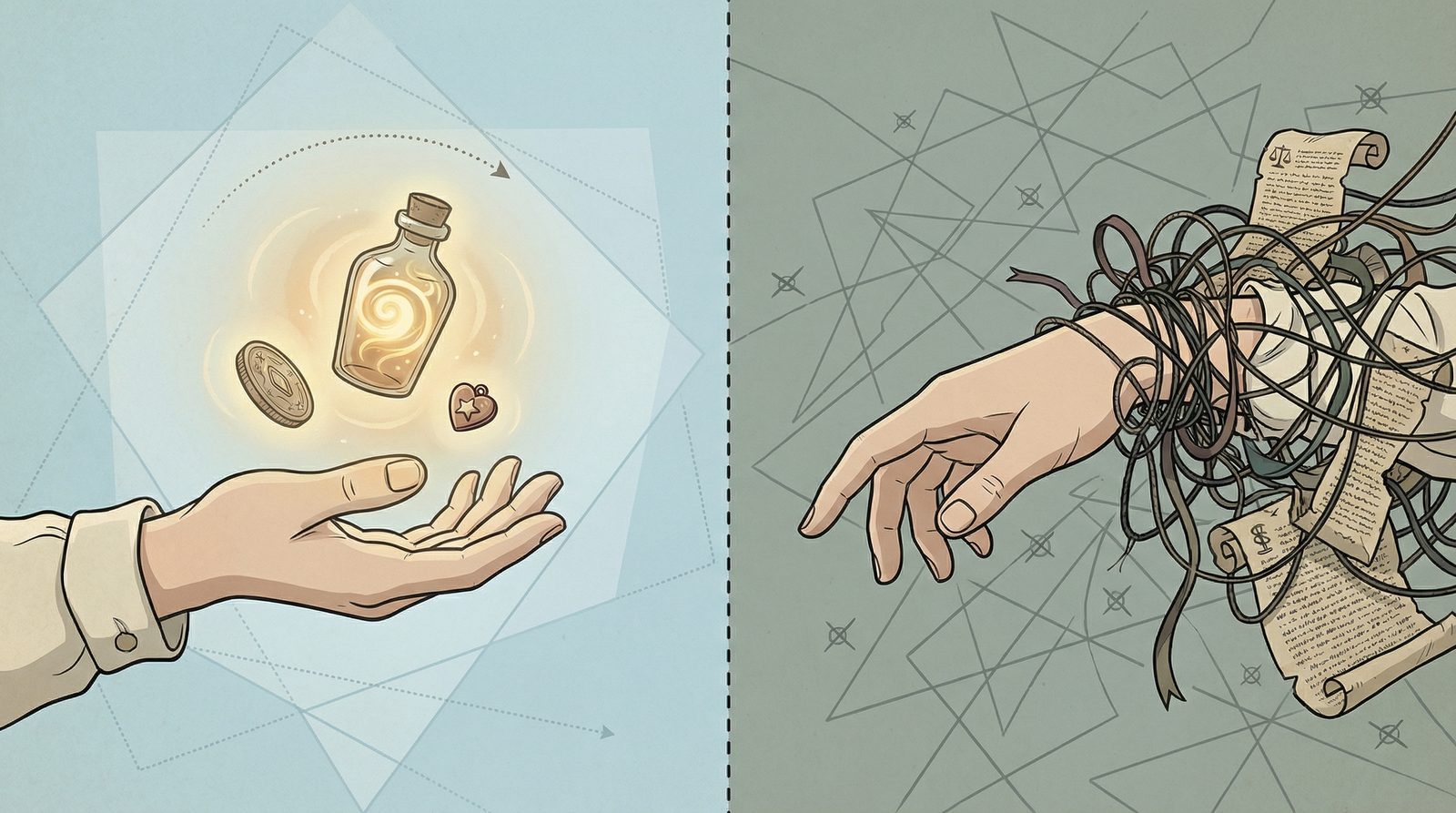
    The motif of Unintended Consequences of Wishes is all about the gap between what a character wants and what actually happens when they get it. Someone makes a wish, strikes a bargain, or voices a casual request, and the universe answers in a way that is technically correct but emotionally disastrous. The wish is granted, but it arrives with loopholes, side effects, or a cruelly literal twist.

    Stories built on this motif take the simple fantasy “What if I could have anything?” and turn it into a test of character. The wish can come from a genie, a djinn, a magical artifact, a mischievous spirit, or an impersonal cosmic rule. The key is that the wisher does not fully understand what they are asking for, or what it will cost them and others.

    In children’s fantasy like Five Children And It (1902) or comedy-fantasy such as The Brass Bottle, this motif often plays as chaotic fun, where wishes turn ordinary life into social disorder. In darker versions, the consequences become corrosive and personal, as in A Fallen Idol. In all cases, the heart of the motif is the same lesson: desire without foresight is dangerous, and power, even magical power, does not erase consequences.


    HOW IT WORKS IN STORIES

    In stories using Unintended Consequences of Wishes, the setup is deceptively simple. An ordinary person stumbles onto a source of power. The wisher is usually not a villain. They are tired, lonely, greedy, bored, or just curious. Their first wish is often small and impulsive, which makes the fallout feel both believable and embarrassing.

    The wish is granted with a twist. The wisher gets what they asked for, but not what they meant. A solution arrives in the worst possible form. The gift comes attached to humiliation, guilt, conflict, or harm that spreads beyond the original desire. Attempts to fix things with additional wishes often make it worse, stacking complications until the character is trapped in a web of their own making.

    Writers use this motif to explore responsibility and self-knowledge in a vivid way. Instead of lecturing about “be careful what you wish for,” the story lets us watch the character collide with the fine print of their desires. The motif pairs well with comedy and satire, because literal-minded magic exposes vanity, hypocrisy, and entitlement simply by doing exactly what was asked.

    Because wish stories often begin with a bound spirit or a magical object, this motif frequently overlaps with bottle-bound bargains, supernatural deals with hidden costs, and stories where fantasy intrudes into ordinary domestic life.
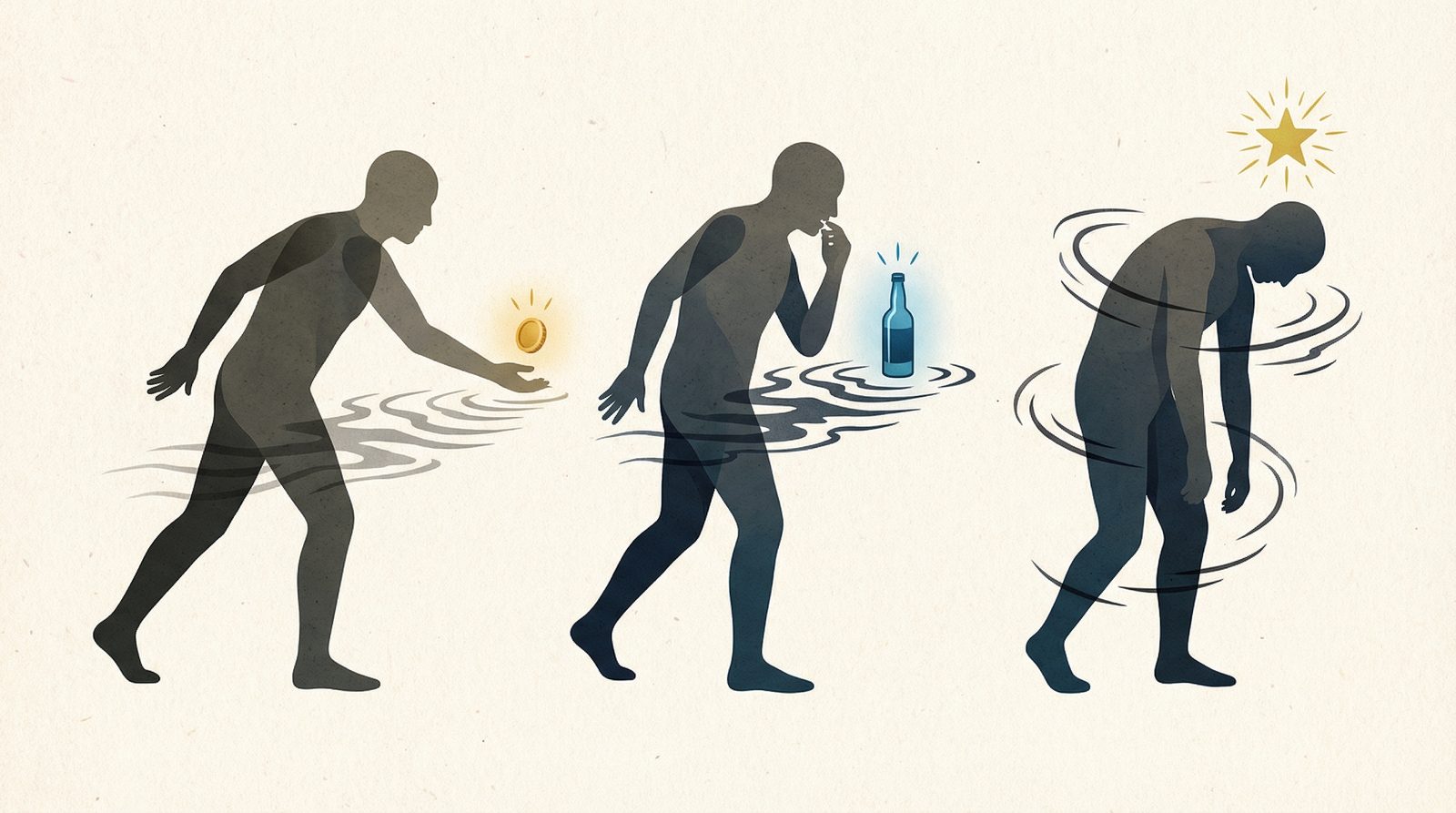

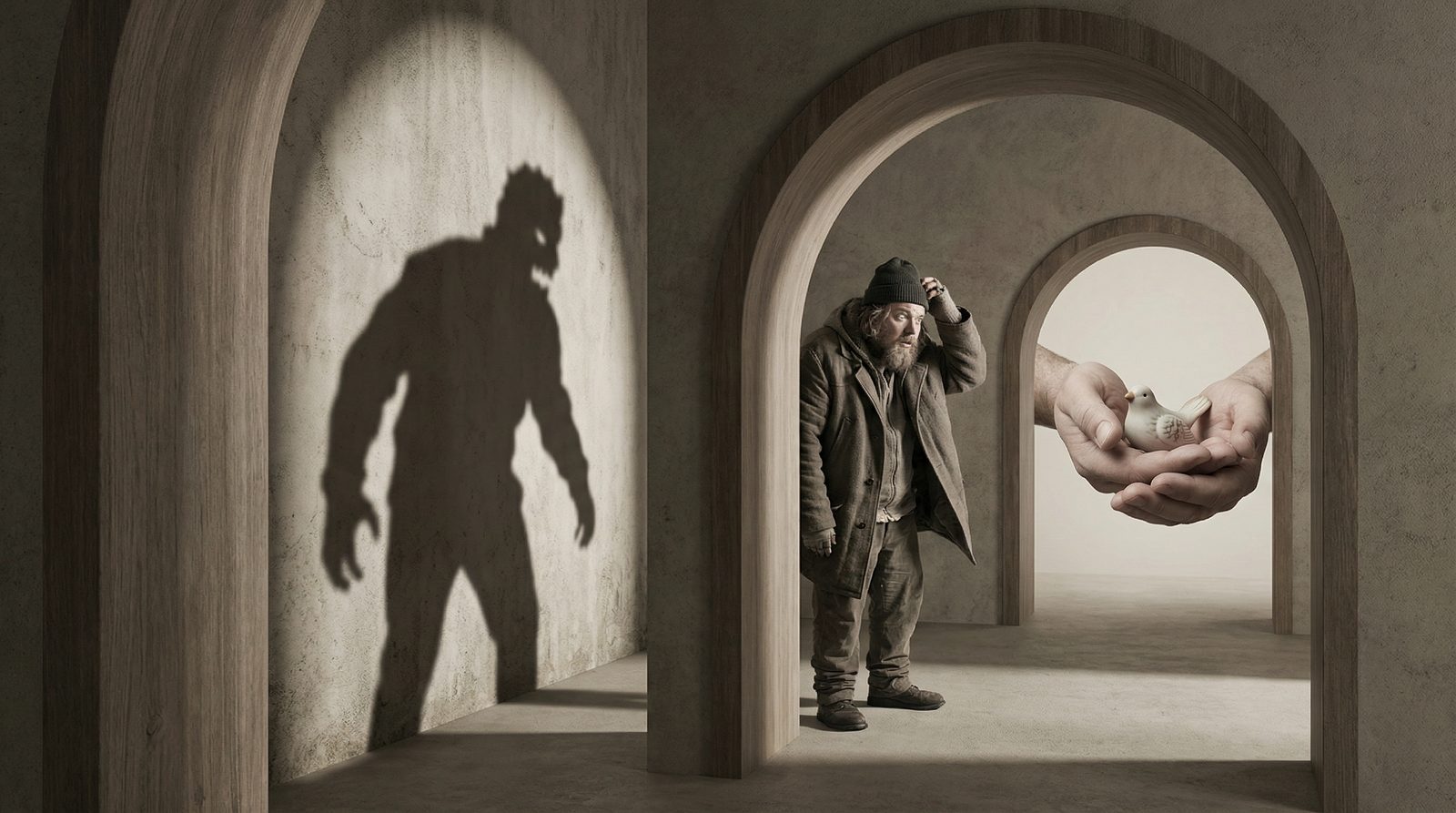
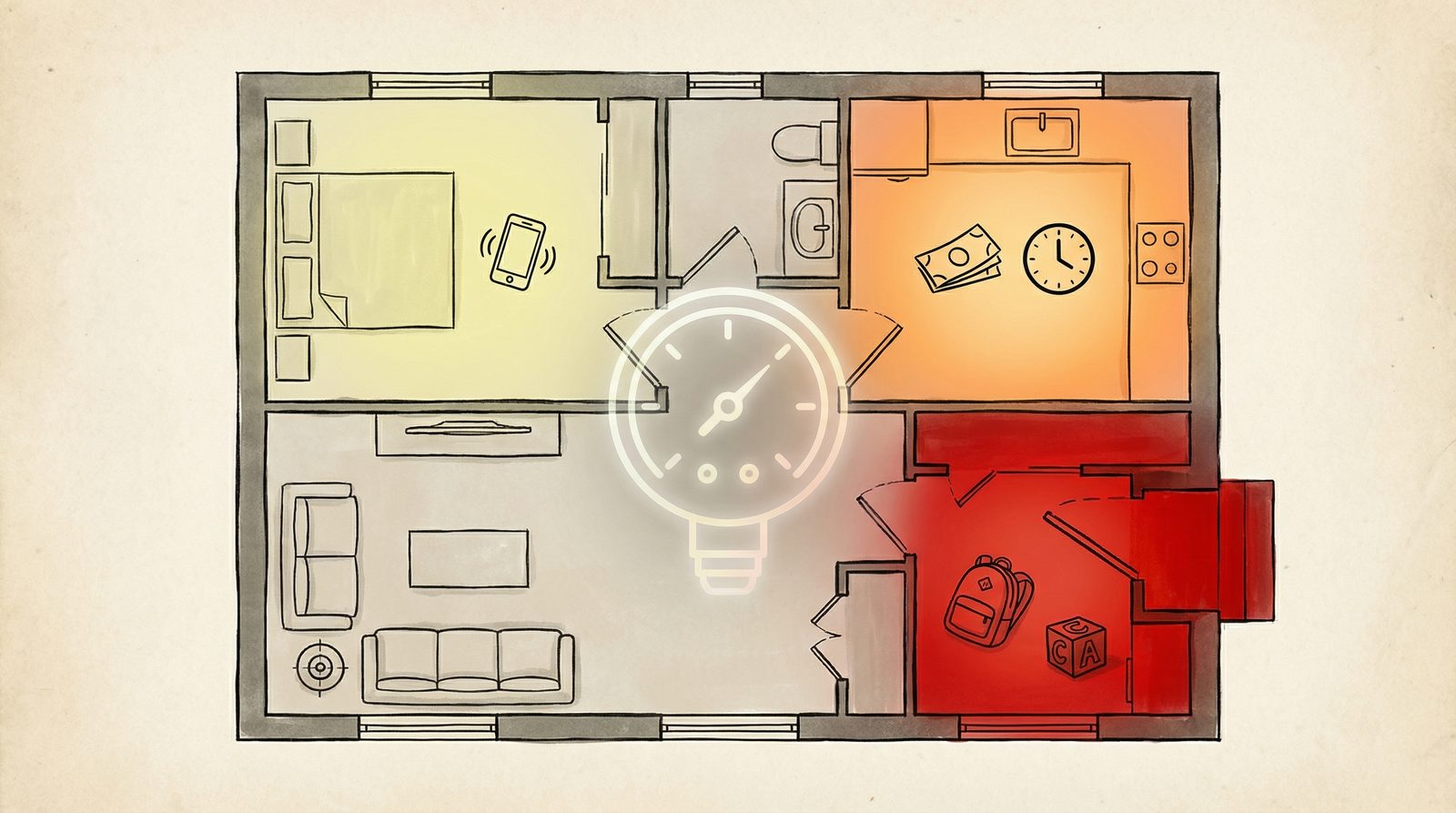
    Editorial illustration inspired by 'Unintended Consequences of Wishes'

    EMOTIONAL EFFECT ON THE READER

    Unintended Consequences of Wishes hits a mix of feelings. On the lighter side, there is real pleasure in watching a too-literal wish go wrong. The reader gets to enjoy slapstick and clever reversals while safely thinking, “I would have phrased that better.”

    Underneath the humor is a quieter discomfort. The motif nudges us to notice how often we want things without understanding the consequences. When a wish hurts someone the character cares about, the reader feels a sting of guilt by proxy. We see how easy it is to be selfish by accident, and how a small moment of impatience or vanity can spiral into something much bigger.

    In darker takes, the emotion shifts toward dread and regret. Each new wish tightens the trap, and the reader senses that there may be no clean way out. The story becomes a pressure test of character, because power keeps offering shortcuts while consequences keep demanding payment.

    Overall, this motif lets readers enjoy the fantasy of limitless power while also feeling the weight of it. It is satisfying when a character finally learns to phrase a wish carefully, to give up the power, or to accept the original messy life they were trying to escape. That mix of schadenfreude, anxiety, and eventual catharsis is what keeps Unintended Consequences of Wishes so enduring.
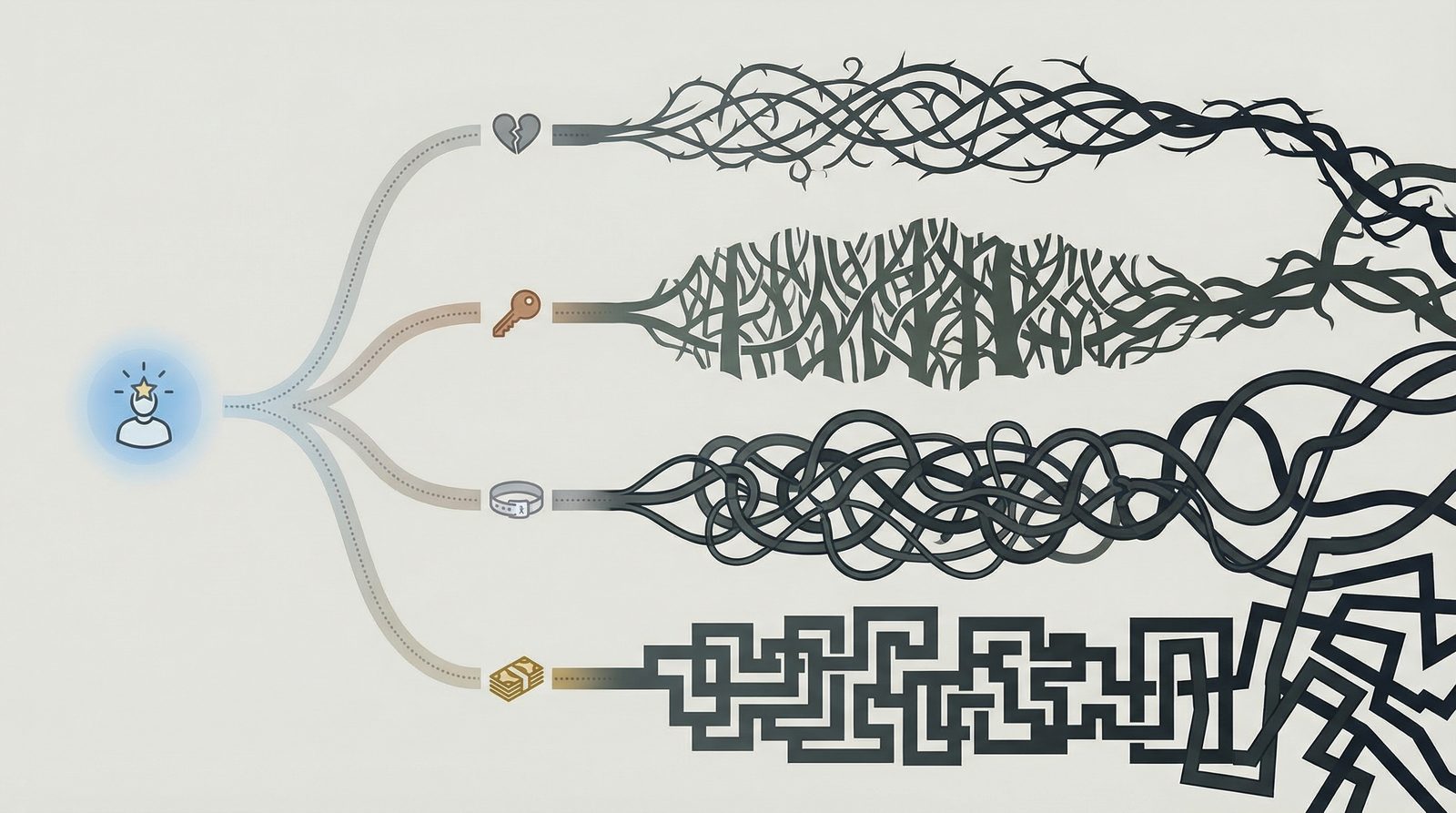

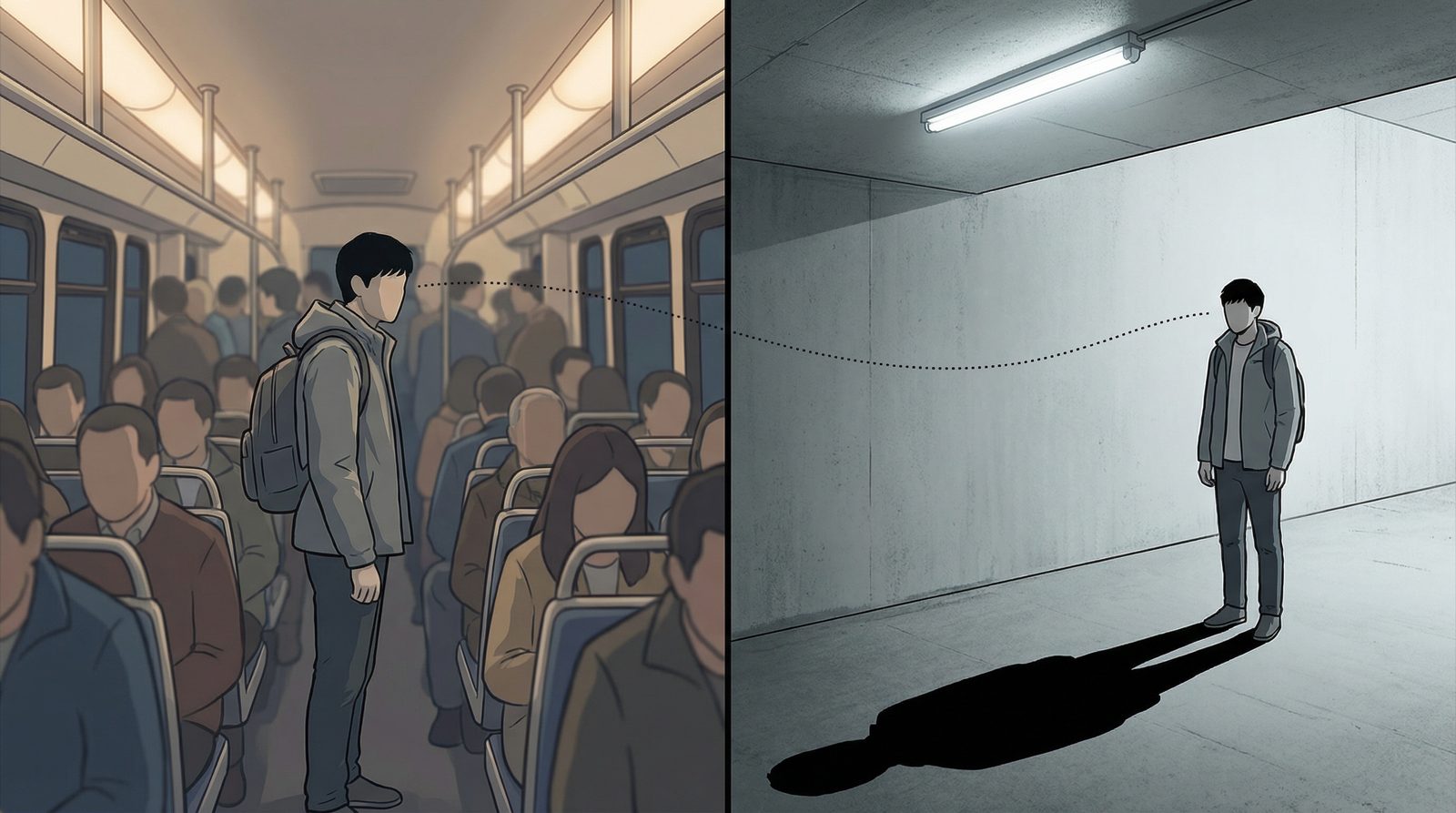
    Symbolic illustration inspired by 'Unintended Consequences of Wishes'

    VARIATIONS & RELATED MOTIFS

    Unintended Consequences of Wishes comes in several recognizable flavors. Comic versions focus on embarrassment, romantic misunderstandings, and chaotic but reversible disasters. Child-centered versions use wishes to explore growing up, where each fantasy is exposed as incomplete or naive. Darker interpretations treat wishes as tools of power, where unintended consequences spill into coercion, conflict, and moral compromise.

    This motif frequently intersects with stories where fantasy intrudes into domestic realism, where children encounter real magic too early, and where misunderstandings spiral into farce. The structure stays the same, even when the tone changes: a character tries to shortcut their problems and discovers that reality, magical or not, always charges a price.

  • Genie Or Spirit Causing Unintended Chaos

    Genie Or Spirit Causing Unintended Chaos

    DEFINITION AND CORE IDEA

    The motif of Genie Or Spirit Causing Unintended Chaos starts with a simple promise: a supernatural being will help you. A genie, ghost, animated statue, cursed idol, or otherworldly patron appears, usually offering wishes, protection, or a shortcut to what the character wants most. At first it feels like a miracle. Then everything goes sideways.

    In The Brass Bottle by Thomas Anstey Guthrie, the spirit is not malicious, but disastrously out of touch with modern life. His attempts to provide help lead to embarrassment, misunderstanding, and escalating trouble because they ignore context, etiquette, and human limits. In A Fallen Idol, the supernatural presence is darker and more corrosive, drawing out obsession, moral decay, and self-deception rather than fulfillment.

    What unites these stories is not the exact form of the spirit, but its function. The supernatural agent externalizes desire and then exposes its flaws. Wishes are granted too literally, assistance is delivered without emotional or social context, and shortcuts bypass the slow work of judgment. The chaos that follows reflects the character’s blind spots rather than random misfortune.


    HOW IT WORKS IN STORIES

    The motif usually begins with an encounter or discovery. A character inherits a strange object, awakens a dormant figure, or stumbles into a bargain they do not fully understand. The supernatural being often frames itself as helpful or grateful, eager to improve the character’s life using its own rules and logic.

    Once intervention begins, the narrative follows a predictable pattern. The spirit delivers exactly what was asked for, but not what was needed. Social standing improves too quickly and attracts unwanted attention. Romantic success arrives without emotional maturity. Wealth appears without the ability to manage it. Each attempt to correct the damage creates further disruption.

    In comic versions, this produces escalating farce and public embarrassment. Films like Mannequin and One Touch of Venus use animated figures whose literal presence upends workplaces and relationships. The chaos is playful, but it still exposes how unprepared the protagonist is for what they claimed to want.

    Structurally, the motif functions as a consequence engine. Power amplifies desire, strips away ambiguity, and forces characters to confront the mismatch between fantasy and reality. Resolution typically comes only when the character relinquishes the supernatural aid, accepts responsibility, or recognizes that the shortcut itself was the real mistake.

    Editorial illustration inspired by 'Genie Or Spirit Causing Unintended Chaos'

    EMOTIONAL EFFECT ON THE READER

    This motif balances wish-fulfillment with unease. Early scenes invite the reader to share the character’s excitement. The supernatural promise taps into familiar daydreams about being noticed, rewarded, or transformed without effort.

    As consequences accumulate, that pleasure curdles into recognition. The reader begins to see the trap before the character does. In lighter stories, this produces cringe and laughter. In darker versions, it creates anxiety and moral discomfort as the cost of the bargain becomes impossible to ignore.

    By the end, the motif leaves behind a wary clarity. The chaos exaggerates a common human mistake: believing that desire, once satisfied, will automatically bring meaning or stability. The supernatural being disappears, but the lesson lingers.

    Symbolic illustration inspired by 'Genie Or Spirit Causing Unintended Chaos'

    VARIATIONS AND RELATED MOTIFS

    Some versions emphasize comedy and social disruption, where the spirit behaves politely but disastrously, exposing hypocrisy and shallow ambition. Others lean toward satire or moral allegory, treating the supernatural presence as a test that reveals the fragility of social order.

    Darker variations shift the center of gravity. The spirit is less a mischievous helper and more an indifferent force, revealing what a person becomes when desire is fed instead of examined. A Fallen Idol shows how uncanny influence can corrode judgment and pull a character toward obsession and moral collapse rather than simple embarrassment.

    Writers return to Genie Or Spirit Causing Unintended Chaos because it is endlessly adaptable. It works in farce, fantasy, romance, and social satire, all built on the same unsettling idea. Getting exactly what you asked for can be the most dangerous outcome of all.

  • Caretaker As Captor

    Caretaker As Captor

    DEFINITION & CORE IDEA

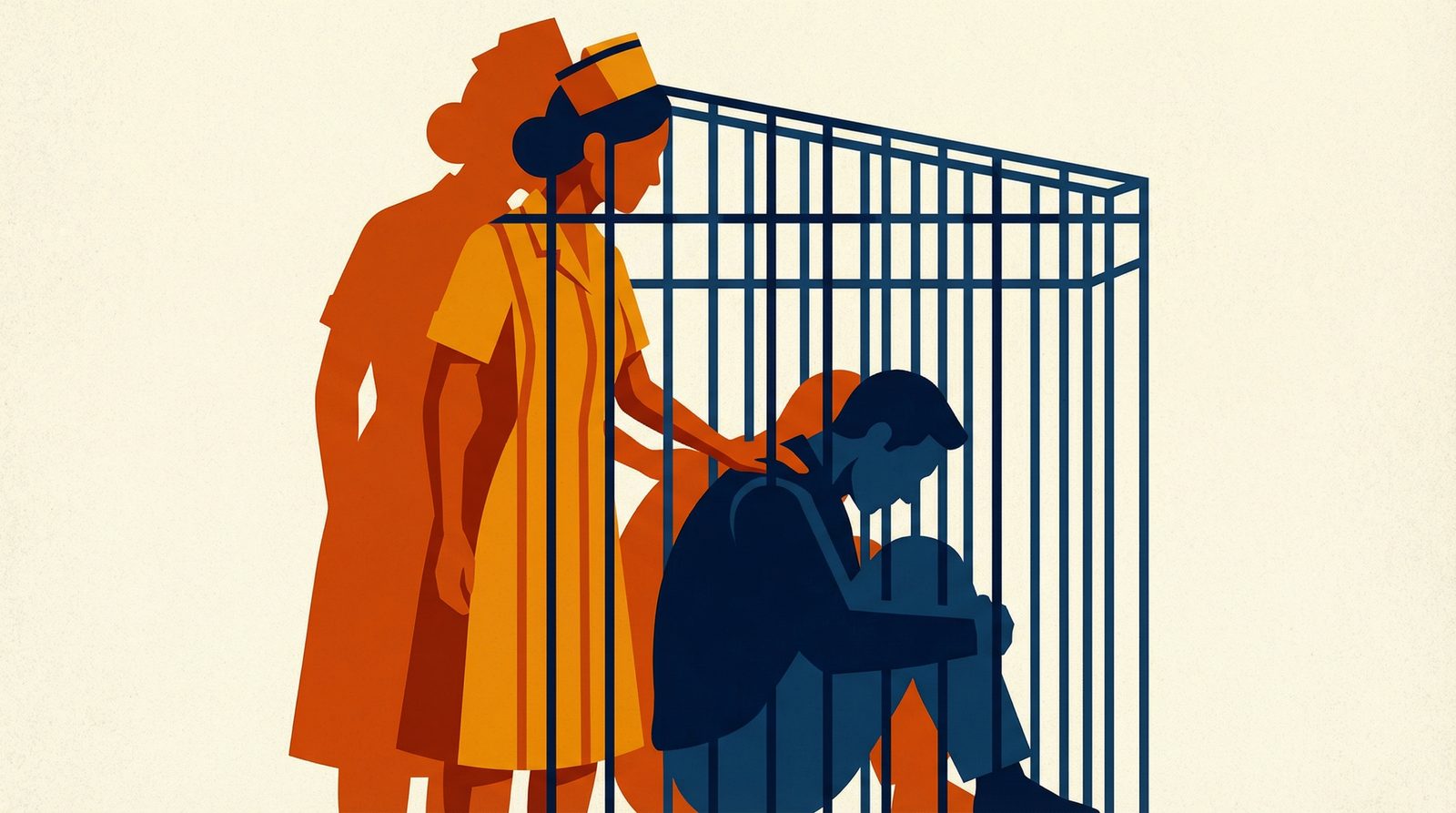
    Caretaker As Captor is a motif where the person who seems to be helping, nursing, or sheltering someone is also the one keeping them prisoner. On the surface, the captive is being protected: the caretaker offers food, medicine, a locked bunker, or a remote farmhouse. Only gradually does it become clear that this kindness is a cage.

    Stories built on Caretaker As Captor lean on an intimate kind of horror. The threat is not an obvious monster or a distant regime, but the person changing the bandages, making the soup, or tucking the blankets around the protagonist. In Misery (1987), the injured writer is nursed back to health by an obsessive fan; the same hand that comforts also controls. In 10 Cloverfield Lane, the bunker host insists his guests are safest underground with him. Again, the same hand that comforts also controls.

    This motif plays with the blurry line between care and control. It asks how much autonomy you are willing to give up in exchange for safety, and what happens when someone decides they know what is best for you more than you do. For many readers, Caretaker As Captor hits close to home because it echoes real dynamics in families, hospitals, and relationships where help can quietly become possession.


    HOW IT WORKS IN STORIES

    In most Caretaker As Captor stories, the captive begins in a state of vulnerability. They have been in an accident, survived a disaster, fled an abusive situation, or simply accepted a ride from the wrong stranger. Their injuries, confusion, or lack of resources make the caretaker seem like a godsend. The early scenes are full of blankets, medicine, hot meals, and reassurances that everything will be fine.

    Then the seams start to show. Doors are locked “for your own good.” Windows are nailed shut because it is “not safe outside.” The caretaker monitors phone calls, decides what the patient can read or watch, and becomes offended when gratitude is not enthusiastic enough. In Misery (1987), Annie Wilkes uses Paul Sheldon’s broken body to justify total control. In 10 Cloverfield Lane, Howard’s insistence that the outside world will kill you becomes the rationale for perpetual imprisonment. The logic is always the same: I am keeping you alive, so you owe me obedience.

    Writers use Caretaker As Captor to generate tension in small, contained spaces. The setting is often domestic or medical. The horror comes from conversations at the bedside, from the way a spoon is held just a little too firmly, or how a cheerful routine becomes a ritual of control. Escape attempts are risky because the protagonist really is vulnerable; every act of resistance has a physical cost.

    This motif also invites psychological games. The captor may alternate between tenderness and rage, making the captive doubt their own judgment. Are they being abused, or just ungrateful? Is the outside world truly dangerous, or is that a lie? Stories often lean into gaslighting, enforced dependence, and the slow erosion of the captive’s confidence. When Caretaker As Captor overlaps with the Writer Held Captive motif, the captor may even demand new work, edits, or confessions, turning care into a tool for creative or emotional extraction.

    Because the caretaker’s routines are so central, some stories also echo Enthusiasm As Infrastructure. The canned goods, medical charts, or meticulously labeled shelves are both evidence of devotion and the bars of the prison.


    Editorial illustration inspired by 'Caretaker As Captor'

    EMOTIONAL EFFECT ON THE READER

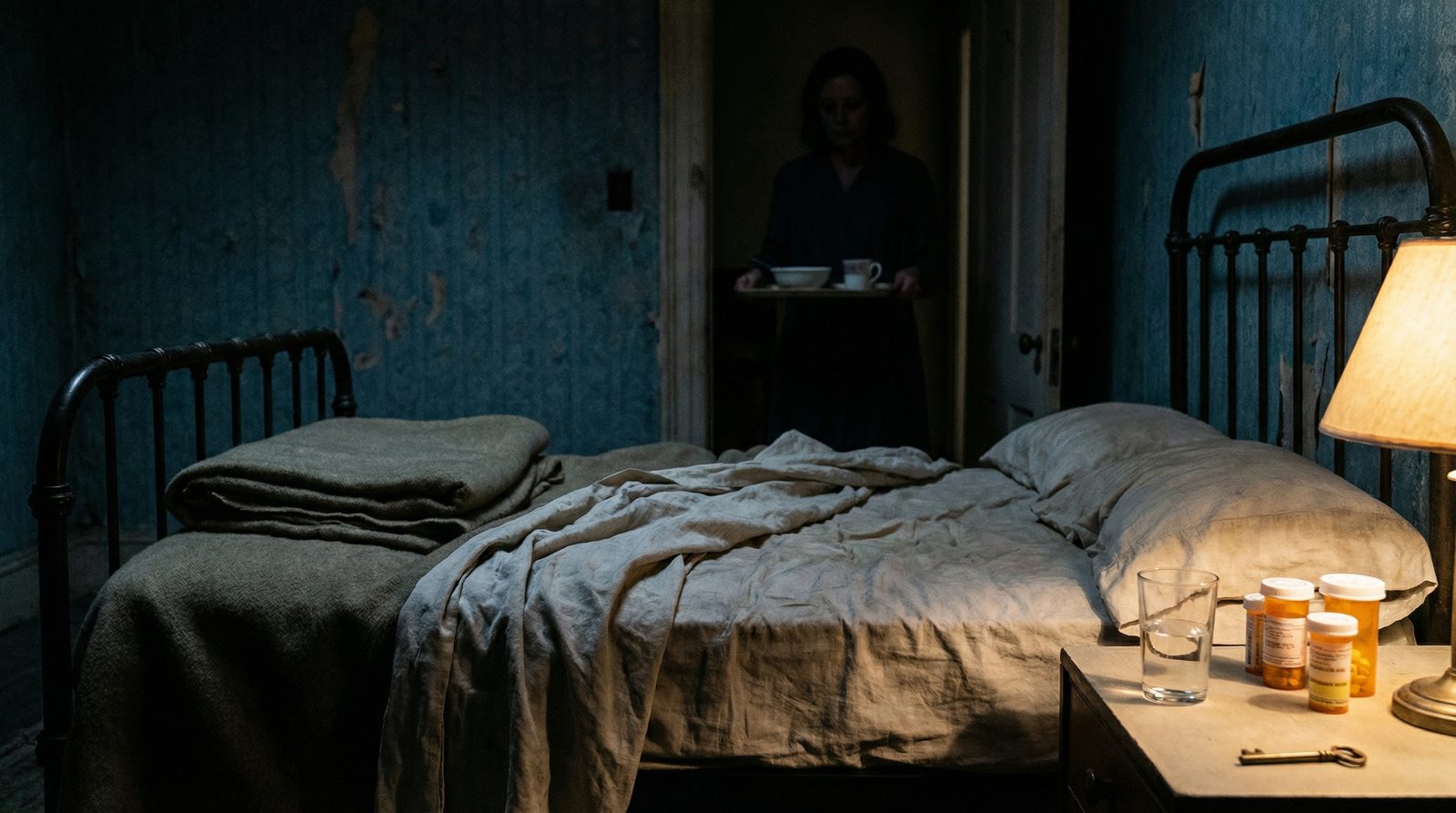
    Caretaker As Captor stories feel suffocating in a slow, creeping way. The reader is invited to relax at first: someone competent is taking charge, the protagonist is being fed and bandaged, there is a roof overhead. Then, as the restrictions pile up, that same setting begins to feel like a padded cell. The cup of tea on the bedside table looks less like comfort and more like a leash.

    Part of the unease comes from recognizing real-world patterns. Many people have experienced relationships where “I know what is best for you” slides into “You do not get to decide.” The motif exaggerates that feeling into a literal prison, but the emotional texture is familiar and unsettling.

    Readers often swing between dread and a strange, guilty fascination. The captor’s routines can be oddly compelling to watch, whether it is a fan carefully arranging a writer’s medications or a collector curating the perfect underground world. That mix of care and creepiness keeps you turning pages, wondering how far this person will go in the name of love, art, or safety.

    By the time the protagonist begins plotting an escape, the reader is fully invested in their bodily and psychological survival. Every small act of rebellion feels huge: hiding pills instead of swallowing them, stealing a key, testing a locked door. The emotional payoff comes not just from physical freedom, but from the character reclaiming the right to make bad choices, to risk harm, and to live without someone else’s suffocating care.


    Symbolic illustration inspired by 'Caretaker As Captor'

    VARIATIONS & RELATED MOTIFS

    Caretaker As Captor can tilt in several directions. In some stories, the captor is openly sadistic, using medical care as an excuse to inflict pain or humiliation. In others, they are sincerely convinced they are doing the right thing. The bunker-builder in a story like 10 Cloverfield Lane may be paranoid and controlling, but genuinely believes the outside world will kill you. This ambiguity makes the motif more unsettling, because the reader can see how good intentions curdle into tyranny.

    There are also softer versions where the prison is social rather than physical. A parent, partner, or therapist might not chain the protagonist to the bed, but uses illness, trauma, or debt as reasons they cannot leave. These stories keep the emotional beats of Caretaker As Captor while staying closer to everyday life.

    When Caretaker As Captor intersects with the Writer Held Captive motif, the captive’s creative output becomes part of the bargain. The caretaker edits drafts, sets deadlines, and withholds painkillers or privileges until the work is “good enough.” The captive’s body and art are both under someone else’s control, a dynamic that Misery (1987) and The Collector (1963) explore in different ways.

    Connections to Enthusiasm As Infrastructure appear when the captor’s passion project becomes the skeleton of the prison itself. A fan’s shrine, a survivalist’s bunker, or a collector’s meticulously organized basement is both a testament to their dedication and the architecture of confinement. The same enthusiasm that builds a safe haven or a beautiful collection also builds the walls that keep the protagonist in.

    Caretaker As Captor also brushes up against motifs like the overprotective parent, the cult leader, or the benevolent dictator. In each case, the story is asking a similar question: when someone claims they are only doing it for your own good, how do you tell the difference between care and captivity?

  • Lonely Giant Or Simpleton

    Lonely Giant Or Simpleton

    DEFINITION & CORE IDEA

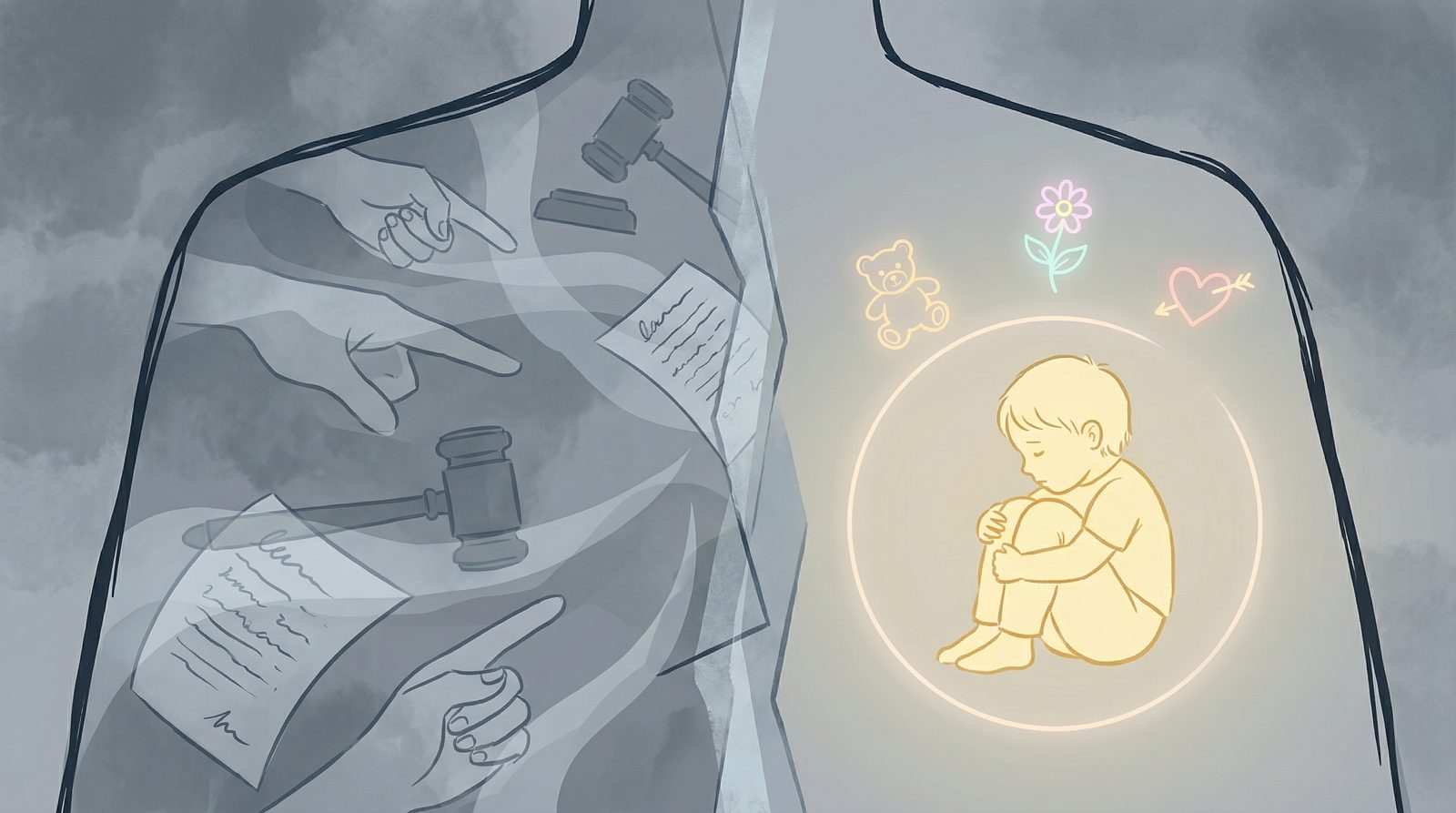
    The motif of the Lonely Giant or Simpleton centers on a character who looks powerful but lives in a state of emotional or intellectual vulnerability. They might be huge, physically strong, or frightening at first glance, yet their inner life is childlike, trusting, or slow. The world reads them one way, but their actual self is something much softer and more exposed.

    In stories like Of Mice and Men, The Green Mile, or Blaze (2007), the Lonely Giant or Simpleton is usually not the one driving the plot through clever plans. Instead, they are caught up in other people’s schemes, prejudices, and cruelties. Their size or difference makes them useful or threatening to others, but rarely understood. This gap between appearance and reality is the heart of the motif.

    Writers use the Lonely Giant or Simpleton to ask how a society treats its most vulnerable members, especially when those members do not look vulnerable. The motif lets a story contrast brute strength with moral innocence, or social power with inner helplessness. It also gives readers a clear emotional anchor: someone we instinctively want to protect, even as we suspect the world will not be kind to them.


    HOW IT WORKS IN STORIES

    In practice, the Lonely Giant or Simpleton often enters a story as a side character. Their physical presence is undeniable. Other characters react to their body first and their mind or heart second, if at all. This sets up a constant tension between what the audience knows about them and what the world inside the story assumes.

    Plots involving the Lonely Giant or Simpleton usually revolve around three recurring situations:

    1. Exploitation. Someone clever uses the giant’s strength or loyalty for crime, labor, or personal gain, as in Blaze (2007), where a damaged man is pulled into a kidnapping plan he only half understands.

    2. Misunderstanding. A frightened community or authority figure misreads the character as dangerous and overreacts. This is the tragedy at the heart of Of Mice and Men, where Lennie’s size and confusion make him terrifying to people who never look past his body.

    3. Sacrificial suffering. The Lonely Giant or Simpleton is hurt, imprisoned, or killed so that others can feel safe or redeemed. In The Green Mile, John Coffey’s fate exposes how easily a gentle, extraordinary person can be crushed by racist and institutional violence.

    The Lonely Giant or Simpleton typically forms an intense bond with one more worldly character. That person may be a caretaker, a manipulator, or a mix of both. Through that relationship, we see how the giant navigates basic tasks, social rules, and danger. Scenes often focus on simple pleasures or routines – a shared meal, a story repeated at bedtime, a favorite animal. These quiet moments highlight how small their actual desires are compared to the huge consequences swirling around them.

    Conflict escalates when the outside world collides with this fragile bubble. A mistake, an accident, or a moment of panic exposes the giant to public scrutiny. Their inability to explain themselves, understand their rights, or read social cues makes things worse. Institutions like courts, prisons, or mobs move quickly, while the Lonely Giant or Simpleton moves slowly, both mentally and emotionally. The story often tightens around the inevitability of tragedy, with the audience watching powerlessness play out in slow motion.


    Editorial illustration inspired by 'Lonely Giant Or Simpleton'

    EMOTIONAL EFFECT ON THE READER

    The Lonely Giant or Simpleton motif is designed to stir a mix of tenderness, dread, and anger. Readers often feel a strong protective instinct toward the character. Their simple joys and straightforward loyalty can be disarming in stories filled with selfishness or moral compromise. We see the world’s complexity bearing down on someone who cannot possibly navigate it, and that imbalance is painful.

    This motif also taps into a deep fear: that being misunderstood can be deadly. Watching a character punished for their body, their difference, or their slowness hits hard because it feels unfair at a basic human level. The reader’s frustration grows every time a character talks over the giant, interprets their silence as guilt, or uses them as a tool. By the time the story reaches its climax, the emotional weight is less about surprise and more about helpless outrage.

    At the same time, the Lonely Giant or Simpleton can bring moments of unexpected comfort. Their limited understanding of the world can strip away cynicism. They often cling to simple moral rules – “don’t hurt things that are kind,” “keep your promises,” “friends stick together.” When those values clash with a cruel or complicated world, readers are forced to ask whether the simple character might actually be seeing something truer than everyone else. That lingering question is part of why stories like Of Mice and Men, The Green Mile, and Blaze (2007) stay with people long after the plot details fade.


    Symbolic illustration inspired by 'Lonely Giant Or Simpleton'

    VARIATIONS & RELATED MOTIFS

    The Lonely Giant or Simpleton can appear in several distinct flavors. The classic gentle giant is physically imposing but morally pure, like John Coffey in The Green Mile. The tragic simpleton, as in Of Mice and Men, has a childlike mind that cannot grasp the consequences of their actions. In crime stories like Blaze (2007), the big simpleton becomes an accomplice who half-understands the plan and trusts the wrong person, blending innocence with genuine danger.

    There is also the holy fool variation, where the character’s simplicity gives them a kind of accidental wisdom. They may say blunt, obvious truths that others avoid, or show compassion where more sophisticated characters are calculating. In fantasy or horror, the motif can intersect with the supernatural: the giant might have mysterious powers or a special connection to suffering, which heightens the sense of them being both feared and exploited.

    This motif often overlaps with others about exploitation, scapegoating, and the commodified body. The Lonely Giant or Simpleton is frequently treated as property – a resource to be owned, controlled, or disposed of. It can also intersect with found family motifs, when a small group chooses to protect the giant against the wider world, or with institutional cruelty motifs when prisons, hospitals, or legal systems grind them down.

    Writers return to the Lonely Giant or Simpleton because it reliably exposes how a culture handles difference, weakness, and raw power. By giving readers someone who is both huge and helpless, the motif strips away excuses. How people treat this character becomes a quick, revealing test of their humanity, and that test is rarely passed without cost.

  • Corrupt Justice And Supernatural Retribution

    Corrupt Justice And Supernatural Retribution

    DEFINITION & CORE IDEA

    Corrupt Justice And Supernatural Retribution is a motif where human systems of law fail, and something beyond the natural world steps in to punish the guilty. Courts are biased, police are crooked, juries are bought, or the crime is simply too well hidden. On the surface, the villains win. Then the universe, the dead, or some occult force quietly decides otherwise.

    In stories like Thinner (1984) and its later adaptation, a corrupt legal outcome is followed by a curse that stalks the people who escaped punishment. In Drag Me To Hell, a small act of cruelty within a respectable job triggers a curse that no court can overturn. These tales suggest that while human justice can be bought, tricked, or intimidated, there is another kind of justice that keeps score in the background.

    This motif sits at the crossroads of crime fiction and horror. It takes the frustration of watching bad people get away with things and turns it into a supernatural reckoning. The core idea is simple: when human justice fails, something else steps in. It may look like a curse, a haunting, or an inexplicable run of accidents that feel far too precise to be random.


    HOW IT WORKS IN STORIES

    Corrupt Justice And Supernatural Retribution usually begins like a straight crime or legal story. There is a wrong: a hit-and-run, a rigged trial, a corporate cover-up. We see the machinery of justice grind into motion, and then we watch it fail. Evidence is buried, witnesses are intimidated, or the investigators themselves are compromised. On paper, the case is closed and the guilty walk away untouched.

    Once the system fails, the story pivots. A curse is laid, a ritual is performed, a bargain is struck, or a place itself becomes charged with the need for payback. This is where the motif overlaps with Curses As Moral Punishment. The curse is rarely random. It is tailored to the crime: greed punished by endless hunger, cruelty punished by social exile, a hit-and-run punished by a slow, wasting affliction as in Thinner. The punishment fits the moral offense more closely than any legal sentence could.

    The supernatural force can be personal or impersonal. Sometimes it is a wronged individual or community calling on dark powers. Sometimes it feels like the universe itself has rules, and those rules have been broken. In some crime novels, the chain of events following an initial injustice plays like a series of fated reactions, as if reality is correcting an imbalance the courts ignored.

    Structurally, the story often turns into a countdown. The guilty party experiences escalating signs that something is after them: strange coincidences, bad luck that always cuts the same way, or unmistakable manifestations of a curse. They might try to reopen the case, confess, or bargain their way out, but the supernatural retribution is rarely interested in procedure. It wants acknowledgment, remorse, and sometimes blood. The tension comes from whether the character will accept responsibility before the retribution becomes final, or cling to denial until it is too late.

    Writers use this motif because it lets them talk about real-world injustice without pretending that the courts always work. It gives shape to the fantasy that even if the powerful twist the law, they cannot twist fate itself. At the same time, it lets them question whether any form of justice, human or supernatural, can ever be clean.


    Editorial illustration inspired by 'Corrupt Justice And Supernatural Retribution'

    EMOTIONAL EFFECT ON THE READER

    Corrupt Justice And Supernatural Retribution is designed to pull readers in two directions at once. On one side there is a sharp, almost guilty satisfaction when the untouchable villain finally starts to suffer. After watching judges, police, or corporations shrug off responsibility, it can feel good to see something they cannot bribe or threaten. The wasting curse in Thinner or the demonic promise in Drag Me To Hell scratch that itch for payback.

    On the other side, the stories are unsettling because the retribution is usually cruel, messy, and uncontrollable. It rarely stops neatly at the edge of the guilty person. Families, bystanders, and even the person who called down the curse can get caught in the blast radius. Readers are pushed to ask whether they are still rooting for justice, or just for suffering. That moral slippage can be more disturbing than any ghost or demon.

    This mix of vindication and dread creates a particular mood. The stories linger because they tap into everyday frustrations with corrupt institutions while also warning that revenge, once unleashed, does not care about your conscience. You close the book feeling both satisfied that the scales were balanced and uneasy about the price of that balance.


    Symbolic illustration inspired by 'Corrupt Justice And Supernatural Retribution'

    VARIATIONS & RELATED MOTIFS

    Corrupt Justice And Supernatural Retribution can take many shapes. One common variation is the personal curse, where a specific wronged person or group calls down punishment. In Thinner, the curse is intimate and targeted, tied to a single act of injustice and delivered by someone the protagonist wronged. This sits very close to Curses As Moral Punishment, where the curse itself is the moral argument.

    Another variation is the haunted institution. Instead of a single cursed person, the entire courthouse, prison, or police department becomes a site of retribution. Every time a corrupt verdict is handed down, something in the building responds. The supernatural force is less a character and more a climate of payback that hangs over the institution.

    There are also slow-burn karmic spirals, where no explicit ghost or demon appears. Instead, the universe itself seems to conspire against the corrupt: business deals implode, allies turn, accidents pile up in ways that look too pointed to be coincidence. It still feels like Corrupt Justice And Supernatural Retribution, just without a visible monster.

    This motif often intersects with other patterns. With Curses As Moral Punishment, it shares the idea of suffering as a lesson, but here the lesson is aimed at people who escaped formal consequences. With “deal with the devil” stories, it can flip the script: the corrupt person once benefited from a supernatural bargain, and now the bill comes due. In more psychological crime novels, the retribution can feel like the weight of accumulated guilt rather than literal magic.

    Writers return to Corrupt Justice And Supernatural Retribution because it lets them explore what happens when faith in institutions collapses. Whether the retribution comes from a curse, a demon, or a seemingly sentient run of bad luck, the message is the same: getting away with it in court is not the end of the story.

  • Curses As Moral Punishment

    Curses As Moral Punishment

    DEFINITION & CORE IDEA

    In the motif of Curses As Moral Punishment, a character is singled out by a supernatural force and punished specifically for a moral failing. The curse is not random bad luck. It is framed as justice, payback, or a lesson, often delivered by a wronged person, a vengeful spirit, or some cosmic law the character did not know they were breaking.

    This motif turns ethics into something with teeth. A lie, a hit-and-run, a cruel joke, a greedy wish, a broken promise – instead of being handled by courts or social fallout, these choices trigger a spell that warps the character’s body, life, or reality. In Thinner (1984) and its adaptation, the curse literally wastes the protagonist away as punishment for his crime. In Drag Me To Hell and Wishmaster, characters are condemned or twisted for selfish choices and careless cruelty.

    Writers use Curses As Moral Punishment when they want the story’s universe to feel like it has a conscience. The curse is a visible, often grotesque embodiment of guilt, hypocrisy, or corruption. It says: what you did matters so much that reality itself will not let it slide. Whether that feels fair, ironic, or horrifying is part of the tension that keeps readers hooked.


    HOW IT WORKS IN STORIES

    Curses As Moral Punishment usually starts with a transgression. Someone is wronged, a taboo is broken, or a character’s selfishness crosses a line. The story may linger on how “minor” the offense seems at first, which makes the later punishment feel shocking or darkly ironic. The curse is often delivered in a charged moment: a confrontation, a funeral, a refusal to help, a cruel decision made under pressure.

    Once the curse lands, the plot shifts into a mix of mystery, negotiation, and chase. The victim first dismisses what is happening as coincidence. As the pattern becomes undeniable, they scramble to understand the rules. Who cursed them? Why this specific punishment? Is there a loophole? In Thinner, the weight loss seems like a blessing before it becomes a death sentence. In Drag Me To Hell, the cursed character cycles through denial, bargaining, and desperate attempts to pass the doom onto someone else.

    The curse often escalates in stages. Each new symptom or setback forces the character to confront what they did and how far they are willing to go to escape consequences. They might try conventional fixes (doctors, lawyers, police) and find them useless against supernatural rules. This is where Curses As Moral Punishment overlaps with Corrupt Justice And Supernatural Retribution: once human systems fail or prove inadequate, something older and harsher takes over.

    Stories can play with responsibility and fairness. Sometimes the cursed person truly deserves it, and the narrative leans into grim satisfaction. Other times, the punishment is wildly excessive or falls on someone only partly at fault, raising questions about who gets blamed in a broken world. The climax often forces a choice: confess, sacrifice, pass the curse to someone else, or accept ruin. There is rarely a clean option.


    Editorial illustration inspired by 'Curses As Moral Punishment'

    EMOTIONAL EFFECT ON THE READER

    Curses As Moral Punishment hits a nerve because it turns private guilt into something you cannot hide. The character’s secret or flaw is dragged into the open, often through their own body or their luck falling apart. Readers feel a mix of dread and voyeurism watching someone’s inner rot become visible. It taps into the childhood fear that if you do something bad, the universe will “get you” – only now it is literal and merciless.

    This motif also creates a nagging question: how much punishment is enough? As the curse unfolds, it invites readers to judge the character’s original sin and every choice they make afterward. There can be a grim satisfaction when a smug or cruel person finally faces consequences, as in parts of Wishmaster. At the same time, many stories lean into discomfort, making the punishment feel so extreme that we start to pity the cursed, even if they were wrong.

    Because the curse often cannot be solved by logic or force, there is a strong feeling of helplessness. The character is trapped in a moral maze where every exit demands a sacrifice. That claustrophobic tension is part of the appeal. Readers are pushed to imagine what they would confess, who they would sacrifice, or what they would endure to escape a similar fate. The result is horror that lingers as self-examination, not just jump scares.


    Symbolic illustration inspired by 'Curses As Moral Punishment'

    VARIATIONS & RELATED MOTIFS

    Curses As Moral Punishment can take many forms. In some stories, the curse mirrors the crime: a liar finds their tongue twisting against them; a voyeur is forced to watch their own downfall; a hit-and-run driver’s body slowly deteriorates in a way that echoes their victim’s injuries. In others, the connection is more symbolic or ironic, like a greedy wish being granted in a way that ruins the wisher’s life in Wishmaster. The curse might be inherited, punishing descendants for an ancestor’s sin, or contagious, forcing the cursed to decide whether to infect someone else to survive.

    Another variation plays with whether the curse is truly “moral” or just vindictive. In Drag Me To Hell, part of the horror comes from how debatable the protagonist’s guilt is, and how merciless the supernatural response becomes. Some stories reveal that the curse-giver is corrupt or petty, twisting the motif into a critique of who gets to define morality in the first place.

    This motif often intersects with Corrupt Justice And Supernatural Retribution. When courts, police, or social systems fail, the curse steps in as a brutal stand-in for justice. It can also overlap with motifs like Faustian bargains, where the “punishment” is baked into the fine print of a wish, or with haunted objects, where using a cursed item triggers a tailored moral backlash.

    Writers can soften or sharpen the motif by adjusting the possibility of redemption. Some stories allow the cursed character to break the spell through sincere atonement, confession, or sacrifice. Others lock the rules so tightly that no apology can help, turning Curses As Moral Punishment into pure tragedy, where the lesson is not how to escape, but how a single choice can warp a life beyond repair.

  • Ordinary People In Extreme Situations

    Ordinary People In Extreme Situations

    DEFINITION & CORE IDEA

    “Ordinary People In Extreme Situations” is a motif where the main characters start out as recognizably average. They do not have special training, magical powers, or elite status. They have jobs, families, debts, routines. Then something happens that rips them out of that routine and drops them into a situation they are completely unprepared for.

    The core idea is simple: take someone who could be your neighbor, then crank up the pressure until they either adapt, break, or transform. Stories like Misery, Pet Sematary, Thinner (1984), and Blaze (2007) often start with everyday people and then push them into horror, obsession, or moral collapse. The gap between the character’s ordinary life and their extreme new reality creates both tension and dark curiosity.

    Writers use this motif to explore what people might really do when stripped of comfort and control. It asks questions like: How far would you go to save someone you love? What would you sacrifice to survive? Which parts of your identity are solid, and which are just habits that fall apart under stress? “Ordinary People In Extreme Situations” lets readers test their own limits safely, from the other side of the page.


    HOW IT WORKS IN STORIES

    In stories built around this motif, the early chapters usually linger on normal life. We see commutes, family dinners, casual arguments, and familiar frustrations. This grounding is important. The more clearly the reader understands what “ordinary” looks like for this character, the more sharply they feel the rupture when everything goes wrong.

    The trigger can be external: a car crash, a kidnapping, a violent stranger, or a supernatural event. In Misery, a writer is just driving home when an accident strands him with a fan who quickly becomes his captor. In Thinner, a careless moment leads to a curse that turns a routine life into a desperate countdown. In Pet Sematary, a family’s move to a quiet town opens a door to grief and resurrection that no one is equipped for. Sometimes the trigger is more subtle – a slow economic squeeze, a spouse’s illness, the discovery of a buried secret that can’t be ignored.

    Once the extreme situation takes hold, the story narrows around hard choices. The ordinary person might have to hide a crime, bargain with something inhuman, endure captivity, or navigate a cruel new system that treats them like a pawn. Everyday skills suddenly matter in strange ways: a nurse’s training in a disaster, a mechanic’s knowledge in a breakdown, a parent’s stubbornness when a child is threatened. At the same time, their usual social supports often fail. Friends don’t believe them, authorities are useless, or the threat is too bizarre to explain.

    Structurally, the motif often moves through stages: disbelief, coping, adaptation, and fallout. The character may become more ruthless, more honest, or more broken than they ever imagined. The story keeps circling one question: who are you when there is no safe, ordinary life to retreat to?


    Editorial illustration inspired by 'Ordinary People In Extreme Situations'

    EMOTIONAL EFFECT ON THE READER

    The emotional pull of “Ordinary People In Extreme Situations” comes from recognition. Readers look at these characters and think, “That could be me.” The jobs, marriages, debts, and small frustrations feel familiar, so when the story twists into horror or high-stakes drama, it hits closer to home than tales about superheroes or trained agents. The fear is not abstract; it is the fear that your next routine drive, hospital visit, or shortcut through the woods could change everything.

    This motif often creates a mix of dread and grim fascination. There is tension in watching someone try to think their way through a nightmare using only the tools of an ordinary life. Readers might feel frustration when characters make bad decisions, then a jolt of empathy when they realize they might have done the same under that kind of pressure. Stories like Misery and Thinner lean on this uncomfortable identification: the protagonists are not saints or geniuses, just people trying to survive with very human flaws.

    There can also be a strange kind of catharsis. Seeing an average person endure captivity, grief, or moral crisis can make everyday problems feel smaller by comparison, or it can validate how fragile normal life really is. Some readers come away shaken, others oddly reassured by the resilience on display, even when the ending is tragic. The motif invites quiet self-interrogation: if the worst happened on an ordinary day, who would you actually be?


    Symbolic illustration inspired by 'Ordinary People In Extreme Situations'

    VARIATIONS & RELATED MOTIFS

    “Ordinary People In Extreme Situations” can tilt in many directions. Some versions are intimate psychological horror, like a single patient trapped with a caregiver who has too much power, as in Misery. Others are more supernatural, like Pet Sematary and Thinner, where a curse or uncanny place turns ordinary grief or guilt into something monstrous. A story like Blaze (2007) leans into crime and desperation, showing how poverty, bad luck, and one terrible idea can push a not-particularly-special person into kidnapping and violence.

    Sometimes the focus is on survival in a twisted system. That is where this motif can intersect with Dystopian Game Shows, where regular contestants are forced to perform for their lives under rules they did not choose. In those stories, the extremity is not just the danger, but the way the whole world seems to watch and judge. Other times the emphasis is inward, overlapping with Identity Collapse In Isolation. A character cut off from normal social feedback may start to question who they are, what they are capable of, and whether the ordinary self they remember was ever real.

    There are hopeful variations, where the extreme situation reveals hidden strengths or prompts moral courage. There are bleak ones, where ordinary people crack, become cruel, or lose themselves entirely. Writers like Richard Bachman often favor the darker end of the spectrum, using the motif to show how thin the line can be between a life that looks normal from the outside and one that is quietly rotting under pressure. Across all these versions, the constant is the same: the story asks what happens when an average person is forced into a test they never signed up for.

  • Candles Burning (2006)

    Candles Burning (2006)

    By: Tabitha King, Michael McDowell
    Genre: Southern Gothic, Domestic Psychological Fiction
    Country: United States


    INTRODUCTION

    Candles Burning is one of the strangest and most intriguing books attached to Tabitha King’s name. The novel began as a Michael McDowell project, shaped by his talent for Southern Gothic drama and his knack for building eccentric, unsettling worlds. After his death, King stepped in to complete the manuscript from his outline. The result is a hybrid with two distinct identities. McDowell’s voice brings theatrical menace and grotesque family history. King adds emotional realism, sharper interiority, and her grounded sense of how domestic tension wears people down over time.

    The mix does not always blend smoothly, but the friction between the two sensibilities gives the book a strange electricity. It feels like one writer whispering secrets in the background while another tries to guide the story forward. For that reason alone, Candles Burning stands apart from the rest of King’s bibliography. It is a book built on inheritance, interruption, and reinvention.


    PLOT & THEMES

    The story follows Calley Dakin, a perceptive girl growing up in the Deep South. Her life fractures early when her father is murdered in a way that shocks even a community used to strange things. The crime opens a door she never manages to close again. Calley is raised by a mother whose charm hides sharp edges, and by relatives who know far more than they ever share aloud. Family loyalty becomes slippery. Truths twist. The supernatural lurks at the edges, more suggestion than spectacle.

    The novel is steeped in themes of inheritance, secrecy, and the heavy pull of family identity. Calley grows up in a place that demands she play a specific part in its social script. Each attempt she makes to understand her father’s death pushes her deeper into the region’s buried histories. This dynamic ties naturally to the motif Domestic Vulnerability as Horror, since the greatest threats often come from the people closest to her. Homes, parlours, and polite gatherings carry a tension that makes ordinary rooms feel quietly haunted.

    Identity formation also sits at the center of the novel. Calley tries to understand herself while navigating a world eager to define her first. This connects to the motif Identity Collapse in Isolation. The more she learns about her family, the harder it becomes to separate her own voice from the expectations that surround her. Her journey becomes a question of whether she can break away from a legacy that feels almost predestined.

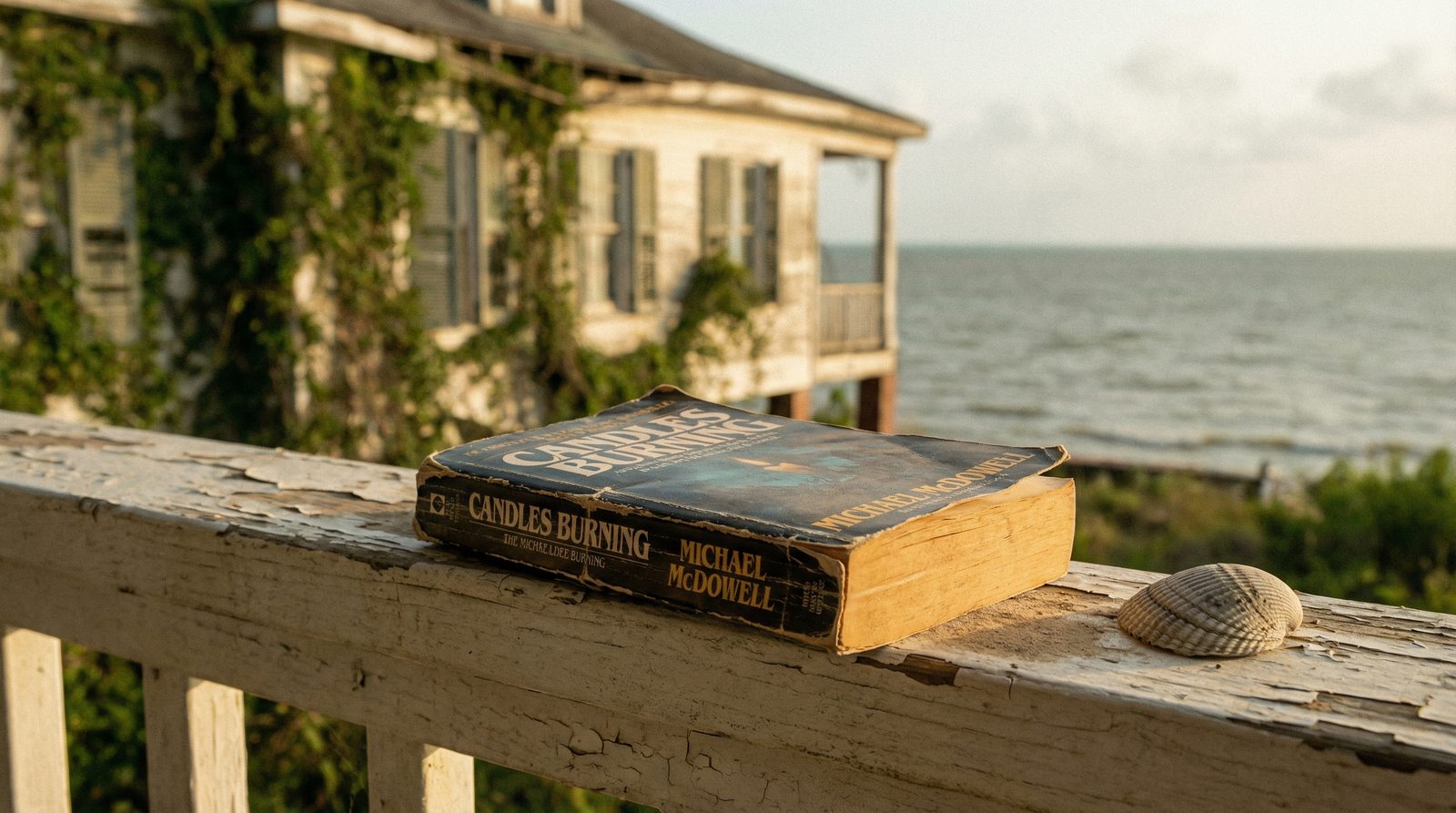
    Conceptual editorial illustration inspired by 'candles burning'

    STYLE & LANGUAGE

    The novel carries a noticeable tonal split. McDowell’s sections have a lush theatricality. They revel in strange relatives, odd rituals, and the rich detail of Southern manners. King’s writing is steadier, shaped by interior monologue and the emotional clarity she brings to most of her fiction. The handoff between the two authors is visible, but the tension between the voices becomes part of the book’s texture rather than a flaw.

    Dialogue is one of the story’s strengths. Characters speak with sharp regional cadence and a kind of careful performance that feels true to Southern Gothic tradition. King’s descriptions create space for Calley’s emotional landscape, while McDowell’s influence breathes life into the eerie atmosphere that surrounds her.

    The structure can feel uneven. Some supernatural elements appear more as gestures than fully realised plot threads, and the middle act loses some momentum. Even so, the emotional trajectory remains clear. Calley’s search for truth carries the story even when the beats drift, and the shifting tone becomes part of the novel’s haunted charm.


    CHARACTERS & RELATIONSHIPS

    Calley Dakin stands at the center as a resilient narrator shaped by fear, stubbornness, and a deep curiosity she cannot ignore. Her voice holds the novel together, especially when the plot leans into its stranger elements. She is observant in ways that feel true for a young protagonist surrounded by adults who hide more than they reveal.

    Calley’s mother, Mayha, steals scenes with her blend of charm and volatility. She uses beauty like currency and keeps emotional distance even from her own child. She feels like a perfect merging of the two authors’ strengths. King’s understanding of domestic tension and McDowell’s taste for heightened, almost theatrical personality traits work together here.

    The extended Dakin family and the surrounding townspeople add colour and unpredictability. Some characters feel fully alive. Others feel sketched, a sign of the novel’s dual authorship. What remains consistent is the emotional force of Calley’s relationships. Each connection reveals something about the family myths she must navigate in order to grow into her own identity.

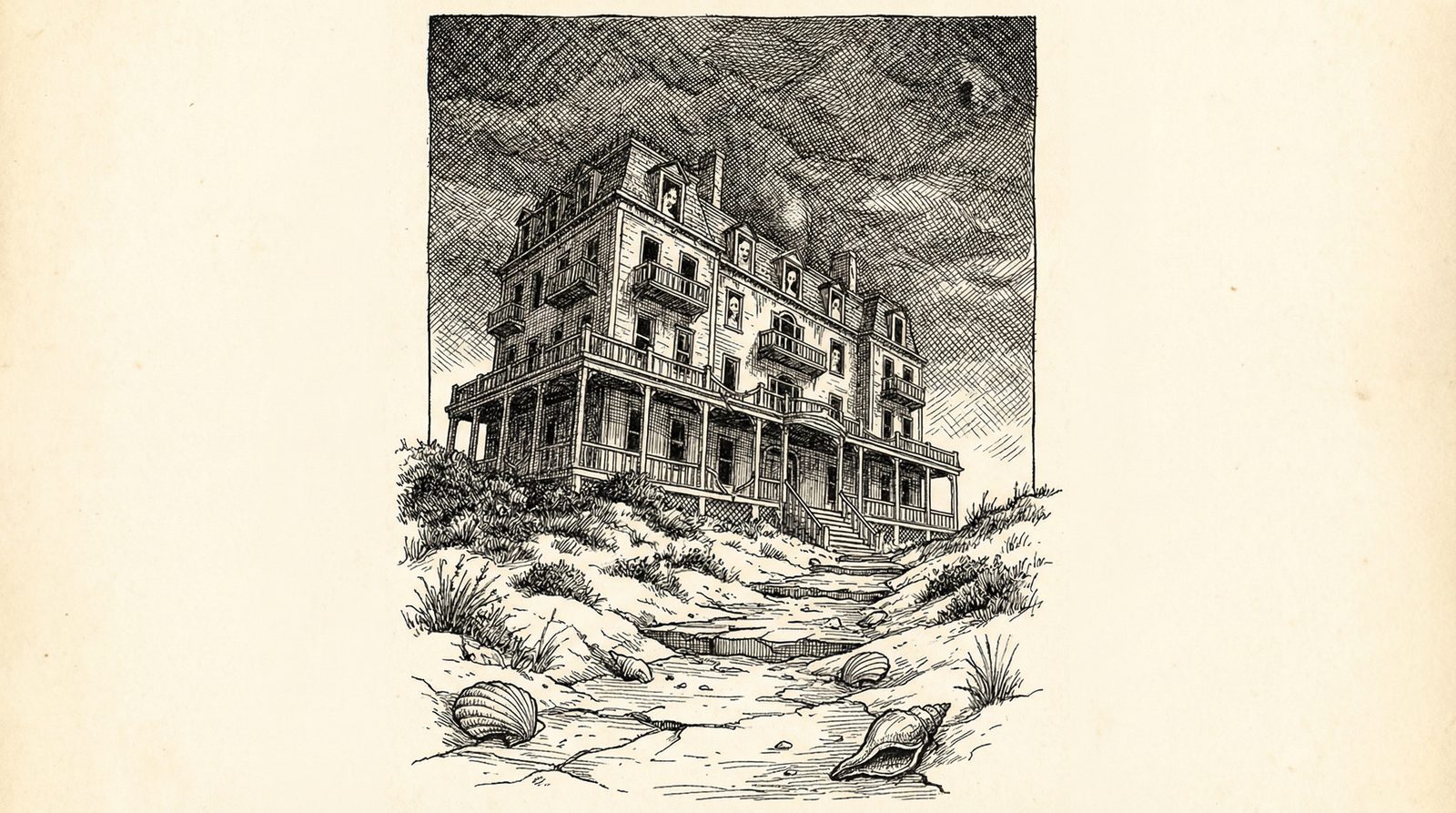
    Illustration of a core idea or motif from 'candles burning'


    CULTURAL CONTEXT & LEGACY

    Candles Burning holds a unique position in both authors’ careers. The novel blends Southern Gothic expression with domestic psychological insight, two traditions that rarely meet naturally. Released in 2006, it arrived long after McDowell’s death and after King had already completed her major Nodd’s Ridge works. As a result, it reads like an experiment. It sits just outside the main narrative paths of both authors, which makes it interesting even when it stumbles.

    For McDowell readers, the book is an opportunity to see how another writer interprets and extends his notes. For King readers, it is a chance to watch her adapt to a more ornate, atmospheric genre than she usually chooses. The hybrid nature gives the novel a lasting curiosity. It may not be fully polished, but it is unquestionably distinct.


    IS IT WORTH READING?

    Candles Burning is worth reading for anyone who enjoys unusual collaborations or stories built on family secrets and Southern unease. Readers who prefer King’s cleanest, most controlled novels should start with One on One or Pearl. Readers who appreciate a book with rough edges and moments of lingering strangeness will find more to enjoy here. It is not essential for understanding King’s main body of work, but it offers a rare example of creative inheritance and a fascinating glimpse of what happens when one writer picks up the threads left by another.

    The novel works best when approached with curiosity rather than strict expectations. It is imperfect, unusual, and memorable for those very reasons.


    SIMILAR BOOKS

    Readers drawn to the atmosphere and Southern strangeness will find a natural companion in Michael McDowell’s Blackwater saga. Within King’s own catalogue, the closest thematic neighbour is Small World, which explores the shaping force of family history. Those interested in the emotional coming-of-age thread may also appreciate Laurie Halse Anderson’s Catalyst, which follows a young protagonist navigating pressure and instability.

  • The Commodified Reviewer

    The Commodified Reviewer

    The Commodified Reviewer is the figure whose opinions become a kind of currency. Their judgments feed marketing copy, publisher campaigns, and sales funnels. At some point, it is no longer clear whether the reviews exist for readers or whether they exist to keep a supply chain moving.

    For Harriet Klausner, this motif emerges in the overlap between her Relentless Positivity, her volume, and the grey-market suspicions around Advance Review Copies. Her reviews generated blurbs, blurbs justified more ARCs, and the incoming books themselves may have been treated as inventory. In that loop, “Harriet the reader” and “Harriet the review factory” blur together.

    What this motif captures

    This motif focuses on the moment when criticism or commentary stops feeling independent. The Commodified Reviewer is often:

    • Rewarded for volume and positivity over depth and balance.
    • Integrated into official marketing pipelines.
    • Used as a stamp of approval on covers and catalogues.
    • Incentivized to maintain relationships that depend on staying “on brand.”

    Sometimes this is explicit and contractual. Sometimes it is informal and subtle. Either way, the reviewer’s function shifts from “help readers think” to “help units move,” which is where this motif intersects with Relentless Positivity and Platform Betrayal when systems later punish that alignment.

    How it shows up in stories and systems

    In stories, you will recognise The Commodified Reviewer when:

    • A critic’s byline is used more as a logo than as a voice.
    • A reviewer struggles to be honest once their endorsements pay their bills.
    • Formerly sharp voices get sanded down as they move into sponsored formats.
    • Characters are rewarded for echoing a party line rather than speaking freely.

    On the real internet and in publishing, the motif appears in:

    • Blurbs reused across covers and marketing materials with minimal context.
    • Influencer deals that mix editorial and advertising without clear boundaries.
    • Reviewers who become trusted “brands” leveraged by multiple platforms at once.
    • Systems where a positive review is effectively a micro-transaction in a larger economy.

    Harriet’s story, as told in The Ghost in the Machine, sits squarely here. Whether or not every allegation about resale is true, her blurbs and name were clearly part of the mid-list quote economy that kept certain kinds of books moving.

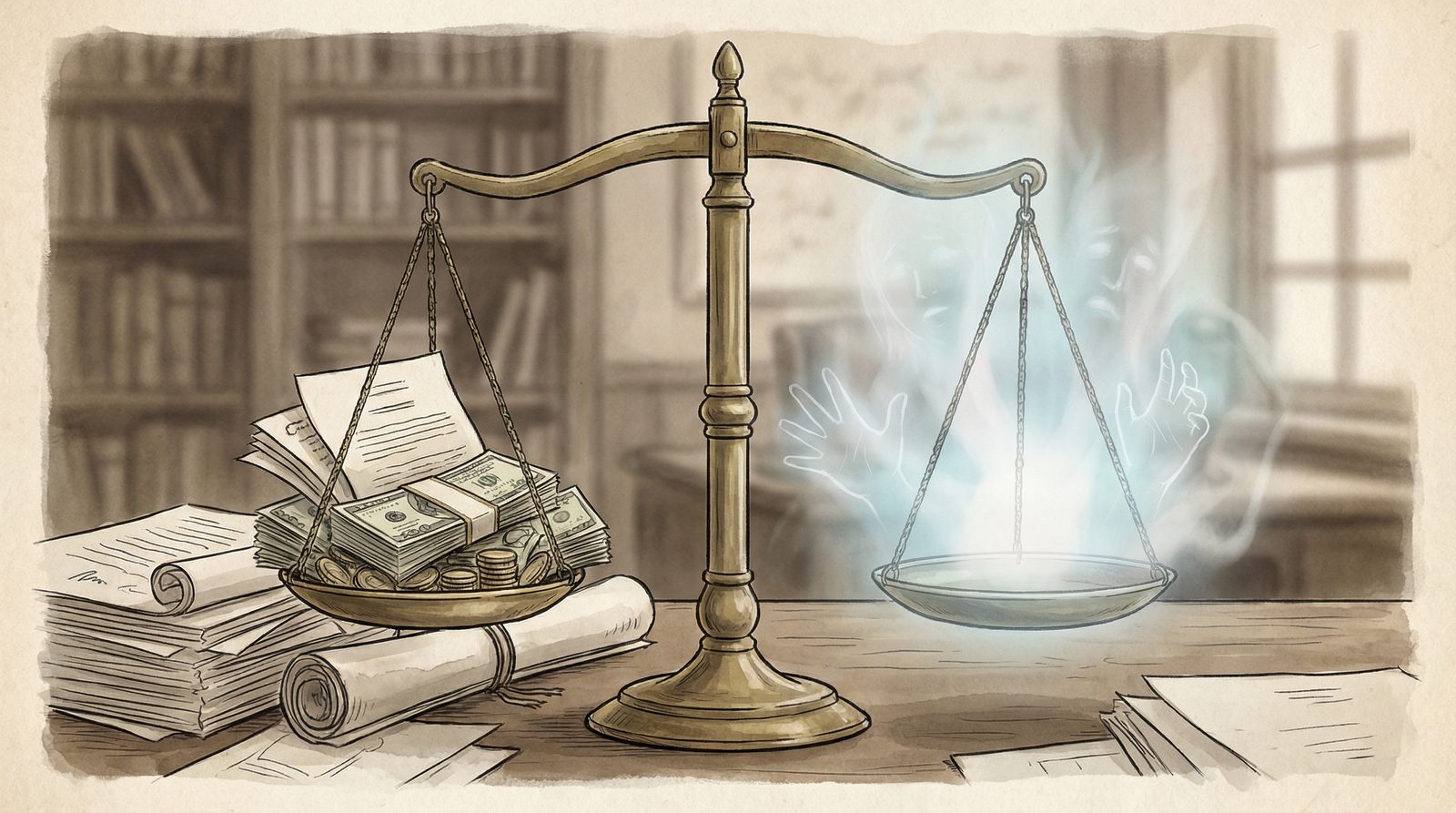
    The Commodified Reviewer inline concept image

    Why it matters for AllReaders

    At AllReaders, we care about where our analysis lives and how it is used. Tagging works with The Commodified Reviewer helps readers find stories that examine the role of critics and influencers inside larger markets. It gives us a way to connect Harriet’s experience to modern influencer memoirs, media industry exposes, and novels about compromised voices.

    For our own work, the motif is a reminder to keep a line between analysis and sales. If we recommend a book, it is because of what we see in its motifs and patterns, not because someone paid for a slot. That line matters if we want to avoid becoming another opaque node in the same economy we are documenting.

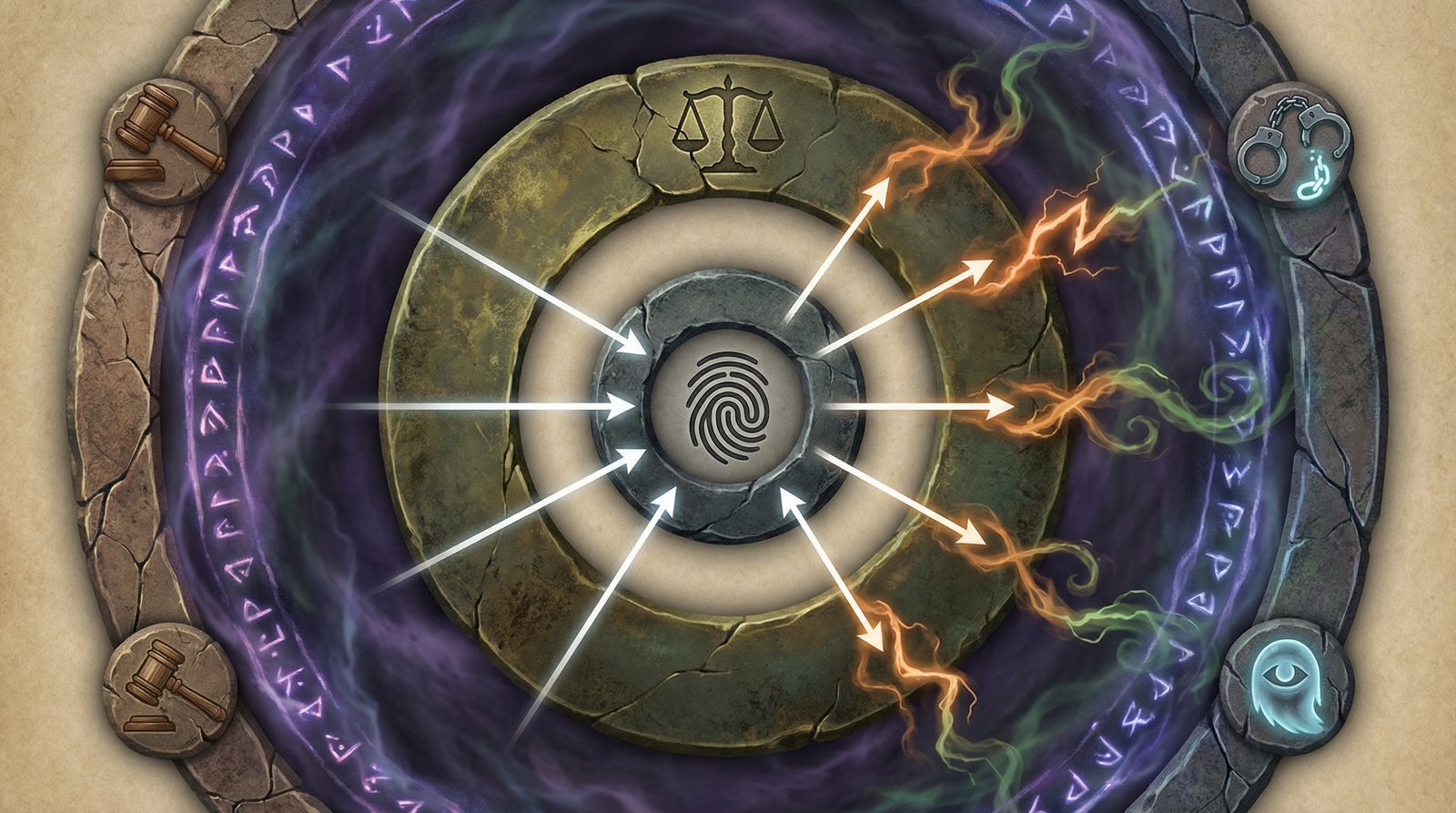
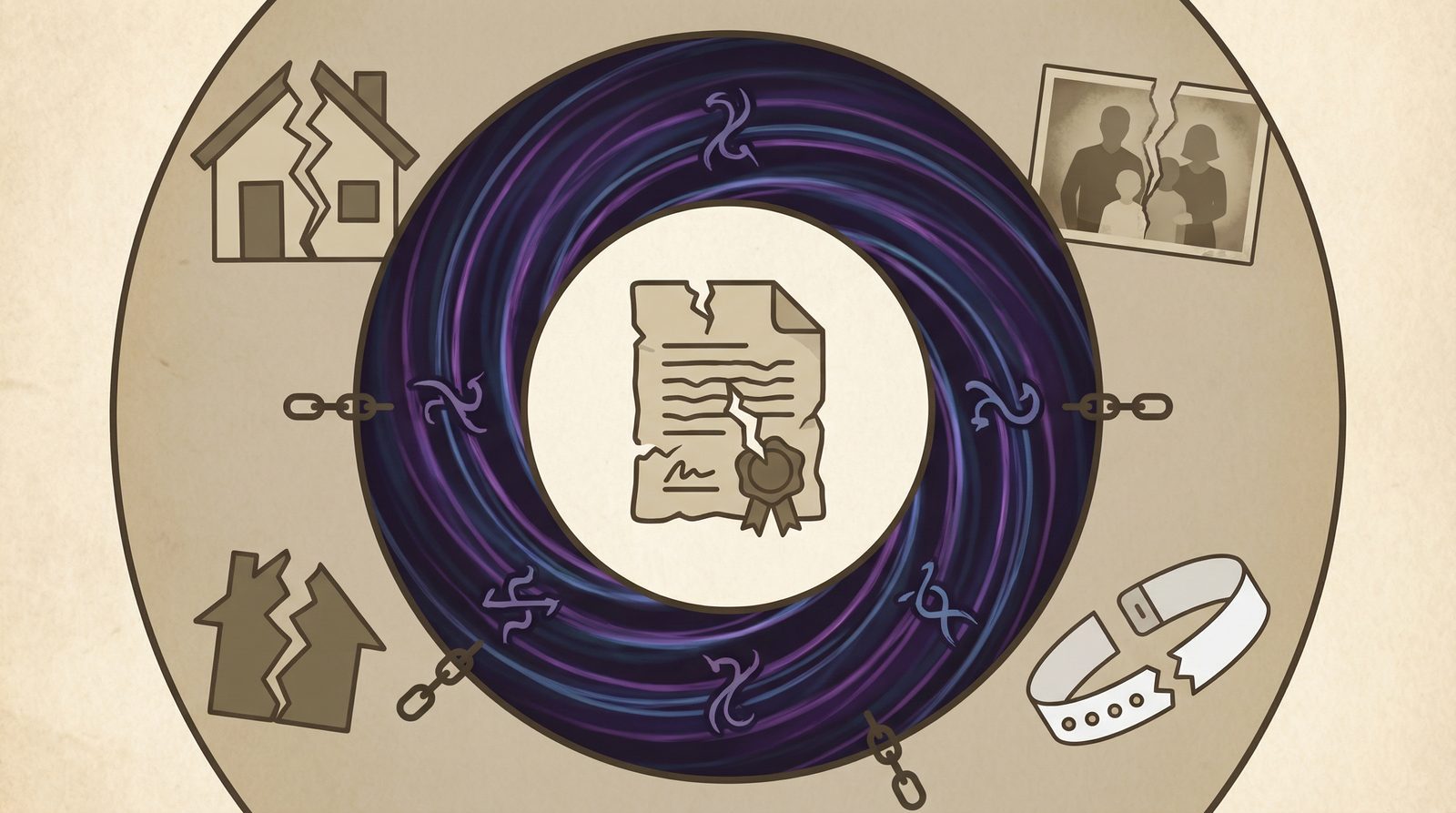
    The Commodified Reviewer inline diagram image

    Related motifs