
INTRODUCTION
Five Children and It (1902) by E. Nesbit
Children’s fantasy · United Kingdom
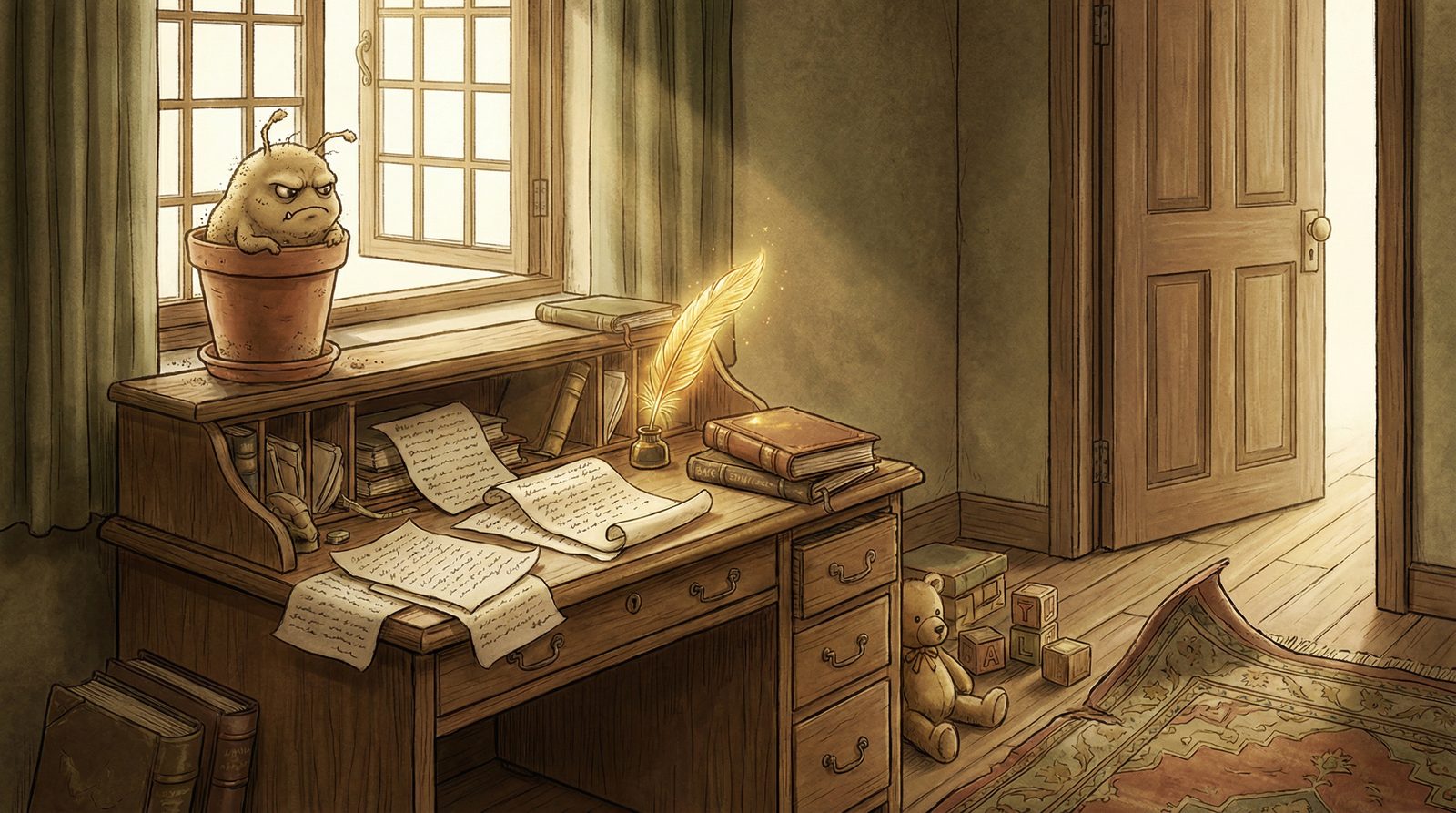
Five Children and It begins on a hot, dusty afternoon and never quite loses that grit-in-the-teeth realism. Four siblings and their baby brother, sent to the Kent countryside while their parents are occupied elsewhere, discover a Psammead, a sand-fairy who grants wishes that last only until sunset. The premise sounds sweet and simple. Nesbit’s imagination runs on irony and consequence.
Every wish curdles into trouble, and the children’s giddy hope keeps colliding with embarrassment, fear, and guilt. The book is funny, but it is not gentle. It remembers childhood from just far enough away to see selfishness and bravery in the same gesture, and to show how quickly desire becomes a mess once it has to live in the real world of servants, shopkeepers, neighbors, and rules.
PLOT & THEMES
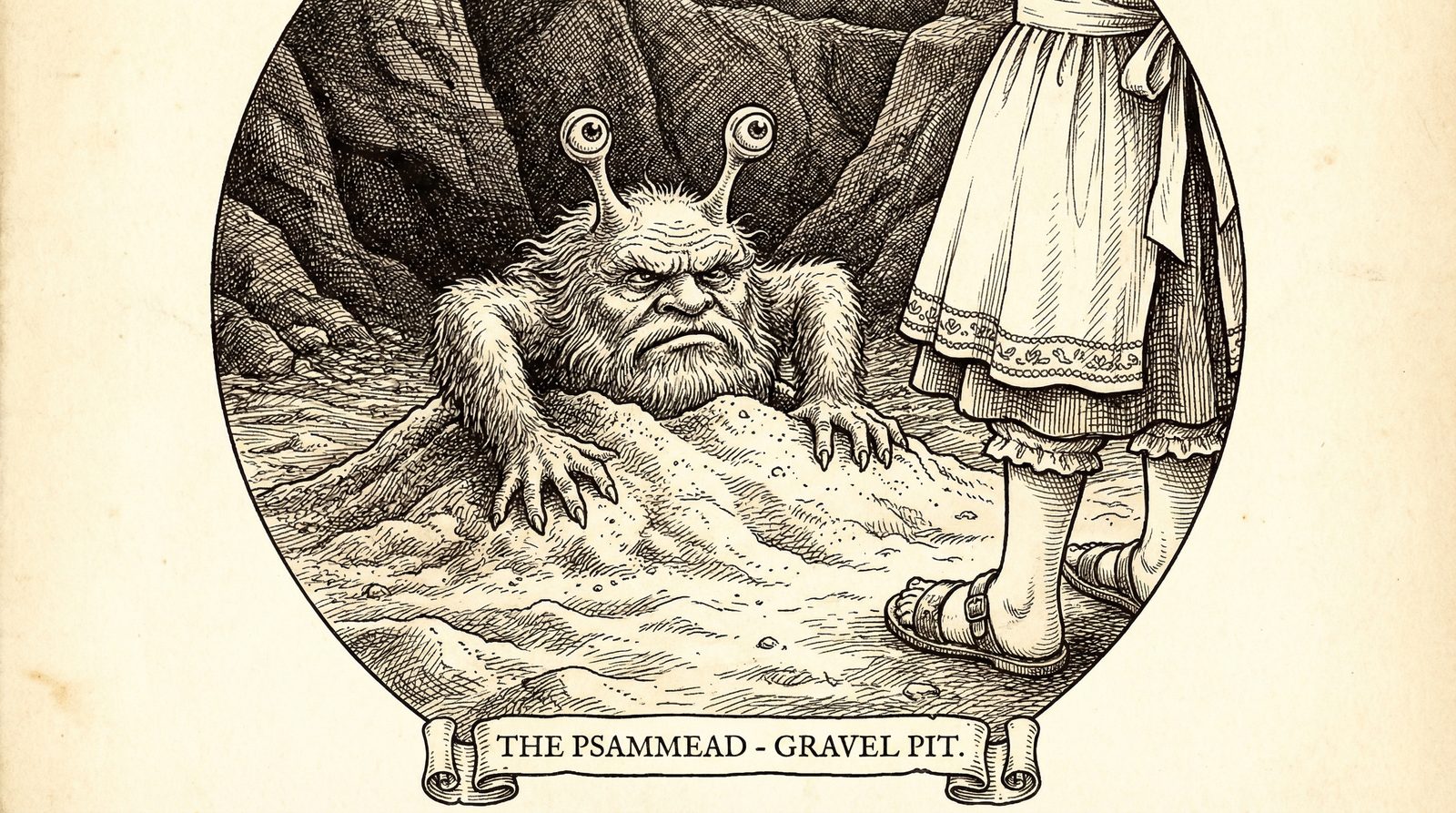
The structure is episodic. Each chapter revolves around a single wish and its sunset collapse. Cyril, Anthea, Robert, Jane, and their baby brother (nicknamed “the Lamb”) are staying near chalk and gravel pits when they uncover the Psammead buried in sand. It offers one wish per day, with a strict condition: the wish ends at sunset, no matter how inconvenient the timing.
The children wish for beauty, money, wings, admiration, a besieged castle, and even for their baby brother to be grown up. Every time, the wish arrives like a gift and behaves like a trap. When they wish for gold, they discover that sudden wealth without context attracts suspicion rather than comfort. When they wish to be beautiful, the servants do not recognize them and lock them out. When they wish for wings, they gain spectacle but lose control. Each episode is a small lesson in how literal magic exposes sloppy thinking.
What makes the book sharper than many later children’s fantasies is its refusal to turn magic into destiny. Nesbit’s enchantment is a stress test. It reveals the children’s appetites, their panic, their capacity for courage, and their instinct to blame one another when things go wrong. By the end, exhausted by accidents and near-disasters, they make the most mature wish in the book: that none of the wishes had happened at all.
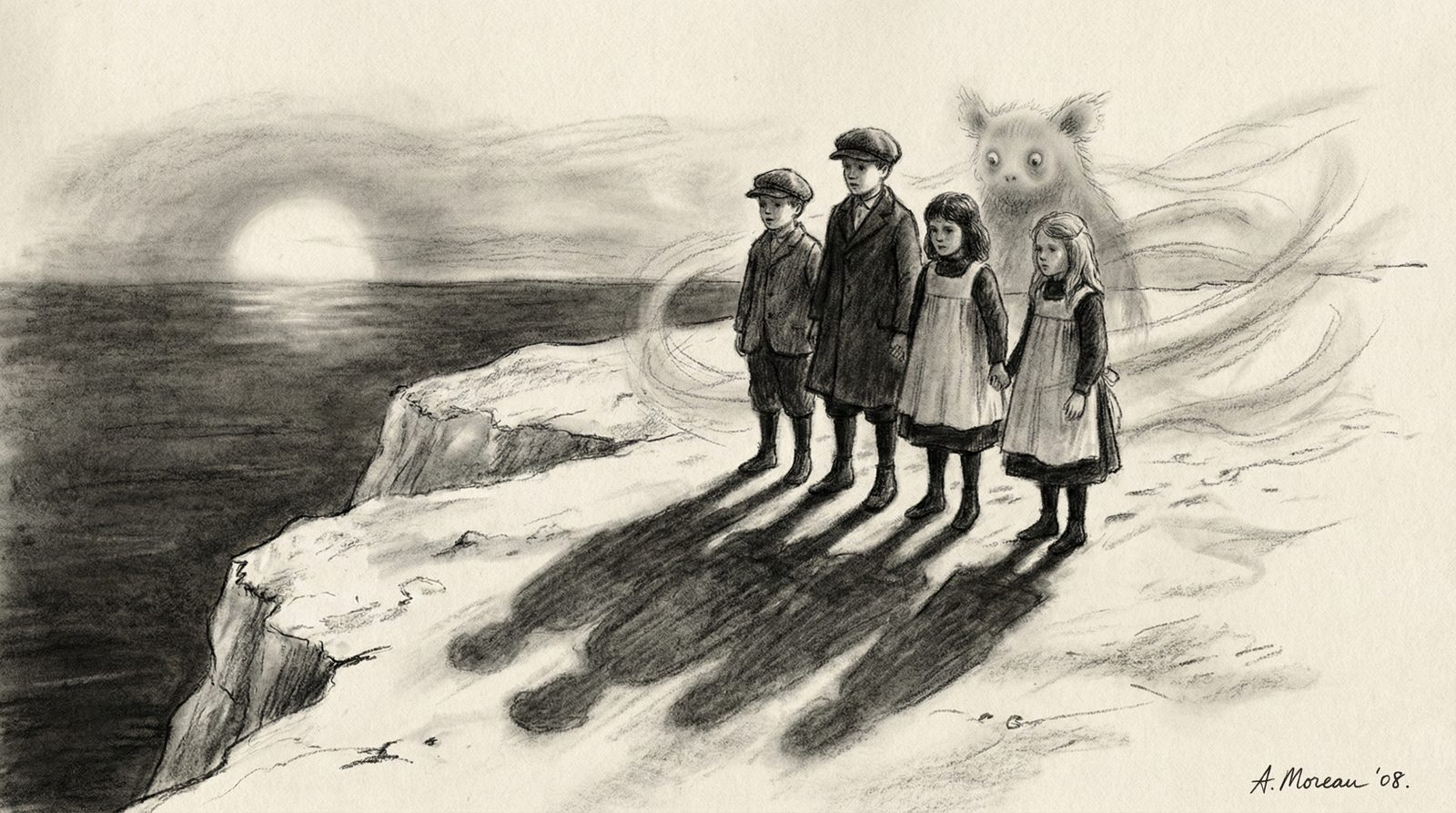
The Psammead grants that erasure. The summer snaps back into place, leaving only a faint residue and a sense of moral growth. The ending does not insist that the adventure “really” happened in a way adults can verify. It insists only that the children have changed.
PROSE & NARRATIVE STRUCTURE
Nesbit’s most distinctive technique is her intrusive narrator: a wry adult voice that addresses the reader directly, teases the children’s follies, and occasionally apologizes for dull bits. The voice is affectionate but unsparing, creating a conspiratorial intimacy. We are invited to remember our own childhood blunders while watching these particular ones unfold.
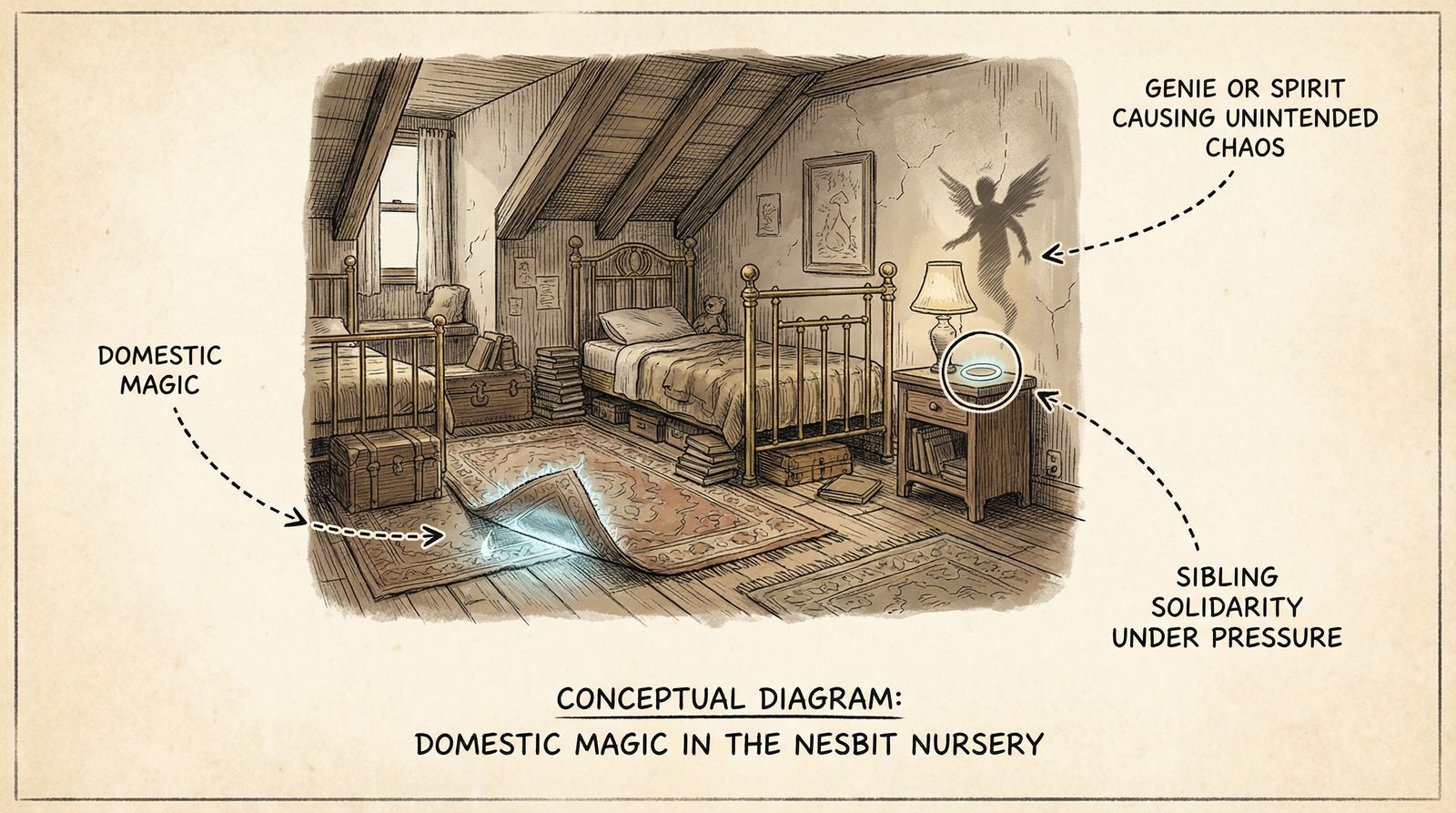
The prose is deceptively simple and firmly domestic. Servants’ tempers, locked cupboards, awkward meals, and small village routines anchor the stranger episodes, whether the children are defending a magically produced castle or being chased because of a badly worded wish. Sunsets arrive with both relief and dread. The daily reset never wipes away consequences completely; it only changes the form they take.
Crucially, Nesbit never lets the magic float free of consequence. The rules are strict enough to create real risk, but elastic enough to produce farce. The rhythm of wish, escalation, and collapse becomes almost musical, and by the later chapters that repetition starts to feel heavy, as if the book itself is nudging the children toward a more sober understanding of what they are asking for.
CHARACTERS & INTERIORITY
The children fall into recognizable patterns, but Nesbit gives them contradictions that feel real. Cyril is brave until he is frightened. Anthea is responsible until she is tempted. Robert blusters, then surprises himself with courage. Jane is dreamy in ways that backfire. Even the Lamb, mostly a catalyst, becomes unsettling in the chapter where a wish ages him into a detached, priggish young man.
Nesbit does not dwell in long interior monologues. Instead she gives quick flashes of shame, pride, and panic as consequences land. The Psammead is not a cuddly companion. It is weary, cynical, and occasionally cruel, like disappointed experience watching childish ego crash into reality. Adults, meanwhile, remain half-blind to the magic. That mismatch creates a quiet loneliness inside the comedy: the children are learning things their guardians will never quite understand.
LEGACY & RECEPTION
When it appeared, Five Children and It helped reshape children’s fantasy by moving magic out of distant kingdoms and into ordinary England. It is a foundational example of “everyday enchantment” where the supernatural does not solve problems but exposes them. Its influence runs forward into later wish-stories and rule-bound magical premises, including modern descendants that keep the same logic: wishes are never neutral.
Modern readers may notice period-bound assumptions about class and domestic life, but the structural daring and emotional honesty still stand out. Compared with screen adaptations that sentimentalize the Psammead, the novel’s ambiguous farewell feels braver. It leaves no souvenirs, only responsibility.
IS IT WORTH READING?
If you come expecting a cozy nursery classic, this book may surprise you. The language is of its time but still brisk, and the humor lands more often than not. Beneath the comic disasters lies a sharp curiosity about what children truly want, and how quickly those wants sour when granted too literally.
The episodic structure makes it easy to read in pieces, yet the cumulative effect is quietly haunting. For readers interested in the roots of modern fantasy, or in stories where magic exposes rather than fixes human problems, it repays attention.
TRIVIA & AUTHOR FACTS
E. Nesbit was a founding member of the Fabian Society, and her politics quietly inform the book’s fascination with money, class, and fairness. The story first appeared in The Strand Magazine before being published as a book. :contentReference[oaicite:1]{index=1}
The Psammead returns in later books, including The Phoenix and the Carpet and The Story of the Amulet, but here it is at its most mysterious and least domesticated. :contentReference[oaicite:2]{index=2}
SIMILAR BOOKS
If you enjoy everyday settings colliding with rule-bound magic, you might try Edward Eager’s Half Magic for a later wish-premise descendant, or Diana Wynne Jones for a more modern version of magical consequences arriving through language and loopholes. Nesbit’s own sequels also continue the Psammead world in a larger, stranger direction.
DISCOVERABILITY & LINKS
Works: The Phoenix and the Carpet
See also: The Brass Bottle