Genre: Drama

  • The Peaceful Warrior The Life Of Dan Millman (2006)

    The Peaceful Warrior The Life Of Dan Millman (2006)

    Peaceful Warrior (2006) · Drama · United States.


    INTRODUCTION

    Peaceful Warrior adapts Dan Millman’s semi-autobiographical spiritual story into a reflective sports drama that feels half locker room, half meditation hall. It follows a talented college gymnast whose life is shattered by a catastrophic accident and rebuilt through an encounter with a mysterious mentor. Instead of chasing the usual underdog victory, the film leans into slow-burn transformation, asking what success means when the body and ego are stripped down.

    The tone moves between grounded collegiate routine and moments of mystical instruction, touching a steady feel of spiritual yearning and bittersweet hope. The story plays closer to parable than conventional sports narrative, inviting viewers to sit with its questions rather than its twists.

    PLOT & THEMES

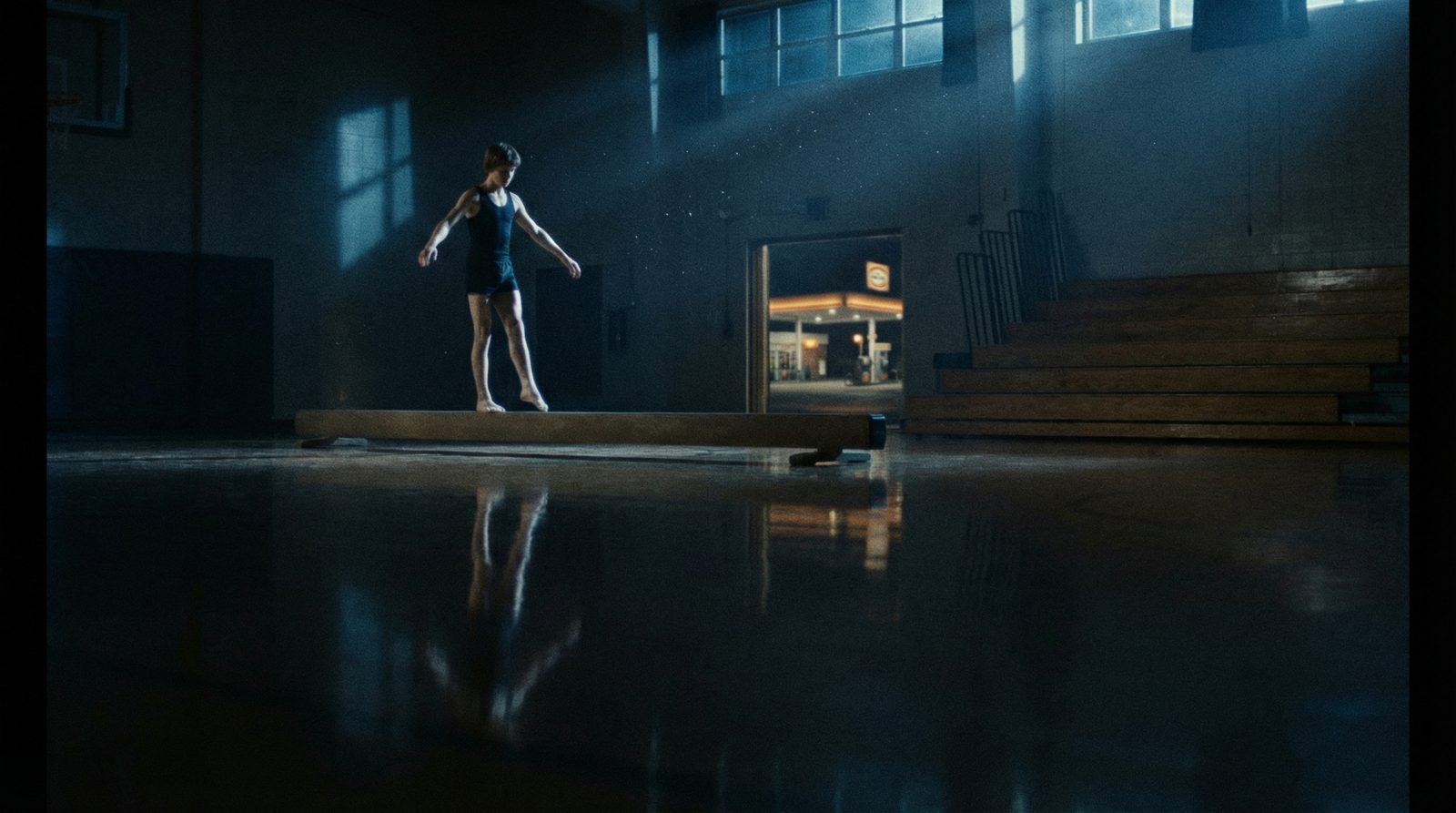
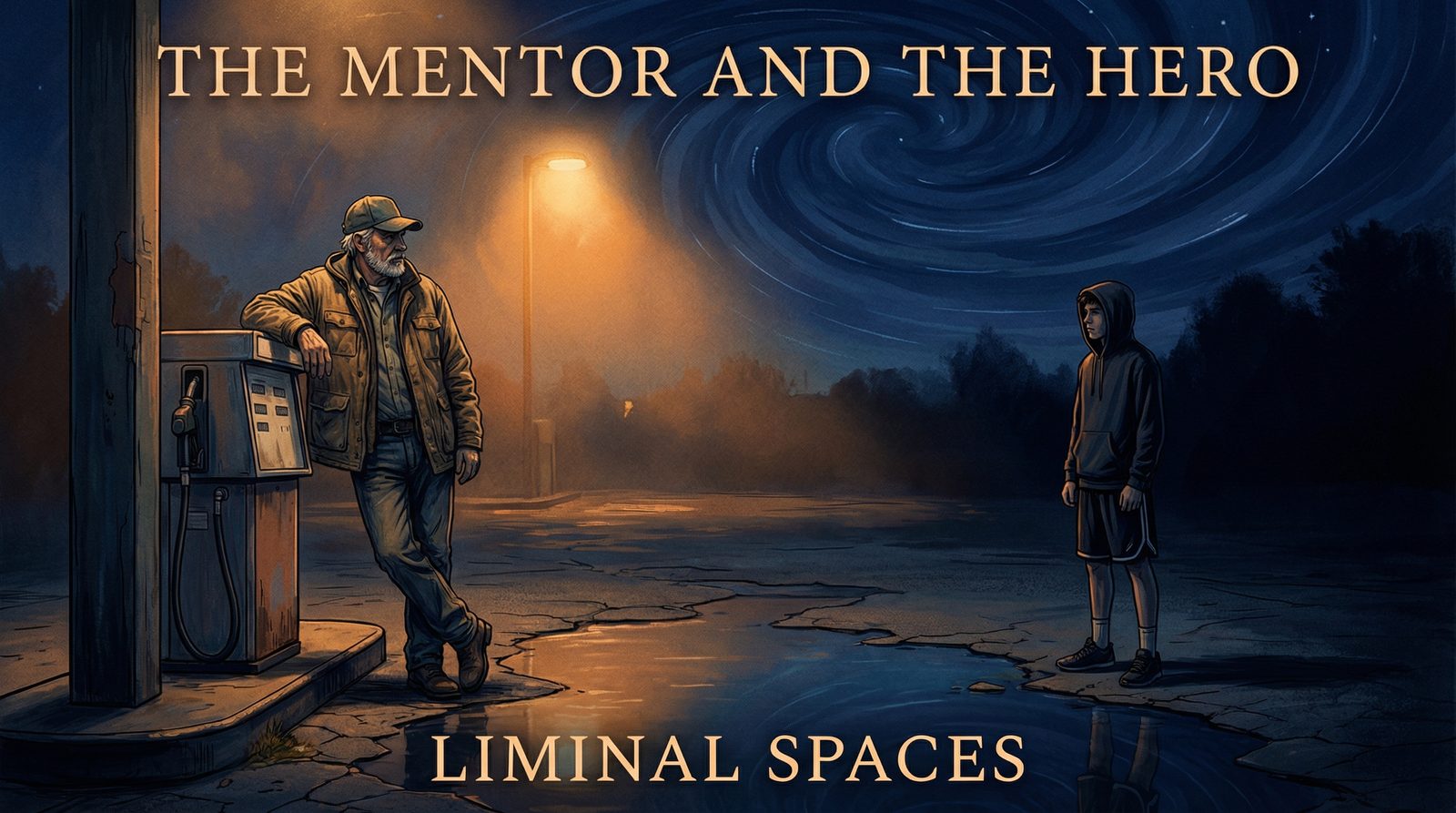
    The plot centers on Dan, a driven college gymnast whose life is defined by discipline, competition, and an image of control. A late-night encounter at a gas station introduces him to an older man he nicknames Socrates, who speaks in riddles and quietly dismantles Dan’s certainties. When a motorcycle accident shatters Dan’s leg and threatens his athletic future, the story pivots from ambition to apprenticeship, framing crisis as the opening to inner change.

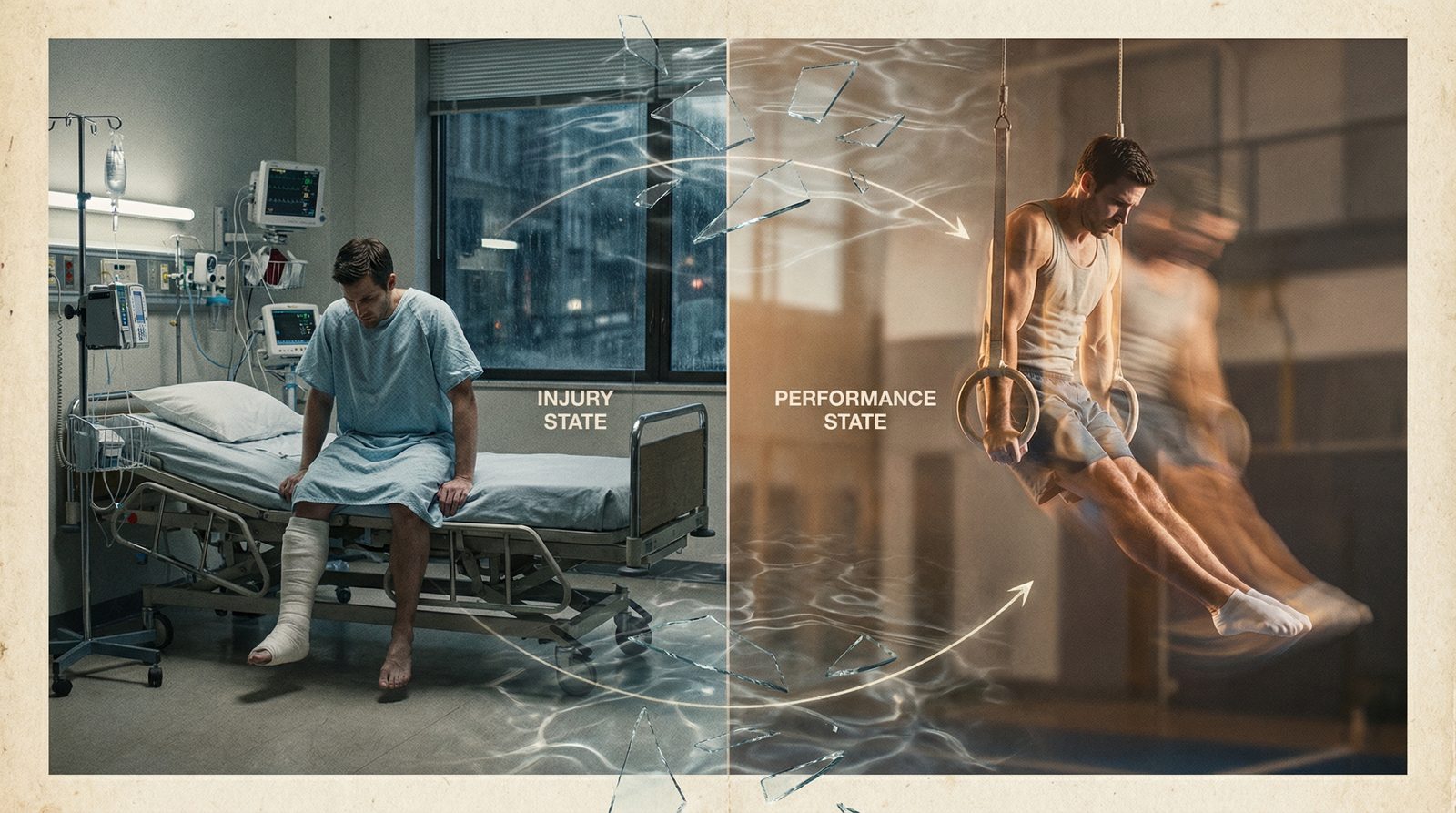
    The film’s central concern is the tension between external achievement and inner peace. Training sequences become exercises in presence rather than pure performance. The accident functions as Awakening Through Physical Injury, forcing Dan to confront who he is without his body’s reliability and without applause. In that sense, the film sits directly inside Athletic Discipline As Spiritual Practice, treating repetition as a method of transformation rather than punishment.

    A quieter thread is isolation versus community. Teammates and relationships orbit Dan, but the film keeps foregrounding solitary nights, private fear, and the long grind of recovery. The spiritual quest logic turns the campus environment into a kind of everyday monastery where the real contest is not against rivals but against the ego’s demand to be exceptional.

    CINEMATIC TECHNIQUE & AESTHETICS

    The film’s technique tries to bridge everyday realism with the feel of spiritual instruction. Campus and gym interiors are shot with functional clarity, while key moments of insight lean on slowed time, softened sound, and a slight stylization that pulls the viewer into Dan’s headspace. During routines, sound often drops toward a muffled thrum, mimicking tunnel vision and obsessive focus.

    Slow motion is used in both triumph and catastrophe, stretching midair gymnastics into suspended moments and treating the crash with similar durational emphasis. This repetition reinforces the film’s claim that disaster and awakening can arrive through the same instant of attention.

    The overall palette stays muted and grounded, making brief “insight” beats feel like small awakenings rather than grand revelations. The aesthetic aims for sincerity over spectacle, consistent with the story’s emphasis on practice and presence.
    Editorial illustration inspired by 'Peaceful Warrior'

    CHARACTERS & PERFORMANCE

    Dan is written as a high-achiever whose identity depends on performance. Early scenes emphasize restlessness and arrogance, which gives later vulnerability real contrast. His arc is less about learning a new skill than about unlearning his dependence on control and validation.

    Socrates functions as the Wise Mentor, a blend of mechanic, sage, and trickster. He appears at odd hours, dispenses blunt advice, and assigns tasks that feel pointless until their meaning clicks. The character works best when played with dry patience rather than mystical grandeur, keeping the “dojo at a gas station” concept grounded.

    Supporting characters mainly serve as mirrors for Dan’s fixation on achievement: teammates, rivals, and romantic interests illustrate different responses to pressure. The film is most affecting when it slows down into small domestic beats—tea after a mission, late-night doubt, quiet repair—because that is where the transformation becomes believable.

    CONTEXT & LEGACY

    Peaceful Warrior comes from the late-20th-century wave of spirituality where personal crisis and enlightenment share the same narrative space. As an adaptation, it condenses long arcs of practice and doubt into a digestible cinematic shape. Where a book can linger inside interior revelation, film must externalize insight through dialogue and behavior, which can make philosophy feel slogan-like.

    Its legacy is quieter than its literary source, but for viewers drawn to recovery stories, mentorship narratives, and the idea that discipline can be a spiritual path, it remains a touchstone. It argues that athletic excellence and awakening can coexist, though never comfortably, because the ego keeps trying to turn insight into another trophy.

    IS IT WORTH WATCHING?

    If you want an earnest film about recovery, mentorship, and the inner life of high achievement, Peaceful Warrior can resonate. If you want a tightly plotted sports drama where competition is the main engine, you may find the pacing slack and the stakes underplayed. The film plays best as a companion to the book’s worldview and as a meditation on what remains after performance collapses.
    Symbolic illustration inspired by 'Peaceful Warrior'

    TRIVIA & PRODUCTION NOTES

    As an adaptation of Dan Millman’s semi-autobiographical story, the film condenses and rearranges events to keep the focus on the mentor relationship and the injury-to-awareness arc. Certain supporting roles function as composites, emphasizing the contrast between external achievement culture and inner practice.

    Gymnastics sequences typically rely on a mix of actor performance, doubles, and strategic camera placement to sell difficult routines. The film often uses softened sound and slowed time to express the internal experience of performance rather than purely the spectacle of movement.

    SIMILAR FILMS

    If Peaceful Warrior works for you, look for other stories where mentorship and discipline serve an inner-journey function and where crisis forces a redefinition of identity. The most relevant neighbors tend to combine physical practice with a spiritual or philosophical reframing of success.

    DISCOVERABILITY & LINKS

  • Valets And Butlers

    Valets And Butlers

    DEFINITION & CORE IDEA

    Valets And Butlers is a motif built around the personal servant who is close enough to see everything, disciplined enough to say almost nothing, and competent enough to keep a household (or a protagonist) from collapsing. On the surface, valets and butlers exist to perform routine tasks: managing clothing, announcing visitors, maintaining schedules, smoothing over small social frictions. In narrative terms, they often function as the story’s most reliable intelligence inside a world of performative status.

    The motif’s charge comes from inversion. The servant holds the lowest formal rank while possessing the highest practical awareness. Because they are expected to be discreet, people speak freely around them, treat them as part of the room, and underestimate how much they notice. That gap between visibility and knowledge turns service into a form of power: quiet, deniable, and structurally essential.

    In the comic tradition shaped by P. G. Wodehouse, this inversion becomes the engine of farce. In Right Ho, Jeeves and The Code Of The Woosters, the socially superior employer repeatedly creates the mess while the valet quietly contains it. The humor is not simply that the servant is smarter. It is that the entire social order depends on someone who is never meant to be credited.

    At its core, Valets And Butlers explores what it means to serve and what service costs. It asks who truly holds power in a room, how much control can exist without recognition, and what kind of intimacy forms when one person’s job is to manage another’s life more competently than they ever could themselves.


    HOW IT WORKS IN STORIES

    Most stories using this motif keep the servant constantly present but rarely centered. Valets and butlers move through scenes performing routine actions while absorbing information, witnessing private failures, and tracking social pressure points. Writers use this access to make the servant a natural witness, confidant, and stabilizer inside a household that would otherwise fracture under its own ego and etiquette.

    Structurally, these characters often function as corrective force. When the plot threatens to spin into scandal or humiliation, the servant intervenes indirectly: shifting timing, redirecting people, removing evidence, arranging encounters, limiting damage. The employer may believe they are in control, but the narrative repeatedly demonstrates that outcomes depend on the servant’s judgment, restraint, and ability to act without being seen acting.

    This same architecture works outside pure comedy. In a mystery or a socially sharper story, the servant may be the only person with complete situational awareness because they were present during the moments others dismissed as background. Even when they say little, their position reveals how much labor is required to maintain the illusion of order and how dependent “status” is on invisible work.

    Dialogue becomes a tool of power without confrontation. Formal speech and minimal responses allow valets and butlers to communicate warning, irony, or correction while preserving the hierarchy’s appearance. A phrase like “Very good, sir” can carry obedience, exasperation, or quiet judgment depending on context. That ambiguity lets the motif explore control without turning the story into a lecture about class.

    Because these characters move freely between rooms, conversations, and social layers, they also serve as narrative connective tissue. Information passes through them. Emotional shifts register with them first. The household feels coherent because one figure circulates through all its compartments while everyone else remains trapped inside their own priorities.


    Editorial illustration inspired by 'Valets And Butlers'

    EMOTIONAL EFFECT ON THE READER

    This motif produces a blend of reassurance and unease. There is comfort in knowing that someone competent is present when authority figures are impulsive, naive, or self-absorbed. In a Jeeves-style story, readers relax slightly because they trust the servant will contain the chaos even when characters cannot manage themselves.

    At the same time, the motif carries quiet tension. The servant sees everything and remembers it. Readers understand that the social order depends on continued discretion and goodwill. Beneath the comedy sits an unspoken question: what happens if the person holding the system together decides to stop?

    The emotional intimacy of service deepens that effect. A valet or butler assists with private routines, hears confessions, and observes vulnerability without reciprocity. That closeness can feel protective or quietly tragic, especially when the servant’s own inner life remains unspoken and structurally suppressed.

    The motif also taps into a powerful fantasy: being understood so well that problems are solved before they need to be explained. The Jeeves and Wooster (TV Series) version makes that fantasy playful, turning competence into a safety net the viewer can rely on. Even when stories handle the motif with sharper satire, the same comfort remains: someone is paying attention, even if the people in charge are not.


    Symbolic illustration inspired by 'Valets And Butlers'

    VARIATIONS & RELATED MOTIFS

    Several variations recur within Valets And Butlers. The best-known is the hyper-competent servant whose intelligence far exceeds that of their employer, producing comedy through contrast: authority fails publicly while competence operates quietly in the background. Another variation is the stoic butler whose restraint becomes the drama, where the emotional payoff comes from what is withheld rather than expressed.

    A darker variation reframes the servant as an active manipulator. Because they stand at the intersection of information and access, they can redirect events for personal advantage, shifting the motif toward suspense or moral ambiguity. A satirical variation turns the servant into a mirror held up to the ruling class, exposing how fragile “refinement” becomes once it relies on invisible labor to remain believable.

    This motif overlaps naturally with Country House Comedy and Comic Misunderstandings And Farce, where servants often become the stabilizing intelligence inside a house full of schemes. It also connects to Victorian And Edwardian Social Satire, where the upstairs-downstairs perspective turns manners into a pressure system. In broader comedy-of-manners traditions, writers like Evelyn Waugh and Nancy Mitford echo the same logic: social status performs authority, but real control often sits with the people expected not to speak.

  • Craftsmanship And Quality Of Work

    Craftsmanship And Quality Of Work

    DEFINITION & CORE IDEA

    “Craftsmanship And Quality Of Work” is the motif where the way a character performs their work becomes a direct expression of their inner life. It is not simply about employment or productivity. The focus is on care, precision, pride, and the satisfaction of doing something properly, even when no one is watching. Whether the task is tuning an engine, preparing a meal, writing software, or shaping wood, the work itself carries moral weight.

    Stories built around this motif slow down and pay attention to process. In Zen And The Art Of Motorcycle Maintenance: An Inquiry Into Values (1974), motorcycle maintenance becomes a way of examining “Quality” as something experienced rather than defined. In Lila: An Inquiry Into Morals (1991), that concern expands into ethics and social life, still grounded in the idea that values are revealed through attention and care.

    At its core, this motif treats work as a moral and emotional discipline. It asks where standards come from, how they are practiced, and what is lost when integrity collides with systems that reward speed, scale, or convenience.


    HOW IT WORKS IN STORIES

    Craftsmanship And Quality Of Work usually appears through the rhythms of daily labor. Writers linger on routines: opening a workspace each morning, laying out tools, repeating movements until they become instinctive, inspecting the final result with quiet seriousness. The story may not be overtly “about” the job, but the way the work is done reveals character more clearly than dialogue alone.

    Sometimes the work itself becomes the teacher. In Shop Class As Soulcraft: An Inquiry Into The Value Of Work (2009), written by Matthew B. Crawford, manual problem-solving is framed as intellectually demanding and ethically grounding. Stories echo this idea when characters develop patience, humility, or self-respect through repeated, concrete tasks. A flawed repair or failed attempt is not just a setback, but a test of standards.

    Conflict often enters when the surrounding world does not value quality in the same way. A supervisor pushes for speed over care, a system rewards shortcuts, or customers demand something cheap and disposable. The character must decide whether to compromise, resist, or walk away. That decision becomes a clear statement of identity.

    This motif allows writers to make abstract ideas tangible. In the work of Robert M. Pirsig, the road, the machine, and the act of maintenance become tools for thinking about attention, rationality, and lived experience. Meaning is not explained. It is encountered through effort, failure, and care.

    Even in intimate or domestic narratives, the motif shapes relationships. A parent teaching a child a careful technique, or a mentor guiding an apprentice, passes on more than skill. They transmit a way of engaging with the world that can become a form of trust or love.


    EMOTIONAL EFFECT ON THE READER

    Stories shaped by this motif often feel grounding. There is comfort in watching someone care deeply about what they are doing, especially in a culture that feels rushed and disposable. Attention to tools, textures, and small decisions can be quietly absorbing.

    At the same time, the motif can provoke sadness or anger. When care is dismissed or punished, the loss feels personal. Stories about disappearing skills or neglected standards often carry a sense of dignity under threat.

    For many readers, this motif turns inward. It encourages reflection on everyday effort and responsibility. The question it raises is simple but unsettling: where does quality still matter in your own life, and what does it cost to protect it?

    There is also intimacy in this focus. Watching a character work carefully is like watching them unguarded. Habits and rituals reveal who they are when performance drops away, making later choices feel heavier and more personal.


    VARIATIONS & RELATED MOTIFS

    Craftsmanship And Quality Of Work takes many forms. In some stories, it centers on manual trades. In others, the craft is intellectual or emotional, such as teaching, caregiving, or programming. What unites them is the same pattern: the character treats their work as something deserving of attention, and their sense of self is bound to doing it properly.

    A common variation is the “lost craft” narrative, where older ways of working are disappearing. Another focuses on the collision between personal standards and impersonal systems, where care is labeled inefficient or excessive.

    This motif often pairs with Eastwest Philosophical Synthesis. In Pirsig’s writing, the road and the act of maintenance bridge Western analysis and Eastern presence. In Crawford’s work, the workshop becomes a site of moral clarity. Different settings, the same question: how should attention be lived?

    Across its variations, the motif returns to a single concern: when people invest genuine care in their work, how does that shape who they become?

  • Caretaker As Captor

    Caretaker As Captor

    DEFINITION & CORE IDEA

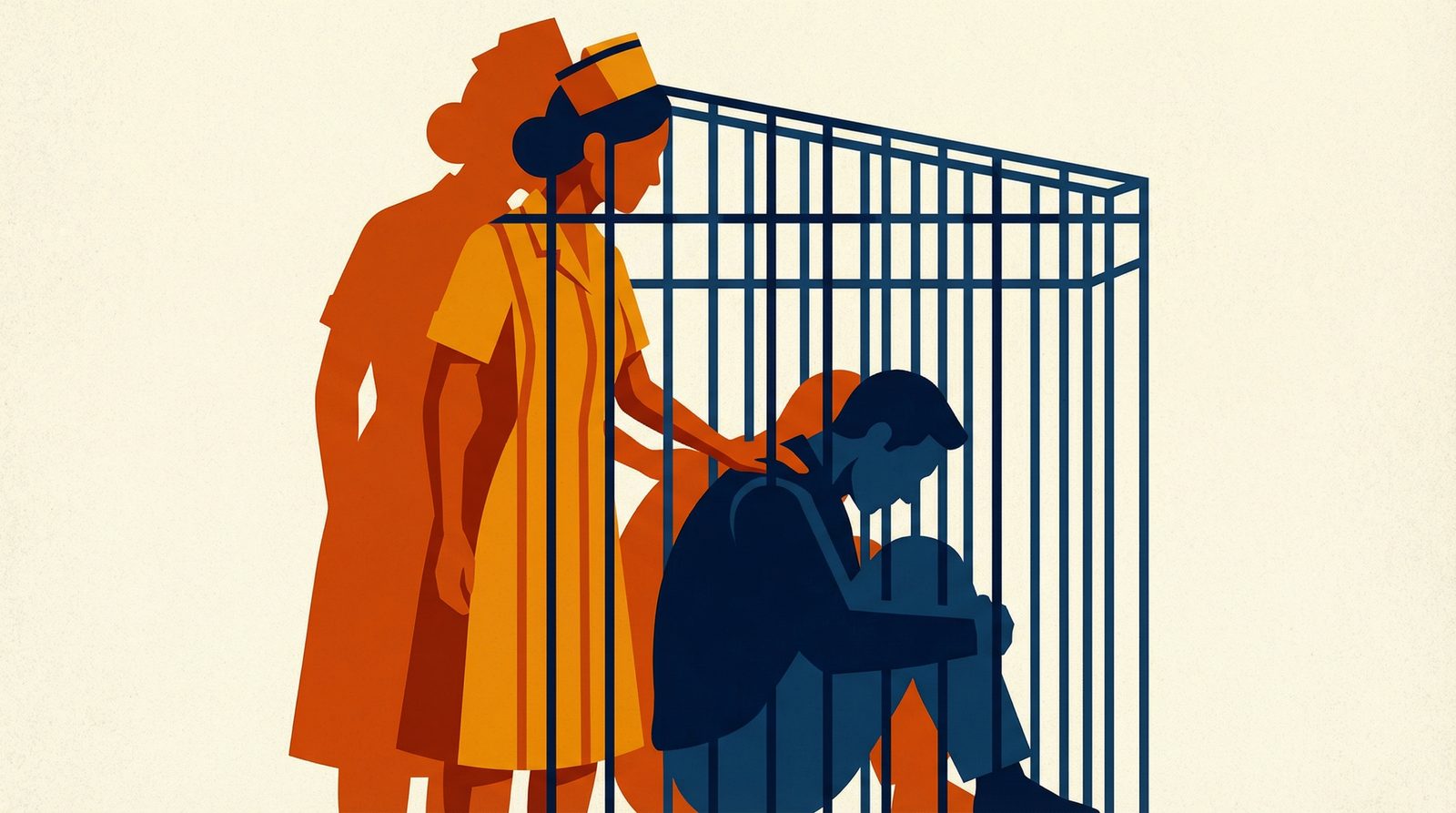
    Caretaker As Captor is a motif where the person who seems to be helping, nursing, or sheltering someone is also the one keeping them prisoner. On the surface, the captive is being protected: the caretaker offers food, medicine, a locked bunker, or a remote farmhouse. Only gradually does it become clear that this kindness is a cage.

    Stories built on Caretaker As Captor lean on an intimate kind of horror. The threat is not an obvious monster or a distant regime, but the person changing the bandages, making the soup, or tucking the blankets around the protagonist. In Misery (1987), the injured writer is nursed back to health by an obsessive fan; the same hand that comforts also controls. In 10 Cloverfield Lane, the bunker host insists his guests are safest underground with him. Again, the same hand that comforts also controls.

    This motif plays with the blurry line between care and control. It asks how much autonomy you are willing to give up in exchange for safety, and what happens when someone decides they know what is best for you more than you do. For many readers, Caretaker As Captor hits close to home because it echoes real dynamics in families, hospitals, and relationships where help can quietly become possession.


    HOW IT WORKS IN STORIES

    In most Caretaker As Captor stories, the captive begins in a state of vulnerability. They have been in an accident, survived a disaster, fled an abusive situation, or simply accepted a ride from the wrong stranger. Their injuries, confusion, or lack of resources make the caretaker seem like a godsend. The early scenes are full of blankets, medicine, hot meals, and reassurances that everything will be fine.

    Then the seams start to show. Doors are locked “for your own good.” Windows are nailed shut because it is “not safe outside.” The caretaker monitors phone calls, decides what the patient can read or watch, and becomes offended when gratitude is not enthusiastic enough. In Misery (1987), Annie Wilkes uses Paul Sheldon’s broken body to justify total control. In 10 Cloverfield Lane, Howard’s insistence that the outside world will kill you becomes the rationale for perpetual imprisonment. The logic is always the same: I am keeping you alive, so you owe me obedience.

    Writers use Caretaker As Captor to generate tension in small, contained spaces. The setting is often domestic or medical. The horror comes from conversations at the bedside, from the way a spoon is held just a little too firmly, or how a cheerful routine becomes a ritual of control. Escape attempts are risky because the protagonist really is vulnerable; every act of resistance has a physical cost.

    This motif also invites psychological games. The captor may alternate between tenderness and rage, making the captive doubt their own judgment. Are they being abused, or just ungrateful? Is the outside world truly dangerous, or is that a lie? Stories often lean into gaslighting, enforced dependence, and the slow erosion of the captive’s confidence. When Caretaker As Captor overlaps with the Writer Held Captive motif, the captor may even demand new work, edits, or confessions, turning care into a tool for creative or emotional extraction.

    Because the caretaker’s routines are so central, some stories also echo Enthusiasm As Infrastructure. The canned goods, medical charts, or meticulously labeled shelves are both evidence of devotion and the bars of the prison.


    Editorial illustration inspired by 'Caretaker As Captor'

    EMOTIONAL EFFECT ON THE READER

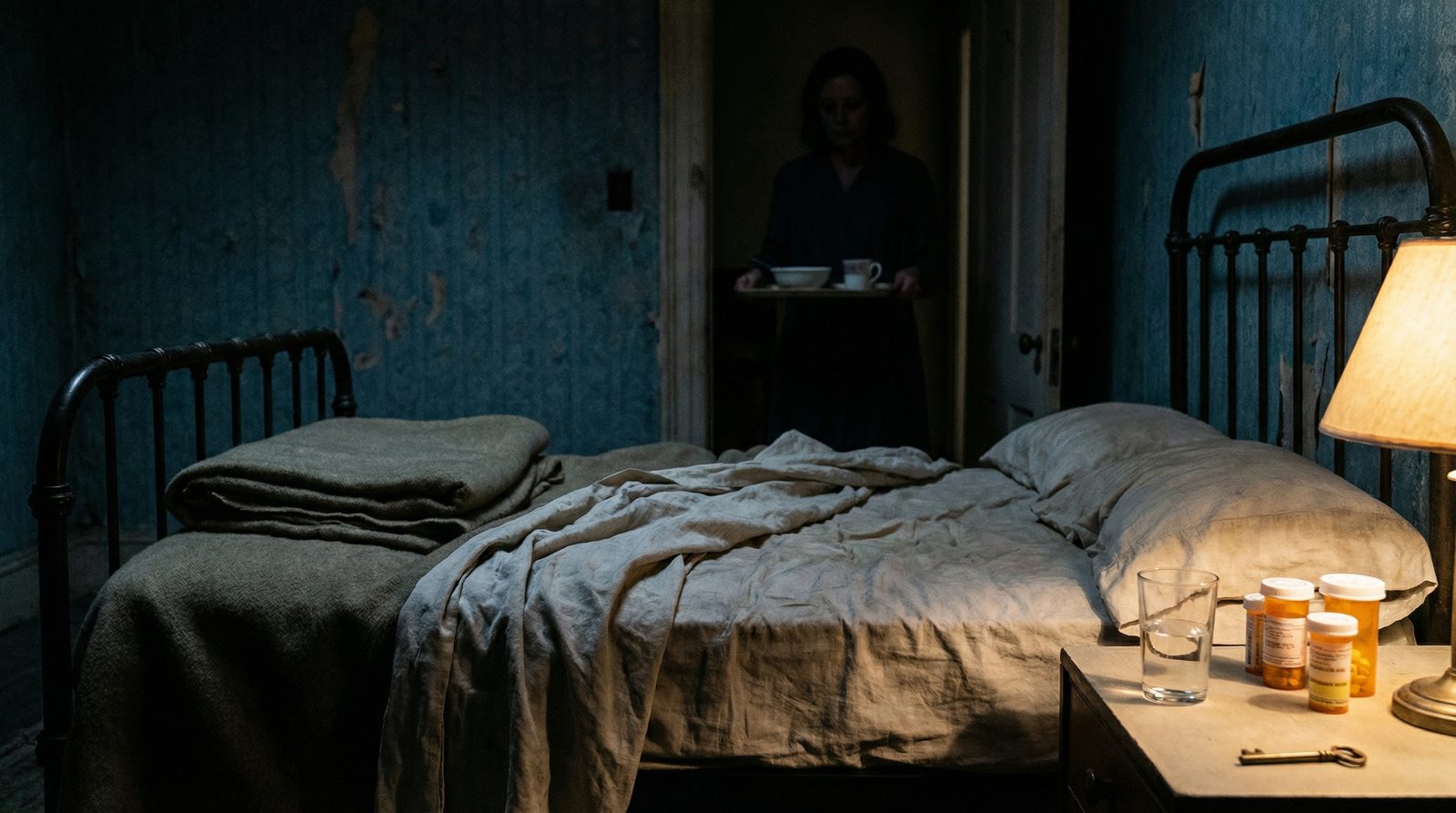
    Caretaker As Captor stories feel suffocating in a slow, creeping way. The reader is invited to relax at first: someone competent is taking charge, the protagonist is being fed and bandaged, there is a roof overhead. Then, as the restrictions pile up, that same setting begins to feel like a padded cell. The cup of tea on the bedside table looks less like comfort and more like a leash.

    Part of the unease comes from recognizing real-world patterns. Many people have experienced relationships where “I know what is best for you” slides into “You do not get to decide.” The motif exaggerates that feeling into a literal prison, but the emotional texture is familiar and unsettling.

    Readers often swing between dread and a strange, guilty fascination. The captor’s routines can be oddly compelling to watch, whether it is a fan carefully arranging a writer’s medications or a collector curating the perfect underground world. That mix of care and creepiness keeps you turning pages, wondering how far this person will go in the name of love, art, or safety.

    By the time the protagonist begins plotting an escape, the reader is fully invested in their bodily and psychological survival. Every small act of rebellion feels huge: hiding pills instead of swallowing them, stealing a key, testing a locked door. The emotional payoff comes not just from physical freedom, but from the character reclaiming the right to make bad choices, to risk harm, and to live without someone else’s suffocating care.


    Symbolic illustration inspired by 'Caretaker As Captor'

    VARIATIONS & RELATED MOTIFS

    Caretaker As Captor can tilt in several directions. In some stories, the captor is openly sadistic, using medical care as an excuse to inflict pain or humiliation. In others, they are sincerely convinced they are doing the right thing. The bunker-builder in a story like 10 Cloverfield Lane may be paranoid and controlling, but genuinely believes the outside world will kill you. This ambiguity makes the motif more unsettling, because the reader can see how good intentions curdle into tyranny.

    There are also softer versions where the prison is social rather than physical. A parent, partner, or therapist might not chain the protagonist to the bed, but uses illness, trauma, or debt as reasons they cannot leave. These stories keep the emotional beats of Caretaker As Captor while staying closer to everyday life.

    When Caretaker As Captor intersects with the Writer Held Captive motif, the captive’s creative output becomes part of the bargain. The caretaker edits drafts, sets deadlines, and withholds painkillers or privileges until the work is “good enough.” The captive’s body and art are both under someone else’s control, a dynamic that Misery (1987) and The Collector (1963) explore in different ways.

    Connections to Enthusiasm As Infrastructure appear when the captor’s passion project becomes the skeleton of the prison itself. A fan’s shrine, a survivalist’s bunker, or a collector’s meticulously organized basement is both a testament to their dedication and the architecture of confinement. The same enthusiasm that builds a safe haven or a beautiful collection also builds the walls that keep the protagonist in.

    Caretaker As Captor also brushes up against motifs like the overprotective parent, the cult leader, or the benevolent dictator. In each case, the story is asking a similar question: when someone claims they are only doing it for your own good, how do you tell the difference between care and captivity?

  • Lonely Giant Or Simpleton

    Lonely Giant Or Simpleton

    DEFINITION & CORE IDEA

    The motif of the Lonely Giant or Simpleton centers on a character who looks powerful but lives in a state of emotional or intellectual vulnerability. They might be huge, physically strong, or frightening at first glance, yet their inner life is childlike, trusting, or slow. The world reads them one way, but their actual self is something much softer and more exposed.

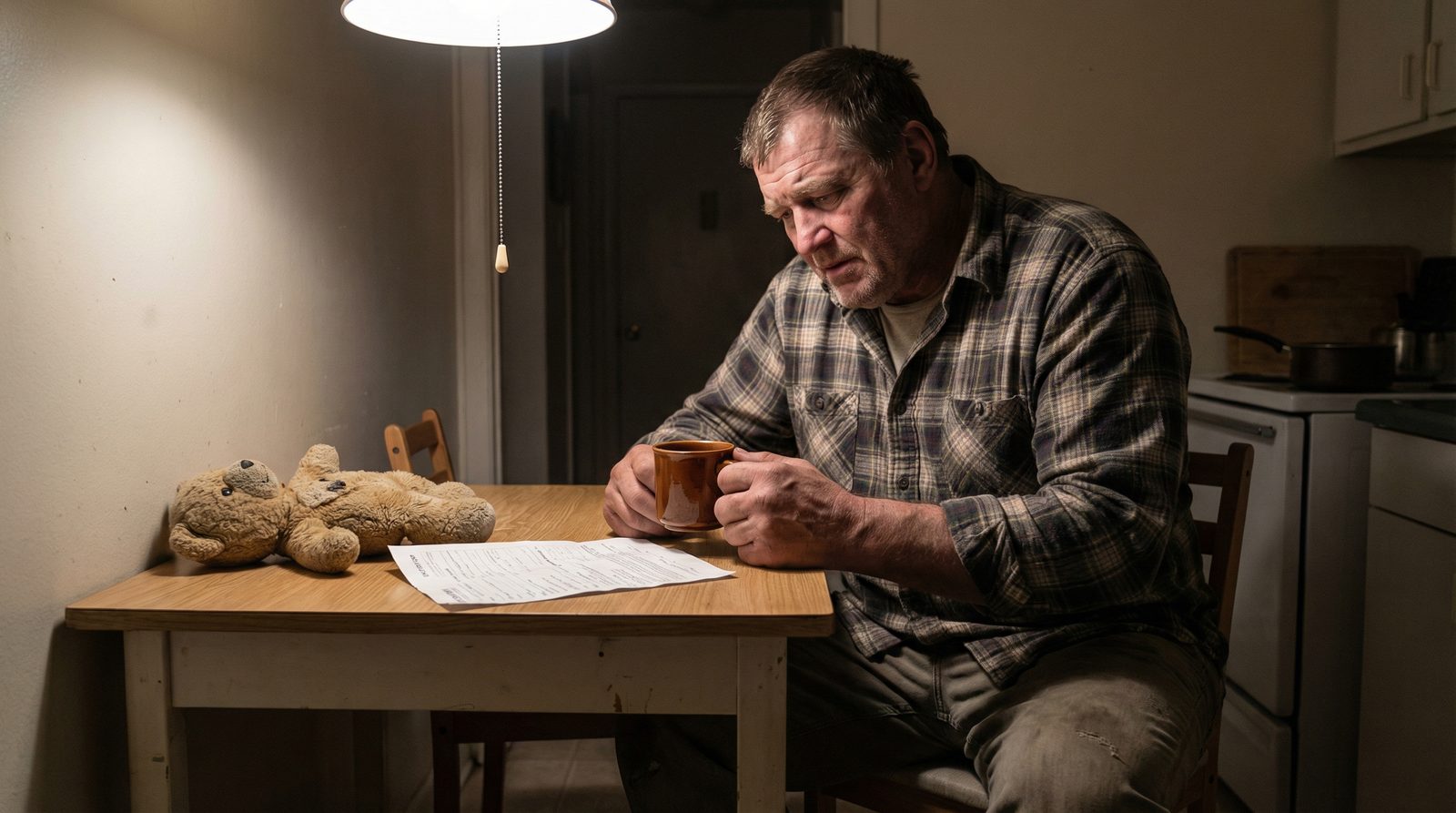
    In stories like Of Mice and Men, The Green Mile, or Blaze (2007), the Lonely Giant or Simpleton is usually not the one driving the plot through clever plans. Instead, they are caught up in other people’s schemes, prejudices, and cruelties. Their size or difference makes them useful or threatening to others, but rarely understood. This gap between appearance and reality is the heart of the motif.

    Writers use the Lonely Giant or Simpleton to ask how a society treats its most vulnerable members, especially when those members do not look vulnerable. The motif lets a story contrast brute strength with moral innocence, or social power with inner helplessness. It also gives readers a clear emotional anchor: someone we instinctively want to protect, even as we suspect the world will not be kind to them.


    HOW IT WORKS IN STORIES

    In practice, the Lonely Giant or Simpleton often enters a story as a side character. Their physical presence is undeniable. Other characters react to their body first and their mind or heart second, if at all. This sets up a constant tension between what the audience knows about them and what the world inside the story assumes.

    Plots involving the Lonely Giant or Simpleton usually revolve around three recurring situations:

    1. Exploitation. Someone clever uses the giant’s strength or loyalty for crime, labor, or personal gain, as in Blaze (2007), where a damaged man is pulled into a kidnapping plan he only half understands.

    2. Misunderstanding. A frightened community or authority figure misreads the character as dangerous and overreacts. This is the tragedy at the heart of Of Mice and Men, where Lennie’s size and confusion make him terrifying to people who never look past his body.

    3. Sacrificial suffering. The Lonely Giant or Simpleton is hurt, imprisoned, or killed so that others can feel safe or redeemed. In The Green Mile, John Coffey’s fate exposes how easily a gentle, extraordinary person can be crushed by racist and institutional violence.

    The Lonely Giant or Simpleton typically forms an intense bond with one more worldly character. That person may be a caretaker, a manipulator, or a mix of both. Through that relationship, we see how the giant navigates basic tasks, social rules, and danger. Scenes often focus on simple pleasures or routines – a shared meal, a story repeated at bedtime, a favorite animal. These quiet moments highlight how small their actual desires are compared to the huge consequences swirling around them.

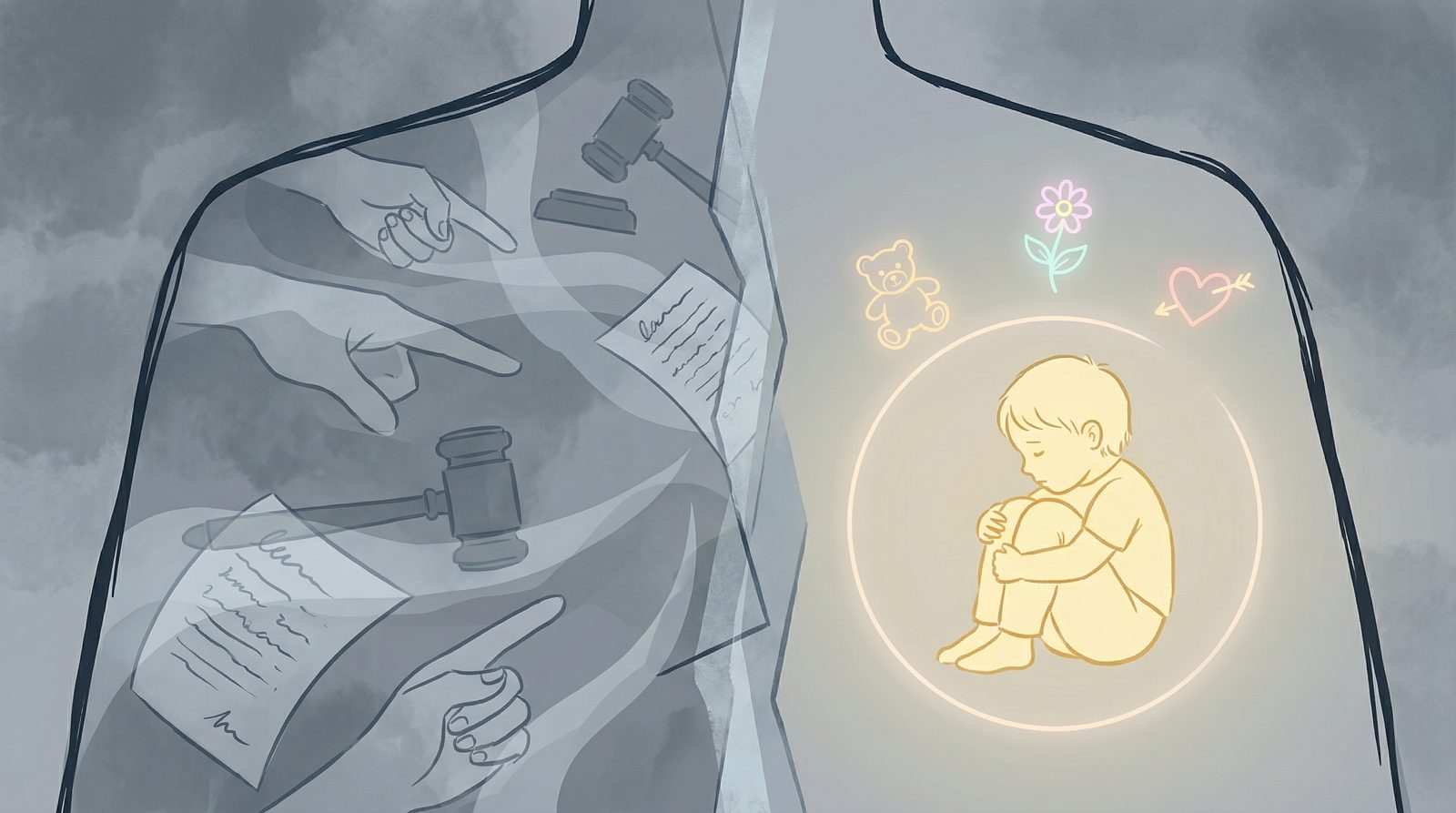
    Conflict escalates when the outside world collides with this fragile bubble. A mistake, an accident, or a moment of panic exposes the giant to public scrutiny. Their inability to explain themselves, understand their rights, or read social cues makes things worse. Institutions like courts, prisons, or mobs move quickly, while the Lonely Giant or Simpleton moves slowly, both mentally and emotionally. The story often tightens around the inevitability of tragedy, with the audience watching powerlessness play out in slow motion.


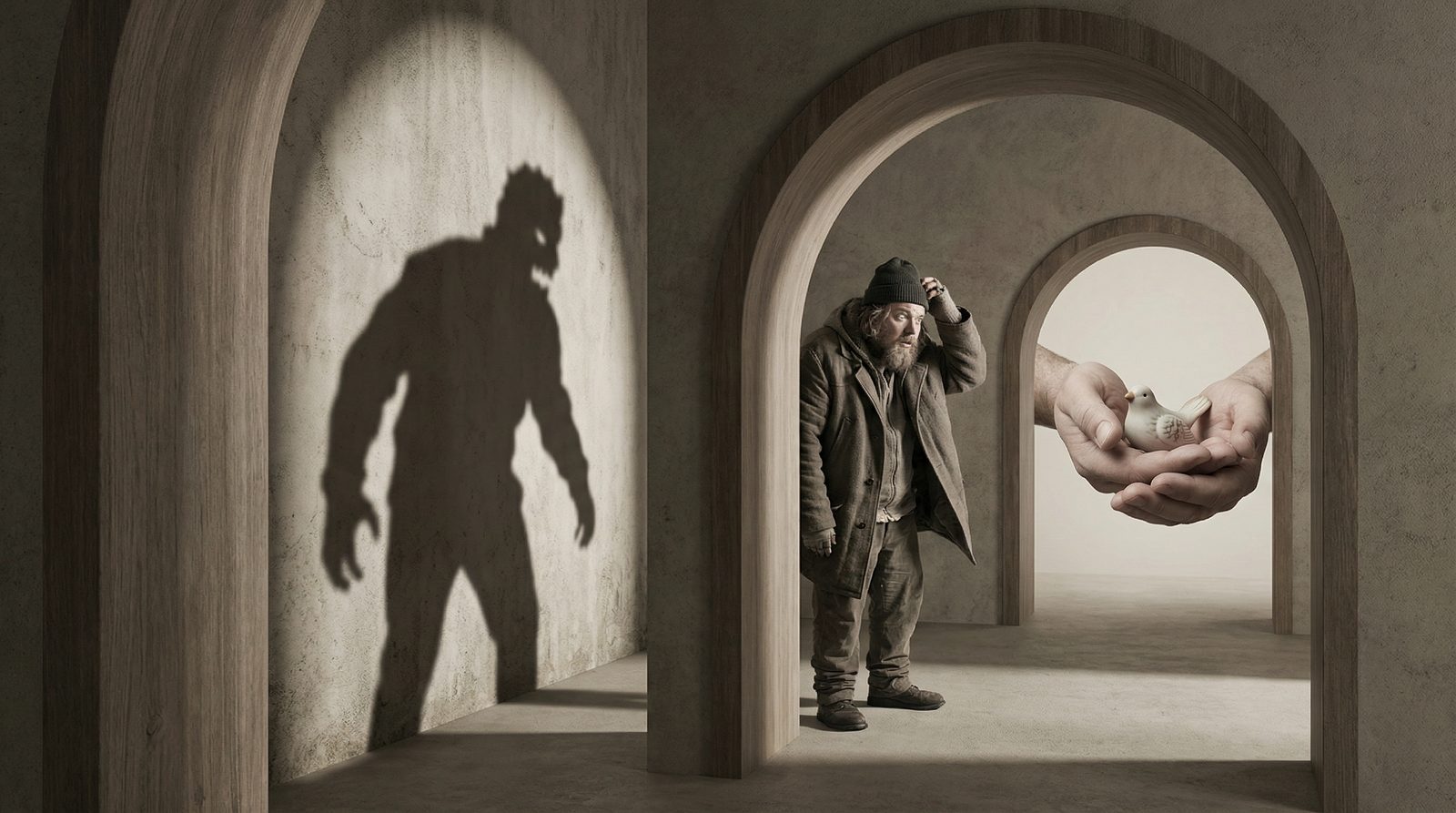
    Editorial illustration inspired by 'Lonely Giant Or Simpleton'

    EMOTIONAL EFFECT ON THE READER

    The Lonely Giant or Simpleton motif is designed to stir a mix of tenderness, dread, and anger. Readers often feel a strong protective instinct toward the character. Their simple joys and straightforward loyalty can be disarming in stories filled with selfishness or moral compromise. We see the world’s complexity bearing down on someone who cannot possibly navigate it, and that imbalance is painful.

    This motif also taps into a deep fear: that being misunderstood can be deadly. Watching a character punished for their body, their difference, or their slowness hits hard because it feels unfair at a basic human level. The reader’s frustration grows every time a character talks over the giant, interprets their silence as guilt, or uses them as a tool. By the time the story reaches its climax, the emotional weight is less about surprise and more about helpless outrage.

    At the same time, the Lonely Giant or Simpleton can bring moments of unexpected comfort. Their limited understanding of the world can strip away cynicism. They often cling to simple moral rules – “don’t hurt things that are kind,” “keep your promises,” “friends stick together.” When those values clash with a cruel or complicated world, readers are forced to ask whether the simple character might actually be seeing something truer than everyone else. That lingering question is part of why stories like Of Mice and Men, The Green Mile, and Blaze (2007) stay with people long after the plot details fade.


    Symbolic illustration inspired by 'Lonely Giant Or Simpleton'

    VARIATIONS & RELATED MOTIFS

    The Lonely Giant or Simpleton can appear in several distinct flavors. The classic gentle giant is physically imposing but morally pure, like John Coffey in The Green Mile. The tragic simpleton, as in Of Mice and Men, has a childlike mind that cannot grasp the consequences of their actions. In crime stories like Blaze (2007), the big simpleton becomes an accomplice who half-understands the plan and trusts the wrong person, blending innocence with genuine danger.

    There is also the holy fool variation, where the character’s simplicity gives them a kind of accidental wisdom. They may say blunt, obvious truths that others avoid, or show compassion where more sophisticated characters are calculating. In fantasy or horror, the motif can intersect with the supernatural: the giant might have mysterious powers or a special connection to suffering, which heightens the sense of them being both feared and exploited.

    This motif often overlaps with others about exploitation, scapegoating, and the commodified body. The Lonely Giant or Simpleton is frequently treated as property – a resource to be owned, controlled, or disposed of. It can also intersect with found family motifs, when a small group chooses to protect the giant against the wider world, or with institutional cruelty motifs when prisons, hospitals, or legal systems grind them down.

    Writers return to the Lonely Giant or Simpleton because it reliably exposes how a culture handles difference, weakness, and raw power. By giving readers someone who is both huge and helpless, the motif strips away excuses. How people treat this character becomes a quick, revealing test of their humanity, and that test is rarely passed without cost.

  • Botched Kidnapping

    Botched Kidnapping

    DEFINITION & CORE IDEA

    The Botched Kidnapping motif centers on a kidnapping that does not go according to plan. The crime might start with a simple idea – grab the target, get the money, walk away. Instead, something goes wrong immediately or soon after. The wrong person is taken, an accomplice panics, the victim fights back, the police arrive too soon, or the money never shows up. What was supposed to be a controlled crime turns into a slow-motion disaster.

    Stories that use a Botched Kidnapping are less about the mechanics of a perfect heist and more about what people do when the floor falls out from under them. The failed crime forces kidnappers, victims, and bystanders into close quarters and high-stress decisions. Plans unravel, alliances shift, and every attempt to fix the situation tends to make it worse.

    Writers use this motif because failure is revealing. In a clean, successful abduction, criminals can stay cool and distant. In a Botched Kidnapping, they are scared, improvising, and exposed. The story becomes a pressure cooker where greed, guilt, loyalty, and desperation collide. The crime is the hook, but the real subject is how ordinary or not-so-ordinary people behave when they are in over their heads and running out of options.


    HOW IT WORKS IN STORIES

    In most Botched Kidnapping stories, the early chapters or opening scenes sketch out a plan that sounds, at least to the kidnappers, almost reasonable. In crime dramas like Dog Day Afternoon, Fargo, or Blaze (2007), we see small-time crooks or desperate people convince themselves this is their one big chance. The planning phase gives us a baseline of who they are when they still believe things might work.

    The turning point arrives when the first thing goes wrong. It might be a practical snag – the wrong car, the wrong house, an unexpected witness. It might be emotional – an accomplice getting cold feet, a victim refusing to behave as expected. From there, the story shifts into crisis mode. The kidnappers scramble to adjust, improvising new lies and new threats.

    The Botched Kidnapping usually traps everyone in a confined situation. A shabby apartment, a snowbound highway, a bank, or a suburban house becomes a stage for negotiations, threats, and uneasy truces. In something like The Friends Of Eddie Coyle, even when the kidnapping is offstage or only part of the criminal background, you feel the way a single failed job ripples through the underworld and pulls characters into danger they did not plan for.

    The motif often invites outside pressure. Police surround the building, media swarm the scene, or rival criminals smell weakness. Each new pressure point raises the stakes and forces more improvisation. The kidnappers might start as predators and slowly become cornered animals. Victims, meanwhile, can gain leverage by exploiting divisions in the group or by becoming more useful alive than dead.

    Writers use the Botched Kidnapping as a way to mix crime plotting with character study. The unfolding disaster gives them an excuse to pause for tense conversations, confessions, and shifting loyalties. The story is not a puzzle about how to pull off the perfect crime. It is a series of “now what?” moments, each one forcing characters to reveal a little more of who they are when there is no good choice left.


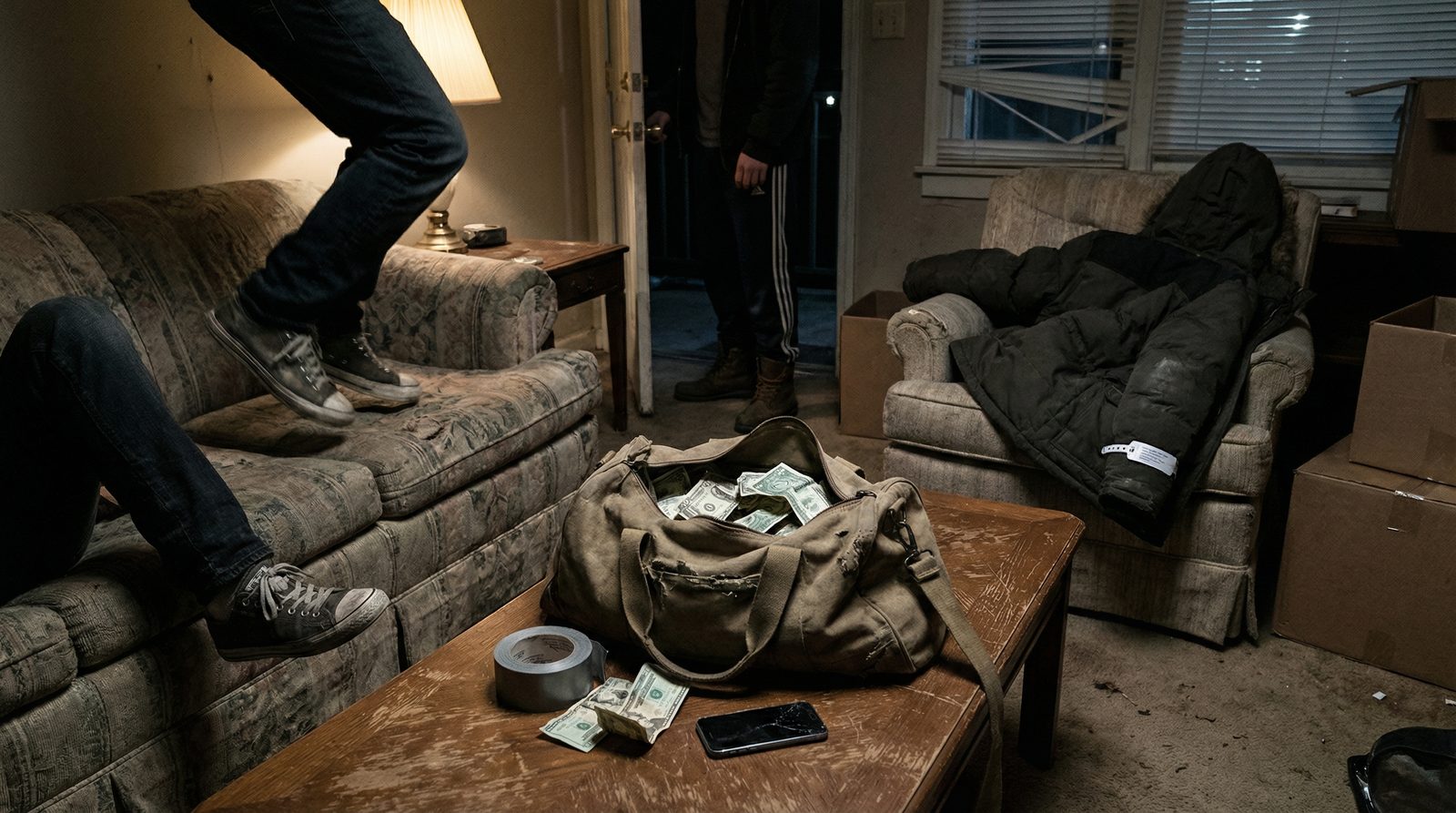
    Editorial illustration inspired by 'Botched Kidnapping'

    EMOTIONAL EFFECT ON THE READER

    A Botched Kidnapping feels different from a slick caper. Instead of admiring the criminals’ cleverness, you are bracing for the next mistake. There is a steady drip of dread: every new decision might be the one that gets someone killed. The tension comes from watching people try to steer a car that has already gone off the road.

    Readers are often pulled into a complicated sympathy. You may start out horrified by the crime, but as the kidnappers panic and show fear, they can become strangely human. Their bad choices are unforgivable, yet you see their shame, their love for a partner, or the debt and desperation that pushed them into this. At the same time, you feel for the victim, who might be terrified, angry, or unexpectedly resourceful.

    There is also a particular kind of claustrophobia. Much of the story takes place in one or two locations, with a small cast who cannot walk away. Arguments loop, tempers flare, and tiny details take on outsized importance. A ringing phone, a missed deadline, or a neighbor knocking on the door can make your stomach drop.

    In some works like Fargo, the Botched Kidnapping is laced with dark comedy. The sheer incompetence, the awkward conversations, and the mismatch between the crooks’ fantasies and the grim reality can make you laugh and wince at the same time. That uneasy mix of humor and horror is part of the motif’s power. It reminds you how thin the line is between an ordinary day and a life-ruining decision, and how quickly a “simple plan” can turn into something tragic and absurd.


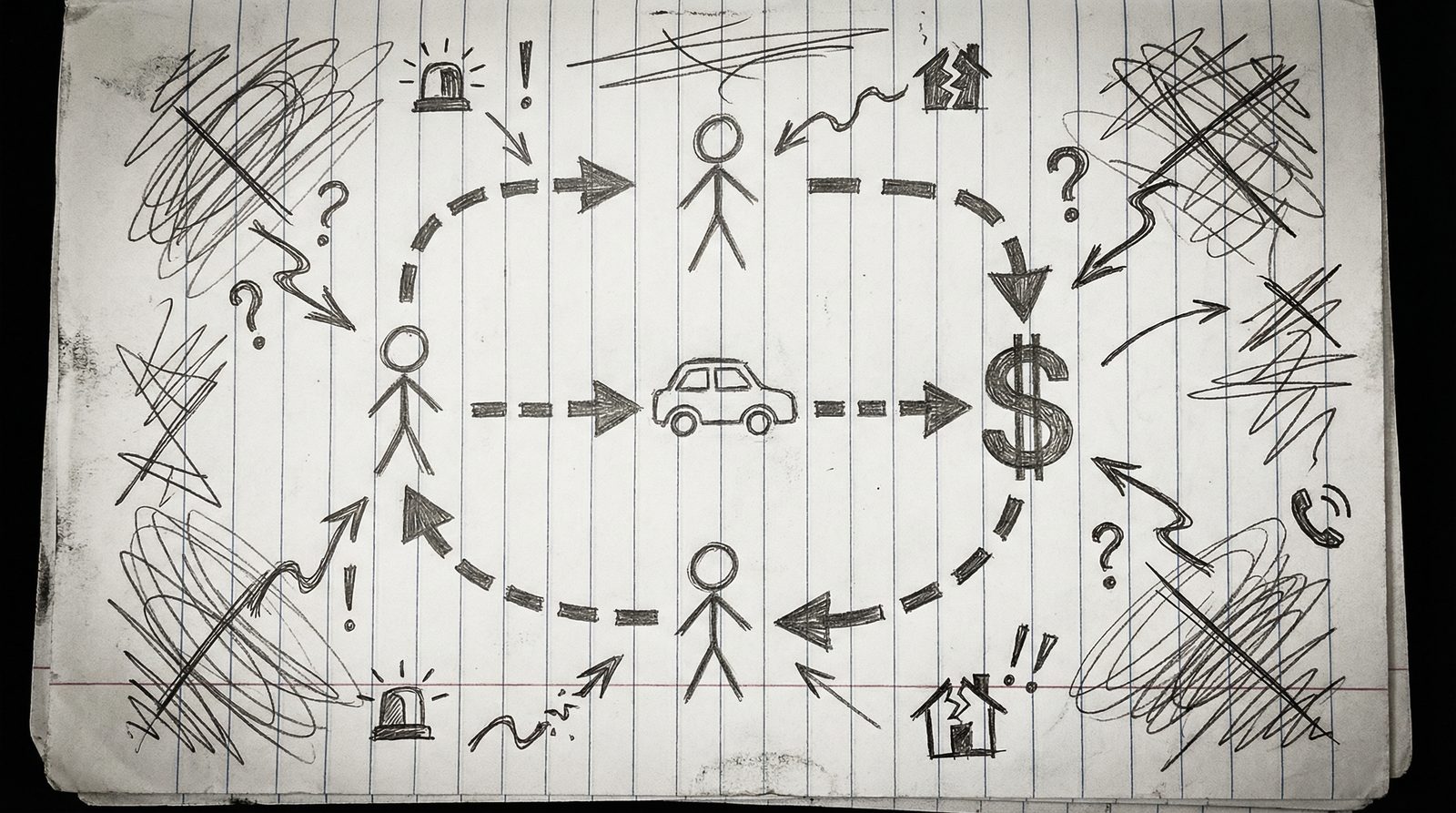
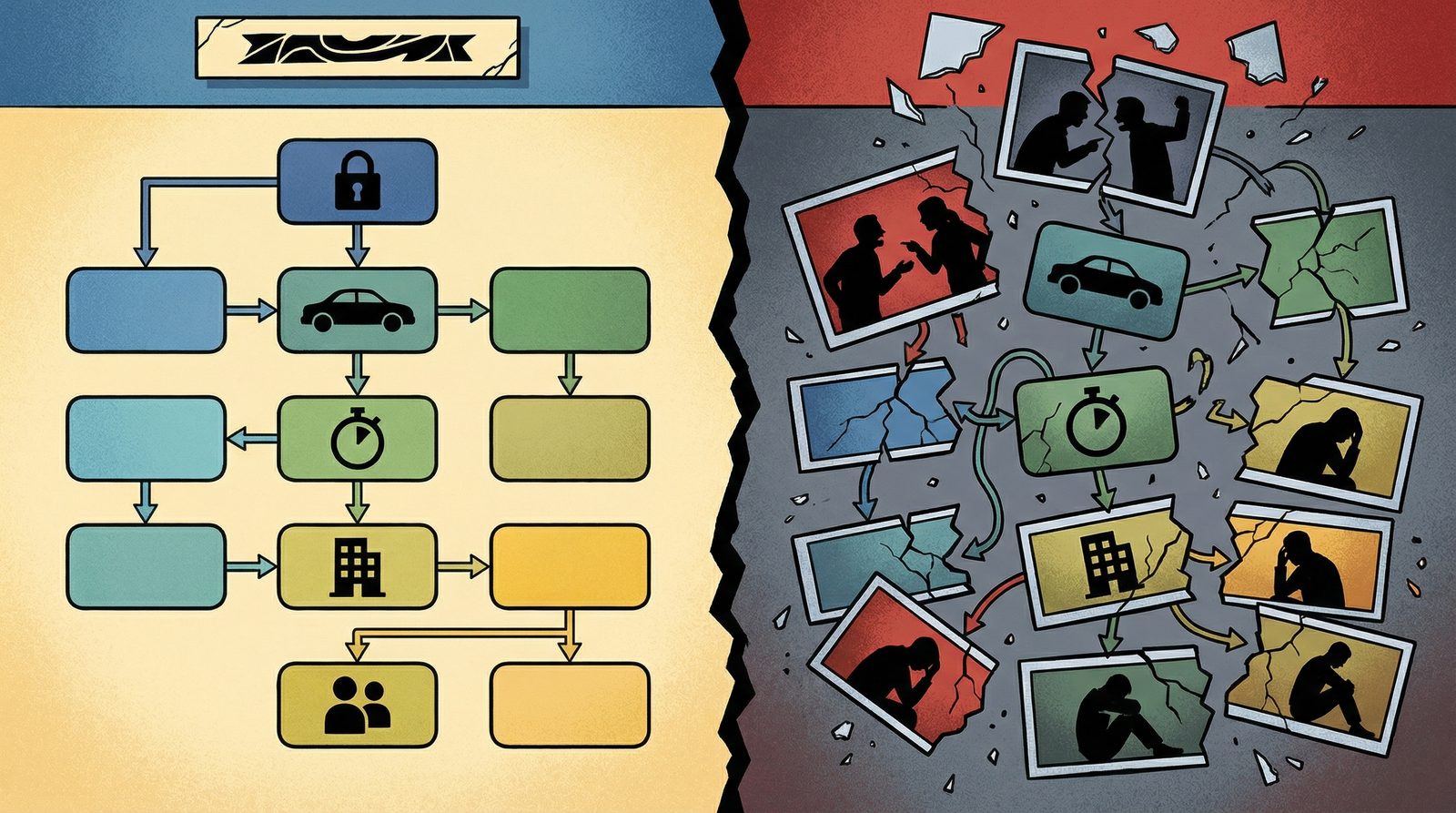
    Symbolic illustration inspired by 'Botched Kidnapping'

    VARIATIONS & RELATED MOTIFS

    The Botched Kidnapping motif can play out in several distinct ways. In some stories, the kidnapping fails right at the start: the wrong person is snatched, the getaway car stalls, or the victim slips away. In others, the initial abduction “works,” but everything afterward unravels – the safe house is compromised, the ransom drop goes bad, or the criminals cannot agree on what to do next.

    There are moral variations too. Some Botched Kidnapping stories lean into noir fatalism, like the criminal world around The Friends Of Eddie Coyle, where a failed job is just one more step toward inevitable ruin. Others focus on a single bad decision made by basically decent people, turning the story into a tragedy about ordinary lives derailed. In blackly comic versions, the kidnappers are almost too inept to be truly frightening, which throws the absurdity of the situation into sharper relief.

    This motif often intersects with “crime gone wrong” stories in general, where any planned offense unravels under pressure. It can blend with hostage-negotiation motifs, where the focus shifts to police, media, and public spectacle outside the crime scene. It also overlaps with family drama and domestic noir when the victim is a spouse, child, or parent, and the failed kidnapping exposes long-buried resentments or secrets.

    Because a Botched Kidnapping traps characters in an escalating crisis, it pairs naturally with motifs about loyalty tests, betrayal among thieves, and the corrupting pull of money. The same failed abduction can be a survival story for the victim, a downfall story for the criminals, and a moral test for everyone caught in the blast radius. That flexibility is why writers keep returning to it: one broken plan opens the door to a whole tangle of human consequences.

  • Fargo (1996)

    Fargo (1996)

    Fargo (1996) directed by Joel Coen. Crime · 98 minutes · United States.


    INTRODUCTION

    Fargo (1996) occupies a strange, memorable space where true-crime ambience, small-town politeness, and sudden carnage share the same snowdrift. The feel is a mix of bleakness and cozy warmth: a world where people say “you betcha” while standing over a corpse. The Coen brothers take the familiar scaffolding of a regional crime thriller and strip it down until every gesture feels both absurd and inevitable. What begins as a simple-for-hire kidnapping spirals into a quiet tragedy about money, pride, and the limits of common sense. The film’s power lies in its contrast between the white emptiness of the Minnesota winter and the stubborn decency of Marge Gunderson, a pregnant cop who works the case with calm curiosity instead of macho swagger. Fargo feels like a campfire story told in a monotone, where the punchlines are funny until you realize how much blood they leave behind.

    PLOT & THEMES

    The plot of Fargo is a classic Coen setup: Jerry Lundegaard, a financially desperate car salesman, hires two criminals to kidnap his wife so he can split the ransom extracted from his wealthy father-in-law. This is the Crime gone wrong trope in its purest form. Every step of the plan is slightly stupid, slightly lazy, and slightly cowardly. That combination proves lethal. A routine traffic stop explodes into triple homicide, and what Jerry imagines as a clever workaround for his debts becomes a trail of bodies stretching across the frozen Midwest.

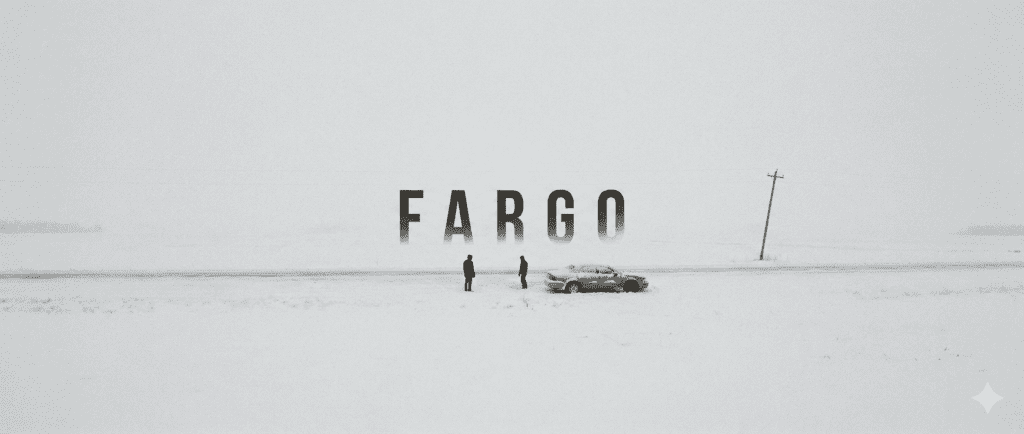
    The film’s central themes are greed, moral clarity, and the banality of evil. Jerry is not a mastermind; he is a small man with big panic, and Fargo insists that this kind of mediocrity is often what powers real-world cruelty. The White void of snow motif underlines how small these characters look against the landscape. Their crimes feel petty and pointless when framed against endless fields and empty highways.

    Opposite Jerry’s flailing is Marge Gunderson’s steady investigation. Her kindness is not naïve; When she quietly asks a killer why he did all this “for a little bit of money,” the film lands its thesis. Like Blood Simple before it, Fargo treats crime not as glamorous transgression but as a grubby extension of everyday selfishness. The Small-town decency motif, embodied in Marge and her community, becomes a moral counterweight to the spreading stain of violence. The feel is one of slow dread threaded with dry humor, a reminder that horror often arrives in a beige sedan, not a black limousine.

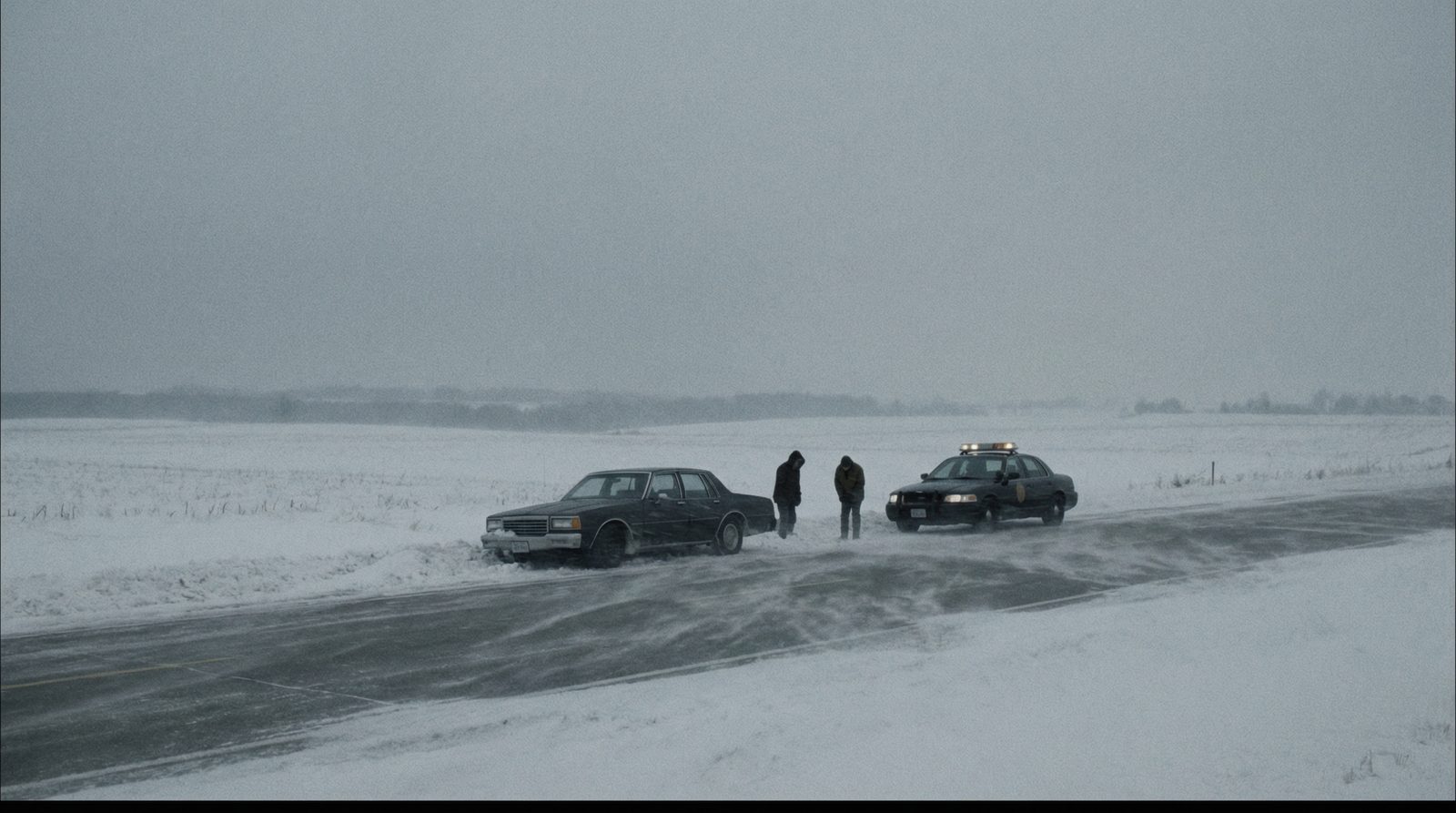
    Editorial illustration inspired by 'Fargo (1996)' – snow-covered highway and stalled cars

    CINEMATIC TECHNIQUE & AESTHETICS

    Cinematographer Roger Deakins builds Fargo around Negative space as a cinematic technique. The White void of snow motif is not just pretty scenery; Characters are often tiny figures swallowed by white fields or framed against blank skies, which makes their frantic schemes look pitiful. The Coens favor Static wide shots that let violence play out at a distance. A roadside murder is shown in long shot, the camera refusing to flinch or editorialize. The feel is clinical and eerily calm, as if the land itself is indifferent.

    Inside, the palette shifts to mustard yellows, wood paneling, and fluorescent hum. These drab interiors emphasize the banality of the settings: The Coens use deadpan pacing, letting silences and awkward small talk stretch long enough to become funny, then uncomfortable. The Editing favors long takes over rapid cutting, which makes the sudden eruptions of violence feel like ruptures in ordinary time.

    Carter Burwell’s score leans on a mournful, folk-like theme that swells over the opening shots of a car towing through a blizzard. It gives the story a ballad-like quality, as if we are hearing a regional legend. Dialogue is treated almost musically. The Minnesota accent, with its “yah” and “you betcha,” becomes a rhythmic counterpoint to the brutality on-screen. This contrast between cozy sound and harsh image is a key technique that shapes the film’s uneasy, darkly comic feel. Like No Country for Old Men later on, Fargo uses restraint in camera movement and music to make every burst of action land harder.

    CHARACTERS & PERFORMANCE

    Marge Gunderson is a classic Everyman hero archetype, though she is also a pregnant small-town police chief, which quietly subverts the usual hardboiled detective mold. Frances McDormand plays her with a blend of curiosity, politeness, and steel. Marge’s competence is never loud. She asks simple questions, listens, and notices what others overlook. Her domestic scenes with her husband Norm, discussing stamps and breakfast, ground the film in everyday tenderness. That normalcy is the moral center the story keeps circling back to.

    Jerry Lundegaard, played by William H. Macy, is a Cowardly schemer archetype. His high, pinched voice and nervous tics turn him into a study in flop sweat. Macy makes Jerry both contemptible and oddly pitiable. He is not a grand villain, just a man who keeps choosing the worst possible option rather than admit failure. That smallness is the point.

    On the criminal side, Steve Buscemi’s Carl is a Motor-mouth criminal archetype, all complaints and cheap impatience, while Peter Stormare’s Gaear is a Silent brute archetype, moving through scenes with blank, heavy calm. Their mismatched partnership is a walking argument for how chaos multiplies when people with no shared values are thrown together. Supporting characters, from the obsequious car-lot staff to the stiff in-laws, are sketched with just a few lines and gestures. The performances lean into regional specificity without turning the townsfolk into cartoons, which keeps the humor grounded in recognizable human behavior rather than pure caricature.

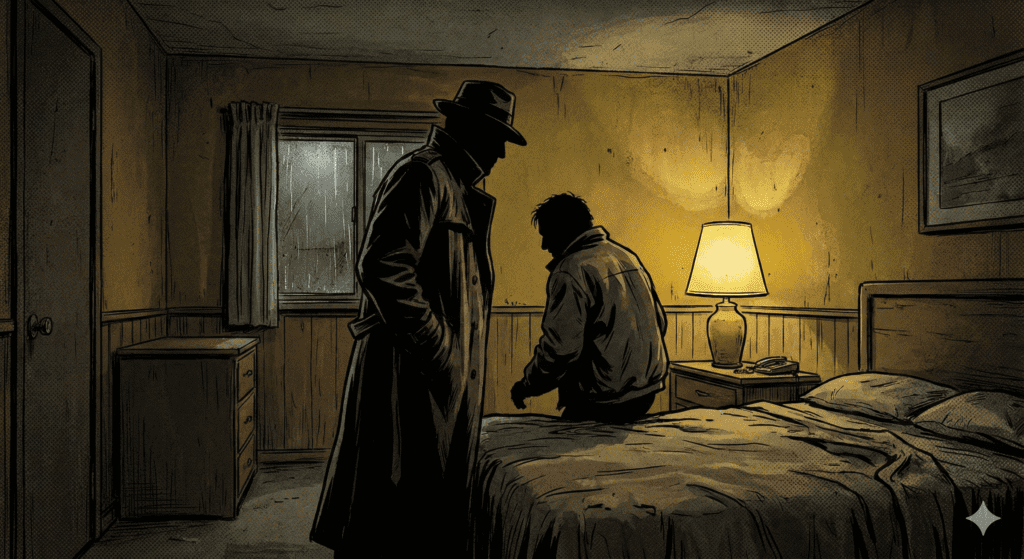
    Stylized noir illustration of Fargo (1996) – tense motel-room confrontation in warm drab Midwestern lighting

    CONTEXT & LEGACY

    Fargo arrived in the mid-1990s, when American indie cinema was saturated with ironic crime stories in the wake of Pulp Fiction. What sets Fargo apart is its emotional sincerity. The Coens had already explored doomed schemes in Blood Simple, but here they pair their usual fatalism with genuine affection for their characters. The film’s faux “true story” framing device taps into the era’s fascination with true crime while quietly mocking our hunger for authenticity labels.

    The film’s legacy includes not only its awards and critical acclaim but also the later Fargo television series, which expands on its Small-town decency motif and Crime gone wrong trope across new characters and timelines. Within the Coen brothers’ body of work, Fargo is a pivot point between their scrappier early noirs and the more austere moral parables of No Country for Old Men. Its influence can be felt in later regional crime dramas that mix dry humor with brutality, and in the broader acceptance of stories where the most heroic figure is not a vigilante or a genius, but a decent professional doing their job well.

    IS IT WORTH WATCHING?

    Fargo is worth watching if you are interested in crime stories that care more about character and moral texture than about plot twists. Its pace is unhurried, and its humor is dry enough that some viewers might initially mistake it for aimlessness. Stay with it. The accumulation of small details, awkward conversations, and quiet domestic scenes builds toward a surprisingly moving final stretch. The feel is a blend of dark comedy and melancholy, with moments of sharp horror that never tip into exploitation.

    If you like the Coen brothers’ mix of fatalism and oddball humanity in films like No Country for Old Men, or if you are drawn to stories where the landscape feels like a character, Fargo will likely resonate. It is not a puzzle-box thriller.

    TRIVIA & PRODUCTION NOTES

    The film’s opening claim that it is based on a true story is a deliberate fabrication. The Coens used the “true crime” framing device to tap into the way audiences engage differently with stories they believe are factual. Various small incidents were loosely inspired by real crimes, but Fargo as a whole is invented. The production leaned heavily on location shooting in Minnesota and North Dakota, though an unexpectedly mild winter forced the crew to chase snow and occasionally truck it in.

    Frances McDormand was not present for the first weeks of shooting, which focused on the criminals and Jerry’s unraveling. This scheduling quirk helps explain why Marge feels like a fresh, stabilizing presence when she finally appears. Carter Burwell’s score builds on Scandinavian folk influences to echo the region’s heritage. The Coens and their team paid careful attention to regional dialect, working with local actors and dialect coaches to shape the Minnesota accent. The woodchipper scene, now infamous, was staged with practical effects and strategic framing rather than explicit gore, relying on suggestion and sound to make it unforgettable.

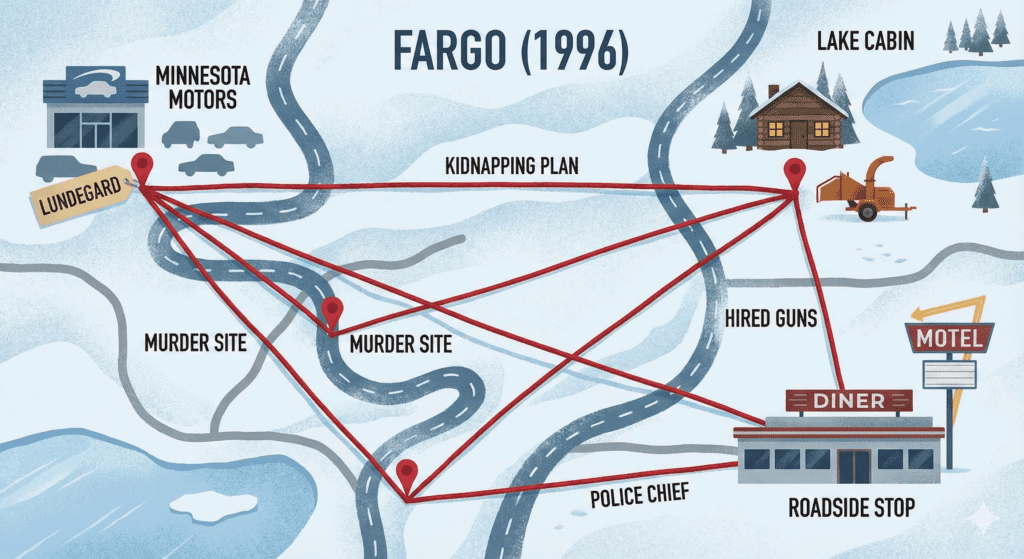
    Diagram-style conceptual illustration of Fargo (1996) – snowfield crime map with red paths and icons

    SIMILAR FILMS

    If Fargo resonates for you, several other works offer related tones and themes. Blood Simple, the Coens’ debut, presents another Crime gone wrong trope in a more overtly noir package, with a similar interest in how ordinary people flail when their schemes collapse. No Country for Old Men shares Fargo’s fascination with moral clarity and its use of landscape as an almost spiritual presence, though it trades dry humor for a harsher, more fatalistic feel.

    Outside the Coen filmography, the television series Fargo extends the Small-town decency motif and regional crime focus across multiple eras. Fans of the mix of politeness and violence might also appreciate how Twin Peaks filters small-town strangeness through a more surreal lens, though its tone is dreamier and less grounded in procedural detail than Fargo’s.

    DISCOVERABILITY & LINKS

    On AllReaders, Fargo sits at the crossroads of crime, small-town stories, and character-driven morality tales. Its white void of snow motif, crime gone wrong trope, and focus on small-town decency connect it to other works where landscape and community shape the stakes as much as the plot does. Readers exploring regional noir, morally grounded detectives, or films that balance dark humor with quiet empathy will find Fargo clustered alongside related titles in our crime and Midwestern story maps.

  • Of Mice and Men (1992)

    Of Mice and Men (1992)

    Of Mice and Men (1992) directed by Gary Sinise. Drama · 115 minutes · United States.


    INTRODUCTION

    Of Mice and Men (1992) is a somber, quietly devastating adaptation of John Steinbeck’s novel, steeped in the feel of melancholy and the feel of fatalism. Gary Sinise approaches the material with a kind of plainspoken reverence, trusting the story’s simplicity and the weight of its ending more than any stylistic flourish. The film follows two itinerant ranch hands during the Great Depression, one sharp and guarded, the other gentle and mentally disabled, as they cling to a shared dream of owning a small farm. What emerges is less a social tract than a character study about tenderness in a brutal world. The mood is patient and unhurried, letting silences, glances, and small gestures carry as much meaning as dialogue. This version neither radically reinvents Steinbeck nor embalms him. Instead, it works like a long, slow exhale, charting how hope can be both a lifeline and a kind of cruelty.

    PLOT & THEMES

    The plot of Of Mice and Men is straightforward and deliberately spare. George Milton travels with Lennie Small, a physically strong but cognitively impaired man who adores soft things and stories. They drift from job to job across Depression-era California, finally landing work on a ranch where they hope to save enough money to buy a small piece of land. That shared farm becomes their guiding fantasy, a classic example of the trope “Dream of a Better Life” that keeps them moving through humiliation and hardship.

    On the ranch, they meet a gallery of lonely figures: Candy, an aging worker clinging to his usefulness; Curley, the boss’s insecure and violent son; Curley’s Wife, restless and unnamed, whose flirtations are really attempts to escape boredom and invisibility. The story follows the trope “Tragic Misunderstanding” as Lennie’s innocent love of petting soft things repeatedly leads to disaster, escalating from dead mice to a fatal encounter in the barn. The motif “American Dream” runs through nearly every conversation about the future, while the motif “Loneliness and Isolation” shapes the daily reality of the men, who sleep in bunks, share meals, and yet remain emotionally stranded.

    Themes of power and powerlessness are everywhere. George has authority over Lennie, but little over his own circumstances. The ranch hands are trapped in wage labor with no safety net, echoing other Great Depression narratives like The Grapes of Wrath. Violence arrives not as spectacle but as inevitability, the grim endpoint of a world where mercy and survival rarely align. The film’s final act leans into moral ambiguity, inviting the audience to weigh compassion against betrayal without offering easy absolution.

    CINEMATIC TECHNIQUE & AESTHETICS

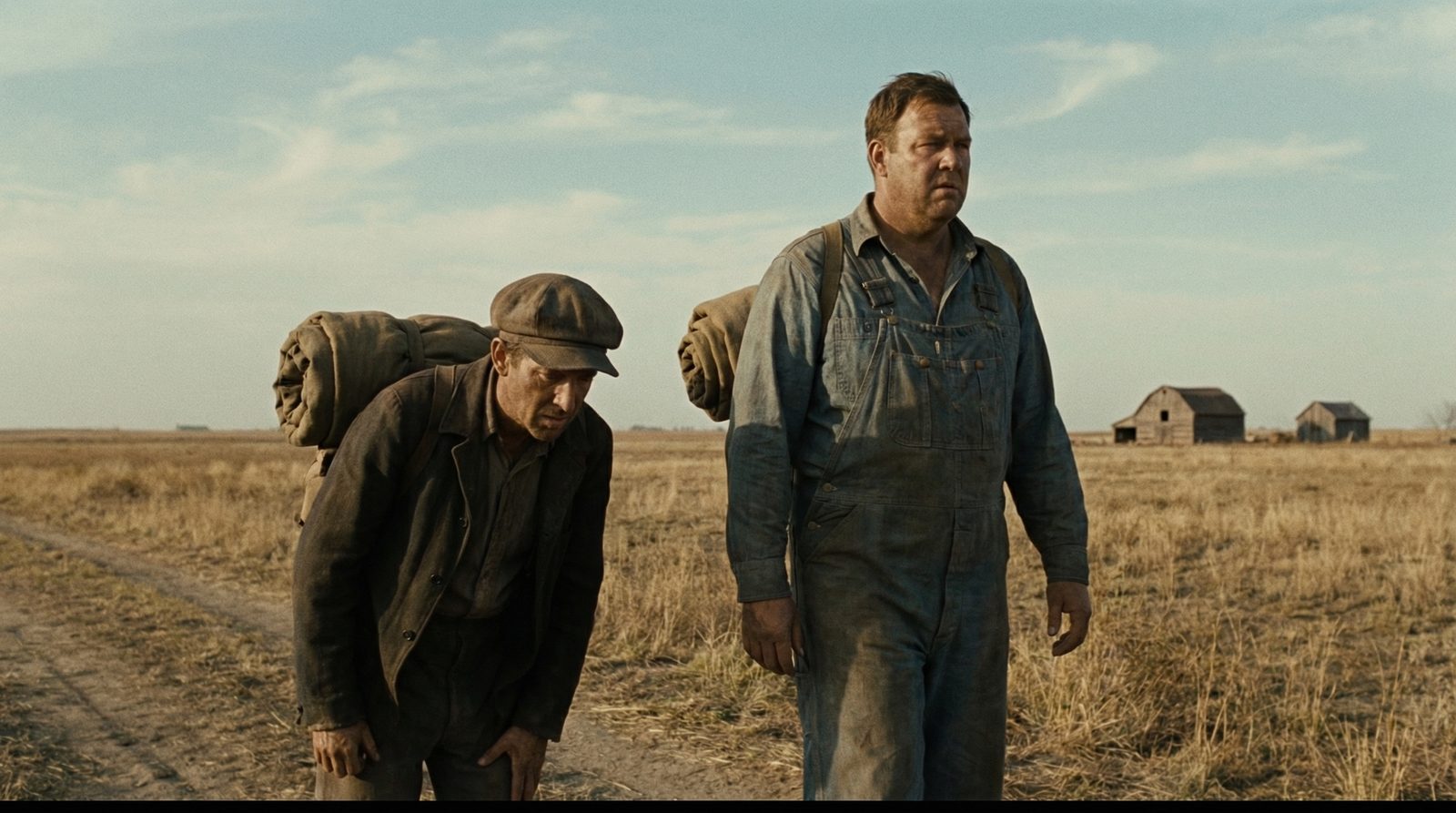
    Cinematically, Of Mice and Men favors restraint. The cinematography uses wide shots of fields, dusty roads, and bunkhouses to emphasize the feel of melancholy and the feel of fatalism, placing small human figures against large, indifferent landscapes. This use of wide shots works as a visual corollary to the motif “Loneliness and Isolation”: the men are constantly framed as tiny within the frame, swallowed by sky and dirt. Close-ups arrive sparingly, reserved for moments of connection or panic, such as Lennie’s childlike delight when George repeats their dream, or the instant of realization in the barn.

    The film relies on naturalistic lighting and a muted color palette that leans into browns, grays, and washed-out greens, underscoring the harshness of the Great Depression setting. There is little stylistic bravura; the camera often sits at eye level and holds on performances, creating a stage-like intimacy and allowing the actors’ rhythms to dominate. The score is understated, using plaintive strings and occasional harmonica to underline emotional beats without overwhelming them.

    Editing choices emphasize inevitability. Transitions from one job or day to the next often cut from hopeful talk about the “American Dream” to images of the same hard labor, reinforcing the gap between fantasy and reality. The barn sequence, in particular, is carefully built through cross-cutting and sound design, juxtaposing the quiet of Lennie’s encounter with Curley’s Wife against the distant noise of the ranch, as if the world is unaware that everything is about to tilt. The final riverside scene is shot with a calm, almost pastoral beauty that clashes with the horror of what George must do, heightening the tragedy through visual gentleness rather than shock.

    Editorial illustration inspired by 'Of Mice and Men (1992)'

    CHARACTERS & PERFORMANCE

    At the center are two archetypes: George as the archetype “Reluctant Caregiver” and Lennie as the archetype “Gentle Giant.” Gary Sinise plays George with a tight, wary energy, shoulders slightly hunched as if braced for the next problem. His tenderness toward Lennie is always mixed with irritation and exhaustion, which keeps their relationship from turning sentimental. You feel the cost of his loyalty in every sigh and sharp word. John Malkovich’s Lennie is all open face and heavy body, his voice pitched high and soft. He leans into Lennie’s physicality, letting his size feel both protective and ominous. The performance risks mannerism, but Malkovich grounds it in a consistent emotional logic: Lennie is driven by sensory pleasure and fear, not malice.

    Among the supporting cast, Ray Walston’s Candy embodies the archetype “Tragic Innocent,” a man already half-discarded by the world, whose investment in George and Lennie’s plan is heartbreaking. His reaction when the dream collapses is one of the film’s quietest and most affecting moments. Sherilyn Fenn gives Curley’s Wife more interiority than the text sometimes allows, playing her as a woman boxed in by the trope “Lonely Housewife” rather than a simple temptress. Her scenes with Lennie hint at the shared cost of being treated as less than fully human.

    Curley and the other ranch hands are sketched more broadly, functioning as embodiments of various responses to hardship: resentment, resignation, bravado, and the occasional flash of kindness. The ensemble never steals focus from George and Lennie, but their presence fleshes out the social world, making the final act feel like the endpoint of a collective pressure rather than a single bad choice. The performances overall are tuned to a naturalistic register, which suits the story’s plainspoken tragedy.

    CONTEXT & LEGACY

    Of Mice and Men arrives with the weight of being a classroom staple and a previous film adaptation already in circulation. Compared with the 1939 version, Sinise’s film is more relaxed and attentive to small behavioral details, reflecting a late twentieth-century taste for psychological realism. It also emerges in a period when American cinema was revisiting the Great Depression, as seen in works like The Grapes of Wrath on television and the lingering influence of earlier literary adaptations.

    The film’s legacy is quieter than the novel’s, but it occupies a distinct place in the cycle of 1990s literary dramas, alongside adaptations like The Shawshank Redemption that foreground male friendship under oppressive conditions. In educational contexts, this version often serves as the visual companion to Steinbeck’s text, shaping how students imagine George, Lennie, and the ranch. Its fidelity to the source, both in plot and tone, means it is rarely discussed as a radical reinterpretation. Instead, it is valued as a solid, emotionally direct rendition that preserves the story’s moral unease and the starkness of its ending for a new generation of viewers.

    IS IT WORTH WATCHING?

    Whether Of Mice and Men is worth your time depends on your tolerance for slow, character-driven tragedy and the feel of fatalism. The film does not surprise if you know the novel, nor does it try to. Its value lies in seeing the relationships embodied: George’s mix of love and resentment, Lennie’s uncomprehending joy, Candy’s late-blooming hope. The pacing can feel languid, but that slowness is part of its effect, letting the inevitable ending creep up rather than crash down.

    If you are interested in Great Depression stories, literary adaptations that respect their sources, or explorations of male friendship under pressure, this film is a thoughtful, well-acted option. It may not convert skeptics of the material, but for viewers willing to sit with discomfort and moral ambiguity, it offers a clear, humane rendering of a classic American tragedy.

    Symbolic illustration inspired by 'Of Mice and Men (1992)'

    TRIVIA & PRODUCTION NOTES

    Gary Sinise was not only the director but also the star, and his dual role shapes the film’s focus on George’s inner conflict. Sinise had previously been involved with stage productions of Of Mice and Men, which helps explain the film’s faithfulness to Steinbeck’s dialogue and its occasional stage-like blocking. John Malkovich also brought prior familiarity with the role of Lennie, contributing to the performance’s detailed physical vocabulary.

    The production leans heavily on location shooting in rural settings that evoke California’s agricultural valleys, even when not filmed in Steinbeck’s exact locales. This commitment to physical authenticity reinforces the motif “American Dream” by grounding it in recognizable, unglamorous spaces. The design of the bunkhouse, with its cramped beds and sparse personal items, was carefully researched to reflect period-accurate living conditions for itinerant workers.

    The film’s relatively modest budget encouraged the use of practical sets and natural light, aligning with its overall aesthetic of restraint. While not a major awards magnet, it drew attention for its performances and for offering a serious, unflashy literary adaptation at a time when studios were experimenting with more commercial fare. Its continued presence in educational and repertory screenings speaks to its durability as a teaching tool and as a companion piece to the novel.

    SIMILAR FILMS

    If Of Mice and Men resonates with you, several other films explore related territory. The Grapes of Wrath offers another Steinbeck portrait of the Great Depression, with a wider social canvas but a similar fixation on the fragility of the “American Dream.” The Shawshank Redemption echoes the focus on male friendship, confinement, and the slow burn of hope in a hostile environment.

    For a more stylized take on itinerant workers and desperation, Bonnie and Clyde shifts the focus to crime but retains the sense of economic entrapment. If you are drawn to the archetype “Gentle Giant” in tragic contexts, you can also look toward other works in our database that explore similar dynamics of power, vulnerability, and mercy.

    DISCOVERABILITY & LINKS

    Of Mice and Men connects to broader clusters on the site around Great Depression narratives, the motif “American Dream,” and the motif “Loneliness and Isolation.” It also sits alongside stories built on the trope “Dream of a Better Life” and the archetype “Reluctant Caregiver.” Readers interested in quiet, morally fraught dramas about friendship, economic hardship, and the feel of melancholy will find it linked to books and films that explore similar emotional terrain.

  • The Color Purple (2023)

    The Color Purple (2023)

    Director: Blitz Bazawule
    Screenplay: Marcus Gardley
    Based on: Broadway Musical and The Color Purple by Alice Walker
    Genre: Musical Drama
    Country: United States
    Year: 2023


    INTRODUCTION

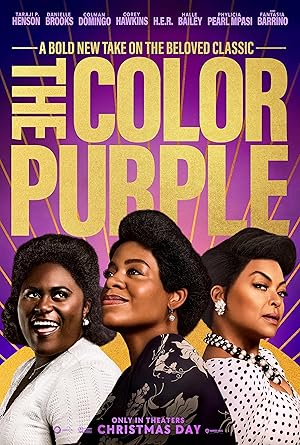
    Official poster for 'The Color Purple (2023) (2023)'

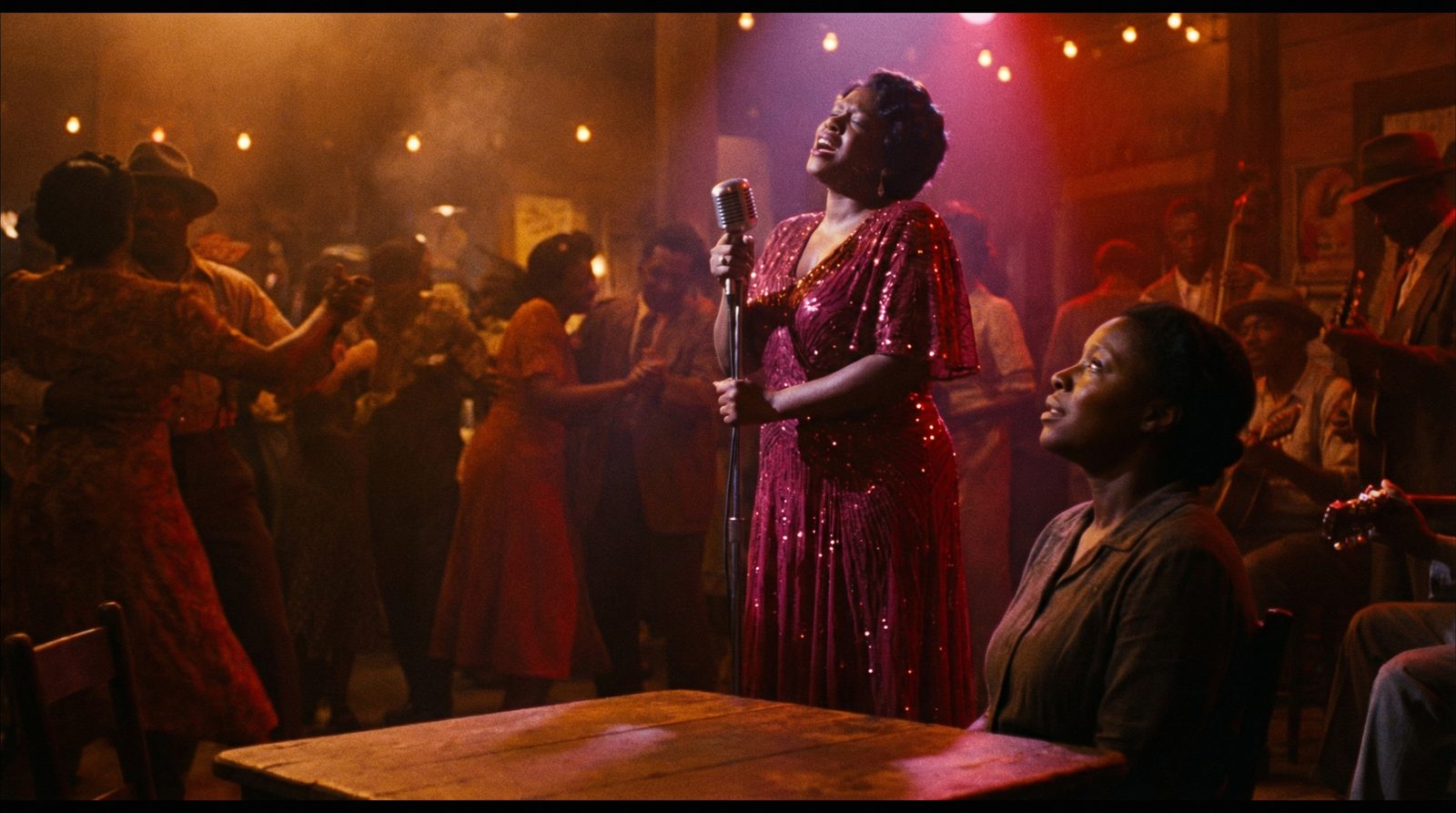
    The Color Purple (2023) reimagines Alice Walker’s story through the language of musical theater. Where the 1985 film stayed grounded in realism, this adaptation embraces emotional spectacle, using music to reveal what Celie cannot yet say. The result is a version of the story filled with movement, color, and spiritual uplift. It remains rooted in the motif of Survival Narratives, but its tone is more celebratory, focusing on transformation rather than confinement.

    The musical form allows the film to explore Celie’s interior world through sound and choreography, turning resilience into something communal and triumphant.


    PLOT AND FOCUS

    The story follows the same broad arc as the novel and the 1985 film. Celie endures violence, forced marriage, and separation from her sister. The emotional turning point arrives through relationships with Sofia, Nettie, and especially Shug Avery, whose presence helps Celie imagine a life beyond fear.

    The musical format shifts the tone. Songs become emotional architecture. Instead of describing Celie’s awakening, the film lets her sing it. These moments deepen the motif of Intimacy as Healing and emphasize the joy that emerges from community.

    The plot stays loyal to the source material but prioritizes catharsis over strict realism. It focuses on emotional release and collective resilience.


    STYLE AND APPROACH

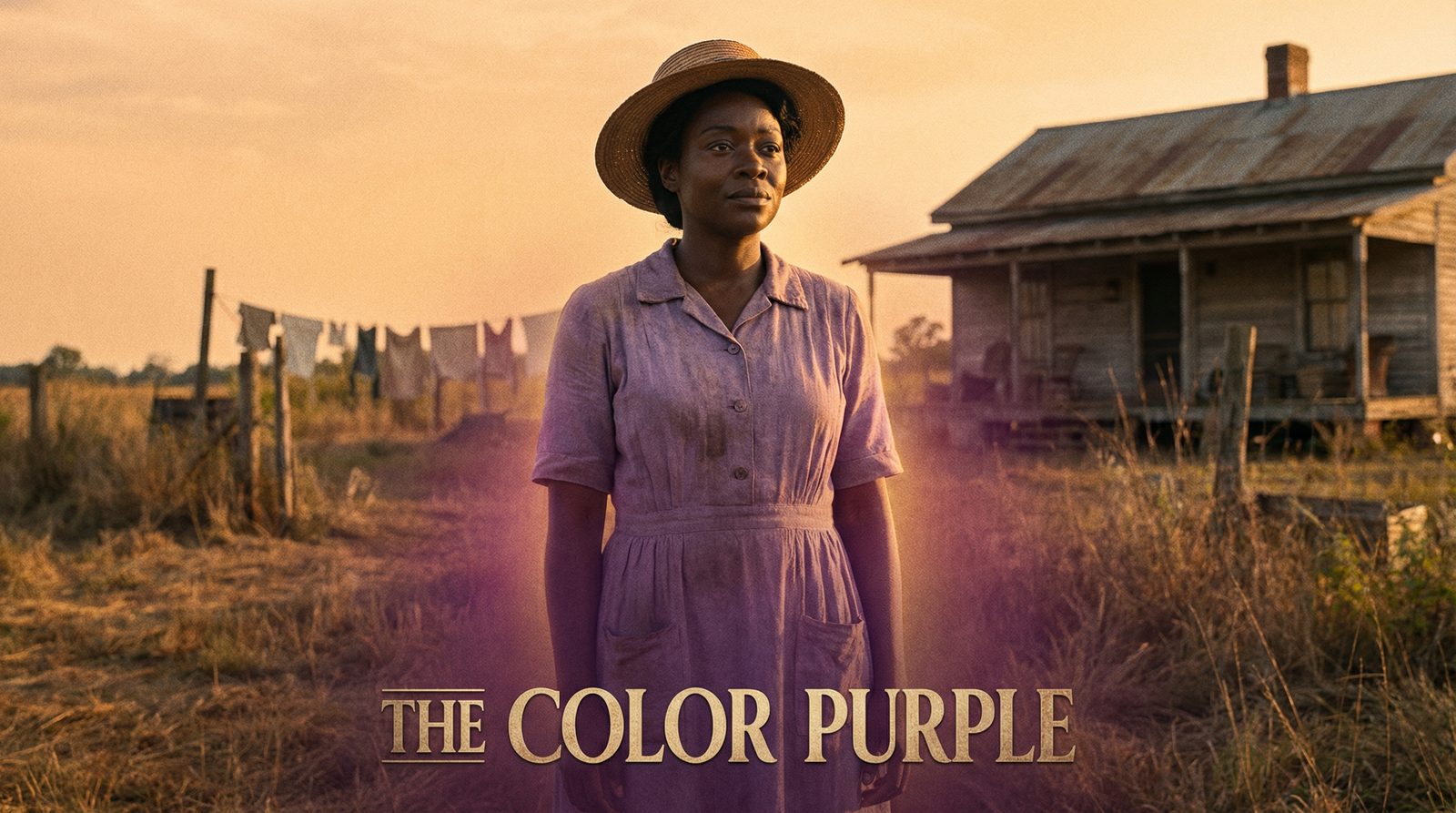
    The film uses bold color palettes, wide choreography, and surreal visual moments to express Celie’s imagination. Where the earlier adaptation showed confinement, this one shows expansion. Dreams, memories, and musical numbers blur into each other, creating a sense of internal liberation long before Celie gains external freedom.

    The musical sequences offer joy even inside pain. This tonal blending is one of the film’s strengths. It suggests that hope and sorrow can share the same frame without canceling each other.

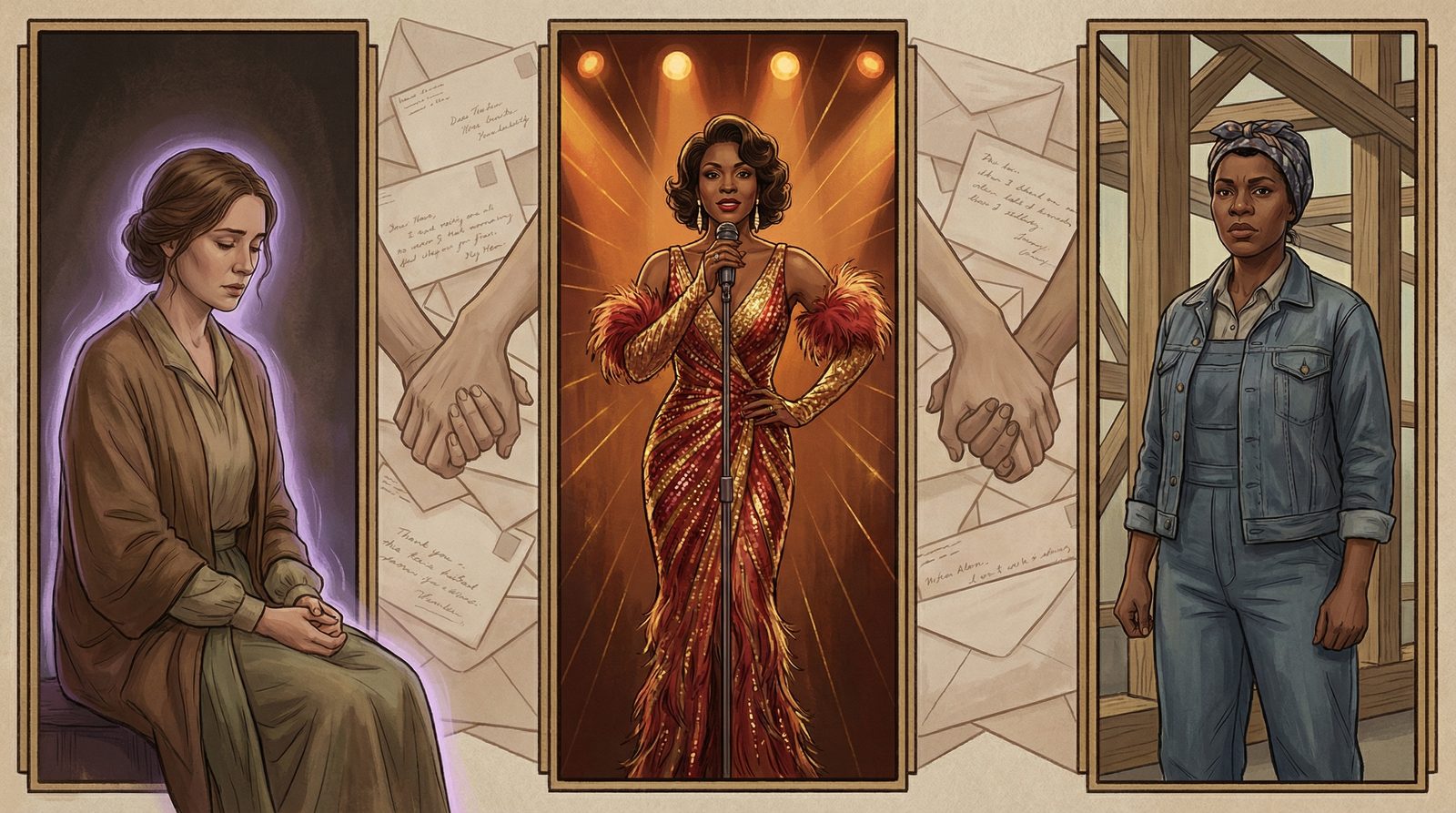
    Editorial illustration inspired by 'The Color Purple (2023) (2023)'

    CULTURAL CONTEXT AND LEGACY

    The 2023 adaptation stands at the intersection of literature, musical theater, and contemporary filmmaking. It honors the novel’s themes while speaking to a new generation of viewers. The film also restores attention to aspects of the story that had been softened in the 1985 version, especially Celie’s romantic and spiritual connection with Shug.

    Its release reignited conversations about Black women’s stories in mainstream film and emphasized the importance of adapting classic texts in ways that honor their complexity. It also strengthened the cultural position of The Color Purple as a multiform epic that continues to evolve.

    Symbolic illustration inspired by 'The Color Purple (2023) (2023)'

    IS IT WORTH WATCHING?

    Yes. It is vibrant, emotional, and beautifully performed. For viewers who love the novel or the earlier film, this adaptation offers a new lens. For those coming to the story for the first time, it offers an accessible and moving entry point. The film blends sorrow and joy with unusual grace.


    SIMILAR WORKS

    The Color Purple (1985)
    The Color Purple (1982)
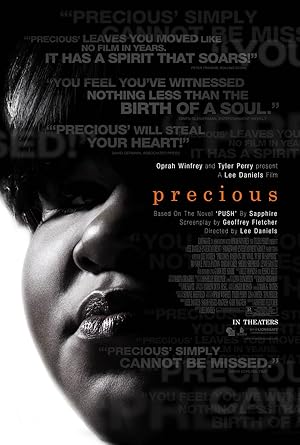
    Precious (2009)
    Framing Britney Spears (2021)

  • The Color Purple (1985)

    The Color Purple (1985)

    Director: Steven Spielberg
    Screenplay: Menno Meyjes
    Based on: The Color Purple by Alice Walker
    Genre: Drama
    Country: United States
    Year: 1985


    INTRODUCTION

    The Color Purple (1985) is the first major screen adaptation of Alice Walker’s novel. Spielberg approaches the story with careful reverence, foregrounding Celie’s inner life without diluting the brutality she endures. The film translates the letters of the novel into a visual language shaped by silence, longing, and endurance. At its core, the film reflects the motif of Silence as Survival, showing how Celie learns to speak inside a world that rarely listens.

    The film became a cultural lightning rod. Praised for its performances and emotional force, criticized for the way pain is presented, it remains a milestone in bringing Black women’s interiority to mainstream cinema.


    PLOT AND FOCUS

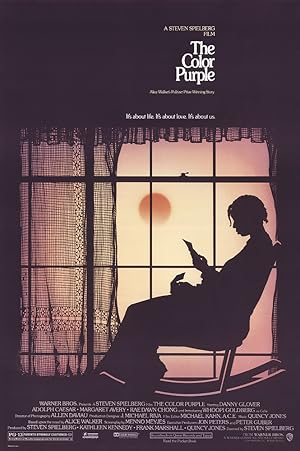
    Official poster for 'The Color Purple (1985) (1985)'

    Set in the American South of the early twentieth century, the film follows Celie from childhood through adulthood as she faces physical abuse, forced marriage, and years of emotional suppression. Her husband, Mister, controls her labor and voice, and her sister Nettie’s exile becomes a wound that shapes her adolescence.

    The plot shifts when Shug Avery enters Celie’s life. Shug’s confidence and warmth form a kind of emotional education, helping Celie imagine a life beyond obedience. These scenes express the motif of Intimacy as Healing. Celie’s understanding of love is rewritten through Shug’s presence.

    The story’s emotional climax is Celie’s assertion of selfhood. Her declaration that she will no longer be silenced is one of the most enduring moments in the film and a reflection of her journey toward spiritual and personal freedom.


    STYLE AND APPROACH

    The visual style blends warm Southern landscapes with tight interior shots that reflect Celie’s confinement. Spielberg uses color and framing to show the difference between the world Celie lives in and the world she longs for. The fantasy sequences, though brief, reveal her imagination as a refuge.

    The performances ground the film. Celie’s quietness becomes a form of strength rather than erasure, and Shug and Sofia bring vitality that expands the emotional world of the story. This balance keeps the film from becoming a simple story of suffering. It becomes a story of transformation.

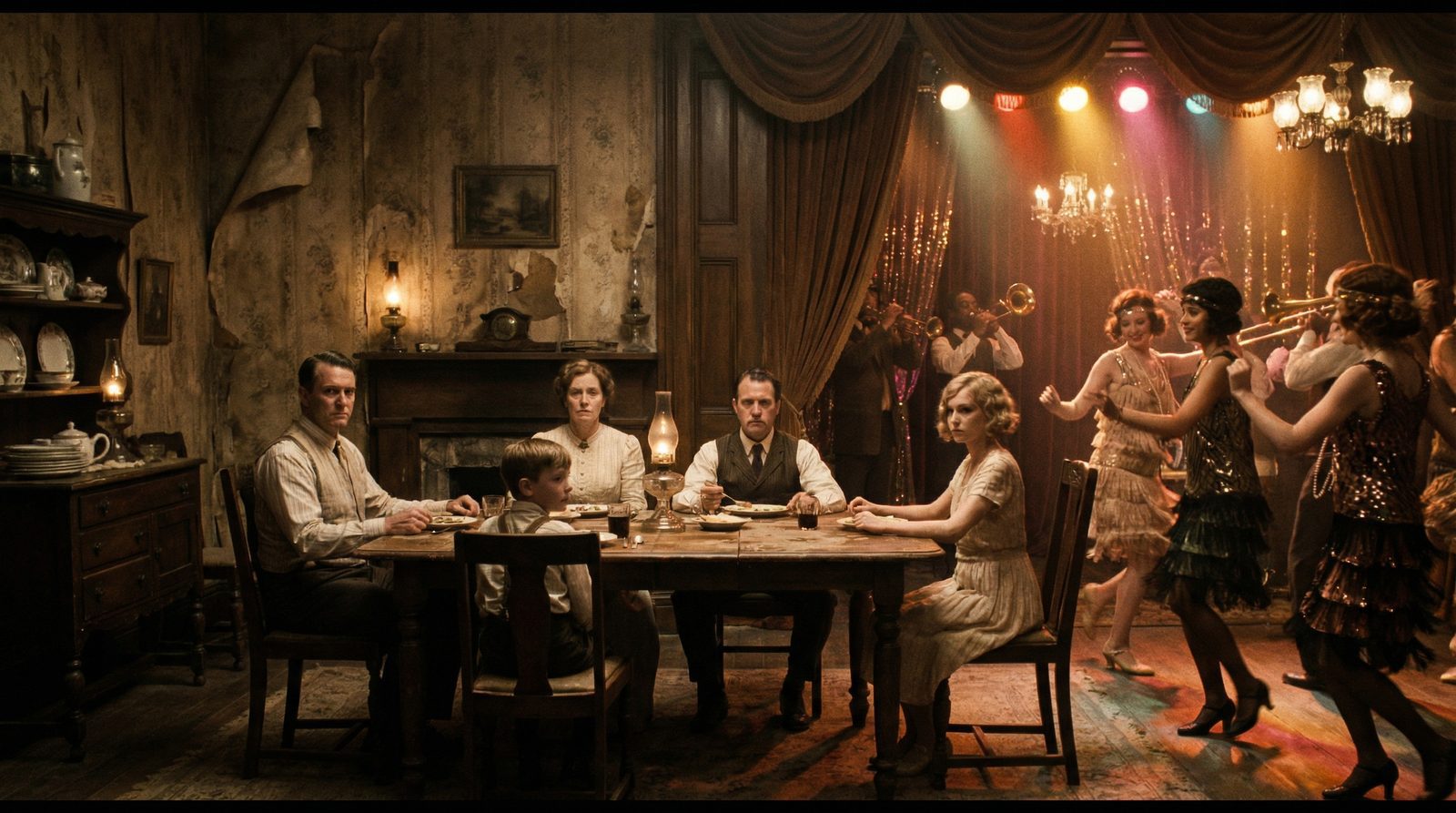
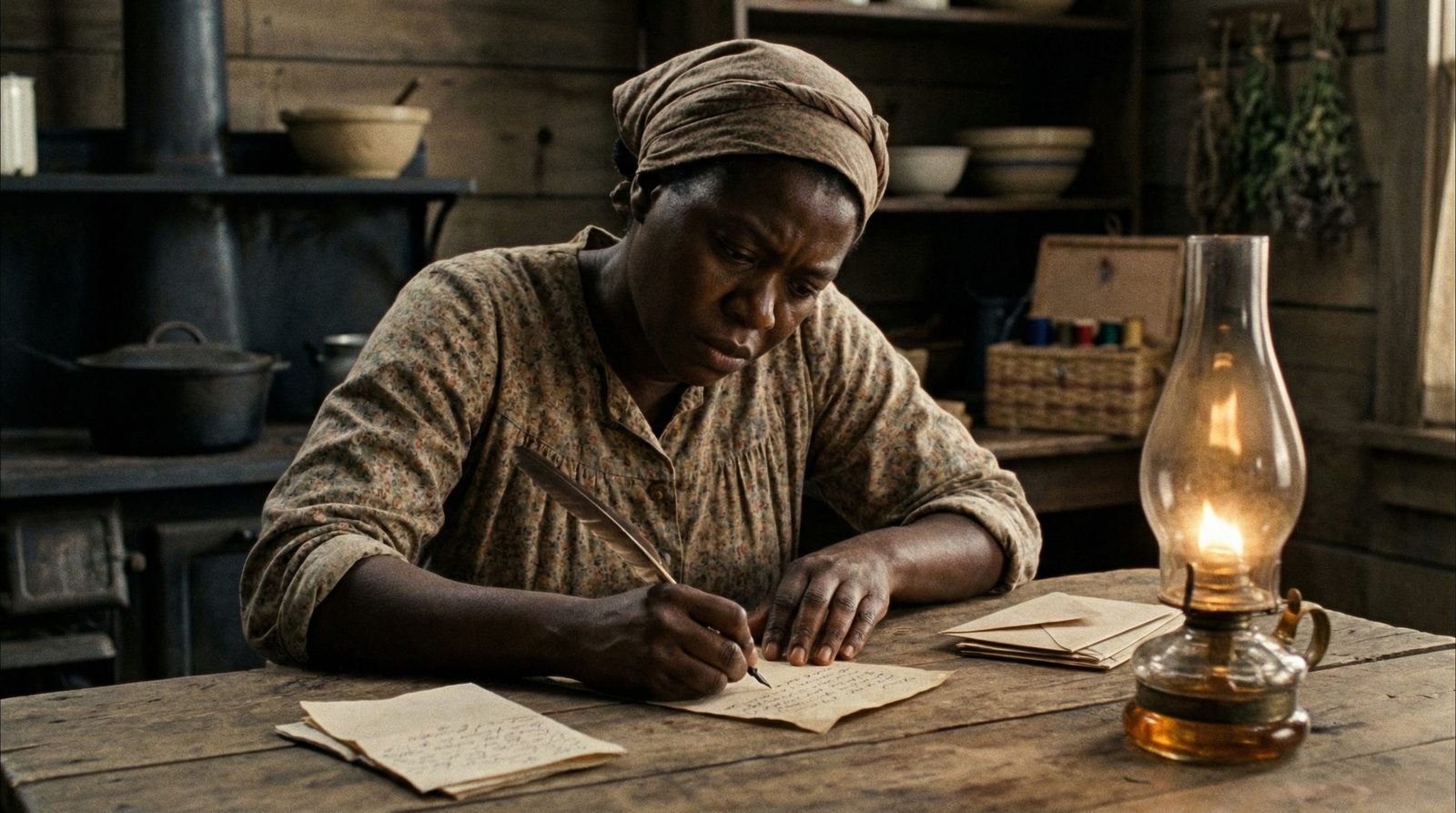
    Editorial illustration inspired by 'The Color Purple (1985) (1985)'

    CULTURAL CONTEXT AND LEGACY

    The film sparked heated debate. Some viewers praised its honesty. Some criticized its portrayal of violence. Others felt the adaptation softened parts of the novel. Yet the broader impact is undeniable. The film introduced Celie’s story to millions who had never encountered the novel and opened conversations about gender, race, and autonomy in mainstream film.

    It also paved the way for later adaptations, including the Broadway musical and the 2023 film musical. As a cultural object, the 1985 film stands alongside the novel as one of the most significant depictions of Black womanhood in American cinema of the 1980s.

    Symbolic illustration inspired by 'The Color Purple (1985) (1985)'

    IS IT WORTH WATCHING?

    Yes. It is emotionally intense but deeply moving. The film is a landmark in American cinema for its performances, visual storytelling, and commitment to centering Celie’s voice. Anyone interested in literary adaptations, Southern history, or stories of resilience will find it essential.


    SIMILAR WORKS

    The Color Purple (1982)
    The Color Purple (2023)
    Precious (2009)
    Framing Britney Spears (2021)