
Genre: Literary Drama

  • Future Shock as Transformation

    Future Shock as Transformation

    WHAT THIS MOTIF MEANS

    Future Shock as Transformation is the moment when rapid change — technological, environmental, social, or emotional — forces characters to evolve faster than they can comfortably handle. Instead of treating the future as a distant horizon, this motif pushes it directly into everyday life. The shock isn’t just external; it penetrates the psyche, reshaping identity and worldview in real time.

    The motif originates in the idea that when change outpaces the human nervous system, it produces disorientation, vulnerability, and heightened perception. In fiction, that pressure becomes catalytic: characters adapt, collapse, or transform under forces they can’t slow down.


    HOW IT WORKS

    The shock arrives when a known system breaks — a planet’s ecosystem, a belief, a family structure, a community rule, a personal identity. The future intrudes through:

    • new technology characters aren’t ready for,
    • a new world with no familiar rules,
    • a cultural shift that destabilises old identities,
    • a personal event that rearranges one’s sense of self,
    • a scientific discovery that changes everything.

    Unlike dystopian or disaster motifs, the emphasis here is on response. The shock forces characters into a new shape — sometimes stronger, sometimes fractured, always altered.

    Future Shock as Transformation inline concept image

    WHERE WE SEE IT

    In Arthur C. Clarke’s 2061: Odyssey Three, the motif appears through scientific expansion: new frontiers, new worlds, and humanity’s struggle to understand technologies that leap far ahead of its emotional readiness.

    Jill Paton Walsh’s The Green Book uses the motif in a gentler key. The colonists confront a new planet with unfamiliar biology, forcing them to adapt socially and psychologically. The future arrives not as spectacle but as a slow, disorienting reshaping of daily life.

    Even Laurie Halse Anderson’s Catalyst contains a grounded version of the motif. Kate Malone’s “future shock” is academic and emotional — when her imagined future shatters, she must rebuild an identity without the scaffolding she relied on.

    The motif bridges sci-fi and realism. Whether characters face cosmic mysteries or personal upheaval, the pattern is the same: the future arrives too fast, and transformation becomes unavoidable.


    WHY IT MATTERS

    This motif resonates because it captures a universal human anxiety: the fear of being unprepared. When the familiar collapses, characters confront who they are without scripts or habits to lean on. The result can be liberation, collapse, or reinvention — but never stasis.

    Future Shock as Transformation shows that change itself is a narrative engine. The future doesn’t wait; it forces characters to confront their blind spots, illusions, ambitions, and vulnerabilities.

    Future Shock as Transformation inline diagram image

    ARCHETYPES & VARIANTS

    The motif intersects with archetypes like The Witness — characters who observe change before they can act — and The Double Self, whose internal contradictions snap under pressure.

    Variants include:

    • The scientific leap – technology outpacing comprehension.
    • The cultural rupture – old identities no longer functioning.
    • The environmental shift – survival requires reinvention.
    • The personal implosion – a future imagined collapsing overnight.


    RELATED MOTIFS & WORKS

    This motif forms a triad with Domestic Vulnerability as Horror and Identity Collapse in Isolation. Together, they track how environments — intimate, isolating, or futuristic — reshape identity under pressure.

    Examples include 2061: Odyssey Three, The Green Book, and the emotional freefall in Catalyst.
  • Identity Collapse in Isolation

    Identity Collapse in Isolation

    WHAT THIS MOTIF MEANS

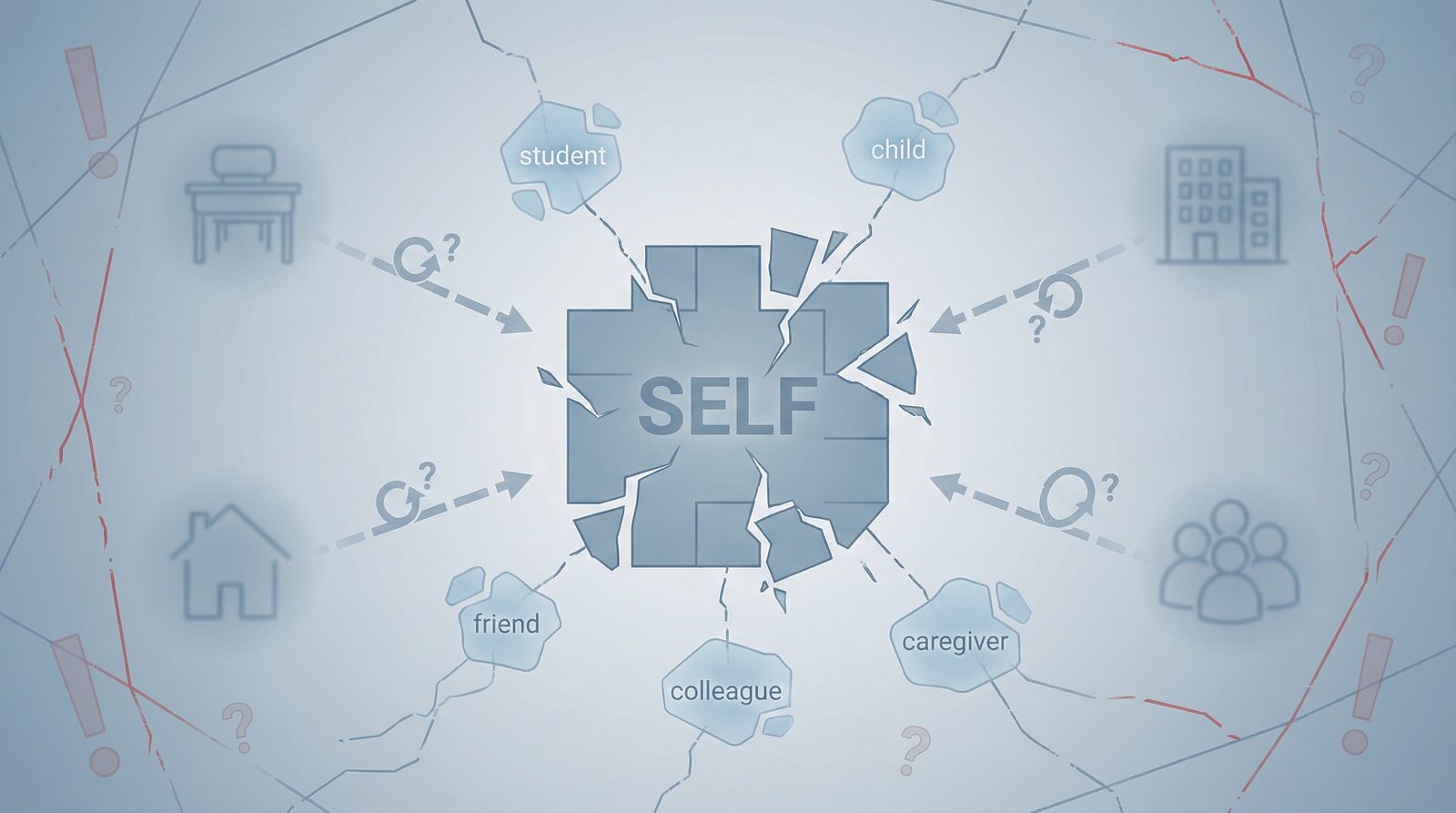
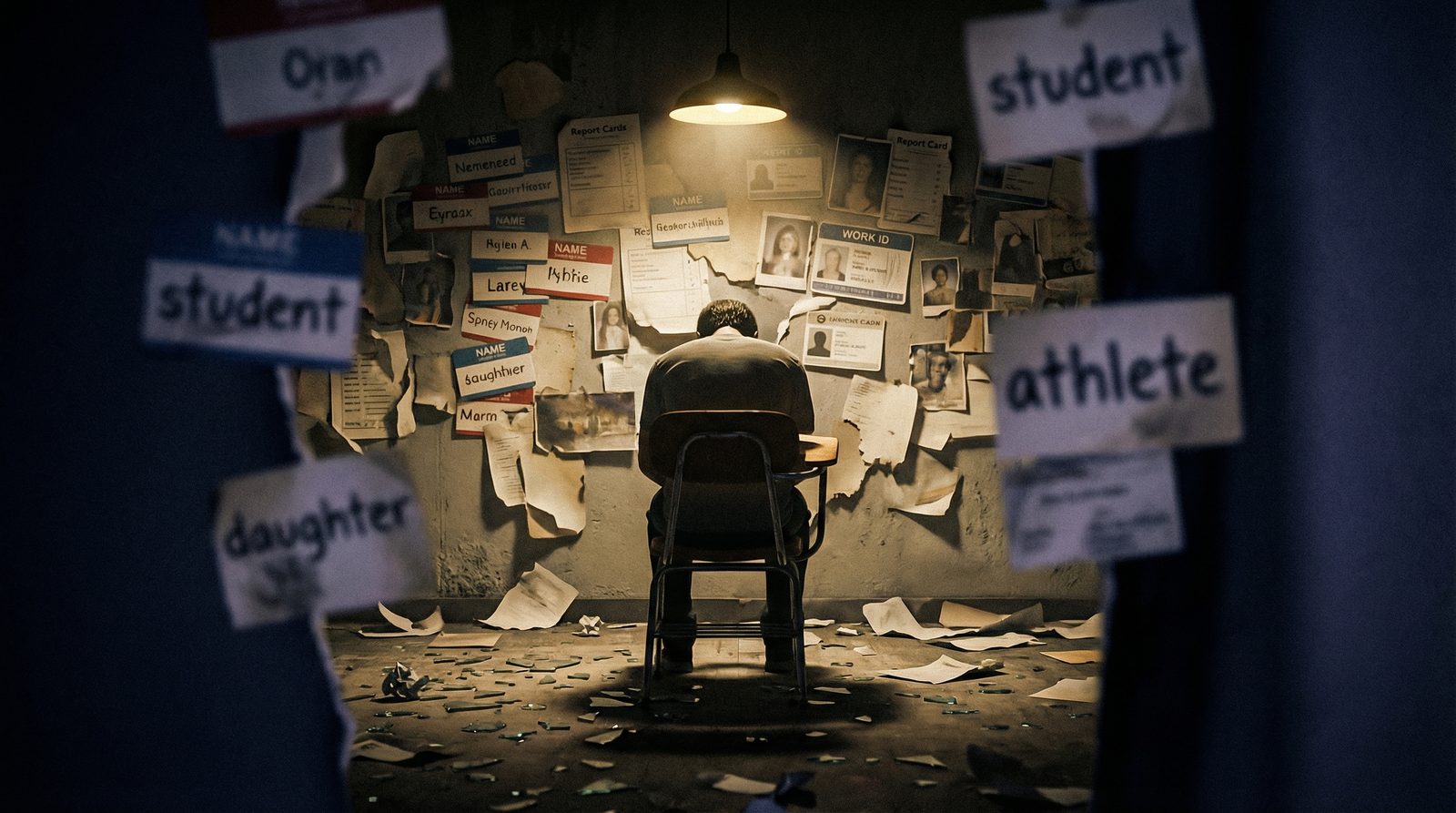
    Identity Collapse in Isolation describes the psychological unraveling that happens when a character’s sense of self is stripped of external anchors. Alone, misunderstood, or cut off from their usual environment, they lose the stabilising forces that normally tell them who they are. The collapse isn’t usually dramatic; it’s slow, quiet, and internal. Thoughts loop. Doubt magnifies. Reality bends inward.

    This motif thrives in stories where characters face pressure without support — academically, emotionally, socially, or physically. Their identities crumble under the weight of expectation or trauma, and the “collapse” becomes the catalyst for transformation, survival, or deeper harm.


    HOW IT WORKS

    The collapse typically begins with one destabilising event — rejection, trauma, loss, failure, or isolation. The character withdraws, either by choice or by circumstance. Without affirmation or grounding, their internal narrative shifts:

    • Daily routines lose meaning.
    • Internal monologues become repetitive or fragmented.
    • Fear, guilt, or pressure amplifies.
    • Self-image distorts.
    • Small triggers become psychological landmines.

    The motif often intertwines with anxiety, disassociation, and the feeling of being watched or judged, even when alone. It’s not about madness — it’s about the erosion of identity when all external mirrors break.


    Identity Collapse in Isolation inline concept image

    WHERE WE SEE IT

    This motif appears strongly in Tabitha King’s work. In One on One, Deanie’s entire sense of self fractures under community pressure and exploitation. In Survivor, A. P. Hill experiences a painful identity freefall after trauma destroys her ability to function in familiar spaces.

    Laurie Halse Anderson uses the motif sharply in Catalyst, where Kate Malone’s collapse begins the moment her carefully constructed academic identity fails. The momentum of her breakdown feels claustrophobic because the isolation is both emotional and self-imposed.

    Even Jill Paton Walsh’s The Green Book reflects this motif at a gentler level, with colonists forced to redefine themselves on a foreign planet where nothing familiar exists. Isolation becomes not just physical, but existential.


    WHY IT MATTERS

    The motif resonates because it sits at the intersection of fear and transformation. It shows how fragile identity can be when its scaffolding collapses — when relationships fail, routines vanish, or expectations crumble.

    Stories built on this motif challenge readers to confront uncomfortable truths: who are we when no one is looking? Who are we without validation? What happens when the internal voice becomes hostile or unreliable?

    Identity Collapse in Isolation often precedes either a breakthrough or a breakdown. It’s a narrative pivot point, not an endpoint. Characters emerge stronger, shattered, or fundamentally changed — but never the same.


    Identity Collapse in Isolation inline diagram image

    ARCHETYPES & VARIANTS

    The motif intersects cleanly with archetypes like The Double Self, where characters must perform one identity while privately breaking down. It also aligns with The Survivor Confessor, who must rebuild identity after trauma strips it away.

    Variants include:

    • The perfectionist collapse – when a character’s identity is built entirely on achievement.
    • The trauma-driven shell – when external shock disrupts internal stability.
    • The relational void – when isolation is social, not physical.
    • The environmental erasure – when characters lose culture, context, or home.


    RELATED MOTIFS & WORKS

    This motif pairs closely with Domestic Vulnerability as Horror and connects to the speculative pressure of Future Shock as Transformation.

    Strong examples include One on One, Survivor, Catalyst, and the milder but thematically aligned The Green Book.

  • The Book of Reuben (1994)

    The Book of Reuben (1994)

    By: Tabitha King
    Genre: Literary Fiction, Domestic Psychological Fiction
    Country: United States


    INTRODUCTION

    The Book of Reuben, published in 1994, is one of Tabitha King’s most fully realised novels. It continues the Nodd’s Ridge cycle but shifts the emotional center to a man who has spent years running from his own choices. Reuben Stilnick is not a natural hero. He is stubborn, defensive, and shaped by decisions he made when he was too young to understand their long reach. King uses him as a lens to explore responsibility, self-deception, and the complicated work of trying to become a better person when everyone around you remembers the older version.

    Because King rarely builds her novels around male narrators, this one feels immediately distinct. Yet the familiar elements remain. Domestic tension, interior conflict, and the scrutiny of a small town where every mistake becomes a cautionary tale. Compared to Caretakers or The Trap, the narrative feels tighter and more confident, as if King has settled into the emotional terrain of Nodd’s Ridge and knows exactly where to look for its pressure points.


    PLOT & THEMES

    The novel follows Reuben Stilnick through a period of reckoning. His younger years were marked by impulsive choices and a talent for avoiding responsibility. King shows these mistakes slowly, through layered flashbacks and the hard edges of his present-day life. Reuben carries a reputation that everyone in Nodd’s Ridge seems to know by heart. Some of it is deserved. Some of it is the town’s way of freezing him in a version of himself that no longer fits.

    The themes here are quieter than in some of King’s earlier novels, yet they carry a heavier weight. Regret, emotional inheritance, and the uneasy work of rebuilding one’s life form the backbone of the story. Reuben is a man caught between who he was and who he wants to be, and the distance between those two versions becomes the source of the novel’s tension.

    King’s use of motifs is subtle but present. Identity Collapse in Isolation fits Reuben’s arc in a way that feels more mature and weathered than the motif’s typical application. His collapse is not dramatic. It arrives through smaller moments, half-realised thoughts, and days when the weight of his past becomes impossible to ignore. Domestic Vulnerability as Horror also threads through the book. Home becomes a mirror he can no longer avoid, a place that reflects every flaw he has worked so hard to hide.


    STYLE & LANGUAGE

    The writing in The Book of Reuben is measured and assured. King leaves behind the wide sprawl of Caretakers and instead leans into a style that suits Reuben’s internal landscape. The prose is clean, with moments of striking clarity, especially when Reuben slips into memory or tries to understand the gap between who he is and who people believe him to be.

    Flashbacks blend smoothly into the present. King never lets them overwhelm the narrative, but she uses them to add weight to Reuben’s relationships and to show how a single decision can echo through decades. The geography of Nodd’s Ridge also becomes emotional terrain. Roads, storefronts, and familiar gathering places hold the memory of choices Reuben would rather forget, and each location becomes part of his character development.

    The pacing is deliberate. Some chapters move slowly, but the restraint fits the novel’s focus on introspection rather than spectacle. King writes with confidence, trusting that the quiet moments will reveal what they need to reveal without forcing the drama into larger shapes.


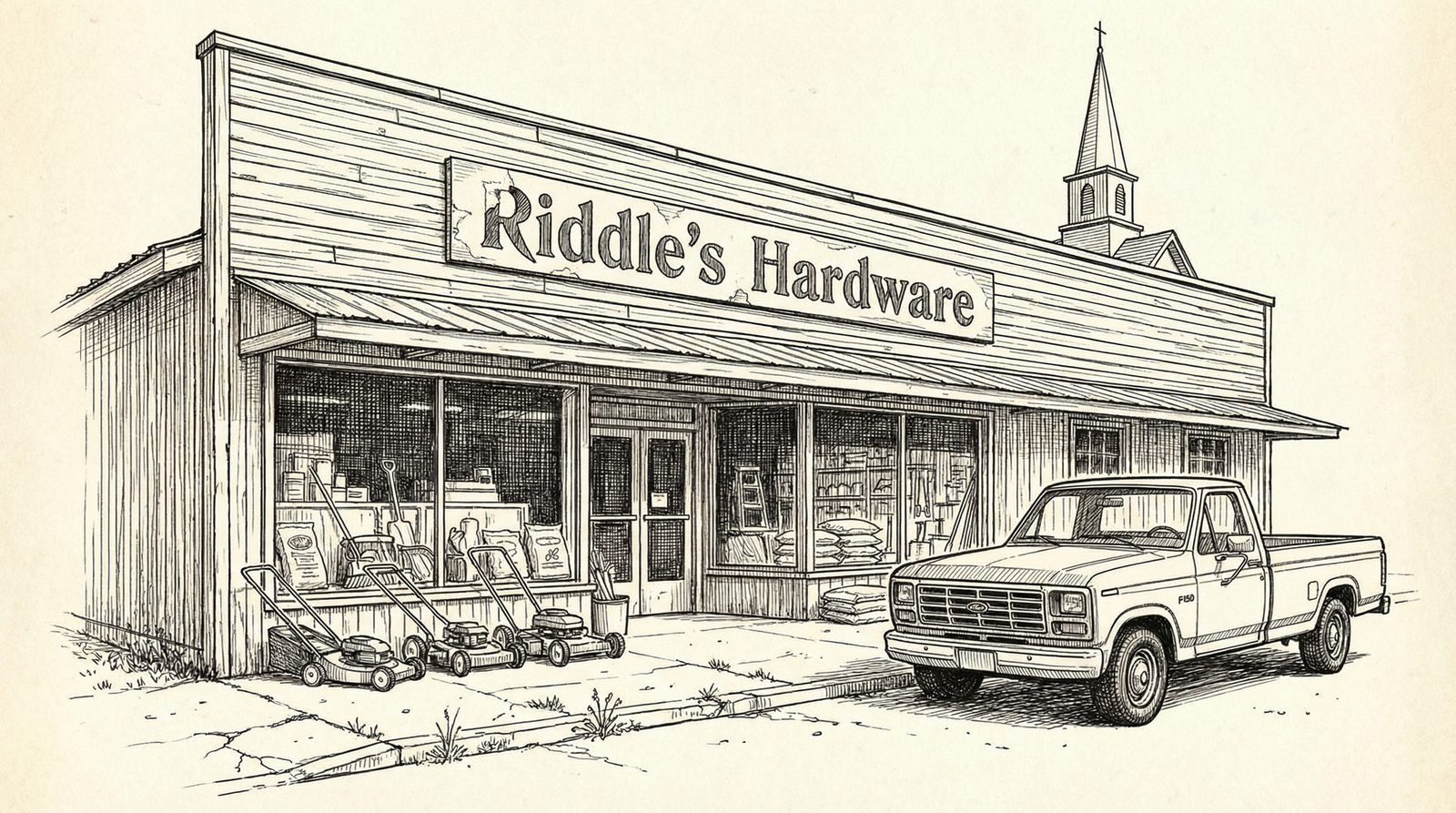
    Conceptual editorial illustration inspired by 'the book of reuben'

    CHARACTERS & RELATIONSHIPS

    Reuben Stilnick is flawed and fully human. King resists offering easy sympathy. Instead, she allows his growth to happen through discomfort and honest self-examination. The result is one of her most layered protagonists, shaped by regret yet still capable of change.

    The townspeople serve as both chorus and pressure. Some hold grudges. Others are quietly encouraging. Many simply observe him, waiting to see whether old patterns return. Their reactions help shape the arc of the story and give a sense of how deeply rooted the town’s memory can be.

    Characters from earlier books — especially those from Pearl and The Trap — appear again through Reuben’s perspective. These shifts offer new context and deepen the sense of interconnected lives that run through the entire Nodd’s Ridge cycle.


    CULTURAL CONTEXT & LEGACY

    When the novel was published in the mid-1990s, literary fiction was increasingly drawn toward character-driven stories about interior conflict and social belonging. King’s work fits neatly into that landscape. Her focus on small-town masculinity feels ahead of its time. She neither condemns Reuben nor excuses him. Instead, she examines how identity is shaped by environment, memory, and the long trail of choices people carry with them.

    Within the Nodd’s Ridge cycle, The Book of Reuben acts as a hinge. It reframes earlier events, clarifies emotional histories, and adds depth to the town’s mythology. Many readers consider it one of King’s strongest novels. It may not have the immediate heat of One on One or the intensity of Survivor, but it carries a quiet power that lingers long after the final chapter.

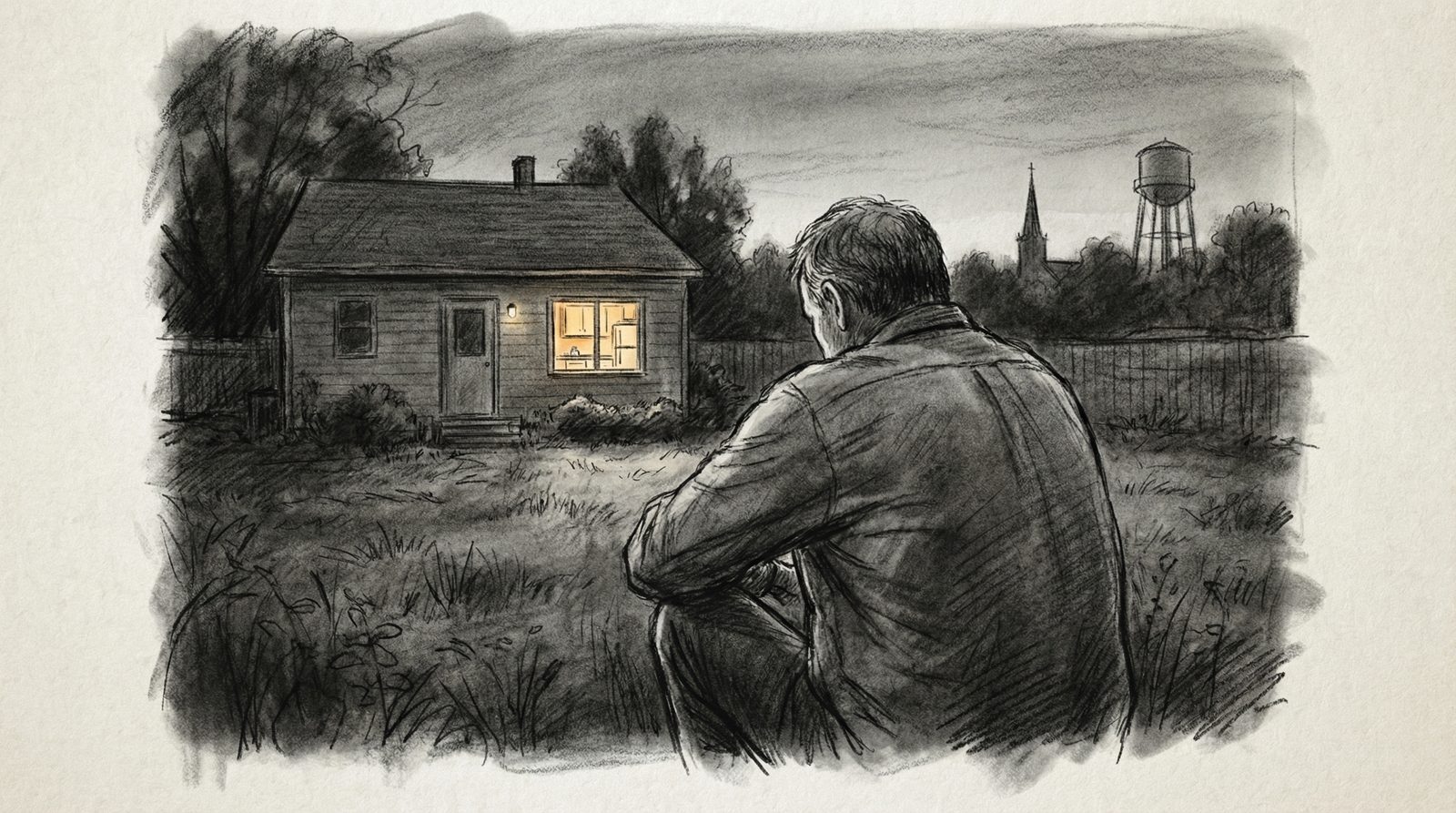
    Illustration of a core idea or motif from 'the book of reuben'


    IS IT WORTH READING?

    The Book of Reuben is essential for readers following the Nodd’s Ridge novels in sequence. It stands on its own, but the emotional layers deepen if you already know the town’s history and its people. Readers who enjoy introspective, character-driven fiction will find the novel particularly satisfying.

    Those looking for King’s most psychologically intense writing may gravitate toward Survivor, yet The Book of Reuben remains one of her most consistent and thoughtful works. It offers a portrait of a man trying to rebuild his life without shortcuts or dramatic transformations. Instead, the book focuses on the quiet, steady work of becoming someone better.


    SIMILAR BOOKS

    Readers who appreciate Reuben’s journey will find strong emotional continuity in Pearl, which expands the inner life of Nodd’s Ridge through a different lens. Outside King’s work, novels by Richard Russo offer similar explorations of flawed middle-aged men navigating small-town expectations.