
Genre: Literary Fiction

  • Silence as Survival

    Silence as Survival

    Motif Type: Psychological Survival
    Era Focus: 20th Century to 21st Century
    Primary Genres: Memoir, Literary Fiction, Trauma Narratives


    WHAT THIS MOTIF MEANS

    Silence as Survival is a pattern found in stories where staying quiet becomes a form of protection. The characters who live inside this motif do not withhold because they lack emotion. They withhold because speaking openly would invite danger, punishment, or collapse. Silence becomes shelter. Silence becomes strategy. Silence becomes the space where a person stores the parts of themselves that cannot yet be shown.

    This motif is not about passivity. It is about endurance. Many characters who inhabit this pattern are managing abusive homes, controlling partners, predatory industries, or social systems that punish honesty. Their quiet is not emptiness. It is preparation.

    Silence as Survival inline concept image

    HOW IT WORKS IN NARRATIVE

    Stories built around this motif often begin in emotional stillness. Characters say less than they feel. Their worlds are shaped by fear, obligation, or surveillance. Over time, the narrative reveals what the silence is hiding. Sometimes it cracks. Sometimes it is shed. Sometimes it transforms into voice.

    The emotional power of this motif rests on tension. What is unsaid becomes louder than what is spoken. Readers are asked to sit with the weight of suppressed truth, and the story’s arc becomes the movement from survival to expression.


    WHERE WE SEE IT IN OUR LIBRARY

    Silence as Survival appears across many of the works in your current cluster. Each character embodies the motif in a different way.

    • The Color Purple – Celie writes instead of speaking. Her silence protects her until she can reclaim her life.
    • Confessions of a Video Vixen – Karrine Steffans stayed quiet to survive dangerous men and industries.
    • The Woman in Me – Britney Spears was silenced legally and emotionally for more than a decade.
    • I’m Glad My Mom Died – Jennette McCurdy learned to stay silent to preserve her mother’s fragile approval.
    • Push – Precious survives by withdrawing inward and staying quiet inside abusive spaces.
    • Framing Britney Spears – The film exposes how Britney’s enforced silence became central to her control.

    The motif ties these narratives into a single emotional lineage. All these women, across time and genre, used silence as a tool when voice was not available.
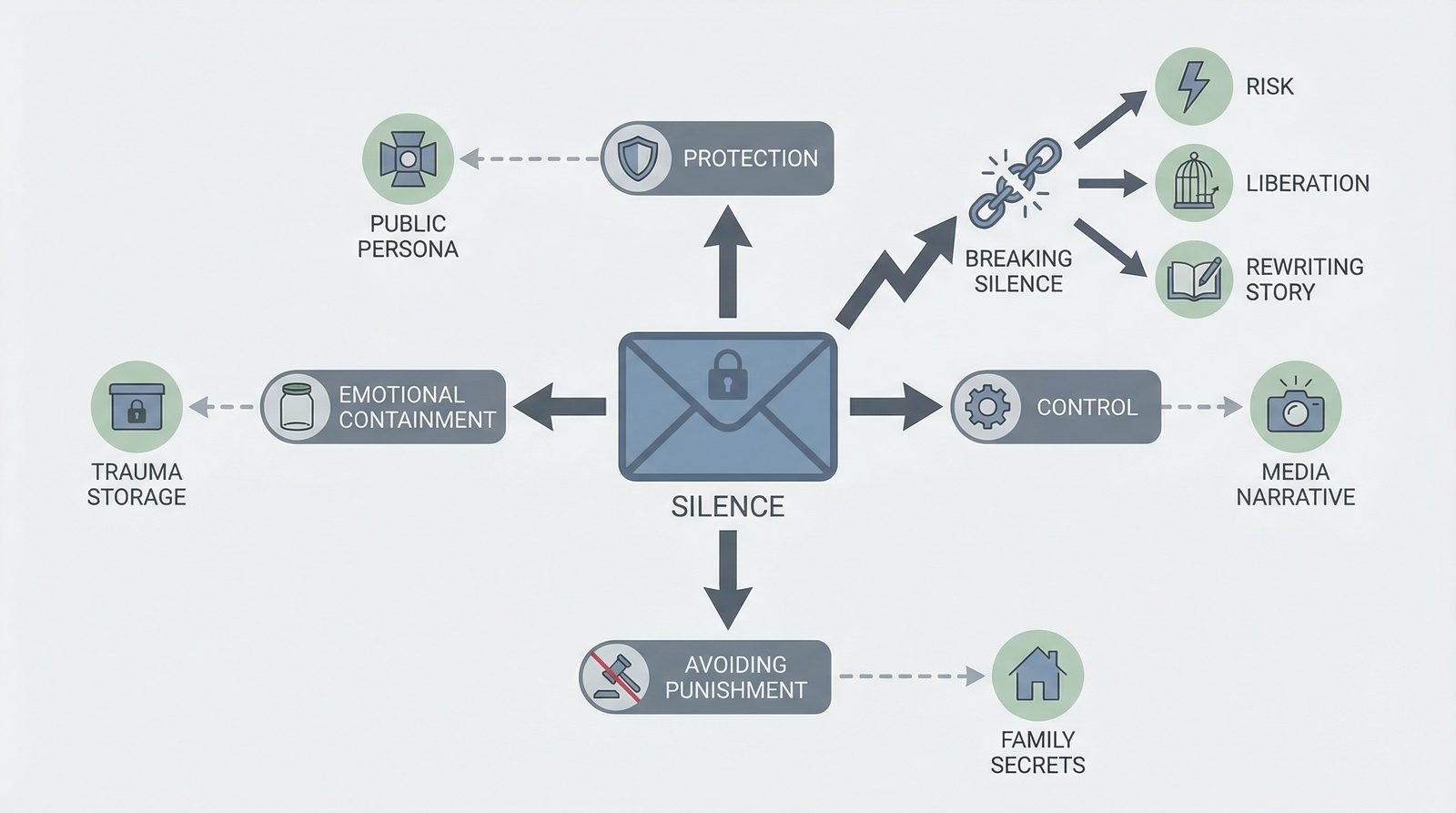
    Silence as Survival inline diagram image

    WHY IT MATTERS

    Silence as Survival is one of the most important motifs across memoir and trauma fiction because it reveals how characters adapt to harm. It allows readers to understand resilience without requiring performance. It also creates narrative tension that can evolve into empowerment, which makes it ideal for transformation arcs.

    In many of these stories, silence is not broken with a single speech. It changes slowly. It becomes a voice that belongs to the character, not the world around them.


    RELATED MOTIFS

    The Double Self
    Trauma as Inheritance
    Intimacy as Healing

  • Intimacy as Transaction

    Intimacy as Transaction

    Motif Type: Relationships and Power
    Era Focus: 20th Century to 21st Century
    Primary Fields: Memoir, Literary Fiction, Celebrity Studies


    WHAT THIS MOTIF MEANS

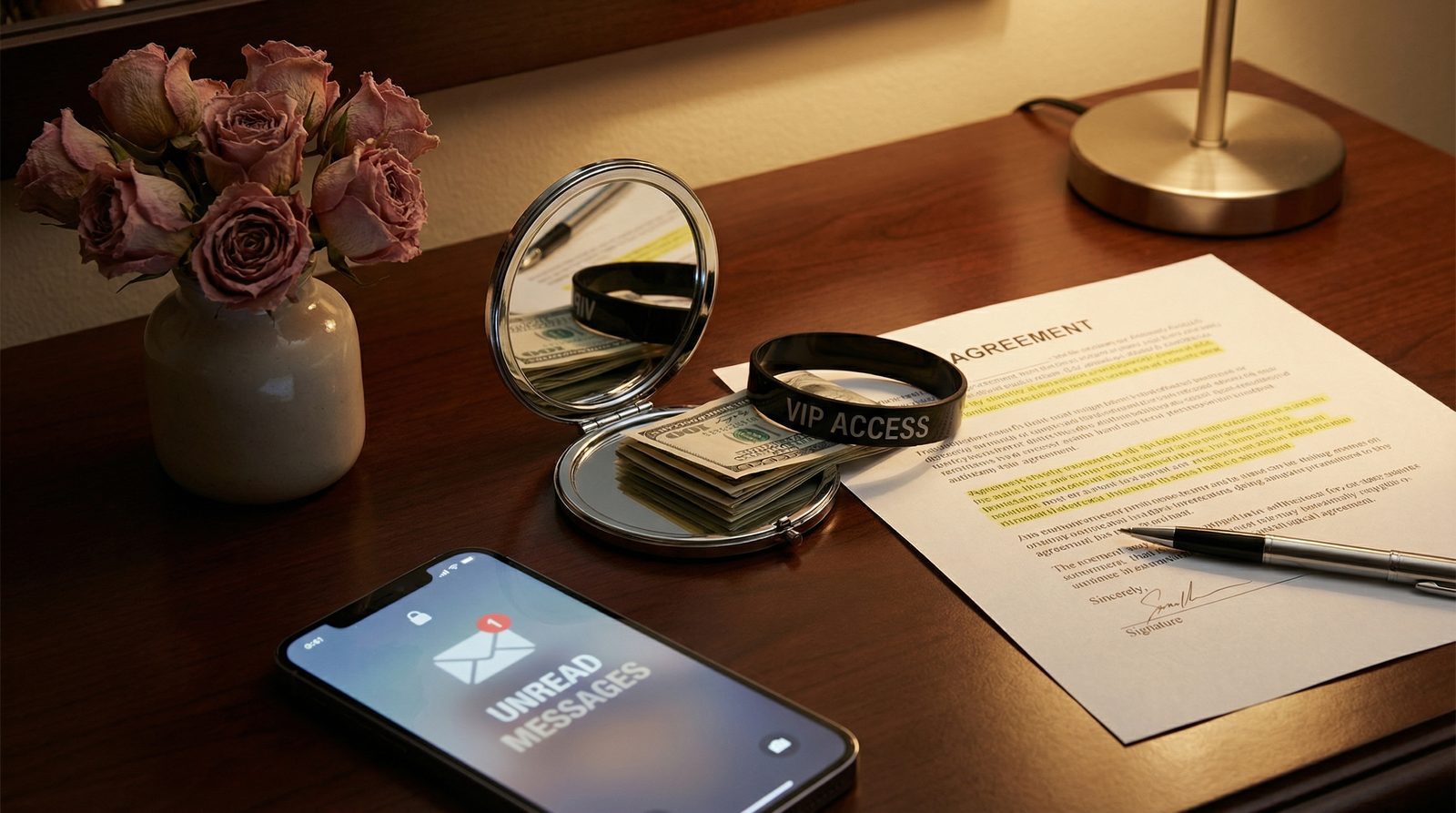
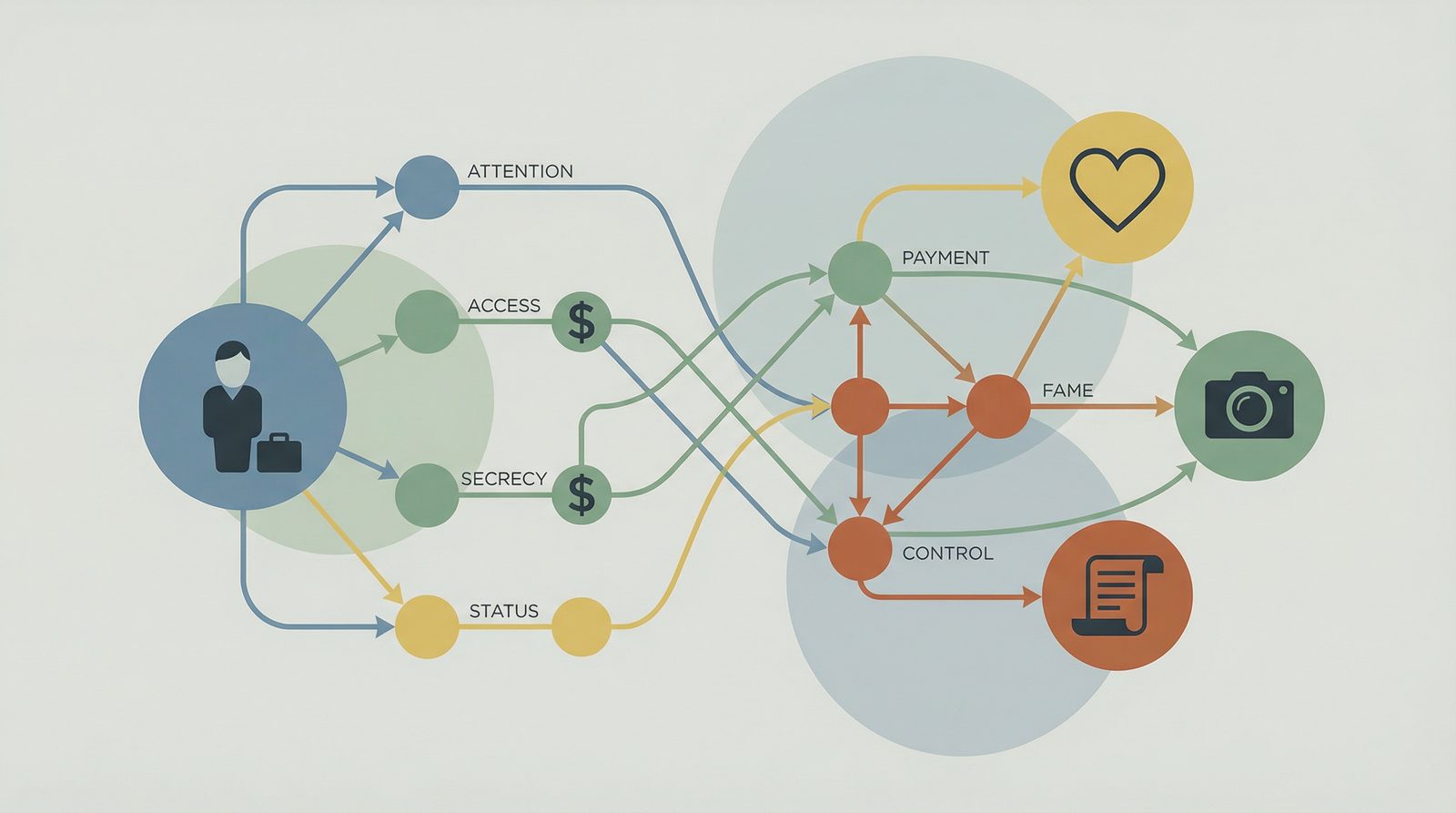
    Intimacy as Transaction appears in narratives where affection, desire, attention, or emotional closeness operates like currency. Characters learn that connection is not freely given. It comes with conditions. It can be traded, withheld, or bought. In these stories, relationships are shaped by power imbalance rather than mutual care.

    Sometimes the transaction is material. Sometimes it is emotional. Often it is invisible until the character steps back and recognizes the cost.

    Intimacy as Transaction inline concept image

    HOW IT WORKS IN NARRATIVE

    This motif often emerges when a character grows up inside a controlling home, navigates a predatory industry, or becomes involved with someone who uses intimacy as leverage. The narrative tension comes from how love and control intertwine. What appears affectionate is revealed to be conditional. What appears romantic is rooted in dominance.

    The arc usually involves awakening. A character realizes that love offered as reward or punishment is not love at all.

    Intimacy as Transaction inline diagram image

    WHERE WE SEE IT IN OUR LIBRARY

    • Confessions of a Video Vixen – Relationships operate as exchanges of fame, access, protection, or survival.
    • The Vixen Diaries – Affection and support shift based on status, desire, and leverage.
    • Open Book – Emotional intimacy becomes tied to validation, ego, and manipulation, especially in high-profile relationships.
    • The Woman in Me – Britney navigates relationships where affection is wielded as control.
    • I’m Glad My Mom Died – Parental love operates as reward and punishment, shaping Jennette McCurdy’s sense of worth.
    • Push – Precious experiences intimacy distorted by trauma and survival needs.

    The motif ties together stories of fame, abuse, childhood conditioning, and emotional manipulation.


    WHY IT MATTERS

    This motif is powerful because it reveals the mechanics behind relationships that otherwise look loving or glamorous. It exposes the cost of affection that has strings attached. It also speaks to agency. Characters who navigate this pattern often learn to redefine intimacy on their own terms.

    For readers, the motif helps illuminate patterns of emotional exploitation that are often invisible in real life.


    RELATED MOTIFS

    Power as Proximity
    The Commodified Body in Books
    The Double Self

  • The Double Self

    The Double Self

    Motif Type: Identity and Performance
    Era Focus: 20th Century to 21st Century
    Primary Genres: Memoir, Literary Fiction, Celebrity Studies


    WHAT THIS MOTIF MEANS

    The Double Self is a motif where a character lives in two identities at once. One identity is outer, shaped by performance, expectation, or fear. The other is inner, private, and often in conflict with the role they are forced to play. The tension between these two selves creates emotional dissonance that shapes the entire narrative.

    This motif often emerges in stories about trauma, fame, or strict social roles. When a character is not allowed to be whole, their inner and outer selves drift apart. That fracture becomes the emotional core of the story.

    The Double Self inline concept image

    HOW IT WORKS IN NARRATIVE

    The Double Self appears whenever survival requires performance. Characters may smile while hurting, obey while resisting, or play a role created by others. Over time, the gap between the two identities creates pressure. Some characters break. Some merge their selves. Some reclaim the inner identity through writing, connection, or rebellion.

    This motif thrives in stories where public image collides with private truth. It reveals how identity can be shaped by trauma, industry, or family.

    The Double Self inline diagram image

    WHERE WE SEE IT IN OUR LIBRARY

    This motif is central to many works in your cluster. It connects memoir, fiction, and celebrity narratives.

    • I’m Glad My Mom Died – Jennette McCurdy performs happiness for her mother while hiding fear and hunger.
    • The Woman in Me – Britney Spears performs confidence while privately collapsing under legal and emotional control.
    • Open Book – Jessica Simpson’s internal self fractures from her public persona as the “ditzy blonde.”
    • Confessions of a Video Vixen – Karrine Steffans embodies a sexualized public persona while holding a private history of trauma.
    • Push – Precious constructs a fantasy self as refuge from abuse.
    • Precious – The film visualizes Precious’s double identities through fantasy sequences.
    • Framing Britney Spears – The documentary reveals the gap between Britney’s public performance and private suffering.

    WHY IT MATTERS

    The Double Self is foundational to your library because it bridges memoir and fiction. It reveals how characters adapt to systems that deny them autonomy. It also deepens emotional empathy. Readers see the cost of living split between who you are and who you are allowed to be.

    Across your cluster, the motif functions as connective tissue between stories of abuse, fame, trauma, and reclamation. It is one of your highest value hubs.


    RELATED MOTIFS

    Silence as Survival
    The Commodified Body in Books
    Power as Proximity

  • Push (1996)

    Push (1996)

    By: Sapphire
    Genre: Literary Fiction, Contemporary Fiction
    Country: United States


    INTRODUCTION

    Push is one of those novels that feels less like a story and more like a raw record of survival. Told in the voice of Precious Jones, an illiterate, abused teenager in Harlem, the book refuses distance. It drops you into her world without a safety rail and lets you hear her language before anyone has corrected it. Underneath the shock is something quieter and deeper. This is a book about a girl who has been told she is nothing, trying to build a self out of whatever scraps of care she can find. The whole narrative belongs inside the motif of Survival Narratives, with a focus that is intimate instead of grand.

    It is not a comfortable read. It is an essential one.


    PLOT AND THEMES

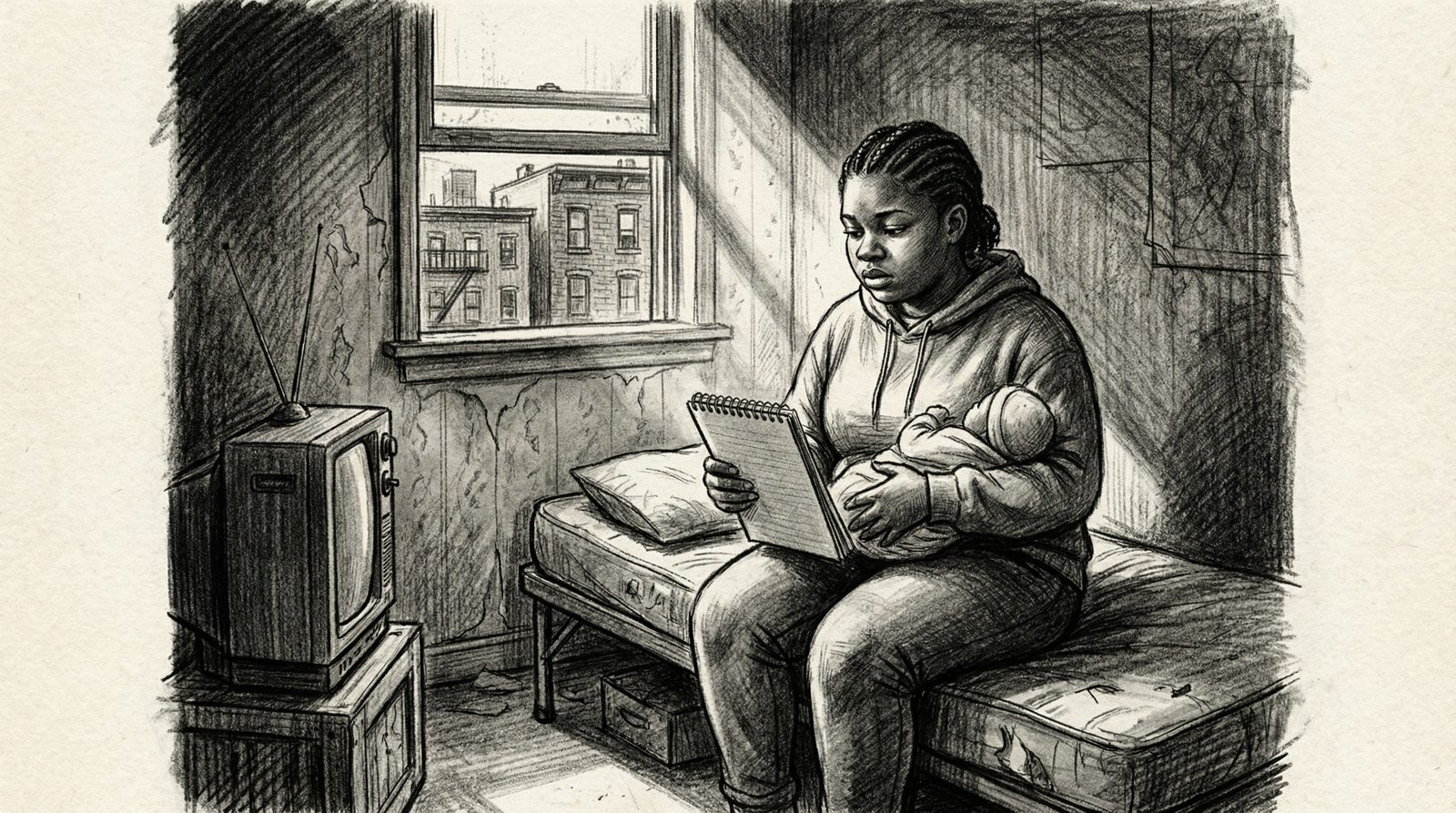
    Precious is sixteen, pregnant with her second child by her own father, and still in middle school when the novel begins. She lives with an abusive mother who beats her, starves her, and reminds her daily that she is worthless. School has failed her. Systems have failed her. The future, as she has been taught to imagine it, does not exist.

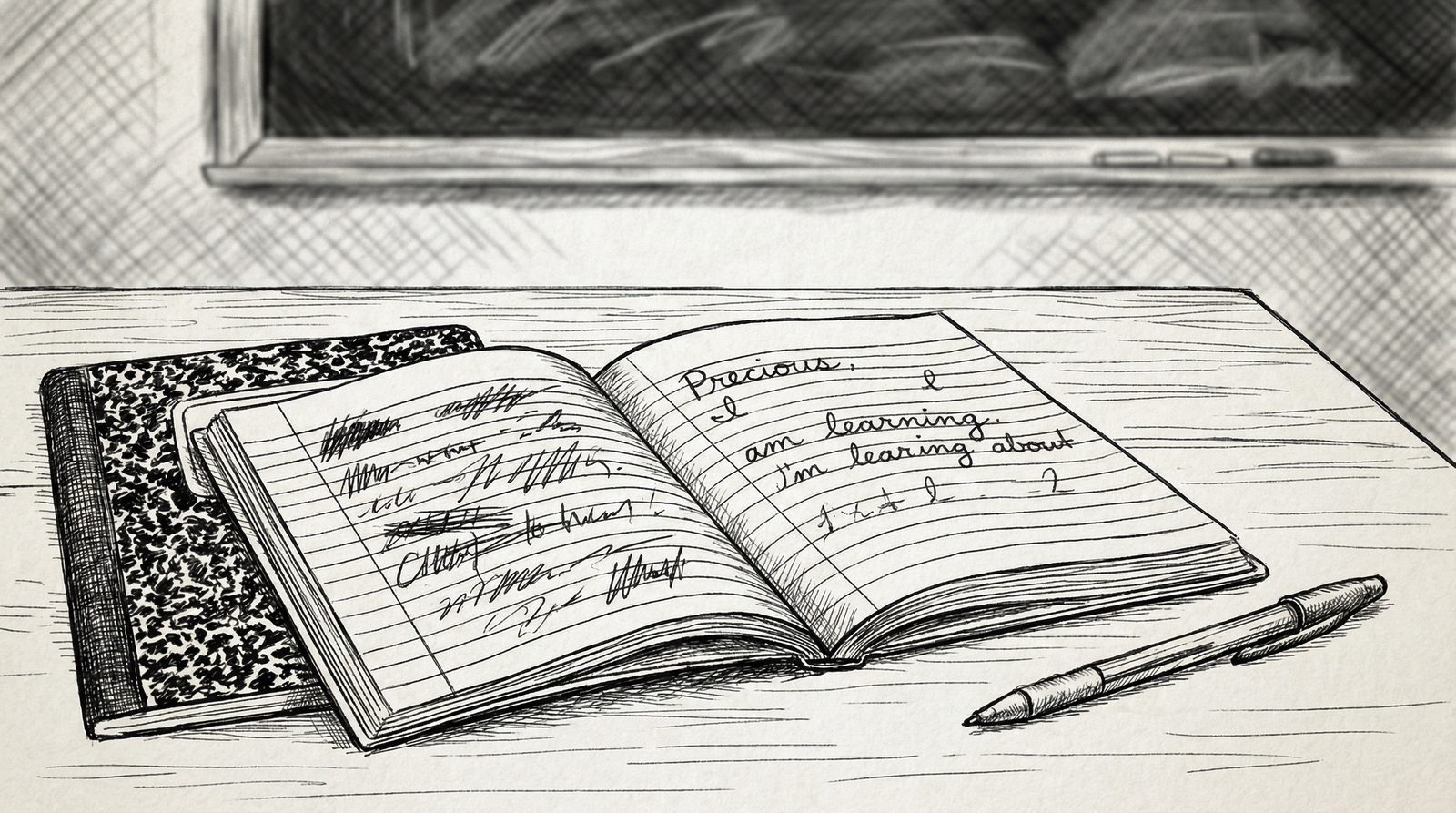
    The plot shifts when she is sent to an alternative school where a teacher, Ms Rain, starts to teach her to read and write. The narrative opens up as Precious does. Pages fill with her journal entries, her attempts at spelling and grammar, her small observations. Learning to write becomes more than a skill. It becomes an act of resistance that fits perfectly within the motif of Literacy as Liberation. The more she writes, the more she exists on her own terms.

    The novel is also a study of inherited harm. The violence Precious experiences is not presented as a single monster in the house. It is generational, systemic, and tied to poverty, racism, and neglect. That pattern aligns with the motif of Trauma as Inheritance. Her mother’s cruelty is horrifying, but the book never lets you forget the world that shaped her too.

    Running through everything is the question of who gets to be visible. Precious has been erased in almost every way. She is not expected to succeed, to finish school, or even to survive. The novel argues for her existence sentence by sentence.

    Conceptual editorial illustration inspired by 'push'

    STYLE AND LANGUAGE

    The most striking aspect of Push is its voice. The early chapters are written phonetically, reflecting Precious’s limited literacy. Words are misspelled, grammar is broken, and sentences tumble out with a rough rhythm that can be hard to read at first. That difficulty is the point. You are feeling the barrier she lives inside.

    As Precious learns, the language on the page gradually shifts. Spelling improves. Sentences become more complex. The movement is subtle but powerful. You experience literacy not as an abstract goal but as a physical change in how thought appears on the page. It is one of the clearest demonstrations of Literacy as Liberation in contemporary fiction.

    The style is unsparing but not cold. Sapphire allows anger, confusion, humor, and hope to coexist in Precious’s voice. The book does not tidy emotion. It lets contradiction stand. That choice avoids sentimentalizing her and instead treats her as a full person with a life beyond the worst things that have happened to her.


    CHARACTERS AND INTERIORITY

    Precious is one of the most memorable narrators in recent fiction. She is angry, funny, jealous, hopeful, cruel at times, and deeply empathetic at others. She is never presented as a symbol. She is a teenager trying to manage impossible circumstances. That complexity connects strongly with the motif of Survival as Identity. She is not just surviving events. Survival has become the core of how she understands herself.

    Her mother is terrifying, but Sapphire gives her moments of twisted vulnerability that prevent her from becoming a flat villain. Her harm is real and unforgivable. It is also part of a larger pattern of damage she never escaped.

    Ms Rain and the women in Precious’s class offer a different kind of presence. They are not saviors. They are witnesses. They listen, teach, and insist that Precious’s words matter. That insistence gives the book its quiet center.


    CULTURAL CONTEXT AND LEGACY

    When Push was published in the mid 1990s, it immediately drew strong reactions. Some readers saw it as exploitative. Others recognized it as a rare attempt to put a voice like Precious’s at the center of a literary novel. The debates themselves revealed how uncomfortable many people were with this kind of direct depiction of abuse, poverty, and systemic neglect.

    The book later became the basis for the film Precious, which brought the story to a wider audience and sparked new conversations about representation, respectability, and trauma on screen. In the broader landscape, Push stands alongside works like Confessions of a Video Vixen and I’m Glad My Mom Died, not because their plots are similar, but because they all insist that people written off by the culture deserve to narrate themselves.

    The novel has had a lasting influence on how trauma and literacy are portrayed in fiction, and it remains a touchstone for discussions of voice, agency, and the politics of who gets to be heard.

    Illustration of a core idea or motif from 'push'

    IS IT WORTH READING?

    Yes. Push is difficult, both in content and in its early language. It is also deeply humane. Readers who want neat catharsis may struggle with it. Readers interested in voice, power, and the way language can literally change a life will find it unforgettable.


    SIMILAR BOOKS

    Confessions of a Video Vixen (2005)
    I’m Glad My Mom Died (2022)
    Open Book (2020)
    The Woman in Me (2023)