
Genre: Philosophical fiction

  • Way Of The Peaceful Warrior – A Book That Changes Lives (1980)

    Way Of The Peaceful Warrior – A Book That Changes Lives (1980)

    INTRODUCTION

    Way Of The Peaceful Warrior A Book That Changes Lives (1980) by Dan Millman
    Spiritual memoir · generally under 300 pages · United States


    This is a book about a young man who has everything that is supposed to make him happy — talent, a scholarship, the prospect of success — and still lies awake at 3 a.m. Way Of The Peaceful Warrior opens on that insomnia and never fully leaves it. The rest is an argument about what to do with the ache underneath achievement.

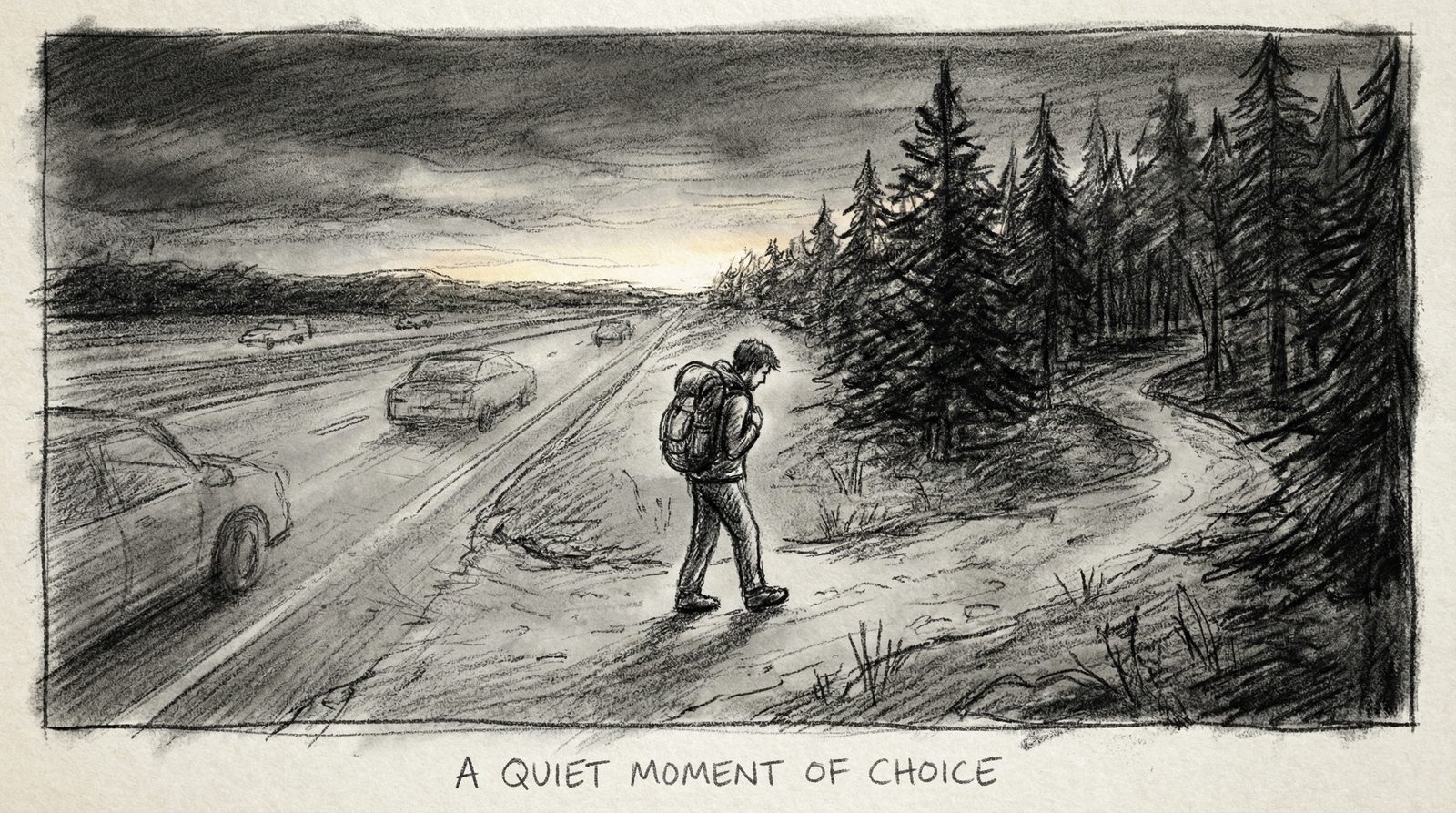
    The recurring motif of the gas station at night, with humming fluorescent lights and the smell of oil, becomes a threshold between ordinary striving and something harsher, more awake. The feel is restless, bruised hope: enlightenment here is not a glow but a stripping away. Millman’s encounter with the old attendant he nicknames Socrates begins a long unmaking, told with the intimacy of confession rather than the distance of doctrine.

    PLOT & THEMES

    The plot is deceptively simple. Dan, a star gymnast at UC Berkeley, wanders into an all-night gas station and meets Socrates, an ageless, sharp-tongued attendant who seems to know his thoughts. What begins as banter turns into a demanding apprenticeship. Socrates assigns humiliating exercises and strange ordeals — fasting, late-night runs, attention drills — designed to dismantle ego rather than build skill.

    The book’s central trope is the mentor as trickster sage. Socrates lies, withholds, and stage-manages lessons, pushing Dan toward direct experience instead of explanation. Dreams and visions recur — nightmares of falling, lucid memory sequences, threshold moments where fear becomes instruction — blurring the line between psychological breakdown and spiritual initiation.

    A severe injury pivots the story from athletic ambition to reckoning. The body’s failure becomes the forcing mechanism: it strips Dan of the identity built on performance and forces him to confront how he relates to pain, fear, and control. That’s why this book sits naturally beside Athletic Discipline As Spiritual Practice and Awakening Through Physical Injury in your cluster logic: training becomes inner work, and injury becomes the hard stop that makes the work non-optional.

    The ending focuses on a shift in awareness rather than a trophy. The “win” is internal: the gradual discovery that presence matters more than applause, and that the next moment is always the real arena. Compared with the film adaptation, which tends to compress and dramatize the arc into a neater sports-redemption shape, the book keeps returning to relapse and stubbornness, insisting that the path is spiral-shaped, not linear.

    PROSE & NARRATIVE STRUCTURE

    Millman uses a straightforward first-person memoir frame but keeps tilting it toward fable. The technique blends retrospective commentary with present-tense immediacy: older Dan reflects on younger arrogance, then drops the reader into a late-night run through fog or a silent attention drill in the gas station’s back room. The prose is clean and plain, which makes sudden visionary passages hit harder.

    Structurally, the book moves in spirals. Each apparent breakthrough is followed by regression. Dan has a moment of stillness, then falls back into old patterns of striving and anxiety. Chapters often end on a line of Socratic dialogue or a small shock, keeping the pacing brisk even when the text becomes didactic. Sensory detail — chalk dust, soreness, fluorescent hum, fog, exhaustion — keeps the spiritual language anchored in the body.

    Conceptual editorial illustration inspired by 'Way Of The Peaceful Warrior A Book That Changes Lives (1980)'

    CHARACTERS & INTERIORITY

    Dan is the classic seeker archetype. His interior monologue is crowded with comparison: against teammates, against imagined future versions of himself, against the serene ideal he projects onto Socrates. That constant self-measurement is the psychological engine of the book. We watch him resent the mentor, idolize him, then see through him — only to realize the real struggle is fear of ordinariness.

    Socrates is less a fully rounded character than a deliberately constructed mirror. He shifts from gruff mechanic to almost otherworldly presence, appearing in dreams and unlikely places. Millman still slips in humanizing details — tea in the cluttered back room, small acts of quiet service — to keep the figure from dissolving into pure symbol. Joy functions as a softer counterpoint: the teaching embodied without the mentor’s drama, a glimpse of ease Dan wants but cannot yet live.
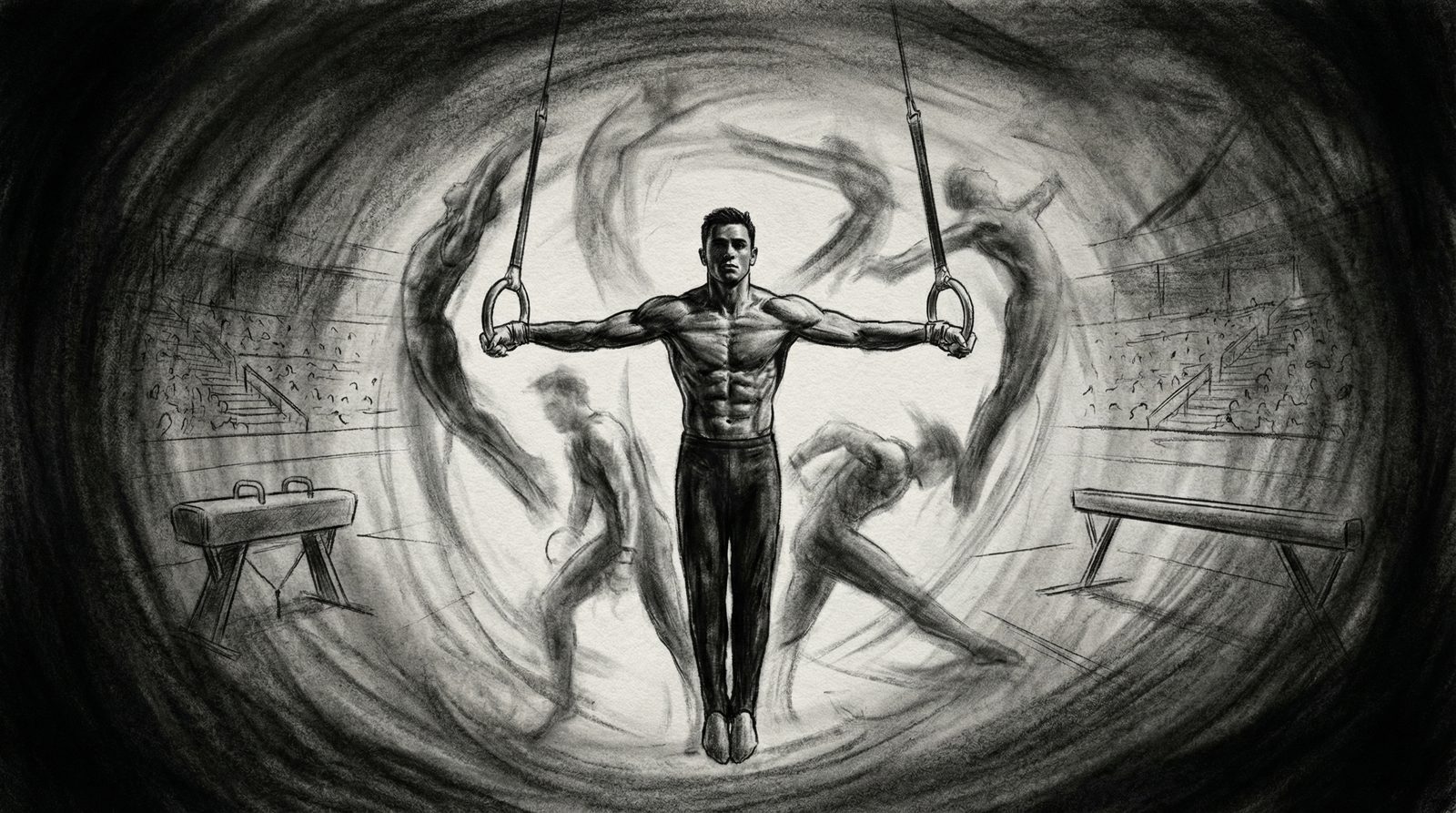
    Illustration inspired by 'Way Of The Peaceful Warrior A Book That Changes Lives (1980)'

    LEGACY & RECEPTION

    Since 1980, Way Of The Peaceful Warrior has lived a double life: modestly reviewed on release, then passed hand to hand in gyms, yoga studios, and college dorms. It occupies a similar shelf-space to other late-20th-century “mind-body” books, but with a distinctly athletic frame. The book’s continued circulation owes a lot to its refusal to end in easy victory. It offers sustained awareness rather than a career-defining moment, and that choice has made it both beloved and frustrating depending on what a reader expects.

    IS IT WORTH READING?

    It depends on your tolerance for earnestness and didactic dialogue. If you want a tightly plotted sports narrative, you’ll likely be frustrated. If you’re interested in how ambition corrodes from the inside and how a life might be rebuilt around presence rather than achievement, it still has bite. Read it not as a manual but as one flawed person’s record of stumbling toward a different way of being.

    TRIVIA & AUTHOR FACTS

    Millman draws heavily from his own background in collegiate athletics. Many readers treat Socrates as a real mentor figure filtered through spiritual allegory, and Millman has described the character as composite rather than simple reportage. The subtitle “A Book That Changes Lives” was not part of the original small-press edition and was added as the book gained a following through reissues.

    SIMILAR BOOKS

    If this resonates, you may prefer other narratives where spiritual inquiry is grounded in bodily discipline and everyday struggle. The strongest neighbors tend to share the same premise: transformation is not a vision; it’s a practice lived under pressure.

    DISCOVERABILITY & LINKS

  • The Laws Of Spirit (1995)

    The Laws Of Spirit (1995)

    INTRODUCTION

    The Laws Of Spirit (1995) by Dan Millman
    Spiritual fable · 108 pages · United States


    The Laws Of Spirit is a quiet, walking book. A nameless traveler hikes into the mountains, exhausted by the noise of late 20th-century life, and meets an ageless woman who introduces herself simply as the Sage. Over the course of a single day and night, they walk ridgelines, cross streams, and talk through ten laws that supposedly govern inner freedom. The mood is gentle but insistent, a stripped-down clarity rather than mystical fireworks.

    This is not a novel in the conventional sense. It’s a spiritual allegory that borrows the motif of pilgrimage and pares it down to two voices and a trail. Millman uses the landscape itself — wind in the pines, moon on snowmelt, the physical difficulty of footing — as a third presence, a reminder that the answers here are meant to feel elemental rather than esoteric.

    PLOT & THEMES

    The “plot” is deliberately skeletal. A hiker escapes into the mountains and meets the Sage in a high meadow. She leads him along a simple circuit through forest, river gorge, and a small lakeside town, using each stop to embody one of the ten laws: Balance, Choice, Process, Presence, Compassion, Faith, Expectation, Integrity, Action, and Surrender. The trope is familiar — wise guide leading a seeker through staged lessons — but Millman keeps the scale intimate. There are no miracles, only small, charged encounters.

    What makes the book work is how it anchors abstraction in physical friction. A rickety bridge becomes the Law of Balance. A diner becomes the Law of Compassion without sentimentality. A fire lookout layered with decades of carved names becomes the Law of Process: lives as trace, not as finish line. The central motif is pilgrimage as inner cartography: every turn in the trail mirrors a shift in the traveler’s orientation to choice and fear.

    Unlike cosmology-heavy spiritual books, The Laws Of Spirit stays practice-forward. It frames the laws as ways of responding to layoffs, divorce, illness, and ordinary adulthood rather than as metaphysical claims you must accept. By the end, the Sage makes it explicit: the laws do not guarantee comfort; they describe how meaning can be made inside uncertainty.

    The ending is unflashy but decisive. After a night conversation under meteor showers, the Sage walks the narrator back to the trailhead at first light and disappears into the trees without explanation. The traveler drives back toward the city, traffic thickening, repeating the Law of Action to himself and choosing to change his work and relationships rather than escaping back to the mountains again.

    PROSE & NARRATIVE STRUCTURE

    The book uses a simple frame narrative: an older narrator recalling a formative encounter years earlier. This lets Millman alternate between the immediacy of the hike and reflective distance. The prose is plainspoken and spare. Sentences are short, verbs concrete. When Presence is introduced beside a river, the description stays tactile: pine scent, bootlaces, the glint of water through branches.

    Each chapter is structured around a single law with a consistent pattern: encounter, metaphor, integration. That modular structure makes the book easy to re-enter; you can open to Integrity or Surrender and get a complete arc in miniature. The didacticism is softened by unhurried pacing and the steady return to dirt, sky, weather, and breath.

    Conceptual editorial illustration inspired by 'The Laws Of Spirit (1995)'

    CHARACTERS & INTERIORITY

    The narrator is a seeker archetype: competent enough in ordinary life but inwardly frayed. We learn scraps — a recent breakup, work that pays but feels hollow, a sense of wasted time — and his interiority is carried through resistance followed by recognition. He bristles, then admits the Sage is right. That pattern becomes the psychological rhythm of the book.

    The Sage is a classic mentor archetype with a wry, almost grandmotherly edge. She teases, contradicts herself, and occasionally uses her own impulsiveness to illustrate choice. Her backstory appears only in quick glimpses, keeping her human enough to feel present while still operating as a parable figure. Minor characters are thin but functional mirrors that force the traveler to notice reflex judgment and fear in small, everyday interactions.

    Interiority here is less about deep excavation than about catching micro-moments of choice. The book insists those moments are the true sites of transformation: not the mountaintop vision, but the second you decide how to respond.

    Illustration inspired by 'The Laws Of Spirit (1995)'

    LEGACY & RECEPTION

    The Laws Of Spirit arrived in the mid-1990s, when spiritual memoirs and parables were thick on bookstore shelves. It never reached the mass cultural saturation of blockbuster spiritual adventure, but within Millman’s readership it became a pocket companion: often handed to friends going through divorce, burnout, or a crisis of meaning. Its brevity and lack of institutional religion make it portable across belief systems, which has helped it stay quietly in circulation.

    Its ending — the Sage simply walking away and the traveler returning to traffic — is a quiet rebuke to spiritual escapism. The point is not to stay on the mountain. The point is to carry the laws into the mess of ordinary days.

    IS IT WORTH READING?

    If you’re looking for dense theology or complex plotting, no. This is closer to a long, thoughtful walk with an older friend than to a conventional narrative. Its value lies in how cleanly it frames familiar dilemmas. The structure is easy to revisit, the language accessible, and the imagery — bridges, rivers, ridgelines — simple enough to stick.

    For readers allergic to jargon but open to reflective, quietly directive prose, this slim book can land with surprising force. For others, it may feel like a gentle echo of insights they’ve already met elsewhere.

    TRIVIA & AUTHOR FACTS

    Dan Millman is best known as a former world-champion gymnast and coach who turned to writing and teaching about personal growth. The Laws Of Spirit sits mid-bibliography, after more autobiographical work and before later, more systematized teaching formats. The book’s compact length was intentional: designed to be read in one sitting or carried on an actual hike.

    SIMILAR BOOKS

    If this book resonates, you may prefer other spare, journey-based spiritual narratives where a single encounter reshapes how life is lived afterward. The closest neighbors tend to use pilgrimage and mentorship as structure, keeping spiritual insight grounded in ordinary decision-making rather than in spectacle.

    DISCOVERABILITY & LINKS

  • Lila An Inquiry Into Morals (1991)

    Lila An Inquiry Into Morals (1991)

    INTRODUCTION

    Lila: An Inquiry Into Morals (1991) by Robert M. Pirsig
    Philosophical fiction · 409 pages · United States


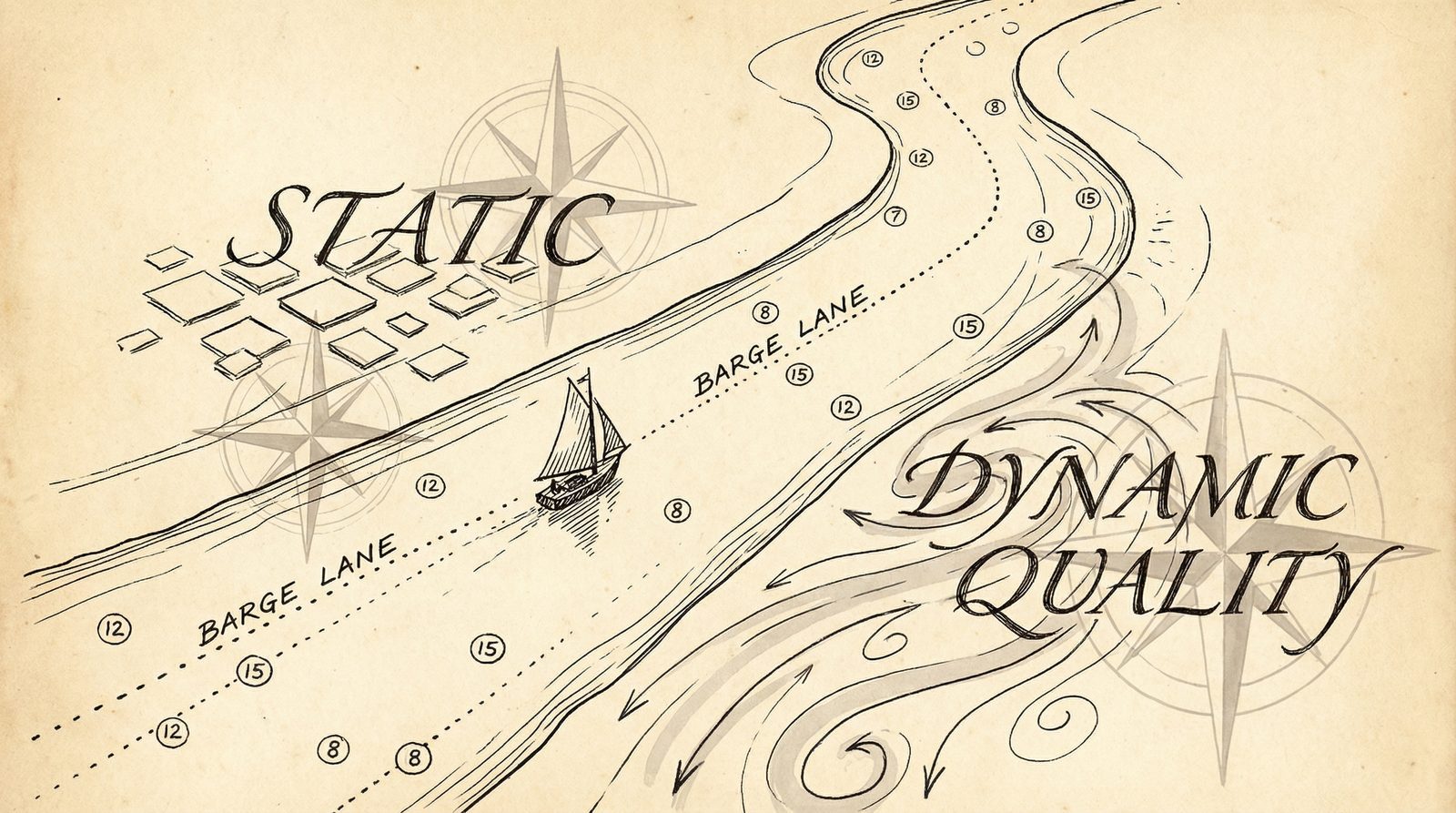
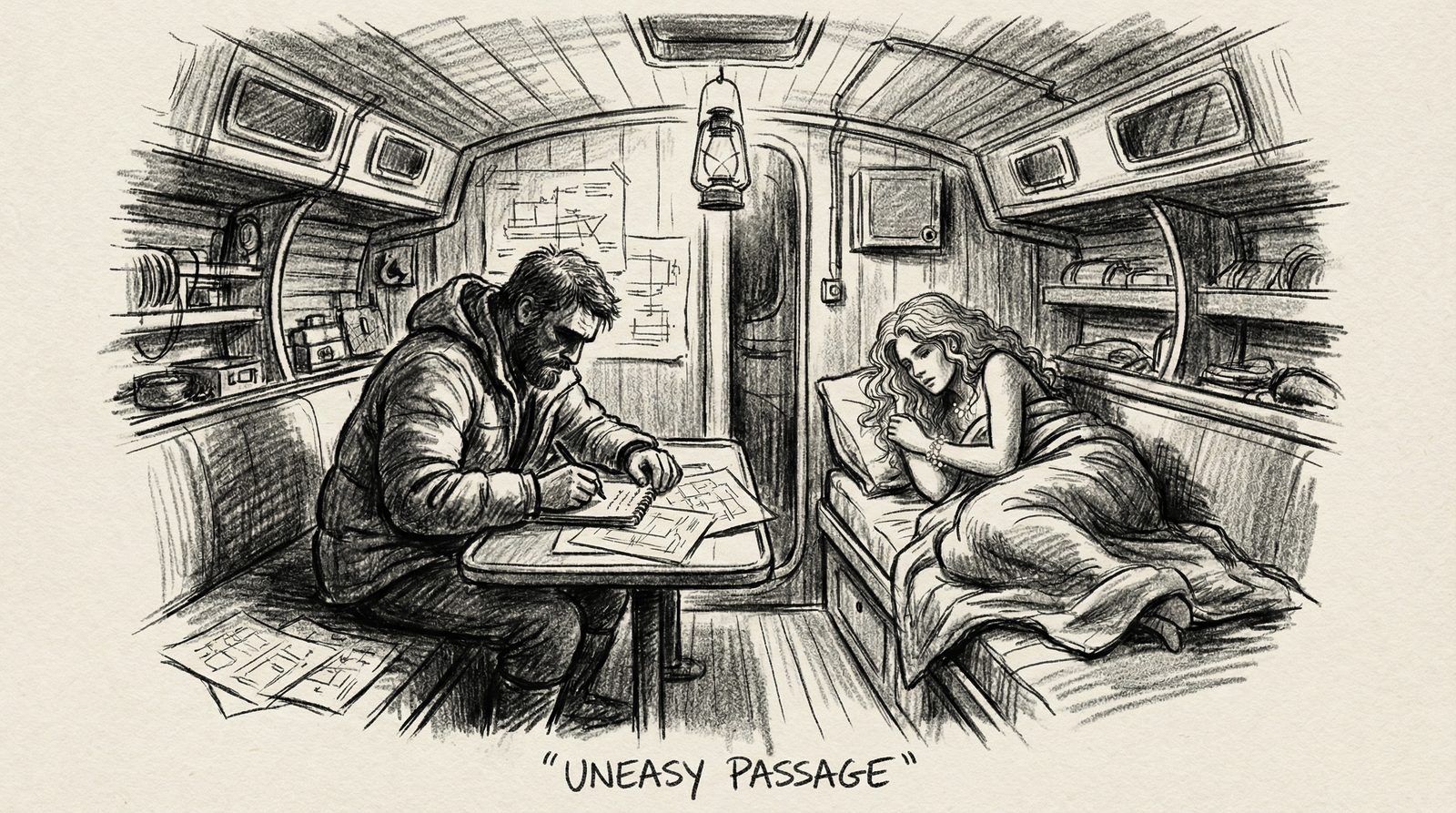
    Lila: An Inquiry Into Morals is a river book that refuses to let metaphysics float free. Pirsig trades the open highways of Zen And The Art Of Motorcycle Maintenance for the cramped cabin of the sailboat Phædrus, drifting down the Hudson in fog, barge traffic, and shifting currents. The setting isn’t decorative. Navigation becomes the narrative engine: every time Phaedrus’s thought climbs into conceptual “high altitude,” the river imposes a somatic veto — a buoy in the mist, a wake cutting the hull, a near-collision that forces the mind back into the stubborn fact of the world.

    The feel is uneasy intimacy. Close quarters with Lila create constant embodied friction: mildew, clutter, fatigue, cigarettes, jewelry clinking in the dark. Then Pirsig opens the frame into abstraction and the river widens into argument. The book’s basic rhythm is interleaved claustrophobia and breadth — cabin detail followed by metaphysical sweep — and the reader is meant to feel the oscillation rather than merely understand it.

    PLOT & THEMES

    Phaedrus takes the Phædrus downriver toward New York, picks up Lila in a Kingston bar, and tries to finish his Metaphysics of Quality while the relationship deteriorates. The road-trip-as-inner-journey trope is reworked into a river passage where each stop triggers another argument about value. On the surface it reads like movement. In practice it reads like containment: the boat is a closed room in motion.

    Pirsig’s Metaphysics of Quality divides reality into static patterns (inorganic, biological, social, intellectual) and Dynamic Quality, the live edge of change. The river belongs to the inorganic register — physics, weather, currents, steel barges — and it keeps humiliating intellectual ambition. Charts and field notes represent static intellectual patterning, while the river keeps insisting on territory: the thing that cannot be fully captured by categories.

    Lila is the destabilizing test case. Her life — poverty, trauma, volatility, custody loss, breakdown — refuses to behave like an idea. Phaedrus repeatedly tries to read her through the MOQ hierarchy, but the book keeps showing how dangerous that becomes in practice. The closer he gets to “explaining” her, the less able he seems to care for her as a person. The intellectual pattern starts to eat the human problem it claims to solve.

    The ending makes the book’s moral logic unavoidable. Lila is institutionalized after a breakdown in a Manhattan hotel. Phaedrus walks away alone, shaken but convinced his system can account for what happened. This is not merely cold behavior. Pirsig forces the reader to see that, inside the MOQ, the Intellectual Pattern (the book, the system, the explanation) is evolutionarily “higher” than the Social/Biological Pattern (Lila’s welfare). Phaedrus enacts the brutal hierarchy he argues for. The disquiet is structural, not incidental.

    PROSE & NARRATIVE STRUCTURE

    Pirsig writes in plain, reportorial sentences that suddenly tip into long interior essays. A near-collision in fog becomes a pivot into subject-object metaphysics. A cigarette burn and a silence in the cabin become an opening into anthropology and moral codes. The book’s technique is not “plot with digressions.” It is an argument that keeps getting interrupted by the physical world, then returning to the argument with increased urgency.

    This is where the book becomes a tight node in the “Zen–Quality–Craft” cluster. In Zen Mind, Beginner’s Mind, “gaining mind” is the impulse to turn practice into achievement: to climb toward an outcome and call that enlightenment. In Lila, Dynamic Quality is the force that cannot be possessed or optimized — the live edge the MOQ tries to protect. The friction is the same in two vocabularies: beginner’s mind resists grasping, while Dynamic Quality resists capture. Pirsig’s tragedy is that the MOQ is built to honor the ungraspable, yet Phaedrus keeps trying to grasp Lila as a pattern.

    The narrative braid is deliberate. Cabin claustrophobia keeps puncturing metaphysical flight. River breadth keeps tempting the mind into system-building. The reader is meant to feel the oscillation as a training exercise: watch the mind reach for explanation, then watch reality pull it back by force.

    Conceptual editorial illustration inspired by 'Lila: An Inquiry Into Morals (1991)'

    CHARACTERS & INTERIORITY

    Lila is written as bruised volatility: introduced as a bar pickup, then gradually revealed as a life shaped by exploitation and abandonment. Phaedrus often treats her as a “case” rather than a person, and the book never fully escapes that objectifying lens. Yet her sudden tenderness, rage, and moments of eerie clarity keep breaking the theoretical frame. She is the human cost the system keeps trying to metabolize.

    Phaedrus is the obsessed philosopher who has survived one metaphysical collapse and now risks repeating it. His interiority is a dense machine of categories and self-justification. The book’s emotional tension comes from watching him do something intellectually impressive while failing at something morally basic: protecting the person beside him.

    LEGACY & RECEPTION

    Lila arrived nearly two decades after Zen And The Art Of Motorcycle Maintenance, and many readers expecting another meditative road memoir were blindsided. It was respected more than loved. The metaphysics is denser, and the ending is abrasive enough to feel like a challenge thrown at the reader: if you accept the system, can you accept what the system just did?

    Its reputation has become quieter and more cultlike than Zen’s. For readers who return to it, the book often functions as the shadow text of the Metaphysics of Quality: the place where the system is not inspirational but dangerous, not a bridge to meaning but a hierarchy with teeth.

    IS IT WORTH READING?

    Lila is worth reading if you’re willing to trade narrative smoothness for intellectual risk and moral discomfort. Expect long stretches of argument punctuated by raw scenes of coercion, exhaustion, and breakdown. If you need tidy arcs or comforting resolutions, it will likely leave you stranded in the fog. If you want to see a metaphysical system tested against one damaged life until both begin to crack, it is singular.

    Illustration of a core idea or motif from 'Lila: An Inquiry Into Morals (1991)'

    TRIVIA & AUTHOR FACTS

    Pirsig reportedly worked on Lila for over a decade. The boat name Phædrus echoes the name he used for his earlier pre-breakdown self, underlining how personal this inquiry is. Several episodes draw on his own sailing experience, including tense navigation among barge traffic on the Hudson.

    DISCOVERABILITY & LINKS

  • Siddhartha (1922)

    Siddhartha (1922)

    INTRODUCTION

    Siddhartha (1922) by Hermann Hesse
    Philosophical fiction · 134 pages · Germany / India


    Few twentieth-century novels feel as hushed and inward as Siddhartha. On the surface it is a slim parable about a Brahmin’s son wandering through an imagined ancient India. In practice it reads like a record of spiritual burnout: a man exhausting every available path until the very desire for instruction starts to feel like another trap.

    Hesse follows Siddhartha from the austerity of the Samanas to the scented rooms of Kamala and the counting-house of Kamaswami. The movement is cyclical rather than heroic. He leaves, he returns, he repeats, and each return costs him something. The book offers almost no how-to guidance. What it offers is a mood, the loneliness of walking at dusk, hearing a river in the distance, and suspecting that whatever answer you are chasing is already flowing past you, indifferent and eternal.

    PLOT & THEMES

    The plot is deliberately simple. Siddhartha, a gifted Brahmin youth, abandons his father’s house to join the wandering ascetics, the Samanas. After years of self-mortification he encounters Gotama, the historical Buddha, at Jetavana Grove. Siddhartha recognizes Gotama’s serenity, yet refuses to become his disciple. His reasoning is blunt: wisdom cannot be taught, only lived.

    This decision splits the story in two. Govinda chooses devotion and stays behind. Siddhartha chooses experience and turns toward the world. He learns sensuality and tenderness with Kamala, and the mechanics of ambition with Kamaswami. He becomes rich, bored, spiritually numb. The recurring dream of a dead songbird in Kamala’s golden cage captures the cost of this phase: the soul suffocating inside comfort.

    Eventually he flees, collapses beside a river, and considers suicide. Vasudeva the ferryman rescues him, and the river becomes the book’s true teacher. Siddhartha learns to listen to its many voices until they gather into one sound, one unity. The revelation is not ecstatic. It is quiet, almost ordinary. That is part of the book’s severity.

    Late in the novel, Kamala dies during a pilgrimage and Siddhartha becomes responsible for their son, who is angry, entitled, and desperate to escape the river life. When the boy steals the boat and disappears upstream, Siddhartha is forced to face attachment in its rawest form. The loss is not redeemed. It is simply endured. By the ending, when Govinda visits the older Siddhartha and touches his forehead, Govinda receives the vision: countless faces, lives, sins, loves, and deaths flowing together as one present moment. Siddhartha has become what he sought, not by collecting teachings, but by surrendering the need to stand outside life and judge it.

    PROSE & NARRATIVE STRUCTURE

    Formally, Siddhartha is a parable stitched from brief, titled chapters, each a station on the way. The structure is cyclical. The book opens with Siddhartha and Govinda together, and it ends with Govinda returning to Siddhartha, but with the roles quietly reversed. The looping design mirrors the river’s logic: repetition that is not stagnation, return that is not failure.

    The prose is incantatory in its simplicity. Hesse avoids rich description of India. Aside from a few concrete markers, banyan trees, a grove, a town of warehouses, the world remains lightly sketched, like a stage set for an inner drama. That spareness creates a sense of suspension, as if the story occurs outside ordinary clock time.

    The narrative voice stays close to Siddhartha’s consciousness without becoming stream-of-consciousness. Years can vanish in a paragraph, especially during his long sleep inside wealth and routine. By contrast, moments of crisis, the night by the river, the son’s escape, are rendered slowly, almost ritually. This pacing gives the novel its quiet emotional peaks: not big plot turns, but the internal sensation of something breaking and then settling into a new shape.

    Conceptual editorial illustration inspired by 'Siddhartha'

    CHARACTERS & INTERIORITY

    Siddhartha is written as the archetype of the seeker, and Hesse is unsparing about the arrogance baked into that stance. As a youth he judges his father’s rituals. Later he dismisses the Samanas and even Gotama’s teaching as something meant for other people. The novel treats this elitism as part of his flaw, not as spiritual superiority.

    Govinda functions as a counterweight: devoted, faithful, willing to follow. His return decades later frames one of the book’s central tensions, whether devotion or independence leads further. Kamala is not merely a symbol of temptation. She teaches Siddhartha how to be present with another person, how to listen, how to soften. The intimacy is practical, not sentimental, and it gives the novel one of its most human textures.

    Vasudeva is the book’s quiet center. He speaks little and listens deeply, modeling the possibility of learning without making a system. His withdrawal into the forest once Siddhartha has “heard” the river fully is one of the novel’s most moving gestures: the teacher stepping away so the student can simply be. Even minor figures, Siddhartha’s father waiting by the door, the son smashing bowls in rage, are drawn with just enough inner shading to feel like real mirrors rather than cardboard allegory.

    LEGACY & RECEPTION

    Published in 1922, Siddhartha found a modest audience in German and later became a cult favorite in the 1960s among Western readers disillusioned with institutional religion. Its fusion of Hindu and Buddhist imagery with a distinctly European crisis of individuality gave it unusual reach. Many readers approached it as a spiritual guide. Hesse treated it more like a poetic confession: an attempt to write his own divided temperament into a clear, mythic shape.

    Adaptations often fail because they try to externalize what is essentially inward. They linger on scenery or eroticize Kamala, while the novel keeps circling back to the stubborn, mostly wordless change in awareness. The ending is strikingly unspectacular. The fireworks occur inside Govinda’s perception. That quietness is why the book still matters. It insists that the decisive revolutions of a life may be invisible to everyone else.

    IS IT WORTH READING?

    Whether it is for you depends on your tolerance for quiet. There is almost no conventional suspense, and the aphorisms can feel naïve if you want rigorous philosophy. But read as a story of one person exhausting every available path, ritual, asceticism, pleasure, work, fatherhood, and still needing to sit by a river and listen, it has a durable power.

    If you are drawn to questions of meaning but allergic to sermons, this short novel is worth a slow afternoon. Its images linger: the bird in the cage, the river’s voice, the final touch on the forehead, and the strange relief of realizing that unity is not something you achieve. It is something you stop resisting.

    Illustration inspired by a core idea from 'Siddhartha'

    TRIVIA & AUTHOR FACTS

    Hermann Hesse was born in 1877 in Calw, Germany, into a family with missionary experience in India, which shaped his early fascination with Asian religions. He wrote Siddhartha after a period of personal crisis and psychoanalysis, and the novel’s focus on integration rather than escape reflects that background.

    Hesse read widely in translated Hindu and Buddhist texts, but he did not present the novel as scholarship. The geography is intentionally vague, a spiritualized India rather than a realistic travelogue. Gotama is clearly the historical Buddha, while other names and symbols drift freely across traditions without concern for strict chronology.

    Hesse received the Nobel Prize in Literature in 1946. He later expressed some bemusement at how Siddhartha was adopted by Western spiritual seekers as a guidebook. He saw it instead as a poetic exploration of a divided, searching self.

    SIMILAR BOOKS

    If you respond to this kind of inward spiritual searching, you might explore Demian, also by Hesse, for a more psychological initiation narrative. For a contemporary spiritual travelogue filtered through intellect, Zen and the Art of Motorcycle Maintenance offers a different kind of quest. And for a modern fable about omens and purpose, The Alchemist makes an instructive companion, especially in how differently it handles destiny and return.

    DISCOVERABILITY & LINKS

    DISCOVERABILITY & LINKS

  • The Alchemist (1988)

    The Alchemist (1988)

    INTRODUCTION

    The Alchemist (1988) by Paulo Coelho
    Philosophical fiction · 166 pages · Spain / Egypt


    The Alchemist has been quoted on posters, mugs, and social feeds so relentlessly that it is easy to forget there is a small, quietly odd novel beneath the slogans. On the surface, it reads like a simple fable about following your dreams. Underneath, it is more fragile and ambivalent than its reputation suggests.

    Set in a loosely sketched, almost timeless world, the book follows a young Andalusian shepherd who trades pastoral safety for the uncertainty of travel across North Africa. The images linger: a boy sleeping in a ruined church beneath a sycamore tree, the repeated language of omens, the idea of a “Personal Legend” that both comforts and unsettles. Strip away the inspirational framing, and what remains is a story about restlessness, loss, and the uneasy cost of believing that life has a single, discoverable meaning.

    PLOT & THEMES

    The plot is deliberately spare. Santiago, a shepherd from Andalusia, dreams twice of treasure buried near the Egyptian pyramids. A strange old man calling himself Melchizedek, king of Salem, urges him to pursue the dream, speaking of Personal Legends and asking for a tenth of the treasure in advance. The encounter feels less like divine revelation than a streetwise push toward risk.

    Santiago sells his sheep, crosses to Tangier, and is immediately robbed. This early loss establishes one of the book’s central patterns: progress is inseparable from disorientation. Working for a crystal merchant overlooking the marketplace, Santiago learns how fear of change can slowly fossilize a life. The merchant’s unrealized pilgrimage to Mecca becomes a quiet warning about dreams postponed until they no longer feel possible.

    As Santiago joins a caravan crossing the Sahara, the novel widens. The Englishman obsessed with alchemical texts introduces the tension between book knowledge and lived experience. War between desert tribes, Santiago’s time at the Al-Fayoum oasis, and his love for Fatima sharpen the central question: when does commitment to a path become an excuse to avoid attachment, and when does attachment become a reason to stop seeking?

    The Alchemist himself appears late, more riddle than person. He insists that the oft-quoted idea that “the universe conspires” only holds if one is willing to risk everything. The ending is bluntly circular. Santiago learns that the treasure was buried back in Spain, at the very church where his journey began. The irony is not softened. The novel insists that the journey was necessary, even if the destination never moved.

    PROSE & NARRATIVE STRUCTURE

    Coelho’s prose is famously spare, closer to parable than to realist fiction. The narration moves in clean, declarative sentences that summarize inner change rather than dramatize it. This can feel hypnotic or thin, depending on the reader’s patience for abstraction.

    The structure is linear and episodic. Each location functions as a moral vignette: the church, the port of Tarifa, the crystal shop, the caravan, the oasis, the desert. Symbolic objects recur with near-ritual regularity: the Urim and Thummim stones, the hawks at Al-Fayoum, the desert itself as a listening presence. The repetition of phrases like “Personal Legend,” “Soul of the World,” and “Maktub” creates a chant-like rhythm that is central to the book’s effect.

    Formally, the novel takes few risks. Its power, when it works, comes from compression rather than complexity. It is designed to be read quickly and remembered vaguely, carried more as an atmosphere than as a sequence of scenes.

    Conceptual editorial illustration inspired by 'The Alchemist'

    CHARACTERS & INTERIORITY

    Santiago is not written as a psychologically complex figure. He functions as a clean archetype: open, curious, and capable of doubt without becoming paralyzed by it. His small attachments, his sheep, the memory of a merchant’s daughter, his fear when he first sees the sea, provide just enough texture to anchor the fable.

    The supporting figures operate as embodiments of choice. The crystal merchant represents resignation disguised as prudence. Fatima embodies a love that insists seeking and commitment need not cancel each other out. The Alchemist himself acts as a pressure point, forcing Santiago to risk annihilation rather than settle for symbolic understanding.

    Interior life is conveyed through parable rather than introspection. Feelings are named, not excavated. Yet moments of loss and fear, especially after the robbery in Tangier and during the desert ordeal, cut through the abstraction. The simplicity is intentional. The book asks the reader to project their own doubts into the spaces left open.

    LEGACY & RECEPTION

    Since its publication, The Alchemist has become one of the most translated and commercially successful novels of the late twentieth century. It sits alongside works like Jonathan Livingston Seagull as a foundational text of modern spiritual fiction. Critical response has been sharply divided, with some praising its mythic clarity and others dismissing it as aphoristic mysticism.

    The novel’s language of Personal Legends and cosmic conspiracy has seeped deeply into popular culture. Its endurance lies not in literary innovation but in its ability to function as a mirror. Readers return to it at different moments of life and read different instructions into the same slender story.

    IS IT WORTH READING?

    If you are looking for dense characterization or stylistic experimentation, this will feel thin. If you approach it as a modern fable, a compressed meditation on risk, desire, and return, it can still resonate. Reading it now is also an act of reclamation, separating the novel from its motivational afterlife.

    The lingering question it leaves is not inspirational but quietly unsettling: what would you have to give up to find out whether the life you imagine is actually yours?

    Illustration inspired by a core idea from 'The Alchemist'

    TRIVIA & AUTHOR FACTS

    Paulo Coelho wrote the novel quickly, later describing the process as intuitive rather than planned. It was initially a commercial failure in Brazil, and its first publisher dropped it. Only after being taken on by another house did it begin its gradual rise to global success.

    The book synthesizes Coelho’s long-standing interests in pilgrimage, omens, and Western esoteric traditions. Despite the title, its use of alchemy is symbolic rather than historical, drawing more from myth and metaphor than from chemical practice.

    SIMILAR BOOKS

    Readers drawn to this style of allegorical journey may also explore Siddhartha by Hermann Hesse, Jonathan Livingston Seagull by Richard Bach, or Shusaku Endo’s Silence, which offers a far harsher meditation on faith and failure. Each examines what is gained and lost when belief becomes a guiding structure.

    DISCOVERABILITY & LINKS

    DISCOVERABILITY & LINKS

  • Craftsmanship And Quality Of Work

    Craftsmanship And Quality Of Work

    DEFINITION & CORE IDEA

    “Craftsmanship And Quality Of Work” is the motif where the way a character performs their work becomes a direct expression of their inner life. It is not simply about employment or productivity. The focus is on care, precision, pride, and the satisfaction of doing something properly, even when no one is watching. Whether the task is tuning an engine, preparing a meal, writing software, or shaping wood, the work itself carries moral weight.

    Stories built around this motif slow down and pay attention to process. In Zen And The Art Of Motorcycle Maintenance: An Inquiry Into Values (1974), motorcycle maintenance becomes a way of examining “Quality” as something experienced rather than defined. In Lila: An Inquiry Into Morals (1991), that concern expands into ethics and social life, still grounded in the idea that values are revealed through attention and care.

    At its core, this motif treats work as a moral and emotional discipline. It asks where standards come from, how they are practiced, and what is lost when integrity collides with systems that reward speed, scale, or convenience.


    HOW IT WORKS IN STORIES

    Craftsmanship And Quality Of Work usually appears through the rhythms of daily labor. Writers linger on routines: opening a workspace each morning, laying out tools, repeating movements until they become instinctive, inspecting the final result with quiet seriousness. The story may not be overtly “about” the job, but the way the work is done reveals character more clearly than dialogue alone.

    Sometimes the work itself becomes the teacher. In Shop Class As Soulcraft: An Inquiry Into The Value Of Work (2009), written by Matthew B. Crawford, manual problem-solving is framed as intellectually demanding and ethically grounding. Stories echo this idea when characters develop patience, humility, or self-respect through repeated, concrete tasks. A flawed repair or failed attempt is not just a setback, but a test of standards.

    Conflict often enters when the surrounding world does not value quality in the same way. A supervisor pushes for speed over care, a system rewards shortcuts, or customers demand something cheap and disposable. The character must decide whether to compromise, resist, or walk away. That decision becomes a clear statement of identity.

    This motif allows writers to make abstract ideas tangible. In the work of Robert M. Pirsig, the road, the machine, and the act of maintenance become tools for thinking about attention, rationality, and lived experience. Meaning is not explained. It is encountered through effort, failure, and care.

    Even in intimate or domestic narratives, the motif shapes relationships. A parent teaching a child a careful technique, or a mentor guiding an apprentice, passes on more than skill. They transmit a way of engaging with the world that can become a form of trust or love.


    EMOTIONAL EFFECT ON THE READER

    Stories shaped by this motif often feel grounding. There is comfort in watching someone care deeply about what they are doing, especially in a culture that feels rushed and disposable. Attention to tools, textures, and small decisions can be quietly absorbing.

    At the same time, the motif can provoke sadness or anger. When care is dismissed or punished, the loss feels personal. Stories about disappearing skills or neglected standards often carry a sense of dignity under threat.

    For many readers, this motif turns inward. It encourages reflection on everyday effort and responsibility. The question it raises is simple but unsettling: where does quality still matter in your own life, and what does it cost to protect it?

    There is also intimacy in this focus. Watching a character work carefully is like watching them unguarded. Habits and rituals reveal who they are when performance drops away, making later choices feel heavier and more personal.


    VARIATIONS & RELATED MOTIFS

    Craftsmanship And Quality Of Work takes many forms. In some stories, it centers on manual trades. In others, the craft is intellectual or emotional, such as teaching, caregiving, or programming. What unites them is the same pattern: the character treats their work as something deserving of attention, and their sense of self is bound to doing it properly.

    A common variation is the “lost craft” narrative, where older ways of working are disappearing. Another focuses on the collision between personal standards and impersonal systems, where care is labeled inefficient or excessive.

    This motif often pairs with Eastwest Philosophical Synthesis. In Pirsig’s writing, the road and the act of maintenance bridge Western analysis and Eastern presence. In Crawford’s work, the workshop becomes a site of moral clarity. Different settings, the same question: how should attention be lived?

    Across its variations, the motif returns to a single concern: when people invest genuine care in their work, how does that shape who they become?