
Genre: Philosophy

  • Shop Class As Soulcraft An Inquiry Into The Value Of Work (2010)

    Shop Class As Soulcraft An Inquiry Into The Value Of Work (2010)

    INTRODUCTION

    Shop Class As Soulcraft An Inquiry Into The Value Of Work (2010) by Matthew B. Crawford
    Nonfiction · United States


    Shop Class As Soulcraft is a philosophical memoir written with grease under its fingernails. Moving between a Washington, D.C. think tank and a Richmond motorcycle shop, Matthew B. Crawford asks why so much 21st-century work feels hollow even as it grows more “knowledge-based.” Hands-on problem solving anchors the argument: the feel of a stuck bolt giving way, the sound of an engine catching after a rebuild, the clarity of cause and effect when a machine either starts or doesn’t.

    Crawford is a trained political philosopher, but his authority here comes from the bench. He treats manual competence as a way to restore agency and attention in a culture that often treats workers—whether in cubicles or service bays—as interchangeable parts. The book’s tone is quietly defiant: it refuses to romanticize the trades while insisting that contact with material reality can train judgment in ways abstract workplaces often cannot.

    PLOT & THEMES

    This is nonfiction, so the “plot” is the arc of Crawford’s working life and thinking. He moves from a PhD in political philosophy to a job producing policy materials in Washington, then into running a motorcycle repair shop. That biographical line frames his core themes: disillusionment with abstraction, the dignity of competence, and the moral importance of work that produces visible consequences.

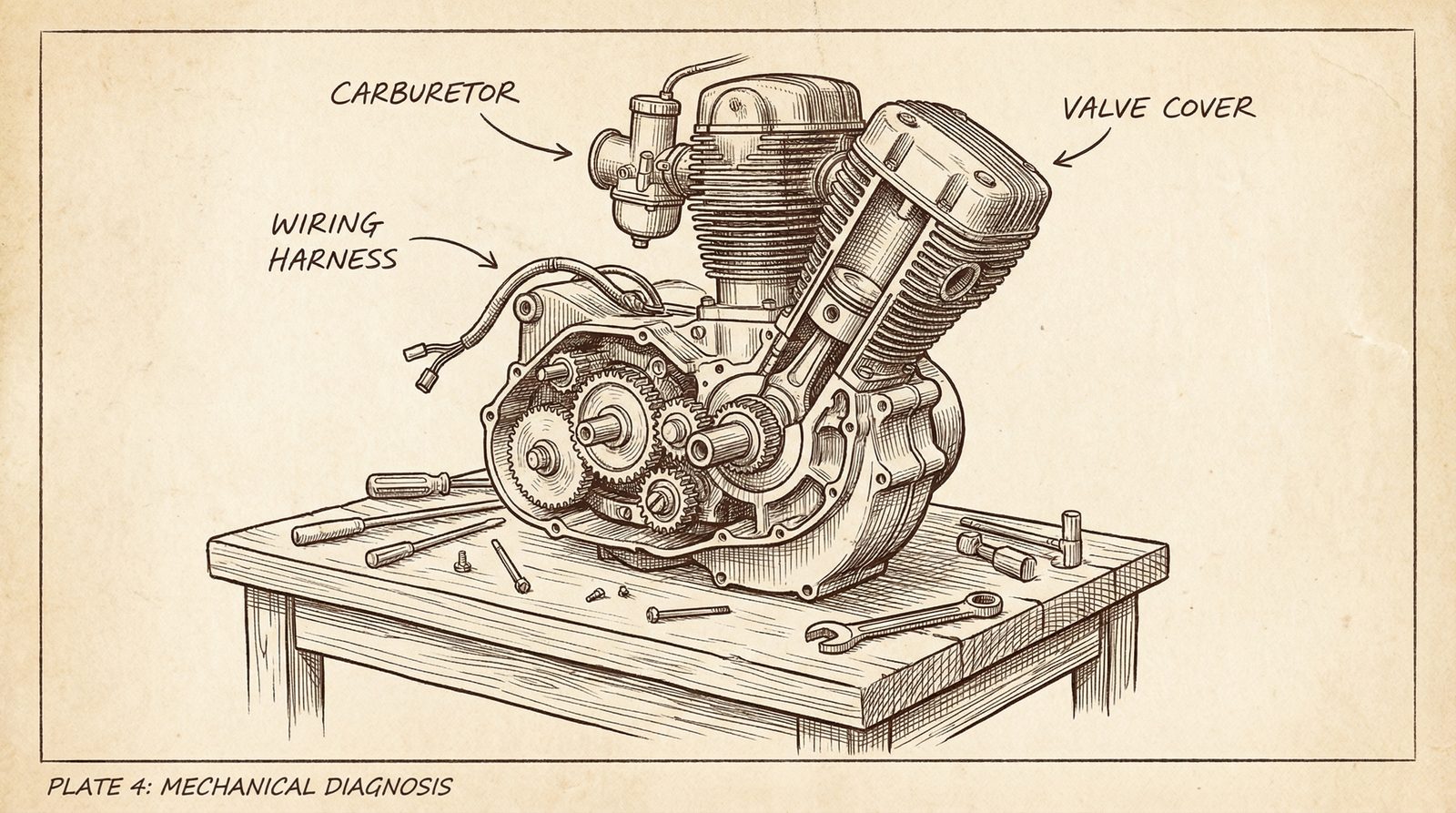
    Crawford dissects workplaces that hide real cause and effect. In the policy world, outcomes can be shaped by institutional incentives and funding rather than truth. In the shop, the stakes are concrete: tracing an electrical fault, diagnosing a misfire, and submitting to what the machine will allow. Resistance—stubborn fasteners, brittle wiring, unreliable systems—becomes a moral category. It trains patience, humility, and attention because reality pushes back.

    The book ends without a grand solution. Crawford remains inside constraints: customers, liability, finances, computerized diagnostics. The point is not escape from the market, but a life built around problems he can see and touch, and a cultivated skepticism toward any job that divorces responsibility from consequences.

    PROSE & NARRATIVE STRUCTURE

    Crawford structures the book as a braided essay, alternating between philosophical reflection and concrete shop anecdotes. Theory is repeatedly punctured by case study: a discussion of alienation slides into a story about a seized engine; a critique of managerial “knowledge” meets the stubborn truth of a stripped bolt. This interleaving keeps the argument grounded.

    The prose is plainspoken but precise. Sentences often begin in the register of the shop manual and end in the seminar room. Sensory detail is treated as cognition: listening to exhaust pulses, feeling torque through a wrench, noticing the small asymmetry that points to the true problem. The book builds force through returning images rather than linear escalation.

    First-person honesty is part of the method. Crawford admits vanity, status anxiety, misjudgments, and the cost of getting things wrong. The argument never floats free of the bench vise and service manual. It is theory built around parts diagrams rather than ideology.
    Conceptual editorial illustration inspired by 'Shop Class As Soulcraft An Inquiry Into The Value Of Work (2010)'

    CHARACTERS & INTERIORITY

    Though nonfiction, the book is full of vivid figures. Crawford himself is a philosopher-mechanic who refuses the idea that thinking belongs only to office work. Former colleagues in policy settings appear as foils, representing work that is socially “high status” but structurally detached from consequence. Customers drift through as sketches: people whose livelihoods depend on a machine starting tomorrow morning.

    Crawford’s interiority is unsparing. He records fear of having “downshifted” in status and the anxiety of slow business cycles, but also the quiet satisfaction of solving problems no one else could touch. Earned authority—knowing a machine well enough to predict its behavior—becomes a more durable identity than titles ever were.

    Secondary presences include older mechanics and mentors who carry a “vanishing guild” ethos: small rituals of the trade, bench discipline, returning fasteners to their holes, keeping an internal map of a disassembled engine. Through them, Crawford sketches a culture where things are still fixable, even as sealed devices and disposable design try to make that culture obsolete.

    LEGACY & RECEPTION

    Published in 2010, Shop Class As Soulcraft landed in the wake of the financial crisis, when many readers were newly suspicious of prestige work that produced little they could point to. The book was widely reviewed and argued over. It was praised for clarity and attacked for appearing to idealize forms of work not equally available to all. Even critics, however, often recognized the sharpness of its central claim: that responsibility requires feedback.

    The book has become a durable reference point in debates about vocational education, the decline of shop class, and the cultural status of “the trades.” Its legacy lies in its stubborn particularity. Crawford does not offer a program; he offers a lens that keeps resurfacing whenever people ask whether modern work leaves room for agency, skill, and pride.

    IS IT WORTH READING?

    If you have ever stared at a screen and wondered what, exactly, you are producing, this book will hit a nerve. Crawford refuses easy consolation about either office work or manual work. The philosophy is serious but readable, and the argument is carried by concrete scenes of diagnosis, failure, and repair. It’s worth reading not because it offers career advice, but because it asks what kind of attention your life’s work deserves.
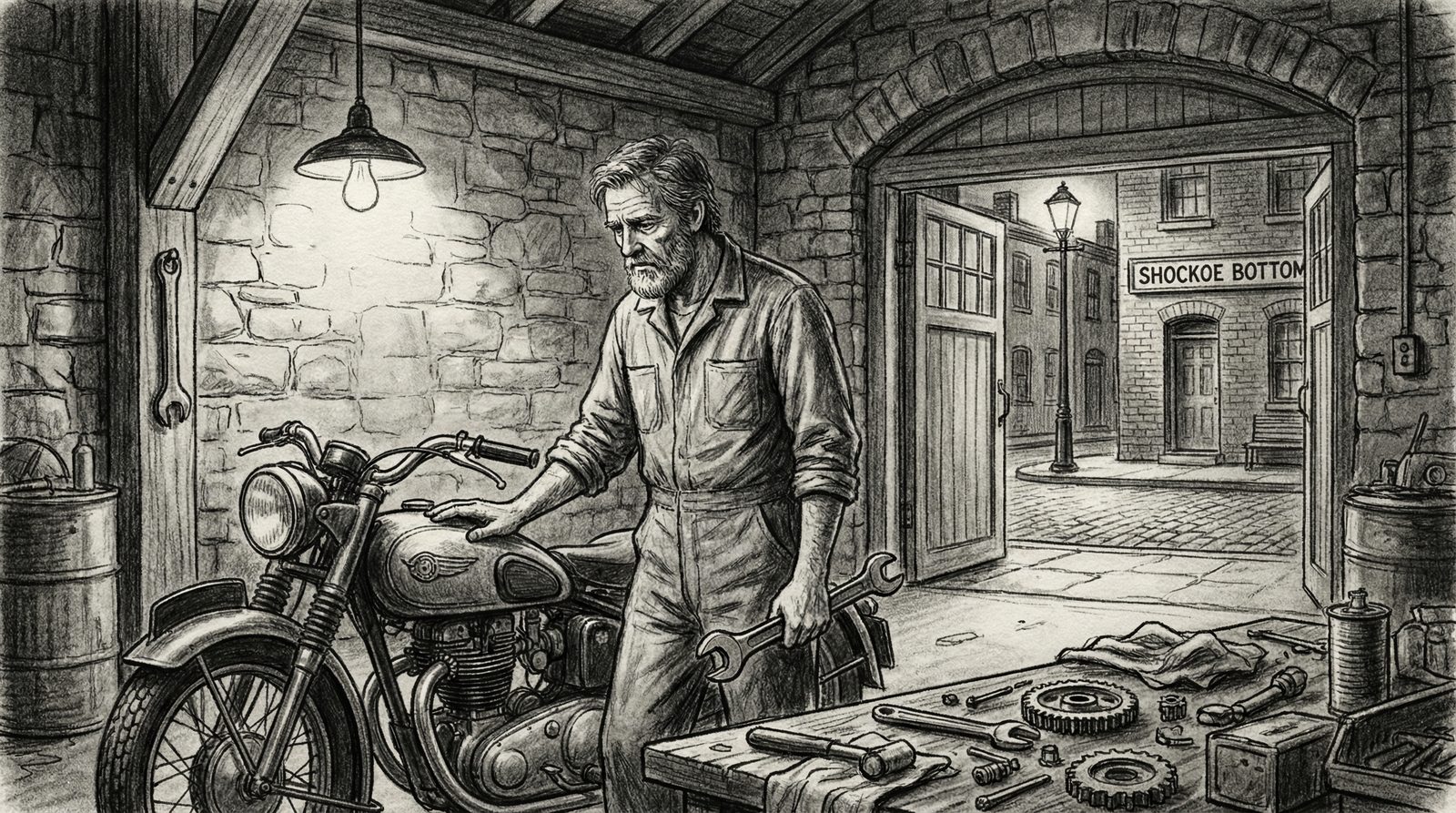
    Illustration of a core idea or motif from 'Shop Class As Soulcraft An Inquiry Into The Value Of Work (2010)'

    TRIVIA & AUTHOR FACTS

    Matthew B. Crawford holds a PhD in political philosophy from the University of Chicago. Before opening his Richmond motorcycle shop, he worked at a Washington, D.C. think tank producing policy materials, an experience that directly fuels his critique of abstraction-heavy work. His shop, Shockoe Moto, is named for the Shockoe Bottom neighborhood where it operates.

    Many of the book’s most memorable episodes come from day-to-day shop work: diagnosing intermittent failures, dealing with parts mistakes, and navigating the mismatch between customers’ expectations and mechanical reality. The book’s credibility comes from this friction: it stays close to the bench even when it reaches toward political philosophy.

    SIMILAR BOOKS

    If this book speaks to you, look for other works that treat work as moral and intellectual practice. The strongest neighbors tend to share Crawford’s insistence that “thinking” is not confined to the office and that good work is a way of being answerable to the world.

    DISCOVERABILITY & LINKS

  • Zen Mind, Beginner’s Mind (1970)

    Zen Mind, Beginner’s Mind (1970)

    INTRODUCTION

    Zen Mind, Beginner’s Mind (1970) by Shunryu Suzuki
    Spirituality · 20th Century · United States


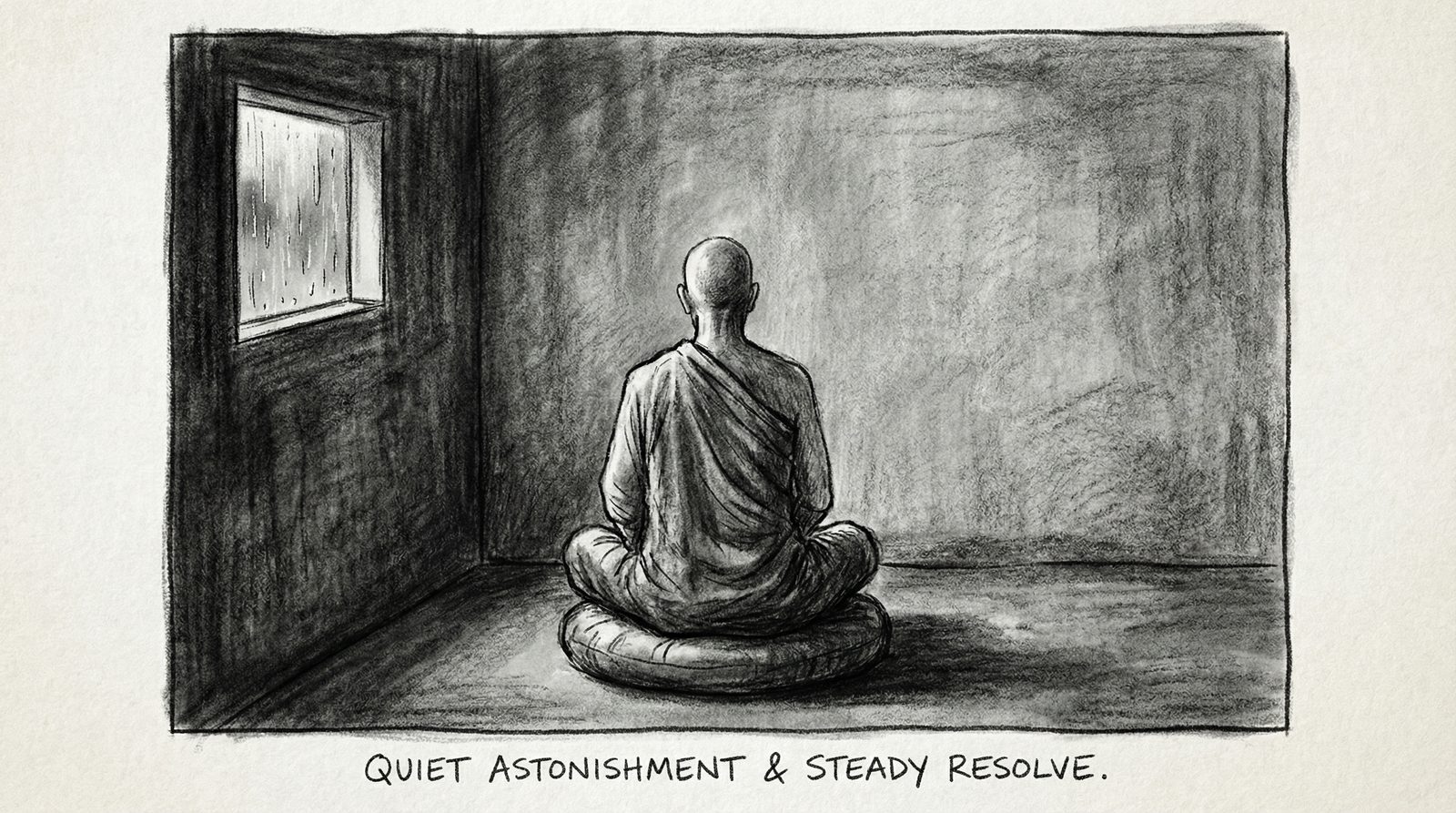
    Zen Mind, Beginner’s Mind (1970) is a slim book that feels bottomless. Drawn from talks Shunryu Suzuki gave to students at the San Francisco Zen Center in the late 1960s, it reads like a series of small, clear windows opening in a fogged room. The prevailing feel is quiet astonishment. Emptiness appears not as a void but as spacious hospitality, a mental room where everything can enter and leave freely. Suzuki keeps circling “beginner’s mind” until it becomes less a slogan and more a way of meeting each moment without armor.

    PLOT & THEMES

    There is no plot in the conventional sense. The book is arranged in three loose sections—“Right Practice,” “Right Attitude,” and “Right Understanding”—each a cluster of short talks given to American students at Sokoji and later at Tassajara. The closest thing to narrative is the rhythm of a day in practice: sit, breathe, notice the mind wander, return.

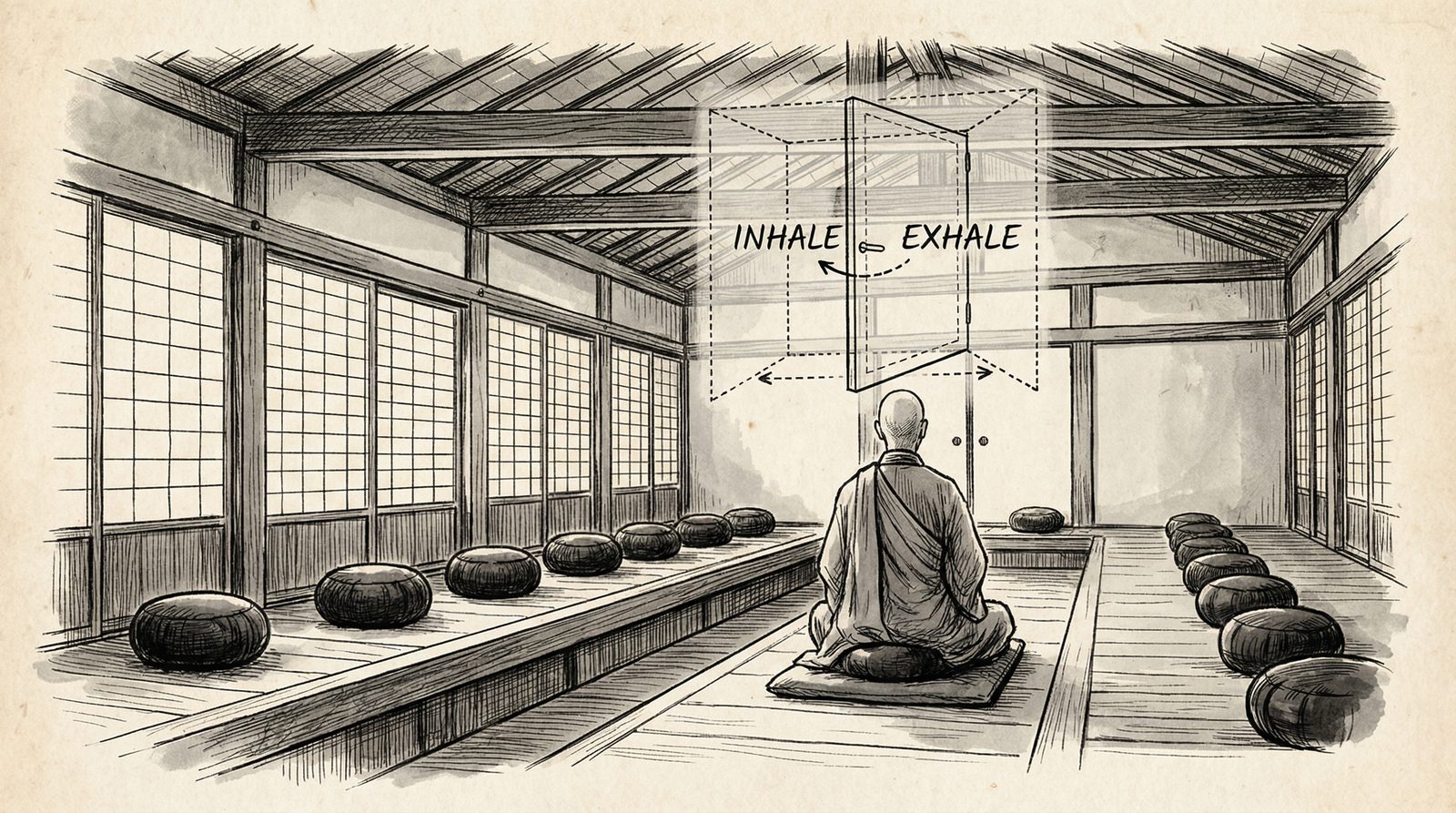
    Breath anchors everything. Suzuki returns again and again to counting, following, and finally just breathing as the most ordinary and most radical act. Themes of non-duality and non-striving run through the text. Instead of promising a heroic breakthrough, he insists there is no gap between practice and enlightenment. Each inhale and exhale becomes the self appearing and disappearing like a swinging door.

    Unlike more narrative or explanatory Zen books, this one ends without a grand revelation. That anti-climax is the point. Enlightenment is not a final scene; it’s how you meet the next moment of boredom or irritation on the cushion. The teaching keeps returning to ordinariness as the only available home for awakening.

    PROSE & NARRATIVE STRUCTURE

    The prose is deceptively simple. Shaped from oral talks but pared down in transcription, it uses repetition as a technique rather than a flaw. Phrases like “just to sit” and “beginner’s mind” recur with mantra-like insistence, wearing grooves into the reader’s habits of thought. Chapters such as “Posture,” “Nothing Special,” and “Bowing” stand alone, but echoes between them create slow cumulative resonance.

    Suzuki’s English can feel slightly off-kilter, and that skew is part of the charm. Sentences tilt into paradox and then land with a dry shrug. The voice feels intimate, as if he is speaking to a small group in a drafty meditation hall rather than to a general audience. The structure enacts the teaching: ideas are approached, released, and approached again from another angle.

    Conceptual editorial illustration inspired by 'Zen Mind, Beginner’s Mind (1970)'

    CHARACTERS & INTERIORITY

    There are no characters in a novelistic sense, but Suzuki himself emerges as a gentle sage archetype with disarming vulnerability. He undercuts spiritual celebrity by admitting impatience, describing sweeping in the rain, or acknowledging that sometimes his practice “is not so good.” Those small confessions build trust because they refuse the posture of perfection.

    The students appear mostly as a collective, glimpsed through the questions they ask: whether bowing is “idolatry,” whether enlightenment should feel like “experience,” whether discipline can coexist with freedom. Interiority here is less psychological than phenomenological. The book trains the reader to watch their own mind with soft persistence, treating thoughts as weather rather than identity.

    LEGACY & RECEPTION

    Since its publication in 1970, Zen Mind, Beginner’s Mind has become a foundational Western Zen text, especially in the United States. It offers relief from “gaining mind,” the pressure to optimize spiritual life into a ladder of achievement. The book remains stubbornly un-slick: it refuses to package awakening as a hack or a climax.

    Readers often find the first encounter disorienting because there is no narrative payoff. That disorientation is the teaching. The book keeps insisting that even enlightenment must be let go of. In a culture that measures value by progress, its refusal to promise transformation-by-milestone is one of its most radical gestures.

    IS IT WORTH READING?

    If you want techniques, hacks, or a clear ladder of advancement, this book will frustrate you. Zen Mind, Beginner’s Mind is worth reading if you are willing to be gently but persistently stripped of expectations. It’s short enough to finish quickly and deep enough to reread for years. It works best not as inspiration but as a companion to actual sitting, returning like a voice in the room whenever you breathe.

    Illustration of a core idea or motif from 'Zen Mind, Beginner’s Mind (1970)'

    TRIVIA & AUTHOR FACTS

    Shunryu Suzuki was a Soto Zen priest who came to San Francisco in 1959 to serve the small Japanese-American congregation at Sokoji. The talks that became Zen Mind, Beginner’s Mind were recorded by students on reel-to-reel tapes, often in drafty rooms above the temple or later at Tassajara Zen Mountain Center. The book was assembled and edited posthumously by students including Richard Baker, which helps explain why certain phrases and themes recur: the text preserves a living teaching voice more than it polishes argument.

    SIMILAR BOOKS

    If Zen Mind, Beginner’s Mind speaks to you, you might look toward other practice-centered texts and East-West bridges. Some offer more historical framing, others more narrative movement, but the strongest neighbors share Suzuki’s insistence that the ordinary mind—washing dishes, walking, breathing—is not the obstacle to awakening but its only possible home.

    DISCOVERABILITY & LINKS

  • Alan Watts

    Alan Watts

    ORIGINS & BACKGROUND

    Alan Watts is best known as a bridge figure, a British-born writer and speaker who helped popularize Asian thought for Western audiences in the mid-twentieth century. He was raised in England with a mix of Anglican Christianity and a sharp curiosity about the wider world, which led him early toward Buddhist and Hindu texts. Eventually he moved to the United States, studied theology, and served as an Episcopal priest before leaving the church to focus on a more fluid Eastwest Philosophical Synthesis.

    What matters for his work is less the institutional path and more the way he stood at a cultural crossroads. He wrote and lectured at a time when Western readers were just beginning to take Zen Buddhism, Taoism, and Vedanta seriously. Rather than presenting them as exotic systems, he treated them as practical lenses for everyday life. His training in Christian theology gave him a sharp sense of how religious language can clarify, distort, and control, and he used that insight to cut through dogma on all sides.

    Watts was less interested in constructing a tight philosophical system than in describing how ideas feel from the inside. His biography feeds directly into this approach: a restless mover between countries, institutions, and traditions, he turned his own life into an experiment in living without clinging too tightly to any one identity.

    Editorial illustration inspired by 'Alan Watts'

    THEMES & MOTIFS

    A central theme in Watts’s work is the illusion of a separate self. Again and again he returns to the idea that the “I” we defend is a mental construct, a useful convention that becomes painful when we treat it as something solid. For Watts, the self is more like a pattern in motion than a hard object, and much of our anxiety comes from trying to freeze that motion into certainty and control.

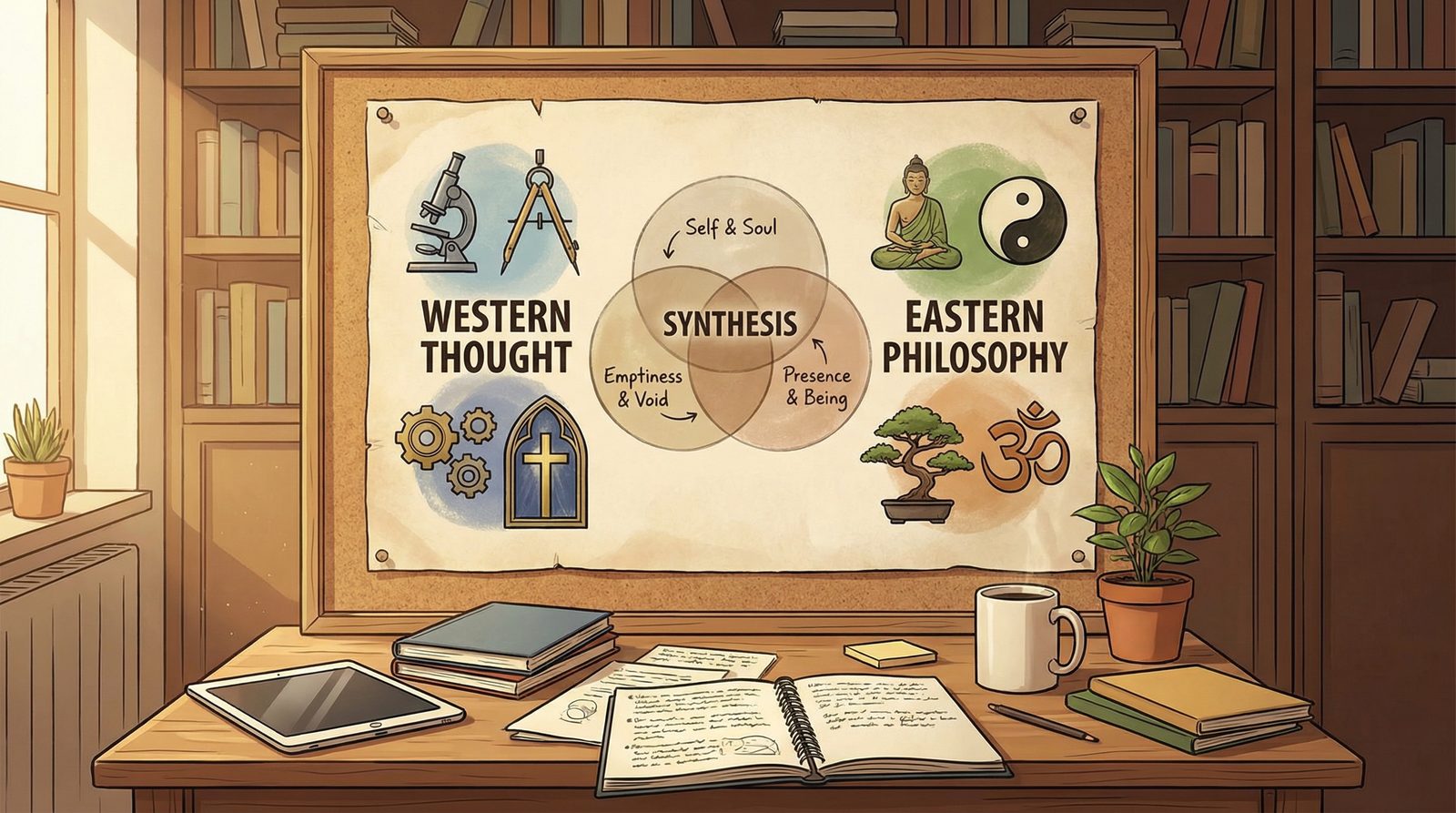
    Another recurring motif is Eastwest Philosophical Synthesis. He places Zen, Taoism, and Hinduism alongside Western psychology, science, and Christian imagery, not to flatten them into one bland system but to show how each tradition reveals a different blind spot. The synthesis is less about agreement than about creative friction, where unfamiliar language opens new ways of seeing familiar problems.

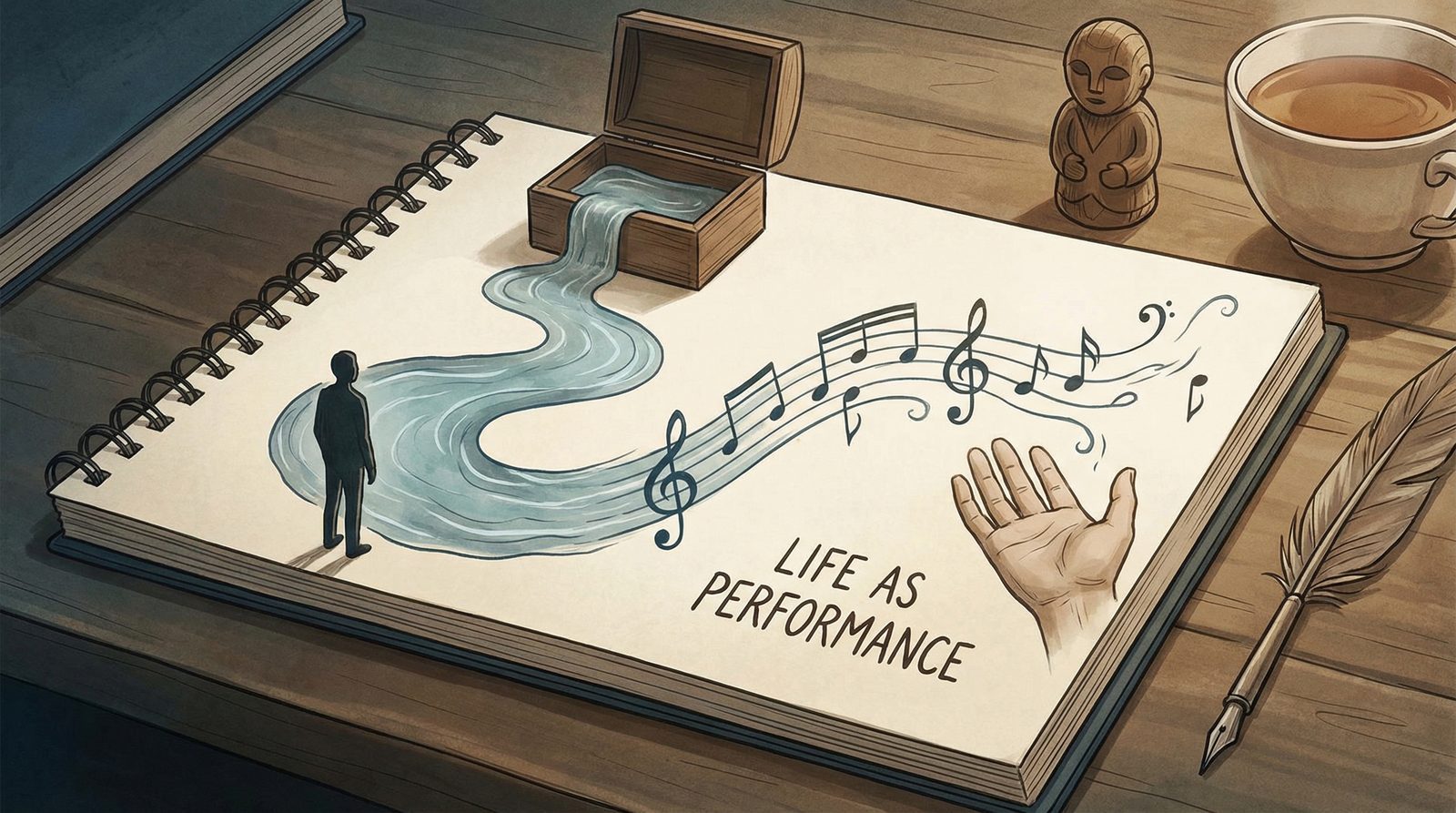
    Watts is also preoccupied with the tension between control and surrender. He returns to images of water, music, and dance to suggest that life works better when approached as a performance rather than a problem to be solved. This places him in useful contrast with more strictly instructional works like Zen Mind, Beginner’s Mind, where discipline and practice are emphasized more than play and improvisation.

    Finally, he explores insecurity and groundlessness directly. In The Wisdom Of Insecurity, Watts argues that the demand for absolute certainty is itself a generator of suffering. Rather than promising stable answers, he invites the reader to become more intimate with change, ambiguity, and the passing nature of experience. That willingness to sit with not-knowing is one of the signatures of his voice.

    Symbolic illustration inspired by 'Alan Watts'

    STYLE & VOICE

    Watts writes and speaks in a conversational, sometimes mischievous tone. His style is closer to a late-night talk than to formal philosophy. He uses jokes, parables, and sudden shifts in perspective to loosen the reader’s grip on familiar assumptions. Rather than building dense chains of argument, he circles a topic from multiple angles until something clicks at the level of intuition.

    There is a musical quality to his pacing. He often begins with something concrete and ordinary, widens the frame to cosmic scale, then drops back into the personal. This rhythm mirrors his themes about the unity of self and world, moving the reader between the intimate and the vast without insisting on a final “system.”

    Compared with more austere Zen teachers or more systematic writers, Watts is comfortable with contradiction and unresolved tension. He will often present two opposing views and then suggest that both are partial, inviting the listener to feel their way into a third position that cannot be neatly stated. The tone is playful, sometimes irreverent, but underneath is a steady seriousness about suffering, compassion, and seeing the world with fresh eyes.

    KEY WORKS & LEGACY

    Because so much of Watts’s influence came through lectures and radio broadcasts, his key works are as much spoken as written. Collections of his talks continue to circulate, shaping how English-speaking audiences encounter ideas like non-duality, impermanence, and the limits of the ego. His writing helped make these concepts feel close to everyday life rather than locked in monasteries.

    His legacy is not a single doctrine but a set of habits: questioning the solidity of the self, treating synthesis as a living conversation rather than a museum display, and approaching spiritual practice with a mix of seriousness and humor. For many readers and listeners, Watts was the first voice that made spiritual life feel exploratory rather than rule-bound, and that permission continues to ripple through modern writing on consciousness, psychology, and attention.