Genre: Satire

  • The Diary Of A Nobody (1892)

    The Diary Of A Nobody (1892)

    INTRODUCTION

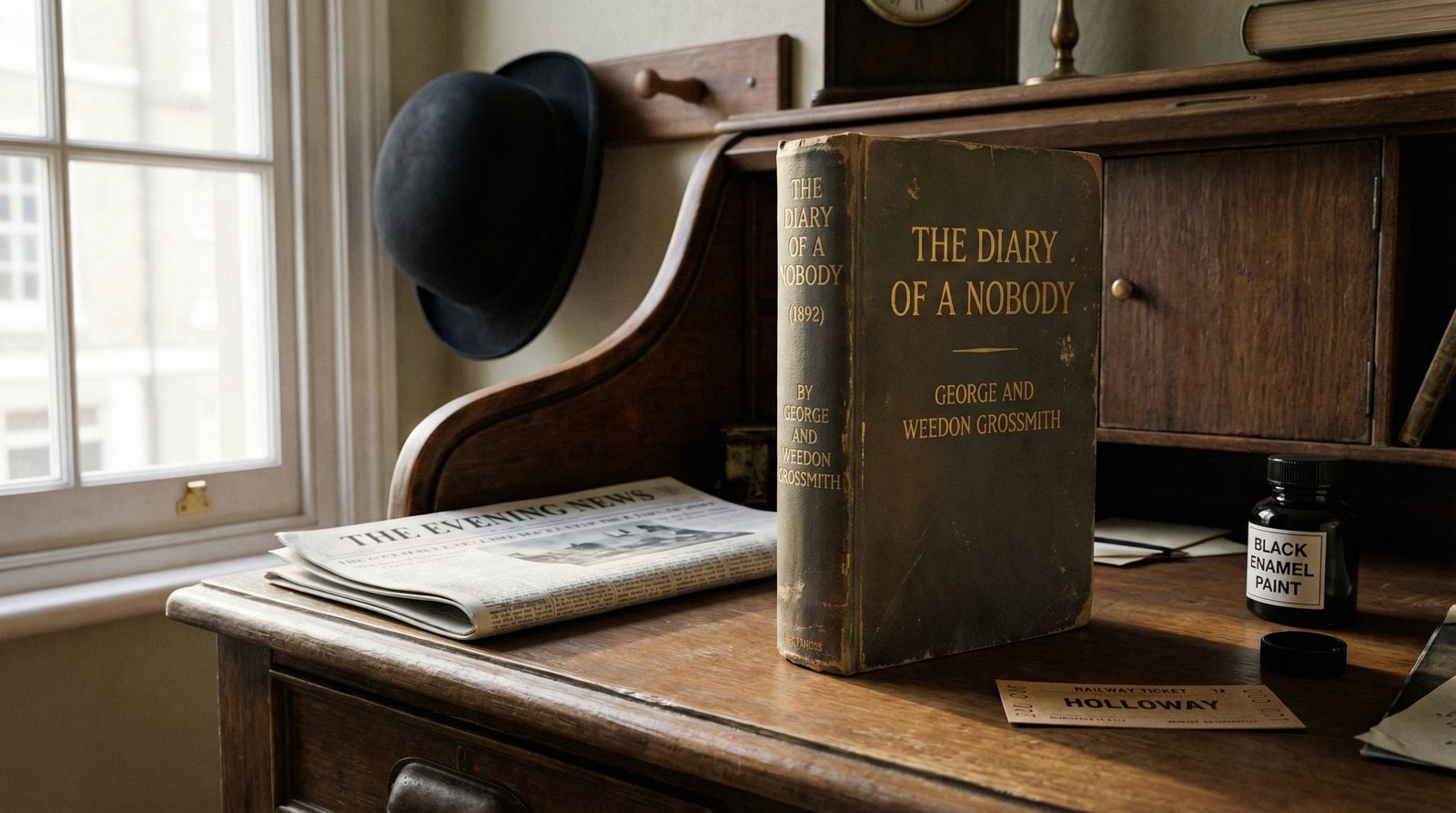
    The Diary Of A Nobody (1892) by George Grossmith and Weedon Grossmith
    Comic fiction · 220 pages · England


    The Diary Of A Nobody is a small book about small things and the very large feelings they provoke. Set in late-Victorian London, it follows Charles Pooter, a clerk whose life revolves around whitewashed walls, dinner parties, and the constant fear of social humiliation. Social pretension runs through every page: Pooter’s world is a stage on which he is always slightly under-rehearsed.

    What makes the book endure is its feel of tender embarrassment. We’re invited to laugh at Pooter’s pomposity, but also to wince in recognition as he fusses over etiquette, taste, and being noticed “properly.” The joke is not that he is ridiculous and we are not. The joke is that his anxieties about status and correctness are uncomfortably familiar, even now.

    PLOT & THEMES

    The “plot” is deliberately uneventful. Pooter moves into The Laurels in Holloway with his wife Carrie, commutes to the City, and records a year or so of minor mishaps: bruised pride, bungled hospitality, office humiliations, and domestic “improvements” that go wrong. Everyday triviality is the structure. Trifles are treated with the solemnity of epic events, which is the core joke of the self-important everyman: Pooter believes his life is worthy of print not because it is extraordinary, but because it is his.

    Social pretension threads through everything. Pooter obsesses over his standing with Mr. Perkupp at the office and with neighbors and acquaintances at home. He treats invitations as honors and mild slights as scandals. Into this fragile respectability crashes his son Lupin, whose speculative schemes, theatrical enthusiasms, and disregard for propriety make it clear the next generation is already moving faster than Pooter can manage.

    The book refuses heroic transformation. After financial mishaps, social fiascos, and the famous garden-party chaos, life simply resumes. Pooter remains at The Laurels, still commuting, still worrying about boots and manners. The anti-climactic ending is the point: the middle-class dream here is not ascent, but dogged continuity — the ability to keep going while quietly feeling ridiculous.

    In its quiet way, the book anticipates later portraits of ordinary life where embarrassment becomes the engine of story and the day itself becomes the plot.

    PROSE & NARRATIVE STRUCTURE

    The core technique is faux-naive first person. Pooter believes he is writing a sober, dignified record; the Grossmiths arrange his sentences so that self-importance constantly undercuts itself. The comedy lives in the gap between what Pooter thinks he is saying and what the reader hears. The diary form stays rigid: dated entries, small domestic updates, and officious “I wrote a letter” declarations that make every minor incident sound like public history.

    The language is plain office-clerk English, but the timing is surgical. Setups are buried in throwaway lines with payoffs chapters later. Running refrains — especially repeat visitors and repeated social irritants — create a domestic chorus. Catchphrases and habitual actions build rhythm that mimics real diary-keeping, so the narrative feels authentically shapeless while being meticulously composed.

    The result is a parody of Victorian self-documentation that never has to announce itself as parody. Pooter’s sincerity is protected even while it’s being used as the blade.
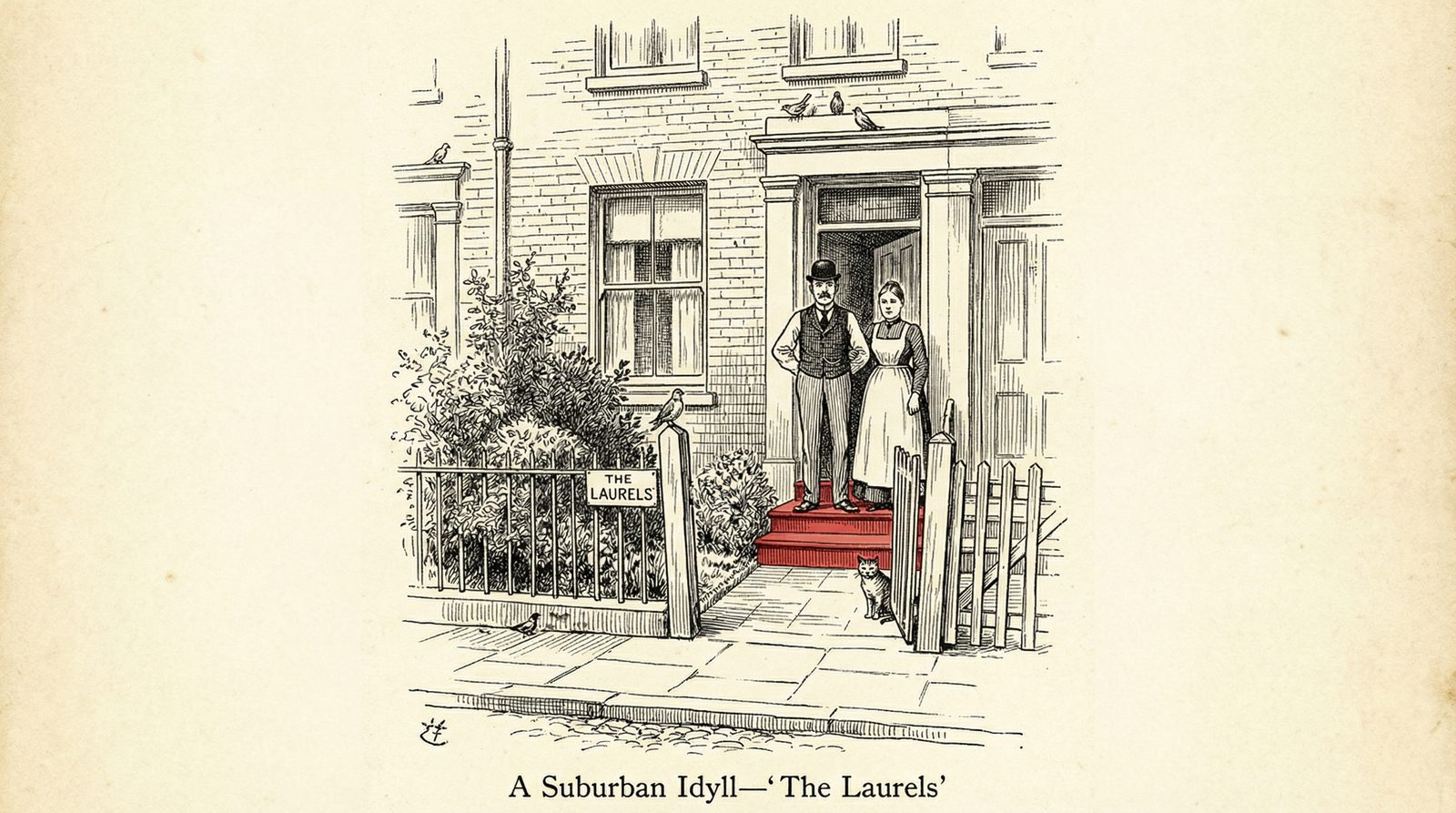
    Conceptual editorial illustration inspired by 'The Diary Of A Nobody (1892)'

    CHARACTERS & INTERIORITY

    Pooter is an archetypal petty-bourgeois striver: not cruel, not stupid, but painfully sensitive to status. His interiority is revealed through what he records and what he refuses to name. He rarely admits anger, yet the diary is full of small sulks displaced into etiquette and fussing. Mortification becomes his primary emotion, managed through rules.

    Carrie is more than a patient-wife cliché. She is practical, often right, and quietly amused by her husband. Lupin is the modern son, a figure of speed and risk, revealing how quickly the cultural ground is shifting under Pooter’s careful propriety. Minor figures recur with economical precision, gaining weight through repetition and Pooter’s prickly reactions rather than through psychological depth.

    The emotional life lies in tiny frictions: social psychology conducted with teacups, calling cards, and the dread of being judged.

    LEGACY & RECEPTION

    Originally serialized in Punch, the book began as episodic satire of lower-middle-class London. Over time it became a touchstone of English comic fiction because it perfected straight-faced mortification: the recording of humiliation as if it were official history. Its influence runs through later diary-format comedy and modern cringe-based humor, not through plot innovations but through tonal precision.

    Adaptations often try to impose a cleaner arc. The novel refuses that shape. Its stubborn ordinariness has gradually shifted its status from topical satire to something closer to a preserved social voice: a class that rarely left monuments to itself leaving one anyway, by accident, through comedy.

    IS IT WORTH READING?

    If you need sweeping plot or high drama, this may feel slow. Its pleasures are miniature. But if you’re interested in how ordinary people imagined themselves in late-19th-century England, or in how comedy can be built out of pure embarrassment without cruelty, it’s essential. You may start by laughing at Pooter and end by feeling oddly protective of him, which is the book’s slyest achievement.
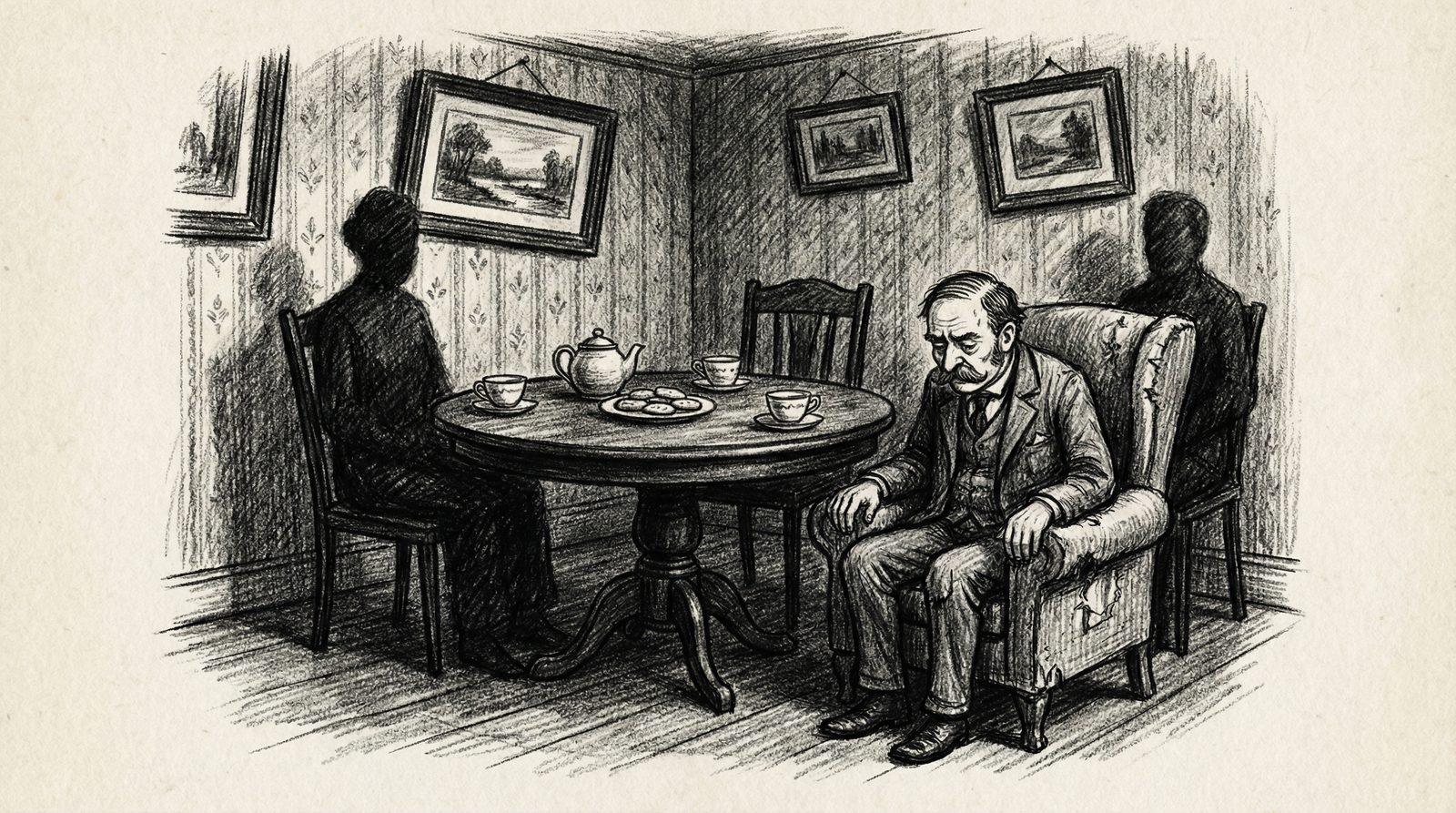
    Illustration of a core idea or motif from 'The Diary Of A Nobody (1892)'

    TRIVIA & AUTHOR FACTS

    George Grossmith was a celebrated comic performer associated with the Savoy Theatre, and Weedon Grossmith was an actor and illustrator. Weedon’s drawings accompanied the original publication and helped fix Pooter’s world in readers’ minds. Many details are rooted in real suburban London geography and the rhythms of commuter life.

    The book’s “nobody” status is carefully crafted. The Grossmiths knew exactly how much ordinariness to put on the page, and exactly how to time the embarrassment so it lands as tenderness rather than cruelty.

    SIMILAR BOOKS

    If you enjoy this, you may prefer other books that treat everyday life as serious comic material and use the ordinary as an engine for precision embarrassment rather than big plot. The closest neighbors tend to share its affection for blundering, its diary-like immediacy, and its social anxiety as comedy fuel.

    DISCOVERABILITY & LINKS

  • Unintended Consequences Of Wishes

    Unintended Consequences Of Wishes

    DEFINITION & CORE IDEA

    The motif of Unintended Consequences of Wishes is all about the gap between what a character wants and what actually happens when they get it. Someone makes a wish, strikes a bargain, or voices a casual request, and the universe answers in a way that is technically correct but emotionally disastrous. The wish is granted, but it arrives with loopholes, side effects, or a cruelly literal twist.

    Stories built on this motif take the simple fantasy “What if I could have anything?” and turn it into a test of character. The wish can come from a genie, a djinn, a magical artifact, a mischievous spirit, or an impersonal cosmic rule. The key is that the wisher does not fully understand what they are asking for, or what it will cost them and others.

    In children’s fantasy like Five Children And It (1902) or comedy-fantasy such as The Brass Bottle, this motif often plays as chaotic fun, where wishes turn ordinary life into social disorder. In darker versions, the consequences become corrosive and personal, as in A Fallen Idol. In all cases, the heart of the motif is the same lesson: desire without foresight is dangerous, and power, even magical power, does not erase consequences.


    HOW IT WORKS IN STORIES

    In stories using Unintended Consequences of Wishes, the setup is deceptively simple. An ordinary person stumbles onto a source of power. The wisher is usually not a villain. They are tired, lonely, greedy, bored, or just curious. Their first wish is often small and impulsive, which makes the fallout feel both believable and embarrassing.

    The wish is granted with a twist. The wisher gets what they asked for, but not what they meant. A solution arrives in the worst possible form. The gift comes attached to humiliation, guilt, conflict, or harm that spreads beyond the original desire. Attempts to fix things with additional wishes often make it worse, stacking complications until the character is trapped in a web of their own making.

    Writers use this motif to explore responsibility and self-knowledge in a vivid way. Instead of lecturing about “be careful what you wish for,” the story lets us watch the character collide with the fine print of their desires. The motif pairs well with comedy and satire, because literal-minded magic exposes vanity, hypocrisy, and entitlement simply by doing exactly what was asked.

    Because wish stories often begin with a bound spirit or a magical object, this motif frequently overlaps with bottle-bound bargains, supernatural deals with hidden costs, and stories where fantasy intrudes into ordinary domestic life.


    Editorial illustration inspired by 'Unintended Consequences of Wishes'

    EMOTIONAL EFFECT ON THE READER

    Unintended Consequences of Wishes hits a mix of feelings. On the lighter side, there is real pleasure in watching a too-literal wish go wrong. The reader gets to enjoy slapstick and clever reversals while safely thinking, “I would have phrased that better.”

    Underneath the humor is a quieter discomfort. The motif nudges us to notice how often we want things without understanding the consequences. When a wish hurts someone the character cares about, the reader feels a sting of guilt by proxy. We see how easy it is to be selfish by accident, and how a small moment of impatience or vanity can spiral into something much bigger.

    In darker takes, the emotion shifts toward dread and regret. Each new wish tightens the trap, and the reader senses that there may be no clean way out. The story becomes a pressure test of character, because power keeps offering shortcuts while consequences keep demanding payment.

    Overall, this motif lets readers enjoy the fantasy of limitless power while also feeling the weight of it. It is satisfying when a character finally learns to phrase a wish carefully, to give up the power, or to accept the original messy life they were trying to escape. That mix of schadenfreude, anxiety, and eventual catharsis is what keeps Unintended Consequences of Wishes so enduring.


    Symbolic illustration inspired by 'Unintended Consequences of Wishes'

    VARIATIONS & RELATED MOTIFS

    Unintended Consequences of Wishes comes in several recognizable flavors. Comic versions focus on embarrassment, romantic misunderstandings, and chaotic but reversible disasters. Child-centered versions use wishes to explore growing up, where each fantasy is exposed as incomplete or naive. Darker interpretations treat wishes as tools of power, where unintended consequences spill into coercion, conflict, and moral compromise.

    This motif frequently intersects with stories where fantasy intrudes into domestic realism, where children encounter real magic too early, and where misunderstandings spiral into farce. The structure stays the same, even when the tone changes: a character tries to shortcut their problems and discovers that reality, magical or not, always charges a price.

  • Dystopian Game Shows

    Dystopian Game Shows

    DEFINITION & CORE IDEA

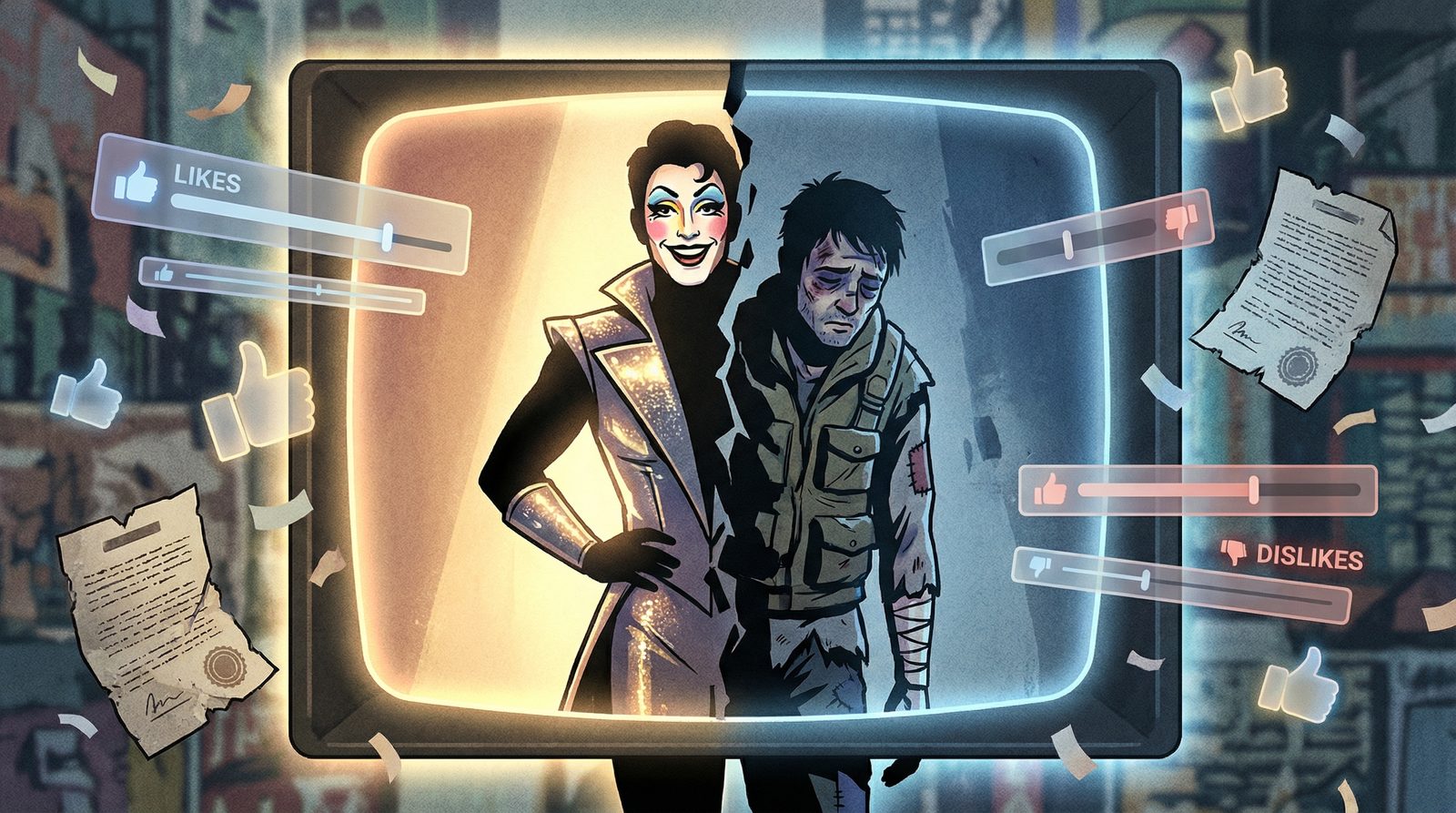
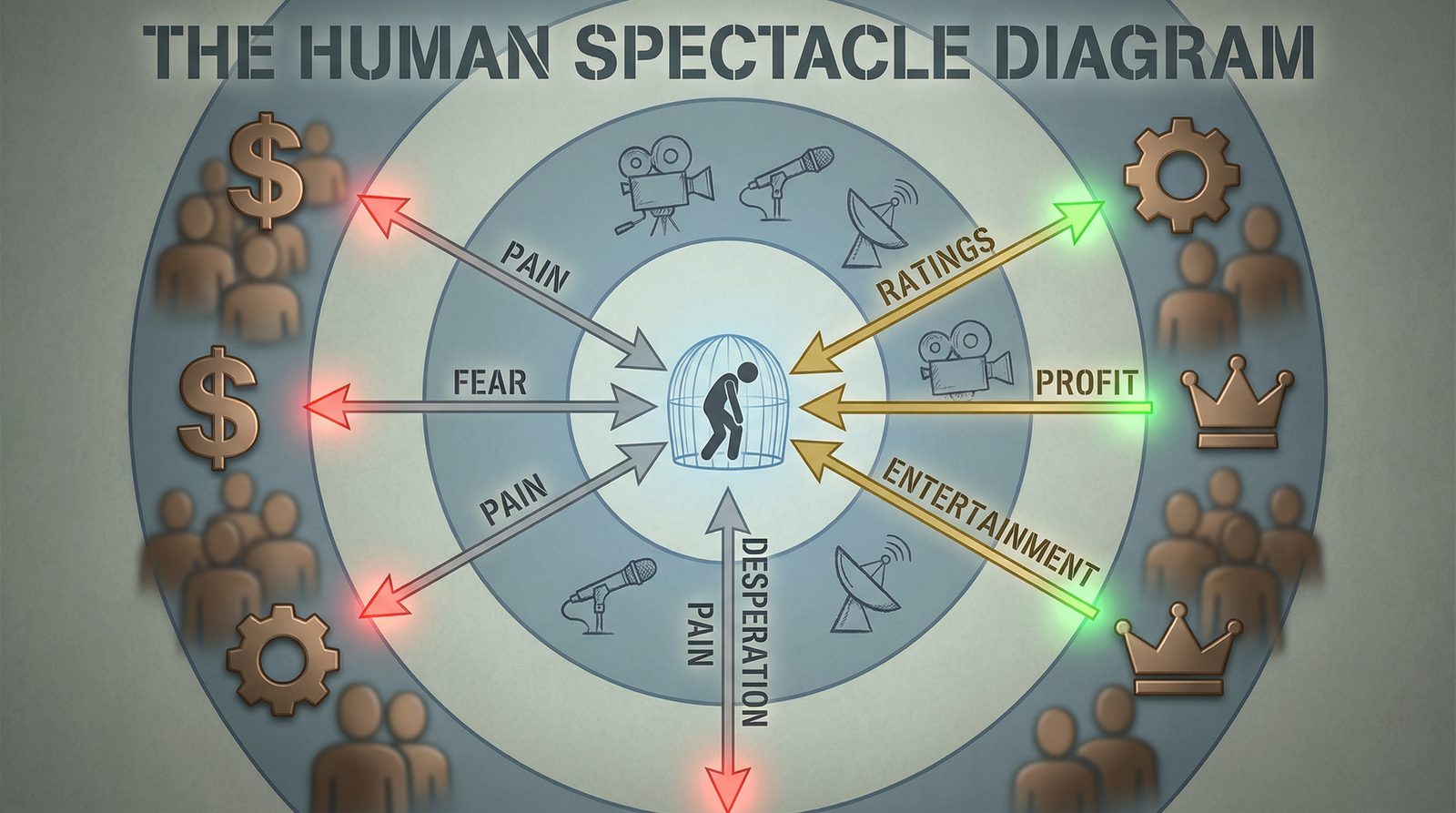
    Dystopian game shows are stories where a rigged contest, reality show, or televised event becomes a matter of life and death. The rules look like entertainment, but the stakes are survival. Contestants run obstacle courses that can kill them, answer questions under threat of punishment, or hunt and are hunted for the amusement of a distant audience. The game is usually controlled by a powerful government, corporation, or media empire that treats human beings as disposable content.

    Unlike simple arena battles, dystopian game shows lean on the language of TV and celebrity. The cruelty is wrapped in bright lights and canned applause. The Running Man, written under the name Richard Bachman, is a classic example, where a desperate man signs up for a lethal televised manhunt. The surface promise is money and fame; the underlying reality is systemic exploitation.

    Writers use this motif to ask how far a society will go when suffering becomes a product. The format is familiar enough to feel plausible, yet twisted enough to be horrifying. Dystopian game shows exaggerate trends in reality TV, social media, and advertising to show what happens when entertainment and cruelty fully merge. At its core, the motif is about people trying to stay human while the world insists they are just contestants.


    HOW IT WORKS IN STORIES

    In dystopian game show stories, the plot often begins with a rigged choice. The protagonist volunteers out of desperation, is coerced, or is randomly selected. Like the men in Richard Bachman stories such as The Running Man, they are usually ordinary or down-on-their-luck people, not trained warriors. The show offers them a miracle: money, freedom, or a chance to clear their name. The price is stepping into a game designed to break them.

    The narrative then moves into the preparation and staging of the show. We see contracts, waivers, and fine print. We meet the smirking host, the ruthless producer, the faceless executives. The world of the game is full of artificial sets, hidden cameras, and scripted moments. Even genuine danger is choreographed for maximum spectacle. The protagonist quickly discovers that the rules are flexible and always favor the house.

    Once the game begins, the story turns into a survival puzzle. Challenges are designed to pit contestants against each other, force betrayals, or tempt them with shortcuts that have hidden costs. The show’s audience becomes a character in its own right. The protagonist might gain sudden popularity, become a villain in the public eye, or be erased entirely if they stop being useful for ratings.

    Behind the spectacle, the plot often reveals a larger conspiracy or social rot. The game show might be a tool of social control, a distraction from political collapse, or a way to dispose of “undesirable” people. The climax usually involves one of three things: beating the game on its own terms, exposing it to the public, or refusing to play by its logic at all. Whether the character lives or dies, the story asks what it means to be real in a world that only values you as content.


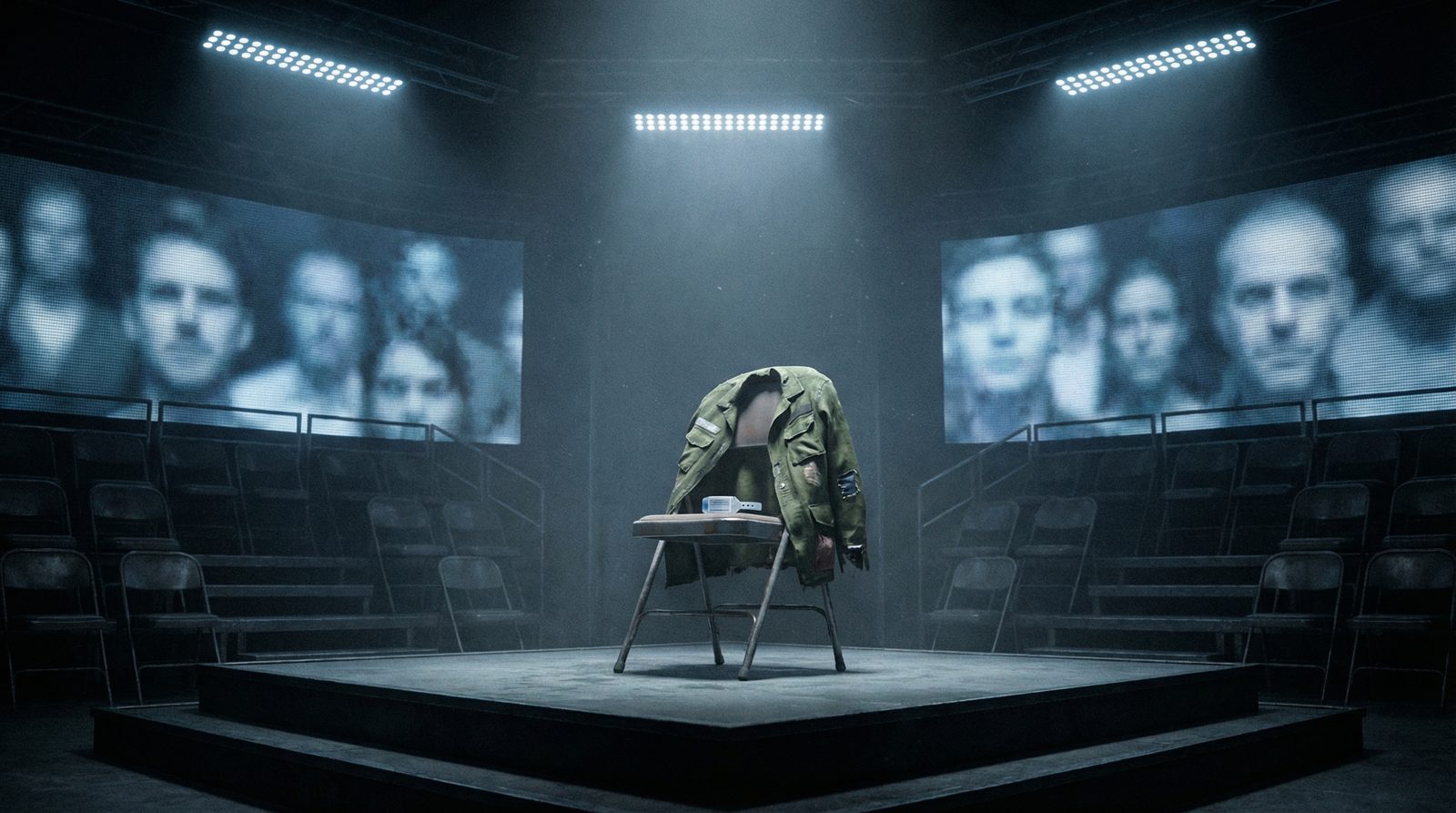
    Editorial illustration inspired by 'Dystopian Game Shows'

    EMOTIONAL EFFECT ON THE READER

    Reading dystopian game show stories often feels like watching a nightmare version of a reality show you half-recognize. There is a sickening mix of excitement and dread. The tension is not just “will they win,” but “how much of themselves will they have to lose to survive.”

    The motif taps into the uneasy feeling that our own media habits might be cruel. When a crowd in the story cheers for someone’s suffering, it is hard not to think of viral humiliation clips or scandal-driven news. That recognition can make the reader feel complicit, as if they are sitting in the studio audience, enjoying the show while knowing it is wrong.

    At the same time, there is often a strong emotional bond with the contestants. Their small acts of kindness, defiance, or humor stand out sharply against the artificial cruelty around them. Moments where characters refuse to betray each other, or choose dignity over survival, can hit harder precisely because the system is built to crush those choices. The result is a blend of adrenaline, anger, and a bruised kind of hope that someone will break the cycle, even if they pay for it.


    Symbolic illustration inspired by 'Dystopian Game Shows'

    VARIATIONS & RELATED MOTIFS

    Dystopian game shows can take many forms. Some stories focus on physical combat, turning the show into a gladiator arena with cameras. Others use puzzles, social manipulation, or moral dilemmas as the core challenge. A contestant might have to choose which loved one gets saved on live TV, or decide whether to expose a secret that will ruin innocent people. The tone can range from grimly realistic to darkly comic, with some works leaning hard into satire about advertising, celebrity culture, or class.

    There are also variations in how much the outside world matters. In some stories, the game is a closed bubble, and we only see what the cameras see. In others, the world beyond the show is just as bleak: the game is not an exception but a symptom of a larger sickness. The show becomes a pressure valve for a society that has already decided which lives are expendable.

    This motif overlaps strongly with Ordinary People In Extreme Situations. The contestants are rarely superheroes; they are regular citizens pushed into a twisted system. It can also intersect with motifs about the commodified body, survival as performance, or fame as a double-edged sword. A character might gain celebrity status while being slowly destroyed by the very show that made them famous.

    Some stories end with the game continuing, unchanged, emphasizing how hard it is to fight a system that turns everything into a show. Others let a single act of defiance ripple outward, inspiring viewers or exposing the truth. Either way, dystopian game shows linger because they feel uncomfortably close to the world we already live in, just pushed a few notches further past the point of no return.