
Genre: Spirituality

  • The Four Agreements (1997)

    The Four Agreements (1997)

    INTRODUCTION

    The Four Agreements (1997) by Don Miguel Ruiz
    Spirituality / Self-help · 163 pages · Mexico / United States


    The Four Agreements is not a novel and barely a conventional self-help manual. It reads like a compact sermon whispered in a quiet late-1990s bookstore aisle. Don Miguel Ruiz uses Toltec framing, parables, and stern tenderness to argue that everyday life is a kind of dream shaped by language and belief. The mood is intimate: part kitchen-table conversation, part initiation rite.

    A recurring motif of domestication runs through the book: children trained to accept praise, punishment, and inherited fear until they internalize an inner Judge and a cowering Victim. The feel is both confrontational and consoling. Ruiz is not interested in comforting illusions. He wants you to see how your own words and agreements have built a personal hell, then offers four new agreements as a way to walk out.

    PLOT & THEMES

    Because The Four Agreements is didactic rather than narrative, its “plot” is an argument unfolding in stages. Ruiz opens with a mythic Toltec origin story and the idea that humans live inside a collective “Dream of the Planet.” From there he explains how domestication installs an internal Book of Law — a private legal code built from reward and punishment — that sustains the inner Judge and the inner Victim.

    The four agreements structure the middle of the book. Each is explored through concrete scenes: gossip poisoning reputations, assumptions detonating relationships, a stray comment taken personally until it becomes destiny. A second motif — personal hell versus personal heaven — frames these examples. The same outer life can be lived in torment or in freedom depending on which agreements you accept.

    Ruiz stays close to the mechanics of belief and language. The ending is not a twist but an invitation: a “new dream” of heaven on earth created by daily practice. There is no external salvation scene. The book’s final stance is bluntly practical: freedom is the discipline of choosing these agreements again and again, especially when stress tempts you back into the old courtroom.

    PROSE & NARRATIVE STRUCTURE

    The prose is plain, almost aggressively so. Ruiz favors short declarative sentences and repeats key phrases until they become incantatory. The technique is didactic exposition punctuated by parables and brief dialogues. Small vignettes — a lover scripting disaster, a neighbor spreading poison through talk, a child shrinking under disapproval — give the abstract claims lived texture.

    Structurally, the book is circular rather than linear. It begins with the Dream and returns to the Dream after walking the reader through the four agreements, so the return feels altered rather than redundant. Chapters are short, with subheadings that read like spoken cues. The feel is rhythmic and insistent, as if you’re being walked around the same insight from slightly different angles until resistance wears down.

    Guided visualization is used as participation. Ruiz asks you to picture the inner courtroom, to notice the moment the Judge speaks, to imagine what it would mean to live without inherited punishment scripts. The austerity is deliberate. The sentences are designed as tools meant to be remembered and reused rather than admired.

    Conceptual editorial illustration inspired by 'The Four Agreements (1997)'

    CHARACTERS & INTERIORITY

    There are no conventional characters, yet the book is crowded with interior figures. The Judge and the Victim are presented as inner forces: a stern authority endlessly reviewing your life, and a wounded self accepting every sentence. Ruiz also sketches the Warrior — the part of the self willing to confront inherited agreements and endure discomfort to gain freedom. These are not developed like novelistic personalities, but they give shape to psychological processes Ruiz wants the reader to recognize in real time.

    Interiority is explored through direct address. The book repeatedly pushes the reader to notice how assumptions form in conversation, how quickly a stray comment becomes a verdict, and how easily self-accusation is accepted as truth. The effect is quietly confrontational: you are not allowed to remain a detached observer.

    Minor presences appear as illustrative types — gossiping neighbors, punishing parents, mythic Toltec teachers — forming a chorus that shows how the same inner drama plays out in families, villages, and cultures. The “plot,” in other words, is domestication being diagnosed and then challenged.

    LEGACY & RECEPTION

    Since its late-1990s publication, The Four Agreements has become one of those quiet bestsellers that live on nightstands and in dog-eared office copies. Its influence is less about Toltec lore and more about a language shift: “don’t take it personally” and “don’t make assumptions” have seeped into coaching, therapy-lite conversations, and corporate workshops.

    The ending vision — a personal heaven created by disciplined agreements — has been praised as empowering and criticized as naïve about structural injustice. Even critics tend to acknowledge its clarity. Ruiz never promises the world will change; he promises your relationship to it can. Its endurance suggests that for many readers, the Dream of the Planet metaphor is less escapist mysticism than a practical model for how belief shapes experience.

    IS IT WORTH READING?

    Whether it’s worth your time depends on your tolerance for repetition and your hunger for blunt spiritual pragmatism. If you want nuanced clinical psychology, the Judge and Victim framing may feel too stark. If you want a short, memorable framework that can be tested immediately in speech, resentment, and expectation, the book earns its reputation.

    The real strength is not novelty but focus. Ruiz chooses four levers — word, personalization, assumption, effort — and pulls them hard. The result can feel reductive, yet many readers find that one agreement, especially “don’t take anything personally,” shifts years of habitual conflict. It’s a quick read that lingers precisely because it is portable.
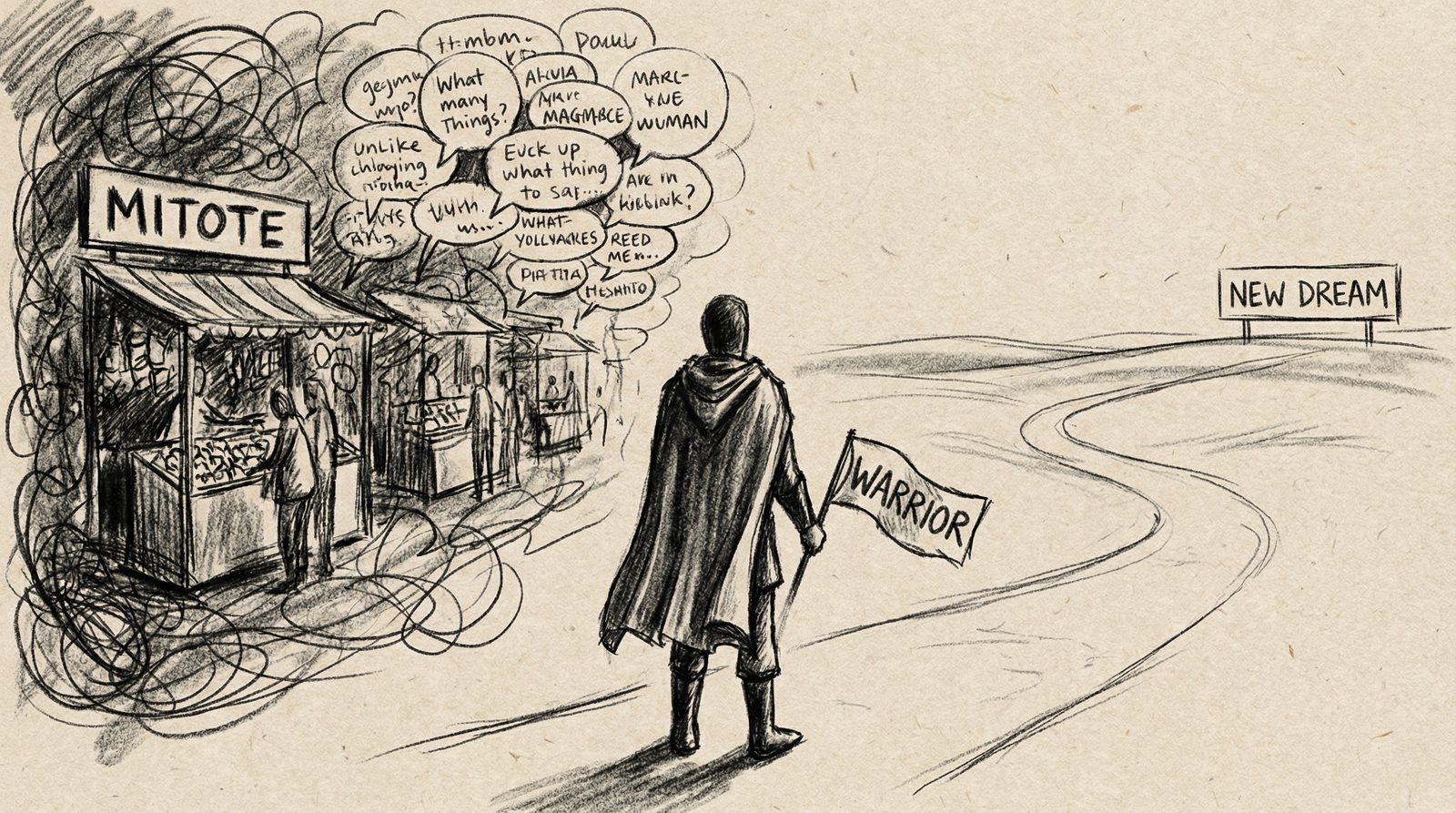
    Illustration inspired by 'The Four Agreements (1997)'

    TRIVIA & AUTHOR FACTS

    Ruiz was born into a family of healers in Mexico and initially trained as a surgeon. A near-fatal car accident pushed him back toward spiritual work. The Four Agreements is presented as a distillation of Toltec wisdom, though it is best understood as a modern spiritual synthesis using Toltec framing to deliver a portable practice code.

    The book’s most distinctive symbolic vocabulary includes Teotihuacan as origin site, the Book of Law as inner codex written during domestication, and the “mitote,” the noisy marketplace of the mind. These images give the otherwise austere prose its mythic pressure.

    SIMILAR BOOKS

    If this resonates, you may prefer other concise spiritual manuals that mix story and instruction. The most relevant neighbors tend to share the same “portable framework” energy: language you can carry into daily friction, not a system you must join.

    DISCOVERABILITY & LINKS

  • Zen Mind, Beginner’s Mind (1970)

    Zen Mind, Beginner’s Mind (1970)

    INTRODUCTION

    Zen Mind, Beginner’s Mind (1970) by Shunryu Suzuki
    Spirituality · 20th Century · United States


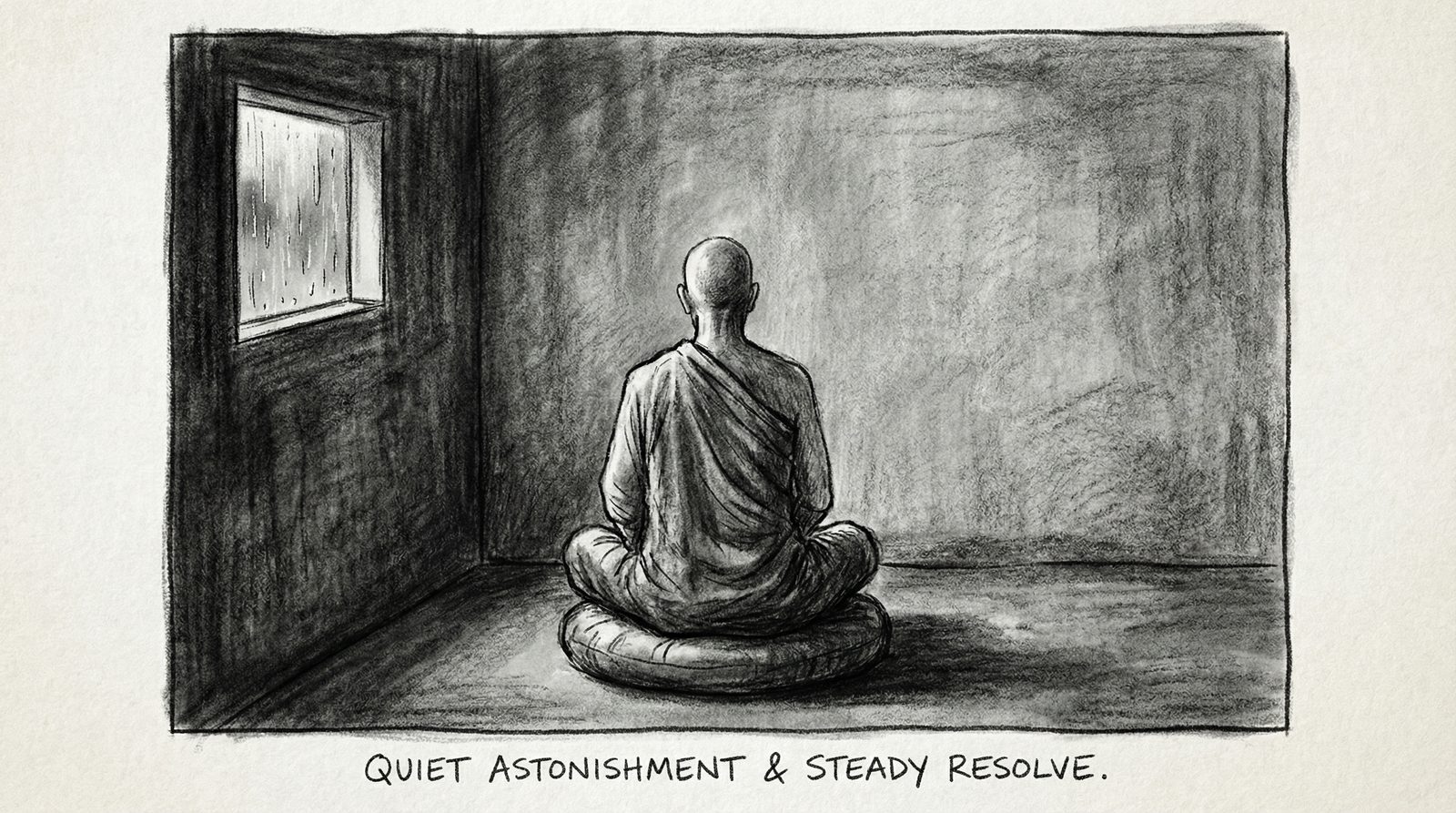
    Zen Mind, Beginner’s Mind (1970) is a slim book that feels bottomless. Drawn from talks Shunryu Suzuki gave to students at the San Francisco Zen Center in the late 1960s, it reads like a series of small, clear windows opening in a fogged room. The prevailing feel is quiet astonishment. Emptiness appears not as a void but as spacious hospitality, a mental room where everything can enter and leave freely. Suzuki keeps circling “beginner’s mind” until it becomes less a slogan and more a way of meeting each moment without armor.

    PLOT & THEMES

    There is no plot in the conventional sense. The book is arranged in three loose sections—“Right Practice,” “Right Attitude,” and “Right Understanding”—each a cluster of short talks given to American students at Sokoji and later at Tassajara. The closest thing to narrative is the rhythm of a day in practice: sit, breathe, notice the mind wander, return.

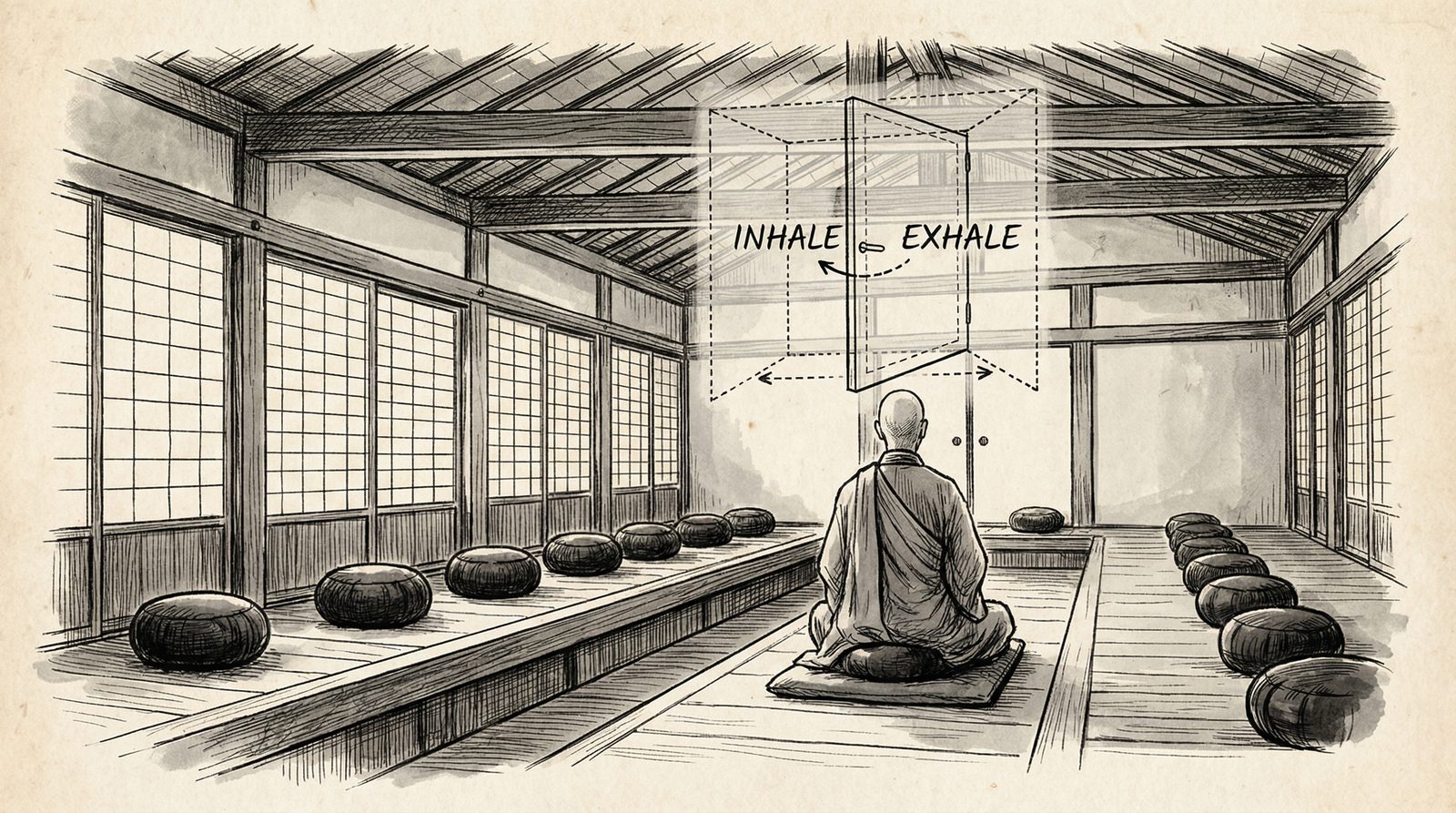
    Breath anchors everything. Suzuki returns again and again to counting, following, and finally just breathing as the most ordinary and most radical act. Themes of non-duality and non-striving run through the text. Instead of promising a heroic breakthrough, he insists there is no gap between practice and enlightenment. Each inhale and exhale becomes the self appearing and disappearing like a swinging door.

    Unlike more narrative or explanatory Zen books, this one ends without a grand revelation. That anti-climax is the point. Enlightenment is not a final scene; it’s how you meet the next moment of boredom or irritation on the cushion. The teaching keeps returning to ordinariness as the only available home for awakening.

    PROSE & NARRATIVE STRUCTURE

    The prose is deceptively simple. Shaped from oral talks but pared down in transcription, it uses repetition as a technique rather than a flaw. Phrases like “just to sit” and “beginner’s mind” recur with mantra-like insistence, wearing grooves into the reader’s habits of thought. Chapters such as “Posture,” “Nothing Special,” and “Bowing” stand alone, but echoes between them create slow cumulative resonance.

    Suzuki’s English can feel slightly off-kilter, and that skew is part of the charm. Sentences tilt into paradox and then land with a dry shrug. The voice feels intimate, as if he is speaking to a small group in a drafty meditation hall rather than to a general audience. The structure enacts the teaching: ideas are approached, released, and approached again from another angle.

    Conceptual editorial illustration inspired by 'Zen Mind, Beginner’s Mind (1970)'

    CHARACTERS & INTERIORITY

    There are no characters in a novelistic sense, but Suzuki himself emerges as a gentle sage archetype with disarming vulnerability. He undercuts spiritual celebrity by admitting impatience, describing sweeping in the rain, or acknowledging that sometimes his practice “is not so good.” Those small confessions build trust because they refuse the posture of perfection.

    The students appear mostly as a collective, glimpsed through the questions they ask: whether bowing is “idolatry,” whether enlightenment should feel like “experience,” whether discipline can coexist with freedom. Interiority here is less psychological than phenomenological. The book trains the reader to watch their own mind with soft persistence, treating thoughts as weather rather than identity.

    LEGACY & RECEPTION

    Since its publication in 1970, Zen Mind, Beginner’s Mind has become a foundational Western Zen text, especially in the United States. It offers relief from “gaining mind,” the pressure to optimize spiritual life into a ladder of achievement. The book remains stubbornly un-slick: it refuses to package awakening as a hack or a climax.

    Readers often find the first encounter disorienting because there is no narrative payoff. That disorientation is the teaching. The book keeps insisting that even enlightenment must be let go of. In a culture that measures value by progress, its refusal to promise transformation-by-milestone is one of its most radical gestures.

    IS IT WORTH READING?

    If you want techniques, hacks, or a clear ladder of advancement, this book will frustrate you. Zen Mind, Beginner’s Mind is worth reading if you are willing to be gently but persistently stripped of expectations. It’s short enough to finish quickly and deep enough to reread for years. It works best not as inspiration but as a companion to actual sitting, returning like a voice in the room whenever you breathe.

    Illustration of a core idea or motif from 'Zen Mind, Beginner’s Mind (1970)'

    TRIVIA & AUTHOR FACTS

    Shunryu Suzuki was a Soto Zen priest who came to San Francisco in 1959 to serve the small Japanese-American congregation at Sokoji. The talks that became Zen Mind, Beginner’s Mind were recorded by students on reel-to-reel tapes, often in drafty rooms above the temple or later at Tassajara Zen Mountain Center. The book was assembled and edited posthumously by students including Richard Baker, which helps explain why certain phrases and themes recur: the text preserves a living teaching voice more than it polishes argument.

    SIMILAR BOOKS

    If Zen Mind, Beginner’s Mind speaks to you, you might look toward other practice-centered texts and East-West bridges. Some offer more historical framing, others more narrative movement, but the strongest neighbors share Suzuki’s insistence that the ordinary mind—washing dishes, walking, breathing—is not the obstacle to awakening but its only possible home.

    DISCOVERABILITY & LINKS

  • Neale Donald Walsch

    Neale Donald Walsch

    ORIGINS & BACKGROUND

    Neale Donald Walsch is best known as a contemporary spiritual writer whose work sits at the crossroads of memoir, theology, and personal growth. He emerged in the 1990s in the same broad wave of spiritual publishing that brought readers books like The Celestine Prophecy and The Alchemist. His signature move is to present spirituality as an ongoing, candid conversation rather than a fixed set of doctrines, which made him a major reference point in modern New Age and personal transformation circles.

    The public origin story of Walsch’s career begins in crisis. Before he became widely known as a spiritual author, he cycled through ordinary jobs, personal setbacks, and a period of homelessness that left him angry and disillusioned. Out of that low point, he describes writing an anguished letter to God and unexpectedly experiencing a flowing, dialogic response. That experience became the seed of Conversations With God: An Uncommon Dialogue, Book 1, the work that would define his career.

    Walsch writes as someone raised within conventional Western religious ideas but no longer satisfied with inherited beliefs. His background is less about formal theological training and more about lived frustration with institutions, work, and relationships. That tension—between traditional religion and direct experience—is central to his books. It places him alongside writers like Dan Millman and Don Miguel Ruiz, where the emphasis shifts from belonging to a church toward cultivating a personal relationship with the divine.

    Rather than positioning himself as a guru, Walsch frames his life as a case study in spiritual trial and error. Failure and collapse become narrative proof that the later insights are not abstract theories but hard-won realizations. This biographical framing underlines his recurring themes of personal transformation, direct dialogue with God, and the idea that crisis itself can function as invitation.

    Editorial illustration inspired by 'Neale Donald Walsch'

    THEMES & MOTIFS

    The defining motif in Walsch’s work is direct dialogue with the divine. Rather than presenting God as distant or unreachable, he portrays the divine as conversational and accessible, willing to engage in plain language about money, relationships, fear, sex, politics, and everyday frustration. The dialogue format is not only a narrative choice; it is the claim that spiritual access is immediate, personal, and available in ordinary life.

    A second recurring thread is spiritual questioning. Walsch treats doubt, anger, and confusion as legitimate starting points rather than signs of failure. His narrator argues, pushes back, and admits resistance, and the text frames this conflict as part of the path. The effect is less a tidy lesson and more a sustained conversation where beliefs are revised in motion.

    Personal transformation runs through everything. Walsch’s books trace a movement from victim consciousness toward intentional co-creation. The idea that thoughts, beliefs, and choices shape experience echoes the broader New Age movement, but Walsch’s method is intimate: the spiritual material is tested against bills, grief, failed relationships, and daily shame rather than staged as mythic adventure.

    Another motif is everyday spirituality. Walsch repeatedly insists that spirituality is not confined to churches, rituals, or retreats. It shows up in how you talk to your partner, how you handle a job loss, and how you respond to fear. In his framing, the sacred is not a separate domain. It is the texture of ordinary choices.

    Finally, a strong thread of unity consciousness runs through his “God” voice: separation is treated as illusion, interconnectedness as reality, love as the underlying condition. This places him firmly in the New Age lineage while the conversational format keeps the philosophy anchored in personal dilemmas rather than abstract metaphysics.

    Symbolic illustration inspired by 'Neale Donald Walsch'

    STYLE & VOICE

    Walsch writes in a confessional tone that feels closer to a late-night conversation than a sermon. His signature structure is the back-and-forth between his own questioning voice and the voice of God, presented as dialogue. This script-like rhythm keeps pacing brisk even when the subject matter becomes metaphysical.

    The “God” voice is conversational and occasionally playful, mixing spiritual claims with colloquial language. This strips away the solemnity of traditional religious writing and replaces it with a mentoring presence that is meant to feel intimate rather than authoritarian.

    Walsch favors clear, direct prose over literary flourish. Ideas are often restated in slightly different forms, anticipating the reader’s objections and trying to translate concepts into usable daily guidance. The result is didactic but personal, with a recurring emphasis on applying spiritual insight to everyday relationships, work stress, and fear.

    Emotionally, his books aim for reassurance with a sharpened edge of accountability. The tone is comforting, but readers are also pressed to take responsibility for beliefs and choices, which gives the voice a subtle insistence beneath its warmth.

    KEY WORKS & LEGACY

    Conversations With God: An Uncommon Dialogue, Book 1 (1995) is the defining work of Neale Donald Walsch. It introduces his core premise of direct conversation with God and lays out his major themes of personal transformation, unity consciousness, and everyday spirituality. The book’s success led to sequels and spin-offs, but this first volume remains the entry point for most readers and the clearest expression of his approach.

    In the broader landscape of late twentieth-century spiritual writing, Walsch sits alongside authors like Dan Millman, Don Miguel Ruiz, and James Redfield. Where The Alchemist uses parable and where narrative seekers use adventure structures, Walsch’s distinctive legacy is the normalization of spiritual dialogue as a practice: “talking to God” becomes something a reader can attempt, not merely something saints or prophets claim.

    His influence shows up in how many readers now treat spirituality less as adherence to a system and more as an ongoing, personal conversation. Even critics who question his claims often acknowledge the emotional impact of his framing: it gives permission to question, to argue, and to seek without needing institutional approval.

  • Don Miguel Ruiz

    Don Miguel Ruiz

    ORIGINS & BACKGROUND

    Don Miguel Ruiz is best known as a Mexican-born spiritual teacher who brought elements of Toltec philosophy into the mainstream of English-language self-help. Trained first in Western medicine as a surgeon, he later turned toward questions of consciousness, suffering, and meaning after a personal turning point. That mix of scientific training and mystical curiosity sits in the background of his books, which read like clear, almost clinical manuals while still relying on myth, metaphor, and symbolic story.

    Rather than presenting himself as a distant guru, Ruiz writes as a guide who assumes the reader is dealing with the same traps: self-judgment, people-pleasing, fear, and the exhausting attempt to control how others see you. His use of Toltec wisdom is less about historical reconstruction and more about applying an indigenous philosophical lens to modern problems of identity and success. Readers who arrive through The Four Agreements often find a bridge between familiar Western self-help and a more symbolic way of thinking about the mind.

    In the larger landscape of spiritual writing, Ruiz fits alongside figures like Dan Millman, who also translate inner change into repeatable practice. Where some contemporaries lean heavily on visionary experience, Ruiz keeps returning to commitments that can be tested in daily life. That focus on lived practice, rather than metaphysical speculation, is central to how his background informs his work.

    Editorial illustration inspired by 'Don Miguel Ruiz'

    THEMES & MOTIFS

    The core of Ruiz’s work is the idea that personal freedom depends on the stories you agree to believe. He argues that much suffering is not caused by external events, but by unconscious agreements formed through family expectation, cultural pressure, and harsh internal language. The Four Agreements compresses this worldview into four repeatable commitments:

    • Be impeccable with your word.
    • Don’t take anything personally.
    • Don’t make assumptions.
    • Always do your best.

    Closely tied to this is the motif of inner dialogue. Ruiz describes the mind as crowded with voices, judgments, and stories, sometimes framed as “mitote,” an inner fog that blurs perception. The agreements are tools for clearing that fog. By changing how language is used in thought and speech, he suggests that inner dialogue can shift from a constant courtroom of self-judgment into something calmer, more honest, and more workable.

    Another recurring theme is spiritual simplicity. Ruiz takes large spiritual questions and reduces them to practices that can be remembered and repeated. The Fifth Agreement extends the framework with a further principle:

    • Be skeptical, but learn to listen.

    This addition deepens his exploration of perception and belief, inviting readers to question inherited narratives without closing themselves off to wisdom. The simplicity here is functional rather than shallow: Ruiz strips away ornament until only what can be lived remains.

    Comparisons are often made between The Four Agreements and a modern parable like The Alchemist. Both invite readers to see life as a journey of awakening, guided by attention and inner knowing. The difference is emphasis. Ruiz is less interested in outward adventure and more in the daily work of changing agreements—what you say, what you assume, and what you rehearse inside your own mind.

    Symbolic illustration inspired by 'Don Miguel Ruiz'

    STYLE & VOICE

    Ruiz writes in a calm, unhurried tone that feels more like a conversation than a lecture. His style is direct and stripped down, favoring short chapters and declarative sentences. The prose embodies the same principle he teaches: remove the noise until the practice is usable.

    Structurally, his books move between explanation, parable, and instruction. A concept is introduced, illustrated through story or Toltec framing, and then anchored in a concrete practice a reader can test immediately. Readers who like spiritually oriented guidance will recognize the steady cadence, but Ruiz is notably concise and disciplined about returning to the same few levers: language, agreement, assumption, and attention.

    Emotionally, his voice balances compassion with firmness. He names the ways people injure themselves through harsh inner dialogue and rigid expectations, but he does so without scolding. The reader is treated as capable of change, and the agreements are offered as tools rather than commandments.

    KEY WORKS & LEGACY

    The Four Agreements (1997) is the book that defines Ruiz for most readers. Its principles have circulated far beyond the book itself, appearing in therapy, recovery communities, coaching, and everyday conversation. That spread is part of his legacy: he compressed a worldview into phrases people actually remember and use, especially under stress.

    The Fifth Agreement (2010), written with his son Don Jose Ruiz, extends the framework by adding skepticism and discernment. Together, these books reinforce Ruiz’s core claim that freedom is largely linguistic: if you can change what you agree to believe, you can change what you experience as possible.

    Placed alongside spiritual storytellers like Dan Millman, Ruiz occupies a distinct niche. He offers fewer dramatic narratives and more focused practices. His influence shows up in the way people use the agreements as shorthand for healthier boundaries, cleaner communication, and a less punitive relationship with the self.

  • Dan Millman

    Dan Millman

    ORIGINS & BACKGROUND

    Dan Millman is best known as the author of Way Of The Peaceful Warrior (1980), a hybrid of memoir and spiritual fable that turns competitive athletics into a story about inner transformation. Before he became a spiritual teacher on the page, he was an elite athlete and coach, and that history quietly shapes everything he writes. Millman’s spirituality stays close to the body and to routine: the daily grind of training, work, and relationships rather than abstract cosmology.

    Rather than building a dense philosophical system, Millman uses crisis as an entry point into questions of purpose and identity. A sudden rupture—especially Awakening Through Physical Injury—forces the character to confront what achievement has been propping up. In his core myth, the injury is not treated as random tragedy but as a forced stop that exposes the cost of ambition and the fragility of the self built around performance.

    Millman writes for readers who feel split between outer success and inner restlessness. His work sits on the same shelf as spiritual adventure narratives like The Celestine Prophecy and The Alchemist, but his sensibility is more gym-floor than mystical. Meaning arrives through repetition, fatigue, fear, and the small negotiations that happen when the body is pushed to its edge.

    The crucial fact about Millman’s background is that he began as an athlete, not as a theorist. High-level gymnastics and coaching gave him an intimate understanding of technical repetition and mental pressure, and that becomes the engine of his storytelling. His signature idea—Athletic Discipline As Spiritual Practice—grows directly out of hours spent in training environments where a minor adjustment can mean the difference between control and a fall.

    Over time, Millman moved from telling a formative story to articulating broader principles. In The Laws Of Spirit, he distills his worldview into practical guidelines while retaining a coach’s sensibility: break big change into doable steps, keep returning to basics, and treat attention as a discipline rather than a mood.

    Editorial illustration inspired by 'Dan Millman'

    THEMES & MOTIFS

    The most persistent thread in Millman’s work is Athletic Discipline As Spiritual Practice. Training drills, conditioning, and competition are treated as inner work made visible. The gym becomes a kind of dojo where ego, fear, and doubt are confronted as tangibly as sore muscles. The qualities needed to stay with a difficult routine—patience, resilience, presence—become the same qualities needed to stay with a spiritual path.

    Another central motif is Awakening Through Physical Injury. In Millman’s narratives, the body breaking down is rarely the end of the story. Injury strips away familiar identities and exposes how much worth has been tied to performance. The forced pause becomes the space where new questions surface: who are you without your role, your achievements, or your body’s reliability?

    Millman also relies on the wise mentor pattern. In Way Of The Peaceful Warrior, the mentor figure functions as tough-love guidance, using paradox, chores, and blunt honesty to disrupt the protagonist’s certainty. The lessons are less “belief” than practice: attention, humility, and the willingness to stop negotiating with reality.

    Across his work, Millman returns to the tension between ambition and peace, the search for purpose beyond external success, and the need to integrate insight into ordinary schedules. Even when he writes in a more didactic mode, his underlying promise stays consistent: the everyday discipline you already live with can become a doorway into steadier awareness.

    Symbolic illustration inspired by 'Dan Millman'

    STYLE & VOICE

    Millman’s style sits between memoir, parable, and self-help manual. In narrative books like Way Of The Peaceful Warrior, he uses a conversational first-person voice that makes spiritual questions feel like late-night talks in a dorm room or locker room. The tone is direct and unpretentious, often punctured by dry humor from the mentor figure who undercuts the protagonist’s drama with a simple task.

    Structurally, he favors clear episodic scenes. Each episode tends to revolve around a single insight, reinforced by dialogue or a physical challenge. When he shifts into principle-driven writing in The Laws Of Spirit, the voice becomes calmer and more didactic, but retains the same clarity and coaching cadence.

    Emotionally, his work carries steady compassion for people who are striving and exhausted. He writes with familiarity about anxiety, perfectionism, and fear of failure, and he rarely glamorizes transcendence. Moments of insight are usually small and practical, arriving in the middle of practice, injury, or everyday frustration.

    KEY WORKS & LEGACY

    Way Of The Peaceful Warrior is the defining entry point into Millman’s world. It introduces the core pattern of a driven young athlete who meets an unconventional mentor and is forced to reconsider what success means. The book’s enduring appeal lies in how it translates spiritual ideas into the concrete language of training, fatigue, and fear.

    The Laws Of Spirit shifts from story to principle, distilling lessons into practical guidance about balance, service, and attention. Together, these works map a trajectory from personal crisis through teaching to reflection, showing how a formative rupture can be revisited as a lifelong practice rather than a single breakthrough.

    In the broader landscape of contemporary spirituality, Millman occupies a middle ground between narrative-driven seekers and more doctrinal teachers. His legacy is less about a unique cosmology and more about a stance: for readers living through the collapse of a cherished identity, he offers language for turning rupture into practice and practice into a steadier way of being.

  • Alan Watts

    Alan Watts

    ORIGINS & BACKGROUND

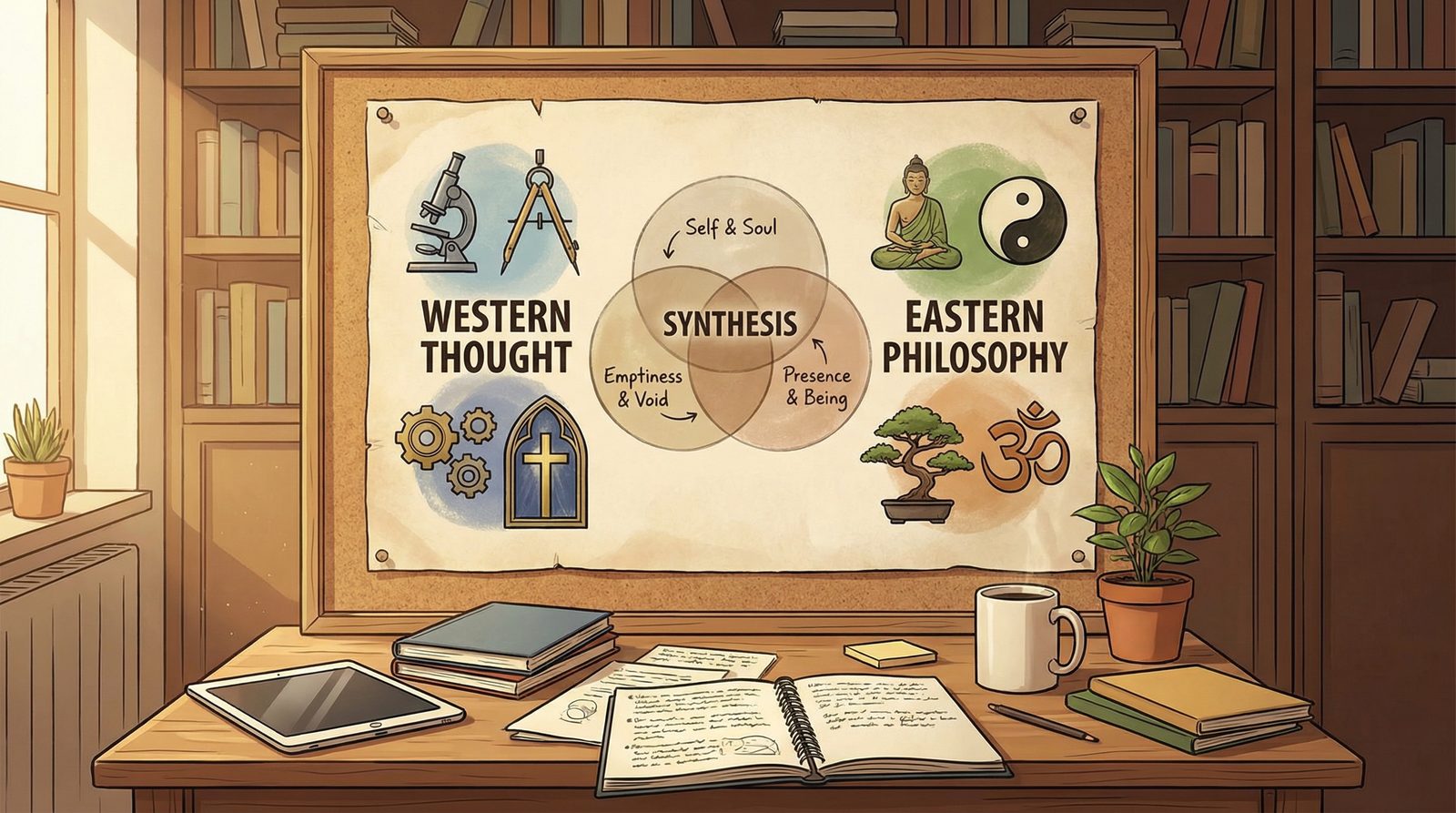
    Alan Watts is best known as a bridge figure, a British-born writer and speaker who helped popularize Asian thought for Western audiences in the mid-twentieth century. He was raised in England with a mix of Anglican Christianity and a sharp curiosity about the wider world, which led him early toward Buddhist and Hindu texts. Eventually he moved to the United States, studied theology, and served as an Episcopal priest before leaving the church to focus on a more fluid Eastwest Philosophical Synthesis.

    What matters for his work is less the institutional path and more the way he stood at a cultural crossroads. He wrote and lectured at a time when Western readers were just beginning to take Zen Buddhism, Taoism, and Vedanta seriously. Rather than presenting them as exotic systems, he treated them as practical lenses for everyday life. His training in Christian theology gave him a sharp sense of how religious language can clarify, distort, and control, and he used that insight to cut through dogma on all sides.

    Watts was less interested in constructing a tight philosophical system than in describing how ideas feel from the inside. His biography feeds directly into this approach: a restless mover between countries, institutions, and traditions, he turned his own life into an experiment in living without clinging too tightly to any one identity.

    Editorial illustration inspired by 'Alan Watts'

    THEMES & MOTIFS

    A central theme in Watts’s work is the illusion of a separate self. Again and again he returns to the idea that the “I” we defend is a mental construct, a useful convention that becomes painful when we treat it as something solid. For Watts, the self is more like a pattern in motion than a hard object, and much of our anxiety comes from trying to freeze that motion into certainty and control.

    Another recurring motif is Eastwest Philosophical Synthesis. He places Zen, Taoism, and Hinduism alongside Western psychology, science, and Christian imagery, not to flatten them into one bland system but to show how each tradition reveals a different blind spot. The synthesis is less about agreement than about creative friction, where unfamiliar language opens new ways of seeing familiar problems.

    Watts is also preoccupied with the tension between control and surrender. He returns to images of water, music, and dance to suggest that life works better when approached as a performance rather than a problem to be solved. This places him in useful contrast with more strictly instructional works like Zen Mind, Beginner’s Mind, where discipline and practice are emphasized more than play and improvisation.

    Finally, he explores insecurity and groundlessness directly. In The Wisdom Of Insecurity, Watts argues that the demand for absolute certainty is itself a generator of suffering. Rather than promising stable answers, he invites the reader to become more intimate with change, ambiguity, and the passing nature of experience. That willingness to sit with not-knowing is one of the signatures of his voice.

    Symbolic illustration inspired by 'Alan Watts'

    STYLE & VOICE

    Watts writes and speaks in a conversational, sometimes mischievous tone. His style is closer to a late-night talk than to formal philosophy. He uses jokes, parables, and sudden shifts in perspective to loosen the reader’s grip on familiar assumptions. Rather than building dense chains of argument, he circles a topic from multiple angles until something clicks at the level of intuition.

    There is a musical quality to his pacing. He often begins with something concrete and ordinary, widens the frame to cosmic scale, then drops back into the personal. This rhythm mirrors his themes about the unity of self and world, moving the reader between the intimate and the vast without insisting on a final “system.”

    Compared with more austere Zen teachers or more systematic writers, Watts is comfortable with contradiction and unresolved tension. He will often present two opposing views and then suggest that both are partial, inviting the listener to feel their way into a third position that cannot be neatly stated. The tone is playful, sometimes irreverent, but underneath is a steady seriousness about suffering, compassion, and seeing the world with fresh eyes.

    KEY WORKS & LEGACY

    Because so much of Watts’s influence came through lectures and radio broadcasts, his key works are as much spoken as written. Collections of his talks continue to circulate, shaping how English-speaking audiences encounter ideas like non-duality, impermanence, and the limits of the ego. His writing helped make these concepts feel close to everyday life rather than locked in monasteries.

    His legacy is not a single doctrine but a set of habits: questioning the solidity of the self, treating synthesis as a living conversation rather than a museum display, and approaching spiritual practice with a mix of seriousness and humor. For many readers and listeners, Watts was the first voice that made spiritual life feel exploratory rather than rule-bound, and that permission continues to ripple through modern writing on consciousness, psychology, and attention.