Genre: Supernatural fiction

  • The Whispering Skull (2014)

    The Whispering Skull (2014)

    INTRODUCTION

    The Whispering Skull (2014) by Jonathan Stroud
    Young adult fantasy · 448 pages (UK hardcover) · United Kingdom


    The Whispering Skull is where Lockwood & Co. stops feeling like a clever ghost-hunting premise and starts to feel like a haunted friendship. Stroud takes his alternate 2010s London and leans into bones, relics, and buried history. The tone stays brisk and funny, but there’s a persistent melancholy under the banter, as if every joke is being told with the cemetery gates still swinging behind you. This second book tightens focus on the small agency at 35 Portland Row and pushes them into direct conflict with both spectral threats and the petty cruelties of adult institutions.

    It’s not just about defeating Visitors. It’s about what happens to children who grow up with iron chains in one hand and a ghost-lantern in the other, and how long they can keep pretending that’s normal.

    PLOT & THEMES

    The plot hinges on two dangerous objects: a stolen bone mirror taken from the grave of the Victorian occultist Edmund Bickerstaff, and the titular Whispering Skull, a communicative ghost sealed in a glass jar in Lockwood’s basement. The rivalry with the larger Fittes agency continues, turning every case into a contest for prestige and survival. Quill Kipps and his squad are comic foils, but they also remind the reader that Lockwood’s outfit is underfunded and one serious mistake away from ruin.

    Mirrors and reflection become the book’s central symbolic logic. The bone mirror does not merely show the past; it shows unbearable truths and functions like a psychic trap. That’s why the story keeps returning to private looking as a form of danger. The mirror’s influence on George becomes increasingly insidious, culminating in a near-fatal compulsion to face its visions alone.

    The institutional layer expands. Visits to cemeteries, research facilities, and agency strongholds hint at a wider exploitation of the Problem: not only fear management, but profit, secrecy, and competitive sabotage. The book’s procedural spine keeps the world grounded in rules and consequences, which ties naturally to the Ghost Hunting Agency motif and brushes up against Magical Bureaucracy whenever oversight and institutional obstruction enter the frame.

    The ending is clean and decisive. Lockwood, Lucy, and George confront the mirror in the catacombs and destroy it with Greek Fire, denying its power to everyone who wants to weaponize it. The final sting comes back at home: the Skull retaliates by revealing it knows something about Lockwood’s locked room and his dead sister, turning a solved case into a deeper future threat.

    PROSE & NARRATIVE STRUCTURE

    Stroud’s prose is deceptively light, and Lucy’s first-person retrospective narration gives everything a double edge. We are in the moment with a frightened, stubborn teenager, but we are also listening to a voice that already understands which mistakes will echo. That distance lets Stroud slide from kitchen banter at Portland Row into a chilling description of the bone mirror’s surface without changing gears.

    The structure alternates between set-piece hauntings and slower investigative passages: cemetery missions, mausoleum sequences, and the final catacomb descent, broken up by research in George’s paper-strewn basement and Lucy’s late-night conversations with the Skull. Those Skull scenes feel like a dangerous kind of therapy: comfort mixed with coercion. Domestic rituals — tea, toast, Lockwood’s immaculate suits — become a fragile defense against the encroaching dead.

    Action is cleanly choreographed and tactile: iron chains on stone, salt and flame, the sudden drop in temperature when a Visitor arrives. The pacing is confident because the book knows what it is doing: it keeps feeding casework forward while quietly tightening the emotional screws inside the house.
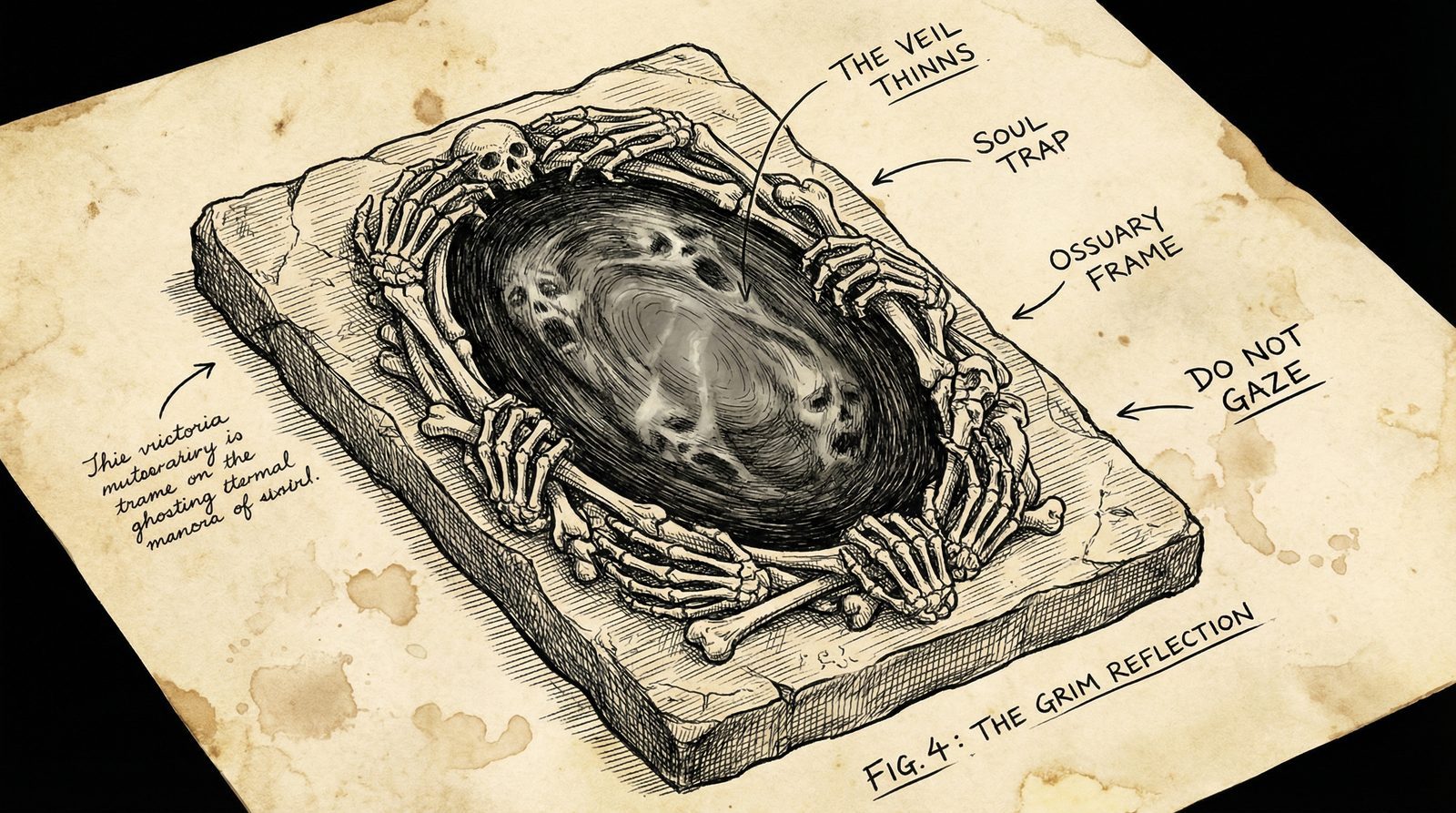
    Conceptual editorial illustration inspired by 'The Whispering Skull (2014)'

    CHARACTERS & INTERIORITY

    At the center is Lucy Carlyle, a haunted-heroine variation who is both weapon and witness. Her Listening talent makes her uniquely vulnerable to the Skull’s taunts, and Stroud lets the reader feel her mix of pride and fear whenever she pushes her ability further. Her prickliness and jealousy, especially toward rival agency figures, ground the character in mid-teen social pain rather than generic heroism.

    Anthony Lockwood remains charmingly opaque. We glimpse grief through fissures: his fury at institutional threats, his tight-lipped silence about the locked room, the way he flinches when certain names surface. George Cubbins gains sharper interiority here, with the mirror’s pull revealing how the Problem corrodes even the researcher’s sense of control. The Skull becomes the most unsettling presence of all because Lucy begins to seek its validation even as she knows it is malicious.

    LEGACY & RECEPTION

    The Whispering Skull is often remembered as the installment where the series “locks in.” The world of iron chains, ghost-fog, and child agents becomes not just a setting but a coherent system with rules and moral cost. The later screen adaptation rearranges material, but the book’s quieter achievements remain hard to replicate: Lucy’s voice, George’s creeping obsession, and the Skull’s final revelation that lands like a stone in still water.

    Within YA supernatural fiction, the novel stands out for combining procedural casework with emotional fracture. It trusts readers to sit with unresolved questions while still delivering a clean, satisfying case conclusion.

    IS IT WORTH READING?

    If you liked the first book but wanted more emotional weight and stranger ghosts, this is worth your time. It balances spectral action with character work and lets jokes coexist with dread. The horror isn’t gore; it’s standing in the dark with something whispering in your ear, telling you what you most want — and fear — to hear. If Lucy’s voice and her uneasy bond with the Skull click for you here, the rest of the series will reward you.

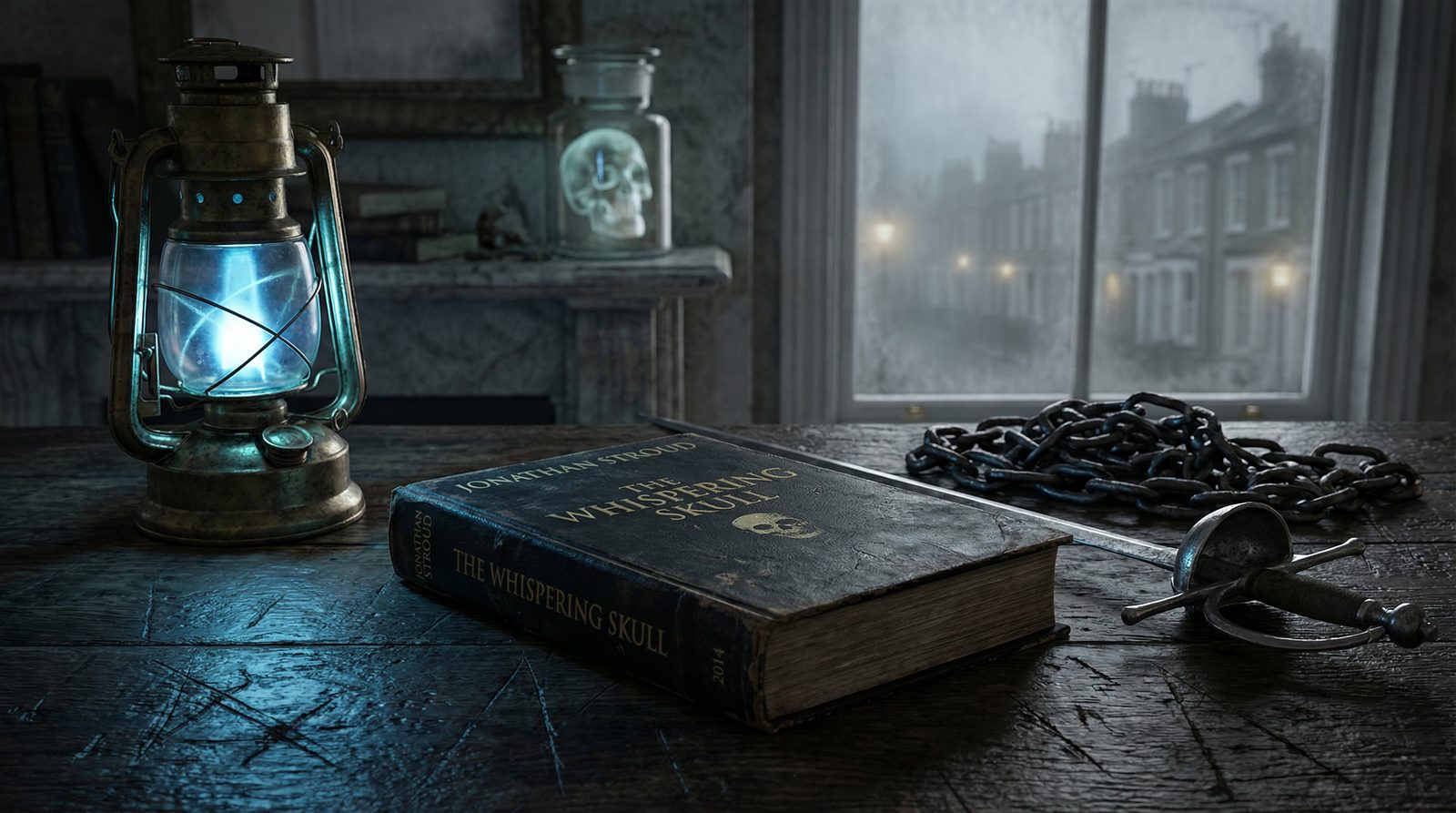
    Illustration inspired by 'The Whispering Skull (2014)'

    TRIVIA & AUTHOR FACTS

    Stroud’s experience with voice-driven fantasy in the Bartimaeus books shows in the Skull’s sardonic commentary. This installment continues his interest in pairing young protagonists with dangerous, talkative supernatural entities. The novel also deepens the series’ working-world logic: agencies, relic markets, regulation, and institutional secrecy layered over classic ghost story fear.

    Real London locations are tilted into the uncanny, and Stroud’s material toolkit — iron, salt, Greek Fire, sealed jars — keeps the magic tactile rather than abstract. The procedural clarity is part of the series’ signature: the rules matter, and so do the consequences of breaking them.

    SIMILAR BOOKS

    If you enjoy the mix of banter, ghosts, and real peril here, you may like other series that combine investigative structure with a strong voice and a dangerous partnership. The best matches tend to treat supernatural rules as work rules and use humor as a survival strategy rather than a mood.

    DISCOVERABILITY & LINKS

  • A Fallen Idol (1886)

    A Fallen Idol (1886)

    INTRODUCTION

    A Fallen Idol (1886) by F. Anstey (Thomas Anstey Guthrie)
    Psychological fiction · United Kingdom


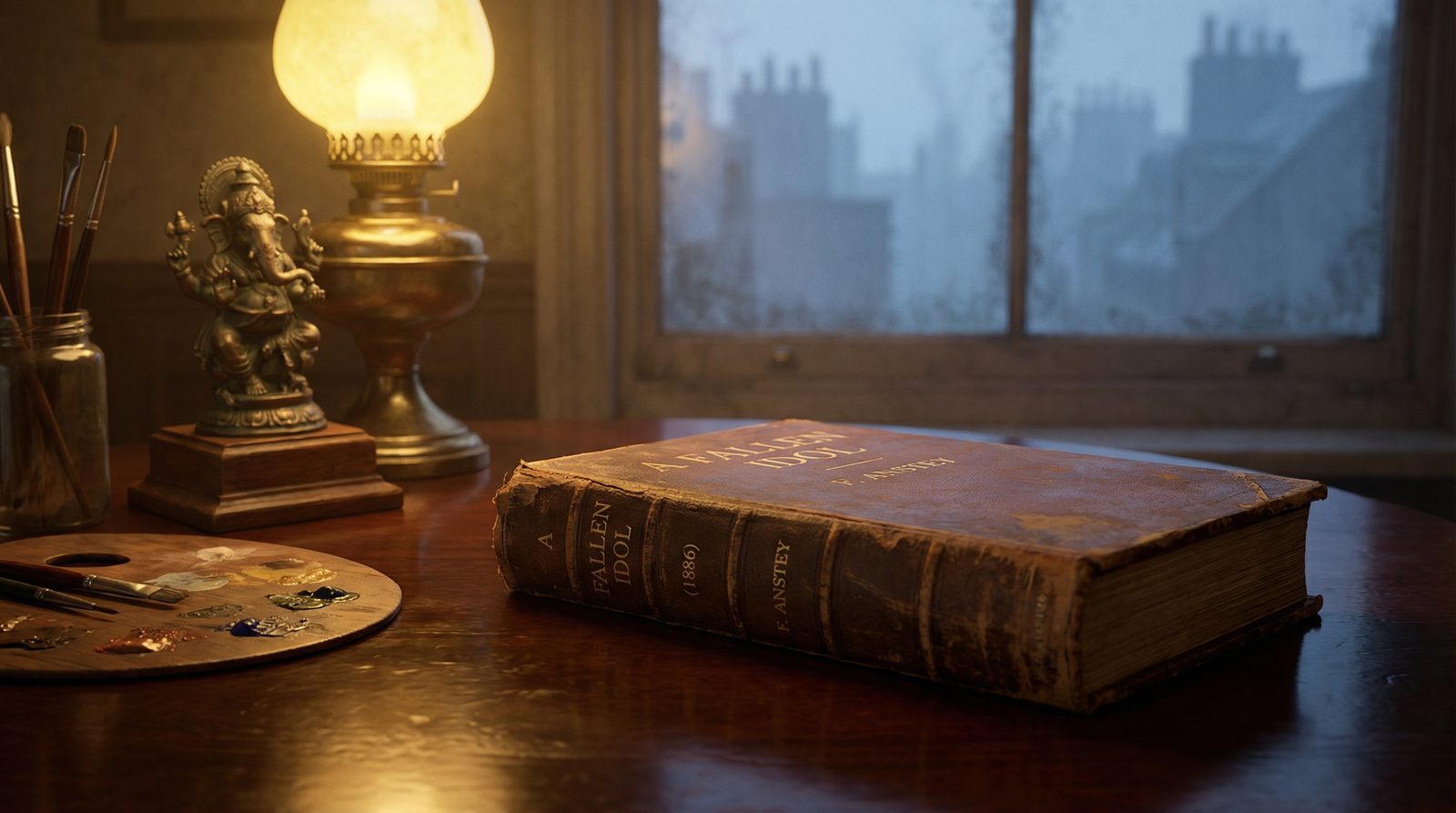
    A Fallen Idol begins like a drawing-room curiosity and steadily curdles into something colder. At first glance it looks like a fashionable Victorian entertainment, a touch of occult glamour enlivening polite society. Beneath that surface, Anstey is conducting a pointed examination of belief, imposture, and the damage done when spiritual hunger collides with social ambition.

    The supernatural element is unmistakable, but it is never allowed to dominate the book in the way a conventional horror story might. Instead, the idol operates as a crooked mirror, reflecting vanity, cowardice, and moral compromise back at the people who claim to revere it. The prevailing mood is unease rather than terror. Anstey is less interested in demons than in how quickly ordinary people betray themselves when mystery becomes fashionable.

    PLOT & THEMES

    The story opens in colonial India, where the young barrister Harold Caffyn acquires a strange idol after a violent scene at a temple in Bhowanipore. The circumstances are murky, a worshipper is killed, and whispers of a curse follow the object. Harold brings the idol back to London, where it finds its way into the studio of the painter Mark Ashburn.

    From there, the idol works slowly and indirectly. Mark’s portraits, especially his painting of the charming Dolly Tredwell, begin to attract attention that feels unearned and unsettling. A circle of fashionable spiritualists gathers around the studio, led by the solemn Mrs. Fothergill and the excitable Miss Tyrell, eager to believe that something ancient and powerful is at work.

    The novel combines the cursed-object tradition with social imposture. Harold, who knows more about the idol’s bloody history than he admits, manipulates its reputation to his advantage, nudging Mark into becoming a reluctant medium. The séances staged in the dim studio become performances of projection. The sitters see what they want to see, while Mark feels himself hollowed out by a role he never meant to play.

    A colonial undercurrent runs through the book, recalling earlier stories of stolen relics such as The Moonstone. The idol is treated as both exotic curiosity and drawing-room entertainment, stripped of context and consequence until the damage is already done. When exposure finally looms, Harold recklessly handles the idol to prove it harmless. The result is disaster rather than vindication.

    The ending is bleakly ironic. Mark survives physically but not ethically. He burns the painting that brought him acclaim, abandons the séances, and returns the idol to a museum, where it is neutralized behind glass and catalog numbers. No one is cleansed of guilt. Reputations remain bruised. The harm lingers quietly, unresolved.

    PROSE & NARRATIVE STRUCTURE

    Anstey writes with a lightness that disguises how carefully the novel is engineered. Free indirect discourse allows the narrative to drift between Mark’s self-doubt, Harold’s cynical calculation, and the eager credulity of the spiritualist circle without heavy-handed transitions.

    Dialogue does much of the work. Characters expose themselves through polished evasions, nervous enthusiasm, and pious certainty. The narrator’s occasional asides sharpen the satire, particularly when séances are squeezed between tea and supper, or when moral outrage coexists comfortably with voyeuristic curiosity.

    Structurally, the novel alternates between scenes of social comedy and increasingly claustrophobic séances in Mark’s studio. Each sitting raises the stakes: gossip spreads, reputations wobble, and belief hardens into expectation. Notably, the idol itself rarely acts in any overt way. Its power lies in what people are willing to do in its presence.

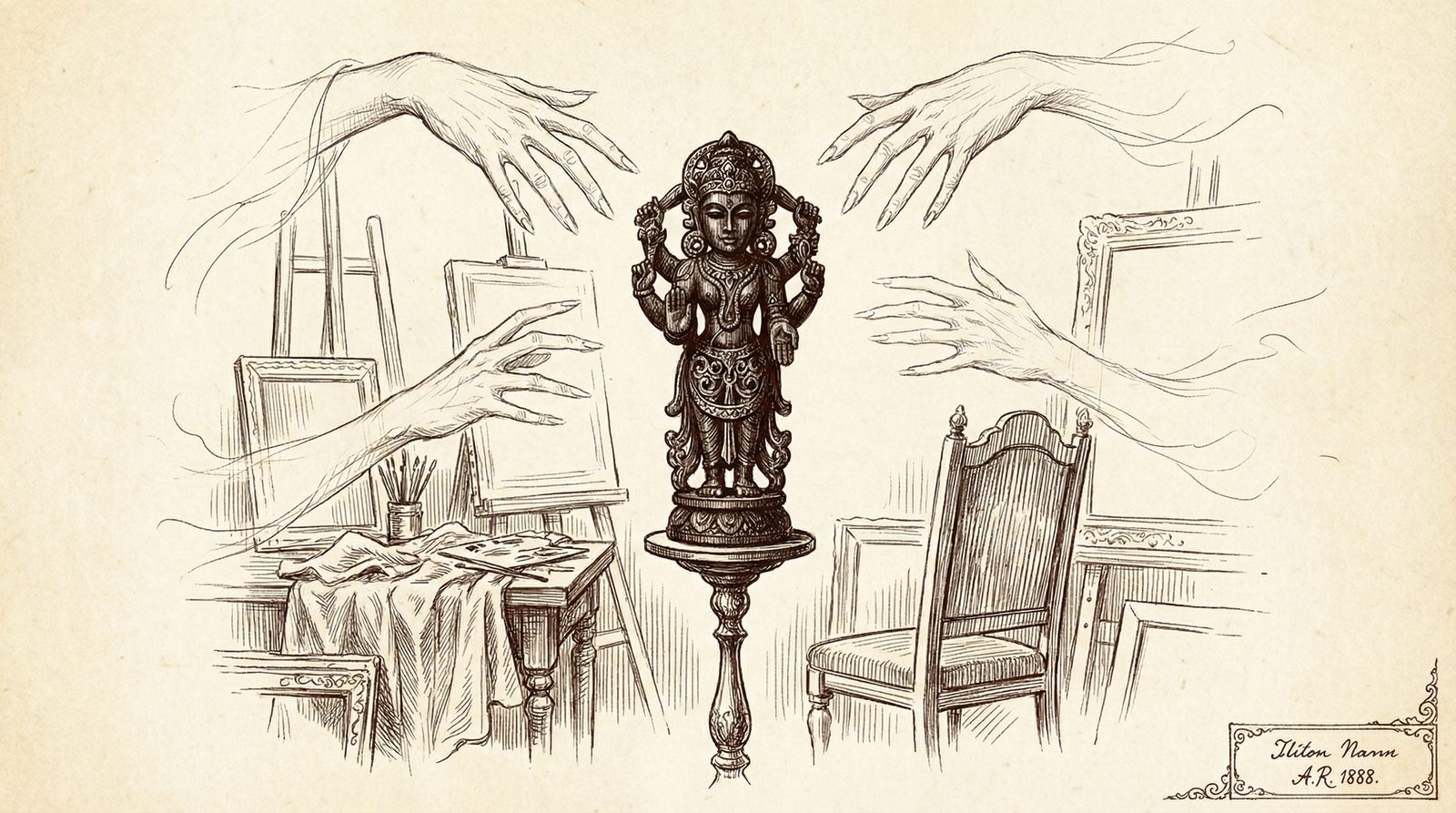
    Conceptual editorial illustration inspired by 'A Fallen Idol'

    CHARACTERS & INTERIORITY

    Mark Ashburn is a reluctant medium, not by conviction but by weakness. He is decent, talented, and insecure enough to be swayed. His interior monologue reveals how easily vanity disguises itself as generosity. During the séances he repeatedly tells himself that he is only humoring others, even as he profits from their belief.

    Harold Caffyn feels strikingly modern. He half believes his own deceptions and treats danger as something to be managed theatrically. Moments of genuine fear break through his composure, but his instinct is always to convert panic into control.

    Dolly Tredwell and the surrounding social figures are sketched with less depth, yet Anstey allows flashes of private disillusionment to surface. In particular, Dolly’s overheard humiliation after a disastrous séance reminds the reader how easily a young woman’s reputation becomes collateral damage in fashionable folly.

    LEGACY & RECEPTION

    A Fallen Idol never matched the popularity of Anstey’s comic successes, and it is often treated as a minor occult curiosity. Victorian reviewers were divided, intrigued by the ingenuity of the séance scenes but unsettled by the novel’s refusal to clarify whether the idol was truly supernatural or merely a catalyst for fraud and hysteria.

    That ambiguity has aged well. The book now reads as a bridge between moralized ghost stories and later psychological hauntings. Its final image, the idol inert in a museum case while the characters quietly absorb their shame, feels unexpectedly modern in its skepticism toward spectacle and belief.

    IS IT WORTH READING?

    If you prefer supernatural fiction that unsettles through psychology rather than shocks, this novel is worth your attention. It moves at a Victorian pace, heavy with conversation and social maneuvering, but the unease accumulates steadily.

    The séances are disturbing not because of what appears, but because of what people are willing to believe. Readers interested in spiritualism, colonial guilt, and the performance of belief will find the novel sharp and quietly corrosive.

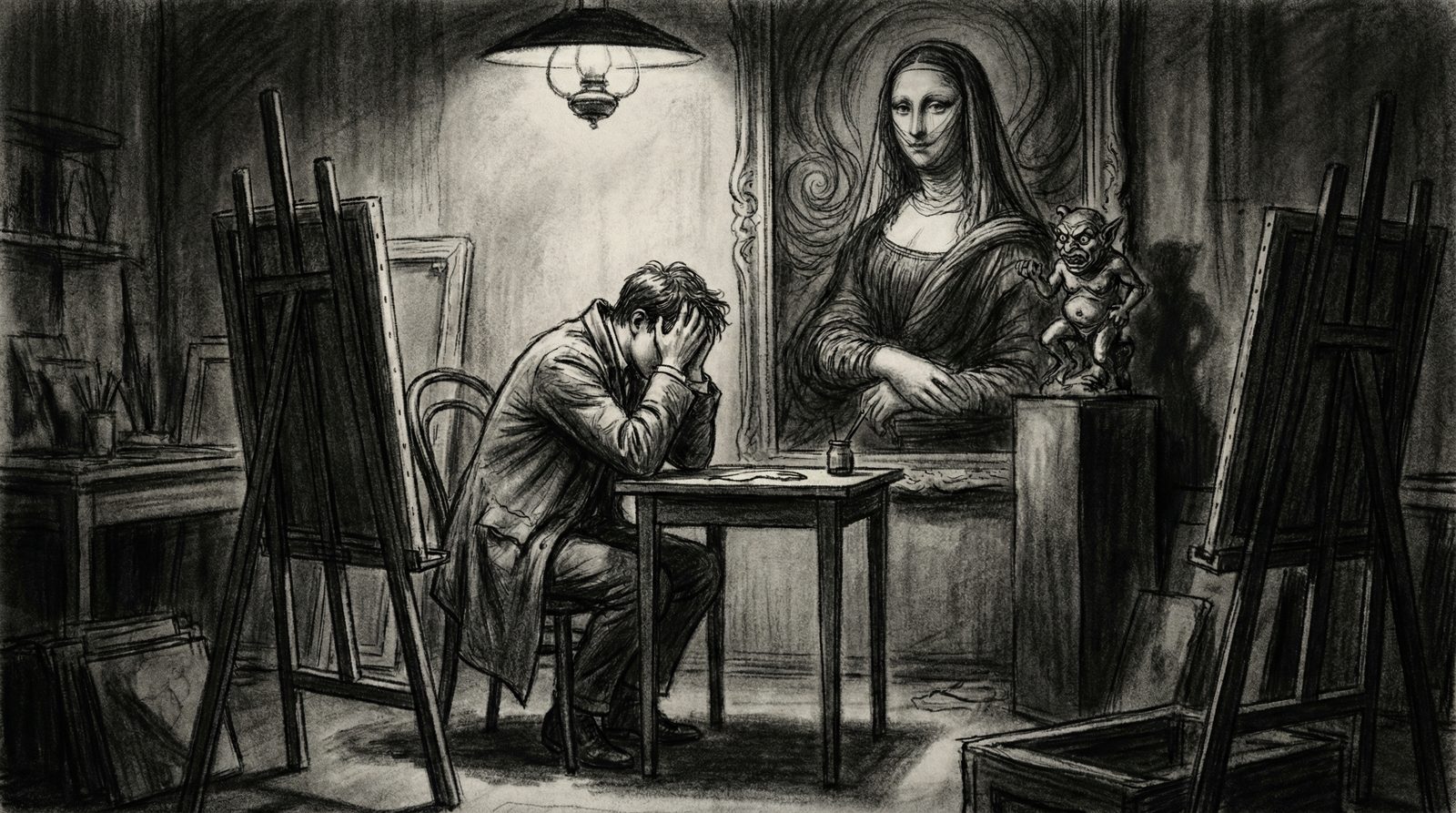
    Illustration inspired by a core idea from 'A Fallen Idol'

    TRIVIA & AUTHOR FACTS

    F. Anstey was the pen name of Thomas Anstey Guthrie, a barrister-turned-writer whose legal training shows in the careful sequencing of cause and consequence throughout the novel. The early Indian chapters draw on contemporary travel writing, though filtered through satire.

    Anstey attended real séances in London, and his fascination with spiritualism and fraud informs the novel’s tone. The museum ending reflects his interest in how institutions neutralize danger by classification, turning objects of fear into labeled curiosities.

    SIMILAR BOOKS

    Readers interested in supernatural objects with moral weight may also enjoy The Moonstone for its colonial relic and social fallout, or The Turn of the Screw for a later, more psychological ambiguity. For Victorian skepticism toward spiritual fashion, the earnest writings of Arthur Conan Doyle on séances offer a revealing real-world counterpoint to Anstey’s fiction.

    DISCOVERABILITY & LINKS