Genre: Supernatural mystery

  • The Screaming Staircase (2013)

    The Screaming Staircase (2013)

    INTRODUCTION

    The Screaming Staircase (2013) by Jonathan Stroud
    Supernatural mystery · 467 pages · United Kingdom


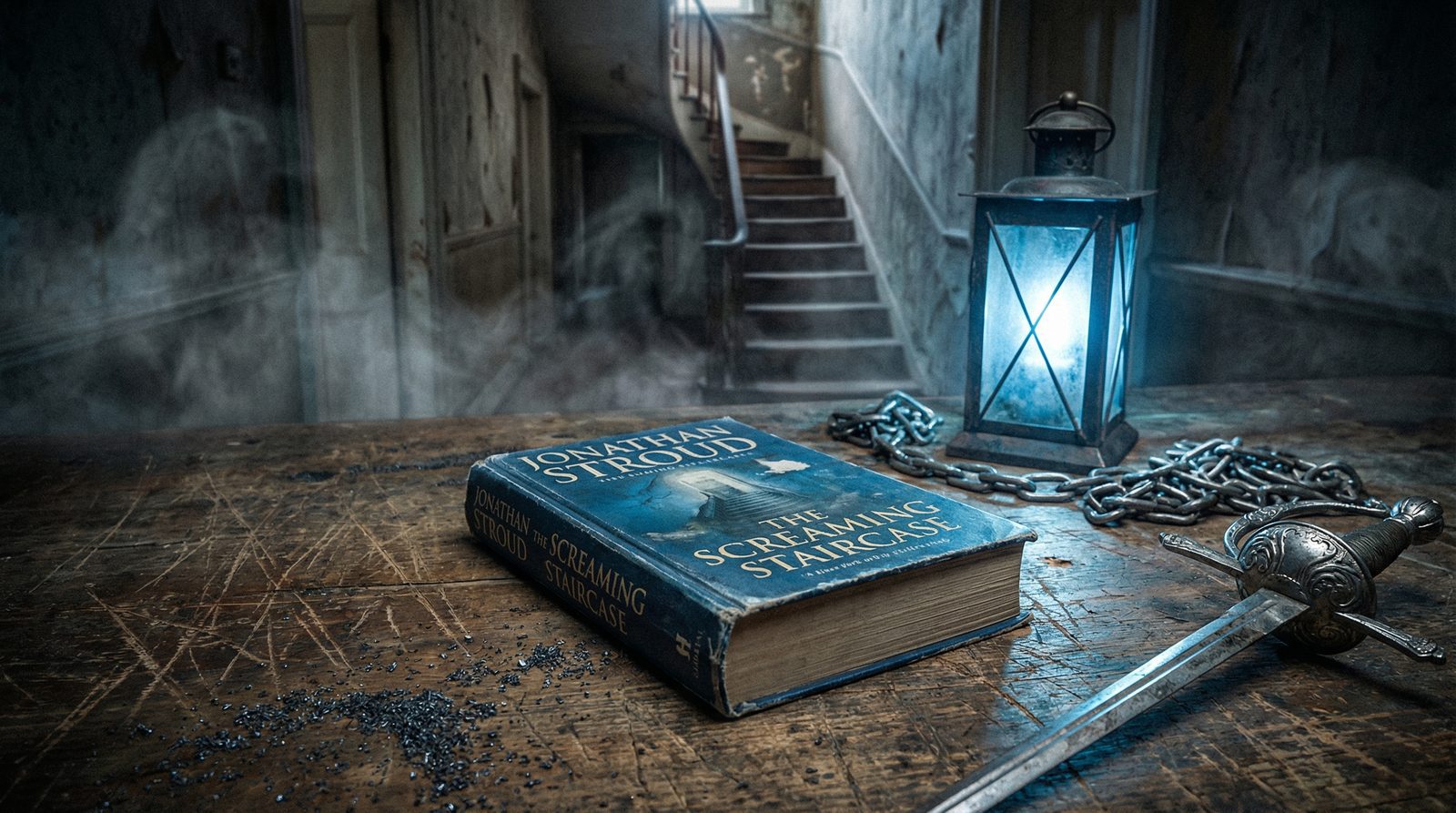
    The Screaming Staircase is a ghost story built on anxiety and ash rather than comfort. Jonathan Stroud imagines a London quietly broken by hauntings, where children carry rapiers and iron chains while adults retreat behind curfews and committees. Silence and sound run through everything: the sudden dead hush before a Visitor appears, the scrape of chains on stone, the way fear makes even ordinary rooms feel underexposed. Yet the book is also wry at the edges, especially in the kitchen scenes at 35 Portland Row, where tea and bickering become a survival ritual after near-death.

    The feel is a mix of dread and camaraderie — late-night adrenaline followed by exhausted laughter. Stroud isn’t chasing cheap shocks. He’s interested in what it means to grow up when danger is simply the weather of your world, and when the only people who will really fight for you are your equally damaged friends.

    PLOT & THEMES

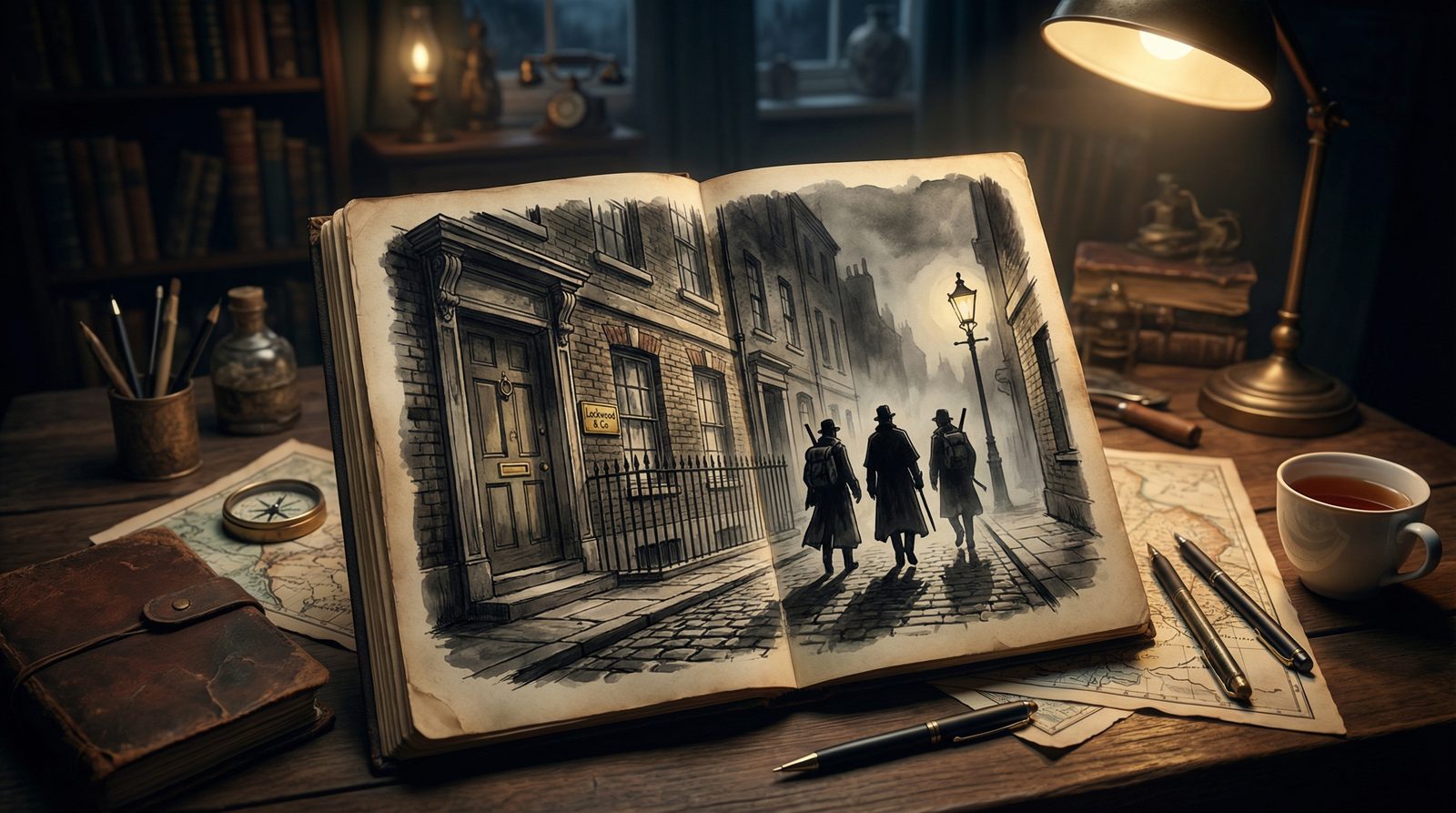
    The story follows Lucy Carlyle, a young agent with the rare ability to hear ghosts, as she joins the tiny, precarious agency Lockwood & Co. After an early case damages their reputation, Lucy, Lockwood, and George are forced to take on a high-profile haunting at Combe Carey Hall to secure the agency’s future. The hall’s infamous Red Room and the Screaming Staircase become the physical heart of the plot, but the deeper theme is institutional failure: a society that cannot protect children, yet depends on them to survive.

    Stroud plays with the haunted-house investigation structure but twists it so the kids are professionals, not meddling amateurs. Smaller jobs and research threads lead toward the Combe Carey case, giving the novel a procedural rhythm. Thematically, it’s about exploitation and secrecy: Lucy’s past, the way agencies compete, and the adults who hide information while children bleed for them. Even George’s obsession with dangerous artifacts hints at the book’s moral logic: in this world, the dead are constantly being turned into tools.

    The ending is survivalist rather than comforting. At Combe Carey Hall, Lucy and Lockwood uncover the true horror beneath the staircase: a history saturated into the house itself. Lucy descends into the source space and manages to calm the dead long enough for escape as the hall burns. The case is “won,” but the victory is smoky and incomplete. The agency emerges with money and renewed reputation, but Lucy senses the Problem is far larger than one house or one wealthy villain.

    PROSE & NARRATIVE STRUCTURE

    The book uses first-person retrospective narration, with Lucy speaking from an unspecified point in the future. That choice quietly shapes everything. She withholds, circles back, and drops hints about later catastrophes, creating a braided structure: the present case narrative threaded with the shadow of earlier trauma and future consequence. The opening isn’t Combe Carey at all, but a smaller job that shows how the series can be comic in one scene and lethal in the next.

    Stroud’s prose is clean, rhythmic, and slyly funny. Sensory detail does a lot of the horror work: the sour-metal taste of ectoplasm, the greasy chill of a Visitor’s touch, the way ghost-fog muffles sound along streets and rivers. Jokes about crumbs, clothing, and petty arguments puncture tension without dissolving it. Structurally, the novel alternates between tight set pieces (the Red Room, the Staircase) and quieter interludes at Portland Row, where case files and tea become tools of worldbuilding.

    During hauntings, Stroud favors clipped dialogue and abrupt paragraph breaks that mimic the jerkiness of fear. The book reads fast, but it leaves an aftertaste, especially in the throwaway lines where Lucy implies how many names she will eventually carry as ghosts in memory.

    Conceptual editorial illustration inspired by 'The Screaming Staircase (2013)'

    CHARACTERS & INTERIORITY

    Lucy is built as a haunted prodigy: gifted, stubborn, and shaped by betrayal. Her guilt over earlier disasters colors every risk she takes. She’s not just fighting ghosts; she’s trying not to repeat the adult negligence that got people killed before she ever arrived at Portland Row.

    Lockwood is more mask than man in this first volume. Stroud withholds his backstory, letting the reader see him mainly through Lucy’s fascination and irritation. George is gloriously unglamorous: messy, obsessive, and research-driven. His friction with Lucy and his willingness to break rules for information establish him as a parallel moral center rather than a sidekick.

    The character work sings through constant friction. The trio bickers, misreads each other, and still shows up. The ghosts are frightening, but the deeper drama is three teenagers trying to build a life and a business in a world that expects them to die young.

    LEGACY & RECEPTION

    When The Screaming Staircase arrived in 2013, it entered a crowded market of paranormal YA, but Stroud’s approach felt different. He treated ghosts as a labor problem and children as underpaid professionals. Readers responded to the intricate rule-based worldbuilding — iron, salt, lanterns, agency rivalries — and to the dry humor that kept the horror from curdling.

    The series has aged well because the first book is starker than a typical genre opener. It does not promise the world will become safe. It promises only that the kids will keep working anyway, and that grim logic gives the story its bite.

    IS IT WORTH READING?

    If you want a ghost story that respects its young characters’ intelligence and suffering, The Screaming Staircase is worth reading. It’s genuinely eerie, but the real hook is the emotional texture: exhausted kids making tea at midnight, joking because the alternative is breaking down. The pacing is brisk, the humor dry, and the horror grounded in physical detail rather than abstract spookiness.

    If you need tidy moral resolutions or adults who know what they’re doing, you may bounce off it. But if you’re willing to sit with ambiguity and a world that won’t be fixed by one brave act, this first Lockwood & Co. book sets the tone sharply and rewards you for following the series forward.
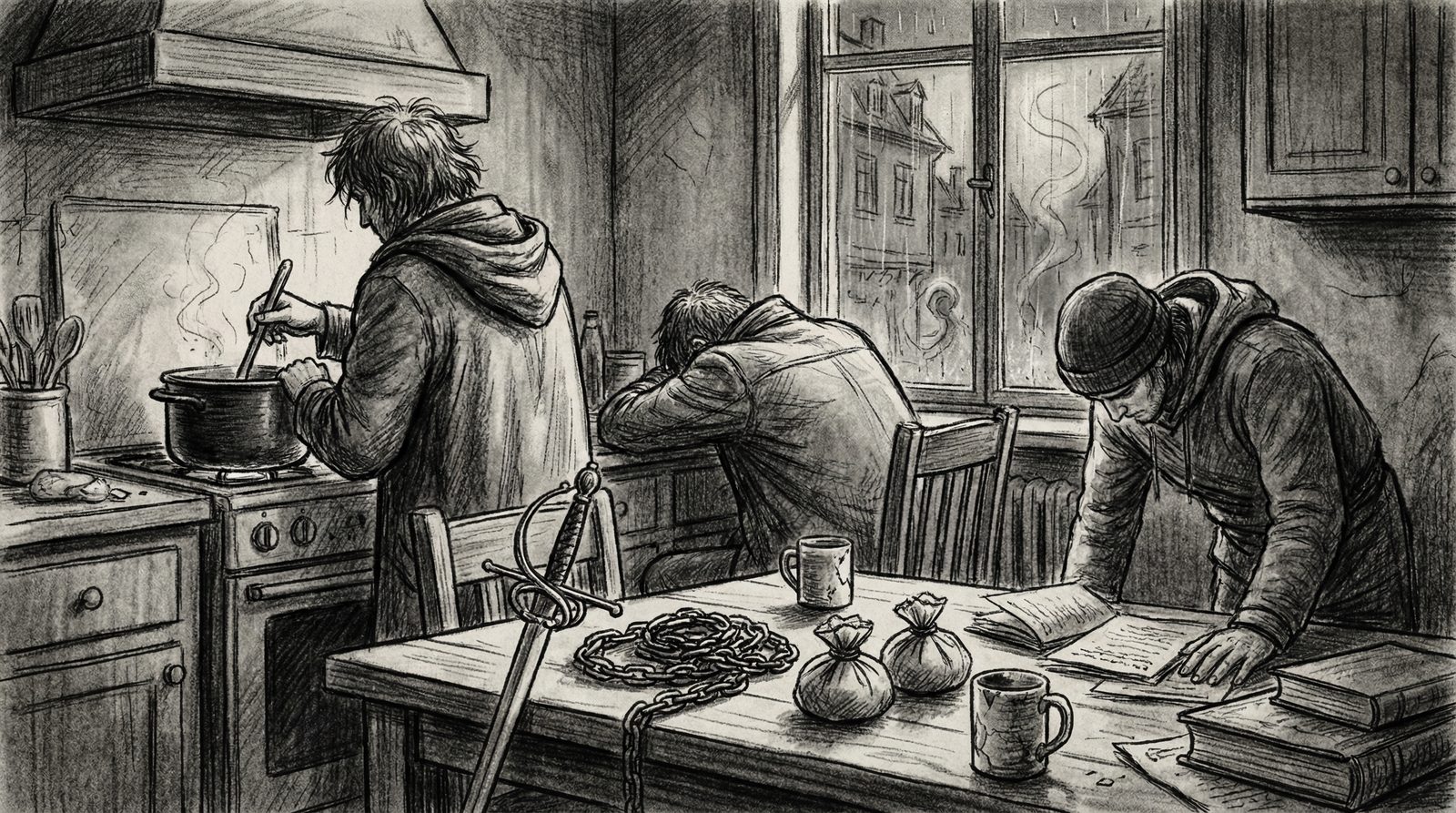
    Illustration inspired by 'The Screaming Staircase (2013)'

    TRIVIA & AUTHOR FACTS

    Jonathan Stroud was already known for the Bartimaeus sequence when he began Lockwood & Co. This first volume is written with a clear long game in mind: Lucy’s retrospective voice hints at later catastrophes, and several small details become crucial later, including the locked room at Portland Row and the dangerous artifacts George can’t stop studying.

    The UK setting is not cosmetic. Stroud leans into terraced houses, foggy canals, and municipal bureaucracy to make the hauntings feel local and structural. The series began as a grounded thought experiment: what if children were the only ones who could safely do the most dangerous job in society?

    SIMILAR BOOKS

    If this book works for you, you may enjoy other stories where the supernatural collides with institutional neglect and where young people are forced into professional danger. The strongest neighbors tend to treat fear as logistical and social, not only mystical.

    DISCOVERABILITY & LINKS

  • Lockwood & Co (2023)

    Lockwood & Co (2023)

    Lockwood & Co (2023). Supernatural mystery series · United Kingdom.


    INTRODUCTION

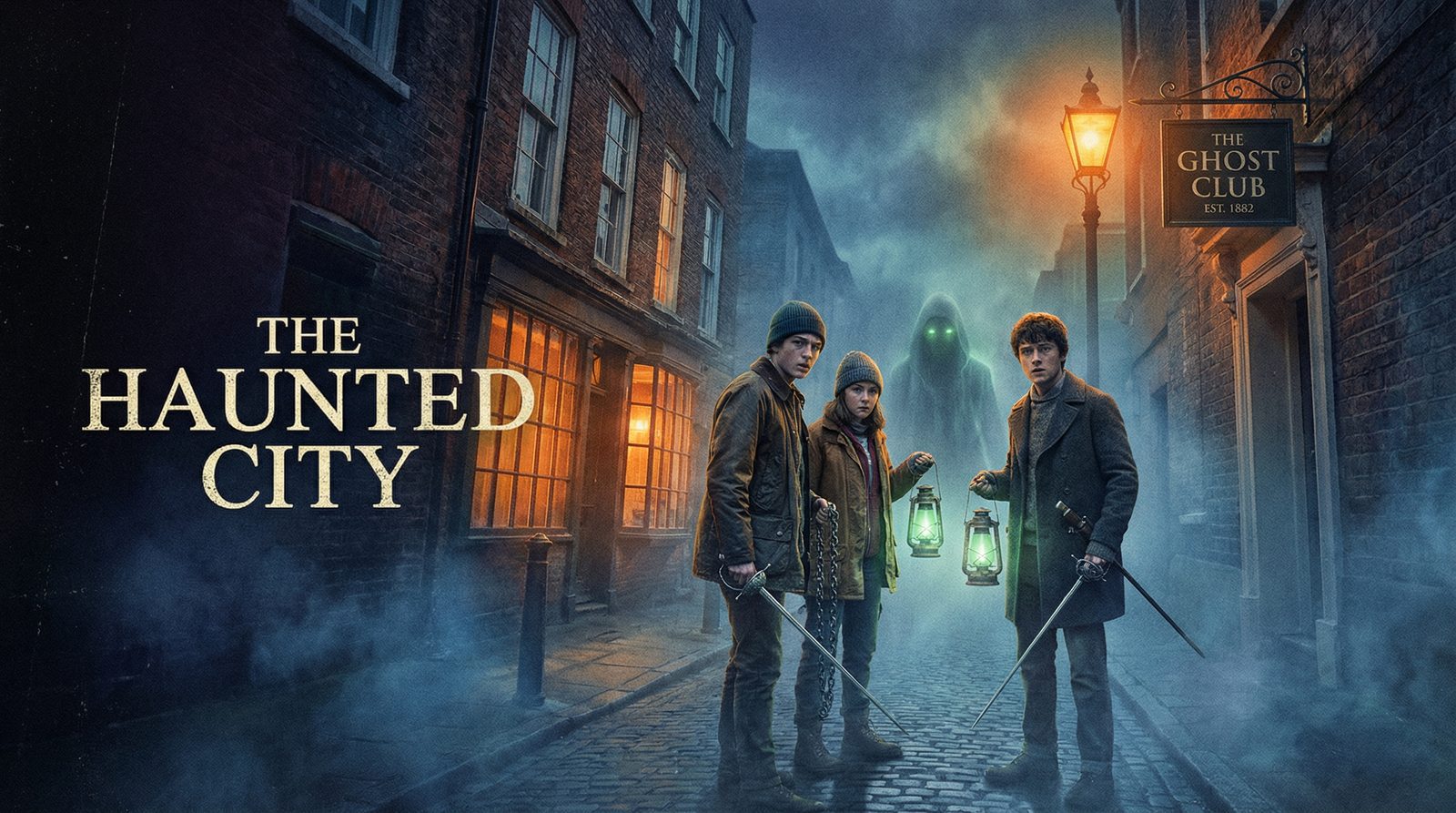
    Lockwood & Co drops us into a rain-soaked, haunted London where iron chains and curfews feel as ordinary as bus routes. It’s a young-adult supernatural mystery that leans into creeping tension rather than shock tactics. The premise is simple but brutal: only children and teenagers can reliably sense and fight the dead, so the job gets pushed onto the young while adults profit, regulate, and look away.

    The series follows a tiny, scrappy ghost-hunting firm run by teenagers who take contracts, enter lethal spaces, and try to survive both the supernatural threat and the social machinery built around it. What makes Lockwood & Co interesting is not only the hauntings, but the mood of late-night urban loneliness, the way humor becomes a coping mechanism, and how every victory feels expensive.

    PLOT & THEMES

    The series runs on a clean genre engine: case-of-the-week investigations threaded through a slow-burn conspiracy. Each job sends the team into a new dangerous location, but clues accumulate toward a larger mystery about the origins of the crisis and the institutions that exploit it. The procedural structure gives the show rhythm, while the long arc gives it weight.

    At its thematic core is the logic of a Ghost Hunting Agency economy: a market for fear, a hierarchy of firms, and incentives that reward risk-taking over safety. Children are praised for bravery while treated as disposable labor. That tension between competence and vulnerability is the show’s emotional fuel.

    The series also leans into institutional pressure. Oversight, rules, and reputational games hover over every case, even when the characters are fighting for their lives in the dark. That overlap with Magical Bureaucracy gives the world a plausible texture: the supernatural is real, but the real danger often includes paperwork, status games, and who gets to define what “acceptable risk” means.

    Finally, the show’s emotional story is about young people building stability in an unstable world. The agency house becomes a fragile refuge between missions, and the team’s loyalty feels earned rather than sentimental. The longer the season goes, the more the question shifts from “can they win this case?” to “how much can they endure and still remain themselves?”

    CINEMATIC TECHNIQUE & AESTHETICS

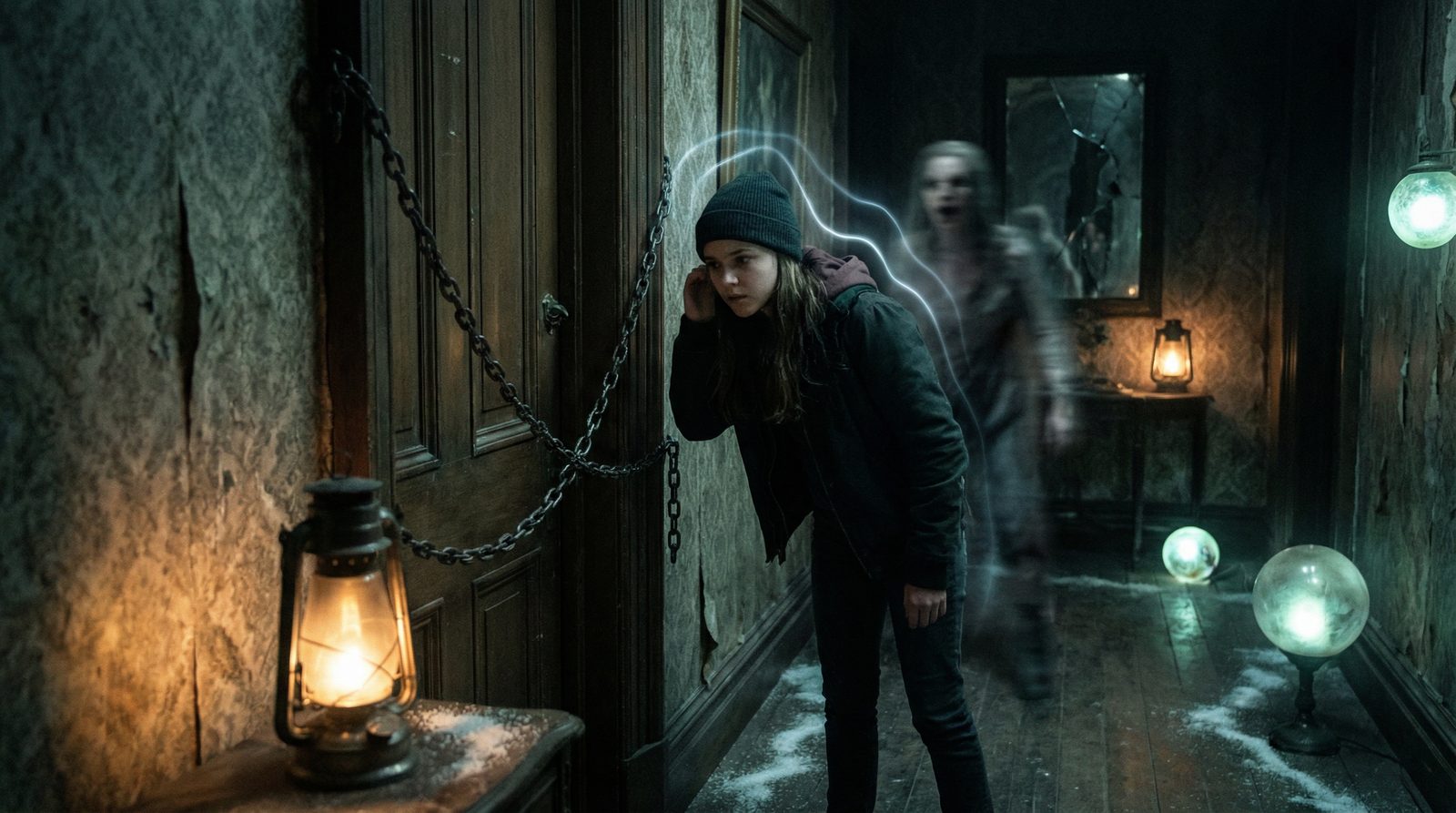
    Visually, Lockwood & Co favors low-key lighting and shadow-heavy interiors. Hallways are lit by candles, torches, and the cold glow of specialized lamps, giving the world a permanent twilight. During confrontations, handheld movement adds jittery immediacy, and ghosts are often framed at the edge of vision so that sound and negative space do much of the fear work.

    Production design commits to an analog-tech aesthetic: paper files, metal fittings, tactile tools, and a world that feels technologically stalled by the crisis. That choice supports the procedural feel. Research matters. Tools matter. The environment is readable, but only if you pay attention.

    Editing stays brisk during action, then lingers in aftermaths: characters catching their breath, listening to a building creak, reassessing what just happened. The series uses that rhythm to keep tension alive between set pieces and to make the cost of each job feel cumulative.

    Editorial illustration inspired by 'Lockwood & Co'

    CHARACTERS & PERFORMANCE

    The series lives on its trio. Lucy is the gifted newcomer whose sensitivity is both tool and burden. Lockwood is the charismatic risk-taker with secrets, bravado, and a dangerous relationship to fear. George is the research-minded skeptic, prickly and sardonic, but often the one who sees the pattern others miss.

    The chemistry is the emotional engine. Dialogue is dry and understated, often using humor to keep the tone from collapsing into gloom. The strongest scenes are frequently domestic: tea after a bad mission, arguments over a clue, small rituals of recovery. Those beats make the supernatural stakes land harder because the real risk is not only death by ghost, but the loss of the only stability these kids have built.

    Side characters often embody the system around the agency world: officials, rivals, and opportunists who benefit from the crisis. The show uses them to keep the pressure social as well as supernatural, reminding the viewer that the dead are only half the problem.

    CONTEXT & LEGACY

    Lockwood & Co adapts Jonathan Stroud’s book series into a television format that emphasizes atmosphere and procedural momentum. Its alternate-history premise remains grounded: the haunting crisis functions like a public-health emergency and an economic system at the same time. That framing sharpens the social commentary, especially around deregulated private agencies and the outsourcing of danger to the young.

    The show’s lasting appeal comes from its balance: eerie investigation, practical problem-solving, and a tight, character-driven core that treats fear as something you live with rather than “defeat.” Even when the supernatural is spectacular, the series keeps returning to the cost of competence and the way systems feed on it.

    IS IT WORTH WATCHING?

    If you like supernatural mystery with a procedural spine, strong atmosphere, and character-driven stakes, Lockwood & Co is worth watching. It’s less interested in shock than in mood, research, and consequence. The episodic structure keeps it accessible, while the larger mystery rewards patient viewing.

    Symbolic illustration inspired by 'Lockwood & Co'

    TRIVIA & PRODUCTION NOTES

    The season compresses multiple novels, which streamlines some subplots and merges certain supporting functions. The adaptation also has to externalize what prose can keep internal, so the show leans on reaction shots, sound cues for “Listening,” and procedural dialogue that hints at what characters are not saying. The analog production design foregrounds the physicality of the job: rapiers, chains, flares, and archived paperwork as survival tools.

    The series gets extra mileage from reusing key locations, especially the agency house, which evolves from backdrop into an emotional anchor. Many hauntings lean on practical staging augmented with digital touches, keeping ghosts tactile rather than purely abstract effects.

    SIMILAR FILMS

    If Lockwood & Co works for you, look for other stories that treat the supernatural as a job with rules, tools, and institutional pressure. The best matches tend to combine case structure with a larger conspiracy, where research and procedure matter as much as bravery.

    DISCOVERABILITY & LINKS

  • Jonathan Stroud

    Jonathan Stroud

    ORIGINS & BACKGROUND

    Jonathan Stroud is best known for character-driven fantasy that treats magic and ghosts less as glitter and more as workplace hazards. Across the Bartimaeus books and Lockwood Co, he builds systems where the supernatural is managed through procedure, rivalry, and institutional pressure. The result is adventurous fiction with sharp humor on the surface, but a steady preoccupation with power, responsibility, and the cost of survival.

    Stroud grew up and works in the United Kingdom, and his writing carries a distinctly British blend of dry wit, skepticism about authority, and affection for creaky institutions. Before becoming a full-time author, he worked as an editor in children’s publishing, which shows in his pacing, his clarity, and his instinct for what younger readers can handle emotionally without diluting the stakes.

    In the Bartimaeus sequence, beginning with The Amulet Of Samarkand (2003), Stroud imagines an alternate London run by magicians whose power depends on enslaved spirits. The setting is recognizably urban and modern, but filtered through history and satire. Later, with Lockwood Co and its opening novel The Screaming Staircase (2013), he shifts to a haunted London where children are the only effective defense against ghosts, creating a precarious professional ecosystem built on risk and exploitation.

    Rather than foregrounding personal trivia, Stroud lets background appear sideways: in memos, disciplinary language, petty rivalries, and the weary tone of officials who enforce rules they don’t fully understand. His worlds feel plausible because they behave like institutions, not fairy tales.

    Editorial illustration inspired by 'Jonathan Stroud'

    THEMES & MOTIFS

    A central engine in Stroud’s work is Magical Bureaucracy. In The Amulet Of Samarkand, magicians behave like civil servants and politicians: rule-bound in public, ruthless in private, and willing to weaponize procedure for personal gain. The supernatural is powerful, but the real leverage often sits in permissions, rank, and punishment.

    His later haunted-London world sharpens the logic of the Ghost Hunting Agency. In The Screaming Staircase, child sensitivity to ghosts becomes a professional resource, which turns bravery into an economic model. Young agents are praised, needed, and quietly treated as replaceable. Stroud returns to the tension between competence and vulnerability, showing how systems rely on the people they endanger.

    Power and servitude run through both series. In the Bartimaeus books, magic depends on exploitation, and the narrative keeps circling back to complicity and resistance. Even when characters benefit, the moral abrasion remains. In the ghost-agency world, power sits in information: who controls records, who sets policy, and who is allowed to define what “safe” means.

    Stroud also favors motifs of unreliable authority and buried history. Official explanations are rarely complete, and protagonists win by uncovering what institutions have forgotten or concealed. Alongside this is a quieter thread of found family, where humor and banter function as a survival tactic rather than sentimentality.

    Across his work, the motif systems are not window dressing. They are engines that let Stroud ask how much moral agency is possible inside structures built to reward compromise.

    Symbolic illustration inspired by 'Jonathan Stroud'

    STYLE & VOICE

    Stroud’s style is marked by wit, structural playfulness, and an unhurried confidence with worldbuilding. In the Bartimaeus books, he uses footnotes and a sardonic first-person voice to let the djinni comment on events, undercutting solemnity with sarcasm. The humor sharpens the critique rather than softening it, keeping power and procedure in view even during action.

    In Lockwood Co, the narrative voice is more direct but still dry and observant. Scenes of investigation and confrontation are tightly staged, with clear physical space and escalating dread. Stroud often alternates eerie fieldwork with domestic or office-like scenes inside the agency, which keeps the supernatural grounded in routine and logistics.

    His pacing favors accumulation over shock. Mysteries unfold through clues, conversations, and small revelations, with early details paying off later. Dialogue carries emotional weight, especially when characters test each other’s loyalty under pressure. Even in intense moments, Stroud avoids melodrama, creating a tone that is adventurous, eerie, and quietly bitter.

    KEY WORKS & LEGACY

    The Bartimaeus series, launched with The Amulet Of Samarkand, established Stroud’s signature blend of satire and stakes. It crystallizes his interest in institutions, exploitative power, and the ethics of control, using the human magician and the djinni Bartimaeus to show the same system from opposing angles.

    The Screaming Staircase launched his ghost-agency world, where the horror is constant but the economy is what makes it brutal. Stroud imagines a society reshaped by a long-term haunting crisis and centers young agents whose competence is essential while their safety is treated as negotiable.

    Stroud’s enduring appeal lies in how he marries adventure with skepticism. His worlds are full of djinn and ghosts, yet the real threats are often contracts, ministries, rival firms, and the compromises people make to survive inside systems that reward the worst instincts. That tension gives his fiction resonance beyond its immediate thrills.