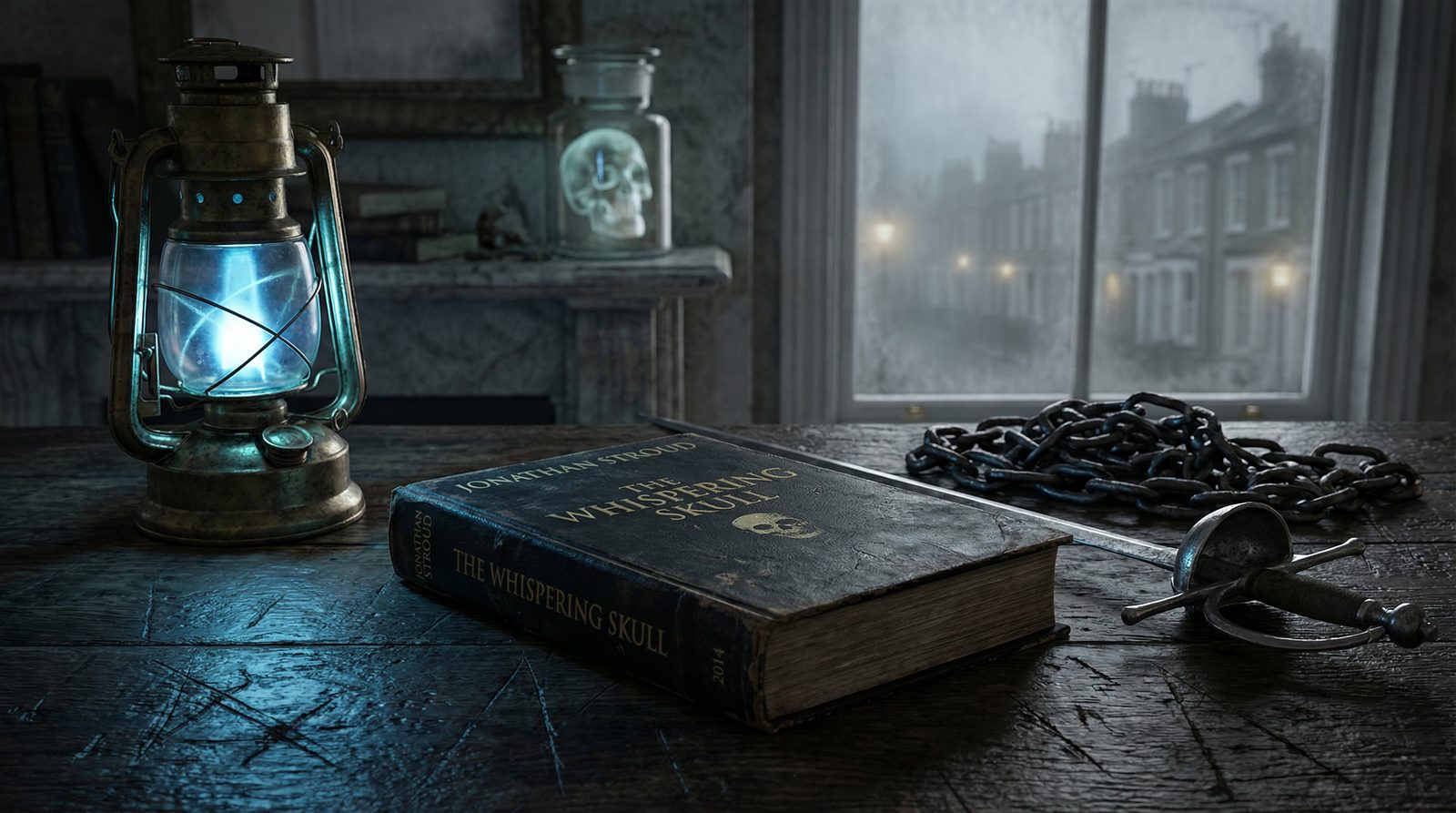
Genre: Young adult fantasy

  • The Whispering Skull (2014)

    The Whispering Skull (2014)

    INTRODUCTION

    The Whispering Skull (2014) by Jonathan Stroud
    Young adult fantasy · 448 pages (UK hardcover) · United Kingdom


    The Whispering Skull is where Lockwood & Co. stops feeling like a clever ghost-hunting premise and starts to feel like a haunted friendship. Stroud takes his alternate 2010s London and leans into bones, relics, and buried history. The tone stays brisk and funny, but there’s a persistent melancholy under the banter, as if every joke is being told with the cemetery gates still swinging behind you. This second book tightens focus on the small agency at 35 Portland Row and pushes them into direct conflict with both spectral threats and the petty cruelties of adult institutions.

    It’s not just about defeating Visitors. It’s about what happens to children who grow up with iron chains in one hand and a ghost-lantern in the other, and how long they can keep pretending that’s normal.

    PLOT & THEMES

    The plot hinges on two dangerous objects: a stolen bone mirror taken from the grave of the Victorian occultist Edmund Bickerstaff, and the titular Whispering Skull, a communicative ghost sealed in a glass jar in Lockwood’s basement. The rivalry with the larger Fittes agency continues, turning every case into a contest for prestige and survival. Quill Kipps and his squad are comic foils, but they also remind the reader that Lockwood’s outfit is underfunded and one serious mistake away from ruin.

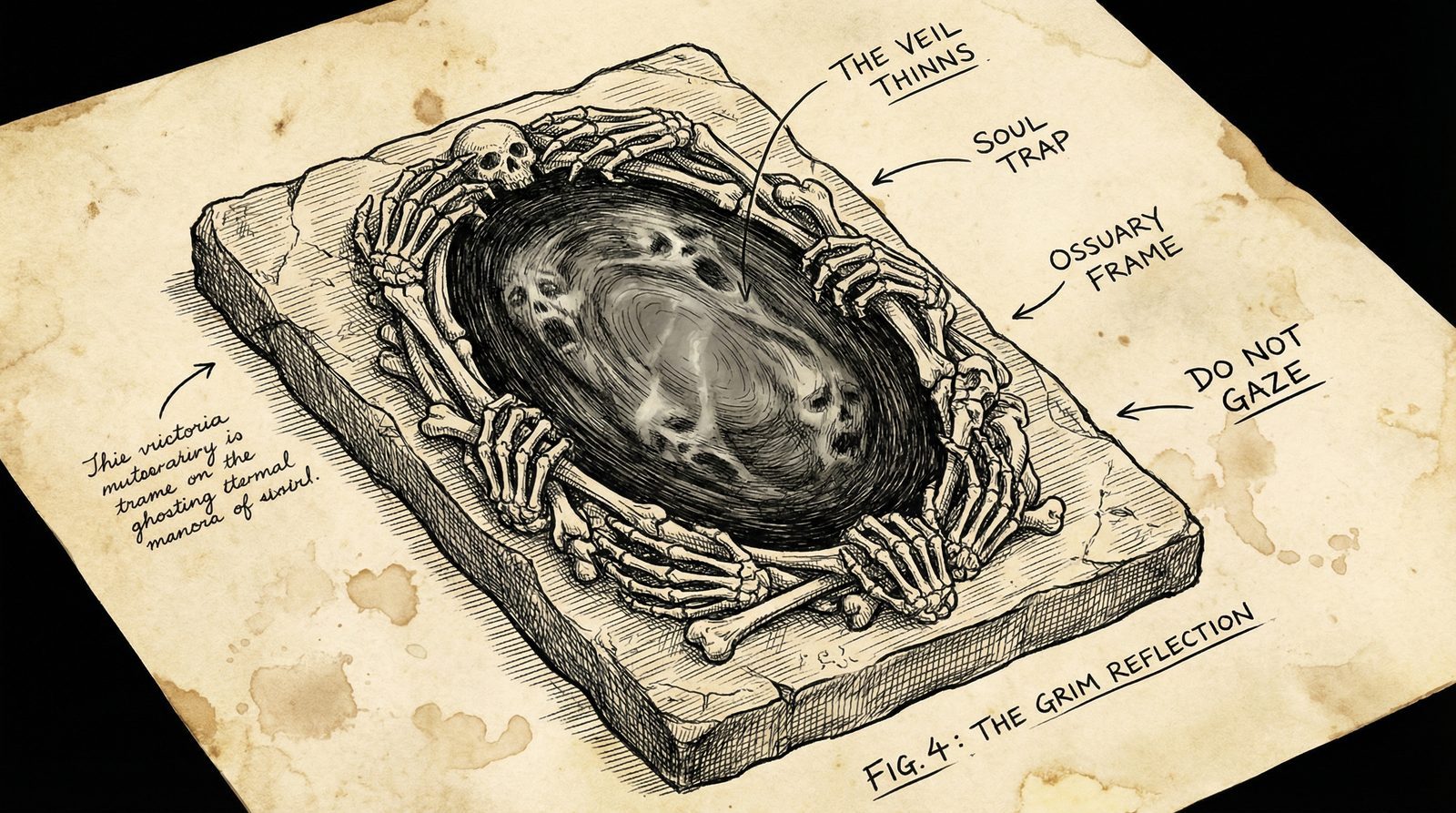
    Mirrors and reflection become the book’s central symbolic logic. The bone mirror does not merely show the past; it shows unbearable truths and functions like a psychic trap. That’s why the story keeps returning to private looking as a form of danger. The mirror’s influence on George becomes increasingly insidious, culminating in a near-fatal compulsion to face its visions alone.

    The institutional layer expands. Visits to cemeteries, research facilities, and agency strongholds hint at a wider exploitation of the Problem: not only fear management, but profit, secrecy, and competitive sabotage. The book’s procedural spine keeps the world grounded in rules and consequences, which ties naturally to the Ghost Hunting Agency motif and brushes up against Magical Bureaucracy whenever oversight and institutional obstruction enter the frame.

    The ending is clean and decisive. Lockwood, Lucy, and George confront the mirror in the catacombs and destroy it with Greek Fire, denying its power to everyone who wants to weaponize it. The final sting comes back at home: the Skull retaliates by revealing it knows something about Lockwood’s locked room and his dead sister, turning a solved case into a deeper future threat.

    PROSE & NARRATIVE STRUCTURE

    Stroud’s prose is deceptively light, and Lucy’s first-person retrospective narration gives everything a double edge. We are in the moment with a frightened, stubborn teenager, but we are also listening to a voice that already understands which mistakes will echo. That distance lets Stroud slide from kitchen banter at Portland Row into a chilling description of the bone mirror’s surface without changing gears.

    The structure alternates between set-piece hauntings and slower investigative passages: cemetery missions, mausoleum sequences, and the final catacomb descent, broken up by research in George’s paper-strewn basement and Lucy’s late-night conversations with the Skull. Those Skull scenes feel like a dangerous kind of therapy: comfort mixed with coercion. Domestic rituals — tea, toast, Lockwood’s immaculate suits — become a fragile defense against the encroaching dead.

    Action is cleanly choreographed and tactile: iron chains on stone, salt and flame, the sudden drop in temperature when a Visitor arrives. The pacing is confident because the book knows what it is doing: it keeps feeding casework forward while quietly tightening the emotional screws inside the house.
    Conceptual editorial illustration inspired by 'The Whispering Skull (2014)'

    CHARACTERS & INTERIORITY

    At the center is Lucy Carlyle, a haunted-heroine variation who is both weapon and witness. Her Listening talent makes her uniquely vulnerable to the Skull’s taunts, and Stroud lets the reader feel her mix of pride and fear whenever she pushes her ability further. Her prickliness and jealousy, especially toward rival agency figures, ground the character in mid-teen social pain rather than generic heroism.

    Anthony Lockwood remains charmingly opaque. We glimpse grief through fissures: his fury at institutional threats, his tight-lipped silence about the locked room, the way he flinches when certain names surface. George Cubbins gains sharper interiority here, with the mirror’s pull revealing how the Problem corrodes even the researcher’s sense of control. The Skull becomes the most unsettling presence of all because Lucy begins to seek its validation even as she knows it is malicious.

    LEGACY & RECEPTION

    The Whispering Skull is often remembered as the installment where the series “locks in.” The world of iron chains, ghost-fog, and child agents becomes not just a setting but a coherent system with rules and moral cost. The later screen adaptation rearranges material, but the book’s quieter achievements remain hard to replicate: Lucy’s voice, George’s creeping obsession, and the Skull’s final revelation that lands like a stone in still water.

    Within YA supernatural fiction, the novel stands out for combining procedural casework with emotional fracture. It trusts readers to sit with unresolved questions while still delivering a clean, satisfying case conclusion.

    IS IT WORTH READING?

    If you liked the first book but wanted more emotional weight and stranger ghosts, this is worth your time. It balances spectral action with character work and lets jokes coexist with dread. The horror isn’t gore; it’s standing in the dark with something whispering in your ear, telling you what you most want — and fear — to hear. If Lucy’s voice and her uneasy bond with the Skull click for you here, the rest of the series will reward you.

    Illustration inspired by 'The Whispering Skull (2014)'

    TRIVIA & AUTHOR FACTS

    Stroud’s experience with voice-driven fantasy in the Bartimaeus books shows in the Skull’s sardonic commentary. This installment continues his interest in pairing young protagonists with dangerous, talkative supernatural entities. The novel also deepens the series’ working-world logic: agencies, relic markets, regulation, and institutional secrecy layered over classic ghost story fear.

    Real London locations are tilted into the uncanny, and Stroud’s material toolkit — iron, salt, Greek Fire, sealed jars — keeps the magic tactile rather than abstract. The procedural clarity is part of the series’ signature: the rules matter, and so do the consequences of breaking them.

    SIMILAR BOOKS

    If you enjoy the mix of banter, ghosts, and real peril here, you may like other series that combine investigative structure with a strong voice and a dangerous partnership. The best matches tend to treat supernatural rules as work rules and use humor as a survival strategy rather than a mood.

    DISCOVERABILITY & LINKS

  • The Hollow Boy (2015)

    The Hollow Boy (2015)

    INTRODUCTION

    The Hollow Boy (2015) by Jonathan Stroud
    Young adult fantasy · 361 pages · United Kingdom


    The Hollow Boy is the volume where Lockwood & Co. stops feeling like a clever haunted-case series and starts to ache. The threat is still the dead, but the pressure moves inward: domestic space, loyalty, jealousy, and the cost of keeping secrets inside a house that is supposed to be safe. The agency’s home at 35 Portland Row becomes a loaded object — locked rooms, half-told stories, and a sense that the most dangerous thing is what nobody will say aloud.

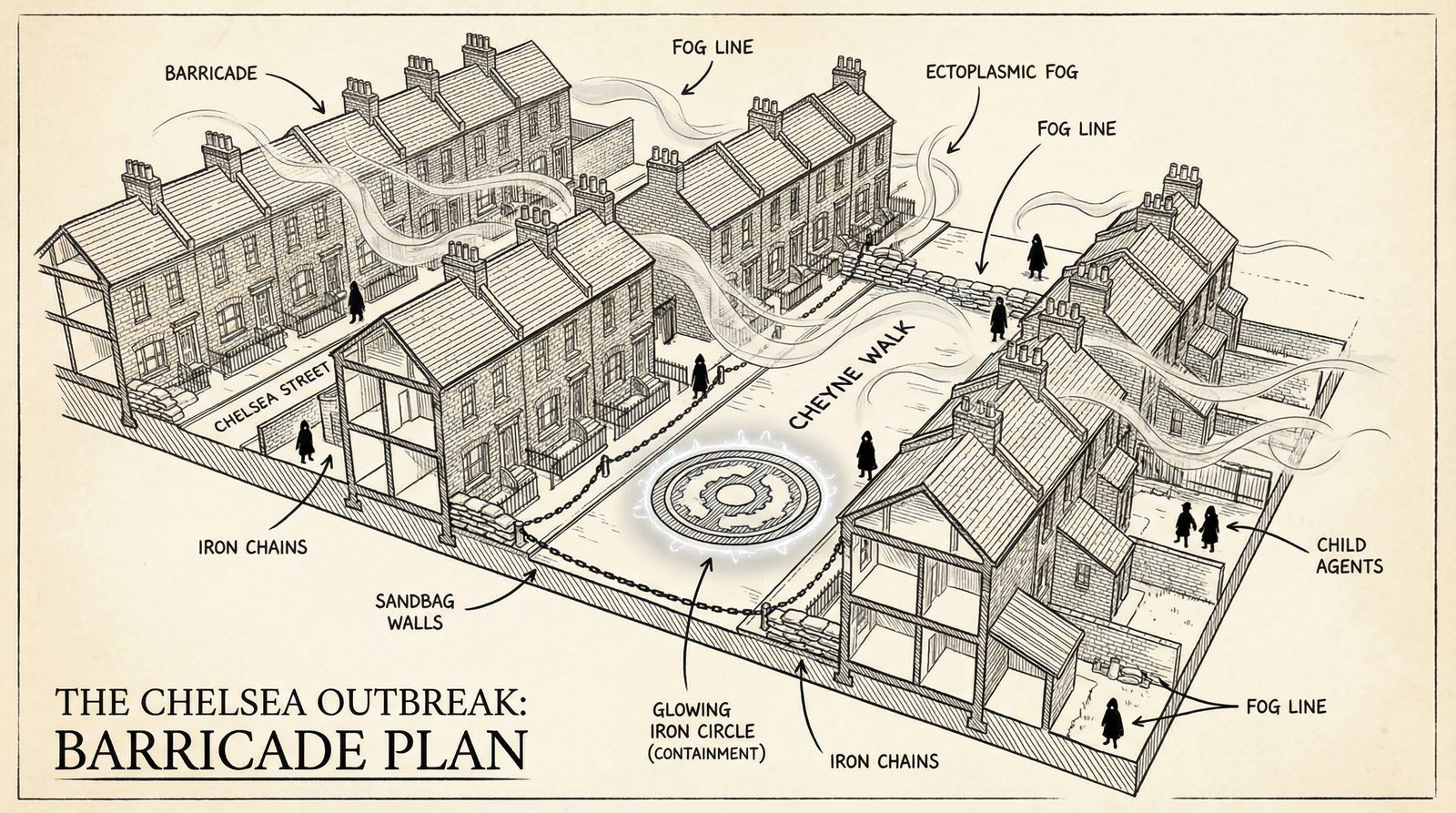
    Set in a London still trapped in an ongoing ghost crisis, the book balances night patrol thrills with the quieter feel of exclusion as Lucy Carlyle watches Holly Munro slide into the agency’s daylight hours. By the time the Chelsea Outbreak expands into a city-scale siege, the story has quietly become about fracture: how a team can survive the undead and still break apart from ordinary human fear.

    PLOT & THEMES

    The Hollow Boy opens with Lockwood, Lucy, and George in their familiar rhythm of small jobs and near-disasters, still nursing the scars of earlier cases. But London’s Problem is worsening. The Chelsea Outbreak — an expanding zone of lethal hauntings — becomes the central crisis, and Stroud threads that external escalation through a domestic upheaval: Lockwood hires Holly Munro as an assistant, and Lucy experiences her as an unwanted newcomer who threatens a fragile found-family equilibrium.

    The book widens the political map of the series through agencies, research bases, and competing teams. Chelsea is rendered as a trench-zone: fog, barricades, street closures, and a constant hum of institutional pressure. The ghost threat is never abstract; it is logistical, bureaucratic, and economic — a world where children do the dangerous work because adults can’t. That is why this book connects directly to the Ghost Hunting Agency motif and keeps brushing up against Magical Bureaucracy whenever authority and oversight enter the frame.

    Stroud refuses easy catharsis. The Outbreak is contained only through a near-fatal confrontation, and the “victory” leaves the city shaken and the team emotionally worse off. The ending lands as quiet abandonment rather than triumph: a door closing on a home that can no longer hold everyone inside it.

    PROSE & NARRATIVE STRUCTURE

    Stroud’s first-person narration sharpens here into unreliable interior monologue. Lucy is technically accurate about ghosts and danger, but skewed when it comes to her own feelings. The gap between what she reports and what she admits gives the book its sting. Domestic scenes at 35 Portland Row — reorganized rooms, shared meals, routines — are described with intimacy that makes Lucy’s resentment feel both petty and painfully human.

    Action sequences remain clipped and sensory: iron chains ringing on stone, ectoplasm freezing on skin, the dead silence inside exclusion zones. Stroud alternates these with investigative passages in archives and research spaces, creating a rhythm of sprint and stall that mirrors professional casework. The dread builds not only from hauntings, but from Lucy’s growing conviction that she is becoming a risk to the people she wants most to keep.

    Structurally, the book arcs from episodic cases toward a single massive set piece: the Chelsea Outbreak. Interludes with the skull function like corrosive commentary, an internal Greek chorus that mocks Lucy’s blind spots while still dropping warnings that are hard to ignore.

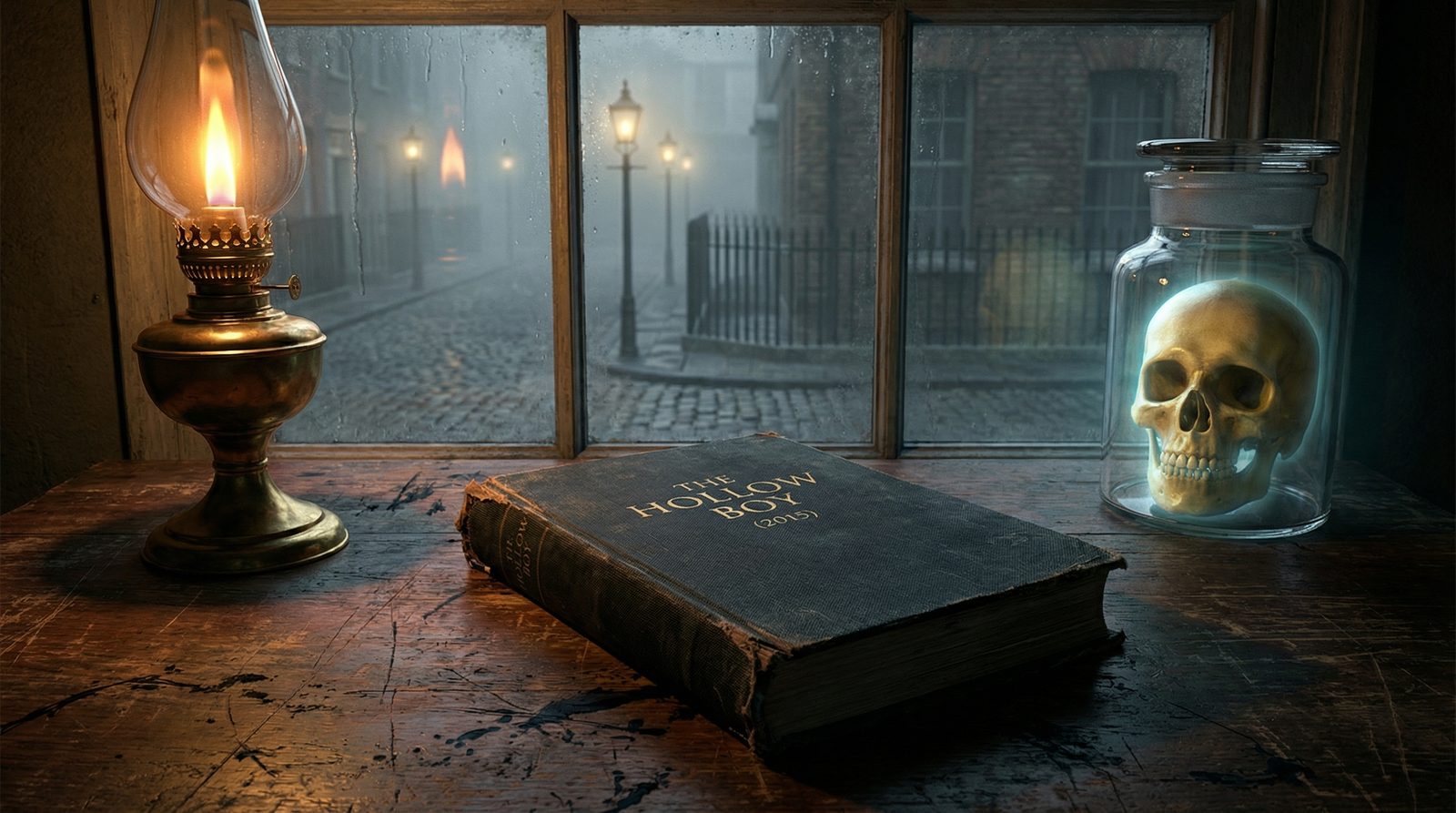
    Conceptual editorial illustration inspired by 'The Hollow Boy (2015)'

    CHARACTERS & INTERIORITY

    Lucy Carlyle is written as a wounded prodigy: gifted with Listening talent, shaped by betrayal, and vulnerable to paranoia. In this volume, her jealousy is as central as any ghost. Stroud lets the reader sit inside the hot churn of misread glances and petty inventories, making mid-teen insecurity feel ugly, funny, and accurate.

    Anthony Lockwood remains charismatic and opaque, grief flickering at the edges of his recklessness. George Cubbins anchors the group through research, stubbornness, and the long view of the Problem’s origins. Holly Munro, initially positioned as a rival presence, is gradually revealed as another damaged professional child, competent but not invulnerable. Even the skull carries a kind of interiority through its malice and pointed insight. The result is an ensemble where every relationship is slightly off-balance and every alliance feels provisional.

    LEGACY & RECEPTION

    Among readers, The Hollow Boy is often cited as the hinge where the series “grows up.” The Chelsea Outbreak pushes the books from quirky procedural into urban siege story, and the emotional stakes become as sharp as the supernatural ones. Crucially, the ending is not a reset button. The story leaves the team more fractured than before, and that refusal of comfort is part of what gives the series its lasting charge.

    IS IT WORTH READING?

    Yes — especially if you’ve enjoyed the earlier books. This is where the series’ procedural pleasures begin to carry real emotional consequence. If you want YA fantasy that can be genuinely funny one page and quietly devastating the next, and you’re willing to sit with a protagonist who makes painful choices, this is one of Stroud’s strongest volumes.

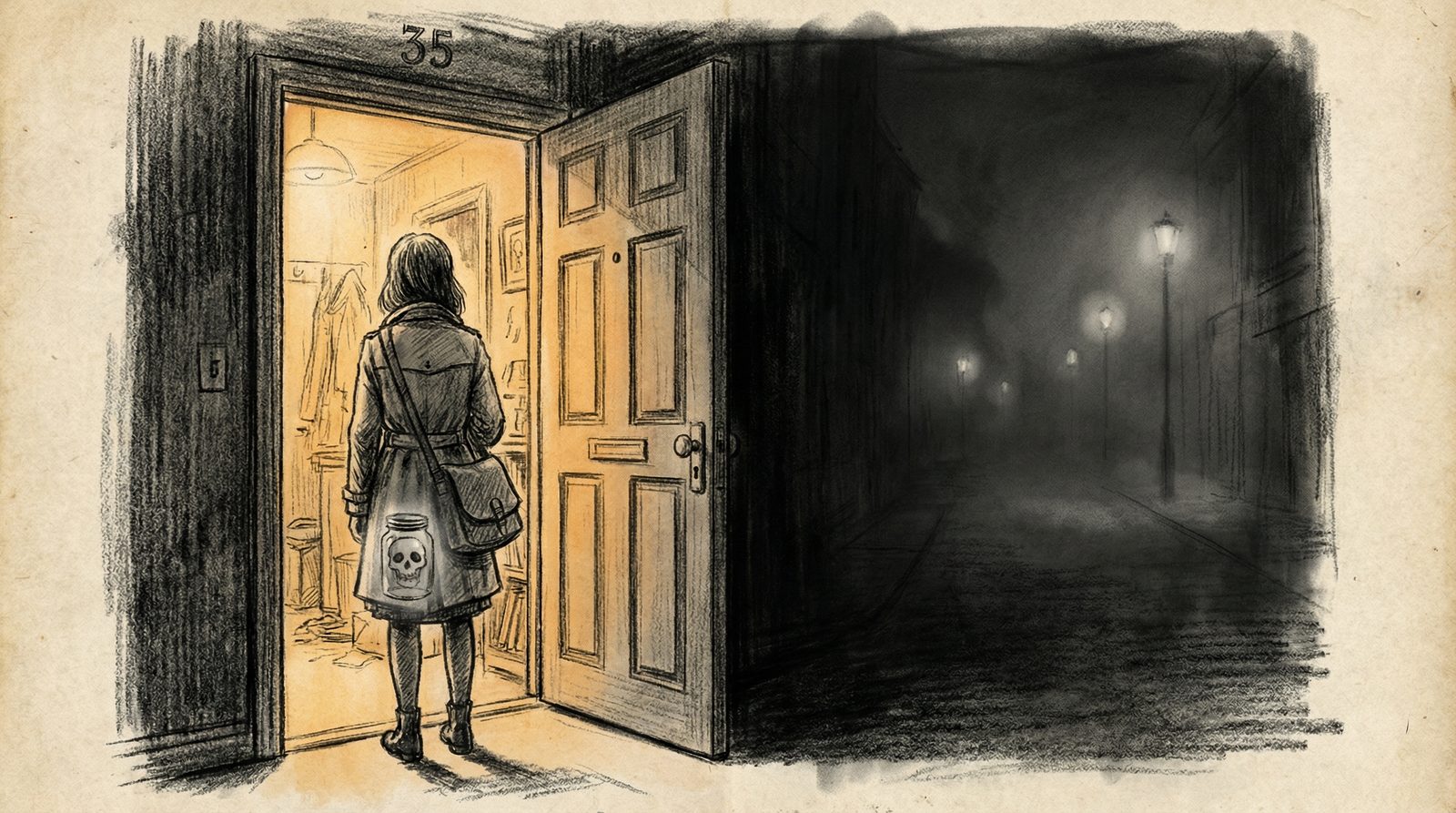
    Illustration inspired by 'The Hollow Boy (2015)'

    TRIVIA & AUTHOR FACTS

    Stroud had already built a reputation with the Bartimaeus trilogy before Lockwood & Co., and the confidence shows in how this book handles its midpoint pivot from casework to siege. The volume deepens the lore of the Problem and sharpens the institutional pressures around agencies, prestige, and child risk. Its most memorable power is not spectacle but accumulation: how many nights a person can survive before they decide they must leave to remain intact.

    SIMILAR BOOKS

    If The Hollow Boy works for you, you may be drawn to other stories where young people shoulder professional-level danger and where institutions fail quietly in the background. The strongest neighbors tend to combine investigative structure with an emotional cost that doesn’t reset at the end of the chapter.

    DISCOVERABILITY & LINKS

  • Jonathan Stroud

    Jonathan Stroud

    ORIGINS & BACKGROUND

    Jonathan Stroud is best known for character-driven fantasy that treats magic and ghosts less as glitter and more as workplace hazards. Across the Bartimaeus books and Lockwood Co, he builds systems where the supernatural is managed through procedure, rivalry, and institutional pressure. The result is adventurous fiction with sharp humor on the surface, but a steady preoccupation with power, responsibility, and the cost of survival.

    Stroud grew up and works in the United Kingdom, and his writing carries a distinctly British blend of dry wit, skepticism about authority, and affection for creaky institutions. Before becoming a full-time author, he worked as an editor in children’s publishing, which shows in his pacing, his clarity, and his instinct for what younger readers can handle emotionally without diluting the stakes.

    In the Bartimaeus sequence, beginning with The Amulet Of Samarkand (2003), Stroud imagines an alternate London run by magicians whose power depends on enslaved spirits. The setting is recognizably urban and modern, but filtered through history and satire. Later, with Lockwood Co and its opening novel The Screaming Staircase (2013), he shifts to a haunted London where children are the only effective defense against ghosts, creating a precarious professional ecosystem built on risk and exploitation.

    Rather than foregrounding personal trivia, Stroud lets background appear sideways: in memos, disciplinary language, petty rivalries, and the weary tone of officials who enforce rules they don’t fully understand. His worlds feel plausible because they behave like institutions, not fairy tales.

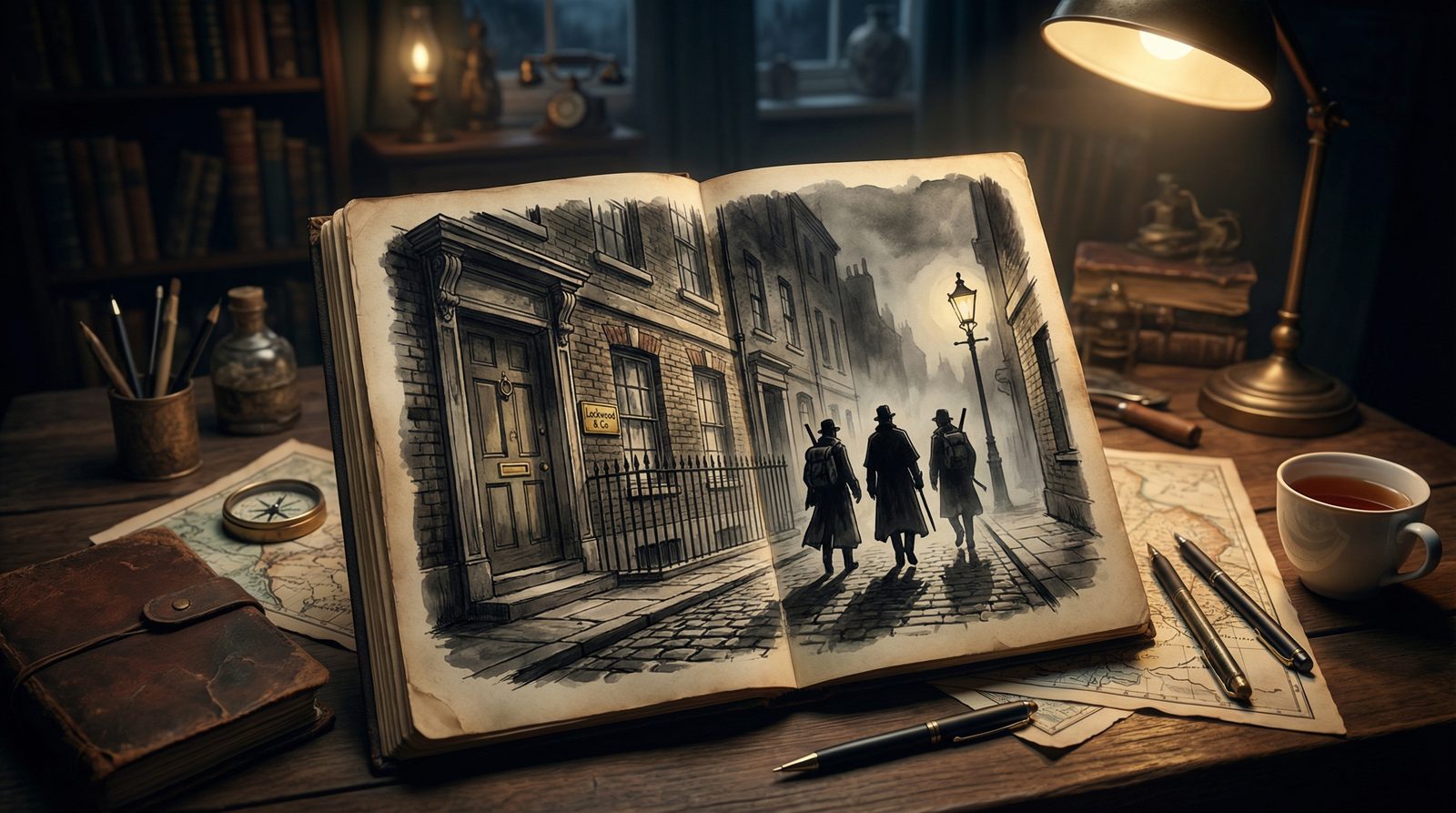
    Editorial illustration inspired by 'Jonathan Stroud'

    THEMES & MOTIFS

    A central engine in Stroud’s work is Magical Bureaucracy. In The Amulet Of Samarkand, magicians behave like civil servants and politicians: rule-bound in public, ruthless in private, and willing to weaponize procedure for personal gain. The supernatural is powerful, but the real leverage often sits in permissions, rank, and punishment.

    His later haunted-London world sharpens the logic of the Ghost Hunting Agency. In The Screaming Staircase, child sensitivity to ghosts becomes a professional resource, which turns bravery into an economic model. Young agents are praised, needed, and quietly treated as replaceable. Stroud returns to the tension between competence and vulnerability, showing how systems rely on the people they endanger.

    Power and servitude run through both series. In the Bartimaeus books, magic depends on exploitation, and the narrative keeps circling back to complicity and resistance. Even when characters benefit, the moral abrasion remains. In the ghost-agency world, power sits in information: who controls records, who sets policy, and who is allowed to define what “safe” means.

    Stroud also favors motifs of unreliable authority and buried history. Official explanations are rarely complete, and protagonists win by uncovering what institutions have forgotten or concealed. Alongside this is a quieter thread of found family, where humor and banter function as a survival tactic rather than sentimentality.

    Across his work, the motif systems are not window dressing. They are engines that let Stroud ask how much moral agency is possible inside structures built to reward compromise.

    Symbolic illustration inspired by 'Jonathan Stroud'

    STYLE & VOICE

    Stroud’s style is marked by wit, structural playfulness, and an unhurried confidence with worldbuilding. In the Bartimaeus books, he uses footnotes and a sardonic first-person voice to let the djinni comment on events, undercutting solemnity with sarcasm. The humor sharpens the critique rather than softening it, keeping power and procedure in view even during action.

    In Lockwood Co, the narrative voice is more direct but still dry and observant. Scenes of investigation and confrontation are tightly staged, with clear physical space and escalating dread. Stroud often alternates eerie fieldwork with domestic or office-like scenes inside the agency, which keeps the supernatural grounded in routine and logistics.

    His pacing favors accumulation over shock. Mysteries unfold through clues, conversations, and small revelations, with early details paying off later. Dialogue carries emotional weight, especially when characters test each other’s loyalty under pressure. Even in intense moments, Stroud avoids melodrama, creating a tone that is adventurous, eerie, and quietly bitter.

    KEY WORKS & LEGACY

    The Bartimaeus series, launched with The Amulet Of Samarkand, established Stroud’s signature blend of satire and stakes. It crystallizes his interest in institutions, exploitative power, and the ethics of control, using the human magician and the djinni Bartimaeus to show the same system from opposing angles.

    The Screaming Staircase launched his ghost-agency world, where the horror is constant but the economy is what makes it brutal. Stroud imagines a society reshaped by a long-term haunting crisis and centers young agents whose competence is essential while their safety is treated as negotiable.

    Stroud’s enduring appeal lies in how he marries adventure with skepticism. His worlds are full of djinn and ghosts, yet the real threats are often contracts, ministries, rival firms, and the compromises people make to survive inside systems that reward the worst instincts. That tension gives his fiction resonance beyond its immediate thrills.