

Genre: Young Adult Fiction

  • Laurie Halse Anderson

    Laurie Halse Anderson

    INTRODUCTION

    Laurie Halse Anderson is one of the defining voices of modern young adult fiction. Her work is emotionally direct, psychologically exact, and unafraid to confront the kinds of experiences teenagers are often left to navigate alone. Best known for Speak, she helped reshape YA literature into a space where trauma, identity, pressure, and recovery could be explored with honesty rather than moralising.

    Catalyst, published in 2002, sits firmly within that evolution. It’s a novel about perfectionism, collapse, and the suffocating expectations placed on high-achieving teens. Rebuilding Anderson’s creator page on AllReaders ensures that long-standing backlinks from school reading lists, academic sites, and YA resource hubs have a modern landing page — and it reintroduces a writer whose influence ripples across the entire genre.


    LIFE & INFLUENCES

    Born in 1961, Anderson grew up in New York and began writing as a teenager. Her early influences included historical fiction, journalism, and the raw honesty of contemporary realist novels. Before her fiction career took off, she worked as a freelance reporter — a background that trained her to observe closely and write with clarity even when the emotional terrain is heavy.

    Her breakout novel, Speak (1999), changed YA literature. Its depiction of trauma and recovery was groundbreaking at the time, opening doors for more realistic, psychologically nuanced fiction for teens. Anderson became a prominent advocate for trauma-informed education, mental health awareness, and free speech in schools, roles that complement and deepen her literary work.
    Editorial illustration inspired by 'Laurie Halse Anderson'

    THEMES & MOTIFS

    Anderson’s novels often focus on girls under pressure — social, academic, emotional, and institutional. Her characters rarely have the luxury of stability; instead, they confront crises that force them to rebuild their identities piece by piece. This aligns closely with motifs like Identity Collapse in Isolation, especially in Catalyst, where Kate Malone’s perfectionist identity breaks apart after a single rejection letter.

    She also frequently explores the darker side of the home: families that love but fail, parents who mean well but miss crucial signs, and the quiet violence of unrealistic expectations. This echoes Domestic Vulnerability as Horror, though Anderson frames these pressures through emotional realism rather than genre tropes.

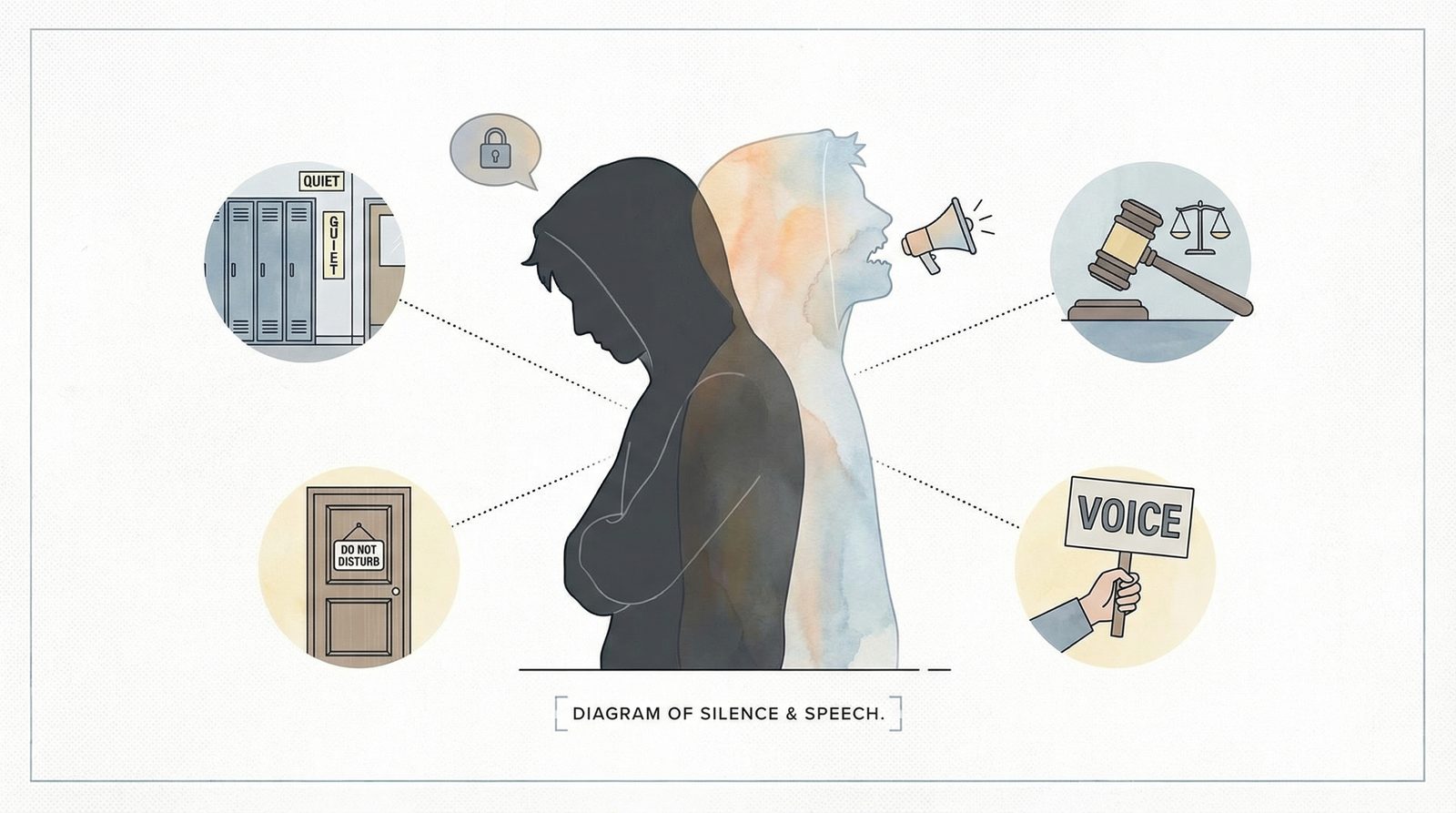
    Across her body of work, Anderson returns to themes of resilience, self-redefinition, and the power of speaking truth. Whether in contemporary YA or in her historical Seeds of America series, she writes characters who push back against silence and erasure.


    STYLE & VOICE

    Her prose is lean, stripped of ornament, and driven by emotional urgency. She writes teenagers with real voices — quick, reactive, contradictory — and avoids adult handholding or explanation. Short chapters and sharp scene transitions give her novels a breathless quality that mirrors her characters’ anxiety and momentum.

    This directness is what makes her work resonate. She doesn’t bury meaning in metaphor; she lets the emotional reality sit plainly on the page. It’s an approach that many YA writers adopted in her wake, but Anderson still does it with a control and restraint that gives her novels staying power.

    Symbolic illustration inspired by 'Laurie Halse Anderson'

    KEY WORKS

    Speak remains her landmark novel, a foundational text in modern YA. Catalyst functions almost as a companion piece, exploring a different kind of silence — the silence of overachievement, self-denial, and emotional overload.

    Her Seeds of America trilogy (Chains, Forge, Ashes) showcases her range, blending historical detail with the emotional intensity that defines her contemporary work. Shout (2019), her poetic memoir, offers the fullest picture of her voice and advocacy.


    CULTURAL LEGACY

    Laurie Halse Anderson’s impact is enormous. She shifted the YA market toward honesty about trauma, identity, and mental health. She influenced how teachers and librarians approach sensitive topics. Her books are frequently challenged, frequently defended, and frequently taught — a trifecta that proves their lasting significance.

    Rebuilding her presence on AllReaders isn’t nostalgia; it’s infrastructure. She remains required reading in schools, highly searched online, and deeply relevant to modern conversations about adolescence and resilience.

  • Catalyst (2002)

    Catalyst (2002)

    By: Laurie Halse Anderson
    Genre: Young Adult, Domestic Psychological Fiction
    Country: United States


    INTRODUCTION

    Laurie Halse Anderson’s Catalyst (2002) occupies similar emotional territory to Speak, but channels it through a different kind of pressure: academic obsession, perfectionism, and the way grief can blindside a family that is already running too hot. The novel follows Kate Malone, a high-achieving, tightly wound senior whose entire identity is wrapped around a single goal, getting into MIT. When that plan collapses, so does the fragile structure she has built around herself.

    The book is not a thriller. It is a psychological spiral, written with Anderson’s usual blend of sharp dialogue, clipped pacing, and emotional honesty. It was one of the most heavily linked YA titles in the old AllReaders database, and rebuilding it gives us a clean, modern anchor for long-tail traffic around trauma, perfectionism, and coming-of-age narratives.


    PLOT & THEMES

    Kate Malone is used to control. She runs, she studies, and she manages her household while her pastor father tends to everyone else. Her application to MIT is not just a college plan. It is the foundation of her entire identity. When the rejection letter arrives, Kate’s sense of self fractures almost immediately.

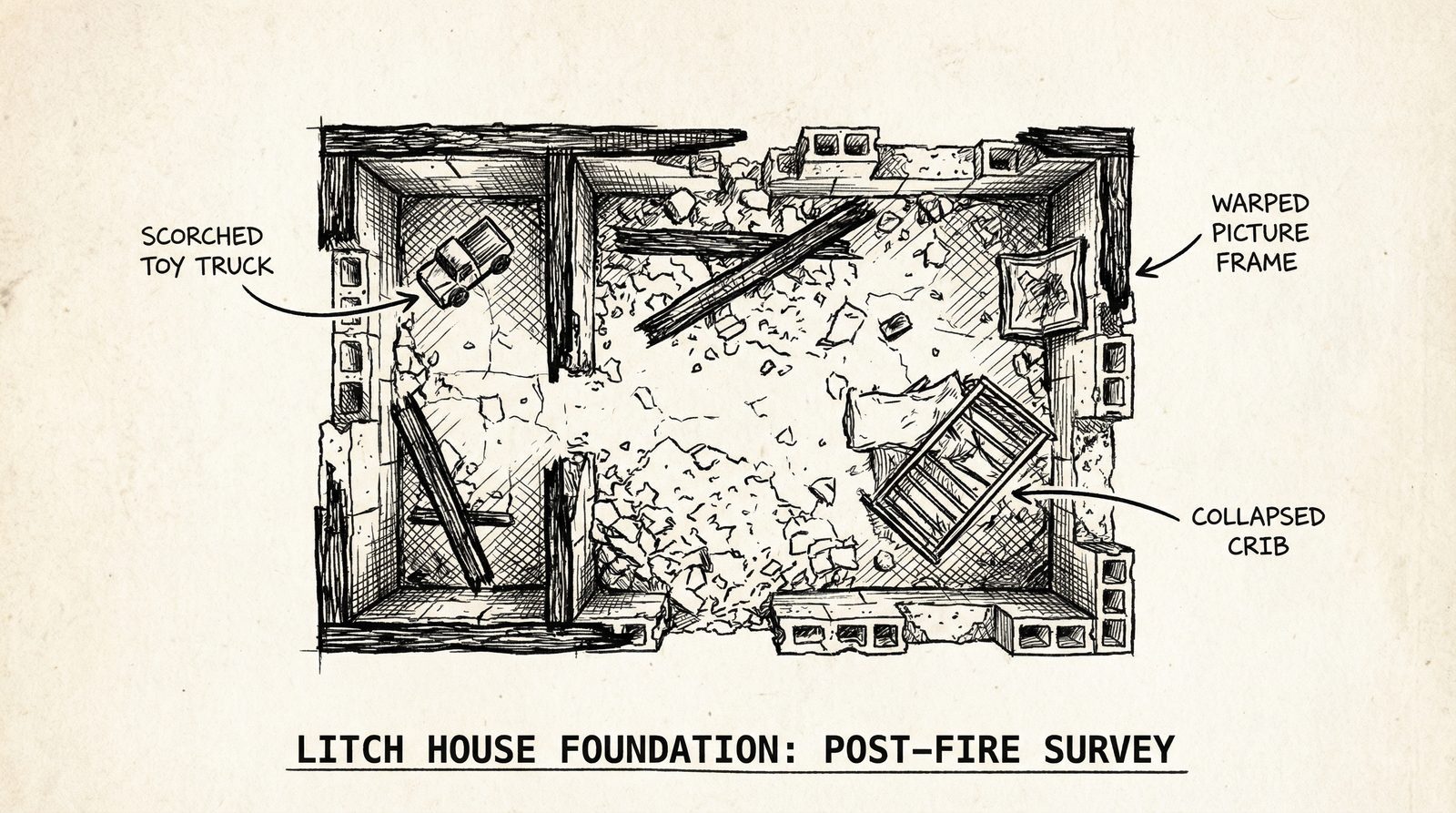
    Complicating things further, a house fire forces Kate’s longtime enemy Teri Litch and Teri’s toddler brother into the Malone home. The tension between the girls, built from years of rivalry, misunderstanding, and bruised pride, becomes the emotional engine of the novel.

    Catalyst explores themes of failure, grief, self-deception, and the collapse of identity under extreme pressure. This fits naturally with motifs like Identity Collapse in Isolation, as Kate spirals into emotional freefall when the role she has built her life around disappears.

    Anderson also threads in the darker edge of domestic tension. The Malone household is loving but brittle, a clear example of the motif Domestic Vulnerability as Horror, where tragedy does not need supernatural violence to devastate a family.

    Conceptual editorial illustration inspired by 'catalyst (2002)'


    STYLE & LANGUAGE

    Anderson writes with her trademark sharpness: short chapters, staccato sentences, and emotional beats delivered with precision. Kate’s voice is restless and anxious, which makes the book move quickly even when nothing large is happening on the surface. The language mirrors Kate’s racing thoughts. It is clipped, controlling, and sometimes unreliable.

    The novel is grounded firmly in realism. Anderson does not overplay the emotional stakes, which makes the genuine crisis points land harder. The dialogue is especially strong. Teenagers sound like teenagers, and the adults sound distracted and exhausted in ways that feel true.


    CHARACTERS & RELATIONSHIPS

    Kate Malone is a tightly coiled protagonist defined by fear of failure. She is sympathetic but not always likeable, which makes her unraveling more compelling. Her obsession with perfection creates a believable, painful internal conflict that drives much of the book’s tension.

    Teri Litch is the novel’s breakout character. She is abrasive, wounded, and strong in ways Kate is not. Their collision is the heart of the story. Anderson excels at writing two girls who resent each other for reasons neither can fully articulate until it is too late.

    The adults orbiting them, including Kate’s father, teachers, and neighbours, feel real but distant. That distance reinforces the sense that Kate is carrying far more than any teenager should have to hold.


    CULTURAL CONTEXT & LEGACY

    Published in the early 2000s, Catalyst sits in the second wave of YA realism that arrived before the explosion of issue-driven YA in the 2010s. It tackles academic pressure, trauma, and teenage emotional volatility without reducing characters to lessons. The book remains widely read because it captures something timeless: how it feels when your identity rests on a single fragile point.

    It also pairs historically with Speak, offering another angle on Anderson’s interest in girls whose voices are ignored, dismissed, or misunderstood by the institutions that shape their lives.

    Illustration of a core idea or motif from 'catalyst (2002)'


    IS IT WORTH READING?

    If you are looking for an emotionally honest, tightly written YA novel about pressure and identity, Catalyst is absolutely worth reading. It is intense without being melodramatic, and it treats teenage emotions with seriousness instead of condescension.

    If you prefer YA with broader worldbuilding or lighter tones, this will not be your book. Anderson writes to the bone, and Catalyst is very much about breaking down before finding a way forward.


    SIMILAR BOOKS

    Readers who connect with Kate’s emotional spiral may also appreciate the grounded pressure in Tabitha King’s Survivor. For a science-fiction parallel about identity under strain, Arthur C. Clarke’s 2061: Odyssey Three offers a thematic echo through a very different lens.