
Period: 1920s

  • Blackwater: The Complete Caskey Family Saga (1983)

    Blackwater: The Complete Caskey Family Saga (1983)

    By: Michael McDowell
    Genre: Horror, Southern Gothic, Family Saga
    Country: United States


    INTRODUCTION

    Originally published in six slim volumes in 1983 and now often collected as Blackwater: The Complete Caskey Family Saga, this is McDowell’s masterpiece of scale. Set in the town of Perdido, Alabama, from the 1910s through the late 20th century, it follows the wealthy Caskey family and the mysterious Elinor Dammert, a woman rescued from a flood who may not be entirely human.

    Blackwater is part river myth, part dynastic drama. Over hundreds of pages it tracks marriages, births, betrayals, and deaths as the Caskeys consolidate power, all under the shadow of the Blackwater River and Elinor’s strange influence. It is the fullest expression of McDowell’s obsession with Trauma as Inheritance and Domestic Vulnerability as Horror.

    PLOT & THEMES

    The saga begins with a catastrophic flood that nearly destroys Perdido. As the waters recede, a young woman named Elinor is found trapped in the hotel, calm and composed. She soon marries into the Caskey family and quietly starts reshaping their fortunes. The six volumes – The Flood, The Levee, The House, The War, The Fortune, and Rain – move through decades of economic booms and busts, wars, personal tragedies, and increasingly uncanny events.
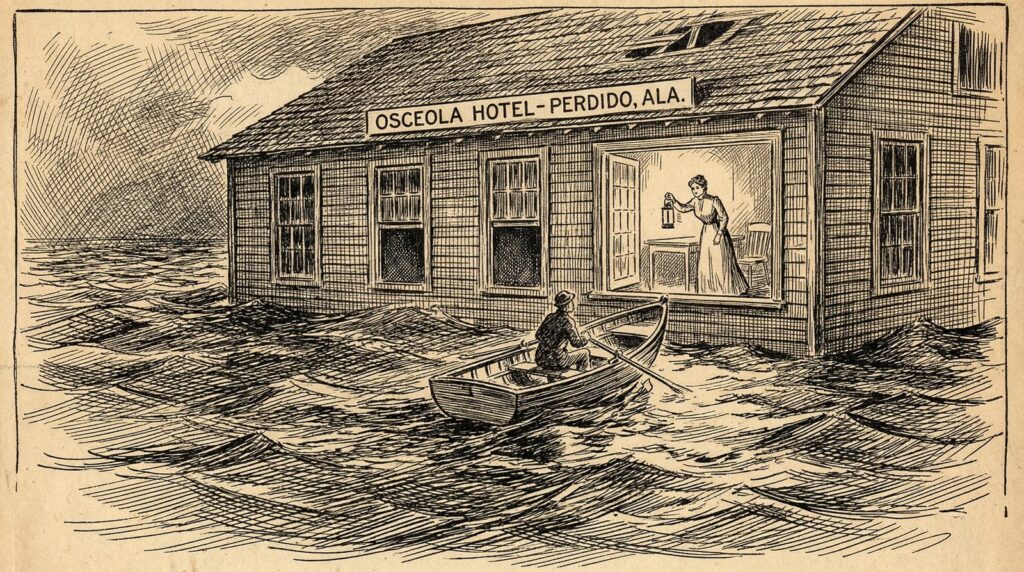
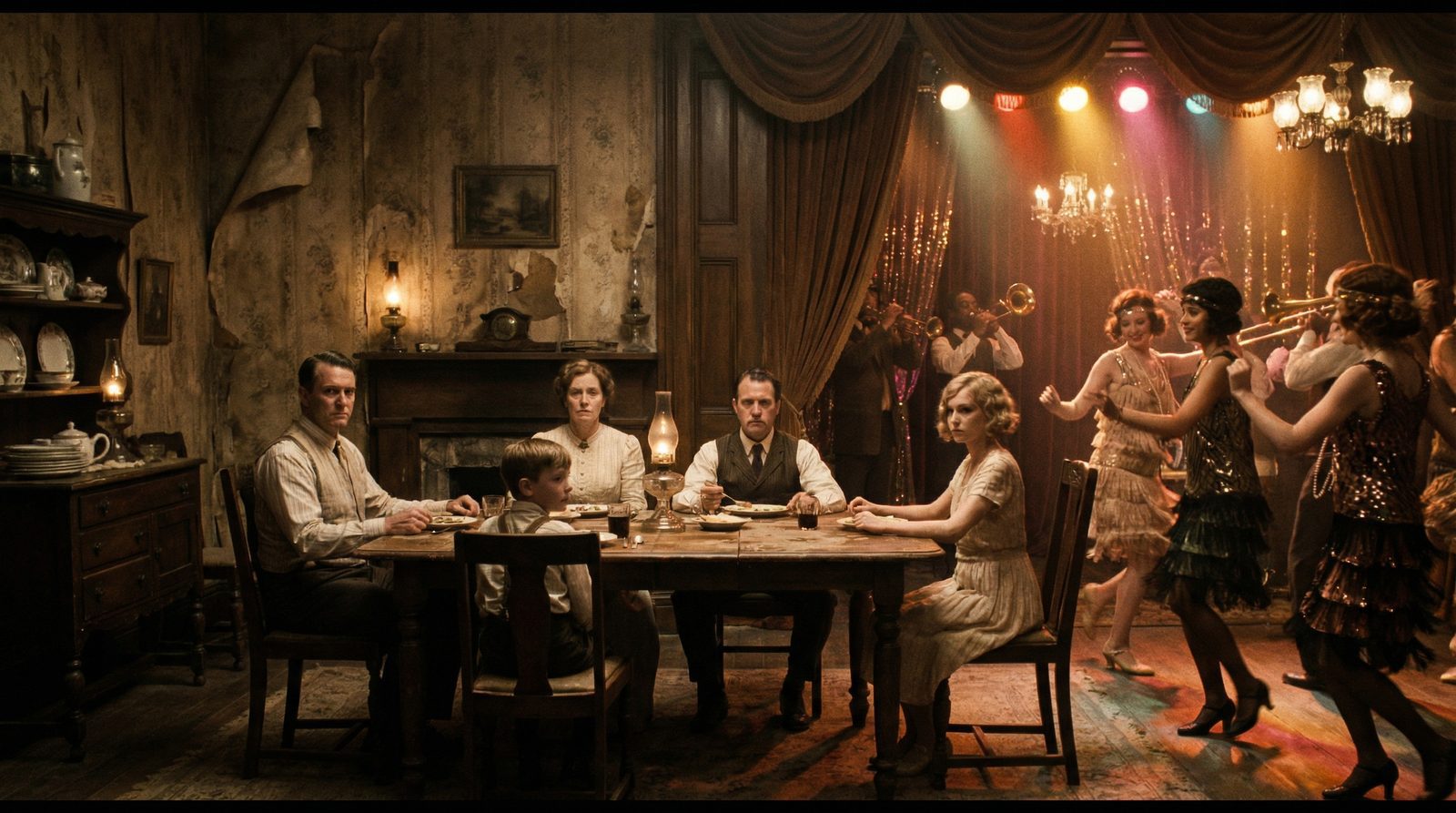
    Conceptual editorial illustration inspired by 'Blackwater the complete caskey family saga'
    Conceptual editorial illustration inspired by ‘Blackwater the complete caskey family saga’

    Thematically, Blackwater is about power: who wields it, who pays for it, and what it costs to keep it in the family. The Caskeys are not simply victims of a supernatural force. They benefit enormously from Elinor’s presence, even as they fear her. The river becomes a metaphor for both livelihood and doom, echoing motifs like Survival Narratives and the tension between prosperity and moral rot.

    Another thread is time. Because the saga spans generations, you see characters grow from children into embittered elders, and you watch grudges outlive the people who started them. It is one of the clearest fictional demonstrations of how family systems perpetuate themselves, for good and ill.

    STYLE & LANGUAGE

    Despite its length, Blackwater reads fast. McDowell writes each segment like a serialized television season: sharp hooks, cliffhangers, and payoffs, but with the same calm, controlled prose found in The Elementals. He sprinkles the supernatural elements lightly at first, allowing the family drama and economic maneuvering to carry the narrative until the reader is fully invested.

    The tone shifts subtly as the decades roll on. Early volumes feel almost like historical melodrama with hints of folk horror. Later installments grow stranger and more melancholy, as the cost of the Caskeys’ deal with the river catches up to them. McDowell’s ability to keep so many characters distinct while maintaining a clean line of tension is impressive.

    CHARACTERS & INTERIORITY

    Elinor is one of horror’s great ambiguous figures: loving mother, ruthless strategist, possible river creature. She embodies both The Double Self and The Witness archetypes, standing slightly outside human concerns while still caring intensely about her chosen family. The various Caskeys – matriarch Mary-Love, her son Oscar, and their descendants – are drawn with a soap-opera richness that never feels cheap.

    What makes the relationships compelling is their complexity. McDowell allows characters to be petty, generous, cruel, and tender in turn. Marriages shift, alliances realign, and children struggle under the weight of expectations they did not choose. This is Trauma as Inheritance not just in a supernatural sense but in the very ordinary ways families pass down unfinished business.
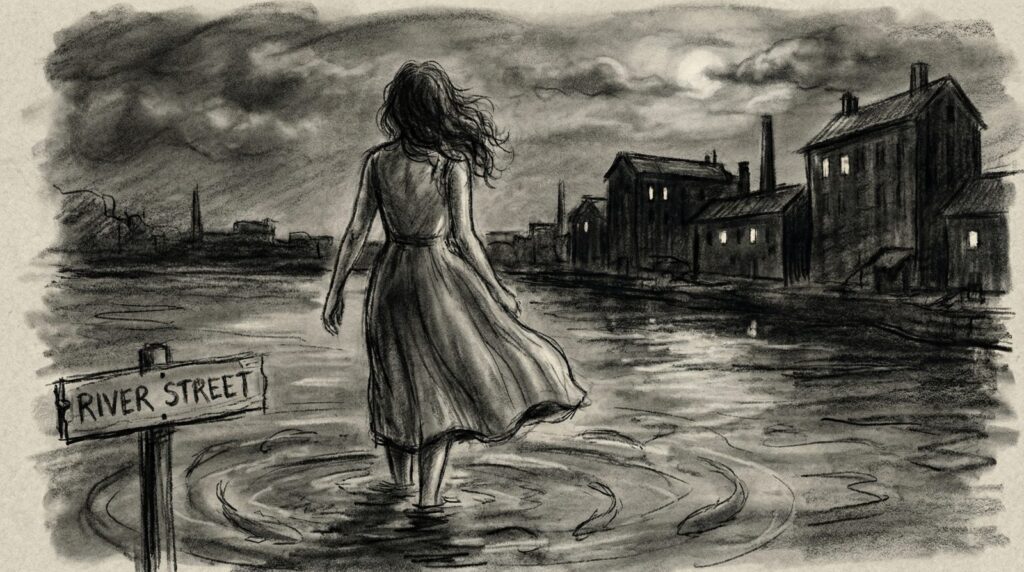
    Illustration of a core idea or motif from 'Blackwater the complete caskey family saga'
    Illustration of a core idea or motif from ‘Blackwater the complete caskey family saga’

    LEGACY & RECEPTION

    Blackwater occupies a strange but fascinating place in horror history. It was originally a mass-market experiment in serialized paperback publishing, then fell out of print, and has since been reclaimed as a cult classic. Modern readers often discover it through reissues that present the whole saga in one volume, which highlights how ahead of its time it was in blending family saga with supernatural horror.

    Its influence can be felt in later works about cursed dynasties and haunted towns, as well as in television that treats horror as a generational affair. For anyone mapping Southern Gothic across media, Blackwater is a cornerstone text alongside The Elementals and Candles Burning.

    IS IT WORTH READING?

    If you can commit to the length, Blackwater is one of the richest horror reading experiences available. It rewards patient readers with an immersive sense of place and character, and its horror accumulates quietly until the river and the family feel inseparable. Start here if you love sprawling multi-book epics and want to see McDowell at his most ambitious.

    SIMILAR BOOKS

    Readers who enjoy this blend of family saga and horror should explore The Elementals for a more concentrated take on haunted houses and legacy, and Cold Moon Over Babylon for a shorter, river-driven ghost story. Candles Burning offers a related mix of Southern family secrets and the supernatural, filtered through a single protagonist’s perspective.

    DISCOVERABILITY & LINKS

  • Zora Neale Hurston

    Zora Neale Hurston

    Born 1891, Notasulga, Alabama, United States · Died 1960 Genres: Literary Fiction, Essay, Folklore Era: Early to Mid 20th Century

    INTRODUCTION

    Zora Neale Hurston was a writer, anthropologist, and one of the central figures of the Harlem Renaissance. Her fiction and non-fiction preserve and celebrate Black Southern speech, humor, mythology, and everyday life. She is best known for Their Eyes Were Watching God, a novel that follows Janie Crawford’s journey to selfhood through love, loss, and storytelling. Hurston’s work often intersects with motifs like Intimacy as Healing and Survival Narratives.

    LIFE AND INFLUENCES

    Hurston grew up in Eatonville, Florida, one of the first all-Black incorporated towns in the United States. That environment deeply influenced her sense of community and autonomy. She studied anthropology and traveled to collect folklore, which she fed back into her writing. Her influences include Southern oral tradition, Black church culture, blues, and folklore. Her anthropological training sharpened her ear for voice and detail.
    Editorial illustration inspired by 'Zora Neale Hurston'

    THEMES AND MOTIFS

    Hurston writes about love, independence, community, and the search for self within and against social norms. Her characters often navigate expectations around gender and respectability while pursuing joy and connection. Her work reflects motifs such as Intimacy as Transaction, Power as Proximity, and Memoirs of Reclamation in the way Janie tells her story.

    STYLE AND VOICE

    Hurston’s style is vibrant and musical. She combines richly rendered dialect with lyrical narration. Her fiction feels spoken as much as written, honoring the rhythms of Black Southern speech and storytelling.
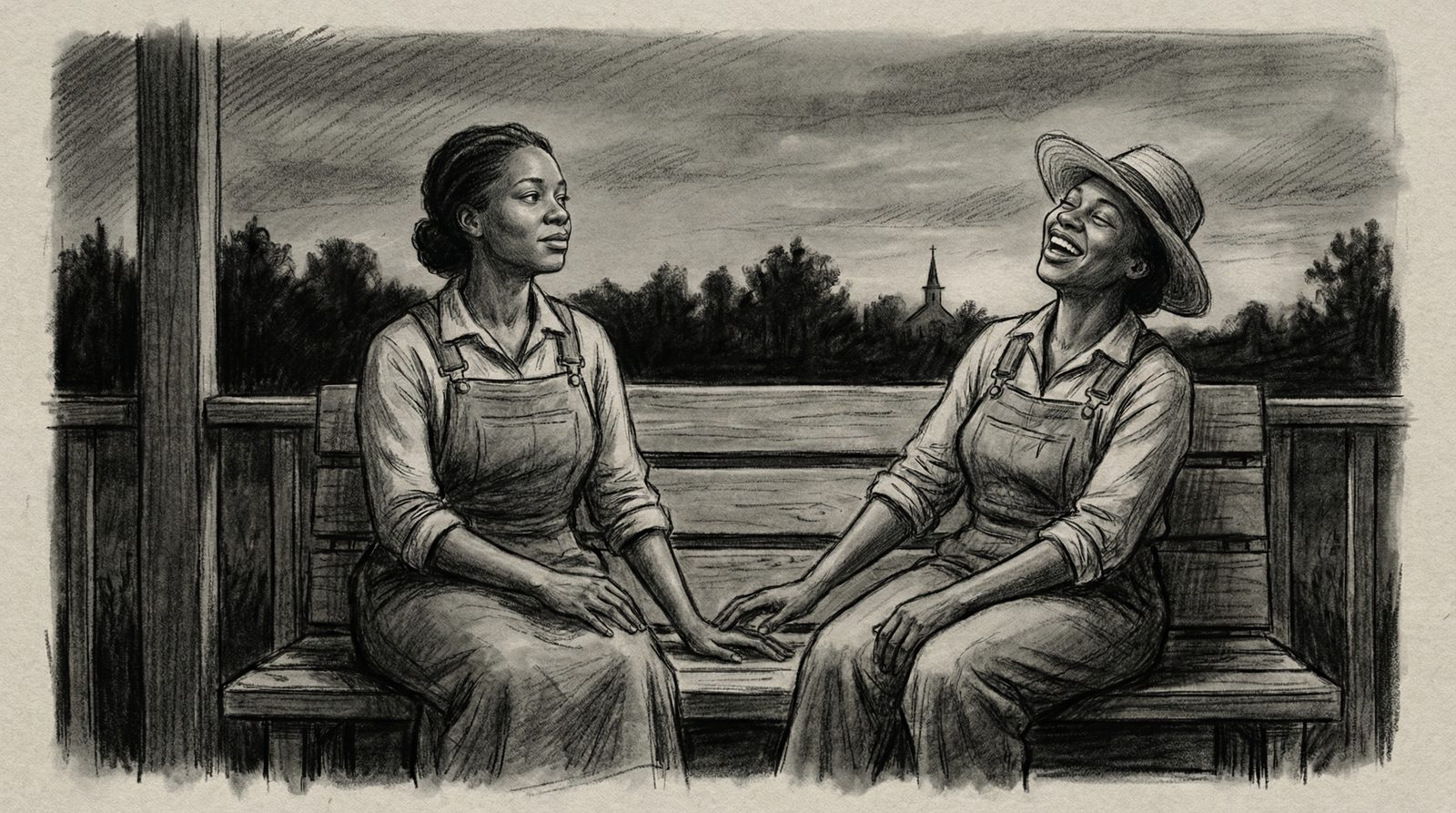
    Symbolic illustration inspired by 'Zora Neale Hurston'

    KEY WORKS


    CULTURAL LEGACY

    Hurston’s work was underappreciated in her lifetime but revived in the late twentieth century, especially through the efforts of Black feminist writers and scholars. She is now recognized as a foundational voice in American literature, particularly in the portrayal of Black women’s inner lives and desires.
  • The Color Purple (2023)

    The Color Purple (2023)

    Director: Blitz Bazawule
    Screenplay: Marcus Gardley
    Based on: Broadway Musical and The Color Purple by Alice Walker
    Genre: Musical Drama
    Country: United States
    Year: 2023


    INTRODUCTION

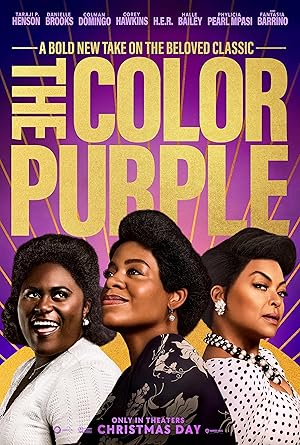
    Official poster for 'The Color Purple (2023) (2023)'

    The Color Purple (2023) reimagines Alice Walker’s story through the language of musical theater. Where the 1985 film stayed grounded in realism, this adaptation embraces emotional spectacle, using music to reveal what Celie cannot yet say. The result is a version of the story filled with movement, color, and spiritual uplift. It remains rooted in the motif of Survival Narratives, but its tone is more celebratory, focusing on transformation rather than confinement.

    The musical form allows the film to explore Celie’s interior world through sound and choreography, turning resilience into something communal and triumphant.


    PLOT AND FOCUS

    The story follows the same broad arc as the novel and the 1985 film. Celie endures violence, forced marriage, and separation from her sister. The emotional turning point arrives through relationships with Sofia, Nettie, and especially Shug Avery, whose presence helps Celie imagine a life beyond fear.

    The musical format shifts the tone. Songs become emotional architecture. Instead of describing Celie’s awakening, the film lets her sing it. These moments deepen the motif of Intimacy as Healing and emphasize the joy that emerges from community.

    The plot stays loyal to the source material but prioritizes catharsis over strict realism. It focuses on emotional release and collective resilience.


    STYLE AND APPROACH

    The film uses bold color palettes, wide choreography, and surreal visual moments to express Celie’s imagination. Where the earlier adaptation showed confinement, this one shows expansion. Dreams, memories, and musical numbers blur into each other, creating a sense of internal liberation long before Celie gains external freedom.

    The musical sequences offer joy even inside pain. This tonal blending is one of the film’s strengths. It suggests that hope and sorrow can share the same frame without canceling each other.

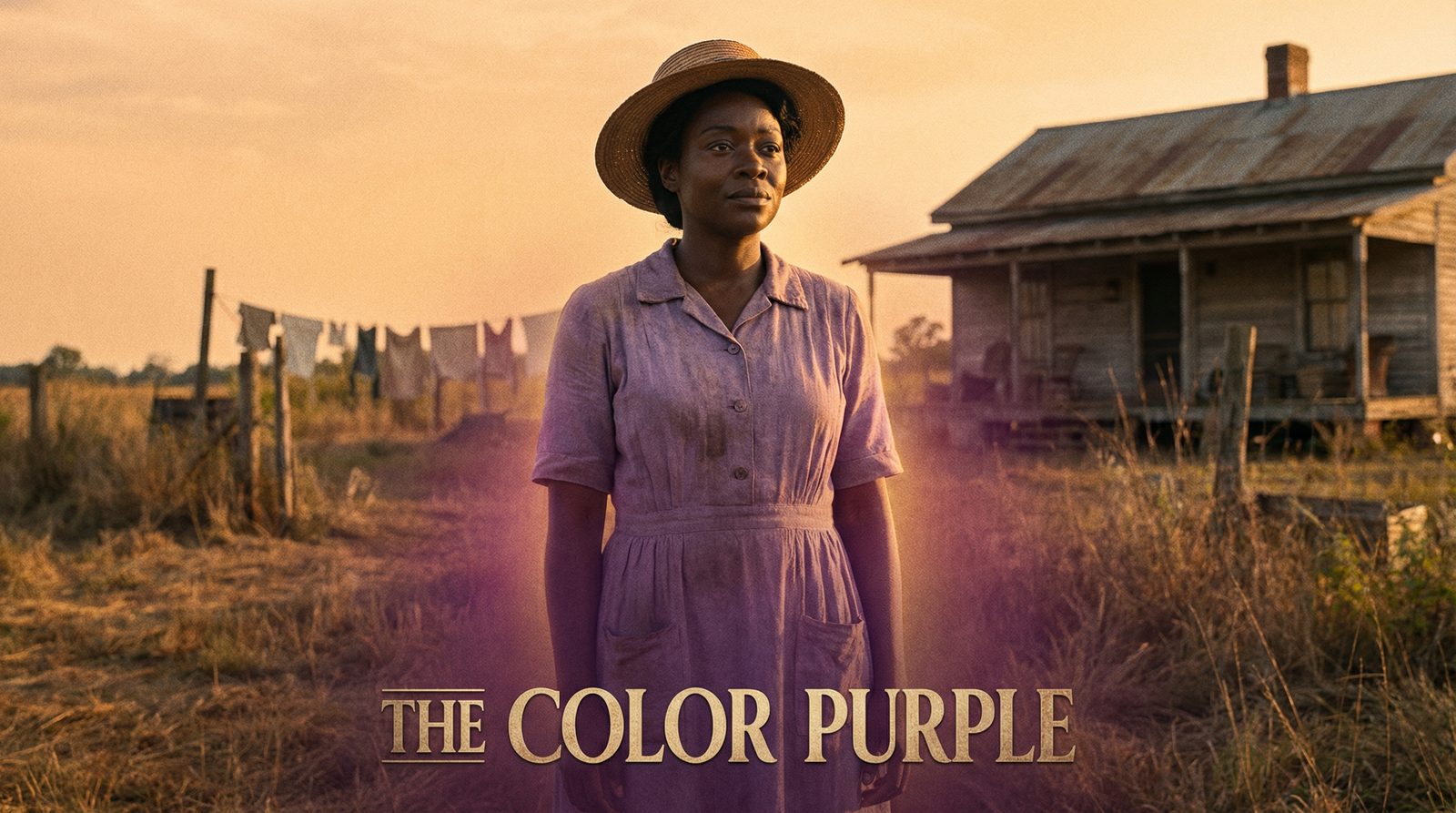
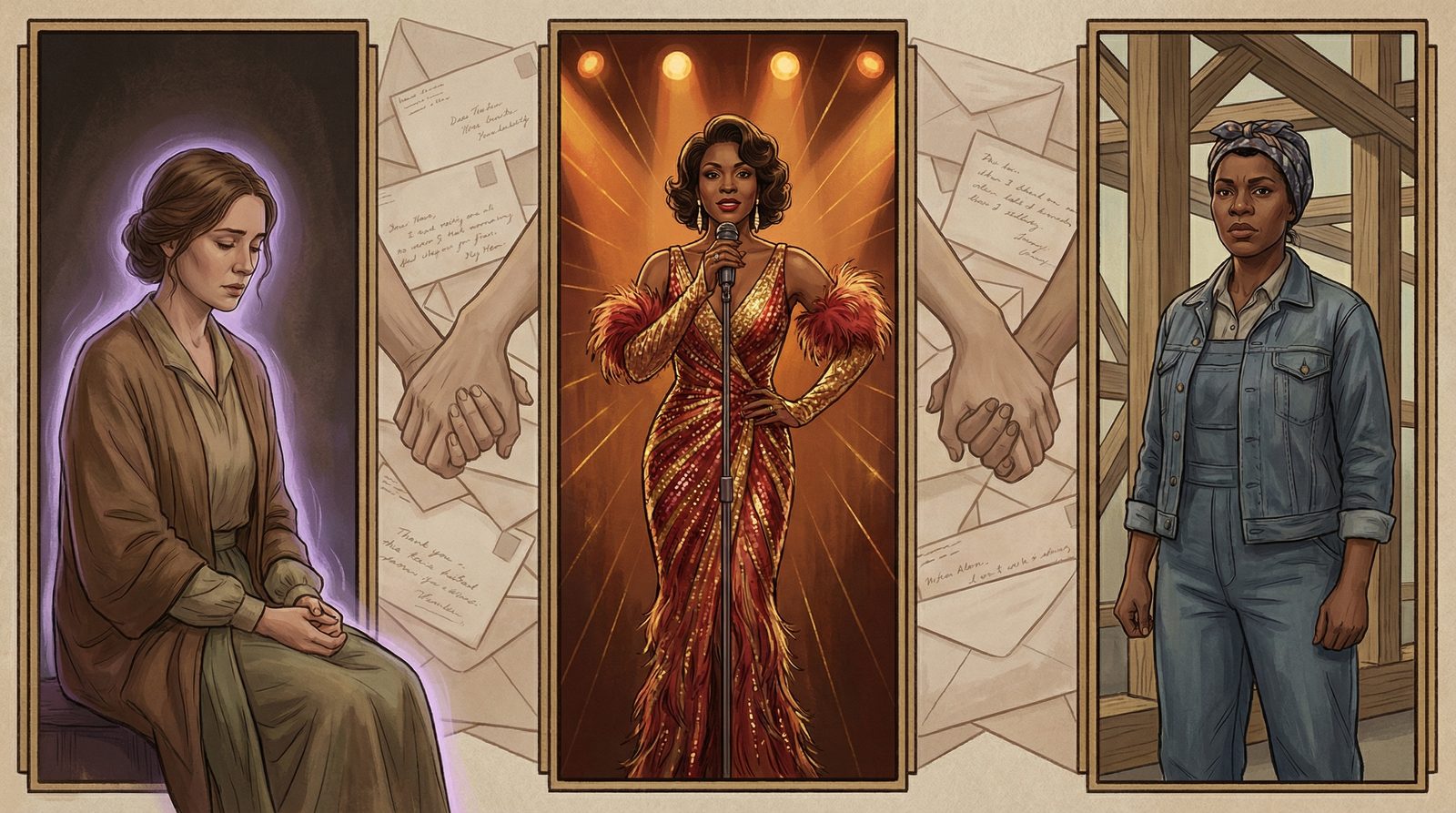
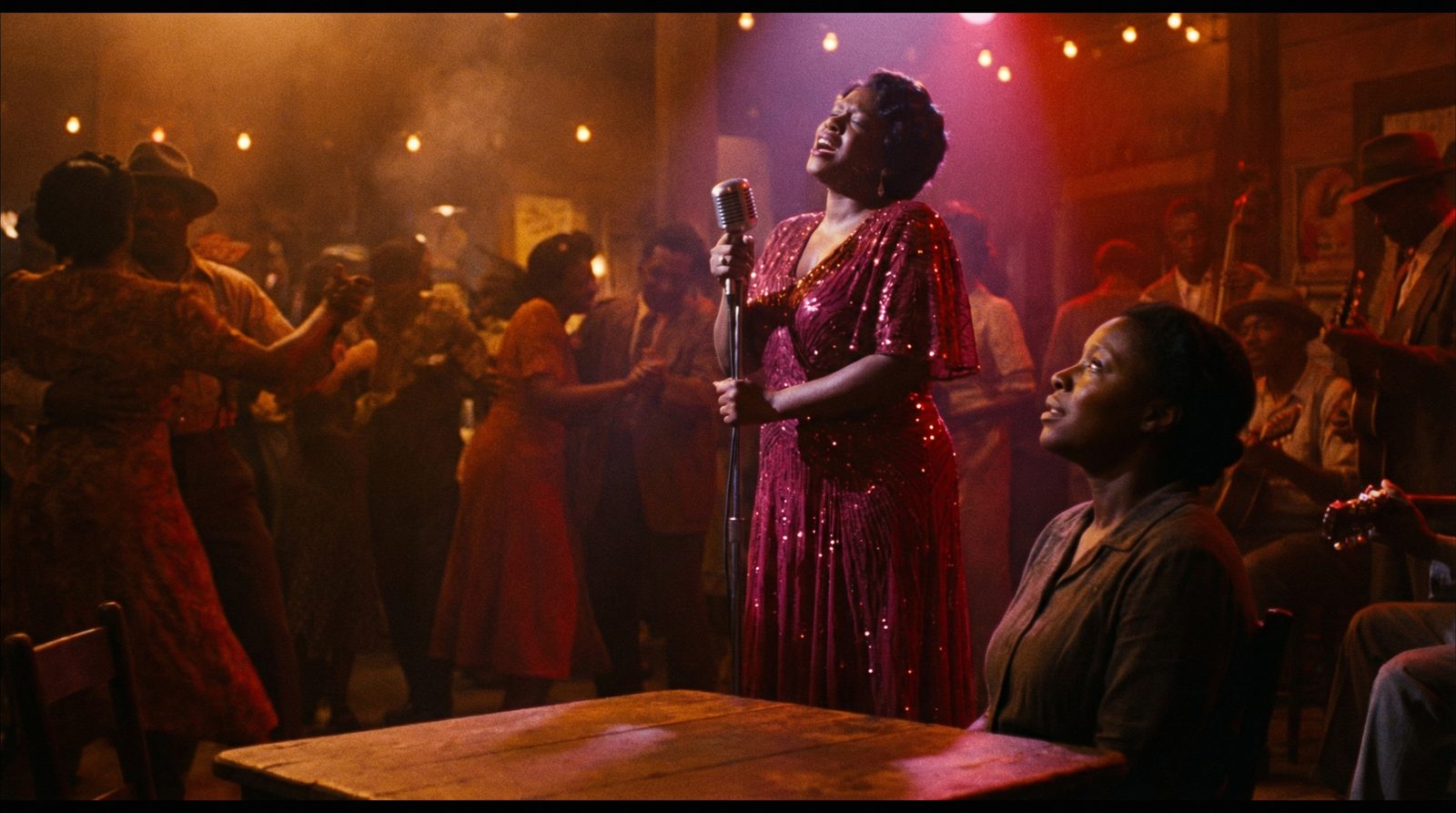
    Editorial illustration inspired by 'The Color Purple (2023) (2023)'

    CULTURAL CONTEXT AND LEGACY

    The 2023 adaptation stands at the intersection of literature, musical theater, and contemporary filmmaking. It honors the novel’s themes while speaking to a new generation of viewers. The film also restores attention to aspects of the story that had been softened in the 1985 version, especially Celie’s romantic and spiritual connection with Shug.

    Its release reignited conversations about Black women’s stories in mainstream film and emphasized the importance of adapting classic texts in ways that honor their complexity. It also strengthened the cultural position of The Color Purple as a multiform epic that continues to evolve.

    Symbolic illustration inspired by 'The Color Purple (2023) (2023)'

    IS IT WORTH WATCHING?

    Yes. It is vibrant, emotional, and beautifully performed. For viewers who love the novel or the earlier film, this adaptation offers a new lens. For those coming to the story for the first time, it offers an accessible and moving entry point. The film blends sorrow and joy with unusual grace.


    SIMILAR WORKS

    The Color Purple (1985)
    The Color Purple (1982)
    Precious (2009)
    Framing Britney Spears (2021)

  • The Color Purple (1985)

    The Color Purple (1985)

    Director: Steven Spielberg
    Screenplay: Menno Meyjes
    Based on: The Color Purple by Alice Walker
    Genre: Drama
    Country: United States
    Year: 1985


    INTRODUCTION

    The Color Purple (1985) is the first major screen adaptation of Alice Walker’s novel. Spielberg approaches the story with careful reverence, foregrounding Celie’s inner life without diluting the brutality she endures. The film translates the letters of the novel into a visual language shaped by silence, longing, and endurance. At its core, the film reflects the motif of Silence as Survival, showing how Celie learns to speak inside a world that rarely listens.

    The film became a cultural lightning rod. Praised for its performances and emotional force, criticized for the way pain is presented, it remains a milestone in bringing Black women’s interiority to mainstream cinema.


    PLOT AND FOCUS

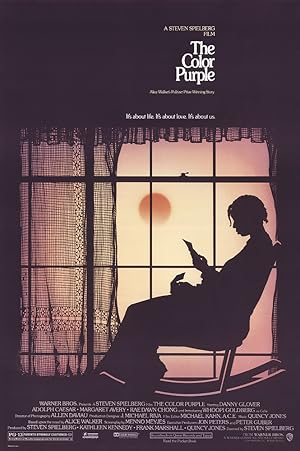
    Official poster for 'The Color Purple (1985) (1985)'

    Set in the American South of the early twentieth century, the film follows Celie from childhood through adulthood as she faces physical abuse, forced marriage, and years of emotional suppression. Her husband, Mister, controls her labor and voice, and her sister Nettie’s exile becomes a wound that shapes her adolescence.

    The plot shifts when Shug Avery enters Celie’s life. Shug’s confidence and warmth form a kind of emotional education, helping Celie imagine a life beyond obedience. These scenes express the motif of Intimacy as Healing. Celie’s understanding of love is rewritten through Shug’s presence.

    The story’s emotional climax is Celie’s assertion of selfhood. Her declaration that she will no longer be silenced is one of the most enduring moments in the film and a reflection of her journey toward spiritual and personal freedom.


    STYLE AND APPROACH

    The visual style blends warm Southern landscapes with tight interior shots that reflect Celie’s confinement. Spielberg uses color and framing to show the difference between the world Celie lives in and the world she longs for. The fantasy sequences, though brief, reveal her imagination as a refuge.

    The performances ground the film. Celie’s quietness becomes a form of strength rather than erasure, and Shug and Sofia bring vitality that expands the emotional world of the story. This balance keeps the film from becoming a simple story of suffering. It becomes a story of transformation.

    Editorial illustration inspired by 'The Color Purple (1985) (1985)'

    CULTURAL CONTEXT AND LEGACY

    The film sparked heated debate. Some viewers praised its honesty. Some criticized its portrayal of violence. Others felt the adaptation softened parts of the novel. Yet the broader impact is undeniable. The film introduced Celie’s story to millions who had never encountered the novel and opened conversations about gender, race, and autonomy in mainstream film.

    It also paved the way for later adaptations, including the Broadway musical and the 2023 film musical. As a cultural object, the 1985 film stands alongside the novel as one of the most significant depictions of Black womanhood in American cinema of the 1980s.

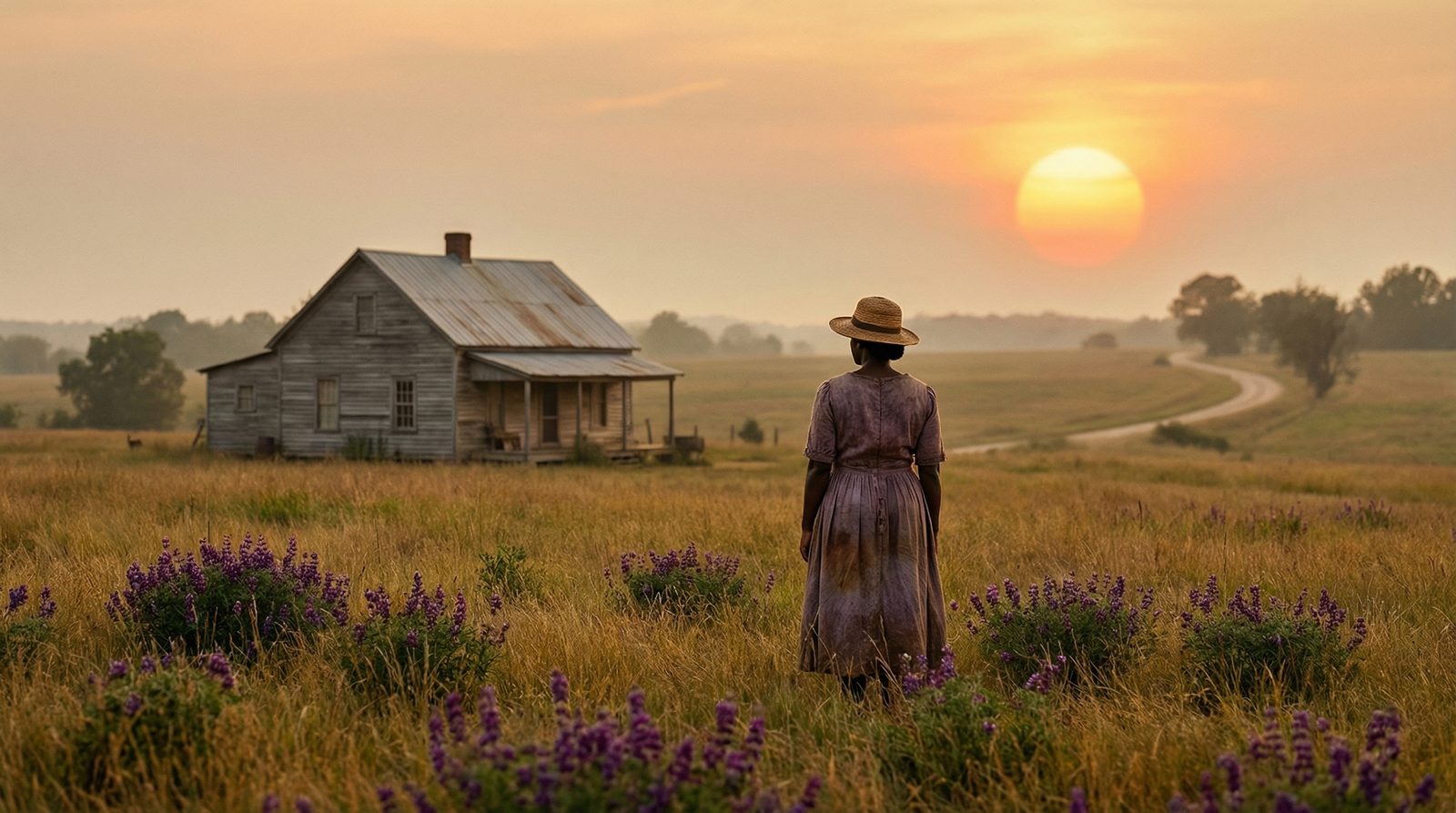
    Symbolic illustration inspired by 'The Color Purple (1985) (1985)'

    IS IT WORTH WATCHING?

    Yes. It is emotionally intense but deeply moving. The film is a landmark in American cinema for its performances, visual storytelling, and commitment to centering Celie’s voice. Anyone interested in literary adaptations, Southern history, or stories of resilience will find it essential.


    SIMILAR WORKS

    The Color Purple (1982)
    The Color Purple (2023)
    Precious (2009)
    Framing Britney Spears (2021)

  • The Color Purple (1982)

    The Color Purple (1982)

    By: Alice Walker
    Genre: Epistolary Novel, Historical Fiction
    Country: United States


    INTRODUCTION

    The Color Purple is one of the most quietly powerful novels of the twentieth century. First published in 1982, it tells Celie’s story through letters written in her own unpolished voice. She writes to God because she has no one else to listen. The book begins in near silence and grows into a full song of survival. The early chapters lean into the motif of Silence as Survival, where withholding becomes a way to stay alive in a world that rarely offers safety.

    What makes the novel unforgettable is its transformation. Celie’s frightened voice becomes the voice of a woman reclaiming her own life.


    PLOT AND THEMES

    Celie’s story unfolds through letters addressed first to God and later to her sister Nettie. She grows up in rural Georgia, enduring sexual violence, forced marriage, and constant humiliation. Her husband, known only as Mister, uses her as labor and property. The plot moves slowly in action but widely in emotional scope. It traces Celie’s long shift from voicelessness to self-possession.

    The exchange of letters between Celie and Nettie becomes the novel’s emotional spine. Nettie’s letters from Africa widen the book’s sense of place and connect Celie’s private suffering to broader histories of displacement and oppression. This pattern aligns with the motif of Trauma as Inheritance, where pain is passed across families and continents.

    The story also explores sisterhood, chosen family, and the sacredness of desire. Celie’s bond with Shug Avery becomes a turning point. Shug models a life of self-regard, sensuality, and spiritual independence. Through Shug, Celie learns that her body and voice belong to her. This shift reflects the motif of Intimacy as Healing, where affection becomes instruction.

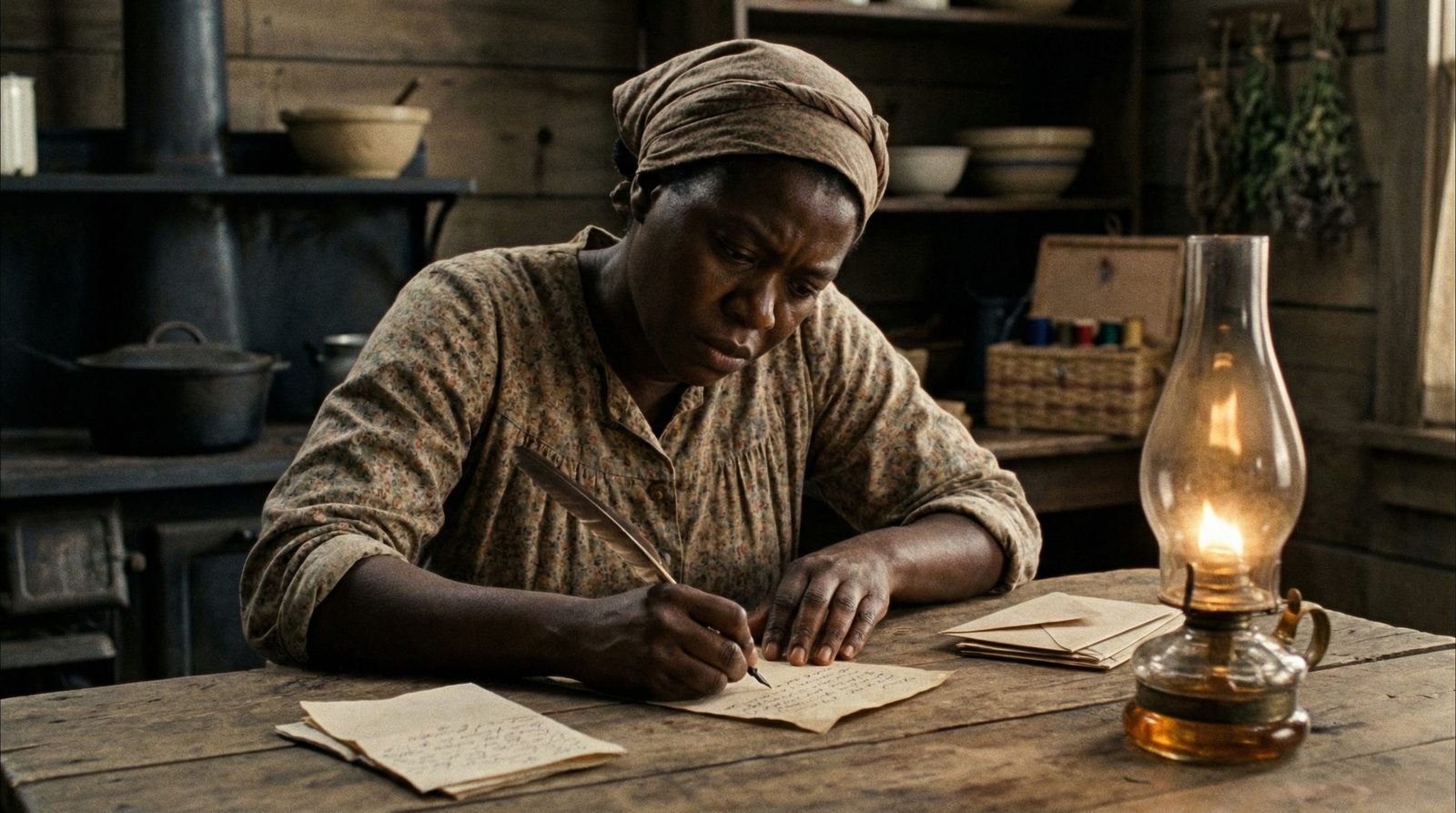
    Conceptual editorial illustration inspired by 'the color purple'


    STYLE AND LANGUAGE

    The novel is written in Celie’s dialect, with spelling and grammar shaped by her limited formal education. What might seem simple becomes beautiful through sincerity. Alice Walker refuses to smooth or correct Celie’s voice. Instead, she lets the language carry emotional truth. This restraint is a form of Emotional Minimalism, where plain words carry enormous weight.

    The epistolary form gives the book its heart. Every letter feels like a prayer or confession. As Celie grows, the writing grows with her. Her vocabulary expands. Her confidence sharpens. The evolution of her syntax becomes its own proof of transformation.


    CHARACTERS AND RELATIONSHIPS

    Celie anchors the novel, but she is lifted forward by the women around her. Sofia’s defiance teaches her resistance. Shug Avery’s independence teaches her desire and spiritual agency. Nettie’s letters teach her about the world and about her own worth. Together, these women rewrite Celie’s understanding of freedom.

    The men are not reduced to caricatures. Mister is violent and controlling, yet his slow, partial redemption shows Walker’s belief in the possibility of change. Harpo and others reflect the pressures of a patriarchal world that harms them as well. These dynamics connect to the motif of Power as Proximity, where harm flows through inherited roles rather than pure malice.

    Celie’s relationships move the novel from brutality to connection. Each bond widens her sense of what a life can be.

    Illustration of a core idea or motif from 'the color purple'


    CULTURAL CONTEXT AND LEGACY

    When it was released, The Color Purple changed the landscape of American literature. It won both the Pulitzer Prize and National Book Award and sparked fierce debate. Some Black male critics accused Walker of betrayal for depicting domestic violence within Black families. The argument exposed the cultural tension the novel refuses to hide. Walker insisted on telling the truth about private pain rather than protecting public appearance.

    The story continued to evolve through adaptation. The 1985 film directed by Steven Spielberg brought Celie’s world to mainstream cinema, earning critical acclaim and introducing the story to millions who had never read the novel. The later 2023 film musical adaptation expanded the emotional palette even further, using music and movement to explore Celie’s interior life in ways unique to the stage and screen.

    The novel’s themes place it alongside Beloved (1987) and Their Eyes Were Watching God (1937) as a cornerstone of Black feminist literature. More than forty years later, its closing lines still feel revelatory. The book is an argument for joy as resistance.


    IS IT WORTH READING?

    Yes. The Color Purple is essential reading. It is unflinching, tender, and transformative. The brutality is difficult, but the beauty is sustaining. For readers interested in stories of trauma, faith, desire, and freedom, it remains one of the most important novels in American literature.


    SIMILAR BOOKS

    Beloved (1987)
    Their Eyes Were Watching God (1937)
    I Know Why the Caged Bird Sings (1969)
    The Bluest Eye (1970)


    RELATED ADAPTATIONS

    The Color Purple (1985)
    The Color Purple (2023)