Period: 1950s

  • The Motorcycle Diaries (2004)

    The Motorcycle Diaries (2004)

    The Motorcycle Diaries (2004), directed by Walter Salles. Road Movie · 126 minutes · Argentina / Brazil / Chile / Peru / United States.


    INTRODUCTION

    The Motorcycle Diaries is a Road Movie that feels quietly revolutionary in its modesty. Rather than racing through the milestones of a famous life, it lingers on formative moments before myth hardens into ideology. Walter Salles follows a 23-year-old Ernesto Guevara in 1952, long before he becomes “Che,” tracing a journey across South America that reshapes his sense of responsibility and belonging.

    The film belongs to the coming-of-age tradition, but the coming-of-age is political as much as personal. By the time the credits roll, nothing “historic” has happened in conventional biopic terms. Yet everything has shifted internally. The mood is contemplative, melancholic, and grounded in physical travel rather than rhetoric.

    PLOT & THEMES

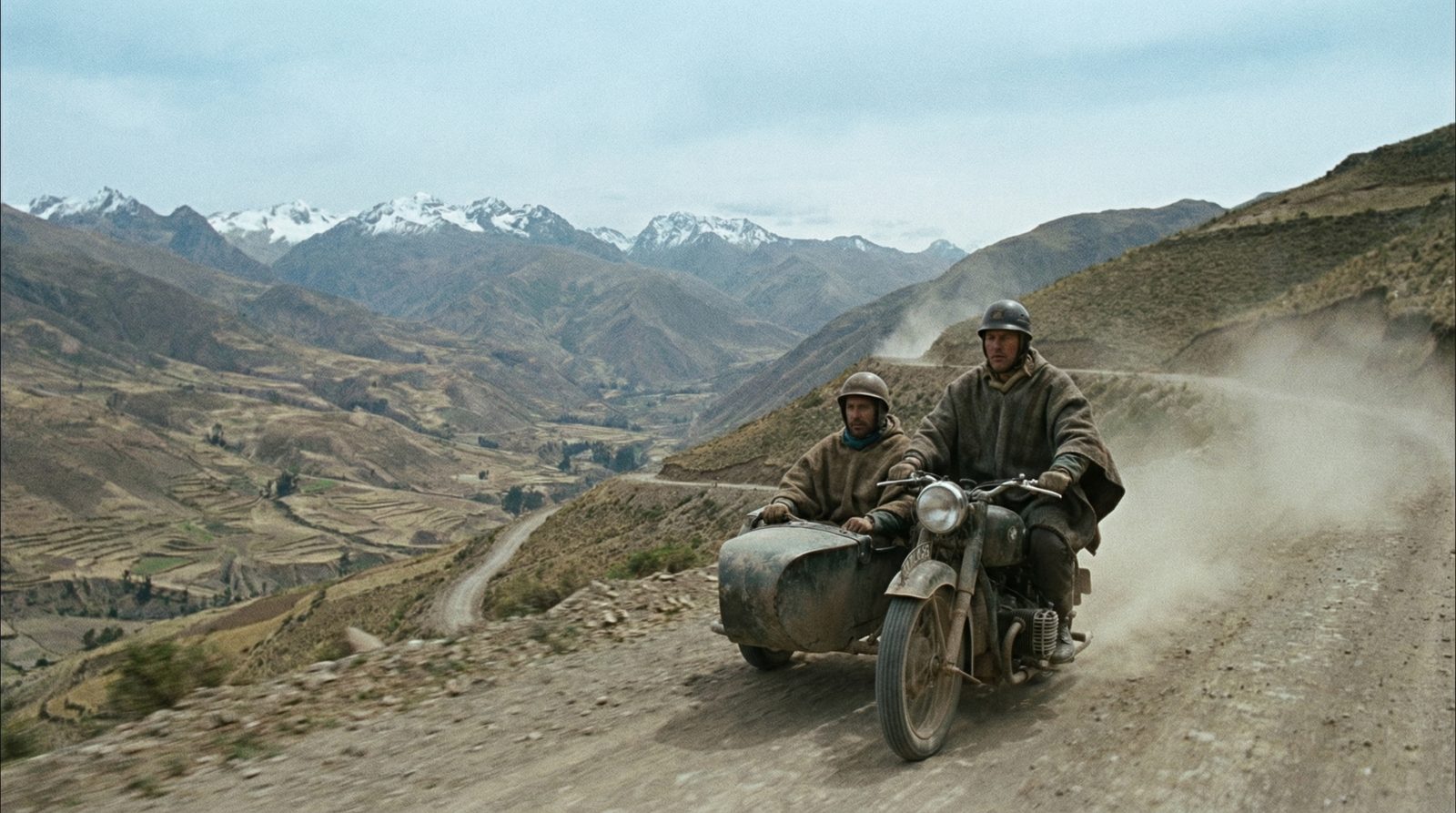
    The story follows Ernesto Guevara, a middle-class Argentine medical student, and his friend Alberto Granado as they set off on a ramshackle motorcycle trip across South America. What begins as youthful adventure quickly becomes a lesson in limits. The motorcycle breaks down, money disappears, and the pair are forced into closer contact with people living far outside their social bubble.

    As they travel through Argentina, Chile, and Peru, the tone shifts from comic misadventure to moral confrontation. Encounters with exploited miners, Indigenous communities, and patients at a leper colony expose Ernesto to structural injustice he cannot ignore. Travel becomes transformation, not through spectacle but through accumulation: each border crossed introduces a new ethical tension.

    Illness and bodies play a central role. Ernesto’s asthma and his medical training keep politics anchored in physical vulnerability. Inequality is not discussed abstractly; it is breathed, touched, and treated. The film resists cathartic conversion scenes, favoring gradual awakening. By the river crossing at the leper colony, Ernesto’s decision to swim across becomes a physical declaration of solidarity rather than a speech.

    CINEMATIC TECHNIQUE & AESTHETICS

    Walter Salles relies on naturalistic lighting and extensive location shooting to ground the film in lived geography rather than postcard imagery. Landscapes dwarf the protagonists, reinforcing humility and disorientation. Long takes allow discomfort to settle, particularly during encounters with marginalized communities.

    Handheld camera work during travel sequences gives the journey a tactile instability. The bike rattles, the frame shudders, and progress feels provisional. By contrast, scenes at the leper colony use steadier compositions and visual symmetry, as if the film itself slows down to observe rather than roam.

    Sound design favors ambient noise — engines, wind, water — with Gustavo Santaolalla’s score entering quietly, like memory rather than commentary. Voiceover drawn from Guevara’s diary is used sparingly and often complicates what we see. The final montage of faces anchors the film’s politics in lived human presence rather than ideology.
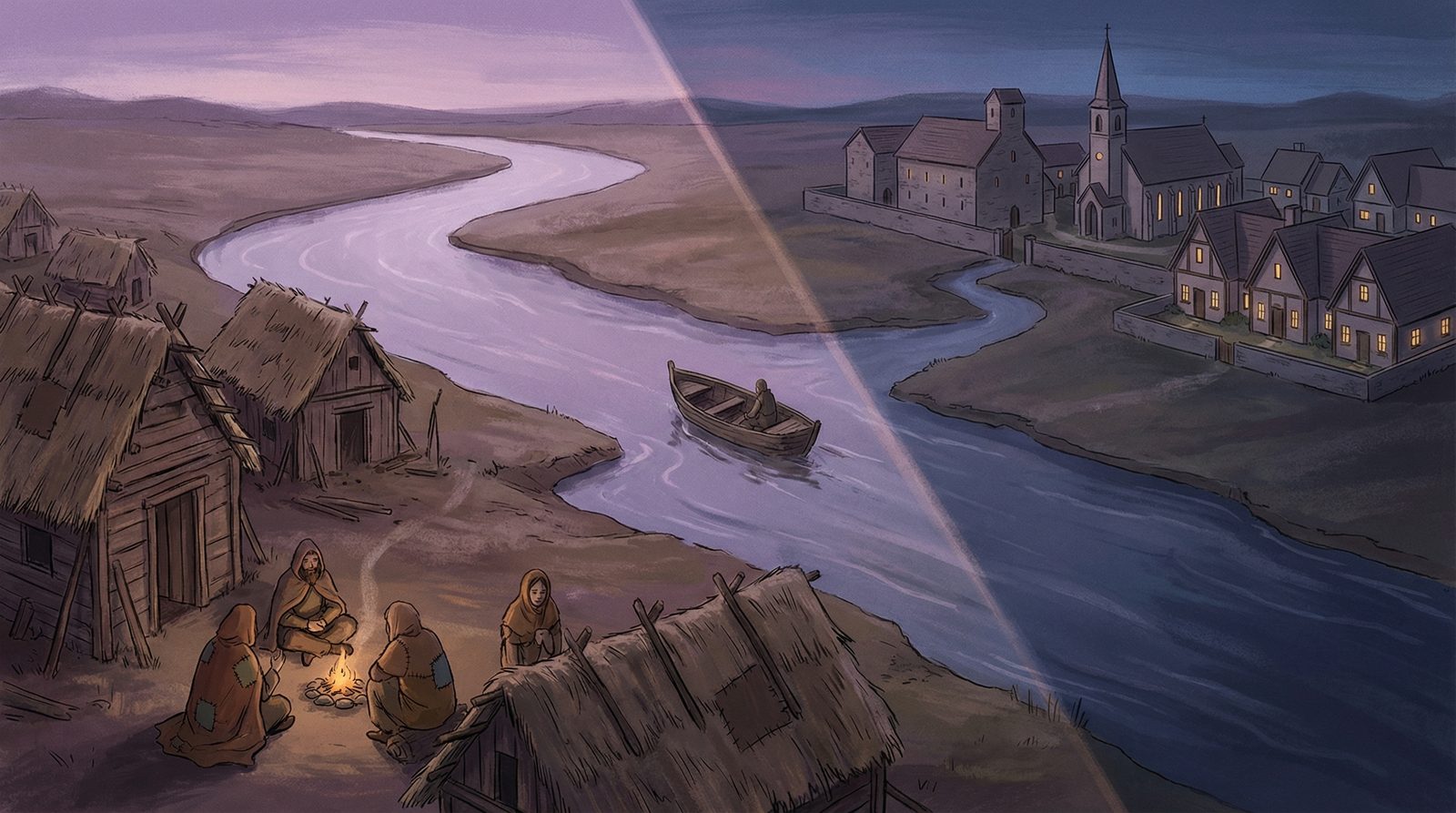
    Editorial illustration inspired by 'The Motorcycle Diaries (2004)'

    CHARACTERS & PERFORMANCE

    Gael García Bernal plays Ernesto as a restrained Idealist rather than a charismatic firebrand. He is awkward, asthmatic, observant — more listener than speaker. Bernal emphasizes hesitation and internal pressure, letting the awakening register through silence and posture rather than declarations.

    Rodrigo de la Serna’s Alberto Granado provides contrast as a Trickster figure: charming, opportunistic, and emotionally open. Their dynamic balances gravity with warmth. Friendship becomes the film’s emotional vehicle for political realization.

    Supporting characters appear briefly but leave lasting impressions. They function less as individualized arcs and more as lived evidence of inequality. The restrained performances avoid sentimentality, keeping the film from drifting into didacticism.

    CONTEXT & LEGACY

    Released in the early 2000s, The Motorcycle Diaries arrived when Che Guevara’s image had become globally commodified. By focusing on his pre-revolutionary years, the film sidesteps later controversies and instead explores the formation of conscience. Its legacy lies not in political instruction but in showing how empathy precedes ideology.

    Within Latin American cinema, it stands as a key example of the socially conscious Road Movie, using movement to expose class and racial divides. Internationally, it remains a touchstone for films that treat political awakening as a slow, embodied process rather than a single decisive moment.

    IS IT WORTH WATCHING?

    Yes — especially if you prefer character-driven journeys over conventional biopics. The film rewards patience, attention, and openness. It is less interested in answers than in formation.

    Viewers expecting a full account of Che Guevara’s later politics may find it incomplete. As a portrait of an inner shift — from individual adventure to continental awareness — it remains quietly powerful.

  • Blackwater: The Complete Caskey Family Saga (1983)

    Blackwater: The Complete Caskey Family Saga (1983)

    By: Michael McDowell
    Genre: Horror, Southern Gothic, Family Saga
    Country: United States


    INTRODUCTION

    Originally published in six slim volumes in 1983 and now often collected as Blackwater: The Complete Caskey Family Saga, this is McDowell’s masterpiece of scale. Set in the town of Perdido, Alabama, from the 1910s through the late 20th century, it follows the wealthy Caskey family and the mysterious Elinor Dammert, a woman rescued from a flood who may not be entirely human.

    Blackwater is part river myth, part dynastic drama. Over hundreds of pages it tracks marriages, births, betrayals, and deaths as the Caskeys consolidate power, all under the shadow of the Blackwater River and Elinor’s strange influence. It is the fullest expression of McDowell’s obsession with Trauma as Inheritance and Domestic Vulnerability as Horror.

    PLOT & THEMES

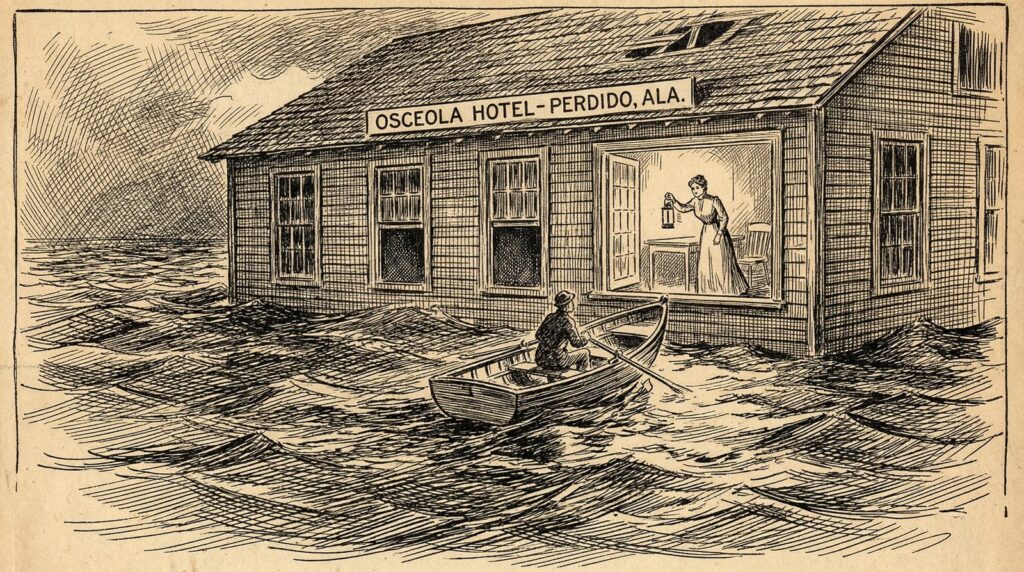
    The saga begins with a catastrophic flood that nearly destroys Perdido. As the waters recede, a young woman named Elinor is found trapped in the hotel, calm and composed. She soon marries into the Caskey family and quietly starts reshaping their fortunes. The six volumes – The Flood, The Levee, The House, The War, The Fortune, and Rain – move through decades of economic booms and busts, wars, personal tragedies, and increasingly uncanny events.

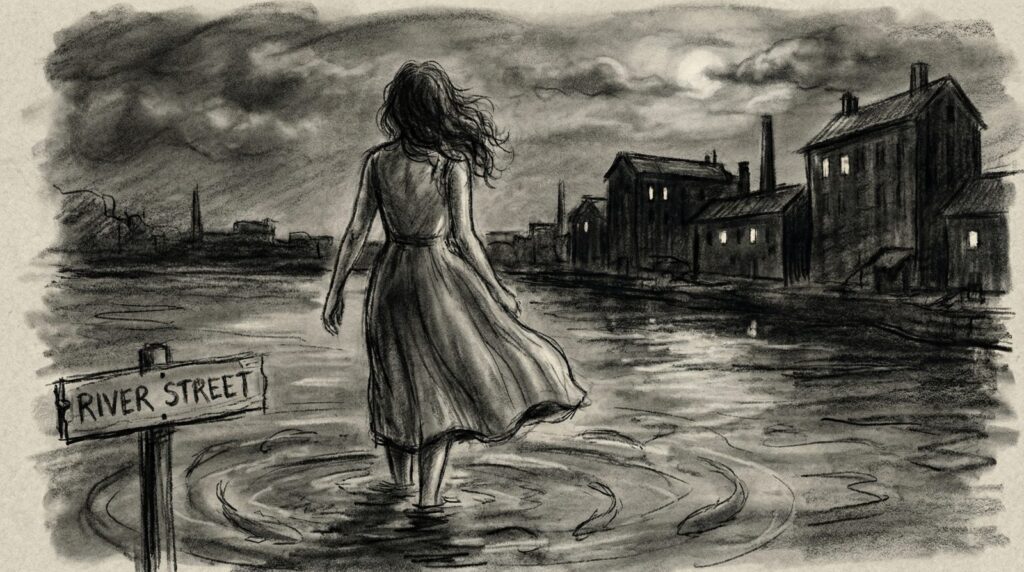
    Conceptual editorial illustration inspired by 'Blackwater the complete caskey family saga'
    Conceptual editorial illustration inspired by ‘Blackwater the complete caskey family saga’

    Thematically, Blackwater is about power: who wields it, who pays for it, and what it costs to keep it in the family. The Caskeys are not simply victims of a supernatural force. They benefit enormously from Elinor’s presence, even as they fear her. The river becomes a metaphor for both livelihood and doom, echoing motifs like Survival Narratives and the tension between prosperity and moral rot.

    Another thread is time. Because the saga spans generations, you see characters grow from children into embittered elders, and you watch grudges outlive the people who started them. It is one of the clearest fictional demonstrations of how family systems perpetuate themselves, for good and ill.

    STYLE & LANGUAGE

    Despite its length, Blackwater reads fast. McDowell writes each segment like a serialized television season: sharp hooks, cliffhangers, and payoffs, but with the same calm, controlled prose found in The Elementals. He sprinkles the supernatural elements lightly at first, allowing the family drama and economic maneuvering to carry the narrative until the reader is fully invested.

    The tone shifts subtly as the decades roll on. Early volumes feel almost like historical melodrama with hints of folk horror. Later installments grow stranger and more melancholy, as the cost of the Caskeys’ deal with the river catches up to them. McDowell’s ability to keep so many characters distinct while maintaining a clean line of tension is impressive.

    CHARACTERS & INTERIORITY

    Elinor is one of horror’s great ambiguous figures: loving mother, ruthless strategist, possible river creature. She embodies both The Double Self and The Witness archetypes, standing slightly outside human concerns while still caring intensely about her chosen family. The various Caskeys – matriarch Mary-Love, her son Oscar, and their descendants – are drawn with a soap-opera richness that never feels cheap.

    What makes the relationships compelling is their complexity. McDowell allows characters to be petty, generous, cruel, and tender in turn. Marriages shift, alliances realign, and children struggle under the weight of expectations they did not choose. This is Trauma as Inheritance not just in a supernatural sense but in the very ordinary ways families pass down unfinished business.

    Illustration of a core idea or motif from 'Blackwater the complete caskey family saga'
    Illustration of a core idea or motif from ‘Blackwater the complete caskey family saga’

    LEGACY & RECEPTION

    Blackwater occupies a strange but fascinating place in horror history. It was originally a mass-market experiment in serialized paperback publishing, then fell out of print, and has since been reclaimed as a cult classic. Modern readers often discover it through reissues that present the whole saga in one volume, which highlights how ahead of its time it was in blending family saga with supernatural horror.

    Its influence can be felt in later works about cursed dynasties and haunted towns, as well as in television that treats horror as a generational affair. For anyone mapping Southern Gothic across media, Blackwater is a cornerstone text alongside The Elementals and Candles Burning.

    IS IT WORTH READING?

    If you can commit to the length, Blackwater is one of the richest horror reading experiences available. It rewards patient readers with an immersive sense of place and character, and its horror accumulates quietly until the river and the family feel inseparable. Start here if you love sprawling multi-book epics and want to see McDowell at his most ambitious.

    SIMILAR BOOKS

    Readers who enjoy this blend of family saga and horror should explore The Elementals for a more concentrated take on haunted houses and legacy, and Cold Moon Over Babylon for a shorter, river-driven ghost story. Candles Burning offers a related mix of Southern family secrets and the supernatural, filtered through a single protagonist’s perspective.

    DISCOVERABILITY & LINKS

  • Arthur C. Clarke

    Arthur C. Clarke

    INTRODUCTION

    Arthur C. Clarke remains one of the defining voices of twentieth-century science fiction. Known for his clean, technical prose and his unwavering belief in scientific progress, Clarke helped shape the modern genre both through his novels and through his work as a futurist. His writing rarely indulges in melodrama; instead it pursues clarity, scale, and the thrill of discovery. From Childhood’s End to Rendezvous with Rama to the Space Odyssey series, Clarke consistently asked how humanity might grow — not shrink — in the face of the unknown.

    Even his quieter novels, like 2061: Odyssey Three, carry his fascination with physics, exploration, and the belief that the universe is ultimately comprehensible. Clarke’s influence reaches beyond literature: satellites, space policy, and public understanding of astrophysics all bear his fingerprints. Rebuilding his creator profile on AllReaders preserves a cornerstone of classic sci-fi and re-anchors long-standing backlinks from decades of fan and academic references.


    LIFE & INFLUENCES

    Born in 1917 in Minehead, England, Clarke grew up on the threshold of the modern space age. His early love of astronomy shaped everything that followed. After serving as a radar specialist in World War II, he became an engineer, writer, and public intellectual. He was among the first to propose geostationary communication satellites — an idea that eventually reshaped global communication.

    Clarke’s literary influences ranged from H. G. Wells to Olaf Stapledon, but his true muse was science itself. He believed technology would transform humanity, not strip it of meaning. This optimism distinguishes him from many later sci-fi writers who leaned into dystopia. For Clarke, the cosmos was a place of possibility, not despair.

    He spent the latter part of his life in Sri Lanka, drawn by the sea, diving, and the island’s slower pace — a setting that subtly informed some of his later writing. His personal philosophy can be felt in the calm, almost meditative quality of his prose: a steady belief that curiosity is our finest trait.

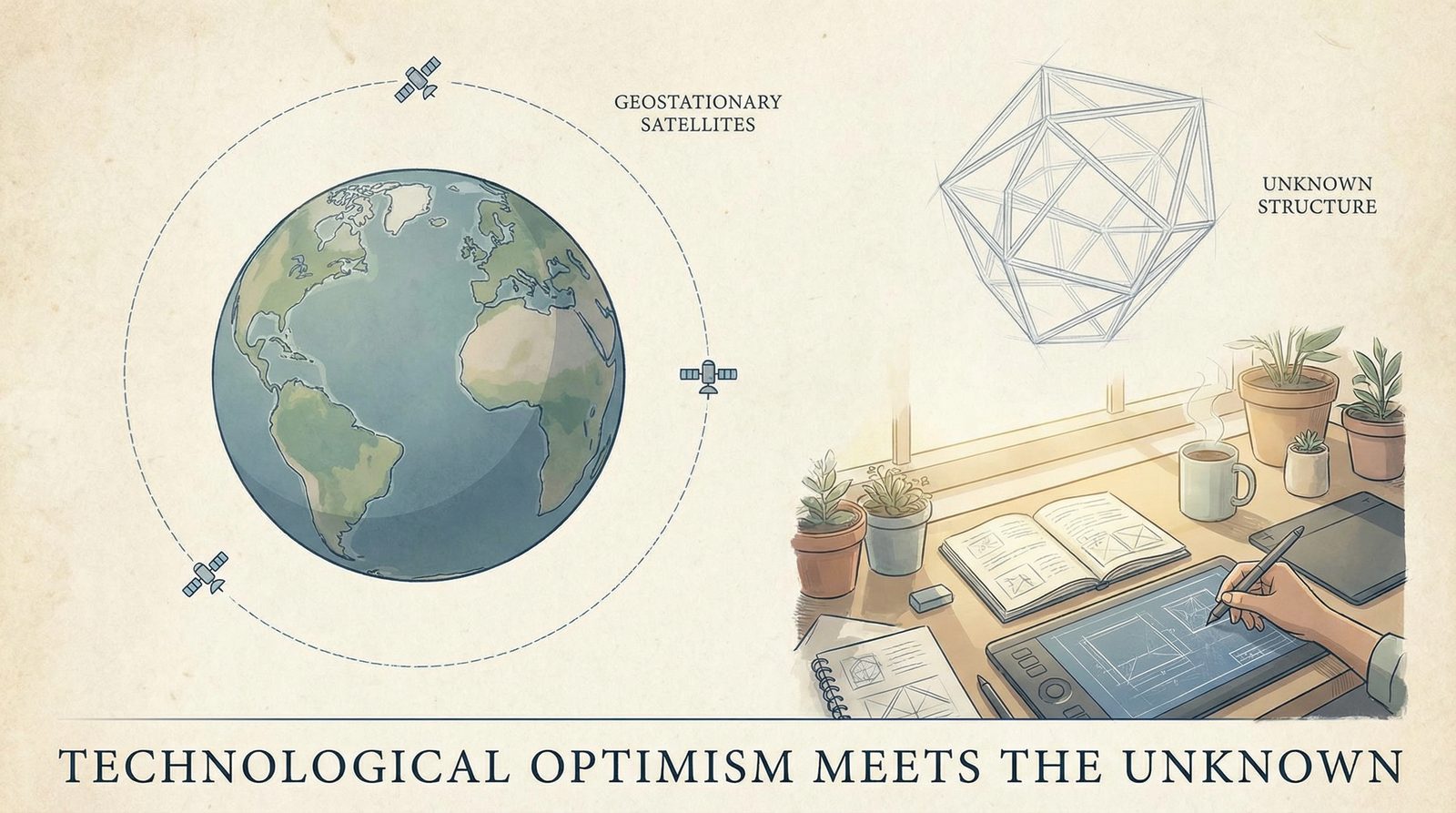
    Editorial illustration inspired by 'Arthur C. Clarke'

    THEMES & MOTIFS

    Clarke’s fiction revolves around a few core themes: humanity’s place in a vast cosmos, the transformative power of technology, and the ethical weight of exploration. Even in the quieter 2061: Odyssey Three, these themes are unmistakable.

    His work regularly intersects with the motif Future Shock as Transformation. For Clarke, technological upheaval isn’t something to fear — it’s the catalyst that pushes humanity into its next phase. He also often engages with Identity Collapse in Isolation, especially in astronauts and explorers confronting environments that dwarf human scale.

    Clarke’s aliens, when they appear, are rarely enemies. They are mentors, mysteries, or glimpses of our potential future. That orientation — curiosity instead of threat — makes his voice distinct among his contemporaries.


    STYLE & VOICE

    Clarke’s style is famously cool and precise. He writes like an engineer building a cathedral of ideas: clean lines, no unnecessary ornament, everything justified by structure. Emotional beats are present but understated; he trusts readers to supply their own wonder.

    He excels at integrating scientific exposition into narrative — orbital mechanics, geology, astrophysics — without sacrificing readability. His characters often feel secondary to the concepts, which is a conscious aesthetic choice rather than a flaw.

    The result is fiction that feels both timeless and distinctly mid-century, shaped by the optimism of an era when humanity believed it might soon live among the stars.

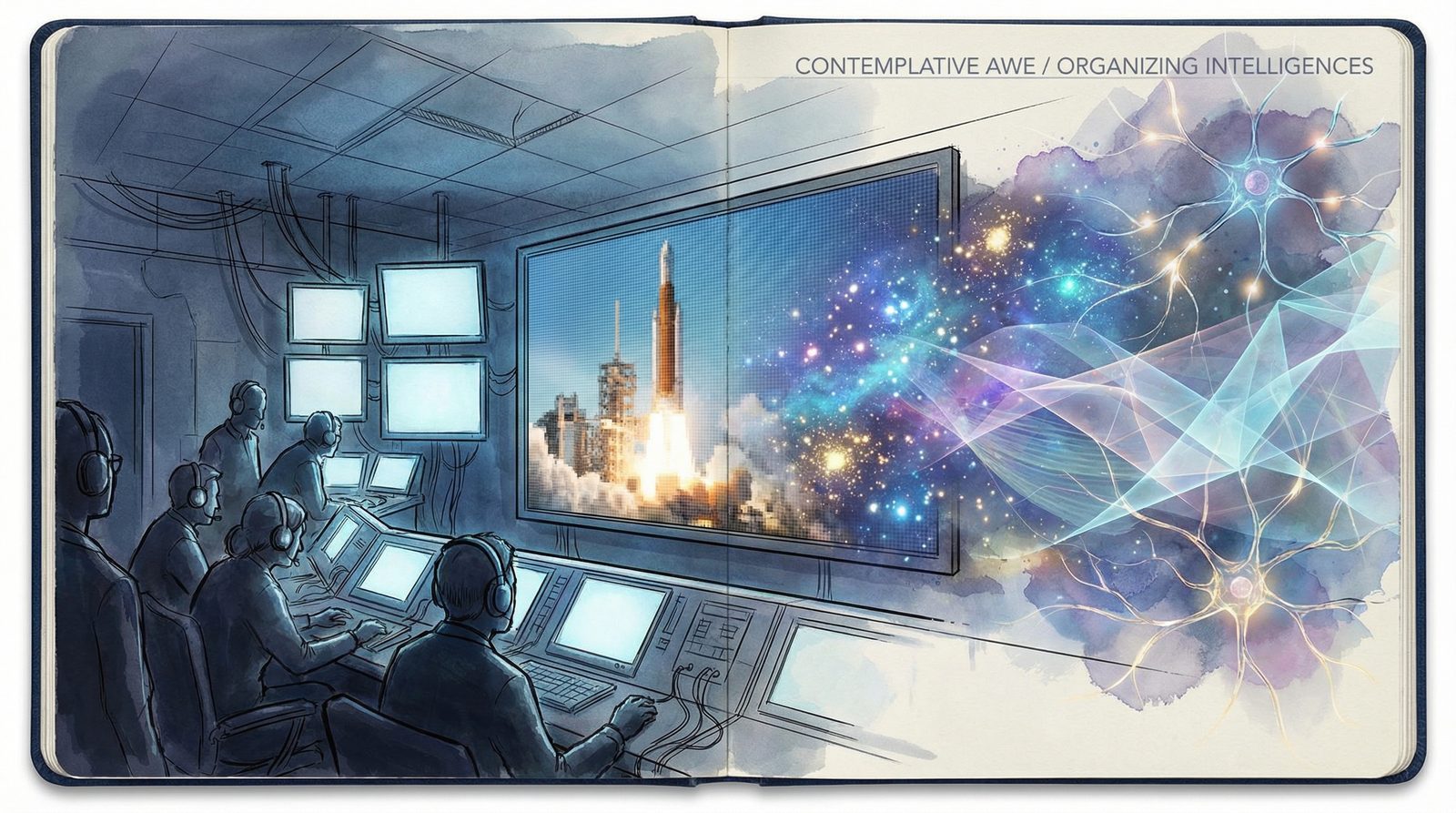
    Symbolic illustration inspired by 'Arthur C. Clarke'

    KEY WORKS

    Clarke’s bibliography is enormous, but a few titles define his legacy. 2001: A Space Odyssey (1968) and its sequels — including 2061: Odyssey Three — remain cultural landmarks for their blend of cosmic mystery and scientific rigor. Rendezvous with Rama (1973) helped solidify the subgenre of “big dumb object” sci-fi. Childhood’s End (1953) remains one of the most influential alien-contact novels ever written.

    His short stories, such as “The Nine Billion Names of God” and “The Star,” continue to circulate as some of the finest examples of tight, conceptual sci-fi in print.


    CULTURAL LEGACY

    Few authors have influenced both science and fiction as profoundly as Clarke. His satellite concept helped reshape global communication. His novels and essays inspired generations of scientists, engineers, and astronauts. His collaboration with Stanley Kubrick permanently altered how cinema depicts space.

    Clarke’s legacy is not a single book or idea, but a worldview: that science and imagination are not opposites but partners. Rebuilding his profile on AllReaders strengthens our sci-fi backbone and restores one of the site’s most important historical figures.