Period: 19th Century

  • The Diary Of A Nobody (1892)

    The Diary Of A Nobody (1892)

    INTRODUCTION

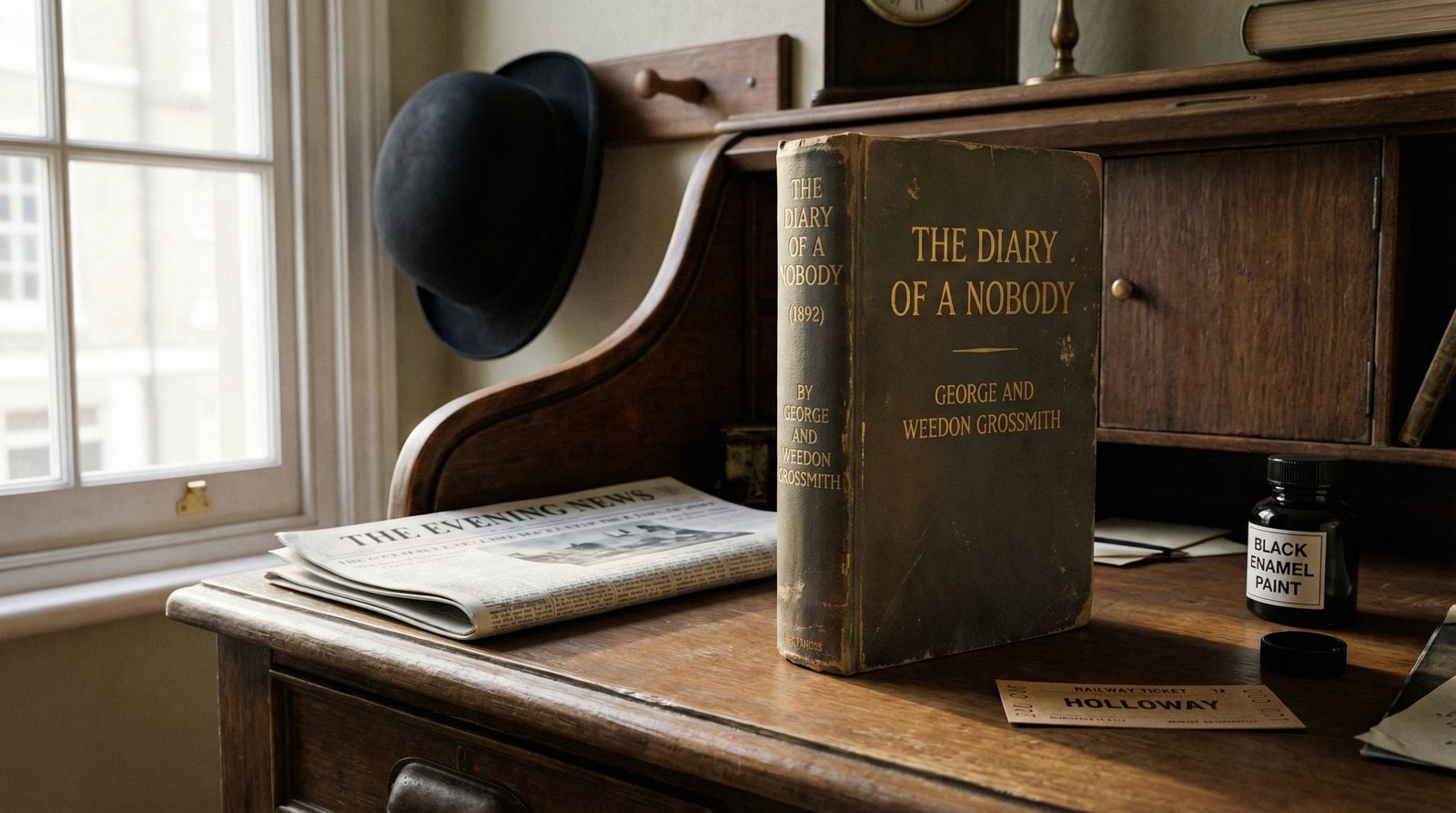
    The Diary Of A Nobody (1892) by George Grossmith and Weedon Grossmith
    Comic fiction · 220 pages · England


    The Diary Of A Nobody is a small book about small things and the very large feelings they provoke. Set in late-Victorian London, it follows Charles Pooter, a clerk whose life revolves around whitewashed walls, dinner parties, and the constant fear of social humiliation. Social pretension runs through every page: Pooter’s world is a stage on which he is always slightly under-rehearsed.

    What makes the book endure is its feel of tender embarrassment. We’re invited to laugh at Pooter’s pomposity, but also to wince in recognition as he fusses over etiquette, taste, and being noticed “properly.” The joke is not that he is ridiculous and we are not. The joke is that his anxieties about status and correctness are uncomfortably familiar, even now.

    PLOT & THEMES

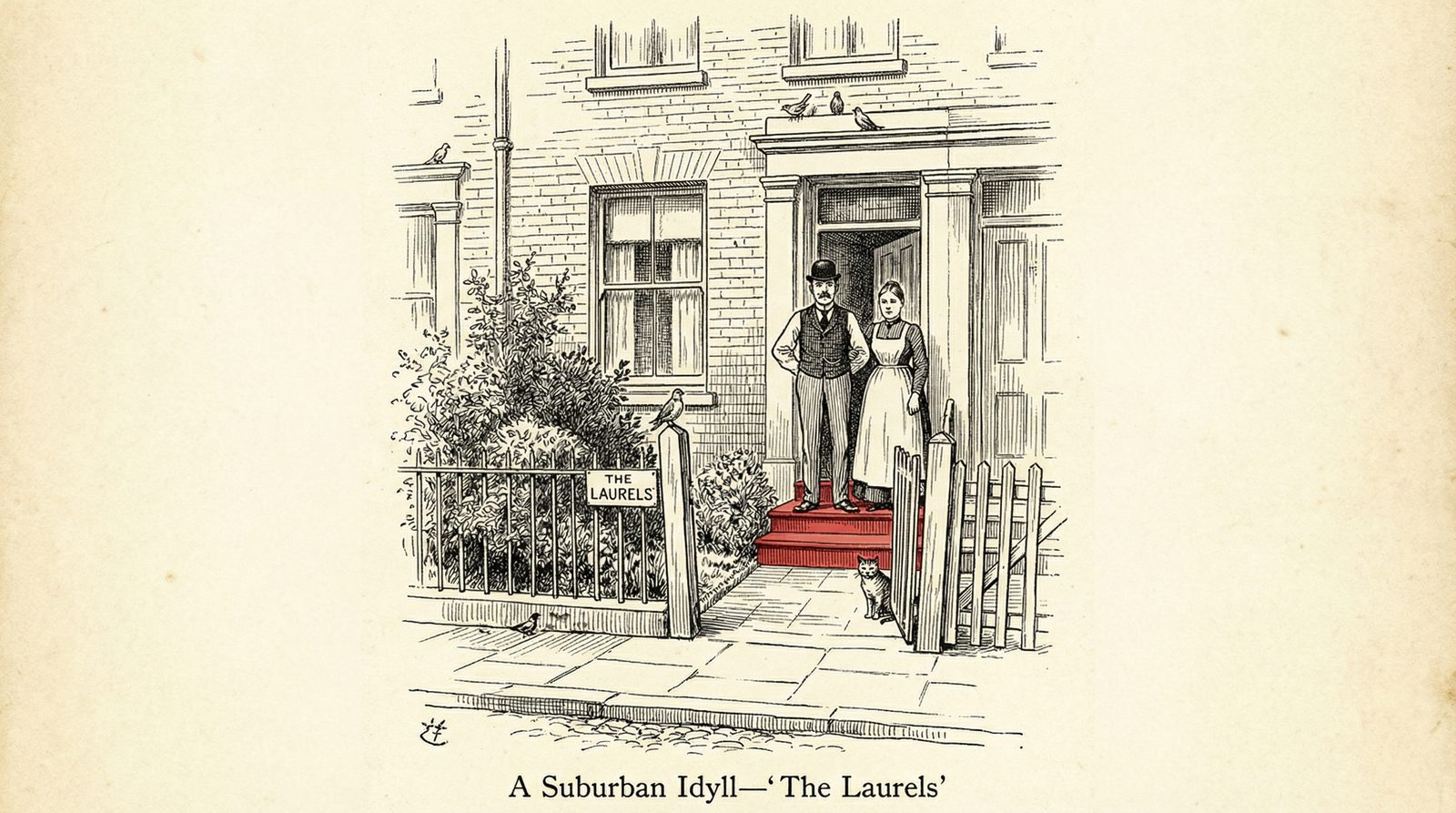
    The “plot” is deliberately uneventful. Pooter moves into The Laurels in Holloway with his wife Carrie, commutes to the City, and records a year or so of minor mishaps: bruised pride, bungled hospitality, office humiliations, and domestic “improvements” that go wrong. Everyday triviality is the structure. Trifles are treated with the solemnity of epic events, which is the core joke of the self-important everyman: Pooter believes his life is worthy of print not because it is extraordinary, but because it is his.

    Social pretension threads through everything. Pooter obsesses over his standing with Mr. Perkupp at the office and with neighbors and acquaintances at home. He treats invitations as honors and mild slights as scandals. Into this fragile respectability crashes his son Lupin, whose speculative schemes, theatrical enthusiasms, and disregard for propriety make it clear the next generation is already moving faster than Pooter can manage.

    The book refuses heroic transformation. After financial mishaps, social fiascos, and the famous garden-party chaos, life simply resumes. Pooter remains at The Laurels, still commuting, still worrying about boots and manners. The anti-climactic ending is the point: the middle-class dream here is not ascent, but dogged continuity — the ability to keep going while quietly feeling ridiculous.

    In its quiet way, the book anticipates later portraits of ordinary life where embarrassment becomes the engine of story and the day itself becomes the plot.

    PROSE & NARRATIVE STRUCTURE

    The core technique is faux-naive first person. Pooter believes he is writing a sober, dignified record; the Grossmiths arrange his sentences so that self-importance constantly undercuts itself. The comedy lives in the gap between what Pooter thinks he is saying and what the reader hears. The diary form stays rigid: dated entries, small domestic updates, and officious “I wrote a letter” declarations that make every minor incident sound like public history.

    The language is plain office-clerk English, but the timing is surgical. Setups are buried in throwaway lines with payoffs chapters later. Running refrains — especially repeat visitors and repeated social irritants — create a domestic chorus. Catchphrases and habitual actions build rhythm that mimics real diary-keeping, so the narrative feels authentically shapeless while being meticulously composed.

    The result is a parody of Victorian self-documentation that never has to announce itself as parody. Pooter’s sincerity is protected even while it’s being used as the blade.
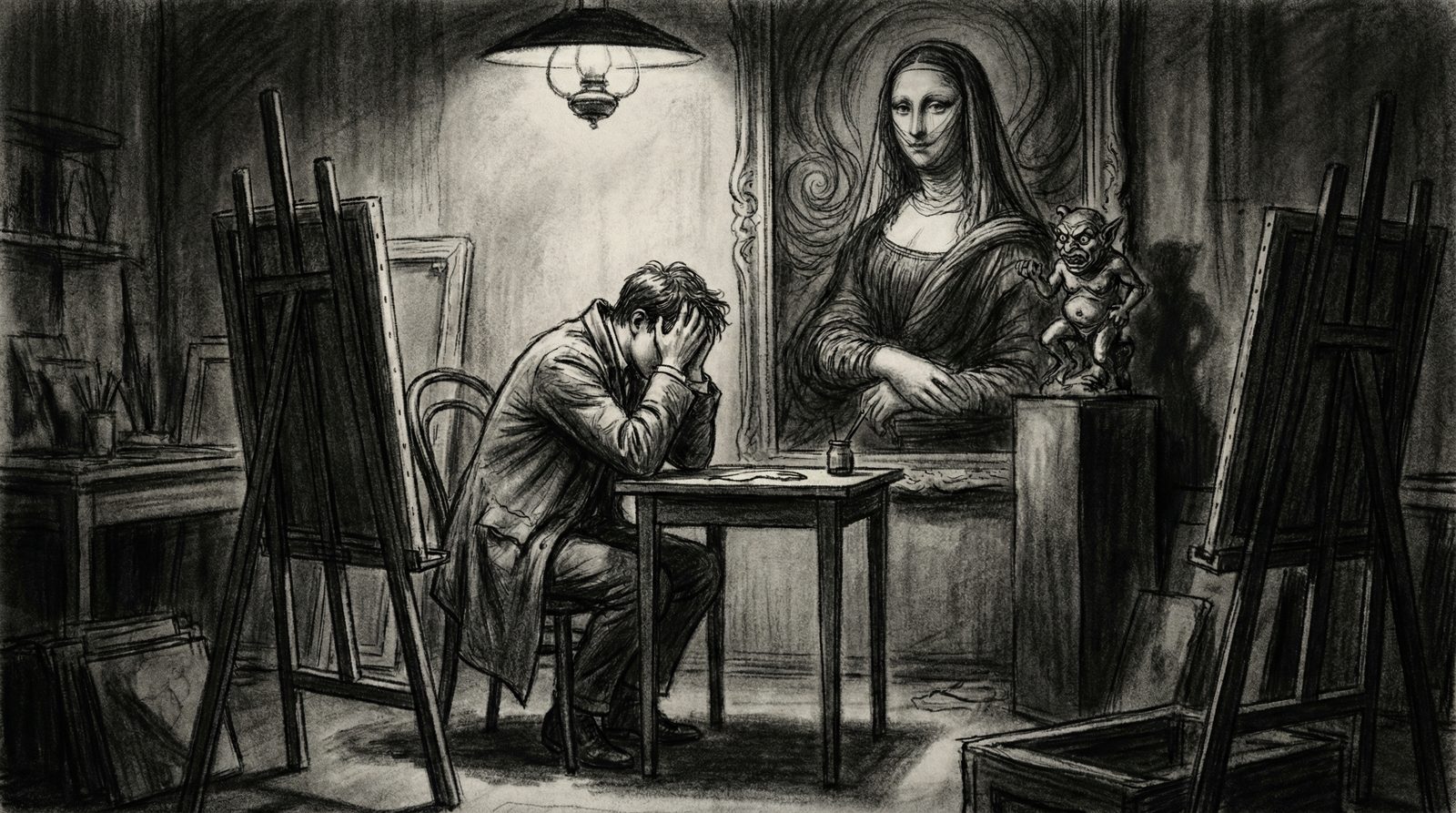
    Conceptual editorial illustration inspired by 'The Diary Of A Nobody (1892)'

    CHARACTERS & INTERIORITY

    Pooter is an archetypal petty-bourgeois striver: not cruel, not stupid, but painfully sensitive to status. His interiority is revealed through what he records and what he refuses to name. He rarely admits anger, yet the diary is full of small sulks displaced into etiquette and fussing. Mortification becomes his primary emotion, managed through rules.

    Carrie is more than a patient-wife cliché. She is practical, often right, and quietly amused by her husband. Lupin is the modern son, a figure of speed and risk, revealing how quickly the cultural ground is shifting under Pooter’s careful propriety. Minor figures recur with economical precision, gaining weight through repetition and Pooter’s prickly reactions rather than through psychological depth.

    The emotional life lies in tiny frictions: social psychology conducted with teacups, calling cards, and the dread of being judged.

    LEGACY & RECEPTION

    Originally serialized in Punch, the book began as episodic satire of lower-middle-class London. Over time it became a touchstone of English comic fiction because it perfected straight-faced mortification: the recording of humiliation as if it were official history. Its influence runs through later diary-format comedy and modern cringe-based humor, not through plot innovations but through tonal precision.

    Adaptations often try to impose a cleaner arc. The novel refuses that shape. Its stubborn ordinariness has gradually shifted its status from topical satire to something closer to a preserved social voice: a class that rarely left monuments to itself leaving one anyway, by accident, through comedy.

    IS IT WORTH READING?

    If you need sweeping plot or high drama, this may feel slow. Its pleasures are miniature. But if you’re interested in how ordinary people imagined themselves in late-19th-century England, or in how comedy can be built out of pure embarrassment without cruelty, it’s essential. You may start by laughing at Pooter and end by feeling oddly protective of him, which is the book’s slyest achievement.
    Illustration of a core idea or motif from 'The Diary Of A Nobody (1892)'

    TRIVIA & AUTHOR FACTS

    George Grossmith was a celebrated comic performer associated with the Savoy Theatre, and Weedon Grossmith was an actor and illustrator. Weedon’s drawings accompanied the original publication and helped fix Pooter’s world in readers’ minds. Many details are rooted in real suburban London geography and the rhythms of commuter life.

    The book’s “nobody” status is carefully crafted. The Grossmiths knew exactly how much ordinariness to put on the page, and exactly how to time the embarrassment so it lands as tenderness rather than cruelty.

    SIMILAR BOOKS

    If you enjoy this, you may prefer other books that treat everyday life as serious comic material and use the ordinary as an engine for precision embarrassment rather than big plot. The closest neighbors tend to share its affection for blundering, its diary-like immediacy, and its social anxiety as comedy fuel.

    DISCOVERABILITY & LINKS

  • Valets And Butlers

    Valets And Butlers

    DEFINITION & CORE IDEA

    Valets And Butlers is a motif built around the personal servant who is close enough to see everything, disciplined enough to say almost nothing, and competent enough to keep a household (or a protagonist) from collapsing. On the surface, valets and butlers exist to perform routine tasks: managing clothing, announcing visitors, maintaining schedules, smoothing over small social frictions. In narrative terms, they often function as the story’s most reliable intelligence inside a world of performative status.

    The motif’s charge comes from inversion. The servant holds the lowest formal rank while possessing the highest practical awareness. Because they are expected to be discreet, people speak freely around them, treat them as part of the room, and underestimate how much they notice. That gap between visibility and knowledge turns service into a form of power: quiet, deniable, and structurally essential.

    In the comic tradition shaped by P. G. Wodehouse, this inversion becomes the engine of farce. In Right Ho, Jeeves and The Code Of The Woosters, the socially superior employer repeatedly creates the mess while the valet quietly contains it. The humor is not simply that the servant is smarter. It is that the entire social order depends on someone who is never meant to be credited.

    At its core, Valets And Butlers explores what it means to serve and what service costs. It asks who truly holds power in a room, how much control can exist without recognition, and what kind of intimacy forms when one person’s job is to manage another’s life more competently than they ever could themselves.


    HOW IT WORKS IN STORIES

    Most stories using this motif keep the servant constantly present but rarely centered. Valets and butlers move through scenes performing routine actions while absorbing information, witnessing private failures, and tracking social pressure points. Writers use this access to make the servant a natural witness, confidant, and stabilizer inside a household that would otherwise fracture under its own ego and etiquette.

    Structurally, these characters often function as corrective force. When the plot threatens to spin into scandal or humiliation, the servant intervenes indirectly: shifting timing, redirecting people, removing evidence, arranging encounters, limiting damage. The employer may believe they are in control, but the narrative repeatedly demonstrates that outcomes depend on the servant’s judgment, restraint, and ability to act without being seen acting.

    This same architecture works outside pure comedy. In a mystery or a socially sharper story, the servant may be the only person with complete situational awareness because they were present during the moments others dismissed as background. Even when they say little, their position reveals how much labor is required to maintain the illusion of order and how dependent “status” is on invisible work.

    Dialogue becomes a tool of power without confrontation. Formal speech and minimal responses allow valets and butlers to communicate warning, irony, or correction while preserving the hierarchy’s appearance. A phrase like “Very good, sir” can carry obedience, exasperation, or quiet judgment depending on context. That ambiguity lets the motif explore control without turning the story into a lecture about class.

    Because these characters move freely between rooms, conversations, and social layers, they also serve as narrative connective tissue. Information passes through them. Emotional shifts register with them first. The household feels coherent because one figure circulates through all its compartments while everyone else remains trapped inside their own priorities.


    Editorial illustration inspired by 'Valets And Butlers'

    EMOTIONAL EFFECT ON THE READER

    This motif produces a blend of reassurance and unease. There is comfort in knowing that someone competent is present when authority figures are impulsive, naive, or self-absorbed. In a Jeeves-style story, readers relax slightly because they trust the servant will contain the chaos even when characters cannot manage themselves.

    At the same time, the motif carries quiet tension. The servant sees everything and remembers it. Readers understand that the social order depends on continued discretion and goodwill. Beneath the comedy sits an unspoken question: what happens if the person holding the system together decides to stop?

    The emotional intimacy of service deepens that effect. A valet or butler assists with private routines, hears confessions, and observes vulnerability without reciprocity. That closeness can feel protective or quietly tragic, especially when the servant’s own inner life remains unspoken and structurally suppressed.

    The motif also taps into a powerful fantasy: being understood so well that problems are solved before they need to be explained. The Jeeves and Wooster (TV Series) version makes that fantasy playful, turning competence into a safety net the viewer can rely on. Even when stories handle the motif with sharper satire, the same comfort remains: someone is paying attention, even if the people in charge are not.


    Symbolic illustration inspired by 'Valets And Butlers'

    VARIATIONS & RELATED MOTIFS

    Several variations recur within Valets And Butlers. The best-known is the hyper-competent servant whose intelligence far exceeds that of their employer, producing comedy through contrast: authority fails publicly while competence operates quietly in the background. Another variation is the stoic butler whose restraint becomes the drama, where the emotional payoff comes from what is withheld rather than expressed.

    A darker variation reframes the servant as an active manipulator. Because they stand at the intersection of information and access, they can redirect events for personal advantage, shifting the motif toward suspense or moral ambiguity. A satirical variation turns the servant into a mirror held up to the ruling class, exposing how fragile “refinement” becomes once it relies on invisible labor to remain believable.

    This motif overlaps naturally with Country House Comedy and Comic Misunderstandings And Farce, where servants often become the stabilizing intelligence inside a house full of schemes. It also connects to Victorian And Edwardian Social Satire, where the upstairs-downstairs perspective turns manners into a pressure system. In broader comedy-of-manners traditions, writers like Evelyn Waugh and Nancy Mitford echo the same logic: social status performs authority, but real control often sits with the people expected not to speak.

  • Spiritual Awakening

    Spiritual Awakening

    DEFINITION & CORE IDEA

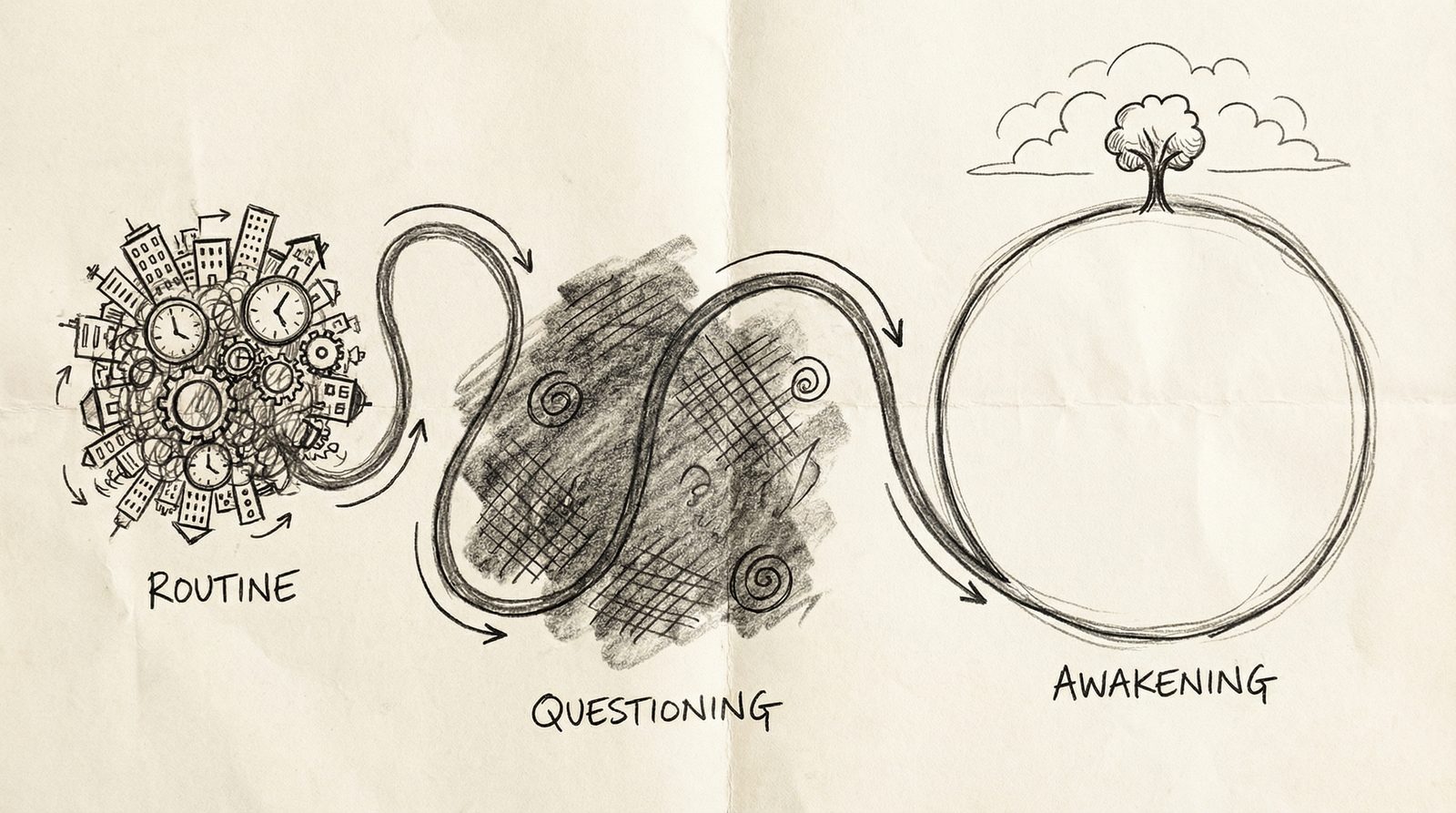
    Spiritual Awakening is the motif where a character’s interpretive frame breaks and re-forms. The person who could previously live on routine, status, or habit begins to perceive meaning, pattern, or selfhood differently. The story treats this shift as real change, not a cosmetic mood swing. What matters is not adopting a label or joining a religion, but the reorganization of attention, value, and identity.

    In awakening narratives, the protagonist often begins inside a life that “works” externally but fails internally. They may chase achievement, romance, or control and discover it does not answer the underlying question of purpose. The plot then follows the conversion process: a new vocabulary for reality appears, the character tests it, and their old identity starts to fail under the new pressure.

    Books such as The Celestine Prophecy, The Tenth Insight, The Alchemist, Way Of The Peaceful Warrior, and Siddhartha are classic examples. The “event” is internal: perception shifts, and that shift changes what the same world means.


    HOW IT WORKS IN STORIES

    Spiritual Awakening usually begins with an existential breach. The character feels restless, stuck, or out of place in a life that looks fine from the outside. A promotion feels hollow, a relationship stops fitting, or a loss cracks certainty. The important point is structural: the old worldview stops functioning as a complete explanation.

    Next, a threshold event provides a new interpretive system. This can be a guide figure, a text, a vision, or a sequence of “coincidences” that the character begins to treat as communication. In The Celestine Prophecy and The Tenth Insight, the engine is sequential insights delivered through encounters that mix guidance with risk. In The Alchemist, a dream and a meeting function as permission to leave the old life and treat omens as navigational data. In Way Of The Peaceful Warrior, a teacher figure reframes discipline and attention as a daily practice rather than an abstract belief.

    The middle phase is testing and attrition. The character tries new practices, interpretations, and choices, then pays the cost of inconsistency. Old identities fall away faster than new ones stabilize. A “dark night” phase is common: the character feels more lost than before because certainty has collapsed but insight is still incomplete.

    Resolution is usually a return to ordinary life with a changed relationship to it. Work, love, and struggle remain, but they are held inside a wider frame. The story closes when the character can sustain the new perception without needing constant signs or external validation.


    Editorial illustration inspired by 'Spiritual Awakening'

    EMOTIONAL EFFECT ON THE READER

    This motif is built to feel personal. The reader is invited to project their own restlessness onto the protagonist’s shift, using the character as a safe container for questions about meaning, purpose, and identity.

    It often produces a “synchronicity high” in the reading experience. The plot rewards attention by making small events feel linked: a conversation, a symbol, or a coincidence lands as guidance rather than noise. That can feel reassuring, because it implies the world is readable.

    The cost is loss. Awakening narratives usually require the character to abandon a comforting interpretation of their life. Relationships strain, identity becomes unstable, and certainty is traded for a framework that is truer but harder to live inside.

    When the motif works, the after-effect is practical rather than sentimental. The reader finishes with heightened awareness of attention itself: what they ignore, what they treat as “just life,” and what patterns they might be using to avoid change.


    Symbolic illustration inspired by 'Spiritual Awakening'

    VARIATIONS & RELATED MOTIFS

    Spiritual Awakening appears in several common variations. The solitary seeker version follows a character cycling through teachers and lifestyles until a stable insight forms, as in Siddhartha. The reluctant mystic version forces awakening through crisis or loss, where the character resists the new frame until resistance becomes impossible. Another variation frames awakening as part of a larger system of human evolution, expanding the personal shift into a collective one, as in the Redfield sequence.

    The motif also has practical variants, where the new awareness is tested in daily routine rather than on mountaintops. Here, the story cares less about visions and more about whether the character can keep behaving differently when the world remains the same.

    This motif commonly overlaps with Synchronicity And Meaningful Coincidence, because meaning is delivered through “pattern recognition” in events. It also pairs naturally with Spiritual Pilgrimage and Inner Journey, where travel or reflection supplies the friction that forces change.

  • Spiritual Pilgrimage

    Spiritual Pilgrimage

    DEFINITION & CORE IDEA

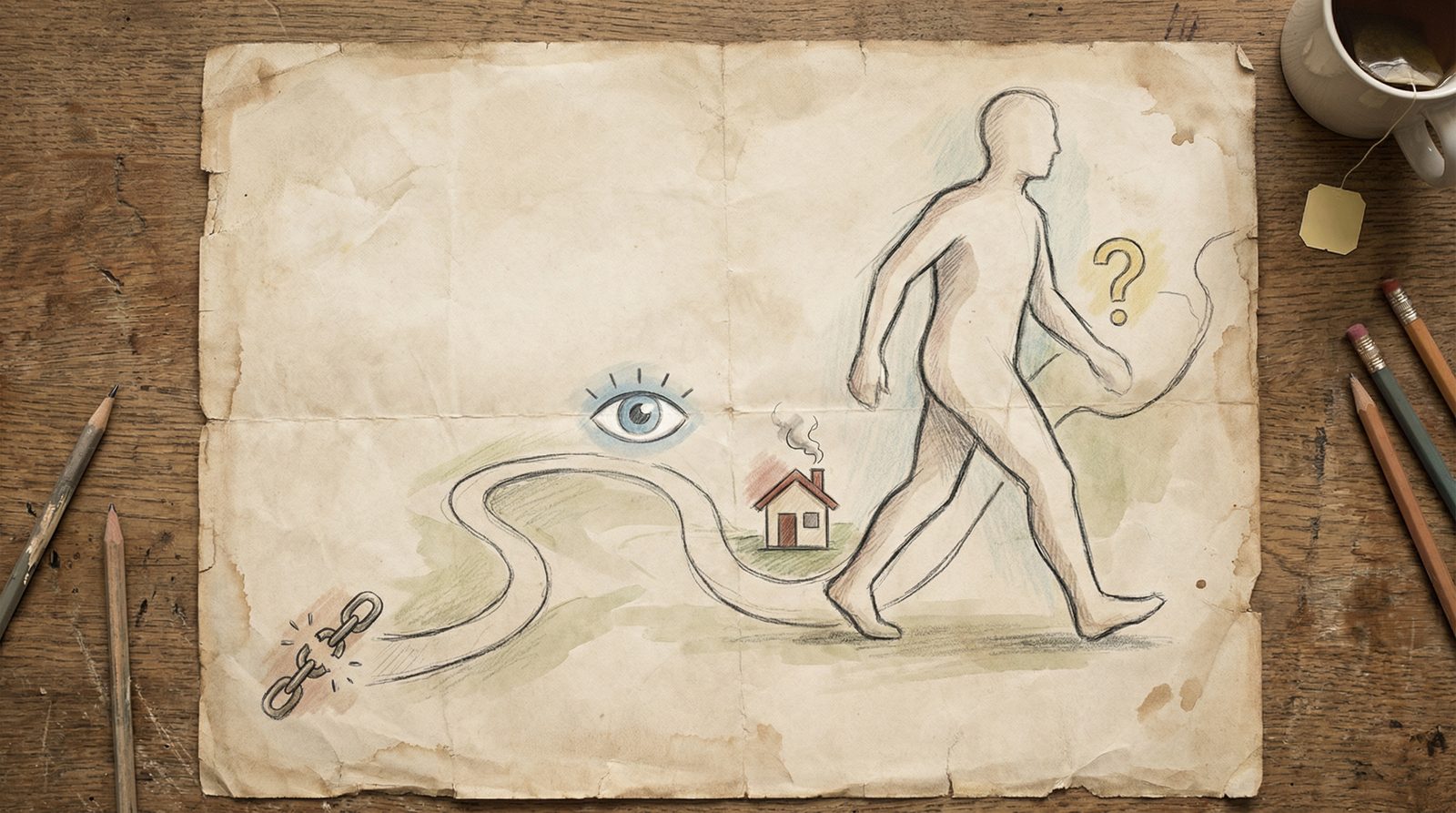
    A Spiritual Pilgrimage is a journey narrative where the stated destination is secondary to internal change. The protagonist may travel to a sacred site, follow a prophecy, or chase a promised revelation, but the journey functions as a structured sequence of tests designed to produce belief change, moral recalibration, or a new self-concept. The road is not backdrop. It is the mechanism.

    Stories like The Pilgrimage, The Alchemist, Siddhartha, and The Celestine Prophecy use travel as a didactic structure. Encounters are not random. Each guide, stranger, or obstacle is positioned to challenge a specific assumption and force a decision. The motif is built to convert movement into meaning through repeated, concrete choices.

    At its core, a Spiritual Pilgrimage treats geography as allegory. Terrain and logistics mirror internal states. A detour becomes a correction, a delay becomes a test of attachment, and reaching the destination often reveals that the “goal” was a sustaining pretext for transformation. The real arrival is a changed interpretive frame, not a point on a map.


    HOW IT WORKS IN STORIES

    The trigger is usually a sense of lack. The protagonist begins with spiritual numbness, restlessness, grief, or moral confusion. A call to travel appears, and the character steps away from familiar structures into uncertainty. This transition matters because the motif requires removal from the old context before the belief system can be tested.

    The journey then unfolds as iterative lessons. In The Pilgrimage and The Alchemist, the road is populated with omens, mentors, and small reversals that challenge the hero’s assumptions about success and failure. In Siddhartha, the river functions as a persistent teacher, reshaping the protagonist’s understanding of time, suffering, and enlightenment. The Celestine Prophecy builds its arc around sequential “insights” delivered through encounters that mix guidance with threat.

    Obstacles are rarely only physical. Hunger, fatigue, getting lost, and missed connections work on two tracks at once: logistics and revelation. A storm can be a crisis of faith. A wrong turn can be a confrontation with ego. Temptations to stop often arrive as comfort—safety, certainty, and social approval—so continuing becomes a deliberate act of change rather than mere endurance.

    The end state is usually “quiet arrival.” The protagonist may return home with altered perception, or reach the destination and discover it matters less than the internal shift already achieved. The motif closes by demonstrating integration: a new interpretive frame that changes how the character reads the same world.

    Writers use Spiritual Pilgrimage because it keeps philosophy grounded in events. Instead of abstract debate, the story forces ideas to survive contact with heat, fear, hunger, misunderstanding, and human inconsistency. The road supplies friction. Friction produces the change.


    Editorial illustration inspired by 'Spiritual Pilgrimage'

    EMOTIONAL EFFECT ON THE READER

    This motif invites projection. The reader maps personal uncertainty onto the pilgrim’s movement, using the journey as a safe container for questions about meaning, faith, and purpose.

    The emotional arc typically moves through three phases. First, resistance or naivety, where the pilgrim overestimates the literal goal. Second, a “dark night” phase, where the journey fails to deliver easy answers and the protagonist confronts doubt, fatigue, and disillusionment. Third, integration, where relief arrives not through conquest but through acceptance and clarity.

    Even in optimistic versions, the motif carries a controlled unease. It implies that comfort and certainty are often incompatible with change. In harsher variants, the pilgrimage can feel like attrition, where the lesson is not illumination but endurance. In either case, the payoff is the same: the reader finishes with a sharper sense of what the character is willing to become.


    Symbolic illustration inspired by 'Spiritual Pilgrimage'

    VARIATIONS & RELATED MOTIFS

    A Spiritual Pilgrimage can be overtly religious, centered on shrines, relics, or monasteries, or it can be framed as a secular search for meaning. Some stories emphasize discipline and deprivation, where the road is a controlled program of hardship. Others emphasize interpretation, where coincidences, symbols, and mentors form a readable pattern across the landscape.

    One common variation is the reluctant pilgrim, dragged into travel by circumstance and changed despite resistance. Another is the failed pilgrimage, where the character reaches the physical goal but refuses the internal shift, producing a bitter or ironic ending. Group pilgrimages expand the motif into social dynamics, using the shared road to expose competing belief systems.

    This motif often overlaps with Personal Legend And Destiny, where the journey outward is tied to the idea that each person has a unique path they are meant to recognize and commit to. It also connects naturally to motifs about mentors and guides, prophetic dreams, and the idea that “home” must be left in order to be understood.

    It can also be questioned or subverted. Some stories show how easily tourism can be mistaken for transformation, or how spiritual language can become a substitute for the harder work of change. Even then, the structural tension remains: the road tests what the character believes, and what they are willing to become.

  • Statue Comes To Life

    Statue Comes To Life

    DEFINITION & CORE IDEA

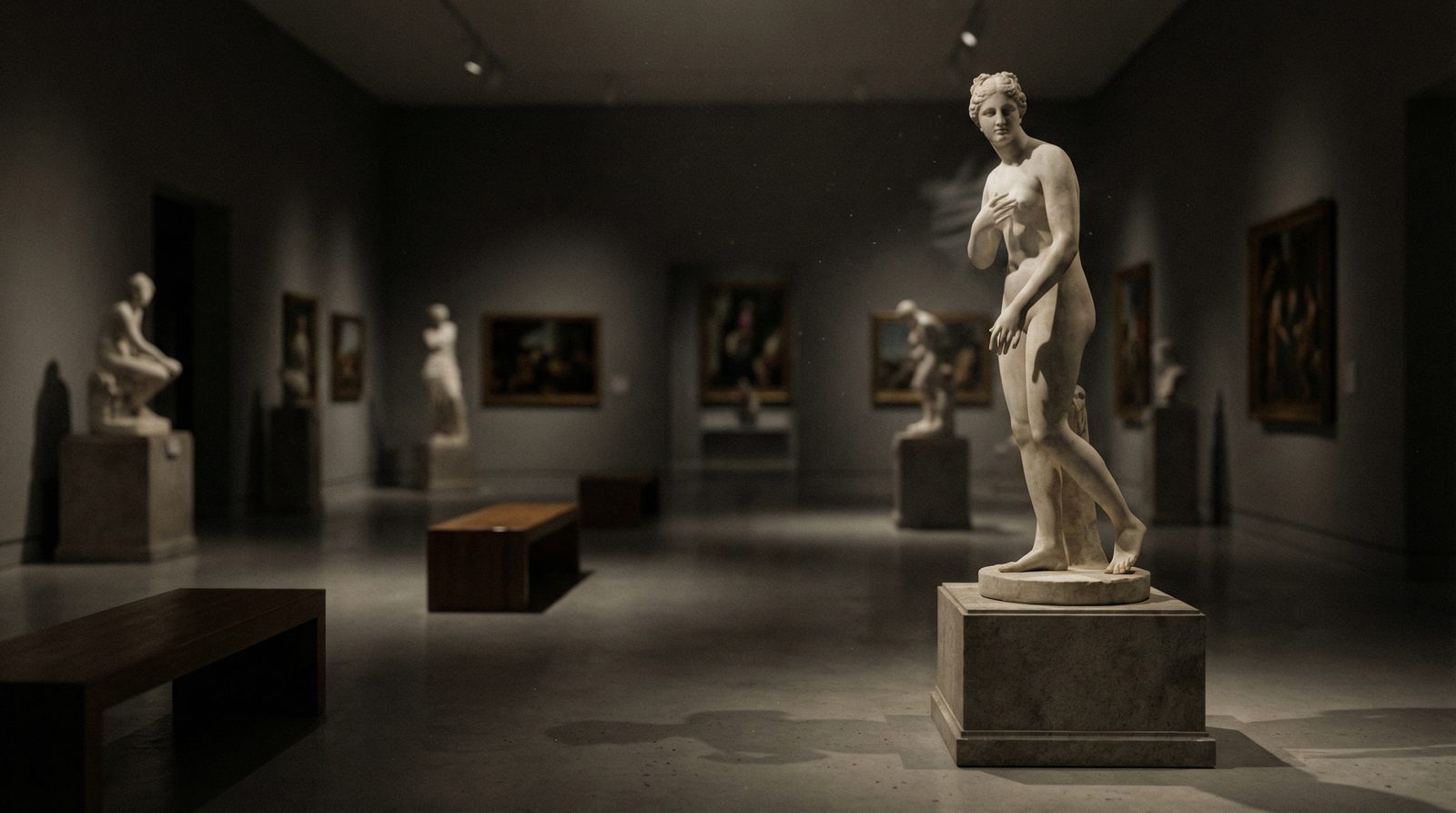
    The Statue Comes To Life motif is exactly what it sounds like. Stone turns to flesh, a department-store mannequin wakes up, or a bronze goddess steps down from her pedestal. The core thrill comes from watching something we are used to seeing as an object suddenly reveal a mind, a will, and often a heart.

    Writers use this motif to explore wish fulfillment, loneliness, and the unstable line between ideal and reality. A character may fall in love with an image they helped create, echoing the Pygmalion pattern, or stumble into a relationship with a figure that was never meant to move at all. Stories such as The Tinted Venus by Thomas Anstey Guthrie play with the shock, comedy, or horror of an inanimate figure stepping into ordinary life.

    At its heart, the motif asks a simple but unsettling question. What happens when our fantasies talk back? The living statue is usually designed as perfection, whether beautiful, sacred, or terrifying. Once it awakens, the human characters are forced to confront how different a real, autonomous being is from the silent, obedient figure they imagined.


    HOW IT WORKS IN STORIES

    The setup is often deceptively simple. A sculptor, shop employee, scholar, or lonely observer forms an attachment to an object that cannot answer back. Through magic, a curse, a wish, or a god’s intervention, the figure comes alive. From there, the story splits into two broad paths.

    On the side of wonder, the living statue experiences the world with fresh eyes. Money, social rules, and human habits make little sense. Everyday life becomes strange and funny. In romantic or comic versions such as Mannequin (1987) or One Touch Of Venus (1948), this innocence is charming. The animated figure pushes the human lead to loosen routines, challenge assumptions, and admit what they actually want.

    On the side of disruption, the animated statue breaks boundaries. Property, religion, and personal relationships collapse under the weight of something that was never meant to walk freely. Even lighter tales such as The Tinted Venus show how a living idol can upend careers, engagements, and social standing.

    Structurally, the motif builds toward a choice. Secrets must be kept, authorities get involved, and the human characters must decide whether to cling to safety or accept an unpredictable relationship. The ending usually turns on whether the statue remains alive, returns to its pedestal, or demands a price for having crossed the boundary between object and person.


    Editorial illustration inspired by 'Statue Comes To Life'

    EMOTIONAL EFFECT ON THE READER

    This motif taps into a primal wish: that the things we admire in silence might look back and choose us. The idea that a statue could turn its head and see us is thrilling and unsettling at the same time.

    In romantic or comedic versions, there is a warm sense of fantasy fulfillment. The protagonist is chosen by someone impossibly ideal, a literal embodiment of beauty or devotion.

    Darker uses of the motif replace comfort with dread. The same transformation that feels magical in light stories becomes a violation when the animated figure moves with cold purpose or divine anger.


    Symbolic illustration inspired by 'Statue Comes To Life'

    VARIATIONS & RELATED MOTIFS

    The motif appears in several recognizable forms. The classic variation follows a creator-and-creation pattern where an artist’s work reflects their ideals and blind spots. A modern twist replaces the handcrafted statue with a mass-produced figure, shifting the focus toward consumer fantasy and the idea of the perfect partner as a commodity.

    Mythological versions present the statue as a dormant deity rather than a neutral object. In these stories, the figure was never truly asleep, only waiting. This overlaps strongly with Pagan Goddess In Modern Society, where ancient power collides with modern norms.

    Horror-leaning variants treat the awakening as punishment instead of reward, while bittersweet versions allow the figure to remain human only temporarily.

  • Unintended Consequences Of Wishes

    Unintended Consequences Of Wishes

    DEFINITION & CORE IDEA

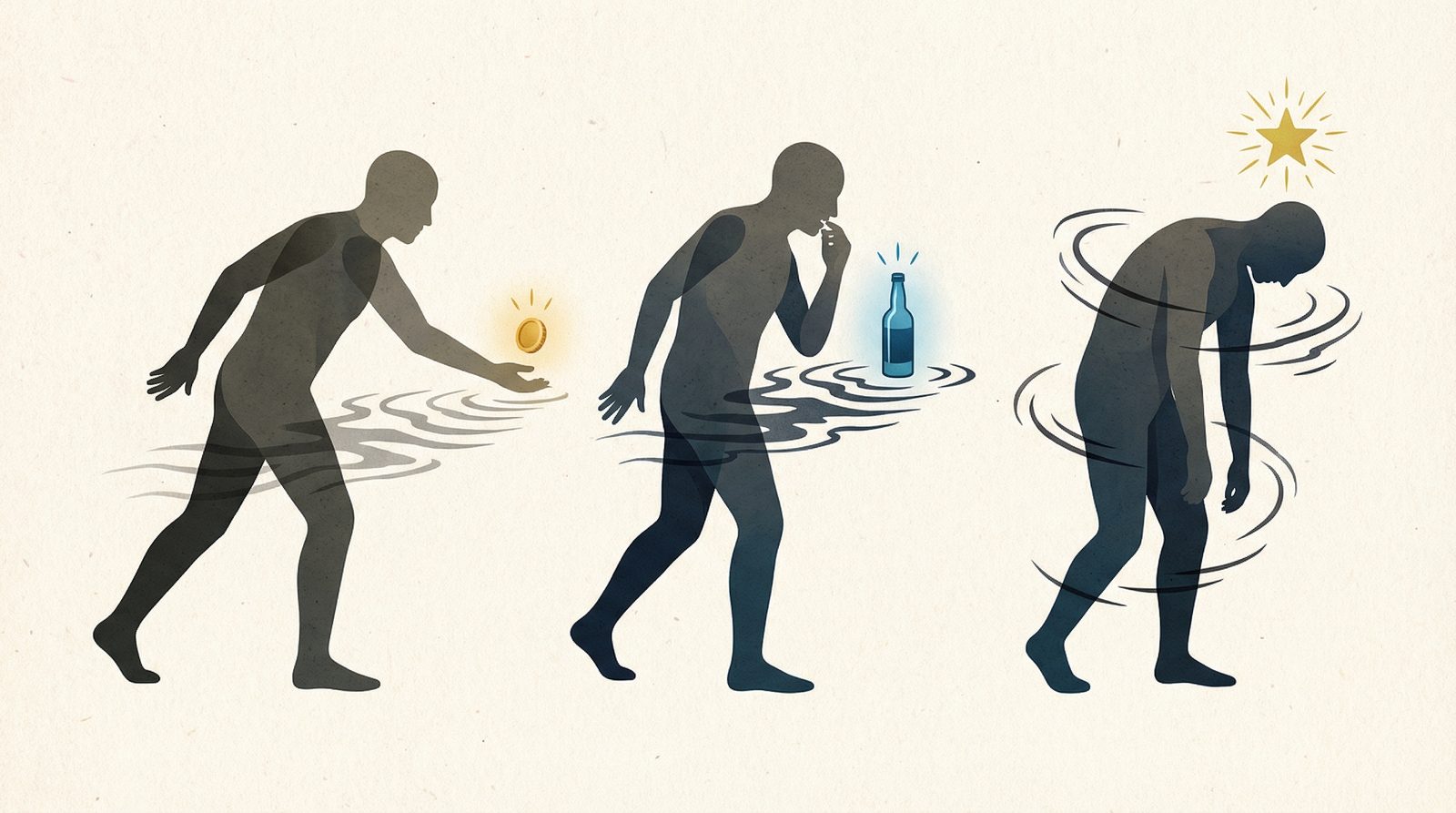
    The motif of Unintended Consequences of Wishes is all about the gap between what a character wants and what actually happens when they get it. Someone makes a wish, strikes a bargain, or voices a casual request, and the universe answers in a way that is technically correct but emotionally disastrous. The wish is granted, but it arrives with loopholes, side effects, or a cruelly literal twist.

    Stories built on this motif take the simple fantasy “What if I could have anything?” and turn it into a test of character. The wish can come from a genie, a djinn, a magical artifact, a mischievous spirit, or an impersonal cosmic rule. The key is that the wisher does not fully understand what they are asking for, or what it will cost them and others.

    In children’s fantasy like Five Children And It (1902) or comedy-fantasy such as The Brass Bottle, this motif often plays as chaotic fun, where wishes turn ordinary life into social disorder. In darker versions, the consequences become corrosive and personal, as in A Fallen Idol. In all cases, the heart of the motif is the same lesson: desire without foresight is dangerous, and power, even magical power, does not erase consequences.


    HOW IT WORKS IN STORIES

    In stories using Unintended Consequences of Wishes, the setup is deceptively simple. An ordinary person stumbles onto a source of power. The wisher is usually not a villain. They are tired, lonely, greedy, bored, or just curious. Their first wish is often small and impulsive, which makes the fallout feel both believable and embarrassing.

    The wish is granted with a twist. The wisher gets what they asked for, but not what they meant. A solution arrives in the worst possible form. The gift comes attached to humiliation, guilt, conflict, or harm that spreads beyond the original desire. Attempts to fix things with additional wishes often make it worse, stacking complications until the character is trapped in a web of their own making.

    Writers use this motif to explore responsibility and self-knowledge in a vivid way. Instead of lecturing about “be careful what you wish for,” the story lets us watch the character collide with the fine print of their desires. The motif pairs well with comedy and satire, because literal-minded magic exposes vanity, hypocrisy, and entitlement simply by doing exactly what was asked.

    Because wish stories often begin with a bound spirit or a magical object, this motif frequently overlaps with bottle-bound bargains, supernatural deals with hidden costs, and stories where fantasy intrudes into ordinary domestic life.


    Editorial illustration inspired by 'Unintended Consequences of Wishes'

    EMOTIONAL EFFECT ON THE READER

    Unintended Consequences of Wishes hits a mix of feelings. On the lighter side, there is real pleasure in watching a too-literal wish go wrong. The reader gets to enjoy slapstick and clever reversals while safely thinking, “I would have phrased that better.”

    Underneath the humor is a quieter discomfort. The motif nudges us to notice how often we want things without understanding the consequences. When a wish hurts someone the character cares about, the reader feels a sting of guilt by proxy. We see how easy it is to be selfish by accident, and how a small moment of impatience or vanity can spiral into something much bigger.

    In darker takes, the emotion shifts toward dread and regret. Each new wish tightens the trap, and the reader senses that there may be no clean way out. The story becomes a pressure test of character, because power keeps offering shortcuts while consequences keep demanding payment.

    Overall, this motif lets readers enjoy the fantasy of limitless power while also feeling the weight of it. It is satisfying when a character finally learns to phrase a wish carefully, to give up the power, or to accept the original messy life they were trying to escape. That mix of schadenfreude, anxiety, and eventual catharsis is what keeps Unintended Consequences of Wishes so enduring.


    Symbolic illustration inspired by 'Unintended Consequences of Wishes'

    VARIATIONS & RELATED MOTIFS

    Unintended Consequences of Wishes comes in several recognizable flavors. Comic versions focus on embarrassment, romantic misunderstandings, and chaotic but reversible disasters. Child-centered versions use wishes to explore growing up, where each fantasy is exposed as incomplete or naive. Darker interpretations treat wishes as tools of power, where unintended consequences spill into coercion, conflict, and moral compromise.

    This motif frequently intersects with stories where fantasy intrudes into domestic realism, where children encounter real magic too early, and where misunderstandings spiral into farce. The structure stays the same, even when the tone changes: a character tries to shortcut their problems and discovers that reality, magical or not, always charges a price.

  • Vice Versa (1882)

    Vice Versa (1882)

    INTRODUCTION

    Vice Versa (1882) by F. Anstey
    Comic fantasy · 19th Century · Victorian Era · United Kingdom


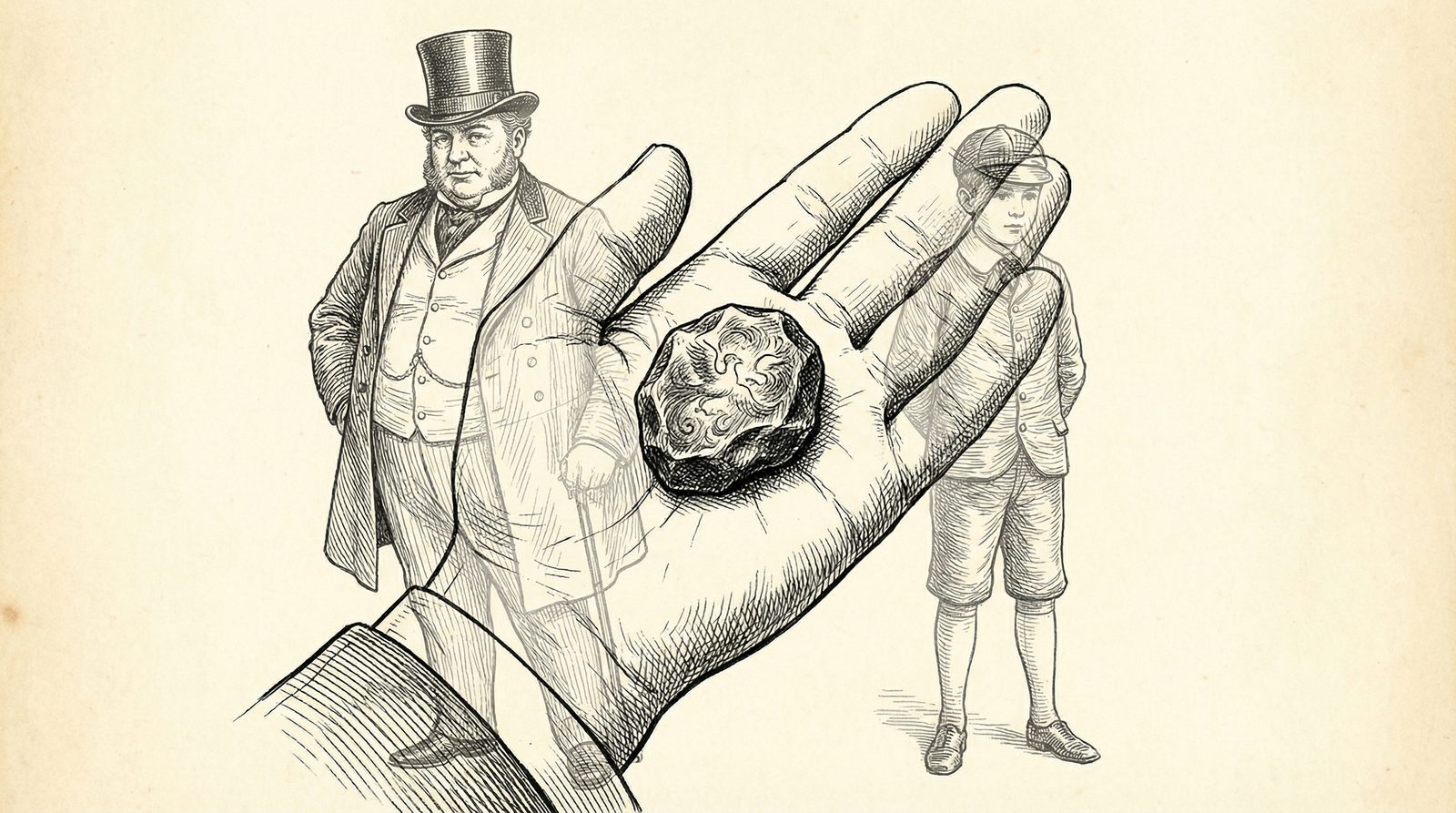
    Vice Versa (1882) begins with a wish and a stone, and very quickly becomes a quiet little nightmare. F. Anstey takes a familiar motif of wish-fulfilment and flips it into something sour, funny, and oddly tender. Paul Bultitude, a prosperous Victorian businessman, longs for the carefree life of his son Dick at Dr. Grimstone’s boarding school. A mysterious Garuda Stone grants the wish too literally, and father and son exchange bodies. What follows is not just farce, but a slow-burning feel of humiliation and uneasy recognition. Beneath the jokes about Latin primers and cane-wielding masters lies a sharp portrait of the Victorian obsession with discipline, respectability, and hierarchy. The magic is minimal, almost offhand. What Anstey really cares about is how people behave when stripped of their usual power, and whether empathy can survive a term at a place like Dr. Grimstone’s school in Kentish Town.

    PLOT & THEMES

    The central trope is the body swap: Paul Bultitude becomes his son Dick in appearance, while Dick is trapped in his father’s middle-aged body. This early example of Body Swap Comedy Between Generations uses the swap as a moral abrasion rather than a pure joke. Anstey wastes little time on mechanics. The Garuda Stone, brought back by the blustering Uncle Gregory from India, simply works. Then the novel settles into its real concern: role reversal as education.

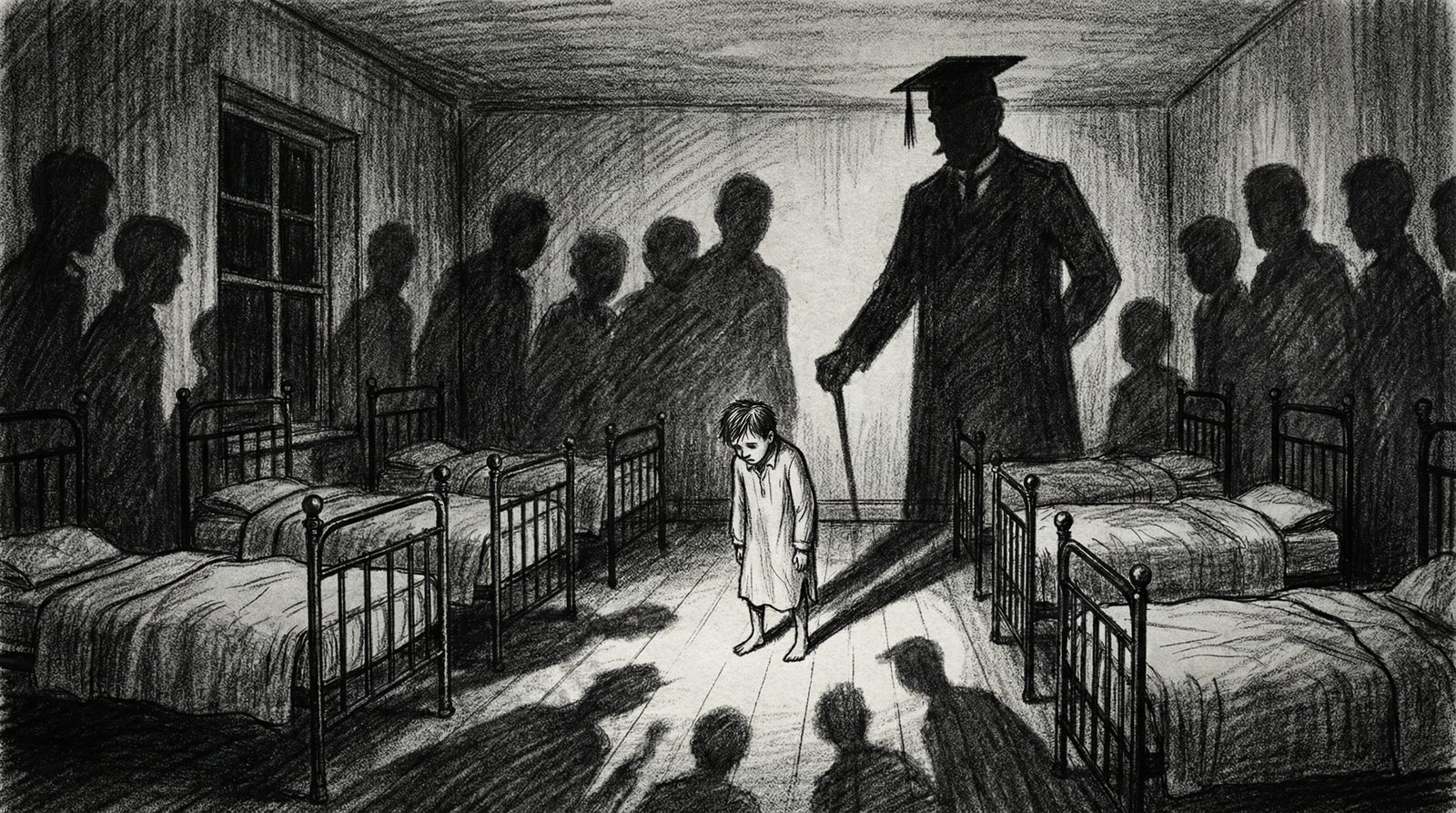
    Paul, now outwardly a schoolboy, is thrust into the brutal routines of Dr. Grimstone’s establishment. The headmaster’s son, the odious Augustus Grimstone, bullies him. Mr. Blinkhorn trembles and obeys. The boys enforce their own pecking order in the dingy playground and the icy dormitory. Scenes like Paul’s panic during the Latin viva voce in the schoolroom, or his miserable attempt to run away through the foggy streets of Kentish Town only to be dragged back, show how little his adult authority counts here. Meanwhile, Dick-as-Paul must bluff his way through business at the City office in Mincing Lane and endure the suffocating attentions of his father’s fiancée, the sentimental Miss Perrott.

    Anstey uses this double embarrassment to attack the hypocrisy of both generations. Parents sentimentalise school as character-building. Boys imagine business as leisurely and dignified. Both are wrong. Discipline is repeatedly framed as cruelty, especially in Grimstone’s pompous sermons about “moral fibre” just before he orders a flogging. Unlike lighter modern takes such as Freaky Friday, the book keeps its edges. The violence at school is not softened, and Paul’s cowardice is not made charming. By the ending, after a final confrontation in Grimstone’s study and another use of the Garuda Stone, the swap is reversed, but nothing is neatly fixed. Paul grudgingly promises to ease Dick’s life at school and abandon Miss Perrott. Dick agrees to behave better. The ending remains uneasy. They walk home through the London streets, outwardly restored and inwardly chastened, with the Stone shattered and its magic gone.

    PROSE & NARRATIVE STRUCTURE

    Anstey writes in a brisk, ironic third person, a narrative technique that allows him to slide between Paul’s pompous self-importance and Dick’s quicksilver anxiety without fully endorsing either. The narrator frequently undercuts Paul with sly asides, describing his “manly horror” of cold water as he faces the school’s tin baths, for instance, yet still lets us feel his genuine terror under Grimstone’s cane. The humour is dry rather than broad, built from overblown speeches and small physical miseries: cold tin baths, undercooked meals, aching muscles after drill, and the constant fear of public humiliation.

    Structurally, the novel is almost theatrical. It alternates set pieces at the school and in the Bultitude household, each chapter a stage with its own dominant authority figure: Grimstone in his study, Uncle Gregory booming in the drawing-room, the City clerk Tipping in the counting-house. This back-and-forth echoes mirrored lives. Every cruelty at school has its counterpart in the casual callousness of adult business and courtship. The pacing is tight. The Garuda Stone appears, works, and is destroyed without mythological fuss, keeping our attention on the social experiment rather than fantasy lore.

    There are occasional sentimental flourishes, especially in scenes with Paul’s young daughter Barbara, but they are quickly undercut by some practical detail or barbed remark. The prose is very much nineteenth-century middlebrow. It is comedy written with a straight face, which makes the cruelty of the school scenes land harder than any melodrama.

    Conceptual editorial illustration inspired by 'Vice Versa (1882)'

    CHARACTERS & INTERIORITY

    Paul Bultitude begins as the classic archetype of the pompous patriarch. Inside Dick’s body, however, he becomes something rarer in Victorian fiction: a grown man forced into genuine vulnerability. Anstey lets us feel his slow erosion. The first caning he treats as an outrage, but repetition grinds that indignation down into dread and, eventually, recognition. His internal monologue shifts from self-pity to a grudging, fearful respect for what Dick has endured.

    Dick, occupying his father’s body, is not idealised either. He revels in ordering servants about and nearly ruins Paul’s business dealings with a childish prank on the nervous clerk Tipping. His horror at Miss Perrott’s flirtations in the Bultitude drawing-room is played for comedy, but it also exposes how little control young people, and especially girls like Barbara, have within these domestic charades.

    Secondary figures are sketched with quick, telling strokes. Dr. Grimstone, with his booming platitudes and private cowardice, is less a villain than a man completely absorbed in his own authority. Mr. Blinkhorn, the underpaid usher, is a portrait of wasted intelligence, too timid to protect the boys he half-pities. Even Augustus Grimstone, the school bully, is shown at one point cramming desperately for an exam, hinting at fear behind his swagger. Interiority here is not lushly psychological, but it is precise. Anstey gives just enough inner flicker to complicate what could have been pure caricature.

    LEGACY & RECEPTION

    Vice Versa was a popular success in late Victorian Britain, and it has never quite vanished, even if it now lives in the shadow of later body-swap stories. Its mix of school-story realism and light fantasy helped pave the way for works that use the fantastic to expose social lies. Stage versions and screen adaptations have tended to soften the book’s harsher edges, often turning the ending into a more straightforward reconciliation. The novel itself leaves a residue of discomfort. Paul and Dick reverse the swap, the Garuda Stone is shattered, and they walk away with no guarantee that their resolutions will hold once the sting of pain fades.

    Critical reception has often filed the book under “juvenile,” but that is misleading. Adults were always the real target, and modern readers who come expecting harmless schoolboy japes may be surprised by how pointed the satire of business, courtship, and parenting remains. It is a minor classic of comic fantasy, but also an early critique of institutions Victorian Britain was most proud of.

    IS IT WORTH READING?

    If you have any interest in school stories, comic fantasy, or the underside of Victorian respectability, Vice Versa is absolutely worth your time. It is short, brisk, and far sharper than its premise suggests. The language is old-fashioned but not forbidding. Readers looking for elaborate world-building or lush romance will not find them here. What you get instead is a tight moral experiment: what happens when a comfortable man is dropped into the world he has always dismissed. The answer is funny, uncomfortable, and surprisingly moving, especially in the scenes between Paul and his daughter Barbara. It is a book that can be read quickly, but lingers in the mind whenever someone reminisces too fondly about the “good old days” of school.

    Illustration of a core idea or motif from 'Vice Versa (1882)'

    TRIVIA & AUTHOR FACTS

    “F. Anstey” was the pen name of Thomas Anstey Guthrie, a barrister-turned-writer who found far more success in comic fiction than in law. Vice Versa was his breakout hit, written when he was still in his twenties. The Garuda Stone reflects the era’s fascination with India as a source of mysterious power, filtered through the casual imperialism of a character like Uncle Gregory, who treats the artifact as a mere curio. Anstey’s long association with Punch magazine shows in the dry asides and caricatured authority figures.

    The school in Kentish Town is not named after a real institution, but its routines, cold baths, bread-and-butter breakfasts, compulsory Latin, mirror contemporary accounts of minor public schools. Anstey later revisited fantastical intrusions into everyday life in novels like The Brass Bottle, but he never again hit quite the same balance between magic and social observation that he achieved here. Vice Versa remains his most widely remembered work.

    SIMILAR BOOKS

    If you enjoy Vice Versa, you might seek out other works that mix light fantasy with social satire. The Wonderful Visit (1895) by H. G. Wells brings an angel into an English village to expose everyday hypocrisy. The Brass Bottle (1900) unleashes a genie into respectable middle-class life with chaotic results. For a harsher, more realistic look at school, Thomas Hughes’s Tom Brown’s Schooldays (1857) offers the earnest version of the same world Anstey mocks. All of these share an interest in how institutions, school, church, family, shape and sometimes warp the people inside them.

  • The Tinted Venus (1885)

    The Tinted Venus (1885)

    INTRODUCTION

    The Tinted Venus (1885) by F. Anstey
    Fantasy · United Kingdom


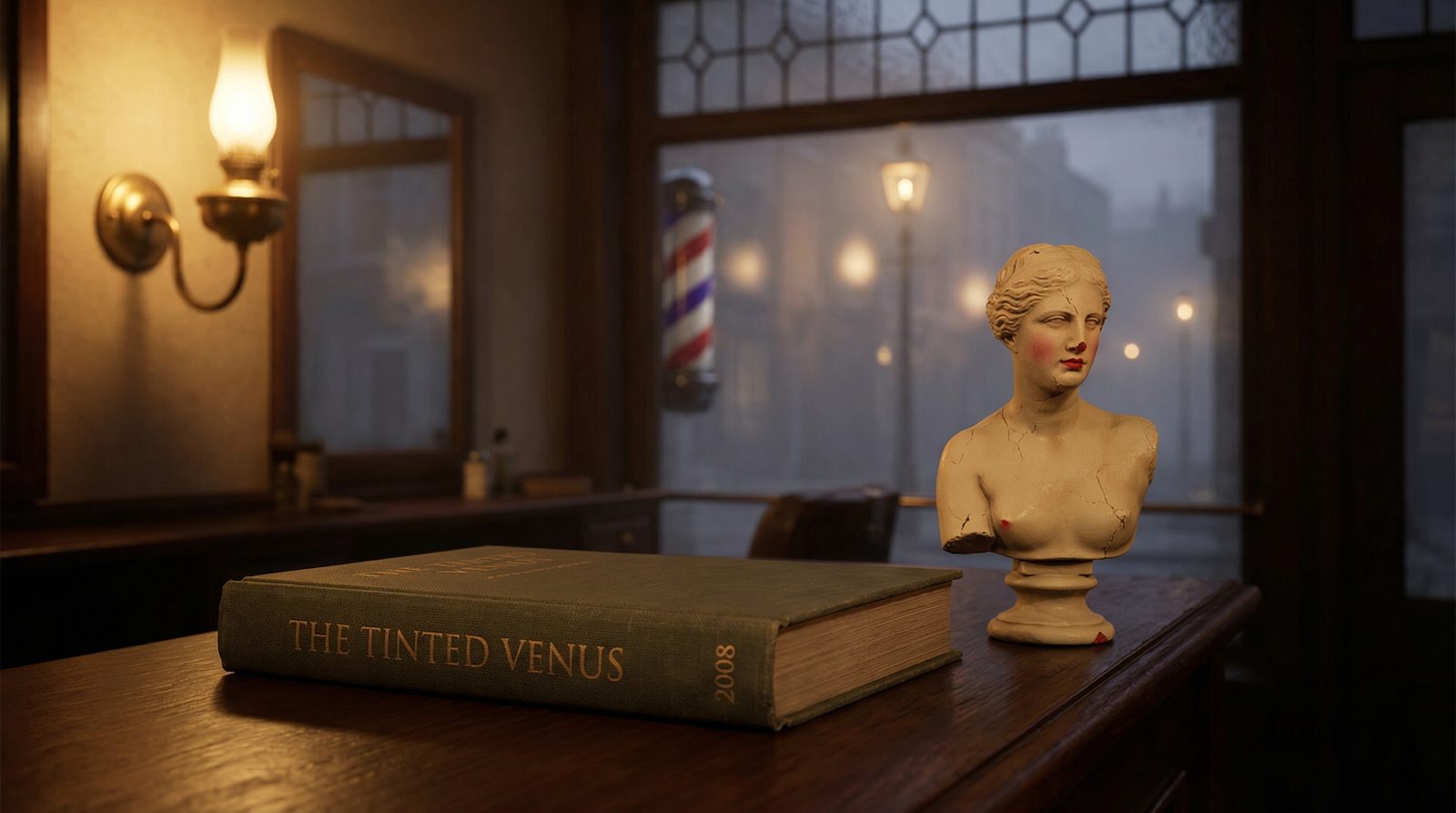
    The Tinted Venus is one of those sly Victorian fantasies that begins as a joke and ends with a faint ache. A humble barber’s assistant, a second-hand statue of Venus, and a careless wish, on the surface it is farce, plaster dust, and social misunderstanding. Underneath, the story keeps worrying at quieter questions: how easily people confuse beauty with goodness, and possession with love.

    The mood drifts between fizzy comic energy and a wistful unease, as if gaslit streets and shabby parlors are conspiring to expose every character’s vanity. This is not a mythological epic. It is domestic London life being invaded by divinity, and the invasion mostly produces embarrassment.

    PLOT & THEMES

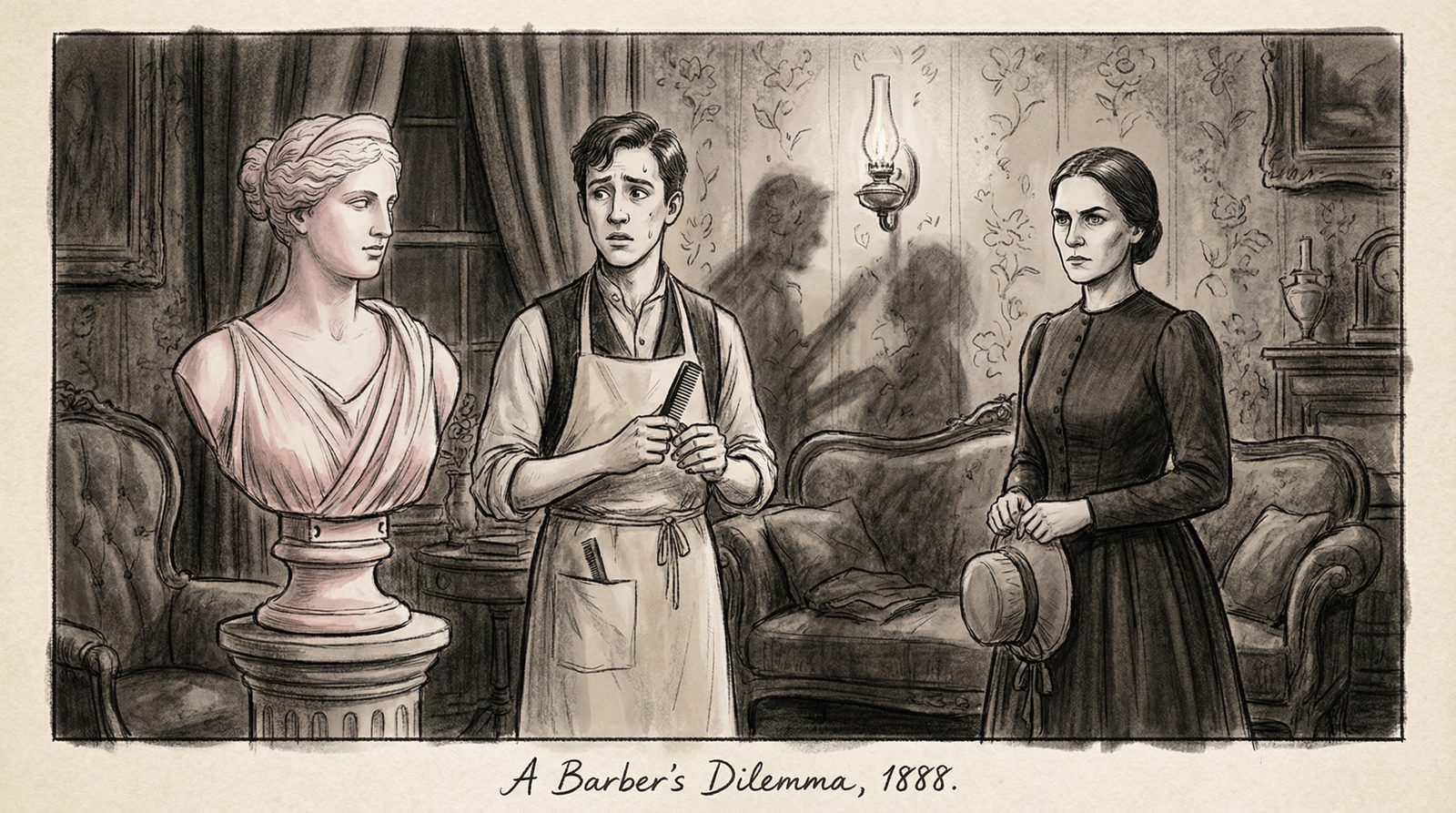
    The premise is simple. Frederick Pimm, a mild and slightly vain assistant at Mivers’s barber shop on Lupus Street, wins a cheap tinted plaster Venus in a raffle. In a fit of romantic self-pity he kisses the statue’s lips and jokes that he wishes for a more ideal love than his very real, very practical fiancée, Ada Parkinson. The statue warms. Venus steps down from her pedestal.

    What follows is not lush sensual fantasy. Anstey makes Venus inconveniently literal-minded. Her presence ruins Pimm’s work, scandalizes Mrs. Mivers, and detonates the Parkinson household’s moral respectability. The comedy comes from the mismatch between mythic expectation and middle-class routine: Venus treats London streets as if they were sacred processions, while everyone around her sees only indecency, madness, or fraud. Pimm’s frantic attempts to disguise her as a foreign cousin create the book’s best farce, the kind built from doors opening at the wrong moment and reputations collapsing in real time.

    The ending is more ambivalent than later stage treatments that smooth everything into romance. After a chaotic night in Kensington Gardens, with Venus insulted by the Albert Memorial and the new gods of modern industry, she recognizes that this age has no place for her. She returns to plaster, hardening in a small back parlor while Ada watches. Pimm ends the novel engaged to Ada again, but chastened. The magic does not grant him a perfect match. It strips away his fantasies and leaves him with ordinary love, unvarnished and uncompensated.

    Class aspiration runs beneath the supernatural premise. The statue itself is not marble, it is imitation, second-rate beauty bought cheaply and worshipped too eagerly. The novel uses that cheapness to sharpen its satire: not just of male vanity, but of a social world that wants art as status while panicking when “art” becomes alive and demanding.

    PROSE & NARRATIVE STRUCTURE

    Anstey writes in a lightly ironic third-person style, hovering close to Pimm’s anxious self-justifications while occasionally panning out to skewer the entire household. The sentences are brisk, the dialogue is full of social edge, and the tone carries amused exasperation. The narrator thinks Pimm is foolish, but never quite stops caring what the foolishness costs him.

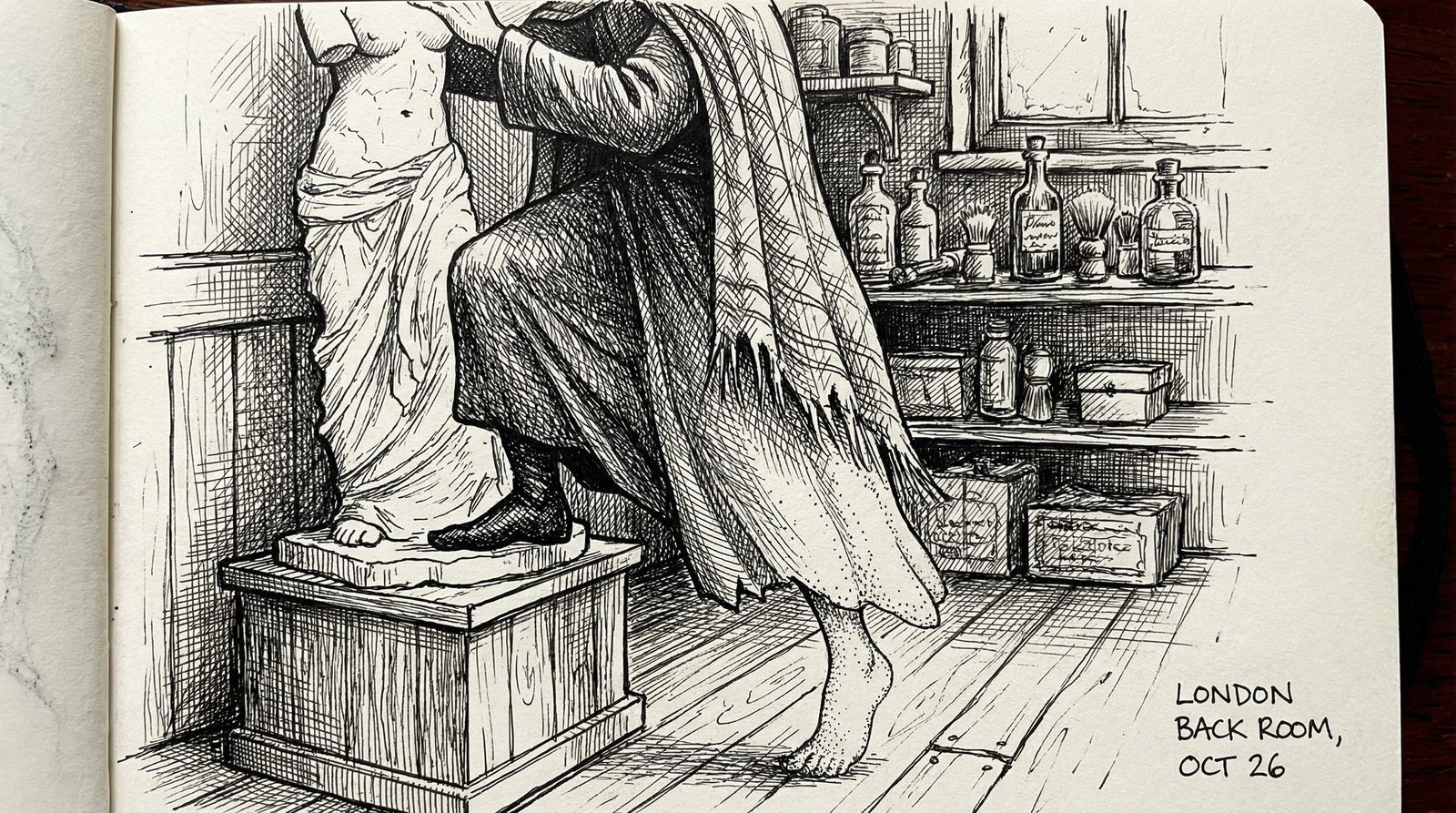
    The structure is almost theatrical. Early chapters feel like set pieces: the raffle, the cramped back room where Pimm hides Venus under a shawl, the disastrous visit with the Parkinson family, where Venus’s literal talk of altars and libations horrifies respectable guests. Stakes escalate socially rather than cosmically. Instead of battles between gods, we get whispered gossip in boarding-house corridors and reputations fraying under scrutiny.

    As the story advances, Anstey slows the farce just enough for tenderness to leak in. Venus’s gradual cooling, as devotion and fantasy withdraw, is described with surprising restraint. Comedy drains away line by line, and Pimm is left holding not an ideal but an object, and realizing how little his “ideal” ever understood him in return.

    Conceptual editorial illustration inspired by 'The Tinted Venus'

    CHARACTERS & INTERIORITY

    Pimm is a timid dreamer who wants romance without risk. His inner life is half vanity, half self-pity, and that is where the book’s cruelest jokes land. He is not wicked, merely weak, and the novel keeps asking what damage weakness can do when paired with sudden power.

    Venus is less a rounded interior consciousness than a force, but Anstey gives her enough presence to unsettle. She is not a fantasy girlfriend. She is a deity bewildered and offended by nineteenth-century London. Her pride is real. So is her confusion. Ada, meanwhile, avoids becoming a simple caricature of the shrewish fiancée. Her sharpness reads as self-protection, and her brief moment of pity as Venus returns to plaster deepens the emotional field.

    Side characters form a chorus of moral panic and prurient curiosity: Mrs. Mivers with her small tyrannies, the Parkinson household with its rigid respectability, the boarding-house gossips watching for scandal. Interior life belongs mostly to Pimm, but the way others misread him, as seducer, fool, or liar, completes the portrait of a man trapped between who he imagines himself to be and who the world insists he is.

    LEGACY & RECEPTION

    The Tinted Venus has never held canonical status, and many modern readers meet its premise through later adaptations that soften the ending into romance or winked redemption. The original novel is harsher. Pimm and Ada end together, but chastened, with the plaster Venus back in the corner as an object of faint dread rather than desire. The magic fixes nothing. It exposes everything.

    Among readers who seek out the text, it is appreciated as a sly interrogation of the Pygmalion fantasy, closer in spirit to darker Victorian preoccupations with beauty and projection than to the sunny romantic comedies it accidentally anticipates. Its modest scale has helped it age well: no grand Olympus, just Lupus Street, Clapham respectability, and Kensington Gardens as a stage for embarrassment and revelation. The satire of male vanity and middle-class hunger for “art” as status symbol still lands.

    IS IT WORTH READING?

    If you want a frothy fantasy where a statue comes to life and everyone ends blissfully paired off, this book will wrong-foot you. It is shorter, sharper, and more awkward than that. Its comedy is real, but so is its unease about what men project onto women, and what happens when the projection answers back.

    The prose is brisk enough that the period setting does not feel like homework, yet the story rewards slow attention to its quieter cruelties and small generosities. For readers interested in myth twisted into domestic farce, class-conscious fantasy, and flawed protagonists who do not receive neat moral absolution, it is very much worth the time.

    Illustration inspired by a core idea from 'The Tinted Venus'

    TRIVIA & AUTHOR FACTS

    “F. Anstey” was the pen name of Thomas Anstey Guthrie, a barrister-turned-humorist who built a career skewering middle-class pretensions. The Tinted Venus sits alongside his other fantasies of ordinary people colliding with the supernatural, but it is one of the tighter and more urban of his works.

    The statue is explicitly a cheap tinted plaster copy rather than marble, a detail that sharpens the satire about imitation, aspiration, and fakery. The Kensington Gardens sequence, with Venus offended by public monuments and national self-importance, shows Anstey’s eye for how civic spaces stage morality and taste. The novel quietly prefigures later psychological fantasies about art objects that refuse to stay inert, but it keeps its scale stubbornly domestic.

    SIMILAR BOOKS

    If this appeals, you might look toward other nineteenth-century fantasies that smuggle unease into comic premises. The Picture of Dorian Gray treats beauty as curse rather than blessing, while Pygmalion reworks the sculptor-and-creation fantasy into social satire. For more London-set supernatural mischief with a class-conscious edge, the comic supernatural tales of writers like Jerome K. Jerome and some of E. Nesbit’s adult stories make fitting companions.

    DISCOVERABILITY & LINKS

  • A Fallen Idol (1886)

    A Fallen Idol (1886)

    INTRODUCTION

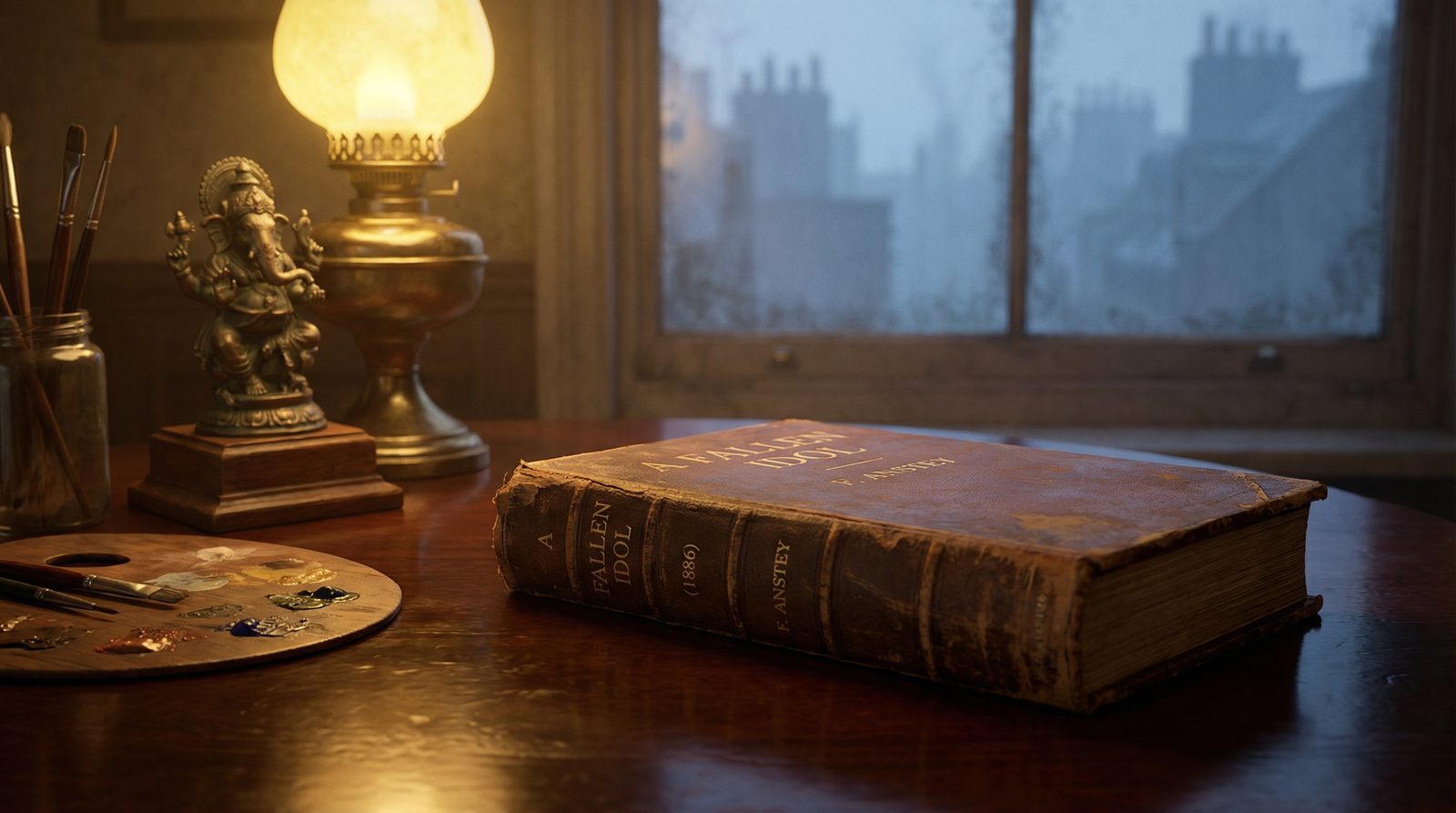
    A Fallen Idol (1886) by F. Anstey (Thomas Anstey Guthrie)
    Psychological fiction · United Kingdom


    A Fallen Idol begins like a drawing-room curiosity and steadily curdles into something colder. At first glance it looks like a fashionable Victorian entertainment, a touch of occult glamour enlivening polite society. Beneath that surface, Anstey is conducting a pointed examination of belief, imposture, and the damage done when spiritual hunger collides with social ambition.

    The supernatural element is unmistakable, but it is never allowed to dominate the book in the way a conventional horror story might. Instead, the idol operates as a crooked mirror, reflecting vanity, cowardice, and moral compromise back at the people who claim to revere it. The prevailing mood is unease rather than terror. Anstey is less interested in demons than in how quickly ordinary people betray themselves when mystery becomes fashionable.

    PLOT & THEMES

    The story opens in colonial India, where the young barrister Harold Caffyn acquires a strange idol after a violent scene at a temple in Bhowanipore. The circumstances are murky, a worshipper is killed, and whispers of a curse follow the object. Harold brings the idol back to London, where it finds its way into the studio of the painter Mark Ashburn.

    From there, the idol works slowly and indirectly. Mark’s portraits, especially his painting of the charming Dolly Tredwell, begin to attract attention that feels unearned and unsettling. A circle of fashionable spiritualists gathers around the studio, led by the solemn Mrs. Fothergill and the excitable Miss Tyrell, eager to believe that something ancient and powerful is at work.

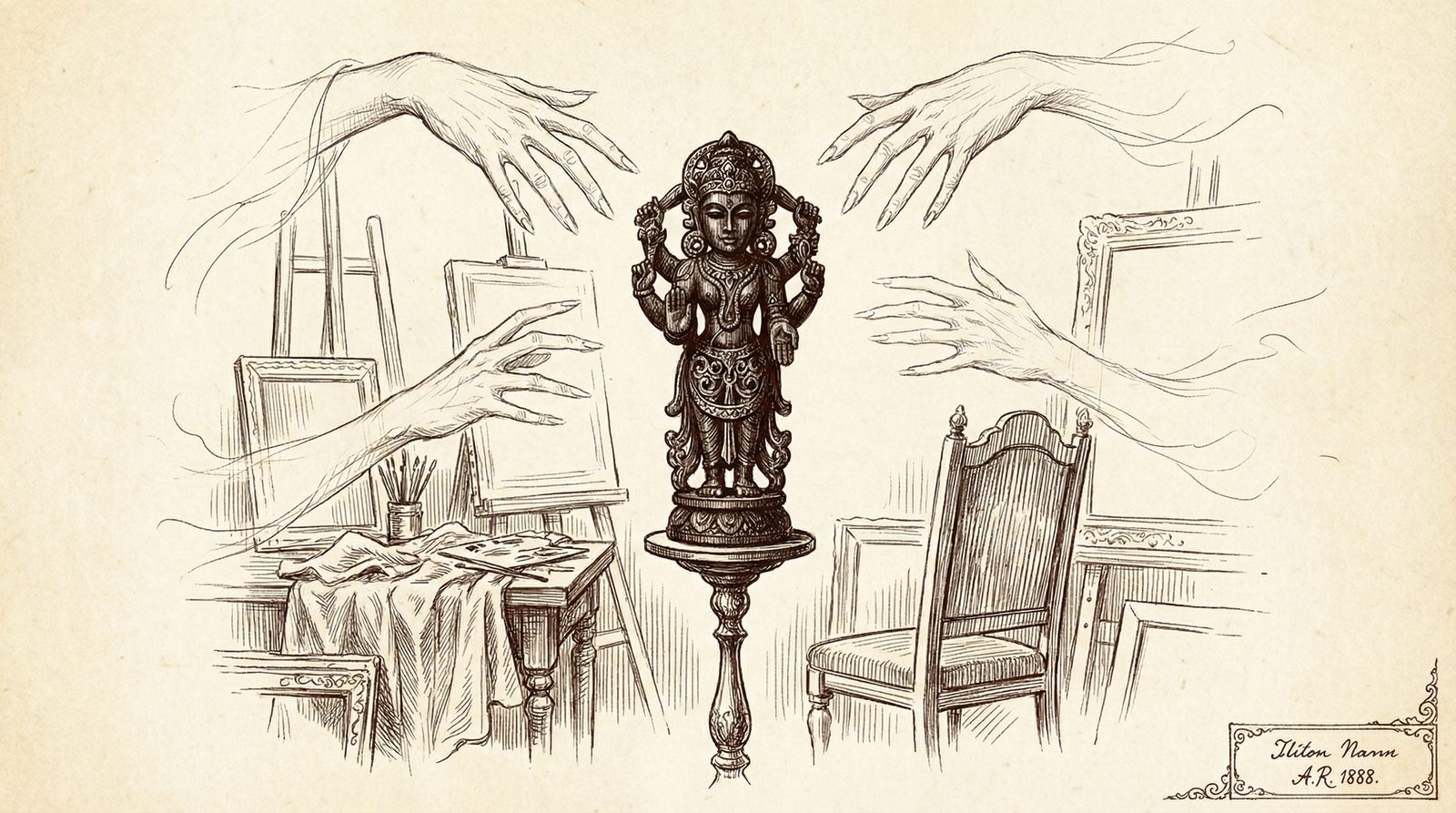
    The novel combines the cursed-object tradition with social imposture. Harold, who knows more about the idol’s bloody history than he admits, manipulates its reputation to his advantage, nudging Mark into becoming a reluctant medium. The séances staged in the dim studio become performances of projection. The sitters see what they want to see, while Mark feels himself hollowed out by a role he never meant to play.

    A colonial undercurrent runs through the book, recalling earlier stories of stolen relics such as The Moonstone. The idol is treated as both exotic curiosity and drawing-room entertainment, stripped of context and consequence until the damage is already done. When exposure finally looms, Harold recklessly handles the idol to prove it harmless. The result is disaster rather than vindication.

    The ending is bleakly ironic. Mark survives physically but not ethically. He burns the painting that brought him acclaim, abandons the séances, and returns the idol to a museum, where it is neutralized behind glass and catalog numbers. No one is cleansed of guilt. Reputations remain bruised. The harm lingers quietly, unresolved.

    PROSE & NARRATIVE STRUCTURE

    Anstey writes with a lightness that disguises how carefully the novel is engineered. Free indirect discourse allows the narrative to drift between Mark’s self-doubt, Harold’s cynical calculation, and the eager credulity of the spiritualist circle without heavy-handed transitions.

    Dialogue does much of the work. Characters expose themselves through polished evasions, nervous enthusiasm, and pious certainty. The narrator’s occasional asides sharpen the satire, particularly when séances are squeezed between tea and supper, or when moral outrage coexists comfortably with voyeuristic curiosity.

    Structurally, the novel alternates between scenes of social comedy and increasingly claustrophobic séances in Mark’s studio. Each sitting raises the stakes: gossip spreads, reputations wobble, and belief hardens into expectation. Notably, the idol itself rarely acts in any overt way. Its power lies in what people are willing to do in its presence.

    Conceptual editorial illustration inspired by 'A Fallen Idol'

    CHARACTERS & INTERIORITY

    Mark Ashburn is a reluctant medium, not by conviction but by weakness. He is decent, talented, and insecure enough to be swayed. His interior monologue reveals how easily vanity disguises itself as generosity. During the séances he repeatedly tells himself that he is only humoring others, even as he profits from their belief.

    Harold Caffyn feels strikingly modern. He half believes his own deceptions and treats danger as something to be managed theatrically. Moments of genuine fear break through his composure, but his instinct is always to convert panic into control.

    Dolly Tredwell and the surrounding social figures are sketched with less depth, yet Anstey allows flashes of private disillusionment to surface. In particular, Dolly’s overheard humiliation after a disastrous séance reminds the reader how easily a young woman’s reputation becomes collateral damage in fashionable folly.

    LEGACY & RECEPTION

    A Fallen Idol never matched the popularity of Anstey’s comic successes, and it is often treated as a minor occult curiosity. Victorian reviewers were divided, intrigued by the ingenuity of the séance scenes but unsettled by the novel’s refusal to clarify whether the idol was truly supernatural or merely a catalyst for fraud and hysteria.

    That ambiguity has aged well. The book now reads as a bridge between moralized ghost stories and later psychological hauntings. Its final image, the idol inert in a museum case while the characters quietly absorb their shame, feels unexpectedly modern in its skepticism toward spectacle and belief.

    IS IT WORTH READING?

    If you prefer supernatural fiction that unsettles through psychology rather than shocks, this novel is worth your attention. It moves at a Victorian pace, heavy with conversation and social maneuvering, but the unease accumulates steadily.

    The séances are disturbing not because of what appears, but because of what people are willing to believe. Readers interested in spiritualism, colonial guilt, and the performance of belief will find the novel sharp and quietly corrosive.

    Illustration inspired by a core idea from 'A Fallen Idol'

    TRIVIA & AUTHOR FACTS

    F. Anstey was the pen name of Thomas Anstey Guthrie, a barrister-turned-writer whose legal training shows in the careful sequencing of cause and consequence throughout the novel. The early Indian chapters draw on contemporary travel writing, though filtered through satire.

    Anstey attended real séances in London, and his fascination with spiritualism and fraud informs the novel’s tone. The museum ending reflects his interest in how institutions neutralize danger by classification, turning objects of fear into labeled curiosities.

    SIMILAR BOOKS

    Readers interested in supernatural objects with moral weight may also enjoy The Moonstone for its colonial relic and social fallout, or The Turn of the Screw for a later, more psychological ambiguity. For Victorian skepticism toward spiritual fashion, the earnest writings of Arthur Conan Doyle on séances offer a revealing real-world counterpoint to Anstey’s fiction.

    DISCOVERABILITY & LINKS

  • Curses As Moral Punishment

    Curses As Moral Punishment

    DEFINITION & CORE IDEA

    In the motif of Curses As Moral Punishment, a character is singled out by a supernatural force and punished specifically for a moral failing. The curse is not random bad luck. It is framed as justice, payback, or a lesson, often delivered by a wronged person, a vengeful spirit, or some cosmic law the character did not know they were breaking.

    This motif turns ethics into something with teeth. A lie, a hit-and-run, a cruel joke, a greedy wish, a broken promise – instead of being handled by courts or social fallout, these choices trigger a spell that warps the character’s body, life, or reality. In Thinner (1984) and its adaptation, the curse literally wastes the protagonist away as punishment for his crime. In Drag Me To Hell and Wishmaster, characters are condemned or twisted for selfish choices and careless cruelty.

    Writers use Curses As Moral Punishment when they want the story’s universe to feel like it has a conscience. The curse is a visible, often grotesque embodiment of guilt, hypocrisy, or corruption. It says: what you did matters so much that reality itself will not let it slide. Whether that feels fair, ironic, or horrifying is part of the tension that keeps readers hooked.


    HOW IT WORKS IN STORIES

    Curses As Moral Punishment usually starts with a transgression. Someone is wronged, a taboo is broken, or a character’s selfishness crosses a line. The story may linger on how “minor” the offense seems at first, which makes the later punishment feel shocking or darkly ironic. The curse is often delivered in a charged moment: a confrontation, a funeral, a refusal to help, a cruel decision made under pressure.

    Once the curse lands, the plot shifts into a mix of mystery, negotiation, and chase. The victim first dismisses what is happening as coincidence. As the pattern becomes undeniable, they scramble to understand the rules. Who cursed them? Why this specific punishment? Is there a loophole? In Thinner, the weight loss seems like a blessing before it becomes a death sentence. In Drag Me To Hell, the cursed character cycles through denial, bargaining, and desperate attempts to pass the doom onto someone else.

    The curse often escalates in stages. Each new symptom or setback forces the character to confront what they did and how far they are willing to go to escape consequences. They might try conventional fixes (doctors, lawyers, police) and find them useless against supernatural rules. This is where Curses As Moral Punishment overlaps with Corrupt Justice And Supernatural Retribution: once human systems fail or prove inadequate, something older and harsher takes over.

    Stories can play with responsibility and fairness. Sometimes the cursed person truly deserves it, and the narrative leans into grim satisfaction. Other times, the punishment is wildly excessive or falls on someone only partly at fault, raising questions about who gets blamed in a broken world. The climax often forces a choice: confess, sacrifice, pass the curse to someone else, or accept ruin. There is rarely a clean option.


    Editorial illustration inspired by 'Curses As Moral Punishment'

    EMOTIONAL EFFECT ON THE READER

    Curses As Moral Punishment hits a nerve because it turns private guilt into something you cannot hide. The character’s secret or flaw is dragged into the open, often through their own body or their luck falling apart. Readers feel a mix of dread and voyeurism watching someone’s inner rot become visible. It taps into the childhood fear that if you do something bad, the universe will “get you” – only now it is literal and merciless.

    This motif also creates a nagging question: how much punishment is enough? As the curse unfolds, it invites readers to judge the character’s original sin and every choice they make afterward. There can be a grim satisfaction when a smug or cruel person finally faces consequences, as in parts of Wishmaster. At the same time, many stories lean into discomfort, making the punishment feel so extreme that we start to pity the cursed, even if they were wrong.

    Because the curse often cannot be solved by logic or force, there is a strong feeling of helplessness. The character is trapped in a moral maze where every exit demands a sacrifice. That claustrophobic tension is part of the appeal. Readers are pushed to imagine what they would confess, who they would sacrifice, or what they would endure to escape a similar fate. The result is horror that lingers as self-examination, not just jump scares.


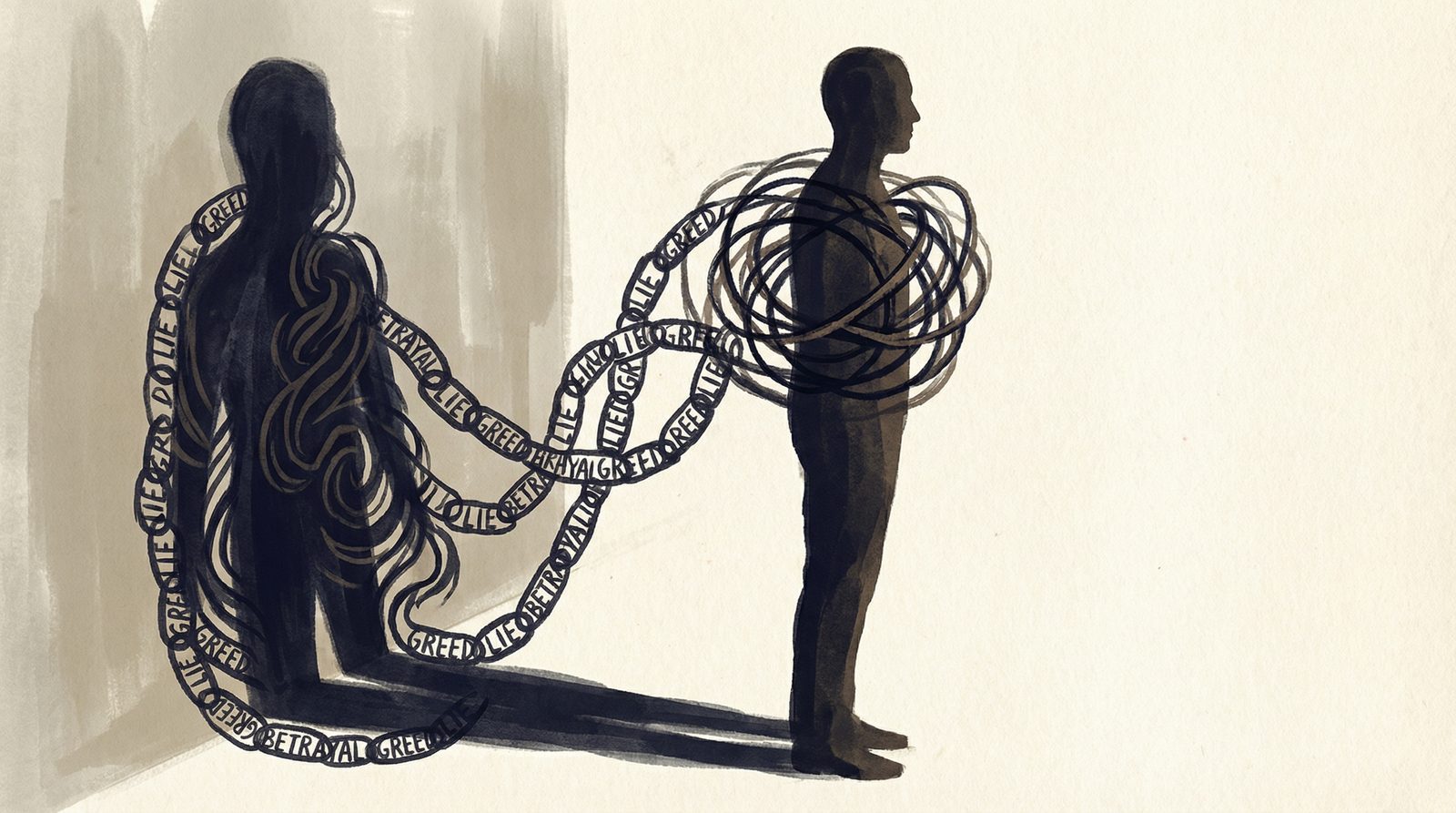
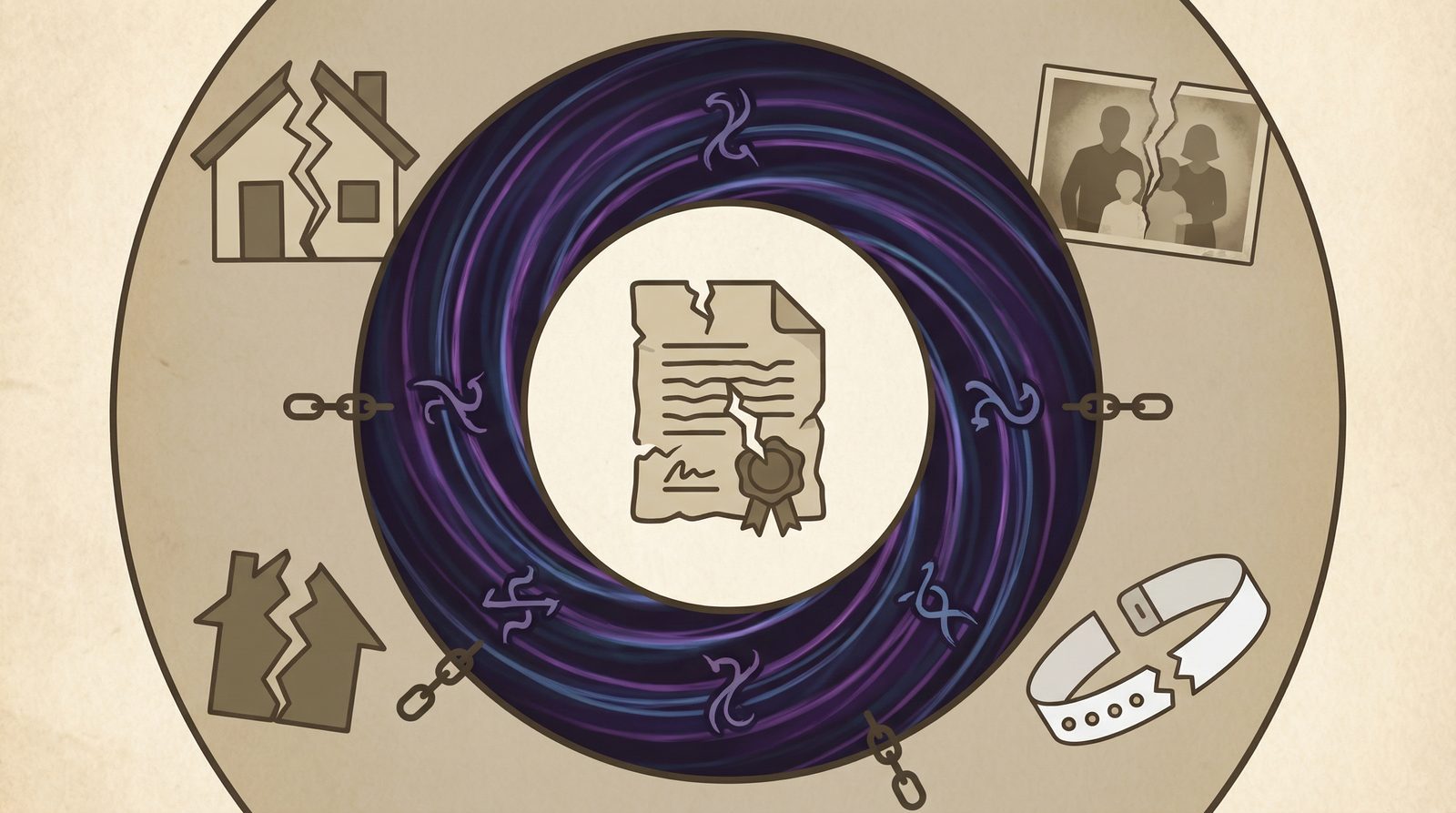
    Symbolic illustration inspired by 'Curses As Moral Punishment'

    VARIATIONS & RELATED MOTIFS

    Curses As Moral Punishment can take many forms. In some stories, the curse mirrors the crime: a liar finds their tongue twisting against them; a voyeur is forced to watch their own downfall; a hit-and-run driver’s body slowly deteriorates in a way that echoes their victim’s injuries. In others, the connection is more symbolic or ironic, like a greedy wish being granted in a way that ruins the wisher’s life in Wishmaster. The curse might be inherited, punishing descendants for an ancestor’s sin, or contagious, forcing the cursed to decide whether to infect someone else to survive.

    Another variation plays with whether the curse is truly “moral” or just vindictive. In Drag Me To Hell, part of the horror comes from how debatable the protagonist’s guilt is, and how merciless the supernatural response becomes. Some stories reveal that the curse-giver is corrupt or petty, twisting the motif into a critique of who gets to define morality in the first place.

    This motif often intersects with Corrupt Justice And Supernatural Retribution. When courts, police, or social systems fail, the curse steps in as a brutal stand-in for justice. It can also overlap with motifs like Faustian bargains, where the “punishment” is baked into the fine print of a wish, or with haunted objects, where using a cursed item triggers a tailored moral backlash.

    Writers can soften or sharpen the motif by adjusting the possibility of redemption. Some stories allow the cursed character to break the spell through sincere atonement, confession, or sacrifice. Others lock the rules so tightly that no apology can help, turning Curses As Moral Punishment into pure tragedy, where the lesson is not how to escape, but how a single choice can warp a life beyond repair.