Place: India

  • Hermann Hesse

    Hermann Hesse

    ORIGINS & BACKGROUND

    Hermann Hesse was born in 1877 in the southwest of what is now Germany, into a family deeply shaped by Protestant Christianity and missionary work in India. That tension between strict European piety and the attraction of Asian philosophy would quietly inform his imagination throughout his life. As a young man, Hesse struggled with school, religious authority, and expectations of conformity, experiencing psychological crises and periods of institutional care that later fed his sensitivity to inner fracture and spiritual unrest.

    He lived through the collapse of the old European order, the First World War, and the rise of nationalism. During this period, Hesse chose self-exile in Switzerland, distancing himself from German militarism and public ideology. This withdrawal from collective identity mirrors the journeys of his characters, who often turn away from mass movements in favor of solitary searching and inward transformation.

    Across novels such as Demian, Siddhartha, and Steppenwolf, Hesse repeatedly reworks his own conflicts: the pull between bourgeois security and artistic risk, between Western rationalism and Eastern mysticism, between belonging and solitude. His fiction is driven by this personal restlessness, filtered through a quiet, reflective temperament that treats inner crisis as a serious philosophical condition rather than a flaw to be cured.
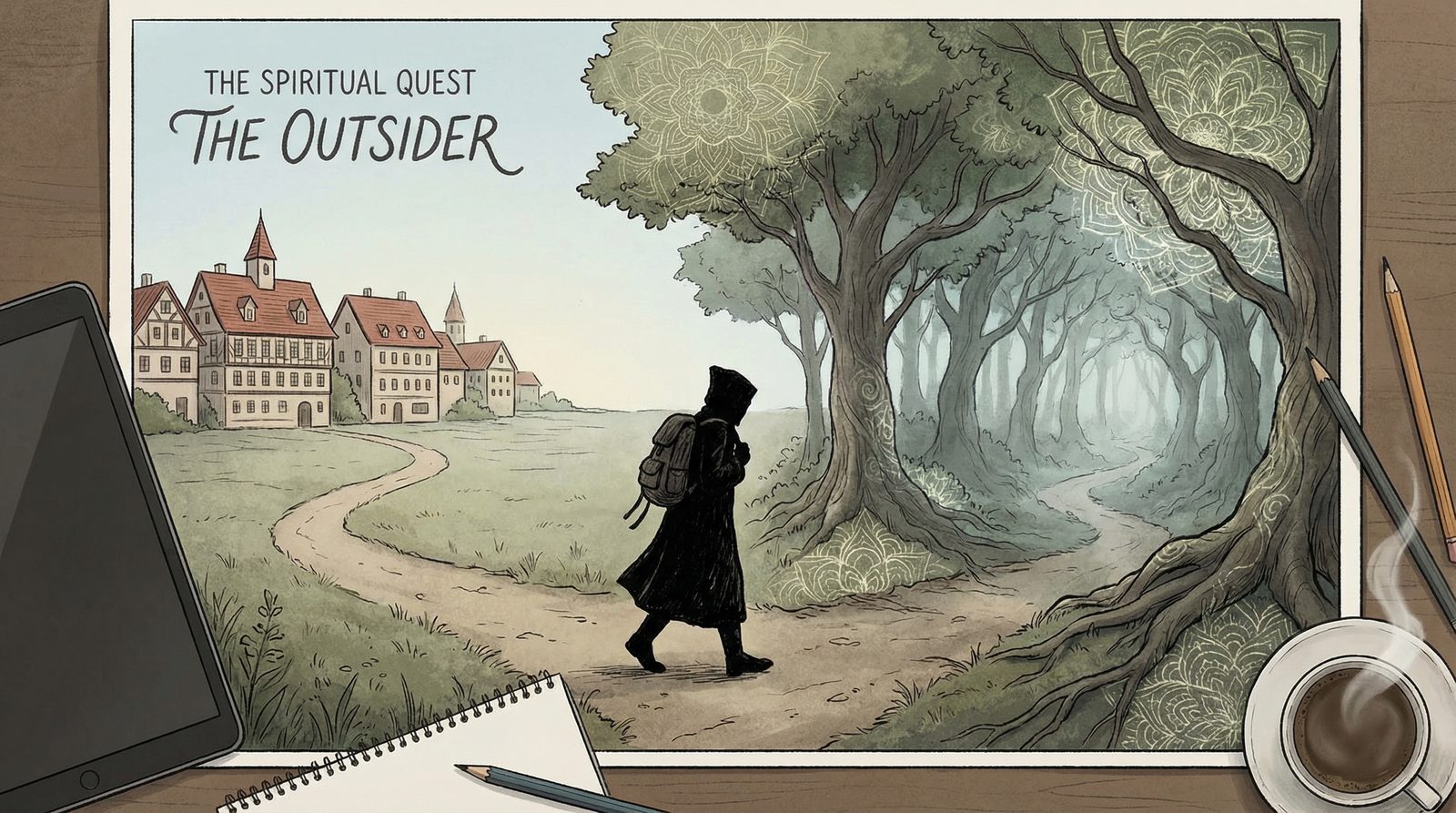
    Editorial illustration inspired by Hermann Hesse

    THEMES & MOTIFS

    Hesse returns again and again to the inner journey and the search for an authentic self. His protagonists are rarely satisfied with inherited identities. In novels like Demian and Steppenwolf, the central figures experience themselves as divided between a socially acceptable self and a darker, instinctive interior life. This division is not treated as pathology but as the necessary starting point for self-knowledge.

    Another persistent concern is spiritual awakening. Hesse’s characters move through belief systems, relationships, sensual experience, and renunciation, discovering that no single doctrine can replace lived understanding. Awakening in his work is slow, circular, and often painful, marked more by loss than by revelation.

    Hesse is also preoccupied with alienation and the modern individual’s sense of being out of step with their time. The figure of the outsider recurs in different forms: the sensitive schoolboy of Demian, the wandering seeker of Siddhartha, and the tormented intellectual of Steppenwolf. These characters are torn between the safety of bourgeois life and the frightening openness of a more instinctive or spiritual existence.

    Yet his novels are not purely about solitude. Hesse repeatedly suggests that Intimacy As Healing is essential to transformation. Encounters with mentors, lovers, and mirrors of the self become turning points, not because they resolve conflict, but because they make self-deception impossible. Connection in Hesse is demanding rather than comforting.
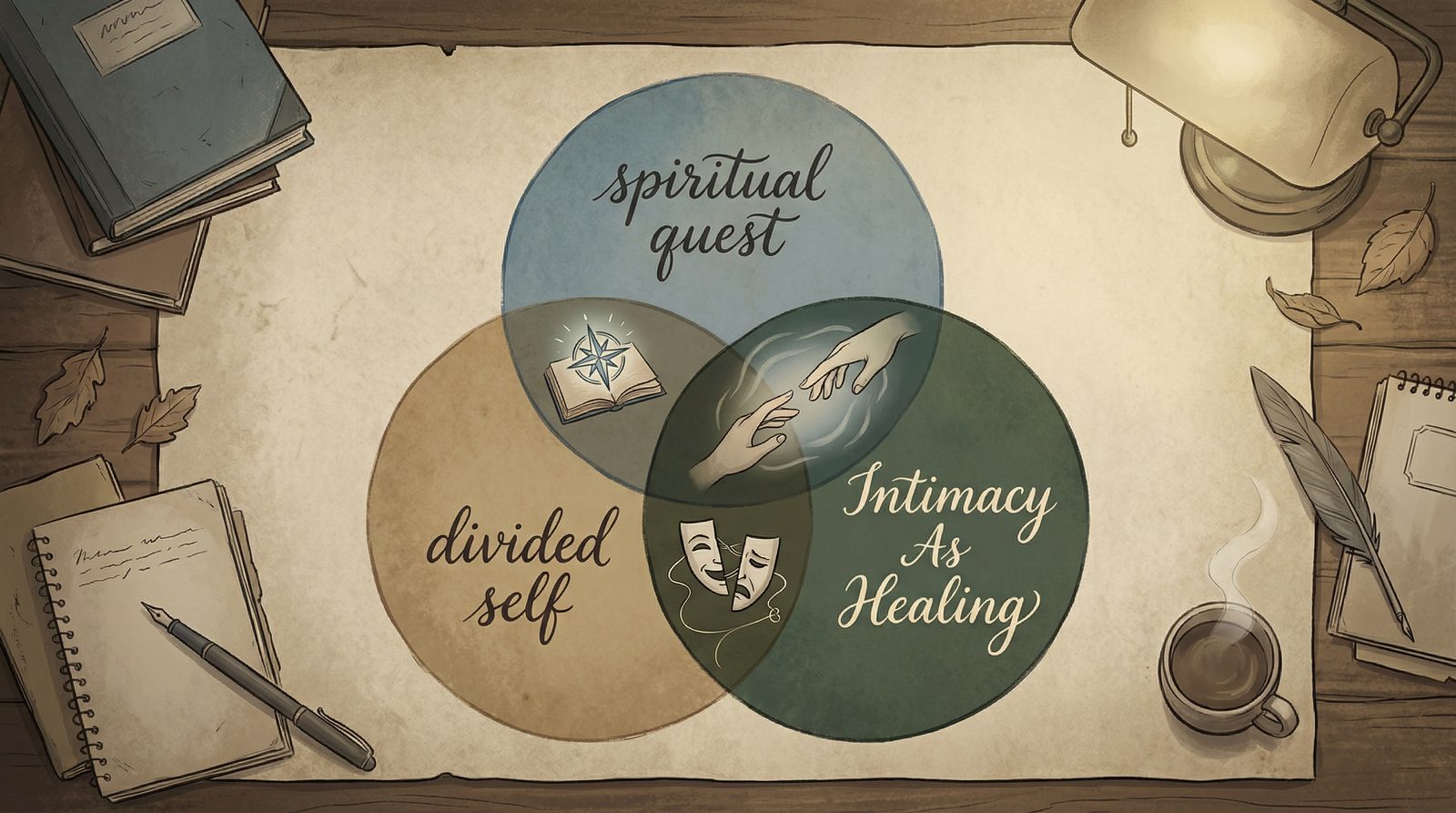
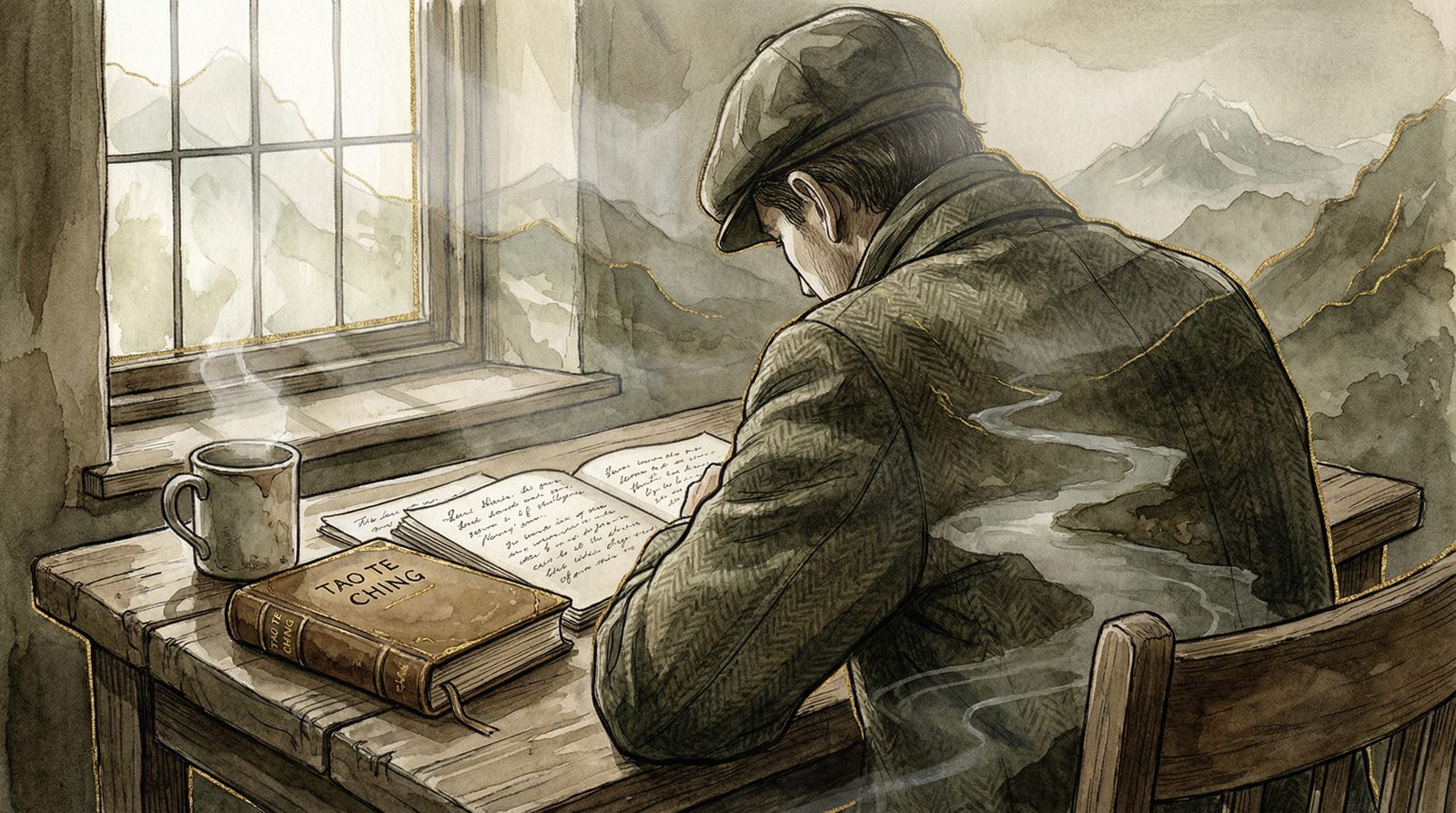
    Symbolic illustration inspired by Hermann Hesse

    STYLE & VOICE

    Hesse’s style is deceptively simple. His prose is clear, measured, and introspective, favoring first-person or close third-person narration that stays tightly aligned with a character’s inner state. Even when mythic or symbolic material appears, the tone remains calm and reflective rather than grandiose.

    Structurally, many of his novels follow a pattern of initiation. Characters depart from familiar life, pass through periods of breakdown or excess, and return with altered perception rather than clear solutions. Action is secondary to realization, and meaning is earned through endurance rather than triumph.

    Emotionally, Hesse balances melancholy and hope. He confronts despair, loneliness, and self-destruction with honesty, yet almost always leaves a narrow path toward meaning. That path usually involves accepting contradiction rather than resolving it, and allowing connection to soften isolation without erasing it.

    KEY WORKS & LEGACY

    Demian (1919) is a compact novel of inner rebellion, charting a young man’s awakening to moral ambiguity and personal responsibility. Guided by the enigmatic Demian, the narrator comes to see identity and belief as fluid rather than fixed.

    Siddhartha (1922) follows a seeker in ancient India as he moves through asceticism, sensuality, despair, and quiet wisdom. It remains Hesse’s clearest articulation of spiritual pilgrimage grounded in lived experience rather than doctrine.

    Steppenwolf (1927) presents a darker, fractured vision of the divided self through Harry Haller, an intellectual convinced he is split between human and animal natures. Through surreal encounters, the novel explores alienation, self-hatred, and the possibility of integration.

    Hesse’s legacy sits at the intersection of European modernism and spiritual literature. His work continues to speak to readers who feel estranged from conventional paths yet skeptical of easy transcendence, offering stories where change is slow, painful, and deeply personal.

  • A Fallen Idol (1886)

    A Fallen Idol (1886)

    INTRODUCTION

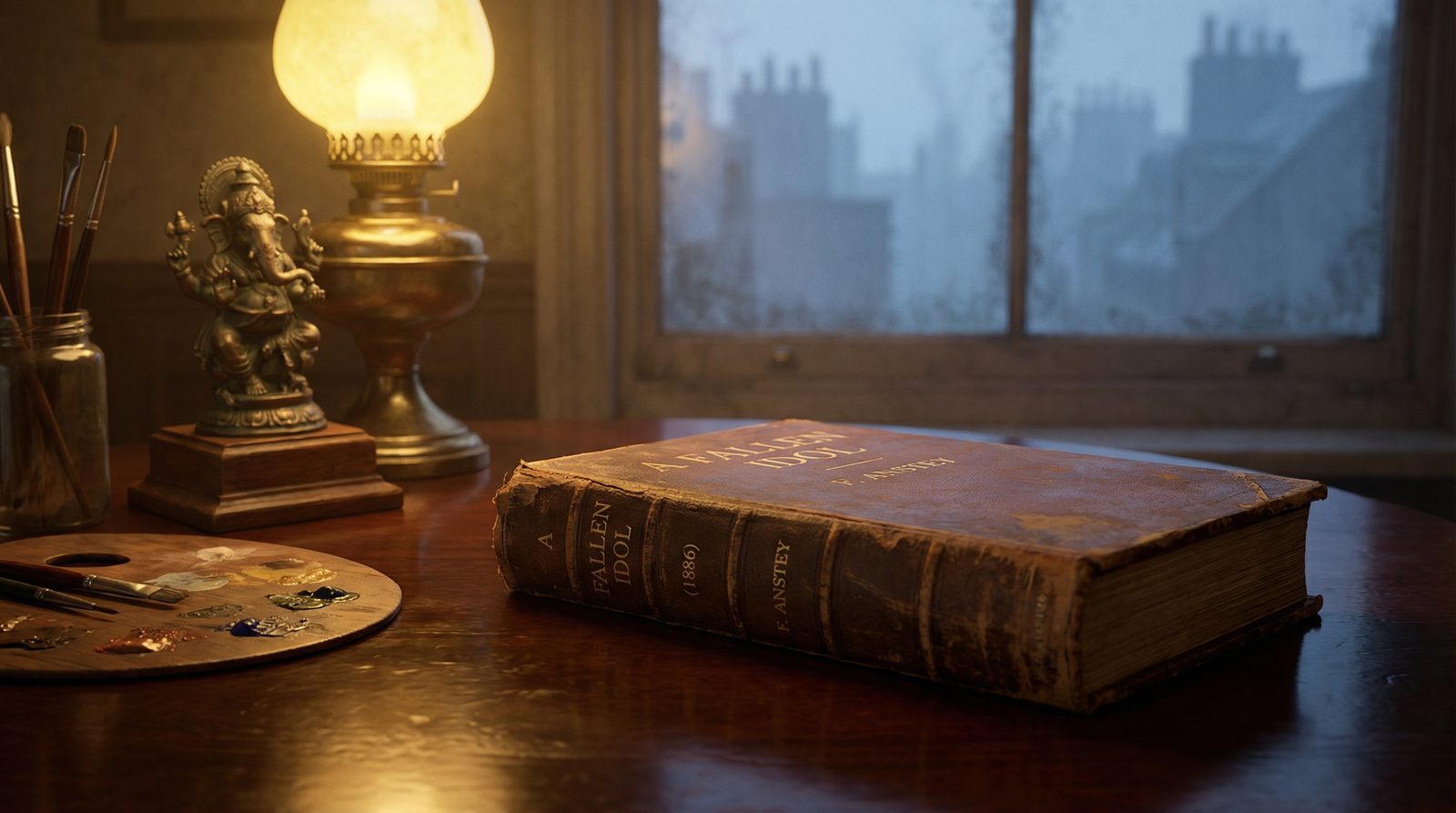
    A Fallen Idol (1886) by F. Anstey (Thomas Anstey Guthrie)
    Psychological fiction · United Kingdom


    A Fallen Idol begins like a drawing-room curiosity and steadily curdles into something colder. At first glance it looks like a fashionable Victorian entertainment, a touch of occult glamour enlivening polite society. Beneath that surface, Anstey is conducting a pointed examination of belief, imposture, and the damage done when spiritual hunger collides with social ambition.

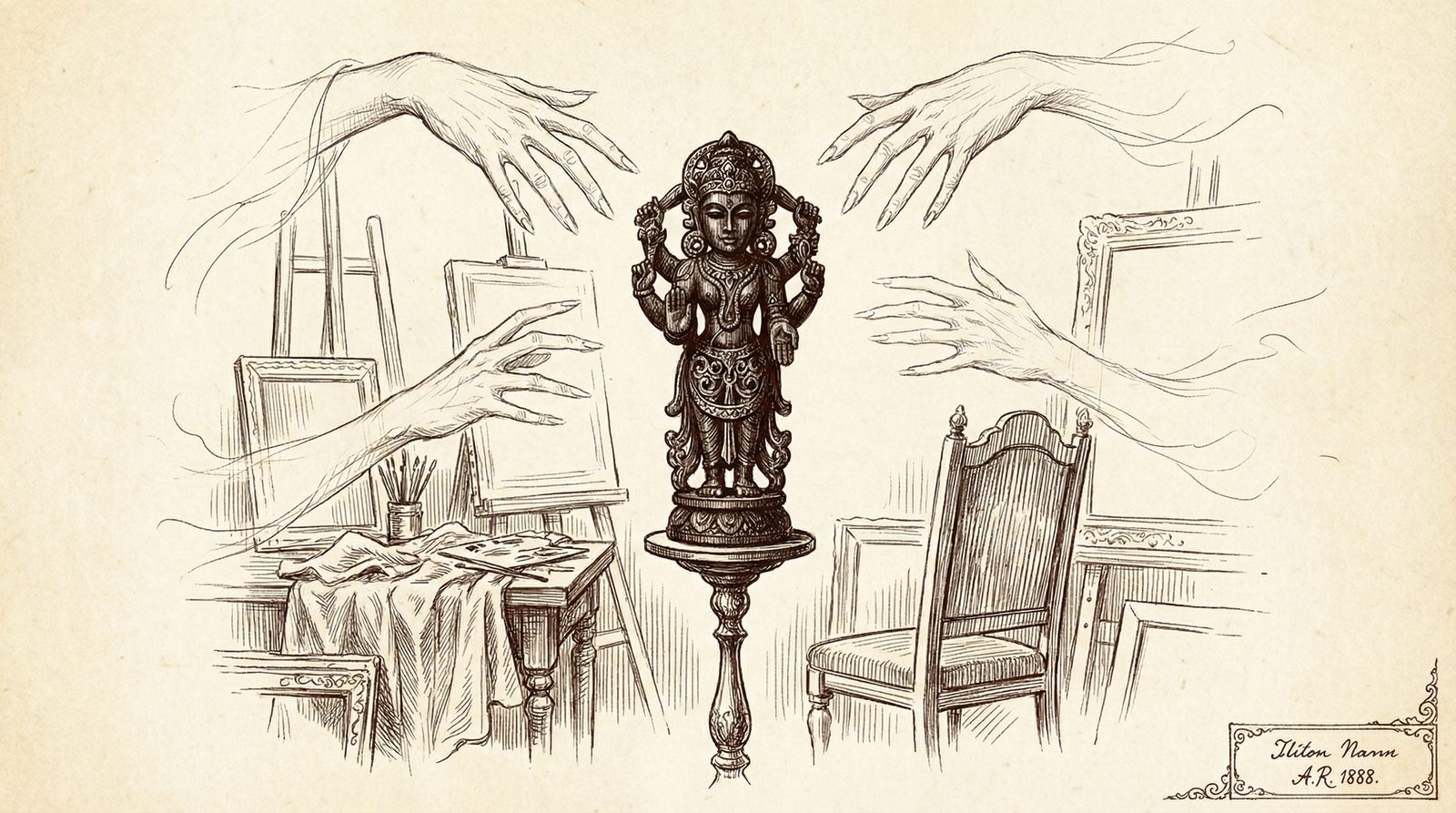
    The supernatural element is unmistakable, but it is never allowed to dominate the book in the way a conventional horror story might. Instead, the idol operates as a crooked mirror, reflecting vanity, cowardice, and moral compromise back at the people who claim to revere it. The prevailing mood is unease rather than terror. Anstey is less interested in demons than in how quickly ordinary people betray themselves when mystery becomes fashionable.

    PLOT & THEMES

    The story opens in colonial India, where the young barrister Harold Caffyn acquires a strange idol after a violent scene at a temple in Bhowanipore. The circumstances are murky, a worshipper is killed, and whispers of a curse follow the object. Harold brings the idol back to London, where it finds its way into the studio of the painter Mark Ashburn.

    From there, the idol works slowly and indirectly. Mark’s portraits, especially his painting of the charming Dolly Tredwell, begin to attract attention that feels unearned and unsettling. A circle of fashionable spiritualists gathers around the studio, led by the solemn Mrs. Fothergill and the excitable Miss Tyrell, eager to believe that something ancient and powerful is at work.

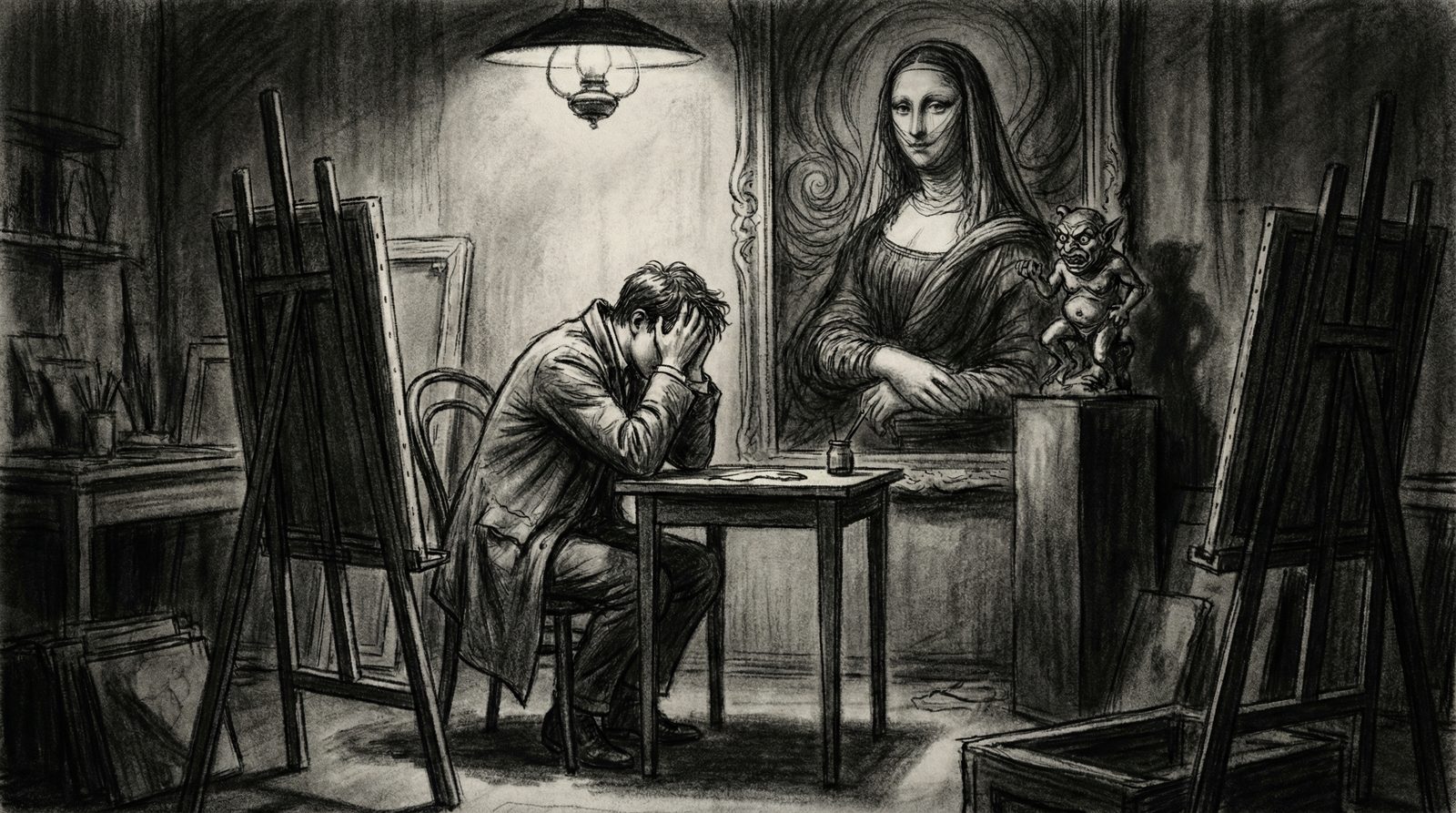
    The novel combines the cursed-object tradition with social imposture. Harold, who knows more about the idol’s bloody history than he admits, manipulates its reputation to his advantage, nudging Mark into becoming a reluctant medium. The séances staged in the dim studio become performances of projection. The sitters see what they want to see, while Mark feels himself hollowed out by a role he never meant to play.

    A colonial undercurrent runs through the book, recalling earlier stories of stolen relics such as The Moonstone. The idol is treated as both exotic curiosity and drawing-room entertainment, stripped of context and consequence until the damage is already done. When exposure finally looms, Harold recklessly handles the idol to prove it harmless. The result is disaster rather than vindication.

    The ending is bleakly ironic. Mark survives physically but not ethically. He burns the painting that brought him acclaim, abandons the séances, and returns the idol to a museum, where it is neutralized behind glass and catalog numbers. No one is cleansed of guilt. Reputations remain bruised. The harm lingers quietly, unresolved.

    PROSE & NARRATIVE STRUCTURE

    Anstey writes with a lightness that disguises how carefully the novel is engineered. Free indirect discourse allows the narrative to drift between Mark’s self-doubt, Harold’s cynical calculation, and the eager credulity of the spiritualist circle without heavy-handed transitions.

    Dialogue does much of the work. Characters expose themselves through polished evasions, nervous enthusiasm, and pious certainty. The narrator’s occasional asides sharpen the satire, particularly when séances are squeezed between tea and supper, or when moral outrage coexists comfortably with voyeuristic curiosity.

    Structurally, the novel alternates between scenes of social comedy and increasingly claustrophobic séances in Mark’s studio. Each sitting raises the stakes: gossip spreads, reputations wobble, and belief hardens into expectation. Notably, the idol itself rarely acts in any overt way. Its power lies in what people are willing to do in its presence.

    Conceptual editorial illustration inspired by 'A Fallen Idol'

    CHARACTERS & INTERIORITY

    Mark Ashburn is a reluctant medium, not by conviction but by weakness. He is decent, talented, and insecure enough to be swayed. His interior monologue reveals how easily vanity disguises itself as generosity. During the séances he repeatedly tells himself that he is only humoring others, even as he profits from their belief.

    Harold Caffyn feels strikingly modern. He half believes his own deceptions and treats danger as something to be managed theatrically. Moments of genuine fear break through his composure, but his instinct is always to convert panic into control.

    Dolly Tredwell and the surrounding social figures are sketched with less depth, yet Anstey allows flashes of private disillusionment to surface. In particular, Dolly’s overheard humiliation after a disastrous séance reminds the reader how easily a young woman’s reputation becomes collateral damage in fashionable folly.

    LEGACY & RECEPTION

    A Fallen Idol never matched the popularity of Anstey’s comic successes, and it is often treated as a minor occult curiosity. Victorian reviewers were divided, intrigued by the ingenuity of the séance scenes but unsettled by the novel’s refusal to clarify whether the idol was truly supernatural or merely a catalyst for fraud and hysteria.

    That ambiguity has aged well. The book now reads as a bridge between moralized ghost stories and later psychological hauntings. Its final image, the idol inert in a museum case while the characters quietly absorb their shame, feels unexpectedly modern in its skepticism toward spectacle and belief.

    IS IT WORTH READING?

    If you prefer supernatural fiction that unsettles through psychology rather than shocks, this novel is worth your attention. It moves at a Victorian pace, heavy with conversation and social maneuvering, but the unease accumulates steadily.

    The séances are disturbing not because of what appears, but because of what people are willing to believe. Readers interested in spiritualism, colonial guilt, and the performance of belief will find the novel sharp and quietly corrosive.

    Illustration inspired by a core idea from 'A Fallen Idol'

    TRIVIA & AUTHOR FACTS

    F. Anstey was the pen name of Thomas Anstey Guthrie, a barrister-turned-writer whose legal training shows in the careful sequencing of cause and consequence throughout the novel. The early Indian chapters draw on contemporary travel writing, though filtered through satire.

    Anstey attended real séances in London, and his fascination with spiritualism and fraud informs the novel’s tone. The museum ending reflects his interest in how institutions neutralize danger by classification, turning objects of fear into labeled curiosities.

    SIMILAR BOOKS

    Readers interested in supernatural objects with moral weight may also enjoy The Moonstone for its colonial relic and social fallout, or The Turn of the Screw for a later, more psychological ambiguity. For Victorian skepticism toward spiritual fashion, the earnest writings of Arthur Conan Doyle on séances offer a revealing real-world counterpoint to Anstey’s fiction.

    DISCOVERABILITY & LINKS