
Place: Japan

  • The Alchemist (1988)

    The Alchemist (1988)

    INTRODUCTION

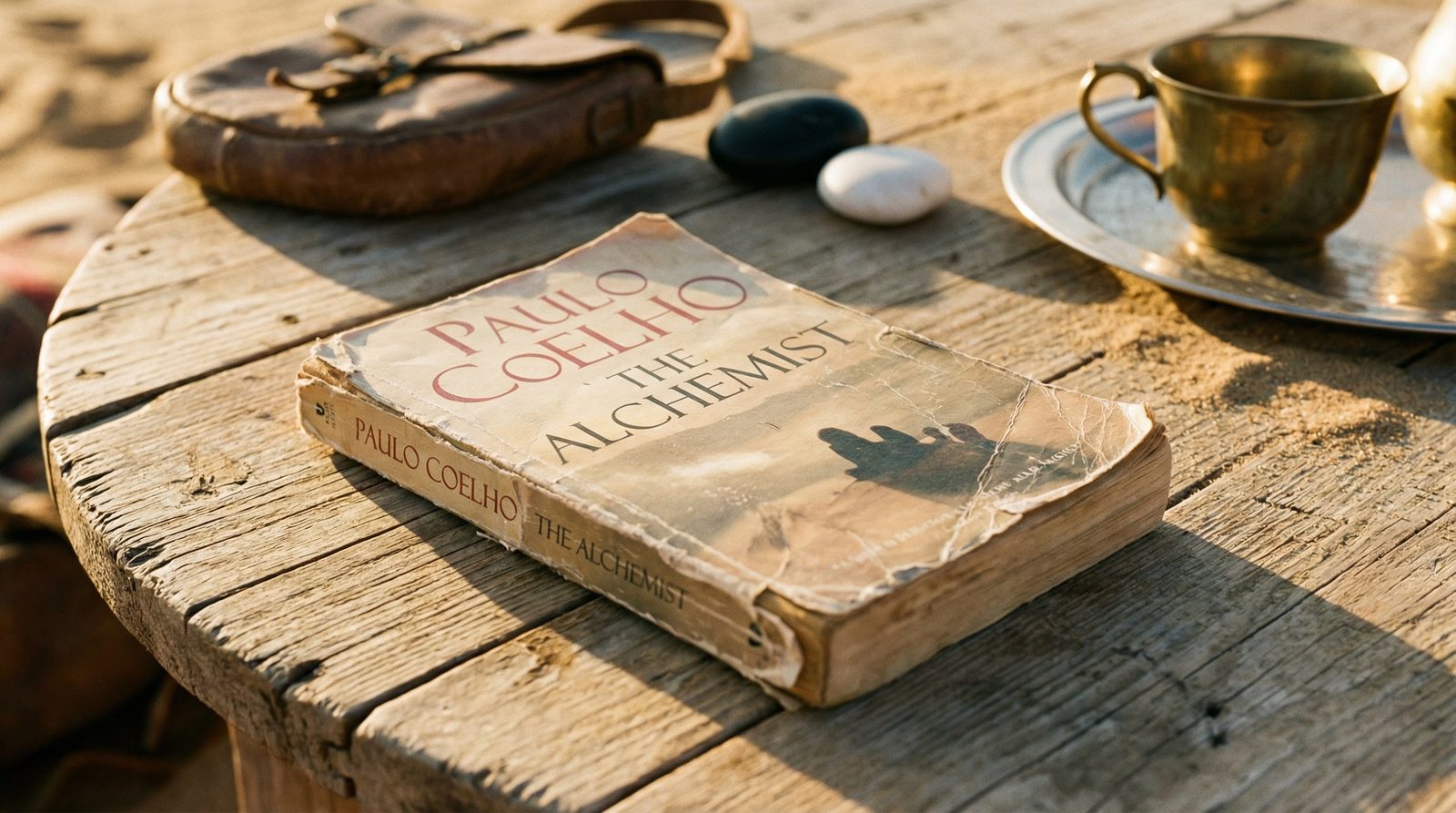
    The Alchemist (1988) by Paulo Coelho
    Philosophical fiction · 166 pages · Spain / Egypt


    The Alchemist has been quoted on posters, mugs, and social feeds so relentlessly that it is easy to forget there is a small, quietly odd novel beneath the slogans. On the surface, it reads like a simple fable about following your dreams. Underneath, it is more fragile and ambivalent than its reputation suggests.

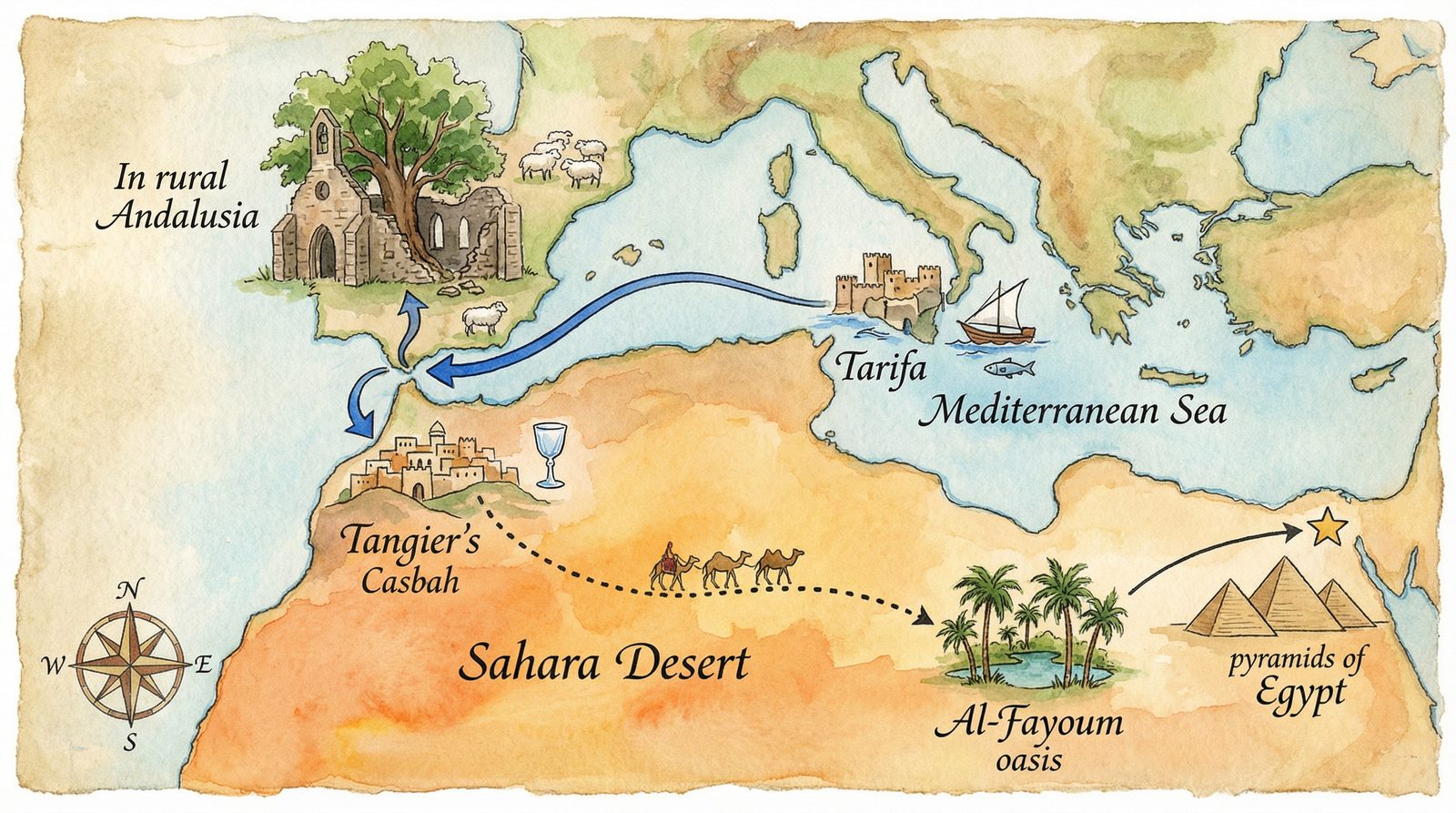
    Set in a loosely sketched, almost timeless world, the book follows a young Andalusian shepherd who trades pastoral safety for the uncertainty of travel across North Africa. The images linger: a boy sleeping in a ruined church beneath a sycamore tree, the repeated language of omens, the idea of a “Personal Legend” that both comforts and unsettles. Strip away the inspirational framing, and what remains is a story about restlessness, loss, and the uneasy cost of believing that life has a single, discoverable meaning.

    PLOT & THEMES

    The plot is deliberately spare. Santiago, a shepherd from Andalusia, dreams twice of treasure buried near the Egyptian pyramids. A strange old man calling himself Melchizedek, king of Salem, urges him to pursue the dream, speaking of Personal Legends and asking for a tenth of the treasure in advance. The encounter feels less like divine revelation than a streetwise push toward risk.

    Santiago sells his sheep, crosses to Tangier, and is immediately robbed. This early loss establishes one of the book’s central patterns: progress is inseparable from disorientation. Working for a crystal merchant overlooking the marketplace, Santiago learns how fear of change can slowly fossilize a life. The merchant’s unrealized pilgrimage to Mecca becomes a quiet warning about dreams postponed until they no longer feel possible.

    As Santiago joins a caravan crossing the Sahara, the novel widens. The Englishman obsessed with alchemical texts introduces the tension between book knowledge and lived experience. War between desert tribes, Santiago’s time at the Al-Fayoum oasis, and his love for Fatima sharpen the central question: when does commitment to a path become an excuse to avoid attachment, and when does attachment become a reason to stop seeking?

    The Alchemist himself appears late, more riddle than person. He insists that the oft-quoted idea that “the universe conspires” only holds if one is willing to risk everything. The ending is bluntly circular. Santiago learns that the treasure was buried back in Spain, at the very church where his journey began. The irony is not softened. The novel insists that the journey was necessary, even if the destination never moved.

    PROSE & NARRATIVE STRUCTURE

    Coelho’s prose is famously spare, closer to parable than to realist fiction. The narration moves in clean, declarative sentences that summarize inner change rather than dramatize it. This can feel hypnotic or thin, depending on the reader’s patience for abstraction.

    The structure is linear and episodic. Each location functions as a moral vignette: the church, the port of Tarifa, the crystal shop, the caravan, the oasis, the desert. Symbolic objects recur with near-ritual regularity: the Urim and Thummim stones, the hawks at Al-Fayoum, the desert itself as a listening presence. The repetition of phrases like “Personal Legend,” “Soul of the World,” and “Maktub” creates a chant-like rhythm that is central to the book’s effect.

    Formally, the novel takes few risks. Its power, when it works, comes from compression rather than complexity. It is designed to be read quickly and remembered vaguely, carried more as an atmosphere than as a sequence of scenes.
    Conceptual editorial illustration inspired by 'The Alchemist'

    CHARACTERS & INTERIORITY

    Santiago is not written as a psychologically complex figure. He functions as a clean archetype: open, curious, and capable of doubt without becoming paralyzed by it. His small attachments, his sheep, the memory of a merchant’s daughter, his fear when he first sees the sea, provide just enough texture to anchor the fable.

    The supporting figures operate as embodiments of choice. The crystal merchant represents resignation disguised as prudence. Fatima embodies a love that insists seeking and commitment need not cancel each other out. The Alchemist himself acts as a pressure point, forcing Santiago to risk annihilation rather than settle for symbolic understanding.

    Interior life is conveyed through parable rather than introspection. Feelings are named, not excavated. Yet moments of loss and fear, especially after the robbery in Tangier and during the desert ordeal, cut through the abstraction. The simplicity is intentional. The book asks the reader to project their own doubts into the spaces left open.

    LEGACY & RECEPTION

    Since its publication, The Alchemist has become one of the most translated and commercially successful novels of the late twentieth century. It sits alongside works like Jonathan Livingston Seagull as a foundational text of modern spiritual fiction. Critical response has been sharply divided, with some praising its mythic clarity and others dismissing it as aphoristic mysticism.

    The novel’s language of Personal Legends and cosmic conspiracy has seeped deeply into popular culture. Its endurance lies not in literary innovation but in its ability to function as a mirror. Readers return to it at different moments of life and read different instructions into the same slender story.

    IS IT WORTH READING?

    If you are looking for dense characterization or stylistic experimentation, this will feel thin. If you approach it as a modern fable, a compressed meditation on risk, desire, and return, it can still resonate. Reading it now is also an act of reclamation, separating the novel from its motivational afterlife.

    The lingering question it leaves is not inspirational but quietly unsettling: what would you have to give up to find out whether the life you imagine is actually yours?

    Illustration inspired by a core idea from 'The Alchemist'

    TRIVIA & AUTHOR FACTS

    Paulo Coelho wrote the novel quickly, later describing the process as intuitive rather than planned. It was initially a commercial failure in Brazil, and its first publisher dropped it. Only after being taken on by another house did it begin its gradual rise to global success.

    The book synthesizes Coelho’s long-standing interests in pilgrimage, omens, and Western esoteric traditions. Despite the title, its use of alchemy is symbolic rather than historical, drawing more from myth and metaphor than from chemical practice.

    SIMILAR BOOKS

    Readers drawn to this style of allegorical journey may also explore Siddhartha by Hermann Hesse, Jonathan Livingston Seagull by Richard Bach, or Shusaku Endo’s Silence, which offers a far harsher meditation on faith and failure. Each examines what is gained and lost when belief becomes a guiding structure.

    DISCOVERABILITY & LINKS

    DISCOVERABILITY & LINKS

  • Battle Royale (2000)

    Battle Royale (2000)

    Battle Royale (2000), directed by Kinji Fukasaku. Thriller · 114 minutes · Japan.


    INTRODUCTION

    Battle Royale arrives like a dare: what if the petty cruelties of high school were given live ammunition and televised approval? Kinji Fukasaku’s film traps a class of junior high students on an island and forces them to kill each other until only one survives, but the shock premise is a delivery system for something more corrosive. The mood is a mix of bleak satire and raw adolescent panic, with moments of tenderness that feel almost indecent inside the carnage. The film moves between deadpan government announcements and messy, hormonal outbursts, creating a feel of mounting dread that never quite lets the viewer settle. It is violent, yes, but the violence is pointed: a study of how institutions convert teenage anxiety into spectacle and control. Watching it now, after years of imitators, it still feels uncomfortably direct, like a bad dream that remembers your school’s seating chart.

    PLOT & THEMES

    In a near-future Japan plagued by youth crime and economic malaise, the government passes the BR Act, a law that annually selects a school class for a state-run death game. A bus of ninth-graders on a class trip is gassed and shipped to a remote island. There, their former teacher Kitano explains the rules with bureaucratic calm: each student wears an explosive collar; they receive a random weapon and three days to kill each other. If more than one survives, everyone dies. This is the classic survival game trope, but rendered with a bitter sense of civic ritual.

    The story tracks several clusters of students: Shuya and Noriko trying to preserve their humanity; Kawada, a transfer student with prior Battle Royale experience; and various classmates who splinter into alliances, vendettas, and doomed utopian schemes. The island becomes a map of adolescent archetypes under pressure. Themes of state violence and institutional betrayal run through every interaction. Authority has literally weaponized the classroom, turning attendance into a death sentence.

    Fukasaku keeps returning to the motif of childhood innocence colliding with militarized discipline. The cheerful instructional video explaining the rules feels like a parody of educational TV, while the students’ roll call deaths are announced over a PA system like exam results. The motif of the island as a closed system under surveillance echoes later works like The Hunger Games, but here the satire is less heroic and more despairing. Friendship pacts curdle into paranoia, crushes into fatal hesitation. The film keeps asking whether any bond can survive when the state has turned trust into a liability.

    CINEMATIC TECHNIQUE & AESTHETICS

    Battle Royale is shot with a rough, almost documentary immediacy that undercuts its sensational premise. Fukasaku favors handheld camera work during the skirmishes, letting the frame jitter with the students’ panic. This technique, combined with abrupt cutting, keeps the geography slightly unstable so that every corner of the island can feel like an ambush. Yet the film also uses classical framing in the briefing scenes, with Kitano centered and static, to stress the cold order behind the chaos.

    The editing leans on jump cuts and sudden tonal shifts. A quiet confession can snap into a gunshot, then to a blackly comic death report. This creates a feel of whiplash that mirrors teenage emotional volatility. The use of classical music on the soundtrack, including grand choral pieces over the opening text and the final tally, rubs against the low-tech brutality on screen. It suggests that the state sees this slaughter as a noble civic ceremony, not a crime.

    Color is used sparingly but effectively. The school uniforms, with their muted tones, make the bursts of blood and the bright weaponry stand out. The island’s drab buildings and overgrown fields evoke a forgotten military base, reinforcing the motif of the island as a closed system under surveillance. The sound design emphasizes breathing, footsteps, and the electronic beeping of collars, so that technology and fear are always audible. Compared with something like The Hunger Games, which often romanticizes rebellion, Battle Royale keeps its technique grounded and abrasive, closer in feel to the grim tension of Cube or a war film about frightened conscripts.

    Editorial illustration inspired by 'Battle Royale (2000)'

    CHARACTERS & PERFORMANCE

    Shuya Nanahara functions as a reluctant hero archetype, but the film never lets him become a clean-cut savior. He is traumatized, confused, and often reactive, clinging to memories of his dead father and to Noriko as a fragile anchor. Tatsuya Fujiwara plays him with a mix of earnestness and shell shock, which keeps the character from feeling like a standard action lead. Noriko is closer to an innocent archetype, though the world around her keeps testing that innocence by showing how quickly gentleness can be targeted as weakness.

    Kawada, the transfer student, is the hardened survivor archetype, a veteran of a previous game who carries both tactical knowledge and deep grief. His presence injects a noir flavor; he speaks like someone already half outside the story, guiding the others while expecting the worst. By contrast, the two transfer “ringers” who revel in killing embody the predator archetype, almost slasher villains dropped into a class roster. Their stylized menace contrasts with the more mundane panic of the regular students.

    Beat Takeshi as Kitano is the film’s most unsettling presence. He plays the disillusioned teacher as a mix of wounded authority figure and petty tyrant, an authority archetype who has given up on pedagogy and embraced punishment. His quiet scenes, including a surreal phone call and a late domestic interlude, hint at a lonely, failed adult life that curdles into cruelty toward his students. The ensemble of classmates gets limited screen time, but the film sketches them sharply enough that each death feels like a specific loss rather than a statistic.

    CONTEXT & LEGACY

    Released in 2000, Battle Royale landed at a moment of anxiety about youth culture, school violence, and economic stagnation in Japan. Fukasaku, who had lived through wartime bombing as a child, reportedly saw the film as a way to talk about how states sacrifice the young for abstract stability. That wartime memory haunts the story, turning the classroom into a conscription office. The film’s controversy at home, including restricted distribution, only sharpened its reputation abroad.

    Its influence is obvious in later works like The Hunger Games, which borrowed the survival game trope and the spectacle of children forced to kill each other for a watching society. Yet Battle Royale remains harsher and more cynical, less interested in organized rebellion than in the intimate betrayals between friends. You can also feel its DNA in ensemble survival films and games, from Cube to multiplayer battle royale games that took its title but often stripped away its political sting. Over two decades on, it still feels like a provocation, not a franchise template.

    IS IT WORTH WATCHING?

    Battle Royale is worth watching if you can handle its blunt violence and moral bleakness. The film is not coy about what it is doing: it wants you to feel complicit as you watch teenagers strategize, panic, and die under a government’s indifferent gaze. As a thriller, it is tense and unpredictable, with a pace that rarely slackens once the game begins. As a social satire, it is sharper than many of its descendants, skewering both adult hypocrisy and adolescent cruelty.

    If you are looking for a comforting narrative of resistance, this will frustrate you. Its feel is closer to a war film than a young adult adventure. But if you are interested in how genre can be used to interrogate power, peer pressure, and the fragility of loyalty, it remains one of the defining Japanese thrillers of its era.

    Symbolic illustration inspired by 'Battle Royale (2000)'

    TRIVIA & PRODUCTION NOTES

    Kinji Fukasaku directed Battle Royale late in a long career that included yakuza films, and his experience with ensemble crime stories shows in how he juggles the large cast. He reportedly connected the material to his own memories of being a teenager during World War II, working in munitions factories under bombardment, which shaped the film’s view of adults as callous managers of youth suffering.

    The production used real junior high school uniforms and shot on an actual island location, which adds to the sense of realism despite the heightened premise. Beat Takeshi’s involvement brought extra attention, and his dry improvisations colored several of Kitano’s stranger moments. The film’s graphic content led to ratings battles and limited theatrical runs in some territories, which paradoxically helped build its cult status through imports and home video. Its title later inspired the naming of battle royale games, though those games usually drop the political context and focus on the survival game trope as a pure competitive structure.

    SIMILAR FILMS

    If Battle Royale grips you, several other works explore similar territory. The Hunger Games offers a more polished, Hollywood take on the survival game trope, with a stronger emphasis on rebellion and media manipulation. Cube strips the idea down to strangers trapped in a lethal maze, focusing on paranoia and group dynamics. Fans of the ensemble under pressure structure might also look at Japanese thrillers that pit classmates or colleagues against each other, or at war films that treat conscripted youth with the same grim attention to fear and indoctrination. While many later survival stories soften their blows with clearer heroes and villains, Battle Royale sits with the messier truth that in a rigged system, survival often means accepting a role you never wanted.

    DISCOVERABILITY & LINKS

    On AllReaders.com, Battle Royale connects to clusters about state violence, ensemble survival stories, and Japanese thrillers that blur the line between satire and horror. Its motifs of childhood innocence colliding with militarized discipline and the island as a closed system under surveillance link it to other narratives of controlled environments and rigged contests. Readers drawn to stories where institutions turn ordinary people into unwilling contestants will find this film sitting near works that probe similar anxieties about power, spectacle, and the cost of staying human under pressure.