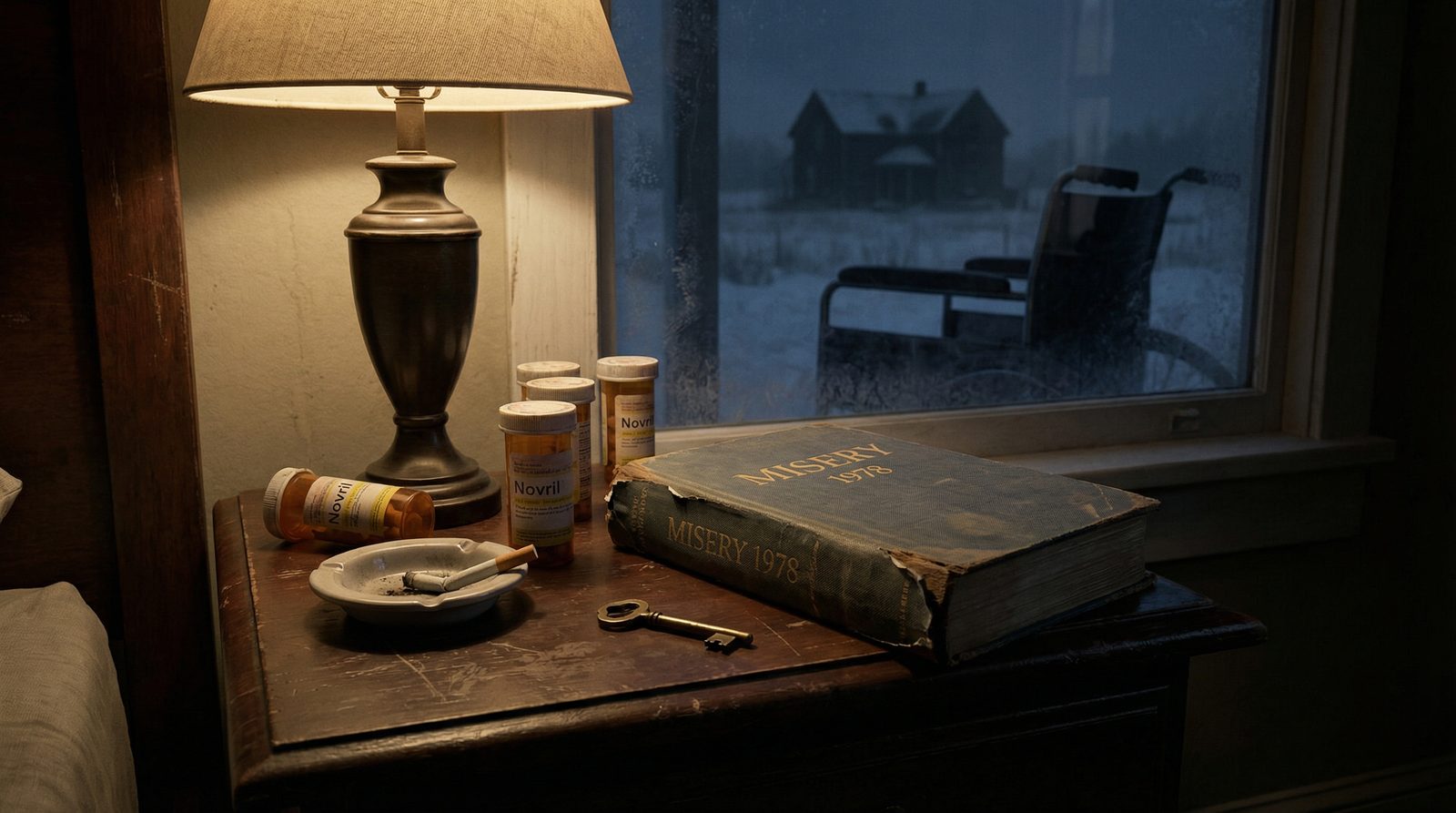
Place: Colorado

  • Misery (1990)

    Misery (1990)

    Misery (1990), directed by Rob Reiner. Thriller · 107 minutes · United States.


    INTRODUCTION

    Misery arrives as a small film that feels enormous in your chest. It takes place mostly in one room, with two people, in a house swallowed by snow, yet the emotional weather is stormy and changeable. Rob Reiner, coming off the warmth of When Harry Met Sally, leans into a very different feel: creeping dread wrapped in homely comfort. The blankets are soft, the soup is hot, the words are kind, and everything is wrong.

    This is a story about captivity, but not just physical captivity. Misery looks at creative ownership and the way fans can turn into jailers. It probes the uneasy dependency between writer and reader, caregiver and patient. The mood is quietly suffocating rather than loud or frantic. That slow tightening is what makes the film linger; you feel the air thinning scene by scene, until even a simple dinner table becomes a minefield.

    PLOT & THEMES

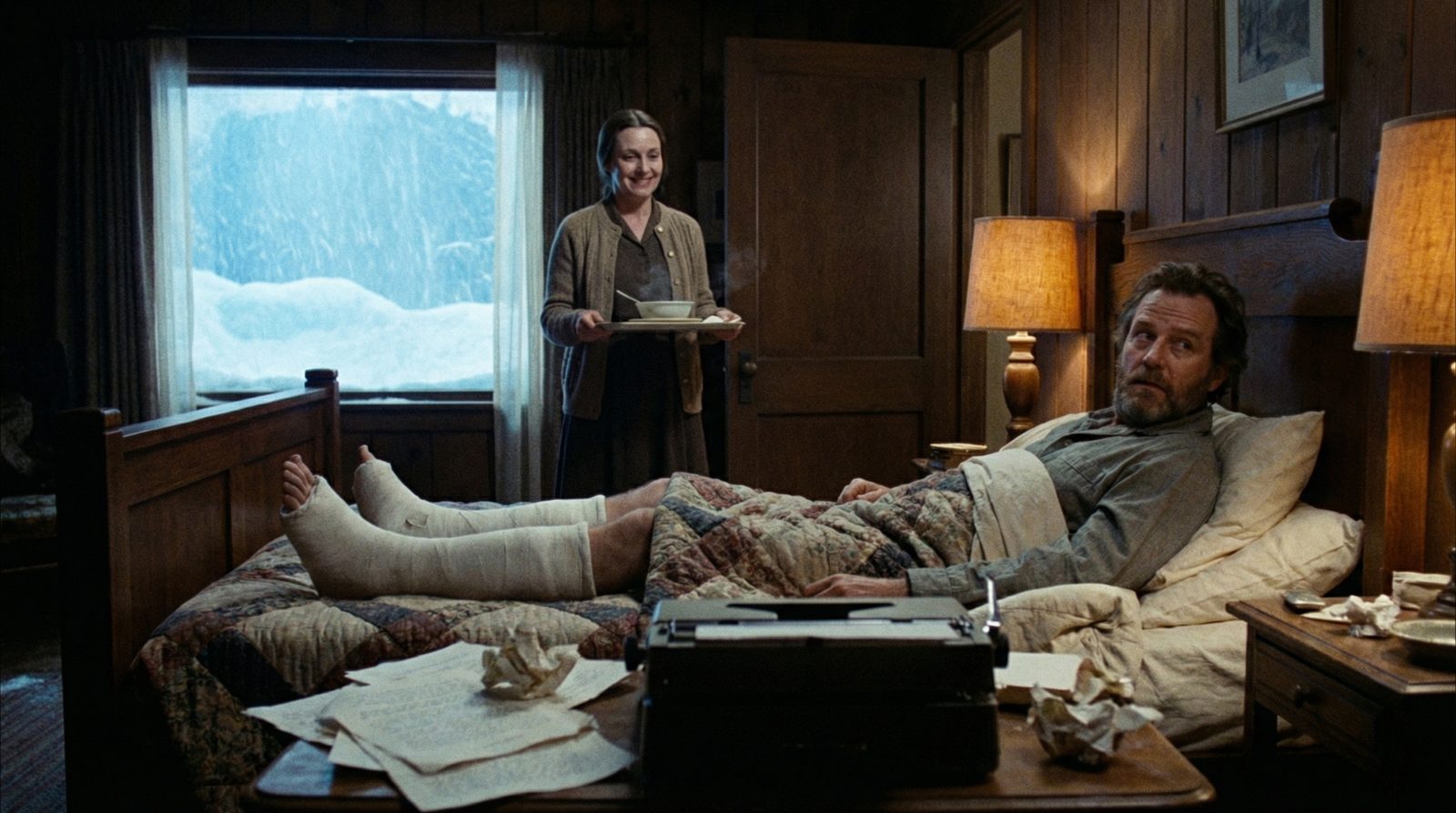
    On the surface, Misery follows a classic trapped protagonist trope. Paul Sheldon, a successful novelist, crashes his car on a snowy Colorado road after finishing the manuscript that he believes will free him from his bestselling romance series. He wakes in the home of Annie Wilkes, a former nurse and his self-proclaimed “number one fan”. His legs are shattered, the phones are down, the roads are closed. Annie promises to nurse him back to health and insists that he resurrect her beloved character, Misery Chastaine, on the page.

    The plot moves in cycles of apparent safety and sudden eruption. At first Annie seems like a slightly odd caregiver. Gradually, her volatility and control tighten into outright imprisonment. The script uses the fanatic fan trope not for cheap jokes but as a way to examine entitlement. Annie believes she owns Paul’s work because she loves it so completely. Her outrage at his creative choices becomes, in her mind, a moral crusade.

    Several motifs repeat throughout. Confinement is everywhere: doors, locks, wheelchair brakes, even the snowdrifted road outside. Just as central is storytelling as survival. Paul literally writes for his life, reshaping his own artistic compromises in order to stay alive. Unlike many Stephen King adaptations that flirt with the supernatural, Misery keeps its horror human, closer to the psychological menace of films like One Flew Over the Cuckoo’s Nest. The result is a tense study of obsession, authorship, and the thin line between devotion and possession.

    CINEMATIC TECHNIQUE & AESTHETICS

    Rob Reiner and cinematographer Barry Sonnenfeld build the feel of creeping dread through careful framing and camera movement rather than gore. The camera often stays close to Paul’s bed, using tight close-ups that flatten space and make the room feel like a box. When Annie enters, the lens sometimes shifts slightly wider, which subtly distorts her features and makes her presence feel intrusive. Slow tracking shots map out Paul’s potential escape routes, so every later attempt carries a physical memory for the viewer.

    Lighting is deceptively cozy. Warm lamps and daylight soften the interiors, which clashes with the violence that occurs there. The snow outside is bright and overexposed, a white wall that seals the house off from the world. That visual isolation echoes the motif of confinement without resorting to showy stylistic flourishes.

    William Goldman’s adaptation favors slow-burn pacing. Scenes stretch just long enough for small details to become unbearable, while Marc Shaiman’s score stays mostly restrained, stepping forward only when Paul’s inner panic spikes. Compared with the more expressionistic style of The Shining, Misery chooses a plainspoken aesthetic. That restraint makes the notorious “hobbling” scene feel even more brutal, because it erupts into a world that has looked almost ordinary up to that point.
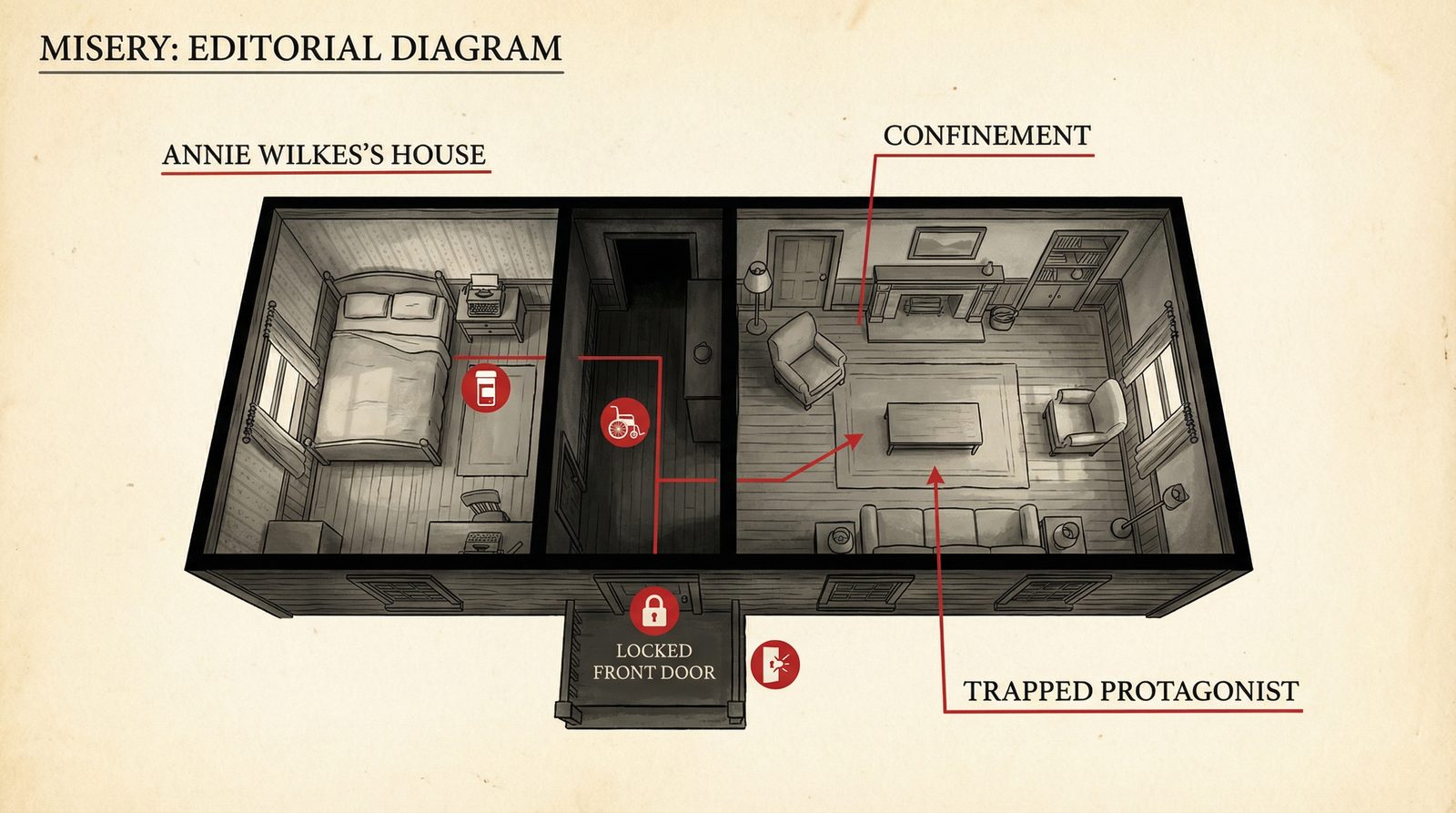
    Editorial illustration inspired by 'Misery (1990)'

    CHARACTERS & PERFORMANCE

    At its core, Misery is a two-hander between a reluctant hero and a monster in human form. James Caan plays Paul Sheldon as a man who has coasted on charm and formula. Trapped and immobilized, he becomes resourceful out of necessity. Caan resists the temptation to turn Paul into a saint; he lets the character’s earlier arrogance and creative laziness show through, which makes his later fight for authorship more meaningful.

    Kathy Bates’s Annie Wilkes is the film’s defining achievement. She embodies the uncanny caregiver archetype, someone whose nurturing gestures are indistinguishable from threats. Her line readings slide from girlish delight to cold fury in a breath, yet she never feels like a cartoon. Bates grounds Annie in a lonely, thwarted life, so her obsession with Misery Chastaine becomes a way to organize her own chaos. The character is terrifying not because she is alien, but because her logic is twisted yet coherent.

    Richard Farnsworth and Frances Sternhagen, as the small-town sheriff and his wife, provide a wry counterpoint. They function as a gentle wise elder presence, poking at the edges of the mystery with humor and patience. Their scenes widen the film’s emotional palette beyond pure terror. The supporting roles are small, but they create a sense of a real community outside Annie’s house, which makes Paul’s isolation feel sharper. Every performance is tuned to the same frequency of realism, which keeps the film from tipping into camp even at its most extreme moments.

    CONTEXT & LEGACY

    Released in 1990, Misery arrived at a point when Stephen King adaptations were already a mini-industry. Instead of chasing the gothic excess of earlier films, Rob Reiner followed the character-driven path he had taken with Stand By Me. Misery’s focus on psychological horror and domestic space helped broaden what a “Stephen King movie” could look like on screen.

    The film also tapped into growing conversations about fandom and celebrity. Long before social media made parasocial relationships a daily reality, Misery dramatized the idea that readers feel ownership over the stories they love. Its success, capped by Kathy Bates’s Oscar, showed that horror-adjacent stories could earn mainstream awards without abandoning genre roots. It has since become a reference point for any narrative about dangerous devotion, from later thrillers to prestige television about stalkers and obsessive fans.

    IS IT WORTH WATCHING?

    Misery is worth watching if you value tension over spectacle. The film is relatively contained in scope, but emotionally it is relentless. Viewers who enjoy psychological horror, character studies, or stage-like thrillers will find a lot to appreciate. Those looking for elaborate mythology or frequent jump scares may find its patience challenging.

    The violence, when it comes, is brief but harrowing, and the mood of creeping dread never fully lifts. What makes the film rewarding is the way it ties that dread to questions about creativity and control. You are not just waiting to see whether Paul escapes; you are watching a writer renegotiate his relationship to his own work under extreme pressure. For many, that mix of suspense, dark humor, and thematic bite makes Misery one of the more memorable King adaptations.
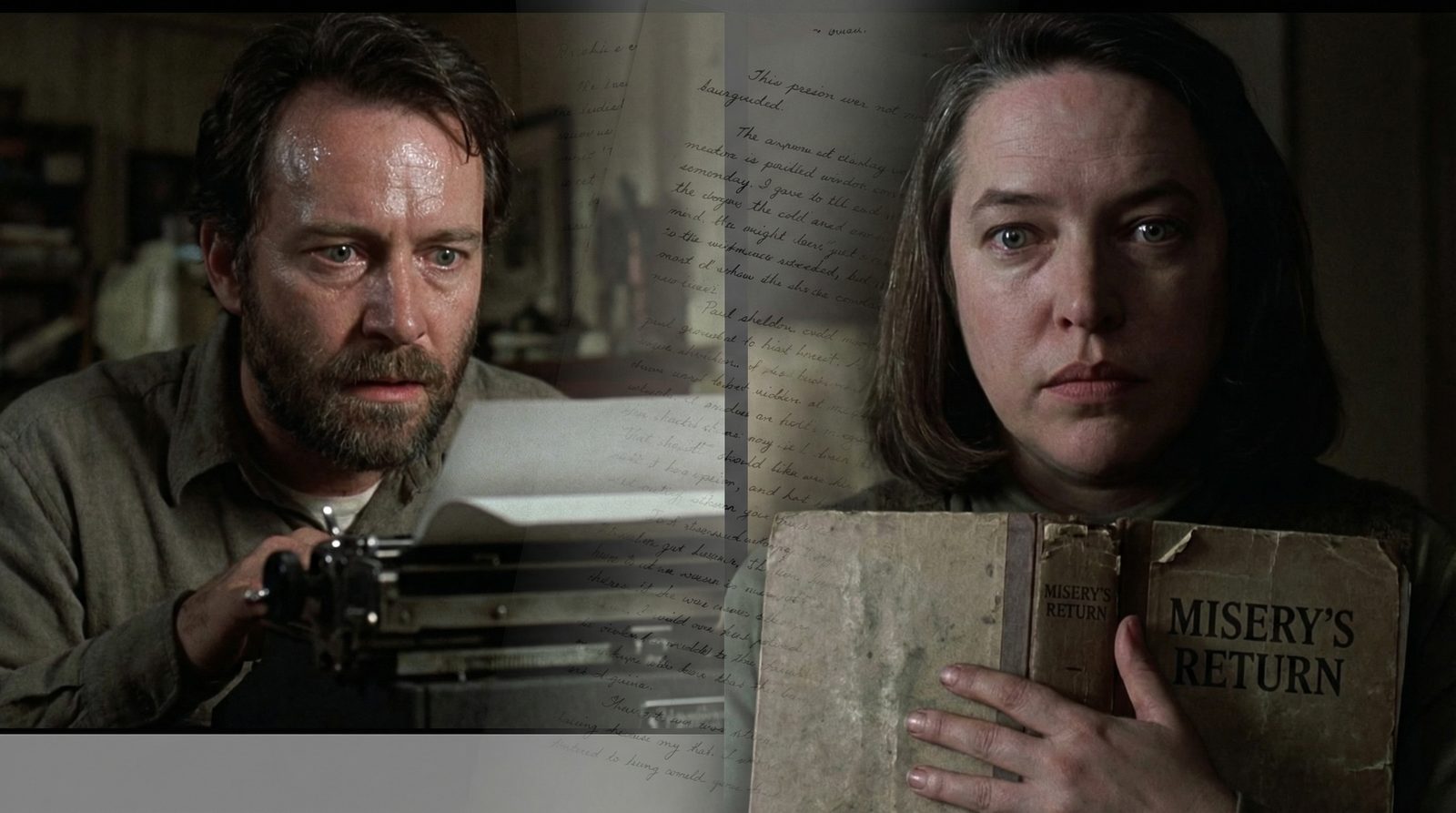
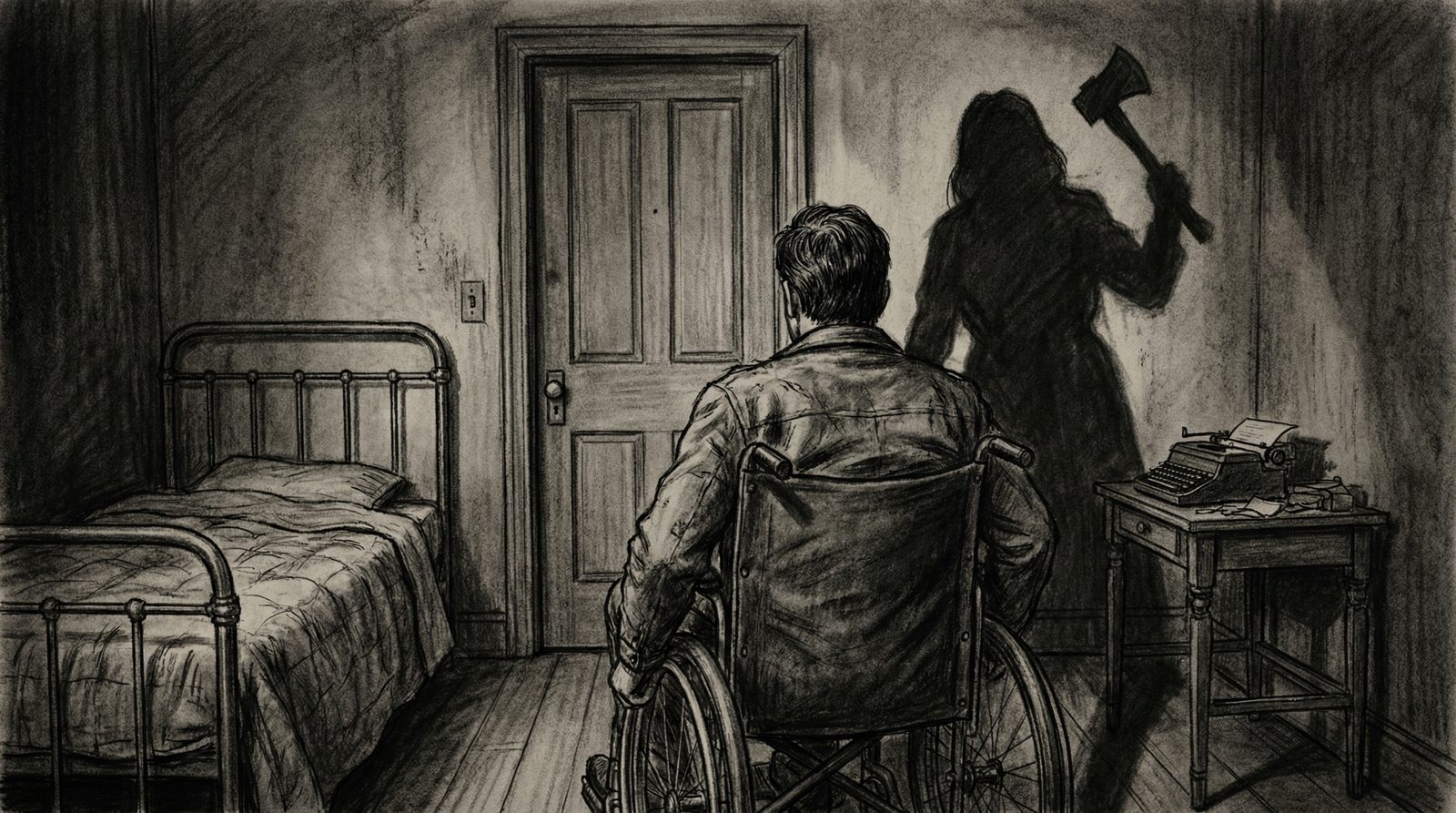
    Symbolic illustration inspired by 'Misery (1990)'

    TRIVIA & PRODUCTION NOTES

    William Goldman’s screenplay streamlines Stephen King’s novel, trimming back some of the more graphic elements while preserving the core dynamic between Paul and Annie. The choice to keep the story grounded in realistic injury and medical detail enhances the psychological focus. Rob Reiner reportedly cast James Caan in part because he wanted an actor associated with toughness to play against physical helplessness.

    Kathy Bates was not yet a household name in film, which helped audiences accept Annie as a fully inhabited character rather than a star vehicle. Her performance earned the Academy Award for Best Actress, a rare honor for a horror-adjacent role. The production made careful use of a single primary set, building the house on a soundstage to control lighting and camera movement. Practical effects, rather than elaborate prosthetics, were used for key moments of violence, which keeps the impact grounded. Misery’s relatively modest budget and contained locations have made it a frequent example in discussions of how to adapt novels into effective, economical films.

    SIMILAR FILMS

    If Misery works for you, several other films explore related territory. The Shining offers another Stephen King story about isolation, creative frustration, and a caretaker turning lethal, though with a more overtly stylized approach. One Flew Over the Cuckoo’s Nest shares Misery’s interest in institutional power and the uncanny caregiver, trading the private home for a psychiatric ward. For a more contemporary echo of the captive–captor dynamic, 10 Cloverfield Lane updates the bottle-episode structure with a sci-fi edge. All of these sit in a cluster of intimate, pressure-cooker narratives where the real horror is another person’s unwavering attention.

    DISCOVERABILITY & LINKS

    Misery connects to several recurring motifs on AllReaders, including captivity, writer held captive, and caretaker as captor. It also sits within clusters about psychological horror, small-town United States settings, and stories that dissect the bond between creator and audience.

  • Misery 1987

    Misery 1987

    By: Stephen King
    Genre: Horror
    Country: United States


    INTRODUCTION

    Misery is a novel about pain as a kind of language. A bestselling author, a lonely superfan, and a snowbound house in rural Colorado: King strips away the outside world until only two people and their shared hallucination of a fictional heroine remain. The recurring motif of confinement is everywhere — locked doors, plaster dust, the wheelchair’s narrow orbit around the bedroom. As the story tightens, another motif surfaces: the blurred line between creation and self-destruction. The book is less about jump scares than about the slow erosion of will, the way dependency can feel like a sick form of intimacy. Misery is a horror story, yes, but it’s also a bitter little fable about what happens when your work belongs more to your audience than to you.


    PLOT & THEMES

    Misery opens with novelist Paul Sheldon waking up after a car crash in rural Colorado, his legs shattered, his body soaked in painkillers. He’s in the home of Annie Wilkes, a former nurse who calls herself his “number-one fan.” At first the trope of the rescuer turned jailer plays almost gently: she feeds him, manages his medication, and praises his work. Then she discovers his latest manuscript, where he has killed off Misery, and the story turns. She burns his new book in front of him, forcing him to watch every page go black in the grill, and demands he write Misery’s Return just for her.

    The motif of bodily mutilation runs alongside the erosion of Paul’s autonomy — from his shattered legs to the infamous amputation of his foot with an axe, and later the loss of his thumb. Unlike the film adaptation, where the sheriff dies inside the house, in the novel a state trooper becomes suspicious of Annie and investigates Paul’s disappearance; Annie murders him out in the yard, running him over with her riding lawnmower while Paul watches helplessly from the window. The world keeps trying to seep in, and Annie keeps cutting it off, figuratively and literally.

    King runs addiction and dependency as parallel themes. Paul’s history with alcohol and cigarettes mirrors his new dependency on Novril, the fictional painkiller Annie doles out and withholds. His writing of Misery’s Return becomes a survival strategy and a self-betrayal: he’s resurrecting a character he despises in order to live. The final showdown begins in the bedroom, where Paul sets fire to the manuscript as a decoy and uses the heavy typewriter as a weapon; Annie is later found dead in the barn after crawling out of the house, apparently on her way to fetch a chainsaw. Paul survives, but he is haunted — literally seeing Annie in public places, still hearing her voice. Unlike the cleaner catharsis of many film adaptations, the novel leaves him damaged, sober, and permanently entangled with the monster he outwrote but never quite escaped.

    Read alongside something like The Shining (1977) or the film Black Swan (2010), Misery sits in a line of stories where artistic creation becomes a crucible that burns away everything extraneous, including sanity.


    PROSE & NARRATIVE STRUCTURE

    The book uses close third-person as its primary narrative technique, locked almost claustrophobically inside Paul’s mind. We feel every throb in his shattered legs, every itch he can’t scratch, every spike of terror when he hears Annie’s car on the gravel. The prose has a jittery, pain-soaked feel: sentences sometimes fracture under the weight of morphine dreams and panic. King litters the text with Paul’s private slang — “goddams,” “laughing place,” the way he calls his typewriter the “Royal” as if it were a temperamental animal. These details never made it into the more streamlined adaptation, but on the page they’re crucial to how we inhabit his consciousness.

    Structurally, Misery is a chamber drama. Almost everything happens in one house, mostly one room, and King leans hard on repetition: Annie’s entrances, the ritual of the Novril pills, the clack of the typewriter keys. Interleaved with the main narrative are long passages of Misery’s Return itself, printed in a faux-typed font in many editions, complete with typos when keys stick or letters break off the typewriter. This embedded narrative isn’t just a gimmick; it’s a second story about resurrection and control that mirrors Paul’s situation.

    The book’s pacing is a slow crank. King alternates between stretches of grinding routine and short, vicious bursts of violence — the feeding of the rat in the basement, the discovery of the scrapbook that documents Annie’s past murders at Sidewinder General Hospital, the moment she cuts off Paul’s foot for trying to escape. The structure traps the reader the way Annie traps Paul: you learn the rhythms of her moods, you wait for the next explosion, and you know, long before he does, that there is no safe way out.

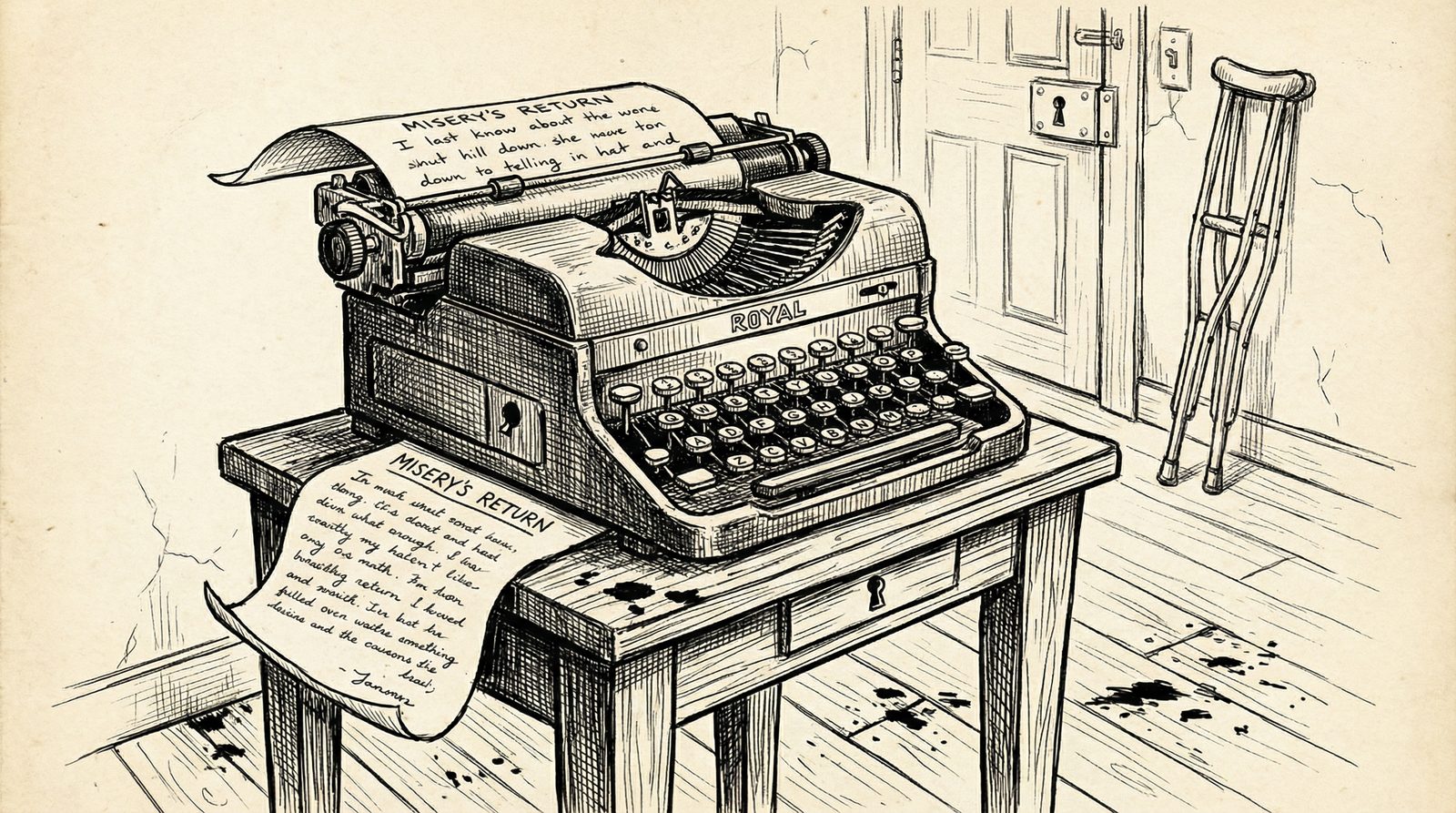
    Conceptual editorial illustration inspired by 'Misery (1987)'

    CHARACTERS & INTERIORITY

    Paul Sheldon begins as the familiar archetype of the jaded author. Trapped in Annie’s guest room, he’s stripped down to something more raw. His interior monologue swings between self-disgust, petty vanity, and a stubborn will to live. He bargains with himself as much as with Annie — promising another chapter in exchange for another day, another cigarette, another chance to crawl to the door.

    Annie Wilkes is one of King’s most precise portraits of madness. On the surface she’s the nurturing caregiver, the “good nurse” who knows how to set a splint and manage a dosage. Underneath, she’s a childlike absolutist, incapable of tolerating narrative disappointment. Her language — “dirty bird,” “cockadoodie,” her fury at “swearing” — gives her the affect of a prudish aunt, which only makes the sudden violence more jarring. The scrapbook in the spare room, where she has pasted clippings about the deaths of infants and elderly patients under her care, is a quiet, book-only horror that deepens her beyond the more theatrical moments.

    Their relationship is not simply captor and captive; it’s a grotesque parody of author and audience. Annie demands emotional honesty and narrative satisfaction on her terms. Paul, in turn, learns to manipulate her through plot twists, cliffhangers, and the promise of Misery’s resurrection. The interiority of both characters is built around control — who has it, who’s pretending to have it, and what happens when it shifts by a fraction. Even minor figures, like the store clerk at the Silver Creek market who notices Annie buying reams of paper, exist mainly as distant reminders that there is a world where people have names and choices, a world Paul can no longer quite reach.


    LEGACY & RECEPTION

    Within Stephen King’s body of work, Misery is one of the leaner, more disciplined novels, often cited alongside Gerald’s Game (1992) as proof that he can do tight, small-scale horror as well as expansive epics. Readers and critics have long read it as King’s argument with his own fame: Paul’s resentment of the Misery books echoes King’s unease with being known primarily for horror when he wanted to write other things. The novel’s focus on writer’s block, addiction, and the punishing expectations of fans has made it a touchstone for discussions about parasocial relationships decades before that term became common.

    The book’s ending, with Paul sober in New York, still seeing Annie’s ghost in a passing stranger and still half-hallucinating her voice as he writes a new, non-Misery novel, leaves a lingering aftertaste. Survival here is not triumph but a damaged continuation. That refusal to tidy up the trauma is part of why the novel has endured, even as its more famous adaptation softened some of the bodily harm and gave audiences a slightly clearer emotional release. On the page, Misery remains a sharp little knife aimed at the uneasy bond between artists and the people who consume them.


    IS IT WORTH READING?

    If you have any patience for psychological horror, Misery is worth your time. It’s compact, vicious, and oddly moving in its portrait of a man bargaining with his own worst habits as much as with his captor. The violence is graphic but not gratuitous; the real horror is the loss of agency and the way pain narrows a life to a few square feet of floor and a stack of typed pages. It’s also one of the clearest windows into how a popular writer thinks about his craft under pressure. If you want haunted houses or sprawling mythologies, look elsewhere. If you want two people locked in a room, fighting over a story and a body, this is as good as it gets.

    Illustration of a core idea or motif from 'Misery (1987)'

    TRIVIA & AUTHOR FACTS

    Stephen King has said that the idea for Misery came from a dream about a fan who held him captive and forced him to write. The fictional painkiller Novril is part of a loose web of invented drugs that appear across his work, reflecting his own struggles with substance abuse during the period. The town of Sidewinder, mentioned in Annie’s nursing history, also appears elsewhere in his Colorado-set stories, tying this small, brutal narrative into a larger imagined geography.

    The embedded novel Misery’s Return was originally much shorter in draft; King expanded it to better show Paul’s reluctant craftsmanship. The decision to have Annie’s body ultimately discovered in the barn rather than in the main house was a late structural change, meant to move the final confrontation out of the now-familiar bedroom and into a rougher, more elemental space. King has also noted that Paul’s shift from genre series work to a more serious, literary-leaning manuscript after his ordeal mirrors his own periodic attempts to step outside the expectations attached to his name.


    SIMILAR BOOKS

    If Misery appeals to you, try The Shining (1977) for another intense portrait of a writer under supernatural and psychological siege. Gerald’s Game (1992) offers a similar single-location nightmare, this time inside a marriage. For a different angle on dangerous devotion, John Fowles’s The Collector (1963) tracks a kidnapper who treats his victim like a rare specimen, not unlike Annie treating Paul as the source of her beloved stories. And if the focus on bodily vulnerability and constrained space is what grips you, you might also seek out more recent psychological horror that keeps its cast small and its emotional stakes painfully close to the skin.


    DISCOVERABILITY & LINKS

    This review of Misery is connected to wider motifs, tropes, and related works across the site, helping you trace patterns of confinement, obsession, and the uneasy bond between creators and their audiences through other books and media.