INTRODUCTION
Demian (1919) by Hermann Hesse
Bildungsroman · 268 pages · Germany
Demian is a quiet, unsettling book, one that feels less like a story than like waking up inside someone else’s conscience. Written at the end of World War I, it traces the inner life of Emil Sinclair as he moves from the “world of light” of his bourgeois childhood into a shadowed realm of guilt, desire, and self-recognition.
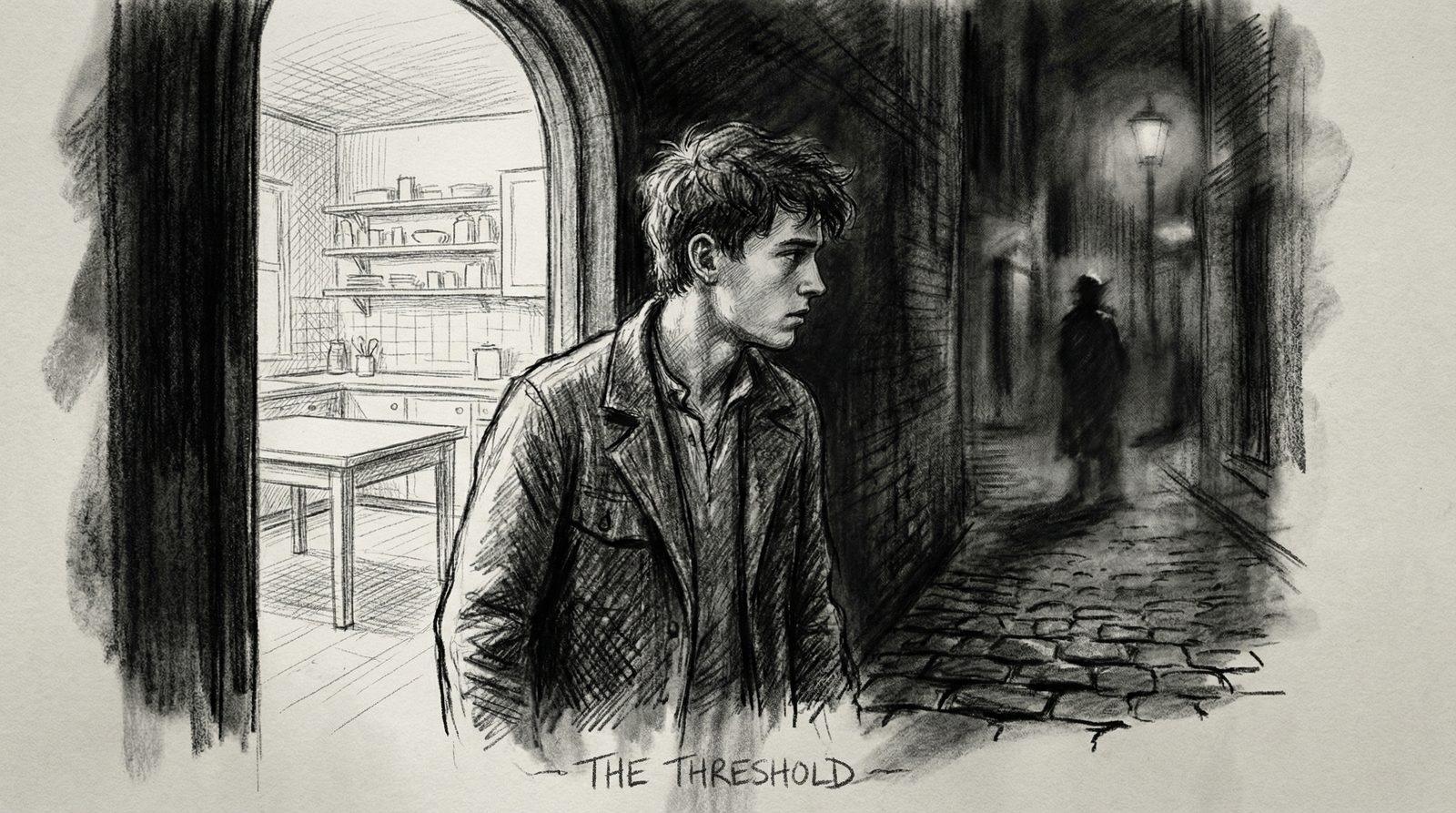
The novel is not interested in plot fireworks. It is interested in fracture: the moment when inherited morality stops working and something unnamed begins to press from inside. Kitchens, classrooms, and church hymns coexist uneasily with alleyways, forbidden thoughts, and dreams that refuse to be decoded. The tone is restless and intimate, as if every page is leaning toward a transformation that cannot be safely named.
PLOT & THEMES
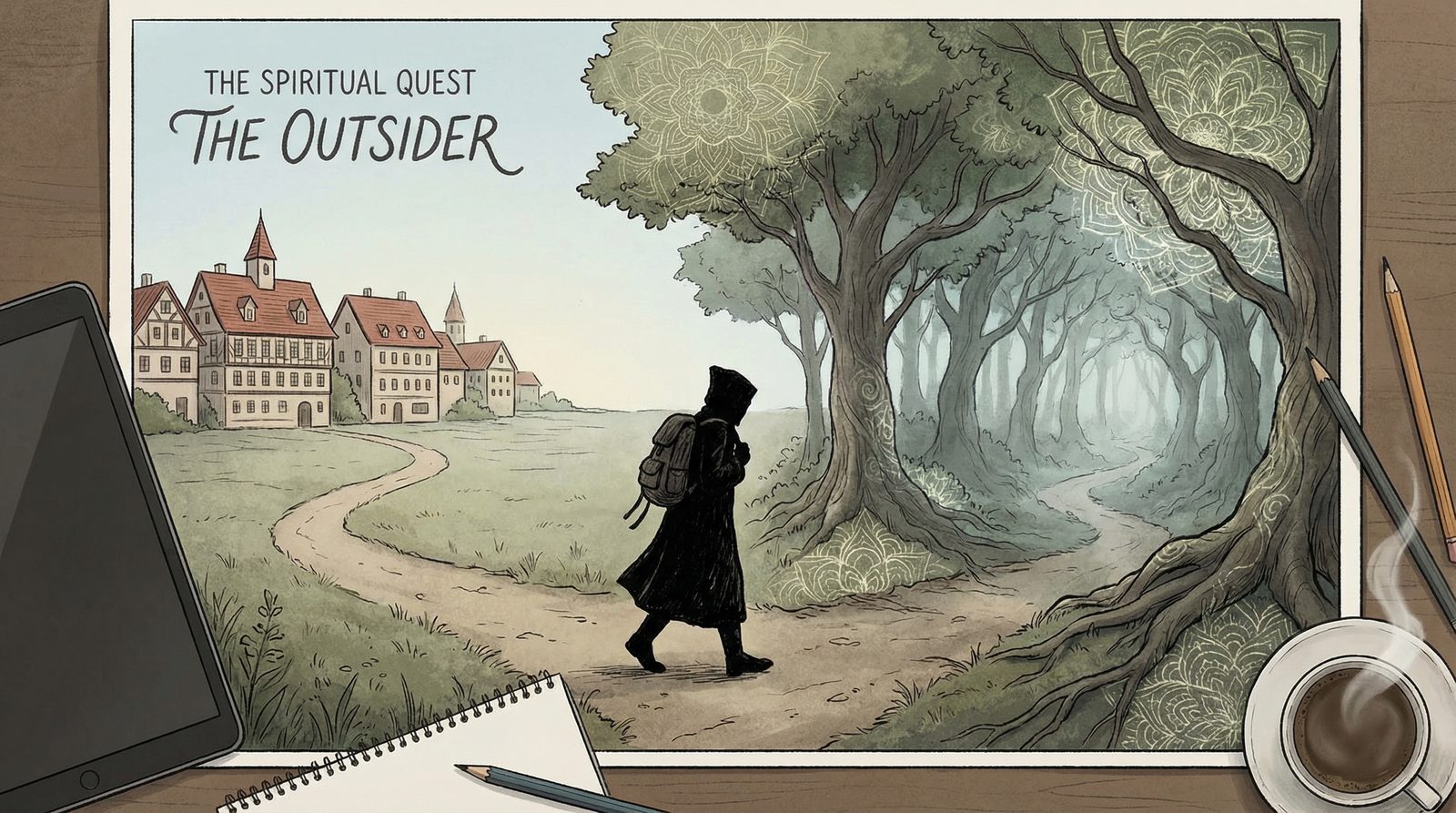
On paper, the plot is simple. Emil Sinclair grows up. In practice, this is a coming-of-age story stripped down to a spiritual case study. As a child in a respectable German town, Sinclair is blackmailed by the bully Franz Kromer after boasting about a minor crime. The lie cracks open the boundary between what Sinclair has been taught to call good and evil.
Max Demian enters as an unsettling presence rather than a conventional rescuer. He dismantles Kromer’s power not through force but through psychological clarity. From that moment, Demian becomes a catalyst, pushing Sinclair away from inherited moral categories and toward an inner law he barely understands.
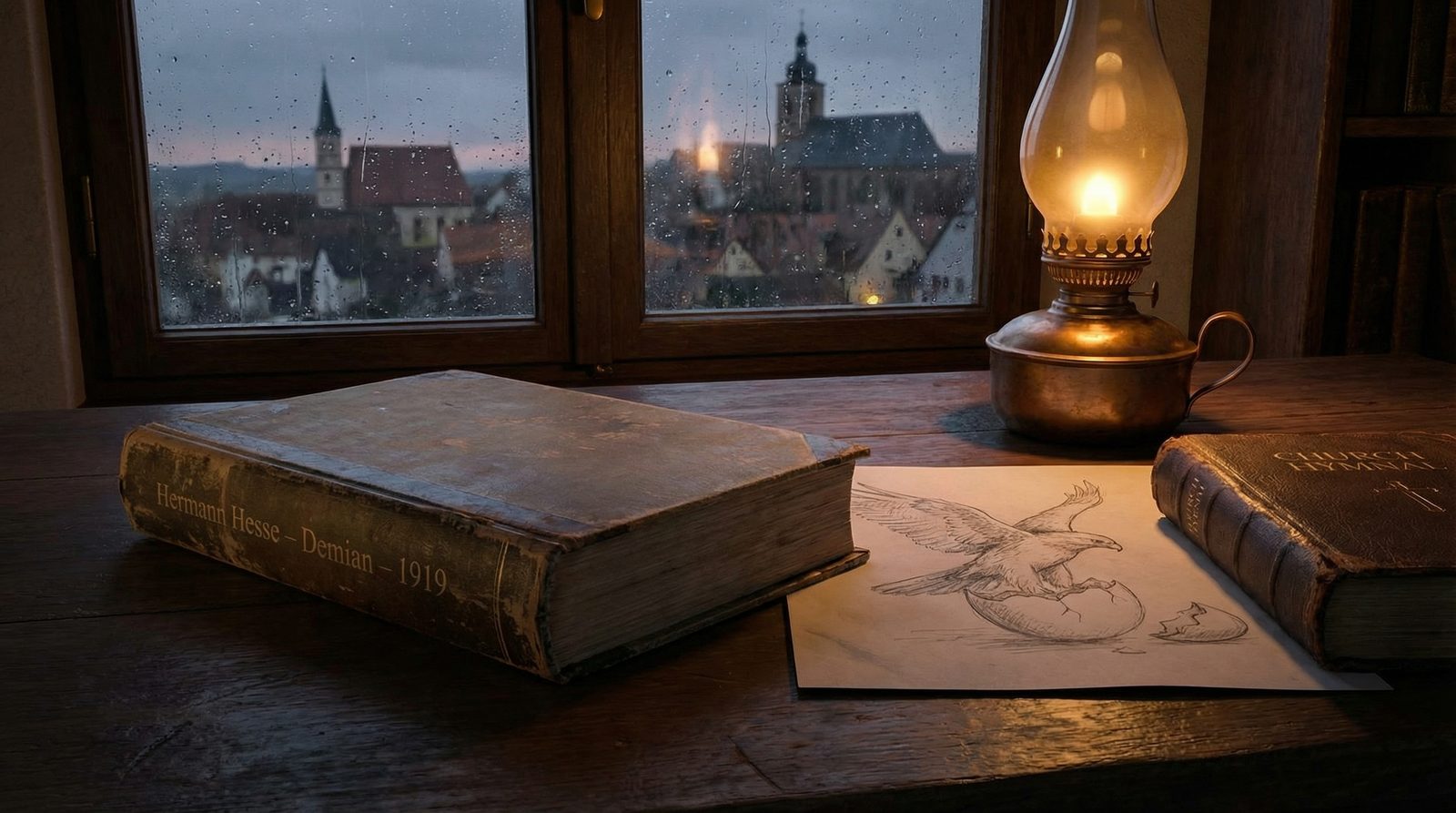
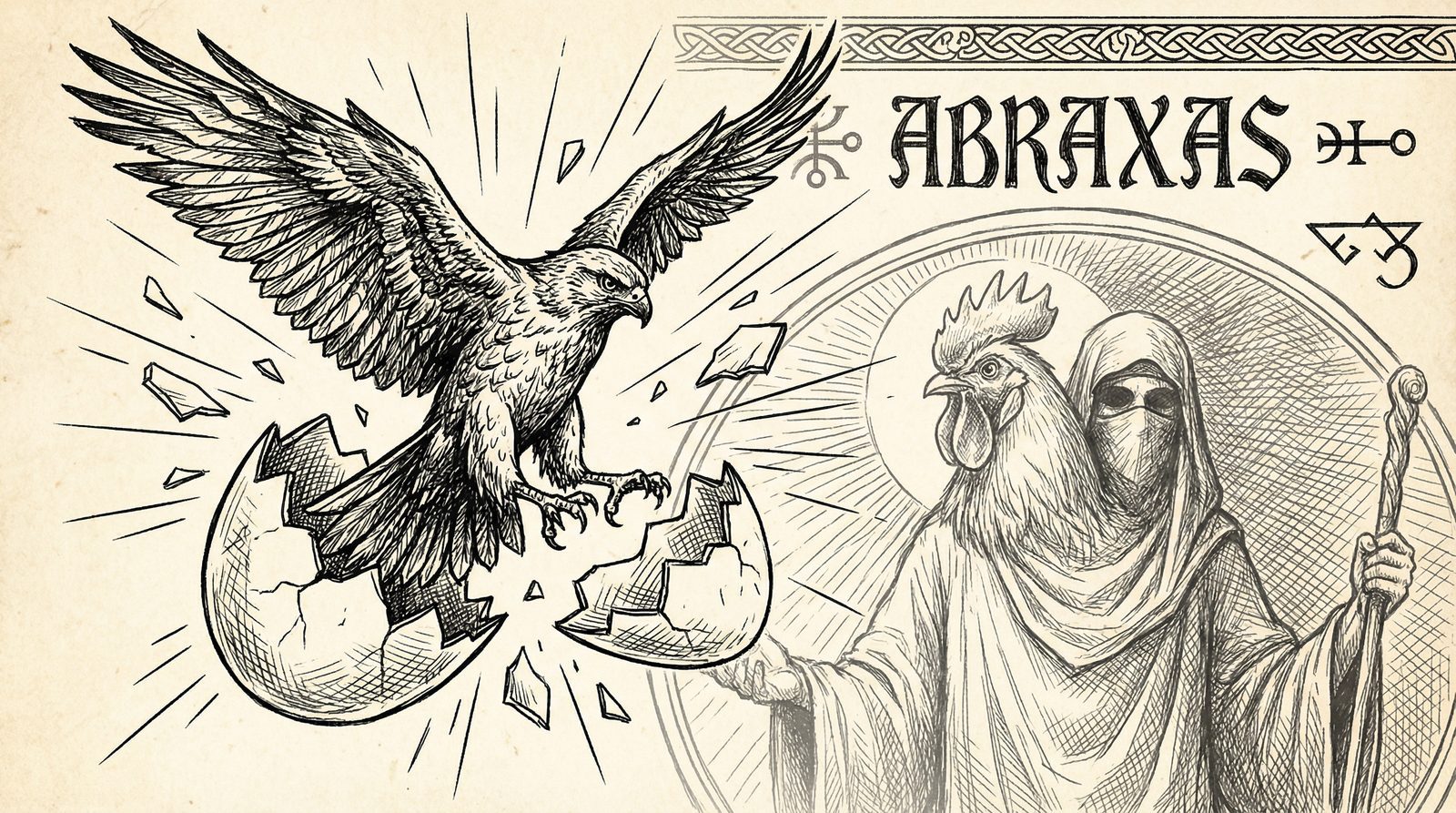
The novel organizes itself around dualities. Sinclair moves between light and dark, spirit and flesh, obedience and rebellion. At boarding school he sinks into drinking and numb routine, then experiences a jolt of awakening through a dream of a bird breaking free from its egg. This image leads him to Demian’s mother, Frau Eva, whose house becomes a sanctuary for those drawn to a god who unites opposites rather than separating them.
World War I remains mostly at the margins until it erupts at the end. Sinclair is wounded at the front and wakes in a field hospital to learn that Demian has been mortally injured. Demian appears one last time, perhaps in reality, perhaps as vision, and tells Sinclair that from now on he must find Demian within himself. The novel closes without consolation. The inner journey has been completed, but the world has been shattered.
PROSE & NARRATIVE STRUCTURE
The book is told in first-person retrospect. Sinclair narrates as an adult, looking back to locate the fault lines that ran under his youth. The prose is clear and restrained, punctured by moments of symbolic intensity: the smell of damp stone where Kromer corners him, the charged stillness of Pistorius’s organ loft, the recurring image of the hawk and the mark of Cain.
Structurally, the novel advances in stages of consciousness rather than acts. Chapters function like psychological stations, each marking a shift in self-perception. External events often blur into interior states. Years pass quickly when Sinclair is spiritually asleep; moments of crisis expand and slow when something essential breaks or is recognized.
Hesse keeps the focus narrow and vertical. There are no real subplots. Everything bends toward the same pressure point: the cost of becoming oneself in a world that demands conformity.
CHARACTERS & INTERIORITY
Sinclair begins as a sheltered child who believes in the moral clarity of his parents’ world. What defines him is how quickly that certainty fractures. His interior life is obsessive and self-scrutinizing. Guilt, longing, and fascination churn long before they surface in action.
Demian himself remains deliberately elusive. He shifts between schoolboy, prophet, and mirror. His interpretation of the Cain story reframes Sinclair’s sense of being marked as not cursed but set apart. Frau Eva embodies a vision of wholeness that Sinclair longs for, calm, inclusive, and indifferent to conventional morality.
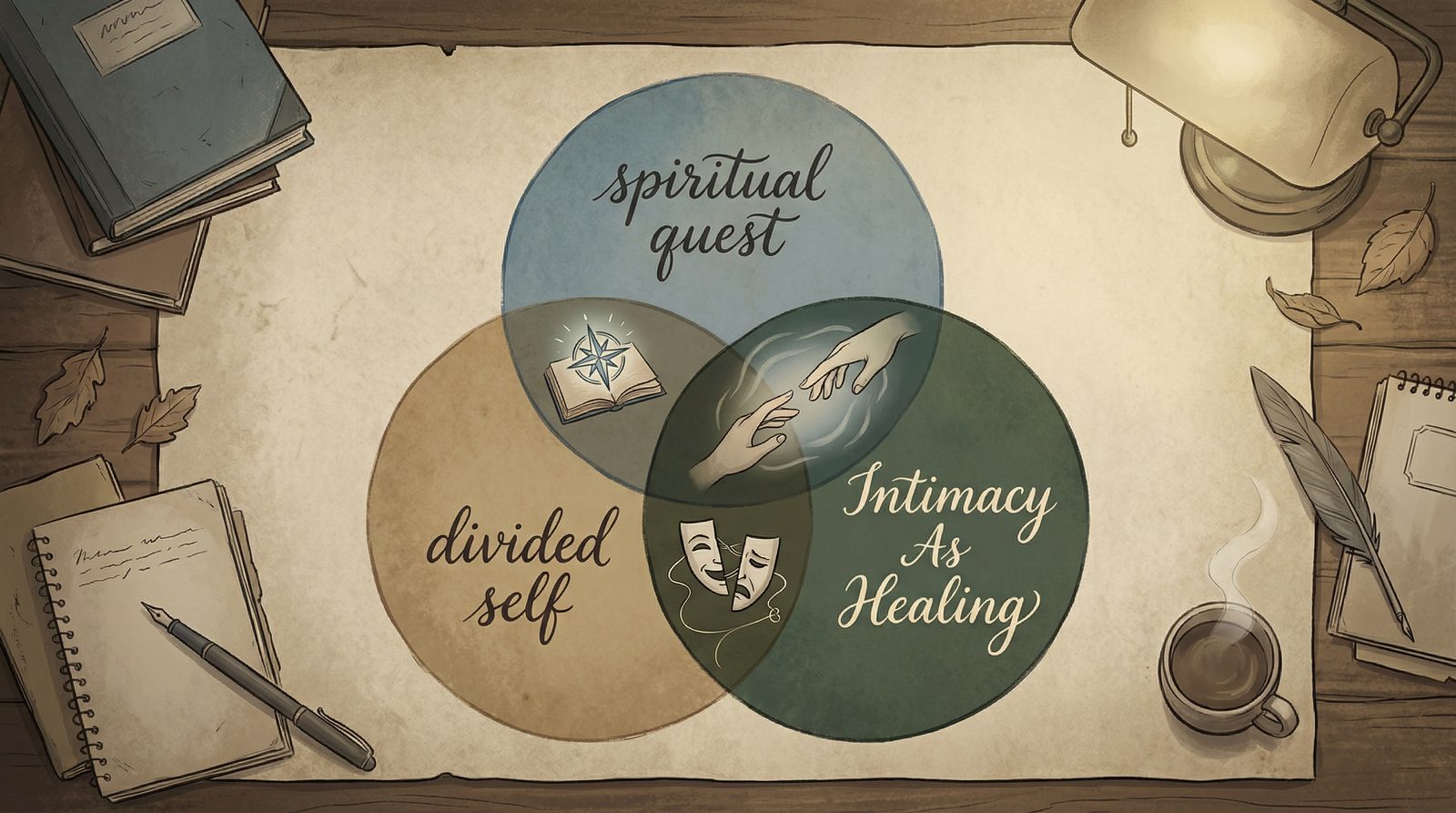
Minor figures are no less charged. Pistorius represents the danger of living only in symbols without fully entering the world. Kromer lingers as a reminder that darkness is not abstract. It has a voice, a smell, and a presence that can follow you into adulthood. Hesse allows these characters to blur into one another, as if they were facets of a single divided self.
LEGACY & RECEPTION
First published under a pseudonym, Demian spoke directly to readers emerging from the devastation of World War I. It offered neither patriotism nor consolation, but a language for inner dislocation. Its blend of psychological introspection and spiritual rebellion helped shape what would later be recognized as twentieth-century existential fiction.
The novel’s refusal of a redemptive ending has been central to its endurance. Growing up here does not mean fitting in or finding peace. It means learning to recognize the mark that sets you apart and living with it. That idea has echoed through later portraits of alienated youth, from Hesse’s own later work to mid-century American fiction.
IS IT WORTH READING?
If you want a brisk plot or social panorama, this book will frustrate you. It is short, dense, and relentlessly interior. But if you are drawn to stories of adolescence as a spiritual earthquake, it remains one of the most honest accounts ever written.
The language is accessible, the chapters compact, but the ideas linger. Hesse does not offer answers. He offers a vocabulary for the feeling that you do not quite belong to the world you were given, and that becoming yourself may require breaking something you were taught to protect.
TRIVIA & AUTHOR FACTS
Hermann Hesse originally published the novel under the pseudonym “Emil Sinclair,” presenting it as the confession of an unknown young writer. Only later was his authorship revealed. The book draws heavily on Hesse’s engagement with Jungian psychology and his own period of analysis during the war years.
The figure of Abraxas comes from Gnostic traditions, reshaped by Hesse to express the unity of opposing forces. Many images in the novel echo Hesse’s own childhood memories and recurring dreams. Demian marked a decisive turn in his career toward the introspective, spiritually questing works that would define his later reputation.
SIMILAR BOOKS
Readers who respond to this inward intensity may also turn to Siddhartha for a later, calmer spiritual journey, or Steppenwolf for a more fractured portrait of identity and rebellion. For a different cultural register of adolescent alienation, The Catcher in the Rye offers a similarly haunted voice without the explicit mysticism.
DISCOVERABILITY & LINKS
Works: Siddhartha, Steppenwolf, The Brothers Karamazov