

Place: Harmon Gym

  • Way Of The Peaceful Warrior – A Book That Changes Lives (1980)

    Way Of The Peaceful Warrior – A Book That Changes Lives (1980)

    INTRODUCTION

    Way Of The Peaceful Warrior A Book That Changes Lives (1980) by Dan Millman
    Spiritual memoir · generally under 300 pages · United States


    This is a book about a young man who has everything that is supposed to make him happy — talent, a scholarship, the prospect of success — and still lies awake at 3 a.m. Way Of The Peaceful Warrior opens on that insomnia and never fully leaves it. The rest is an argument about what to do with the ache underneath achievement.

    The recurring motif of the gas station at night, with humming fluorescent lights and the smell of oil, becomes a threshold between ordinary striving and something harsher, more awake. The feel is restless, bruised hope: enlightenment here is not a glow but a stripping away. Millman’s encounter with the old attendant he nicknames Socrates begins a long unmaking, told with the intimacy of confession rather than the distance of doctrine.

    PLOT & THEMES

    The plot is deceptively simple. Dan, a star gymnast at UC Berkeley, wanders into an all-night gas station and meets Socrates, an ageless, sharp-tongued attendant who seems to know his thoughts. What begins as banter turns into a demanding apprenticeship. Socrates assigns humiliating exercises and strange ordeals — fasting, late-night runs, attention drills — designed to dismantle ego rather than build skill.

    The book’s central trope is the mentor as trickster sage. Socrates lies, withholds, and stage-manages lessons, pushing Dan toward direct experience instead of explanation. Dreams and visions recur — nightmares of falling, lucid memory sequences, threshold moments where fear becomes instruction — blurring the line between psychological breakdown and spiritual initiation.

    A severe injury pivots the story from athletic ambition to reckoning. The body’s failure becomes the forcing mechanism: it strips Dan of the identity built on performance and forces him to confront how he relates to pain, fear, and control. That’s why this book sits naturally beside Athletic Discipline As Spiritual Practice and Awakening Through Physical Injury in your cluster logic: training becomes inner work, and injury becomes the hard stop that makes the work non-optional.

    The ending focuses on a shift in awareness rather than a trophy. The “win” is internal: the gradual discovery that presence matters more than applause, and that the next moment is always the real arena. Compared with the film adaptation, which tends to compress and dramatize the arc into a neater sports-redemption shape, the book keeps returning to relapse and stubbornness, insisting that the path is spiral-shaped, not linear.

    PROSE & NARRATIVE STRUCTURE

    Millman uses a straightforward first-person memoir frame but keeps tilting it toward fable. The technique blends retrospective commentary with present-tense immediacy: older Dan reflects on younger arrogance, then drops the reader into a late-night run through fog or a silent attention drill in the gas station’s back room. The prose is clean and plain, which makes sudden visionary passages hit harder.

    Structurally, the book moves in spirals. Each apparent breakthrough is followed by regression. Dan has a moment of stillness, then falls back into old patterns of striving and anxiety. Chapters often end on a line of Socratic dialogue or a small shock, keeping the pacing brisk even when the text becomes didactic. Sensory detail — chalk dust, soreness, fluorescent hum, fog, exhaustion — keeps the spiritual language anchored in the body.

    Conceptual editorial illustration inspired by 'Way Of The Peaceful Warrior A Book That Changes Lives (1980)'

    CHARACTERS & INTERIORITY

    Dan is the classic seeker archetype. His interior monologue is crowded with comparison: against teammates, against imagined future versions of himself, against the serene ideal he projects onto Socrates. That constant self-measurement is the psychological engine of the book. We watch him resent the mentor, idolize him, then see through him — only to realize the real struggle is fear of ordinariness.

    Socrates is less a fully rounded character than a deliberately constructed mirror. He shifts from gruff mechanic to almost otherworldly presence, appearing in dreams and unlikely places. Millman still slips in humanizing details — tea in the cluttered back room, small acts of quiet service — to keep the figure from dissolving into pure symbol. Joy functions as a softer counterpoint: the teaching embodied without the mentor’s drama, a glimpse of ease Dan wants but cannot yet live.
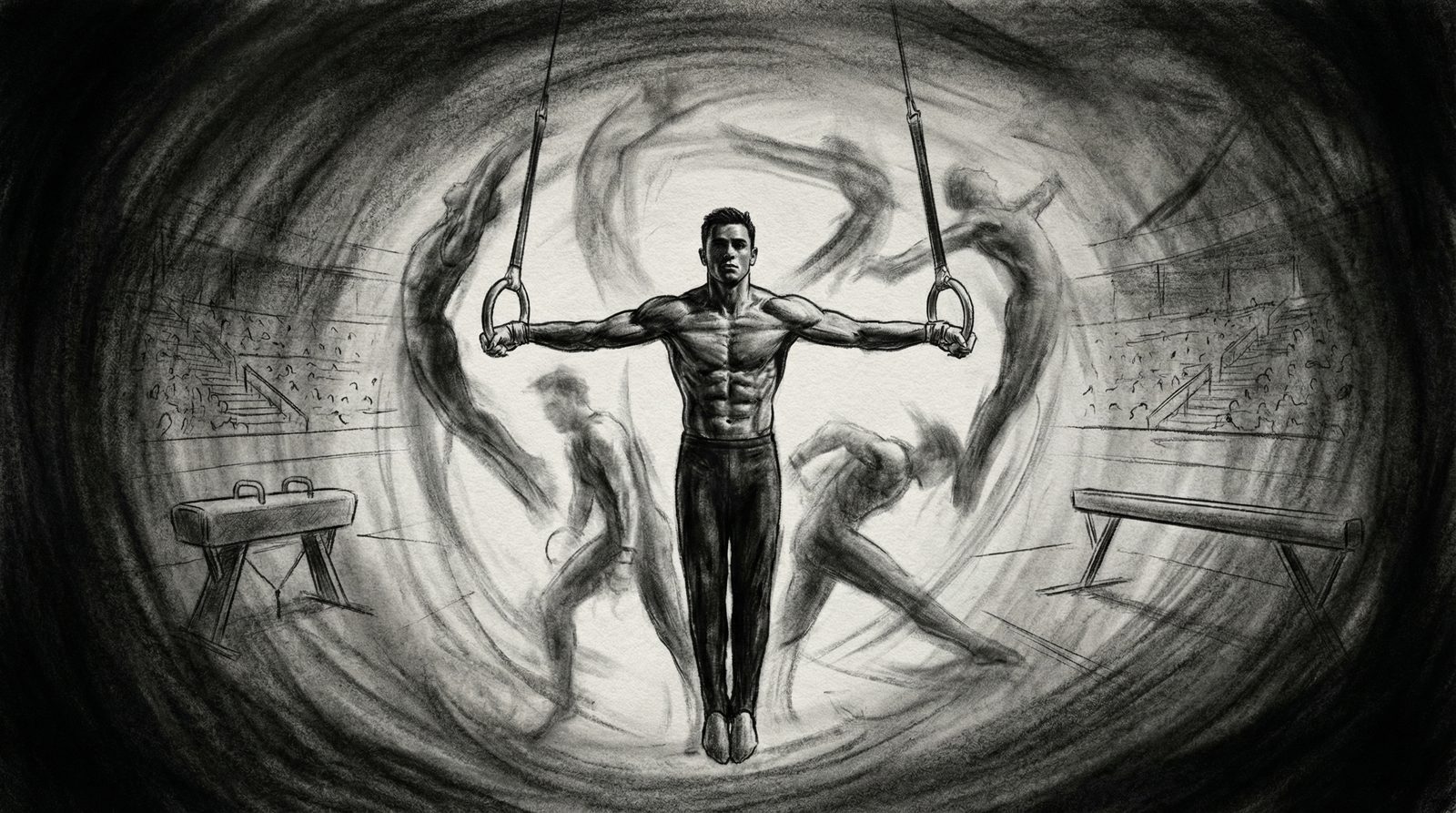
    Illustration inspired by 'Way Of The Peaceful Warrior A Book That Changes Lives (1980)'

    LEGACY & RECEPTION

    Since 1980, Way Of The Peaceful Warrior has lived a double life: modestly reviewed on release, then passed hand to hand in gyms, yoga studios, and college dorms. It occupies a similar shelf-space to other late-20th-century “mind-body” books, but with a distinctly athletic frame. The book’s continued circulation owes a lot to its refusal to end in easy victory. It offers sustained awareness rather than a career-defining moment, and that choice has made it both beloved and frustrating depending on what a reader expects.

    IS IT WORTH READING?

    It depends on your tolerance for earnestness and didactic dialogue. If you want a tightly plotted sports narrative, you’ll likely be frustrated. If you’re interested in how ambition corrodes from the inside and how a life might be rebuilt around presence rather than achievement, it still has bite. Read it not as a manual but as one flawed person’s record of stumbling toward a different way of being.

    TRIVIA & AUTHOR FACTS

    Millman draws heavily from his own background in collegiate athletics. Many readers treat Socrates as a real mentor figure filtered through spiritual allegory, and Millman has described the character as composite rather than simple reportage. The subtitle “A Book That Changes Lives” was not part of the original small-press edition and was added as the book gained a following through reissues.

    SIMILAR BOOKS

    If this resonates, you may prefer other narratives where spiritual inquiry is grounded in bodily discipline and everyday struggle. The strongest neighbors tend to share the same premise: transformation is not a vision; it’s a practice lived under pressure.

    DISCOVERABILITY & LINKS

  • Way Of The Peaceful Warrior (1980)

    Way Of The Peaceful Warrior (1980)

    INTRODUCTION

    Way of the Peaceful Warrior (1980) by Dan Millman
    Spiritual memoir · United States


    Way of the Peaceful Warrior is a late twentieth-century spiritual coming-of-age story dressed in sweatpants and chalk dust. It begins in the fluorescent quiet of the UC Berkeley gym and ends somewhere harder to name: a stripped-down awareness where attention itself becomes the discipline. Dan Millman fictionalizes his own past as a champion gymnast, then detonates it with the arrival of a mysterious gas-station sage he calls Socrates.

    The mood is restless and hungry. The book has the rawness of a training diary crossed with a Zen parable, and it is far stranger, funnier, and more abrasive on the page than its later, softer reputation suggests. This is not a gentle self-help story. It is about obsession, humiliation, injury, and the slow dismantling of a young man’s carefully polished identity.

    PLOT & THEMES

    The plot is deceptively simple. Dan is a gifted gymnast at UC Berkeley in the 1970s, already a national champion yet plagued by nightmares and a sense of hollowness. One sleepless night he wanders into an all-night gas station near campus and meets Socrates, an old attendant who moves with impossible grace and casually appears on the roof without using a ladder.

    This encounter launches years of erratic, often humiliating training that has little to do with pommel horses and everything to do with attention, diet, ego, and fear. Socrates teaches by disruption. He withholds praise, assigns absurd tasks, and dismantles Dan’s self-importance piece by piece.

    A recurring theme is the body as a doorway rather than an obstacle. Injuries, exhaustion, hunger, and pain are not framed as enemies to overcome but as teachers that force Dan into the present moment. The body becomes the site where illusion collapses, especially after the motorcycle accident that shatters his athletic future and leaves him learning to walk again with metal pins in his leg.

    Millman contrasts ambition with awareness. Olympic dreams are revealed as just another story the ego tells itself. Love complicates this further. Joy, introduced before Dan’s accident, brings a playful, grounded energy that refuses spiritual theatrics. She challenges his dependence on Socrates and pushes him toward responsibility rather than devotion.

    The book’s ending rejects triumph. Dan does not win a defining competition or achieve permanent enlightenment. Instead, he walks away from the life he built, broke and uncertain, carrying nothing but attention into an ordinary future. The transformation is not heroic. It is unresolved, which is precisely the point.

    PROSE & NARRATIVE STRUCTURE

    The story is told in first-person retrospect. An older Dan narrates his younger self’s confusion with a mix of affection and embarrassment. The prose is straightforward and occasionally clunky, but that plainness suits the material. Millman writes like an athlete keeping notes, not a mystic polishing aphorisms.

    The structure moves in cycles rather than a clean three-act arc. Training sessions in Harmon Gym alternate with late-night conversations at the gas station, dream sequences, and visionary episodes. The most striking of these is the desert initiation, where Dan confronts his own mortality in a canyon littered with bones and imagines his body decaying under the sun.

    Dialogue carries much of the philosophical weight. Socrates is sharp, sarcastic, and frequently cruel. He mocks Dan’s vanity, swears freely, and sends him scrubbing toilets as spiritual practice. Sudden time jumps, including the abrupt cut from pre-accident arrogance to hospital confinement, create a jagged rhythm that mirrors Dan’s psychological disorientation. Enlightenment here is not a smooth ascent but a series of collapses and stubborn re-starts.

    Conceptual editorial illustration inspired by 'Way of the Peaceful Warrior'

    CHARACTERS & INTERIORITY

    Dan is not a flattering protagonist. He is talented, arrogant, anxious, and deeply invested in how others see him. The book spends long stretches inside his mental scorekeeping: pre-meet rituals, locker-room comparisons, and the shame that follows late-night binges on junk food. His interior world is crowded with rankings and imagined judgments.

    Socrates remains the enigmatic center. He functions less as a fully rounded character than as a pressure system designed to break Dan’s defenses. Still, Millman gives him human texture: humming while cleaning gas pumps, favoring simple soup, and later appearing frail and mortal in a hospital bed. The invincible teacher is revealed as temporary.

    Joy disrupts the guru dynamic. She refuses to be a serene muse or spiritual reward. Her insistence that Dan stop outsourcing authority to Socrates forces him into adulthood. Minor figures, including fellow gymnasts and romantic partners, act as mirrors, revealing how strange and self-absorbed his path appears from the outside. The interiority here is not mystical. It is the slow erosion of ego under pressure.

    LEGACY & RECEPTION

    Since its publication, Way of the Peaceful Warrior has lived a double life: cult favorite on college campuses and staple of yoga studios. It arrived as Eastern philosophy filtered into American culture through martial arts, countercultural paperbacks, and spiritual experimentation. Millman’s fusion of sports narrative and inner training made the book unusually accessible.

    The film adaptation, Peaceful Warrior (2006), expanded its audience but softened its edges. Years of discipline were compressed, Joy’s role was reduced, and the harsher bodily lessons were smoothed over. Readers who come to the book after the film are often surprised by how unsentimental it is. Socrates vanishes. Dan does not “win.” What remains is practice. That refusal of closure is why the book has endured.

    IS IT WORTH READING?

    That depends on your tolerance for earnestness. If you want polished literary style, this may grate. If spiritual instruction makes you recoil, Socrates’s aphorisms will feel heavy-handed. But if you are curious about the collision between high-level ambition and inner collapse, the book has a stubborn honesty.

    It is especially worth reading if you have built your identity around performance, sports, grades, career, and then watched that structure begin to shake. The book offers no neat method. It offers a record of stumbling toward attention, one awkward, sweaty, occasionally luminous moment at a time.

    Illustration inspired by a core idea from 'Way of the Peaceful Warrior'

    TRIVIA & AUTHOR FACTS

    Dan Millman was a national-level gymnast at the University of California, Berkeley, and later coached at Stanford. The campus locations and athletic culture are drawn from his real life, though heavily fictionalized. Socrates is a composite figure based on several teachers, amplified into myth. Joy was inspired by a real woman Millman credits with reshaping his understanding of practice.

    The manuscript was initially rejected for being an awkward hybrid, neither straightforward memoir nor pure philosophy. Its success grew slowly through word of mouth, shared passages, and personal recommendation rather than institutional endorsement.

    SIMILAR BOOKS

    Readers who respond to this blend of discipline and awakening may also explore Zen and the Art of Motorcycle Maintenance (1974) for a more philosophical road narrative, or Siddhartha (1922) for a stripped-down spiritual journey. Each asks a version of the same question: what happens when achievement stops being enough?

    DISCOVERABILITY & LINKS

    DISCOVERABILITY & LINKS

    DISCOVERABILITY & LINKS