Place: Kensington Gardens

  • The Tinted Venus (1885)

    The Tinted Venus (1885)

    INTRODUCTION

    The Tinted Venus (1885) by F. Anstey
    Fantasy · United Kingdom


    The Tinted Venus is one of those sly Victorian fantasies that begins as a joke and ends with a faint ache. A humble barber’s assistant, a second-hand statue of Venus, and a careless wish, on the surface it is farce, plaster dust, and social misunderstanding. Underneath, the story keeps worrying at quieter questions: how easily people confuse beauty with goodness, and possession with love.

    The mood drifts between fizzy comic energy and a wistful unease, as if gaslit streets and shabby parlors are conspiring to expose every character’s vanity. This is not a mythological epic. It is domestic London life being invaded by divinity, and the invasion mostly produces embarrassment.

    PLOT & THEMES

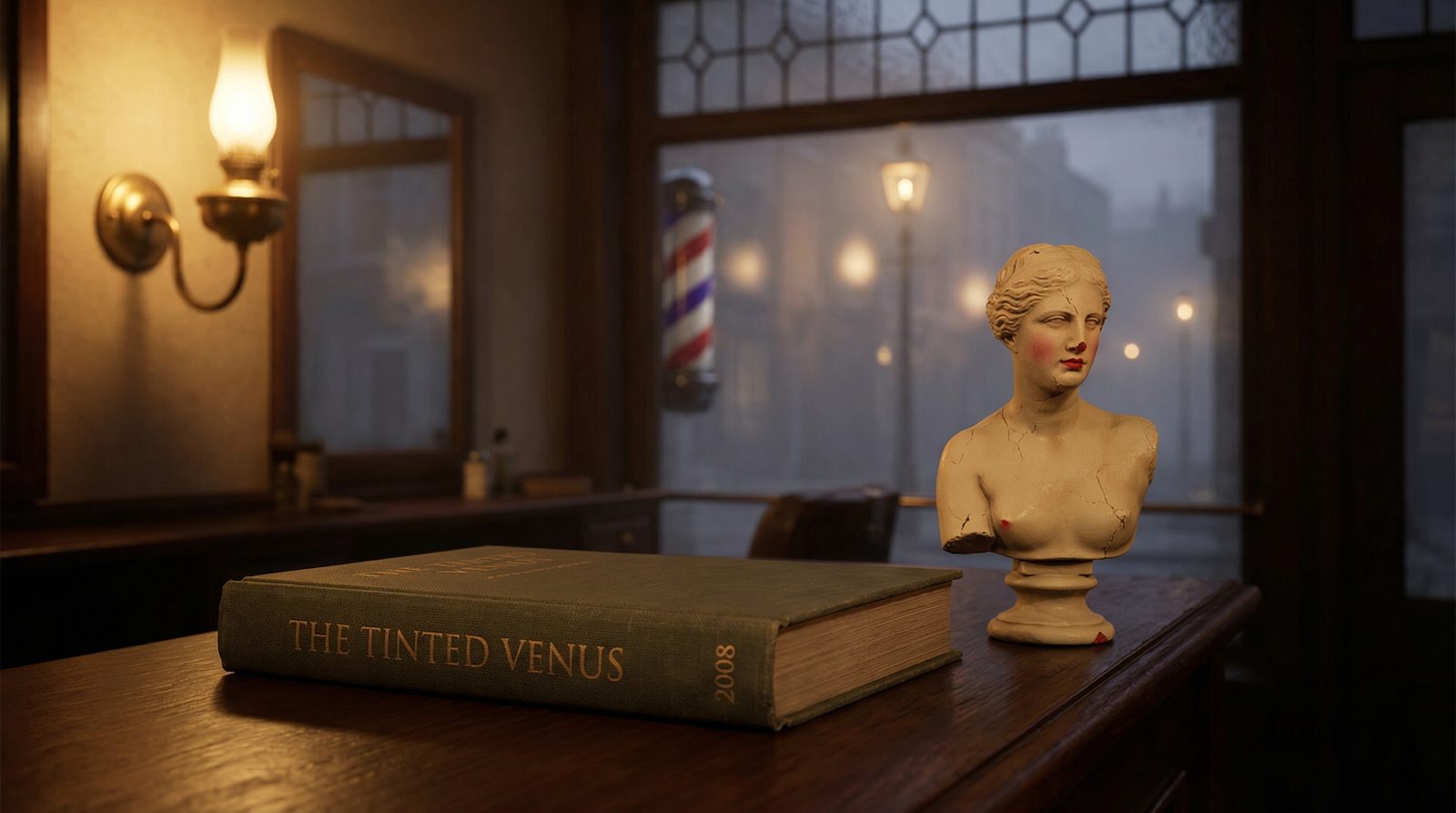
    The premise is simple. Frederick Pimm, a mild and slightly vain assistant at Mivers’s barber shop on Lupus Street, wins a cheap tinted plaster Venus in a raffle. In a fit of romantic self-pity he kisses the statue’s lips and jokes that he wishes for a more ideal love than his very real, very practical fiancée, Ada Parkinson. The statue warms. Venus steps down from her pedestal.

    What follows is not lush sensual fantasy. Anstey makes Venus inconveniently literal-minded. Her presence ruins Pimm’s work, scandalizes Mrs. Mivers, and detonates the Parkinson household’s moral respectability. The comedy comes from the mismatch between mythic expectation and middle-class routine: Venus treats London streets as if they were sacred processions, while everyone around her sees only indecency, madness, or fraud. Pimm’s frantic attempts to disguise her as a foreign cousin create the book’s best farce, the kind built from doors opening at the wrong moment and reputations collapsing in real time.

    The ending is more ambivalent than later stage treatments that smooth everything into romance. After a chaotic night in Kensington Gardens, with Venus insulted by the Albert Memorial and the new gods of modern industry, she recognizes that this age has no place for her. She returns to plaster, hardening in a small back parlor while Ada watches. Pimm ends the novel engaged to Ada again, but chastened. The magic does not grant him a perfect match. It strips away his fantasies and leaves him with ordinary love, unvarnished and uncompensated.

    Class aspiration runs beneath the supernatural premise. The statue itself is not marble, it is imitation, second-rate beauty bought cheaply and worshipped too eagerly. The novel uses that cheapness to sharpen its satire: not just of male vanity, but of a social world that wants art as status while panicking when “art” becomes alive and demanding.

    PROSE & NARRATIVE STRUCTURE

    Anstey writes in a lightly ironic third-person style, hovering close to Pimm’s anxious self-justifications while occasionally panning out to skewer the entire household. The sentences are brisk, the dialogue is full of social edge, and the tone carries amused exasperation. The narrator thinks Pimm is foolish, but never quite stops caring what the foolishness costs him.

    The structure is almost theatrical. Early chapters feel like set pieces: the raffle, the cramped back room where Pimm hides Venus under a shawl, the disastrous visit with the Parkinson family, where Venus’s literal talk of altars and libations horrifies respectable guests. Stakes escalate socially rather than cosmically. Instead of battles between gods, we get whispered gossip in boarding-house corridors and reputations fraying under scrutiny.

    As the story advances, Anstey slows the farce just enough for tenderness to leak in. Venus’s gradual cooling, as devotion and fantasy withdraw, is described with surprising restraint. Comedy drains away line by line, and Pimm is left holding not an ideal but an object, and realizing how little his “ideal” ever understood him in return.
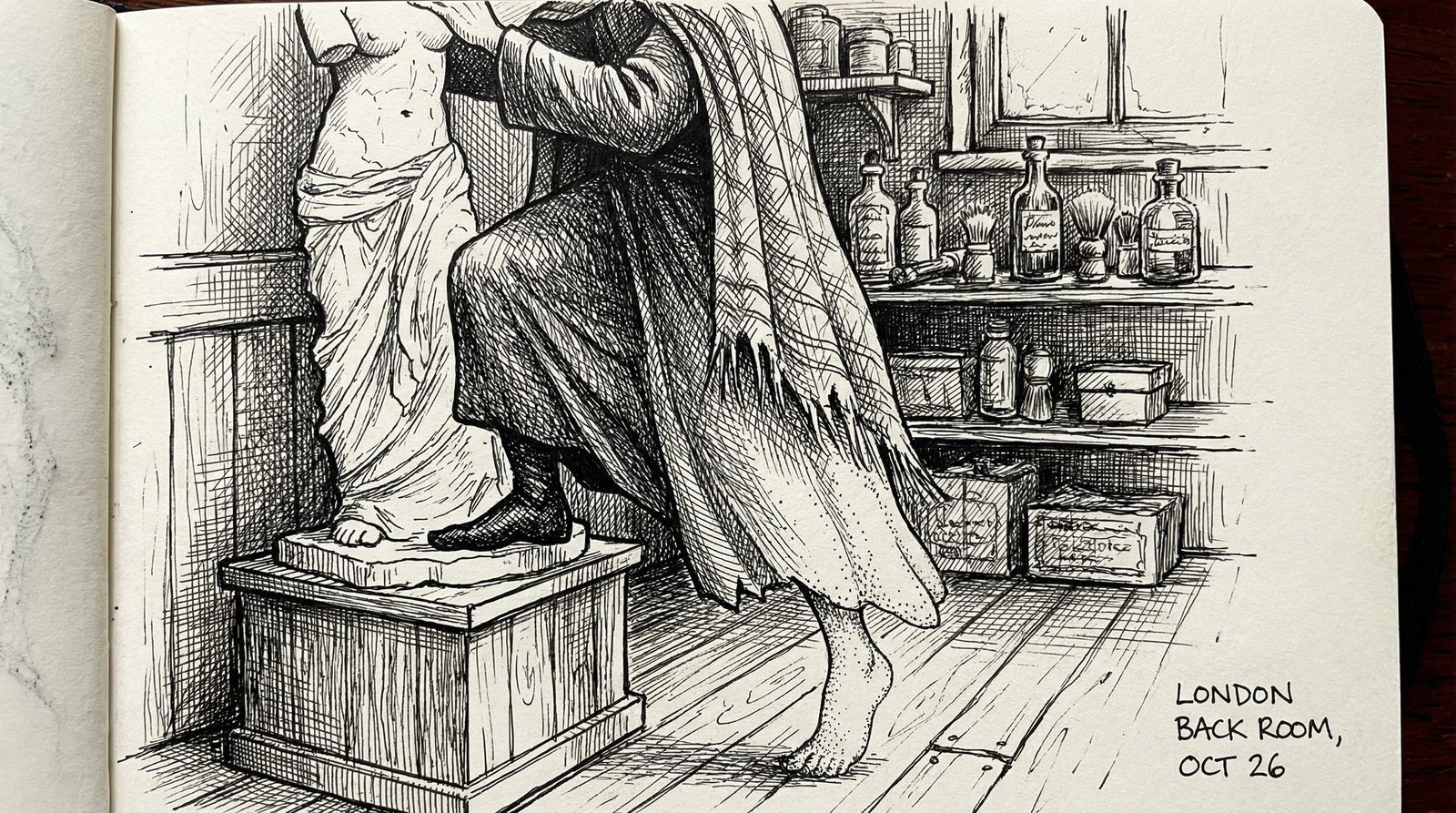
    Conceptual editorial illustration inspired by 'The Tinted Venus'

    CHARACTERS & INTERIORITY

    Pimm is a timid dreamer who wants romance without risk. His inner life is half vanity, half self-pity, and that is where the book’s cruelest jokes land. He is not wicked, merely weak, and the novel keeps asking what damage weakness can do when paired with sudden power.

    Venus is less a rounded interior consciousness than a force, but Anstey gives her enough presence to unsettle. She is not a fantasy girlfriend. She is a deity bewildered and offended by nineteenth-century London. Her pride is real. So is her confusion. Ada, meanwhile, avoids becoming a simple caricature of the shrewish fiancée. Her sharpness reads as self-protection, and her brief moment of pity as Venus returns to plaster deepens the emotional field.

    Side characters form a chorus of moral panic and prurient curiosity: Mrs. Mivers with her small tyrannies, the Parkinson household with its rigid respectability, the boarding-house gossips watching for scandal. Interior life belongs mostly to Pimm, but the way others misread him, as seducer, fool, or liar, completes the portrait of a man trapped between who he imagines himself to be and who the world insists he is.

    LEGACY & RECEPTION

    The Tinted Venus has never held canonical status, and many modern readers meet its premise through later adaptations that soften the ending into romance or winked redemption. The original novel is harsher. Pimm and Ada end together, but chastened, with the plaster Venus back in the corner as an object of faint dread rather than desire. The magic fixes nothing. It exposes everything.

    Among readers who seek out the text, it is appreciated as a sly interrogation of the Pygmalion fantasy, closer in spirit to darker Victorian preoccupations with beauty and projection than to the sunny romantic comedies it accidentally anticipates. Its modest scale has helped it age well: no grand Olympus, just Lupus Street, Clapham respectability, and Kensington Gardens as a stage for embarrassment and revelation. The satire of male vanity and middle-class hunger for “art” as status symbol still lands.

    IS IT WORTH READING?

    If you want a frothy fantasy where a statue comes to life and everyone ends blissfully paired off, this book will wrong-foot you. It is shorter, sharper, and more awkward than that. Its comedy is real, but so is its unease about what men project onto women, and what happens when the projection answers back.

    The prose is brisk enough that the period setting does not feel like homework, yet the story rewards slow attention to its quieter cruelties and small generosities. For readers interested in myth twisted into domestic farce, class-conscious fantasy, and flawed protagonists who do not receive neat moral absolution, it is very much worth the time.
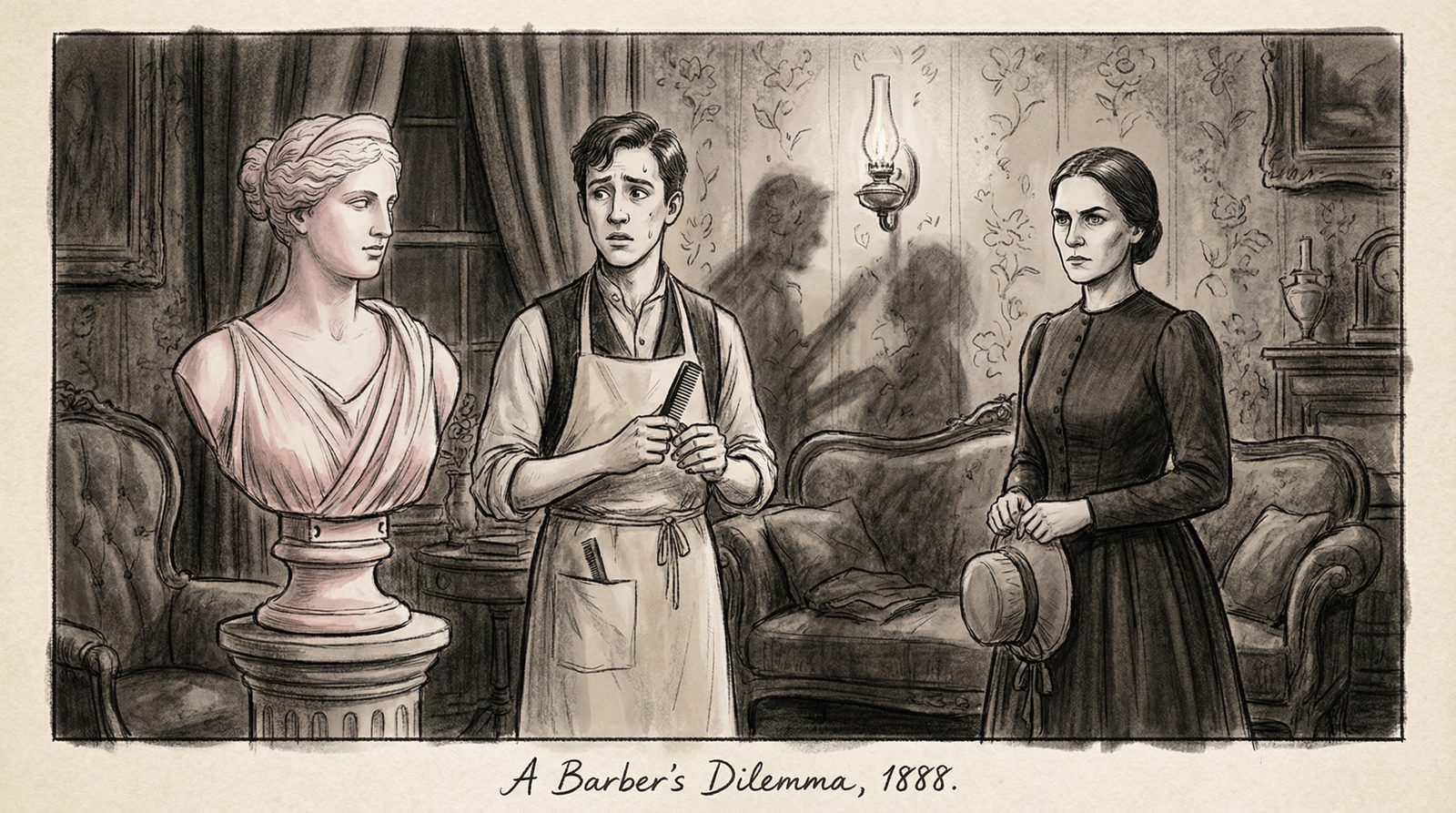
    Illustration inspired by a core idea from 'The Tinted Venus'

    TRIVIA & AUTHOR FACTS

    “F. Anstey” was the pen name of Thomas Anstey Guthrie, a barrister-turned-humorist who built a career skewering middle-class pretensions. The Tinted Venus sits alongside his other fantasies of ordinary people colliding with the supernatural, but it is one of the tighter and more urban of his works.

    The statue is explicitly a cheap tinted plaster copy rather than marble, a detail that sharpens the satire about imitation, aspiration, and fakery. The Kensington Gardens sequence, with Venus offended by public monuments and national self-importance, shows Anstey’s eye for how civic spaces stage morality and taste. The novel quietly prefigures later psychological fantasies about art objects that refuse to stay inert, but it keeps its scale stubbornly domestic.

    SIMILAR BOOKS

    If this appeals, you might look toward other nineteenth-century fantasies that smuggle unease into comic premises. The Picture of Dorian Gray treats beauty as curse rather than blessing, while Pygmalion reworks the sculptor-and-creation fantasy into social satire. For more London-set supernatural mischief with a class-conscious edge, the comic supernatural tales of writers like Jerome K. Jerome and some of E. Nesbit’s adult stories make fitting companions.

    DISCOVERABILITY & LINKS

  • The Collector (1963)

    The Collector (1963)

    By: John Fowles
    Genre: Psychological horror
    Country: United Kingdom


    INTRODUCTION

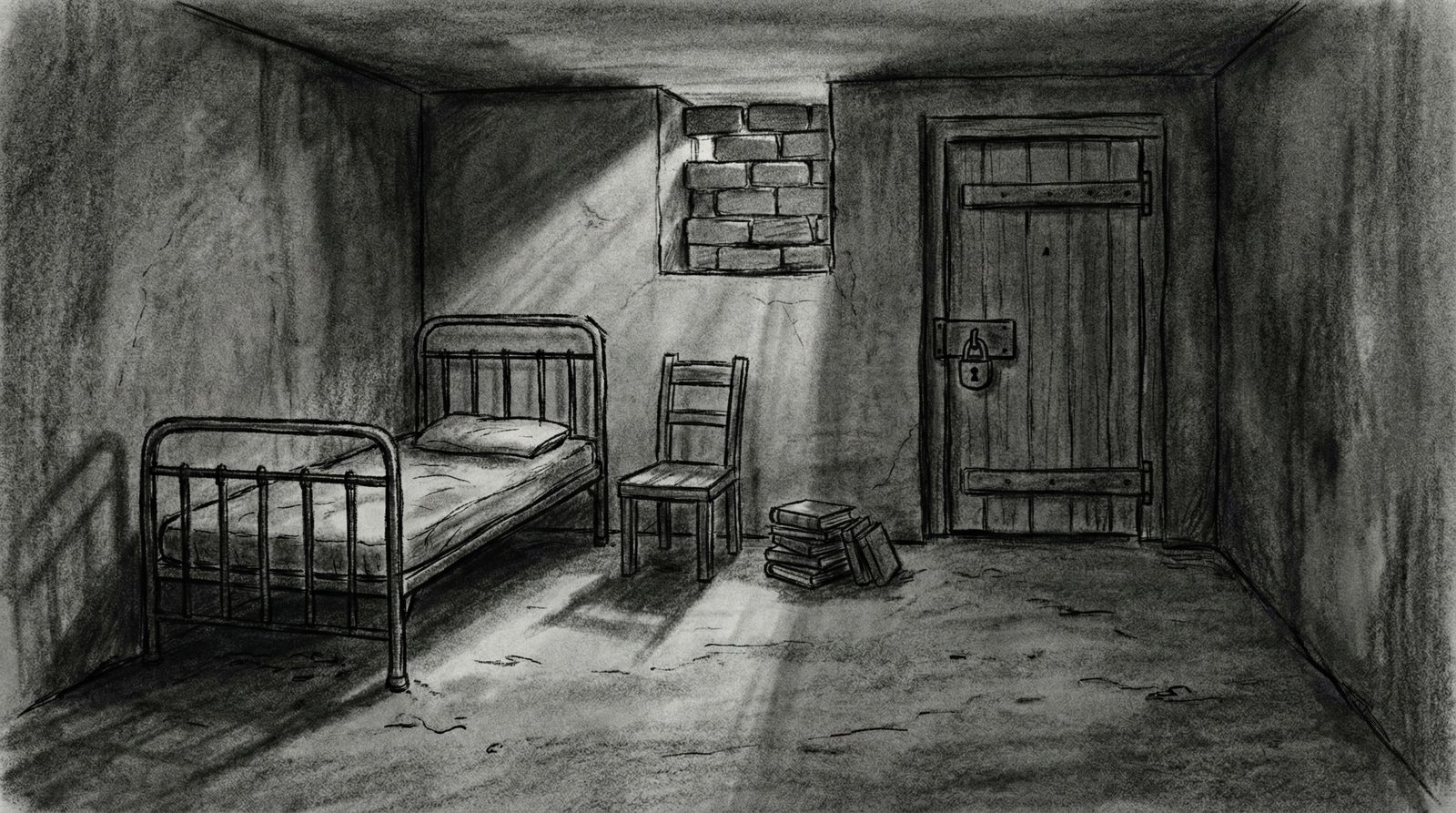
    The Collector (1963) arrives like a chill draft under a locked door. Set in the 1960s, it takes the motif of imprisonment and strips it of gothic flourish, leaving only concrete, keyholes, and the stale air of a cellar room. John Fowles imagines what happens when a socially awkward clerk, numbed by years of insect collecting and Lotto luck, decides to “collect” a living woman. The feel is slow-burn dread rather than jump-scare terror, a suffocating awareness that nothing supernatural is coming to save anyone here. Beneath the kidnapping plot runs a quieter story about class, aesthetic ideals, and the way men translate desire into ownership. The novel is short, tightly wound, and emotionally abrasive, but it lingers — especially in the details of that furnished basement outside Lewes, where the wallpaper, the books, and even the electric heater become part of an experiment in control.


    PLOT & THEMES

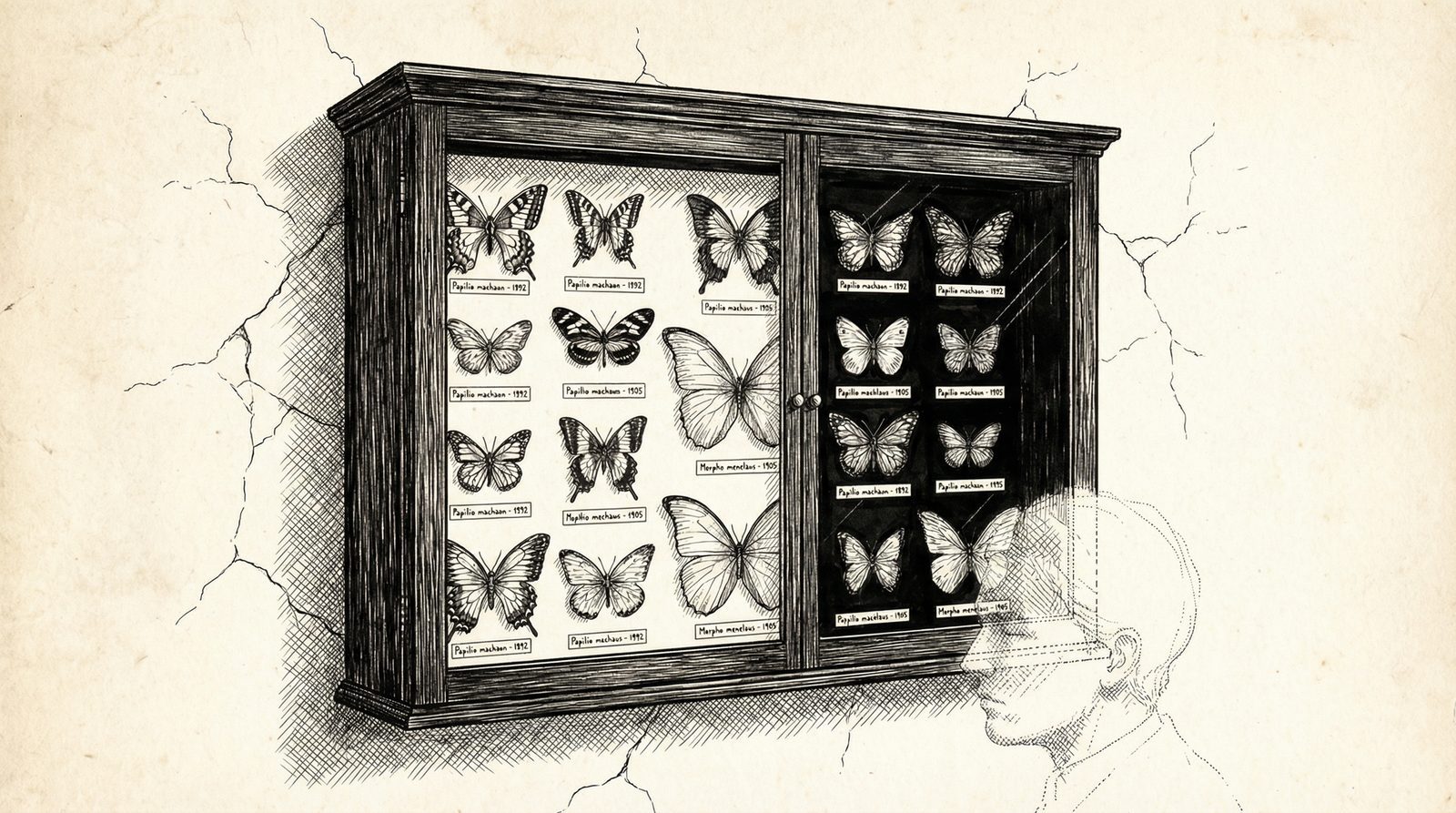
    On the surface, The Collector uses the trope of the stalker-turned-kidnapper. Frederick Clegg, a municipal clerk in the town of Newbury, wins a football pools fortune and uses it to buy a secluded country house near Lewes. A lifelong butterfly enthusiast, he has watched art student Miranda Grey from afar, rehearsing conversations he never has. Wealth gives him privacy and power, and he decides to “collect” Miranda as he would a rare specimen. He chloroforms her on a London street near the National Gallery, transports her in a van, and imprisons her in a windowless cellar he has carefully prepared with furniture, clothes, and art books.

    The novel is structurally simple but thematically dense. One motif is aestheticization: Clegg sees Miranda as a perfect object, while she, in her diary, struggles to see him as a human being rather than a case study. Their clash is also a class war. Miranda is a middle-class, Hampstead-leaning art student, enamoured of the bohemian painter G. P. and of modernist ideals of freedom. Clegg is lower-middle-class, resentful, and obsessed with respectability; he wants Miranda to be grateful, to play the part of the adoring wife in his private fantasy. Their conversations about Proust, Picasso, and the meaning of art echo, in a darker key, the aesthetic debates in The Picture of Dorian Gray.

    As the weeks pass, Miranda’s initial belief that she can reform or outwit Clegg crumbles. Her illness — brought on by damp, stress, and finally pneumonia — becomes another motif: the body failing as the mind still reaches outward. In the book’s ending, far bleaker than many viewers remember from the 1965 film, Miranda dies alone in the cellar after Clegg refuses to get a doctor in time, more afraid of scandal than of murder. He buries her in the garden, rehearses excuses to himself, and then calmly turns his attention to a new possible victim he spots in Woolworths, already thinking about names like Marian or Marianne that echo Miranda. The horror is not catharsis but continuation.


    PROSE & NARRATIVE STRUCTURE

    Formally, The Collector hinges on a stark narrative technique. The first half is narrated in Clegg’s flat, affectless first person; the second half shifts into Miranda’s diary. This structure forces the reader to sit inside two incompatible realities. Clegg’s prose is plain, bureaucratic, and chillingly literal. He notices the make of the van, the arrangement of his butterfly cases, the way he has painted over the cellar window, but he has almost no language for emotion beyond “I didn’t like it” or “it upset me.” The feel here is claustrophobic banality: evil described in the same tone as a stamp collection.

    Miranda’s diary is another book entirely. She writes about G. P., about her time at the Slade School of Fine Art, about the smell of turpentine and the thrill of arguing about Cézanne in Soho cafés. She analyses Clegg with almost clinical precision, calling him a “Caliban” and herself “Prospero,” a self-flattering binary she later questions. Her voice is sometimes pretentious, sometimes piercingly honest. Fowles uses free indirect thought within the diary entries to blur the line between written reflection and immediate feeling; we sense her mind racing as she plots escapes, rehearses conversations, and records dreams of walking again through Kensington Gardens.

    The alternation of voices is not just a device but an argument about who gets to narrate reality. Clegg’s final section quietly edits Miranda’s story, dismissing her diary as “her side of it” while he reasserts his own. There is no omniscient correction, no moral footnote — only the dissonance between voices, left unresolved. That structural choice gives the novel its lingering unease.

    Conceptual editorial illustration inspired by 'The Collector (1963)'

    CHARACTERS & INTERIORITY

    Clegg is an unsettling twist on the Nice Guy archetype. On paper he is mild: an orphan who lived with his Aunt Annie and cousin Mabel, shy, dutiful, never openly violent. Inside, he is a void of entitlement. He insists he is not like “those sex cases” in the newspapers; he wants to be seen as considerate, even generous, because he buys Miranda clothes from Harrods and a portable record player. His interiority is defined by absence — no real erotic language, no curiosity about Miranda’s inner life, only the sulkiness of a child denied a toy. When she resists, he retreats into self-pity, telling himself that “she was never like in my dreams.”

    Miranda, by contrast, is all interiority. Her diary is full of self-portraiture and self-critique. She is not an idealized victim; she can be snobbish, impatient, and casually cruel. That nuance matters. The novel refuses to make her suffering dependent on saintliness. Her growth under pressure — her attempts to empathize with Clegg, her brief, desperate seduction attempt, her moments of spiritual searching as she reads the Bible in the cellar — gives her a trajectory that his narrative can never fully contain.

    Minor figures deepen the social frame. G. P. himself never appears in person but looms over the book as an absent mentor, his letters and remembered conversations about authenticity and “the Few and the Many” echoing in Miranda’s head. Aunt Annie and Mabel, glimpsed in Clegg’s memories, represent a petty, rule-bound world where appearances matter more than empathy. These side characters emphasize how both captor and captive are shaped by English class structures as much as by individual psychology.


    LEGACY & RECEPTION

    Published in the early 1960s, The Collector was immediately read as a dark commentary on emerging celebrity culture and the loneliness of the post-war welfare state. Its influence can be traced through later psychological horror and crime fiction, from the obsessive narrators of Misery (1987) to other tightly focused captivity stories, though Fowles’s novel is less melodramatic and more sociological than most of its descendants. Contemporary critics were struck by the split structure and by the way Fowles refused to offer a consoling ending.

    The book’s ending, in which Miranda dies and Clegg calmly begins scouting a new victim, has often been softened or psychologically padded in adaptation, but on the page it remains brutally matter-of-fact. That starkness has helped the novel retain its power. It is frequently taught in university courses on modern British fiction and gender studies, where Miranda’s diary is read alongside feminist texts of the period. Over time, the book has also drawn criticism for the way it frames Miranda’s artistic elitism, but even detractors acknowledge its unnerving accuracy in capturing a certain kind of male entitlement long before the term existed.


    IS IT WORTH READING?

    The Collector is worth reading if you can tolerate psychological horror that never looks away. It is not a thriller in the conventional sense; the suspense comes from tiny shifts in power, not from chase scenes or clever twists. The prose is accessible, the structure clear, but the emotional impact is heavy. Readers interested in questions of class, gender, and the ethics of looking — what it means to watch someone without being seen — will find it especially resonant. If you want clear moral closure or heroic rescue, this will feel punishing. If you are willing to sit with discomfort, it is one of the sharper, more honest portraits of obsession in twentieth-century fiction.

    Illustration of a core idea or motif from 'The Collector (1963)'

    TRIVIA & AUTHOR FACTS

    John Fowles wrote The Collector early in his career, before the more expansive metafiction of The French Lieutenant’s Woman (1969). He drew partly on his own experience teaching in England and observing the rigidities of class life. The butterfly motif is not incidental: Fowles was himself an amateur naturalist, and the detailed references to specimens, nets, and killing jars come from genuine knowledge. The novel’s original UK setting near Lewes and the careful mention of places like Hampstead and Newbury root the story in a very specific English geography.

    Fowles later commented that Clegg represented, for him, the “elected bureaucrat of the future,” a man who hides behind procedure and respectability while committing quiet atrocities. The book’s success allowed Fowles to leave teaching and write full time. He would go on to experiment more overtly with narrative games and historical pastiche, but he never again wrote a novel this compressed and single-minded in its focus on two people in a single, terrible space.


    SIMILAR BOOKS

    If The Collector unsettles you in the right way, several other works explore related territory. Misery (1987) by Stephen King reverses the gender dynamic but shares the locked-room psychological warfare and the question of who controls the story. For a more interior, philosophical take on captivity and power, try The Comfort of Strangers (1981) by Ian McEwan, which similarly turns a European city into a psychological trap. And if Miranda’s artistic self-scrutiny interests you, the shifting perspectives and moral ambiguity of The French Lieutenant’s Woman (1969) provide a different, more expansive facet of Fowles’s concerns.


    DISCOVERABILITY & LINKS

    This review of The Collector is connected across the site to shared motifs, tropes, archetypes, and related works, helping you trace patterns of obsession, confinement, and class tension through other books and media in our archive.