
Place: New York

  • Lila An Inquiry Into Morals (1991)

    Lila An Inquiry Into Morals (1991)

    INTRODUCTION

    Lila: An Inquiry Into Morals (1991) by Robert M. Pirsig
    Philosophical fiction · 409 pages · United States


    Lila: An Inquiry Into Morals is a river book that refuses to let metaphysics float free. Pirsig trades the open highways of Zen And The Art Of Motorcycle Maintenance for the cramped cabin of the sailboat Phædrus, drifting down the Hudson in fog, barge traffic, and shifting currents. The setting isn’t decorative. Navigation becomes the narrative engine: every time Phaedrus’s thought climbs into conceptual “high altitude,” the river imposes a somatic veto — a buoy in the mist, a wake cutting the hull, a near-collision that forces the mind back into the stubborn fact of the world.

    The feel is uneasy intimacy. Close quarters with Lila create constant embodied friction: mildew, clutter, fatigue, cigarettes, jewelry clinking in the dark. Then Pirsig opens the frame into abstraction and the river widens into argument. The book’s basic rhythm is interleaved claustrophobia and breadth — cabin detail followed by metaphysical sweep — and the reader is meant to feel the oscillation rather than merely understand it.

    PLOT & THEMES

    Phaedrus takes the Phædrus downriver toward New York, picks up Lila in a Kingston bar, and tries to finish his Metaphysics of Quality while the relationship deteriorates. The road-trip-as-inner-journey trope is reworked into a river passage where each stop triggers another argument about value. On the surface it reads like movement. In practice it reads like containment: the boat is a closed room in motion.

    Pirsig’s Metaphysics of Quality divides reality into static patterns (inorganic, biological, social, intellectual) and Dynamic Quality, the live edge of change. The river belongs to the inorganic register — physics, weather, currents, steel barges — and it keeps humiliating intellectual ambition. Charts and field notes represent static intellectual patterning, while the river keeps insisting on territory: the thing that cannot be fully captured by categories.

    Lila is the destabilizing test case. Her life — poverty, trauma, volatility, custody loss, breakdown — refuses to behave like an idea. Phaedrus repeatedly tries to read her through the MOQ hierarchy, but the book keeps showing how dangerous that becomes in practice. The closer he gets to “explaining” her, the less able he seems to care for her as a person. The intellectual pattern starts to eat the human problem it claims to solve.

    The ending makes the book’s moral logic unavoidable. Lila is institutionalized after a breakdown in a Manhattan hotel. Phaedrus walks away alone, shaken but convinced his system can account for what happened. This is not merely cold behavior. Pirsig forces the reader to see that, inside the MOQ, the Intellectual Pattern (the book, the system, the explanation) is evolutionarily “higher” than the Social/Biological Pattern (Lila’s welfare). Phaedrus enacts the brutal hierarchy he argues for. The disquiet is structural, not incidental.

    PROSE & NARRATIVE STRUCTURE

    Pirsig writes in plain, reportorial sentences that suddenly tip into long interior essays. A near-collision in fog becomes a pivot into subject-object metaphysics. A cigarette burn and a silence in the cabin become an opening into anthropology and moral codes. The book’s technique is not “plot with digressions.” It is an argument that keeps getting interrupted by the physical world, then returning to the argument with increased urgency.

    This is where the book becomes a tight node in the “Zen–Quality–Craft” cluster. In Zen Mind, Beginner’s Mind, “gaining mind” is the impulse to turn practice into achievement: to climb toward an outcome and call that enlightenment. In Lila, Dynamic Quality is the force that cannot be possessed or optimized — the live edge the MOQ tries to protect. The friction is the same in two vocabularies: beginner’s mind resists grasping, while Dynamic Quality resists capture. Pirsig’s tragedy is that the MOQ is built to honor the ungraspable, yet Phaedrus keeps trying to grasp Lila as a pattern.

    The narrative braid is deliberate. Cabin claustrophobia keeps puncturing metaphysical flight. River breadth keeps tempting the mind into system-building. The reader is meant to feel the oscillation as a training exercise: watch the mind reach for explanation, then watch reality pull it back by force.
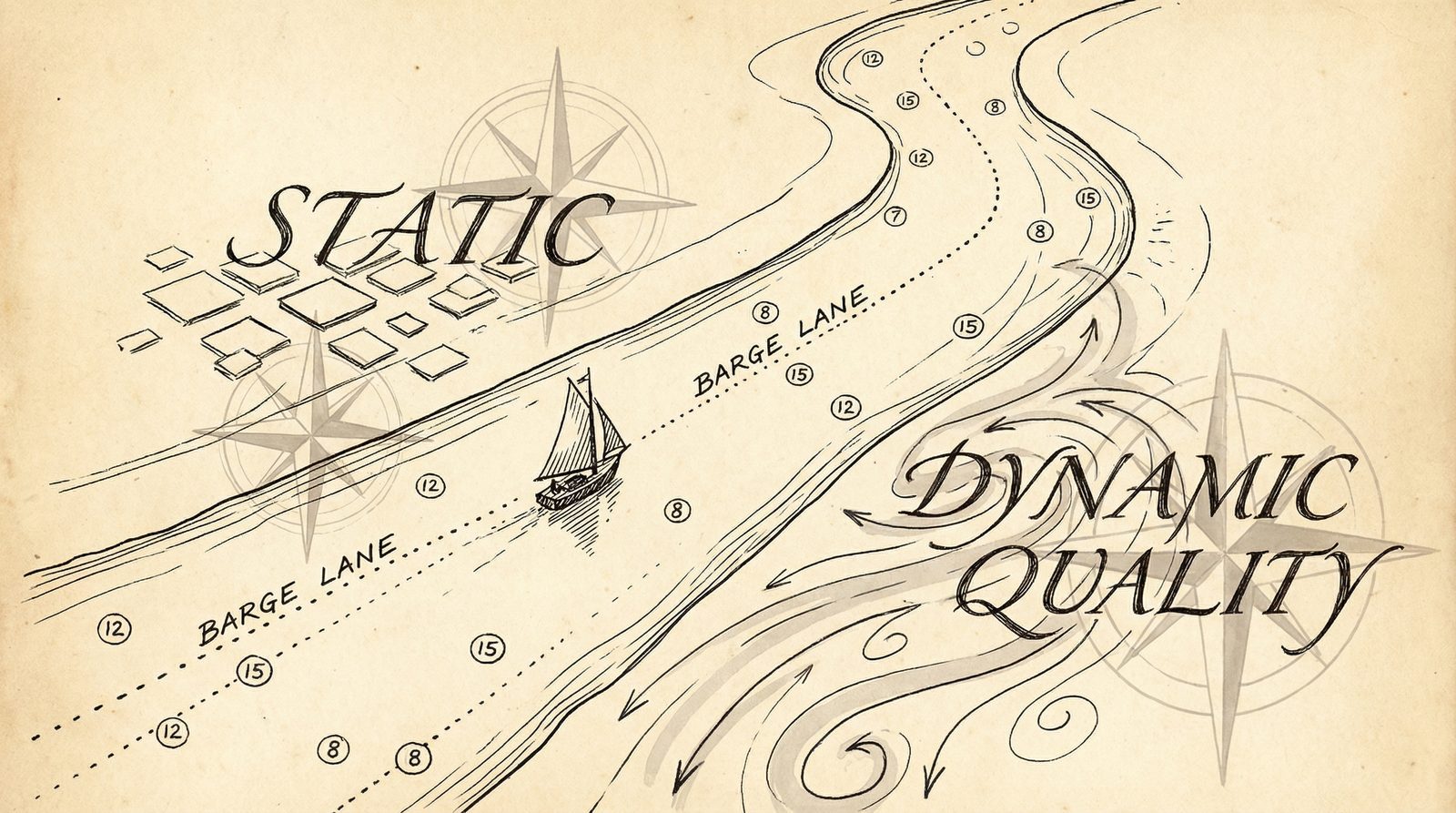
    Conceptual editorial illustration inspired by 'Lila: An Inquiry Into Morals (1991)'

    CHARACTERS & INTERIORITY

    Lila is written as bruised volatility: introduced as a bar pickup, then gradually revealed as a life shaped by exploitation and abandonment. Phaedrus often treats her as a “case” rather than a person, and the book never fully escapes that objectifying lens. Yet her sudden tenderness, rage, and moments of eerie clarity keep breaking the theoretical frame. She is the human cost the system keeps trying to metabolize.

    Phaedrus is the obsessed philosopher who has survived one metaphysical collapse and now risks repeating it. His interiority is a dense machine of categories and self-justification. The book’s emotional tension comes from watching him do something intellectually impressive while failing at something morally basic: protecting the person beside him.

    LEGACY & RECEPTION

    Lila arrived nearly two decades after Zen And The Art Of Motorcycle Maintenance, and many readers expecting another meditative road memoir were blindsided. It was respected more than loved. The metaphysics is denser, and the ending is abrasive enough to feel like a challenge thrown at the reader: if you accept the system, can you accept what the system just did?

    Its reputation has become quieter and more cultlike than Zen’s. For readers who return to it, the book often functions as the shadow text of the Metaphysics of Quality: the place where the system is not inspirational but dangerous, not a bridge to meaning but a hierarchy with teeth.

    IS IT WORTH READING?

    Lila is worth reading if you’re willing to trade narrative smoothness for intellectual risk and moral discomfort. Expect long stretches of argument punctuated by raw scenes of coercion, exhaustion, and breakdown. If you need tidy arcs or comforting resolutions, it will likely leave you stranded in the fog. If you want to see a metaphysical system tested against one damaged life until both begin to crack, it is singular.
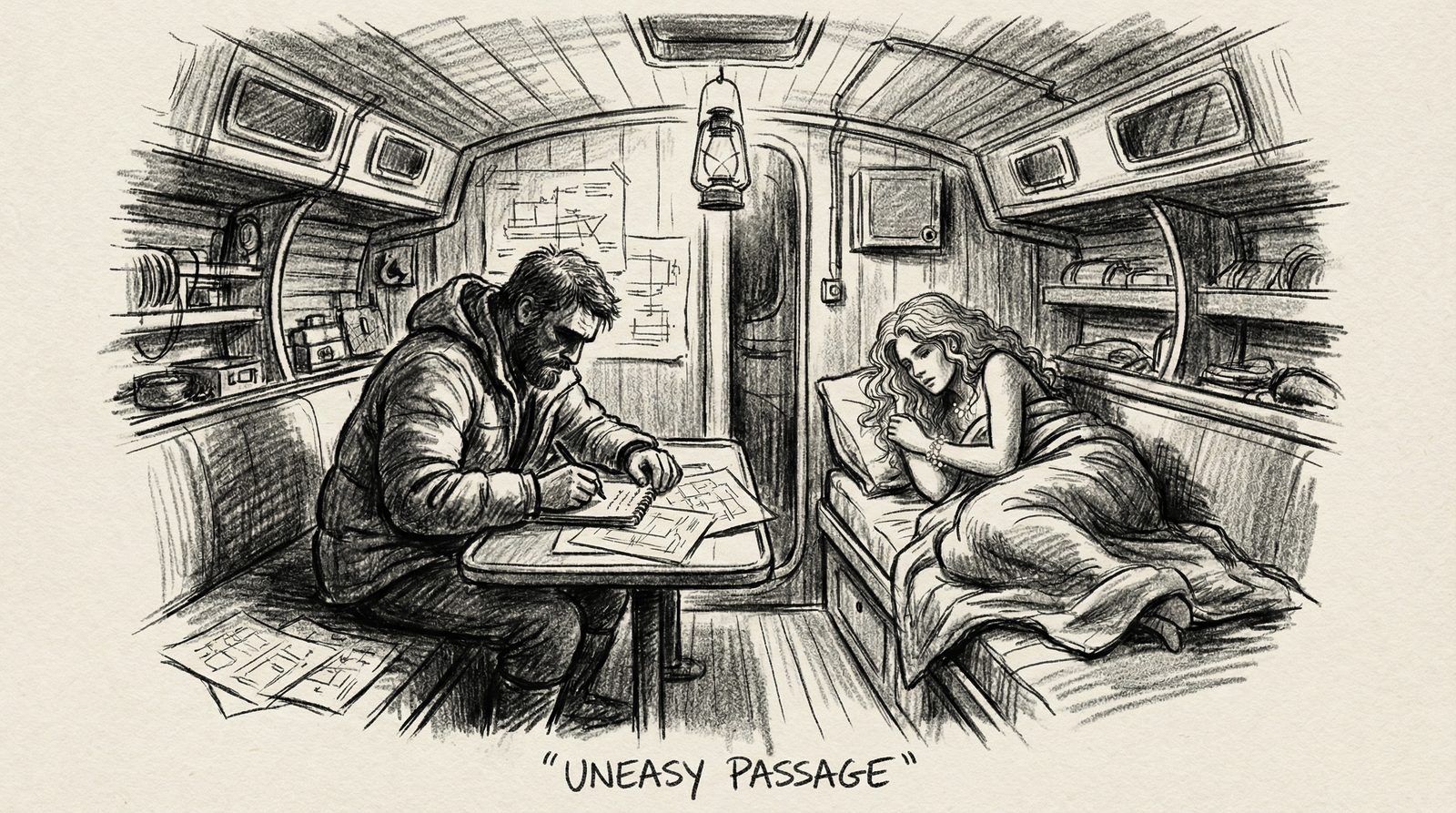
    Illustration of a core idea or motif from 'Lila: An Inquiry Into Morals (1991)'

    TRIVIA & AUTHOR FACTS

    Pirsig reportedly worked on Lila for over a decade. The boat name Phædrus echoes the name he used for his earlier pre-breakdown self, underlining how personal this inquiry is. Several episodes draw on his own sailing experience, including tense navigation among barge traffic on the Hudson.

    DISCOVERABILITY & LINKS

  • One Touch of Venus (1948)

    One Touch of Venus (1948)

    One Touch Of Venus (1948) directed by William A. Seiter. Romantic fantasy · 82 minutes · United States. Released August 1948.


    INTRODUCTION

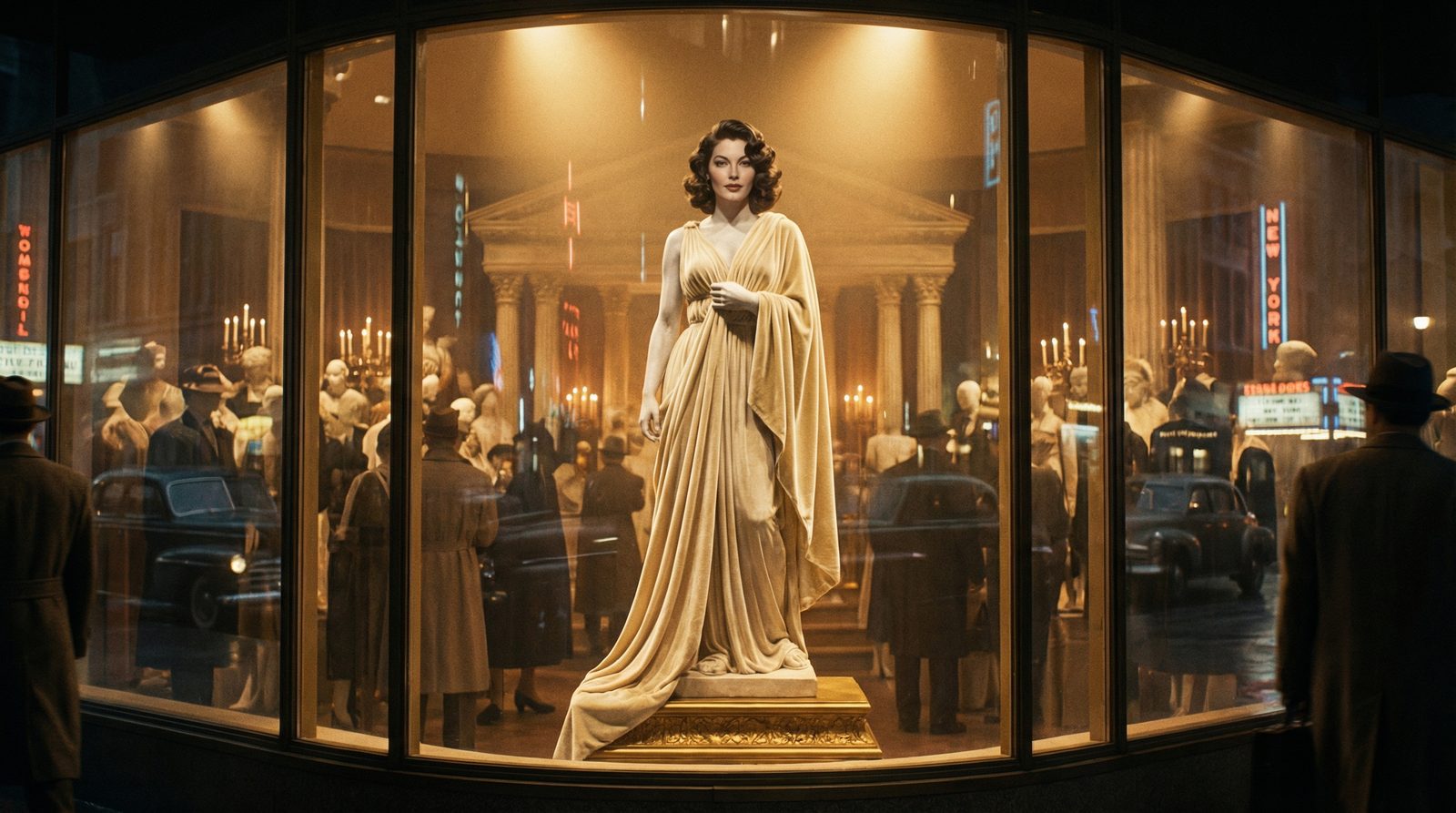
    One Touch Of Venus (1948) is a romantic fantasy that treats desire like a prank the gods play on a cautious man. Set inside a glossy New York department store, it imagines what happens when a marble statue of Venus briefly becomes the most alive person in the room. The feel is fizzy and escapist, closer to a champagne buzz than a full intoxication. Under the wisecracks and musical numbers, there is a quiet ache about compromise and the way routine can harden into something stone-like.

    The film borrows the lightness of screwball comedy but adds a supernatural twist, turning the showroom into a temple where mannequins, mirrors, and display lights become part of a modern myth. It’s a story about the shock of being seen by someone who embodies everything you secretly want and are slightly afraid to reach for.

    PLOT & THEMES

    The plot follows Eddie Hatch, a mild window dresser engaged to a sensible co-worker, Gloria. Asked to prepare a display around a newly acquired statue of Venus, he impulsively kisses the marble lips. This act awakens the goddess, who steps down from her pedestal and into his life. What follows is a supernatural romance built on a reverse-Pygmalion logic: the “ideal” tries to reshape the ordinary man into someone bolder and more honest.

    Complications pile up. The statue appears to have been stolen, Eddie is suspected, and his engagement begins to crumble as Venus shadows him through the city. The film keeps testing fantasy versus security. Venus represents the intoxicating promise of living fully in the moment, while the store and Eddie’s engagement represent routine, approval, and the comfort of predictability. The story repeatedly asks whether the true miracle is the goddess herself or the courage she provokes in a man who has accepted too small a life.

    Beneath the farce, there is a gentle critique of consumer culture. The store treats Venus as a luxury object, while the film insists she is a disruptive force that refuses to stay in a case. The recurring motif of statues and mannequins implies that most people are already half-petrified by habit. Venus’s presence is less about conquest than about waking Eddie up.

    CINEMATIC TECHNIQUE & AESTHETICS

    One Touch Of Venus is built on Classical Hollywood craft: continuity editing, unfussy camera work, and staging that prioritizes timing and performance. Venus is frequently framed in medium shots that allow stillness and gaze to carry the supernatural charge. When she first awakens, soft focus and careful lighting give her a dreamlike halo without resorting to heavy spectacle.

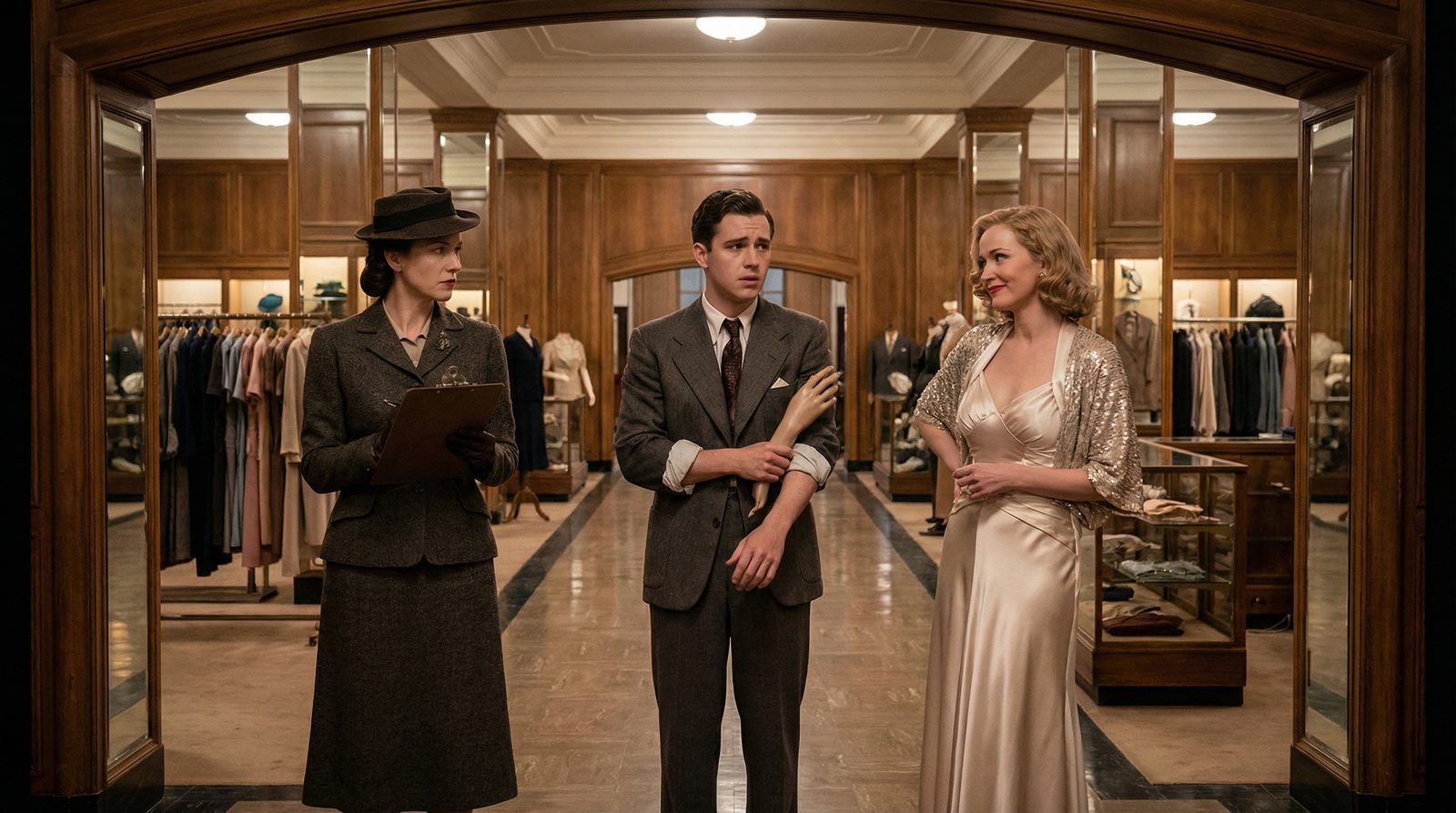
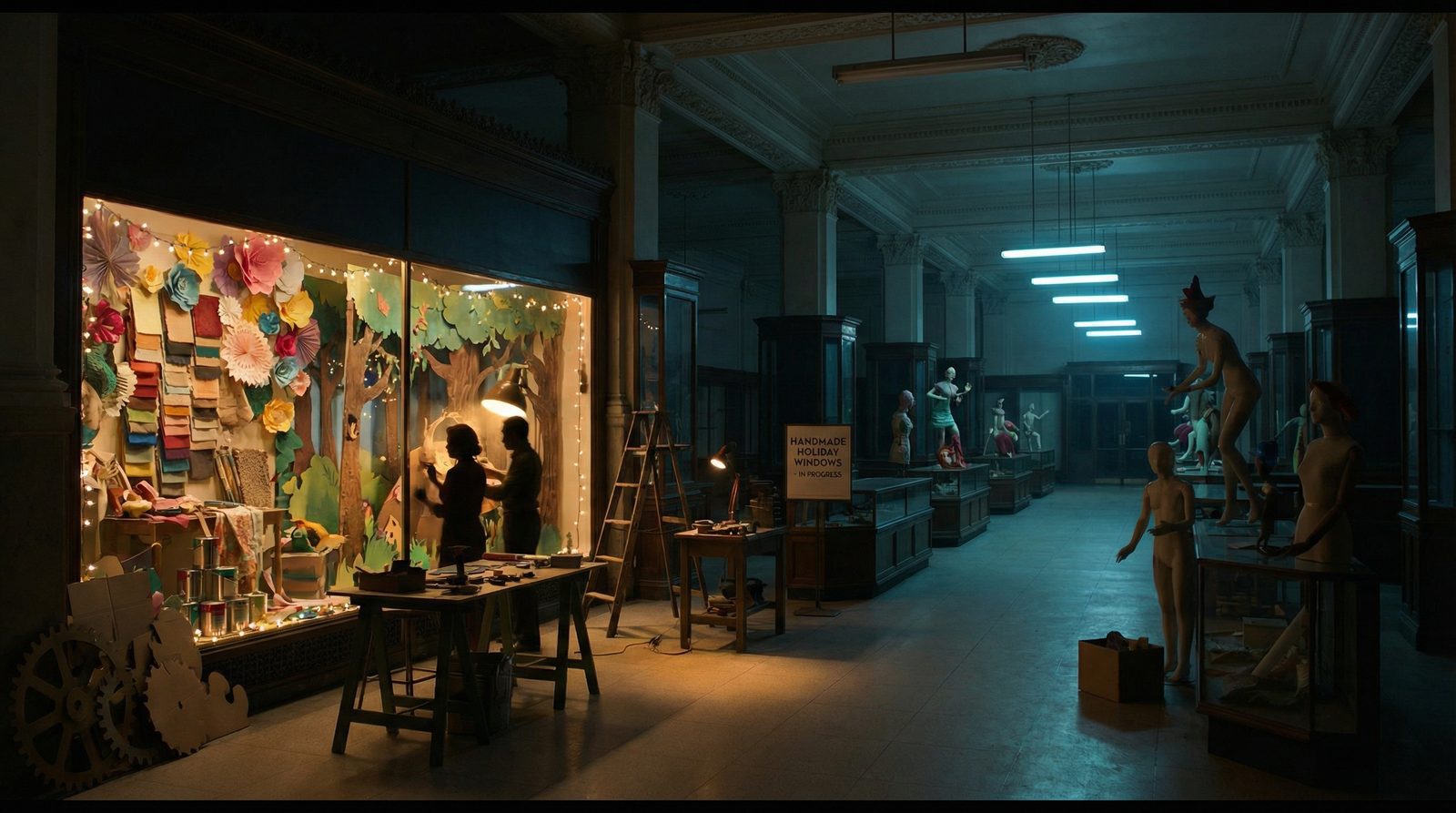
    The department store interiors are staged almost theatrically, with corridors of merchandise and mirrored surfaces that support a secondary motif of reflection. Eddie is repeatedly framed between Venus and Gloria, turning blocking into a visual diagram of divided loyalties. Musical numbers are integrated as emotional punctuation rather than set-piece spectacle.

    Special effects are restrained: match cuts, dissolves, and modest tricks that let performance do the heavy lifting. The magical elements feel intimate and psychological because the film doesn’t insist on “proving” them. It asks the viewer to accept the miracle as a change in emotional temperature, not a technical event.

    Editorial illustration inspired by 'One Touch Of Venus (1948)'

    CHARACTERS & PERFORMANCE

    Venus functions as a trickster mentor. She is not a nurturing guide so much as a teasing provocateur who disrupts Eddie’s self-image and forces choice. Ava Gardner plays her with languor and sly amusement, letting flickers of loneliness show through so immortality feels like both power and boredom.

    Eddie is an Everyman: timid, earnest, and quietly resigned. His arc is not heroic conquest but movement from passivity toward agency. Gloria fills the role of sensible stability; the film is not always fair to her, but she is written as a real person rather than a pure obstacle. The supporting cast provides a chorus of social pressure, which makes Venus’s freedom look even more radical.

    CONTEXT & LEGACY

    Adapted from the 1943 Broadway musical, One Touch Of Venus arrived at the tail end of the 1940s when Hollywood romantic fantasy offered audiences gentle escape from postwar reality. It belongs to a small cycle of films where supernatural visitors drift into urban professional life and quietly expose domestic complacency.

    Its legacy is modest but persistent. The image of a literal ideal stepping off a pedestal has lingered, and later retail-based fantasies echo its logic. Today the film reads as both a charming romantic time capsule and a window into mid-century fantasies about gender, desire, and the costs of “settling.”

    IS IT WORTH WATCHING?

    If you want light, urbane romantic fantasy with classical studio-era craft, One Touch Of Venus is worth watching. The stakes stay low and the darker implications of mortal/goddess romance are mostly sidestepped, but Ava Gardner’s performance and the film’s gentle wit make it an easy, charming experience.

    If you’re looking for a more emotionally intense or philosophically probing myth story, it may feel too airy. The pleasure here is in timing, tone, and the small sting of realizing how quickly comfort can become petrification.

    Symbolic illustration inspired by 'One Touch Of Venus (1948)'

    TRIVIA & PRODUCTION NOTES

    The film is based on the 1943 Broadway musical One Touch Of Venus, with music by Kurt Weill. The adaptation trims and reshapes much of the score, shifting emphasis toward dialogue and situational comedy. The department store setting is staged as both a temple of consumption and a playground for a bored goddess.

    The statue-to-human illusion is achieved mostly through classical studio-era craft: match cuts, dissolves, careful lighting, and performance rather than heavy effects. The short runtime keeps the farce brisk, even when the myth logic is deliberately light.

    SIMILAR FILMS

    If One Touch Of Venus appeals to you, look for other romantic fantasies where an extraordinary figure interrupts domestic routine and forces a choice between safety and aliveness. These films tend to treat magic as emotional pressure rather than spectacle.

    DISCOVERABILITY & LINKS

  • Mannequin (1987)

    Mannequin (1987)

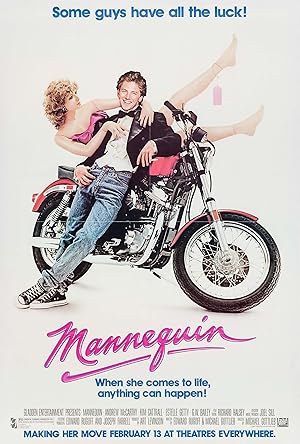
    Mannequin (1987) directed by Michael Gottlieb. Comedy · 89 minutes · United States of America. Released February 13, 1987.


    INTRODUCTION

    Mannequin (1987) is a featherlight 1980s comedy that treats a Philadelphia department store as a fairy-tale kingdom hiding in plain sight. The premise is unabashedly absurd: a struggling artist falls in love with a mannequin who comes to life only for him. The film leans into a fizzy romantic feel, with synth-pop, soft focus, and neon reflections doing as much work as the script.

    What keeps it from floating away entirely is a sincere belief in creativity, love, and the dignity of low-stakes work. Jonathan is a misfit who can’t survive the grind of 1980s capitalism until he finds a place where imagination is treated as useful labor. The result is a retail fantasy that is shamelessly cheesy and oddly tender.

    PLOT & THEMES

    Andrew McCarthy plays Jonathan Switcher, a young sculptor whose perfectionism keeps getting him fired from menial jobs. His one triumph is a mannequin he designs, which later appears at the struggling department store Prince & Company. When the mannequin—inhabited by the spirit of Emmy—comes to life for him alone, Jonathan stumbles into a secret romance and a new career as a window dresser. The core is a Pygmalion fantasy: the artist rewarded when his creation becomes real.

    The story is also a makeover narrative, except the subject is a failing business. Emmy and Jonathan’s elaborate window displays transform Prince & Company into a buzzing 1980s dreamspace. Under the slapstick, the film carries a mild critique of corporate logic: Jonathan’s artistry is only “validated” once it boosts sales, and Emmy’s daylight restriction makes love itself conditional on hiding from the practical world.

    The workplace becomes a family enclave. Misfit employees defend their shared space against corporate raiders, and the movie treats retail labor as something that can still contain dignity when it’s fueled by care, craft, and community rather than fear. That is the film’s soft-hearted trick: it turns fluorescent capitalism into an arena where magic can briefly win.

    Official poster for 'Mannequin (1987)'

    CINEMATIC TECHNIQUE & AESTHETICS

    The film’s most reliable tool is the 1980s montage. Jonathan and Emmy’s after-hours escapades unfold in music-driven sequences that feel closer to MTV than classical Hollywood. The famous “Nothing’s Gonna Stop Us Now” montage compresses an entire corporate turnaround into pop anthem logic: if the windows look magical, the world becomes magical.

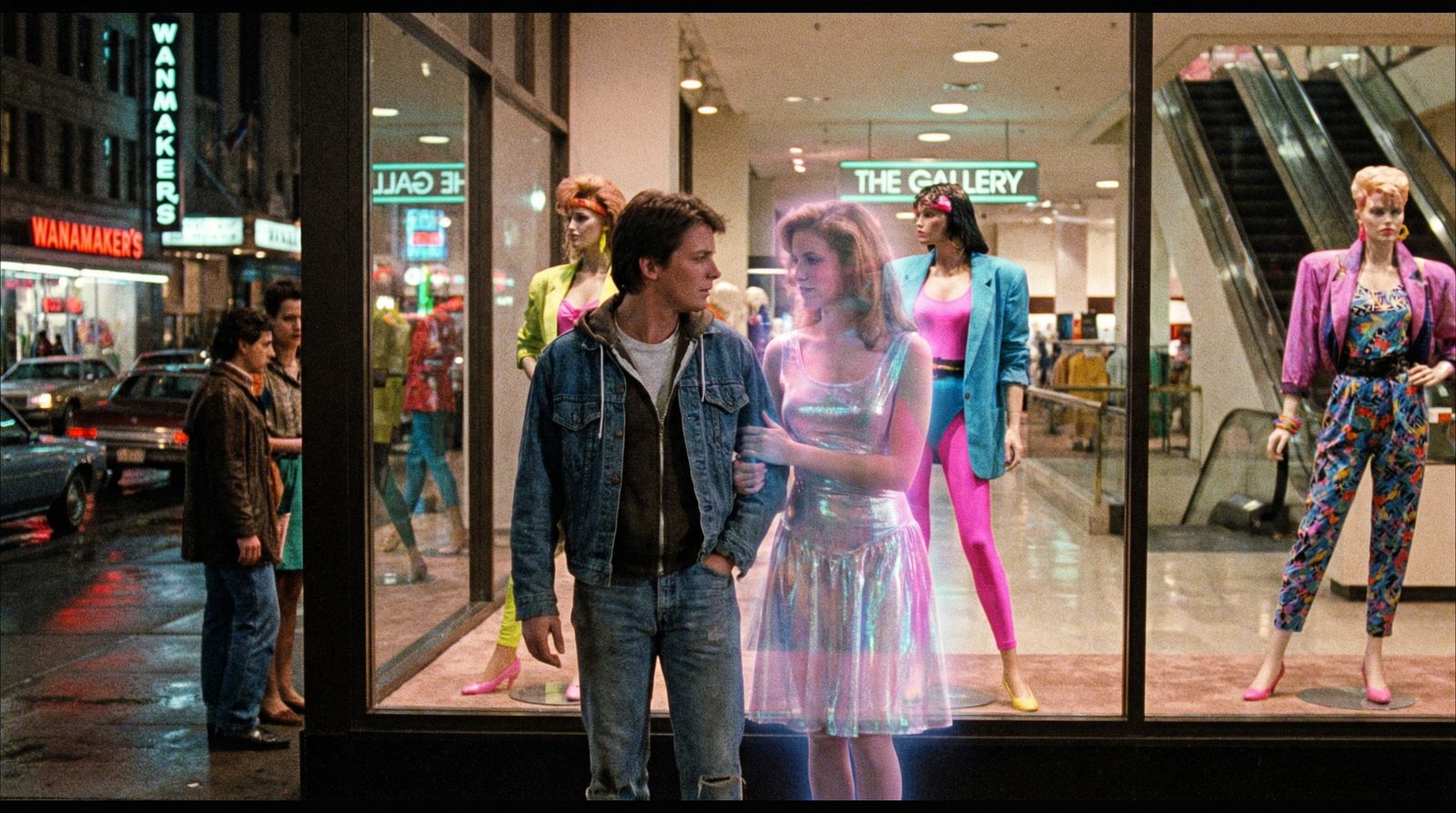
    Lighting and production design build a clean binary between dead daytime retail and enchanted night. Fluorescent overheads flatten everything during business hours, while the store glows after dark with saturated pinks, blues, and golds that keep the romance buoyant. The camera remains straightforward, but loosens when Emmy is alive, treating the store like a stage for costume changes and physical comedy.

    The transformation effect is charmingly low-tech: match-cuts, practical posing, and simple tricks that ask the audience to play along. That handmade quality is part of the film’s appeal. It never tries to convince you the magic is “real.” It tries to convince you it is worth believing in for 89 minutes.

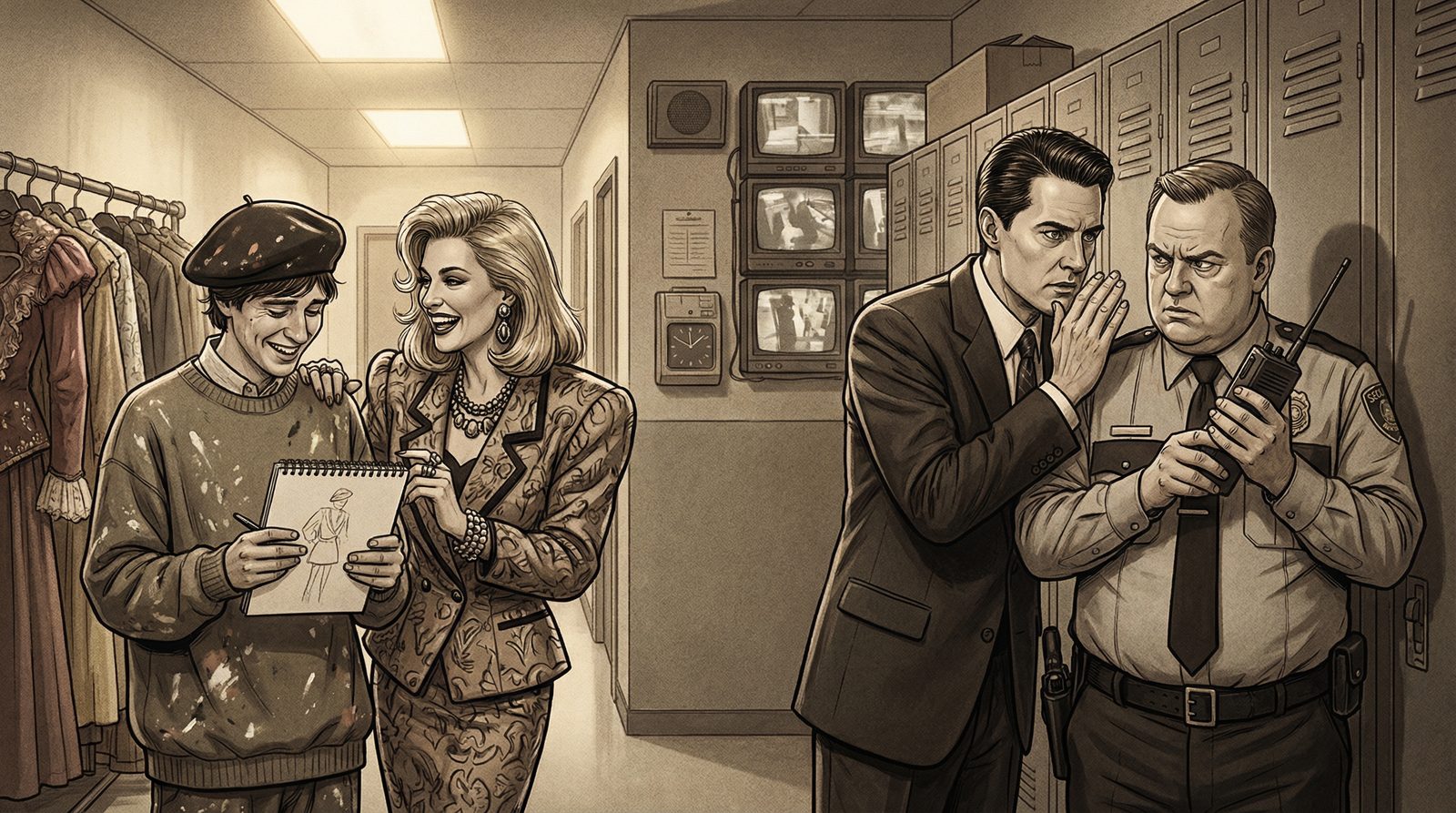
    Editorial illustration inspired by 'Mannequin (1987)'

    CHARACTERS & PERFORMANCE

    Jonathan Switcher is a gentle dreamer archetype. Andrew McCarthy plays him with boyish sincerity; he’s more convincing as a sweet misfit than as a tormented artist. Kim Cattrall’s Emmy provides the film’s spark. She plays the fish-out-of-water variation with physical delight, helping the Pygmalion premise feel less like obsession and more like mutual awakening.

    The most vivid presence is Hollywood Montrose, played by Meshach Taylor. He functions as a flamboyant mentor and protector of the creative bubble inside the store. The performance is broad and rooted in stereotype, but also genuinely warm, which makes Hollywood the emotional center of the workplace family. On the antagonist side, corporate climbers and buffoonish security exist mainly to keep the fairy-tale logic simple: joyless adults threaten the kingdom, so imagination must defend it.

    CONTEXT & LEGACY

    Released in 1987, Mannequin arrived during a wave of 1980s high-concept fantasies that fused romance, consumer culture, and gentle magical disruption. Critics were largely hostile, but audiences responded to its retail fantasy and its sincerity about creativity as salvation. The soundtrack, especially Starship’s “Nothing’s Gonna Stop Us Now,” became more culturally durable than the narrative itself.

    Over time, the film has settled into cult status as an 80s time capsule. Its gender roles and queer coding feel dated, yet Hollywood Montrose has also been reclaimed by some viewers as an early (if imperfect) example of a visibly queer-coded figure in mainstream comedy. The legacy is less about artistic innovation and more about mood: a bright, artificial dream of work, love, and store-window magic.

    IS IT WORTH WATCHING?

    It depends on your tolerance for 1980s cheese and your appetite for high-concept romance. As a narrative, it’s flimsy and often clumsy, with jokes that miss and attitudes that have aged unevenly. As a feel, it’s oddly winning. If you like glossy 80s fantasies and don’t mind a premise that runs on pure charm, it’s a sometimes-charming watch. If you want grounded character realism, the mannequin romance will likely leave you cold.

    Symbolic illustration inspired by 'Mannequin (1987)'

    TRIVIA & PRODUCTION NOTES

    Mannequin was shot largely on location in Philadelphia, with exteriors and many interiors filmed at Wanamaker’s, which adds authenticity to its retail fantasy. The production relied on full-body mannequins, performance posing, and practical editing tricks to sell the transformation. Meshach Taylor’s presence as Hollywood Montrose became one of the film’s most memorable elements, shaping the tone of the store-as-family dynamic.

    The film’s modest box office success was amplified by its soundtrack. Starship’s “Nothing’s Gonna Stop Us Now” became a major hit and helped cement the movie’s place in 1980s pop culture. A sequel followed, recycling the premise with a new cast and setting, which testifies to the durable appeal of department-store magic even when the concept is thin.

    SIMILAR FILMS

    If Mannequin’s retail fantasy and romantic absurdity appeals to you, seek out other high-concept comedies where magic collides with everyday work and consumer life. The best matches tend to share its buoyant tone, its affection for misfits, and its willingness to treat commerce as a stage for invention.

    DISCOVERABILITY & LINKS

  • Misery 1987

    Misery 1987

    By: Stephen King
    Genre: Horror
    Country: United States


    INTRODUCTION

    Misery is a novel about pain as a kind of language. A bestselling author, a lonely superfan, and a snowbound house in rural Colorado: King strips away the outside world until only two people and their shared hallucination of a fictional heroine remain. The recurring motif of confinement is everywhere — locked doors, plaster dust, the wheelchair’s narrow orbit around the bedroom. As the story tightens, another motif surfaces: the blurred line between creation and self-destruction. The book is less about jump scares than about the slow erosion of will, the way dependency can feel like a sick form of intimacy. Misery is a horror story, yes, but it’s also a bitter little fable about what happens when your work belongs more to your audience than to you.


    PLOT & THEMES

    Misery opens with novelist Paul Sheldon waking up after a car crash in rural Colorado, his legs shattered, his body soaked in painkillers. He’s in the home of Annie Wilkes, a former nurse who calls herself his “number-one fan.” At first the trope of the rescuer turned jailer plays almost gently: she feeds him, manages his medication, and praises his work. Then she discovers his latest manuscript, where he has killed off Misery, and the story turns. She burns his new book in front of him, forcing him to watch every page go black in the grill, and demands he write Misery’s Return just for her.

    The motif of bodily mutilation runs alongside the erosion of Paul’s autonomy — from his shattered legs to the infamous amputation of his foot with an axe, and later the loss of his thumb. Unlike the film adaptation, where the sheriff dies inside the house, in the novel a state trooper becomes suspicious of Annie and investigates Paul’s disappearance; Annie murders him out in the yard, running him over with her riding lawnmower while Paul watches helplessly from the window. The world keeps trying to seep in, and Annie keeps cutting it off, figuratively and literally.

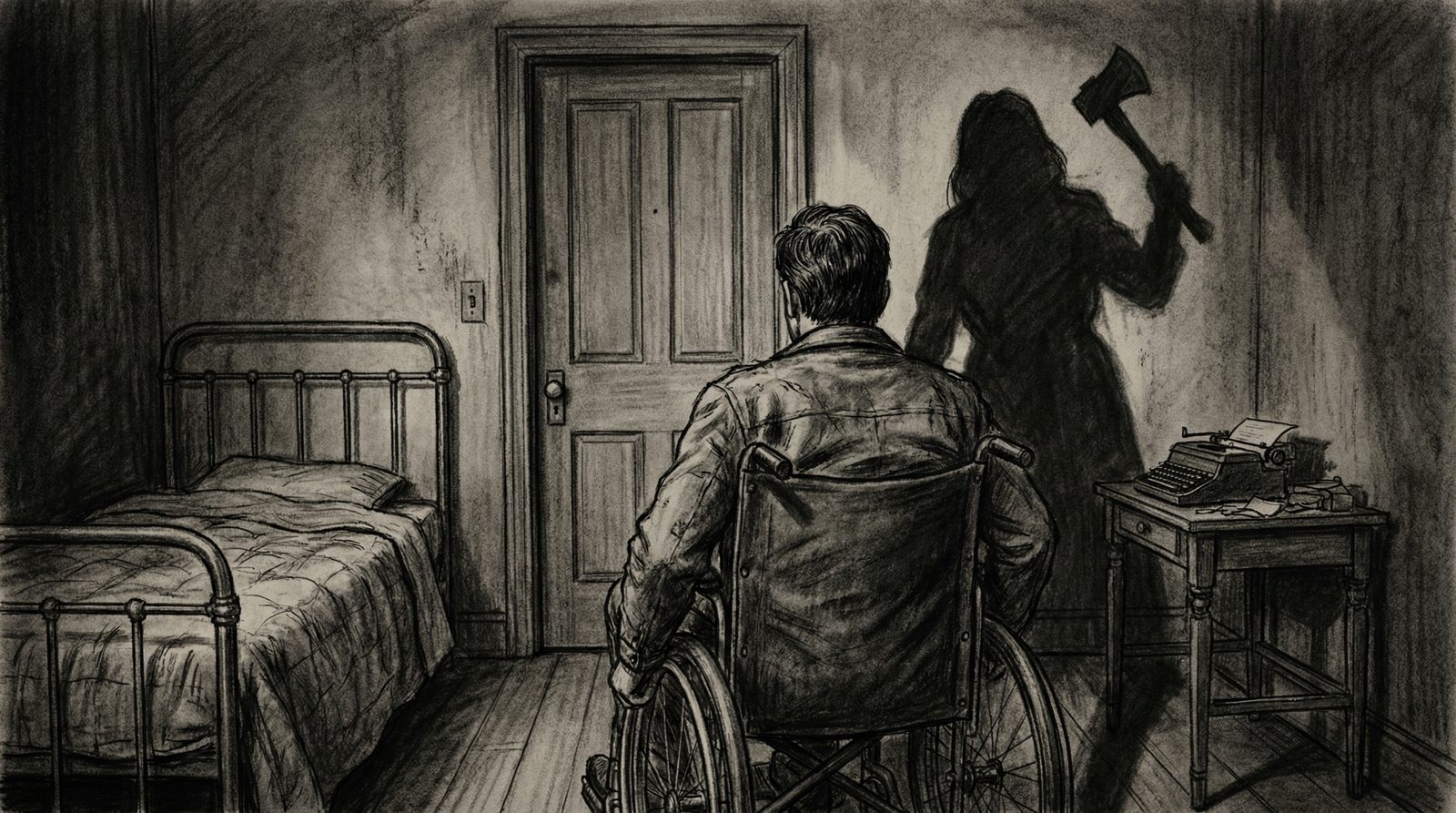
    King runs addiction and dependency as parallel themes. Paul’s history with alcohol and cigarettes mirrors his new dependency on Novril, the fictional painkiller Annie doles out and withholds. His writing of Misery’s Return becomes a survival strategy and a self-betrayal: he’s resurrecting a character he despises in order to live. The final showdown begins in the bedroom, where Paul sets fire to the manuscript as a decoy and uses the heavy typewriter as a weapon; Annie is later found dead in the barn after crawling out of the house, apparently on her way to fetch a chainsaw. Paul survives, but he is haunted — literally seeing Annie in public places, still hearing her voice. Unlike the cleaner catharsis of many film adaptations, the novel leaves him damaged, sober, and permanently entangled with the monster he outwrote but never quite escaped.

    Read alongside something like The Shining (1977) or the film Black Swan (2010), Misery sits in a line of stories where artistic creation becomes a crucible that burns away everything extraneous, including sanity.


    PROSE & NARRATIVE STRUCTURE

    The book uses close third-person as its primary narrative technique, locked almost claustrophobically inside Paul’s mind. We feel every throb in his shattered legs, every itch he can’t scratch, every spike of terror when he hears Annie’s car on the gravel. The prose has a jittery, pain-soaked feel: sentences sometimes fracture under the weight of morphine dreams and panic. King litters the text with Paul’s private slang — “goddams,” “laughing place,” the way he calls his typewriter the “Royal” as if it were a temperamental animal. These details never made it into the more streamlined adaptation, but on the page they’re crucial to how we inhabit his consciousness.

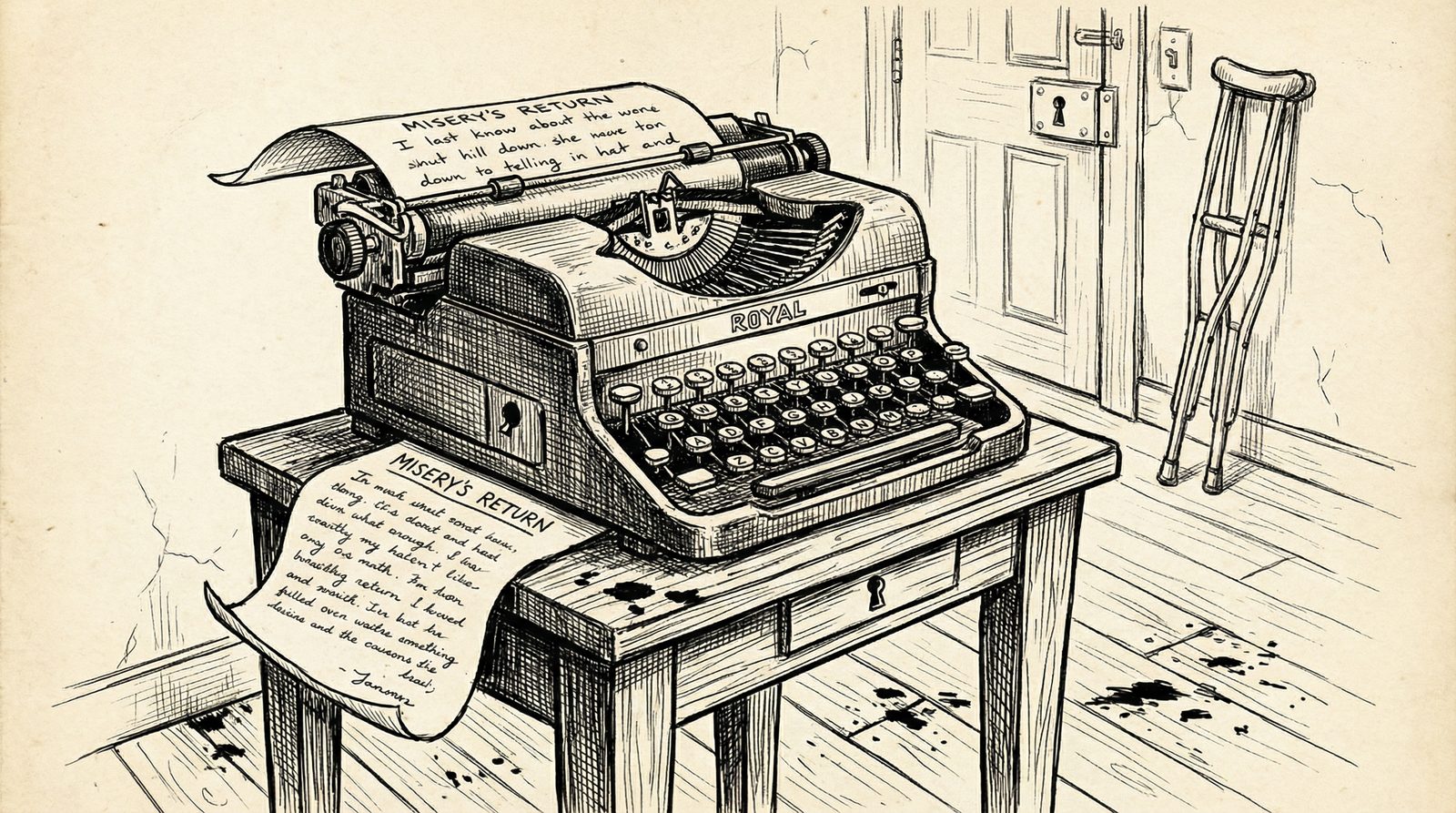
    Structurally, Misery is a chamber drama. Almost everything happens in one house, mostly one room, and King leans hard on repetition: Annie’s entrances, the ritual of the Novril pills, the clack of the typewriter keys. Interleaved with the main narrative are long passages of Misery’s Return itself, printed in a faux-typed font in many editions, complete with typos when keys stick or letters break off the typewriter. This embedded narrative isn’t just a gimmick; it’s a second story about resurrection and control that mirrors Paul’s situation.

    The book’s pacing is a slow crank. King alternates between stretches of grinding routine and short, vicious bursts of violence — the feeding of the rat in the basement, the discovery of the scrapbook that documents Annie’s past murders at Sidewinder General Hospital, the moment she cuts off Paul’s foot for trying to escape. The structure traps the reader the way Annie traps Paul: you learn the rhythms of her moods, you wait for the next explosion, and you know, long before he does, that there is no safe way out.

    Conceptual editorial illustration inspired by 'Misery (1987)'

    CHARACTERS & INTERIORITY

    Paul Sheldon begins as the familiar archetype of the jaded author. Trapped in Annie’s guest room, he’s stripped down to something more raw. His interior monologue swings between self-disgust, petty vanity, and a stubborn will to live. He bargains with himself as much as with Annie — promising another chapter in exchange for another day, another cigarette, another chance to crawl to the door.

    Annie Wilkes is one of King’s most precise portraits of madness. On the surface she’s the nurturing caregiver, the “good nurse” who knows how to set a splint and manage a dosage. Underneath, she’s a childlike absolutist, incapable of tolerating narrative disappointment. Her language — “dirty bird,” “cockadoodie,” her fury at “swearing” — gives her the affect of a prudish aunt, which only makes the sudden violence more jarring. The scrapbook in the spare room, where she has pasted clippings about the deaths of infants and elderly patients under her care, is a quiet, book-only horror that deepens her beyond the more theatrical moments.

    Their relationship is not simply captor and captive; it’s a grotesque parody of author and audience. Annie demands emotional honesty and narrative satisfaction on her terms. Paul, in turn, learns to manipulate her through plot twists, cliffhangers, and the promise of Misery’s resurrection. The interiority of both characters is built around control — who has it, who’s pretending to have it, and what happens when it shifts by a fraction. Even minor figures, like the store clerk at the Silver Creek market who notices Annie buying reams of paper, exist mainly as distant reminders that there is a world where people have names and choices, a world Paul can no longer quite reach.


    LEGACY & RECEPTION

    Within Stephen King’s body of work, Misery is one of the leaner, more disciplined novels, often cited alongside Gerald’s Game (1992) as proof that he can do tight, small-scale horror as well as expansive epics. Readers and critics have long read it as King’s argument with his own fame: Paul’s resentment of the Misery books echoes King’s unease with being known primarily for horror when he wanted to write other things. The novel’s focus on writer’s block, addiction, and the punishing expectations of fans has made it a touchstone for discussions about parasocial relationships decades before that term became common.

    The book’s ending, with Paul sober in New York, still seeing Annie’s ghost in a passing stranger and still half-hallucinating her voice as he writes a new, non-Misery novel, leaves a lingering aftertaste. Survival here is not triumph but a damaged continuation. That refusal to tidy up the trauma is part of why the novel has endured, even as its more famous adaptation softened some of the bodily harm and gave audiences a slightly clearer emotional release. On the page, Misery remains a sharp little knife aimed at the uneasy bond between artists and the people who consume them.


    IS IT WORTH READING?

    If you have any patience for psychological horror, Misery is worth your time. It’s compact, vicious, and oddly moving in its portrait of a man bargaining with his own worst habits as much as with his captor. The violence is graphic but not gratuitous; the real horror is the loss of agency and the way pain narrows a life to a few square feet of floor and a stack of typed pages. It’s also one of the clearest windows into how a popular writer thinks about his craft under pressure. If you want haunted houses or sprawling mythologies, look elsewhere. If you want two people locked in a room, fighting over a story and a body, this is as good as it gets.

    Illustration of a core idea or motif from 'Misery (1987)'

    TRIVIA & AUTHOR FACTS

    Stephen King has said that the idea for Misery came from a dream about a fan who held him captive and forced him to write. The fictional painkiller Novril is part of a loose web of invented drugs that appear across his work, reflecting his own struggles with substance abuse during the period. The town of Sidewinder, mentioned in Annie’s nursing history, also appears elsewhere in his Colorado-set stories, tying this small, brutal narrative into a larger imagined geography.

    The embedded novel Misery’s Return was originally much shorter in draft; King expanded it to better show Paul’s reluctant craftsmanship. The decision to have Annie’s body ultimately discovered in the barn rather than in the main house was a late structural change, meant to move the final confrontation out of the now-familiar bedroom and into a rougher, more elemental space. King has also noted that Paul’s shift from genre series work to a more serious, literary-leaning manuscript after his ordeal mirrors his own periodic attempts to step outside the expectations attached to his name.


    SIMILAR BOOKS

    If Misery appeals to you, try The Shining (1977) for another intense portrait of a writer under supernatural and psychological siege. Gerald’s Game (1992) offers a similar single-location nightmare, this time inside a marriage. For a different angle on dangerous devotion, John Fowles’s The Collector (1963) tracks a kidnapper who treats his victim like a rare specimen, not unlike Annie treating Paul as the source of her beloved stories. And if the focus on bodily vulnerability and constrained space is what grips you, you might also seek out more recent psychological horror that keeps its cast small and its emotional stakes painfully close to the skin.


    DISCOVERABILITY & LINKS

    This review of Misery is connected to wider motifs, tropes, and related works across the site, helping you trace patterns of confinement, obsession, and the uneasy bond between creators and their audiences through other books and media.