INTRODUCTION
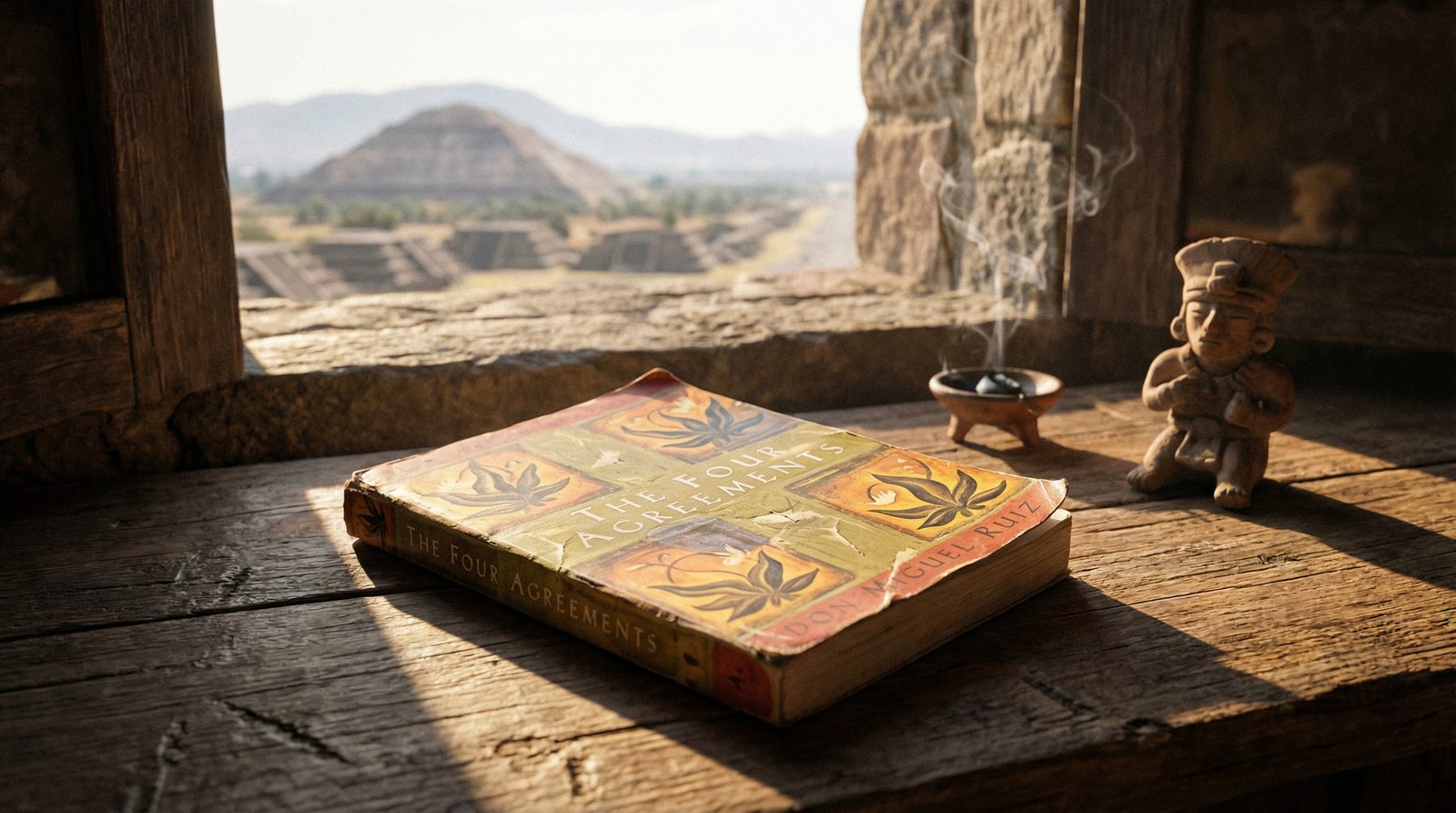
The Four Agreements (1997) by Don Miguel Ruiz
Spirituality / Self-help · 163 pages · Mexico / United States
The Four Agreements is not a novel and barely a conventional self-help manual. It reads like a compact sermon whispered in a quiet late-1990s bookstore aisle. Don Miguel Ruiz uses Toltec framing, parables, and stern tenderness to argue that everyday life is a kind of dream shaped by language and belief. The mood is intimate: part kitchen-table conversation, part initiation rite.
A recurring motif of domestication runs through the book: children trained to accept praise, punishment, and inherited fear until they internalize an inner Judge and a cowering Victim. The feel is both confrontational and consoling. Ruiz is not interested in comforting illusions. He wants you to see how your own words and agreements have built a personal hell, then offers four new agreements as a way to walk out.
PLOT & THEMES
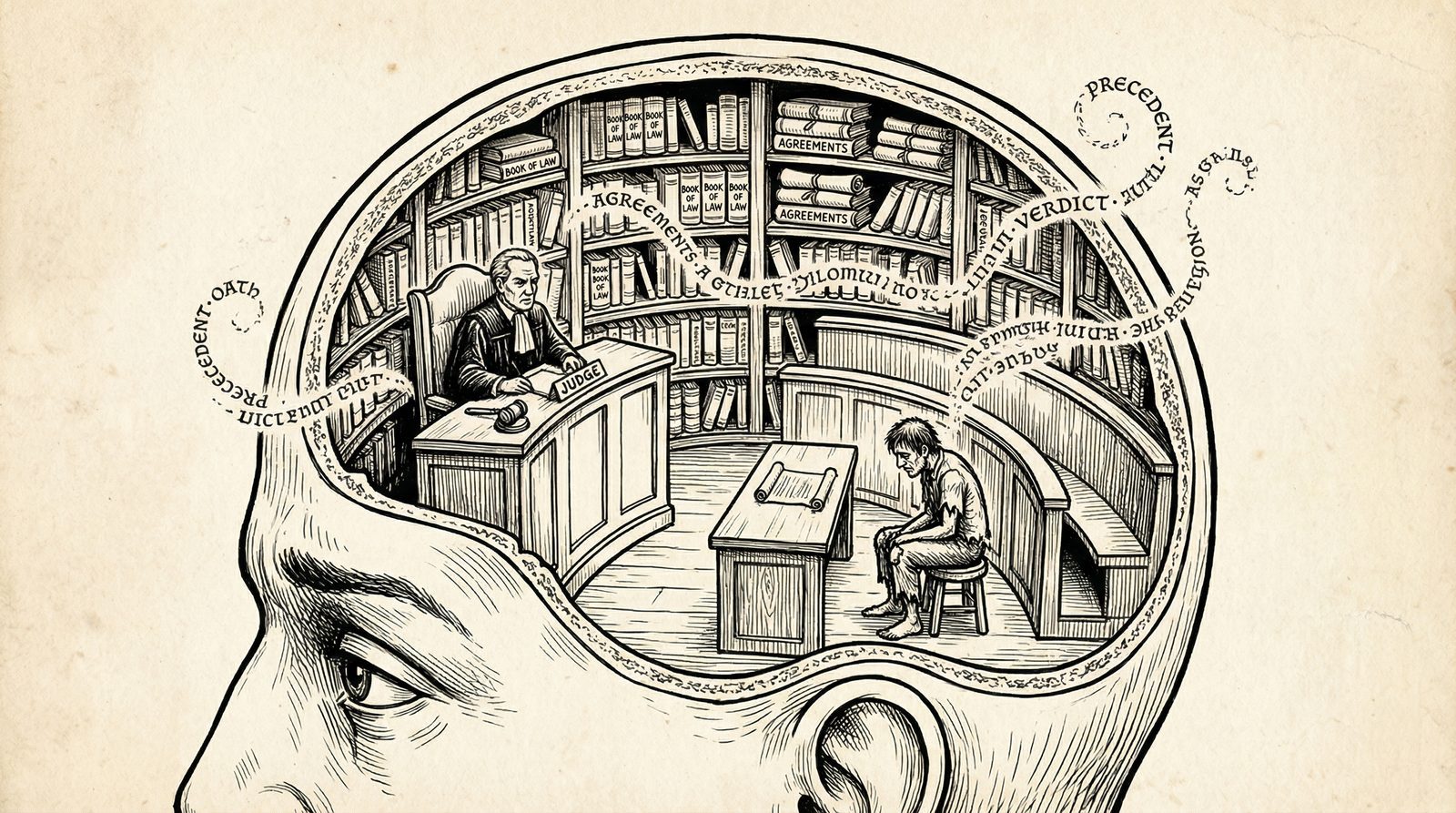
Because The Four Agreements is didactic rather than narrative, its “plot” is an argument unfolding in stages. Ruiz opens with a mythic Toltec origin story and the idea that humans live inside a collective “Dream of the Planet.” From there he explains how domestication installs an internal Book of Law — a private legal code built from reward and punishment — that sustains the inner Judge and the inner Victim.
The four agreements structure the middle of the book. Each is explored through concrete scenes: gossip poisoning reputations, assumptions detonating relationships, a stray comment taken personally until it becomes destiny. A second motif — personal hell versus personal heaven — frames these examples. The same outer life can be lived in torment or in freedom depending on which agreements you accept.
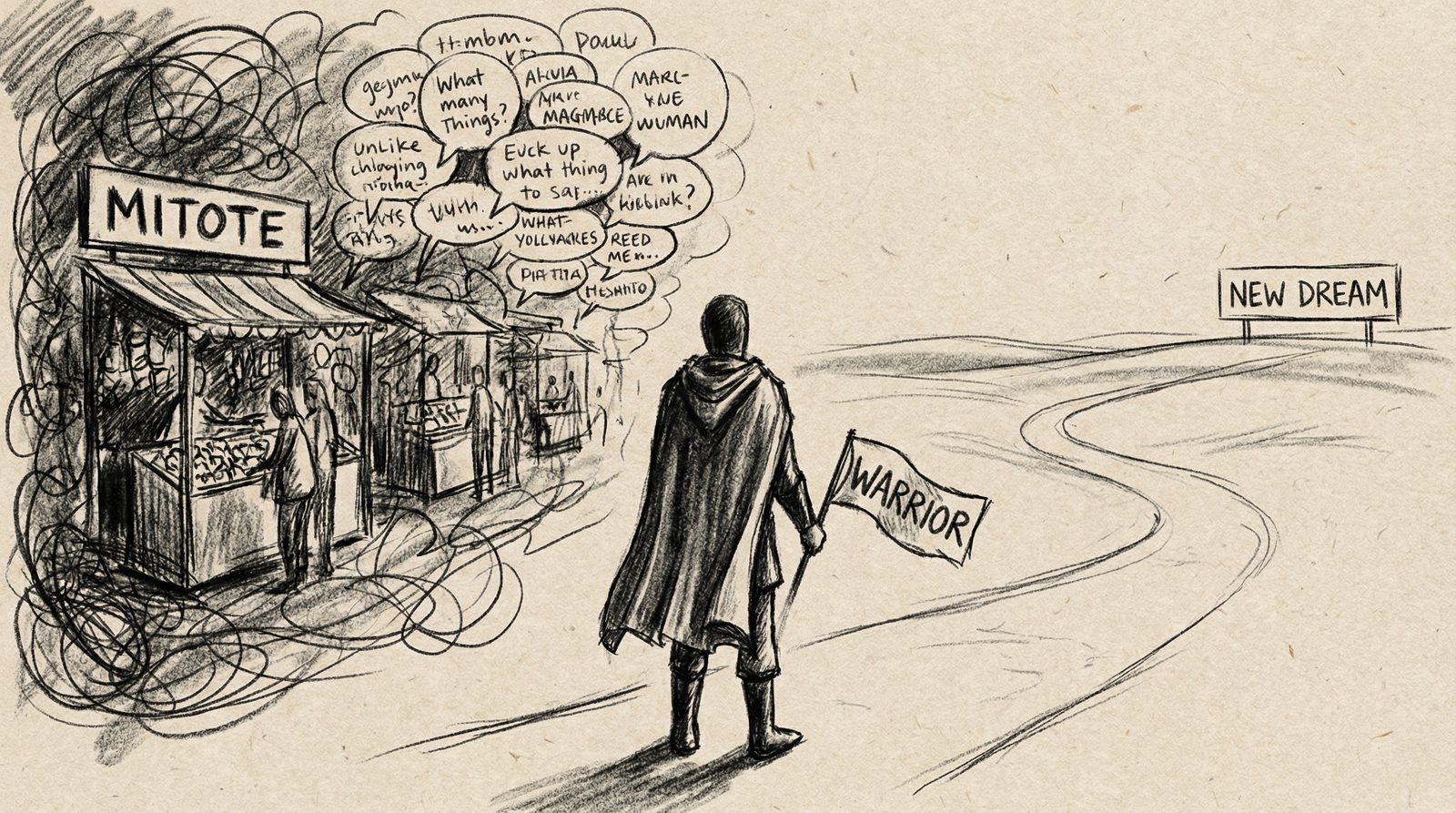
Ruiz stays close to the mechanics of belief and language. The ending is not a twist but an invitation: a “new dream” of heaven on earth created by daily practice. There is no external salvation scene. The book’s final stance is bluntly practical: freedom is the discipline of choosing these agreements again and again, especially when stress tempts you back into the old courtroom.
PROSE & NARRATIVE STRUCTURE
The prose is plain, almost aggressively so. Ruiz favors short declarative sentences and repeats key phrases until they become incantatory. The technique is didactic exposition punctuated by parables and brief dialogues. Small vignettes — a lover scripting disaster, a neighbor spreading poison through talk, a child shrinking under disapproval — give the abstract claims lived texture.
Structurally, the book is circular rather than linear. It begins with the Dream and returns to the Dream after walking the reader through the four agreements, so the return feels altered rather than redundant. Chapters are short, with subheadings that read like spoken cues. The feel is rhythmic and insistent, as if you’re being walked around the same insight from slightly different angles until resistance wears down.
Guided visualization is used as participation. Ruiz asks you to picture the inner courtroom, to notice the moment the Judge speaks, to imagine what it would mean to live without inherited punishment scripts. The austerity is deliberate. The sentences are designed as tools meant to be remembered and reused rather than admired.
CHARACTERS & INTERIORITY
There are no conventional characters, yet the book is crowded with interior figures. The Judge and the Victim are presented as inner forces: a stern authority endlessly reviewing your life, and a wounded self accepting every sentence. Ruiz also sketches the Warrior — the part of the self willing to confront inherited agreements and endure discomfort to gain freedom. These are not developed like novelistic personalities, but they give shape to psychological processes Ruiz wants the reader to recognize in real time.
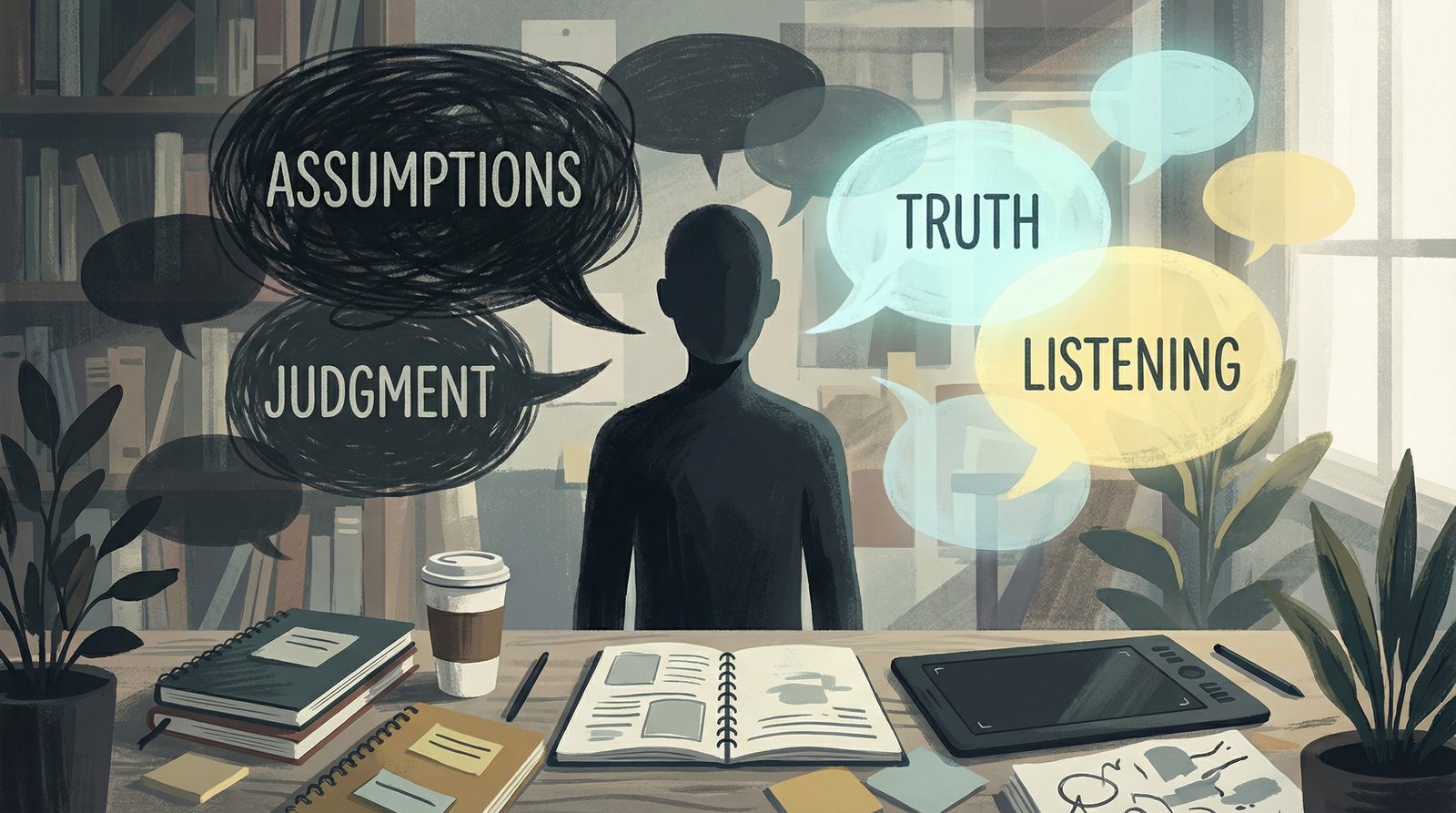
Interiority is explored through direct address. The book repeatedly pushes the reader to notice how assumptions form in conversation, how quickly a stray comment becomes a verdict, and how easily self-accusation is accepted as truth. The effect is quietly confrontational: you are not allowed to remain a detached observer.
Minor presences appear as illustrative types — gossiping neighbors, punishing parents, mythic Toltec teachers — forming a chorus that shows how the same inner drama plays out in families, villages, and cultures. The “plot,” in other words, is domestication being diagnosed and then challenged.
LEGACY & RECEPTION
Since its late-1990s publication, The Four Agreements has become one of those quiet bestsellers that live on nightstands and in dog-eared office copies. Its influence is less about Toltec lore and more about a language shift: “don’t take it personally” and “don’t make assumptions” have seeped into coaching, therapy-lite conversations, and corporate workshops.
The ending vision — a personal heaven created by disciplined agreements — has been praised as empowering and criticized as naïve about structural injustice. Even critics tend to acknowledge its clarity. Ruiz never promises the world will change; he promises your relationship to it can. Its endurance suggests that for many readers, the Dream of the Planet metaphor is less escapist mysticism than a practical model for how belief shapes experience.
IS IT WORTH READING?
Whether it’s worth your time depends on your tolerance for repetition and your hunger for blunt spiritual pragmatism. If you want nuanced clinical psychology, the Judge and Victim framing may feel too stark. If you want a short, memorable framework that can be tested immediately in speech, resentment, and expectation, the book earns its reputation.
The real strength is not novelty but focus. Ruiz chooses four levers — word, personalization, assumption, effort — and pulls them hard. The result can feel reductive, yet many readers find that one agreement, especially “don’t take anything personally,” shifts years of habitual conflict. It’s a quick read that lingers precisely because it is portable.
TRIVIA & AUTHOR FACTS
Ruiz was born into a family of healers in Mexico and initially trained as a surgeon. A near-fatal car accident pushed him back toward spiritual work. The Four Agreements is presented as a distillation of Toltec wisdom, though it is best understood as a modern spiritual synthesis using Toltec framing to deliver a portable practice code.
The book’s most distinctive symbolic vocabulary includes Teotihuacan as origin site, the Book of Law as inner codex written during domestication, and the “mitote,” the noisy marketplace of the mind. These images give the otherwise austere prose its mythic pressure.
SIMILAR BOOKS
If this resonates, you may prefer other concise spiritual manuals that mix story and instruction. The most relevant neighbors tend to share the same “portable framework” energy: language you can carry into daily friction, not a system you must join.
DISCOVERABILITY & LINKS
Related books: The Fifth Agreement, Way Of The Peaceful Warrior
Related motifs: Spiritual Awakening, Inner Journey
Related creator: Don Miguel Ruiz