
Place: Pacific Northwest

  • The Laws Of Spirit (1995)

    The Laws Of Spirit (1995)

    INTRODUCTION

    The Laws Of Spirit (1995) by Dan Millman
    Spiritual fable · 108 pages · United States


    The Laws Of Spirit is a quiet, walking book. A nameless traveler hikes into the mountains, exhausted by the noise of late 20th-century life, and meets an ageless woman who introduces herself simply as the Sage. Over the course of a single day and night, they walk ridgelines, cross streams, and talk through ten laws that supposedly govern inner freedom. The mood is gentle but insistent, a stripped-down clarity rather than mystical fireworks.

    This is not a novel in the conventional sense. It’s a spiritual allegory that borrows the motif of pilgrimage and pares it down to two voices and a trail. Millman uses the landscape itself — wind in the pines, moon on snowmelt, the physical difficulty of footing — as a third presence, a reminder that the answers here are meant to feel elemental rather than esoteric.

    PLOT & THEMES

    The “plot” is deliberately skeletal. A hiker escapes into the mountains and meets the Sage in a high meadow. She leads him along a simple circuit through forest, river gorge, and a small lakeside town, using each stop to embody one of the ten laws: Balance, Choice, Process, Presence, Compassion, Faith, Expectation, Integrity, Action, and Surrender. The trope is familiar — wise guide leading a seeker through staged lessons — but Millman keeps the scale intimate. There are no miracles, only small, charged encounters.

    What makes the book work is how it anchors abstraction in physical friction. A rickety bridge becomes the Law of Balance. A diner becomes the Law of Compassion without sentimentality. A fire lookout layered with decades of carved names becomes the Law of Process: lives as trace, not as finish line. The central motif is pilgrimage as inner cartography: every turn in the trail mirrors a shift in the traveler’s orientation to choice and fear.

    Unlike cosmology-heavy spiritual books, The Laws Of Spirit stays practice-forward. It frames the laws as ways of responding to layoffs, divorce, illness, and ordinary adulthood rather than as metaphysical claims you must accept. By the end, the Sage makes it explicit: the laws do not guarantee comfort; they describe how meaning can be made inside uncertainty.

    The ending is unflashy but decisive. After a night conversation under meteor showers, the Sage walks the narrator back to the trailhead at first light and disappears into the trees without explanation. The traveler drives back toward the city, traffic thickening, repeating the Law of Action to himself and choosing to change his work and relationships rather than escaping back to the mountains again.

    PROSE & NARRATIVE STRUCTURE

    The book uses a simple frame narrative: an older narrator recalling a formative encounter years earlier. This lets Millman alternate between the immediacy of the hike and reflective distance. The prose is plainspoken and spare. Sentences are short, verbs concrete. When Presence is introduced beside a river, the description stays tactile: pine scent, bootlaces, the glint of water through branches.

    Each chapter is structured around a single law with a consistent pattern: encounter, metaphor, integration. That modular structure makes the book easy to re-enter; you can open to Integrity or Surrender and get a complete arc in miniature. The didacticism is softened by unhurried pacing and the steady return to dirt, sky, weather, and breath.
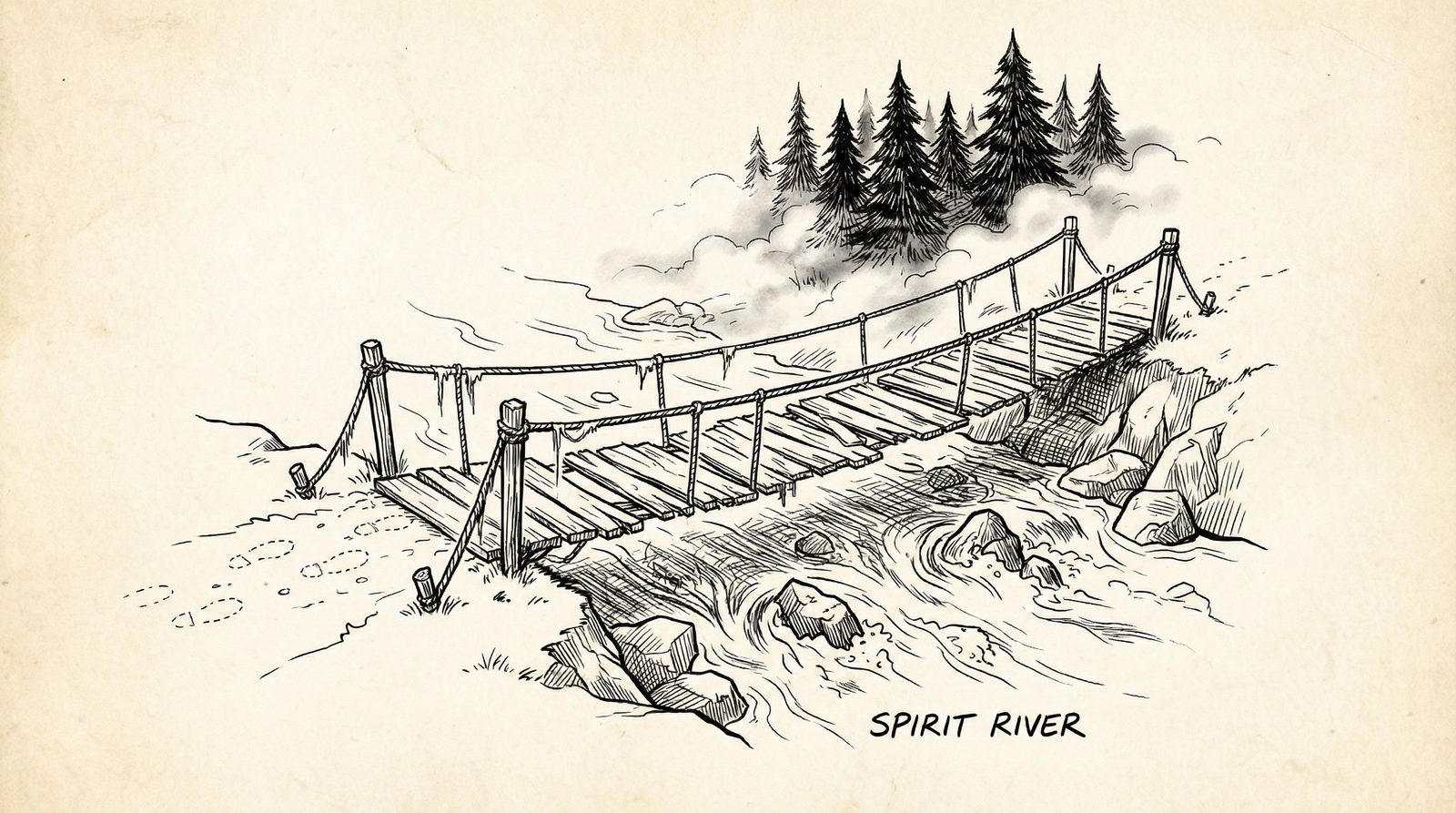
    Conceptual editorial illustration inspired by 'The Laws Of Spirit (1995)'

    CHARACTERS & INTERIORITY

    The narrator is a seeker archetype: competent enough in ordinary life but inwardly frayed. We learn scraps — a recent breakup, work that pays but feels hollow, a sense of wasted time — and his interiority is carried through resistance followed by recognition. He bristles, then admits the Sage is right. That pattern becomes the psychological rhythm of the book.

    The Sage is a classic mentor archetype with a wry, almost grandmotherly edge. She teases, contradicts herself, and occasionally uses her own impulsiveness to illustrate choice. Her backstory appears only in quick glimpses, keeping her human enough to feel present while still operating as a parable figure. Minor characters are thin but functional mirrors that force the traveler to notice reflex judgment and fear in small, everyday interactions.

    Interiority here is less about deep excavation than about catching micro-moments of choice. The book insists those moments are the true sites of transformation: not the mountaintop vision, but the second you decide how to respond.
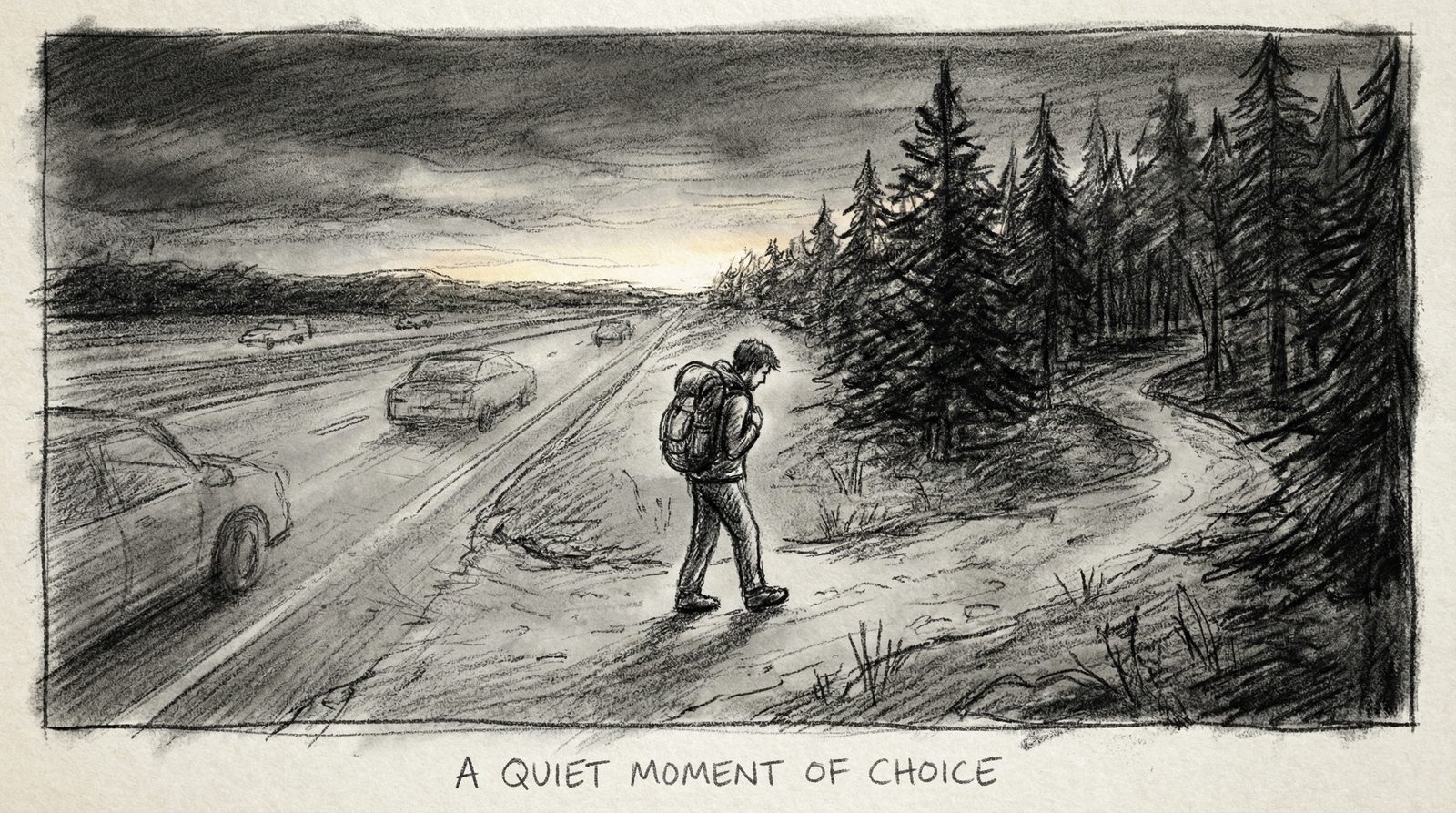
    Illustration inspired by 'The Laws Of Spirit (1995)'

    LEGACY & RECEPTION

    The Laws Of Spirit arrived in the mid-1990s, when spiritual memoirs and parables were thick on bookstore shelves. It never reached the mass cultural saturation of blockbuster spiritual adventure, but within Millman’s readership it became a pocket companion: often handed to friends going through divorce, burnout, or a crisis of meaning. Its brevity and lack of institutional religion make it portable across belief systems, which has helped it stay quietly in circulation.

    Its ending — the Sage simply walking away and the traveler returning to traffic — is a quiet rebuke to spiritual escapism. The point is not to stay on the mountain. The point is to carry the laws into the mess of ordinary days.

    IS IT WORTH READING?

    If you’re looking for dense theology or complex plotting, no. This is closer to a long, thoughtful walk with an older friend than to a conventional narrative. Its value lies in how cleanly it frames familiar dilemmas. The structure is easy to revisit, the language accessible, and the imagery — bridges, rivers, ridgelines — simple enough to stick.

    For readers allergic to jargon but open to reflective, quietly directive prose, this slim book can land with surprising force. For others, it may feel like a gentle echo of insights they’ve already met elsewhere.

    TRIVIA & AUTHOR FACTS

    Dan Millman is best known as a former world-champion gymnast and coach who turned to writing and teaching about personal growth. The Laws Of Spirit sits mid-bibliography, after more autobiographical work and before later, more systematized teaching formats. The book’s compact length was intentional: designed to be read in one sitting or carried on an actual hike.

    SIMILAR BOOKS

    If this book resonates, you may prefer other spare, journey-based spiritual narratives where a single encounter reshapes how life is lived afterward. The closest neighbors tend to use pilgrimage and mentorship as structure, keeping spiritual insight grounded in ordinary decision-making rather than in spectacle.

    DISCOVERABILITY & LINKS

  • Zen And The Art Of Motorcycle Maintenance (1974)

    Zen And The Art Of Motorcycle Maintenance (1974)

    INTRODUCTION

    Zen and the Art of Motorcycle Maintenance (1974) by Robert M. Pirsig
    Philosophical novel · 434 pages · United States


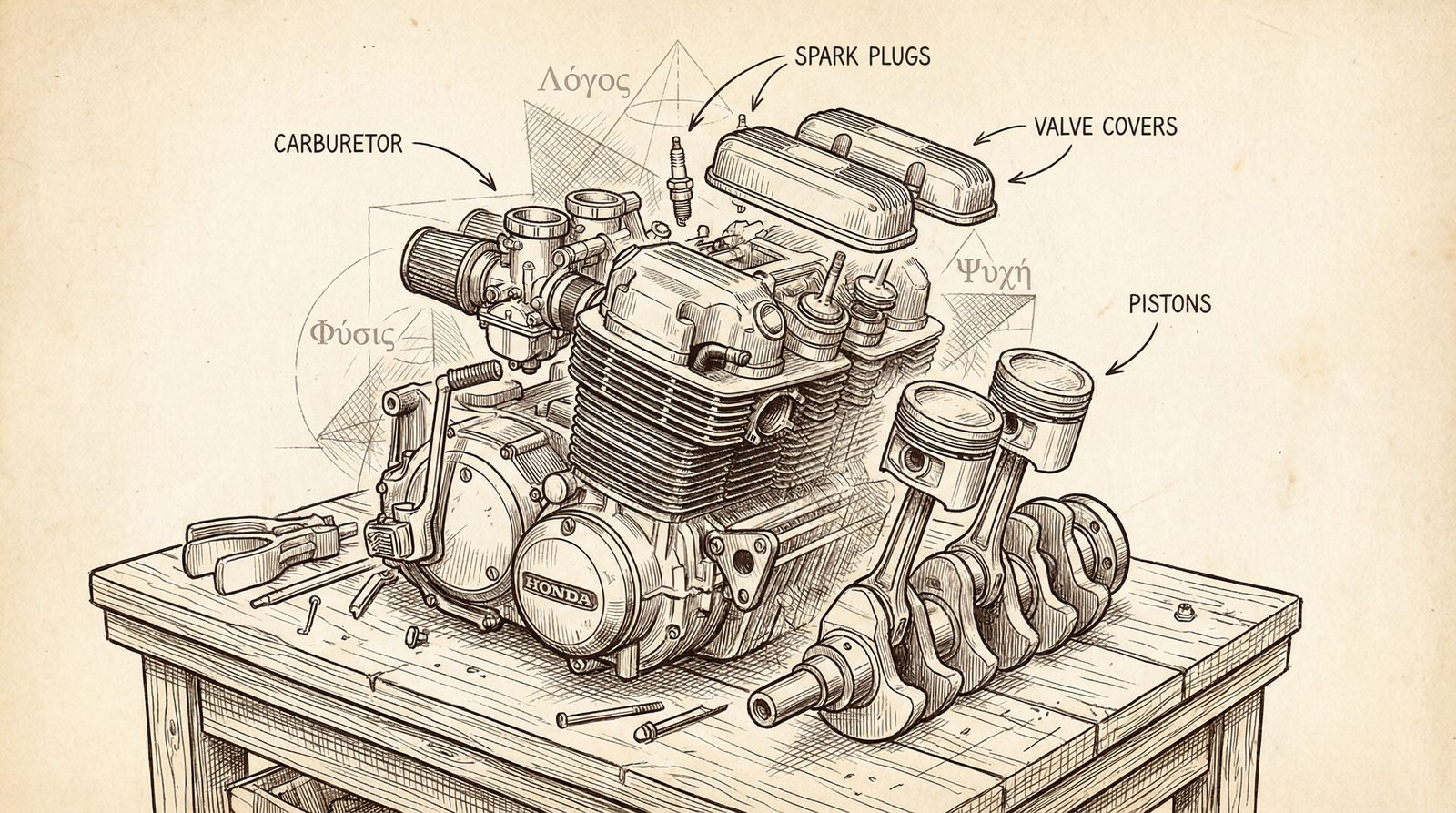
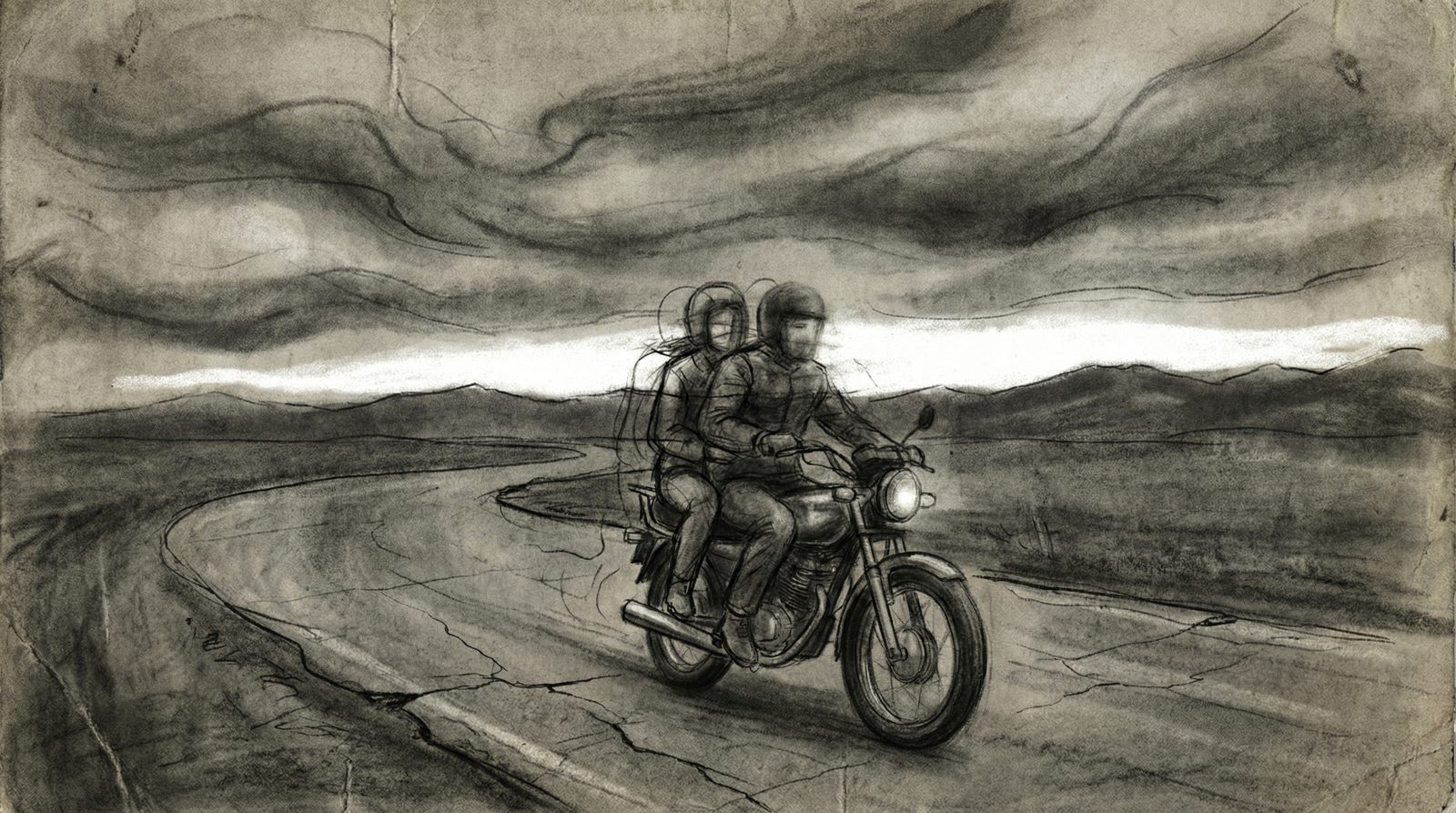
    Zen and the Art of Motorcycle Maintenance is one of those books people claim to have read when what they really remember is the title. It is not a manual and not quite a novel. It uses the open road as a frame: a father and his young son ride a Honda across the American West while, inside the father’s mind, an older self named Phaedrus keeps stirring.

    The mood is uneasy and faintly feverish. There is sun on asphalt, engine vibration, and the nagging sense that something in modern life has gone badly out of tune. Pirsig uses the motorcycle as both machine and moral mirror, asking whether sanity is possible in a culture that worships efficiency but forgets meaning.

    PLOT & THEMES

    On the surface, the plot is simple. A nameless narrator rides from Minneapolis toward the Pacific Northwest with his son, Chris. Their friends John and Sylvia Sutherland join them along the way. They cross the Dakotas, move into Montana, and eventually reach the coast. Practical lessons punctuate the ride: valve clearances, chain tension, how to listen for what an engine is trying to tell you.

    But the road trip is a decoy. The real story happens inside the narrator, where memories of Phaedrus begin to reassemble. Phaedrus was a brilliant, obsessive teacher who became consumed by the idea of “Quality.” His pursuit spiraled from intellectual argument into breakdown, ending in institutionalization and electroshock therapy. The book’s central tension is whether the narrator can live without becoming that man again, and whether the narrator can be honest about the fact that Phaedrus never entirely vanished.

    Quality becomes the book’s governing concept: a way to heal the split between classical, rational analysis and romantic, intuitive experience. Pirsig insists that the divide is not just philosophical. It is lived. It shows up in how you fix a machine, how you teach a student, how you talk to your child, and how you survive your own mind when it starts to fracture.

    By the time father and son reach the ocean, the past has broken through. In a motel room, Chris confronts his father about the gaps in their shared history and the fear that he will “go crazy again.” The narrator finally admits what he has been circling for hundreds of pages: he is Phaedrus returned, or at least the person who must now carry Phaedrus’s memories without pretending they belong to someone else. The ending is not a cure narrative. It is a fragile reconciliation, tentative and incomplete, and that incompleteness is the book’s honesty.

    PROSE & NARRATIVE STRUCTURE

    Pirsig structures the book as a braid, alternating scenes from the trip with philosophical “Chautauquas,” long improvised talks delivered directly to the reader. This technique keeps one wheel on the pavement and one in abstraction. A description of cleaning a clogged jet or adjusting ignition points can slide, almost imperceptibly, into a discussion of Plato, Aristotle, or the problem of defining value.

    The prose is plainspoken but elastic. When Pirsig writes about the high plains at dawn or rain near the mountains, there is a quiet lyricism that matches the rhythm of the road. When he writes about breakdown and “stuckness,” the tone tightens into claustrophobia. He becomes precise about the moment before a mind gives way, and about the strange relief that sometimes follows when resistance collapses.

    When he describes the motorcycle as an assemblage of functions, he is not trying to be poetic. He is trying to show that attention can be an ethic. Caring about how something works is a way of caring about the world. Neglect is not neutral. It is a posture toward life, and it spreads.

    Structurally, the argument moves in tightening spirals rather than straight lines. Each day’s ride returns to the same questions, what Quality is, whether analysis can coexist with direct experience, whether the mind can survive its own hunger for certainty. The narrative never fully resolves those questions. It stages them as a lifelong condition, something you learn to live inside rather than something you solve once.

    Conceptual editorial illustration inspired by 'Zen and the Art of Motorcycle Maintenance'

    CHARACTERS & INTERIORITY

    The narrator is an unusual seeker figure: someone who has already broken in pursuit of meaning and now circles back cautiously, wary of his own intensity. His interiority is dense. He appears as careful mechanic, anxious father, and former zealot, sometimes in the same paragraph. The split between “narrator” and “Phaedrus” is not merely a device. It is how he experiences himself, as if his own past were an alien intelligence pressing at the edge of consciousness.

    Chris is written with raw opacity. He is moody, easily hurt, sometimes exhilarated by the trip and sometimes bored. His stomach aches, his fear of abandonment, and his questions about madness carry the emotional weight the philosophy can occasionally evade. Their relationship gives the book its human stakes. You do not need to accept the metaphysics of Quality to feel the ache of a child trying to understand whether his father will remain stable.

    John and Sylvia Sutherland function as foils. John refuses to touch his own BMW’s maintenance, preferring machines to remain mysterious. Sylvia senses that something is off in the narrator’s intensity and detachment. Even minor figures, colleagues who bristle at Phaedrus’s ideas, mechanics who mishandle a bolt, serve as examples of different relationships to care, competence, and attention.

    LEGACY & RECEPTION

    Published after more than a hundred rejections, the book became an unlikely bestseller. It caught a particular American restlessness: the desire for meaning without rejecting technology, the craving for transcendence without surrendering craftsmanship. Engineers saw their pride in workmanship honored. Philosophers argued over whether the “Metaphysics of Quality” was rigorous or naïve. Ordinary readers simply recognized the feeling of being out of tune with modern life and wanting to repair the instrument from the inside.

    Its ending has remained central to its reputation. The father and son bond is only tentatively restored. The narrator accepts that the intensity that once destroyed his life is also bound up with his deepest insight, and that Chris may have inherited some of that dangerous voltage. The unresolved tension between sanity and vision is why the book keeps returning. It refuses to become a tidy inspirational story.

    IS IT WORTH READING?

    This is not a quick read, and it does not pretend to be. If you want a straightforward plot, you will get impatient. If you are willing to sit with long arguments about Quality intercut with roadside coffee and carburetor details, you may find it oddly absorbing.

    Its blind spots are real. The density can feel relentless, and the philosophical passages can occasionally flatten the emotional life around them. Still, the book offers something rare: a serious attempt to think through how to live well in a world of machines without worshiping them and without fleeing from them. If that tension already lives inside you, the ride is worth taking.

    Illustration inspired by a core idea from 'Zen and the Art of Motorcycle Maintenance'

    TRIVIA & AUTHOR FACTS

    Pirsig reportedly received more than 120 rejections before a publisher took a chance on the manuscript. He worked as a technical writer and teacher, and his familiarity with manuals and lab-report precision shapes the maintenance scenes. The “Chautauqua” framing nods to the American tradition of traveling lectures, repurposed here for the highway era.

    The narrator’s Honda is based on Pirsig’s own machine, and many of the mechanical details reflect lived experience rather than symbolic decoration. After the book’s success, Pirsig largely withdrew from public life, publishing one later philosophical novel and resisting the role of guru. That reluctance fits the book’s suspicion of any fixed system, including its own.

    SIMILAR BOOKS

    If this blend of narrative and inquiry works for you, Lila extends Pirsig’s ideas into a different journey. Readers drawn to spiritual searching and interior crisis often find kinship with Siddhartha. For a more chaotic portrait of American seeking, The Electric Kool-Aid Acid Test offers an opposite energy. And for a grounded nonfiction meditation on manual work and meaning, Shop Class as Soulcraft can feel like a distant cousin to Pirsig’s long ride west.

    DISCOVERABILITY & LINKS

    DISCOVERABILITY & LINKS