Place: Brazil

  • The Alchemist (1988)

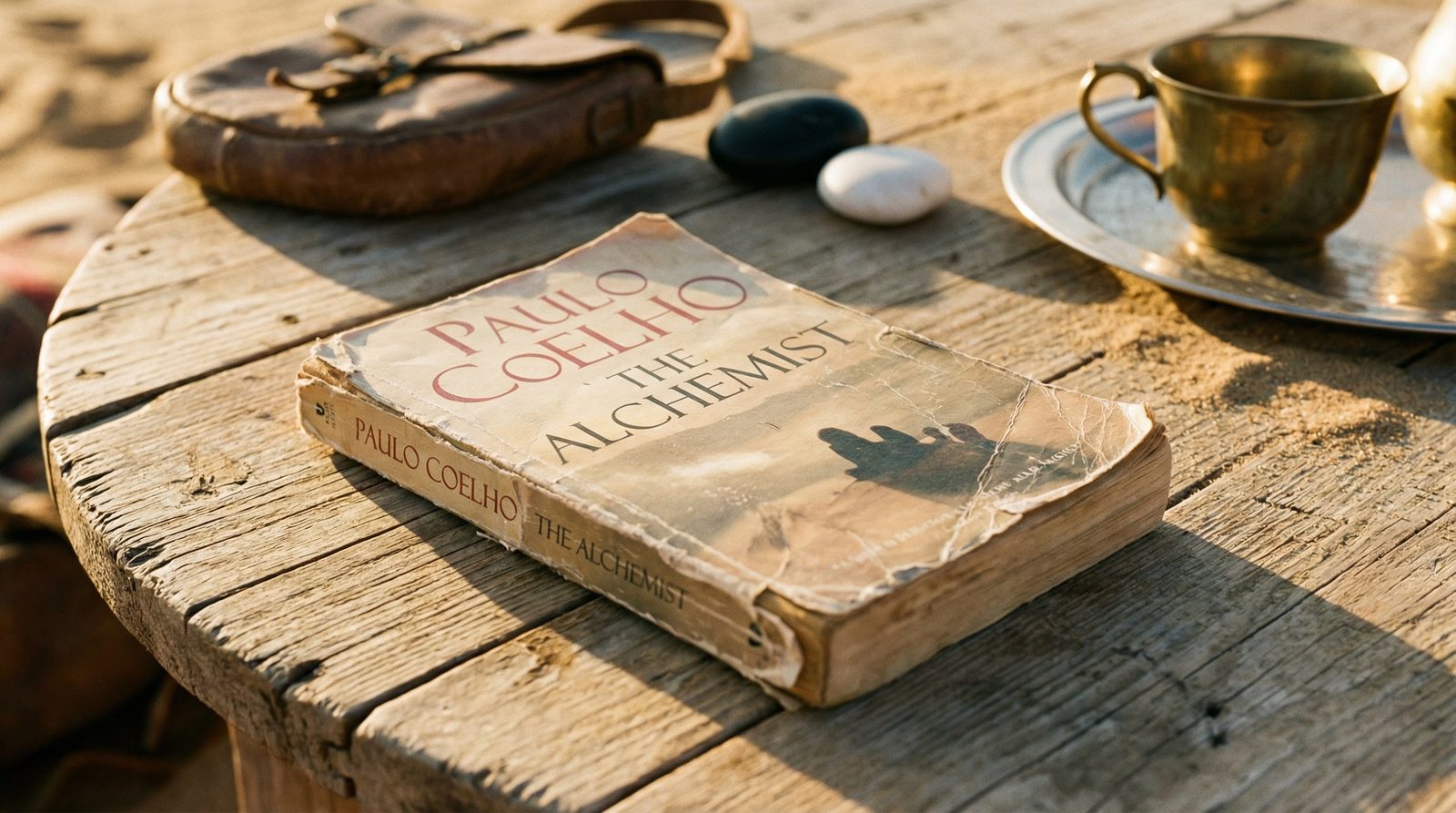
    The Alchemist (1988)

    INTRODUCTION

    The Alchemist (1988) by Paulo Coelho
    Philosophical fiction · 166 pages · Spain / Egypt


    The Alchemist has been quoted on posters, mugs, and social feeds so relentlessly that it is easy to forget there is a small, quietly odd novel beneath the slogans. On the surface, it reads like a simple fable about following your dreams. Underneath, it is more fragile and ambivalent than its reputation suggests.

    Set in a loosely sketched, almost timeless world, the book follows a young Andalusian shepherd who trades pastoral safety for the uncertainty of travel across North Africa. The images linger: a boy sleeping in a ruined church beneath a sycamore tree, the repeated language of omens, the idea of a “Personal Legend” that both comforts and unsettles. Strip away the inspirational framing, and what remains is a story about restlessness, loss, and the uneasy cost of believing that life has a single, discoverable meaning.

    PLOT & THEMES

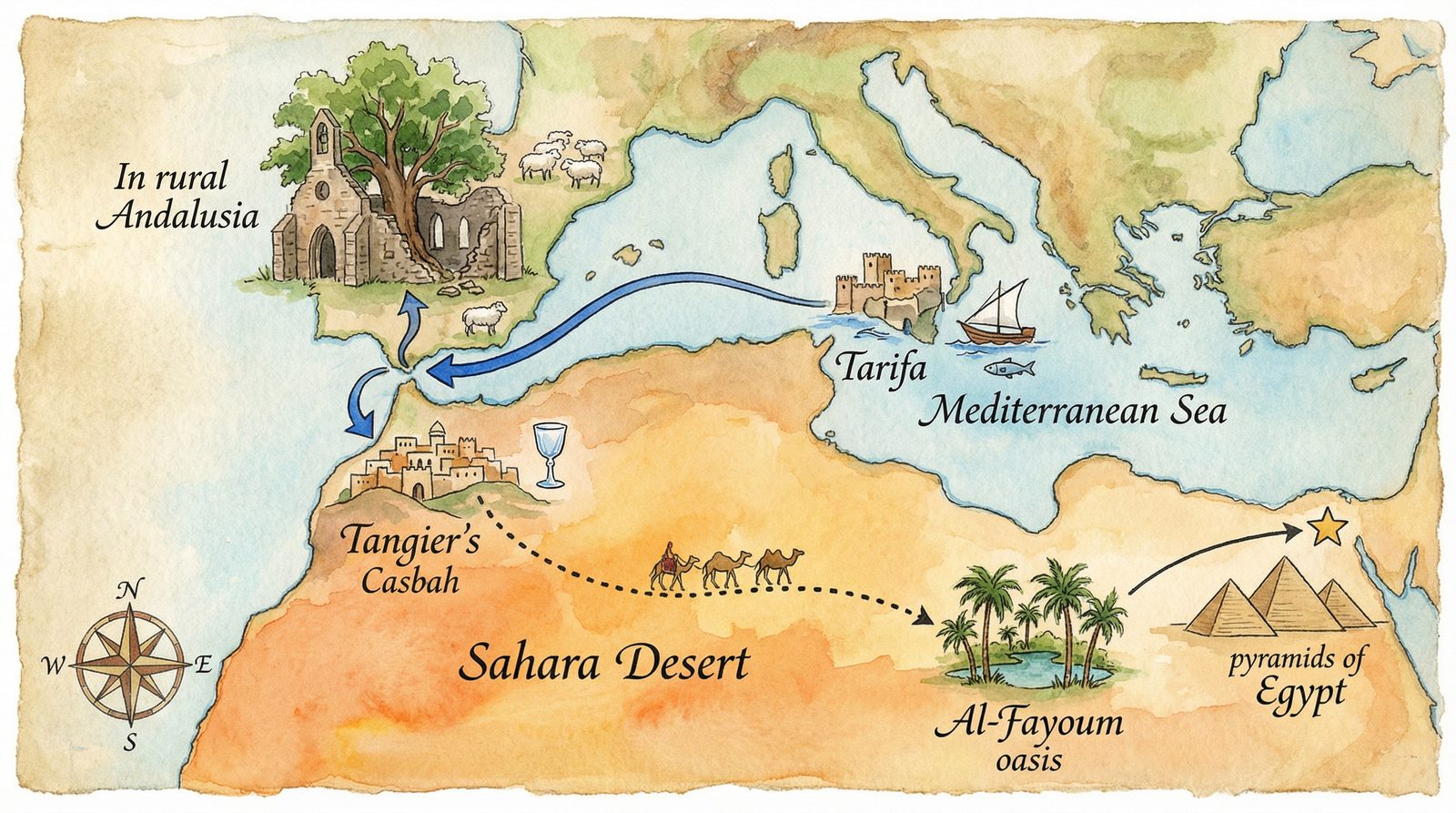
    The plot is deliberately spare. Santiago, a shepherd from Andalusia, dreams twice of treasure buried near the Egyptian pyramids. A strange old man calling himself Melchizedek, king of Salem, urges him to pursue the dream, speaking of Personal Legends and asking for a tenth of the treasure in advance. The encounter feels less like divine revelation than a streetwise push toward risk.

    Santiago sells his sheep, crosses to Tangier, and is immediately robbed. This early loss establishes one of the book’s central patterns: progress is inseparable from disorientation. Working for a crystal merchant overlooking the marketplace, Santiago learns how fear of change can slowly fossilize a life. The merchant’s unrealized pilgrimage to Mecca becomes a quiet warning about dreams postponed until they no longer feel possible.

    As Santiago joins a caravan crossing the Sahara, the novel widens. The Englishman obsessed with alchemical texts introduces the tension between book knowledge and lived experience. War between desert tribes, Santiago’s time at the Al-Fayoum oasis, and his love for Fatima sharpen the central question: when does commitment to a path become an excuse to avoid attachment, and when does attachment become a reason to stop seeking?

    The Alchemist himself appears late, more riddle than person. He insists that the oft-quoted idea that “the universe conspires” only holds if one is willing to risk everything. The ending is bluntly circular. Santiago learns that the treasure was buried back in Spain, at the very church where his journey began. The irony is not softened. The novel insists that the journey was necessary, even if the destination never moved.

    PROSE & NARRATIVE STRUCTURE

    Coelho’s prose is famously spare, closer to parable than to realist fiction. The narration moves in clean, declarative sentences that summarize inner change rather than dramatize it. This can feel hypnotic or thin, depending on the reader’s patience for abstraction.

    The structure is linear and episodic. Each location functions as a moral vignette: the church, the port of Tarifa, the crystal shop, the caravan, the oasis, the desert. Symbolic objects recur with near-ritual regularity: the Urim and Thummim stones, the hawks at Al-Fayoum, the desert itself as a listening presence. The repetition of phrases like “Personal Legend,” “Soul of the World,” and “Maktub” creates a chant-like rhythm that is central to the book’s effect.

    Formally, the novel takes few risks. Its power, when it works, comes from compression rather than complexity. It is designed to be read quickly and remembered vaguely, carried more as an atmosphere than as a sequence of scenes.
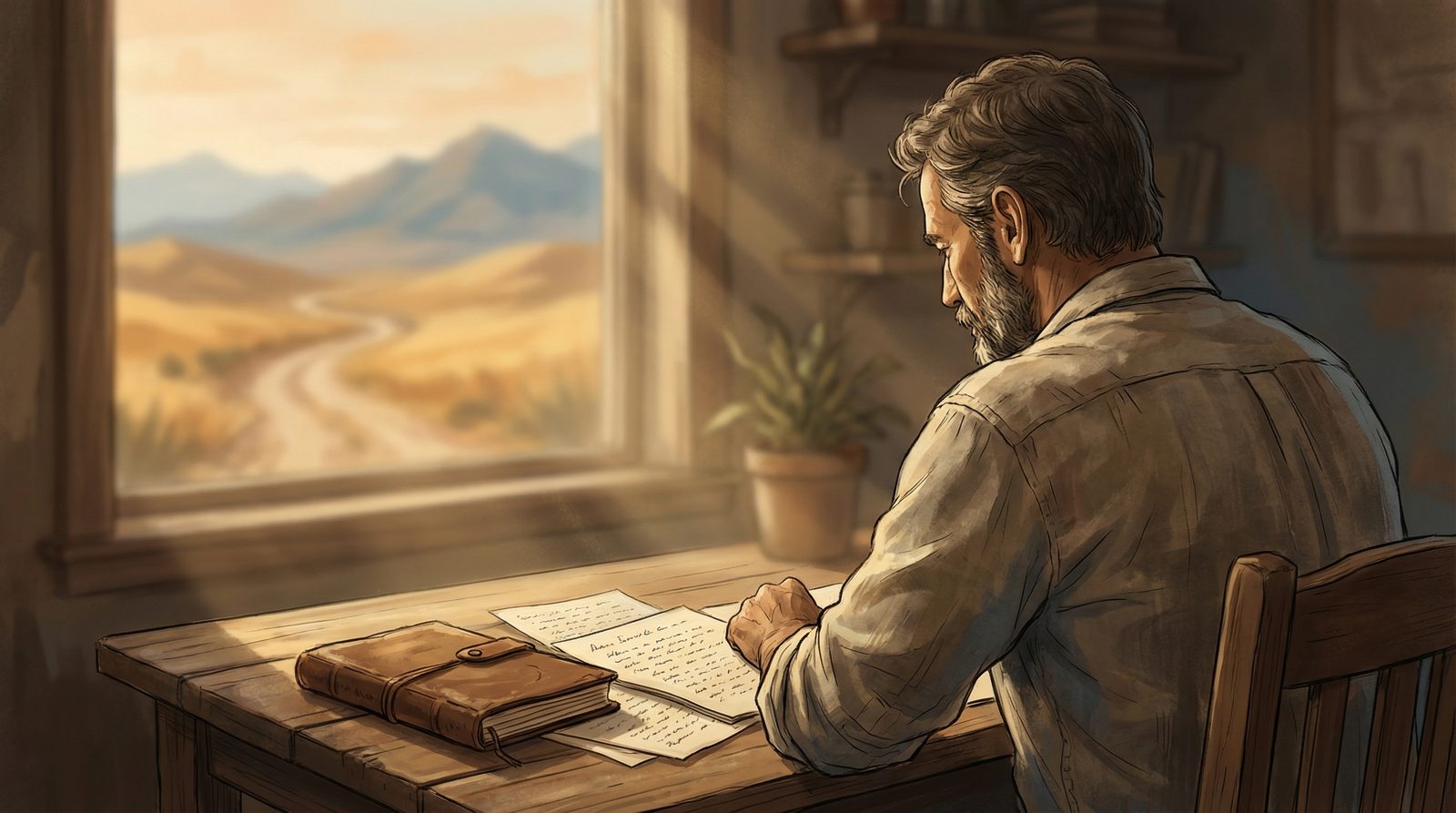
    Conceptual editorial illustration inspired by 'The Alchemist'

    CHARACTERS & INTERIORITY

    Santiago is not written as a psychologically complex figure. He functions as a clean archetype: open, curious, and capable of doubt without becoming paralyzed by it. His small attachments, his sheep, the memory of a merchant’s daughter, his fear when he first sees the sea, provide just enough texture to anchor the fable.

    The supporting figures operate as embodiments of choice. The crystal merchant represents resignation disguised as prudence. Fatima embodies a love that insists seeking and commitment need not cancel each other out. The Alchemist himself acts as a pressure point, forcing Santiago to risk annihilation rather than settle for symbolic understanding.

    Interior life is conveyed through parable rather than introspection. Feelings are named, not excavated. Yet moments of loss and fear, especially after the robbery in Tangier and during the desert ordeal, cut through the abstraction. The simplicity is intentional. The book asks the reader to project their own doubts into the spaces left open.

    LEGACY & RECEPTION

    Since its publication, The Alchemist has become one of the most translated and commercially successful novels of the late twentieth century. It sits alongside works like Jonathan Livingston Seagull as a foundational text of modern spiritual fiction. Critical response has been sharply divided, with some praising its mythic clarity and others dismissing it as aphoristic mysticism.

    The novel’s language of Personal Legends and cosmic conspiracy has seeped deeply into popular culture. Its endurance lies not in literary innovation but in its ability to function as a mirror. Readers return to it at different moments of life and read different instructions into the same slender story.

    IS IT WORTH READING?

    If you are looking for dense characterization or stylistic experimentation, this will feel thin. If you approach it as a modern fable, a compressed meditation on risk, desire, and return, it can still resonate. Reading it now is also an act of reclamation, separating the novel from its motivational afterlife.

    The lingering question it leaves is not inspirational but quietly unsettling: what would you have to give up to find out whether the life you imagine is actually yours?

    Illustration inspired by a core idea from 'The Alchemist'

    TRIVIA & AUTHOR FACTS

    Paulo Coelho wrote the novel quickly, later describing the process as intuitive rather than planned. It was initially a commercial failure in Brazil, and its first publisher dropped it. Only after being taken on by another house did it begin its gradual rise to global success.

    The book synthesizes Coelho’s long-standing interests in pilgrimage, omens, and Western esoteric traditions. Despite the title, its use of alchemy is symbolic rather than historical, drawing more from myth and metaphor than from chemical practice.

    SIMILAR BOOKS

    Readers drawn to this style of allegorical journey may also explore Siddhartha by Hermann Hesse, Jonathan Livingston Seagull by Richard Bach, or Shusaku Endo’s Silence, which offers a far harsher meditation on faith and failure. Each examines what is gained and lost when belief becomes a guiding structure.

    DISCOVERABILITY & LINKS

    DISCOVERABILITY & LINKS

  • Paulo Coelho

    Paulo Coelho

    ORIGINS & BACKGROUND

    Paulo Coelho is a Brazilian novelist whose books sit at the crossroads of spiritual fable and mainstream popular fiction. He is best known for The Alchemist, a short allegorical novel that became a global phenomenon and turned the idea of Personal Legend And Destiny into a kind of pop-spiritual shorthand. Coelho did not arrive as a young prodigy. Before publishing novels, he worked in theater, music, and journalism, and spent years searching for his own sense of purpose. That late and hard-won success shapes how he writes about faith, failure, and second chances.

    Coelho’s Brazilian background matters less as local realism and more as the starting point for a borderless spiritual quest. His characters drift through Spain, the Middle East, Europe, and symbolic landscapes that feel intentionally simplified so the emotional terrain stands out. Like Hermann Hesse, whose Siddhartha he openly echoes, Coelho uses parable-like storytelling to explore inner transformation rather than social detail. The biography that counts most in his fiction is the internal one: people stuck in comfortable lives, haunted by the sense that they have betrayed their own dreams, and pushed by chance encounters or mystical signs to reclaim their calling.

    A defining event in Coelho’s personal mythology is his walk on the Camino de Santiago in Spain, later fictionalized in The Pilgrimage. That journey gave him a durable narrative frame: outer travel as a mirror of inner change. His Catholic upbringing, later mixed with esoteric and New Age currents, feeds into a blend of mysticism, Christianity, and universalist spirituality. He is not a doctrinal writer. Instead, he treats religion as one language among many for describing fear, courage, and meaning.

    His breakthrough came after setbacks and modestly received early work. That experience of delayed recognition shapes his recurring sympathy for characters who feel they have missed their chance. Coelho writes as someone who has lived through failure and reinvention, and he returns again and again to the question of whether it is ever too late to pursue one’s Personal Legend And Destiny.

    Editorial illustration inspired by Paulo Coelho

    THEMES & MOTIFS

    The central thread running through Coelho’s work is Personal Legend And Destiny: the belief that each person has a unique path or calling, and that suffering often comes from refusing it. In The Alchemist, this appears as a shepherd’s desert journey that is really a test of courage and attention. In The Pilgrimage, it becomes a literal road walked step by step. Across his novels, the plot is often a thin veil over the same spiritual question: will the character move toward their calling, or talk themselves out of it?

    A second major motif is Spiritual Pilgrimage. Coelho’s characters travel through deserts, cities, and symbolic landscapes, but the geography is simplified so the emotional terrain stands out. The road is where mentors appear, tests arrive, and illusions are stripped away. Even when the setting is not literally a pilgrimage route, the movement is structured like one: departure, ordeal, and a changed return.

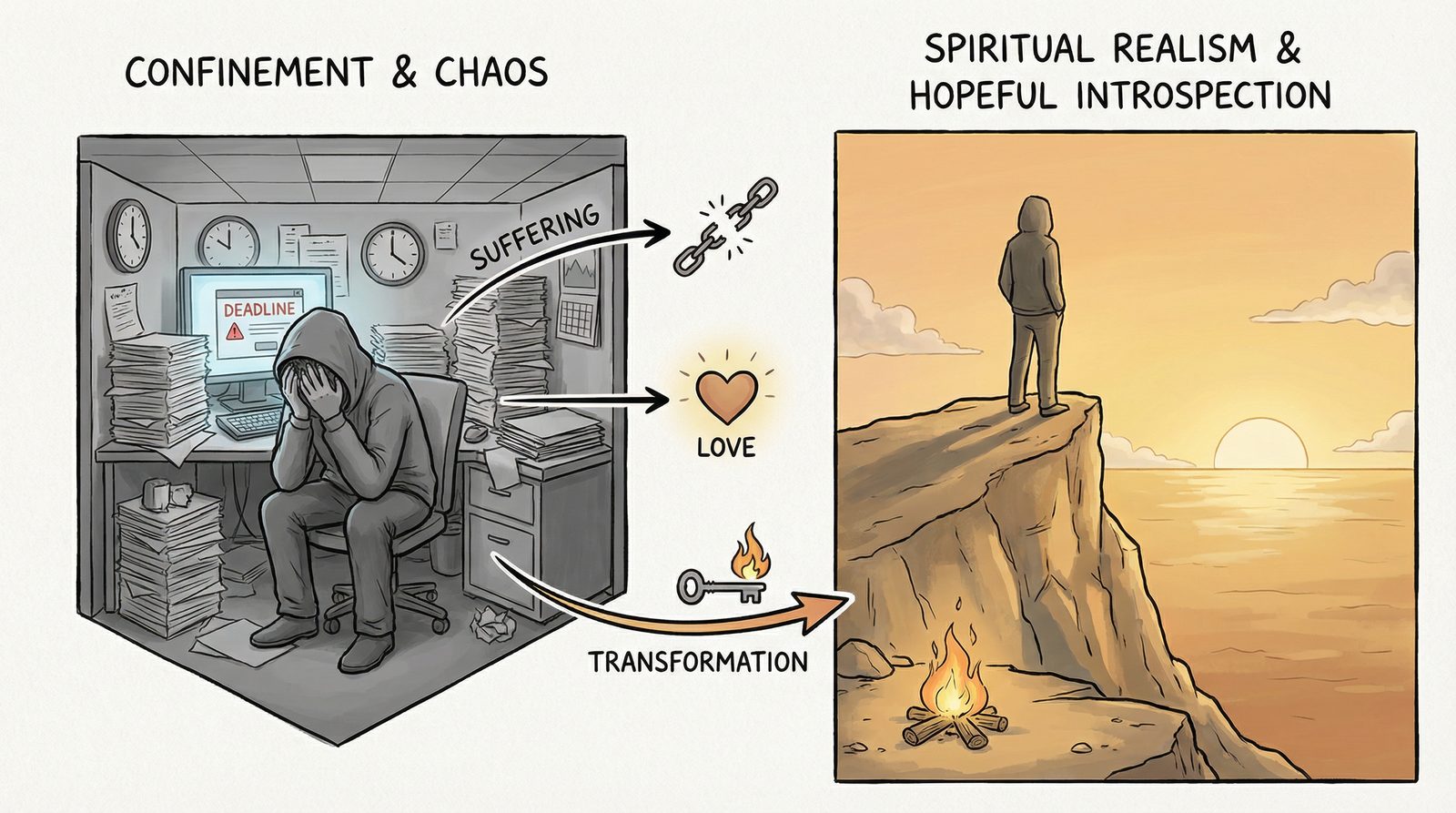
    He also returns to inner transformation through suffering. His protagonists often reach a breaking point: a numbing routine that suddenly feels unbearable, a relationship that exposes a deeper fear, or a moment of crisis that forces re-evaluation. Pain becomes a catalyst, not as heroic endurance, but as a confrontation with guilt, fear, and the stories people tell themselves about what is possible.

    There is a persistent belief in omens and meaningful coincidence. Characters read signs in repeated symbols, chance meetings, and the timing of events. The universe is treated as responsive to sincere desire. This can feel naïve or comforting depending on the reader, but it is central to Coelho’s spiritual realism. He portrays love as a force that can redirect a life, and solitude as the condition where one can finally hear what the heart wants.

    Symbolic illustration inspired by Paulo Coelho

    STYLE & VOICE

    Coelho’s style is deliberately simple, almost stripped down. Sentences are short, vocabulary is accessible, and plots unfold in clean, linear arcs. This simplicity is part of his method. He wants the reader’s attention on moral and emotional stakes rather than stylistic flourish. The voice is calm and reflective, often pausing for aphoristic statements that read like proverbs or journal entries. For some readers these lines feel like distilled wisdom; for others they feel blunt. Either way, they define his cadence.

    He favors allegorical storytelling and parable structure. Characters are less psychologically intricate individuals and more embodiments of questions such as: What do you fear losing? What do you secretly want? What excuse are you using to avoid change? Dialogue frequently functions as instruction, with guides explaining ideas about calling, fear, and faith. This gives his books a meditative pace even when the plot involves travel or danger.

    Emotionally, his work leans toward hopeful introspection. Dark subjects appear—especially in Veronika Decides To Die—but the narrative almost always bends toward renewal. The contemplative tone encourages readers to project their own experiences onto the story, which helps explain his broad appeal. Readers who respond to Hermann Hesse’s blend of narrative and philosophy in Siddhartha often find a more contemporary, streamlined version of that mix in Coelho’s work.

    KEY WORKS & LEGACY

    The Alchemist is the defining Coelho novel. Its story of a shepherd pursuing a dream across the desert crystallizes his core concerns with calling, pilgrimage, and the idea that the world responds when a person moves toward what they truly want. Because it is short and highly symbolic, it functions as an entry point into his worldview.

    The Pilgrimage is more explicitly autobiographical, recounting a trek along the Camino de Santiago and foregrounding spiritual practices and teacher-student dynamics. Veronika Decides To Die shifts to a psychiatric institution and asks what it means to be “normal” in a world that quietly crushes individuality. Brida follows a young woman drawn to initiation and magic, extending his interest in mystical apprenticeship and the tension between ordinary life and esoteric knowledge.

    Coelho’s legacy is less about formal innovation and more about accessibility. He helped popularize a kind of spiritual realism that sits between self-help and fiction, making questions of faith, purpose, and fear part of everyday reading. Whether one finds his work profound or simplistic, it has clearly shaped how contemporary readers talk about destiny, intuition, and the courage to change a life.

  • The Pilgrimage (1987)

    The Pilgrimage (1987)

    INTRODUCTION

    The Pilgrimage (1987) by Paulo Coelho
    Spiritual fiction · 276 pages · Spain


    The Pilgrimage is Coelho before The Alchemist turned him into a global brand. Set along the Camino de Santiago in late twentieth-century Spain, it follows “Paulo” as he walks toward Compostela under the stern guidance of his master, Petrus. What begins as a journey across Spain becomes a chain of humiliations, occult drills, and small, piercing moments of clarity.

    The road works as an inner mirror. Crowded streets, empty stretches of the Meseta, and awkward encounters with strangers become tests of vanity, fear, and attention. The tone is restless and self-critical. This is a spiritual quest narrative that keeps tripping over ego, and that is exactly where it becomes interesting.

    PLOT & THEMES

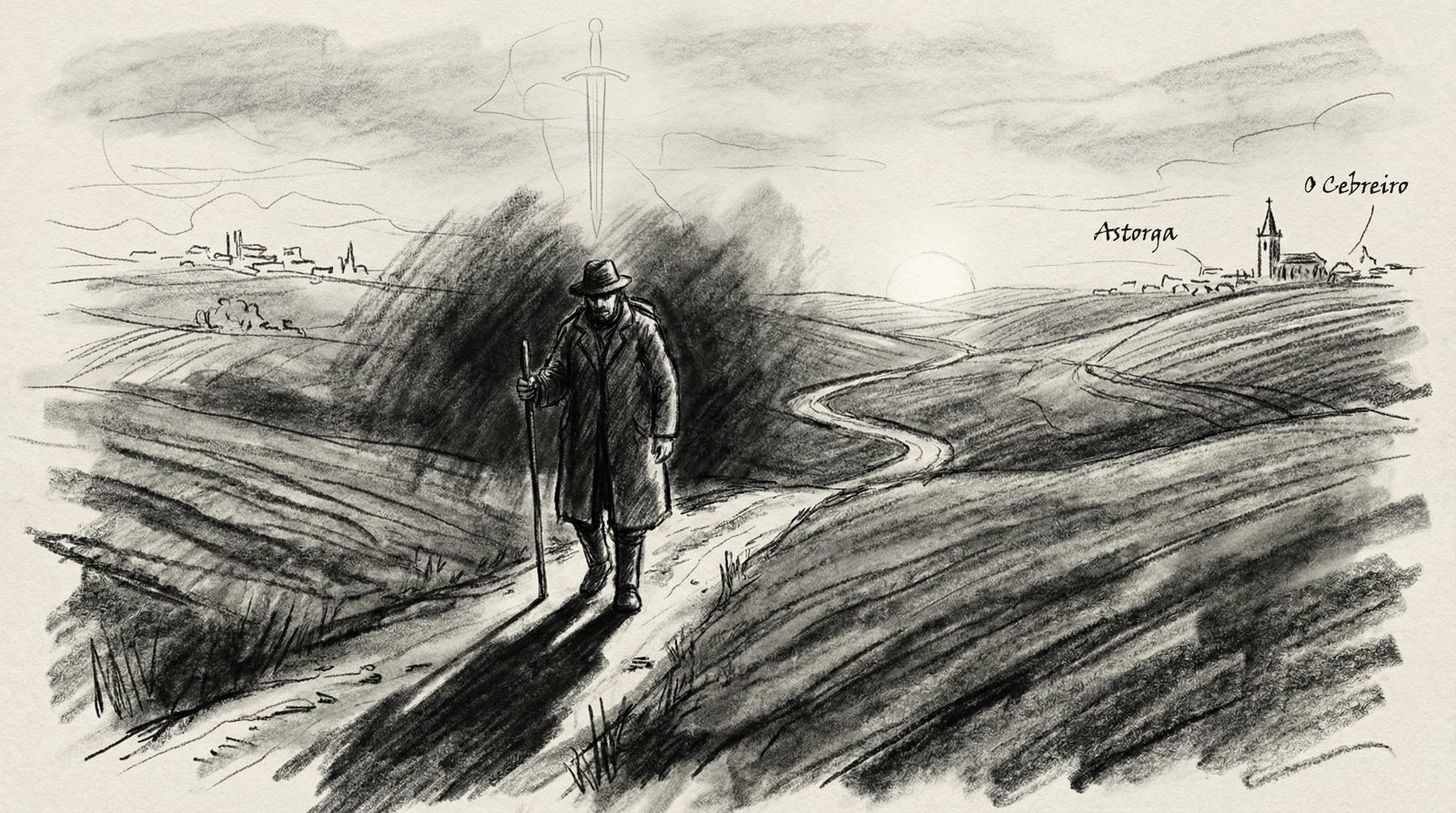
    The plot is disarmingly simple. Paulo has failed an initiation within his esoteric order, RAM, and must walk the Camino to recover a lost sword that symbolizes spiritual authority. Petrus leads him from town to town, and the journey becomes a sequence of exercises that look, at first glance, like New Age party tricks. In practice they function as slow, stubborn methods for stripping pride and building discipline.

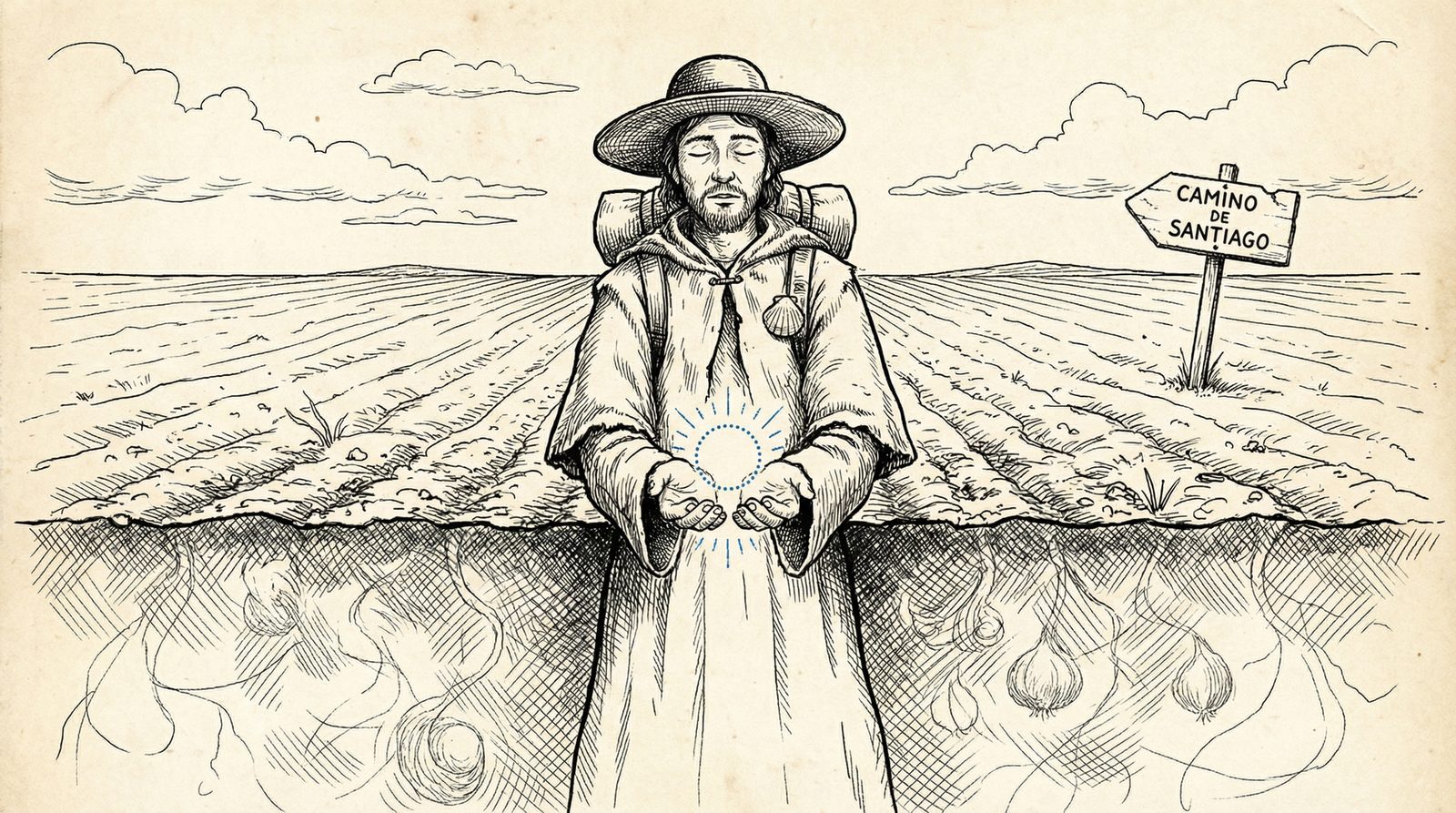
    Several rituals recur in the reader’s memory the way blisters do after a long day of walking. The Seed Exercise asks Paulo to imagine himself buried in darkness before growth. The Speed Exercise forces him to walk excruciatingly slowly while everyone else rushes past. The point is not power. The point is humiliation as instruction, and attention as the only real “skill” being trained.

    The book uses the familiar pilgrimage framework but keeps undercutting the heroic arc. Paulo becomes jealous of a dog, terrified by a madman near a ruined village, and nearly seduced off the path by an encounter that reads like temptation made flesh. The sword remains present as an absence: a symbol of authority that Paulo wants to possess, but does not yet deserve. Themes of obedience, everyday miracles, and spiritual pride run through the journey, but Coelho insists that the holy is found in missed buses, bad wine, aching feet, and arguments with the guide.

    The ending is resolutely uncinematic. Near the end of the Camino, Paulo is forced into a confrontation that feels like a ritualized fight with fear itself. Only after that does Petrus reveal the sword, and the revelation is almost wry: it has been near Paulo all along. The final lesson is not that Santiago grants miracles. It is that practice must continue. The journey is not completed once. It repeats, in different forms, for the rest of a life.

    PROSE & NARRATIVE STRUCTURE

    The book is written as first-person memoir, and that choice matters. Paulo is not an omniscient sage looking back with smug clarity. He is defensive, hungry for approval, and frequently irritated by his teacher. The sentences are short and blunt, and the rhythm can feel awkward until you realize it mirrors the act of walking: repetition, fatigue, and sudden flashes of lucidity.

    Episodes are arranged as parables rather than as a tightly plotted arc. Each town offers a new exercise, a new failure, and a new fragment of insight. Coelho also includes manual-like sections that explain practices directly. This interrupts the narrative spell, but it clarifies the book’s ambition: it wants to be used, not merely read.

    Structurally, the memoir circles back on itself. The opening failure in Brazil is mirrored by Paulo’s near-failure at the end, creating a loop rather than a straight line. The Camino becomes less a path across Spain than a track inside Paulo’s mind, where the same fears return until they are finally faced without performance.

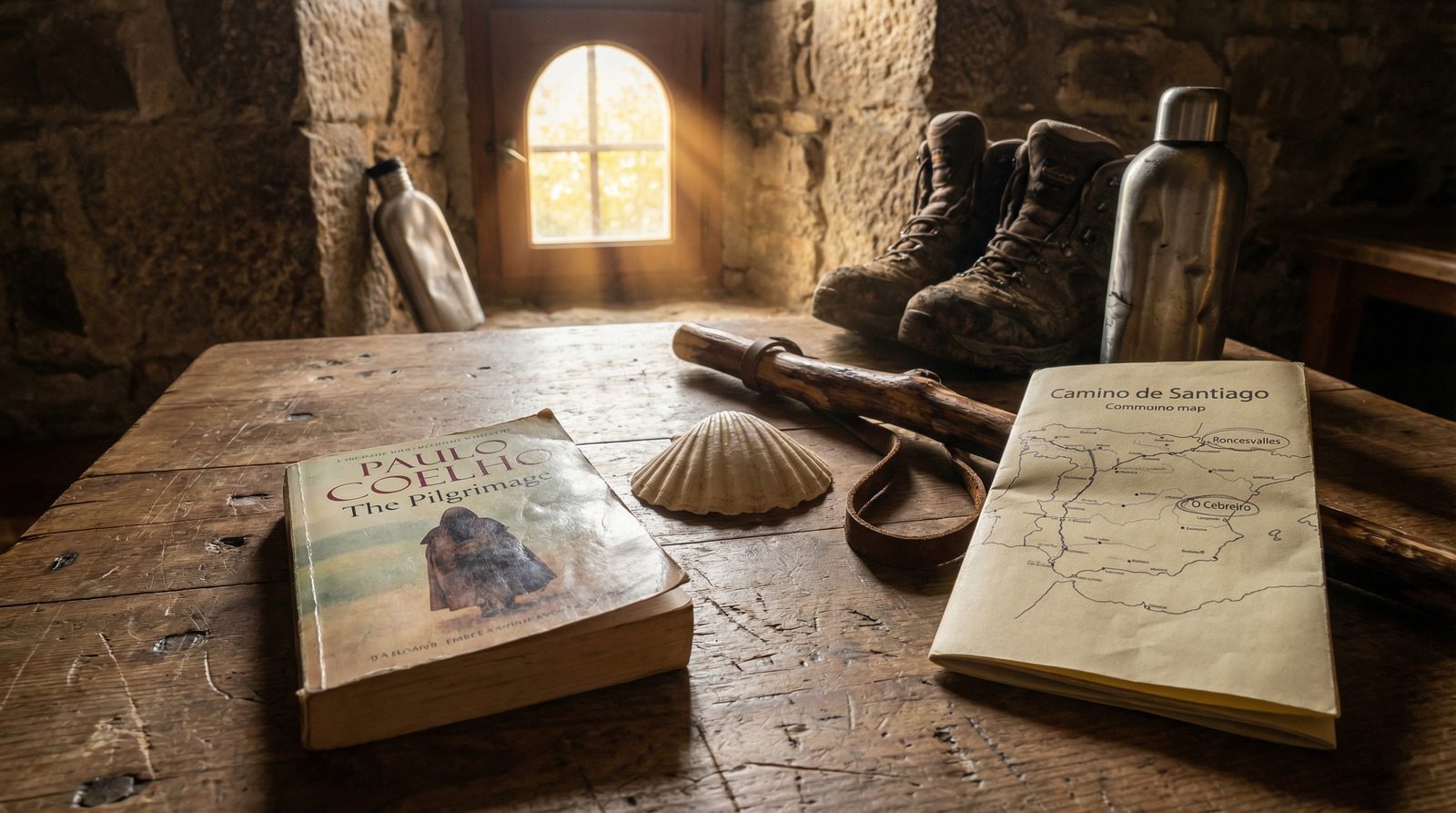
    Conceptual editorial illustration inspired by 'The Pilgrimage'

    CHARACTERS & INTERIORITY

    Paulo is a seeker figure stripped of glamour. He is vain about spiritual rank, sulky when Petrus withholds praise, and occasionally cruel in his private judgments of other pilgrims. This imperfection gives the spiritual material friction. We are not watching a saint in the making. We are watching a person wrestling with the desire for meaning and the desire for status, and trying to pretend they are the same thing.

    Petrus is a trickster mentor who alternates tenderness with mockery. He engineers situations that feel pointless or humiliating, because humiliation is the tool. Minor figures appear briefly but function as mirrors: the pilgrim who quits after losing a bag, the farmer who explains an exercise without mysticism, the stranger who passes Paulo effortlessly, reminding him that pride is often just a story told to cover weakness.

    Interior life is the book’s real arena. Paulo’s obsessive self-monitoring can be exhausting, but it is also the most honest part of the memoir. The drama is not the landscape. It is the mind trying to keep control of the story while the walk keeps undoing it.

    LEGACY & RECEPTION

    In hindsight, this book is often read as the seed of Coelho’s later work. Where The Alchemist turns the quest into a smooth fable, The Pilgrimage keeps the blisters and the awkward pauses. It helped popularize the Camino de Santiago for readers who had never heard of Compostela, and it contributed to the late twentieth-century boom in spiritual memoirs that treat personal crisis as narrative engine.

    Reception has always been split. Some dismiss it as occult tourism. Others value its willingness to show spiritual vanity and failure without disguising them as wisdom. The ending, with the sword revealed in an ordinary field rather than inside a cathedral, has aged well. It refuses the fantasy that holiness lives in famous buildings. The climax is internal: authority is conditional, dependent on ongoing practice, and never finally earned.

    IS IT WORTH READING?

    If you want a polished parable with all rough edges sanded off, this is not it. The memoir is uneven, occasionally naïve, and sometimes embarrassing. That is also why it works. The mix of ritual, Catholic imagery, and blunt self-critique feels like a real person groping toward meaning rather than a guru dispensing aphorisms.

    Readers interested in spiritual practice, in the psychology of faith, or in the Camino as lived from the inside will find plenty to chew on. If you have no patience for mysticism, the book may grate. But as a portrait of stubborn searching, it remains strangely compelling.

    Illustration inspired by a core idea from 'The Pilgrimage'

    TRIVIA & AUTHOR FACTS

    Coelho did walk the Camino de Santiago in the 1980s after a turbulent period that included time in a mental institution and years working as a lyricist in Brazil. The order RAM is presented as real but partially fictionalized and deliberately obscured. The exercises described, including the Seed Exercise and the Blue Sphere Exercise, are framed as practices he claims to have done rather than as invented fantasy.

    The book was first published in Portuguese as O Diário de um Mago (“Diary of a Magus”), emphasizing the occult angle more than the walking-tour aspect. The manual-like appendix has inspired informal study circles and solitary readers who treat the book as a workbook as much as a narrative.

    SIMILAR BOOKS

    If this blend of outer travel and inner upheaval appeals to you, Siddhartha offers a more distilled spiritual journey, while Wild turns the walk into a contemporary reckoning with grief and self. Readers drawn to the Christian mystical angle may also find resonance in conversion narratives like The Seven Storey Mountain, where the road is traded for a monastery but the hunger for transformation remains.

    DISCOVERABILITY & LINKS