Narrative Techniques: foreshadowing

  • Rapid Weight Loss And Body Decay

    Rapid Weight Loss And Body Decay

    DEFINITION & CORE IDEA

    Rapid Weight Loss And Body Decay is a motif where a character’s body starts to waste away at an unnaturally fast pace. Flesh shrinks, bones jut out, skin discolors or hangs loose, teeth loosen, hair falls out. The change is visible, undeniable, and usually unstoppable. It is not just about being thin; it is about the body clearly failing, like a machine burning itself out.

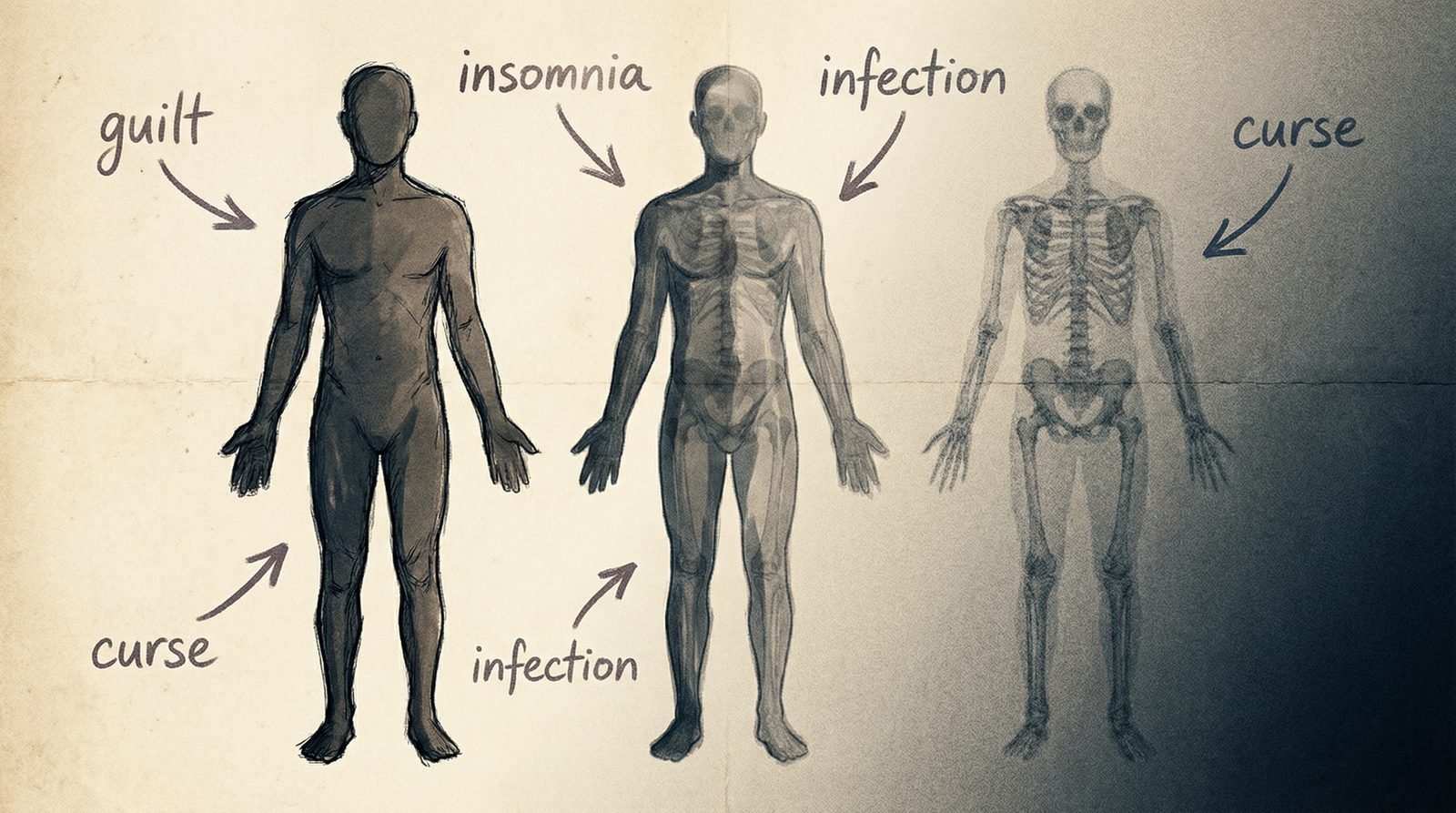
    Stories use Rapid Weight Loss And Body Decay to make inner problems show up on the outside. A curse, a disease, a parasite, an experiment gone wrong, or untreated guilt can all manifest as a body that is literally disappearing. In Thinner (1984) and its film adaptation, the wasting is a supernatural punishment that keeps going no matter how much the character eats. In The Machinist, the main character’s skeletal frame mirrors his insomnia, paranoia, and buried secrets. In The Troop, the body decay comes from an invasive horror that turns hunger and weight loss into something monstrous.

    This motif sits at the intersection of body horror and psychological terror. It takes something many people quietly fear – illness, aging, loss of control over their own body – and accelerates it. The body becomes a visible countdown clock, a daily reminder that time is running out and that something is deeply wrong, whether in the world, in the mind, or in the character’s past.


    HOW IT WORKS IN STORIES

    Rapid Weight Loss And Body Decay usually begins with small, easy-to-dismiss signs. A character drops a few pounds without trying, feels oddly tired, or notices their clothes hanging looser. At first they may be flattered or mildly concerned. The reader knows better, because every sentence about a loose waistband or hollowed cheek feels like the start of something worse.

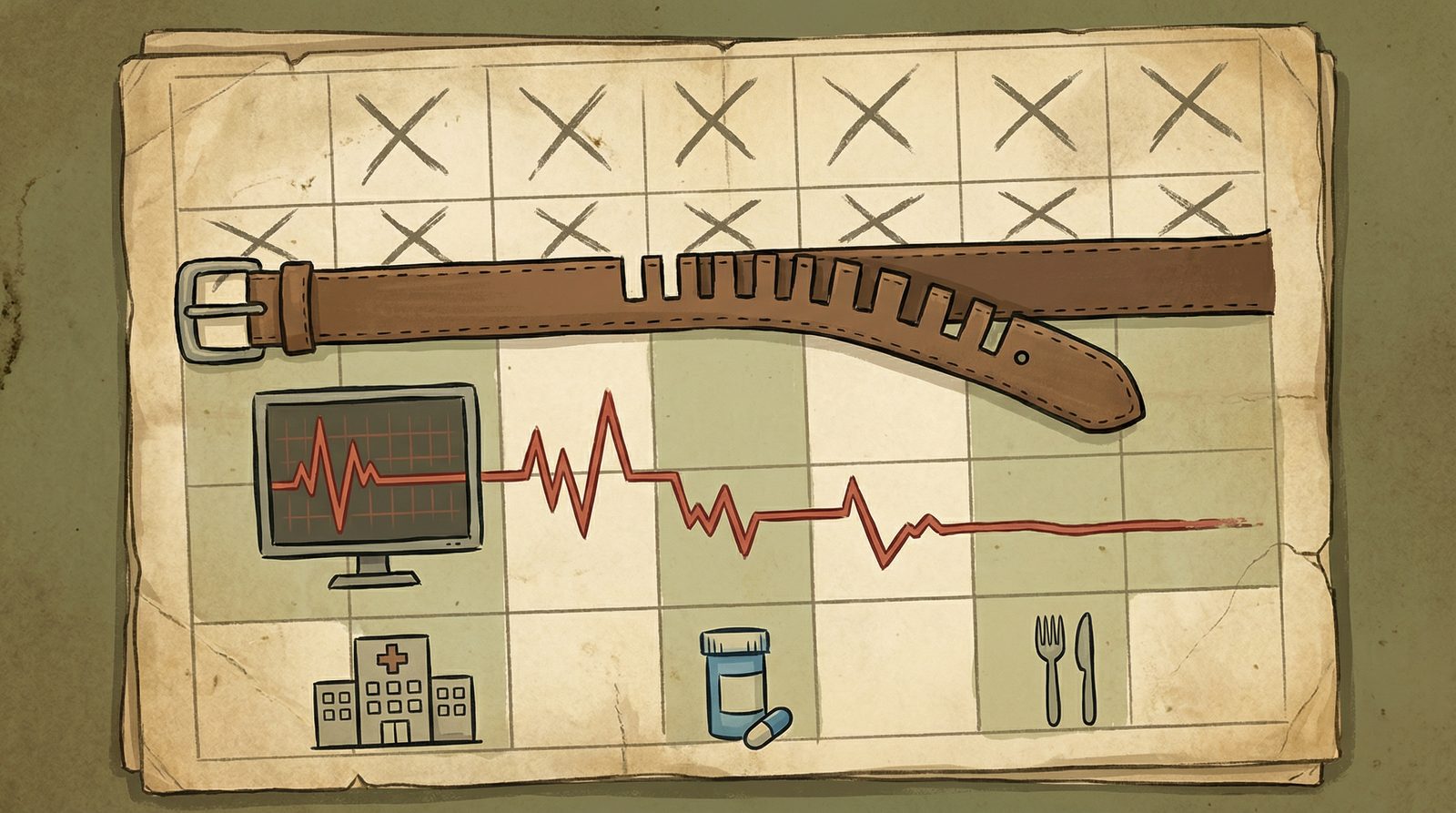
    The story then escalates. The character eats constantly and still loses weight, or they cannot keep food down, or something inside them is devouring every calorie. Medical tests come back normal, or show something baffling. Doctors shrug, or the hospital becomes another stage for humiliation as strangers comment on the character’s appearance. The ordinary logic of diet and health breaks down, which is part of the horror.

    Writers often tie the decay to a specific cause. In supernatural horror like Thinner, the wasting is a curse laid on a guilty protagonist, a physical form of judgment that cannot be reasoned with. In psychological stories like The Machinist, the body reflects an inner collapse: sleeplessness, guilt, and trauma etch themselves into bone and skin. In creature or infection horror like The Troop, the decay comes from a parasite or experiment, turning the human body into a laboratory for something hungry and inhuman.

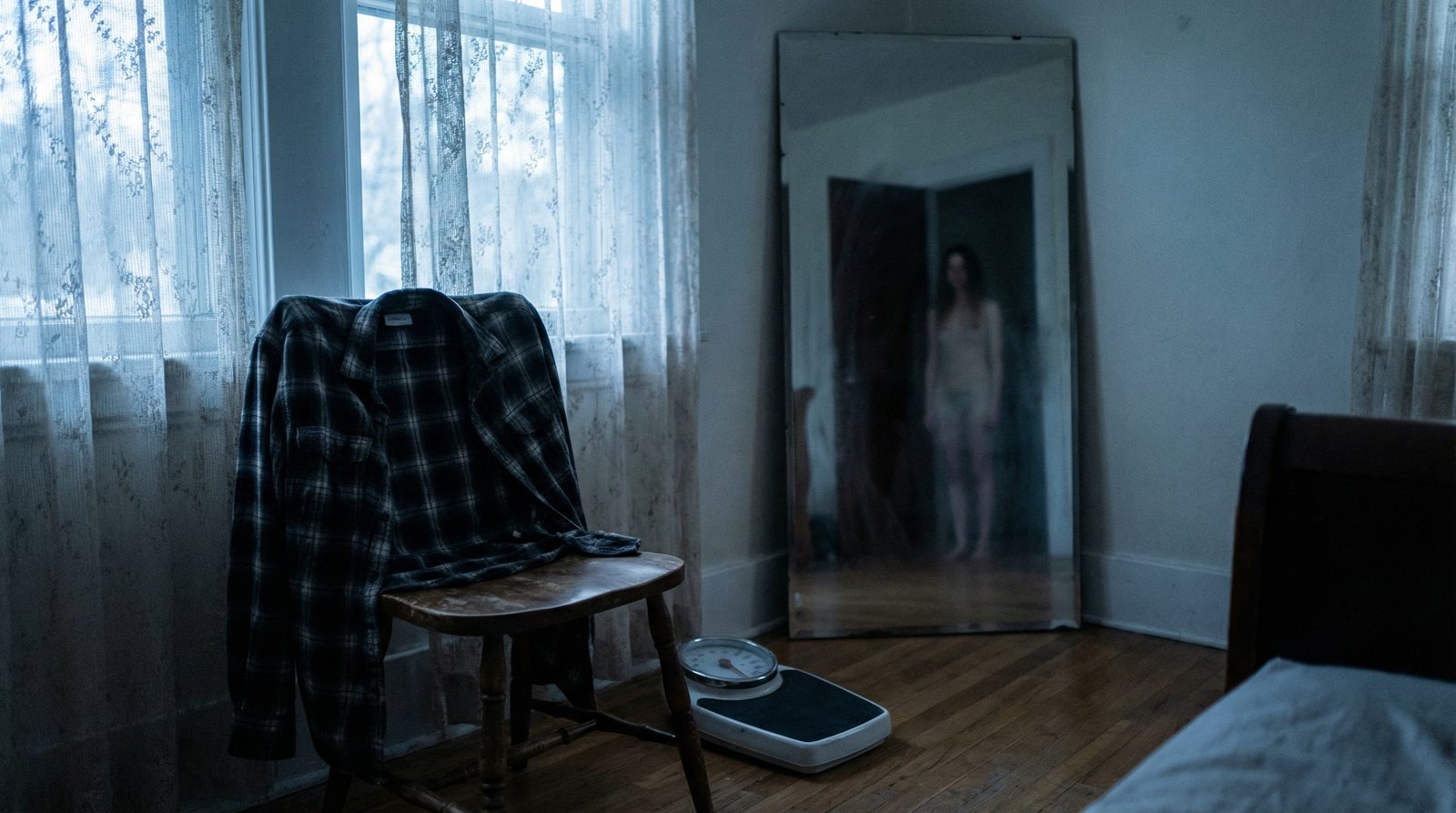
    As the Rapid Weight Loss And Body Decay accelerates, relationships strain. Friends and family may stage interventions, accuse the character of having an eating disorder, drug problem, or mental break. The character might lie about their condition, hide their body under layers of clothing, or isolate to avoid pitying or horrified stares. Everyday tasks become exhausting. Mirrors turn into enemies.

    Structurally, the motif gives the story a built-in ticking clock. The reader can see the stakes rising just by how the character looks and moves. Each chapter can mark a new threshold – another notch on the belt, another comment from a stranger, another failed attempt to reverse the process. The question becomes how far the body will go before the character breaks, confesses, or is consumed.

    Editorial illustration inspired by 'Rapid Weight Loss And Body Decay'

    EMOTIONAL EFFECT ON THE READER

    Rapid Weight Loss And Body Decay hits readers in a very physical way. It is hard not to imagine your own body when you read about someone else’s shrinking, bruising, or failing. The descriptions can trigger a mix of disgust, fascination, and dread. You may want to look away, but you also want to know how far it will go.

    There is also a strong current of helplessness. Watching a character do everything right – eating, resting, seeking help – and still deteriorate taps into fears about cancer, wasting diseases, or any illness that does not care how “good” you are. When the decay is tied to guilt or punishment, as in Thinner, the feeling gets even more complicated: you might think the character deserves it, yet still flinch at every new detail of their suffering.

    Shame is another powerful note. As the body changes, the character often feels exposed and judged. Scenes where they try to hide their frame, avoid being touched, or endure comments about their appearance can be more painful than the outright horror. Readers who have ever felt out of control in their own bodies may recognize that embarrassment and anxiety, even if the story itself is fantastical.

    At the same time, Rapid Weight Loss And Body Decay can stir a strange sympathy. The character is literally stripped down, defenses and vanity falling away along with the pounds. That vulnerability can make their confessions, reconciliations, or last acts hit harder. Even in the bleakest horror, there is often a moment where the reader feels the full weight of the character’s humanity, right as the body is failing them most.

    Symbolic illustration inspired by 'Rapid Weight Loss And Body Decay'

    VARIATIONS & RELATED MOTIFS

    Rapid Weight Loss And Body Decay shows up in several distinct flavors. One common variation is the cursed punishment story, like in Thinner, where the wasting is a moral sentence. The character’s shrinking body becomes a public confession of their crime. This can intersect with motifs about guilt made visible or supernatural justice, where the body tells the truth the character would rather hide.

    Another variation is the psychological spiral, as in The Machinist. Here, the focus is less on gore and more on how mental strain writes itself onto the body. Rapid Weight Loss And Body Decay overlaps with motifs about unreliable narrators, trauma resurfacing, and insomnia as unraveling. The reader is left wondering how much of the decay is real and how much is filtered through a damaged mind.

    There is also the parasitic or scientific horror version, like The Troop, where the decay is caused by infection, experiment, or alien biology. This ties Rapid Weight Loss And Body Decay to motifs such as body as laboratory, contagion, and the commodified body, where human flesh is just another resource to be used, altered, or consumed.

    Finally, the motif can blend with more grounded narratives: medical dramas about aggressive illness, or realistic stories about eating disorders and self-destruction. In those cases, Rapid Weight Loss And Body Decay intersects with motifs of survival as performance, family caretaking, and the failing body. The horror is quieter but often more emotionally devastating, because it feels so close to real life.

    Across all these variations, the core remains the same: a body that is vanishing too quickly, turning private fears and hidden sins into something you cannot help but see.

  • Pet Sematary (1983)

    Pet Sematary (1983)

    By: Stephen King
    Genre: Horror
    Country: United States


    INTRODUCTION

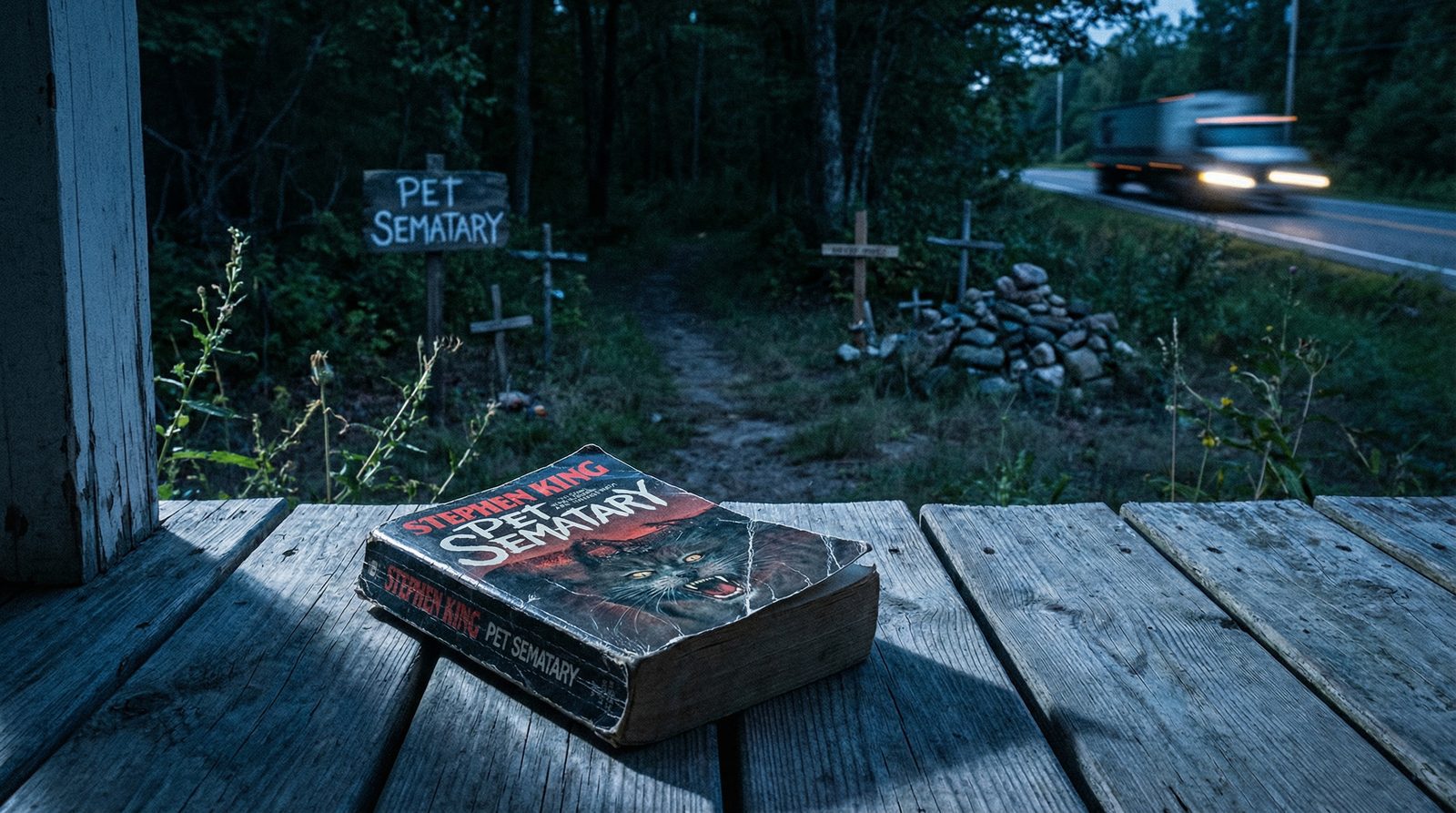
    Among Stephen King’s work, Pet Sematary (1983) is the one that feels like it hates you a little for reading it. Set in the late twentieth century, it is soaked in dread, domestic routine, and the slow rot of inevitability. The motif of roads and crossings runs through everything: the busy Route 15 where the Orinco trucks scream past, the worn path to the children’s graveyard, the secret trail beyond the deadfall into the Micmac burial ground. The feeling is suffocating grief, but also the ordinary tenderness of a young family trying to settle into a new town. King builds a world of PTA meetings, university politics, and neighborly beers on the porch, then lets something ancient and foul seep up through its floorboards. This is not simply a scary book; it is a brutal argument about the cost of refusing to accept that everything ends.


    PLOT & THEMES

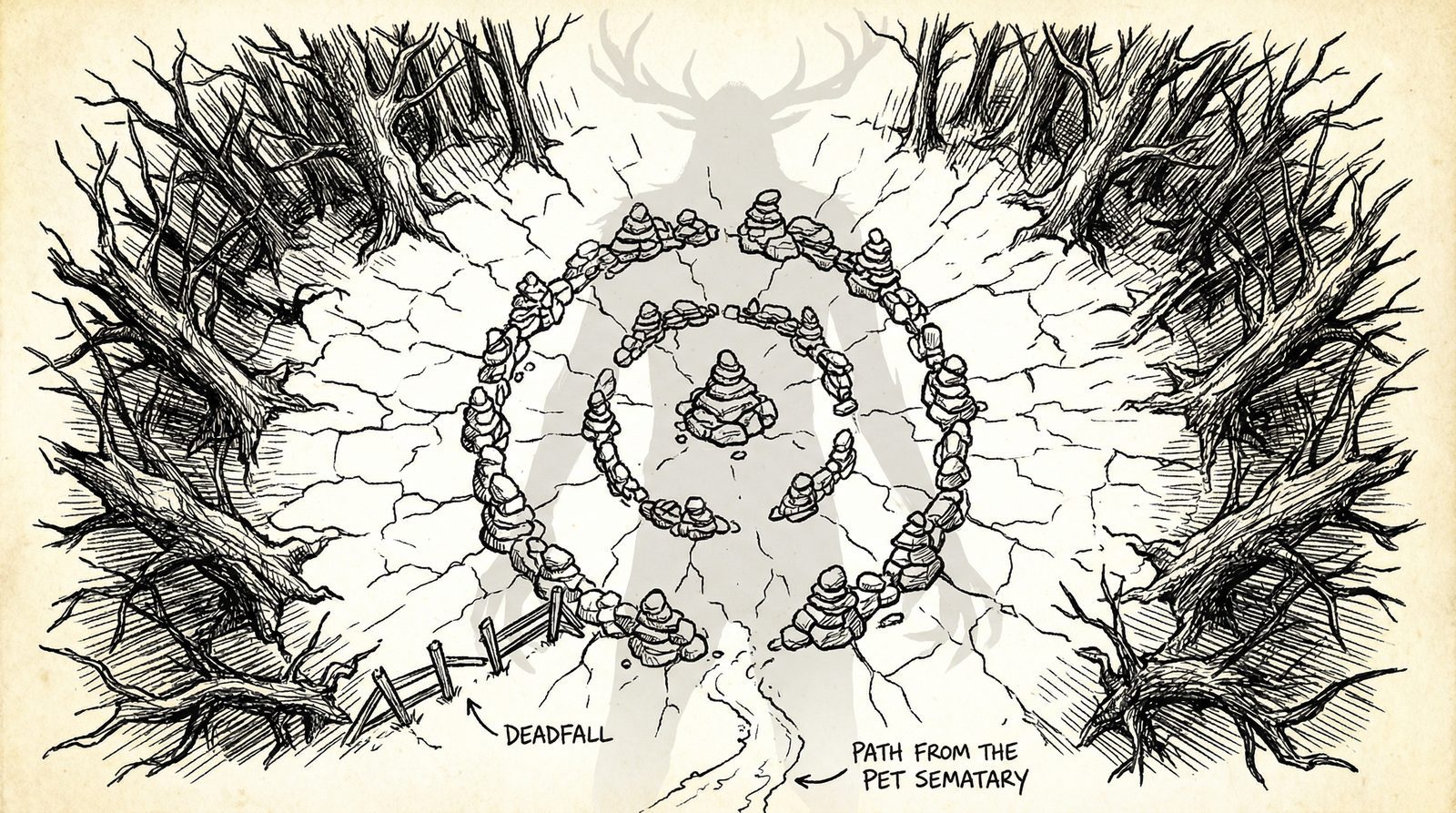
    On the surface, the plot is simple. Louis Creed, a doctor, moves with his family to a rented house in Ludlow, Maine, for a job at the University of Maine’s student health center. Across the road lives Jud Crandall, the elderly neighbor who becomes Louis’s guide to the local geography: the children’s “pet sematary” in the woods and, beyond the deadfall, the sour Micmac burial ground. When Ellie’s cat, Church, is killed on the dangerous road, Jud takes Louis past the burial ground’s stone cairns. Church returns, but wrong – sluggish, foul-smelling, with a flat, alien gaze. The motif of corrupted resurrection is born here and never loosens.

    The trope of the Faustian bargain is explicit. Louis is not tricked; he understands that what comes back is not what went into the earth, yet when his toddler son Gage is killed by an Orinco truck, he chooses the burial ground again, this time alone. King threads in smaller thematic filaments: Rachel’s childhood trauma with her dying sister Zelda, hidden away like a family shame; Louis’s clinical detachment at the university clinic, shattered by Victor Pascow’s grotesque head injury and prophetic warning; the way the Creed marriage strains under unspoken fears about death. Compared with the film adaptations, the novel lingers more cruelly on Louis’s planning – the grave-robbing at Mount Hope Cemetery, the meticulous timing around Rachel and Ellie’s absence.

    The book’s ending is unambiguously bleak. Gage’s resurrected body murders Jud and Rachel with a scalpel, and Louis, half-mad, kills his son a second time with a morphine syringe before burning Jud’s house. Yet he still carries Rachel’s corpse to the burial ground, convinced that waiting less time will produce a better result. The final scene shows Rachel returning, reeking and decayed, dropping a maggot from her eye socket as she touches Louis and says, “Darling.” He welcomes her. There is no last-minute salvation here; only a man who has chosen damnation over grief.


    PROSE & NARRATIVE STRUCTURE

    The book uses close third-person as its primary narrative technique, staying mostly with Louis while occasionally slipping into Jud’s memories or Rachel’s private terrors. This tight focus lets King turn mundane details – the smell of autumn leaves on the path to the pet sematary, the sound of the Orinco trucks’ air brakes – into pressure points. The feeling is one of incremental suffocation; every chapter nudges the boundary of what Louis will accept, then quietly resets what counts as normal.

    Structurally, the novel is almost cruelly patient. The first half is domestic realism: Louis’s first day at the university, Ellie’s fear about death after seeing the pet sematary, Thanksgiving plans, even an ugly argument with Rachel’s parents in Chicago. King uses repetition of phrases – “Sometimes dead is better,” Victor Pascow’s “the soil of a man’s heart is stonier” – as a kind of incantation, echoing through Louis’s thoughts and Jud’s stories. These refrains acquire new meaning each time they surface, like a chorus that grows more ominous on each return.

    There is also a subtle use of foreshadowing through dreams and premonitions: Ellie’s nightmares about “Paxcow” (her mispronunciation of Pascow), Rachel’s sense of approaching disaster on her frantic trip back to Ludlow, Louis’s own half-waking vision of a Wendigo-like shape towering over the burial ground. Compared with something like The Shining (1977), the prose here is plainer, less baroque, but the rhythms are merciless. Sentences shorten as Louis’s sanity frays; paragraphs splinter into jagged interior monologue during the grave-robbing sequence and Gage’s return. The result is a narrative that feels like a long, slow descent punctured by sudden, shocking drops.

    Conceptual editorial illustration inspired by 'Pet Sematary (1983)'

    CHARACTERS & INTERIORITY

    Louis Creed begins as the rational protagonist archetype. King is careful to make him neither saint nor monster. He is petty about his in-laws, occasionally selfish, but genuinely loves Rachel, Ellie, and Gage. His interiority is where the horror really lives. We sit inside his rationalizations as he moves from burying a cat to contemplating, then committing, the exhumation of his own child. The justifications come in waves, each a little thinner than the last.

    Jud Crandall, often softened in adaptations, is more morally ambiguous on the page. He is the kindly old neighbor, yes, but also the man who opens the door to the Micmac burial ground because he cannot bear to see Ellie grieve. His stories about Timmy Baterman, the resurrected World War II soldier who came back knowing everyone’s secrets, are soaked in guilt. Rachel, meanwhile, is defined by her terror of death, rooted in the grotesque memory of caring for Zelda, whose spinal meningitis twisted her body and mind. Her shame and trauma are not side notes; they are a parallel study in how families mishandle mortality.

    Even minor figures – Norma Crandall with her heart trouble, Irwin and Dory Goldman with their brittle hostility, the student Steve Masterton who helps Louis in the clinic – are drawn with enough interior shading to feel like casualties of the same force. The book’s cruelty lies in how intimately it understands each character’s weak point, then lets the burial ground press on it.


    LEGACY & RECEPTION

    King has said he nearly didn’t publish Pet Sematary because he thought it went too far, and that unease clings to its reputation. Among horror readers it’s often cited as one of the few novels that can still genuinely unsettle jaded adults. Its late twentieth century setting, Orinco trucks, university politics, airline schedules, anchors the supernatural in the banal, making the final sequence, with Rachel’s corpse shambling into the kitchen, feel less like gothic flourish and more like the natural endpoint of bad decisions.

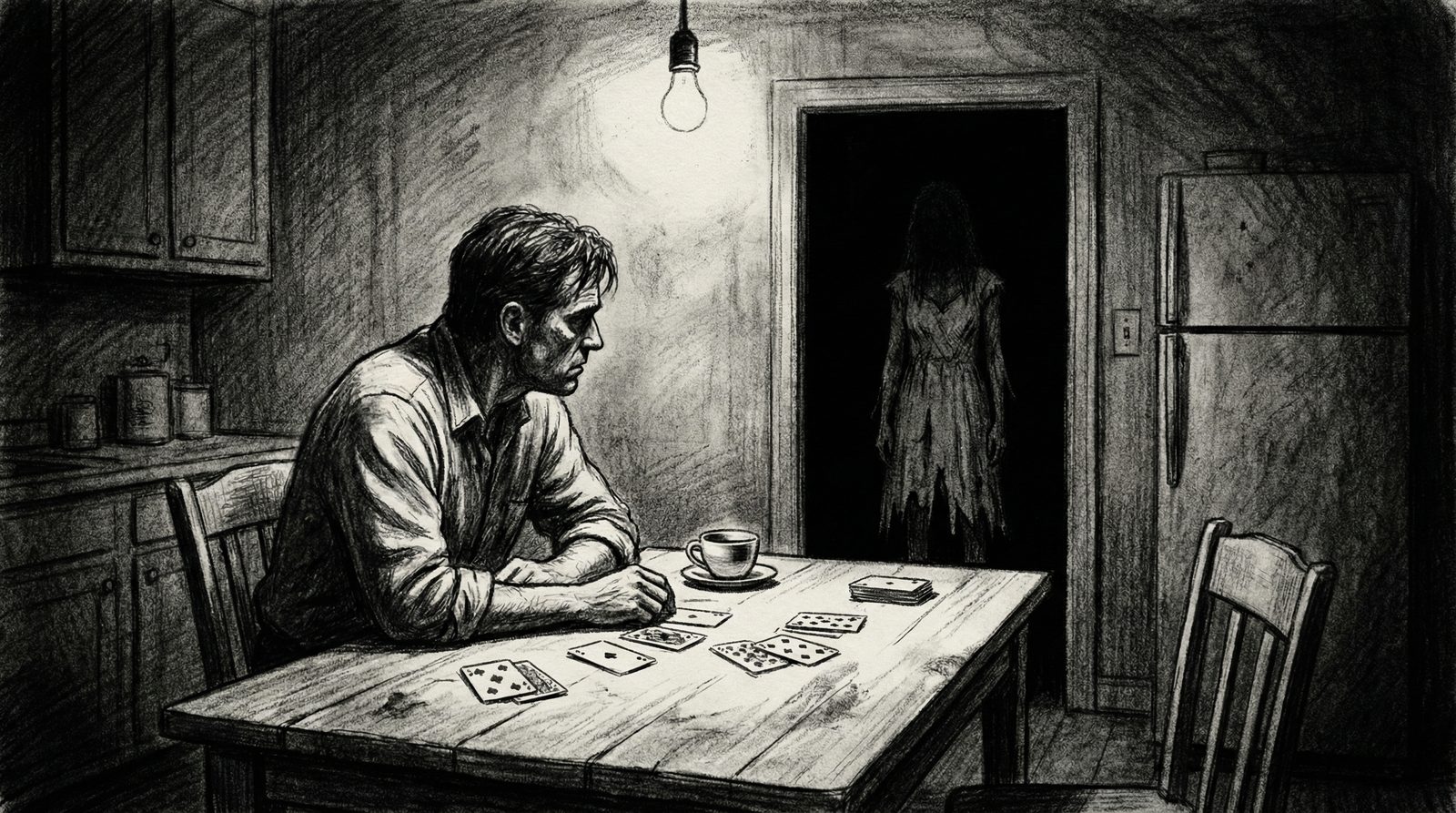
    The various film adaptations have made the story widely known, but they also blur how uncompromising the book’s ending truly is. There is no burning house as catharsis, no surviving child to carry a glimmer of hope. Louis ends the novel sitting at the kitchen table, playing solitaire, waiting for the thing he has made of his wife. That starkness is part of why the book endures: it refuses the usual horror bargain where insight or sacrifice buys survival. Instead, it suggests that some doors, once opened, can only keep swinging wider.


    IS IT WORTH READING?

    Yes, but with the understanding that Pet Sematary (1983) is less a thrill ride than a slow moral poisoning. If you’re interested in horror that is genuinely about something – parental love, denial, the arrogance of thinking you can bargain with the inevitable – this is essential. The prose is accessible, the structure straightforward, but the emotional impact is punishing. There are no comforting ironies, no narrative hand-holding. The book will ask you, quite directly, what you would do if you had access to that burial ground, and it will not let you answer quickly. For many readers, it becomes the Stephen King novel they respect most and reread least, precisely because it hits so close to the bone.

    Illustration of a core idea or motif from 'Pet Sematary (1983)'

    TRIVIA & AUTHOR FACTS

    King wrote Pet Sematary after moving his own young family to a house near a busy road in Orrington, Maine, where a pet cemetery really existed in the woods behind the property. His daughter’s cat was killed on that road, an event that directly inspired Church’s fate. The manuscript reportedly disturbed him so much that he shelved it for a time, only publishing it to fulfill a contractual obligation.

    Several details in the book echo King’s broader fictional Maine: Ludlow sits not far from other invented towns like Derry and Castle Rock, and the Micmac burial ground hints at an older, shared supernatural geography. The University of Maine setting draws on King’s own experience teaching there. The phrase “Sometimes dead is better,” spoken by Jud, became one of King’s most quoted lines, encapsulating the novel’s entire moral argument in four blunt words. Despite his misgivings, the book became one of his most discussed works, especially among readers who are parents.


    SIMILAR BOOKS

    If you’re drawn to the way Pet Sematary fuses family drama with supernatural horror, you might look toward Shirley Jackson’s The Haunting of Hill House (1959) for another study in psychological erosion. For a different but related take on grief and uncanny return, Peter Straub’s Ghost Story (1979) offers an older generation haunted by past sins. Those interested in the rural, ritualistic side of horror might turn to Thomas Tryon’s Harvest Home (1973), where small-town traditions conceal something far older and crueler. All share with King an interest in how ordinary people remake themselves – sometimes monstrously – when confronted with the unacceptable.


    DISCOVERABILITY & LINKS

    This review of Pet Sematary (1983) is connected on our site to wider discussions of motifs like roads and crossings, tropes such as the Faustian bargain, and related horror novels that explore grief, family, and the dangerous allure of undoing death.