Narrative Techniques: Free indirect discourse

  • Leave It To Psmith (1923)

    Leave It To Psmith (1923)

    INTRODUCTION

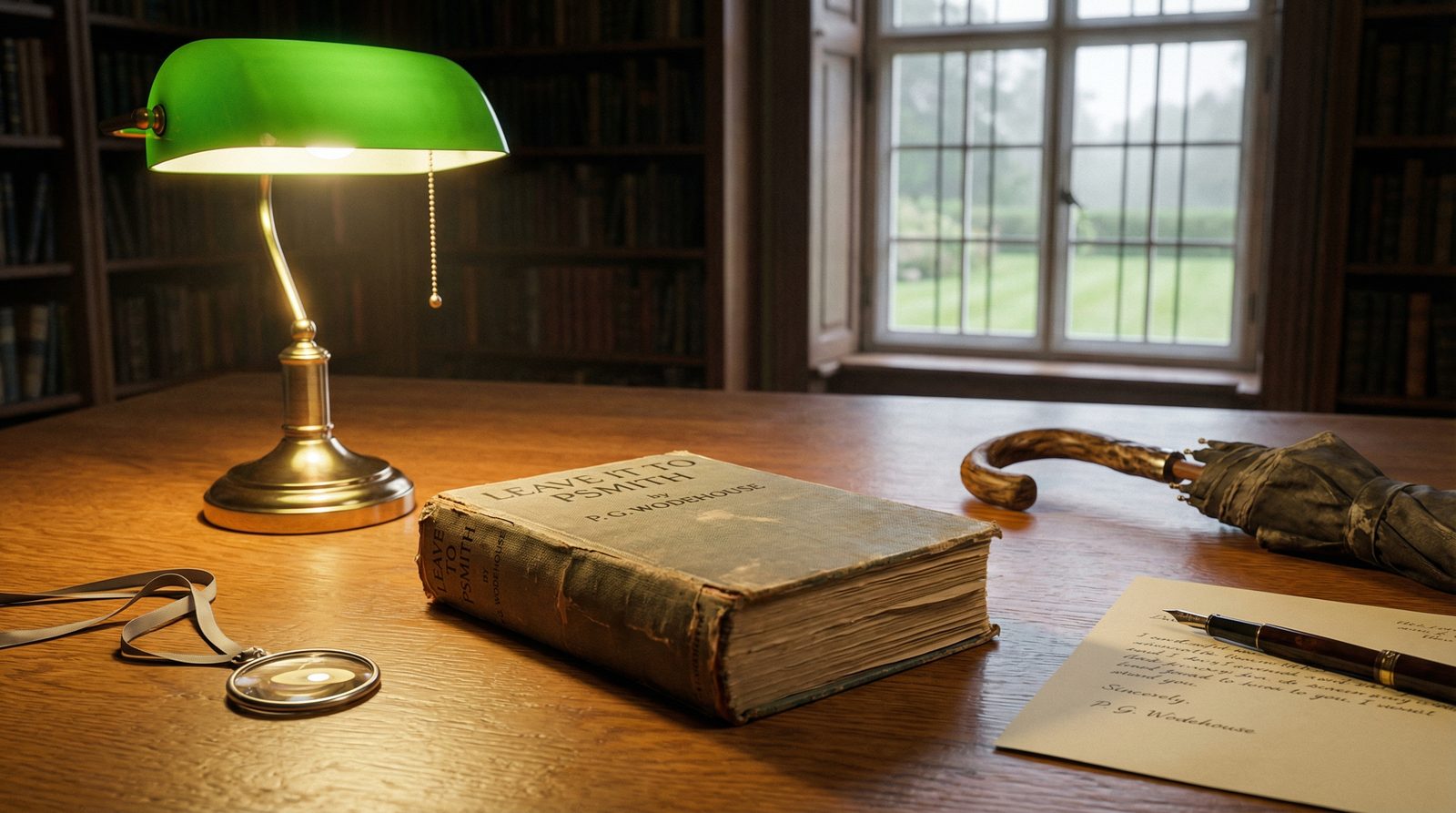
    Leave It To Psmith (1923) by P. G. Wodehouse
    Comic crime / country house farce · 336 pages · United Kingdom


    Leave It To Psmith is the moment Wodehouse’s farce machinery clicks into a higher gear. It’s a country house crime story where nobody is truly dangerous, a romantic comedy where the chief weapon is confidence performed as style. The action unfolds in early-20th-century England, but emotionally it hovers in a timeless, slightly enchanted world of lawns, libraries, and light rain. The feel is buoyant mischief: even when pistols appear and jewels vanish, the mood never quite darkens.

    Under the airy surface, the book is fascinated by performance. Psmith walks into Blandings like a man stepping onto a stage, and everyone else — from Freddie Threepwood to Eve Halliday — is dragged into his improvised play. The comedy comes from watching people cling to the roles they think they should be, while the plot keeps forcing them into the roles they actually are.

    PLOT & THEMES

    The plot is a jewel-robbery comedy of errors. Psmith, short on money after his fish-business phase collapses, answers a vague ad offering “any job, any time.” That thread pulls him toward Blandings Castle, where he ends up impersonating a poet and promptly becomes the most competent person in the building. The fun is structural: everyone is operating with partial information, and each polite social interaction doubles as a tactical move.

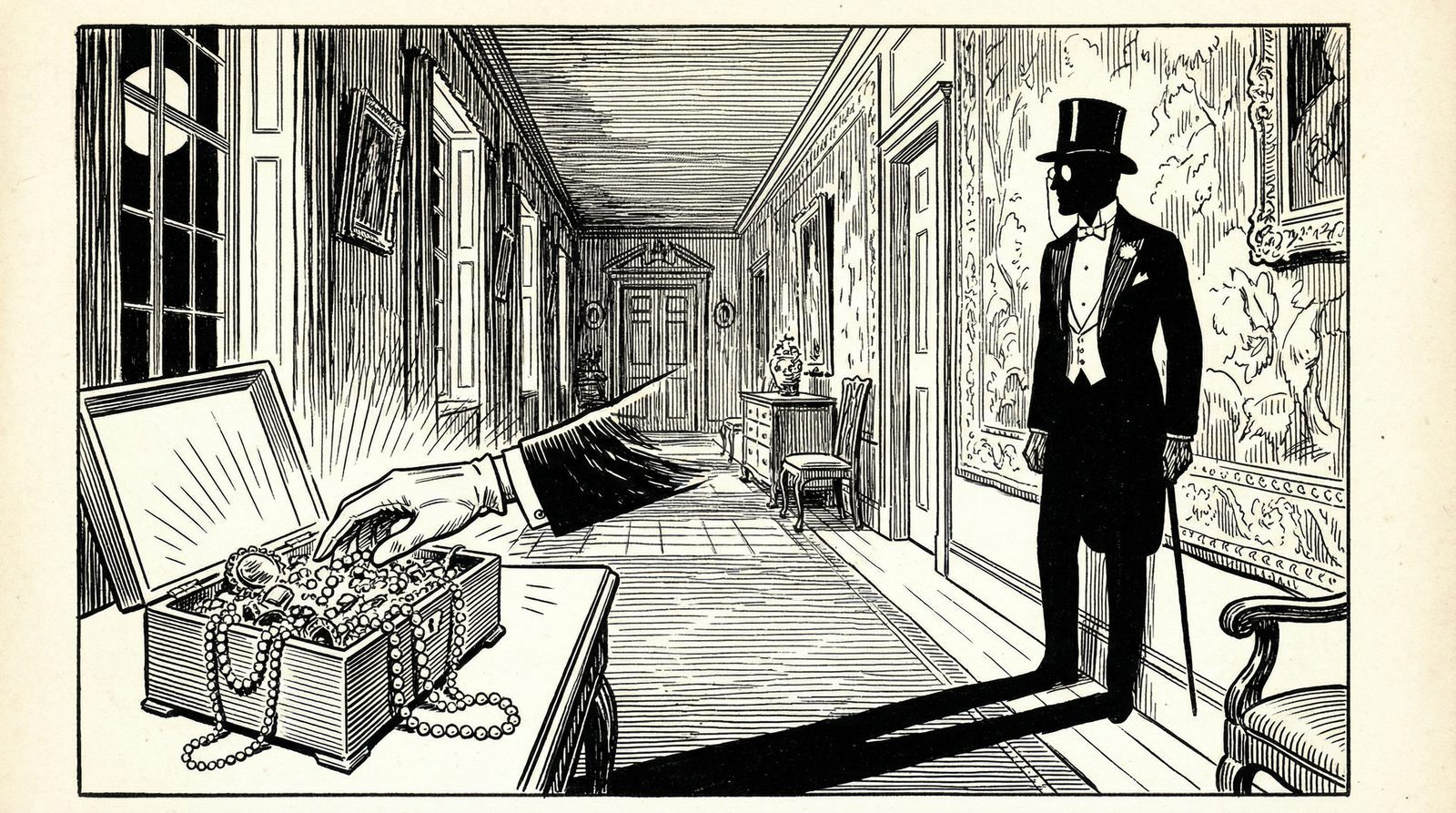
    Documents and messages drive the engine. Notes go astray, letters get misunderstood, and everyone believes the wrong person is in control. Wodehouse uses the country house itself as a plot machine: the library for secrets, corridors for near-misses, gardens for overheard conversations, and nighttime for overlapping burglaries that are more embarrassing than threatening.
    Conceptual editorial illustration inspired by 'Leave It To Psmith (1923)'

    The deeper theme is social improvisation under pressure. Blandings is a world of ritual, and Psmith survives by treating ritual as a costume he can change at will. Freddie, by contrast, is permanently flustered by the rules even though he was born into them. Eve Halliday sees the absurdity of aristocratic life and still finds herself pulled into its charms. Baxter’s obsession with order turns him into a darkly comic warning: when a system becomes your identity, any disruption feels like a personal attack.

    The ending is satisfyingly tidy in a distinctly Wodehouse way. The crooks are foiled, the necklace is recovered, misunderstandings evaporate, and romance is sorted into place. Blandings returns to its gently disordered status quo, with one necessary exile: Baxter, the character least capable of laughing at the world’s refusal to behave.

    PROSE & NARRATIVE STRUCTURE

    Structurally, the novel is an exercise in interlocking subplots. Wodehouse juggles theft, romance, imposture, and Baxter’s escalating paranoia without ever letting the reader feel lost. The technique that makes it feel effortless is the constant perspective-shifting: we drift into Lord Emsworth’s foggy distraction, Baxter’s clenched vigilance, and Eve’s wounded pride, while the narrator maintains a steady, amused control of the whole chessboard.

    The prose is famously light, but it’s built with architectural care. Scenes end on miniature cliffhangers — a door opening at the wrong moment, a voice in the dark — then cut to another character, keeping the farce airborne. Dialogue functions like music: Psmith’s ornate patter, Freddie’s gabbled panic, and Emsworth’s woolly half-sentences collide in a rhythm that makes even plot logistics feel like comedy.

    CHARACTERS & INTERIORITY

    Psmith is the trickster in evening dress: an agent of chaos who restores order. His confidence is a performance, and Wodehouse lets us sense the practical anxiety underneath it — money is tight, reputation is fragile, and the whole act could collapse at any moment. That underlying precariousness is what keeps the charm from feeling empty.

    Eve Halliday is more than a foil. She’s competent, observant, and quietly tired of being treated as background furniture in a male aristocratic theater. Lord Emsworth is distracted privilege embodied, more invested in his personal obsessions than in family drama. Baxter, meanwhile, is the anxious counterweight to Psmith: he believes order is morality, and the book systematically humiliates that belief until it snaps.

    Minor figures — Beach the butler, the impostor Miss Peavey, Eddie Cootes — are sketched through speech patterns and small gestures rather than deep interiority. That’s enough. In this kind of farce, voice and timing are character.

    LEGACY & RECEPTION

    Within Wodehouse’s career, Leave It To Psmith is often treated as a structural high point: a novel where intricate plotting and pure style reinforce each other. It also functions as a bridge into the wider Wodehouse ecosystem of aristocratic comedy, where problems remain social, survivable, and solvable through wit.

    Its niche is distinctive: it borrows the machinery of crime fiction but refuses real menace. The “mystery” is never the point. The point is the pleasure of watching a self-invented hero talk his way through an impossible situation while the house itself keeps serving up fresh collisions.
    Illustration inspired by 'Leave It To Psmith (1923)'

    IS IT WORTH READING?

    If you only read one Blandings-adjacent Wodehouse novel, this is an excellent candidate. It offers a complete, self-contained story, a fully realized setting, and comic prose at close to peak form. Readers craving psychological realism or moral gravity may find it weightless — but that’s the design. This is a book about the joy of style, for Psmith and for anyone willing to surrender to elaborate silliness.

    TRIVIA & AUTHOR FACTS

    Psmith predates this novel; he first appeared as a schoolboy in earlier stories, and Leave It To Psmith effectively serves as his big farewell performance. The episode-friendly chapter endings reflect the book’s serialized roots and the author’s instinct for cutting scenes at exactly the right comic moment.

    Wodehouse wrote the novel during a period when the real-world aristocratic order was under strain, but Blandings remains a deliberate escape hatch: a dream England sealed off from consequence, where the worst disasters can be repaired with a confession, a letter, or a perfectly timed entrance.

    SIMILAR BOOKS

    If you like this, the closest neighbors are other English comedies that treat embarrassment as the highest stake and social ritual as plot physics. Look for books with tight dialogue, closed social spaces, and protagonists who survive by improvising inside rigid rules.

    DISCOVERABILITY & LINKS

  • The Brass Bottle (1900)

    The Brass Bottle (1900)

    INTRODUCTION

    The Brass Bottle (1900) by F. Anstey/Thomas Anstey Guthrie
    Fantasy · United Kingdom


    The Brass Bottle opens with the promise of a familiar fantasy: an ordinary man acquires an antique object, releases a genie, and expects his life to improve. What makes the novel endure is how quickly that promise curdles. This is not a tale of empowerment through magic, but of social unraveling through excess assistance.

    Set at the turn of the twentieth century, the book unfolds in drawing rooms, offices, auction houses, and committee meetings that feel stiflingly polite. Into these airless spaces erupts Fakrash, an ancient genie whose ideas of generosity are spectacularly out of scale with modern English life. The result is a comedy of embarrassment rather than wonder. Magic does not liberate Horace Ventimore. It exposes how little control he has over his career, his courtship, and his own desires.

    PLOT & THEMES

    Horace Ventimore is a struggling architect with more ambition than confidence. On a whim, he purchases an old brass bottle at Salterton & Co, an auction house near the Embankment. Once opened in his modest lodgings, the bottle releases Fakrash-el-Aamash, a genie who has waited centuries to reward a liberator.

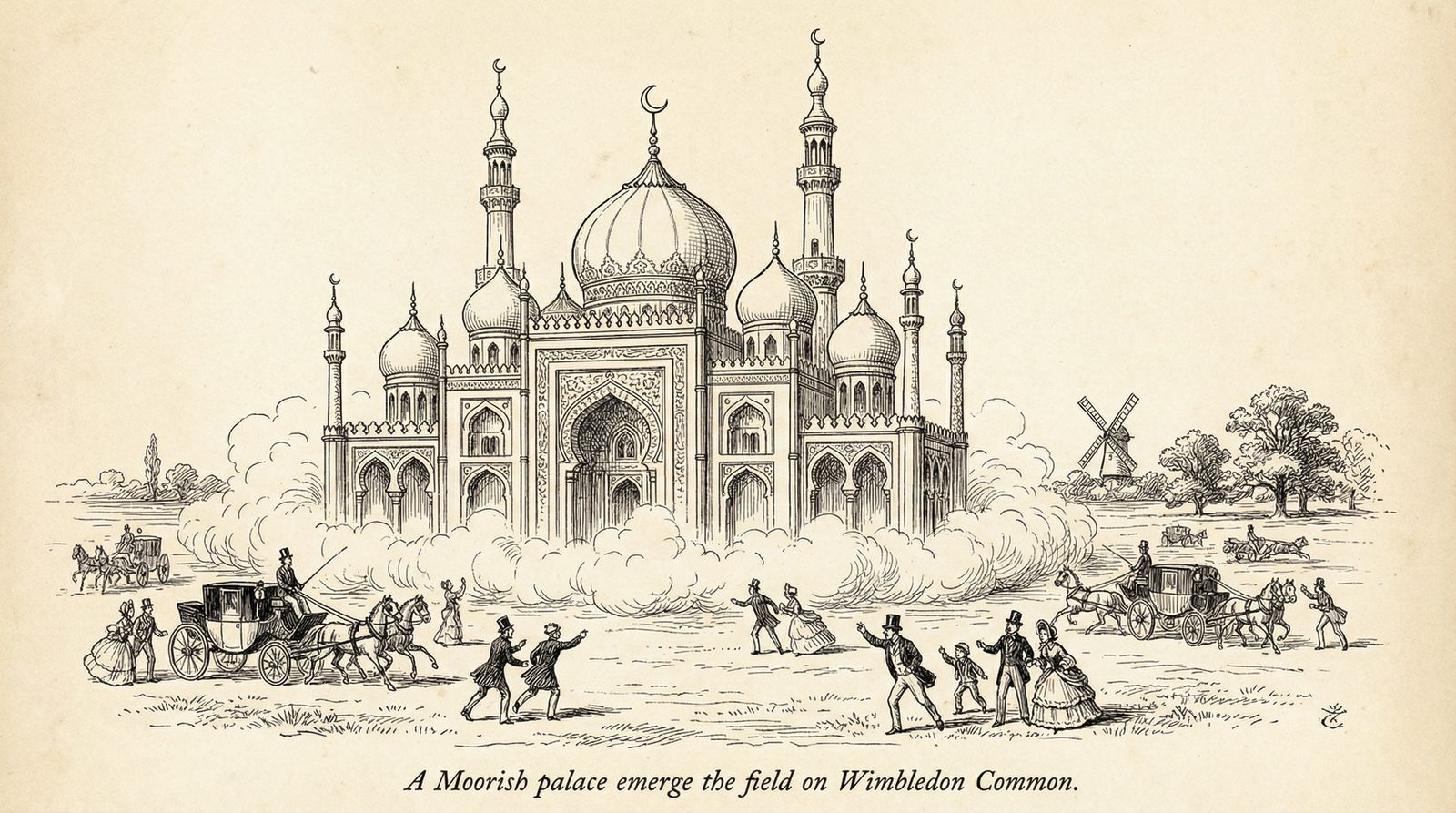
    Fakrash’s promise of assistance becomes the novel’s central engine. Horace wants professional success and marriage to Sylvia Wackerbath. Fakrash delivers both with catastrophic enthusiasm: erecting an impossible Moorish palace on Horace’s suburban property, showering him with sudden wealth, and humiliating Sylvia’s socially ambitious father in front of learned societies and polite company.

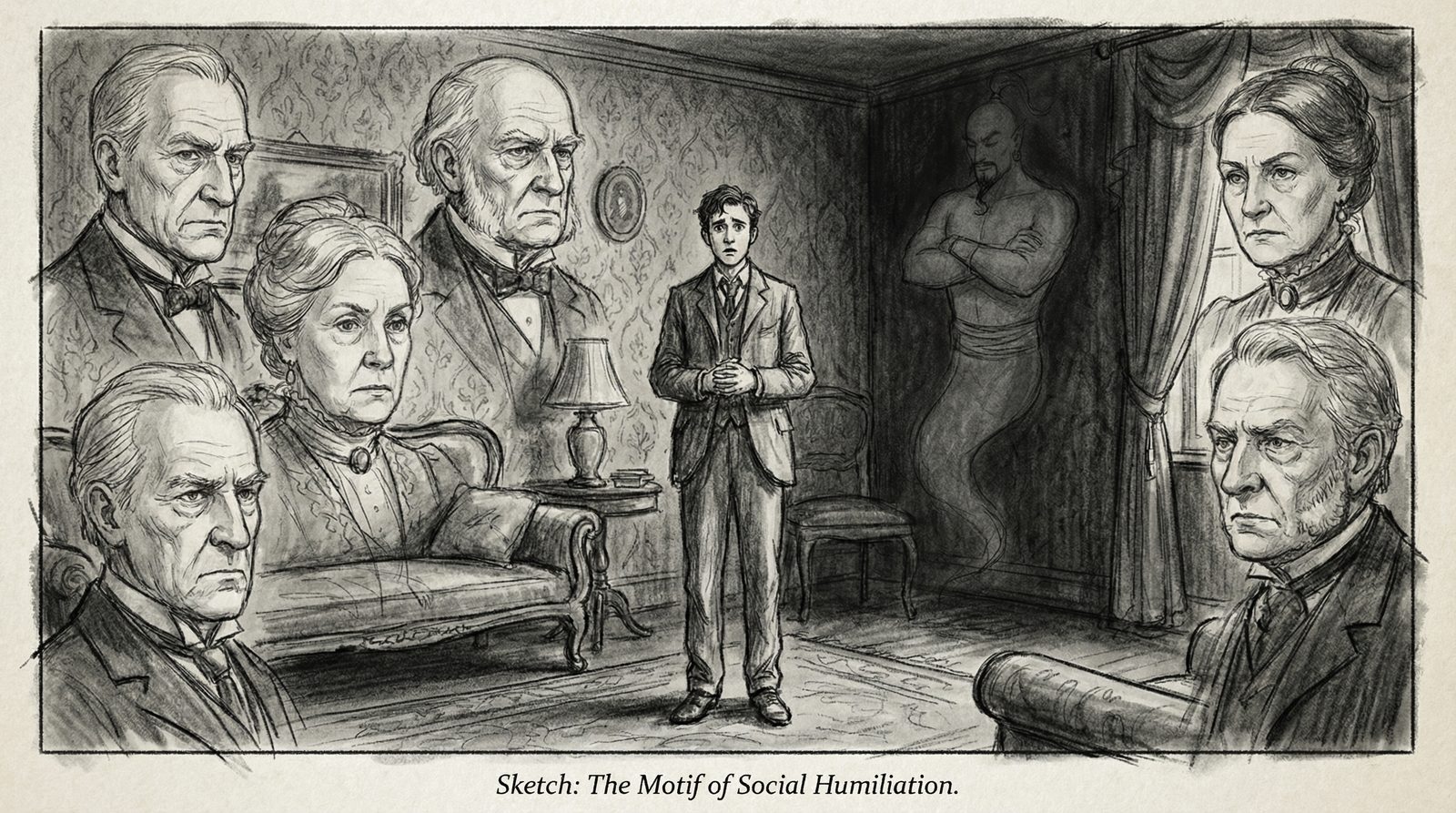
    Each wish carries unintended consequences. Horace’s reputation collapses under the weight of miracles he never asked for in quite that form. Respectability, so carefully maintained in Edwardian society, proves fragile when confronted with a being who does not understand embarrassment, gradual advancement, or understatement.

    The ending refuses a magical reset. Fakrash does not erase memories or rewind events. Horace learns that no supernatural favor can restore lost standing or undo public spectacle. The solution is renunciation rather than mastery. He must choose to live without wishes at all, accepting the limits of ordinary effort and imperfect love.

    PROSE & NARRATIVE STRUCTURE

    Anstey’s prose is brisk, ironic, and socially observant. The narration frequently slips into Horace’s anxious thought patterns while maintaining enough distance to let the satire bite. This free indirect style allows the comedy to coexist with a steady current of dread as Horace realizes that help can be more dangerous than hardship.

    The structure is episodic and escalating. Each chapter centers on a single intervention by Fakrash that spirals beyond Horace’s control. A professional introduction becomes a scandal. A gift becomes a liability. A public appearance becomes an ordeal. The rhythm recalls serialized fiction, with each episode ending on a social cliff rather than a physical one.

    One of the novel’s sharpest techniques is its collision of registers. Fakrash speaks in archaic bombast about obliteration and reward, while Horace and the surrounding institutions respond in the language of minutes, regulations, and committee procedure. The courtroom scene, where divine threats are calmly recorded by a clerk, captures the book’s essential joke: ancient power rendered ridiculous by bureaucracy.

    Conceptual editorial illustration inspired by 'The Brass Bottle'

    CHARACTERS & INTERIORITY

    Horace Ventimore is a recognizably timid dreamer. His interior life is dominated by rehearsed explanations, imagined humiliations, and constant self-correction. He does not crave domination or transcendence. He craves approval, and that makes him uniquely vulnerable to Fakrash’s version of generosity.

    Fakrash himself is not psychologically complex. He is a force rather than a character, driven by ancient codes of honor and reward. His failure to understand modern restraint turns him into an agent of chaos despite his sincere loyalty. Through him, Anstey explores how mismatched values can be more destructive than malice.

    Supporting figures deepen the social satire. Mr. Wackerbath embodies financial respectability and terror of ridicule. Sylvia, often seen through Horace’s anxious gaze, is given moments of quiet perspective that suggest she understands far more than he assumes. The novel’s emotional weight lies not in romance but in exposure: watching a man’s careful self-image collapse under unwanted attention.

    LEGACY & RECEPTION

    Although often remembered as a light fantasy, The Brass Bottle reads today as a sharp precursor to twentieth-century social comedy. Its humor is rooted less in spectacle than in class anxiety and professional dread, anticipating writers who would mine embarrassment rather than adventure for laughs.

    Later adaptations and re-tellings frequently soften the ending or lean into romance. Anstey’s original conclusion is colder. Magic fixes nothing. Horace survives, but chastened, forced to live with the consequences of miracles he never fully wanted. That refusal of wish-fulfillment closure is why the book still feels pointed rather than quaint.

    IS IT WORTH READING?

    If you enjoy fantasy as escape, this may surprise you. The book’s pleasures are social rather than spectacular, and its comedy often lands as discomfort rather than delight. But if you enjoy watching ordinary people undone by forces they cannot manage, and stories where magic reveals weakness instead of granting power, it remains a brisk and unsettling read.

    The period language requires a little patience, but the observations feel modern. Desire, reputation, and the terror of being seen are as potent now as they were in 1900.

    Illustration inspired by a core idea from 'The Brass Bottle'

    TRIVIA & AUTHOR FACTS

    “F. Anstey” was the pen name of Thomas Anstey Guthrie, a barrister-turned-humorist whose legal background quietly sharpens The Brass Bottle. The courtroom scene is not just comic invention: its procedures, language, and escalation are unusually precise for fantasy fiction of the period, which is exactly why the scene lands as both absurd and convincing. Anstey understood how bureaucracy absorbs even the impossible.

    The fictional auction house Salterton & Co. is thought to draw on real London auction rooms Anstey frequented. Fakrash’s insistence on palaces by rivers plays on the Thames while gesturing toward older imperial fantasies of the East. The novel’s humor depends heavily on these geographic and cultural collisions.

    SIMILAR BOOKS

    If this blend of supernatural comedy and social discomfort appeals to you, there are clear literary neighbors. E. Nesbit’s The Enchanted Castle uses magic to expose childish vanity and adult hypocrisy, while The Incomplete Enchanter by L. Sprague de Camp and Fletcher Pratt pushes the same wish-fulfillment logic into more overtly comic chaos. For a darker Victorian counterpoint, The Picture of Dorian Gray treats beauty itself as a curse rather than a gift. All of these works share Anstey’s interest in what happens when desire is granted too literally.

    DISCOVERABILITY & LINKS

  • A Fallen Idol (1886)

    A Fallen Idol (1886)

    INTRODUCTION

    A Fallen Idol (1886) by F. Anstey (Thomas Anstey Guthrie)
    Psychological fiction · United Kingdom


    A Fallen Idol begins like a drawing-room curiosity and steadily curdles into something colder. At first glance it looks like a fashionable Victorian entertainment, a touch of occult glamour enlivening polite society. Beneath that surface, Anstey is conducting a pointed examination of belief, imposture, and the damage done when spiritual hunger collides with social ambition.

    The supernatural element is unmistakable, but it is never allowed to dominate the book in the way a conventional horror story might. Instead, the idol operates as a crooked mirror, reflecting vanity, cowardice, and moral compromise back at the people who claim to revere it. The prevailing mood is unease rather than terror. Anstey is less interested in demons than in how quickly ordinary people betray themselves when mystery becomes fashionable.

    PLOT & THEMES

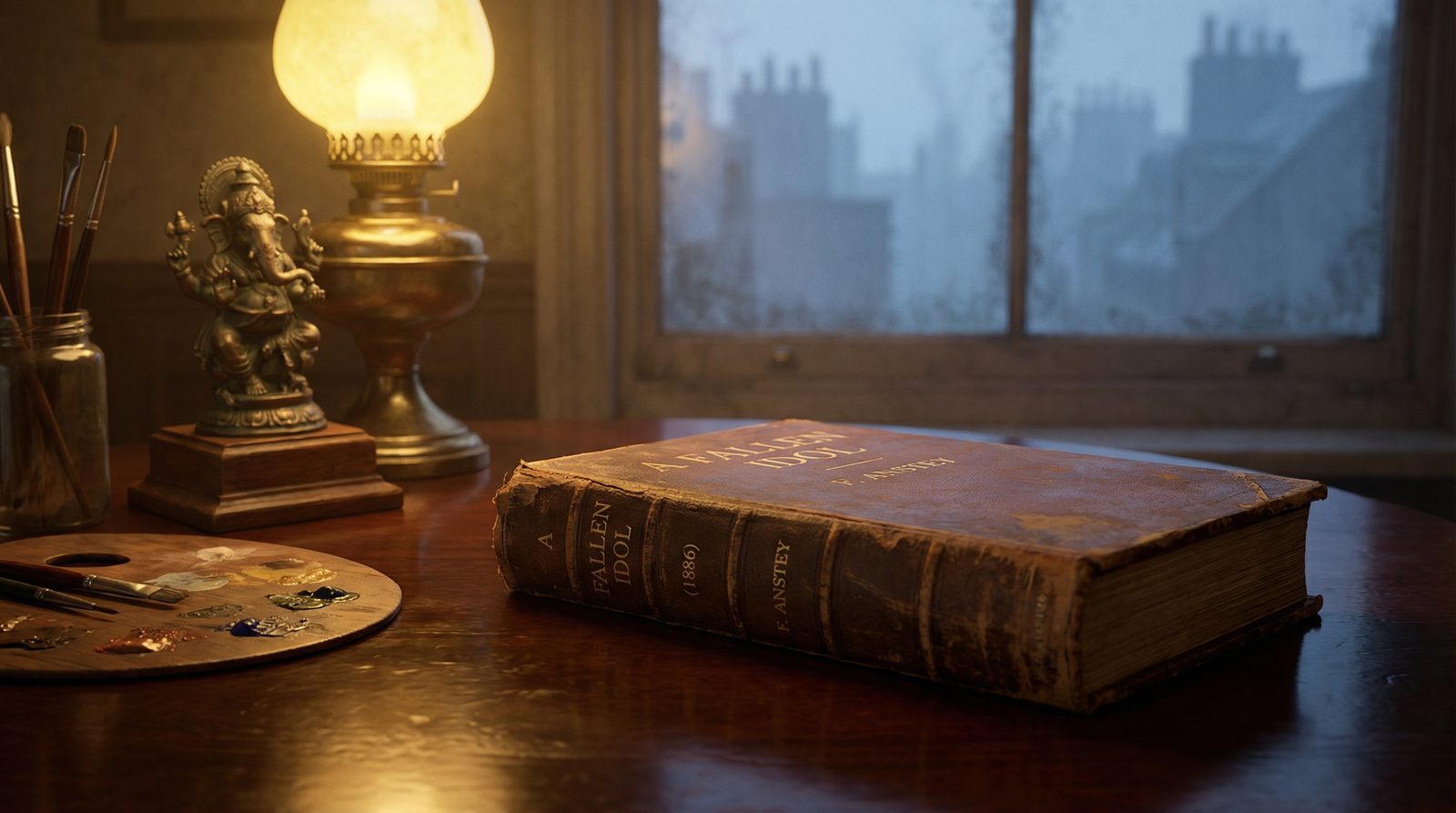
    The story opens in colonial India, where the young barrister Harold Caffyn acquires a strange idol after a violent scene at a temple in Bhowanipore. The circumstances are murky, a worshipper is killed, and whispers of a curse follow the object. Harold brings the idol back to London, where it finds its way into the studio of the painter Mark Ashburn.

    From there, the idol works slowly and indirectly. Mark’s portraits, especially his painting of the charming Dolly Tredwell, begin to attract attention that feels unearned and unsettling. A circle of fashionable spiritualists gathers around the studio, led by the solemn Mrs. Fothergill and the excitable Miss Tyrell, eager to believe that something ancient and powerful is at work.

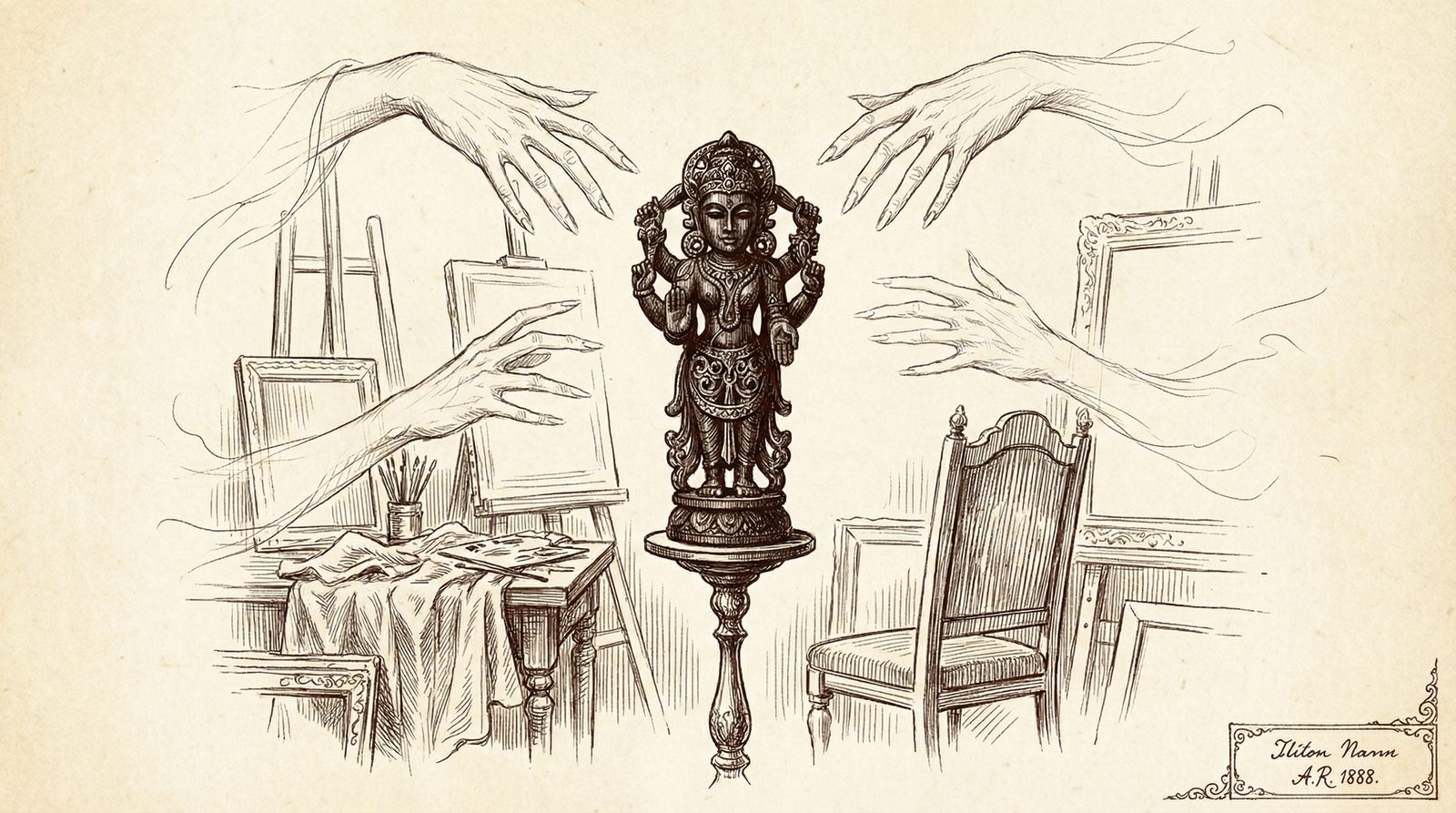
    The novel combines the cursed-object tradition with social imposture. Harold, who knows more about the idol’s bloody history than he admits, manipulates its reputation to his advantage, nudging Mark into becoming a reluctant medium. The séances staged in the dim studio become performances of projection. The sitters see what they want to see, while Mark feels himself hollowed out by a role he never meant to play.

    A colonial undercurrent runs through the book, recalling earlier stories of stolen relics such as The Moonstone. The idol is treated as both exotic curiosity and drawing-room entertainment, stripped of context and consequence until the damage is already done. When exposure finally looms, Harold recklessly handles the idol to prove it harmless. The result is disaster rather than vindication.

    The ending is bleakly ironic. Mark survives physically but not ethically. He burns the painting that brought him acclaim, abandons the séances, and returns the idol to a museum, where it is neutralized behind glass and catalog numbers. No one is cleansed of guilt. Reputations remain bruised. The harm lingers quietly, unresolved.

    PROSE & NARRATIVE STRUCTURE

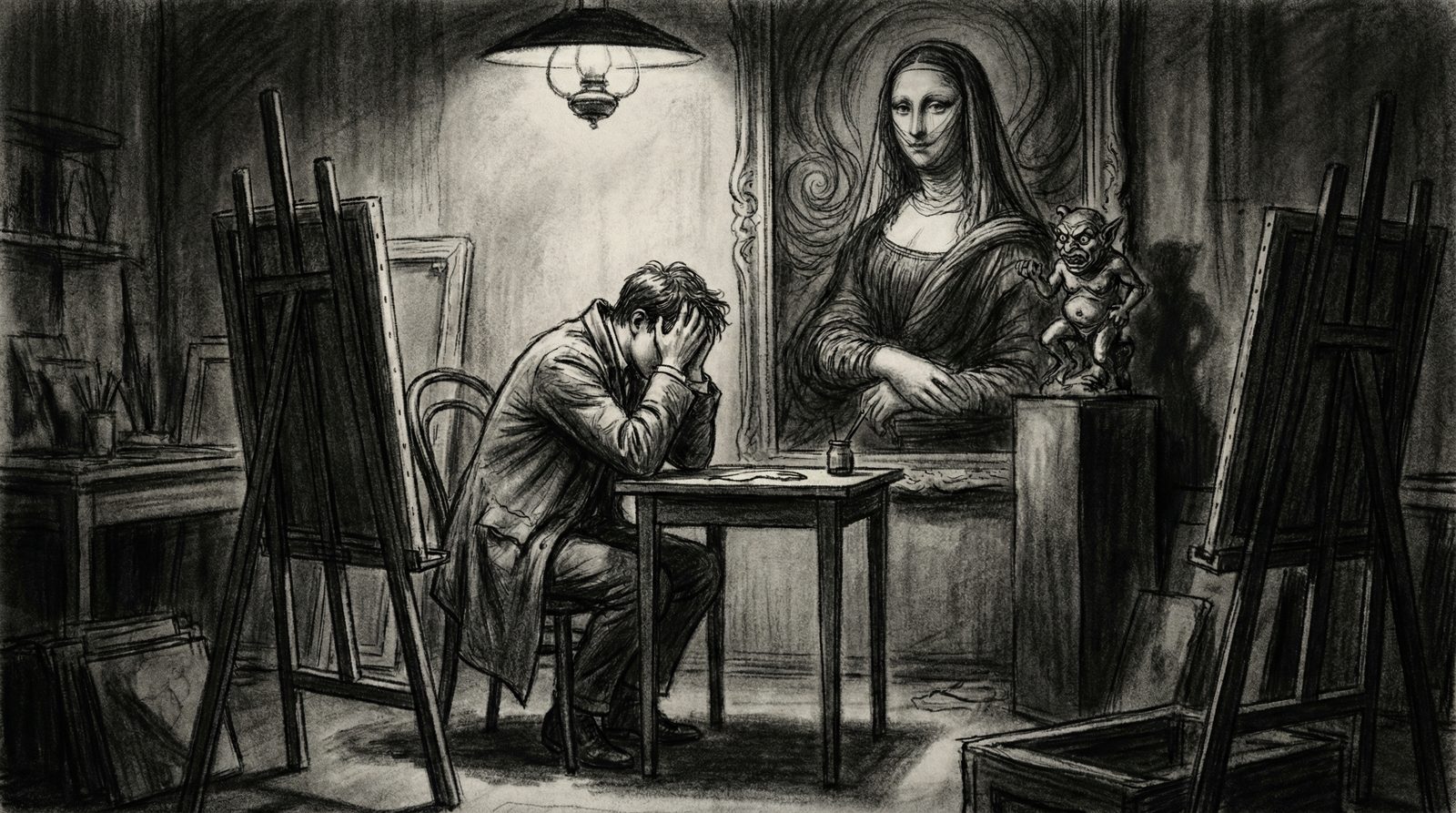
    Anstey writes with a lightness that disguises how carefully the novel is engineered. Free indirect discourse allows the narrative to drift between Mark’s self-doubt, Harold’s cynical calculation, and the eager credulity of the spiritualist circle without heavy-handed transitions.

    Dialogue does much of the work. Characters expose themselves through polished evasions, nervous enthusiasm, and pious certainty. The narrator’s occasional asides sharpen the satire, particularly when séances are squeezed between tea and supper, or when moral outrage coexists comfortably with voyeuristic curiosity.

    Structurally, the novel alternates between scenes of social comedy and increasingly claustrophobic séances in Mark’s studio. Each sitting raises the stakes: gossip spreads, reputations wobble, and belief hardens into expectation. Notably, the idol itself rarely acts in any overt way. Its power lies in what people are willing to do in its presence.

    Conceptual editorial illustration inspired by 'A Fallen Idol'

    CHARACTERS & INTERIORITY

    Mark Ashburn is a reluctant medium, not by conviction but by weakness. He is decent, talented, and insecure enough to be swayed. His interior monologue reveals how easily vanity disguises itself as generosity. During the séances he repeatedly tells himself that he is only humoring others, even as he profits from their belief.

    Harold Caffyn feels strikingly modern. He half believes his own deceptions and treats danger as something to be managed theatrically. Moments of genuine fear break through his composure, but his instinct is always to convert panic into control.

    Dolly Tredwell and the surrounding social figures are sketched with less depth, yet Anstey allows flashes of private disillusionment to surface. In particular, Dolly’s overheard humiliation after a disastrous séance reminds the reader how easily a young woman’s reputation becomes collateral damage in fashionable folly.

    LEGACY & RECEPTION

    A Fallen Idol never matched the popularity of Anstey’s comic successes, and it is often treated as a minor occult curiosity. Victorian reviewers were divided, intrigued by the ingenuity of the séance scenes but unsettled by the novel’s refusal to clarify whether the idol was truly supernatural or merely a catalyst for fraud and hysteria.

    That ambiguity has aged well. The book now reads as a bridge between moralized ghost stories and later psychological hauntings. Its final image, the idol inert in a museum case while the characters quietly absorb their shame, feels unexpectedly modern in its skepticism toward spectacle and belief.

    IS IT WORTH READING?

    If you prefer supernatural fiction that unsettles through psychology rather than shocks, this novel is worth your attention. It moves at a Victorian pace, heavy with conversation and social maneuvering, but the unease accumulates steadily.

    The séances are disturbing not because of what appears, but because of what people are willing to believe. Readers interested in spiritualism, colonial guilt, and the performance of belief will find the novel sharp and quietly corrosive.

    Illustration inspired by a core idea from 'A Fallen Idol'

    TRIVIA & AUTHOR FACTS

    F. Anstey was the pen name of Thomas Anstey Guthrie, a barrister-turned-writer whose legal training shows in the careful sequencing of cause and consequence throughout the novel. The early Indian chapters draw on contemporary travel writing, though filtered through satire.

    Anstey attended real séances in London, and his fascination with spiritualism and fraud informs the novel’s tone. The museum ending reflects his interest in how institutions neutralize danger by classification, turning objects of fear into labeled curiosities.

    SIMILAR BOOKS

    Readers interested in supernatural objects with moral weight may also enjoy The Moonstone for its colonial relic and social fallout, or The Turn of the Screw for a later, more psychological ambiguity. For Victorian skepticism toward spiritual fashion, the earnest writings of Arthur Conan Doyle on séances offer a revealing real-world counterpoint to Anstey’s fiction.

    DISCOVERABILITY & LINKS