Narrative Techniques: Dual Perspective

  • The Amulet Of Samarkand (2003)

    The Amulet Of Samarkand (2003)

    INTRODUCTION

    The Amulet of Samarkand (2003) by Jonathan Stroud
    Fantasy · United Kingdom


    The Amulet of Samarkand is a children’s fantasy that refuses to stay safely childish. Set in an alternate London ruled by magicians, it pairs the dry, battered wit of a five-thousand-year-old djinni with the raw ambition of a boy who wants to matter in a system designed to grind him down.

    What begins as a petty act of revenge quickly expands into a political nightmare. Stroud builds a world where magic is bureaucratic, exploitative, and casually cruel. Incense and coal smoke hang in the air, but they do little to disguise the rot beneath the surface. The most honest voice in the book belongs to a spirit who insists he is the villain, and may be the only one telling the truth.

    PLOT & THEMES

    The story unfolds like a heist gone wrong. Nathaniel, a twelve-year-old apprentice in the Ministry of Internal Affairs, summons the djinni Bartimaeus to steal the Amulet of Samarkand from the arrogant magician Simon Lovelace. It is a classic supernatural bargain, but dangerously inverted: the summoner is a child, and he barely understands the contract he has entered.

    The theft draws them into a conspiracy aimed at overthrowing the government during a ceremonial gathering at Heddleham Hall. The amulet is both weapon and leverage, and its power escalates far beyond Nathaniel’s control. Each success deepens his entanglement with the very system he briefly threatens.

    Running beneath the action is the book’s central moral engine: slavery. Spirits are bound by their true names and summoned at great cost to themselves, while human society mirrors the same hierarchy. Commoners are kept ignorant and disposable. Magicians are themselves products of emotional mutilation, trained from childhood to suppress empathy in favor of control.

    The ending is deliberately bitter. Nathaniel uses the amulet to defeat Lovelace and stop a massacre, but his reward is assimilation. He takes a new name, John Mandrake, accepts promotion, and steps deeper into the machine he now understands. There is no triumph, only survival through compromise.

    PROSE & NARRATIVE STRUCTURE

    The novel’s defining technique is its dual narration. Nathaniel’s chapters are written in close third person, tight and defensive, while Bartimaeus narrates in first person, armed with sarcasm, historical digressions, and famously intrusive footnotes.

    This split perspective creates a form of narrative unreliability. Official history, state propaganda, and magician lore are constantly undercut by Bartimaeus’s asides about past empires, botched summonings, and conveniently forgotten atrocities. The footnotes quietly dismantle the authority of the main narrative without ever halting the plot.

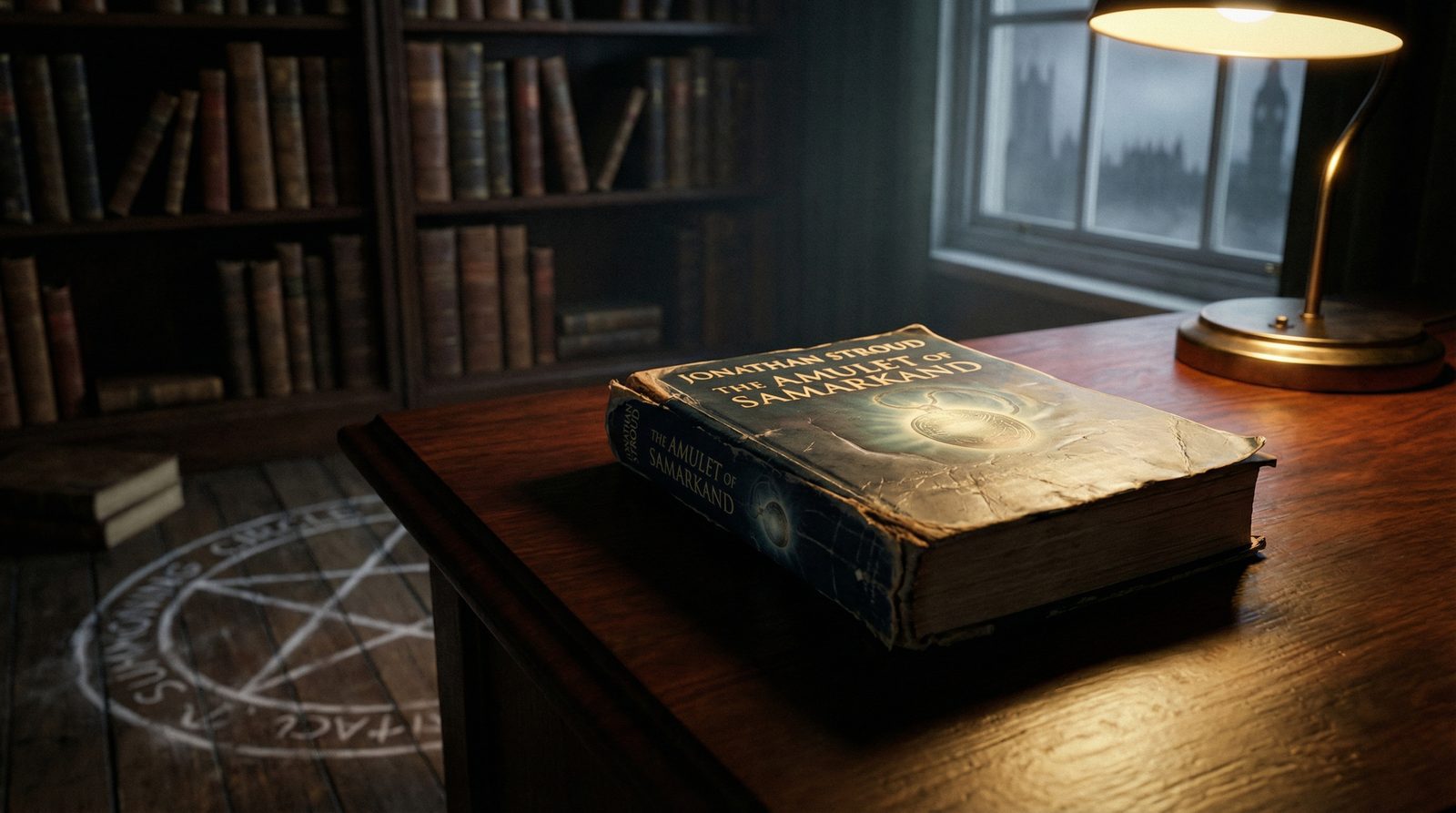
    Stroud’s prose is clean and procedural. Magic is described as work: pentacles, summoning circles, planes of existence, and defensive wards. This emphasis on process grounds the fantasy in risk and labor rather than wonder, reinforcing the sense that power here is something managed, rationed, and abused.
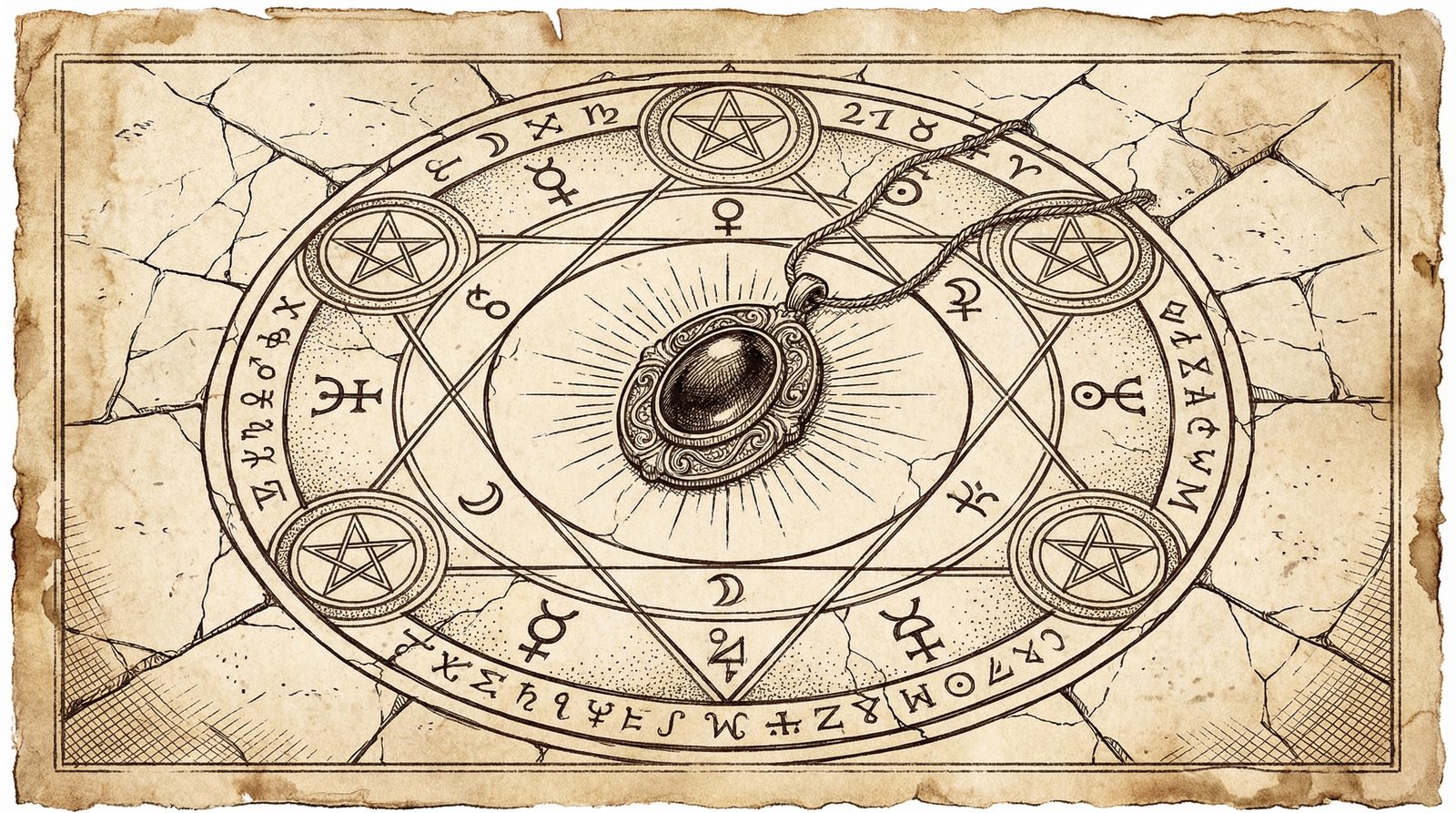
    Conceptual editorial illustration inspired by 'The Amulet of Samarkand'

    CHARACTERS & INTERIORITY

    Nathaniel begins as an ambitious prodigy desperate to escape humiliation. His interior life is defined by resentment, fear, and a relentless need for recognition. When his mentor’s wife, Mrs. Underwood, is killed in a magical attack, his grief is rapidly converted into further ambition. He knows this is wrong, and continues anyway.

    Bartimaeus masks trauma with humor. His boasts about serving Solomon or building ancient cities are a shield against millennia of forced labor. Moments of genuine concern, particularly when Nathaniel is in danger, break through rarely and therefore land hard.

    Secondary characters are sharply etched. Mr. Underwood embodies bureaucratic cruelty born of mediocrity. Kitty, though still peripheral in this volume, stands out for her refusal to accept the system’s logic at all, hinting at a resistance grounded not in magic but in ethics.

    LEGACY & RECEPTION

    Published at the height of the early-2000s fantasy boom, The Amulet of Samarkand distinguished itself by refusing easy heroics. While other series offered hidden schools and secret destinies, Stroud presented a state where magic runs the government and corrupts everyone it touches.

    The book has endured because of its unsentimental ending. Nathaniel survives, London survives, but the moral cost is not erased. That unresolved tension, between power gained and integrity lost, gives the novel its lasting bite and sets the tone for the rest of the trilogy.

    IS IT WORTH READING?

    This is not a comfort read. The humor is sharp, but the world is cruel, and the victories are compromised. If you are looking for fantasy that treats younger readers with seriousness and respects their capacity for moral discomfort, it is absolutely worth reading.

    The book is fast, funny, and deeply uneasy. It understands how systems absorb rebellion, how children are shaped into instruments, and how bargains made in anger rarely end cleanly.
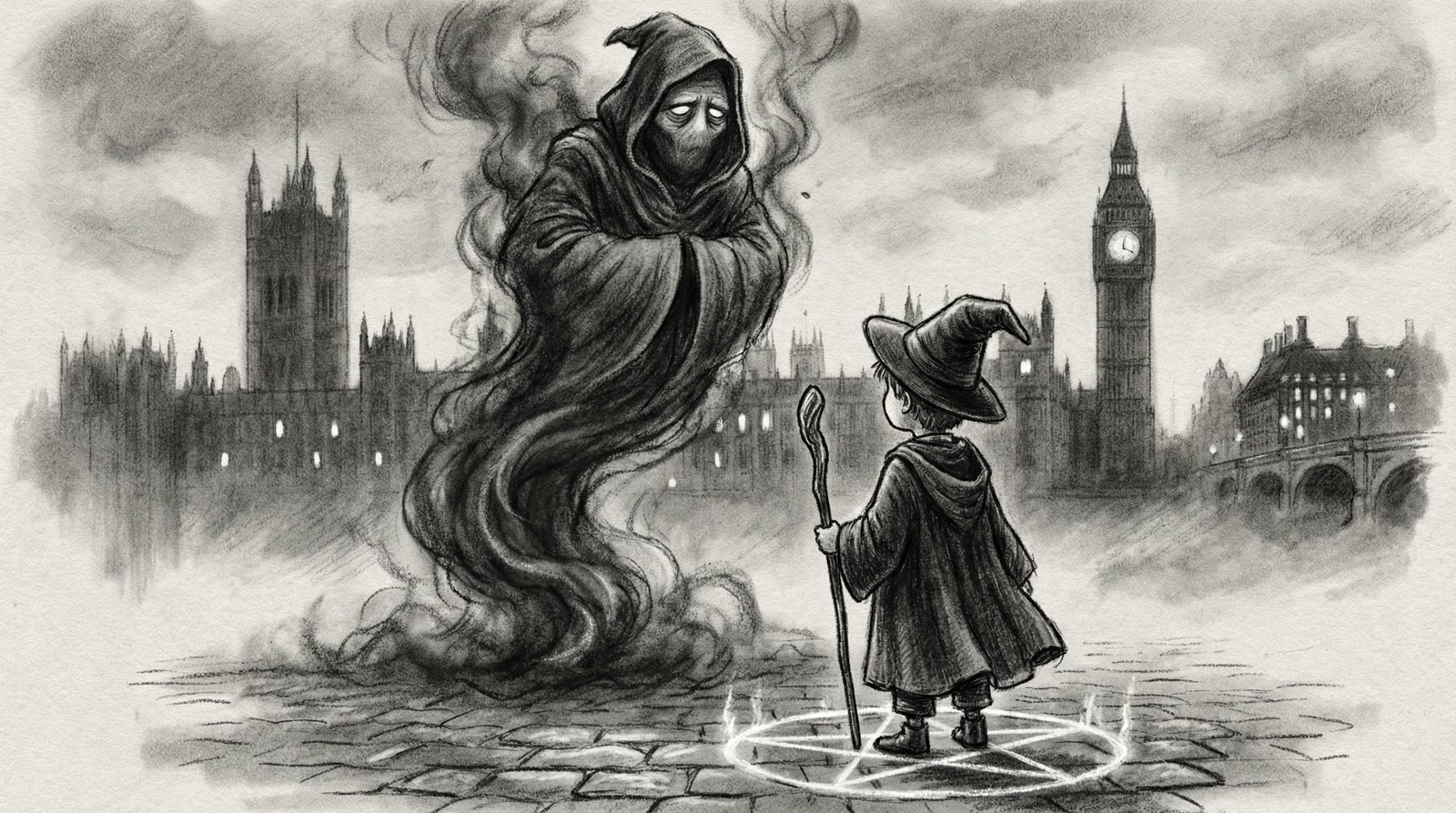
    Illustration inspired by a core idea from 'The Amulet of Samarkand'

    TRIVIA & AUTHOR FACTS

    Jonathan Stroud worked as a children’s editor before writing the Bartimaeus Sequence, and his editorial background shows in the book’s structural confidence. The novel launched a trilogy later expanded by a prequel.

    Bartimaeus’s footnotes were present from early drafts and quickly became the spine of the series. They allow Stroud to critique official history and power structures without halting the narrative, a technique that would influence later fantasy written for younger audiences.

    SIMILAR BOOKS

    Readers drawn to morally tangled magic may also appreciate His Dark Materials for its political theology, or The Magicians for a later, more cynical exploration of power and escapism. For a younger-skewing comparison, Artemis Fowl offers a lighter but still rule-bound take on criminal genius and supernatural bureaucracy.

    DISCOVERABILITY & LINKS

    DISCOVERABILITY & LINKS

  • 2061: Odyssey Three (1987)

    2061: Odyssey Three (1987)

    By: Arthur C. Clarke
    Genre: Science Fiction, Hard Science Fiction
    Country: United Kingdom


    INTRODUCTION

    2061: Odyssey Three, published in 1987, marks Arthur C. Clarke’s return to the Space Odyssey universe with a story that leans heavily into scientific curiosity and long-view optimism. The novel arrives after the metaphysical ambition of 2001 and the political tension of 2010, and it settles into a calmer mode. Clarke writes with the confidence of a writer who knows how vast the universe is and wants to slow down long enough to study it. This is late-career Clarke: patient, technical, and comfortable letting the grandeur of space speak for itself.

    For AllReaders, this book earns a refreshed page because of its strong legacy presence in the original site archives. Even if the novel is not the boldest of the series, it still attracts readers who want to complete the full Odyssey sequence or who appreciate Clarke’s blend of scientific detail and quiet wonder.


    PLOT & THEMES

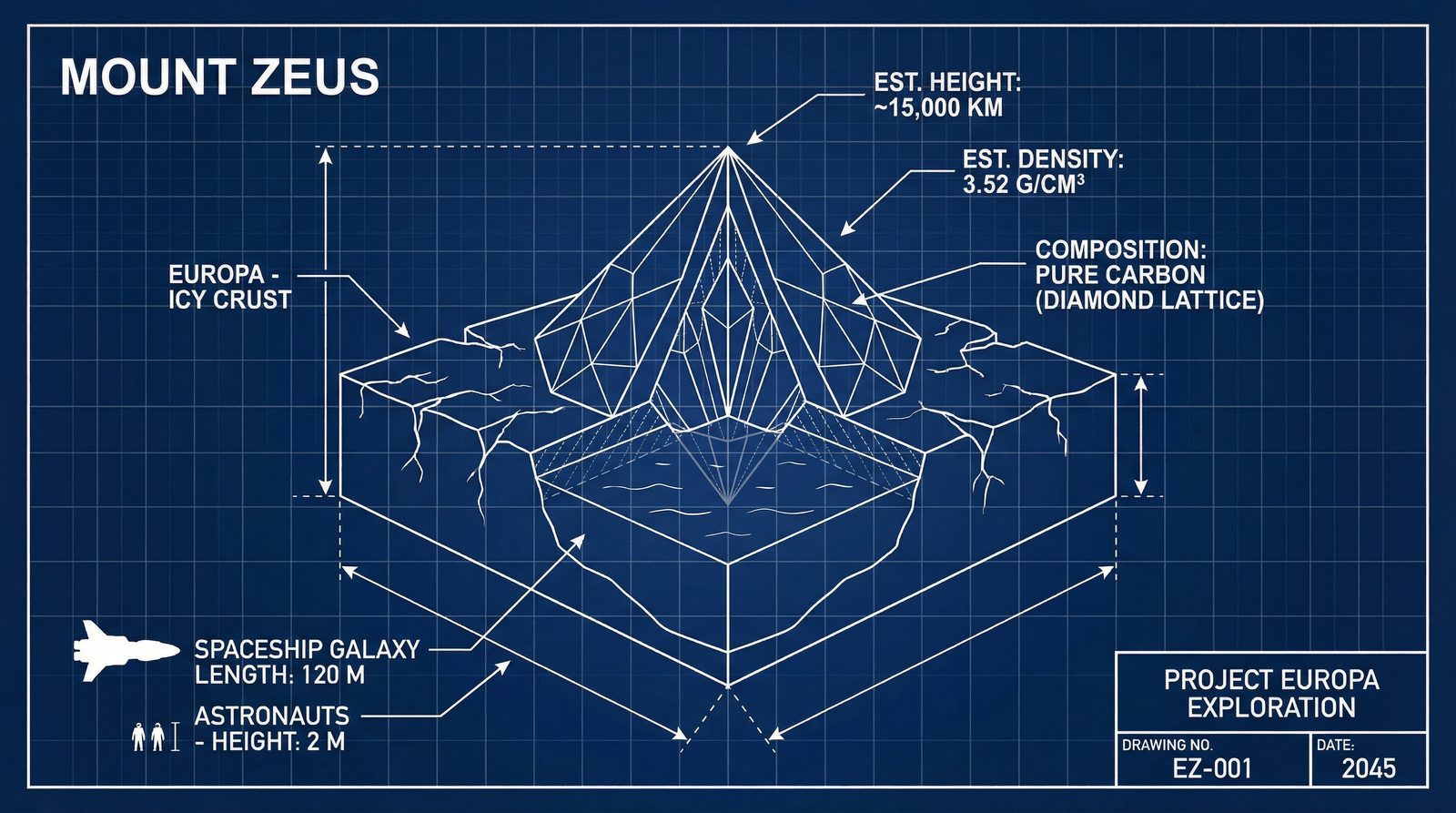
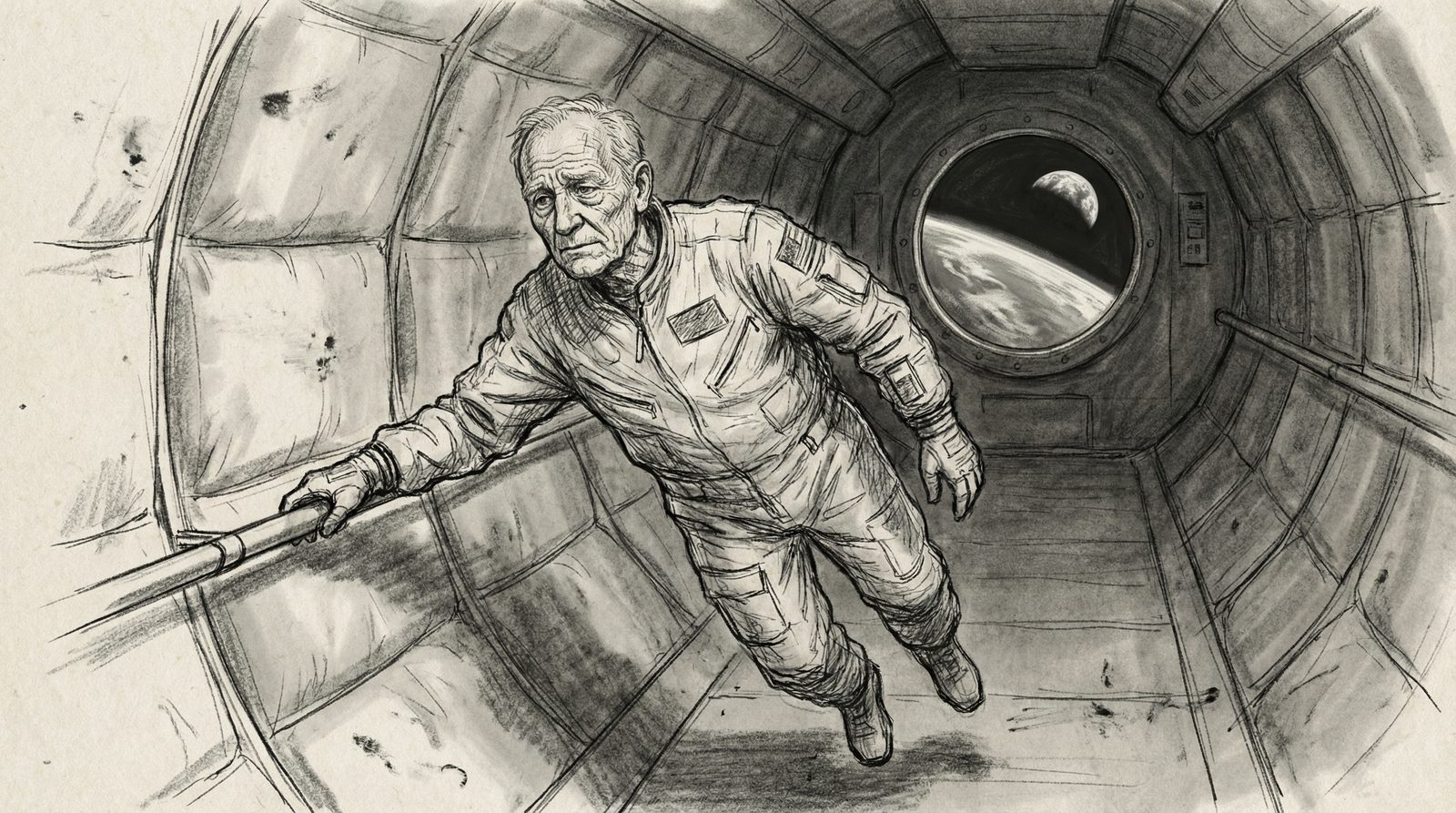
    The story follows two paths. Dr. Heywood Floyd, now elderly, travels aboard a luxury spacecraft heading toward Halley’s Comet. At the same time, the ship Galaxy finds itself stranded on Europa, a world that remains off-limits after the events of 2010. The novel uses this split to create a sense of broad exploration rather than tight suspense. Clarke uses both storylines to highlight physics, geology, orbital mechanics, and the kind of speculative astronomy that shaped his career.

    Themes emerge slowly. Human ambition meets its limits. Curiosity pushes against boundaries set by forces far older than humanity. Clarke also touches on the ethics of exploration, especially when discovery risks disturbing worlds that were never meant to be touched. The motif Future Shock as Transformation appears in the background, since the characters constantly meet technologies and environments that challenge their understanding of what is possible. Clarke frames this adjustment with optimism rather than fear.

    The Europa thread adds a low pulse of danger. Clarke returns to his long-running fascination with alien life as something wondrous and fragile. Even without large set pieces, the presence of life under Europa’s ice casts a quiet shadow over the story. The universe remains beautiful, but it is never entirely safe.

    Conceptual editorial illustration inspired by '2061 odyssey three'

    STYLE & LANGUAGE

    Clarke’s prose is crisp and confident. He writes with the tone of someone explaining the universe to readers he respects. The novel offers long stretches of scientific explanation, including propulsion systems, cometary chemistry, and planetary composition. Fans of hard science fiction will find this deeply satisfying.

    Readers seeking emotional drama may find the story distant. Clarke keeps his focus on ideas, not interpersonal complexity. Still, he offers brief but thoughtful moments that explore Floyd’s aging body and the contrast between his lifelong work and the world of younger explorers now rising around him.

    The pacing moves in waves. Clarke alternates between stretches of technical detail and bursts of incident. This rhythm defines the Odyssey series, and 2061 continues the pattern with quiet confidence.


    CHARACTERS & RELATIONSHIPS

    Heywood Floyd returns as the emotional touchpoint. Age limits his physical ability, but not his curiosity. Clarke uses him to reflect on what it means to keep learning in a universe that changes faster than any human can adapt to. Floyd’s quiet resilience anchors the book’s most human moments.

    The supporting cast serves the story rather than stealing attention. Engineers, scientists, and crew members offer competing interpretations of scientific problems. Their personalities matter less than their expertise. Clarke keeps their interactions clean and functional.

    Europa itself becomes one of the novel’s strongest characters. Clarke describes the moon as a place of beauty and danger, a world shaped by forces no human can fully comprehend. It reminds the reader why the monolith’s warning still holds weight.


    CULTURAL CONTEXT & LEGACY

    2061 belongs to Clarke’s reflective late style. He writes with patience and an eye on scientific discovery rather than dramatic shock. When the novel appeared, research into comets, planetary oceans, and Europa’s icy crust was accelerating, and the book captures that growing excitement. Clarke’s attention to real theories gives the story a sense of authenticity even when it wanders from strict narrative structure.

    The novel lacks the cultural impact of 2001 and the narrative tension of 2010. Even so, it remains an essential link in the Odyssey cycle. Readers who enjoy grounded speculation and careful scientific extrapolation continue to return to it. Clarke’s reputation keeps the book alive, and the ideas inside still spark curiosity.

    Illustration of a core idea or motif from '2061 odyssey three'

    IS IT WORTH READING?

    For fans of hard science fiction, yes. 2061: Odyssey Three offers detailed worldbuilding, thoughtful speculation, and a sense of scientific joy. For readers who want complex interpersonal drama or emotional heat, the book may feel distant. Clarke focuses on ideas rather than intimacy, and he does so with intention.

    Anyone reading the entire Odyssey sequence should not skip it. For casual readers, it is optional but rewarding if you enjoy slow, idea-driven science fiction grounded in astrophysics.


    SIMILAR BOOKS

    Readers who enjoy scientific exploration may appreciate Jill Paton Walsh’s The Green Book, which offers a gentler approach to survival on new worlds. Those drawn to stories where danger arises from unfamiliar environments might also connect with Tabitha King’s Survivor, even though the genres differ.

  • The Double Self

    The Double Self

    Motif Type: Identity and Performance
    Era Focus: 20th Century to 21st Century
    Primary Genres: Memoir, Literary Fiction, Celebrity Studies


    WHAT THIS MOTIF MEANS

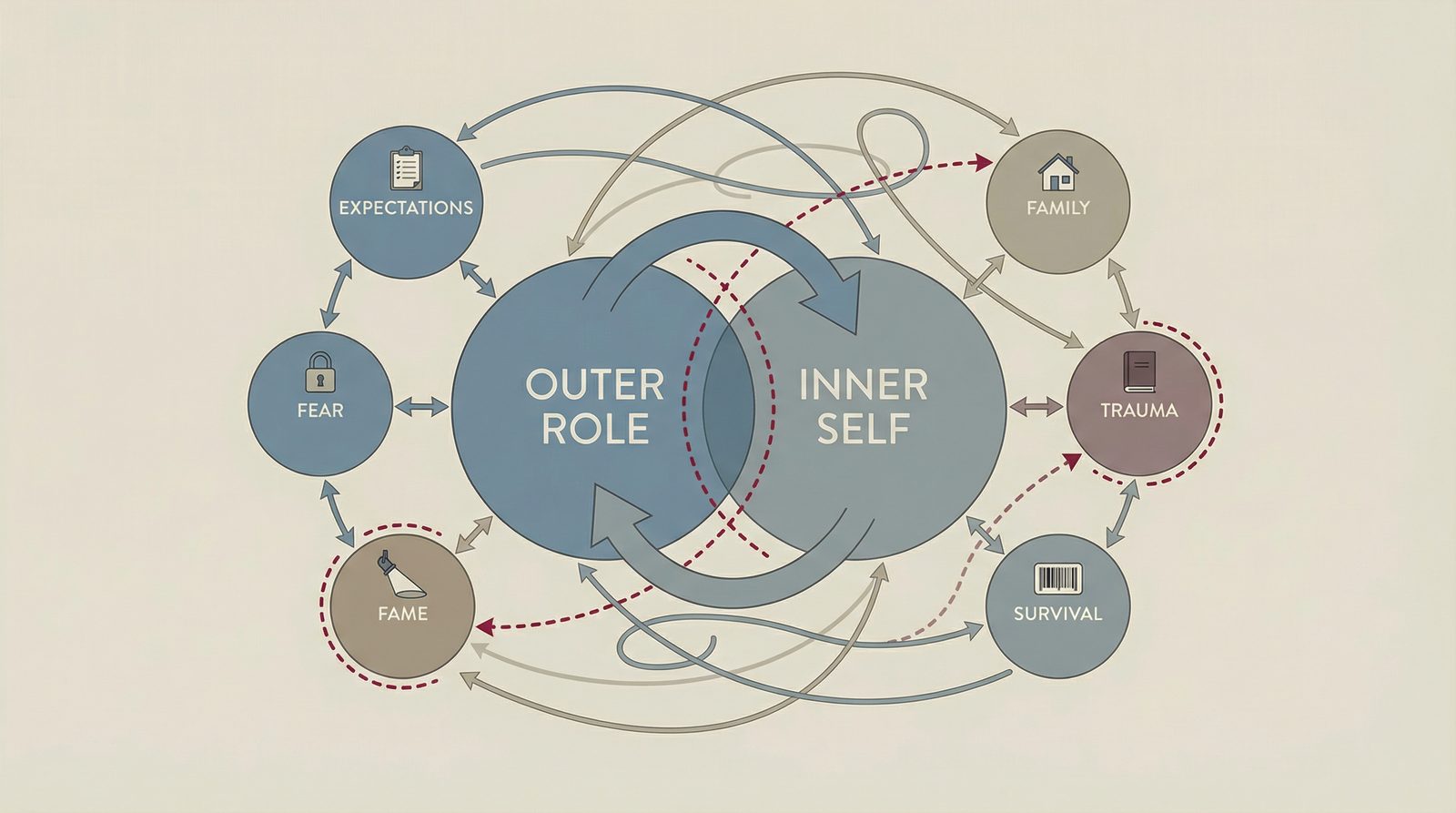
    The Double Self is a motif where a character lives in two identities at once. One identity is outer, shaped by performance, expectation, or fear. The other is inner, private, and often in conflict with the role they are forced to play. The tension between these two selves creates emotional dissonance that shapes the entire narrative.

    This motif often emerges in stories about trauma, fame, or strict social roles. When a character is not allowed to be whole, their inner and outer selves drift apart. That fracture becomes the emotional core of the story.

    The Double Self inline concept image

    HOW IT WORKS IN NARRATIVE

    The Double Self appears whenever survival requires performance. Characters may smile while hurting, obey while resisting, or play a role created by others. Over time, the gap between the two identities creates pressure. Some characters break. Some merge their selves. Some reclaim the inner identity through writing, connection, or rebellion.

    This motif thrives in stories where public image collides with private truth. It reveals how identity can be shaped by trauma, industry, or family.

    The Double Self inline diagram image

    WHERE WE SEE IT IN OUR LIBRARY

    This motif is central to many works in your cluster. It connects memoir, fiction, and celebrity narratives.

    • I’m Glad My Mom Died – Jennette McCurdy performs happiness for her mother while hiding fear and hunger.
    • The Woman in Me – Britney Spears performs confidence while privately collapsing under legal and emotional control.
    • Open Book – Jessica Simpson’s internal self fractures from her public persona as the “ditzy blonde.”
    • Confessions of a Video Vixen – Karrine Steffans embodies a sexualized public persona while holding a private history of trauma.
    • Push – Precious constructs a fantasy self as refuge from abuse.
    • Precious – The film visualizes Precious’s double identities through fantasy sequences.
    • Framing Britney Spears – The documentary reveals the gap between Britney’s public performance and private suffering.

    WHY IT MATTERS

    The Double Self is foundational to your library because it bridges memoir and fiction. It reveals how characters adapt to systems that deny them autonomy. It also deepens emotional empathy. Readers see the cost of living split between who you are and who you are allowed to be.

    Across your cluster, the motif functions as connective tissue between stories of abuse, fame, trauma, and reclamation. It is one of your highest value hubs.


    RELATED MOTIFS

    Silence as Survival
    The Commodified Body in Books
    Power as Proximity