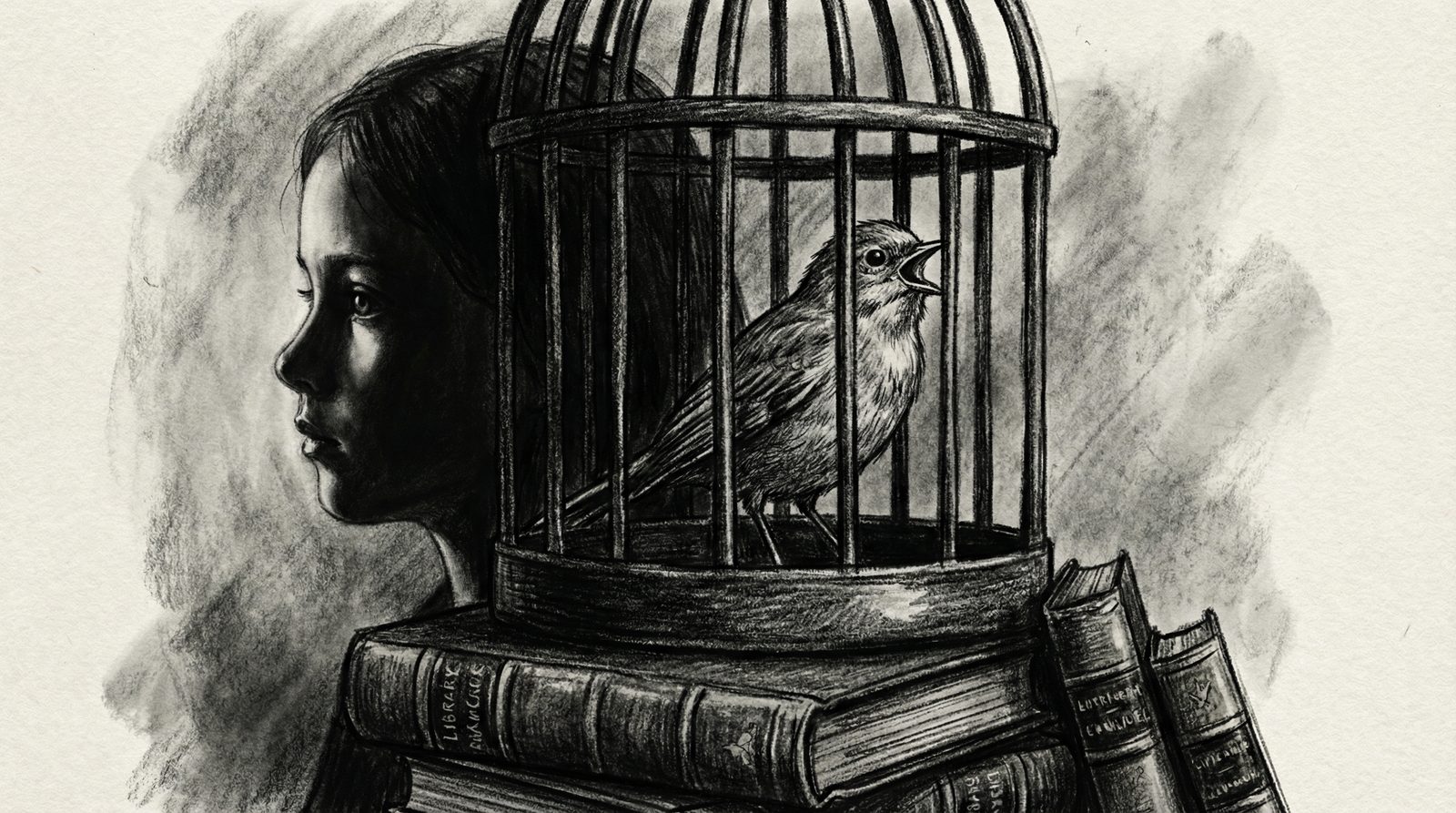
Narrative Techniques: Lyrical Detail

  • Maya Angelou

    Maya Angelou

    Born 1928, St. Louis, Missouri, United States · Died 2014
    Genres: Memoir, Poetry, Essay
    Era: Mid to Late 20th Century


    INTRODUCTION

    Maya Angelou was a poet, memoirist, performer, and a towering cultural figure. Her series of autobiographical books begins with I Know Why the Caged Bird Sings, a work that transformed how personal narrative could address trauma, racism, and resilience. Her writing combines honesty, lyricism, and moral clarity.

    Angelou’s work embodies motifs like Literacy as Liberation, Survival Narratives, and Dissociation as Defense.


    LIFE AND INFLUENCES

    Angelou’s childhood included years in the segregated South, a traumatic assault, a long period of silence, and eventual rebirth through language and performance. She worked as a singer, dancer, journalist, and civil rights activist alongside figures like Martin Luther King Jr. and Malcolm X.

    Her influences include Black church tradition, poetry, music, and global travel. She wove these influences into a voice that feels both intimate and public.
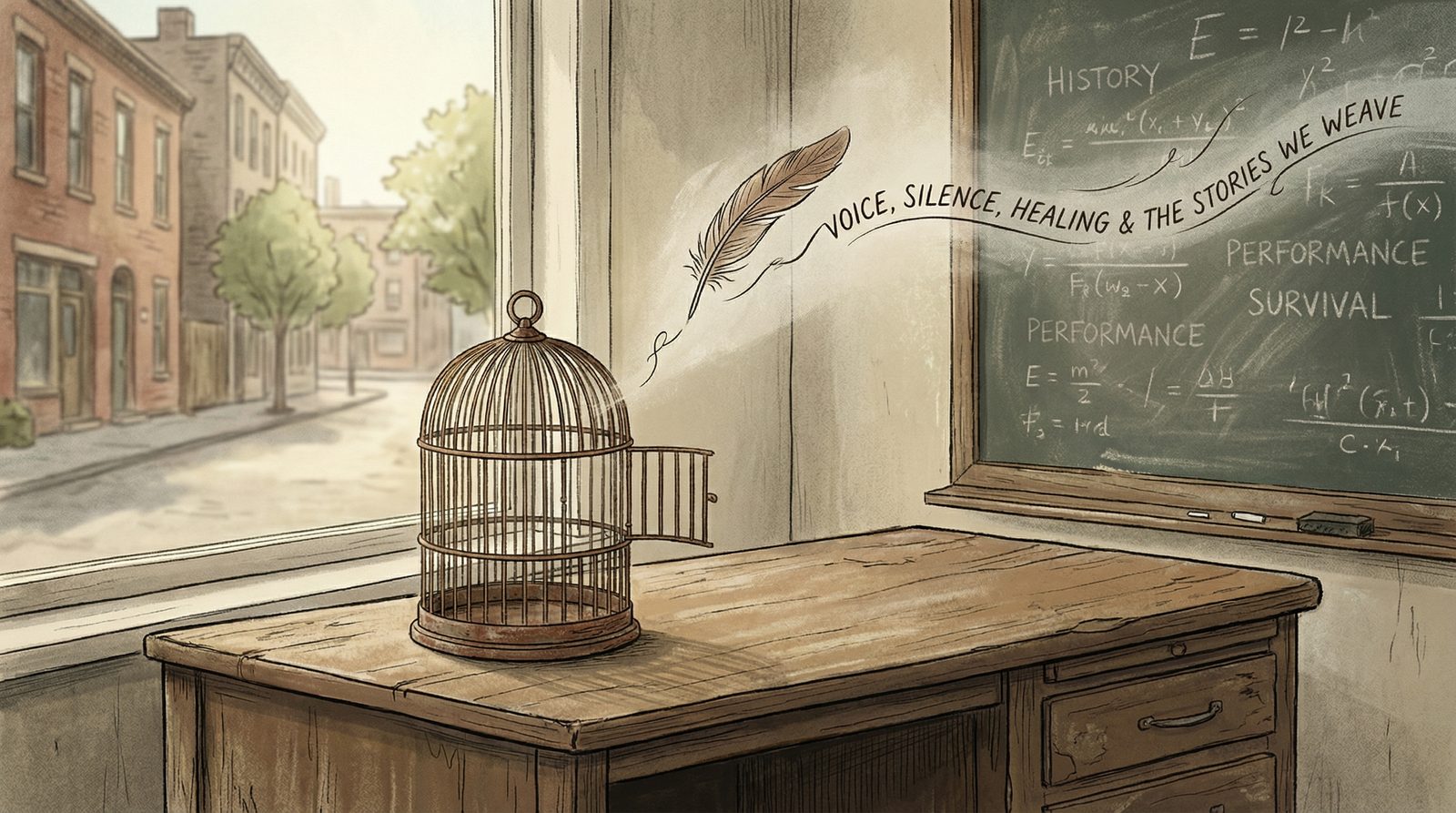
    Editorial illustration inspired by 'Maya Angelou'

    THEMES AND MOTIFS

    Angelou writes about trauma, racism, dignity, and the transformative power of language. She is concerned with how a person can build a full self in a world that insists they are lesser. Her focus on speech, performance, and writing as tools of survival and joy places her work within motifs like Intimacy as Healing and Memoirs of Reclamation.


    STYLE AND VOICE

    Her prose is clear, rhythmic, and often poetic. She balances emotional weight with humor and observation. Even when recounting trauma, she writes with a steadiness that feels both protective and generous.

    Symbolic illustration inspired by 'Maya Angelou'

    KEY WORKS


    CULTURAL LEGACY

    Angelou’s memoirs and poems have become touchstones for readers around the world. She expanded the possibilities of life writing, especially for Black women, and brought discussions of trauma and resilience into mainstream culture with dignity and force. Her work remains central in education, activism, and literary study.

  • I Know Why the Caged Bird Sings (1969)

    I Know Why the Caged Bird Sings (1969)

    By: Maya Angelou
    Genre: Memoir
    Country: United States


    INTRODUCTION

    I Know Why the Caged Bird Sings is Maya Angelou’s seminal memoir, tracing her childhood and adolescence in the American South and California. The book is a landmark in narrative nonfiction, addressing racism, trauma, sexual abuse, resilience, and the search for voice with precision and grace.

    The memoir fits strongly into motifs like Literacy as Liberation and Survival Narratives, reflecting how language becomes Angelou’s path toward freedom.


    PLOT AND THEMES

    The memoir follows Maya and her brother Bailey as they navigate the hostility of segregated America, the strict discipline of their grandmother’s household, and the emotional instability of their parents. Central events include Maya’s sexual assault at age eight and her subsequent silence, which lasts for years.

    Angelou explores racism, identity, trauma, and recovery. The book’s thematic heart is the return to speech. Maya’s rediscovery of voice becomes a profound act of resistance and reclamation. The story also reflects motifs like The Erased Girl and Dissociation as Defense.

    Conceptual editorial illustration inspired by 'I know why the caged bird sings'

    STYLE AND LANGUAGE

    Angelou writes with clarity, humor, and poetic elegance. She blends vivid sensory detail with emotional restraint. The voice remains controlled even when describing trauma, creating an effect similar to Emotional Minimalism. Scenes unfold with lyrical precision.

    The structure moves episodically, reflecting the fragmentation of memory and the growing insight of a maturing narrator.


    CHARACTERS AND RELATIONSHIPS

    Maya’s relationships with her brother Bailey, her grandmother, and the women in her community become sources of grounding and growth. Her relationship with her mother is complex, marked by longing and uncertainty.

    Teachers and mentors play a critical role, reinforcing the motif of Intimacy as Healing and the transformative power of guidance.

    Illustration of a core idea or motif from 'I know why the caged bird sings'

    CULTURAL CONTEXT AND LEGACY

    Published in 1969, the memoir was groundbreaking for its frank depiction of sexual abuse, racism, and female interiority. It became a foundational text in Black feminist literature and remains widely taught. Angelou’s voice paved the way for generations of memoirists who write about trauma with dignity and clarity.

    The book remains one of the most influential memoirs ever written.


    IS IT WORTH READING?

    Yes. It is moving, wise, painful, and radiant with humanity. Anyone interested in trauma narratives, American history, or the evolution of personal voice should read it.


    SIMILAR BOOKS

    The Color Purple (1982)
    Push (1996)
    The Bluest Eye (1970)