Narrative Techniques: Scientific Exposition

  • Arthur C. Clarke

    Arthur C. Clarke

    INTRODUCTION

    Arthur C. Clarke remains one of the defining voices of twentieth-century science fiction. Known for his clean, technical prose and his unwavering belief in scientific progress, Clarke helped shape the modern genre both through his novels and through his work as a futurist. His writing rarely indulges in melodrama; instead it pursues clarity, scale, and the thrill of discovery. From Childhood’s End to Rendezvous with Rama to the Space Odyssey series, Clarke consistently asked how humanity might grow — not shrink — in the face of the unknown.

    Even his quieter novels, like 2061: Odyssey Three, carry his fascination with physics, exploration, and the belief that the universe is ultimately comprehensible. Clarke’s influence reaches beyond literature: satellites, space policy, and public understanding of astrophysics all bear his fingerprints. Rebuilding his creator profile on AllReaders preserves a cornerstone of classic sci-fi and re-anchors long-standing backlinks from decades of fan and academic references.


    LIFE & INFLUENCES

    Born in 1917 in Minehead, England, Clarke grew up on the threshold of the modern space age. His early love of astronomy shaped everything that followed. After serving as a radar specialist in World War II, he became an engineer, writer, and public intellectual. He was among the first to propose geostationary communication satellites — an idea that eventually reshaped global communication.

    Clarke’s literary influences ranged from H. G. Wells to Olaf Stapledon, but his true muse was science itself. He believed technology would transform humanity, not strip it of meaning. This optimism distinguishes him from many later sci-fi writers who leaned into dystopia. For Clarke, the cosmos was a place of possibility, not despair.

    He spent the latter part of his life in Sri Lanka, drawn by the sea, diving, and the island’s slower pace — a setting that subtly informed some of his later writing. His personal philosophy can be felt in the calm, almost meditative quality of his prose: a steady belief that curiosity is our finest trait.
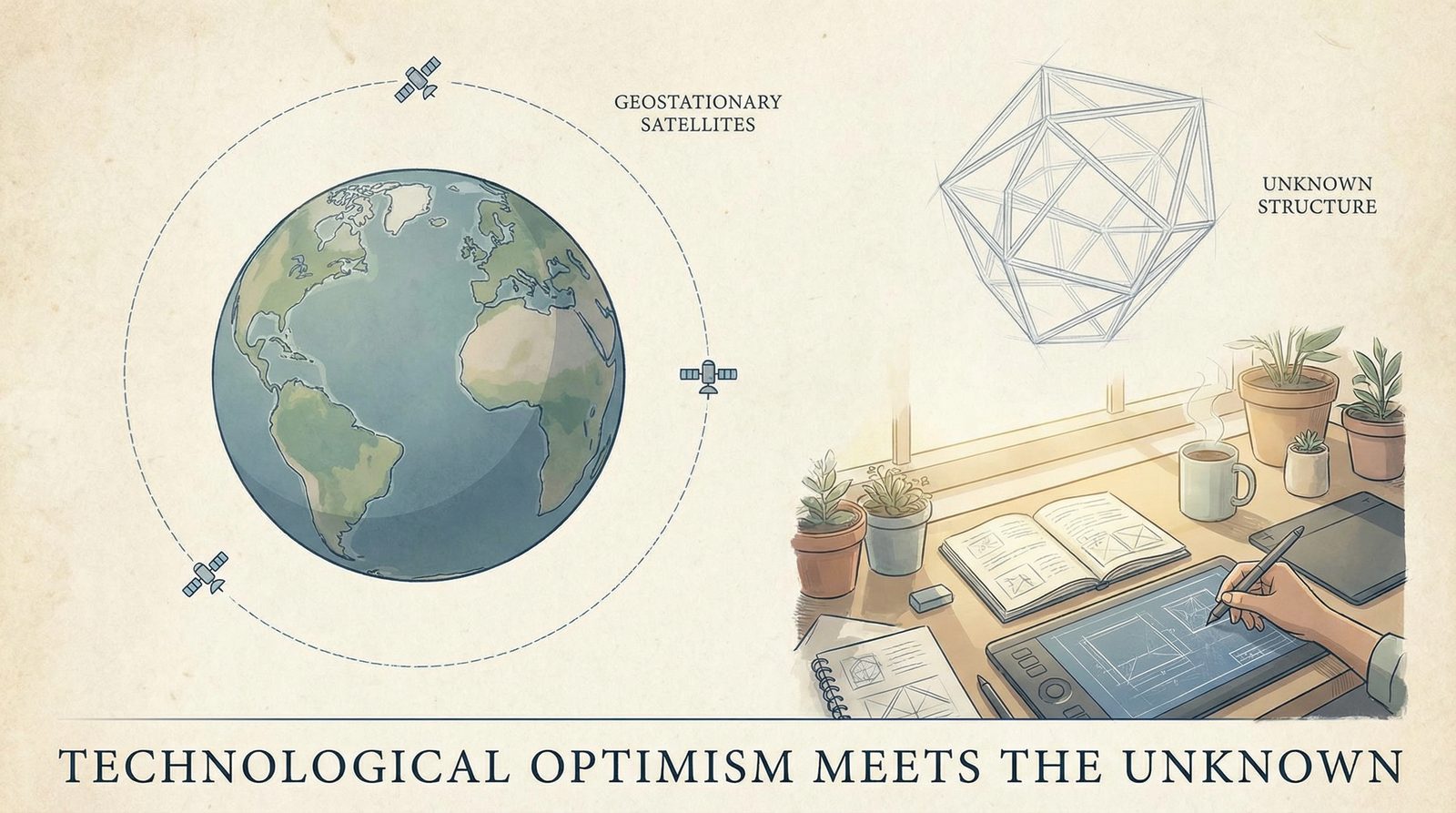
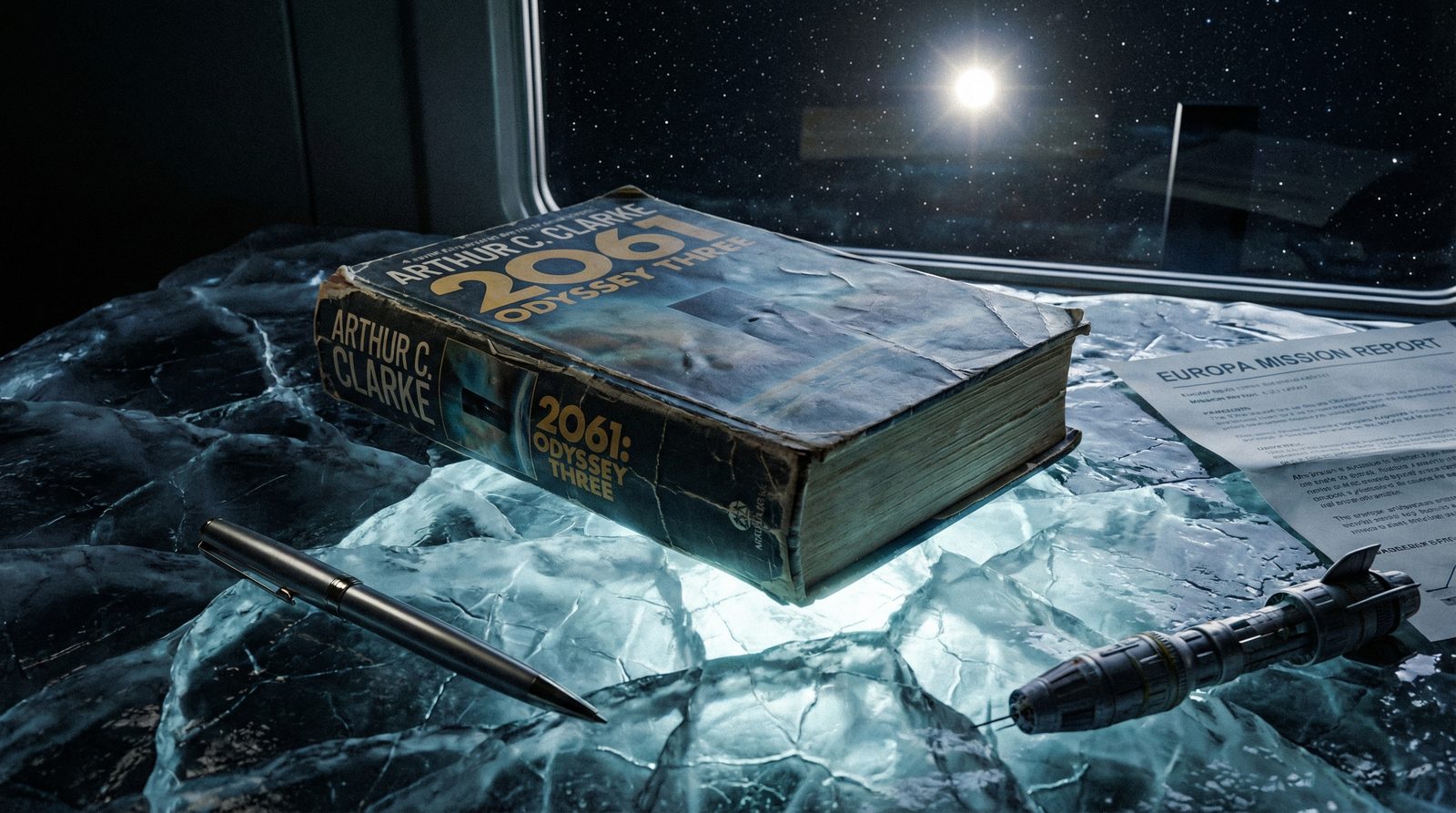
    Editorial illustration inspired by 'Arthur C. Clarke'

    THEMES & MOTIFS

    Clarke’s fiction revolves around a few core themes: humanity’s place in a vast cosmos, the transformative power of technology, and the ethical weight of exploration. Even in the quieter 2061: Odyssey Three, these themes are unmistakable.

    His work regularly intersects with the motif Future Shock as Transformation. For Clarke, technological upheaval isn’t something to fear — it’s the catalyst that pushes humanity into its next phase. He also often engages with Identity Collapse in Isolation, especially in astronauts and explorers confronting environments that dwarf human scale.

    Clarke’s aliens, when they appear, are rarely enemies. They are mentors, mysteries, or glimpses of our potential future. That orientation — curiosity instead of threat — makes his voice distinct among his contemporaries.


    STYLE & VOICE

    Clarke’s style is famously cool and precise. He writes like an engineer building a cathedral of ideas: clean lines, no unnecessary ornament, everything justified by structure. Emotional beats are present but understated; he trusts readers to supply their own wonder.

    He excels at integrating scientific exposition into narrative — orbital mechanics, geology, astrophysics — without sacrificing readability. His characters often feel secondary to the concepts, which is a conscious aesthetic choice rather than a flaw.

    The result is fiction that feels both timeless and distinctly mid-century, shaped by the optimism of an era when humanity believed it might soon live among the stars.
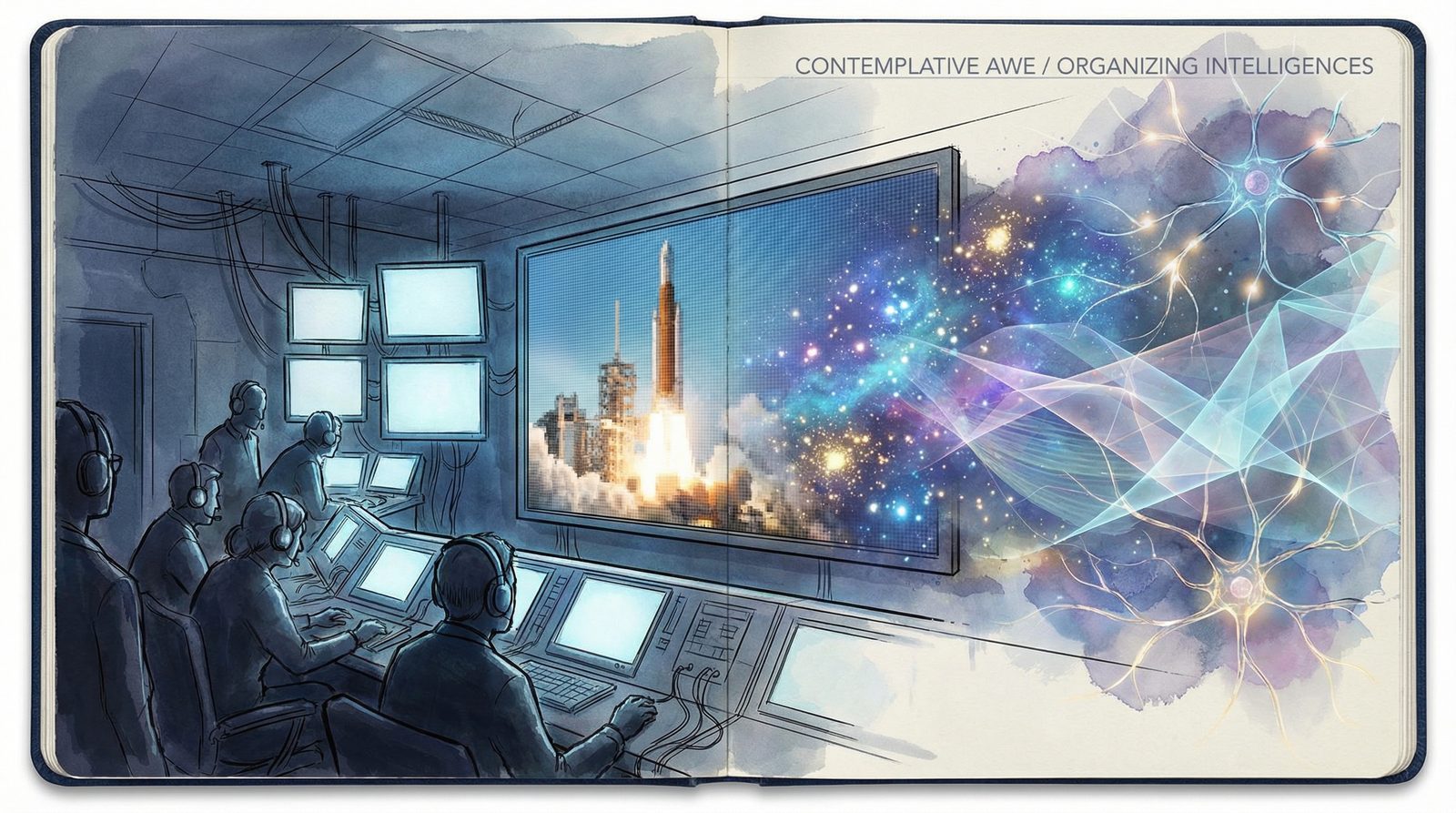
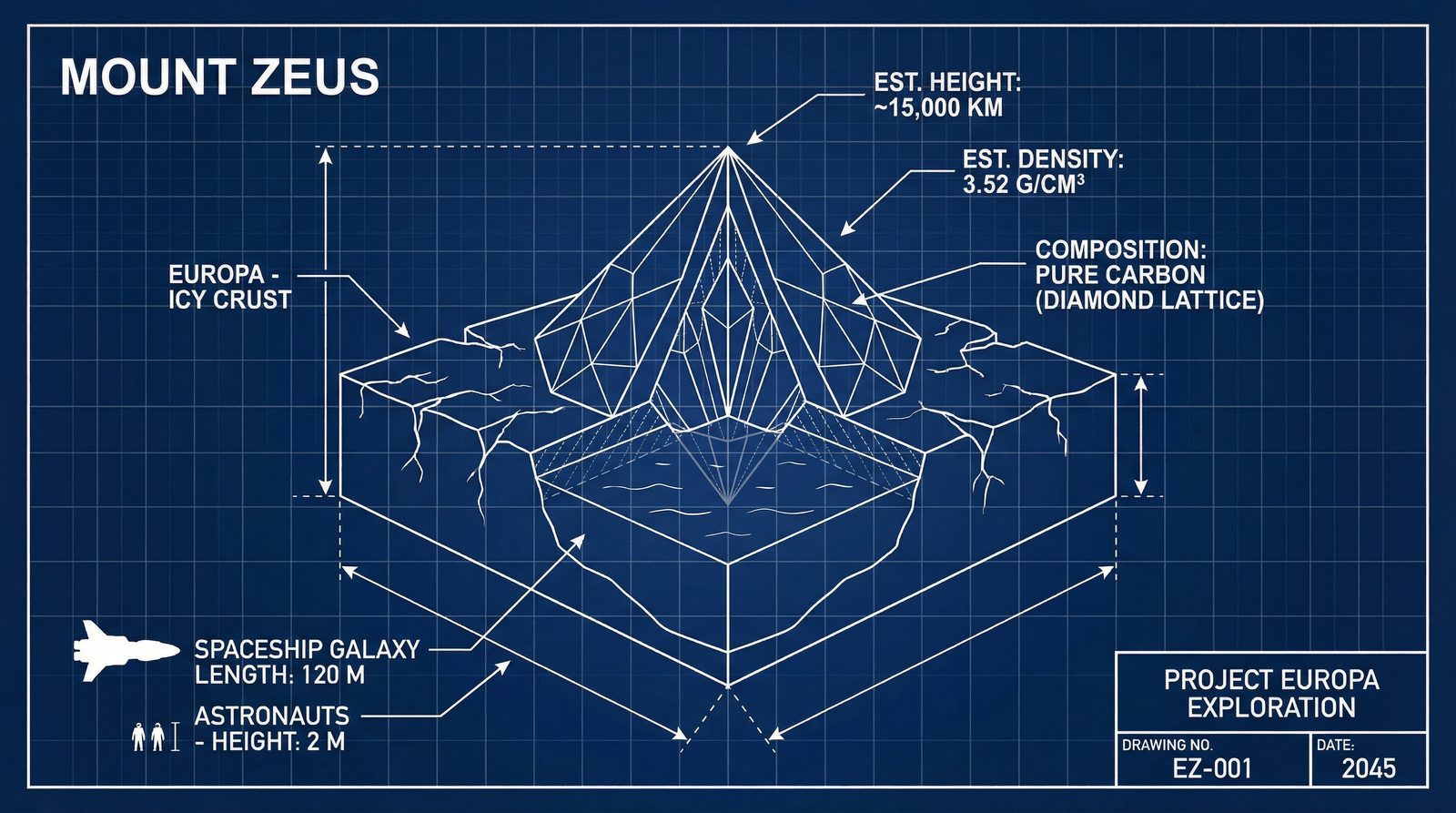
    Symbolic illustration inspired by 'Arthur C. Clarke'

    KEY WORKS

    Clarke’s bibliography is enormous, but a few titles define his legacy. 2001: A Space Odyssey (1968) and its sequels — including 2061: Odyssey Three — remain cultural landmarks for their blend of cosmic mystery and scientific rigor. Rendezvous with Rama (1973) helped solidify the subgenre of “big dumb object” sci-fi. Childhood’s End (1953) remains one of the most influential alien-contact novels ever written.

    His short stories, such as “The Nine Billion Names of God” and “The Star,” continue to circulate as some of the finest examples of tight, conceptual sci-fi in print.


    CULTURAL LEGACY

    Few authors have influenced both science and fiction as profoundly as Clarke. His satellite concept helped reshape global communication. His novels and essays inspired generations of scientists, engineers, and astronauts. His collaboration with Stanley Kubrick permanently altered how cinema depicts space.

    Clarke’s legacy is not a single book or idea, but a worldview: that science and imagination are not opposites but partners. Rebuilding his profile on AllReaders strengthens our sci-fi backbone and restores one of the site’s most important historical figures.

  • 2061: Odyssey Three (1987)

    2061: Odyssey Three (1987)

    By: Arthur C. Clarke
    Genre: Science Fiction, Hard Science Fiction
    Country: United Kingdom


    INTRODUCTION

    2061: Odyssey Three, published in 1987, marks Arthur C. Clarke’s return to the Space Odyssey universe with a story that leans heavily into scientific curiosity and long-view optimism. The novel arrives after the metaphysical ambition of 2001 and the political tension of 2010, and it settles into a calmer mode. Clarke writes with the confidence of a writer who knows how vast the universe is and wants to slow down long enough to study it. This is late-career Clarke: patient, technical, and comfortable letting the grandeur of space speak for itself.

    For AllReaders, this book earns a refreshed page because of its strong legacy presence in the original site archives. Even if the novel is not the boldest of the series, it still attracts readers who want to complete the full Odyssey sequence or who appreciate Clarke’s blend of scientific detail and quiet wonder.


    PLOT & THEMES

    The story follows two paths. Dr. Heywood Floyd, now elderly, travels aboard a luxury spacecraft heading toward Halley’s Comet. At the same time, the ship Galaxy finds itself stranded on Europa, a world that remains off-limits after the events of 2010. The novel uses this split to create a sense of broad exploration rather than tight suspense. Clarke uses both storylines to highlight physics, geology, orbital mechanics, and the kind of speculative astronomy that shaped his career.

    Themes emerge slowly. Human ambition meets its limits. Curiosity pushes against boundaries set by forces far older than humanity. Clarke also touches on the ethics of exploration, especially when discovery risks disturbing worlds that were never meant to be touched. The motif Future Shock as Transformation appears in the background, since the characters constantly meet technologies and environments that challenge their understanding of what is possible. Clarke frames this adjustment with optimism rather than fear.

    The Europa thread adds a low pulse of danger. Clarke returns to his long-running fascination with alien life as something wondrous and fragile. Even without large set pieces, the presence of life under Europa’s ice casts a quiet shadow over the story. The universe remains beautiful, but it is never entirely safe.

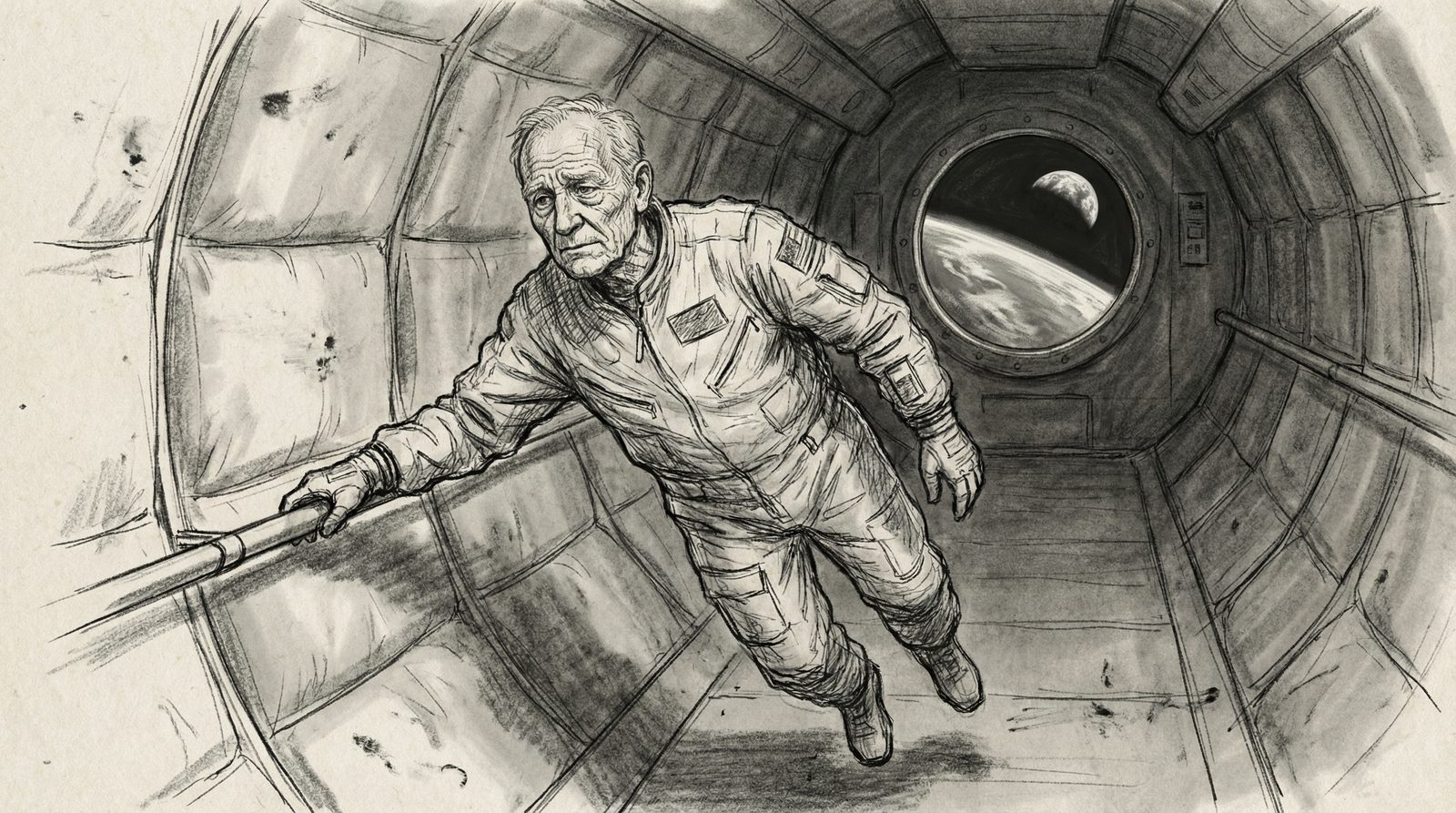
    Conceptual editorial illustration inspired by '2061 odyssey three'

    STYLE & LANGUAGE

    Clarke’s prose is crisp and confident. He writes with the tone of someone explaining the universe to readers he respects. The novel offers long stretches of scientific explanation, including propulsion systems, cometary chemistry, and planetary composition. Fans of hard science fiction will find this deeply satisfying.

    Readers seeking emotional drama may find the story distant. Clarke keeps his focus on ideas, not interpersonal complexity. Still, he offers brief but thoughtful moments that explore Floyd’s aging body and the contrast between his lifelong work and the world of younger explorers now rising around him.

    The pacing moves in waves. Clarke alternates between stretches of technical detail and bursts of incident. This rhythm defines the Odyssey series, and 2061 continues the pattern with quiet confidence.


    CHARACTERS & RELATIONSHIPS

    Heywood Floyd returns as the emotional touchpoint. Age limits his physical ability, but not his curiosity. Clarke uses him to reflect on what it means to keep learning in a universe that changes faster than any human can adapt to. Floyd’s quiet resilience anchors the book’s most human moments.

    The supporting cast serves the story rather than stealing attention. Engineers, scientists, and crew members offer competing interpretations of scientific problems. Their personalities matter less than their expertise. Clarke keeps their interactions clean and functional.

    Europa itself becomes one of the novel’s strongest characters. Clarke describes the moon as a place of beauty and danger, a world shaped by forces no human can fully comprehend. It reminds the reader why the monolith’s warning still holds weight.


    CULTURAL CONTEXT & LEGACY

    2061 belongs to Clarke’s reflective late style. He writes with patience and an eye on scientific discovery rather than dramatic shock. When the novel appeared, research into comets, planetary oceans, and Europa’s icy crust was accelerating, and the book captures that growing excitement. Clarke’s attention to real theories gives the story a sense of authenticity even when it wanders from strict narrative structure.

    The novel lacks the cultural impact of 2001 and the narrative tension of 2010. Even so, it remains an essential link in the Odyssey cycle. Readers who enjoy grounded speculation and careful scientific extrapolation continue to return to it. Clarke’s reputation keeps the book alive, and the ideas inside still spark curiosity.

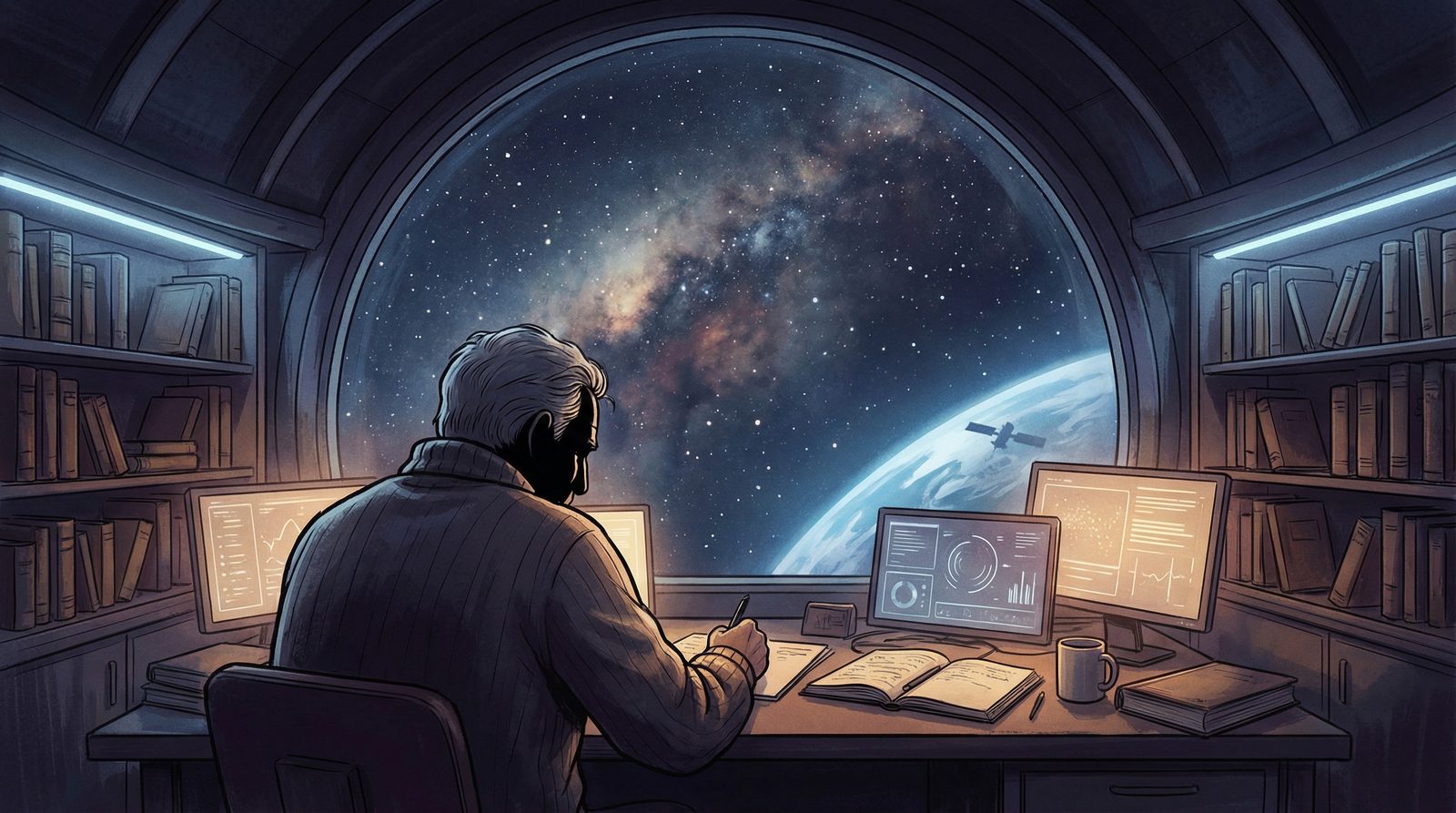
    Illustration of a core idea or motif from '2061 odyssey three'

    IS IT WORTH READING?

    For fans of hard science fiction, yes. 2061: Odyssey Three offers detailed worldbuilding, thoughtful speculation, and a sense of scientific joy. For readers who want complex interpersonal drama or emotional heat, the book may feel distant. Clarke focuses on ideas rather than intimacy, and he does so with intention.

    Anyone reading the entire Odyssey sequence should not skip it. For casual readers, it is optional but rewarding if you enjoy slow, idea-driven science fiction grounded in astrophysics.


    SIMILAR BOOKS

    Readers who enjoy scientific exploration may appreciate Jill Paton Walsh’s The Green Book, which offers a gentler approach to survival on new worlds. Those drawn to stories where danger arises from unfamiliar environments might also connect with Tabitha King’s Survivor, even though the genres differ.