Trope: Small Town Secrets

  • Cursed Family Legacy

    Cursed Family Legacy

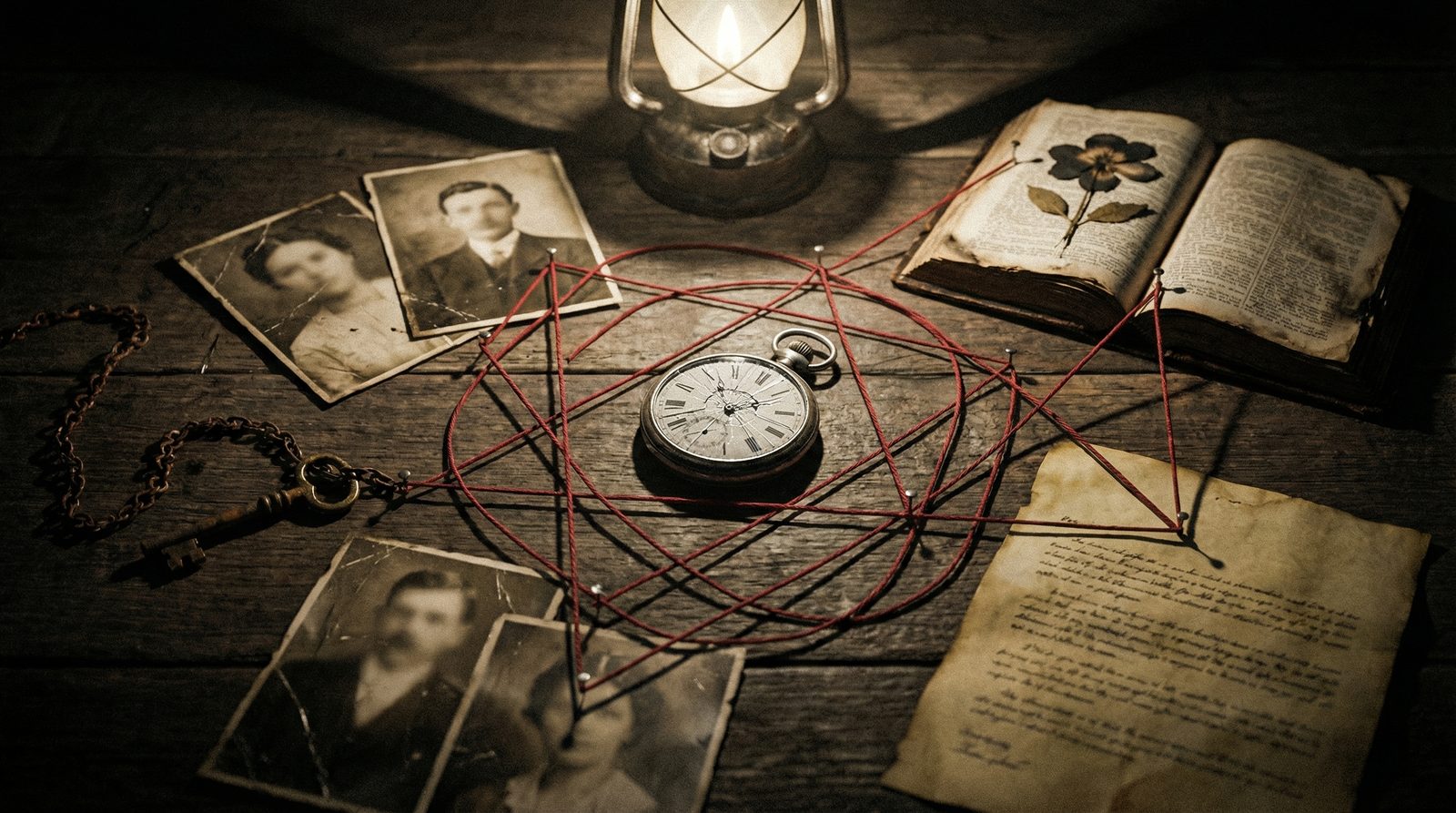
    Cursed Family Legacy explores the idea that a family’s past—its secrets, sins, bargains, betrayals, or buried history—creates a lasting, often supernatural, burden for later generations. In literature and film, this motif shows up whenever characters inherit more than wealth or tradition: they inherit danger. Homes, towns, bloodlines, and memories become traps, and each generation must either repeat the cycle or break it. This is a foundational structure in Southern Gothic, domestic horror, and multi-generational epics where the past behaves like a living antagonist.

    The motif typically emerges through patterns: the same tragedy resurfacing across decades, a recurring personality flaw, an old “deal” the family refuses to discuss, or a place—house, river, burial ground—that binds a family to something hungry. In many stories, the characters don’t even know they’re cursed until the pattern closes in around them. Others know exactly what they’re facing but lack the power, knowledge, or courage to cut the cord.

    Because cursed legacies blend psychology with the supernatural, they connect naturally to motifs like Trauma as Inheritance and Domestic Vulnerability as Horror. Yet they stand apart in one crucial way: the family curse is not merely emotional. It is active, often embodied, and capable of shaping fate across multiple generations. That’s why this motif resonates so strongly in works where landscapes and houses function almost like family members—reflecting, amplifying, or punishing inherited flaws.

    WHY IT MATTERS

    A cursed legacy raises the stakes beyond individual survival. The protagonist is not just fighting for themselves but trying to break a cycle that predates them. This transforms ordinary family conflict into a mythic struggle: what do we owe to the past, and what does the past demand in return? Many stories built around this motif ask whether escape is possible, or if destiny is already written in the bloodline.

    HOW IT SHOWS UP IN STORIES

    Some common expressions of the motif include:

    • A mysterious ancestor whose actions still echo destructively.
    • A family home that “remembers” trauma and reenacts it.
    • Unspoken rules passed down for generations, intended to keep something contained.
    • A family matriarch/patriarch wielding supernatural or oppressive control over descendants.
    • Inherited supernatural abilities that function more like a burden than a gift.
    • Generations of the same tragedy: drowning, madness, disappearances, sudden deaths.

    In Southern Gothic especially, these cursed legacies are intertwined with land and region—rivers, plantations, coastal houses, collapsing small towns. The curse becomes environmental as much as familial.
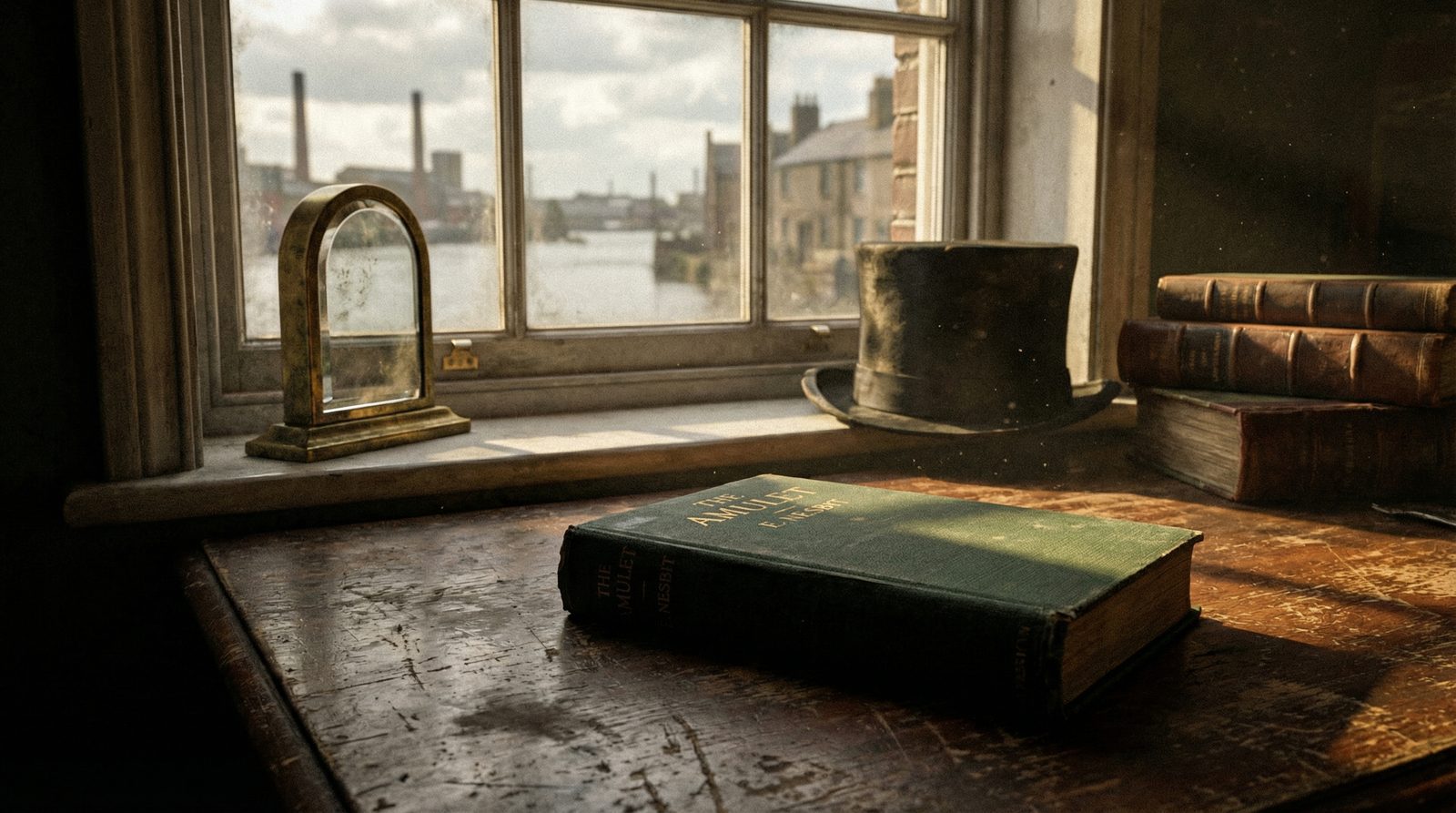
    Cursed Family Legacy inline concept image

    RELATED MOTIFS

    Trauma as Inheritance
    Domestic Vulnerability as Horror
    Identity Collapse in Isolation
    Survival Narratives
    The Erased Girl

    FEATURED BOOKS

    This motif appears prominently in several works, particularly in long-arc horror and Southern Gothic:

    • Blackwater: The Complete Caskey Family Saga – The definitive example, where a river deity entwines itself with the Caskey dynasty across generations.
    • The Elementals – A buried coastal house exerts influence across family lines, with secrets held for decades.
    • Cold Moon Over Babylon – The Larkin family’s suffering becomes cyclical as the dead return seeking justice.
    • The Amulet – Although more pulpy, the small-town curse spreads through a family’s bitterness and inherited violence.

    FEATURED MOVIES

    While McDowell’s own screenwriting (Beetlejuice, The Nightmare Before Christmas) doesn’t use this motif directly, several films on AllReaders embody it strongly:

    • Hereditary – A modern benchmark for cursed bloodlines and generational doom.
    • The Haunting of Hill House – Family trauma merges with a predatory, memory-eating house.
    • The Skeleton Key – Southern Gothic inheritance and body-passing rituals rooted in family secrets.

    FEATURED CREATORS

    Writers and filmmakers whose work frequently engages with cursed legacies include:

    • Michael McDowell – The master of Southern multigenerational curses.
    • Shirley Jackson – Domestic dread and inherited patterns, especially in We Have Always Lived in the Castle.
    • Flannery O’Connor – Not supernatural, but her stories often function like moral or spiritual curses passed through bloodlines.
    • Stephen King – Recurring interest in families bound by supernatural or psychological inheritance (IT, The Shining, Doctor Sleep).

    WHY IT WORKS SO WELL IN SOUTHERN GOTHIC

    The American South—with its heavy history, family dynasties, and landscapes drenched in memory—is uniquely fertile ground for cursed legacy stories. Generations often stay tied to the same river, same house, same reputation. When horror enters that ecosystem, it tends to stick, becoming a family member in its own right.

    McDowell’s fiction is arguably the purest expression of this. The curse in Blackwater is not a punishment; it is a pact. The curse in The Elementals is not explicit; it is ritualized. The result is horror that feels inevitable, like a tide coming in that no one can stop.

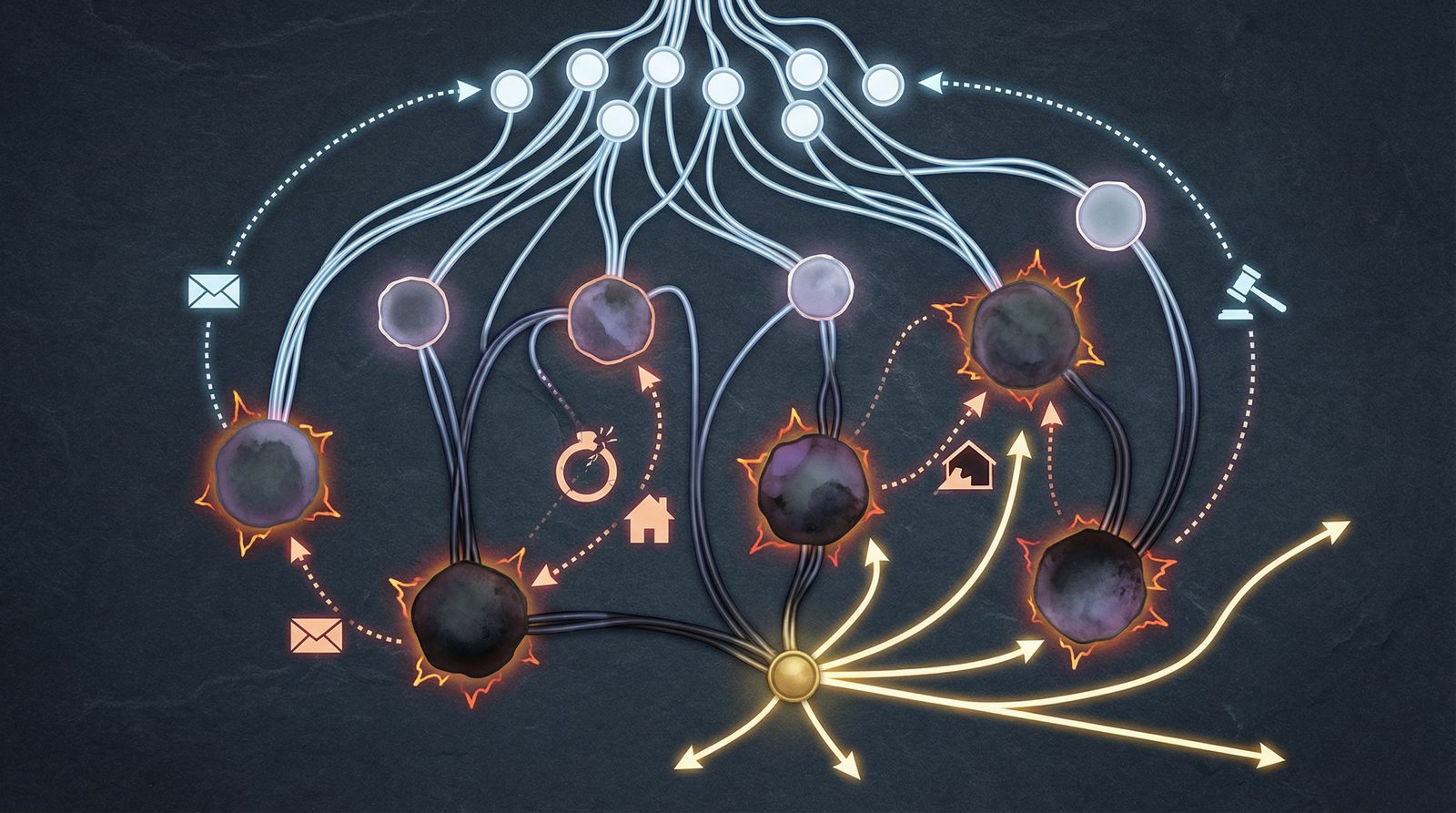
    Cursed Family Legacy inline diagram image
  • The Amulet (1979)

    The Amulet (1979)

    By: Michael McDowell
    Genre: Horror, Southern Gothic
    Country: United States


    INTRODUCTION

    The Amulet (1979) is Michael McDowell’s debut novel and a mission statement for everything he would do later. Set in the small Alabama town of Pine Cone, it follows Sarah Howell as she watches a mysterious charm move from hand to hand, turning ordinary objects into engines of gruesome death. Beneath the splatter, the book is about resentment, economic stagnation, and how a community quietly decides who deserves to suffer.

    Already you can see McDowell’s fixation on cursed domestic life: the story is less about the amulet itself and more about how hatred travels through families and neighbors. Readers who later love Cold Moon Over Babylon or The Elementals will recognize the seeds of Trauma as Inheritance and Domestic Vulnerability as Horror already taking root.

    PLOT & THEMES

    The novel begins with a factory accident that leaves Sarah’s husband, Dean, grotesquely maimed and comatose. Dean’s mother, Jo Howell, is bitter, controlling, and obsessed with punishing everyone she imagines wronged her son. When a sinister amulet comes into her possession, Jo starts passing it along as a “gift”. Wherever it goes, bizarre and violent deaths follow: a gun range, a beauty pageant, a seemingly quiet home. Each new victim is tied back to Pine Cone’s gossip, grudges, or petty power plays.

    The horror is structured almost like a chain letter. McDowell cycles through different households and workplaces, showing how a small town is stitched together by class resentment, racism, and fear. The amulet does the killing, but the town supplies the motive. This is a textbook example of Trauma as Inheritance: old anger is handed down, objectified, and weaponized until it consumes everyone in reach.

    Another key thread is complicity. Sarah is not a typical Final Girl. She is exhausted, broke, and trapped between a monstrous mother-in-law and a husband who was never much of a prize. Pine Cone itself becomes a character, a place where people know something is wrong and mostly choose to look away. The town’s refusal to intervene, even as the body count rises, is what pulls this into the realm of domestic-political horror rather than just a curse story.

    STYLE & LANGUAGE

    McDowell writes in brisk, clear prose that never slows down to admire itself. The sentences are lean, the chapters short, and the deaths described with a chilly matter-of-factness that makes them feel nastier than purple description ever would. His background in Southern life and funerary culture shows up in the details: the rituals around accidents, the formal language of condolences, the way a town crowds in and then pulls away from tragedy.

    The book slides effortlessly between viewpoints, giving each victim just enough depth that their fates sting. There is a pulpy pleasure in the outrageous set pieces, but McDowell’s control keeps the novel from tipping into parody. The tone is closer to angry social realism with supernatural teeth than to camp. This balance between swift plotting and emotional specificity is part of what later makes Blackwater and Candles Burning so effective.

    Conceptual editorial illustration inspired by 'the amulet'

    CHARACTERS & RELATIONSHIPS

    Sarah is an early version of the McDowell heroine: intelligent, limited in obvious power, and forced to navigate a hostile domestic landscape. Her relationship with Jo is the book’s real center. Jo is not a cackling witch so much as a recognizable type from small-town life, a woman whose world has narrowed to grudges and control. Through their clash, McDowell sketches a generational conflict where the younger woman wants a life beyond the town and the older one would rather see everything burn than lose control.

    Secondary characters – town officials, co-workers, gossipy neighbors – are sketched with quick, memorable strokes. Many of them embody Identity Collapse in Isolation: people whose lives are so small and boxed in that when horror touches them, they have nothing to fall back on. The amulet doesn’t just kill them physically. It exposes how little room they had to be anything but victims in the first place.

    CULTURAL CONTEXT & LEGACY

    Released at the end of the 1970s paperback boom, The Amulet is very much a product of its era, yet it has aged better than many of its contemporaries. Its focus on economic frustration, toxic nostalgia, and small-town rot feels surprisingly current. You can see why McDowell would later be tapped for projects like Beetlejuice and why The Elementals has become a cult classic: he understood how to make local, specific horror feel mythic.

    For readers tracing McDowell’s career, this is where to start. It shows his early interest in Domestic Vulnerability as Horror and the way household objects, marriages, and mother-in-law jokes can become genuinely terrifying. It is rougher than later work, but the voice is already there – calm, ruthless, and deeply attuned to how ordinary people live with quiet rage.

    Illustration of a core idea or motif from 'the amulet'

    IS IT WORTH READING?

    If you are interested in the roots of modern Southern Gothic horror, The Amulet is essential. It is nasty in places, but never senselessly so, and beneath the shocks there is a serious interest in how communities decide who matters. Start here if you want to see McDowell in raw form before moving to the more expansive dread of Cold Moon Over Babylon or the spectral coastal decay of The Elementals.

    SIMILAR BOOKS

    If you like The Amulet, you may also appreciate the rural grief and supernatural vengeance of Cold Moon Over Babylon, the multi-generational river saga in Blackwater: The Complete Caskey Family Saga, and the haunted family narrative of Candles Burning. All of them develop the same obsessions with cursed inheritance, suffocating towns, and the quiet horror of being stuck where you were born.

    DISCOVERABILITY & LINKS