
Archetype: The Witness

  • Dissociation as Defense

    Dissociation as Defense

    Motif Type: Psychological Coping
    Era Focus: 20th Century to 21st Century
    Primary Fields: Memoir, Literary Fiction, Trauma Narratives


    WHAT THIS MOTIF MEANS

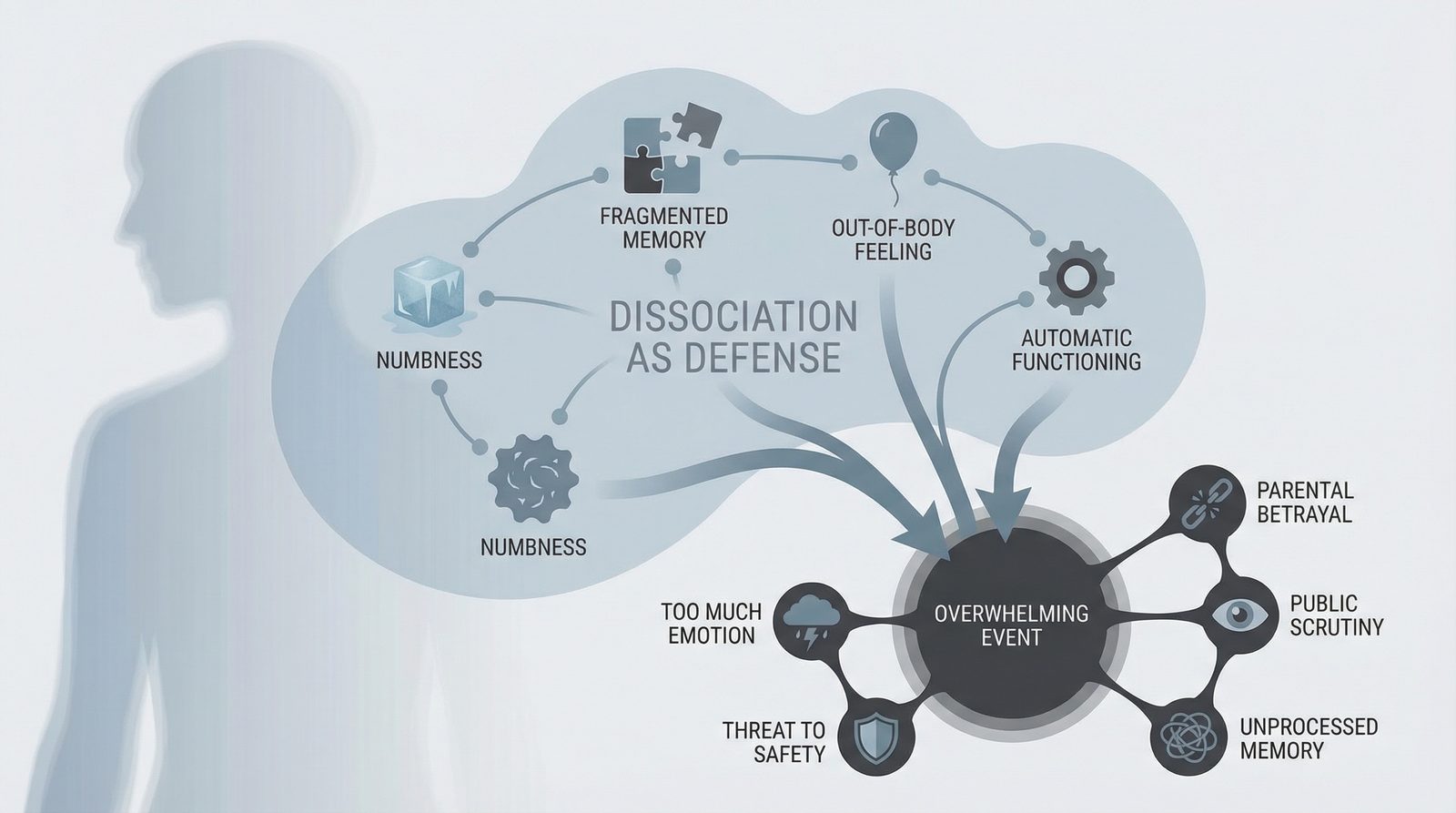
    Dissociation as Defense appears in stories where a character withdraws from overwhelming experience by separating from emotion, memory, or physical sensation. This defense is not chosen. It emerges instinctively when the mind cannot safely process what is happening.

    On the page, dissociation often shows up in flat tone, sudden shifts, dreamlike distance, or disconnection between events and feelings.


    HOW IT WORKS IN NARRATIVE

    The motif usually appears during or after trauma. Characters recount violence or control with unnerving calm. They describe terrifying events with the tone of someone narrating the weather. This emotional gap is the point. It reveals how the character survived.

    As the narrative progresses, dissociation may lessen or transform as the character gains safety or language to confront what happened.

    Dissociation as Defense inline concept image


    WHERE WE SEE IT IN OUR LIBRARY

    • I’m Glad My Mom Died – McCurdy describes invasive control with flat, clinical tone that reflects emotional separation.
    • The Woman in Me – Britney recounts traumatic events with stillness that suggests survival through detachment.
    • Precious – The film visualizes dissociation through fantasy sequences that interrupt abuse.
    • Push – Precious retreats inward, separating from events that would overwhelm her.
    • Framing Britney Spears – The documentary highlights public moments where dissociation appears as a coping strategy.

    The motif links characters who learned to survive by mentally stepping away from harm.

    Dissociation as Defense inline diagram image

    WHY IT MATTERS

    Dissociation as Defense is crucial for understanding trauma with nuance. It reveals why victims may appear calm, detached, or emotionless during or after harm. It counters harmful cultural myths that equate visible reactions with real pain.

    The motif offers readers a humane and psychologically accurate way to interpret survival.


    ARCHETYPES ASSOCIATED WITH THIS MOTIF

    • The Erased Girl – when dissociation becomes part of invisibility.
    • The Witness – when the character observes their life from a distance.
    • The Controlled Daughter – for characters who dissociate to endure parental domination.

    RELATED MOTIFS

    Grief as Contradiction
    Parental Betrayal
    Silence as Survival

  • Motherhood as redemption

    Motherhood as redemption

    Motif Type: Family and Healing
    Era Focus: 20th Century to 21st Century
    Primary Fields: Memoir, Literary Fiction


    WHAT THIS MOTIF MEANS

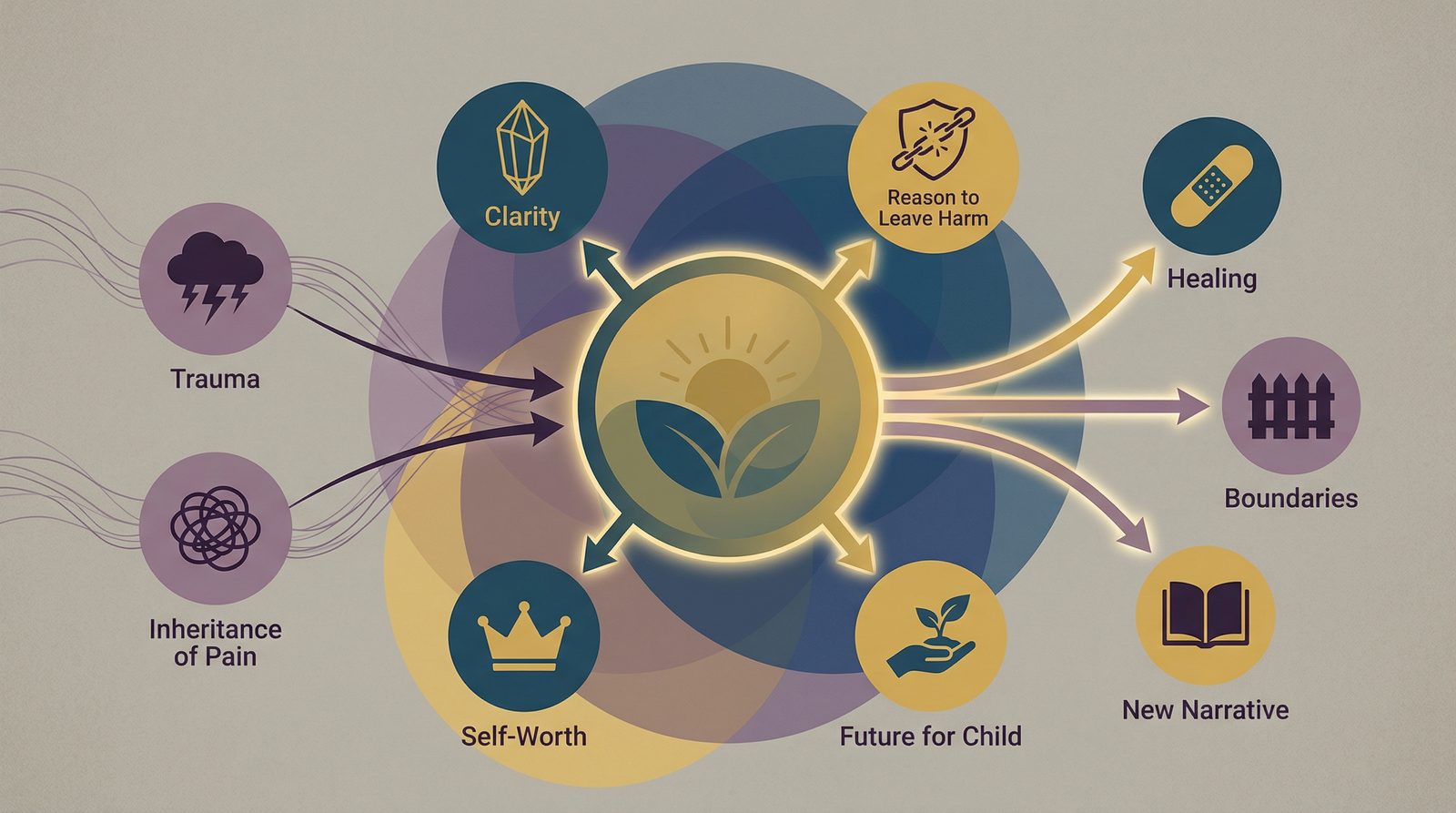
    Motherhood as Redemption appears in stories where becoming a mother gives a character clarity she did not have before. The role does not solve her trauma. It sharpens her desire to survive it. The child becomes a reason to leave harm, a reason to change, or a reason to finally see herself as someone worth protecting.

    This motif is not sentimental. It acknowledges that motherhood is complicated. The redemption comes not from perfection but from purpose.


    Motherhood as redemption inline concept image

    HOW IT WORKS IN NARRATIVE

    Characters inside this motif often grow up without safety or agency. They enter motherhood carrying the weight of their past. When a child enters their life, the emotional stakes shift. Suddenly survival has direction. Healing has urgency. The child becomes a mirror and a motivator.

    Redemption here is not moral. It is emotional. It is the moment a character sees a possible future that does not look like her past.


    Motherhood as redemption inline diagram image

    WHERE WE SEE IT IN OUR LIBRARY

    • Confessions of a Video Vixen – Steffans sees motherhood as the turning point that anchors her decisions and resilience.
    • The Vixen Diaries – Her relationship with her son remains the emotional center of the book and her reason to move toward stability.
    • The Woman in Me – Britney’s sons are the emotional force behind her desire for freedom and autonomy.
    • I’m Glad My Mom Died – The motif appears in reverse through Jennette’s longing for a healthier form of protective care that she never received.
    • The Color Purple – Celie’s role as a maternal figure to children in her care shapes her emotional evolution and sense of purpose.

    In each work, motherhood reveals emotional truths that were hidden beneath harm or survival.


    WHY IT MATTERS

    This motif matters because it reframes motherhood as a form of identity reclamation rather than domestic duty. It also shows how nurturing another life can awaken self-compassion in characters who learned early to ignore their own needs.

    It becomes a turning point, not because the character becomes flawless, but because she chooses not to repeat the cycle she inherited.


    ARCHETYPES ASSOCIATED WITH THIS MOTIF

    • The Reclaimer – for mothers who reshape their identity through care.
    • The Resistant Spirit – for characters who fight to protect a child despite limited power.
    • The Witness – for characters who see, often for the first time, the cost of their own upbringing.

    RELATED MOTIFS

    Trauma as Inheritance
    Intimacy as Healing
    Survival Narratives