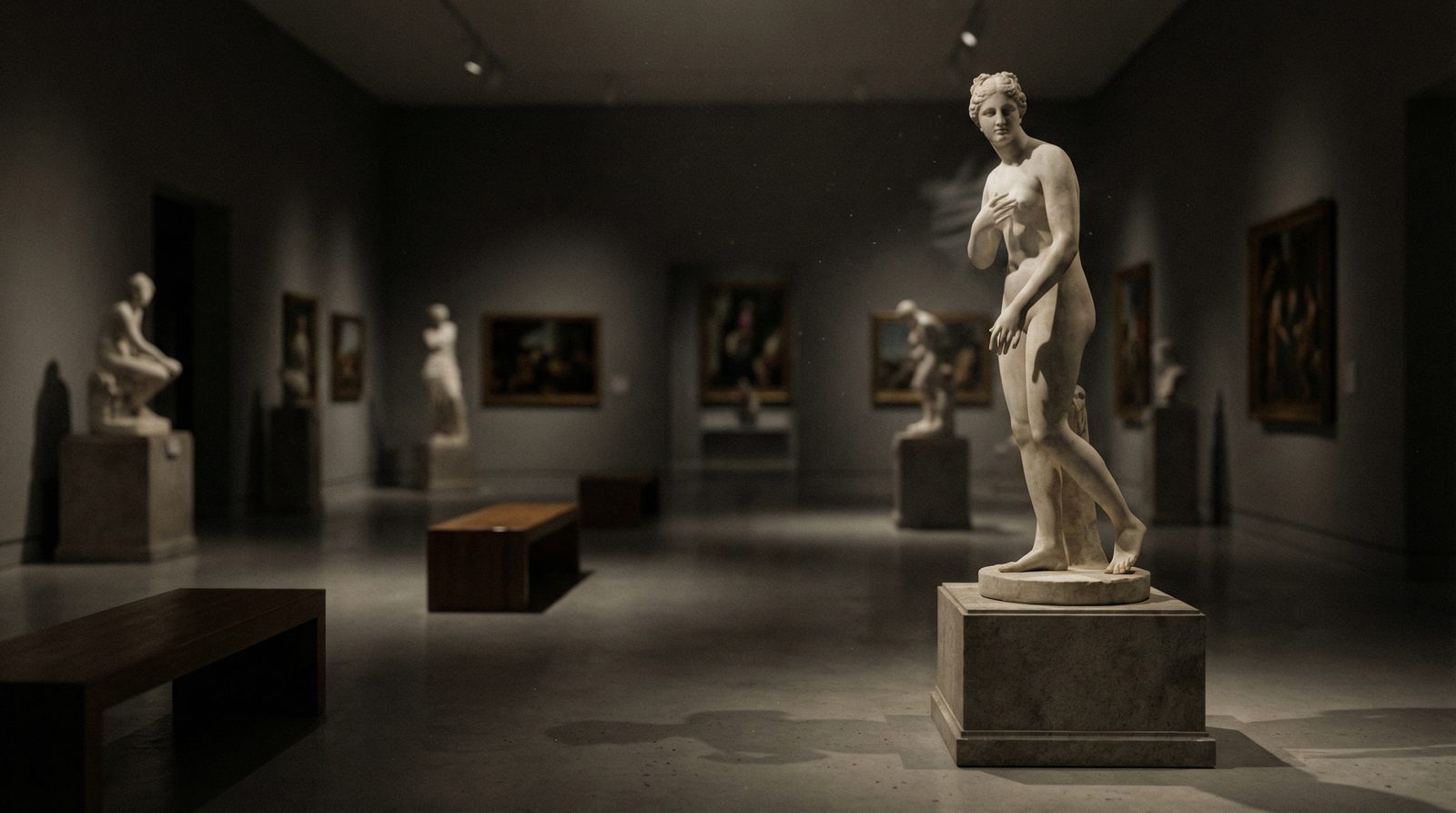
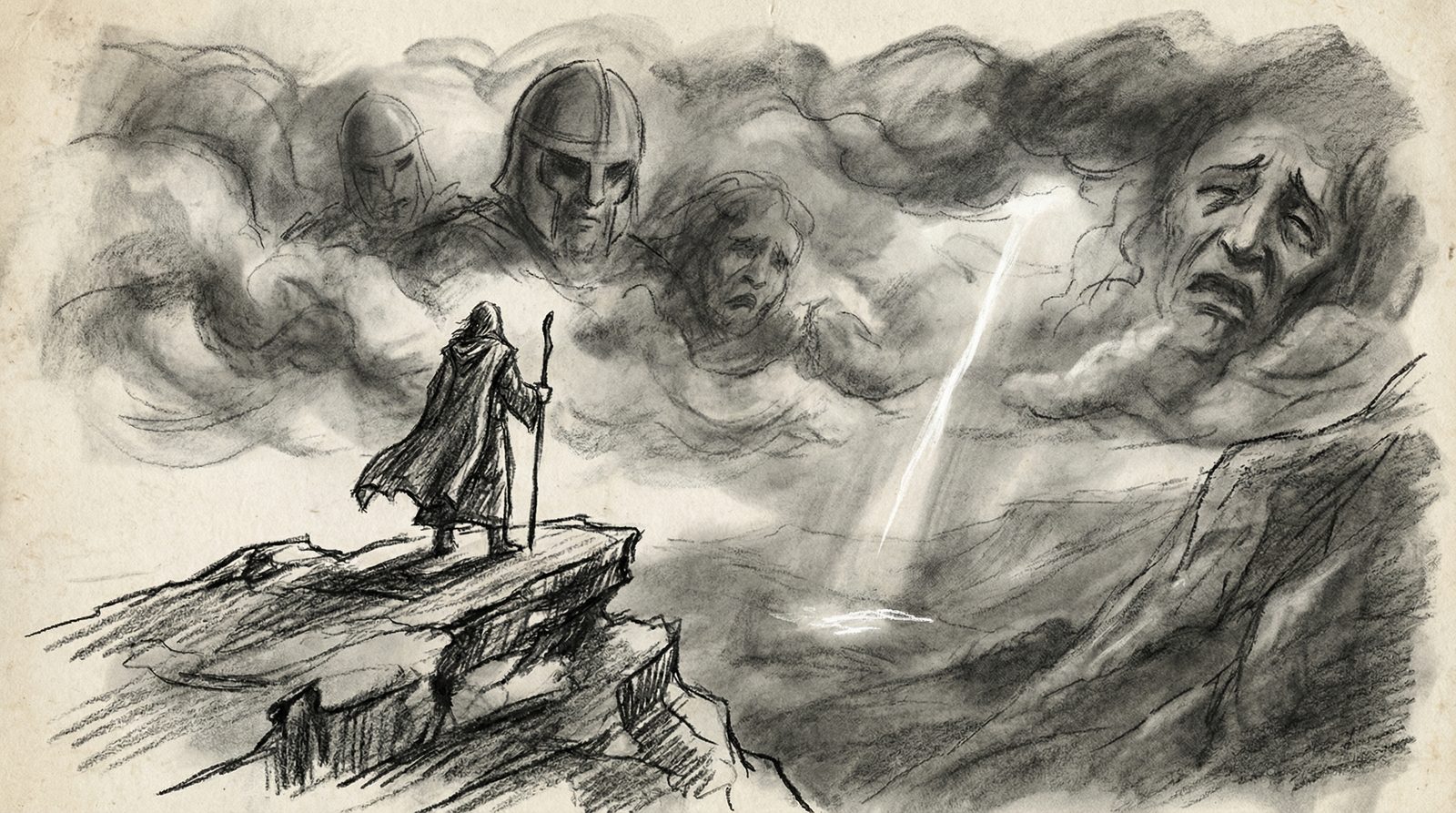
The Statue Comes To Life motif is exactly what it sounds like. Stone turns to flesh, a department-store mannequin wakes up, or a bronze goddess steps down from her pedestal. The core thrill comes from watching something we are used to seeing as an object suddenly reveal a mind, a will, and often a heart.
Writers use this motif to explore wish fulfillment, loneliness, and the unstable line between ideal and reality. A character may fall in love with an image they helped create, echoing the Pygmalion pattern, or stumble into a relationship with a figure that was never meant to move at all. Stories such as The Tinted Venus by Thomas Anstey Guthrie play with the shock, comedy, or horror of an inanimate figure stepping into ordinary life.
At its heart, the motif asks a simple but unsettling question. What happens when our fantasies talk back? The living statue is usually designed as perfection, whether beautiful, sacred, or terrifying. Once it awakens, the human characters are forced to confront how different a real, autonomous being is from the silent, obedient figure they imagined.
HOW IT WORKS IN STORIES
The setup is often deceptively simple. A sculptor, shop employee, scholar, or lonely observer forms an attachment to an object that cannot answer back. Through magic, a curse, a wish, or a god’s intervention, the figure comes alive. From there, the story splits into two broad paths.
On the side of wonder, the living statue experiences the world with fresh eyes. Money, social rules, and human habits make little sense. Everyday life becomes strange and funny. In romantic or comic versions such as Mannequin (1987) or One Touch Of Venus (1948), this innocence is charming. The animated figure pushes the human lead to loosen routines, challenge assumptions, and admit what they actually want.
On the side of disruption, the animated statue breaks boundaries. Property, religion, and personal relationships collapse under the weight of something that was never meant to walk freely. Even lighter tales such as The Tinted Venus show how a living idol can upend careers, engagements, and social standing.
Structurally, the motif builds toward a choice. Secrets must be kept, authorities get involved, and the human characters must decide whether to cling to safety or accept an unpredictable relationship. The ending usually turns on whether the statue remains alive, returns to its pedestal, or demands a price for having crossed the boundary between object and person.
EMOTIONAL EFFECT ON THE READER
This motif taps into a primal wish: that the things we admire in silence might look back and choose us. The idea that a statue could turn its head and see us is thrilling and unsettling at the same time.
In romantic or comedic versions, there is a warm sense of fantasy fulfillment. The protagonist is chosen by someone impossibly ideal, a literal embodiment of beauty or devotion.
Darker uses of the motif replace comfort with dread. The same transformation that feels magical in light stories becomes a violation when the animated figure moves with cold purpose or divine anger.
VARIATIONS & RELATED MOTIFS
The motif appears in several recognizable forms. The classic variation follows a creator-and-creation pattern where an artist’s work reflects their ideals and blind spots. A modern twist replaces the handcrafted statue with a mass-produced figure, shifting the focus toward consumer fantasy and the idea of the perfect partner as a commodity.
Mythological versions present the statue as a dormant deity rather than a neutral object. In these stories, the figure was never truly asleep, only waiting. This overlaps strongly with Pagan Goddess In Modern Society, where ancient power collides with modern norms.
Horror-leaning variants treat the awakening as punishment instead of reward, while bittersweet versions allow the figure to remain human only temporarily.
Zen and the Art of Motorcycle Maintenance (1974) by Robert M. Pirsig
Philosophical novel · 434 pages · United States
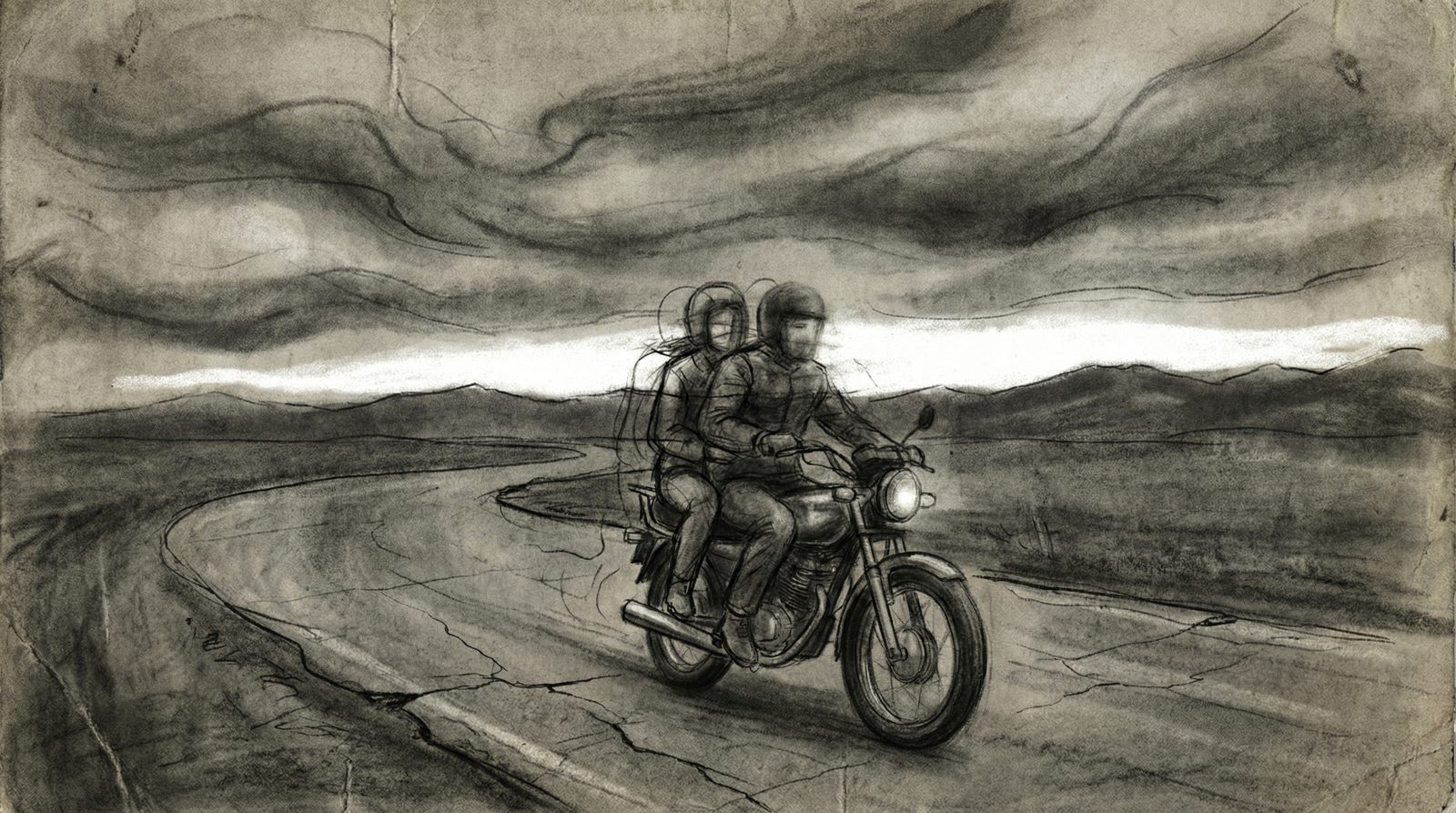
Zen and the Art of Motorcycle Maintenance is one of those books people claim to have read when what they really remember is the title. It is not a manual and not quite a novel. It uses the open road as a frame: a father and his young son ride a Honda across the American West while, inside the father’s mind, an older self named Phaedrus keeps stirring.
The mood is uneasy and faintly feverish. There is sun on asphalt, engine vibration, and the nagging sense that something in modern life has gone badly out of tune. Pirsig uses the motorcycle as both machine and moral mirror, asking whether sanity is possible in a culture that worships efficiency but forgets meaning.
PLOT & THEMES
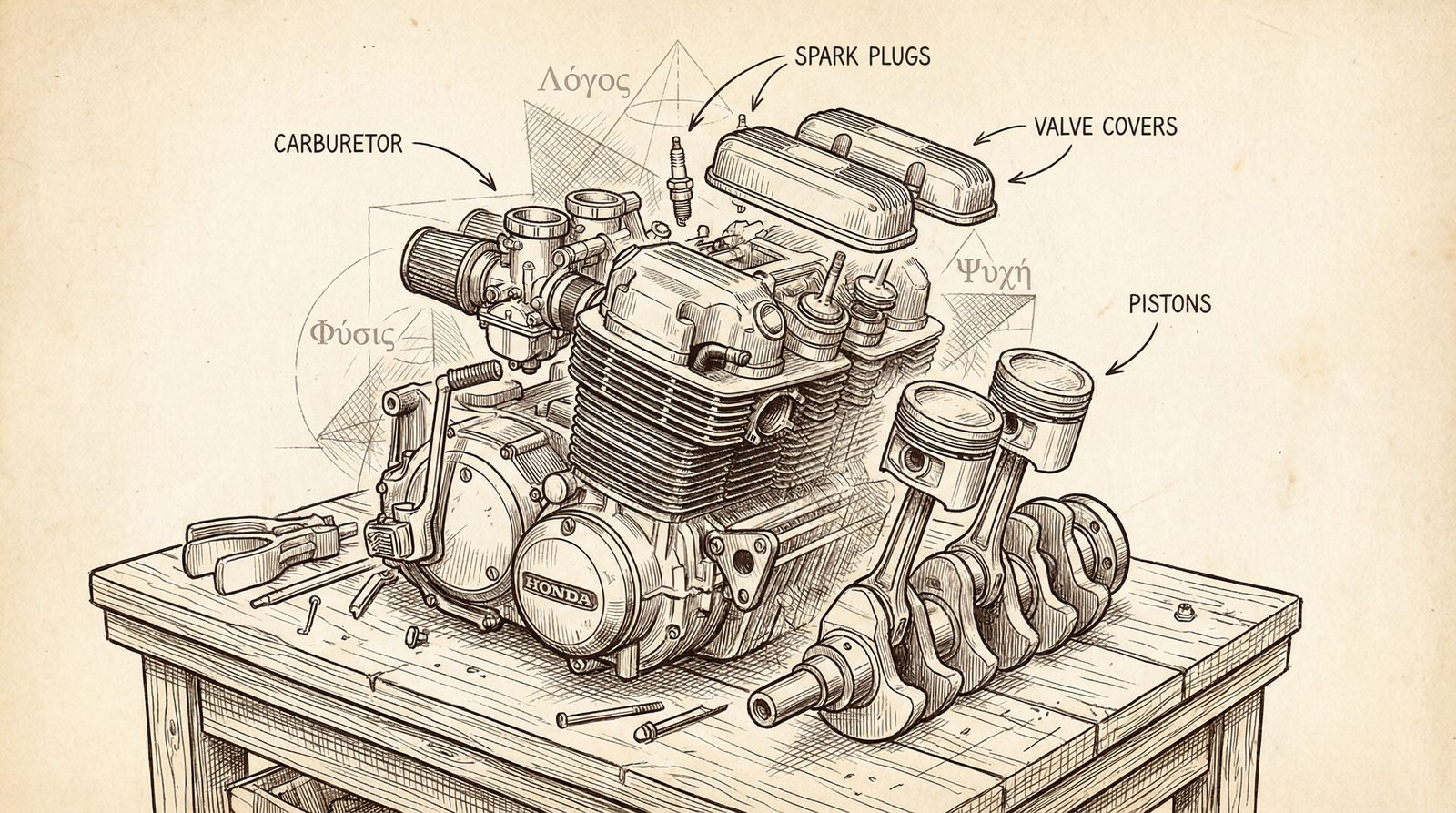
On the surface, the plot is simple. A nameless narrator rides from Minneapolis toward the Pacific Northwest with his son, Chris. Their friends John and Sylvia Sutherland join them along the way. They cross the Dakotas, move into Montana, and eventually reach the coast. Practical lessons punctuate the ride: valve clearances, chain tension, how to listen for what an engine is trying to tell you.
But the road trip is a decoy. The real story happens inside the narrator, where memories of Phaedrus begin to reassemble. Phaedrus was a brilliant, obsessive teacher who became consumed by the idea of “Quality.” His pursuit spiraled from intellectual argument into breakdown, ending in institutionalization and electroshock therapy. The book’s central tension is whether the narrator can live without becoming that man again, and whether the narrator can be honest about the fact that Phaedrus never entirely vanished.
Quality becomes the book’s governing concept: a way to heal the split between classical, rational analysis and romantic, intuitive experience. Pirsig insists that the divide is not just philosophical. It is lived. It shows up in how you fix a machine, how you teach a student, how you talk to your child, and how you survive your own mind when it starts to fracture.
By the time father and son reach the ocean, the past has broken through. In a motel room, Chris confronts his father about the gaps in their shared history and the fear that he will “go crazy again.” The narrator finally admits what he has been circling for hundreds of pages: he is Phaedrus returned, or at least the person who must now carry Phaedrus’s memories without pretending they belong to someone else. The ending is not a cure narrative. It is a fragile reconciliation, tentative and incomplete, and that incompleteness is the book’s honesty.
PROSE & NARRATIVE STRUCTURE
Pirsig structures the book as a braid, alternating scenes from the trip with philosophical “Chautauquas,” long improvised talks delivered directly to the reader. This technique keeps one wheel on the pavement and one in abstraction. A description of cleaning a clogged jet or adjusting ignition points can slide, almost imperceptibly, into a discussion of Plato, Aristotle, or the problem of defining value.
The prose is plainspoken but elastic. When Pirsig writes about the high plains at dawn or rain near the mountains, there is a quiet lyricism that matches the rhythm of the road. When he writes about breakdown and “stuckness,” the tone tightens into claustrophobia. He becomes precise about the moment before a mind gives way, and about the strange relief that sometimes follows when resistance collapses.
When he describes the motorcycle as an assemblage of functions, he is not trying to be poetic. He is trying to show that attention can be an ethic. Caring about how something works is a way of caring about the world. Neglect is not neutral. It is a posture toward life, and it spreads.
Structurally, the argument moves in tightening spirals rather than straight lines. Each day’s ride returns to the same questions, what Quality is, whether analysis can coexist with direct experience, whether the mind can survive its own hunger for certainty. The narrative never fully resolves those questions. It stages them as a lifelong condition, something you learn to live inside rather than something you solve once.
CHARACTERS & INTERIORITY
The narrator is an unusual seeker figure: someone who has already broken in pursuit of meaning and now circles back cautiously, wary of his own intensity. His interiority is dense. He appears as careful mechanic, anxious father, and former zealot, sometimes in the same paragraph. The split between “narrator” and “Phaedrus” is not merely a device. It is how he experiences himself, as if his own past were an alien intelligence pressing at the edge of consciousness.
Chris is written with raw opacity. He is moody, easily hurt, sometimes exhilarated by the trip and sometimes bored. His stomach aches, his fear of abandonment, and his questions about madness carry the emotional weight the philosophy can occasionally evade. Their relationship gives the book its human stakes. You do not need to accept the metaphysics of Quality to feel the ache of a child trying to understand whether his father will remain stable.
John and Sylvia Sutherland function as foils. John refuses to touch his own BMW’s maintenance, preferring machines to remain mysterious. Sylvia senses that something is off in the narrator’s intensity and detachment. Even minor figures, colleagues who bristle at Phaedrus’s ideas, mechanics who mishandle a bolt, serve as examples of different relationships to care, competence, and attention.
LEGACY & RECEPTION
Published after more than a hundred rejections, the book became an unlikely bestseller. It caught a particular American restlessness: the desire for meaning without rejecting technology, the craving for transcendence without surrendering craftsmanship. Engineers saw their pride in workmanship honored. Philosophers argued over whether the “Metaphysics of Quality” was rigorous or naïve. Ordinary readers simply recognized the feeling of being out of tune with modern life and wanting to repair the instrument from the inside.
Its ending has remained central to its reputation. The father and son bond is only tentatively restored. The narrator accepts that the intensity that once destroyed his life is also bound up with his deepest insight, and that Chris may have inherited some of that dangerous voltage. The unresolved tension between sanity and vision is why the book keeps returning. It refuses to become a tidy inspirational story.
IS IT WORTH READING?
This is not a quick read, and it does not pretend to be. If you want a straightforward plot, you will get impatient. If you are willing to sit with long arguments about Quality intercut with roadside coffee and carburetor details, you may find it oddly absorbing.
Its blind spots are real. The density can feel relentless, and the philosophical passages can occasionally flatten the emotional life around them. Still, the book offers something rare: a serious attempt to think through how to live well in a world of machines without worshiping them and without fleeing from them. If that tension already lives inside you, the ride is worth taking.
TRIVIA & AUTHOR FACTS
Pirsig reportedly received more than 120 rejections before a publisher took a chance on the manuscript. He worked as a technical writer and teacher, and his familiarity with manuals and lab-report precision shapes the maintenance scenes. The “Chautauqua” framing nods to the American tradition of traveling lectures, repurposed here for the highway era.
The narrator’s Honda is based on Pirsig’s own machine, and many of the mechanical details reflect lived experience rather than symbolic decoration. After the book’s success, Pirsig largely withdrew from public life, publishing one later philosophical novel and resisting the role of guru. That reluctance fits the book’s suspicion of any fixed system, including its own.
SIMILAR BOOKS
If this blend of narrative and inquiry works for you, Lila extends Pirsig’s ideas into a different journey. Readers drawn to spiritual searching and interior crisis often find kinship with Siddhartha. For a more chaotic portrait of American seeking, The Electric Kool-Aid Acid Test offers an opposite energy. And for a grounded nonfiction meditation on manual work and meaning, Shop Class as Soulcraft can feel like a distant cousin to Pirsig’s long ride west.
DISCOVERABILITY & LINKS
Works: The Teachings of Don Juan, The Darjeeling Limited
See also:Siddhartha, The Teachings of Don Juan, The Darjeeling Limited
The Celestine Prophecy (1993) by James Redfield
Spiritual fiction · 20th Century · United States / Peru
The Celestine Prophecy arrived in the mid-1990s like a photocopied scripture passed from hand to hand, carrying the promise that everyday life concealed a deeper pattern of meaning. It barely disguises its intentions. This is a novel that wants to instruct, not merely entertain. Yet that lack of irony is part of its peculiar magnetism.
Set largely in Peru but steeped in American New Age yearning, the book follows an unnamed narrator who drifts from encounter to encounter, repeatedly meeting people who seem to have been waiting for him. The tone is earnest to the point of vulnerability. At times it feels naïve, even awkward. But it is also charged with a restless hope that private dissatisfaction might be a signal of collective transformation.
As spiritual fiction, the novel sits between adventure story and instructional text. Ancient manuscripts, meaningful coincidence, and invisible energy fields are not narrative ornaments here. They are the argument. Human consciousness itself is framed as the final frontier of the late twentieth century.
PLOT & THEMES
The plot unfolds as both a physical journey through Peru and a structured ascent through nine spiritual insights. Nudged by a former teacher, the narrator travels to Lima after hearing rumors of a mysterious manuscript discovered near the ruins of an ancient settlement. Almost immediately, he is warned that the Catholic Church views the document as dangerous.
From that moment on, the story follows the logic of the chosen seeker. The narrator repeatedly meets exactly the right person at exactly the right moment. Each encounter introduces a new insight, reframing the nature of history, psychology, and human interaction.
The early insights teach that modern restlessness is not a personal failure but an evolutionary pressure. Later chapters introduce the idea of visible energy fields surrounding living beings, dramatized in scenes where attention itself appears to nourish plants or destabilize human interactions. At the Celestine ruins, competing belief systems are rendered as clashing energetic forces rather than ideological disagreements.
Redfield weaves in psychological material through the concept of “control dramas”: patterns like the Intimidator, Interrogator, Aloof type, and Poor Me. These strategies, learned in childhood, are presented as unconscious attempts to steal energy from others. Family arguments and strained relationships become laboratories for spiritual diagnosis.
The later insights grow more radical. Humanity is imagined as learning to consciously exchange energy, extending life and eventually transcending physical death altogether. Unlike the film adaptation, the novel ends without triumph. The manuscript is suppressed, Father Sanchez is arrested, and the narrator leaves Peru committed to living the insights quietly in ordinary life, waiting for a tenth insight to emerge elsewhere.
As spiritual fiction, the book occupies an uneasy space between allegory and manual. Its ambition is unmistakable: to use narrative itself as a technology for belief change.
PROSE & NARRATIVE STRUCTURE
The novel is told in plain first-person prose, almost aggressively stripped of ornament. Sentences explain more than they evoke. Characters rarely act without also clarifying the spiritual meaning of their actions. This flattens suspense but reinforces the book’s instructional purpose.
Structurally, the book is modular. Each chapter introduces a new insight through a new character or setting: Father Sanchez in a Lima church, Dobson at the Viciente estate, Marjorie and her children in a mountain refuge, Sarah at a scientific research compound. The repetition is deliberate. Learning here happens through accumulation, not surprise.
Occasional sensory details appear, humid jungle air, stone corridors, flickering candlelight, but they function as brief pauses between extended dialogues about spiritual evolution. Even moments of danger, including the narrator’s imprisonment, exist mainly to usher in the next teaching.
Formally, the book resembles a self-help text wearing the clothes of an adventure novel. Whether that feels inspiring or tedious depends entirely on how receptive the reader is to the insights themselves.
CHARACTERS & INTERIORITY
The unnamed narrator functions less as a character than as an archetypal pilgrim. His background is deliberately vague. He exists primarily as a vessel for the reader’s curiosity and doubt.
Supporting figures are similarly schematic. Father Sanchez represents institutional religion under threat. Wil plays the role of the seasoned guide, always one insight ahead. Charlene embodies skepticism slowly dissolving into openness. Even minor characters exist to demonstrate specific psychological patterns rather than to develop inner lives.
Interior experience is reported rather than dramatized. Moments of awakening are described intellectually, not viscerally. Yet there is an odd honesty in this clumsiness. The characters constantly articulate their fears of being wrong, arrested, or deluded. That insecurity mirrors the reader’s own ambivalence about embracing such a totalizing worldview.
LEGACY & RECEPTION
The Celestine Prophecy was an unlikely cultural phenomenon. Initially self-published, it climbed bestseller lists and spawned sequels, workshops, and discussion groups. Critics often dismissed its prose as wooden and its ideas as recycled mysticism. Readers, however, embraced its promise of meaning in an era marked by spiritual drift.
The book helped normalize the idea that a novel could function as spiritual instruction. Its insistence that insight must be lived rather than archived allowed readers to extend the story into their own lives. That open-endedness explains why it lingered in personal libraries and study circles long after its mainstream visibility faded.
IS IT WORTH READING?
As a novel, it is undeniably clumsy. As a cultural artifact, it remains fascinating. Readers interested in how New Age spirituality crystallized into narrative form during the 1990s will find it revealing. It rewards a skeptical but open posture: reading with a pencil in hand, questioning its claims, and occasionally feeling an unsettling resonance when coincidence and meaning begin to rhyme with personal experience.
TRIVIA & AUTHOR FACTS
James Redfield self-published the novel and distributed copies through independent bookstores before it was picked up by a major publisher. His background in counseling and interest in Eastern philosophy shaped the book’s blend of psychology and spirituality.
The manuscript and its nine insights are entirely fictional. Redfield has stated that they are a synthesis of various spiritual traditions rather than a rediscovered ancient text.
SIMILAR BOOKS
Readers drawn to its blend of spiritual seeking and narrative instruction may also explore The Alchemist (1988) by Paulo Coelho, Hermann Hesse’s Siddhartha (1922), or Dan Millman’s Way of the Peaceful Warrior (1980).
East-West Philosophical Synthesis is a motif in which Eastern and Western ideas about life, morality, and meaning are brought into direct conversation and gradually woven together. Instead of treating East and West as fixed or exotic opposites, stories using this motif allow characters to test Buddhist detachment against capitalist ambition, Confucian duty against individual freedom, or Western rationalism against mystical insight. The point is not that one side wins, but that both are altered through sustained contact.
In practice, East-West Philosophical Synthesis often appears when a character moves between cultures, studies within a foreign tradition, or grows up inside a mixed philosophical inheritance. They might try to apply meditation and non-attachment to modern work pressure, or use Western psychology to interpret karma, desire, and rebirth. The narrative becomes a kind of laboratory where everyday problems like love, family, work, and grief are approached using tools drawn from more than one civilizational story about what humans are and what they owe each other.
This motif is especially visible in modern spiritual literature that seeks to translate non-Western traditions into a language accessible to contemporary readers. In Zen and the Art of Motorcycle Maintenance: An Inquiry Into Values, Robert M. Pirsig uses the act of motorcycle maintenance as a bridge between Eastern ideas of presence and Western rational analysis. Quality becomes not a technical metric but a lived experience, discovered through attention rather than theory.
HOW IT WORKS IN STORIES
East-West Philosophical Synthesis usually begins with contact, and early scenes often highlight misunderstanding. A Western-trained professional dismisses traditional practices as superstition. A spiritual teacher views Western self-focus as indulgent. A child of immigrants is told to follow their heart at school while being expected to honor the family at home.
The story then develops situations where neither a purely Eastern nor a purely Western response feels sufficient. A character raised on individualism may find relief in ideas of interdependence and community. Someone taught to suppress desire for the sake of harmony may discover that Western concepts of boundaries and selfhood provide tools for resistance. Tensions such as fate versus free will, duty versus authenticity, and mind versus body are reopened through lived consequence.
Over time, the motif shifts from argument to experiment. Characters begin trying hybrid approaches, often clumsily. The synthesis is rarely elegant. It involves compromise, partial misunderstanding, and moments of recognition where a character realizes they have simplified a deep tradition into something more convenient than true.
Some stories lean toward philosophical rigor, as in the inward journeys of Hermann Hesse. Others move toward accessible spiritual narrative. In Way of the Peaceful Warrior, Eastern ideas of discipline and presence are filtered through a distinctly Western self-help structure, emphasizing personal transformation over metaphysical coherence.
Symbolic illustration inspired by ‘Eastwest Philosophical Synthesis’
EMOTIONAL EFFECT ON THE READER
Reading a story shaped by East-West Philosophical Synthesis often feels like sitting in on a long, intimate conversation about how to live. There is pleasure in seeing familiar ideas reframed, where spiritual concepts become practical tools and everyday decisions become moral experiments.
The motif can also be unsettling. It invites readers to notice how much of their moral intuition is inherited rather than chosen. When characters sincerely try practices drawn from outside their native culture, the reader is asked to imagine doing the same, feeling both curiosity and resistance.
At its most effective, the motif produces a sense of widened possibility. Cultures are not treated as sealed containers but as living systems capable of dialogue and change. Even when the synthesis fails or remains incomplete, the effort itself carries meaning.
VARIATIONS & RELATED MOTIFS
East-West Philosophical Synthesis appears in several distinct modes. In literary fiction, it often takes the form of a demanding inner journey, as in Siddhartha and Demian, where spiritual insight must be earned through suffering and self-confrontation. In popular spiritual fiction, the synthesis becomes more approachable but also more ambiguous.
In The Celestine Prophecy and The Tenth Insight, James Redfield presents a New Age-inflected synthesis, where Eastern concepts of energy and synchronicity are adapted to Western narrative expectations of clarity, progress, and personal destiny. The result is less philosophically rigorous than Pirsig or Hesse, but emotionally accessible to a broad audience.
Across these variations, the core remains the same. East-West Philosophical Synthesis is about what happens when different civilizational accounts of meaning, duty, and selfhood are forced to coexist within a single human life.
Way of the Peaceful Warrior (1980) by Dan Millman
Spiritual memoir · United States
Way of the Peaceful Warrior is a late twentieth-century spiritual coming-of-age story dressed in sweatpants and chalk dust. It begins in the fluorescent quiet of the UC Berkeley gym and ends somewhere harder to name: a stripped-down awareness where attention itself becomes the discipline. Dan Millman fictionalizes his own past as a champion gymnast, then detonates it with the arrival of a mysterious gas-station sage he calls Socrates.
The mood is restless and hungry. The book has the rawness of a training diary crossed with a Zen parable, and it is far stranger, funnier, and more abrasive on the page than its later, softer reputation suggests. This is not a gentle self-help story. It is about obsession, humiliation, injury, and the slow dismantling of a young man’s carefully polished identity.
PLOT & THEMES
The plot is deceptively simple. Dan is a gifted gymnast at UC Berkeley in the 1970s, already a national champion yet plagued by nightmares and a sense of hollowness. One sleepless night he wanders into an all-night gas station near campus and meets Socrates, an old attendant who moves with impossible grace and casually appears on the roof without using a ladder.
This encounter launches years of erratic, often humiliating training that has little to do with pommel horses and everything to do with attention, diet, ego, and fear. Socrates teaches by disruption. He withholds praise, assigns absurd tasks, and dismantles Dan’s self-importance piece by piece.
A recurring theme is the body as a doorway rather than an obstacle. Injuries, exhaustion, hunger, and pain are not framed as enemies to overcome but as teachers that force Dan into the present moment. The body becomes the site where illusion collapses, especially after the motorcycle accident that shatters his athletic future and leaves him learning to walk again with metal pins in his leg.
Millman contrasts ambition with awareness. Olympic dreams are revealed as just another story the ego tells itself. Love complicates this further. Joy, introduced before Dan’s accident, brings a playful, grounded energy that refuses spiritual theatrics. She challenges his dependence on Socrates and pushes him toward responsibility rather than devotion.
The book’s ending rejects triumph. Dan does not win a defining competition or achieve permanent enlightenment. Instead, he walks away from the life he built, broke and uncertain, carrying nothing but attention into an ordinary future. The transformation is not heroic. It is unresolved, which is precisely the point.
PROSE & NARRATIVE STRUCTURE
The story is told in first-person retrospect. An older Dan narrates his younger self’s confusion with a mix of affection and embarrassment. The prose is straightforward and occasionally clunky, but that plainness suits the material. Millman writes like an athlete keeping notes, not a mystic polishing aphorisms.
The structure moves in cycles rather than a clean three-act arc. Training sessions in Harmon Gym alternate with late-night conversations at the gas station, dream sequences, and visionary episodes. The most striking of these is the desert initiation, where Dan confronts his own mortality in a canyon littered with bones and imagines his body decaying under the sun.
Dialogue carries much of the philosophical weight. Socrates is sharp, sarcastic, and frequently cruel. He mocks Dan’s vanity, swears freely, and sends him scrubbing toilets as spiritual practice. Sudden time jumps, including the abrupt cut from pre-accident arrogance to hospital confinement, create a jagged rhythm that mirrors Dan’s psychological disorientation. Enlightenment here is not a smooth ascent but a series of collapses and stubborn re-starts.
CHARACTERS & INTERIORITY
Dan is not a flattering protagonist. He is talented, arrogant, anxious, and deeply invested in how others see him. The book spends long stretches inside his mental scorekeeping: pre-meet rituals, locker-room comparisons, and the shame that follows late-night binges on junk food. His interior world is crowded with rankings and imagined judgments.
Socrates remains the enigmatic center. He functions less as a fully rounded character than as a pressure system designed to break Dan’s defenses. Still, Millman gives him human texture: humming while cleaning gas pumps, favoring simple soup, and later appearing frail and mortal in a hospital bed. The invincible teacher is revealed as temporary.
Joy disrupts the guru dynamic. She refuses to be a serene muse or spiritual reward. Her insistence that Dan stop outsourcing authority to Socrates forces him into adulthood. Minor figures, including fellow gymnasts and romantic partners, act as mirrors, revealing how strange and self-absorbed his path appears from the outside. The interiority here is not mystical. It is the slow erosion of ego under pressure.
LEGACY & RECEPTION
Since its publication, Way of the Peaceful Warrior has lived a double life: cult favorite on college campuses and staple of yoga studios. It arrived as Eastern philosophy filtered into American culture through martial arts, countercultural paperbacks, and spiritual experimentation. Millman’s fusion of sports narrative and inner training made the book unusually accessible.
The film adaptation, Peaceful Warrior (2006), expanded its audience but softened its edges. Years of discipline were compressed, Joy’s role was reduced, and the harsher bodily lessons were smoothed over. Readers who come to the book after the film are often surprised by how unsentimental it is. Socrates vanishes. Dan does not “win.” What remains is practice. That refusal of closure is why the book has endured.
IS IT WORTH READING?
That depends on your tolerance for earnestness. If you want polished literary style, this may grate. If spiritual instruction makes you recoil, Socrates’s aphorisms will feel heavy-handed. But if you are curious about the collision between high-level ambition and inner collapse, the book has a stubborn honesty.
It is especially worth reading if you have built your identity around performance, sports, grades, career, and then watched that structure begin to shake. The book offers no neat method. It offers a record of stumbling toward attention, one awkward, sweaty, occasionally luminous moment at a time.
TRIVIA & AUTHOR FACTS
Dan Millman was a national-level gymnast at the University of California, Berkeley, and later coached at Stanford. The campus locations and athletic culture are drawn from his real life, though heavily fictionalized. Socrates is a composite figure based on several teachers, amplified into myth. Joy was inspired by a real woman Millman credits with reshaping his understanding of practice.
The manuscript was initially rejected for being an awkward hybrid, neither straightforward memoir nor pure philosophy. Its success grew slowly through word of mouth, shared passages, and personal recommendation rather than institutional endorsement.
SIMILAR BOOKS
Readers who respond to this blend of discipline and awakening may also explore Zen and the Art of Motorcycle Maintenance (1974) for a more philosophical road narrative, or Siddhartha (1922) for a stripped-down spiritual journey. Each asks a version of the same question: what happens when achievement stops being enough?
DISCOVERABILITY & LINKS
Related works: Sacred Journey of the Peaceful Warrior, The Road Less Traveled
The Tenth Insight (1996) by James Redfield
Spiritual fiction · 236 pages · United States
The Tenth Insight arrives as both sequel and escalation. Where The Celestine Prophecy moved through Peruvian jungle myth and social tension, this book shifts into a colder, more haunted register. Much of it unfolds in a remote Appalachian valley where fog, ruined cabins, and forgotten logging roads create a mood of unfinished business.
The emotional tone is hushed urgency. The novel insists that private choices carry historical weight, that a personal awakening can brush against war memory, corporate greed, and environmental collapse. Redfield is not subtle about his intention. This is not conventional fiction so much as a spiritual field report disguised as an adventure story. It asks the reader to treat intuition as seriously as physical survival.
PLOT & THEMES
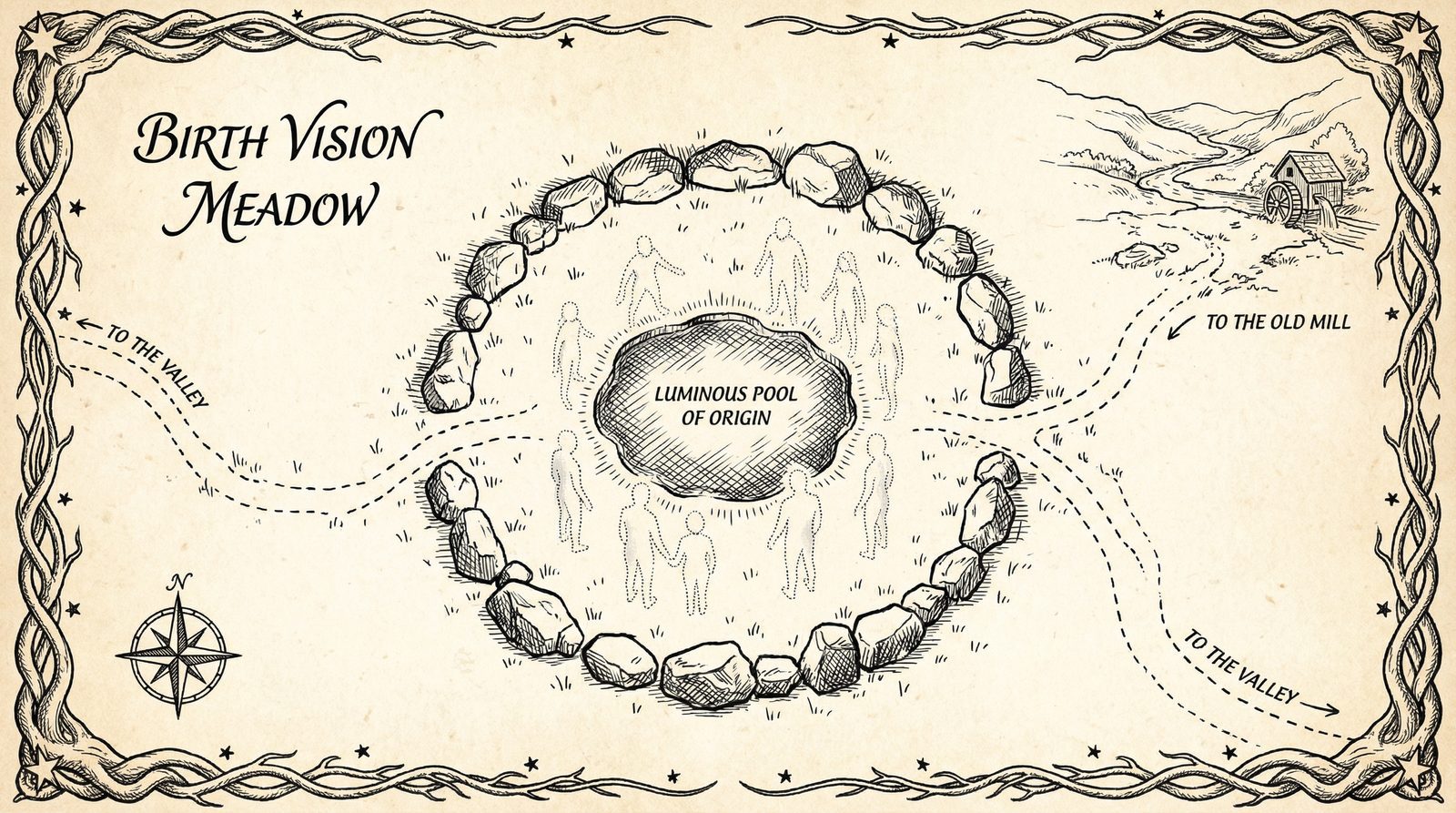
The story begins when the unnamed narrator returns to the valley from the earlier book, searching for his missing friend Charlene. The setting is presented as a liminal zone where physical and spiritual realities overlap. He encounters Feyman, a young boy with fragmented memories of a pre-birth vision, and Wil, a bitter war veteran trapped in a kind of spiritual numbness.
The quest structure is straightforward. The narrator follows clues through the valley, meets guides who clarify the metaphysics, and repeatedly crosses into altered states where memory and spirit become tangible. What matters is less the suspense than the framework the book builds: life is not random, suffering is not meaningless, and fear distorts the intentions we supposedly chose before we arrived.
The central idea is the “birth vision”: the notion that souls choose parents, challenges, and historical eras before incarnation. Through life reviews and glimpses of an afterlife dimension, the narrator witnesses souls preparing for their lives and then watching how those intentions are warped by anxiety, resentment, and control dramas once embodied. The metaphysics are explicit. Redfield wants the reader to see personal psychology and social crisis as part of the same energetic chain.
That chain is anchored to something concrete. The valley is threatened by an energy project tied to corporate interests, linking spiritual stakes to environmental activism. The climax is not an abstract “ascension” but a confrontation with fear itself. Charlene is found at the edge of leaving life behind, and the resolution hinges on recommitment: choosing to stay incarnate, to keep working inside the imperfect world rather than escaping it.
Like the earlier book, the novel suggests humanity is on a threshold. But it refuses a clean apocalypse or a clean salvation. The future remains open. The point is practice, not fireworks.
PROSE & NARRATIVE STRUCTURE
Redfield’s prose is functional and deliberately geared toward instruction. Action scenes often pause so a guide figure can explain the mechanics of synchronicity, soul memory, and the energetic consequences of fear. It can feel schematic, but the clarity matches the book’s purpose. It wants to be applied, not merely admired.
Structurally, the novel alternates between physical movement through the valley and excursions into an afterlife dimension. Transitions are triggered by attention and bodily sensation: a chill, pressure in the forehead, a sudden pull toward a memory. These shifts are abrupt on the page, yet they are designed to normalize the book’s premise that boundaries between worlds are thin.
The most effective passages are the panoramic “world vision” sequences, where the narrator sees human history as a field shaped by collective intention. Industry, war, and ecological collapse are framed as outcomes of accumulated fear. Whether you accept that claim or not, the structure briefly clicks into place. The metaphysical scenes are not escapist fantasies. They are Redfield’s way of forcing moral responsibility onto the reader.
When the language lands, it does so through simple sensory hooks: light rising from the valley floor, resentment described as a sticky grey aura, trauma replaying like a looped film. The book’s strongest instinct is always the same: abstract belief must be given a texture you can picture.
CHARACTERS & INTERIORITY
Characterization is intentionally archetypal. The narrator is defined less by biography than by openness to guidance. Charlene is the resistant seeker, intellectually skeptical but intuitively sensitive. Wil embodies unresolved war trauma, a man whose fear and guilt have hardened into a spiritual paralysis.
The minor characters do much of the emotional work. Feyman’s insistence that he chose his troubled father gives the metaphysics a raw edge, because it drags the theory into the realm of family pain. Several figures who first appear as obstacles or officials gradually reveal their own half-conscious connection to the valley’s larger pattern.
Interior life is mostly handled through shared visions rather than subtle psychological shading. When the narrator is pulled into another person’s memory, we are literally inside their fear. This can flatten nuance, with trauma sometimes “resolved” quickly by a single insight. Still, the method is consistent with the book’s claim that consciousness is not private property. The emotional through-line is fear turning into responsibility, and responsibility turning into recommitment.
LEGACY & RECEPTION
Published after the runaway success of The Celestine Prophecy, this sequel appealed most to readers who wanted more cosmology and less jungle chase. Some embraced the expansion into pre-birth planning, soul groups, and collective intention. Others found the didactic dialogue heavy and the characters too thin to carry the metaphysical weight.
Its most durable contribution is the popularization of the “birth vision” idea and its linkage to social change. The book frames environmental activism and historical responsibility as spiritual tasks, not political hobbies. Whether one reads that as inspiring or simplistic, it explains why the novel has stayed alive as a hopeful myth: not transcendence as escape, but awakening as a reason to stay.
IS IT WORTH READING?
It is worth reading if you are open to narrative as a vehicle for metaphysical speculation. As a novel, it is uneven. As a framework, it is unusually coherent for the genre. The Appalachian setting gives the ideas physical grounding, and the war memory material adds a darker emotional register than the first book.
If you want deep character realism, look elsewhere. If you want a story that asks, with complete seriousness, why you might have chosen this life, this era, and these fears, the book still has force.
TRIVIA & AUTHOR FACTS
Redfield wrote this novel after the unexpected commercial success of his earlier spiritual adventure, leaning more openly into his background in counseling and his interest in both Eastern and Western mysticism. Many of the concepts here, especially soul groups and pre-birth planning, were also discussed in workshops and reader circles around the first book.
Some editions include the subtitle “Holding the Vision,” which reflects the book’s emphasis on collective focus as a driver of outcomes. The “control drama” concept introduced earlier returns in expanded form, pushed into an explicitly spiritual dimension where fear takes on a more literal, confrontable shape.
SIMILAR BOOKS
If this blend of spiritual instruction and story appeals to you, consider Siddhartha for a more literary meditation on awakening, Jonathan Livingston Seagull for a compressed fable of self-mastery, or The Alchemist for a symbolic, parable-style exploration of omens and purpose. Each treats inner experience as a force that shapes outward life, even when their tones and ambitions differ.
DISCOVERABILITY & LINKS
Works: The Secret of Shambhala, The Celestine Vision
James Redfield is best known as the author of The Celestine Prophecy (1993), a novel that turned spiritual seeking into a page-turning adventure and helped popularize ideas like synchronicity and personal spiritual awakening in the 1990s. Although he has written several other books, including sequels and thematic extensions of that first story, his reputation rests on a very specific blend of narrative fiction and spiritual self-help. He writes not as a distant literary stylist but as someone attempting to guide readers through a process of inner change, using story as a teaching tool.
Redfield emerged during the New Age fiction boom of the late 20th century, when a wide readership was looking for stories that could double as spiritual guidance. An American writer shaped by the human potential and self-help movements, he approached fiction as a vehicle for spiritual evolution rather than as a purely aesthetic project. The Celestine Prophecy was initially self-published and circulated through word of mouth among readers who felt it articulated their own search for meaning and intuition. That grassroots success eventually led to a mainstream publishing deal and a film adaptation released in 2006.
His follow-up novels, including The Tenth Insight and The Secret of Shambhala, extend the same fictional universe rather than striking out in unrelated directions. This continuity reflects how Redfield sees his work: as a long-form exploration of spiritual awakening rather than a collection of discrete stories. His background in counseling and interest in both Eastern and Western mystical traditions inform the way he writes about energy, intuition, and higher purpose. Instead of focusing on social or political realism, he turns inward, aiming to map an invisible landscape of consciousness.
THEMES & MOTIFS
The central theme in James Redfield’s work is spiritual awakening. His protagonists are usually ordinary people who stumble into extraordinary experiences that force them to question their assumptions about reality. Awakening is presented not as a single epiphany but as a gradual process, often structured as a sequence of insights or realizations that build on one another. Readers are encouraged to view their own lives as part of a similar unfolding.
A second recurring motif is synchronicity. Characters repeatedly encounter meaningful coincidences that seem to guide them forward, suggesting that the universe is responsive rather than random. In Redfield’s fiction, synchronicity functions both as a plot engine and as a worldview, nudging characters toward higher understanding while reassuring readers that their own chance encounters may be part of a larger pattern.
He also returns frequently to the idea of energy fields. Characters learn to sense subtle energies around people and places, treating emotions, intentions, and relationships as energetic exchanges rather than purely psychological ones. Landscapes in books like The Tenth Insight and The Secret of Shambhala become spiritual geographies, with sacred sites and hidden realms mirroring an inner journey of growth and healing.
Throughout his work, there is a persistent tension between fear and faith. Characters hesitate, doubt, and resist, but are ultimately invited to trust intuition, openness, and connection. The emotional through-line is one of seeking meaning, where skepticism is acknowledged but answered through lived experience rather than argument.
STYLE & VOICE
James Redfield writes in a direct, accessible style that prioritizes clarity of message over stylistic complexity. His prose is straightforward and conversational, often pausing the narrative so characters can explain spiritual principles to one another. Dialogue frequently functions as instruction, with one character guiding another through an insight, meditation, or new way of interpreting experience.
Structurally, his novels follow the pattern of a spiritual quest. Stories move from everyday life into increasingly visionary or mystical experiences, with each new setting revealing another layer of understanding. Moments of danger or pursuit tend to test intuition and openness rather than deliver conventional suspense.
The overall effect is that of a guided journey. Readers are not only watching characters change, but are implicitly invited to consider their own beliefs about coincidence, purpose, and personal transformation. The tone is earnest and hopeful, with little irony, emphasizing reassurance and the possibility of growth.
KEY WORKS & LEGACY
The Celestine Prophecy remains the defining work of James Redfield’s career. It introduced a broad audience to his blend of spiritual awakening, synchronicity, and adventure, framing a series of insights about energy and higher purpose within a chase narrative set largely in Peru. For many readers, it served as an entry point into New Age fiction and metaphysical adventure.
He continued this storyline in The Tenth Insight, which explores visionary states and the idea of life between lives, and in The Secret of Shambhala, which shifts the focus toward global healing and collective transformation. The film adaptation of The Celestine Prophecy brought his ideas to a wider audience, even as it revealed the difficulty of translating interior, didactic experiences into visual drama.
Within the larger landscape of spiritual literature, Redfield’s legacy is less about literary innovation than cultural impact. His work helped normalize conversations about synchronicity, intuition, and spiritual evolution for mainstream readers. Whether viewed as inspirational or simplistic, his novels clearly tapped into a widespread desire for stories that treat the search for meaning as a central human adventure.
“Craftsmanship And Quality Of Work” is the motif where the way a character performs their work becomes a direct expression of their inner life. It is not simply about employment or productivity. The focus is on care, precision, pride, and the satisfaction of doing something properly, even when no one is watching. Whether the task is tuning an engine, preparing a meal, writing software, or shaping wood, the work itself carries moral weight.
Stories built around this motif slow down and pay attention to process. In Zen And The Art Of Motorcycle Maintenance: An Inquiry Into Values (1974), motorcycle maintenance becomes a way of examining “Quality” as something experienced rather than defined. In Lila: An Inquiry Into Morals (1991), that concern expands into ethics and social life, still grounded in the idea that values are revealed through attention and care.
At its core, this motif treats work as a moral and emotional discipline. It asks where standards come from, how they are practiced, and what is lost when integrity collides with systems that reward speed, scale, or convenience.
HOW IT WORKS IN STORIES
Craftsmanship And Quality Of Work usually appears through the rhythms of daily labor. Writers linger on routines: opening a workspace each morning, laying out tools, repeating movements until they become instinctive, inspecting the final result with quiet seriousness. The story may not be overtly “about” the job, but the way the work is done reveals character more clearly than dialogue alone.
Sometimes the work itself becomes the teacher. In Shop Class As Soulcraft: An Inquiry Into The Value Of Work (2009), written by Matthew B. Crawford, manual problem-solving is framed as intellectually demanding and ethically grounding. Stories echo this idea when characters develop patience, humility, or self-respect through repeated, concrete tasks. A flawed repair or failed attempt is not just a setback, but a test of standards.
Conflict often enters when the surrounding world does not value quality in the same way. A supervisor pushes for speed over care, a system rewards shortcuts, or customers demand something cheap and disposable. The character must decide whether to compromise, resist, or walk away. That decision becomes a clear statement of identity.
This motif allows writers to make abstract ideas tangible. In the work of Robert M. Pirsig, the road, the machine, and the act of maintenance become tools for thinking about attention, rationality, and lived experience. Meaning is not explained. It is encountered through effort, failure, and care.
Even in intimate or domestic narratives, the motif shapes relationships. A parent teaching a child a careful technique, or a mentor guiding an apprentice, passes on more than skill. They transmit a way of engaging with the world that can become a form of trust or love.
EMOTIONAL EFFECT ON THE READER
Stories shaped by this motif often feel grounding. There is comfort in watching someone care deeply about what they are doing, especially in a culture that feels rushed and disposable. Attention to tools, textures, and small decisions can be quietly absorbing.
At the same time, the motif can provoke sadness or anger. When care is dismissed or punished, the loss feels personal. Stories about disappearing skills or neglected standards often carry a sense of dignity under threat.
For many readers, this motif turns inward. It encourages reflection on everyday effort and responsibility. The question it raises is simple but unsettling: where does quality still matter in your own life, and what does it cost to protect it?
There is also intimacy in this focus. Watching a character work carefully is like watching them unguarded. Habits and rituals reveal who they are when performance drops away, making later choices feel heavier and more personal.
VARIATIONS & RELATED MOTIFS
Craftsmanship And Quality Of Work takes many forms. In some stories, it centers on manual trades. In others, the craft is intellectual or emotional, such as teaching, caregiving, or programming. What unites them is the same pattern: the character treats their work as something deserving of attention, and their sense of self is bound to doing it properly.
A common variation is the “lost craft” narrative, where older ways of working are disappearing. Another focuses on the collision between personal standards and impersonal systems, where care is labeled inefficient or excessive.
This motif often pairs with Eastwest Philosophical Synthesis. In Pirsig’s writing, the road and the act of maintenance bridge Western analysis and Eastern presence. In Crawford’s work, the workshop becomes a site of moral clarity. Different settings, the same question: how should attention be lived?
Across its variations, the motif returns to a single concern: when people invest genuine care in their work, how does that shape who they become?
Related books:Zen And The Art Of Motorcycle Maintenance, Lila: An Inquiry Into Morals, Shop Class As Soulcraft
Related creators: Robert M. Pirsig, Matthew B. Crawford
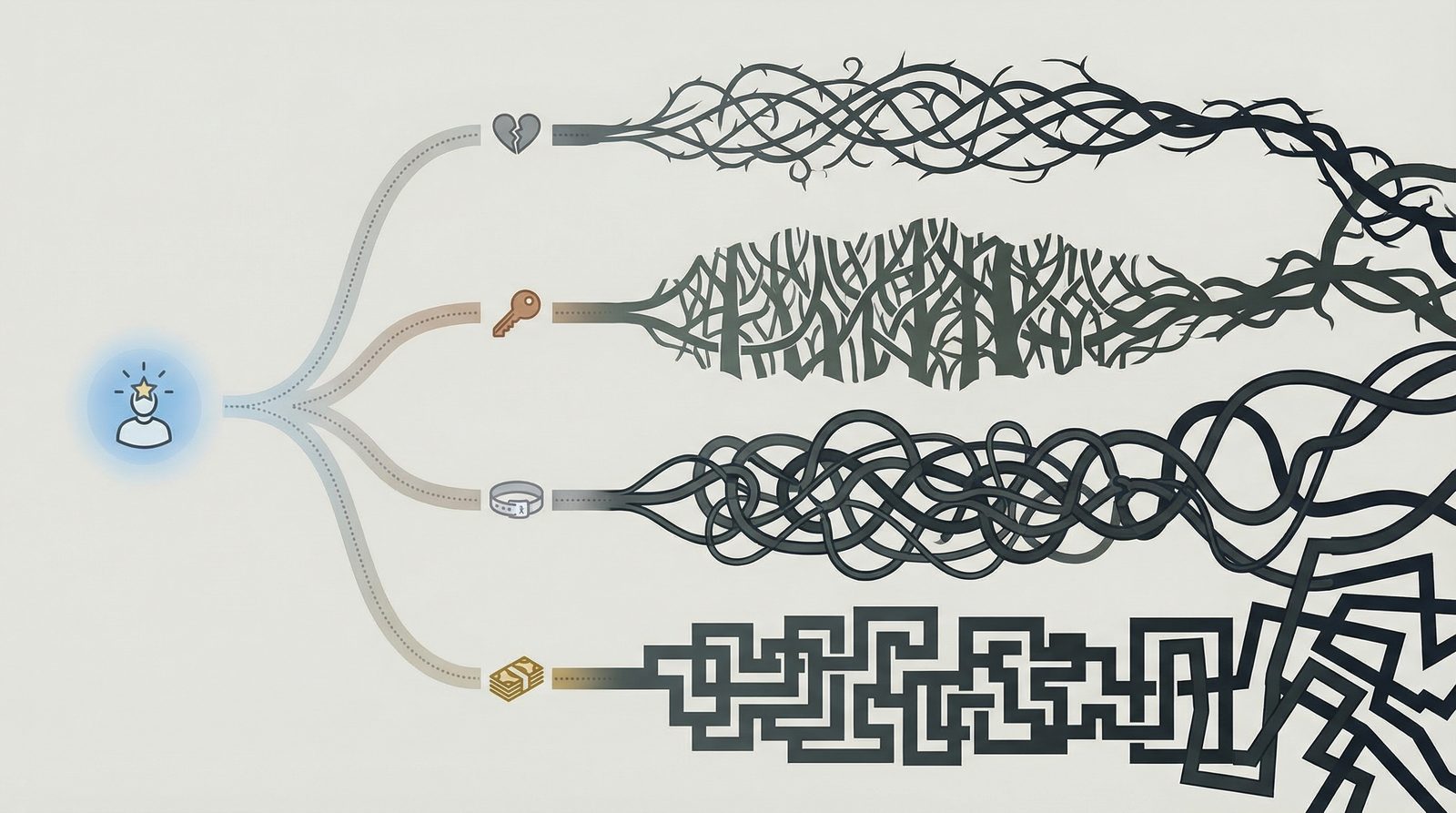
The motif of Unintended Consequences of Wishes is all about the gap between what a character wants and what actually happens when they get it. Someone makes a wish, strikes a bargain, or voices a casual request, and the universe answers in a way that is technically correct but emotionally disastrous. The wish is granted, but it arrives with loopholes, side effects, or a cruelly literal twist.
Stories built on this motif take the simple fantasy “What if I could have anything?” and turn it into a test of character. The wish can come from a genie, a djinn, a magical artifact, a mischievous spirit, or an impersonal cosmic rule. The key is that the wisher does not fully understand what they are asking for, or what it will cost them and others.
In children’s fantasy like Five Children And It (1902) or comedy-fantasy such as The Brass Bottle, this motif often plays as chaotic fun, where wishes turn ordinary life into social disorder. In darker versions, the consequences become corrosive and personal, as in A Fallen Idol. In all cases, the heart of the motif is the same lesson: desire without foresight is dangerous, and power, even magical power, does not erase consequences.
HOW IT WORKS IN STORIES
In stories using Unintended Consequences of Wishes, the setup is deceptively simple. An ordinary person stumbles onto a source of power. The wisher is usually not a villain. They are tired, lonely, greedy, bored, or just curious. Their first wish is often small and impulsive, which makes the fallout feel both believable and embarrassing.
The wish is granted with a twist. The wisher gets what they asked for, but not what they meant. A solution arrives in the worst possible form. The gift comes attached to humiliation, guilt, conflict, or harm that spreads beyond the original desire. Attempts to fix things with additional wishes often make it worse, stacking complications until the character is trapped in a web of their own making.
Writers use this motif to explore responsibility and self-knowledge in a vivid way. Instead of lecturing about “be careful what you wish for,” the story lets us watch the character collide with the fine print of their desires. The motif pairs well with comedy and satire, because literal-minded magic exposes vanity, hypocrisy, and entitlement simply by doing exactly what was asked.
Because wish stories often begin with a bound spirit or a magical object, this motif frequently overlaps with bottle-bound bargains, supernatural deals with hidden costs, and stories where fantasy intrudes into ordinary domestic life.
EMOTIONAL EFFECT ON THE READER
Unintended Consequences of Wishes hits a mix of feelings. On the lighter side, there is real pleasure in watching a too-literal wish go wrong. The reader gets to enjoy slapstick and clever reversals while safely thinking, “I would have phrased that better.”
Underneath the humor is a quieter discomfort. The motif nudges us to notice how often we want things without understanding the consequences. When a wish hurts someone the character cares about, the reader feels a sting of guilt by proxy. We see how easy it is to be selfish by accident, and how a small moment of impatience or vanity can spiral into something much bigger.
In darker takes, the emotion shifts toward dread and regret. Each new wish tightens the trap, and the reader senses that there may be no clean way out. The story becomes a pressure test of character, because power keeps offering shortcuts while consequences keep demanding payment.
Overall, this motif lets readers enjoy the fantasy of limitless power while also feeling the weight of it. It is satisfying when a character finally learns to phrase a wish carefully, to give up the power, or to accept the original messy life they were trying to escape. That mix of schadenfreude, anxiety, and eventual catharsis is what keeps Unintended Consequences of Wishes so enduring.
VARIATIONS & RELATED MOTIFS
Unintended Consequences of Wishes comes in several recognizable flavors. Comic versions focus on embarrassment, romantic misunderstandings, and chaotic but reversible disasters. Child-centered versions use wishes to explore growing up, where each fantasy is exposed as incomplete or naive. Darker interpretations treat wishes as tools of power, where unintended consequences spill into coercion, conflict, and moral compromise.
This motif frequently intersects with stories where fantasy intrudes into domestic realism, where children encounter real magic too early, and where misunderstandings spiral into farce. The structure stays the same, even when the tone changes: a character tries to shortcut their problems and discovers that reality, magical or not, always charges a price.
The Genie Or Djinn Released From A Bottle motif begins with a simple act: someone finds an object they should probably leave alone. It might be a genie in a bottle, a djinn in a lamp, or a spirit sealed into an ordinary-looking container, but the core idea is the same. An ordinary person suddenly gains access to impossible power, usually in the form of wishes.
This motif is less about flashy magic and more about what happens when human desire meets an ancient, alien intelligence. The genie or djinn is often bound by rules, resentments, and centuries of captivity. The person who finds the bottle is usually naive about both magic and consequences. Stories built on this setup explore how quickly “everything you want” can twist into something frightening, absurd, or unexpectedly honest.
Writers love the bottle because it is portable power. It can drop into any setting, from a Victorian drawing room to a modern kitchen, and instantly turns private longing into public consequence. The motif asks, in a concrete way, what someone truly wants and what they are willing to pay for it, whether that price is moral, emotional, or literal.
HOW IT WORKS IN STORIES
Most stories with this motif start with an accident or a small, greedy choice. A character stumbles on a lamp at a market, inherits a dusty bottle, or fiddles with a strange object that looks harmless. In The Brass Bottle, a seemingly ordinary antique releases a djinn-like figure into everyday life, and the “help” that follows creates embarrassment, confusion, and escalating disruption.
Once released, the genie or djinn usually announces a set number of wishes and a set of rules, often with loopholes. The wisher might be a child, as in Five Children And It (1902), where daily wishes unravel and backfire in ways that expose how careless desire can be. Or the wisher might be caught in higher-stakes schemes, as in The Amulet Of Samarkand, where a bound djinn becomes a lever of power, politics, and danger. In either case, the narrative settles into a rhythm of wish, distorted outcome, and frantic attempts to fix the damage.
The genie or djinn is rarely a neutral tool. It may be sarcastic, vengeful, lonely, or constrained by harsh magical laws. Its personality shapes the plot. A literal-minded spirit twists wishes into ironic punishments, while a weary, morally ambiguous djinn quietly tests the summoner’s character. The bottle-bound spirit often understands human weakness better than the human does, and that imbalance drives both comedy and tragedy.
Structurally, each wish acts like a short story nested inside the larger one. A wish sets up a scenario, the spirit executes it, and the fallout reveals something about the wisher. Over time, the character either learns to wish more wisely, refuses to wish at all, or tries to renegotiate their relationship with power itself.
EMOTIONAL EFFECT ON THE READER
This motif taps straight into private daydreams. It asks “What would you wish for?” long before any character answers. There is an immediate thrill in watching desire become real. When a struggling family suddenly becomes rich or an awkward child suddenly gains power, the reader shares the rush of possibility.
That thrill quickly tangles with anxiety. The reader can usually see the flaw in a wish before the character does, which creates anticipation and dread at the same time. Watching a wish backfire feels like watching someone send a risky message they cannot unsend.
Emotionally, these stories move between wonder, comedy, and unease. The comic chaos in Five Children And It (1902) can be funny precisely because wishes are interpreted so literally. The Amulet Of Samarkand can feel sharper and darker, because power is used casually and cruelty becomes a practical tool. Either way, the motif encourages readers to reconsider fantasies of escape, revenge, or instant success.
When the story ends, the feeling is often bittersweet. Saying goodbye to a bottle-bound spirit can feel like closing the door on childhood wishes. If the spirit is freed, there is relief. If it is trapped again, there may be lingering discomfort about cycles of power and captivity.
VARIATIONS AND RELATED MOTIFS
This motif has several recognizable variations. In comic versions, the genie is playful or bureaucratic, and the wishes create escalating social disorder. The Brass Bottle leans into this tone, where magical intervention complicates ordinary life rather than perfecting it.
Darker versions portray the djinn as ancient, dangerous, and resentful. In The Amulet Of Samarkand, the bound spirit is a tool of power in human conflict, and the damage spreads beyond the wisher’s private life into politics and violence. The wish-granting process is stricter and more limited, but far more destructive.
Other stories replace the bottle with an amulet, ring, or creature that fills the same role. In Five Children And It (1902), the structure becomes a repeating cycle of desire, regret, and correction. The emotional pattern remains consistent: power arrives too easily, and the cost arrives right after.