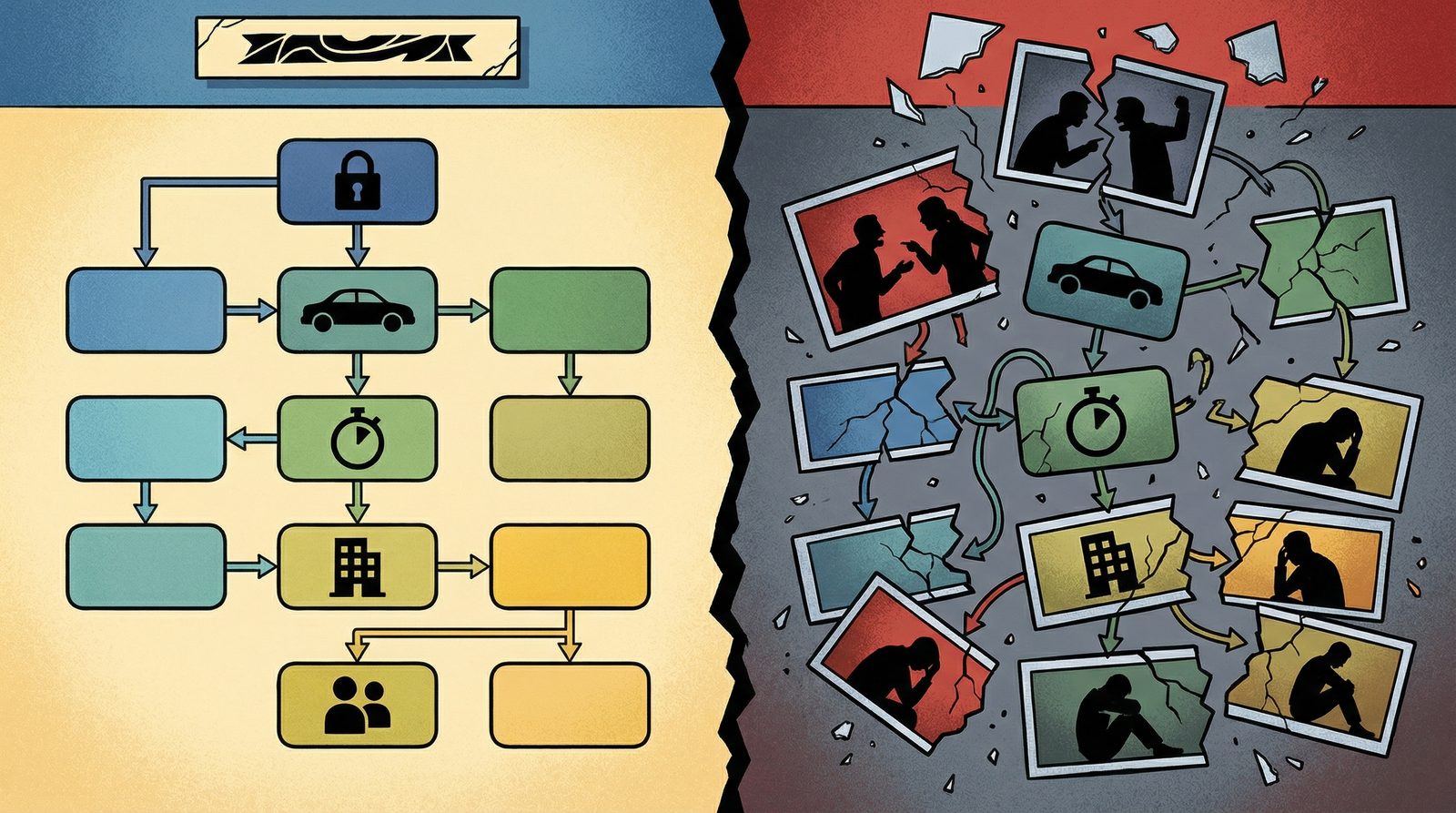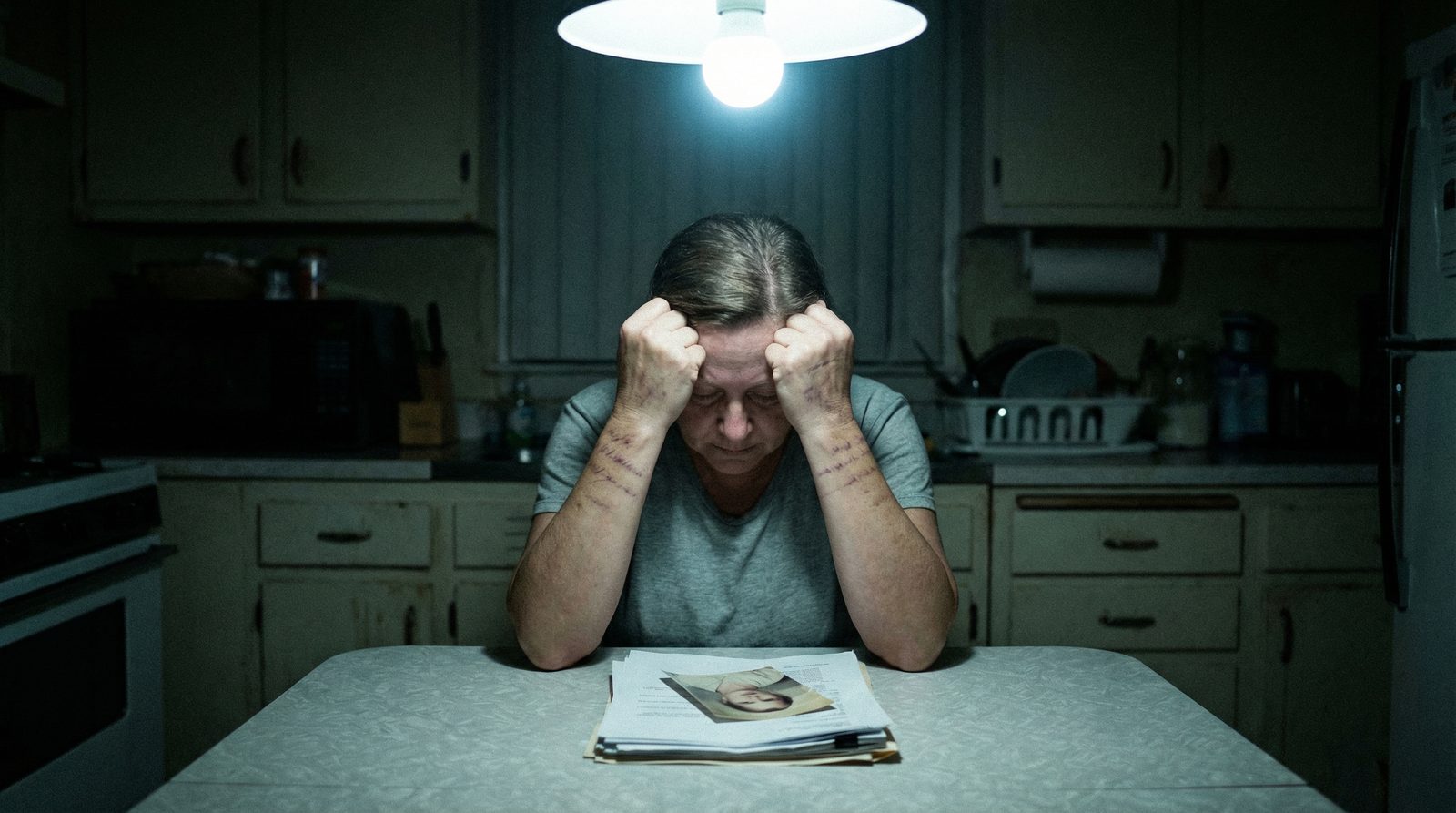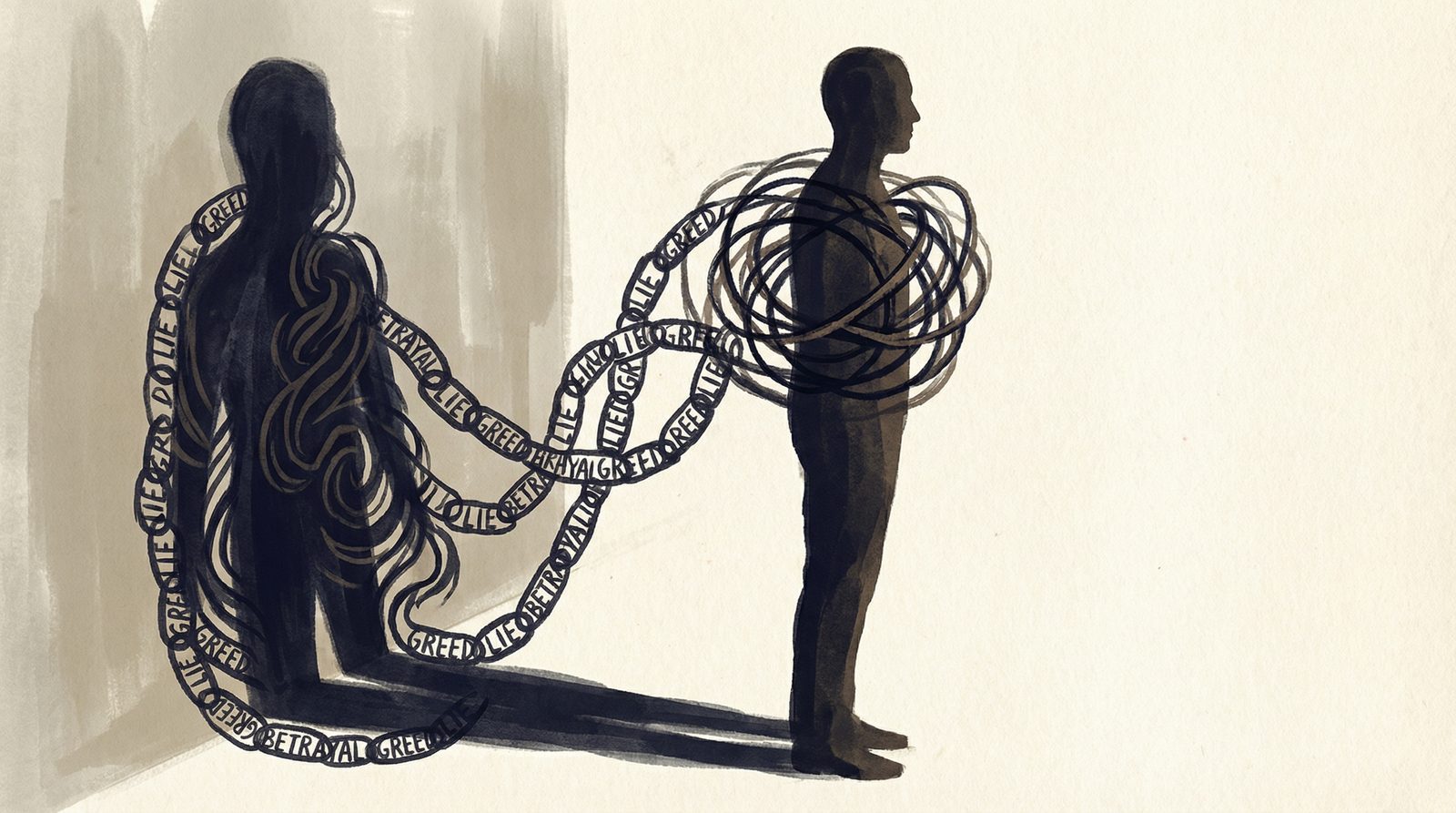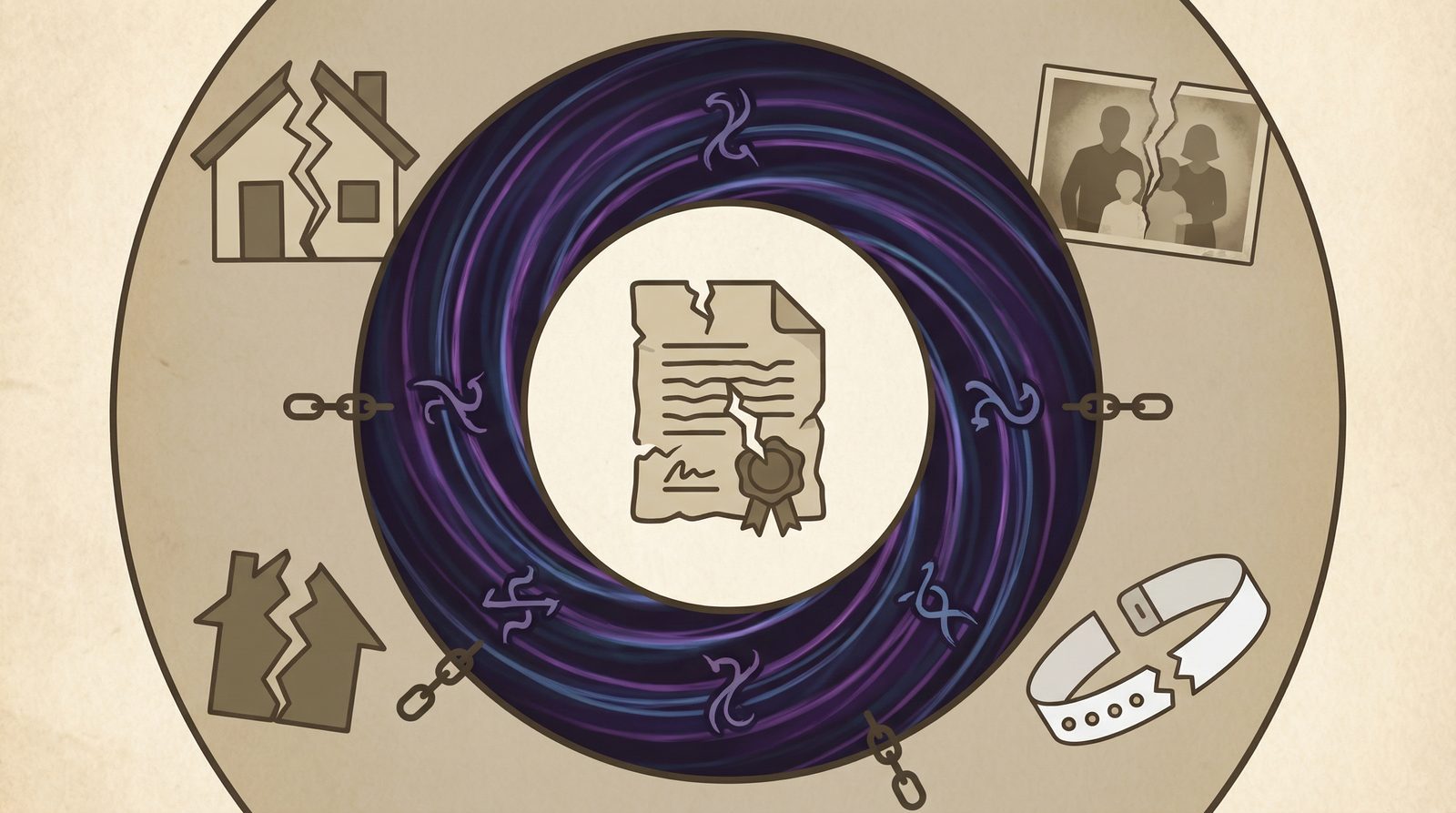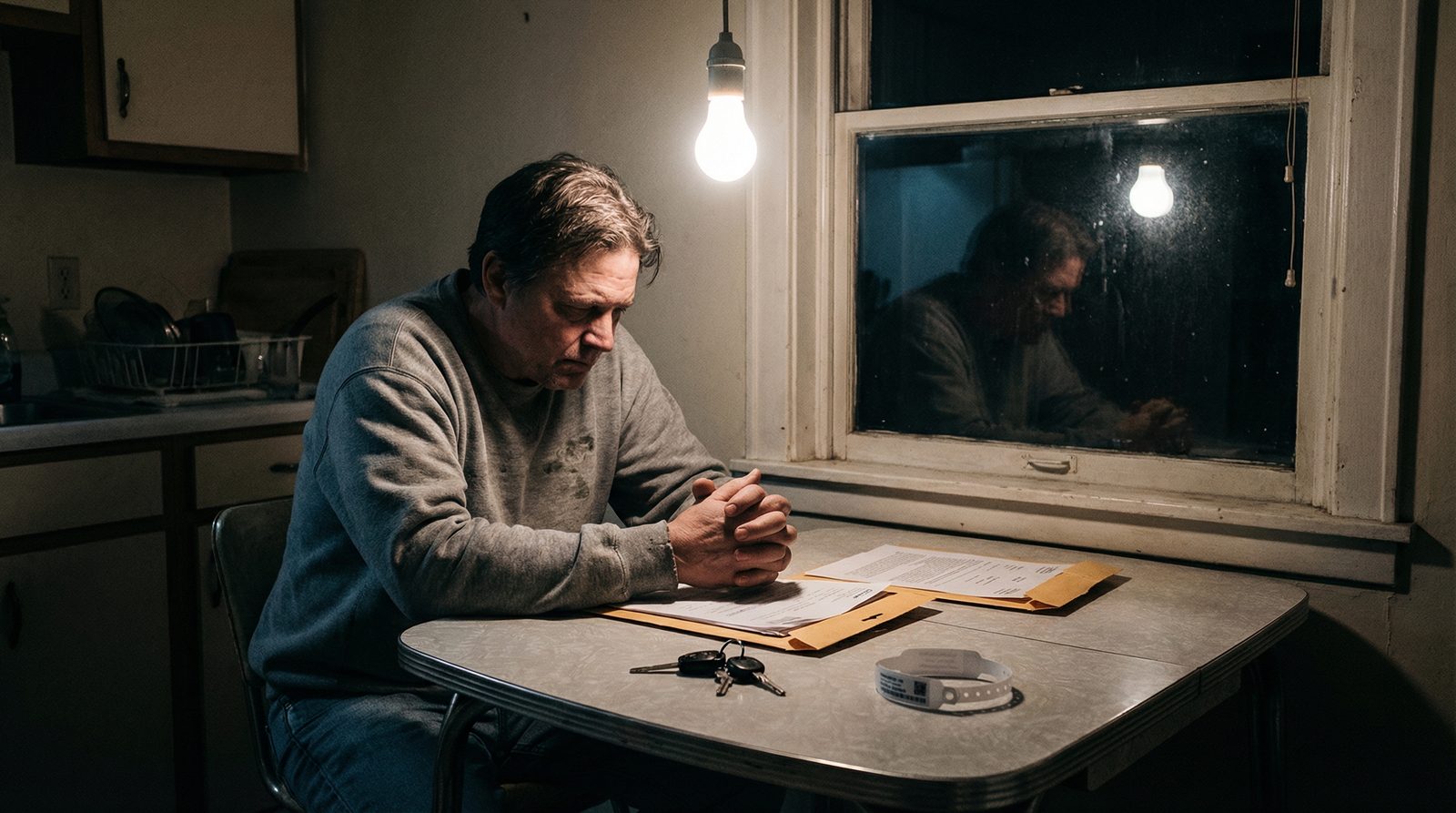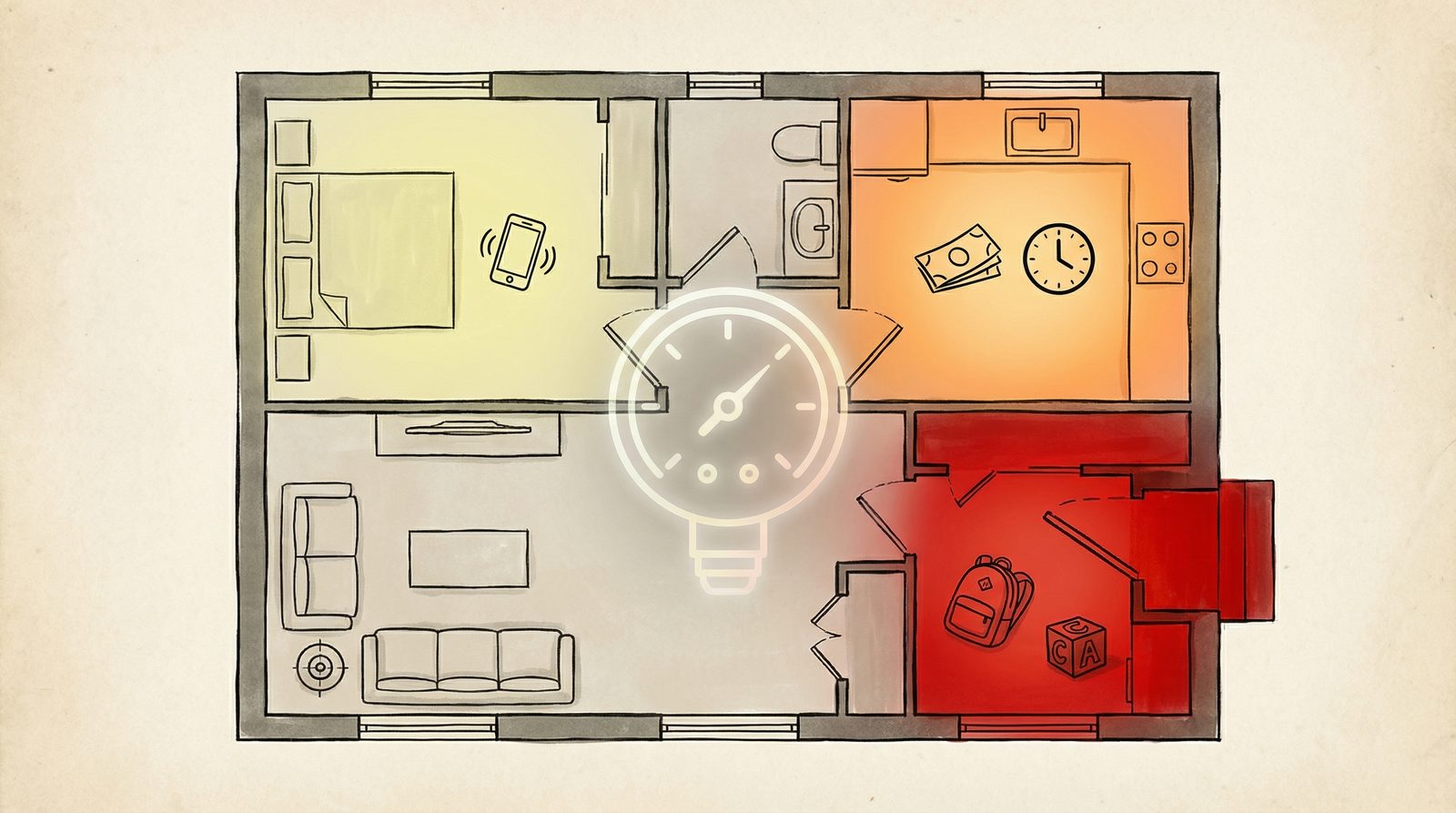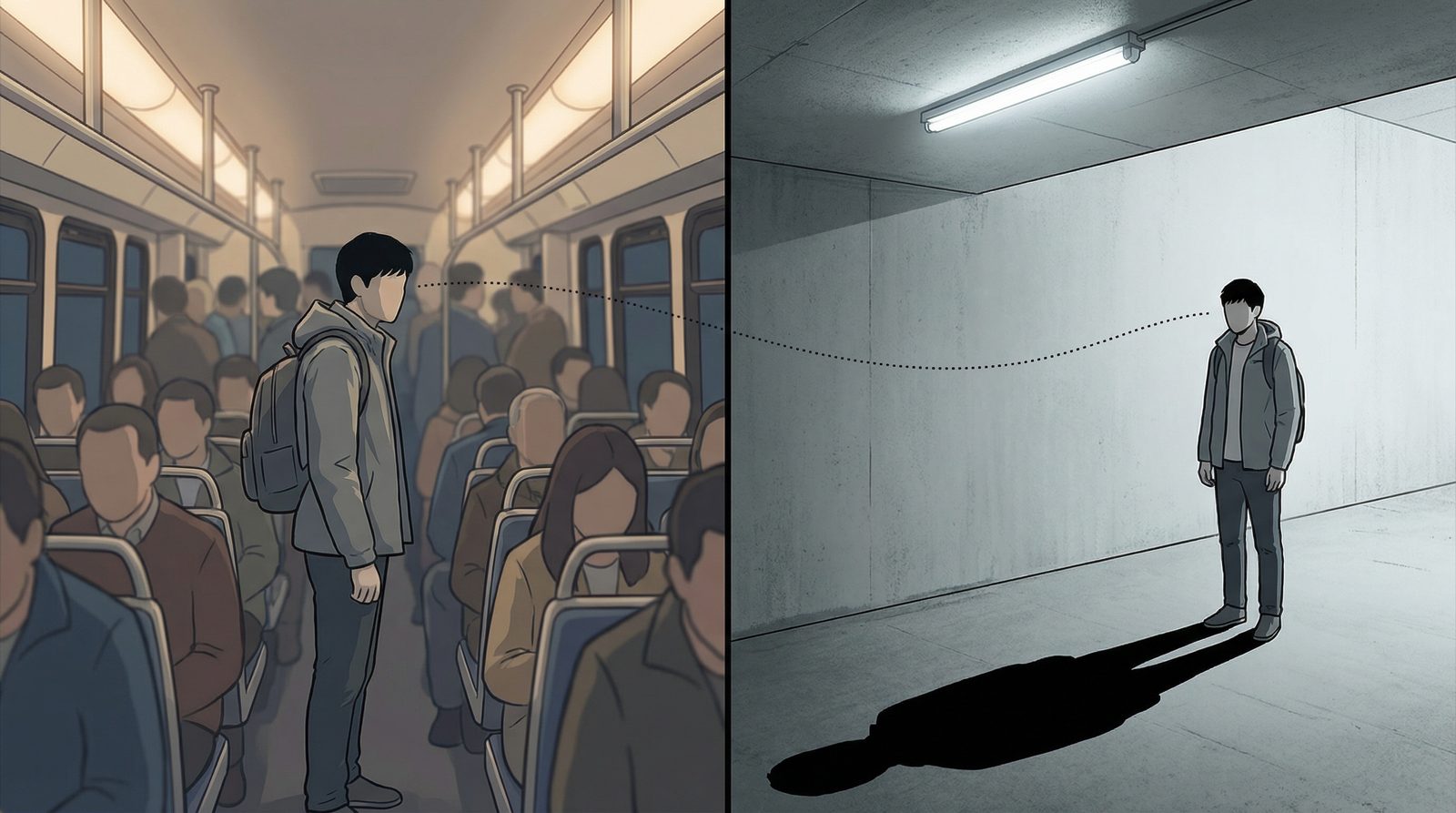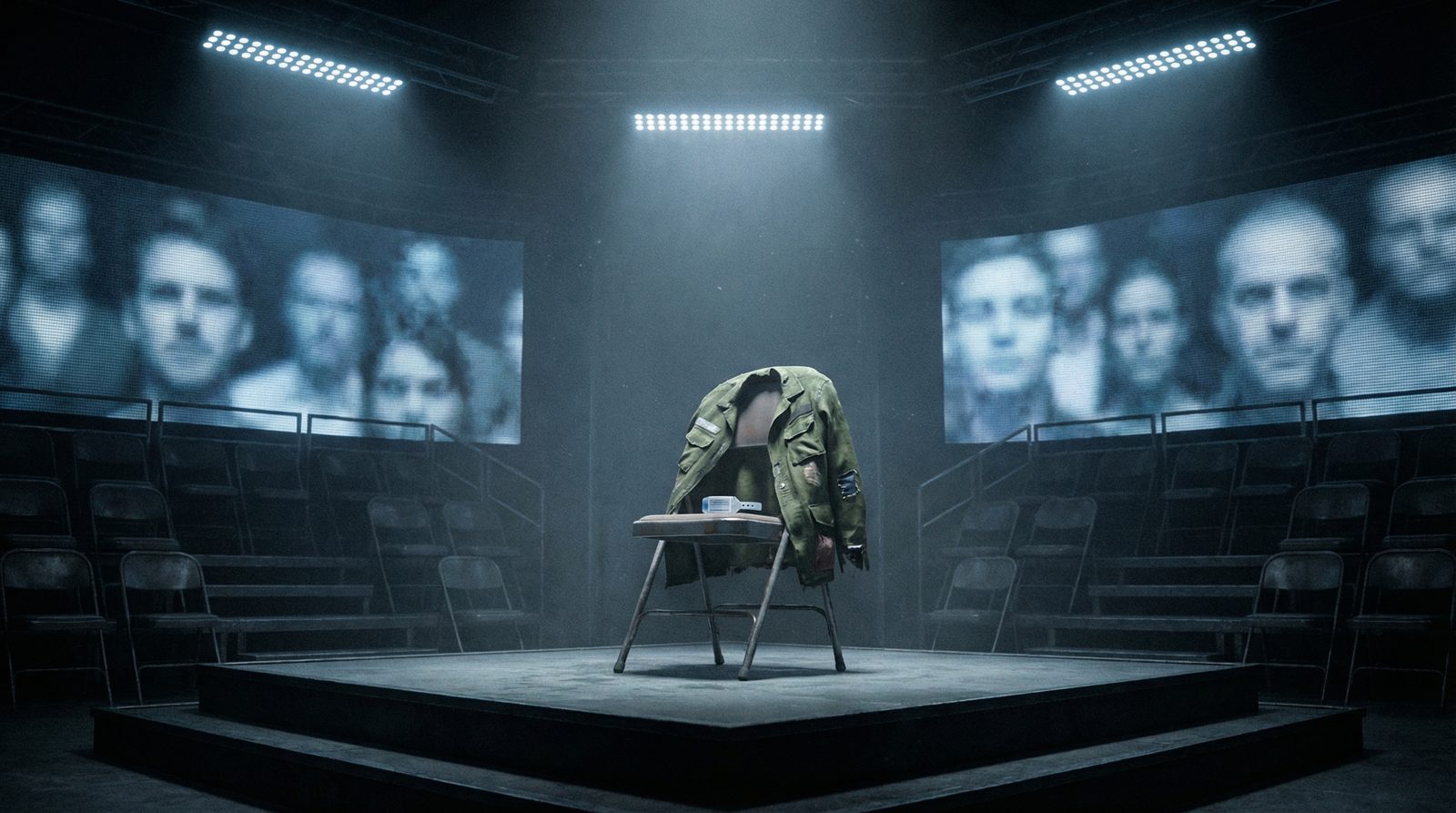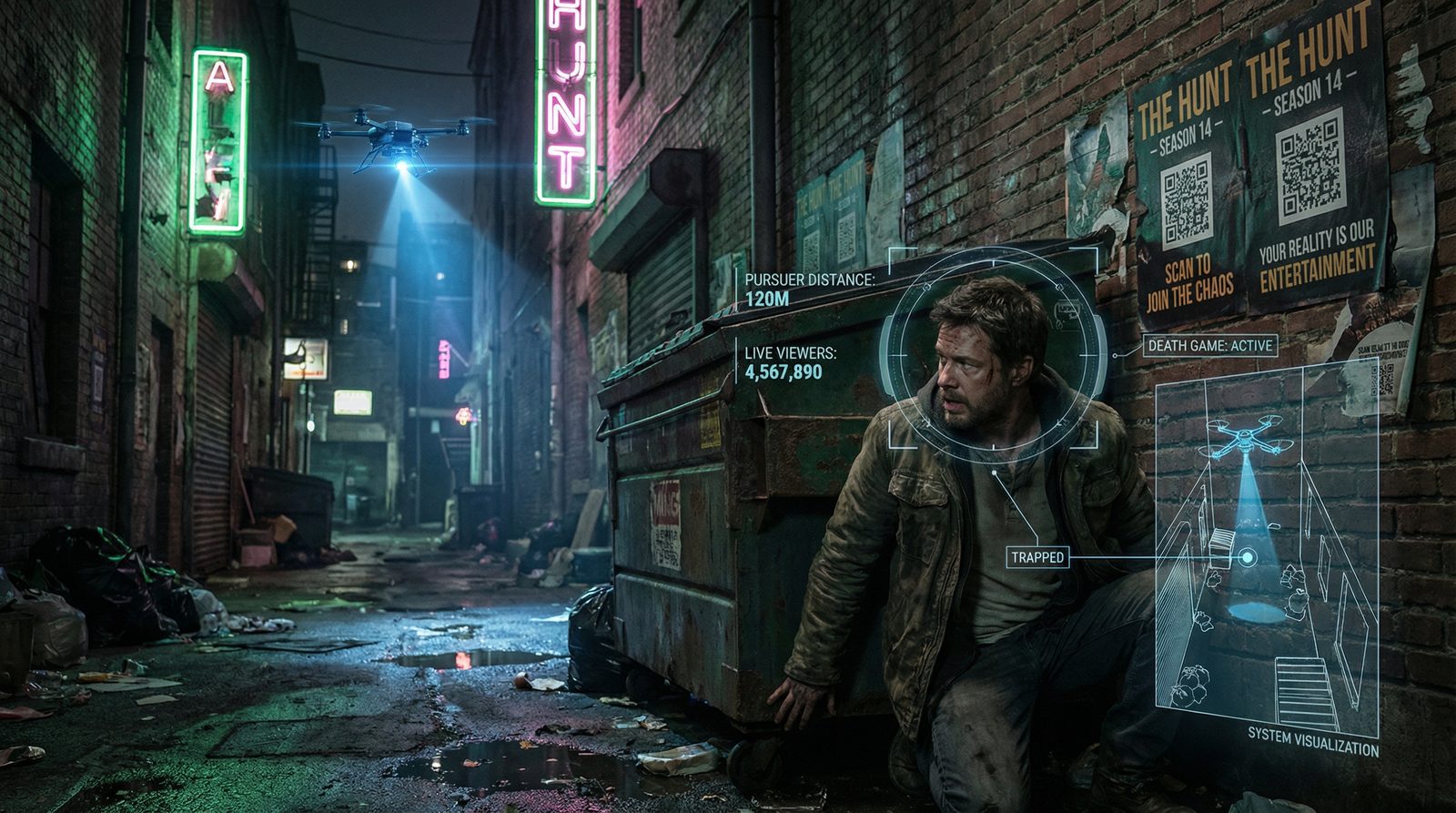
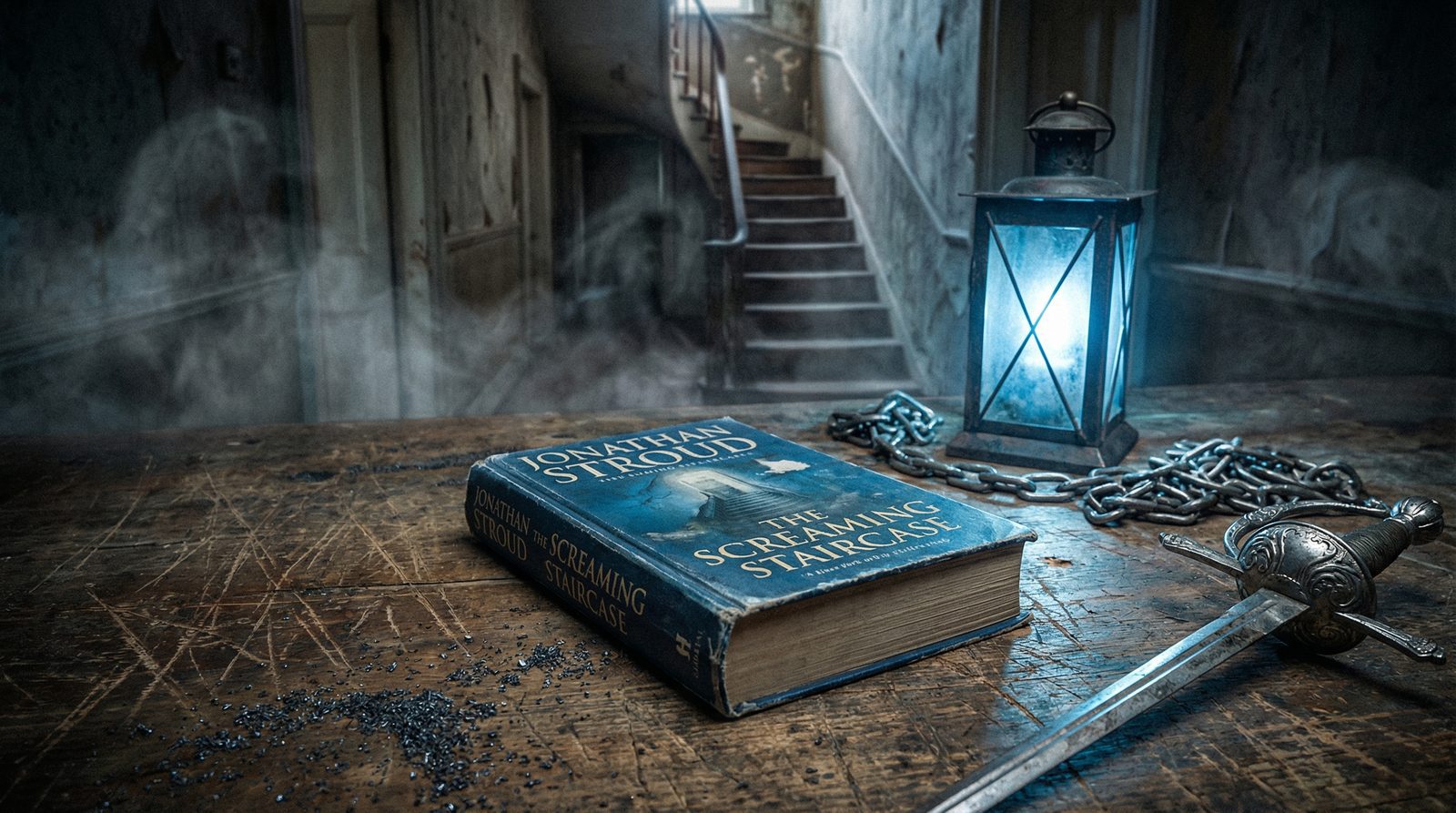
Feel: Claustrophobic

  • The Screaming Staircase (2013)

    The Screaming Staircase (2013)

    INTRODUCTION

    The Screaming Staircase (2013) by Jonathan Stroud
    Supernatural mystery · 467 pages · United Kingdom


    The Screaming Staircase is a ghost story built on anxiety and ash rather than comfort. Jonathan Stroud imagines a London quietly broken by hauntings, where children carry rapiers and iron chains while adults retreat behind curfews and committees. Silence and sound run through everything: the sudden dead hush before a Visitor appears, the scrape of chains on stone, the way fear makes even ordinary rooms feel underexposed. Yet the book is also wry at the edges, especially in the kitchen scenes at 35 Portland Row, where tea and bickering become a survival ritual after near-death.

    The feel is a mix of dread and camaraderie — late-night adrenaline followed by exhausted laughter. Stroud isn’t chasing cheap shocks. He’s interested in what it means to grow up when danger is simply the weather of your world, and when the only people who will really fight for you are your equally damaged friends.

    PLOT & THEMES

    The story follows Lucy Carlyle, a young agent with the rare ability to hear ghosts, as she joins the tiny, precarious agency Lockwood & Co. After an early case damages their reputation, Lucy, Lockwood, and George are forced to take on a high-profile haunting at Combe Carey Hall to secure the agency’s future. The hall’s infamous Red Room and the Screaming Staircase become the physical heart of the plot, but the deeper theme is institutional failure: a society that cannot protect children, yet depends on them to survive.

    Stroud plays with the haunted-house investigation structure but twists it so the kids are professionals, not meddling amateurs. Smaller jobs and research threads lead toward the Combe Carey case, giving the novel a procedural rhythm. Thematically, it’s about exploitation and secrecy: Lucy’s past, the way agencies compete, and the adults who hide information while children bleed for them. Even George’s obsession with dangerous artifacts hints at the book’s moral logic: in this world, the dead are constantly being turned into tools.

    The ending is survivalist rather than comforting. At Combe Carey Hall, Lucy and Lockwood uncover the true horror beneath the staircase: a history saturated into the house itself. Lucy descends into the source space and manages to calm the dead long enough for escape as the hall burns. The case is “won,” but the victory is smoky and incomplete. The agency emerges with money and renewed reputation, but Lucy senses the Problem is far larger than one house or one wealthy villain.

    PROSE & NARRATIVE STRUCTURE

    The book uses first-person retrospective narration, with Lucy speaking from an unspecified point in the future. That choice quietly shapes everything. She withholds, circles back, and drops hints about later catastrophes, creating a braided structure: the present case narrative threaded with the shadow of earlier trauma and future consequence. The opening isn’t Combe Carey at all, but a smaller job that shows how the series can be comic in one scene and lethal in the next.

    Stroud’s prose is clean, rhythmic, and slyly funny. Sensory detail does a lot of the horror work: the sour-metal taste of ectoplasm, the greasy chill of a Visitor’s touch, the way ghost-fog muffles sound along streets and rivers. Jokes about crumbs, clothing, and petty arguments puncture tension without dissolving it. Structurally, the novel alternates between tight set pieces (the Red Room, the Staircase) and quieter interludes at Portland Row, where case files and tea become tools of worldbuilding.

    During hauntings, Stroud favors clipped dialogue and abrupt paragraph breaks that mimic the jerkiness of fear. The book reads fast, but it leaves an aftertaste, especially in the throwaway lines where Lucy implies how many names she will eventually carry as ghosts in memory.

    Conceptual editorial illustration inspired by 'The Screaming Staircase (2013)'

    CHARACTERS & INTERIORITY

    Lucy is built as a haunted prodigy: gifted, stubborn, and shaped by betrayal. Her guilt over earlier disasters colors every risk she takes. She’s not just fighting ghosts; she’s trying not to repeat the adult negligence that got people killed before she ever arrived at Portland Row.

    Lockwood is more mask than man in this first volume. Stroud withholds his backstory, letting the reader see him mainly through Lucy’s fascination and irritation. George is gloriously unglamorous: messy, obsessive, and research-driven. His friction with Lucy and his willingness to break rules for information establish him as a parallel moral center rather than a sidekick.

    The character work sings through constant friction. The trio bickers, misreads each other, and still shows up. The ghosts are frightening, but the deeper drama is three teenagers trying to build a life and a business in a world that expects them to die young.

    LEGACY & RECEPTION

    When The Screaming Staircase arrived in 2013, it entered a crowded market of paranormal YA, but Stroud’s approach felt different. He treated ghosts as a labor problem and children as underpaid professionals. Readers responded to the intricate rule-based worldbuilding — iron, salt, lanterns, agency rivalries — and to the dry humor that kept the horror from curdling.

    The series has aged well because the first book is starker than a typical genre opener. It does not promise the world will become safe. It promises only that the kids will keep working anyway, and that grim logic gives the story its bite.

    IS IT WORTH READING?

    If you want a ghost story that respects its young characters’ intelligence and suffering, The Screaming Staircase is worth reading. It’s genuinely eerie, but the real hook is the emotional texture: exhausted kids making tea at midnight, joking because the alternative is breaking down. The pacing is brisk, the humor dry, and the horror grounded in physical detail rather than abstract spookiness.

    If you need tidy moral resolutions or adults who know what they’re doing, you may bounce off it. But if you’re willing to sit with ambiguity and a world that won’t be fixed by one brave act, this first Lockwood & Co. book sets the tone sharply and rewards you for following the series forward.
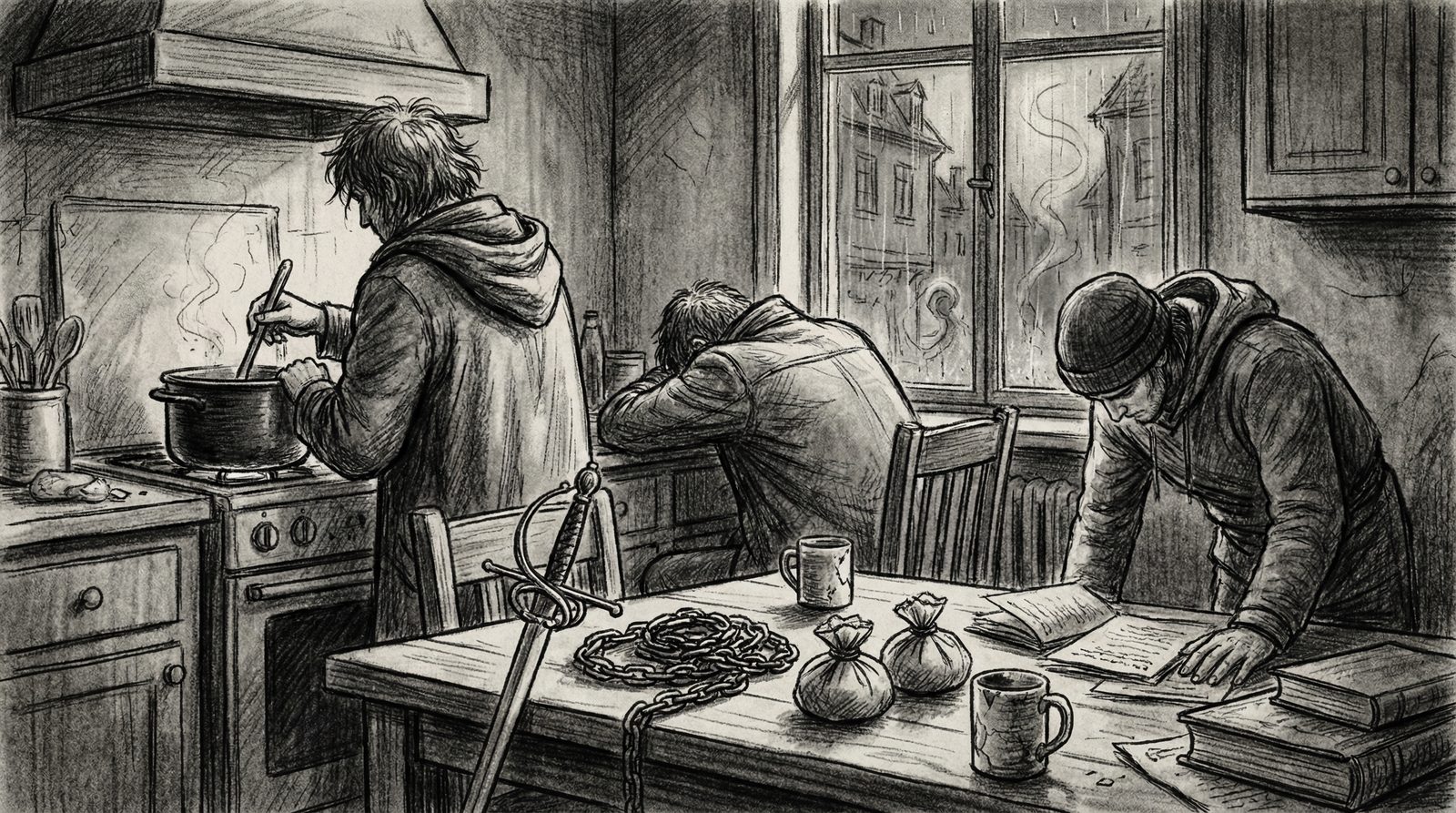
    Illustration inspired by 'The Screaming Staircase (2013)'

    TRIVIA & AUTHOR FACTS

    Jonathan Stroud was already known for the Bartimaeus sequence when he began Lockwood & Co. This first volume is written with a clear long game in mind: Lucy’s retrospective voice hints at later catastrophes, and several small details become crucial later, including the locked room at Portland Row and the dangerous artifacts George can’t stop studying.

    The UK setting is not cosmetic. Stroud leans into terraced houses, foggy canals, and municipal bureaucracy to make the hauntings feel local and structural. The series began as a grounded thought experiment: what if children were the only ones who could safely do the most dangerous job in society?

    SIMILAR BOOKS

    If this book works for you, you may enjoy other stories where the supernatural collides with institutional neglect and where young people are forced into professional danger. The strongest neighbors tend to treat fear as logistical and social, not only mystical.

    DISCOVERABILITY & LINKS

  • Magical Bureaucracy

    Magical Bureaucracy

    DEFINITION & CORE IDEA

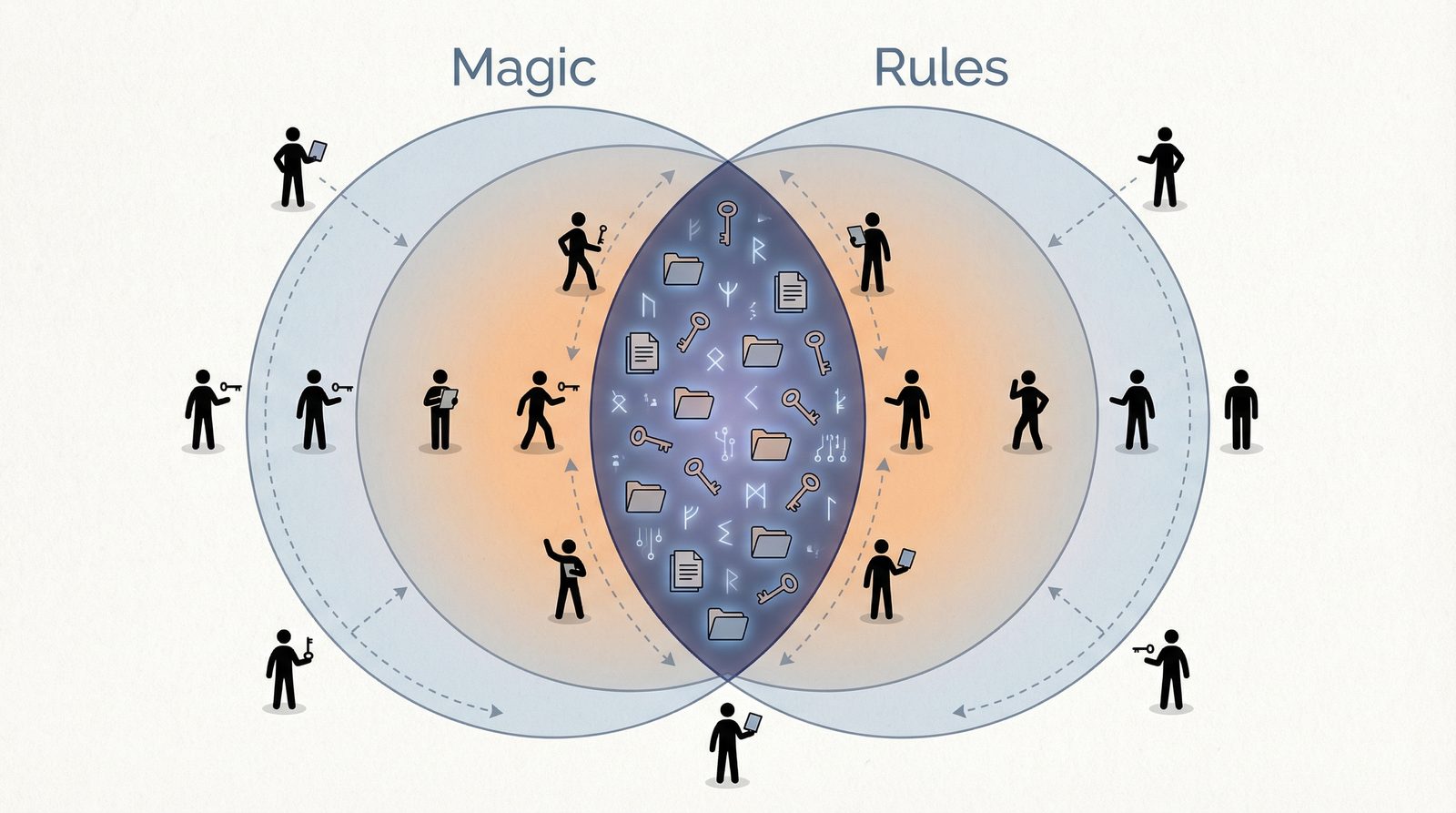
    Magical Bureaucracy is what happens when magic has paperwork. Instead of solitary wizards on mountaintops, you get departments, regulations, and people whose job title could plausibly include “Junior Undersecretary for Summonings.” Spells are licensed, entities are contracted, incidents are logged, and supernatural action comes with a form, a fee, or a committee attached to it.

    Stories that use Magical Bureaucracy treat the supernatural as a system that can be managed, abused, or jammed, just like tax codes or zoning laws. The wonder still exists, but it is governed by procedure, permissions, and internal politics. Power shifts from “who has the strongest magic” to “who controls access, exceptions, enforcement, and administrative roadblocks.”

    In The Amulet Of Samarkand, Jonathan Stroud frames magic as a government instrument with rank, oversight, and punishment baked into its use. Summoning is spectacular, but it is also institutional. What makes the world tense is not only what a spirit can do, but what the system allows, denies, or quietly covers up.
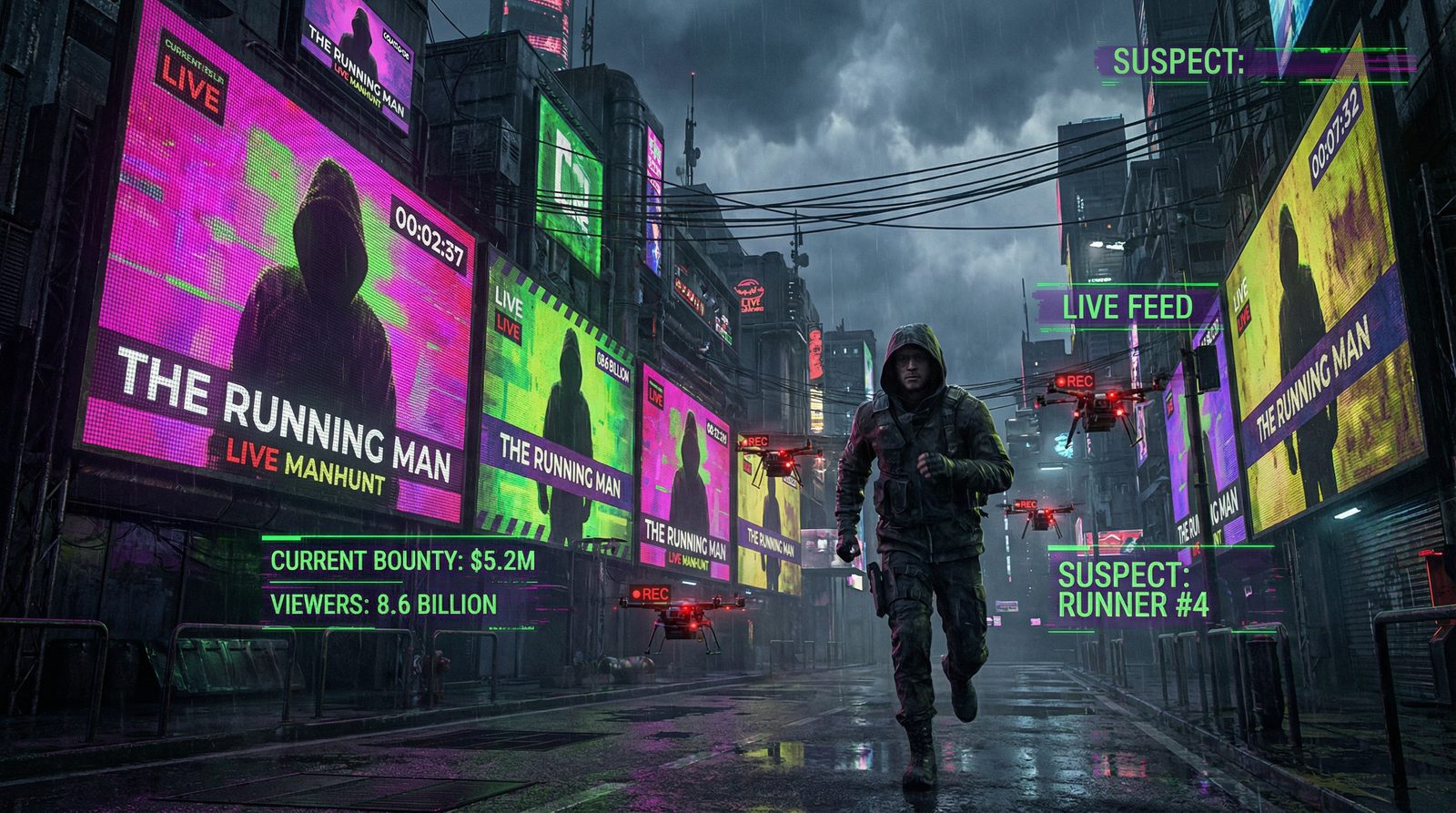
    Writers use this motif to make magic feel grounded and frighteningly familiar. It lets them explore how institutions can turn the sublime into process, and how control can be exercised through procedure, inertia, and selective authorization. Magical Bureaucracy is less about the spell than about who gets to authorize it.


    HOW IT WORKS IN STORIES

    Magical Bureaucracy typically appears as an institution that claims to keep magic safe and orderly, but in practice exists to keep it controlled. There may be a Ministry, an Agency, a Council, or a Registry. Characters need licenses to cast, permits to summon, approvals to investigate, and signatures to move forward. Conflict often begins as a procedural barrier rather than a direct magical threat.

    The protagonist is frequently low-ranking: an apprentice, a junior functionary, or someone forced to operate inside rules they did not write. They learn that the dangerous parts of the system are not always the monsters. They are the clauses, the disciplinary processes, and the quiet power of officials who can make problems disappear by classifying them correctly.

    Because paperwork becomes a kind of spellcasting, information is a battleground. Case files can hide hazards in their wording. An outdated regulation can become leverage. A missing form can create real consequences. The plot generates tension through access: who can read what, who can authorize what, and who gets punished for doing the necessary thing without permission.

    The tone can swing from comic to sinister. In lighter versions, bureaucracy is absurdist friction: triplicate forms for impossible incidents, audits nobody survives, officials obsessed with protocol while reality burns. In darker versions, bureaucracy becomes a tool of oppression. It protects the powerful, disciplines the useful, and keeps risk concentrated among the people who actually do the dangerous work.

    By turning institutions into active forces, Magical Bureaucracy creates climaxes out of procedural inertia and policy exceptions. The hero may “win” not by casting the strongest spell, but by finding the one rule that breaks a contract, exposes a cover-up, or forces a truth into the open.


    Editorial illustration inspired by 'Magical Bureaucracy'

    EMOTIONAL EFFECT ON THE READER

    Magical Bureaucracy feels both funny and uncomfortably familiar. Readers recognize the frustration of waiting in line, filling out forms, and dealing with smug officials. That recognition sharpens when it happens in a world of demons, ghosts, and sorcerers. The gap between cosmic power and petty process can be hilarious, bitter, or both at once.

    It also creates claustrophobia. Rules are everywhere, written by people who rarely face the consequences themselves. When a character realizes that survival depends on a regulation they never knew existed, the reader feels the same mix of anxiety and anger that real-world systems can produce: the fear of the fine print.

    At the same time, the motif offers competence-catharsis. Watching a character outmaneuver a corrupt superior using procedure against procedure can be deeply satisfying. It reassures readers that knowledge, persistence, and tactical reading matter as much as raw magical talent.

    Depending on tone, the motif can feel cozy or dreadful. In softer versions, paperwork makes the world feel lived-in, with schedules, budgets, and office gossip attached to magic. In harsher versions, the motif implies that wonder is never safe from control. The emotional question shifts from “Can we cast the spell?” to “Who gets to decide whether we’re allowed?”


    Symbolic illustration inspired by 'Magical Bureaucracy'

    VARIATIONS & RELATED MOTIFS

    Magical Bureaucracy can take many forms. In some stories, it is a full-blown government apparatus where every spell is a matter of state. In others, it looks more like a professional guild or licensing board where credentials and enforcement define who can practice. There are also corporate versions where magic is controlled by contracts, patents, and policy compliance rather than bloodlines or prophecy.

    One common variation emphasizes enforcement: inspectors, disciplinary boards, and punishment systems that make bureaucracy feel like a second kind of magic. Another emphasizes the archive: record-keepers and administrators who control access to dangerous knowledge simply by controlling what is documented and who can read it.

    Even stories built around rebellion can run through this lens, when the real revolution is not only defeating a villain, but dismantling the procedural system that makes the villain’s power “legal.”

    Magic remains real, but access is controlled. The spell matters, but the stamp decides.

  • Caretaker As Captor

    Caretaker As Captor

    DEFINITION & CORE IDEA

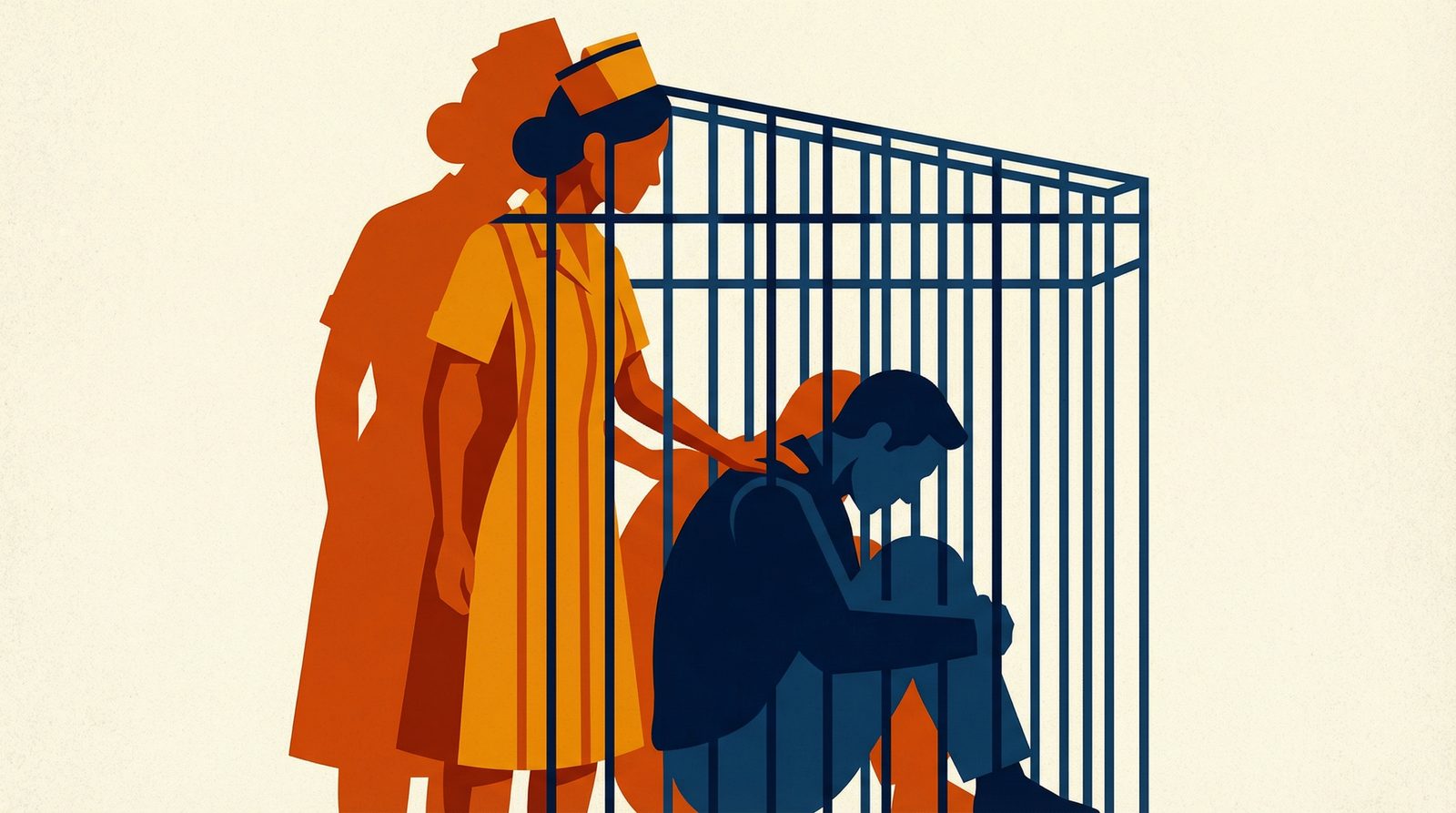
    Caretaker As Captor is a motif where the person who seems to be helping, nursing, or sheltering someone is also the one keeping them prisoner. On the surface, the captive is being protected: the caretaker offers food, medicine, a locked bunker, or a remote farmhouse. Only gradually does it become clear that this kindness is a cage.

    Stories built on Caretaker As Captor lean on an intimate kind of horror. The threat is not an obvious monster or a distant regime, but the person changing the bandages, making the soup, or tucking the blankets around the protagonist. In Misery (1987), the injured writer is nursed back to health by an obsessive fan; the same hand that comforts also controls. In 10 Cloverfield Lane, the bunker host insists his guests are safest underground with him. Again, the same hand that comforts also controls.

    This motif plays with the blurry line between care and control. It asks how much autonomy you are willing to give up in exchange for safety, and what happens when someone decides they know what is best for you more than you do. For many readers, Caretaker As Captor hits close to home because it echoes real dynamics in families, hospitals, and relationships where help can quietly become possession.


    HOW IT WORKS IN STORIES

    In most Caretaker As Captor stories, the captive begins in a state of vulnerability. They have been in an accident, survived a disaster, fled an abusive situation, or simply accepted a ride from the wrong stranger. Their injuries, confusion, or lack of resources make the caretaker seem like a godsend. The early scenes are full of blankets, medicine, hot meals, and reassurances that everything will be fine.

    Then the seams start to show. Doors are locked “for your own good.” Windows are nailed shut because it is “not safe outside.” The caretaker monitors phone calls, decides what the patient can read or watch, and becomes offended when gratitude is not enthusiastic enough. In Misery (1987), Annie Wilkes uses Paul Sheldon’s broken body to justify total control. In 10 Cloverfield Lane, Howard’s insistence that the outside world will kill you becomes the rationale for perpetual imprisonment. The logic is always the same: I am keeping you alive, so you owe me obedience.

    Writers use Caretaker As Captor to generate tension in small, contained spaces. The setting is often domestic or medical. The horror comes from conversations at the bedside, from the way a spoon is held just a little too firmly, or how a cheerful routine becomes a ritual of control. Escape attempts are risky because the protagonist really is vulnerable; every act of resistance has a physical cost.

    This motif also invites psychological games. The captor may alternate between tenderness and rage, making the captive doubt their own judgment. Are they being abused, or just ungrateful? Is the outside world truly dangerous, or is that a lie? Stories often lean into gaslighting, enforced dependence, and the slow erosion of the captive’s confidence. When Caretaker As Captor overlaps with the Writer Held Captive motif, the captor may even demand new work, edits, or confessions, turning care into a tool for creative or emotional extraction.

    Because the caretaker’s routines are so central, some stories also echo Enthusiasm As Infrastructure. The canned goods, medical charts, or meticulously labeled shelves are both evidence of devotion and the bars of the prison.


    Editorial illustration inspired by 'Caretaker As Captor'

    EMOTIONAL EFFECT ON THE READER

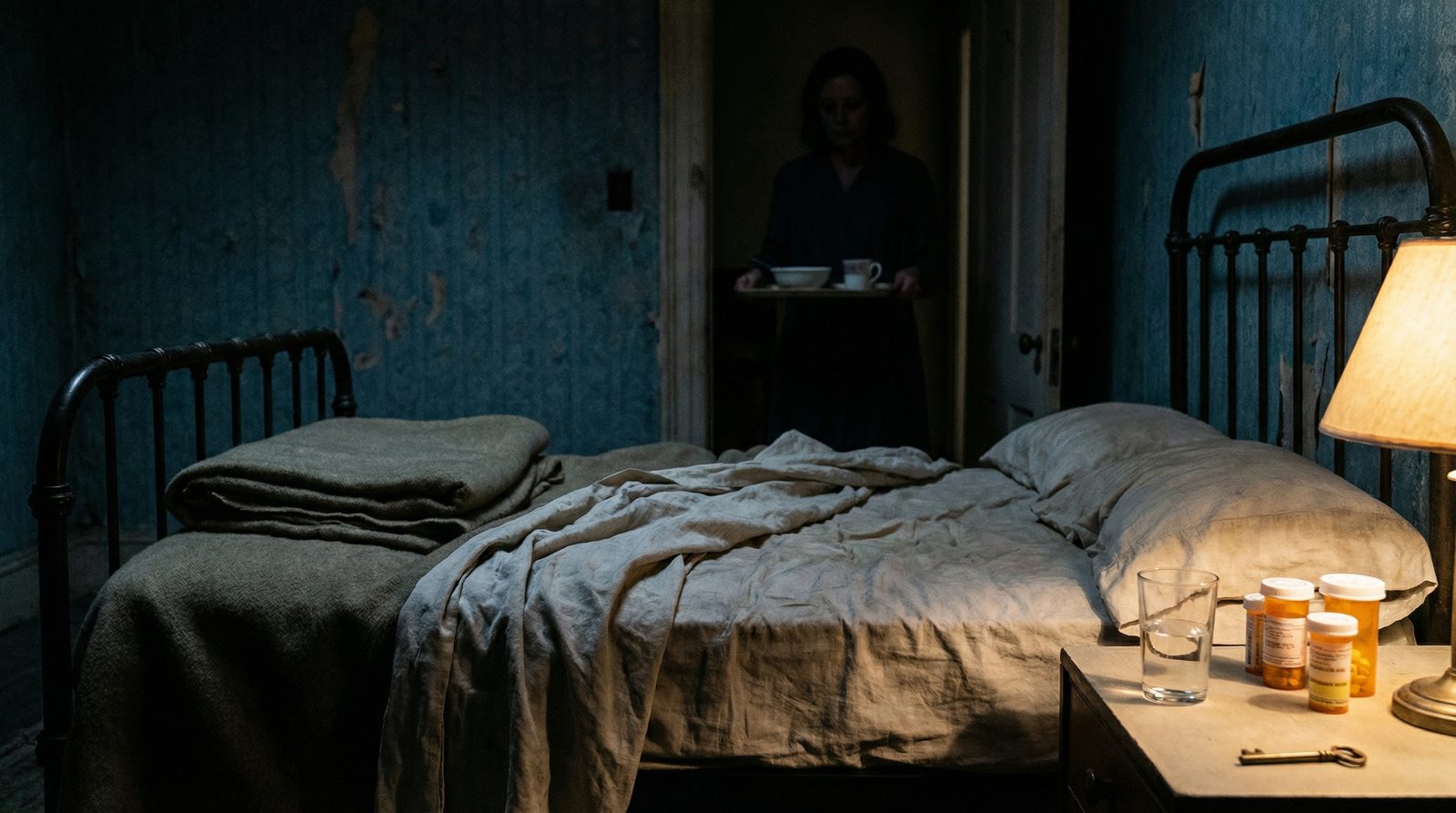
    Caretaker As Captor stories feel suffocating in a slow, creeping way. The reader is invited to relax at first: someone competent is taking charge, the protagonist is being fed and bandaged, there is a roof overhead. Then, as the restrictions pile up, that same setting begins to feel like a padded cell. The cup of tea on the bedside table looks less like comfort and more like a leash.

    Part of the unease comes from recognizing real-world patterns. Many people have experienced relationships where “I know what is best for you” slides into “You do not get to decide.” The motif exaggerates that feeling into a literal prison, but the emotional texture is familiar and unsettling.

    Readers often swing between dread and a strange, guilty fascination. The captor’s routines can be oddly compelling to watch, whether it is a fan carefully arranging a writer’s medications or a collector curating the perfect underground world. That mix of care and creepiness keeps you turning pages, wondering how far this person will go in the name of love, art, or safety.

    By the time the protagonist begins plotting an escape, the reader is fully invested in their bodily and psychological survival. Every small act of rebellion feels huge: hiding pills instead of swallowing them, stealing a key, testing a locked door. The emotional payoff comes not just from physical freedom, but from the character reclaiming the right to make bad choices, to risk harm, and to live without someone else’s suffocating care.


    Symbolic illustration inspired by 'Caretaker As Captor'

    VARIATIONS & RELATED MOTIFS

    Caretaker As Captor can tilt in several directions. In some stories, the captor is openly sadistic, using medical care as an excuse to inflict pain or humiliation. In others, they are sincerely convinced they are doing the right thing. The bunker-builder in a story like 10 Cloverfield Lane may be paranoid and controlling, but genuinely believes the outside world will kill you. This ambiguity makes the motif more unsettling, because the reader can see how good intentions curdle into tyranny.

    There are also softer versions where the prison is social rather than physical. A parent, partner, or therapist might not chain the protagonist to the bed, but uses illness, trauma, or debt as reasons they cannot leave. These stories keep the emotional beats of Caretaker As Captor while staying closer to everyday life.

    When Caretaker As Captor intersects with the Writer Held Captive motif, the captive’s creative output becomes part of the bargain. The caretaker edits drafts, sets deadlines, and withholds painkillers or privileges until the work is “good enough.” The captive’s body and art are both under someone else’s control, a dynamic that Misery (1987) and The Collector (1963) explore in different ways.

    Connections to Enthusiasm As Infrastructure appear when the captor’s passion project becomes the skeleton of the prison itself. A fan’s shrine, a survivalist’s bunker, or a collector’s meticulously organized basement is both a testament to their dedication and the architecture of confinement. The same enthusiasm that builds a safe haven or a beautiful collection also builds the walls that keep the protagonist in.

    Caretaker As Captor also brushes up against motifs like the overprotective parent, the cult leader, or the benevolent dictator. In each case, the story is asking a similar question: when someone claims they are only doing it for your own good, how do you tell the difference between care and captivity?

  • Writer Held Captive

    Writer Held Captive

    DEFINITION & CORE IDEA

    The Writer Held Captive motif traps an author in a literal prison, usually at the mercy of someone who claims to care about their work. The writer is locked in a room, a house, or a basement, cut off from the outside world and forced to write, rewrite, or confess. Their creative mind becomes the only tool they have left, and often the only thing their captor really wants.

    Stories like Misery (1987), The Collector (1963), and Secret Window are classic examples. The captor might be a devoted fan, a resentful relative, a jealous rival, or a stranger with a grudge. What they share is a sense of entitlement to the writer’s time, talent, and inner life. The writer’s body is confined, but the real battleground is the story itself – who gets to decide what happens next, on the page and in the room.

    At its core, the Writer Held Captive motif is about control over narrative. It literalizes the fear that readers, editors, or society at large might try to own an author’s imagination. The writer’s survival depends on how well they can read their captor, shape a story that keeps them alive, and maybe smuggle a plan for escape between the lines.


    HOW IT WORKS IN STORIES

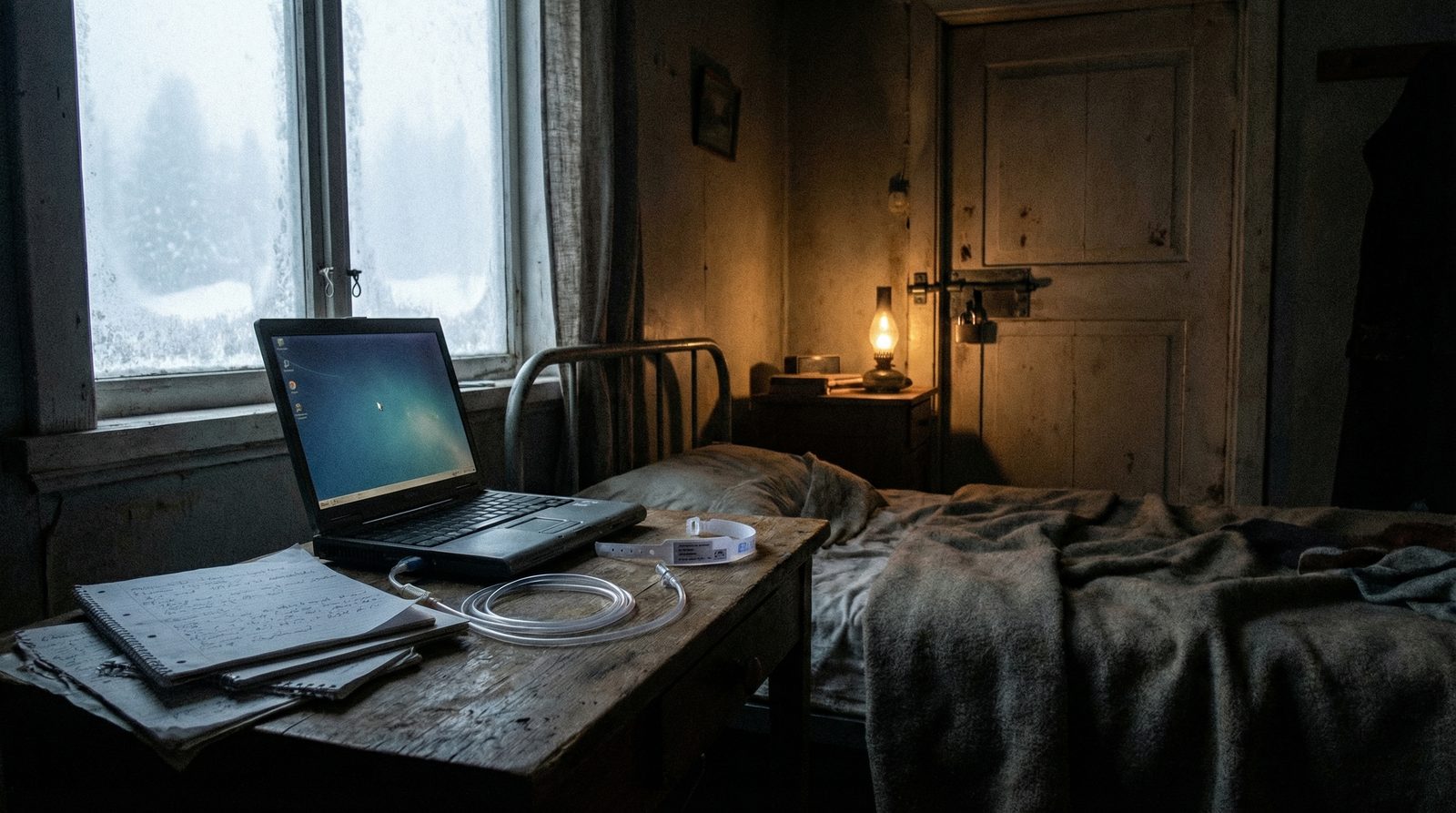
    In most versions of Writer Held Captive, the story begins with some kind of accident or vulnerability. The author might be injured in a car crash, lured to a remote meeting, or simply wake up in a locked room. The early chapters focus on disorientation and gratitude. That slow realization that the “rescuer” or “host” is also the jailer is central to the tension.

    Once the captivity is clear, the story shifts into a psychological chess match. The writer has very little physical power, so their main weapon is language. They flatter, stall, negotiate, and improvise plots that might calm the captor or buy time. The captor, in turn, uses access to food, medicine, or freedom as leverage for more pages. Every chapter written becomes a kind of blood payment.

    The space itself often feels like a twisted version of a retreat. It looks like the ideal place to get work done, except the door locks from the outside. This is where the motif intersects with Caretaker As Captor. The captor might cook meals, change bandages, or cheer on the writer’s progress, all while tightening their control. Care and cruelty blur together.

    Another engine of the plot is obsession with the work. The captor has strong opinions about how a series should end, which characters deserve to live, or what the writer “really meant” in a story. That is where Writer Held Captive can overlap with Enthusiasm As Infrastructure. The captor’s devotion and knowledge of the work become the scaffolding that holds the whole prison in place. Without their obsessive reading, there would be no kidnapping, no demands, no forced rewrites.

    Escape attempts, whether physical or psychological, structure the middle of the narrative. The writer might hide messages in the manuscript, test the captor’s boundaries, or deliberately write something that will provoke a mistake. The climax usually comes when the story on the page and the story in the room collide, forcing both writer and captor to act out the ending they have been arguing about.


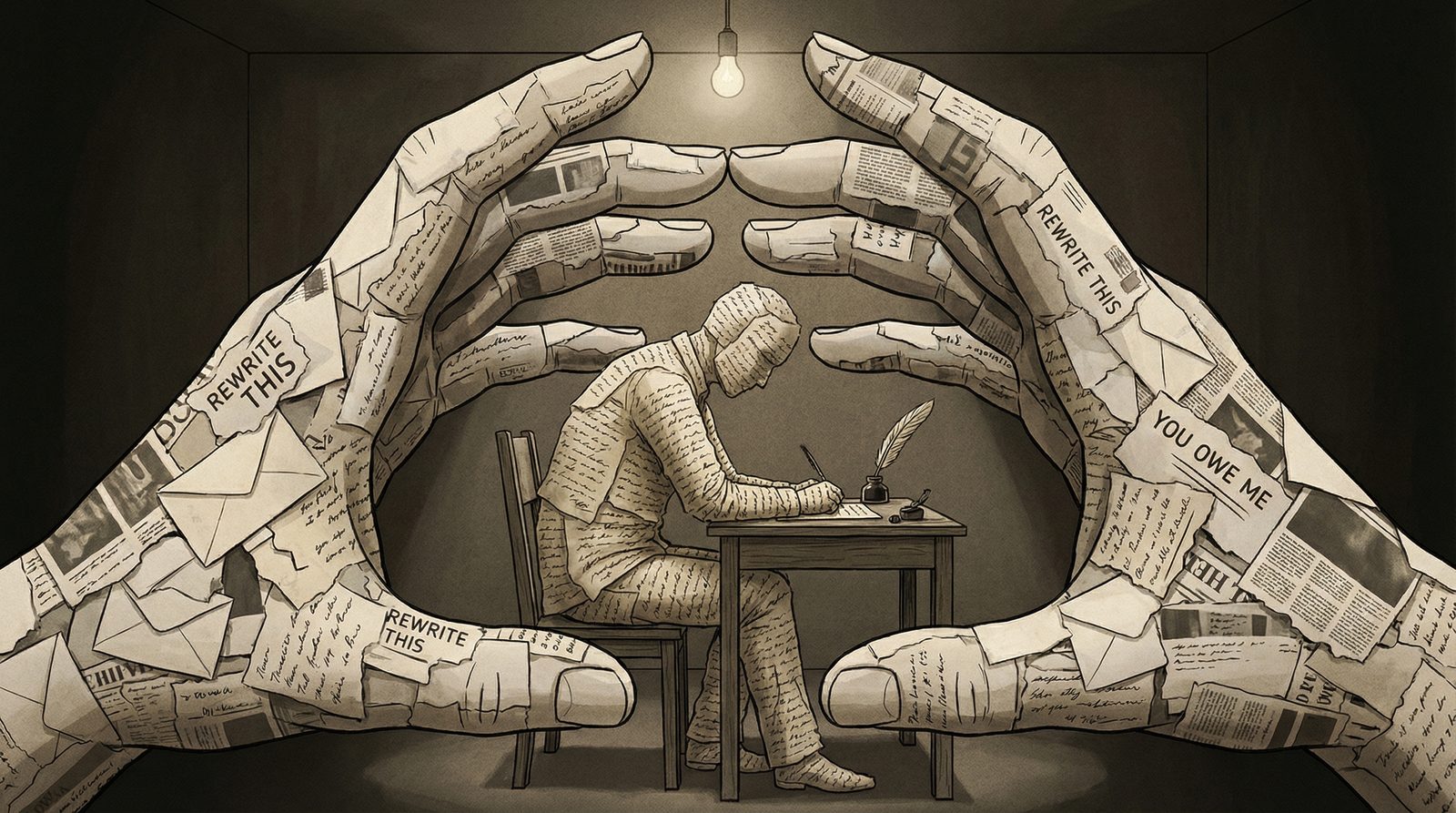
    Editorial illustration inspired by 'Writer Held Captive'

    EMOTIONAL EFFECT ON THE READER

    Reading a Writer Held Captive story feels like being locked in the room with the author. The physical confinement creates a steady thrum of claustrophobia. The smallness of the setting makes every conversation feel high-stakes, because there is nowhere else to go.

    There is also a strange intimacy. We watch the writer at their most vulnerable. Fans who love books may feel an uncomfortable jolt of recognition in the captor’s passion. The line between “I care deeply about this story” and “I want to control the person who made it” becomes disturbingly thin.

    At the same time, the motif can be darkly funny or self-aware. When the writer is forced to resurrect a character they killed off, or to explain a plot hole under threat, it pokes at the awkward relationship between creators and their audiences. Readers may feel both sympathy for the author and a twinge of guilt about their own expectations.

    Emotionally, the payoff often comes from watching the writer reclaim some control. Even if their body is trapped, the moment they outthink the captor or twist the demanded story into something subversive feels like a small liberation. The motif leaves readers thinking about who really owns a story once it leaves the writer’s desk, and what it costs when that ownership turns into a cage.


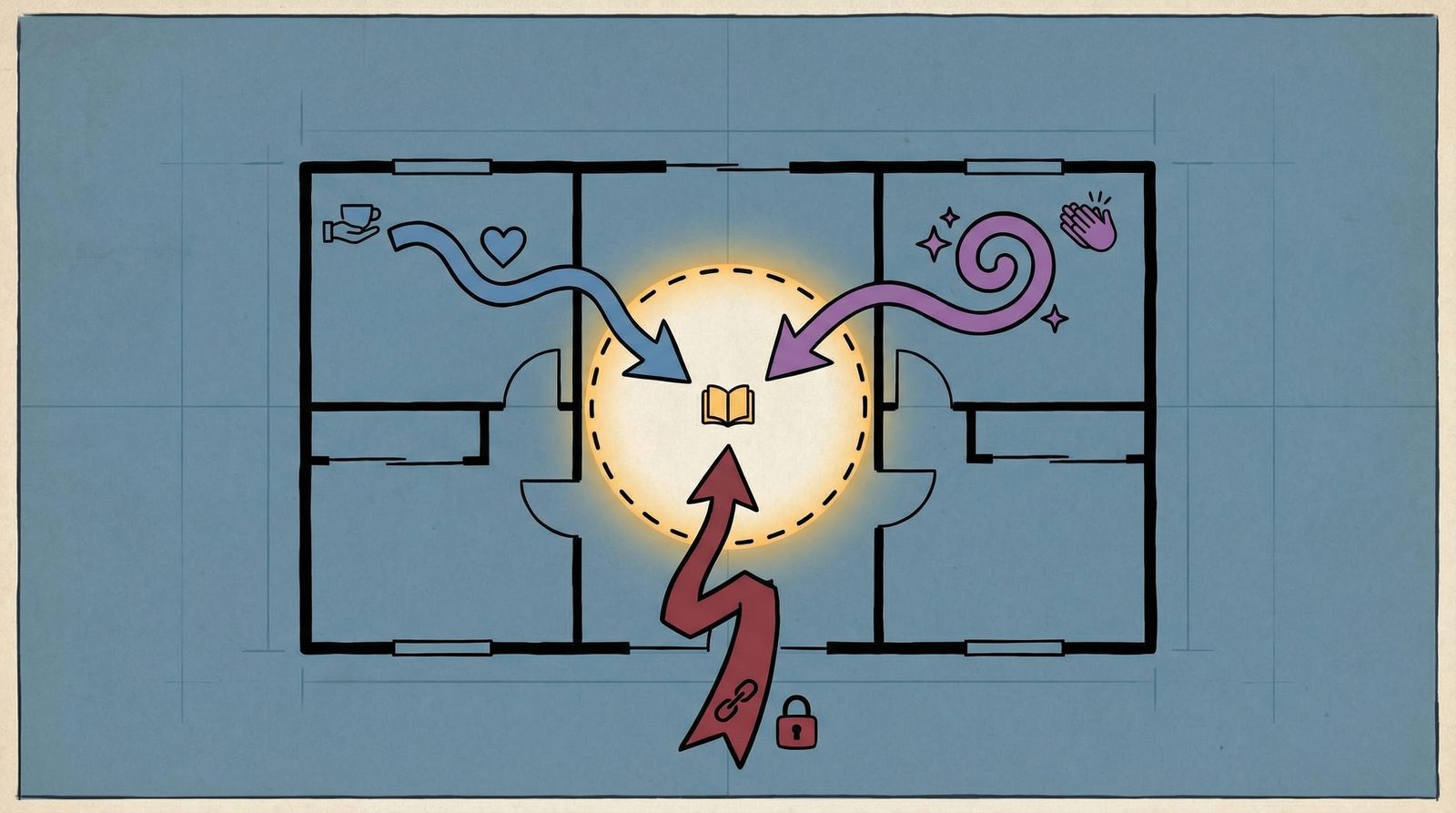
    Symbolic illustration inspired by 'Writer Held Captive'

    VARIATIONS & RELATED MOTIFS

    Not every Writer Held Captive story looks like a thriller. Some versions are quieter, almost domestic. The writer is trapped in a relationship, a contract, or a patronage arrangement that feels like a kind of house arrest. The captor might be a spouse, a parent, or a publisher who controls money and access rather than locks and chains. The captivity is still real, but it is social and economic instead of purely physical.

    Another variation blurs the line between captor and muse. The writer may believe they need this intense, controlling presence to create their best work. The captor becomes a twisted collaborator, feeding ideas and demands. This can slide into psychological horror, where it is not clear whether the writer is being coerced, seduced, or both.

    When the captor is also a caregiver, the motif overlaps strongly with Caretaker As Captor. The writer might be injured, ill, or addicted, and the person who keeps them alive also keeps them locked in. The power imbalance is justified as “for your own good,” which makes the situation harder to escape and morally murkier for the reader.

    On the other side, when the captor is a superfan or critic, the story intersects with Enthusiasm As Infrastructure. The captor’s detailed knowledge of the writer’s work becomes the architecture of the prison. Their enthusiasm is the scaffolding that supports their control.

    Related motifs include stories where artists are exploited by patrons, celebrities are stalked by admirers, or prisoners must perform to survive. Writer Held Captive sits at the crossroads of those ideas, turning the act of storytelling itself into a survival game and asking who gets to hold the pen when the door is locked.

  • Botched Kidnapping

    Botched Kidnapping

    DEFINITION & CORE IDEA

    The Botched Kidnapping motif centers on a kidnapping that does not go according to plan. The crime might start with a simple idea – grab the target, get the money, walk away. Instead, something goes wrong immediately or soon after. The wrong person is taken, an accomplice panics, the victim fights back, the police arrive too soon, or the money never shows up. What was supposed to be a controlled crime turns into a slow-motion disaster.

    Stories that use a Botched Kidnapping are less about the mechanics of a perfect heist and more about what people do when the floor falls out from under them. The failed crime forces kidnappers, victims, and bystanders into close quarters and high-stress decisions. Plans unravel, alliances shift, and every attempt to fix the situation tends to make it worse.

    Writers use this motif because failure is revealing. In a clean, successful abduction, criminals can stay cool and distant. In a Botched Kidnapping, they are scared, improvising, and exposed. The story becomes a pressure cooker where greed, guilt, loyalty, and desperation collide. The crime is the hook, but the real subject is how ordinary or not-so-ordinary people behave when they are in over their heads and running out of options.


    HOW IT WORKS IN STORIES

    In most Botched Kidnapping stories, the early chapters or opening scenes sketch out a plan that sounds, at least to the kidnappers, almost reasonable. In crime dramas like Dog Day Afternoon, Fargo, or Blaze (2007), we see small-time crooks or desperate people convince themselves this is their one big chance. The planning phase gives us a baseline of who they are when they still believe things might work.

    The turning point arrives when the first thing goes wrong. It might be a practical snag – the wrong car, the wrong house, an unexpected witness. It might be emotional – an accomplice getting cold feet, a victim refusing to behave as expected. From there, the story shifts into crisis mode. The kidnappers scramble to adjust, improvising new lies and new threats.

    The Botched Kidnapping usually traps everyone in a confined situation. A shabby apartment, a snowbound highway, a bank, or a suburban house becomes a stage for negotiations, threats, and uneasy truces. In something like The Friends Of Eddie Coyle, even when the kidnapping is offstage or only part of the criminal background, you feel the way a single failed job ripples through the underworld and pulls characters into danger they did not plan for.

    The motif often invites outside pressure. Police surround the building, media swarm the scene, or rival criminals smell weakness. Each new pressure point raises the stakes and forces more improvisation. The kidnappers might start as predators and slowly become cornered animals. Victims, meanwhile, can gain leverage by exploiting divisions in the group or by becoming more useful alive than dead.

    Writers use the Botched Kidnapping as a way to mix crime plotting with character study. The unfolding disaster gives them an excuse to pause for tense conversations, confessions, and shifting loyalties. The story is not a puzzle about how to pull off the perfect crime. It is a series of “now what?” moments, each one forcing characters to reveal a little more of who they are when there is no good choice left.


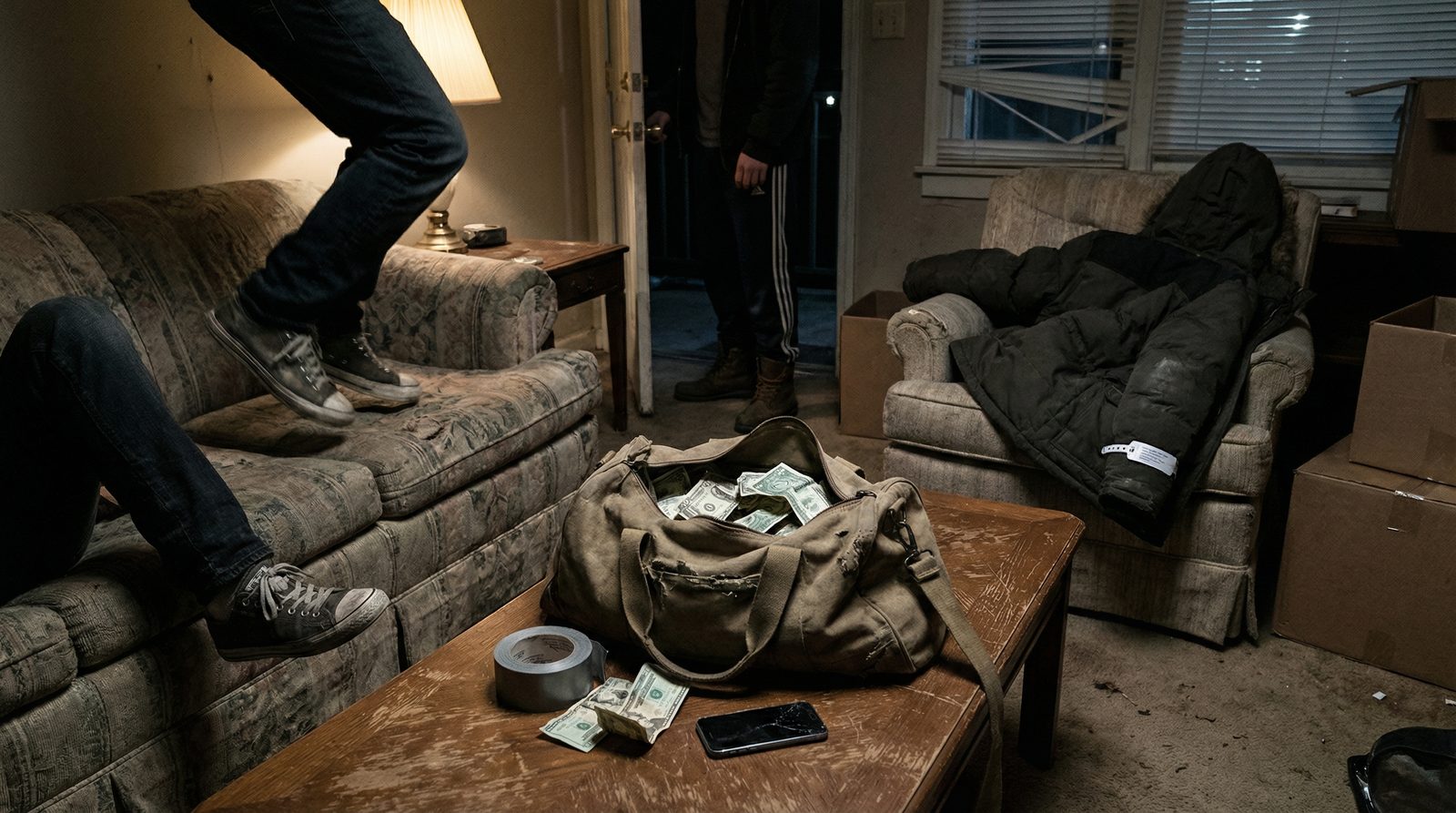
    Editorial illustration inspired by 'Botched Kidnapping'

    EMOTIONAL EFFECT ON THE READER

    A Botched Kidnapping feels different from a slick caper. Instead of admiring the criminals’ cleverness, you are bracing for the next mistake. There is a steady drip of dread: every new decision might be the one that gets someone killed. The tension comes from watching people try to steer a car that has already gone off the road.

    Readers are often pulled into a complicated sympathy. You may start out horrified by the crime, but as the kidnappers panic and show fear, they can become strangely human. Their bad choices are unforgivable, yet you see their shame, their love for a partner, or the debt and desperation that pushed them into this. At the same time, you feel for the victim, who might be terrified, angry, or unexpectedly resourceful.

    There is also a particular kind of claustrophobia. Much of the story takes place in one or two locations, with a small cast who cannot walk away. Arguments loop, tempers flare, and tiny details take on outsized importance. A ringing phone, a missed deadline, or a neighbor knocking on the door can make your stomach drop.

    In some works like Fargo, the Botched Kidnapping is laced with dark comedy. The sheer incompetence, the awkward conversations, and the mismatch between the crooks’ fantasies and the grim reality can make you laugh and wince at the same time. That uneasy mix of humor and horror is part of the motif’s power. It reminds you how thin the line is between an ordinary day and a life-ruining decision, and how quickly a “simple plan” can turn into something tragic and absurd.


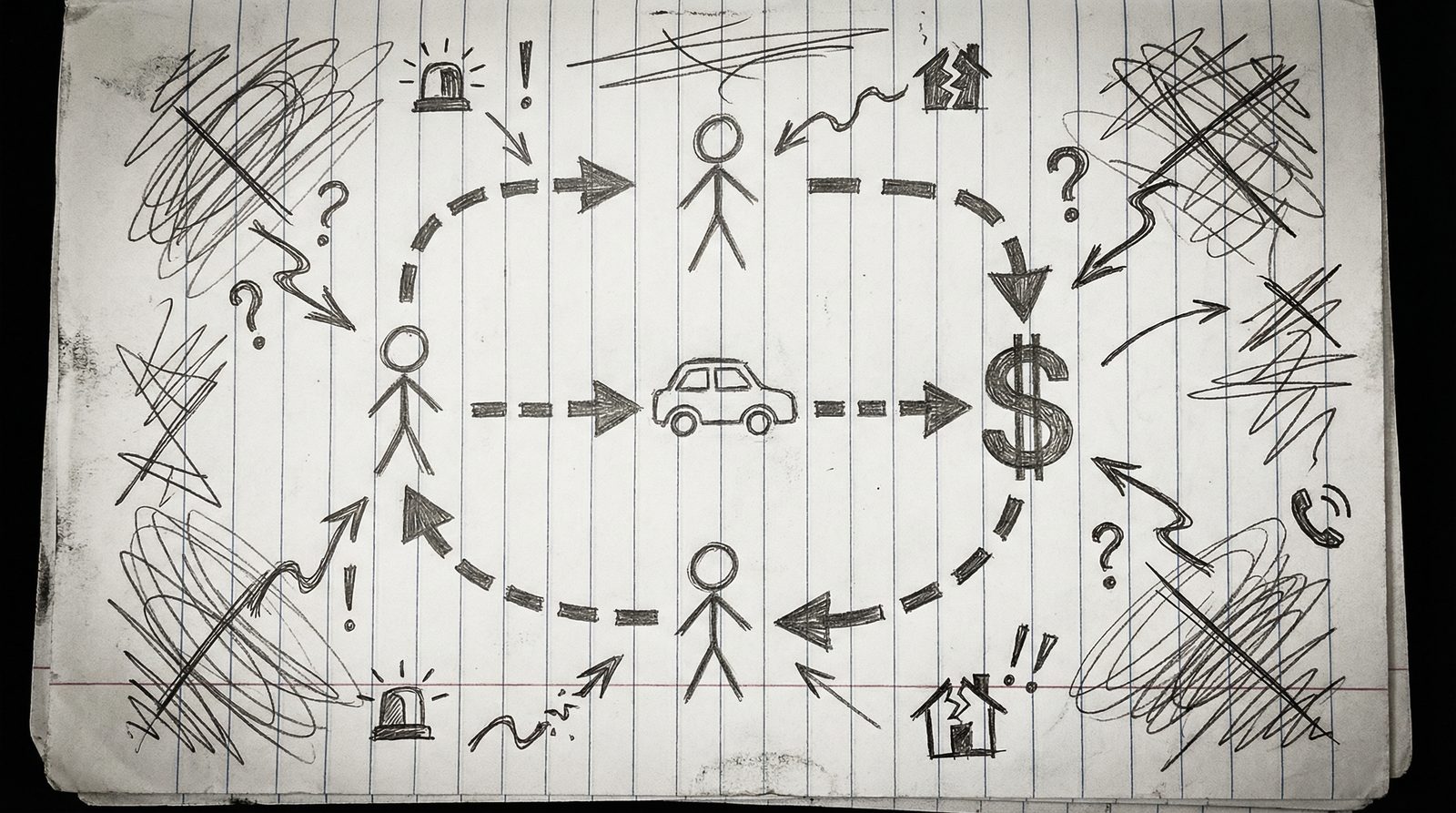
    Symbolic illustration inspired by 'Botched Kidnapping'

    VARIATIONS & RELATED MOTIFS

    The Botched Kidnapping motif can play out in several distinct ways. In some stories, the kidnapping fails right at the start: the wrong person is snatched, the getaway car stalls, or the victim slips away. In others, the initial abduction “works,” but everything afterward unravels – the safe house is compromised, the ransom drop goes bad, or the criminals cannot agree on what to do next.

    There are moral variations too. Some Botched Kidnapping stories lean into noir fatalism, like the criminal world around The Friends Of Eddie Coyle, where a failed job is just one more step toward inevitable ruin. Others focus on a single bad decision made by basically decent people, turning the story into a tragedy about ordinary lives derailed. In blackly comic versions, the kidnappers are almost too inept to be truly frightening, which throws the absurdity of the situation into sharper relief.

    This motif often intersects with “crime gone wrong” stories in general, where any planned offense unravels under pressure. It can blend with hostage-negotiation motifs, where the focus shifts to police, media, and public spectacle outside the crime scene. It also overlaps with family drama and domestic noir when the victim is a spouse, child, or parent, and the failed kidnapping exposes long-buried resentments or secrets.

    Because a Botched Kidnapping traps characters in an escalating crisis, it pairs naturally with motifs about loyalty tests, betrayal among thieves, and the corrupting pull of money. The same failed abduction can be a survival story for the victim, a downfall story for the criminals, and a moral test for everyone caught in the blast radius. That flexibility is why writers keep returning to it: one broken plan opens the door to a whole tangle of human consequences.

  • Curses As Moral Punishment

    Curses As Moral Punishment

    DEFINITION & CORE IDEA

    In the motif of Curses As Moral Punishment, a character is singled out by a supernatural force and punished specifically for a moral failing. The curse is not random bad luck. It is framed as justice, payback, or a lesson, often delivered by a wronged person, a vengeful spirit, or some cosmic law the character did not know they were breaking.

    This motif turns ethics into something with teeth. A lie, a hit-and-run, a cruel joke, a greedy wish, a broken promise – instead of being handled by courts or social fallout, these choices trigger a spell that warps the character’s body, life, or reality. In Thinner (1984) and its adaptation, the curse literally wastes the protagonist away as punishment for his crime. In Drag Me To Hell and Wishmaster, characters are condemned or twisted for selfish choices and careless cruelty.

    Writers use Curses As Moral Punishment when they want the story’s universe to feel like it has a conscience. The curse is a visible, often grotesque embodiment of guilt, hypocrisy, or corruption. It says: what you did matters so much that reality itself will not let it slide. Whether that feels fair, ironic, or horrifying is part of the tension that keeps readers hooked.


    HOW IT WORKS IN STORIES

    Curses As Moral Punishment usually starts with a transgression. Someone is wronged, a taboo is broken, or a character’s selfishness crosses a line. The story may linger on how “minor” the offense seems at first, which makes the later punishment feel shocking or darkly ironic. The curse is often delivered in a charged moment: a confrontation, a funeral, a refusal to help, a cruel decision made under pressure.

    Once the curse lands, the plot shifts into a mix of mystery, negotiation, and chase. The victim first dismisses what is happening as coincidence. As the pattern becomes undeniable, they scramble to understand the rules. Who cursed them? Why this specific punishment? Is there a loophole? In Thinner, the weight loss seems like a blessing before it becomes a death sentence. In Drag Me To Hell, the cursed character cycles through denial, bargaining, and desperate attempts to pass the doom onto someone else.

    The curse often escalates in stages. Each new symptom or setback forces the character to confront what they did and how far they are willing to go to escape consequences. They might try conventional fixes (doctors, lawyers, police) and find them useless against supernatural rules. This is where Curses As Moral Punishment overlaps with Corrupt Justice And Supernatural Retribution: once human systems fail or prove inadequate, something older and harsher takes over.

    Stories can play with responsibility and fairness. Sometimes the cursed person truly deserves it, and the narrative leans into grim satisfaction. Other times, the punishment is wildly excessive or falls on someone only partly at fault, raising questions about who gets blamed in a broken world. The climax often forces a choice: confess, sacrifice, pass the curse to someone else, or accept ruin. There is rarely a clean option.


    Editorial illustration inspired by 'Curses As Moral Punishment'

    EMOTIONAL EFFECT ON THE READER

    Curses As Moral Punishment hits a nerve because it turns private guilt into something you cannot hide. The character’s secret or flaw is dragged into the open, often through their own body or their luck falling apart. Readers feel a mix of dread and voyeurism watching someone’s inner rot become visible. It taps into the childhood fear that if you do something bad, the universe will “get you” – only now it is literal and merciless.

    This motif also creates a nagging question: how much punishment is enough? As the curse unfolds, it invites readers to judge the character’s original sin and every choice they make afterward. There can be a grim satisfaction when a smug or cruel person finally faces consequences, as in parts of Wishmaster. At the same time, many stories lean into discomfort, making the punishment feel so extreme that we start to pity the cursed, even if they were wrong.

    Because the curse often cannot be solved by logic or force, there is a strong feeling of helplessness. The character is trapped in a moral maze where every exit demands a sacrifice. That claustrophobic tension is part of the appeal. Readers are pushed to imagine what they would confess, who they would sacrifice, or what they would endure to escape a similar fate. The result is horror that lingers as self-examination, not just jump scares.


    Symbolic illustration inspired by 'Curses As Moral Punishment'

    VARIATIONS & RELATED MOTIFS

    Curses As Moral Punishment can take many forms. In some stories, the curse mirrors the crime: a liar finds their tongue twisting against them; a voyeur is forced to watch their own downfall; a hit-and-run driver’s body slowly deteriorates in a way that echoes their victim’s injuries. In others, the connection is more symbolic or ironic, like a greedy wish being granted in a way that ruins the wisher’s life in Wishmaster. The curse might be inherited, punishing descendants for an ancestor’s sin, or contagious, forcing the cursed to decide whether to infect someone else to survive.

    Another variation plays with whether the curse is truly “moral” or just vindictive. In Drag Me To Hell, part of the horror comes from how debatable the protagonist’s guilt is, and how merciless the supernatural response becomes. Some stories reveal that the curse-giver is corrupt or petty, twisting the motif into a critique of who gets to define morality in the first place.

    This motif often intersects with Corrupt Justice And Supernatural Retribution. When courts, police, or social systems fail, the curse steps in as a brutal stand-in for justice. It can also overlap with motifs like Faustian bargains, where the “punishment” is baked into the fine print of a wish, or with haunted objects, where using a cursed item triggers a tailored moral backlash.

    Writers can soften or sharpen the motif by adjusting the possibility of redemption. Some stories allow the cursed character to break the spell through sincere atonement, confession, or sacrifice. Others lock the rules so tightly that no apology can help, turning Curses As Moral Punishment into pure tragedy, where the lesson is not how to escape, but how a single choice can warp a life beyond repair.

  • Ordinary People In Extreme Situations

    Ordinary People In Extreme Situations

    DEFINITION & CORE IDEA

    “Ordinary People In Extreme Situations” is a motif where the main characters start out as recognizably average. They do not have special training, magical powers, or elite status. They have jobs, families, debts, routines. Then something happens that rips them out of that routine and drops them into a situation they are completely unprepared for.

    The core idea is simple: take someone who could be your neighbor, then crank up the pressure until they either adapt, break, or transform. Stories like Misery, Pet Sematary, Thinner (1984), and Blaze (2007) often start with everyday people and then push them into horror, obsession, or moral collapse. The gap between the character’s ordinary life and their extreme new reality creates both tension and dark curiosity.

    Writers use this motif to explore what people might really do when stripped of comfort and control. It asks questions like: How far would you go to save someone you love? What would you sacrifice to survive? Which parts of your identity are solid, and which are just habits that fall apart under stress? “Ordinary People In Extreme Situations” lets readers test their own limits safely, from the other side of the page.


    HOW IT WORKS IN STORIES

    In stories built around this motif, the early chapters usually linger on normal life. We see commutes, family dinners, casual arguments, and familiar frustrations. This grounding is important. The more clearly the reader understands what “ordinary” looks like for this character, the more sharply they feel the rupture when everything goes wrong.

    The trigger can be external: a car crash, a kidnapping, a violent stranger, or a supernatural event. In Misery, a writer is just driving home when an accident strands him with a fan who quickly becomes his captor. In Thinner, a careless moment leads to a curse that turns a routine life into a desperate countdown. In Pet Sematary, a family’s move to a quiet town opens a door to grief and resurrection that no one is equipped for. Sometimes the trigger is more subtle – a slow economic squeeze, a spouse’s illness, the discovery of a buried secret that can’t be ignored.

    Once the extreme situation takes hold, the story narrows around hard choices. The ordinary person might have to hide a crime, bargain with something inhuman, endure captivity, or navigate a cruel new system that treats them like a pawn. Everyday skills suddenly matter in strange ways: a nurse’s training in a disaster, a mechanic’s knowledge in a breakdown, a parent’s stubbornness when a child is threatened. At the same time, their usual social supports often fail. Friends don’t believe them, authorities are useless, or the threat is too bizarre to explain.

    Structurally, the motif often moves through stages: disbelief, coping, adaptation, and fallout. The character may become more ruthless, more honest, or more broken than they ever imagined. The story keeps circling one question: who are you when there is no safe, ordinary life to retreat to?


    Editorial illustration inspired by 'Ordinary People In Extreme Situations'

    EMOTIONAL EFFECT ON THE READER

    The emotional pull of “Ordinary People In Extreme Situations” comes from recognition. Readers look at these characters and think, “That could be me.” The jobs, marriages, debts, and small frustrations feel familiar, so when the story twists into horror or high-stakes drama, it hits closer to home than tales about superheroes or trained agents. The fear is not abstract; it is the fear that your next routine drive, hospital visit, or shortcut through the woods could change everything.

    This motif often creates a mix of dread and grim fascination. There is tension in watching someone try to think their way through a nightmare using only the tools of an ordinary life. Readers might feel frustration when characters make bad decisions, then a jolt of empathy when they realize they might have done the same under that kind of pressure. Stories like Misery and Thinner lean on this uncomfortable identification: the protagonists are not saints or geniuses, just people trying to survive with very human flaws.

    There can also be a strange kind of catharsis. Seeing an average person endure captivity, grief, or moral crisis can make everyday problems feel smaller by comparison, or it can validate how fragile normal life really is. Some readers come away shaken, others oddly reassured by the resilience on display, even when the ending is tragic. The motif invites quiet self-interrogation: if the worst happened on an ordinary day, who would you actually be?


    Symbolic illustration inspired by 'Ordinary People In Extreme Situations'

    VARIATIONS & RELATED MOTIFS

    “Ordinary People In Extreme Situations” can tilt in many directions. Some versions are intimate psychological horror, like a single patient trapped with a caregiver who has too much power, as in Misery. Others are more supernatural, like Pet Sematary and Thinner, where a curse or uncanny place turns ordinary grief or guilt into something monstrous. A story like Blaze (2007) leans into crime and desperation, showing how poverty, bad luck, and one terrible idea can push a not-particularly-special person into kidnapping and violence.

    Sometimes the focus is on survival in a twisted system. That is where this motif can intersect with Dystopian Game Shows, where regular contestants are forced to perform for their lives under rules they did not choose. In those stories, the extremity is not just the danger, but the way the whole world seems to watch and judge. Other times the emphasis is inward, overlapping with Identity Collapse In Isolation. A character cut off from normal social feedback may start to question who they are, what they are capable of, and whether the ordinary self they remember was ever real.

    There are hopeful variations, where the extreme situation reveals hidden strengths or prompts moral courage. There are bleak ones, where ordinary people crack, become cruel, or lose themselves entirely. Writers like Richard Bachman often favor the darker end of the spectrum, using the motif to show how thin the line can be between a life that looks normal from the outside and one that is quietly rotting under pressure. Across all these versions, the constant is the same: the story asks what happens when an average person is forced into a test they never signed up for.

  • Dystopian Game Shows

    Dystopian Game Shows

    DEFINITION & CORE IDEA

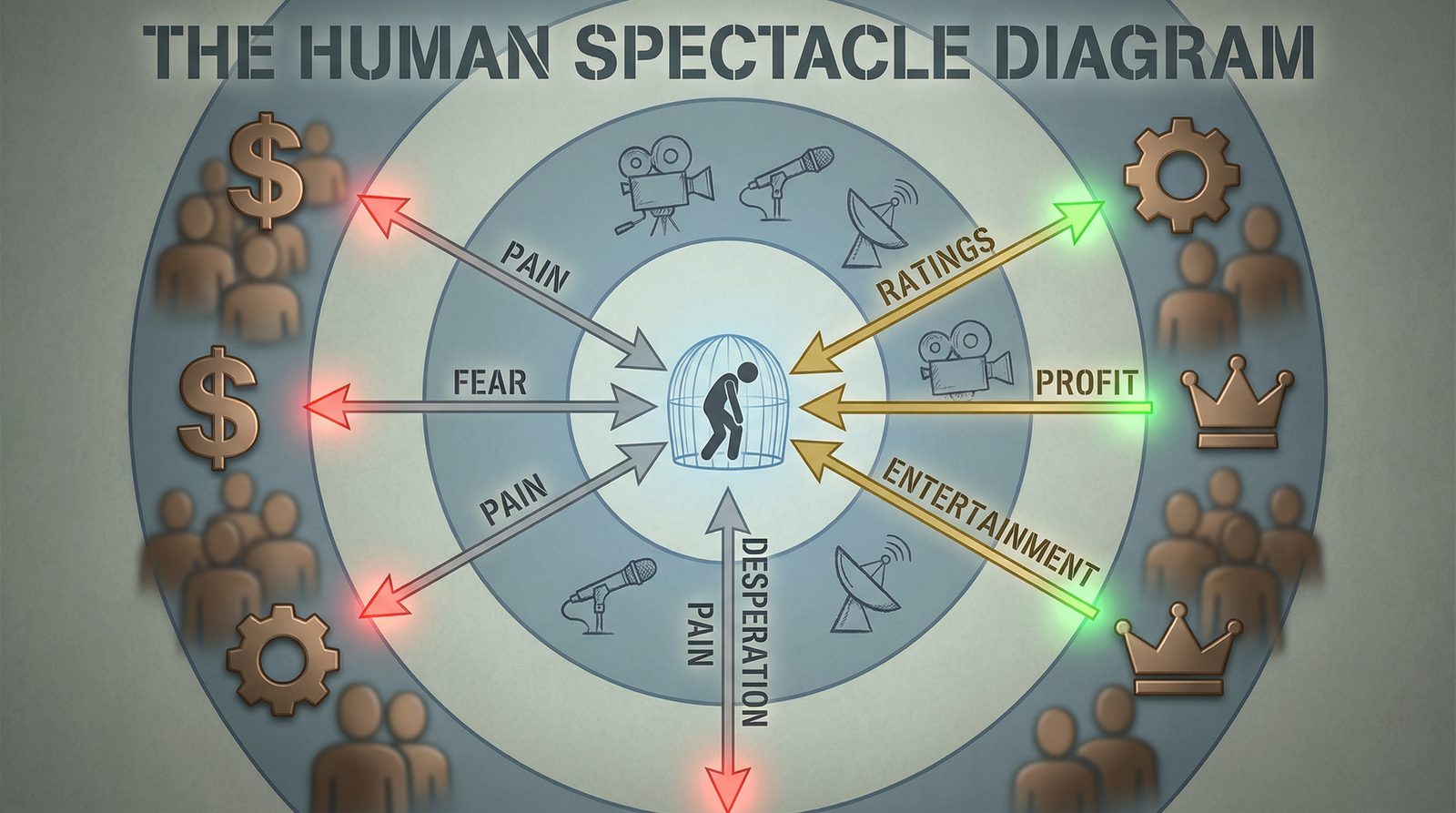
    Dystopian game shows are stories where a rigged contest, reality show, or televised event becomes a matter of life and death. The rules look like entertainment, but the stakes are survival. Contestants run obstacle courses that can kill them, answer questions under threat of punishment, or hunt and are hunted for the amusement of a distant audience. The game is usually controlled by a powerful government, corporation, or media empire that treats human beings as disposable content.

    Unlike simple arena battles, dystopian game shows lean on the language of TV and celebrity. The cruelty is wrapped in bright lights and canned applause. The Running Man, written under the name Richard Bachman, is a classic example, where a desperate man signs up for a lethal televised manhunt. The surface promise is money and fame; the underlying reality is systemic exploitation.

    Writers use this motif to ask how far a society will go when suffering becomes a product. The format is familiar enough to feel plausible, yet twisted enough to be horrifying. Dystopian game shows exaggerate trends in reality TV, social media, and advertising to show what happens when entertainment and cruelty fully merge. At its core, the motif is about people trying to stay human while the world insists they are just contestants.


    HOW IT WORKS IN STORIES

    In dystopian game show stories, the plot often begins with a rigged choice. The protagonist volunteers out of desperation, is coerced, or is randomly selected. Like the men in Richard Bachman stories such as The Running Man, they are usually ordinary or down-on-their-luck people, not trained warriors. The show offers them a miracle: money, freedom, or a chance to clear their name. The price is stepping into a game designed to break them.

    The narrative then moves into the preparation and staging of the show. We see contracts, waivers, and fine print. We meet the smirking host, the ruthless producer, the faceless executives. The world of the game is full of artificial sets, hidden cameras, and scripted moments. Even genuine danger is choreographed for maximum spectacle. The protagonist quickly discovers that the rules are flexible and always favor the house.

    Once the game begins, the story turns into a survival puzzle. Challenges are designed to pit contestants against each other, force betrayals, or tempt them with shortcuts that have hidden costs. The show’s audience becomes a character in its own right. The protagonist might gain sudden popularity, become a villain in the public eye, or be erased entirely if they stop being useful for ratings.

    Behind the spectacle, the plot often reveals a larger conspiracy or social rot. The game show might be a tool of social control, a distraction from political collapse, or a way to dispose of “undesirable” people. The climax usually involves one of three things: beating the game on its own terms, exposing it to the public, or refusing to play by its logic at all. Whether the character lives or dies, the story asks what it means to be real in a world that only values you as content.


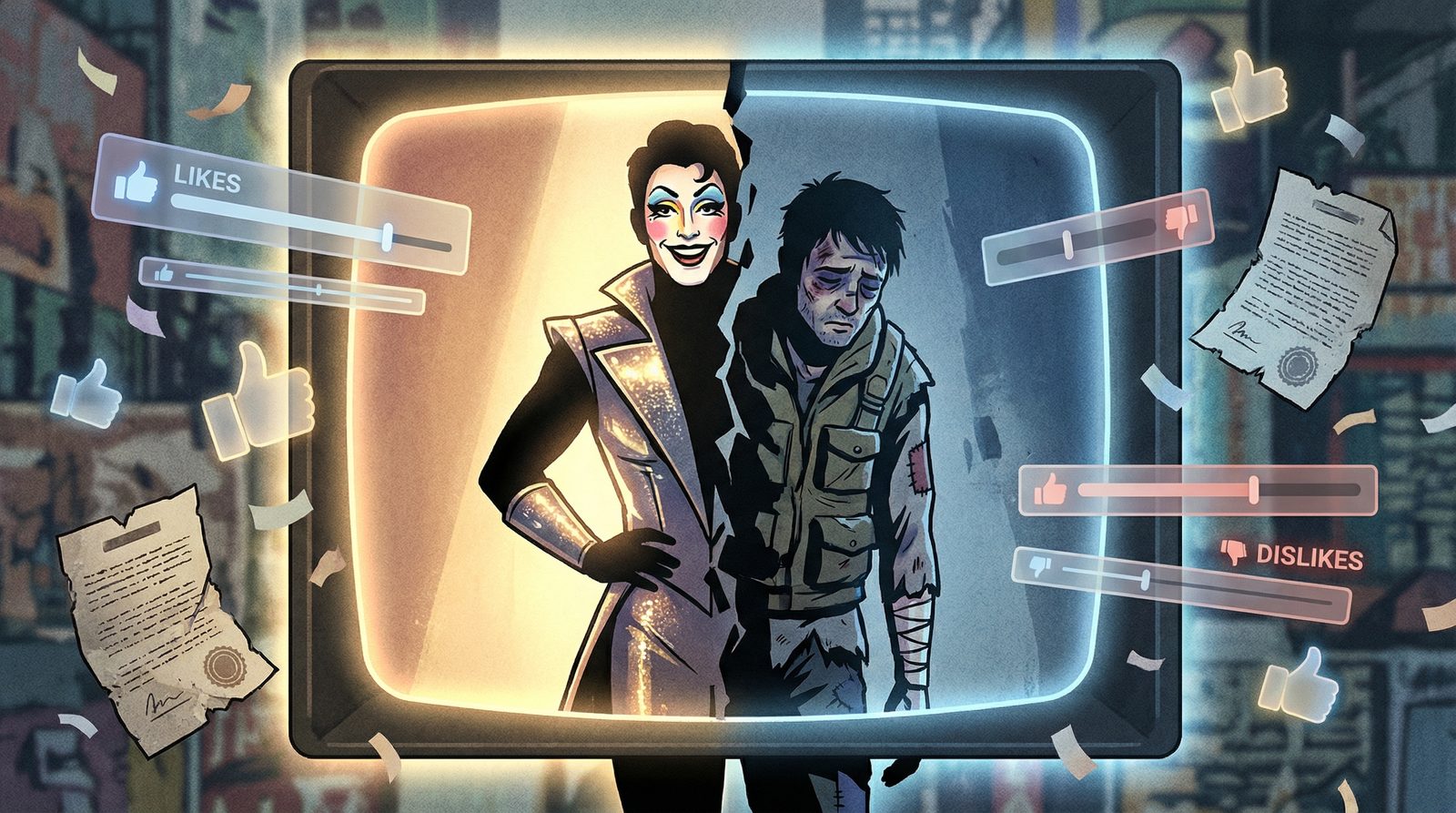
    Editorial illustration inspired by 'Dystopian Game Shows'

    EMOTIONAL EFFECT ON THE READER

    Reading dystopian game show stories often feels like watching a nightmare version of a reality show you half-recognize. There is a sickening mix of excitement and dread. The tension is not just “will they win,” but “how much of themselves will they have to lose to survive.”

    The motif taps into the uneasy feeling that our own media habits might be cruel. When a crowd in the story cheers for someone’s suffering, it is hard not to think of viral humiliation clips or scandal-driven news. That recognition can make the reader feel complicit, as if they are sitting in the studio audience, enjoying the show while knowing it is wrong.

    At the same time, there is often a strong emotional bond with the contestants. Their small acts of kindness, defiance, or humor stand out sharply against the artificial cruelty around them. Moments where characters refuse to betray each other, or choose dignity over survival, can hit harder precisely because the system is built to crush those choices. The result is a blend of adrenaline, anger, and a bruised kind of hope that someone will break the cycle, even if they pay for it.


    Symbolic illustration inspired by 'Dystopian Game Shows'

    VARIATIONS & RELATED MOTIFS

    Dystopian game shows can take many forms. Some stories focus on physical combat, turning the show into a gladiator arena with cameras. Others use puzzles, social manipulation, or moral dilemmas as the core challenge. A contestant might have to choose which loved one gets saved on live TV, or decide whether to expose a secret that will ruin innocent people. The tone can range from grimly realistic to darkly comic, with some works leaning hard into satire about advertising, celebrity culture, or class.

    There are also variations in how much the outside world matters. In some stories, the game is a closed bubble, and we only see what the cameras see. In others, the world beyond the show is just as bleak: the game is not an exception but a symptom of a larger sickness. The show becomes a pressure valve for a society that has already decided which lives are expendable.

    This motif overlaps strongly with Ordinary People In Extreme Situations. The contestants are rarely superheroes; they are regular citizens pushed into a twisted system. It can also intersect with motifs about the commodified body, survival as performance, or fame as a double-edged sword. A character might gain celebrity status while being slowly destroyed by the very show that made them famous.

    Some stories end with the game continuing, unchanged, emphasizing how hard it is to fight a system that turns everything into a show. Others let a single act of defiance ripple outward, inspiring viewers or exposing the truth. Either way, dystopian game shows linger because they feel uncomfortably close to the world we already live in, just pushed a few notches further past the point of no return.

  • The Hunger Games (2012)

    The Hunger Games (2012)

    The Hunger Games (2012), directed by Gary Ross. Science fiction · 142 minutes · United States.


    INTRODUCTION

    The Hunger Games (2012) arrives as a young-adult blockbuster that tries to keep its hands dirty. Adapted from Suzanne Collins’ novel, the film takes a premise that could have played as slick action fantasy and instead leans into a bruised, anxious feel. The world of Panem is built on televised cruelty, but Gary Ross shoots it with a jittery, almost documentary unease that keeps reminding you bodies are at stake. At the center is Katniss Everdeen, a reluctant symbol, whose survival instinct keeps colliding with the machinery of spectacle. The result is a story that feels both intimate and political, where every choice is framed as a compromise with power. The film sits in that uneasy space between YA romance and political allegory, and its best moments are when those two threads grind against each other instead of blending smoothly.

    PLOT & THEMES

    The plot is built around a familiar dystopian trope: the deadly game as social control. In Panem, the Capitol forces twelve districts to send two teenagers each to a televised fight to the death called the Hunger Games, a ritualized punishment for a past rebellion. When Katniss volunteers to take her sister’s place, the narrative locks into a clear three-part structure. First comes the reaping and departure, then the grooming and media circus in the Capitol, and finally the arena itself. Each phase sharpens the idea that entertainment is a weapon. Training sequences are staged like reality TV auditions, interviews like talent shows, and the arena like a rigged sports broadcast.

    The central themes are power, surveillance, and the corrosion of authenticity. The motif of spectacle vs. survival runs through every scene. Katniss must constantly perform: as tragic heroine for the cameras, as romantic lead with Peeta, as obedient pawn for the Gamemakers. Yet her real goal is simple survival and protection of those she loves. The more she resists becoming a symbol, the more the system tries to turn her into one. Another recurring motif, bread and circuses, shapes how the Capitol uses the Games as both terror and distraction, echoing works like Battle Royale in its depiction of youth sacrificed to maintain order.

    The film also plays with the trope of the reluctant hero thrown into the arena, but gives it a bitter edge. Katniss’s acts of kindness, especially toward Rue, become politicized gestures she never intended, showing how rebellion can be born less from grand speeches than from small refusals to dehumanize others.

    CINEMATIC TECHNIQUE & AESTHETICS

    Gary Ross leans heavily on handheld camera work and quick cutting to keep the violence subjective and disorienting. The shaky, close-quarters framing in the Cornucopia bloodbath and forest chases denies the audience the clean geometry of traditional action scenes. Instead, we get fragments of motion, screams, and impacts that convey fear rather than choreography. This stylistic choice, combined with PG-13 constraints, turns brutality into implication, which fits the film’s focus on trauma more than spectacle.

    Color and production design do a lot of thematic lifting. District 12 is all washed-out grays and browns, with natural light and coal dust creating a texture of exhaustion. The Capitol explodes into saturated color, grotesque costumes, and Art Deco futurism, a visual embodiment of bread and circuses. The arena sits between these extremes, a manicured wilderness where nature is literally stage-managed. Digital interfaces, holograms, and the Gamemakers’ control room create a second layer of spectacle vs. survival, reminding us that every tree and firestorm is curated content.

    The film often uses close-ups on Katniss’s face as a technique to anchor us in her subjectivity. Sound design also matters: the roar of the crowd cuts to silence as she enters the arena, and the use of muffled audio during shock moments mimics dissociation. James Newton Howard’s score stays relatively restrained, saving its most emotional swells for the few moments when genuine connection breaks through the game’s artificiality, such as Katniss’s mourning for Rue. The overall feel is tense, bruised, and slightly claustrophobic, even in open spaces.

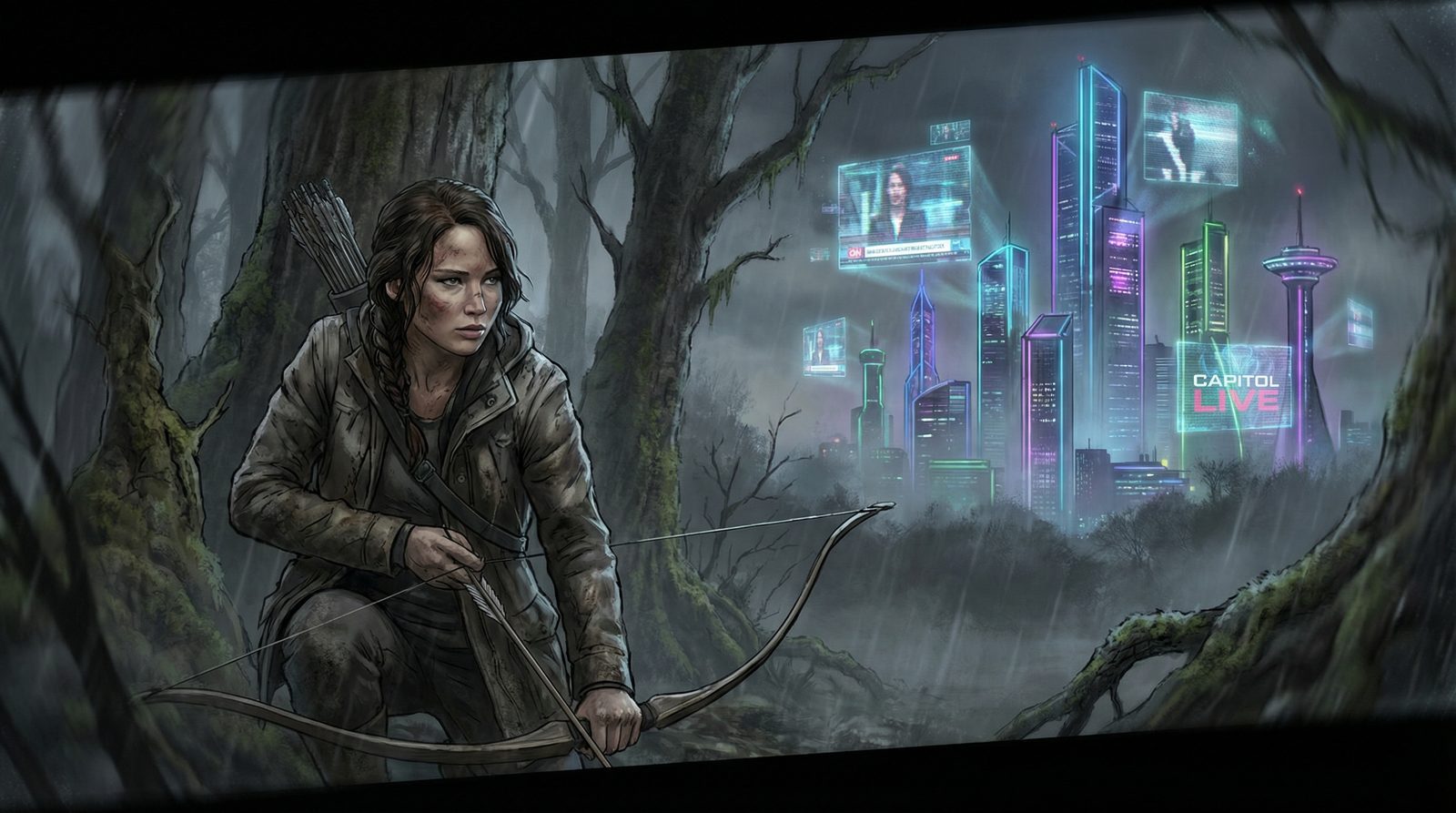
    Editorial illustration inspired by 'The Hunger Games (2012)'

    CHARACTERS & PERFORMANCE

    Katniss is written and played as a classic warrior archetype with a strong streak of protector. Jennifer Lawrence gives her a guarded physicality: she is not a quippy action lead but someone who expects the world to hurt her and acts accordingly. That makes the moments when she softens, especially with Rue and Prim, land harder. Her discomfort with performance is the emotional spine of spectacle vs. survival.

    Peeta fits the archetype of the caregiver and the self-effacing strategist. Josh Hutcherson plays him as someone who understands narrative better than combat. That contrast with Katniss’s blunt directness keeps their dynamic off-balance. Gale, largely sidelined once the Games begin, functions more as a symbolic rebel archetype than a full character here, a reminder of the life Katniss might have had outside the arena.

    Among the adults, Haymitch is the archetypal broken mentor, Woody Harrelson layering cynicism over genuine, if reluctant, care. Effie Trinket and Caesar Flickerman personify bread and circuses, their exaggerated manners showing how thoroughly the Capitol has turned cruelty into pageantry. Even minor tributes are sketched quickly but vividly enough to make their deaths sting, which keeps the deadly game trope from collapsing into faceless cannon fodder. The performances collectively underline how every person in Panem is playing a role, whether they admit it or not.

    CONTEXT & LEGACY

    The Hunger Games arrived in a landscape already familiar with televised dystopia, from The Running Man to Battle Royale, but shifted the conversation into young-adult territory. Compared to the novel, the film trims internal monologue and political exposition, relying more on the visual grammar of reality TV and sports broadcasting to make its point. It also softens some of the book’s harsher edges, particularly around bodily damage, to fit a broader audience, which has led to debates about how much bite remains in its critique of bread and circuses.

    Its legacy is twofold. Commercially, it proved that a female-led science fiction franchise could dominate box offices and cultural conversation, paving the way for later YA dystopias like Divergent. Culturally, it gave teens a vocabulary for talking about spectacle vs. survival, media manipulation, and state violence, even if in simplified form. The image of a girl with a bow, three-finger salute raised against a distant Capitol, has lingered far beyond the film itself, echoed in protests and memes alike. In that sense, the film unintentionally mirrors its own plot: a carefully managed piece of entertainment that audiences seized as a symbol of something more unruly.

    IS IT WORTH WATCHING?

    The Hunger Games is worth watching if you are interested in how mainstream cinema packages political unease for a young audience. It is not as brutal or philosophically dense as some of its influences, but its focus on Katniss’s emotional reality keeps it from feeling hollow. The handheld camera style and PG-13 restraint may frustrate viewers who want clearer action or sharper satire, yet those same choices make the film unusually grounded for a franchise opener.

    If you respond to stories about reluctant heroes navigating systems of control, or if you are curious how YA dystopia evolved between Battle Royale and later series like Divergent, this is a key text. It works as tense genre entertainment and as a primer on how bread and circuses operates in a media-saturated society, even when the film itself is part of that machinery.

    Symbolic illustration inspired by 'The Hunger Games (2012)'

    TRIVIA & PRODUCTION NOTES

    Production leaned heavily on location shooting in North Carolina to give District 12 and the arena a tangible, Appalachian texture. The use of practical sets and real forests helps sell the survival aspect and complements the handheld camera approach. Costume design for the Capitol drew from haute couture and historical court fashion, exaggerating silhouettes and colors to make bread and circuses feel both absurd and menacing.

    Gary Ross and the editors used quick cutting and oblique angles to satisfy ratings boards while still conveying the horror of kids killing kids. James Newton Howard stepped in for composer duties after an early collaboration with T-Bone Burnett, resulting in a hybrid sound that mixes folk textures with more traditional orchestral swells. The film’s marketing leaned into the spectacle vs. survival motif, with viral campaigns that mimicked Capitol propaganda. That blurring of critique and participation in spectacle mirrors similar strategies used later by films like The Purge, where fictional authoritarian branding bleeds into real-world promotion.

    SIMILAR FILMS

    If the deadly game trope and political edge appeal to you, Battle Royale offers a harsher, more satirical take on students forced to kill each other. The Running Man explores bread and circuses in a more overtly comedic and muscular 1980s key, with a condemned man fighting for survival on live TV. Fans of dystopian YA might look to Divergent, which shares themes of factional control and reluctant rebellion, though with a slicker, more conventional feel. For another story about a young woman turned symbol against her will, V for Vendetta, while more ideological and less grounded, scratches a similar itch around spectacle vs. survival and state propaganda.

    DISCOVERABILITY & LINKS

    The Hunger Games sits at the intersection of science fiction, dystopia, and young-adult drama, making it a hub for readers interested in bread and circuses, spectacle vs. survival, and the warrior archetype. On the site it clusters naturally with stories about deadly game tropes, broken mentor figures, and handheld realism. If you are browsing by themes of rebellion, media manipulation, or reluctant heroes from marginalized places like the districts of Panem, this film connects to a wide web of related titles across both page and screen.

  • The Running Man (2025)

    The Running Man (2025)

    The Running Man (2025), directed by Edgar Wright. Science fiction · Approx. 130 minutes · United States.


    INTRODUCTION

    Edgar Wright’s The Running Man (2025) arrives in a media landscape that already feels like a soft version of its nightmare. The film imagines a near-future United States where a live-streamed manhunt is the most popular show on the planet, and where the line between news and bloodsport has dissolved into pure spectacle. Wright treats this not as distant dystopia but as an extension of our current feed-driven reality, which gives the whole film a queasy, contemporary feel. From the first frame, the mood is jittery and paranoid, but laced with his familiar streak of bitter comedy. The Running Man is less a remake of the 1987 Schwarzenegger vehicle than a fresh adaptation of Stephen King’s Richard Bachman novel, and that matters: it trades campy gladiatorial pageantry for a more grounded, sour vision of corporate cruelty. What emerges is a chase movie that doubles as an autopsy of audience complicity.

    PLOT & THEMES

    The plot follows Ben Richards, a disgraced former cop framed for a massacre and offered one way out of a life sentence: run for his life on a reality competition where the world hunts him in real time. The show, also called The Running Man, turns the entire United States into an arena, with contestants tagged, tracked, and monetized as they sprint through decaying cities and cordoned-off corporate zones. The central trope is the familiar death game, but Wright leans into its procedural aspects, showing contracts, bounties, and live heat maps instead of arena-style gladiators.

    The film’s key themes are media manipulation and the spectacle of violence. We watch as the network edits reality, deepfakes Richards into atrocities, and feeds the public a narrative where his survival is framed as villainy. The motif of surveillance screens is everywhere: billboards that replay his supposed crimes, subway panels that flash bounty updates, apartment walls that default to the show’s live feed. Alongside this, the motif of game show aesthetics turns even mundane spaces into potential sets, with QR codes and AR overlays gamifying ordinary life.

    Wright also toys with the trope of the antihero on the run. Richards is not a clean rebel. That moral murkiness keeps the audience’s own voyeurism in play. Like The Hunger Games, the film keeps asking whether resistance can survive once it has been packaged as content. A small underground network hijacks the broadcast, but even their rebellion risks becoming just another spinoff show. The Running Man keeps circling back to one question: when everything is entertainment, what does it cost to look away?

    CINEMATIC TECHNIQUE & AESTHETICS

    Edgar Wright builds The Running Man around a restless, propulsive feel that mirrors the experience of channel surfing and doomscrolling. The primary cinematic technique is kinetic editing: scenes whip between the live chase, studio commentary, social media reactions, and slick network promos, often within the same breath. Wright’s familiar use of match cuts ties these layers together, so a thrown punch in a back alley cuts to a sponsored energy drink ad, or a blood spatter smash-cuts into a confetti burst on a talk show. The disorientation is deliberate; you are never allowed to forget the machinery around the violence.

    The color palette leans on neon dystopia, but with a twist. Instead of the usual blue-and-orange sludge, Wright and his cinematographer use saturated magentas and toxic greens for the broadcast overlays, while the real streets of the United States sit in bruised grays and sodium-vapor yellows. The motif of game show aesthetics shows up in the production design: every public space seems pre-lit for potential spectacle, with hidden cameras, LED strips, and ad screens waiting to be triggered. When the show’s producers “drop” new hazards into the world, the lighting shifts subtly, as if reality itself has been re-skinned.

    Sound design is another crucial technique. Wright uses rhythmic sound bridges to turn crowd chants, studio applause, and the thump of drone rotors into a kind of percussive score. Pop songs kick in not to celebrate action beats but to underline how grotesquely cheerful the broadcast tone is. A recurring audio gag cuts from the sickening impact of a fall to the chirpy jingle of a sponsor, a pattern that gradually becomes harder to laugh at. The overall feel is claustrophobic and adrenalized, like being trapped inside a feed that never stops refreshing.

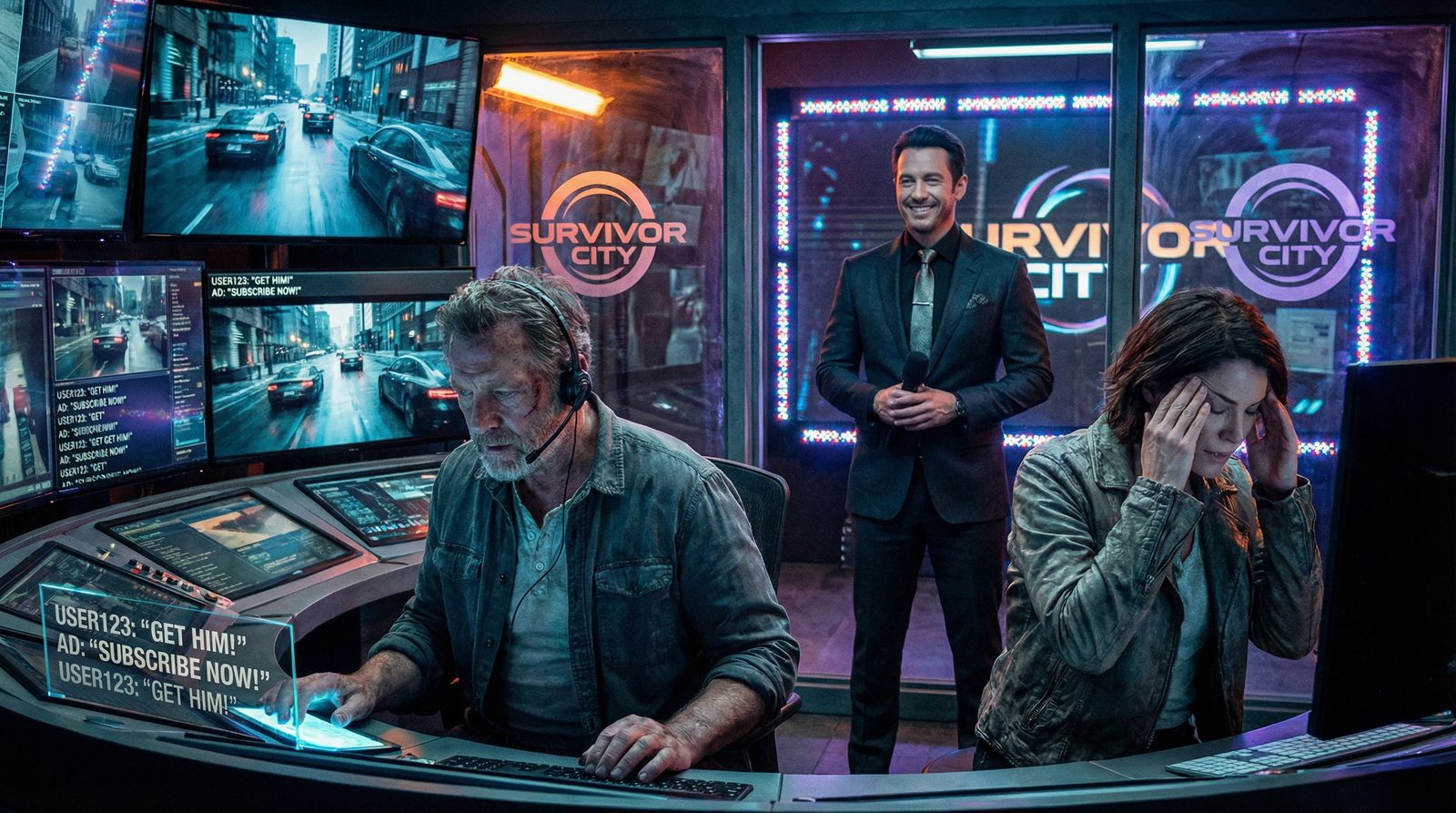
    Editorial illustration inspired by 'The Running Man (2025)'

    CHARACTERS & PERFORMANCE

    Ben Richards functions as the archetype of the reluctant rebel. The performance leans into physical exhaustion and prickly defensiveness rather than stoic heroism. He is introduced not as a mythic warrior but as a man already worn down by institutional betrayal, which gives his later bursts of violence a sour, desperate edge. The actor plays him as someone who hates both the system and the fact that he is now the star of its biggest show, and that tension keeps the character from collapsing into a stock action lead.

    The show’s host embodies the archetype of the charismatic villain. This is not a cackling ringmaster but a smooth, late-night personality who sells the carnage with faux empathy and sharp timing. He flirts with the camera, banters with the control room, and occasionally breaks into off-air tantrums that reveal how terrified he is of slipping in the ratings. The performance is calibrated so that you can see why the public loves him even as you watch him greenlight atrocities.

    Supporting figures fill out a gallery of archetypes: the corporate overlord who treats human lives as line items; the cynical producer who slowly grows a conscience; the underground hacker who sees the show as both enemy and opportunity. Wright gives each of them small, telling beats, often in cramped control rooms or anonymous office spaces, to show how ordinary people keep the machine running. The interplay between Richards and a reluctant ally from the production team becomes the film’s emotional spine, shifting the story from simple revenge to a study of complicity and fragile solidarity.

    CONTEXT & LEGACY

    The Running Man (2025) sits at the crossroads of several traditions. It is more faithful in spirit to Stephen King’s Bachman novel than the 1987 film, particularly in its focus on poverty, propaganda, and the grinding boredom of life under a surveillance state. Where the earlier movie leaned into cartoonish gladiators, Wright’s version feels closer to Black Mirror in its interest in how people adapt to cruelty once it becomes normal programming.

    Released into an era of livestream culture and algorithm-driven outrage, the film inevitably invites comparison to The Hunger Games and to Network. Like those works, it treats television not as a neutral medium but as a character with its own appetites. Wright’s signature style, honed on films like Shaun of the Dead and Baby Driver, gives the material a distinct rhythm that may influence how future action films handle screens, overlays, and diegetic media. If it finds an audience, The Running Man is likely to be cited less for individual set pieces than for its dense, almost oppressive portrayal of a world that can no longer tell the difference between watching and doing harm.

    IS IT WORTH WATCHING?

    The Running Man (2025) is worth watching if you have any appetite for dystopian science fiction that actually grapples with how media feels right now. It is not a comforting film. The action is tense and cleverly staged, but the real impact comes from how relentlessly it mirrors our own habits of scrolling, sharing, and gawking. Edgar Wright’s flair for kinetic editing and rhythmic sound bridges keeps the pace high, yet the film leaves a bitter aftertaste that some viewers may find exhausting.

    If you enjoy stories like The Hunger Games or Black Mirror but wish they spent more time inside the machinery of television and social media, this will likely hit a nerve. If you are mainly looking for a breezy, quippy chase movie, the film’s moral queasiness and sustained critique of audience complicity may feel like too much. It is sharp, angry, and deliberately uncomfortable.

    Symbolic illustration inspired by 'The Running Man (2025)'

    TRIVIA & PRODUCTION NOTES

    Edgar Wright approaches The Running Man as a new adaptation of Stephen King’s Bachman novel rather than a straightforward remake of the 1987 film, which frees him to discard the earlier movie’s pro-wrestling-style stalkers in favor of a more diffuse, crowd-sourced threat. The script foregrounds the economics of the show, emphasizing ad slots, sponsorships, and ratings metrics as much as blood and chase sequences.

    Production design leans heavily on practical locations in decaying industrial districts of the United States, augmented with digital signage and AR-style overlays. Wright’s long-time editorial collaborators help maintain the film’s intricate kinetic editing patterns, with several sequences mapped out around pre-selected tracks to ensure the rhythmic sound bridges land precisely. The cast reportedly shot extended improvisations for the studio segments, giving the network’s on-air banter a loose, lived-in quality that contrasts with the tightly choreographed chase scenes. Fans of the 1987 film may spot a few sly visual nods, but the tone and structure are pointedly different, aligning more closely with the book’s bleakness.

    SIMILAR FILMS

    If The Running Man (2025) works for you, several adjacent titles are worth exploring. The Hunger Games offers another death game narrative centered on media manipulation and the spectacle of violence, though with a more overtly YA tone. Network is an essential precursor in its savage look at television’s hunger for sensationalism. Fans of Black Mirror will recognize the same unease around surveillance screens and gamified cruelty, especially in episodes that blur reality TV with punishment.

    Within Edgar Wright’s own filmography, Baby Driver provides a useful comparison point for how kinetic editing and rhythmic sound bridges can turn action into a kind of choreography. Together, these works sketch a loose cluster of stories about how entertainment shapes behavior, and how hard it is to stay human inside systems that treat people as content.

    DISCOVERABILITY & LINKS

    The Running Man (2025) sits in our catalog alongside other science fiction and dystopian stories that interrogate media manipulation, the spectacle of violence, and the death game trope. Viewers drawn to neon dystopia aesthetics, surveillance screens as a motif, or the archetype of the reluctant rebel will find thematic overlap with several films and books across our site. It also connects to a broader cluster of works about the United States as a mediated battleground where corporate power, reality TV, and public complicity blur together.