
Period: 1970s

  • Way Of The Peaceful Warrior – A Book That Changes Lives (1980)

    Way Of The Peaceful Warrior – A Book That Changes Lives (1980)

    INTRODUCTION

    Way Of The Peaceful Warrior A Book That Changes Lives (1980) by Dan Millman
    Spiritual memoir · generally under 300 pages · United States


    This is a book about a young man who has everything that is supposed to make him happy — talent, a scholarship, the prospect of success — and still lies awake at 3 a.m. Way Of The Peaceful Warrior opens on that insomnia and never fully leaves it. The rest is an argument about what to do with the ache underneath achievement.

    The recurring motif of the gas station at night, with humming fluorescent lights and the smell of oil, becomes a threshold between ordinary striving and something harsher, more awake. The feel is restless, bruised hope: enlightenment here is not a glow but a stripping away. Millman’s encounter with the old attendant he nicknames Socrates begins a long unmaking, told with the intimacy of confession rather than the distance of doctrine.

    PLOT & THEMES

    The plot is deceptively simple. Dan, a star gymnast at UC Berkeley, wanders into an all-night gas station and meets Socrates, an ageless, sharp-tongued attendant who seems to know his thoughts. What begins as banter turns into a demanding apprenticeship. Socrates assigns humiliating exercises and strange ordeals — fasting, late-night runs, attention drills — designed to dismantle ego rather than build skill.

    The book’s central trope is the mentor as trickster sage. Socrates lies, withholds, and stage-manages lessons, pushing Dan toward direct experience instead of explanation. Dreams and visions recur — nightmares of falling, lucid memory sequences, threshold moments where fear becomes instruction — blurring the line between psychological breakdown and spiritual initiation.

    A severe injury pivots the story from athletic ambition to reckoning. The body’s failure becomes the forcing mechanism: it strips Dan of the identity built on performance and forces him to confront how he relates to pain, fear, and control. That’s why this book sits naturally beside Athletic Discipline As Spiritual Practice and Awakening Through Physical Injury in your cluster logic: training becomes inner work, and injury becomes the hard stop that makes the work non-optional.

    The ending focuses on a shift in awareness rather than a trophy. The “win” is internal: the gradual discovery that presence matters more than applause, and that the next moment is always the real arena. Compared with the film adaptation, which tends to compress and dramatize the arc into a neater sports-redemption shape, the book keeps returning to relapse and stubbornness, insisting that the path is spiral-shaped, not linear.

    PROSE & NARRATIVE STRUCTURE

    Millman uses a straightforward first-person memoir frame but keeps tilting it toward fable. The technique blends retrospective commentary with present-tense immediacy: older Dan reflects on younger arrogance, then drops the reader into a late-night run through fog or a silent attention drill in the gas station’s back room. The prose is clean and plain, which makes sudden visionary passages hit harder.

    Structurally, the book moves in spirals. Each apparent breakthrough is followed by regression. Dan has a moment of stillness, then falls back into old patterns of striving and anxiety. Chapters often end on a line of Socratic dialogue or a small shock, keeping the pacing brisk even when the text becomes didactic. Sensory detail — chalk dust, soreness, fluorescent hum, fog, exhaustion — keeps the spiritual language anchored in the body.
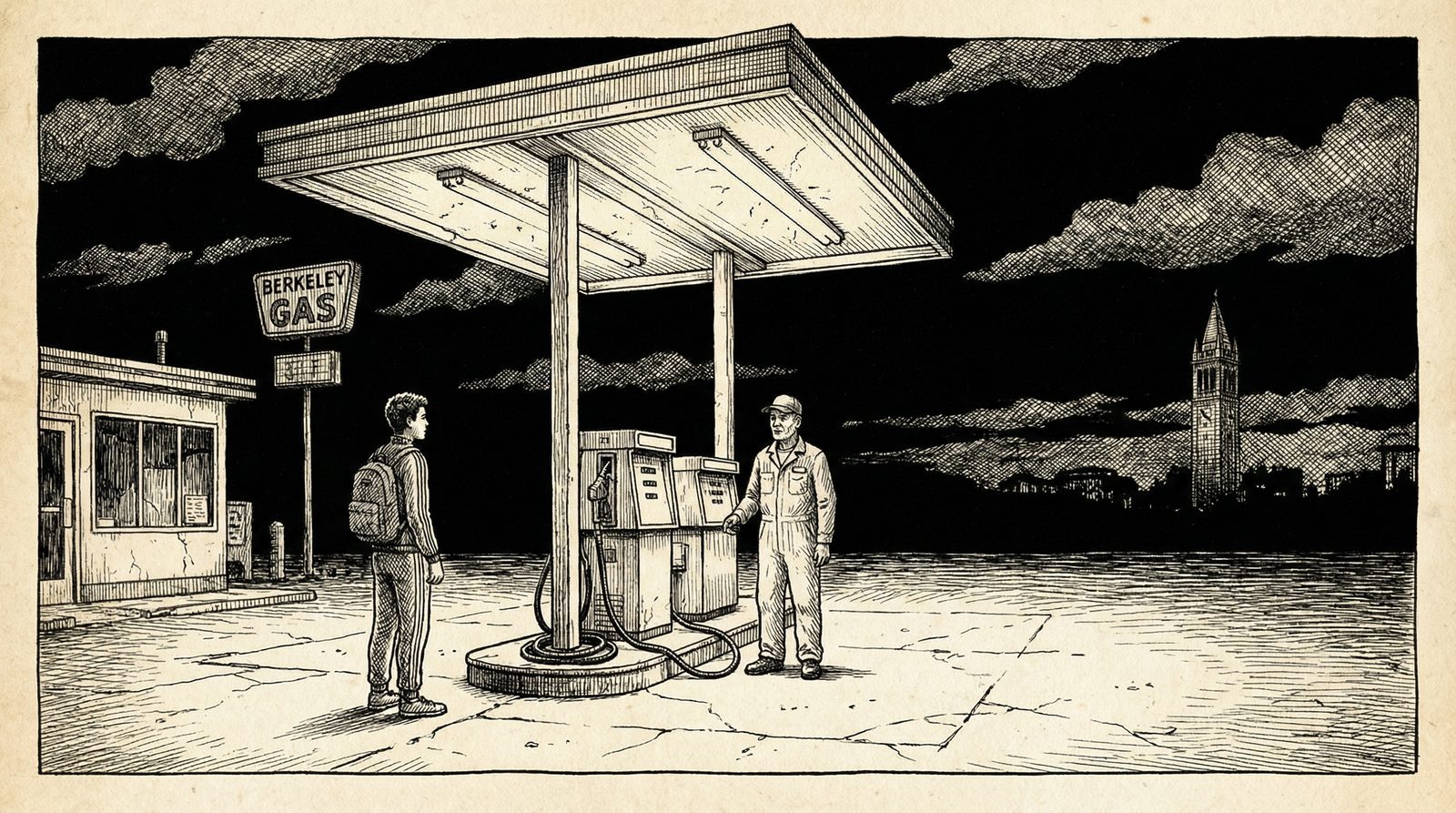
    Conceptual editorial illustration inspired by 'Way Of The Peaceful Warrior A Book That Changes Lives (1980)'

    CHARACTERS & INTERIORITY

    Dan is the classic seeker archetype. His interior monologue is crowded with comparison: against teammates, against imagined future versions of himself, against the serene ideal he projects onto Socrates. That constant self-measurement is the psychological engine of the book. We watch him resent the mentor, idolize him, then see through him — only to realize the real struggle is fear of ordinariness.

    Socrates is less a fully rounded character than a deliberately constructed mirror. He shifts from gruff mechanic to almost otherworldly presence, appearing in dreams and unlikely places. Millman still slips in humanizing details — tea in the cluttered back room, small acts of quiet service — to keep the figure from dissolving into pure symbol. Joy functions as a softer counterpoint: the teaching embodied without the mentor’s drama, a glimpse of ease Dan wants but cannot yet live.
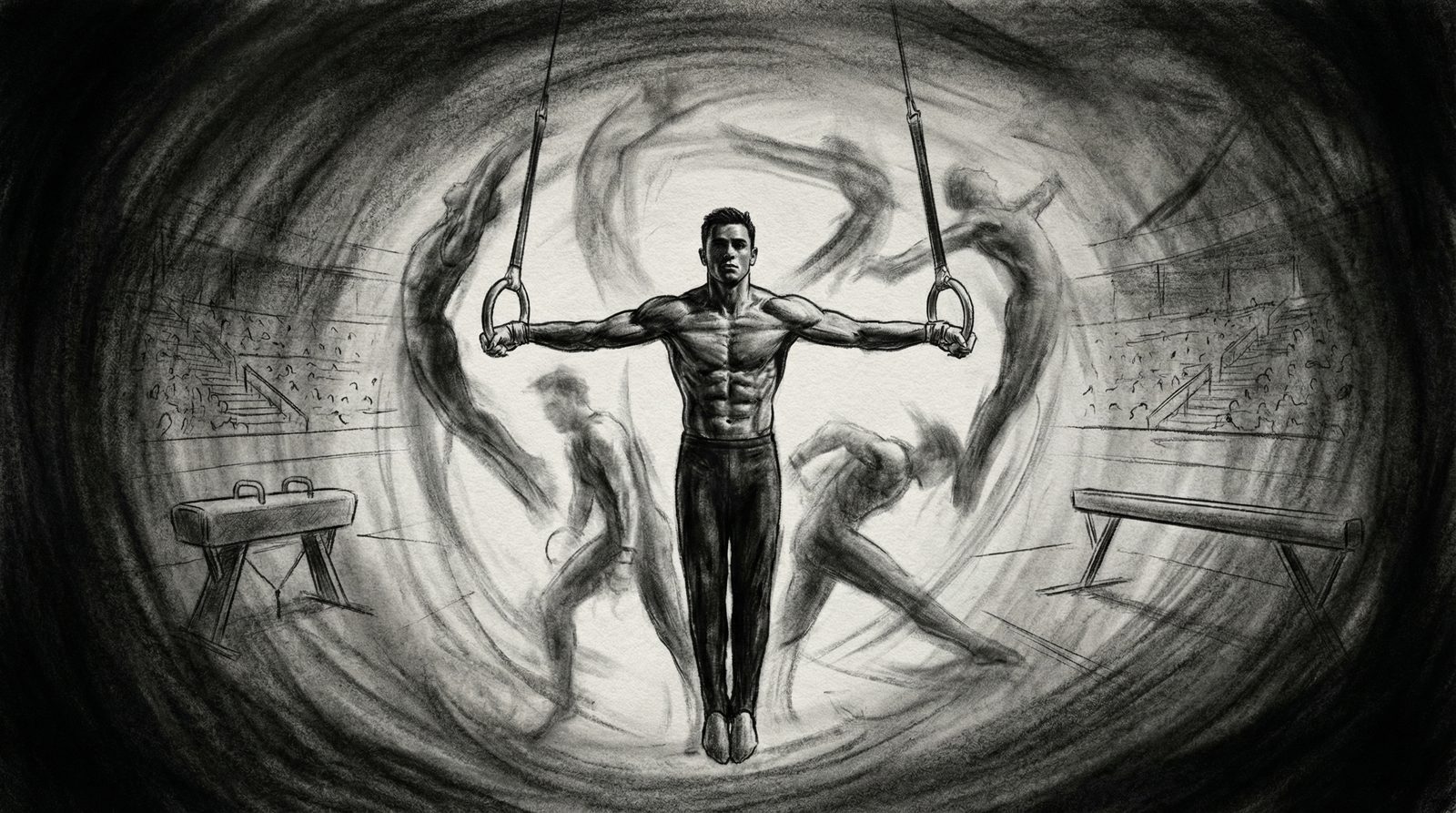
    Illustration inspired by 'Way Of The Peaceful Warrior A Book That Changes Lives (1980)'

    LEGACY & RECEPTION

    Since 1980, Way Of The Peaceful Warrior has lived a double life: modestly reviewed on release, then passed hand to hand in gyms, yoga studios, and college dorms. It occupies a similar shelf-space to other late-20th-century “mind-body” books, but with a distinctly athletic frame. The book’s continued circulation owes a lot to its refusal to end in easy victory. It offers sustained awareness rather than a career-defining moment, and that choice has made it both beloved and frustrating depending on what a reader expects.

    IS IT WORTH READING?

    It depends on your tolerance for earnestness and didactic dialogue. If you want a tightly plotted sports narrative, you’ll likely be frustrated. If you’re interested in how ambition corrodes from the inside and how a life might be rebuilt around presence rather than achievement, it still has bite. Read it not as a manual but as one flawed person’s record of stumbling toward a different way of being.

    TRIVIA & AUTHOR FACTS

    Millman draws heavily from his own background in collegiate athletics. Many readers treat Socrates as a real mentor figure filtered through spiritual allegory, and Millman has described the character as composite rather than simple reportage. The subtitle “A Book That Changes Lives” was not part of the original small-press edition and was added as the book gained a following through reissues.

    SIMILAR BOOKS

    If this resonates, you may prefer other narratives where spiritual inquiry is grounded in bodily discipline and everyday struggle. The strongest neighbors tend to share the same premise: transformation is not a vision; it’s a practice lived under pressure.

    DISCOVERABILITY & LINKS

  • Zen And The Art Of Motorcycle Maintenance (1974)

    Zen And The Art Of Motorcycle Maintenance (1974)

    INTRODUCTION

    Zen and the Art of Motorcycle Maintenance (1974) by Robert M. Pirsig
    Philosophical novel · 434 pages · United States


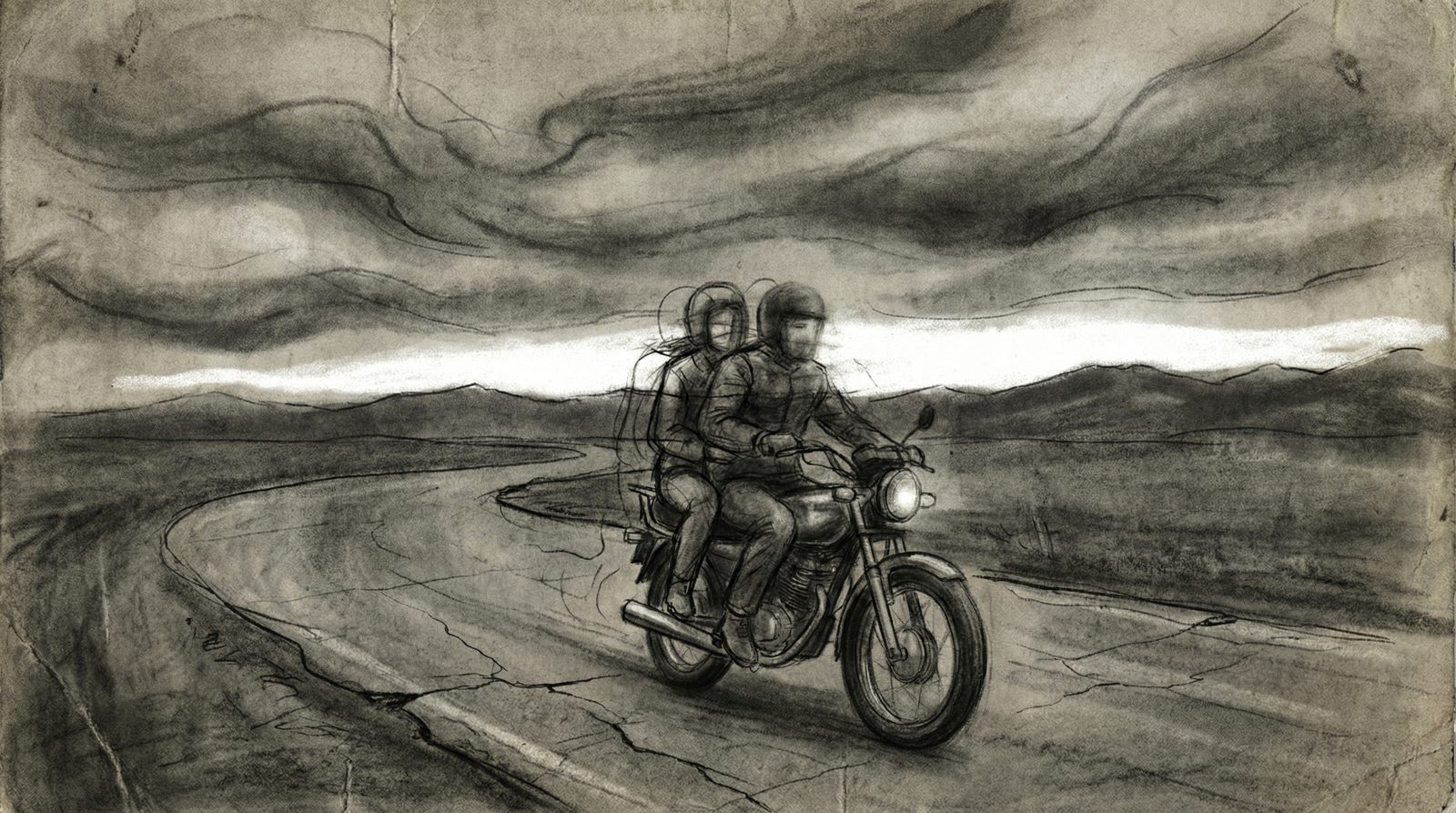
    Zen and the Art of Motorcycle Maintenance is one of those books people claim to have read when what they really remember is the title. It is not a manual and not quite a novel. It uses the open road as a frame: a father and his young son ride a Honda across the American West while, inside the father’s mind, an older self named Phaedrus keeps stirring.

    The mood is uneasy and faintly feverish. There is sun on asphalt, engine vibration, and the nagging sense that something in modern life has gone badly out of tune. Pirsig uses the motorcycle as both machine and moral mirror, asking whether sanity is possible in a culture that worships efficiency but forgets meaning.

    PLOT & THEMES

    On the surface, the plot is simple. A nameless narrator rides from Minneapolis toward the Pacific Northwest with his son, Chris. Their friends John and Sylvia Sutherland join them along the way. They cross the Dakotas, move into Montana, and eventually reach the coast. Practical lessons punctuate the ride: valve clearances, chain tension, how to listen for what an engine is trying to tell you.

    But the road trip is a decoy. The real story happens inside the narrator, where memories of Phaedrus begin to reassemble. Phaedrus was a brilliant, obsessive teacher who became consumed by the idea of “Quality.” His pursuit spiraled from intellectual argument into breakdown, ending in institutionalization and electroshock therapy. The book’s central tension is whether the narrator can live without becoming that man again, and whether the narrator can be honest about the fact that Phaedrus never entirely vanished.

    Quality becomes the book’s governing concept: a way to heal the split between classical, rational analysis and romantic, intuitive experience. Pirsig insists that the divide is not just philosophical. It is lived. It shows up in how you fix a machine, how you teach a student, how you talk to your child, and how you survive your own mind when it starts to fracture.

    By the time father and son reach the ocean, the past has broken through. In a motel room, Chris confronts his father about the gaps in their shared history and the fear that he will “go crazy again.” The narrator finally admits what he has been circling for hundreds of pages: he is Phaedrus returned, or at least the person who must now carry Phaedrus’s memories without pretending they belong to someone else. The ending is not a cure narrative. It is a fragile reconciliation, tentative and incomplete, and that incompleteness is the book’s honesty.

    PROSE & NARRATIVE STRUCTURE

    Pirsig structures the book as a braid, alternating scenes from the trip with philosophical “Chautauquas,” long improvised talks delivered directly to the reader. This technique keeps one wheel on the pavement and one in abstraction. A description of cleaning a clogged jet or adjusting ignition points can slide, almost imperceptibly, into a discussion of Plato, Aristotle, or the problem of defining value.

    The prose is plainspoken but elastic. When Pirsig writes about the high plains at dawn or rain near the mountains, there is a quiet lyricism that matches the rhythm of the road. When he writes about breakdown and “stuckness,” the tone tightens into claustrophobia. He becomes precise about the moment before a mind gives way, and about the strange relief that sometimes follows when resistance collapses.

    When he describes the motorcycle as an assemblage of functions, he is not trying to be poetic. He is trying to show that attention can be an ethic. Caring about how something works is a way of caring about the world. Neglect is not neutral. It is a posture toward life, and it spreads.

    Structurally, the argument moves in tightening spirals rather than straight lines. Each day’s ride returns to the same questions, what Quality is, whether analysis can coexist with direct experience, whether the mind can survive its own hunger for certainty. The narrative never fully resolves those questions. It stages them as a lifelong condition, something you learn to live inside rather than something you solve once.

    Conceptual editorial illustration inspired by 'Zen and the Art of Motorcycle Maintenance'

    CHARACTERS & INTERIORITY

    The narrator is an unusual seeker figure: someone who has already broken in pursuit of meaning and now circles back cautiously, wary of his own intensity. His interiority is dense. He appears as careful mechanic, anxious father, and former zealot, sometimes in the same paragraph. The split between “narrator” and “Phaedrus” is not merely a device. It is how he experiences himself, as if his own past were an alien intelligence pressing at the edge of consciousness.

    Chris is written with raw opacity. He is moody, easily hurt, sometimes exhilarated by the trip and sometimes bored. His stomach aches, his fear of abandonment, and his questions about madness carry the emotional weight the philosophy can occasionally evade. Their relationship gives the book its human stakes. You do not need to accept the metaphysics of Quality to feel the ache of a child trying to understand whether his father will remain stable.

    John and Sylvia Sutherland function as foils. John refuses to touch his own BMW’s maintenance, preferring machines to remain mysterious. Sylvia senses that something is off in the narrator’s intensity and detachment. Even minor figures, colleagues who bristle at Phaedrus’s ideas, mechanics who mishandle a bolt, serve as examples of different relationships to care, competence, and attention.

    LEGACY & RECEPTION

    Published after more than a hundred rejections, the book became an unlikely bestseller. It caught a particular American restlessness: the desire for meaning without rejecting technology, the craving for transcendence without surrendering craftsmanship. Engineers saw their pride in workmanship honored. Philosophers argued over whether the “Metaphysics of Quality” was rigorous or naïve. Ordinary readers simply recognized the feeling of being out of tune with modern life and wanting to repair the instrument from the inside.

    Its ending has remained central to its reputation. The father and son bond is only tentatively restored. The narrator accepts that the intensity that once destroyed his life is also bound up with his deepest insight, and that Chris may have inherited some of that dangerous voltage. The unresolved tension between sanity and vision is why the book keeps returning. It refuses to become a tidy inspirational story.

    IS IT WORTH READING?

    This is not a quick read, and it does not pretend to be. If you want a straightforward plot, you will get impatient. If you are willing to sit with long arguments about Quality intercut with roadside coffee and carburetor details, you may find it oddly absorbing.

    Its blind spots are real. The density can feel relentless, and the philosophical passages can occasionally flatten the emotional life around them. Still, the book offers something rare: a serious attempt to think through how to live well in a world of machines without worshiping them and without fleeing from them. If that tension already lives inside you, the ride is worth taking.

    Illustration inspired by a core idea from 'Zen and the Art of Motorcycle Maintenance'

    TRIVIA & AUTHOR FACTS

    Pirsig reportedly received more than 120 rejections before a publisher took a chance on the manuscript. He worked as a technical writer and teacher, and his familiarity with manuals and lab-report precision shapes the maintenance scenes. The “Chautauqua” framing nods to the American tradition of traveling lectures, repurposed here for the highway era.

    The narrator’s Honda is based on Pirsig’s own machine, and many of the mechanical details reflect lived experience rather than symbolic decoration. After the book’s success, Pirsig largely withdrew from public life, publishing one later philosophical novel and resisting the role of guru. That reluctance fits the book’s suspicion of any fixed system, including its own.

    SIMILAR BOOKS

    If this blend of narrative and inquiry works for you, Lila extends Pirsig’s ideas into a different journey. Readers drawn to spiritual searching and interior crisis often find kinship with Siddhartha. For a more chaotic portrait of American seeking, The Electric Kool-Aid Acid Test offers an opposite energy. And for a grounded nonfiction meditation on manual work and meaning, Shop Class as Soulcraft can feel like a distant cousin to Pirsig’s long ride west.

    DISCOVERABILITY & LINKS

    DISCOVERABILITY & LINKS

  • Way Of The Peaceful Warrior (1980)

    Way Of The Peaceful Warrior (1980)

    INTRODUCTION

    Way of the Peaceful Warrior (1980) by Dan Millman
    Spiritual memoir · United States


    Way of the Peaceful Warrior is a late twentieth-century spiritual coming-of-age story dressed in sweatpants and chalk dust. It begins in the fluorescent quiet of the UC Berkeley gym and ends somewhere harder to name: a stripped-down awareness where attention itself becomes the discipline. Dan Millman fictionalizes his own past as a champion gymnast, then detonates it with the arrival of a mysterious gas-station sage he calls Socrates.

    The mood is restless and hungry. The book has the rawness of a training diary crossed with a Zen parable, and it is far stranger, funnier, and more abrasive on the page than its later, softer reputation suggests. This is not a gentle self-help story. It is about obsession, humiliation, injury, and the slow dismantling of a young man’s carefully polished identity.

    PLOT & THEMES

    The plot is deceptively simple. Dan is a gifted gymnast at UC Berkeley in the 1970s, already a national champion yet plagued by nightmares and a sense of hollowness. One sleepless night he wanders into an all-night gas station near campus and meets Socrates, an old attendant who moves with impossible grace and casually appears on the roof without using a ladder.

    This encounter launches years of erratic, often humiliating training that has little to do with pommel horses and everything to do with attention, diet, ego, and fear. Socrates teaches by disruption. He withholds praise, assigns absurd tasks, and dismantles Dan’s self-importance piece by piece.

    A recurring theme is the body as a doorway rather than an obstacle. Injuries, exhaustion, hunger, and pain are not framed as enemies to overcome but as teachers that force Dan into the present moment. The body becomes the site where illusion collapses, especially after the motorcycle accident that shatters his athletic future and leaves him learning to walk again with metal pins in his leg.

    Millman contrasts ambition with awareness. Olympic dreams are revealed as just another story the ego tells itself. Love complicates this further. Joy, introduced before Dan’s accident, brings a playful, grounded energy that refuses spiritual theatrics. She challenges his dependence on Socrates and pushes him toward responsibility rather than devotion.

    The book’s ending rejects triumph. Dan does not win a defining competition or achieve permanent enlightenment. Instead, he walks away from the life he built, broke and uncertain, carrying nothing but attention into an ordinary future. The transformation is not heroic. It is unresolved, which is precisely the point.

    PROSE & NARRATIVE STRUCTURE

    The story is told in first-person retrospect. An older Dan narrates his younger self’s confusion with a mix of affection and embarrassment. The prose is straightforward and occasionally clunky, but that plainness suits the material. Millman writes like an athlete keeping notes, not a mystic polishing aphorisms.

    The structure moves in cycles rather than a clean three-act arc. Training sessions in Harmon Gym alternate with late-night conversations at the gas station, dream sequences, and visionary episodes. The most striking of these is the desert initiation, where Dan confronts his own mortality in a canyon littered with bones and imagines his body decaying under the sun.

    Dialogue carries much of the philosophical weight. Socrates is sharp, sarcastic, and frequently cruel. He mocks Dan’s vanity, swears freely, and sends him scrubbing toilets as spiritual practice. Sudden time jumps, including the abrupt cut from pre-accident arrogance to hospital confinement, create a jagged rhythm that mirrors Dan’s psychological disorientation. Enlightenment here is not a smooth ascent but a series of collapses and stubborn re-starts.

    Conceptual editorial illustration inspired by 'Way of the Peaceful Warrior'

    CHARACTERS & INTERIORITY

    Dan is not a flattering protagonist. He is talented, arrogant, anxious, and deeply invested in how others see him. The book spends long stretches inside his mental scorekeeping: pre-meet rituals, locker-room comparisons, and the shame that follows late-night binges on junk food. His interior world is crowded with rankings and imagined judgments.

    Socrates remains the enigmatic center. He functions less as a fully rounded character than as a pressure system designed to break Dan’s defenses. Still, Millman gives him human texture: humming while cleaning gas pumps, favoring simple soup, and later appearing frail and mortal in a hospital bed. The invincible teacher is revealed as temporary.

    Joy disrupts the guru dynamic. She refuses to be a serene muse or spiritual reward. Her insistence that Dan stop outsourcing authority to Socrates forces him into adulthood. Minor figures, including fellow gymnasts and romantic partners, act as mirrors, revealing how strange and self-absorbed his path appears from the outside. The interiority here is not mystical. It is the slow erosion of ego under pressure.

    LEGACY & RECEPTION

    Since its publication, Way of the Peaceful Warrior has lived a double life: cult favorite on college campuses and staple of yoga studios. It arrived as Eastern philosophy filtered into American culture through martial arts, countercultural paperbacks, and spiritual experimentation. Millman’s fusion of sports narrative and inner training made the book unusually accessible.

    The film adaptation, Peaceful Warrior (2006), expanded its audience but softened its edges. Years of discipline were compressed, Joy’s role was reduced, and the harsher bodily lessons were smoothed over. Readers who come to the book after the film are often surprised by how unsentimental it is. Socrates vanishes. Dan does not “win.” What remains is practice. That refusal of closure is why the book has endured.

    IS IT WORTH READING?

    That depends on your tolerance for earnestness. If you want polished literary style, this may grate. If spiritual instruction makes you recoil, Socrates’s aphorisms will feel heavy-handed. But if you are curious about the collision between high-level ambition and inner collapse, the book has a stubborn honesty.

    It is especially worth reading if you have built your identity around performance, sports, grades, career, and then watched that structure begin to shake. The book offers no neat method. It offers a record of stumbling toward attention, one awkward, sweaty, occasionally luminous moment at a time.

    Illustration inspired by a core idea from 'Way of the Peaceful Warrior'

    TRIVIA & AUTHOR FACTS

    Dan Millman was a national-level gymnast at the University of California, Berkeley, and later coached at Stanford. The campus locations and athletic culture are drawn from his real life, though heavily fictionalized. Socrates is a composite figure based on several teachers, amplified into myth. Joy was inspired by a real woman Millman credits with reshaping his understanding of practice.

    The manuscript was initially rejected for being an awkward hybrid, neither straightforward memoir nor pure philosophy. Its success grew slowly through word of mouth, shared passages, and personal recommendation rather than institutional endorsement.

    SIMILAR BOOKS

    Readers who respond to this blend of discipline and awakening may also explore Zen and the Art of Motorcycle Maintenance (1974) for a more philosophical road narrative, or Siddhartha (1922) for a stripped-down spiritual journey. Each asks a version of the same question: what happens when achievement stops being enough?

    DISCOVERABILITY & LINKS

    DISCOVERABILITY & LINKS

    DISCOVERABILITY & LINKS

  • The Friends Of Eddie Coyle (1972)

    The Friends Of Eddie Coyle (1972)

    By: George V. Higgins
    Genre: Crime fiction
    Country: United States


    INTRODUCTION

    The Friends Of Eddie Coyle (1972) is a crime novel that smells like cigarette ash and stale beer, set in the jittery underbelly of the 1970s. Its world is small: the motif of transactional loyalty runs through every page; friendship is just another word for credit extended and favors owed. The feel is one of slow suffocation rather than sudden shock, as if the whole book were a long exhale on a cold Boston night. George V. Higgins doesn’t glamorize the underworld; what he hears are men like Eddie Coyle, a worn-out gunrunner with busted knuckles and a looming prison sentence, trying to talk their way into a future that keeps shrinking every time they open their mouths.


    PLOT & THEMES

    The plot of The Friends Of Eddie Coyle is deceptively simple. Eddie, a low-level Boston hood with a past that includes those famous smashed fingers from a truck job in New Hampshire, is facing another bid in prison. To avoid it, he starts feeding information to ATF agent Dave Foley while still brokering guns between the young dealer Jackie Brown and a crew of bank robbers hitting suburban branches from Dedham to Quincy. Around this, a quiet web of double-dealing tightens: bartender and sometime hitman Dillon, bookies like Jimmy Scalisi, and assorted hangers-on orbit Eddie’s desperation.

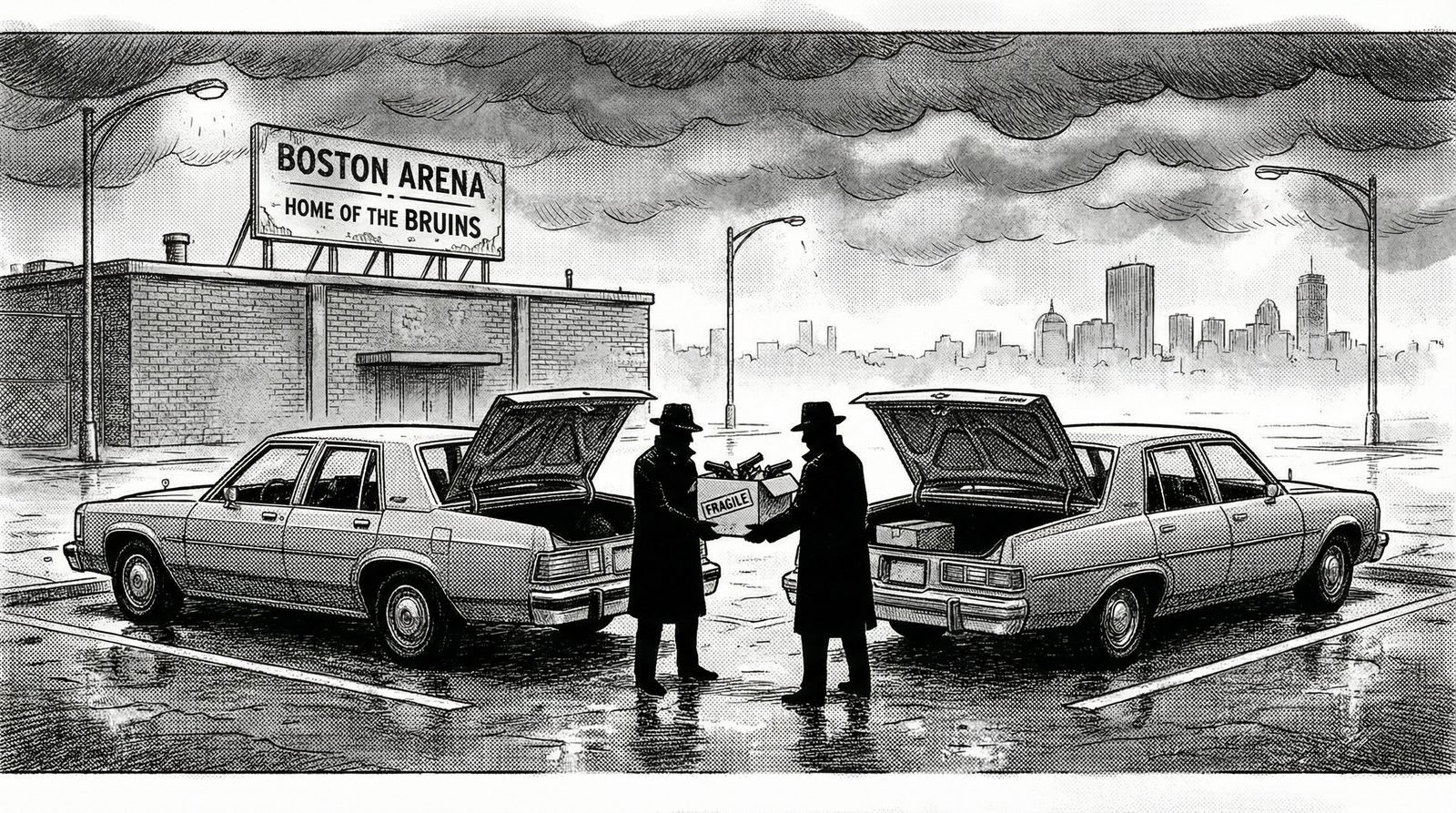
    The trope at work is the doomed informant, but Higgins drains it of melodrama. There are no big set pieces, just incremental betrayals. One motif is bureaucratic indifference: Foley treats Eddie as a file, not a man, and the prosecutors in the federal courthouse at Post Office Square barely register him as anything but leverage. Another motif is routine as prison: the morning coffee at the Speedway Diner, the same barstools at Dillon’s place, the same routes to the hockey rink parking lots where guns are passed from trunk to trunk.

    Unlike the film adaptation, the novel makes Eddie’s end feel even more like an administrative decision than a dramatic climax. After Eddie has outlived his usefulness, Dillon calmly accepts the contract and takes him to a Bruins game at Boston Garden, then out for beers in a Brighton bar. On the drive home, Dillon’s partner in the backseat puts three bullets in Eddie’s head while Dillon keeps the car steady. The book ends not with outrage but with paperwork: Dillon returns to his bar, Foley files his reports, and the robbers Eddie betrayed are quietly rolled up. The world shrugs and keeps going.

    Higgins’s focus on the small-scale, procedural grind anticipates the dry institutional fatalism you see later in works like Don Winslow’s The Power of the Dog (2005) and the film The French Connection (1971), but his Boston is even more cramped, more local, more suffocating.


    PROSE & NARRATIVE STRUCTURE

    The most famous thing about The Friends Of Eddie Coyle is its narrative technique of dialogue-driven storytelling. Higgins drops you into conversations with almost no exposition. The feel is claustrophobic and oddly hypnotic: you learn who’s who and what’s at stake by eavesdropping, piecing it together from half-finished sentences and local slang. When Foley and his fellow agents sit in a government sedan outside the bank, listening to the radio chatter as the robbers go in, the tension comes entirely from what is said and what is not.

    Higgins uses a kind of hard-boiled free indirect style between the talk, but it’s stripped down to the bone. Descriptions of places — the Somerville tenement where Eddie lives, the shabby bar where Dillon works, the anonymous motel rooms where Jackie Brown counts his money — are quick, functional, never romantic. The structure is almost mosaic: short scenes that jump between Eddie, the robbers, Jackie, Dillon, and Foley, overlapping in time and filling in the same events from different angles.

    This fragmented approach means there’s no single, clean narrative arc. We see the bank crew rehearsing their methodical takeovers, the way they make tellers lie on the floor and empty the drawers, returning to the same South Shore banks again and again. We hear Jackie’s careful instructions about filing off serial numbers, about how many guns he can safely move in a week. The rhythm of these scenes makes Eddie’s murder feel less like a climax than one more entry in a long, dull ledger of crimes and consequences. That’s the structural joke: the story of a man trying to matter is told in a form that keeps reminding you he doesn’t.

    Conceptual editorial illustration inspired by 'The Friends Of Eddie Coyle (1972)'

    CHARACTERS & INTERIORITY

    Eddie Coyle is the classic archetype of the weary small-time crook, but Higgins refuses to sentimentalize him. Eddie is not noble, not especially bright, and not secretly waiting to reform. He’s a man who has spent his life making bad bargains and is now too tired to find a good one. His interiority comes in quick, bitter flashes — his fear of going “up the river” again, his resentment that nobody remembers the truck job that cost him his fingers, his half-hearted attempts to reassure his wife that things will be all right.

    Dillon is a quieter creation: a bartender who listens more than he speaks, a man whose apparent friendliness is just another professional skill. His scenes with Eddie, especially the one in the back room where they talk about who might be informing, are master classes in misdirection. You can feel Eddie trying to reach for a friend while Dillon silently measures the odds and the potential payout. Jackie Brown, the young gun dealer, embodies a different kind of criminal ambition — cool, entrepreneurial, already thinking about his next market.

    Crucially, the lawmen are not heroes. Foley is competent, sometimes even sympathetic, but he thinks in terms of cases, not lives. When he leans on Eddie in a diner, offering vague promises about talking to the prosecutor, the emotional asymmetry is brutal: Eddie is fighting for his future; Foley is optimizing his workload. The interior lives here are narrow, pinched by money, fear, and habit. Nobody dreams big; they just dream of getting through the next winter without going back to Walpole or Charlestown State Prison.


    LEGACY & RECEPTION

    When The Friends Of Eddie Coyle appeared in 1972, it startled the crime-fiction world. Here was a novel where almost nothing “big” happens on the page, yet everything feels consequential. Its influence can be traced through later crime writers who put procedure and talk at the center of their work, from Elmore Leonard to Dennis Lehane. The book’s unvarnished depiction of Boston’s underclass also helped define the city’s literary crime identity, long before it became familiar through films like The Departed (2006).

    The ending, with Eddie’s body slumped in the front seat while Dillon arranges the scene and then goes back to tending bar, has become a touchstone for the genre’s bleaker wing. Critics recognized early on that Higgins had done something new: he’d written a crime novel that felt like documentary, where the real subject was not the heists or the shootings but the quiet machinery that decides who lives and who gets written off. The book’s reputation has only grown, often cited as one of the finest American crime novels of the late twentieth century, a benchmark for anyone trying to write about criminals as workers rather than mythic figures.


    IS IT WORTH READING?

    If you want car chases, glamorous mob bosses, or clever twists, The Friends Of Eddie Coyle will feel too quiet, maybe even uneventful. But if you’re interested in how crime actually works at the bottom rung — how fear, debt, and habit shape people’s choices — it’s essential. Higgins writes with an ear so sharp it can feel like you’re intruding on real conversations. The book is short, but it asks you to listen closely, to accept that most lives end not with fireworks but with a shrug. It’s worth reading not because it flatters the reader, but because it doesn’t: it shows a world where everyone is replaceable, and somehow that makes Eddie’s small, shabby struggle linger in the mind long after the last page.

    Illustration of a core idea or motif from 'The Friends Of Eddie Coyle (1972)'

    TRIVIA & AUTHOR FACTS

    George V. Higgins had worked as an assistant U.S. attorney in Boston before writing The Friends Of Eddie Coyle, and you can feel that prosecutorial background in the book’s procedural calm. He wrote much of the novel in the late 1960s, drawing on real cases involving gunrunning and bank robbery in Massachusetts. The famous anecdote about the book is that it was rejected by multiple publishers who couldn’t make sense of a crime novel so heavy on dialogue and so light on conventional explanation.

    Higgins went on to write many more novels, often returning to Boston’s working-class neighborhoods and to the uneasy overlap between criminals, lawyers, and politicians. But The Friends Of Eddie Coyle remains his best-known work, partly because it arrived fully formed. He once said that he wrote dialogue by listening to people in bars and diners and then cutting away everything that sounded like writing. That discipline is all over this book, which reads like a transcript of a world most readers never get to hear.


    SIMILAR BOOKS

    If The Friends Of Eddie Coyle works for you, you might seek out Elmore Leonard’s Swag (1976), another lean, dialogue-heavy look at small-time crooks. Richard Price’s Clockers (1992) offers a later, urban variation on the same interest in criminals as workers bound by routine. For a British counterpart, try Ted Lewis’s Jack’s Return Home (1970), which shares Higgins’s cold eye for provincial crime. And if you want more Boston grit filtered through moral fatigue, Dennis Lehane’s A Drink Before the War (1994) picks up some of Higgins’s concerns and drags them into the 1990s, with private investigators instead of gunrunners but the same sense of lives boxed in by class and geography.


    DISCOVERABILITY & LINKS

    This review of The Friends Of Eddie Coyle is connected across the site to related motifs, tropes, archetypes, and comparable works, helping you trace lines between Boston crime fiction, dialogue-driven narratives, and other stories of doomed informants and small-time operators trying to survive one more season.

  • The Amulet (1979)

    The Amulet (1979)

    By: Michael McDowell
    Genre: Horror, Southern Gothic
    Country: United States


    INTRODUCTION

    The Amulet (1979) is Michael McDowell’s debut novel and a mission statement for everything he would do later. Set in the small Alabama town of Pine Cone, it follows Sarah Howell as she watches a mysterious charm move from hand to hand, turning ordinary objects into engines of gruesome death. Beneath the splatter, the book is about resentment, economic stagnation, and how a community quietly decides who deserves to suffer.

    Already you can see McDowell’s fixation on cursed domestic life: the story is less about the amulet itself and more about how hatred travels through families and neighbors. Readers who later love Cold Moon Over Babylon or The Elementals will recognize the seeds of Trauma as Inheritance and Domestic Vulnerability as Horror already taking root.

    PLOT & THEMES

    The novel begins with a factory accident that leaves Sarah’s husband, Dean, grotesquely maimed and comatose. Dean’s mother, Jo Howell, is bitter, controlling, and obsessed with punishing everyone she imagines wronged her son. When a sinister amulet comes into her possession, Jo starts passing it along as a “gift”. Wherever it goes, bizarre and violent deaths follow: a gun range, a beauty pageant, a seemingly quiet home. Each new victim is tied back to Pine Cone’s gossip, grudges, or petty power plays.

    The horror is structured almost like a chain letter. McDowell cycles through different households and workplaces, showing how a small town is stitched together by class resentment, racism, and fear. The amulet does the killing, but the town supplies the motive. This is a textbook example of Trauma as Inheritance: old anger is handed down, objectified, and weaponized until it consumes everyone in reach.

    Another key thread is complicity. Sarah is not a typical Final Girl. She is exhausted, broke, and trapped between a monstrous mother-in-law and a husband who was never much of a prize. Pine Cone itself becomes a character, a place where people know something is wrong and mostly choose to look away. The town’s refusal to intervene, even as the body count rises, is what pulls this into the realm of domestic-political horror rather than just a curse story.

    STYLE & LANGUAGE

    McDowell writes in brisk, clear prose that never slows down to admire itself. The sentences are lean, the chapters short, and the deaths described with a chilly matter-of-factness that makes them feel nastier than purple description ever would. His background in Southern life and funerary culture shows up in the details: the rituals around accidents, the formal language of condolences, the way a town crowds in and then pulls away from tragedy.

    The book slides effortlessly between viewpoints, giving each victim just enough depth that their fates sting. There is a pulpy pleasure in the outrageous set pieces, but McDowell’s control keeps the novel from tipping into parody. The tone is closer to angry social realism with supernatural teeth than to camp. This balance between swift plotting and emotional specificity is part of what later makes Blackwater and Candles Burning so effective.

    Conceptual editorial illustration inspired by 'the amulet'

    CHARACTERS & RELATIONSHIPS

    Sarah is an early version of the McDowell heroine: intelligent, limited in obvious power, and forced to navigate a hostile domestic landscape. Her relationship with Jo is the book’s real center. Jo is not a cackling witch so much as a recognizable type from small-town life, a woman whose world has narrowed to grudges and control. Through their clash, McDowell sketches a generational conflict where the younger woman wants a life beyond the town and the older one would rather see everything burn than lose control.

    Secondary characters – town officials, co-workers, gossipy neighbors – are sketched with quick, memorable strokes. Many of them embody Identity Collapse in Isolation: people whose lives are so small and boxed in that when horror touches them, they have nothing to fall back on. The amulet doesn’t just kill them physically. It exposes how little room they had to be anything but victims in the first place.

    CULTURAL CONTEXT & LEGACY

    Released at the end of the 1970s paperback boom, The Amulet is very much a product of its era, yet it has aged better than many of its contemporaries. Its focus on economic frustration, toxic nostalgia, and small-town rot feels surprisingly current. You can see why McDowell would later be tapped for projects like Beetlejuice and why The Elementals has become a cult classic: he understood how to make local, specific horror feel mythic.

    For readers tracing McDowell’s career, this is where to start. It shows his early interest in Domestic Vulnerability as Horror and the way household objects, marriages, and mother-in-law jokes can become genuinely terrifying. It is rougher than later work, but the voice is already there – calm, ruthless, and deeply attuned to how ordinary people live with quiet rage.

    Illustration of a core idea or motif from 'the amulet'

    IS IT WORTH READING?

    If you are interested in the roots of modern Southern Gothic horror, The Amulet is essential. It is nasty in places, but never senselessly so, and beneath the shocks there is a serious interest in how communities decide who matters. Start here if you want to see McDowell in raw form before moving to the more expansive dread of Cold Moon Over Babylon or the spectral coastal decay of The Elementals.

    SIMILAR BOOKS

    If you like The Amulet, you may also appreciate the rural grief and supernatural vengeance of Cold Moon Over Babylon, the multi-generational river saga in Blackwater: The Complete Caskey Family Saga, and the haunted family narrative of Candles Burning. All of them develop the same obsessions with cursed inheritance, suffocating towns, and the quiet horror of being stuck where you were born.

    DISCOVERABILITY & LINKS

  • Samuel R. Delany

    Samuel R. Delany

    INTRODUCTION

    Samuel R. Delany is one of the most influential and revolutionary voices in modern science fiction. A trailblazer in both form and content, Delany reshaped the genre by insisting that speculative fiction could be linguistically experimental, socially daring, and intellectually demanding. His novels combine high-concept speculative ideas with explorations of identity, sexuality, class, and communication — making him a cornerstone figure for readers who want sci-fi that challenges rather than comforts.

    His 1983 novel The Void Captain’s Tale — while not part of our backlink cluster — remains a cult favourite for its surreal structure and its blend of eroticism, philosophy, and space opera. Delany’s broader body of work, though, is even more central to sci-fi’s evolution: Dhalgren, Babel-17, Nova, and the Neveryon series represent some of the boldest experiments in the genre’s history.


    LIFE & INFLUENCES

    Born in 1942 in New York City, Delany grew up in Harlem and began publishing fiction at an astonishingly young age. By his early twenties he had already won the Nebula Award and established himself as an innovator. His influences include modernist literature, linguistics, queer theory, myth, and the science fiction pulps he devoured as a child.

    Delany’s career is marked not only by literary experimentation but also by his contributions to academic thought. His essays on semiotics, narrative structure, and the politics of reading remain foundational for scholars studying speculative fiction. He has taught at multiple universities and shaped generations of writers who see sci-fi as a space for radical possibility.

    Editorial illustration inspired by 'Samuel R. Delany'

    THEMES & MOTIFS

    Delany’s work frequently confronts transformation — not just technological or societal, but linguistic and psychological. Many of his protagonists face situations where language itself becomes unstable, echoing motifs like Identity Collapse in Isolation but on a conceptual scale.

    He also writes intensely about desire and the body, often exploring sexuality in ways that were decades ahead of mainstream publishing. This sometimes intersects with the motif Future Shock as Transformation, reframed through cultural and bodily change instead of purely technological upheaval.

    His political concerns — race, class, power, communication — appear across everything he writes. Delany sees sci-fi not as an escape from reality but as a lens that magnifies its structures and contradictions.


    STYLE & VOICE

    Delany’s style is dense, lyrical, and unapologetically intellectual. He blends poetic description with philosophical digressions, technical speculation, and erotic detail. His narratives often disrupt linear timelines or stable perspectives, forcing readers to participate in constructing meaning.

    Unlike more traditional hard sci-fi writers like Arthur C. Clarke, Delany rarely focuses on engineering realism. Instead, he centers subjectivity, metaphor, and the fluidity of language. His work rewards close reading and often demands it.

    This makes him one of the most distinctive voices in the genre — divisive for some readers, transformative for others.

    Symbolic illustration inspired by 'Samuel R. Delany'


    KEY WORKS

    Delany’s bibliography is extensive, but a few works define his legacy:

    • Babel-17 (1966) – A linguistic mystery set in wartime, foundational to sci-fi about language.
    • Nova (1968) – A space opera that helped bridge pulp sci-fi with literary ambition.
    • Dhalgren (1975) – A divisive, experimental masterpiece considered one of the most important sci-fi novels ever written.
    • The Tale of Plagues and Carnivals (1984) – A groundbreaking work on sexuality, disease, and myth.
    • The Void Captain’s Tale (1983) – Erotic, philosophical, stylistically daring.


    CULTURAL LEGACY

    Delany’s influence is enormous. He expanded what science fiction could talk about — queer desire, race, language, the subconscious, political myth. Writers from Octavia Butler to N. K. Jemisin have cited him as a foundational figure. His academic work helped legitimize sci-fi as a subject of serious study.

    Even when his novels challenge or frustrate readers, they remain alive in conversation. Delany is not just a sci-fi writer; he is one of the genre’s theorists, innovators, and boundary-pushers. Including him in AllReaders strengthens the site’s reach across both classic and experimental speculative fiction.

  • Jill Paton Walsh

    Jill Paton Walsh

    INTRODUCTION

    Jill Paton Walsh was a British novelist known for her sharp intelligence, elegant prose, and rare ability to move between children’s literature, science fiction, and crime fiction with equal confidence. Her career spans award-winning children’s novels like Fireweed, collaborative extensions of Dorothy L. Sayers’s mystery work, and thoughtful speculative titles such as The Green Book. What unites her writing is clarity — emotional, ethical, and stylistic.

    The Green Book remains one of her most enduring works, a quiet science fiction novel that has survived for decades in school curricula and library circulation. Rebuilding her creator page gives AllReaders a strong anchor for legacy backlinks and preserves the reputation of a writer who bridged genres with unusual grace.


    LIFE & INFLUENCES

    Born in London in 1937, Jill Paton Walsh studied English literature before becoming a teacher and then a full-time writer. Her early influences included C. S. Lewis, George Eliot, and the post-war British children’s literature tradition. She had a deep interest in ethics, education, and the ways stories teach us how to be human.

    Her work in children’s fiction brought her early acclaim, but she never limited herself to a single genre. Her later career included both literary fiction and the high-profile continuation of Dorothy L. Sayers’s Lord Peter Wimsey mysteries — an unusual and widely respected achievement.

    Editorial illustration inspired by 'Jill Paton Walsh'

    THEMES & MOTIFS

    Paton Walsh often returned to themes of moral responsibility, the fragility of community, and the tension between innocence and knowledge. Her children’s novels frequently feature young protagonists who must navigate ethical complexities usually reserved for adults.

    The Green Book draws on the motif Future Shock as Transformation — ordinary people adapting to extraordinary environments. Many of her works share this interest in how humans respond to change, pressure, and uncertainty.


    STYLE & VOICE

    Her prose is clean, warm, and exact. She writes with the clarity of a teacher and the emotional intuition of a storyteller. Even in her speculative work, Paton Walsh avoids excess — preferring grounded characters, direct description, and simple but resonant imagery.

    She is especially skilled at writing from a child’s point of view without flattening complexity. That control and restraint is part of why The Green Book still holds up: it trusts young readers to understand big ideas without talking down to them.

    Symbolic illustration inspired by 'Jill Paton Walsh'

    KEY WORKS

    Besides The Green Book, Paton Walsh’s notable works include Fireweed, Gaffer Samson’s Luck, and her Lord Peter Wimsey continuations such as Thrones, Dominations and The Attenbury Emeralds. Her range was unusual — few authors moved so easily between speculative fiction, crime fiction, and children’s literature.

    Her work has been widely taught, widely borrowed, and continues to appear on school reading lists, particularly in the UK.


    CULTURAL LEGACY

    Jill Paton Walsh’s literary influence spans several generations. She helped redefine moral complexity in children’s fiction, brought new life to one of the most beloved mystery series in English literature, and contributed to early, humanistic science fiction with works like The Green Book.

    Her reputation is that of a writer who valued truth, clarity, and kindness — and whose stories continue to resonate because they treat readers of all ages as capable of deep thought. Rebuilding her presence on AllReaders strengthens the site’s sci-fi, YA, and literary foundations all at once.

  • Arthur C. Clarke

    Arthur C. Clarke

    INTRODUCTION

    Arthur C. Clarke remains one of the defining voices of twentieth-century science fiction. Known for his clean, technical prose and his unwavering belief in scientific progress, Clarke helped shape the modern genre both through his novels and through his work as a futurist. His writing rarely indulges in melodrama; instead it pursues clarity, scale, and the thrill of discovery. From Childhood’s End to Rendezvous with Rama to the Space Odyssey series, Clarke consistently asked how humanity might grow — not shrink — in the face of the unknown.

    Even his quieter novels, like 2061: Odyssey Three, carry his fascination with physics, exploration, and the belief that the universe is ultimately comprehensible. Clarke’s influence reaches beyond literature: satellites, space policy, and public understanding of astrophysics all bear his fingerprints. Rebuilding his creator profile on AllReaders preserves a cornerstone of classic sci-fi and re-anchors long-standing backlinks from decades of fan and academic references.


    LIFE & INFLUENCES

    Born in 1917 in Minehead, England, Clarke grew up on the threshold of the modern space age. His early love of astronomy shaped everything that followed. After serving as a radar specialist in World War II, he became an engineer, writer, and public intellectual. He was among the first to propose geostationary communication satellites — an idea that eventually reshaped global communication.

    Clarke’s literary influences ranged from H. G. Wells to Olaf Stapledon, but his true muse was science itself. He believed technology would transform humanity, not strip it of meaning. This optimism distinguishes him from many later sci-fi writers who leaned into dystopia. For Clarke, the cosmos was a place of possibility, not despair.

    He spent the latter part of his life in Sri Lanka, drawn by the sea, diving, and the island’s slower pace — a setting that subtly informed some of his later writing. His personal philosophy can be felt in the calm, almost meditative quality of his prose: a steady belief that curiosity is our finest trait.

    Editorial illustration inspired by 'Arthur C. Clarke'

    THEMES & MOTIFS

    Clarke’s fiction revolves around a few core themes: humanity’s place in a vast cosmos, the transformative power of technology, and the ethical weight of exploration. Even in the quieter 2061: Odyssey Three, these themes are unmistakable.

    His work regularly intersects with the motif Future Shock as Transformation. For Clarke, technological upheaval isn’t something to fear — it’s the catalyst that pushes humanity into its next phase. He also often engages with Identity Collapse in Isolation, especially in astronauts and explorers confronting environments that dwarf human scale.

    Clarke’s aliens, when they appear, are rarely enemies. They are mentors, mysteries, or glimpses of our potential future. That orientation — curiosity instead of threat — makes his voice distinct among his contemporaries.


    STYLE & VOICE

    Clarke’s style is famously cool and precise. He writes like an engineer building a cathedral of ideas: clean lines, no unnecessary ornament, everything justified by structure. Emotional beats are present but understated; he trusts readers to supply their own wonder.

    He excels at integrating scientific exposition into narrative — orbital mechanics, geology, astrophysics — without sacrificing readability. His characters often feel secondary to the concepts, which is a conscious aesthetic choice rather than a flaw.

    The result is fiction that feels both timeless and distinctly mid-century, shaped by the optimism of an era when humanity believed it might soon live among the stars.

    Symbolic illustration inspired by 'Arthur C. Clarke'

    KEY WORKS

    Clarke’s bibliography is enormous, but a few titles define his legacy. 2001: A Space Odyssey (1968) and its sequels — including 2061: Odyssey Three — remain cultural landmarks for their blend of cosmic mystery and scientific rigor. Rendezvous with Rama (1973) helped solidify the subgenre of “big dumb object” sci-fi. Childhood’s End (1953) remains one of the most influential alien-contact novels ever written.

    His short stories, such as “The Nine Billion Names of God” and “The Star,” continue to circulate as some of the finest examples of tight, conceptual sci-fi in print.


    CULTURAL LEGACY

    Few authors have influenced both science and fiction as profoundly as Clarke. His satellite concept helped reshape global communication. His novels and essays inspired generations of scientists, engineers, and astronauts. His collaboration with Stanley Kubrick permanently altered how cinema depicts space.

    Clarke’s legacy is not a single book or idea, but a worldview: that science and imagination are not opposites but partners. Rebuilding his profile on AllReaders strengthens our sci-fi backbone and restores one of the site’s most important historical figures.

  • Maya Angelou

    Maya Angelou

    Born 1928, St. Louis, Missouri, United States · Died 2014
    Genres: Memoir, Poetry, Essay
    Era: Mid to Late 20th Century


    INTRODUCTION

    Maya Angelou was a poet, memoirist, performer, and a towering cultural figure. Her series of autobiographical books begins with I Know Why the Caged Bird Sings, a work that transformed how personal narrative could address trauma, racism, and resilience. Her writing combines honesty, lyricism, and moral clarity.

    Angelou’s work embodies motifs like Literacy as Liberation, Survival Narratives, and Dissociation as Defense.


    LIFE AND INFLUENCES

    Angelou’s childhood included years in the segregated South, a traumatic assault, a long period of silence, and eventual rebirth through language and performance. She worked as a singer, dancer, journalist, and civil rights activist alongside figures like Martin Luther King Jr. and Malcolm X.

    Her influences include Black church tradition, poetry, music, and global travel. She wove these influences into a voice that feels both intimate and public.

    Editorial illustration inspired by 'Maya Angelou'

    THEMES AND MOTIFS

    Angelou writes about trauma, racism, dignity, and the transformative power of language. She is concerned with how a person can build a full self in a world that insists they are lesser. Her focus on speech, performance, and writing as tools of survival and joy places her work within motifs like Intimacy as Healing and Memoirs of Reclamation.


    STYLE AND VOICE

    Her prose is clear, rhythmic, and often poetic. She balances emotional weight with humor and observation. Even when recounting trauma, she writes with a steadiness that feels both protective and generous.

    Symbolic illustration inspired by 'Maya Angelou'

    KEY WORKS


    CULTURAL LEGACY

    Angelou’s memoirs and poems have become touchstones for readers around the world. She expanded the possibilities of life writing, especially for Black women, and brought discussions of trauma and resilience into mainstream culture with dignity and force. Her work remains central in education, activism, and literary study.

  • Toni Morrison

    Toni Morrison

    Born 1931, Lorain, Ohio, United States · Died 2019
    Genres: Literary Fiction, Essay
    Era: Late 20th Century


    INTRODUCTION

    Toni Morrison is one of the most important writers in American history. Her work centers Black life with spiritual, emotional, and historical depth, refusing to translate or soften it for white comfort. She writes about memory, community, trauma, and love in ways that are both grounded and mythic. Her novels are dense with symbol and feeling, but always anchored in lived experience.

    Across books like Beloved and The Bluest Eye, she engages motifs such as Trauma as Inheritance, The Erased Girl, and Survival Narratives.


    LIFE AND INFLUENCES

    Morrison grew up in a working class Black family in Lorain, Ohio, surrounded by stories, songs, and folklore. She studied at Howard University and Cornell, later working as an editor and professor. Her editorial work brought Black voices into print at a time when they were often excluded.

    Her influences include oral tradition, Black church culture, jazz, history, and a commitment to centering Black interiority. These influences appear in her layered narratives and use of communal voice.

    Editorial illustration inspired by 'Toni Morrison'

    THEMES AND MOTIFS

    Morrison’s work often examines the long reach of slavery, the weight of memory, colorism, motherhood, and the struggle for selfhood in oppressive conditions. She explores how trauma echoes across generations and how communities can both wound and heal.

    Her fiction frequently engages motifs such as Trauma as Inheritance, Grief as Contradiction, and Literacy as Liberation.


    STYLE AND VOICE

    Her prose is richly textured, rhythmic, and often nonlinear. She shifts between perspectives and time periods, trusting readers to follow emotional logic rather than strict chronology. Her language can be lush or brutally simple, often using restraint at the most painful moments for maximum impact.

    Symbolic illustration inspired by 'Toni Morrison'

    KEY WORKS


    CULTURAL LEGACY

    Morrison’s work reshaped the American canon and expanded what serious literature could look like and whom it could center. She won the Nobel Prize in Literature and remains a touchstone for writers worldwide. Her influence is visible in contemporary fiction, memoir, and cultural criticism that take Black interior life seriously.