Alice Walker writes with a steady, spiritual intelligence that feels rooted in the earth itself. Her work is shaped by Southern Black womanhood, political struggle, and a belief that the sacred can live inside ordinary lives. With The Color Purple, she placed working class Black women at the center of American literature and refused to soften their experiences. The novel’s emotional clarity reflects the motif of Trauma as Inheritance, while her characters show remarkable capacity for growth.
Walker’s voice blends tenderness with ferocity. She insists on telling the truth even when the truth is uncomfortable.
LIFE AND INFLUENCES
Born in rural Georgia, Walker grew up in a sharecropping family where stories and faith were central. A childhood accident left her blind in one eye, a trauma that shaped her early sense of isolation and introspection. She attended Spelman College and later Sarah Lawrence, where the Civil Rights Movement deepened her political awareness.
Her influences include Zora Neale Hurston, Black Southern folklore, womanist theology, and her own experience of racism and poverty. These threads appear throughout her work, aligning with motifs like Survival Narratives and Intimacy as Healing.
THEMES AND MOTIFS
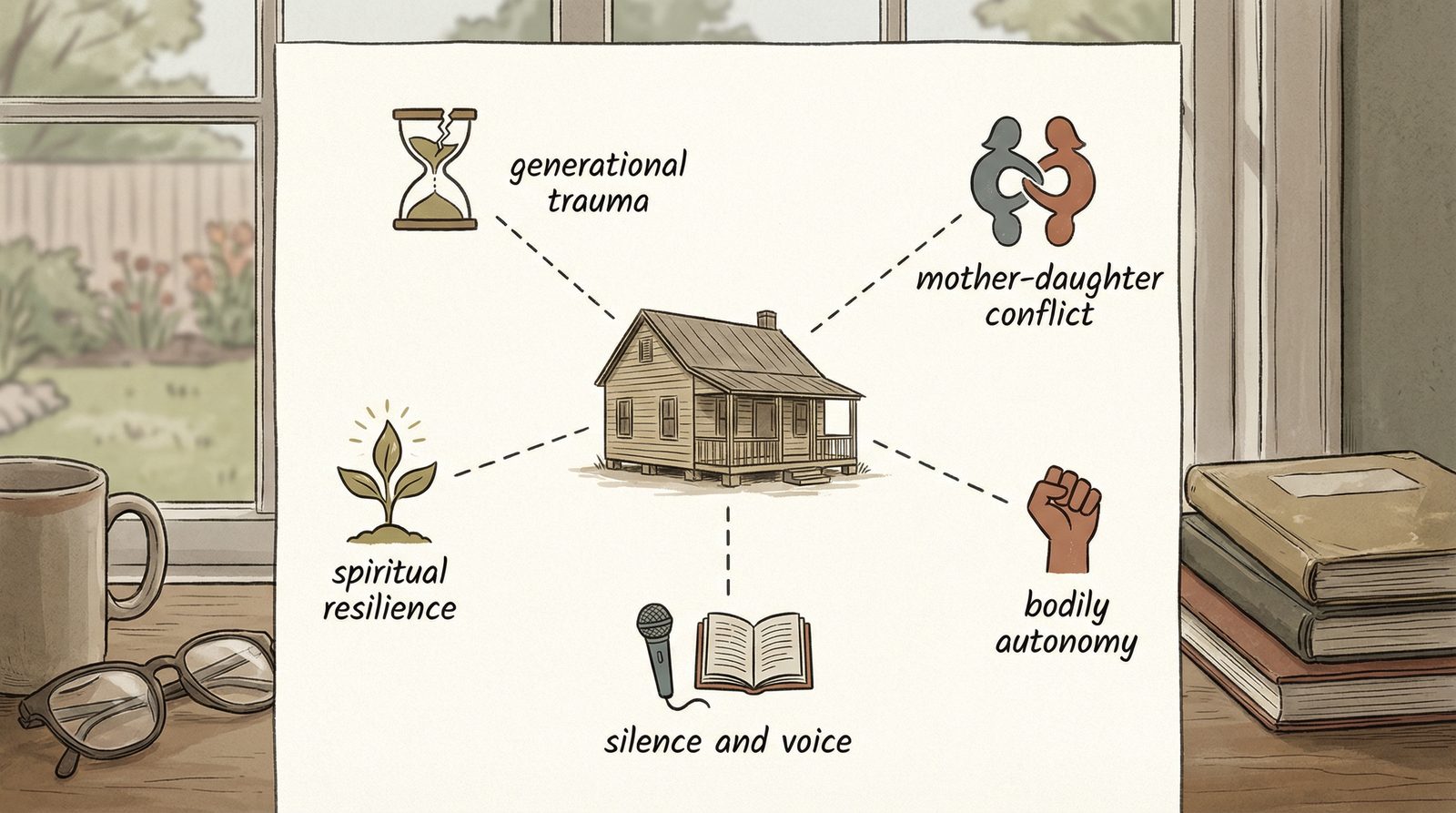
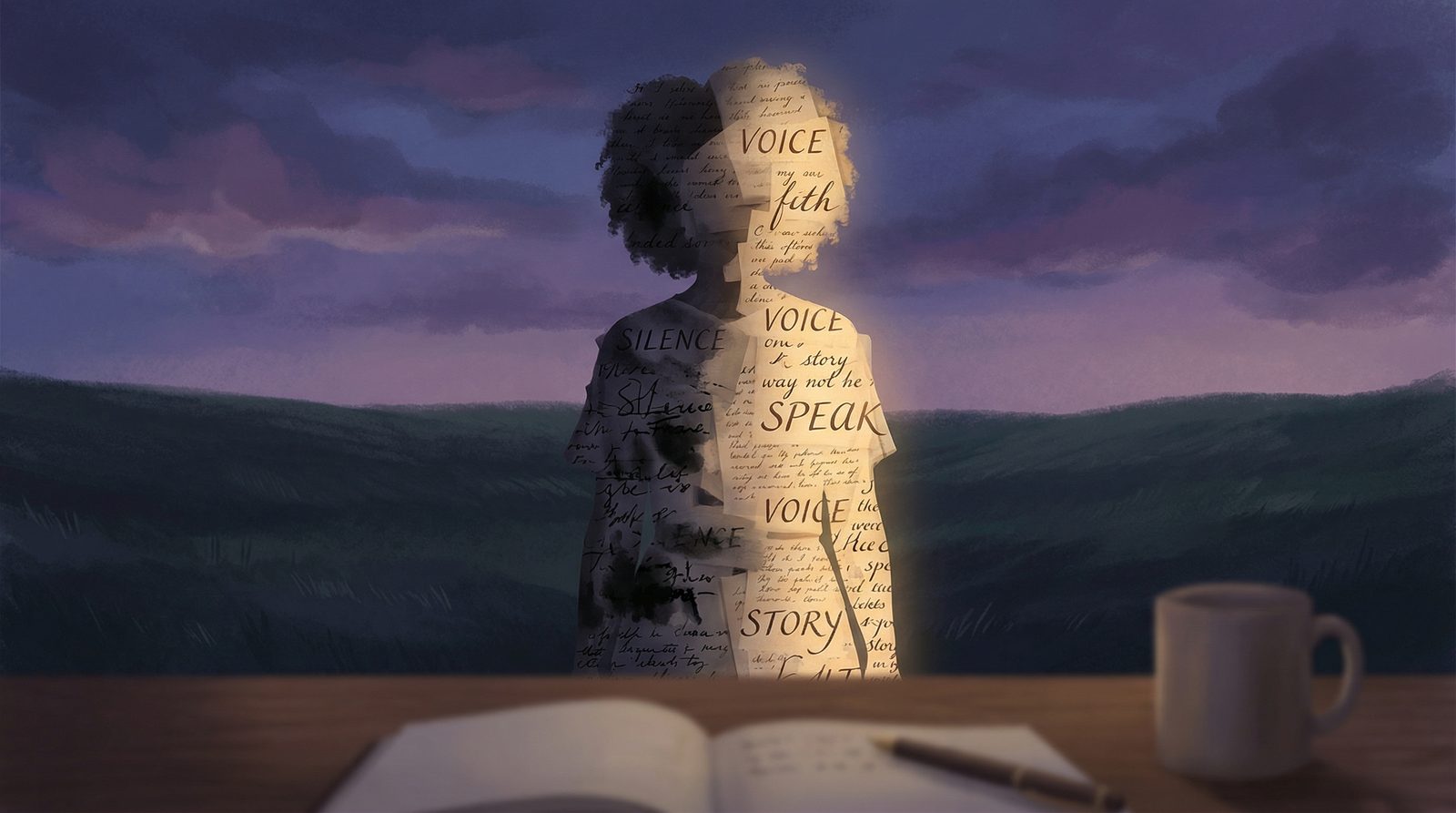
Walker returns again and again to themes of spiritual reclamation, domestic violence, sexuality, community, and the healing potential of female friendship. She coined the term “womanist” to describe a feminism grounded in Black women’s experiences. Her characters often move from silence to voice and from survival to rootedness.
Many of her stories explore the double pull of harm and hope within families. This tension aligns with motifs such as Emotional Minimalism and Power as Proximity, where vulnerability and authority compete.
STYLE AND VOICE
Walker writes with clarity, gentleness, and rhythmic simplicity. Her voice is direct and grounded. She blends emotion with restraint. She favors intimate narration, lyrical fragments, and spiritual imagery. Even at her most political, the work feels lived in rather than theoretical.
The dignity she grants her characters comes through language that honors their truth. She allows flaws, contradictions, and small moments to carry the story.
Walker has published poetry, essays, and additional novels, but The Color Purple remains the work most closely tied to her cultural legacy.
RELATED ADAPTATIONS
Walker’s most famous novel has inspired multiple major screen adaptations that carried Celie’s story to new audiences:
• The Color Purple (1985) – Steven Spielberg’s dramatic adaptation, which brought the novel into mainstream cinema.
• The Color Purple (2023) – A musical film adaptation that builds on the stage production and reimagines the story through song and choreography.
CULTURAL LEGACY
Alice Walker changed the shape of American literature. She expanded the canon to include the voices of Black Southern women whose stories had long been marginalized. Her work sparked debate, redefined womanist thought, and influenced writers across generations.
The adaptations of The Color Purple in 1985 and 2023 further broadened its reach. Together with the original novel, they formed a multiform narrative that continues to shape how readers and viewers think about faith, gender, race, and freedom. Today, Walker’s influence stands beside figures like Toni Morrison and Zora Neale Hurston, whose work insists on truth over comfort and on healing over silence.
Sapphire writes at the edge of what many readers are prepared to face. Her work is not interested in comfort. It is interested in truth, particularly for Black girls and women who have been ignored, abused, or erased. With Push, she created one of the most searing voices in modern American fiction. Her writing lives squarely inside the motif of Survival Narratives, where staying alive is not the end of the story but the beginning of a new kind of speech.
What distinguishes Sapphire is her refusal to look away. She asks the reader not to look away either.
LIFE AND INFLUENCES
Sapphire has worked as a teacher, poet, and activist. That background matters. It shows up in her attention to language, in her respect for the classroom as a site of transformation, and in her insistence on centering voices that have rarely been granted literary space.
Her influences come as much from lived experience and political struggle as from other books. She writes in conversation with histories of racism, poverty, and gendered violence in the United States, and with the communities who have had to navigate those forces every day. That grounding connects her work closely to the motifs of Trauma as Inheritance and Literacy as Liberation.
THEMES AND MOTIFS
Across her writing, Sapphire returns to a few central questions. What happens when a child is told, again and again, that she does not matter. What happens when the only stories available about you are written by people who fear or pity you. And what happens when you finally learn to put your own words on the page.
Her characters often live in the overlap between violence and possibility. Their lives are shaped by abuse, poverty, and systemic neglect, but they are not defined solely by trauma. The struggle to find language, to learn, to speak, becomes part of who they are. This is where her work most clearly embodies Literacy as Liberation.
She is also deeply interested in how identity is inherited. Not just culture and family, but harm, silence, and shame. That interest lines up with Trauma as Inheritance, which runs just under the surface of much of her work.
STYLE AND VOICE
Sapphire’s style is direct and formally bold. She is willing to bend spelling, grammar, and conventional polish to stay honest to the characters she writes. In Push, that means letting Precious’s voice arrive exactly as it is, then allowing it to change on the page as she learns. The effect is intimate and often overwhelming. The reader is not handed an interpretation. The reader is asked to listen.
Her poetry and prose share a commitment to rhythm and emotional precision. Even at their most brutal, the lines feel deliberate. She uses repetition, image, and silence with care, trusting readers to make the connections she lays down.
KEY WORKS
Push (1996) – The novel that introduced Precious Jones and brought Sapphire’s work into the wider literary conversation.
Alongside her fiction, Sapphire has also published poetry collections that explore many of the same themes with a different kind of intensity.
CULTURAL LEGACY
With Push and its film adaptation, Sapphire forced mainstream audiences to confront a story many would rather ignore. Her work changed the way readers and viewers talk about voice, representation, and the ethics of depicting trauma. It also influenced a generation of writers who saw in Precious’s story proof that the most marginalized characters could hold the center of a narrative.
In the broader landscape, Sapphire stands alongside writers like Toni Morrison and Jesmyn Ward in insisting that Black girls and women belong at the heart of serious literature. Her contribution is specific and singular, but its impact is wide. She gave a voice to someone the culture had tried very hard not to see, and in doing so, she shifted the boundaries of who literature is for.
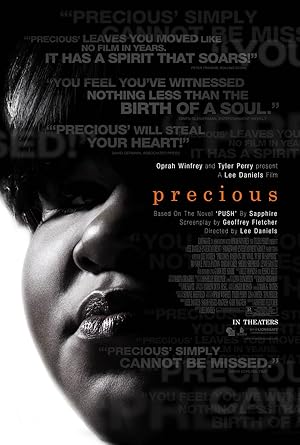
Director: Lee Daniels Screenplay: Geoffrey Fletcher Based on: Push by Sapphire Genre: Drama Country: United States Year: 2009
INTRODUCTION
Precious is one of the most emotionally direct literary adaptations in recent film. It does not soften the material from Sapphire’s novel. Instead, it stays close to the young woman at its center and lets her voice guide the story. The film is grounded, unsentimental, and deeply humane. It belongs to the broader motif of Survival Narratives, where survival is not triumph but the first step toward rebuilding a life.
The film’s strength lies in how it listens. It lets Precious speak in ways she was never allowed to speak in her own world.
PLOT AND FOCUS
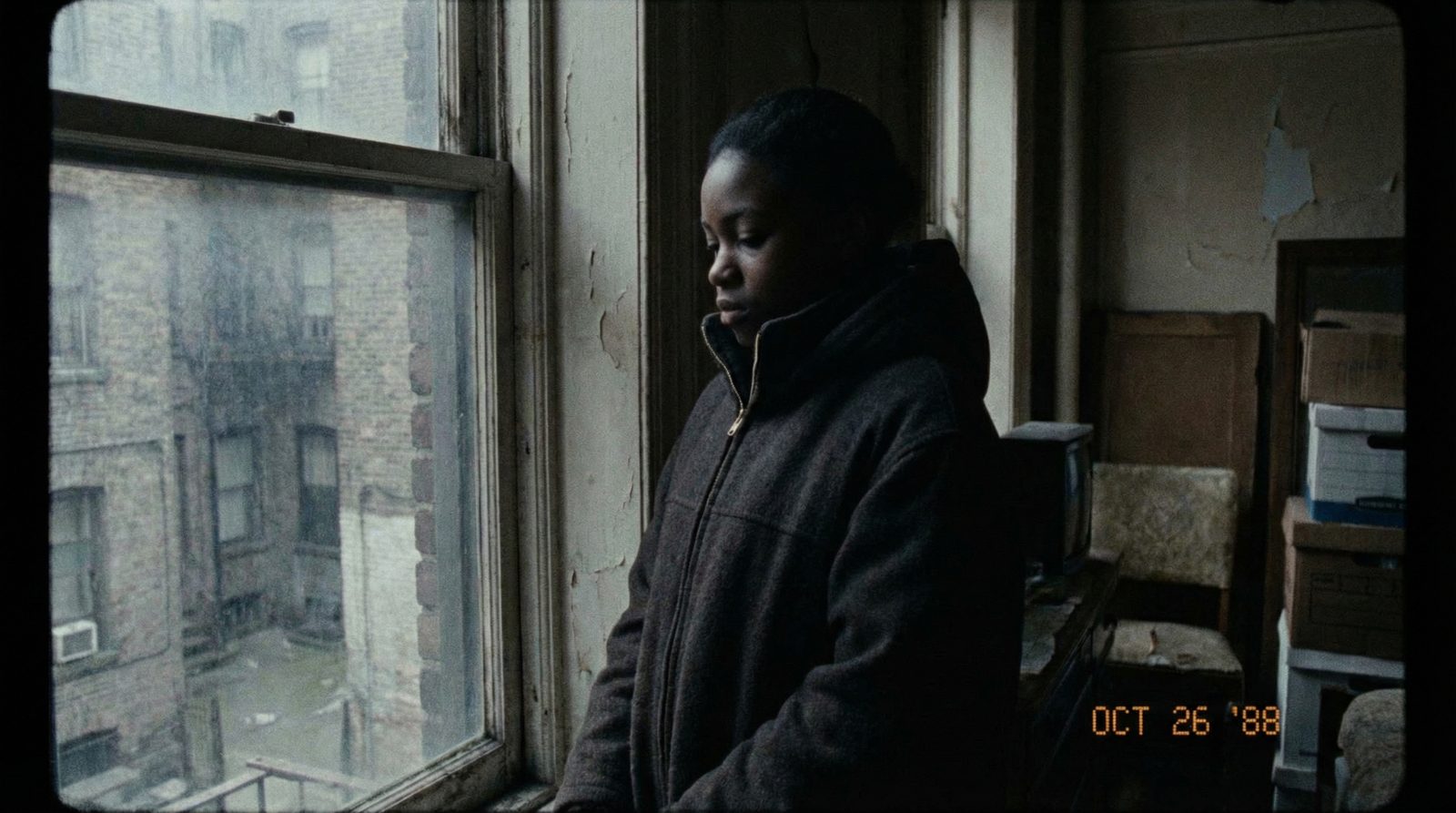
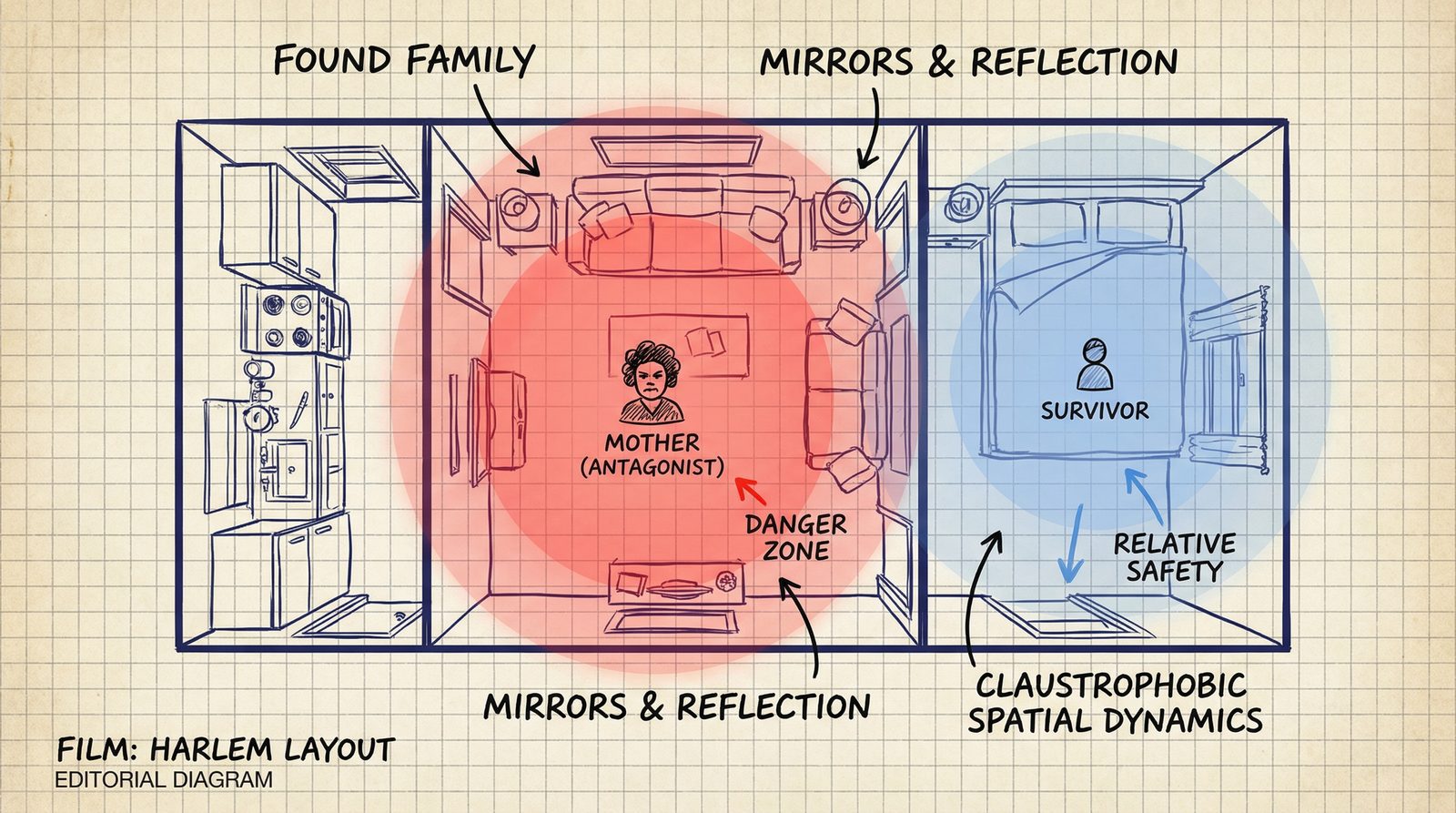
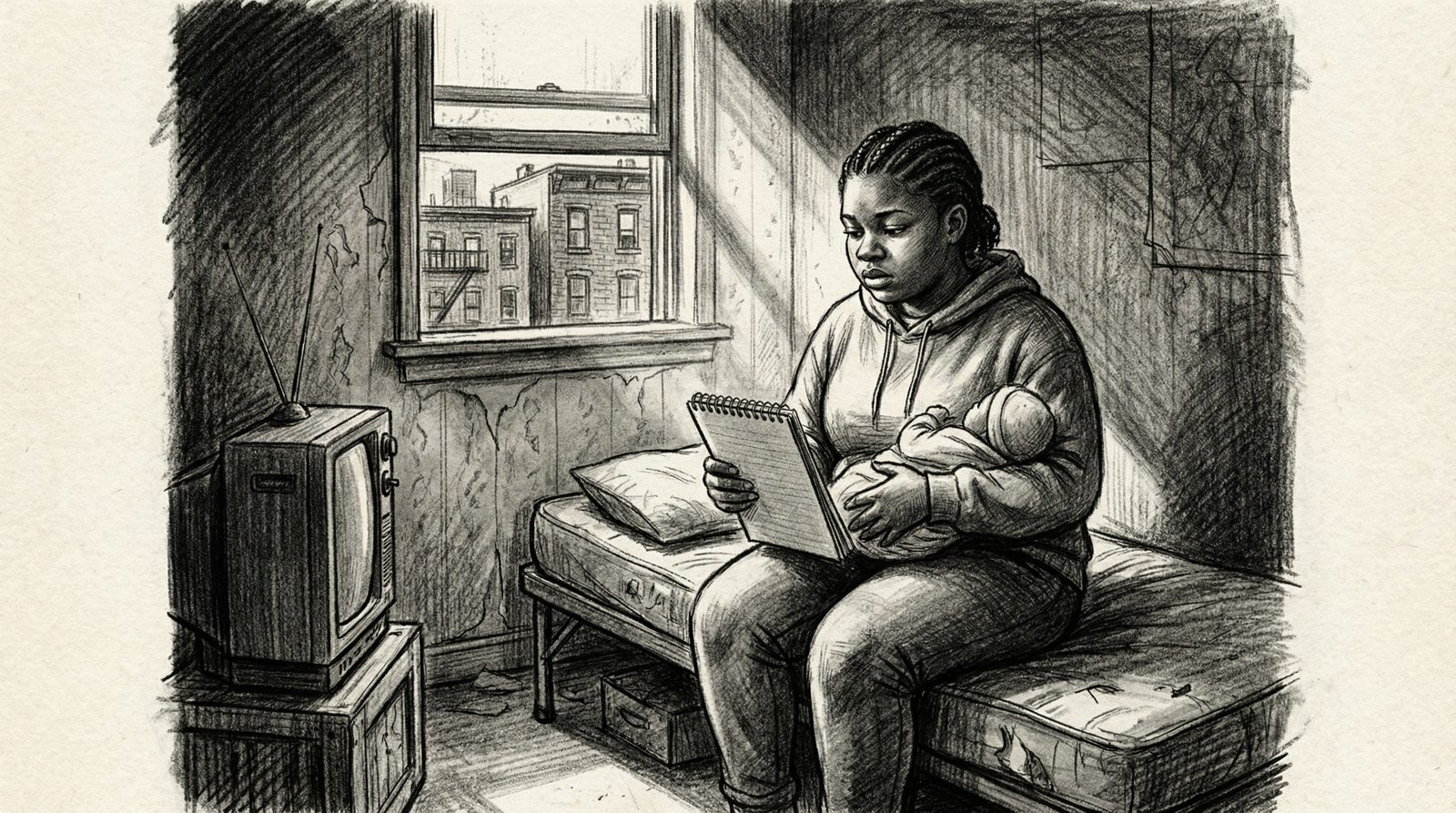
The story follows Precious Jones, an illiterate teenager in Harlem who becomes pregnant for the second time by her own father. She lives with an abusive mother whose violence shapes every corner of her life. School offers no refuge. The future appears closed.
The turning point comes when she is sent to an alternative school and meets Ms Rain. The classroom becomes a rare place where she can breathe. This setting deepens the motif of Literacy as Liberation. Learning to read and write becomes a form of self-definition. The world does not change quickly, but the way Precious understands herself begins to shift.
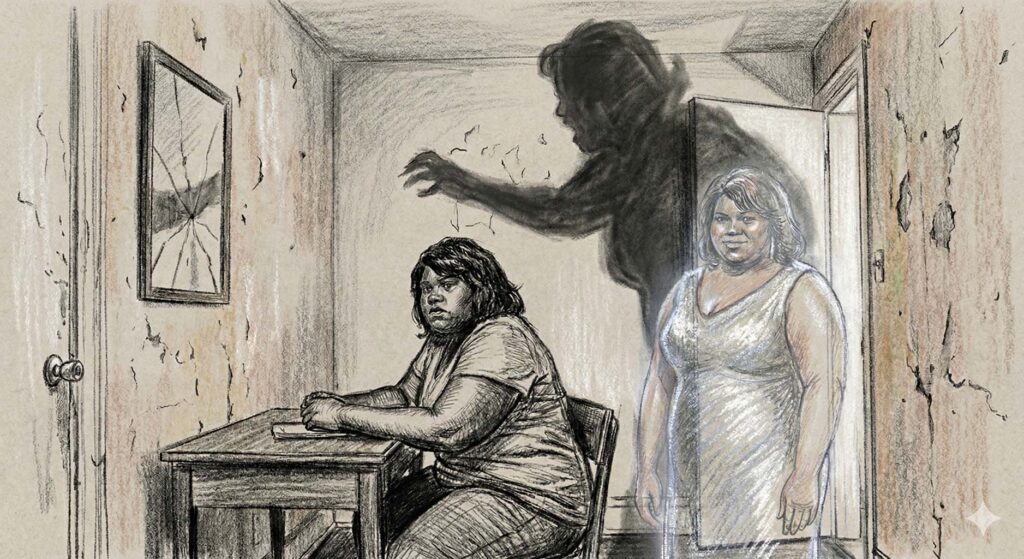
The film keeps the focus tight on her interior life. Flashbacks, fantasies, and daydreams interrupt scenes in ways that reveal how Precious copes. They are not escapes. They are survival tools.
WHAT IS PRECIOUS ABOUT?
Precious is about a teenage girl fighting to survive extreme abuse and neglect, and slowly discovering that her life can be more than what has been done to her. The film follows her as a new school environment and a few rare supportive adults give her space to learn, to speak, and to imagine a future. It is not a feel-good story, but it is a story about voice: the moment someone who has been silenced begins to name her own experience and take the first steps toward self-determination.
STYLE AND APPROACH
The visual style mixes naturalistic cinematography with abrupt dream sequences. These brief escapes into glamour show how Precious imagines a self she has never been allowed to be. The contrast makes the real world feel even more stark, but it also reveals her imagination as a place of possibility.
The performance by Gabourey Sidibe gives the film its weight. She plays Precious with a stillness that holds everything she cannot say. Mo’Nique’s portrayal of the mother is equally memorable, a character shaped by rage, trauma, and internalized harm. The performances emphasize the motif of Trauma as Inheritance, showing how damage is passed down through silence and lack of support.
The film does not sensationalize abuse. It refuses melodrama. The restraint is what makes it powerful.
CHARACTERS AND RELATIONSHIPS
Precious is portrayed as a full person rather than a symbol. She is angry, hopeful, confused, stubborn, and capable of tenderness. The film refuses to flatten her into a victim. This complexity reflects the motif of Survival as Identity. She has survived so much that survival itself has become her worldview.
Her mother is frightening but not one-dimensional. The film allows glimpses of desperation that never excuse her actions but show their roots. This balance makes the story more honest.
Ms Rain and the women in the alternative school form a quiet counterbalance. They are steady in a world that rarely offers Precious stability. Their presence gives the narrative spaces of breath without turning them into saviors.
CULTURAL CONTEXT AND LEGACY
Precious was widely praised on release and sparked intense debate. Some viewers saw it as exploitative. Others saw it as a rare, respectful depiction of a young Black girl surviving impossible conditions. The film forced a mainstream audience to confront issues of abuse, poverty, and systemic neglect that are usually kept off-screen.
The film won multiple awards and established both Sidibe and Mo’Nique as major talents. It also renewed interest in Sapphire’s novel, expanding its readership for a new generation. In the broader landscape, Precious stands alongside works that insist on depicting harm without sanitizing it, while also honoring the inner life of the person at the center.
The film remains a cultural touchstone. It opened conversations about representation, empathy, and who gets to have their story taken seriously.
IS IT WORTH WATCHING?
Yes. It is emotionally difficult, but it is also precise, grounded, and deeply compassionate. Anyone interested in character-driven storytelling, literary adaptation, or the realities of structural harm will find it worth their time.
Britney Spears writes as someone who has lived under a microscope for so long that she learned to narrate from behind the glass. Her memoir isn’t a gossip dump or a fan collectible; it’s a reckoning. At its center is a woman trying to reclaim her own story after decades in which other people owned the script. Her life sits squarely inside motifs like Silence as Survival and The Commodified Body in Books, but what makes the work cut through is how plainly she names what those forces did to her.
Spears is not aiming for literary elegance. She is aiming for freedom. The writing in The Woman in Me is raw, direct, sometimes jagged. That roughness is part of its power. This is not the perfectly managed voice of the “Princess of Pop.” It’s the voice of someone who has finally been allowed to speak as a person rather than a product.
⸻
LIFE & INFLUENCES
Raised in rural Louisiana, Britney grew up in a house where money was tight and emotions ran hot. Her talent was obvious early on, and the adults around her learned just how valuable that talent could be. From talent shows to The Mickey Mouse Club to the explosion of …Baby One More Time, she was shaped by an industry that knew exactly how to sell innocence and sex appeal at the same time.
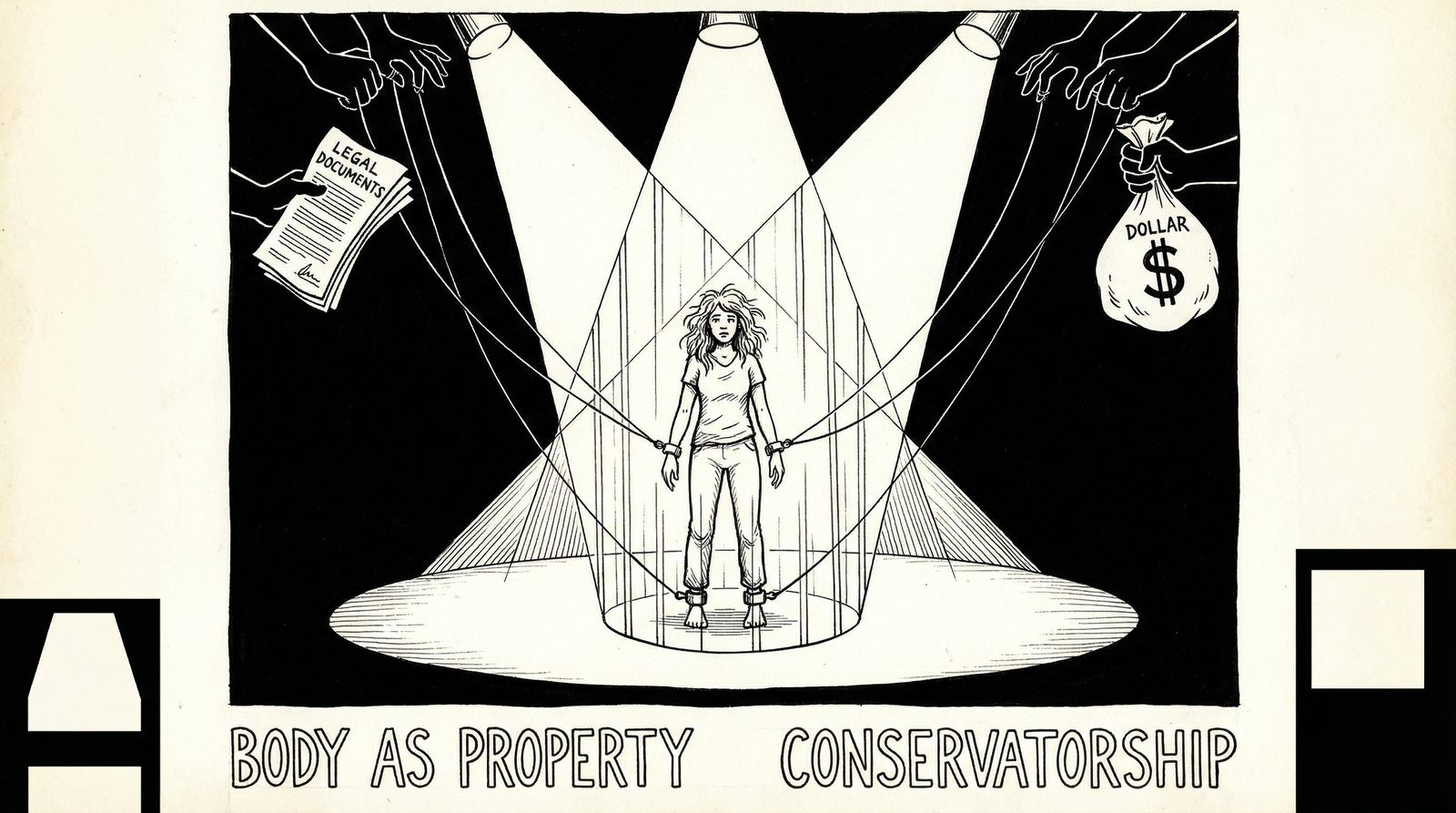
Behind the gloss there was constant surveillance. Managers, paparazzi, family members, strangers on the internet—everyone seemed to have an opinion or a claim on her life. The conservatorship, imposed under the language of “protection,” hardened that sense of being watched and controlled. For years, the people closest to her controlled her schedule, her money, her medication, even her ability to become pregnant. That experience embeds her story deeply in the motif of Intimacy as Transaction: love, care, and loyalty repeatedly weaponized or monetized by the very people who claimed to act in her best interest.
Her influences, then, are less literary than experiential. She writes from the perspective of someone who spent her formative years being filmed, quoted, and dissected by strangers. The emotional architecture of her memoir comes from that: a life in which every misstep could be replayed, slowed down, and sold as content, while her own voice was kept off the record.
⸻
THEMES & MOTIFS
What recurs throughout Spears’s memoir is not just trauma, but the way institutions repackaged that trauma as discipline. The conservatorship is the central symbol: a legal structure that effectively turned her into an employee with no say over her own labor, finances, or body. In that setup, the idea of a commodified body stops being metaphor and becomes literal. She is the product, and the machine that profits from her also holds the keys to her life.
Her long silence was strategic. It wasn’t consent; it was survival. Interviews were scripted. Social media posts were filtered. Court appearances were tightly controlled. The motif of Silence as Survival runs through the book: staying quiet as the only way to avoid harsher restriction, more medication, or the threat of losing her children.
There is also a fierce thread of Motherhood as Redemption. Her sons are not just beloved; they become a line she can’t bear to see crossed. When access to them is used as punishment, the cruelty of the conservatorship sharpens. Being a mother gives her clarity about what she will endure and what she refuses to accept, even as that role is twisted into a tool for control.
Underneath these themes is the quieter pattern of Dissociation as Defense. Spears often describes deeply painful events in a detached, almost flat tone, as if telling someone else’s story. That distance reads as the adaptation of someone who had to keep functioning while her life was being disassembled in public. The book, taken as a whole, belongs firmly to #MeToo Literature, even though her situation extends beyond the workplace and into the legal and medical systems that claimed authority over her.
⸻
STYLE & VOICE
Spears’s prose is straightforward and often blunt. She does not build elaborate metaphors or linger on description. She tells you what happened, then how it felt, and moves on. That simplicity gives the memoir a startling immediacy. You’re not asked to admire the sentences; you’re asked to believe the person speaking.
The emotional style leans toward a kind of minimalism. Pain drops into the narrative with very little buildup: a shaved head, a lost custody hearing, another forced performance in Las Vegas. Joy appears too—moments with her kids, flashes of creative satisfaction—but it’s rarely allowed to stand unchallenged. Nearly every moment of happiness is shadowed by a reminder of who was in control at the time.
The structure reflects a life divided into segments she didn’t get to narrate until now. The book moves in fragments, looping back, filling in holes, pausing to reconsider old headlines from her perspective. This fragmented stitching of memory mirrors the work of someone taking back ownership of their timeline after years of being told what their story meant.
⸻
KEY WORKS & ADAPTATIONS
The Woman in Me (2023) – Spears’s memoir and primary written work, a first-person account of fame, control, and the fight to reclaim her own life.
Framing Britney Spears (2021) – The documentary that helped ignite global outrage over her conservatorship and set the stage for the #FreeBritney movement.
While the memoir stands on its own, these works together trace the shift from spectacle to self-authorship—from being talked about to speaking for herself.
⸻
CULTURAL LEGACY
Britney Spears’s story is more than a pop-culture saga; it’s a case study in how power, money, and gender intersect in modern celebrity. Her memoir and the surrounding coverage forced a re-evaluation of tabloid-era cruelty, guardianship laws, and the way mental health is used to justify taking control of someone’s life. In the larger conversation about #MeToo Literature, her book stands as a key document: not just about abuse, but about the structures that allowed it to be framed as care.
Writers like Karrine Steffans helped make space for this kind of story—women whose bodies and reputations were treated as public property turning around and telling the truth anyway. Spears’s contribution sits alongside theirs, but with a different scale of scrutiny. Few people have been as globally visible or as tightly controlled.
Today, she is an icon of reclamation, even if she never asked to be. The fact that her fight for autonomy played out in front of millions doesn’t make it less personal; it just means the stakes were shared. Her decision to write, to testify in court, and to break her enforced silence has already changed how we talk about celebrity, consent, and control. And her work will likely continue to be a reference point for anyone trying to understand what happens when a human life gets turned into an asset.
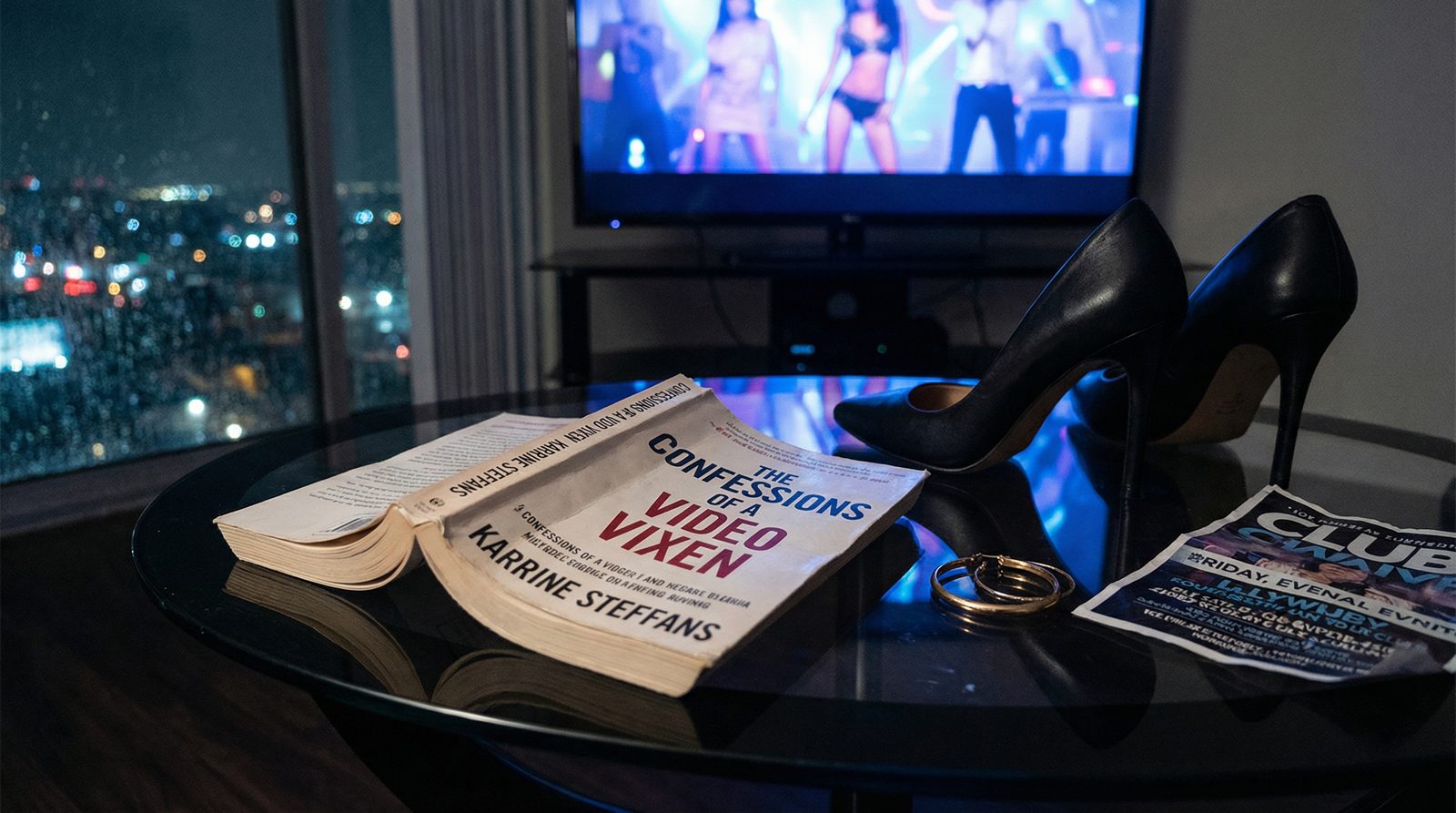
Some memoirs arrive with a kind of jolt, the sense that they have been waiting for the culture to finally hear them. Confessions of a Video Vixen is one of those books. Karrine Steffans writes from inside a world that rewards a woman’s shine but ignores her pulse, exposing how the body becomes both invitation and commodity within the motif of The Commodified Body in Books. Her voice is steady and unflinching, shaped by years of learning how visibility can blur into danger. Beneath that control is the unmistakable feeling of Raw Survival, the truth that telling this story is itself an act of defiance rather than a plea for sympathy.
⸻
PLOT & THEMES
The memoir begins in Steffans’ childhood in the Virgin Islands, where instability and abuse define her earliest sense of the world. When she moves to the United States, the scenery changes but the underlying script does not. Poverty, manipulation, and the slow erosion of safety lead her toward sex work and, eventually, into the music video industry that will make her famous. But fame here is not freedom. It is a brighter stage for the same dangers, echoing the motif of Silence as Survival – not as quiet submission but as a tactical necessity.
Relationships rarely resemble affection. They operate as transactions, shaped by the motif of Intimacy as Transaction. Shelter, proximity to fame, and moments of protection come with costs that are rarely spoken aloud. These dynamics resonate with books like Push (1996), which also traces how desire, fear, and scarcity intertwine in harmful ways.
Running beneath everything is the memoir’s defining tension: the pressure to perform a version of herself that ensures survival. This is captured in the Survival as Performance, where identity becomes both armor and disguise. It aligns Steffans’ story with later narratives such as The Woman in Me (2023) and I’m Glad My Mom Died (2022), which examine how public personas fracture private selves under the weight of scrutiny.
⸻
PROSE & NARRATIVE STRUCTURE
Steffans writes in short, clipped chapters that feel like rooms she steps into and then exits before they grow too hot. The memoir moves through a Fragmented Vignette Structure, a form that mirrors how trauma arrives in pieces rather than smooth chronology. Each fragment carries its own charge, and the silences between them often say as much as the scenes themselves.
Her prose is calm on the surface, almost sparing in its detail. Violence and glamour are described with the same measured tone, creating a subtle dissonance. It is the voice of someone who learned early that naming emotions too directly can reopen wounds instead of closing them. That restraint invites readers to feel the weight of what goes unsaid. The memoir lingers because it hands you the truth without telling you how to hold it.
⸻
CHARACTERS & INTERIORITY
Steffans stands at the center of the narrative as a woman divided between who she must appear to be and who she is trying to protect. This split embodies the motif of The Double Self. On camera she becomes the confident figure the industry expects, while off camera she calculates rent, safety, and escape routes. This tension shapes her as The Survivor Confessor, someone who reclaims power by narrating what others tried to control.
The men in the memoir exist as fragments – arriving abruptly, exerting influence, then disappearing. They are less characters than embodiments of imbalance, reinforcing the book’s focus on systems rather than individuals. Their presence reflects how power circulates in the entertainment world, often without accountability.
The emotional counterweight to this instability is her son. Their moments together open windows of softness and possibility, suggesting who she might have been in a less predatory world. Her mother, by contrast, represents an early wound that echoes through later choices. These relationships add texture without softening the memoir’s clarity about harm.
⸻
CULTURAL CONTEXT & LEGACY
When Confessions first appeared, it was consumed as gossip rather than literature. Critics fixated on the celebrity cameos, ignoring the system the memoir revealed. With time, however, its place within #MeToo Literature has become clearer. Steffans wrote years before the culture had language for the dynamics she described, and the book’s rawness now reads as ahead of its time.
The memoir also belongs to Memoirs of Reclamation, where women seize back narratives once shaped by tabloids, industry figures, or silence. Books like The Woman in Me (2023) and I’m Glad My Mom Died (2022) echo this reclaiming impulse, though Steffans’ account remains distinct for its immediacy. The memoir feels less curated, more like evidence placed on the table, and its impact grows as public understanding of harm deepens.
In the years after publication, Steffans’ own public image continued to evolve. One of the most widely discussed chapters of her post-book life was her relationship with comedian and talk-show host Bill Maher, which began in 2005 and lasted into 2006. Their pairing, often framed by the media as a curiosity, underlined what the book already makes clear: Steffans was moving in circles where power, race, desire, and public image were constantly negotiated. The way their relationship was reported, as spectacle first, context second, mirrors how Confessions itself was initially treated, and it reinforces the memoir’s central argument about who gets to control the story.
⸻
IS IT WORTH READING?
Yes, though not for comfort. Confessions of a Video Vixen refuses tidy arcs or reassuring conclusions. Its power lies in its clarity about what survival costs when the world is built to punish disclosure and reward endurance. Readers interested in the intersections of misogyny, fame, and personal agency will find the book essential. Those seeking uplift may find its honesty difficult, but that same honesty is what gives the memoir its staying power.
⸻
TRIVIA & AUTHOR FACTS
• The memoir’s original working title was reportedly different before it aligned with Steffans’ “video vixen” persona. • Steffans has said she wrote the manuscript in a matter of weeks. • The book’s advance helped her regain stability and support her son at a moment when she was trying to exit the most dangerous parts of the industry. • Its release sparked very public denials from several well known figures, which only increased sales and media attention. • In the mid-2000s, after the success of Confessions, Steffans entered a high-profile relationship with comedian Bill Maher; reports and later interviews place the relationship between 2005 and 2006, and it became part of the broader tabloid conversation about her rise from video sets to mainstream visibility. • Despite controversy, the memoir became a bestseller and remains a cultural flashpoint for how we talk about women, fame, and exploitation in the entertainment industry.
Push is one of those novels that feels less like a story and more like a raw record of survival. Told in the voice of Precious Jones, an illiterate, abused teenager in Harlem, the book refuses distance. It drops you into her world without a safety rail and lets you hear her language before anyone has corrected it. Underneath the shock is something quieter and deeper. This is a book about a girl who has been told she is nothing, trying to build a self out of whatever scraps of care she can find. The whole narrative belongs inside the motif of Survival Narratives, with a focus that is intimate instead of grand.
It is not a comfortable read. It is an essential one.
PLOT AND THEMES
Precious is sixteen, pregnant with her second child by her own father, and still in middle school when the novel begins. She lives with an abusive mother who beats her, starves her, and reminds her daily that she is worthless. School has failed her. Systems have failed her. The future, as she has been taught to imagine it, does not exist.
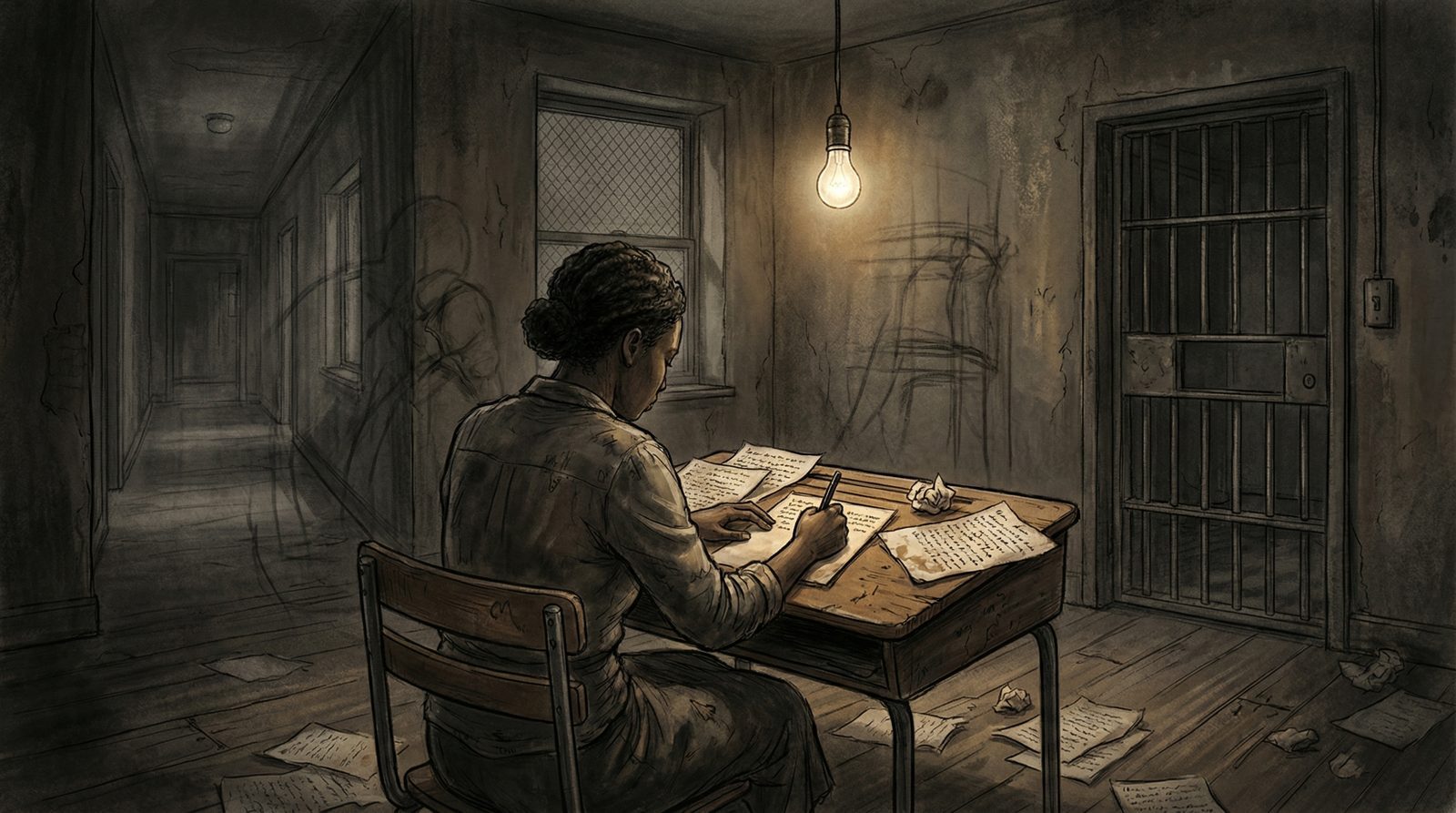
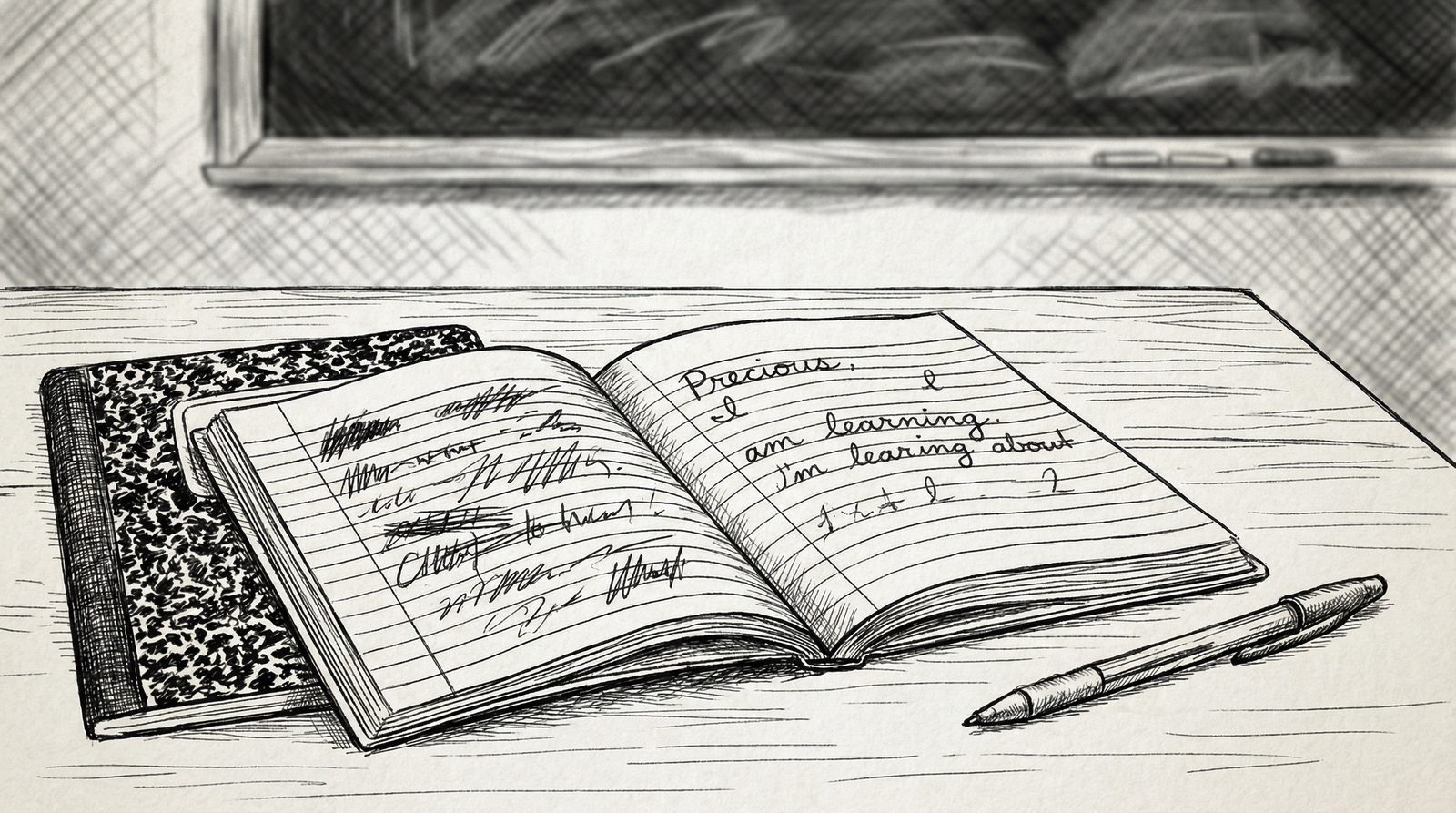
The plot shifts when she is sent to an alternative school where a teacher, Ms Rain, starts to teach her to read and write. The narrative opens up as Precious does. Pages fill with her journal entries, her attempts at spelling and grammar, her small observations. Learning to write becomes more than a skill. It becomes an act of resistance that fits perfectly within the motif of Literacy as Liberation. The more she writes, the more she exists on her own terms.
The novel is also a study of inherited harm. The violence Precious experiences is not presented as a single monster in the house. It is generational, systemic, and tied to poverty, racism, and neglect. That pattern aligns with the motif of Trauma as Inheritance. Her mother’s cruelty is horrifying, but the book never lets you forget the world that shaped her too.
Running through everything is the question of who gets to be visible. Precious has been erased in almost every way. She is not expected to succeed, to finish school, or even to survive. The novel argues for her existence sentence by sentence.
STYLE AND LANGUAGE
The most striking aspect of Push is its voice. The early chapters are written phonetically, reflecting Precious’s limited literacy. Words are misspelled, grammar is broken, and sentences tumble out with a rough rhythm that can be hard to read at first. That difficulty is the point. You are feeling the barrier she lives inside.
As Precious learns, the language on the page gradually shifts. Spelling improves. Sentences become more complex. The movement is subtle but powerful. You experience literacy not as an abstract goal but as a physical change in how thought appears on the page. It is one of the clearest demonstrations of Literacy as Liberation in contemporary fiction.
The style is unsparing but not cold. Sapphire allows anger, confusion, humor, and hope to coexist in Precious’s voice. The book does not tidy emotion. It lets contradiction stand. That choice avoids sentimentalizing her and instead treats her as a full person with a life beyond the worst things that have happened to her.
CHARACTERS AND INTERIORITY
Precious is one of the most memorable narrators in recent fiction. She is angry, funny, jealous, hopeful, cruel at times, and deeply empathetic at others. She is never presented as a symbol. She is a teenager trying to manage impossible circumstances. That complexity connects strongly with the motif of Survival as Identity. She is not just surviving events. Survival has become the core of how she understands herself.
Her mother is terrifying, but Sapphire gives her moments of twisted vulnerability that prevent her from becoming a flat villain. Her harm is real and unforgivable. It is also part of a larger pattern of damage she never escaped.
Ms Rain and the women in Precious’s class offer a different kind of presence. They are not saviors. They are witnesses. They listen, teach, and insist that Precious’s words matter. That insistence gives the book its quiet center.
CULTURAL CONTEXT AND LEGACY
When Push was published in the mid 1990s, it immediately drew strong reactions. Some readers saw it as exploitative. Others recognized it as a rare attempt to put a voice like Precious’s at the center of a literary novel. The debates themselves revealed how uncomfortable many people were with this kind of direct depiction of abuse, poverty, and systemic neglect.
The book later became the basis for the film Precious, which brought the story to a wider audience and sparked new conversations about representation, respectability, and trauma on screen. In the broader landscape, Push stands alongside works like Confessions of a Video Vixen and I’m Glad My Mom Died, not because their plots are similar, but because they all insist that people written off by the culture deserve to narrate themselves.
The novel has had a lasting influence on how trauma and literacy are portrayed in fiction, and it remains a touchstone for discussions of voice, agency, and the politics of who gets to be heard.
IS IT WORTH READING?
Yes. Push is difficult, both in content and in its early language. It is also deeply humane. Readers who want neat catharsis may struggle with it. Readers interested in voice, power, and the way language can literally change a life will find it unforgettable.
For years, Britney Spears was one of the most visible women in the world—and one of the least heard. The Woman in Me arrives as a long-delayed correction, a memoir written in clipped, steady fragments that feel like someone finally taking control of her own paper trail. Its emotional engine isn’t scandal but reclamation. And beneath the celebrity context, the book sits firmly inside the motif of Silence as Survival: what it costs to stay quiet long enough to stay alive.
The memoir is not a polished product. It’s raw, cautious, sometimes strangely calm. That restraint gives it power. It reads less like a performance and more like testimony from someone who has spent decades being spoken for.
PLOT & THEMES
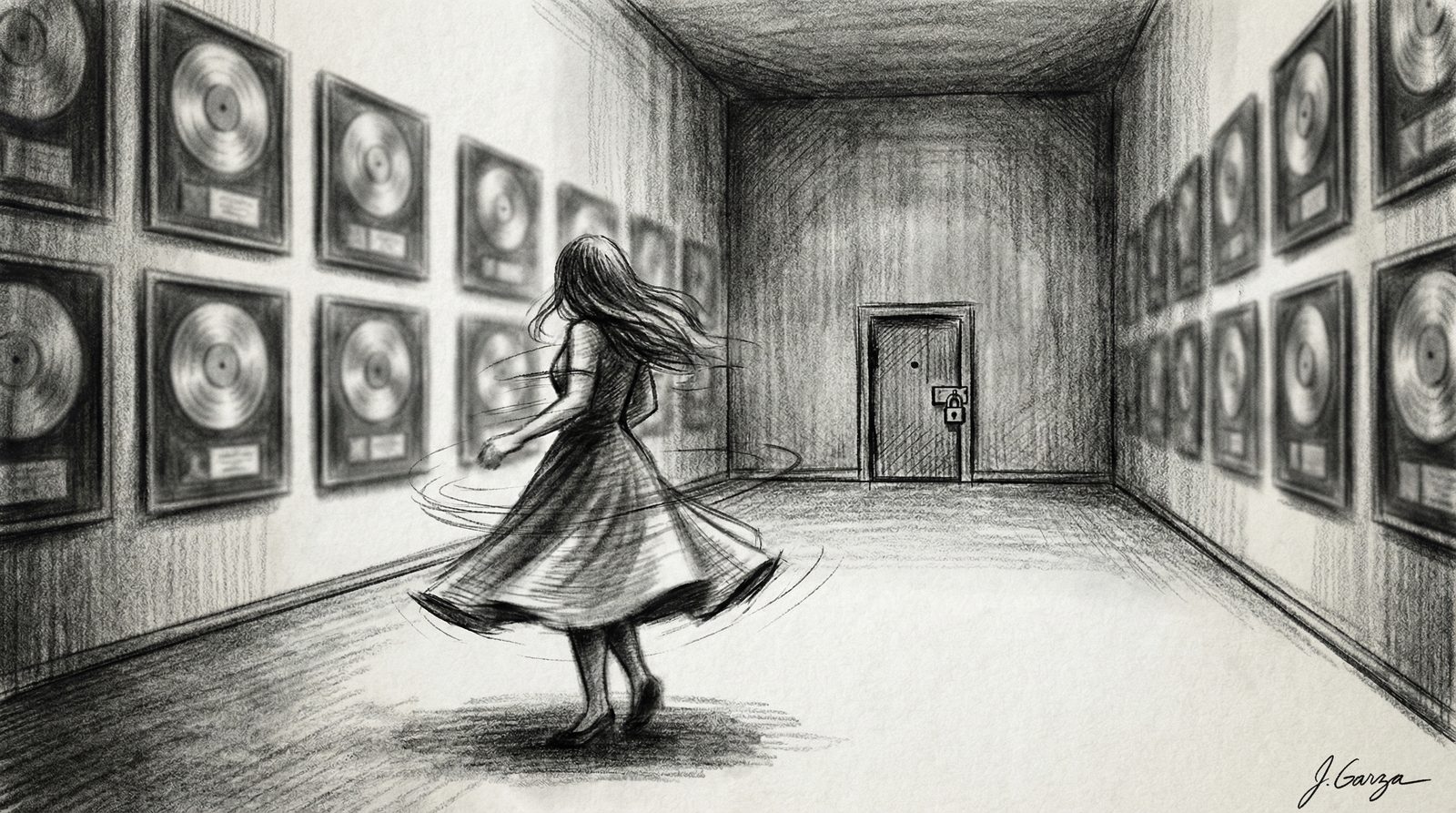
The broad arc is familiar: a small-town girl rises to global superstardom, becomes one of the most photographed people on earth, and then vanishes behind a conservatorship that lasts thirteen years. But the memoir isn’t about fame’s ascent—it’s about the cage that followed.
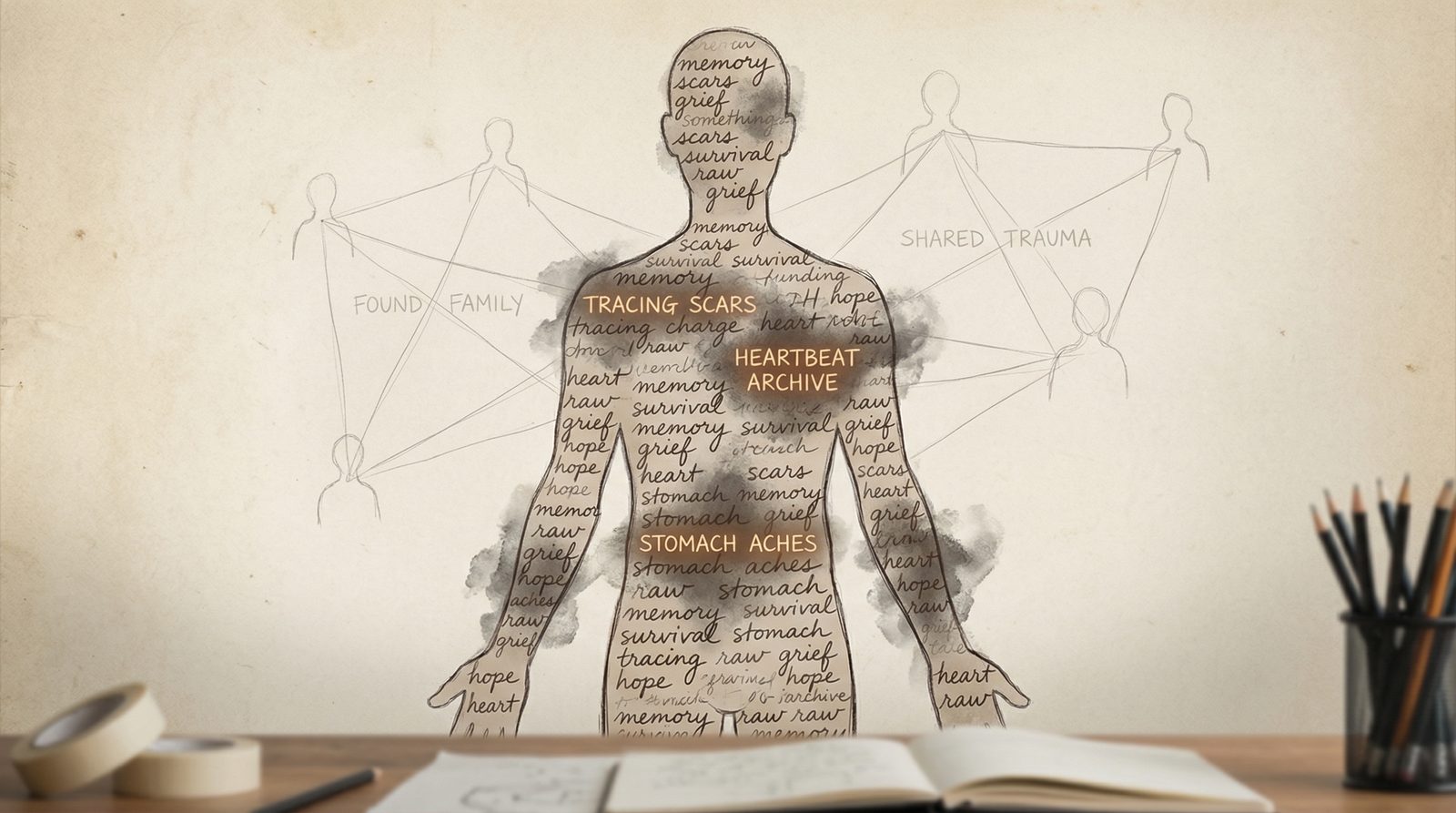
Spears writes about losing control over her finances, her work schedule, her medical choices, even her ability to become pregnant. These experiences build into a harsh portrait of what happens when institutional power merges with family authority, echoing the motif of The Commodified Body in Books. Her image was sold; her labor was monetized; her autonomy was treated as a liability.
Motherhood shapes some of the memoir’s sharpest emotional turns. Her sons are introduced late but dominate the book’s heart. Their custody battles, media scrutiny, and weaponization under the conservatorship all feed into a deeper pattern of Motherhood as Redemption—not sentimental, but desperate and clear-eyed.
Fame itself becomes a kind of disappearance. Spears describes tours, interviews, performances, and publicity events as if she is watching them from a distance. The self becomes split: the woman living the life, and the woman performing the life. That tension aligns seamlessly with the motif of The Double Self.
STYLE & LANGUAGE
The writing is spare—short sentences, clipped memories, flashes of emotion delivered without flourish. Spears avoids metaphor and stays close to fact. That simplicity can feel blunt, but it also feels honest. The tone reflects someone who spent years having her words twisted or dismissed, now speaking plainly to prevent misinterpretation.
The structure is intentionally fragmented, moving between early childhood, industry pressures, romances, breakdowns, and brief moments of comfort. This rhythm reinforces the memoir’s emotional reality: trauma doesn’t unfold chronologically. It loops, interrupts, resurfaces. The voice itself bears traces of Dissociation as Defense—a survival mechanism visible in the flatness of certain scenes and the sudden distance in others.
Once in a while, humor slips through—a dry aside, an unexpected moment of self-awareness. These moments don’t cancel the pain, but they offer glimpses of someone whose identity is more than her suffering.
CHARACTERS & RELATIONSHIPS
Spears appears in several forms: the gifted child performer, the ambitious teenager, the exhausted young mother, the woman fighting to regain legal adulthood. She doesn’t shift voices between these versions; instead, the unity of tone reveals how long she has lived in constraint.
Her father, Jamie Spears, functions as the memoir’s gravitational force—less a villain in a story and more the embodiment of procedural control. His authority over her body, career, and finances shapes the memoir’s central conflict. His portrayal resonates strongly with the motif of Parental Betrayal.
Other men—Justin Timberlake, Kevin Federline—appear as contextual forces rather than richly drawn figures. Spears is not interested in recreating them; she’s interested in revisiting the systems that empowered them. Agents, managers, paparazzi, judges, therapists: these institutions form the true ensemble cast.
Her sons, when they arrive, become the emotional axis of the book. Spears writes about them with a bruised, protective tenderness that cuts through the memoir’s restraint.
CULTURAL CONTEXT & LEGACY
The Woman in Me emerges after years of documentaries, public speculation, and the Free Britney movement, but it’s not a postscript—it’s the central document. It reframes Spears’s entire career, showing how misogyny, legal overreach, and the economics of celebrity combined to keep her voiceless.
Its impact extends beyond publishing. Spears’s candid account has influenced conversations about guardianship laws, mental health stigma, and the ethics of celebrity media. But its deepest achievement is personal: the restoration of a voice that had been missing from its own story.
IS IT WORTH READING?
Yes. The memoir isn’t lush or literary, but it doesn’t need to be. Its power lies in its clarity and its quiet. Readers looking for gossip will come up empty; readers seeking insight into power, autonomy, and the cost of silence will find something unforgettable.