Place: United Kingdom

  • Jonathan Stroud

    Jonathan Stroud

    ORIGINS & BACKGROUND

    Jonathan Stroud is best known for character-driven fantasy that treats magic and ghosts less as glitter and more as workplace hazards. Across the Bartimaeus books and Lockwood Co, he builds systems where the supernatural is managed through procedure, rivalry, and institutional pressure. The result is adventurous fiction with sharp humor on the surface, but a steady preoccupation with power, responsibility, and the cost of survival.

    Stroud grew up and works in the United Kingdom, and his writing carries a distinctly British blend of dry wit, skepticism about authority, and affection for creaky institutions. Before becoming a full-time author, he worked as an editor in children’s publishing, which shows in his pacing, his clarity, and his instinct for what younger readers can handle emotionally without diluting the stakes.

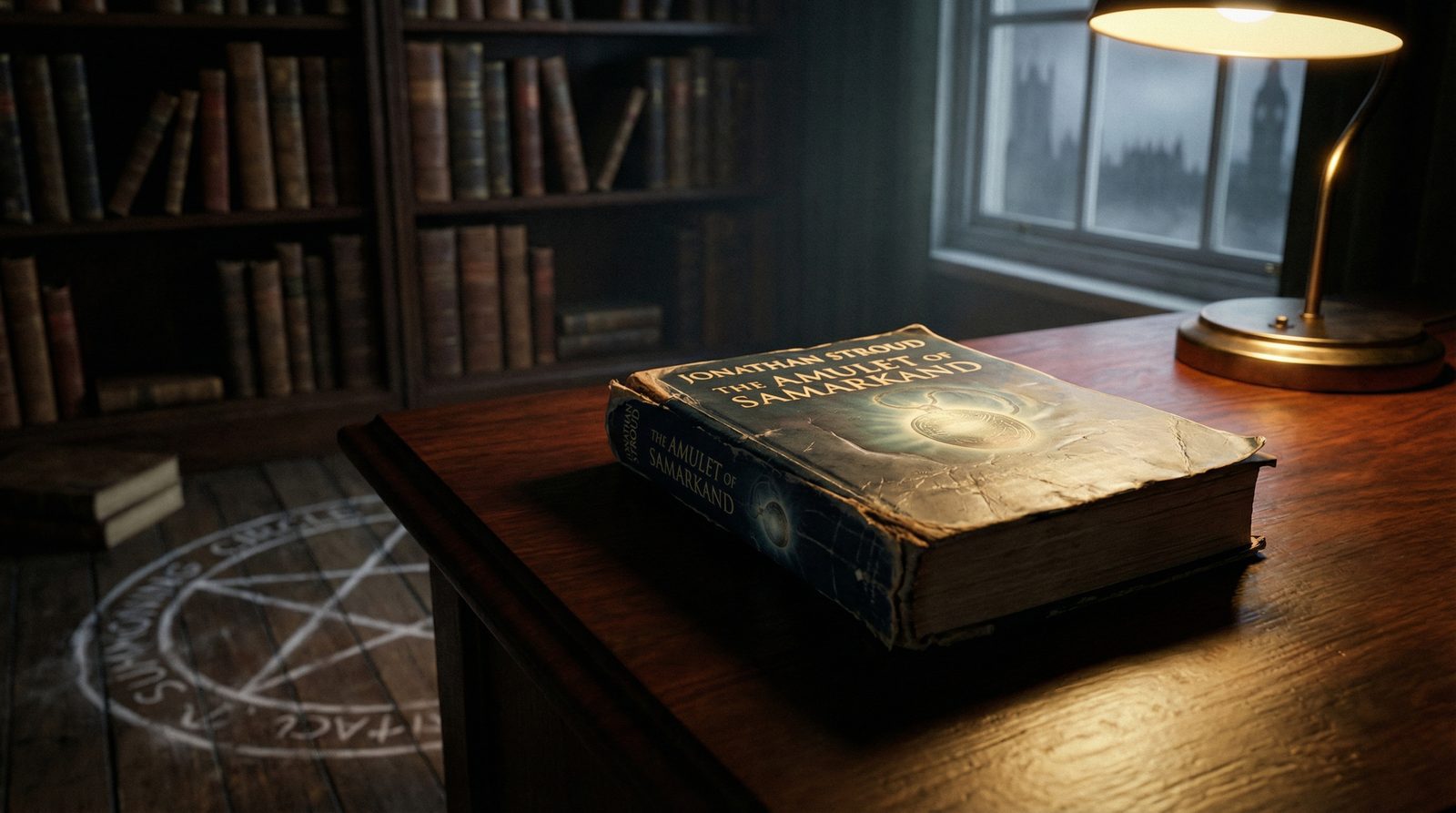
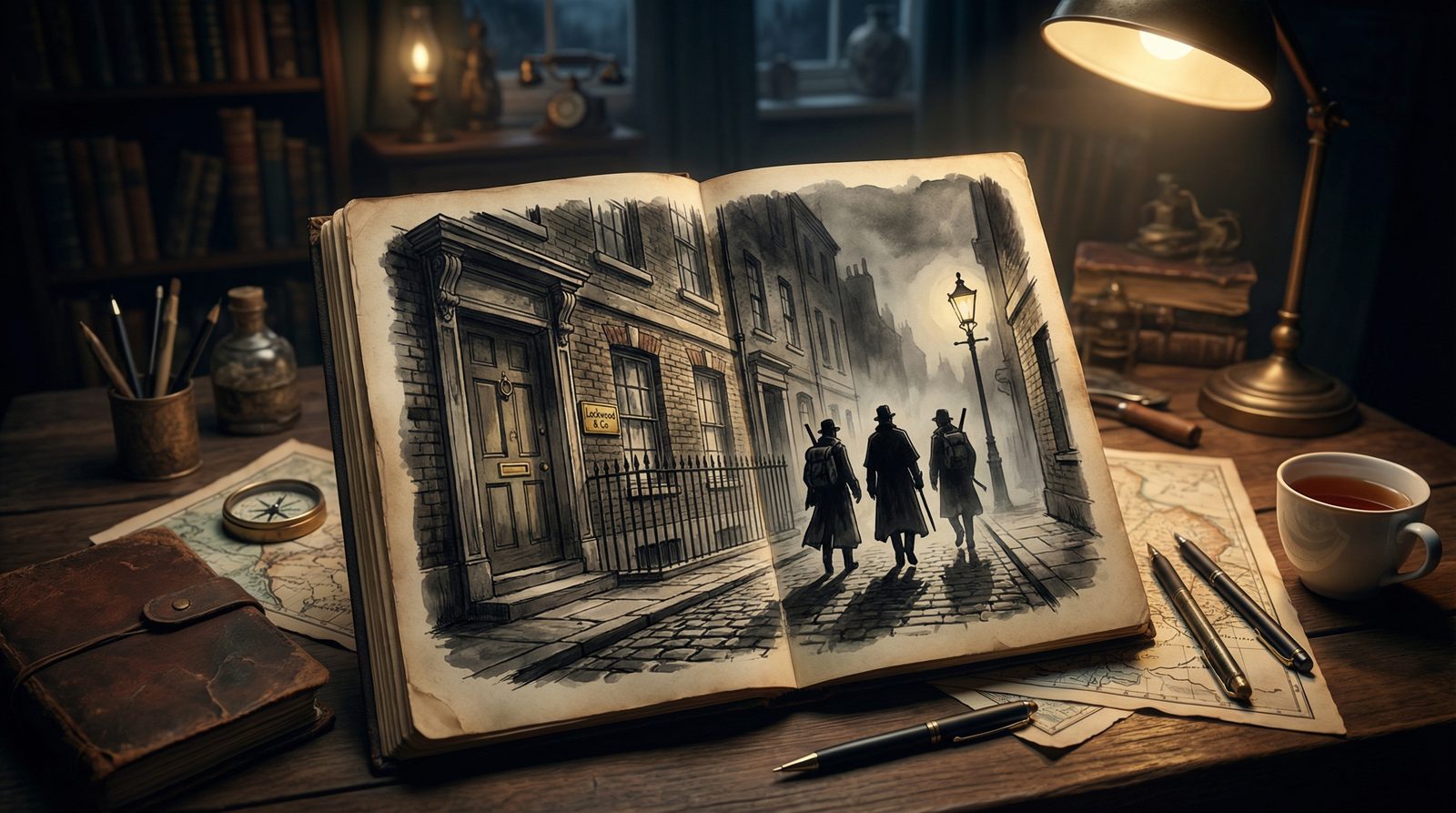
    In the Bartimaeus sequence, beginning with The Amulet Of Samarkand (2003), Stroud imagines an alternate London run by magicians whose power depends on enslaved spirits. The setting is recognizably urban and modern, but filtered through history and satire. Later, with Lockwood Co and its opening novel The Screaming Staircase (2013), he shifts to a haunted London where children are the only effective defense against ghosts, creating a precarious professional ecosystem built on risk and exploitation.

    Rather than foregrounding personal trivia, Stroud lets background appear sideways: in memos, disciplinary language, petty rivalries, and the weary tone of officials who enforce rules they don’t fully understand. His worlds feel plausible because they behave like institutions, not fairy tales.

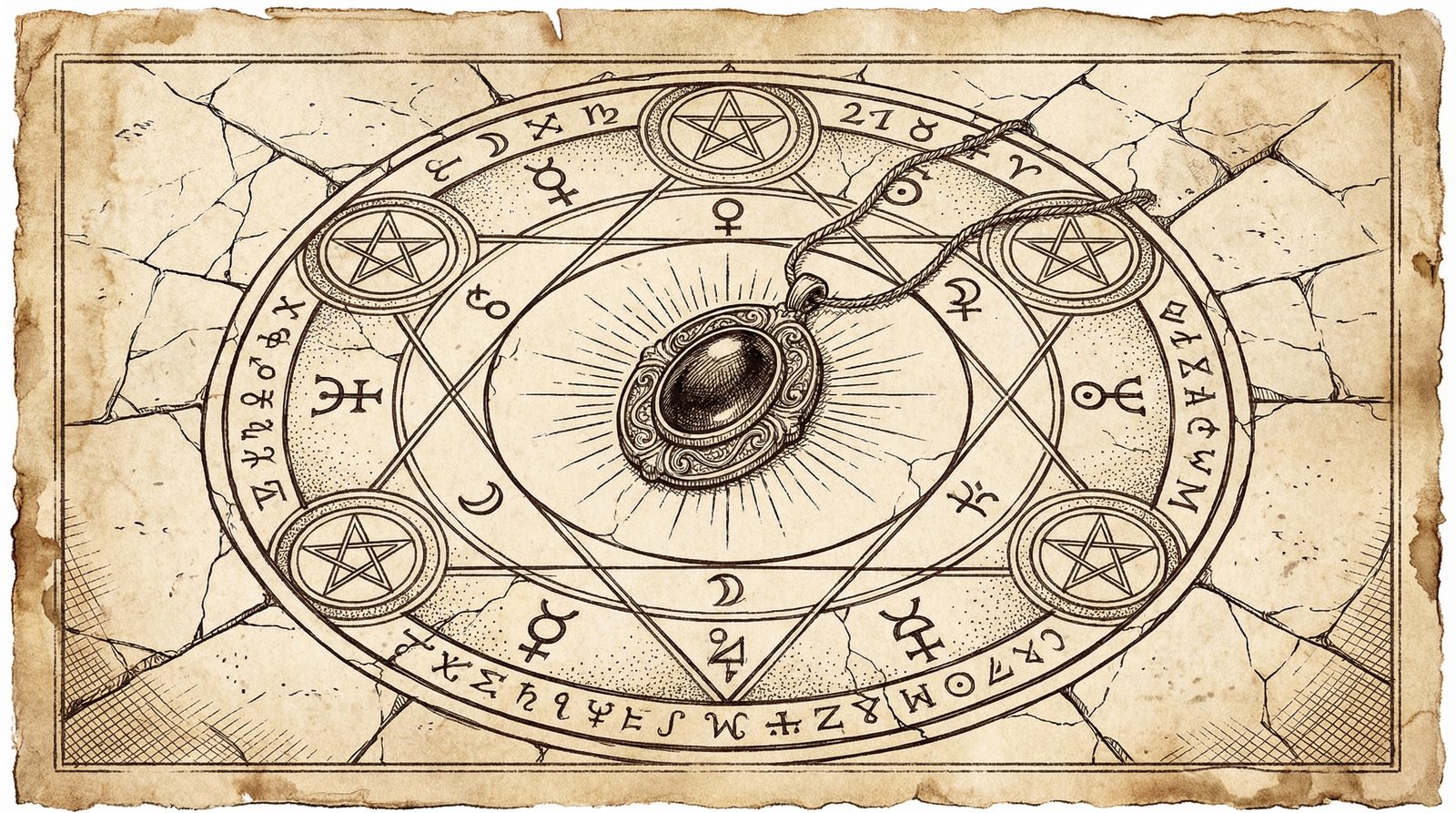
    Editorial illustration inspired by 'Jonathan Stroud'

    THEMES & MOTIFS

    A central engine in Stroud’s work is Magical Bureaucracy. In The Amulet Of Samarkand, magicians behave like civil servants and politicians: rule-bound in public, ruthless in private, and willing to weaponize procedure for personal gain. The supernatural is powerful, but the real leverage often sits in permissions, rank, and punishment.

    His later haunted-London world sharpens the logic of the Ghost Hunting Agency. In The Screaming Staircase, child sensitivity to ghosts becomes a professional resource, which turns bravery into an economic model. Young agents are praised, needed, and quietly treated as replaceable. Stroud returns to the tension between competence and vulnerability, showing how systems rely on the people they endanger.

    Power and servitude run through both series. In the Bartimaeus books, magic depends on exploitation, and the narrative keeps circling back to complicity and resistance. Even when characters benefit, the moral abrasion remains. In the ghost-agency world, power sits in information: who controls records, who sets policy, and who is allowed to define what “safe” means.

    Stroud also favors motifs of unreliable authority and buried history. Official explanations are rarely complete, and protagonists win by uncovering what institutions have forgotten or concealed. Alongside this is a quieter thread of found family, where humor and banter function as a survival tactic rather than sentimentality.

    Across his work, the motif systems are not window dressing. They are engines that let Stroud ask how much moral agency is possible inside structures built to reward compromise.
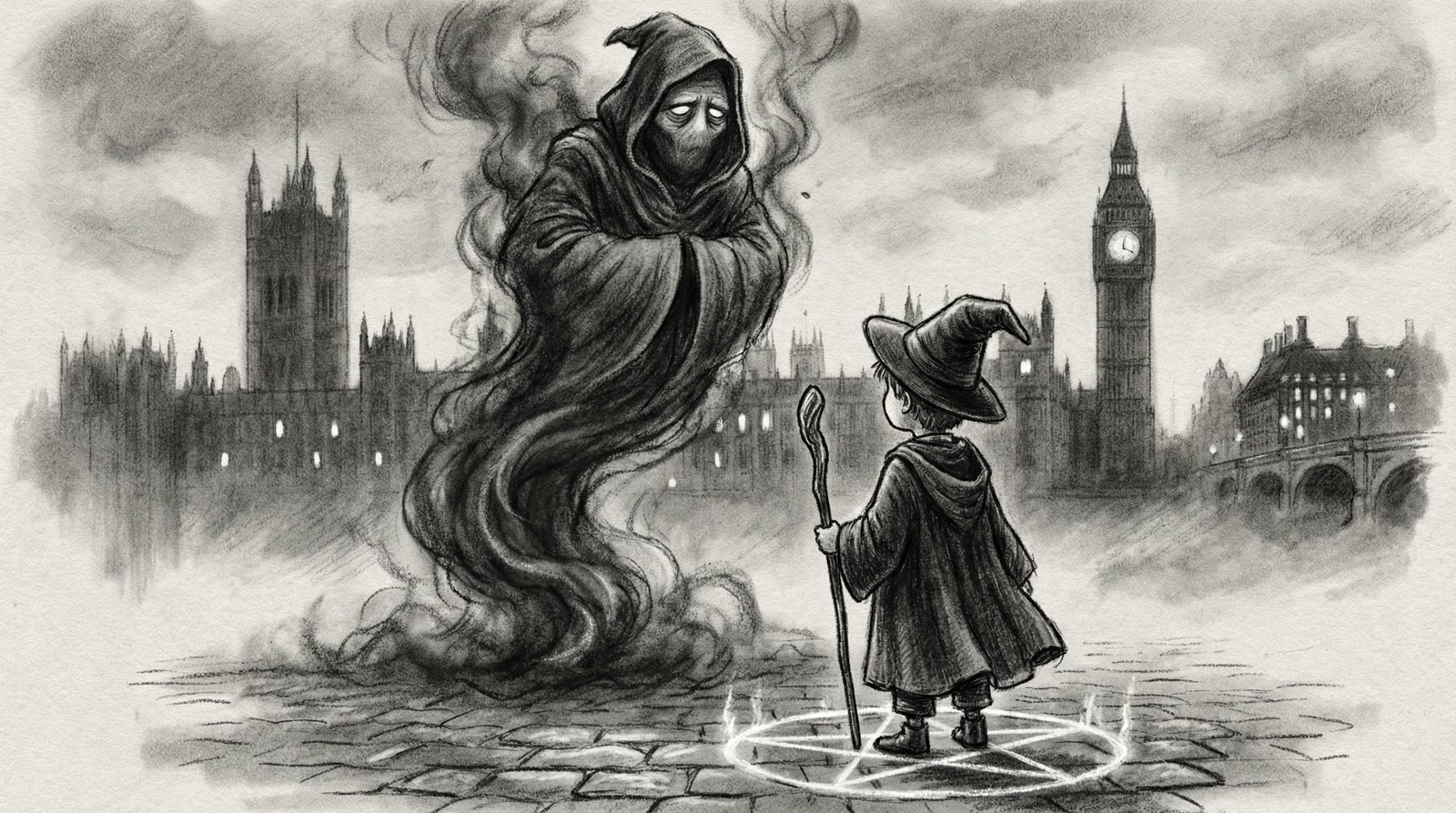
    Symbolic illustration inspired by 'Jonathan Stroud'

    STYLE & VOICE

    Stroud’s style is marked by wit, structural playfulness, and an unhurried confidence with worldbuilding. In the Bartimaeus books, he uses footnotes and a sardonic first-person voice to let the djinni comment on events, undercutting solemnity with sarcasm. The humor sharpens the critique rather than softening it, keeping power and procedure in view even during action.

    In Lockwood Co, the narrative voice is more direct but still dry and observant. Scenes of investigation and confrontation are tightly staged, with clear physical space and escalating dread. Stroud often alternates eerie fieldwork with domestic or office-like scenes inside the agency, which keeps the supernatural grounded in routine and logistics.

    His pacing favors accumulation over shock. Mysteries unfold through clues, conversations, and small revelations, with early details paying off later. Dialogue carries emotional weight, especially when characters test each other’s loyalty under pressure. Even in intense moments, Stroud avoids melodrama, creating a tone that is adventurous, eerie, and quietly bitter.

    KEY WORKS & LEGACY

    The Bartimaeus series, launched with The Amulet Of Samarkand, established Stroud’s signature blend of satire and stakes. It crystallizes his interest in institutions, exploitative power, and the ethics of control, using the human magician and the djinni Bartimaeus to show the same system from opposing angles.

    The Screaming Staircase launched his ghost-agency world, where the horror is constant but the economy is what makes it brutal. Stroud imagines a society reshaped by a long-term haunting crisis and centers young agents whose competence is essential while their safety is treated as negotiable.

    Stroud’s enduring appeal lies in how he marries adventure with skepticism. His worlds are full of djinn and ghosts, yet the real threats are often contracts, ministries, rival firms, and the compromises people make to survive inside systems that reward the worst instincts. That tension gives his fiction resonance beyond its immediate thrills.

  • Vice Versa (1882)

    Vice Versa (1882)

    INTRODUCTION

    Vice Versa (1882) by F. Anstey
    Comic fantasy · 19th Century · Victorian Era · United Kingdom


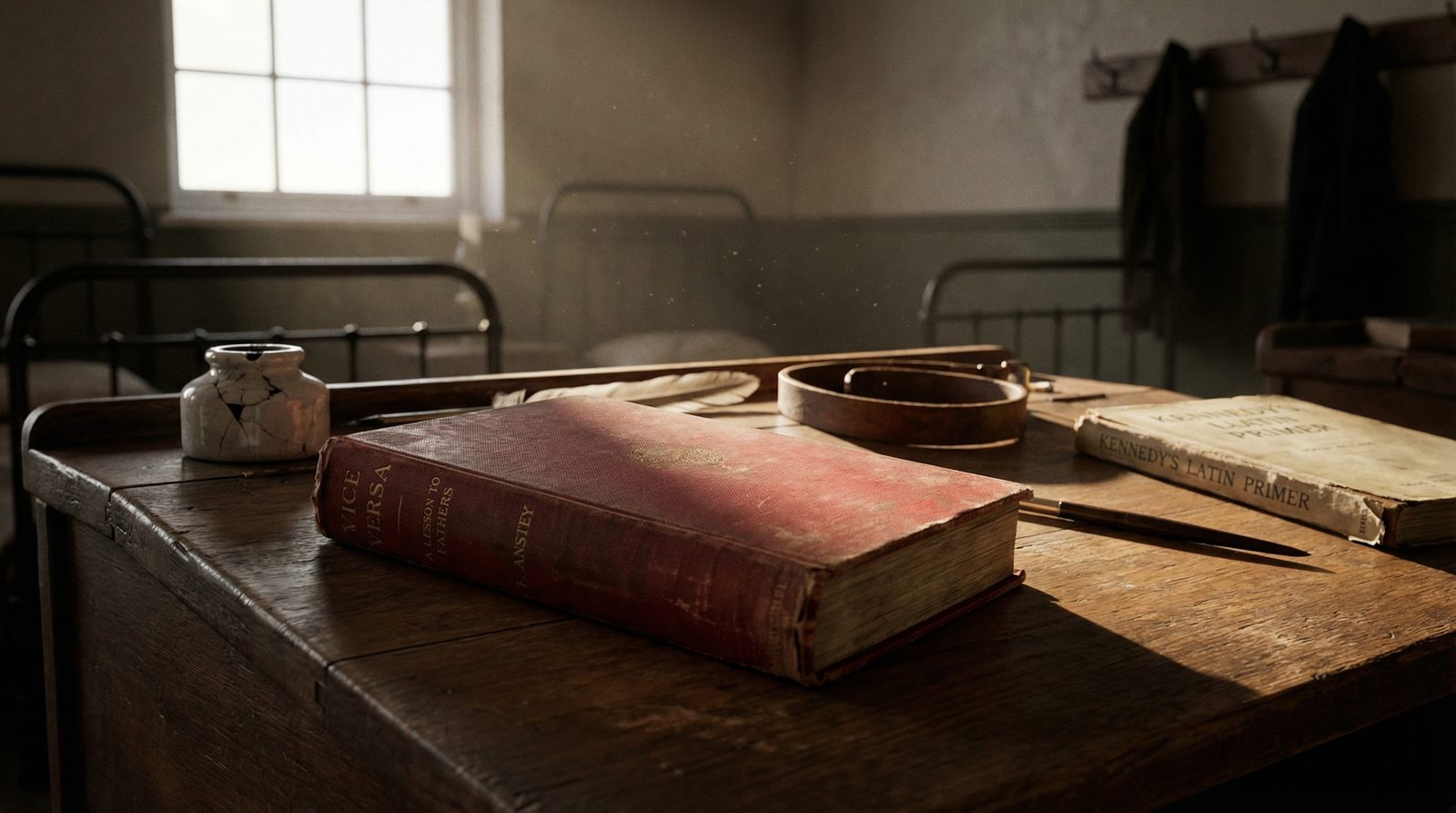
    Vice Versa (1882) begins with a wish and a stone, and very quickly becomes a quiet little nightmare. F. Anstey takes a familiar motif of wish-fulfilment and flips it into something sour, funny, and oddly tender. Paul Bultitude, a prosperous Victorian businessman, longs for the carefree life of his son Dick at Dr. Grimstone’s boarding school. A mysterious Garuda Stone grants the wish too literally, and father and son exchange bodies. What follows is not just farce, but a slow-burning feel of humiliation and uneasy recognition. Beneath the jokes about Latin primers and cane-wielding masters lies a sharp portrait of the Victorian obsession with discipline, respectability, and hierarchy. The magic is minimal, almost offhand. What Anstey really cares about is how people behave when stripped of their usual power, and whether empathy can survive a term at a place like Dr. Grimstone’s school in Kentish Town.

    PLOT & THEMES

    The central trope is the body swap: Paul Bultitude becomes his son Dick in appearance, while Dick is trapped in his father’s middle-aged body. This early example of Body Swap Comedy Between Generations uses the swap as a moral abrasion rather than a pure joke. Anstey wastes little time on mechanics. The Garuda Stone, brought back by the blustering Uncle Gregory from India, simply works. Then the novel settles into its real concern: role reversal as education.

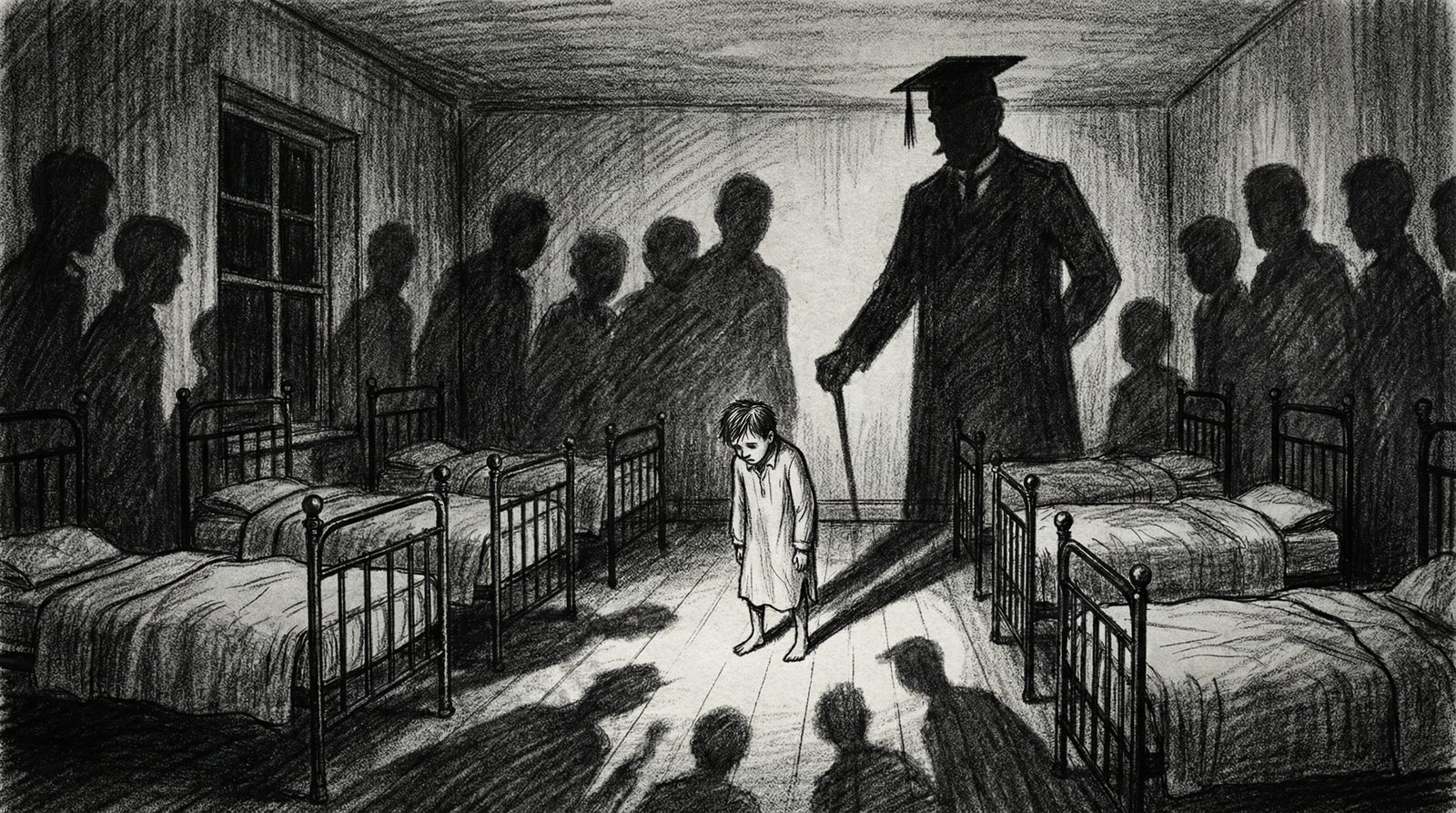
    Paul, now outwardly a schoolboy, is thrust into the brutal routines of Dr. Grimstone’s establishment. The headmaster’s son, the odious Augustus Grimstone, bullies him. Mr. Blinkhorn trembles and obeys. The boys enforce their own pecking order in the dingy playground and the icy dormitory. Scenes like Paul’s panic during the Latin viva voce in the schoolroom, or his miserable attempt to run away through the foggy streets of Kentish Town only to be dragged back, show how little his adult authority counts here. Meanwhile, Dick-as-Paul must bluff his way through business at the City office in Mincing Lane and endure the suffocating attentions of his father’s fiancée, the sentimental Miss Perrott.

    Anstey uses this double embarrassment to attack the hypocrisy of both generations. Parents sentimentalise school as character-building. Boys imagine business as leisurely and dignified. Both are wrong. Discipline is repeatedly framed as cruelty, especially in Grimstone’s pompous sermons about “moral fibre” just before he orders a flogging. Unlike lighter modern takes such as Freaky Friday, the book keeps its edges. The violence at school is not softened, and Paul’s cowardice is not made charming. By the ending, after a final confrontation in Grimstone’s study and another use of the Garuda Stone, the swap is reversed, but nothing is neatly fixed. Paul grudgingly promises to ease Dick’s life at school and abandon Miss Perrott. Dick agrees to behave better. The ending remains uneasy. They walk home through the London streets, outwardly restored and inwardly chastened, with the Stone shattered and its magic gone.

    PROSE & NARRATIVE STRUCTURE

    Anstey writes in a brisk, ironic third person, a narrative technique that allows him to slide between Paul’s pompous self-importance and Dick’s quicksilver anxiety without fully endorsing either. The narrator frequently undercuts Paul with sly asides, describing his “manly horror” of cold water as he faces the school’s tin baths, for instance, yet still lets us feel his genuine terror under Grimstone’s cane. The humour is dry rather than broad, built from overblown speeches and small physical miseries: cold tin baths, undercooked meals, aching muscles after drill, and the constant fear of public humiliation.

    Structurally, the novel is almost theatrical. It alternates set pieces at the school and in the Bultitude household, each chapter a stage with its own dominant authority figure: Grimstone in his study, Uncle Gregory booming in the drawing-room, the City clerk Tipping in the counting-house. This back-and-forth echoes mirrored lives. Every cruelty at school has its counterpart in the casual callousness of adult business and courtship. The pacing is tight. The Garuda Stone appears, works, and is destroyed without mythological fuss, keeping our attention on the social experiment rather than fantasy lore.

    There are occasional sentimental flourishes, especially in scenes with Paul’s young daughter Barbara, but they are quickly undercut by some practical detail or barbed remark. The prose is very much nineteenth-century middlebrow. It is comedy written with a straight face, which makes the cruelty of the school scenes land harder than any melodrama.

    Conceptual editorial illustration inspired by 'Vice Versa (1882)'

    CHARACTERS & INTERIORITY

    Paul Bultitude begins as the classic archetype of the pompous patriarch. Inside Dick’s body, however, he becomes something rarer in Victorian fiction: a grown man forced into genuine vulnerability. Anstey lets us feel his slow erosion. The first caning he treats as an outrage, but repetition grinds that indignation down into dread and, eventually, recognition. His internal monologue shifts from self-pity to a grudging, fearful respect for what Dick has endured.

    Dick, occupying his father’s body, is not idealised either. He revels in ordering servants about and nearly ruins Paul’s business dealings with a childish prank on the nervous clerk Tipping. His horror at Miss Perrott’s flirtations in the Bultitude drawing-room is played for comedy, but it also exposes how little control young people, and especially girls like Barbara, have within these domestic charades.

    Secondary figures are sketched with quick, telling strokes. Dr. Grimstone, with his booming platitudes and private cowardice, is less a villain than a man completely absorbed in his own authority. Mr. Blinkhorn, the underpaid usher, is a portrait of wasted intelligence, too timid to protect the boys he half-pities. Even Augustus Grimstone, the school bully, is shown at one point cramming desperately for an exam, hinting at fear behind his swagger. Interiority here is not lushly psychological, but it is precise. Anstey gives just enough inner flicker to complicate what could have been pure caricature.

    LEGACY & RECEPTION

    Vice Versa was a popular success in late Victorian Britain, and it has never quite vanished, even if it now lives in the shadow of later body-swap stories. Its mix of school-story realism and light fantasy helped pave the way for works that use the fantastic to expose social lies. Stage versions and screen adaptations have tended to soften the book’s harsher edges, often turning the ending into a more straightforward reconciliation. The novel itself leaves a residue of discomfort. Paul and Dick reverse the swap, the Garuda Stone is shattered, and they walk away with no guarantee that their resolutions will hold once the sting of pain fades.

    Critical reception has often filed the book under “juvenile,” but that is misleading. Adults were always the real target, and modern readers who come expecting harmless schoolboy japes may be surprised by how pointed the satire of business, courtship, and parenting remains. It is a minor classic of comic fantasy, but also an early critique of institutions Victorian Britain was most proud of.

    IS IT WORTH READING?

    If you have any interest in school stories, comic fantasy, or the underside of Victorian respectability, Vice Versa is absolutely worth your time. It is short, brisk, and far sharper than its premise suggests. The language is old-fashioned but not forbidding. Readers looking for elaborate world-building or lush romance will not find them here. What you get instead is a tight moral experiment: what happens when a comfortable man is dropped into the world he has always dismissed. The answer is funny, uncomfortable, and surprisingly moving, especially in the scenes between Paul and his daughter Barbara. It is a book that can be read quickly, but lingers in the mind whenever someone reminisces too fondly about the “good old days” of school.

    Illustration of a core idea or motif from 'Vice Versa (1882)'

    TRIVIA & AUTHOR FACTS

    “F. Anstey” was the pen name of Thomas Anstey Guthrie, a barrister-turned-writer who found far more success in comic fiction than in law. Vice Versa was his breakout hit, written when he was still in his twenties. The Garuda Stone reflects the era’s fascination with India as a source of mysterious power, filtered through the casual imperialism of a character like Uncle Gregory, who treats the artifact as a mere curio. Anstey’s long association with Punch magazine shows in the dry asides and caricatured authority figures.

    The school in Kentish Town is not named after a real institution, but its routines, cold baths, bread-and-butter breakfasts, compulsory Latin, mirror contemporary accounts of minor public schools. Anstey later revisited fantastical intrusions into everyday life in novels like The Brass Bottle, but he never again hit quite the same balance between magic and social observation that he achieved here. Vice Versa remains his most widely remembered work.

    SIMILAR BOOKS

    If you enjoy Vice Versa, you might seek out other works that mix light fantasy with social satire. The Wonderful Visit (1895) by H. G. Wells brings an angel into an English village to expose everyday hypocrisy. The Brass Bottle (1900) unleashes a genie into respectable middle-class life with chaotic results. For a harsher, more realistic look at school, Thomas Hughes’s Tom Brown’s Schooldays (1857) offers the earnest version of the same world Anstey mocks. All of these share an interest in how institutions, school, church, family, shape and sometimes warp the people inside them.

  • A Fallen Idol (1886)

    A Fallen Idol (1886)

    INTRODUCTION

    A Fallen Idol (1886) by F. Anstey (Thomas Anstey Guthrie)
    Psychological fiction · United Kingdom


    A Fallen Idol begins like a drawing-room curiosity and steadily curdles into something colder. At first glance it looks like a fashionable Victorian entertainment, a touch of occult glamour enlivening polite society. Beneath that surface, Anstey is conducting a pointed examination of belief, imposture, and the damage done when spiritual hunger collides with social ambition.

    The supernatural element is unmistakable, but it is never allowed to dominate the book in the way a conventional horror story might. Instead, the idol operates as a crooked mirror, reflecting vanity, cowardice, and moral compromise back at the people who claim to revere it. The prevailing mood is unease rather than terror. Anstey is less interested in demons than in how quickly ordinary people betray themselves when mystery becomes fashionable.

    PLOT & THEMES

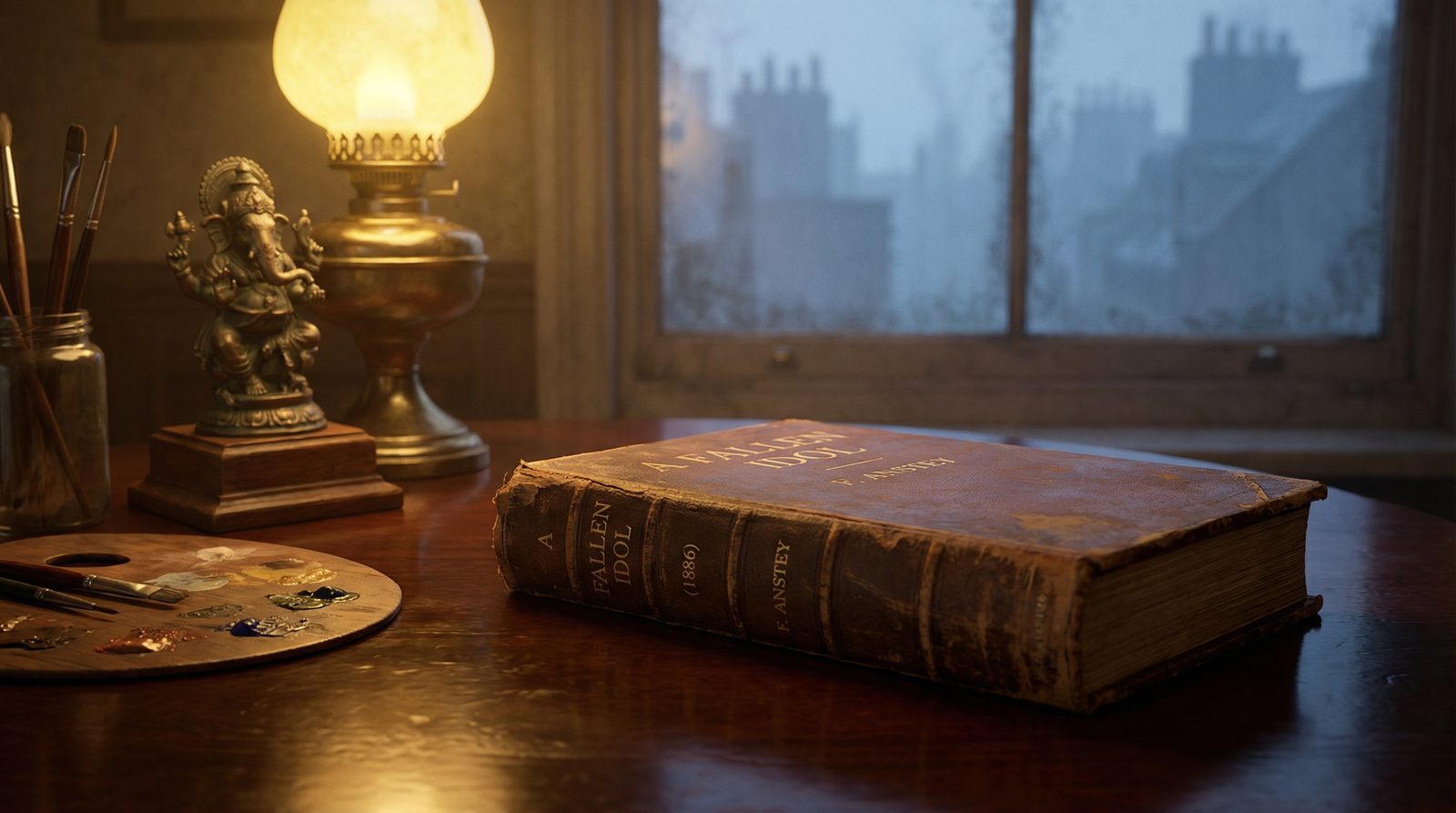
    The story opens in colonial India, where the young barrister Harold Caffyn acquires a strange idol after a violent scene at a temple in Bhowanipore. The circumstances are murky, a worshipper is killed, and whispers of a curse follow the object. Harold brings the idol back to London, where it finds its way into the studio of the painter Mark Ashburn.

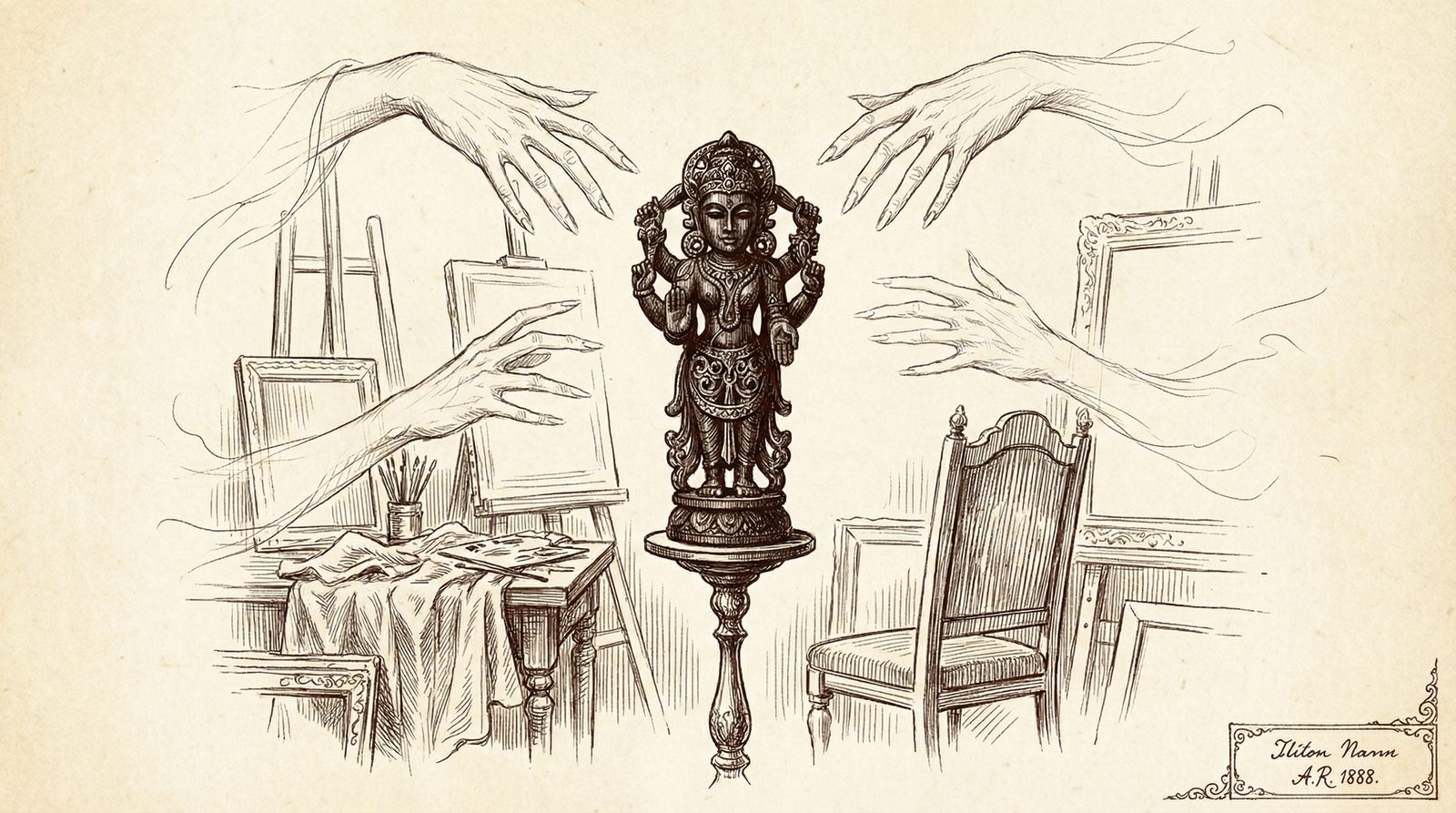
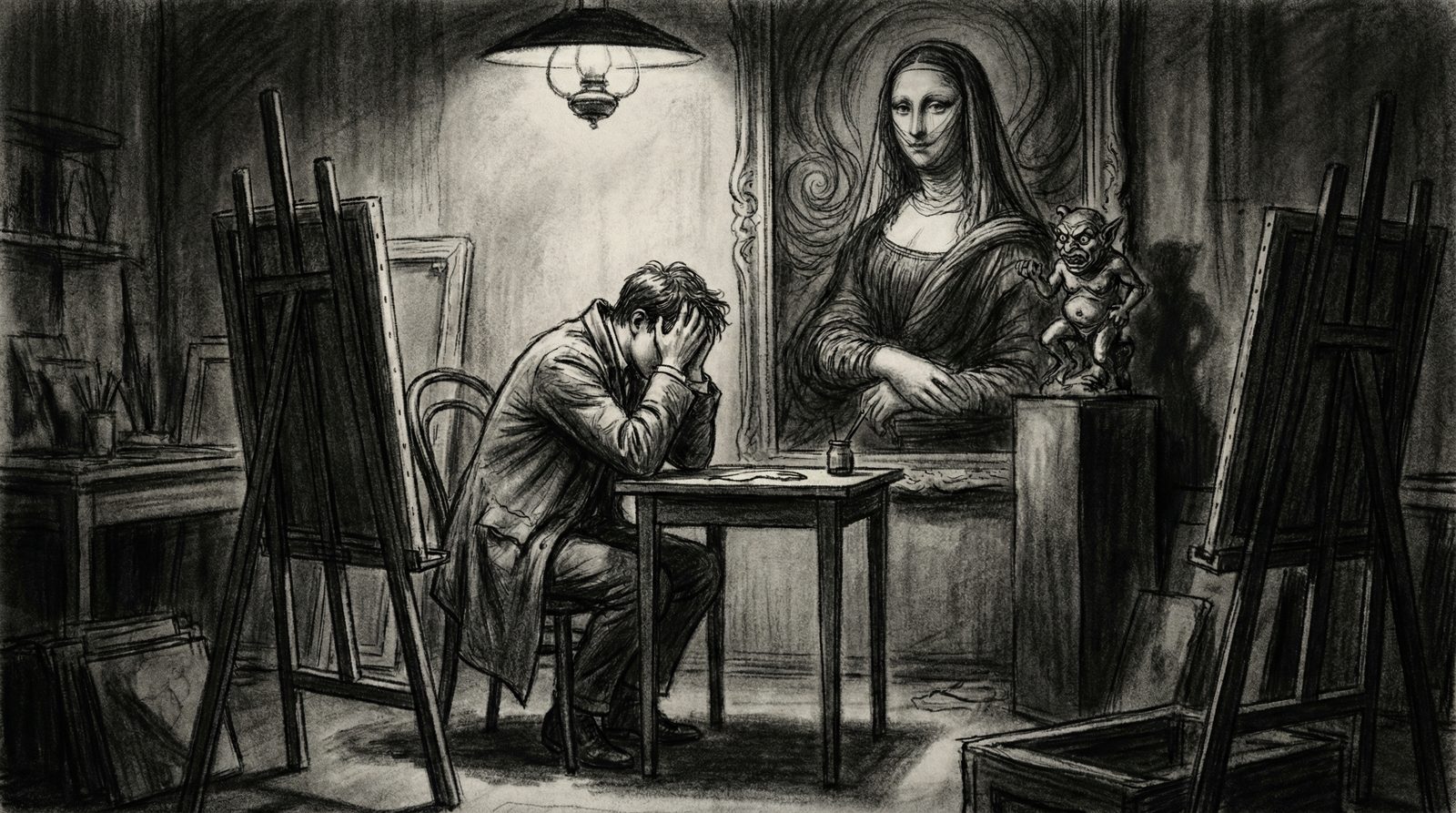
    From there, the idol works slowly and indirectly. Mark’s portraits, especially his painting of the charming Dolly Tredwell, begin to attract attention that feels unearned and unsettling. A circle of fashionable spiritualists gathers around the studio, led by the solemn Mrs. Fothergill and the excitable Miss Tyrell, eager to believe that something ancient and powerful is at work.

    The novel combines the cursed-object tradition with social imposture. Harold, who knows more about the idol’s bloody history than he admits, manipulates its reputation to his advantage, nudging Mark into becoming a reluctant medium. The séances staged in the dim studio become performances of projection. The sitters see what they want to see, while Mark feels himself hollowed out by a role he never meant to play.

    A colonial undercurrent runs through the book, recalling earlier stories of stolen relics such as The Moonstone. The idol is treated as both exotic curiosity and drawing-room entertainment, stripped of context and consequence until the damage is already done. When exposure finally looms, Harold recklessly handles the idol to prove it harmless. The result is disaster rather than vindication.

    The ending is bleakly ironic. Mark survives physically but not ethically. He burns the painting that brought him acclaim, abandons the séances, and returns the idol to a museum, where it is neutralized behind glass and catalog numbers. No one is cleansed of guilt. Reputations remain bruised. The harm lingers quietly, unresolved.

    PROSE & NARRATIVE STRUCTURE

    Anstey writes with a lightness that disguises how carefully the novel is engineered. Free indirect discourse allows the narrative to drift between Mark’s self-doubt, Harold’s cynical calculation, and the eager credulity of the spiritualist circle without heavy-handed transitions.

    Dialogue does much of the work. Characters expose themselves through polished evasions, nervous enthusiasm, and pious certainty. The narrator’s occasional asides sharpen the satire, particularly when séances are squeezed between tea and supper, or when moral outrage coexists comfortably with voyeuristic curiosity.

    Structurally, the novel alternates between scenes of social comedy and increasingly claustrophobic séances in Mark’s studio. Each sitting raises the stakes: gossip spreads, reputations wobble, and belief hardens into expectation. Notably, the idol itself rarely acts in any overt way. Its power lies in what people are willing to do in its presence.

    Conceptual editorial illustration inspired by 'A Fallen Idol'

    CHARACTERS & INTERIORITY

    Mark Ashburn is a reluctant medium, not by conviction but by weakness. He is decent, talented, and insecure enough to be swayed. His interior monologue reveals how easily vanity disguises itself as generosity. During the séances he repeatedly tells himself that he is only humoring others, even as he profits from their belief.

    Harold Caffyn feels strikingly modern. He half believes his own deceptions and treats danger as something to be managed theatrically. Moments of genuine fear break through his composure, but his instinct is always to convert panic into control.

    Dolly Tredwell and the surrounding social figures are sketched with less depth, yet Anstey allows flashes of private disillusionment to surface. In particular, Dolly’s overheard humiliation after a disastrous séance reminds the reader how easily a young woman’s reputation becomes collateral damage in fashionable folly.

    LEGACY & RECEPTION

    A Fallen Idol never matched the popularity of Anstey’s comic successes, and it is often treated as a minor occult curiosity. Victorian reviewers were divided, intrigued by the ingenuity of the séance scenes but unsettled by the novel’s refusal to clarify whether the idol was truly supernatural or merely a catalyst for fraud and hysteria.

    That ambiguity has aged well. The book now reads as a bridge between moralized ghost stories and later psychological hauntings. Its final image, the idol inert in a museum case while the characters quietly absorb their shame, feels unexpectedly modern in its skepticism toward spectacle and belief.

    IS IT WORTH READING?

    If you prefer supernatural fiction that unsettles through psychology rather than shocks, this novel is worth your attention. It moves at a Victorian pace, heavy with conversation and social maneuvering, but the unease accumulates steadily.

    The séances are disturbing not because of what appears, but because of what people are willing to believe. Readers interested in spiritualism, colonial guilt, and the performance of belief will find the novel sharp and quietly corrosive.

    Illustration inspired by a core idea from 'A Fallen Idol'

    TRIVIA & AUTHOR FACTS

    F. Anstey was the pen name of Thomas Anstey Guthrie, a barrister-turned-writer whose legal training shows in the careful sequencing of cause and consequence throughout the novel. The early Indian chapters draw on contemporary travel writing, though filtered through satire.

    Anstey attended real séances in London, and his fascination with spiritualism and fraud informs the novel’s tone. The museum ending reflects his interest in how institutions neutralize danger by classification, turning objects of fear into labeled curiosities.

    SIMILAR BOOKS

    Readers interested in supernatural objects with moral weight may also enjoy The Moonstone for its colonial relic and social fallout, or The Turn of the Screw for a later, more psychological ambiguity. For Victorian skepticism toward spiritual fashion, the earnest writings of Arthur Conan Doyle on séances offer a revealing real-world counterpoint to Anstey’s fiction.

    DISCOVERABILITY & LINKS

  • Five Children And It (1902)

    Five Children And It (1902)

    INTRODUCTION

    Five Children and It (1902) by E. Nesbit
    Children’s fantasy · United Kingdom


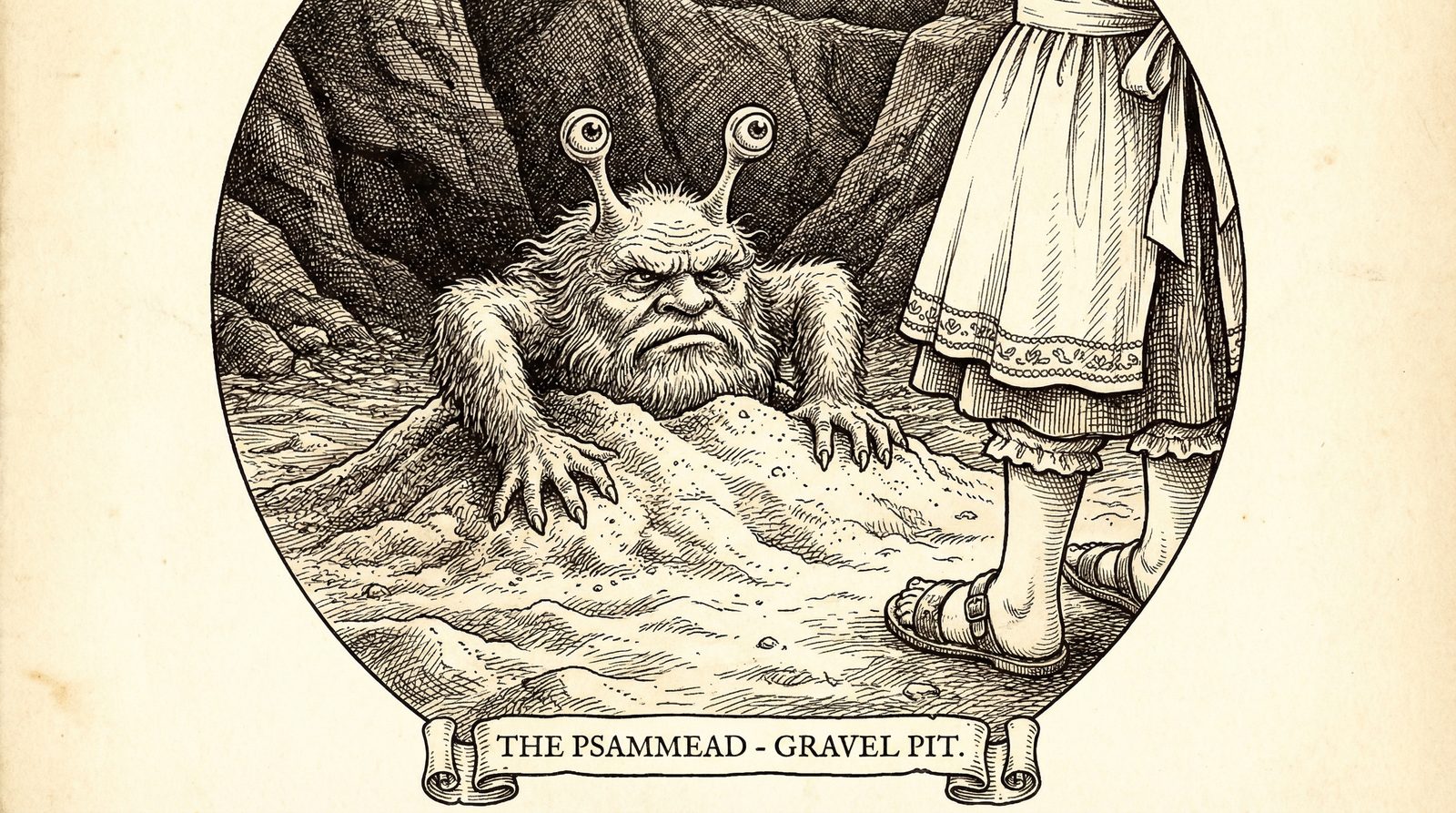
    Five Children and It begins on a hot, dusty afternoon and never quite loses that grit-in-the-teeth realism. Four siblings and their baby brother, sent to the Kent countryside while their parents are occupied elsewhere, discover a Psammead, a sand-fairy who grants wishes that last only until sunset. The premise sounds sweet and simple. Nesbit’s imagination runs on irony and consequence.

    Every wish curdles into trouble, and the children’s giddy hope keeps colliding with embarrassment, fear, and guilt. The book is funny, but it is not gentle. It remembers childhood from just far enough away to see selfishness and bravery in the same gesture, and to show how quickly desire becomes a mess once it has to live in the real world of servants, shopkeepers, neighbors, and rules.

    PLOT & THEMES

    The structure is episodic. Each chapter revolves around a single wish and its sunset collapse. Cyril, Anthea, Robert, Jane, and their baby brother (nicknamed “the Lamb”) are staying near chalk and gravel pits when they uncover the Psammead buried in sand. It offers one wish per day, with a strict condition: the wish ends at sunset, no matter how inconvenient the timing.

    The children wish for beauty, money, wings, admiration, a besieged castle, and even for their baby brother to be grown up. Every time, the wish arrives like a gift and behaves like a trap. When they wish for gold, they discover that sudden wealth without context attracts suspicion rather than comfort. When they wish to be beautiful, the servants do not recognize them and lock them out. When they wish for wings, they gain spectacle but lose control. Each episode is a small lesson in how literal magic exposes sloppy thinking.

    What makes the book sharper than many later children’s fantasies is its refusal to turn magic into destiny. Nesbit’s enchantment is a stress test. It reveals the children’s appetites, their panic, their capacity for courage, and their instinct to blame one another when things go wrong. By the end, exhausted by accidents and near-disasters, they make the most mature wish in the book: that none of the wishes had happened at all.

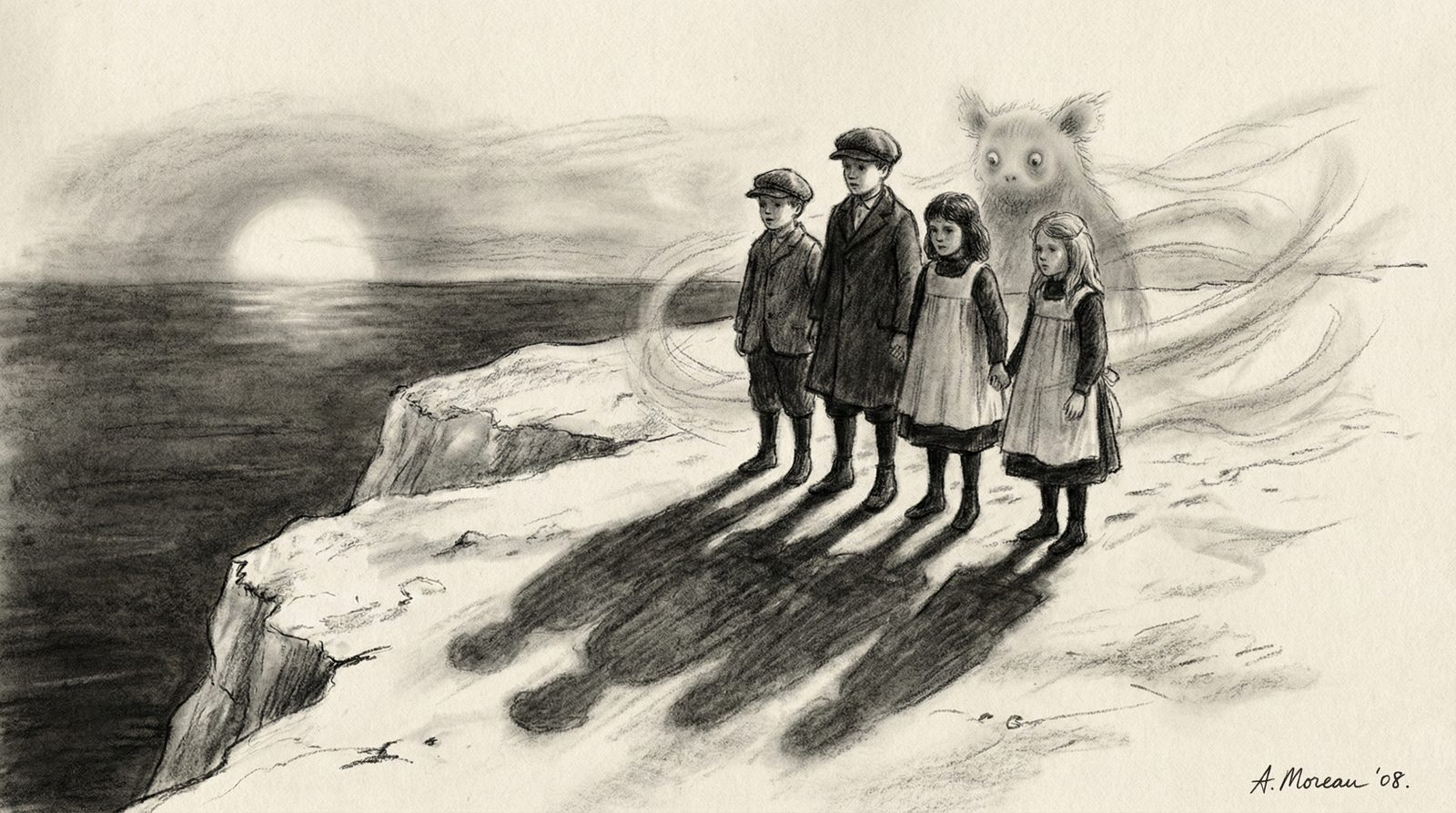
    The Psammead grants that erasure. The summer snaps back into place, leaving only a faint residue and a sense of moral growth. The ending does not insist that the adventure “really” happened in a way adults can verify. It insists only that the children have changed.

    PROSE & NARRATIVE STRUCTURE

    Nesbit’s most distinctive technique is her intrusive narrator: a wry adult voice that addresses the reader directly, teases the children’s follies, and occasionally apologizes for dull bits. The voice is affectionate but unsparing, creating a conspiratorial intimacy. We are invited to remember our own childhood blunders while watching these particular ones unfold.

    The prose is deceptively simple and firmly domestic. Servants’ tempers, locked cupboards, awkward meals, and small village routines anchor the stranger episodes, whether the children are defending a magically produced castle or being chased because of a badly worded wish. Sunsets arrive with both relief and dread. The daily reset never wipes away consequences completely; it only changes the form they take.

    Crucially, Nesbit never lets the magic float free of consequence. The rules are strict enough to create real risk, but elastic enough to produce farce. The rhythm of wish, escalation, and collapse becomes almost musical, and by the later chapters that repetition starts to feel heavy, as if the book itself is nudging the children toward a more sober understanding of what they are asking for.

    Conceptual editorial illustration inspired by 'Five Children and It'

    CHARACTERS & INTERIORITY

    The children fall into recognizable patterns, but Nesbit gives them contradictions that feel real. Cyril is brave until he is frightened. Anthea is responsible until she is tempted. Robert blusters, then surprises himself with courage. Jane is dreamy in ways that backfire. Even the Lamb, mostly a catalyst, becomes unsettling in the chapter where a wish ages him into a detached, priggish young man.

    Nesbit does not dwell in long interior monologues. Instead she gives quick flashes of shame, pride, and panic as consequences land. The Psammead is not a cuddly companion. It is weary, cynical, and occasionally cruel, like disappointed experience watching childish ego crash into reality. Adults, meanwhile, remain half-blind to the magic. That mismatch creates a quiet loneliness inside the comedy: the children are learning things their guardians will never quite understand.

    LEGACY & RECEPTION

    When it appeared, Five Children and It helped reshape children’s fantasy by moving magic out of distant kingdoms and into ordinary England. It is a foundational example of “everyday enchantment” where the supernatural does not solve problems but exposes them. Its influence runs forward into later wish-stories and rule-bound magical premises, including modern descendants that keep the same logic: wishes are never neutral.

    Modern readers may notice period-bound assumptions about class and domestic life, but the structural daring and emotional honesty still stand out. Compared with screen adaptations that sentimentalize the Psammead, the novel’s ambiguous farewell feels braver. It leaves no souvenirs, only responsibility.

    IS IT WORTH READING?

    If you come expecting a cozy nursery classic, this book may surprise you. The language is of its time but still brisk, and the humor lands more often than not. Beneath the comic disasters lies a sharp curiosity about what children truly want, and how quickly those wants sour when granted too literally.

    The episodic structure makes it easy to read in pieces, yet the cumulative effect is quietly haunting. For readers interested in the roots of modern fantasy, or in stories where magic exposes rather than fixes human problems, it repays attention.

    Illustration inspired by a core idea from 'Five Children and It'

    TRIVIA & AUTHOR FACTS

    E. Nesbit was a founding member of the Fabian Society, and her politics quietly inform the book’s fascination with money, class, and fairness. The story first appeared in The Strand Magazine before being published as a book. :contentReference[oaicite:1]{index=1}

    The Psammead returns in later books, including The Phoenix and the Carpet and The Story of the Amulet, but here it is at its most mysterious and least domesticated. :contentReference[oaicite:2]{index=2}

    SIMILAR BOOKS

    If you enjoy everyday settings colliding with rule-bound magic, you might try Edward Eager’s Half Magic for a later wish-premise descendant, or Diana Wynne Jones for a more modern version of magical consequences arriving through language and loopholes. Nesbit’s own sequels also continue the Psammead world in a larger, stranger direction.

    DISCOVERABILITY & LINKS

  • The Amulet Of Samarkand (2003)

    The Amulet Of Samarkand (2003)

    INTRODUCTION

    The Amulet of Samarkand (2003) by Jonathan Stroud
    Fantasy · United Kingdom


    The Amulet of Samarkand is a children’s fantasy that refuses to stay safely childish. Set in an alternate London ruled by magicians, it pairs the dry, battered wit of a five-thousand-year-old djinni with the raw ambition of a boy who wants to matter in a system designed to grind him down.

    What begins as a petty act of revenge quickly expands into a political nightmare. Stroud builds a world where magic is bureaucratic, exploitative, and casually cruel. Incense and coal smoke hang in the air, but they do little to disguise the rot beneath the surface. The most honest voice in the book belongs to a spirit who insists he is the villain, and may be the only one telling the truth.

    PLOT & THEMES

    The story unfolds like a heist gone wrong. Nathaniel, a twelve-year-old apprentice in the Ministry of Internal Affairs, summons the djinni Bartimaeus to steal the Amulet of Samarkand from the arrogant magician Simon Lovelace. It is a classic supernatural bargain, but dangerously inverted: the summoner is a child, and he barely understands the contract he has entered.

    The theft draws them into a conspiracy aimed at overthrowing the government during a ceremonial gathering at Heddleham Hall. The amulet is both weapon and leverage, and its power escalates far beyond Nathaniel’s control. Each success deepens his entanglement with the very system he briefly threatens.

    Running beneath the action is the book’s central moral engine: slavery. Spirits are bound by their true names and summoned at great cost to themselves, while human society mirrors the same hierarchy. Commoners are kept ignorant and disposable. Magicians are themselves products of emotional mutilation, trained from childhood to suppress empathy in favor of control.

    The ending is deliberately bitter. Nathaniel uses the amulet to defeat Lovelace and stop a massacre, but his reward is assimilation. He takes a new name, John Mandrake, accepts promotion, and steps deeper into the machine he now understands. There is no triumph, only survival through compromise.

    PROSE & NARRATIVE STRUCTURE

    The novel’s defining technique is its dual narration. Nathaniel’s chapters are written in close third person, tight and defensive, while Bartimaeus narrates in first person, armed with sarcasm, historical digressions, and famously intrusive footnotes.

    This split perspective creates a form of narrative unreliability. Official history, state propaganda, and magician lore are constantly undercut by Bartimaeus’s asides about past empires, botched summonings, and conveniently forgotten atrocities. The footnotes quietly dismantle the authority of the main narrative without ever halting the plot.

    Stroud’s prose is clean and procedural. Magic is described as work: pentacles, summoning circles, planes of existence, and defensive wards. This emphasis on process grounds the fantasy in risk and labor rather than wonder, reinforcing the sense that power here is something managed, rationed, and abused.

    Conceptual editorial illustration inspired by 'The Amulet of Samarkand'

    CHARACTERS & INTERIORITY

    Nathaniel begins as an ambitious prodigy desperate to escape humiliation. His interior life is defined by resentment, fear, and a relentless need for recognition. When his mentor’s wife, Mrs. Underwood, is killed in a magical attack, his grief is rapidly converted into further ambition. He knows this is wrong, and continues anyway.

    Bartimaeus masks trauma with humor. His boasts about serving Solomon or building ancient cities are a shield against millennia of forced labor. Moments of genuine concern, particularly when Nathaniel is in danger, break through rarely and therefore land hard.

    Secondary characters are sharply etched. Mr. Underwood embodies bureaucratic cruelty born of mediocrity. Kitty, though still peripheral in this volume, stands out for her refusal to accept the system’s logic at all, hinting at a resistance grounded not in magic but in ethics.

    LEGACY & RECEPTION

    Published at the height of the early-2000s fantasy boom, The Amulet of Samarkand distinguished itself by refusing easy heroics. While other series offered hidden schools and secret destinies, Stroud presented a state where magic runs the government and corrupts everyone it touches.

    The book has endured because of its unsentimental ending. Nathaniel survives, London survives, but the moral cost is not erased. That unresolved tension, between power gained and integrity lost, gives the novel its lasting bite and sets the tone for the rest of the trilogy.

    IS IT WORTH READING?

    This is not a comfort read. The humor is sharp, but the world is cruel, and the victories are compromised. If you are looking for fantasy that treats younger readers with seriousness and respects their capacity for moral discomfort, it is absolutely worth reading.

    The book is fast, funny, and deeply uneasy. It understands how systems absorb rebellion, how children are shaped into instruments, and how bargains made in anger rarely end cleanly.

    Illustration inspired by a core idea from 'The Amulet of Samarkand'

    TRIVIA & AUTHOR FACTS

    Jonathan Stroud worked as a children’s editor before writing the Bartimaeus Sequence, and his editorial background shows in the book’s structural confidence. The novel launched a trilogy later expanded by a prequel.

    Bartimaeus’s footnotes were present from early drafts and quickly became the spine of the series. They allow Stroud to critique official history and power structures without halting the narrative, a technique that would influence later fantasy written for younger audiences.

    SIMILAR BOOKS

    Readers drawn to morally tangled magic may also appreciate His Dark Materials for its political theology, or The Magicians for a later, more cynical exploration of power and escapism. For a younger-skewing comparison, Artemis Fowl offers a lighter but still rule-bound take on criminal genius and supernatural bureaucracy.

    DISCOVERABILITY & LINKS

    DISCOVERABILITY & LINKS

  • Thomas Anstey Guthrie

    Thomas Anstey Guthrie

    ORIGINS & BACKGROUND

    Thomas Anstey Guthrie, who published under the pen name F. Anstey, was a late Victorian and Edwardian humorist who made the respectable English middle class his favorite target. Trained as a lawyer and steeped in the habits and anxieties of the professional classes, he brought a sharp insider’s eye to the comic disasters he inflicted on his characters. That legal precision helps explain why his plots remain cleanly constructed even when the surface is pure farce.

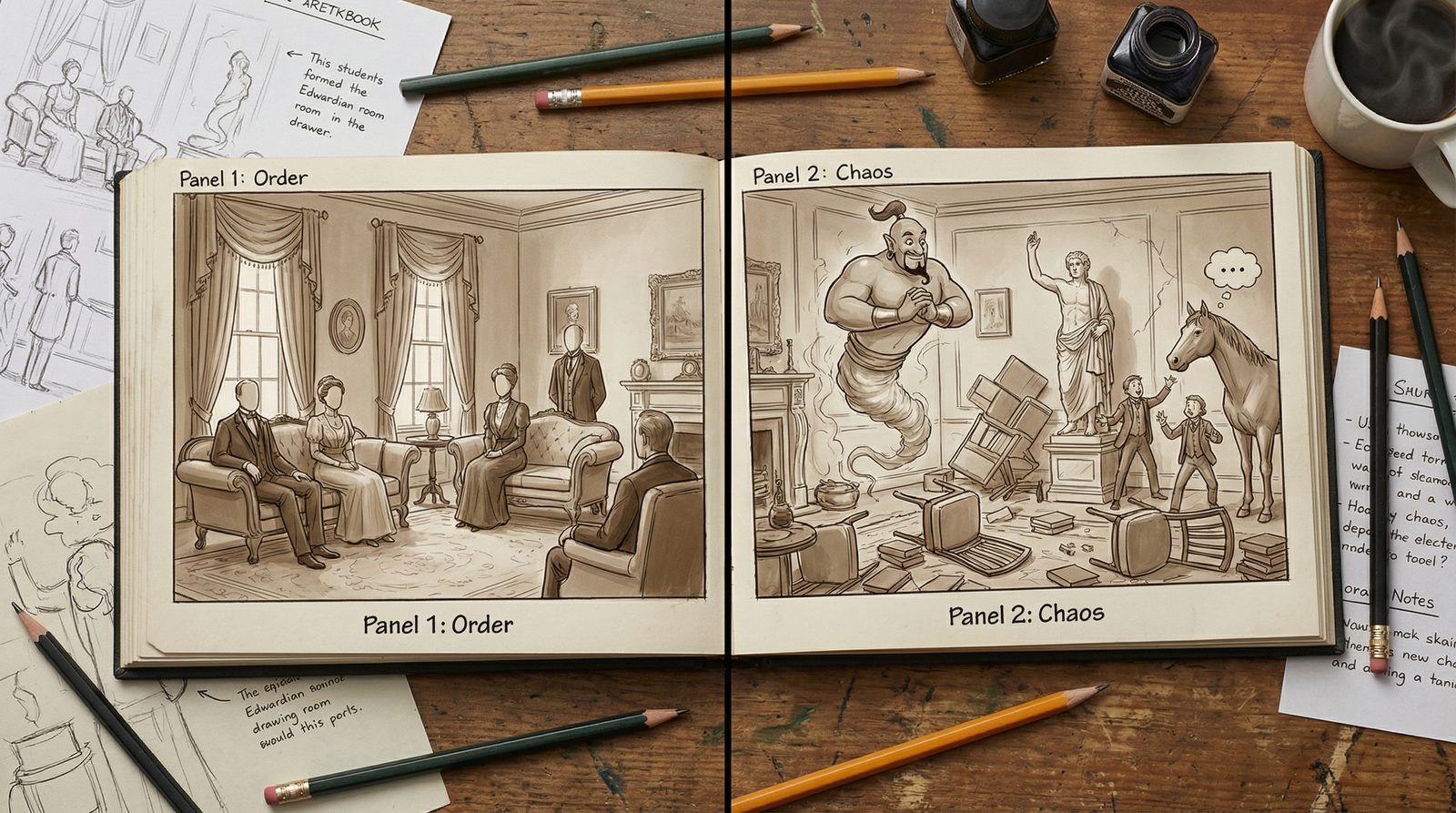
    Working in the same broad comic-fantastical territory that would later nourish writers like E. Nesbit, Guthrie specialized in taking a solidly realistic setting and dropping one impossible element into it. A statue comes to life, a genie appears, a wish is granted too literally, or time itself becomes a ledger. The fabric of polite life immediately starts to fray, and the characters’ fear of embarrassment becomes the real engine of the story.

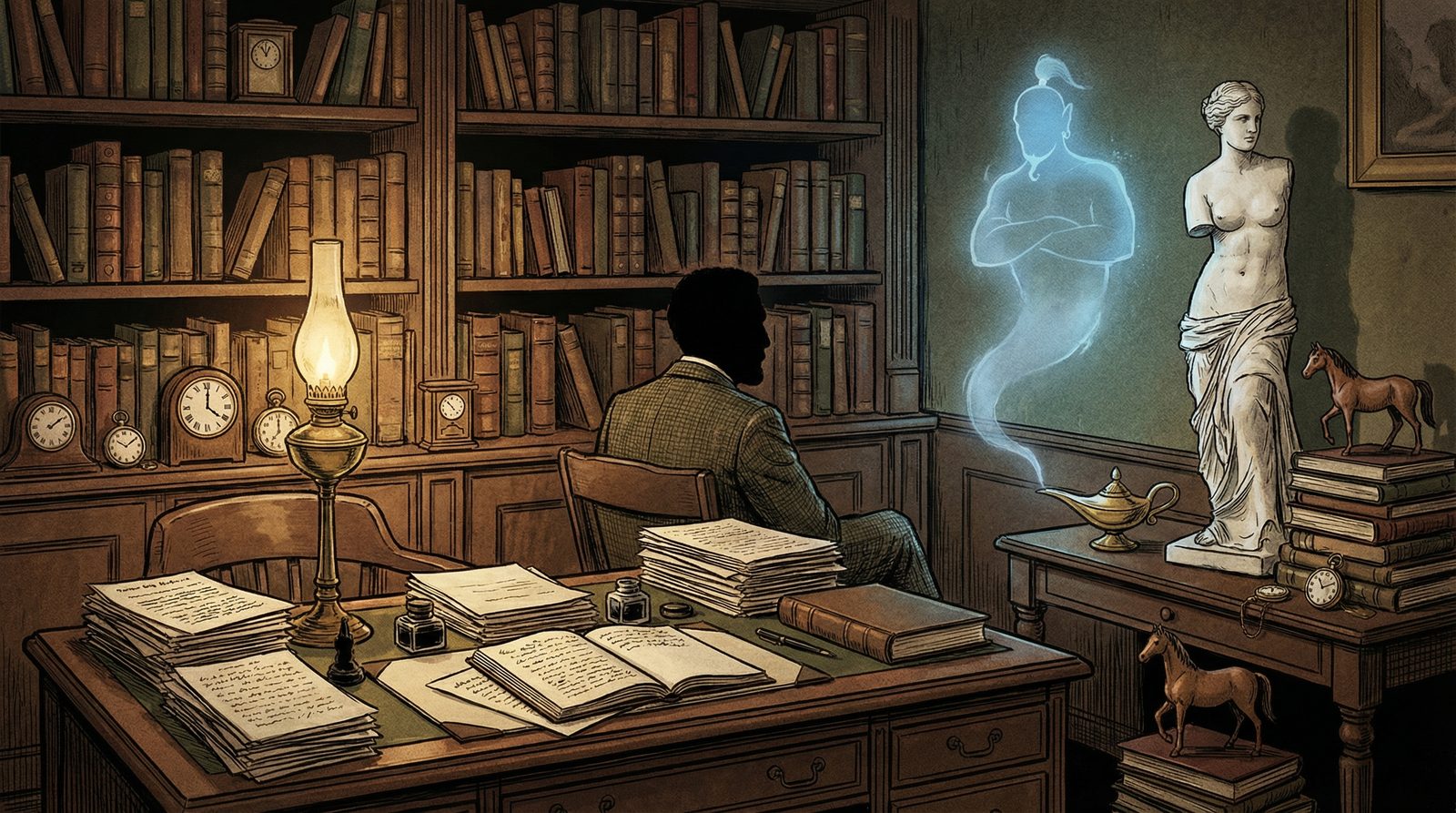
    Editorial illustration inspired by Thomas Anstey Guthrie

    Although his name is less widely known now, he was a familiar presence in comic fiction in his own day, and several works were adapted for the stage and later for film. His best-known stories circulate in the cultural space between light domestic comedy and fantasy disruption, with a dry satirical edge that keeps the laughter slightly uneasy.

    THEMES & MOTIFS

    If there is one recurring pattern in Guthrie’s work, it is the way supernatural help becomes a social catastrophe. He repeatedly stages stories where the impossible enters an ordinary life and exposes how brittle respectability really is. The magic is rarely malevolent. It is simply indifferent to manners, timing, and the quiet codes that keep middle-class life from collapsing into scandal.

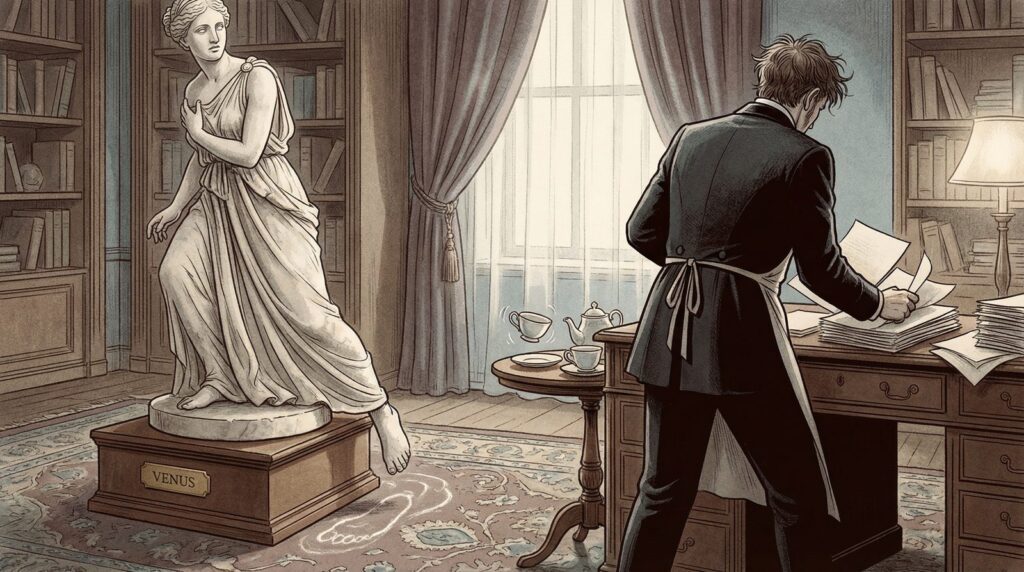
    In The Brass Bottle, a long-imprisoned genie brings the wrong kind of assistance, escalating embarrassment and destroying reputations. In The Tinted Venus, a goddess steps off a pedestal and turns romantic fantasy into social panic. Across these books, “wish-fulfillment” is treated as an experiment that reveals what people actually want, and how badly they handle getting it.

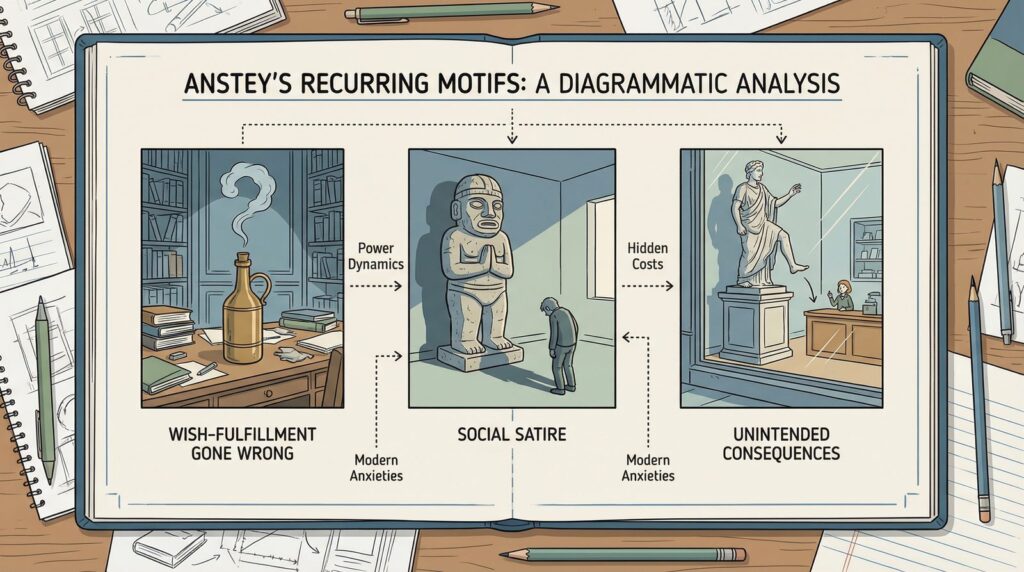
    Symbolic illustration inspired by 'F Anstey'

    He also returns to the idea that modern life is already absurdly procedural, and the supernatural simply makes that procedure visible. In Tourmalin’s Time Cheques, time becomes bureaucratically administered debt, and a person can mortgage their future with a signature. Even when the premise is playful, the underlying anxiety is serious: ordinary life is a set of obligations, and a small twist can expose how fragile the whole structure is.

    Finally, Guthrie’s work often turns on role reversal as moral stress test. In Vice Versa, a father and son swap bodies and are forced to experience powerlessness from the inside. The comedy is real, but the point is sharper: empathy arrives only after humiliation breaks the illusion of authority.

    STYLE & VOICE

    Guthrie’s style balances lightness with a lawyer’s sense of structure. His prose tends toward clear, unshowy sentences, laced with dry asides and understatements that reward attentive reading. He is less interested in lush description than in setting a premise quickly and then following its comic implications as far as they will go.

    Structurally, he favors escalating farce. A single magical intrusion or misunderstanding in the opening chapters ripples outward into layers of social embarrassment. Invitations go wrong, reputations wobble, engagements are imperiled, and the characters’ frantic improvisations only deepen the mess. Readers can usually see the machinery at work, which makes the eventual resolution feel earned even when it relies on a final twist.

    Symbolic illustration inspired by Thomas Anstey Guthrie

    Compared with writers whose magic opens into wonder, Guthrie’s fantasy acts more like a stress test. The stories ask what happens when the impossible walks into an ordinary life and refuses to leave. The answer, rendered with wry control, is comic catharsis that exposes the pressures and pretensions of the world it is satirizing.

    KEY WORKS & LEGACY

    The Brass Bottle (1900) is his most widely recognized comic fantasy: an ancient genie unleashed into a world of mortgages and dinner parties, where every “helpful” intervention creates a new disaster. The Tinted Venus (1885) explores similar territory through romantic fantasy, with a goddess coming to life and exposing how fragile respectability is when desire is made literal.

    Editorial illustration inspired by 'F Anstey'

    A Fallen Idol (1886) pushes further into satire of belief and misplaced reverence, while Tourmalin’s Time Cheques (1891) extends his comic logic into bureaucratic time debt. Vice Versa (1882) remains the foundational body-swap story that later generations would repeatedly reinvent.

    In the larger landscape of English comic fantasy, Guthrie forms a bridge between Victorian satire and later comic modernity. His legacy persists wherever a small magical twist is used to expose the fragile nature of everyday life, and where laughter is sharpened by discomfort rather than softened into reassurance.

  • E Nesbit

    E Nesbit

    ORIGINS & BACKGROUND

    E. Nesbit, born Edith Nesbit in 1858, grew up in a world that was supposed to be stable and respectable but in practice was full of financial anxiety, illness, and constant moves. That gap between the official story of middle-class security and the messy reality of family life runs straight through her fiction. She lived in late Victorian and Edwardian England, wrote to support her household, and was deeply involved in socialist politics, which sharpened her awareness of class and money in everyday life.

    Before Nesbit, much English children’s literature leaned toward moral tales and tidy allegory. She shifted the center of gravity by putting recognizably modern children at the heart of her stories, and by letting magic crash into ordinary suburban or holiday life rather than sending children off to distant fairy kingdoms. Her London and her countryside are places where wonder and hardship coexist, and where children notice practical details—fares, food, servants, shopkeepers—because those details shape what is possible.

    Her literary friendships and circles mattered too. She overlaps in spirit with writers like Thomas Anstey Guthrie, who also enjoyed using the impossible to stress-test respectability, and she shares with P. G. Wodehouse a dry observational humor about social muddle. Where she differs is her focus on children as fully real people: impulsive, selfish, brave, loyal, and often more perceptive than the adults around them.

    THEMES & MOTIFS

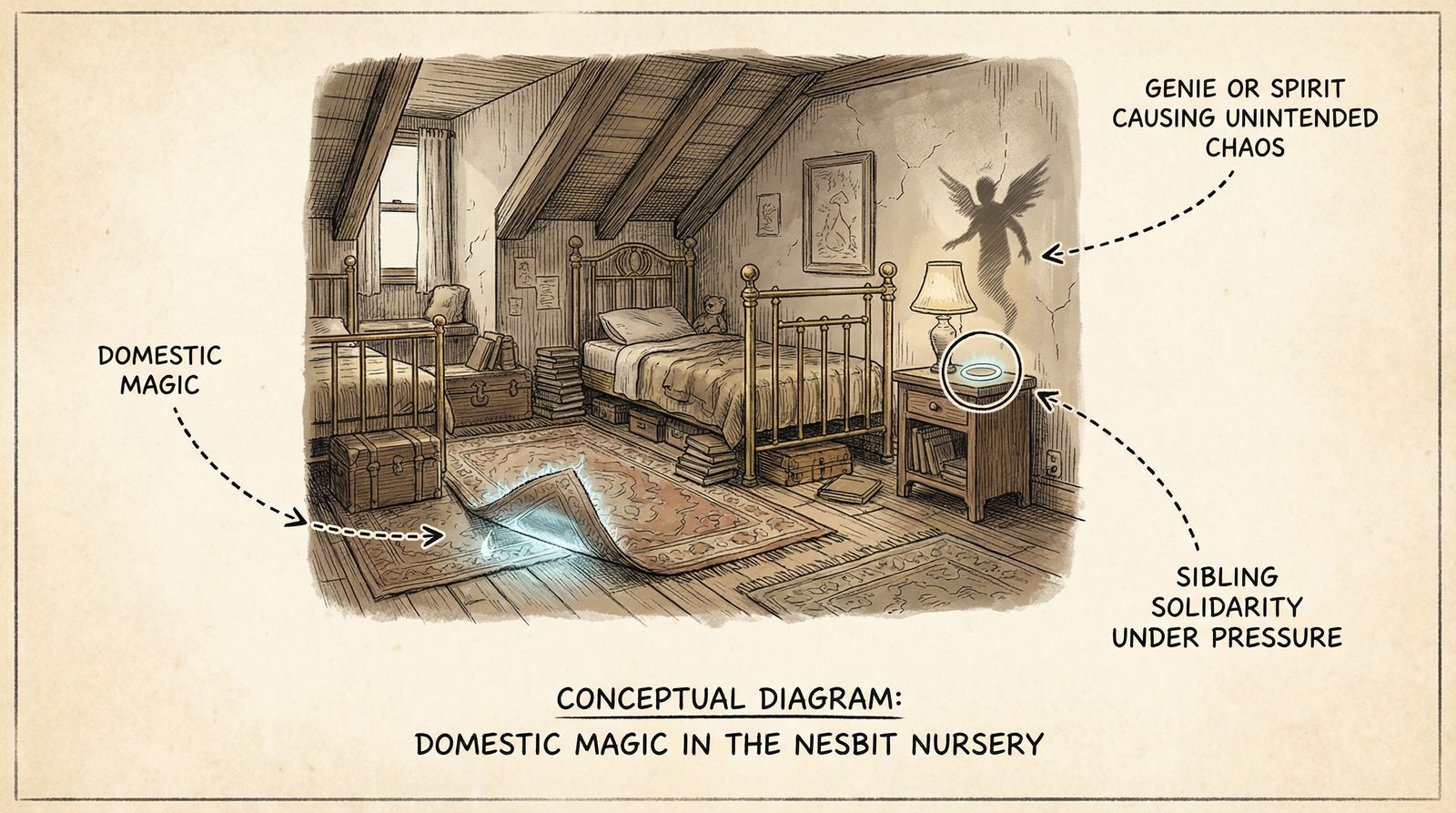
    The most obvious pattern in Nesbit’s fantasy is the way magic behaves like an unhelpful guest rather than a benevolent gift. In Five Children And It (1902), the Psammead grants wishes that go wrong in very specific, practical ways: sudden wealth triggers suspicion, beauty makes the children unrecognizable to their own servants, and childish wording produces literal consequences nobody intended. The humor is real, but the structure is moral: desire has consequences, and “getting what you want” often reveals that you did not understand your own wish.

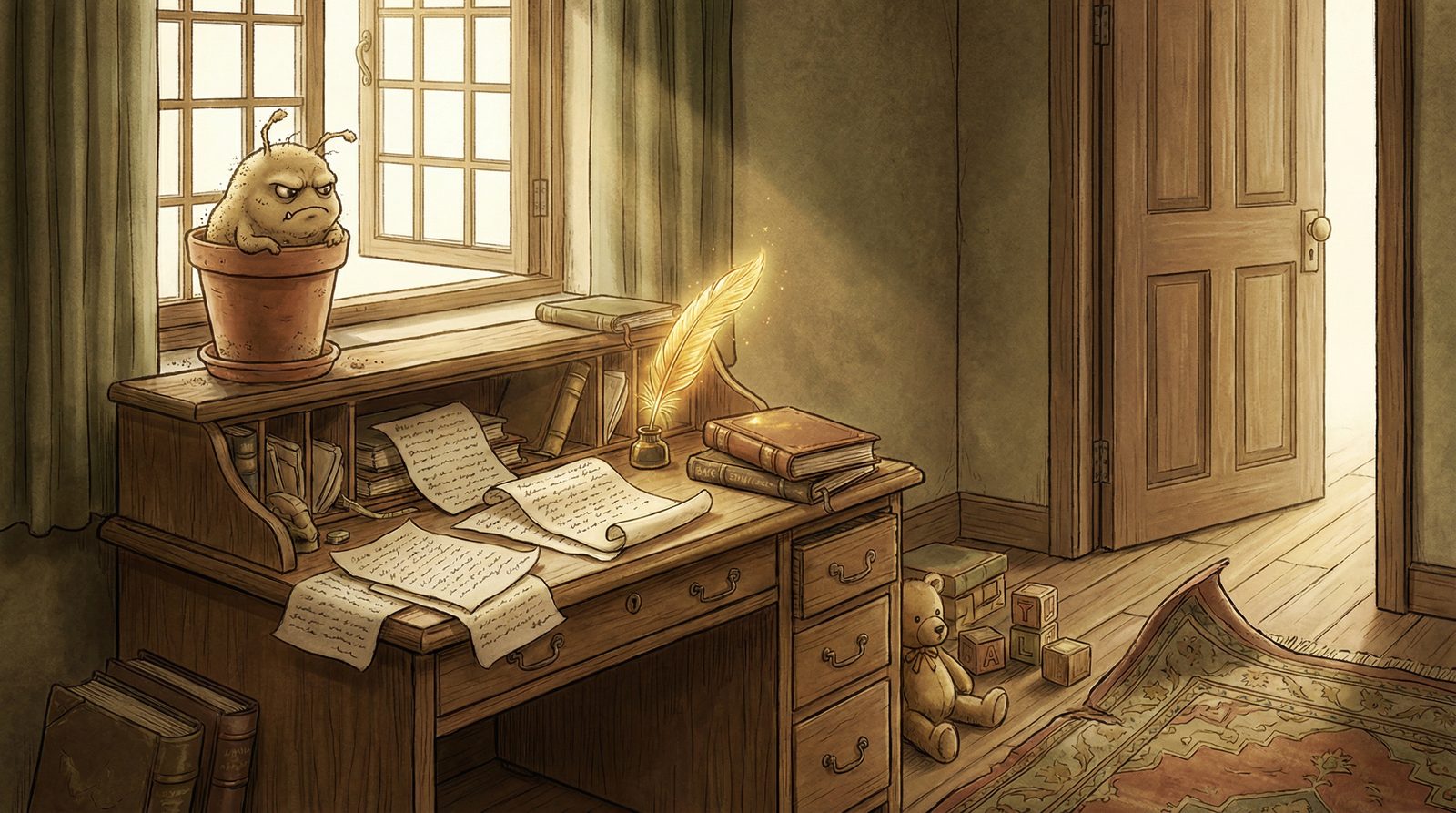
    She is also a master of domestic magic. Instead of enchanted forests, she gives us nurseries, attics, gardens, railway cuttings, beaches, and rented houses suddenly invaded by the impossible. The everyday setting matters because it keeps the fantasy tethered to ordinary obligations. Children still have to get home before dark, avoid being caught by adults, and deal with the social world of servants, neighbors, and shopkeepers.

    Sibling solidarity under pressure is another constant. Her groups of brothers and sisters bicker, form alliances, stage coups, and shift loyalties, but when magic creates a crisis they improvise together. Parents are often absent, distracted, or simply unable to see what is happening, which forces children to negotiate fear, guilt, and responsibility among themselves.

    Class awareness runs quietly beneath the comedy. Wishes and magical accidents expose how rigid social boundaries can be, and how odd it feels to cross them without preparation. Nesbit’s socialism never turns her stories into tracts, but it shapes moments where children notice poverty, unfairness, or the arbitrariness of adult authority. Even when the tone is playful, there is often an undertow of embarrassment and ethical consequence.

    Finally, Nesbit likes the tension between rational explanation and lingering mystery. Her characters try to systematize the magic, treating strange creatures and objects like machines that can be managed. The rules never quite hold. That slippage is part of her effect: the world remains slightly unstable, and the children’s growing maturity comes from learning to live with that instability rather than mastering it.

    Editorial illustration inspired by E. Nesbit

    STYLE & VOICE

    Nesbit’s style is conversational, ironic, and conspiratorial, as if an older, slightly mischievous friend were telling you about some children she once knew. She often addresses the reader directly, comments on the story’s construction, and gently mocks both adult pomposity and childish self-importance. This narrative voice keeps the tone light even when the stakes are high, and it invites readers to notice the gap between what characters think they are doing and what is actually happening.

    Her pacing alternates between chaotic set pieces and quieter interludes. A wish goes wrong, a crisis erupts, and then there is a scramble to repair the damage, followed by an evening scene where the children argue over blame and meaning. That rhythm allows her to balance comedy of errors with emotional beats about shame, fear, courage, and loyalty.

    In terms of language, Nesbit is clear and brisk rather than ornate. She uses specific material details—food, clothing, household objects—to anchor the fantasy. She respects children’s intelligence and capacity for mischief, and she rarely smooths away the awkwardness of their mistakes. The result is playful without being indulgent, and moral without being preachy.

    KEY WORKS & LEGACY

    Five Children And It (1902) (1902) is often an entry point into Nesbit’s work. The Psammead grants daily wishes that spiral into trouble, establishing her most durable pattern: magic interpreted literally, consequences arriving fast, and children forced to learn responsibility in the middle of farce.

    The Phoenix And The Carpet continues with the same children and deepens the sense that magic can be both exhilarating and exhausting. The Enchanted Castle stands slightly apart with a more dreamlike, sometimes eerie atmosphere: living statues, a magic ring, and holiday freedom that turns unexpectedly unsettling.

    Her influence on later children’s fantasy is extensive. Writers who place ordinary children in contact with the supernatural, and who treat the domestic world as a legitimate stage for enchantment, are working in territory she helped define. She sits at a hinge point between Victorian moral tales and modern fantasy that treats children as complex people rather than symbols.

  • The Talking Horse And Other Tales (1892)

    The Talking Horse And Other Tales (1892)

    INTRODUCTION

    The Talking Horse and Other Tales (1892) by F. Anstey (Thomas Anstey Guthrie)
    Literary short stories · United Kingdom


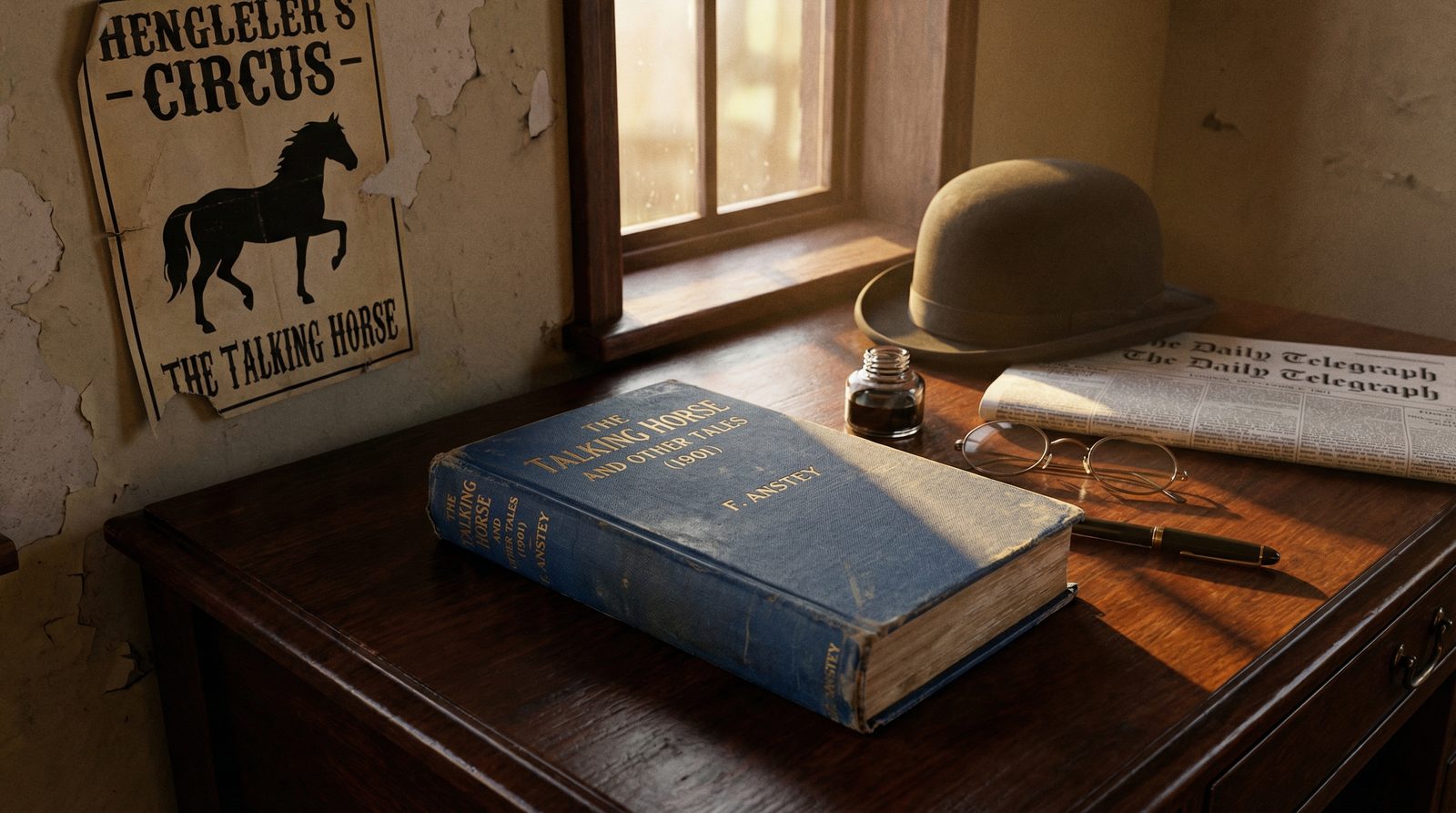
    The Talking Horse and Other Tales is Anstey working in the short form: nimble, socially alert, and quietly cruel when the joke demands it. The collection uses absurd premises not to escape everyday life, but to expose it. Drawing rooms, boarding houses, minor institutions, and the machinery of reputation become the true settings. The supernatural or anomalous element enters, and instead of opening wonder, it triggers embarrassment, exploitation, and moral panic.

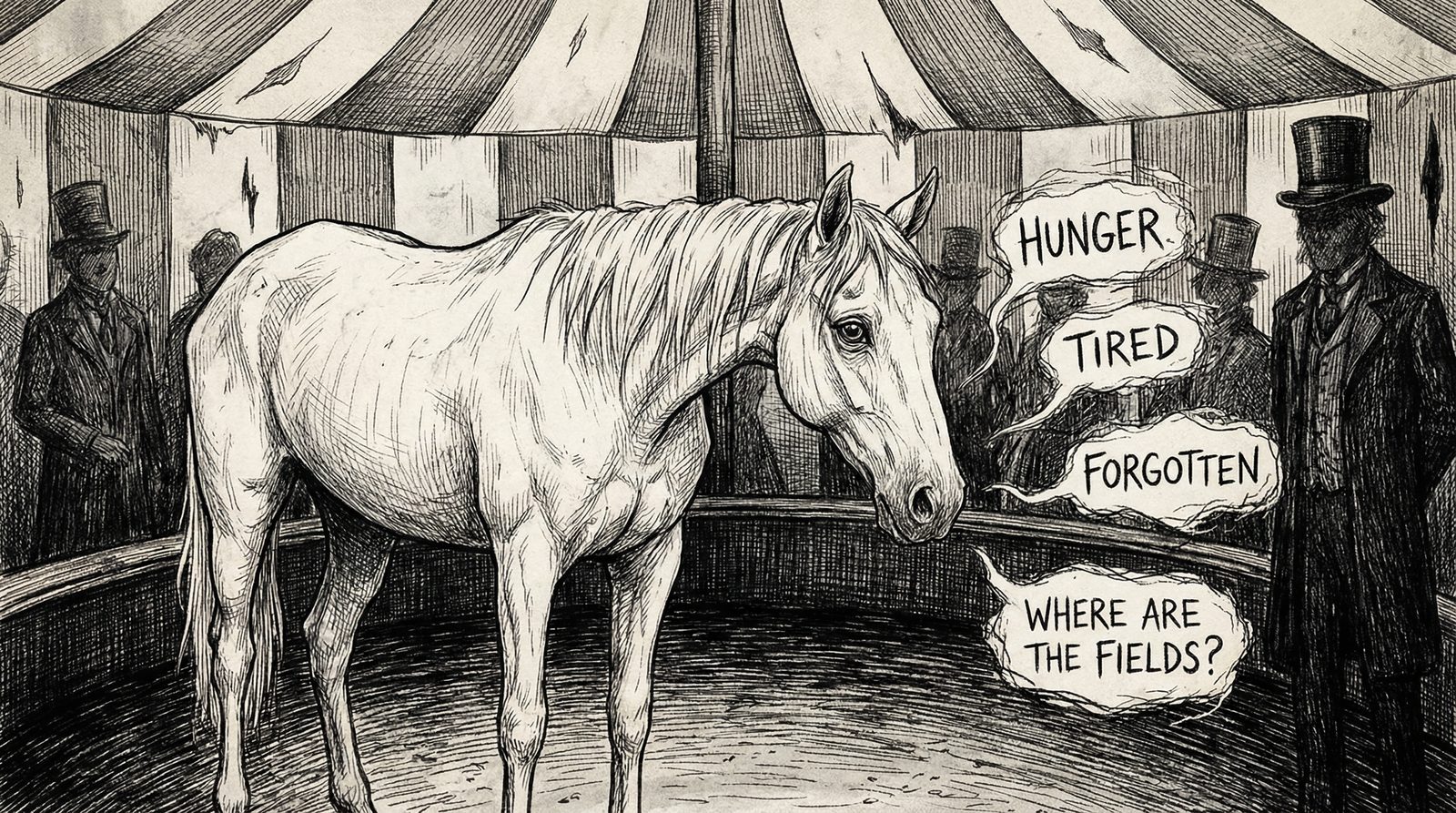
    The title story is a perfect example. A horse that can speak should be a marvel. In Anstey’s hands, it becomes a problem to monetize, a freak to manage, and an inconvenience to punish when it stops being profitable. That pattern repeats across the volume in different keys. The targets are familiar Victorian anxieties: class performance, social cruelty practiced as “good sense,” and the way polite society turns any disturbance into a spectacle it can control.

    PLOT & THEMES

    In “The Talking Horse,” a dealer acquires a horse capable of articulate speech. The discovery is treated not as a mystery but as a business opportunity. The animal’s intelligence is acknowledged only to the extent it can be exploited. When it refuses to cooperate with the public performance expected of it, the human response is swift and ugly. The story’s bite lies in how quickly “civilized” characters revert to coercion the moment control is threatened.

    Across the other tales, Anstey keeps returning to the same social mechanism. Something unusual appears: an odd talent, a strange claim, an inconvenient truth. The surrounding world responds with a mix of fascination and hostility. People reframe the anomaly to fit their needs, their status, or their fears. Miscommunication becomes a kind of weapon. Characters talk past one another because it is safer than understanding what is actually being said.

    These stories rarely offer redemption. If there is a moral, it is not comforting. The collection suggests that cruelty is not an aberration in polite society. It is one of its stabilizing forces, a way of pushing the strange back into silence, whether the strange is a talking animal or an inconvenient human being.

    PROSE & NARRATIVE STRUCTURE

    Formally, the collection is varied but consistent in tone: brisk narration, sharp dialogue, and an eye for the small hypocrisies that make a scene sting. Anstey often stays close to a character’s perspective while letting the reader see more than the character understands. The comedy comes from that gap, and so does the unease.

    Most stories follow a familiar arc: setup, social escalation, reversal, and a short, bleak landing. Anstey’s endings are especially telling. He often avoids melodrama and finishes on a practical consequence: a relationship quietly damaged, a reputation altered, a life narrowed. The effect is less like a punchline and more like a door closing.

    At his best, Anstey makes the prose feel light while carrying something heavier underneath. The absurdity is real. So is the sense that laughter in these stories is often a way of keeping sympathy at a safe distance.

    Conceptual editorial illustration inspired by 'The Talking Horse and Other Tales'

    CHARACTERS & INTERIORITY

    Because these are short tales, character interiority is usually drawn through behavior rather than introspective depth. Anstey’s people are recognizable types: respectable bullies, social climbers, timid enablers, and the occasional outsider whose difference becomes the story’s trigger. The point is not psychological realism. The point is social exposure.

    The talking horse is the most memorable consciousness in the volume precisely because it cannot be folded neatly into the human world around it. Its articulation does not earn it dignity. It earns it punishment. That pattern echoes through the collection: the “anomalous” character becomes a test of the community, and the community repeatedly fails the test.

    If there is compassion here, it is delivered obliquely, through irony that occasionally breaks and reveals something like regret. The stories understand how lonely it is to be the wrong kind of different in a world that claims to prize refinement.

    LEGACY & RECEPTION

    This collection is not the center of Anstey’s reputation, but it’s an excellent window into his method. It shows how well he could compress a social satire into a strange premise, and how comfortable he was letting comedy turn sour. In that sense, the book sits neatly beside his longer works: the same interest in what respectability hides, and the same impatience with moral posturing.

    Read now, the stories can feel surprisingly modern in their understanding of spectacle and exploitation. They anticipate a later world where anything unusual is instantly turned into content, and where empathy is often the first thing sacrificed for entertainment.

    IS IT WORTH READING?

    Yes, if you like short fiction that is funny in the moment and a little bruising afterward. The collection is uneven, as most collections are, but its best pieces are sharp and memorable. It is also valuable if you are following the Victorian-to-Edwardian tradition of social satire and want a version that uses the fantastic not for escape, but for exposure.

    Illustration inspired by a core idea from 'The Talking Horse and Other Tales'

    TRIVIA & AUTHOR FACTS

    F. Anstey was the pen name of Thomas Anstey Guthrie, a barrister-turned-writer known for comic and satirical fantasy. The collection appeared in multiple editions, including a “new edition” published in 1901 by Smith, Elder & Co. (many modern scans derive from that printing).

    SIMILAR BOOKS

    If you enjoy social cruelty rendered as comedy, Saki’s short stories make a natural companion. For a different, more psychologically tender approach to social observation, Katherine Mansfield’s short fiction offers an instructive contrast. And for Victorian and Edwardian satire that uses the strange to expose the ordinary, Anstey’s own longer fantasies, including The Brass Bottle and The Tinted Venus, sit in the same family resemblance.

    DISCOVERABILITY & LINKS

  • The Collector (1963)

    The Collector (1963)

    By: John Fowles
    Genre: Psychological horror
    Country: United Kingdom


    INTRODUCTION

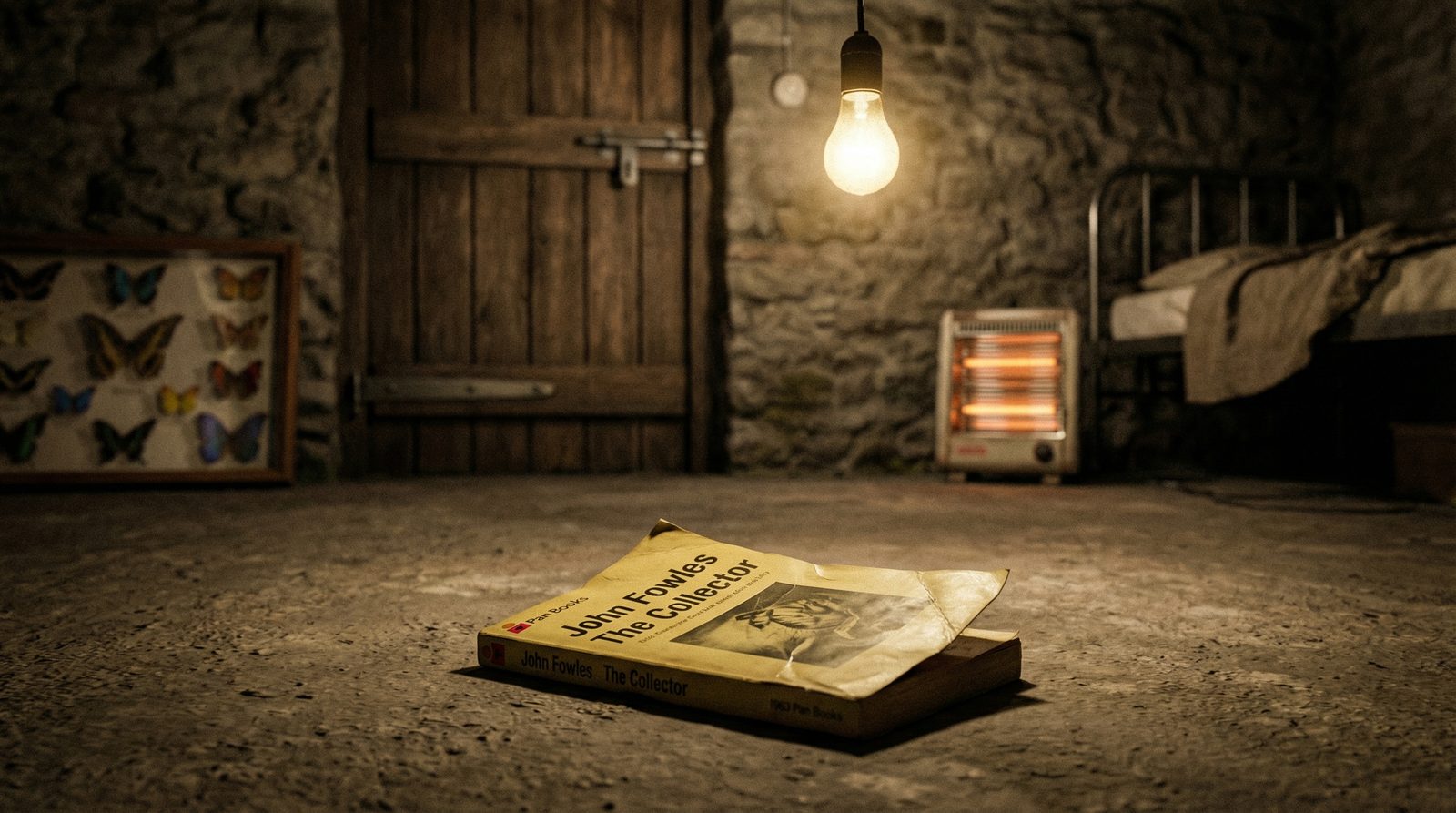
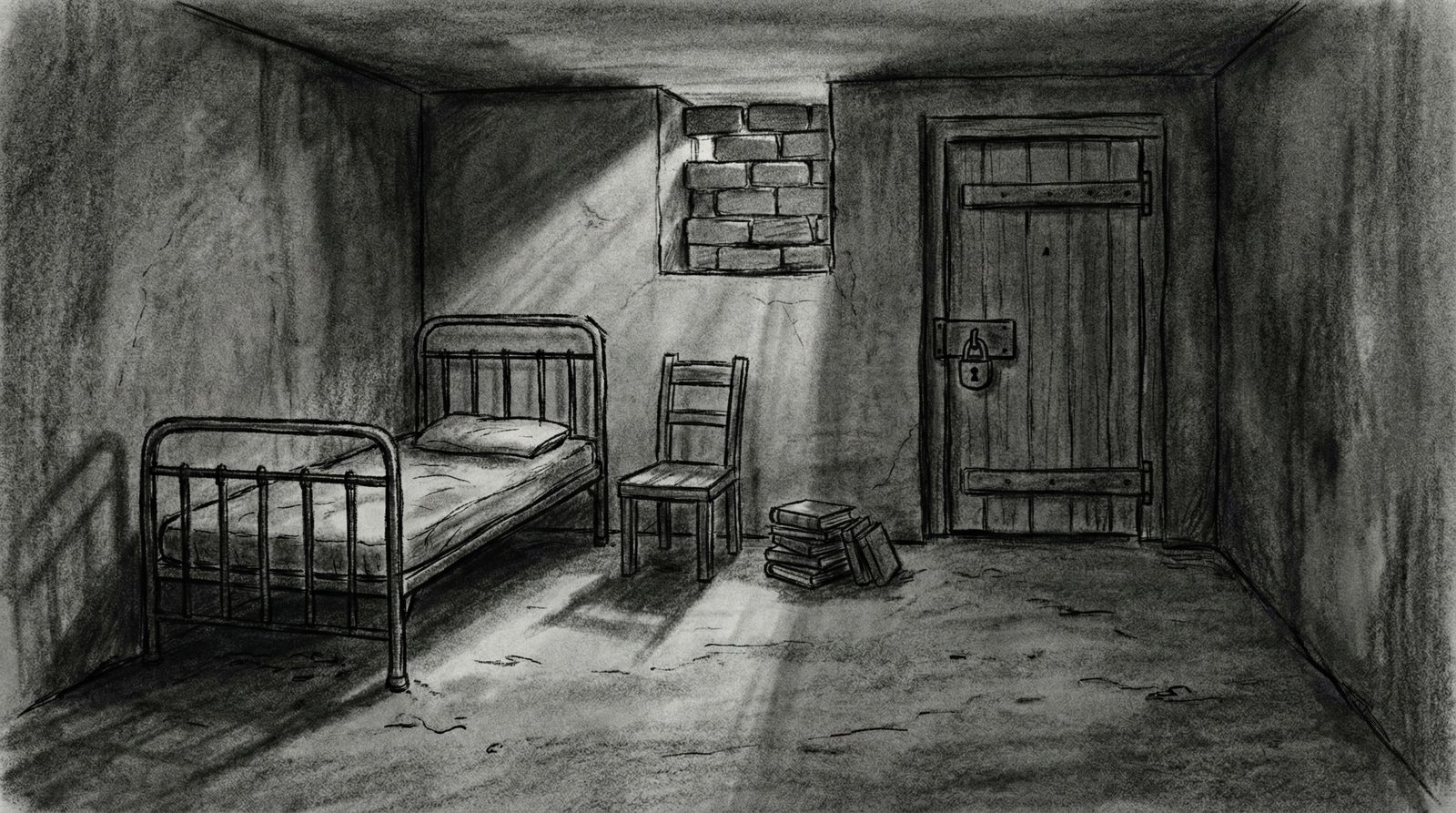
    The Collector (1963) arrives like a chill draft under a locked door. Set in the 1960s, it takes the motif of imprisonment and strips it of gothic flourish, leaving only concrete, keyholes, and the stale air of a cellar room. John Fowles imagines what happens when a socially awkward clerk, numbed by years of insect collecting and Lotto luck, decides to “collect” a living woman. The feel is slow-burn dread rather than jump-scare terror, a suffocating awareness that nothing supernatural is coming to save anyone here. Beneath the kidnapping plot runs a quieter story about class, aesthetic ideals, and the way men translate desire into ownership. The novel is short, tightly wound, and emotionally abrasive, but it lingers — especially in the details of that furnished basement outside Lewes, where the wallpaper, the books, and even the electric heater become part of an experiment in control.


    PLOT & THEMES

    On the surface, The Collector uses the trope of the stalker-turned-kidnapper. Frederick Clegg, a municipal clerk in the town of Newbury, wins a football pools fortune and uses it to buy a secluded country house near Lewes. A lifelong butterfly enthusiast, he has watched art student Miranda Grey from afar, rehearsing conversations he never has. Wealth gives him privacy and power, and he decides to “collect” Miranda as he would a rare specimen. He chloroforms her on a London street near the National Gallery, transports her in a van, and imprisons her in a windowless cellar he has carefully prepared with furniture, clothes, and art books.

    The novel is structurally simple but thematically dense. One motif is aestheticization: Clegg sees Miranda as a perfect object, while she, in her diary, struggles to see him as a human being rather than a case study. Their clash is also a class war. Miranda is a middle-class, Hampstead-leaning art student, enamoured of the bohemian painter G. P. and of modernist ideals of freedom. Clegg is lower-middle-class, resentful, and obsessed with respectability; he wants Miranda to be grateful, to play the part of the adoring wife in his private fantasy. Their conversations about Proust, Picasso, and the meaning of art echo, in a darker key, the aesthetic debates in The Picture of Dorian Gray.

    As the weeks pass, Miranda’s initial belief that she can reform or outwit Clegg crumbles. Her illness — brought on by damp, stress, and finally pneumonia — becomes another motif: the body failing as the mind still reaches outward. In the book’s ending, far bleaker than many viewers remember from the 1965 film, Miranda dies alone in the cellar after Clegg refuses to get a doctor in time, more afraid of scandal than of murder. He buries her in the garden, rehearses excuses to himself, and then calmly turns his attention to a new possible victim he spots in Woolworths, already thinking about names like Marian or Marianne that echo Miranda. The horror is not catharsis but continuation.


    PROSE & NARRATIVE STRUCTURE

    Formally, The Collector hinges on a stark narrative technique. The first half is narrated in Clegg’s flat, affectless first person; the second half shifts into Miranda’s diary. This structure forces the reader to sit inside two incompatible realities. Clegg’s prose is plain, bureaucratic, and chillingly literal. He notices the make of the van, the arrangement of his butterfly cases, the way he has painted over the cellar window, but he has almost no language for emotion beyond “I didn’t like it” or “it upset me.” The feel here is claustrophobic banality: evil described in the same tone as a stamp collection.

    Miranda’s diary is another book entirely. She writes about G. P., about her time at the Slade School of Fine Art, about the smell of turpentine and the thrill of arguing about Cézanne in Soho cafés. She analyses Clegg with almost clinical precision, calling him a “Caliban” and herself “Prospero,” a self-flattering binary she later questions. Her voice is sometimes pretentious, sometimes piercingly honest. Fowles uses free indirect thought within the diary entries to blur the line between written reflection and immediate feeling; we sense her mind racing as she plots escapes, rehearses conversations, and records dreams of walking again through Kensington Gardens.

    The alternation of voices is not just a device but an argument about who gets to narrate reality. Clegg’s final section quietly edits Miranda’s story, dismissing her diary as “her side of it” while he reasserts his own. There is no omniscient correction, no moral footnote — only the dissonance between voices, left unresolved. That structural choice gives the novel its lingering unease.

    Conceptual editorial illustration inspired by 'The Collector (1963)'

    CHARACTERS & INTERIORITY

    Clegg is an unsettling twist on the Nice Guy archetype. On paper he is mild: an orphan who lived with his Aunt Annie and cousin Mabel, shy, dutiful, never openly violent. Inside, he is a void of entitlement. He insists he is not like “those sex cases” in the newspapers; he wants to be seen as considerate, even generous, because he buys Miranda clothes from Harrods and a portable record player. His interiority is defined by absence — no real erotic language, no curiosity about Miranda’s inner life, only the sulkiness of a child denied a toy. When she resists, he retreats into self-pity, telling himself that “she was never like in my dreams.”

    Miranda, by contrast, is all interiority. Her diary is full of self-portraiture and self-critique. She is not an idealized victim; she can be snobbish, impatient, and casually cruel. That nuance matters. The novel refuses to make her suffering dependent on saintliness. Her growth under pressure — her attempts to empathize with Clegg, her brief, desperate seduction attempt, her moments of spiritual searching as she reads the Bible in the cellar — gives her a trajectory that his narrative can never fully contain.

    Minor figures deepen the social frame. G. P. himself never appears in person but looms over the book as an absent mentor, his letters and remembered conversations about authenticity and “the Few and the Many” echoing in Miranda’s head. Aunt Annie and Mabel, glimpsed in Clegg’s memories, represent a petty, rule-bound world where appearances matter more than empathy. These side characters emphasize how both captor and captive are shaped by English class structures as much as by individual psychology.


    LEGACY & RECEPTION

    Published in the early 1960s, The Collector was immediately read as a dark commentary on emerging celebrity culture and the loneliness of the post-war welfare state. Its influence can be traced through later psychological horror and crime fiction, from the obsessive narrators of Misery (1987) to other tightly focused captivity stories, though Fowles’s novel is less melodramatic and more sociological than most of its descendants. Contemporary critics were struck by the split structure and by the way Fowles refused to offer a consoling ending.

    The book’s ending, in which Miranda dies and Clegg calmly begins scouting a new victim, has often been softened or psychologically padded in adaptation, but on the page it remains brutally matter-of-fact. That starkness has helped the novel retain its power. It is frequently taught in university courses on modern British fiction and gender studies, where Miranda’s diary is read alongside feminist texts of the period. Over time, the book has also drawn criticism for the way it frames Miranda’s artistic elitism, but even detractors acknowledge its unnerving accuracy in capturing a certain kind of male entitlement long before the term existed.


    IS IT WORTH READING?

    The Collector is worth reading if you can tolerate psychological horror that never looks away. It is not a thriller in the conventional sense; the suspense comes from tiny shifts in power, not from chase scenes or clever twists. The prose is accessible, the structure clear, but the emotional impact is heavy. Readers interested in questions of class, gender, and the ethics of looking — what it means to watch someone without being seen — will find it especially resonant. If you want clear moral closure or heroic rescue, this will feel punishing. If you are willing to sit with discomfort, it is one of the sharper, more honest portraits of obsession in twentieth-century fiction.

    Illustration of a core idea or motif from 'The Collector (1963)'

    TRIVIA & AUTHOR FACTS

    John Fowles wrote The Collector early in his career, before the more expansive metafiction of The French Lieutenant’s Woman (1969). He drew partly on his own experience teaching in England and observing the rigidities of class life. The butterfly motif is not incidental: Fowles was himself an amateur naturalist, and the detailed references to specimens, nets, and killing jars come from genuine knowledge. The novel’s original UK setting near Lewes and the careful mention of places like Hampstead and Newbury root the story in a very specific English geography.

    Fowles later commented that Clegg represented, for him, the “elected bureaucrat of the future,” a man who hides behind procedure and respectability while committing quiet atrocities. The book’s success allowed Fowles to leave teaching and write full time. He would go on to experiment more overtly with narrative games and historical pastiche, but he never again wrote a novel this compressed and single-minded in its focus on two people in a single, terrible space.


    SIMILAR BOOKS

    If The Collector unsettles you in the right way, several other works explore related territory. Misery (1987) by Stephen King reverses the gender dynamic but shares the locked-room psychological warfare and the question of who controls the story. For a more interior, philosophical take on captivity and power, try The Comfort of Strangers (1981) by Ian McEwan, which similarly turns a European city into a psychological trap. And if Miranda’s artistic self-scrutiny interests you, the shifting perspectives and moral ambiguity of The French Lieutenant’s Woman (1969) provide a different, more expansive facet of Fowles’s concerns.


    DISCOVERABILITY & LINKS

    This review of The Collector is connected across the site to shared motifs, tropes, archetypes, and related works, helping you trace patterns of obsession, confinement, and class tension through other books and media in our archive.

  • Jill Paton Walsh

    Jill Paton Walsh

    INTRODUCTION

    Jill Paton Walsh was a British novelist known for her sharp intelligence, elegant prose, and rare ability to move between children’s literature, science fiction, and crime fiction with equal confidence. Her career spans award-winning children’s novels like Fireweed, collaborative extensions of Dorothy L. Sayers’s mystery work, and thoughtful speculative titles such as The Green Book. What unites her writing is clarity — emotional, ethical, and stylistic.

    The Green Book remains one of her most enduring works, a quiet science fiction novel that has survived for decades in school curricula and library circulation. Rebuilding her creator page gives AllReaders a strong anchor for legacy backlinks and preserves the reputation of a writer who bridged genres with unusual grace.


    LIFE & INFLUENCES

    Born in London in 1937, Jill Paton Walsh studied English literature before becoming a teacher and then a full-time writer. Her early influences included C. S. Lewis, George Eliot, and the post-war British children’s literature tradition. She had a deep interest in ethics, education, and the ways stories teach us how to be human.

    Her work in children’s fiction brought her early acclaim, but she never limited herself to a single genre. Her later career included both literary fiction and the high-profile continuation of Dorothy L. Sayers’s Lord Peter Wimsey mysteries — an unusual and widely respected achievement.

    Editorial illustration inspired by 'Jill Paton Walsh'

    THEMES & MOTIFS

    Paton Walsh often returned to themes of moral responsibility, the fragility of community, and the tension between innocence and knowledge. Her children’s novels frequently feature young protagonists who must navigate ethical complexities usually reserved for adults.

    The Green Book draws on the motif Future Shock as Transformation — ordinary people adapting to extraordinary environments. Many of her works share this interest in how humans respond to change, pressure, and uncertainty.


    STYLE & VOICE

    Her prose is clean, warm, and exact. She writes with the clarity of a teacher and the emotional intuition of a storyteller. Even in her speculative work, Paton Walsh avoids excess — preferring grounded characters, direct description, and simple but resonant imagery.

    She is especially skilled at writing from a child’s point of view without flattening complexity. That control and restraint is part of why The Green Book still holds up: it trusts young readers to understand big ideas without talking down to them.

    Symbolic illustration inspired by 'Jill Paton Walsh'

    KEY WORKS

    Besides The Green Book, Paton Walsh’s notable works include Fireweed, Gaffer Samson’s Luck, and her Lord Peter Wimsey continuations such as Thrones, Dominations and The Attenbury Emeralds. Her range was unusual — few authors moved so easily between speculative fiction, crime fiction, and children’s literature.

    Her work has been widely taught, widely borrowed, and continues to appear on school reading lists, particularly in the UK.


    CULTURAL LEGACY

    Jill Paton Walsh’s literary influence spans several generations. She helped redefine moral complexity in children’s fiction, brought new life to one of the most beloved mystery series in English literature, and contributed to early, humanistic science fiction with works like The Green Book.

    Her reputation is that of a writer who valued truth, clarity, and kindness — and whose stories continue to resonate because they treat readers of all ages as capable of deep thought. Rebuilding her presence on AllReaders strengthens the site’s sci-fi, YA, and literary foundations all at once.