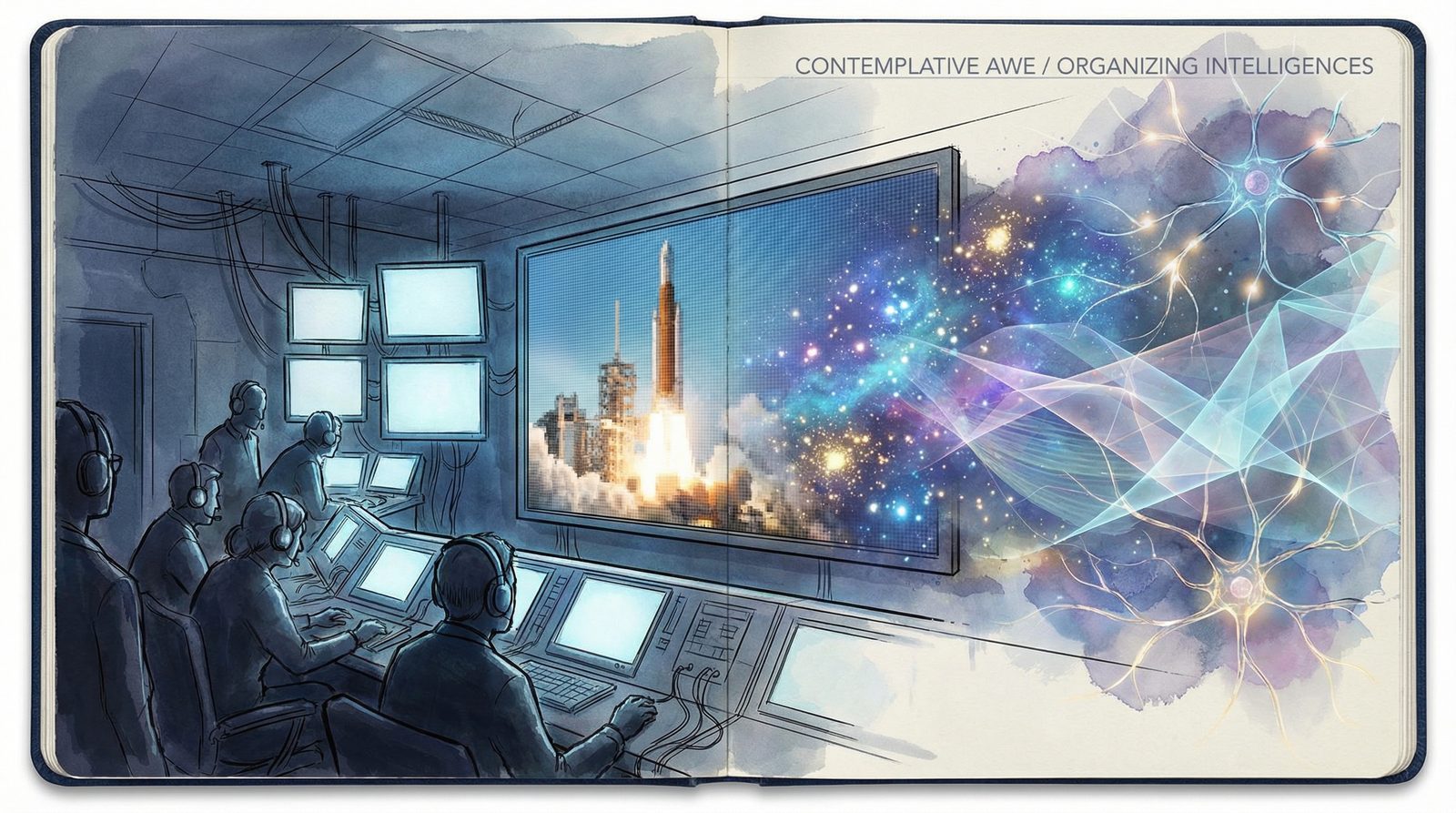
Country: United Kingdom

  • Ordinary People In Extreme Situations

    Ordinary People In Extreme Situations

    DEFINITION & CORE IDEA

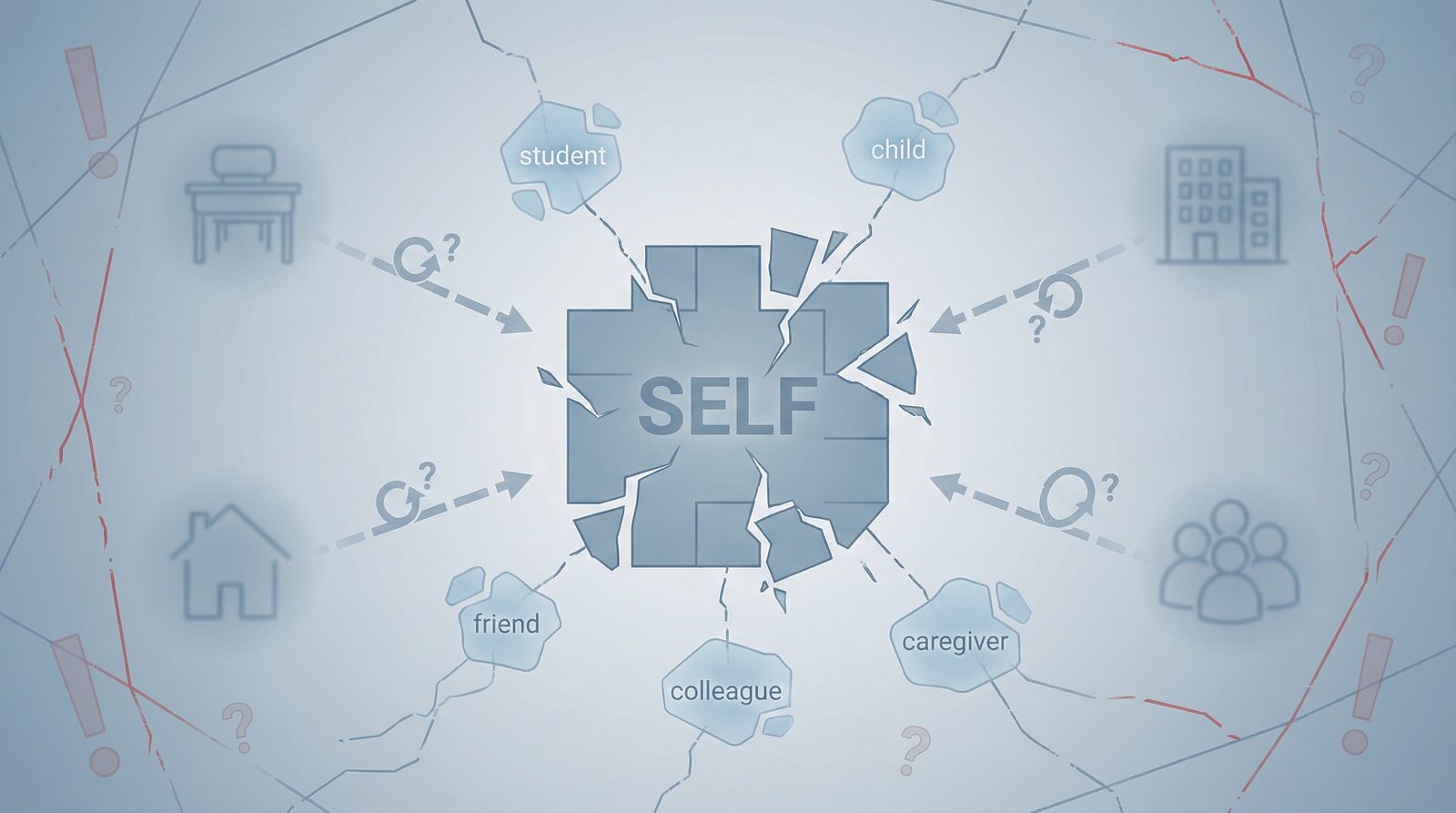
    “Ordinary People In Extreme Situations” is a motif where the main characters start out as recognizably average. They do not have special training, magical powers, or elite status. They have jobs, families, debts, routines. Then something happens that rips them out of that routine and drops them into a situation they are completely unprepared for.

    The core idea is simple: take someone who could be your neighbor, then crank up the pressure until they either adapt, break, or transform. Stories like Misery, Pet Sematary, Thinner (1984), and Blaze (2007) often start with everyday people and then push them into horror, obsession, or moral collapse. The gap between the character’s ordinary life and their extreme new reality creates both tension and dark curiosity.

    Writers use this motif to explore what people might really do when stripped of comfort and control. It asks questions like: How far would you go to save someone you love? What would you sacrifice to survive? Which parts of your identity are solid, and which are just habits that fall apart under stress? “Ordinary People In Extreme Situations” lets readers test their own limits safely, from the other side of the page.


    HOW IT WORKS IN STORIES

    In stories built around this motif, the early chapters usually linger on normal life. We see commutes, family dinners, casual arguments, and familiar frustrations. This grounding is important. The more clearly the reader understands what “ordinary” looks like for this character, the more sharply they feel the rupture when everything goes wrong.

    The trigger can be external: a car crash, a kidnapping, a violent stranger, or a supernatural event. In Misery, a writer is just driving home when an accident strands him with a fan who quickly becomes his captor. In Thinner, a careless moment leads to a curse that turns a routine life into a desperate countdown. In Pet Sematary, a family’s move to a quiet town opens a door to grief and resurrection that no one is equipped for. Sometimes the trigger is more subtle – a slow economic squeeze, a spouse’s illness, the discovery of a buried secret that can’t be ignored.

    Once the extreme situation takes hold, the story narrows around hard choices. The ordinary person might have to hide a crime, bargain with something inhuman, endure captivity, or navigate a cruel new system that treats them like a pawn. Everyday skills suddenly matter in strange ways: a nurse’s training in a disaster, a mechanic’s knowledge in a breakdown, a parent’s stubbornness when a child is threatened. At the same time, their usual social supports often fail. Friends don’t believe them, authorities are useless, or the threat is too bizarre to explain.

    Structurally, the motif often moves through stages: disbelief, coping, adaptation, and fallout. The character may become more ruthless, more honest, or more broken than they ever imagined. The story keeps circling one question: who are you when there is no safe, ordinary life to retreat to?


    Editorial illustration inspired by 'Ordinary People In Extreme Situations'

    EMOTIONAL EFFECT ON THE READER

    The emotional pull of “Ordinary People In Extreme Situations” comes from recognition. Readers look at these characters and think, “That could be me.” The jobs, marriages, debts, and small frustrations feel familiar, so when the story twists into horror or high-stakes drama, it hits closer to home than tales about superheroes or trained agents. The fear is not abstract; it is the fear that your next routine drive, hospital visit, or shortcut through the woods could change everything.

    This motif often creates a mix of dread and grim fascination. There is tension in watching someone try to think their way through a nightmare using only the tools of an ordinary life. Readers might feel frustration when characters make bad decisions, then a jolt of empathy when they realize they might have done the same under that kind of pressure. Stories like Misery and Thinner lean on this uncomfortable identification: the protagonists are not saints or geniuses, just people trying to survive with very human flaws.

    There can also be a strange kind of catharsis. Seeing an average person endure captivity, grief, or moral crisis can make everyday problems feel smaller by comparison, or it can validate how fragile normal life really is. Some readers come away shaken, others oddly reassured by the resilience on display, even when the ending is tragic. The motif invites quiet self-interrogation: if the worst happened on an ordinary day, who would you actually be?


    Symbolic illustration inspired by 'Ordinary People In Extreme Situations'

    VARIATIONS & RELATED MOTIFS

    “Ordinary People In Extreme Situations” can tilt in many directions. Some versions are intimate psychological horror, like a single patient trapped with a caregiver who has too much power, as in Misery. Others are more supernatural, like Pet Sematary and Thinner, where a curse or uncanny place turns ordinary grief or guilt into something monstrous. A story like Blaze (2007) leans into crime and desperation, showing how poverty, bad luck, and one terrible idea can push a not-particularly-special person into kidnapping and violence.

    Sometimes the focus is on survival in a twisted system. That is where this motif can intersect with Dystopian Game Shows, where regular contestants are forced to perform for their lives under rules they did not choose. In those stories, the extremity is not just the danger, but the way the whole world seems to watch and judge. Other times the emphasis is inward, overlapping with Identity Collapse In Isolation. A character cut off from normal social feedback may start to question who they are, what they are capable of, and whether the ordinary self they remember was ever real.

    There are hopeful variations, where the extreme situation reveals hidden strengths or prompts moral courage. There are bleak ones, where ordinary people crack, become cruel, or lose themselves entirely. Writers like Richard Bachman often favor the darker end of the spectrum, using the motif to show how thin the line can be between a life that looks normal from the outside and one that is quietly rotting under pressure. Across all these versions, the constant is the same: the story asks what happens when an average person is forced into a test they never signed up for.

  • The Collector (1963)

    The Collector (1963)

    By: John Fowles
    Genre: Psychological horror
    Country: United Kingdom


    INTRODUCTION

    The Collector (1963) arrives like a chill draft under a locked door. Set in the 1960s, it takes the motif of imprisonment and strips it of gothic flourish, leaving only concrete, keyholes, and the stale air of a cellar room. John Fowles imagines what happens when a socially awkward clerk, numbed by years of insect collecting and Lotto luck, decides to “collect” a living woman. The feel is slow-burn dread rather than jump-scare terror, a suffocating awareness that nothing supernatural is coming to save anyone here. Beneath the kidnapping plot runs a quieter story about class, aesthetic ideals, and the way men translate desire into ownership. The novel is short, tightly wound, and emotionally abrasive, but it lingers — especially in the details of that furnished basement outside Lewes, where the wallpaper, the books, and even the electric heater become part of an experiment in control.


    PLOT & THEMES

    On the surface, The Collector uses the trope of the stalker-turned-kidnapper. Frederick Clegg, a municipal clerk in the town of Newbury, wins a football pools fortune and uses it to buy a secluded country house near Lewes. A lifelong butterfly enthusiast, he has watched art student Miranda Grey from afar, rehearsing conversations he never has. Wealth gives him privacy and power, and he decides to “collect” Miranda as he would a rare specimen. He chloroforms her on a London street near the National Gallery, transports her in a van, and imprisons her in a windowless cellar he has carefully prepared with furniture, clothes, and art books.

    The novel is structurally simple but thematically dense. One motif is aestheticization: Clegg sees Miranda as a perfect object, while she, in her diary, struggles to see him as a human being rather than a case study. Their clash is also a class war. Miranda is a middle-class, Hampstead-leaning art student, enamoured of the bohemian painter G. P. and of modernist ideals of freedom. Clegg is lower-middle-class, resentful, and obsessed with respectability; he wants Miranda to be grateful, to play the part of the adoring wife in his private fantasy. Their conversations about Proust, Picasso, and the meaning of art echo, in a darker key, the aesthetic debates in The Picture of Dorian Gray.

    As the weeks pass, Miranda’s initial belief that she can reform or outwit Clegg crumbles. Her illness — brought on by damp, stress, and finally pneumonia — becomes another motif: the body failing as the mind still reaches outward. In the book’s ending, far bleaker than many viewers remember from the 1965 film, Miranda dies alone in the cellar after Clegg refuses to get a doctor in time, more afraid of scandal than of murder. He buries her in the garden, rehearses excuses to himself, and then calmly turns his attention to a new possible victim he spots in Woolworths, already thinking about names like Marian or Marianne that echo Miranda. The horror is not catharsis but continuation.


    PROSE & NARRATIVE STRUCTURE

    Formally, The Collector hinges on a stark narrative technique. The first half is narrated in Clegg’s flat, affectless first person; the second half shifts into Miranda’s diary. This structure forces the reader to sit inside two incompatible realities. Clegg’s prose is plain, bureaucratic, and chillingly literal. He notices the make of the van, the arrangement of his butterfly cases, the way he has painted over the cellar window, but he has almost no language for emotion beyond “I didn’t like it” or “it upset me.” The feel here is claustrophobic banality: evil described in the same tone as a stamp collection.

    Miranda’s diary is another book entirely. She writes about G. P., about her time at the Slade School of Fine Art, about the smell of turpentine and the thrill of arguing about Cézanne in Soho cafés. She analyses Clegg with almost clinical precision, calling him a “Caliban” and herself “Prospero,” a self-flattering binary she later questions. Her voice is sometimes pretentious, sometimes piercingly honest. Fowles uses free indirect thought within the diary entries to blur the line between written reflection and immediate feeling; we sense her mind racing as she plots escapes, rehearses conversations, and records dreams of walking again through Kensington Gardens.

    The alternation of voices is not just a device but an argument about who gets to narrate reality. Clegg’s final section quietly edits Miranda’s story, dismissing her diary as “her side of it” while he reasserts his own. There is no omniscient correction, no moral footnote — only the dissonance between voices, left unresolved. That structural choice gives the novel its lingering unease.

    Conceptual editorial illustration inspired by 'The Collector (1963)'

    CHARACTERS & INTERIORITY

    Clegg is an unsettling twist on the Nice Guy archetype. On paper he is mild: an orphan who lived with his Aunt Annie and cousin Mabel, shy, dutiful, never openly violent. Inside, he is a void of entitlement. He insists he is not like “those sex cases” in the newspapers; he wants to be seen as considerate, even generous, because he buys Miranda clothes from Harrods and a portable record player. His interiority is defined by absence — no real erotic language, no curiosity about Miranda’s inner life, only the sulkiness of a child denied a toy. When she resists, he retreats into self-pity, telling himself that “she was never like in my dreams.”

    Miranda, by contrast, is all interiority. Her diary is full of self-portraiture and self-critique. She is not an idealized victim; she can be snobbish, impatient, and casually cruel. That nuance matters. The novel refuses to make her suffering dependent on saintliness. Her growth under pressure — her attempts to empathize with Clegg, her brief, desperate seduction attempt, her moments of spiritual searching as she reads the Bible in the cellar — gives her a trajectory that his narrative can never fully contain.

    Minor figures deepen the social frame. G. P. himself never appears in person but looms over the book as an absent mentor, his letters and remembered conversations about authenticity and “the Few and the Many” echoing in Miranda’s head. Aunt Annie and Mabel, glimpsed in Clegg’s memories, represent a petty, rule-bound world where appearances matter more than empathy. These side characters emphasize how both captor and captive are shaped by English class structures as much as by individual psychology.


    LEGACY & RECEPTION

    Published in the early 1960s, The Collector was immediately read as a dark commentary on emerging celebrity culture and the loneliness of the post-war welfare state. Its influence can be traced through later psychological horror and crime fiction, from the obsessive narrators of Misery (1987) to other tightly focused captivity stories, though Fowles’s novel is less melodramatic and more sociological than most of its descendants. Contemporary critics were struck by the split structure and by the way Fowles refused to offer a consoling ending.

    The book’s ending, in which Miranda dies and Clegg calmly begins scouting a new victim, has often been softened or psychologically padded in adaptation, but on the page it remains brutally matter-of-fact. That starkness has helped the novel retain its power. It is frequently taught in university courses on modern British fiction and gender studies, where Miranda’s diary is read alongside feminist texts of the period. Over time, the book has also drawn criticism for the way it frames Miranda’s artistic elitism, but even detractors acknowledge its unnerving accuracy in capturing a certain kind of male entitlement long before the term existed.


    IS IT WORTH READING?

    The Collector is worth reading if you can tolerate psychological horror that never looks away. It is not a thriller in the conventional sense; the suspense comes from tiny shifts in power, not from chase scenes or clever twists. The prose is accessible, the structure clear, but the emotional impact is heavy. Readers interested in questions of class, gender, and the ethics of looking — what it means to watch someone without being seen — will find it especially resonant. If you want clear moral closure or heroic rescue, this will feel punishing. If you are willing to sit with discomfort, it is one of the sharper, more honest portraits of obsession in twentieth-century fiction.

    Illustration of a core idea or motif from 'The Collector (1963)'

    TRIVIA & AUTHOR FACTS

    John Fowles wrote The Collector early in his career, before the more expansive metafiction of The French Lieutenant’s Woman (1969). He drew partly on his own experience teaching in England and observing the rigidities of class life. The butterfly motif is not incidental: Fowles was himself an amateur naturalist, and the detailed references to specimens, nets, and killing jars come from genuine knowledge. The novel’s original UK setting near Lewes and the careful mention of places like Hampstead and Newbury root the story in a very specific English geography.

    Fowles later commented that Clegg represented, for him, the “elected bureaucrat of the future,” a man who hides behind procedure and respectability while committing quiet atrocities. The book’s success allowed Fowles to leave teaching and write full time. He would go on to experiment more overtly with narrative games and historical pastiche, but he never again wrote a novel this compressed and single-minded in its focus on two people in a single, terrible space.


    SIMILAR BOOKS

    If The Collector unsettles you in the right way, several other works explore related territory. Misery (1987) by Stephen King reverses the gender dynamic but shares the locked-room psychological warfare and the question of who controls the story. For a more interior, philosophical take on captivity and power, try The Comfort of Strangers (1981) by Ian McEwan, which similarly turns a European city into a psychological trap. And if Miranda’s artistic self-scrutiny interests you, the shifting perspectives and moral ambiguity of The French Lieutenant’s Woman (1969) provide a different, more expansive facet of Fowles’s concerns.


    DISCOVERABILITY & LINKS

    This review of The Collector is connected across the site to shared motifs, tropes, archetypes, and related works, helping you trace patterns of obsession, confinement, and class tension through other books and media in our archive.

  • Future Shock as Transformation

    Future Shock as Transformation

    WHAT THIS MOTIF MEANS

    Future Shock as Transformation is the moment when rapid change — technological, environmental, social, or emotional — forces characters to evolve faster than they can comfortably handle. Instead of treating the future as a distant horizon, this motif pushes it directly into everyday life. The shock isn’t just external; it penetrates the psyche, reshaping identity and worldview in real time.

    The motif originates in the idea that when change outpaces the human nervous system, it produces disorientation, vulnerability, and heightened perception. In fiction, that pressure becomes catalytic: characters adapt, collapse, or transform under forces they can’t slow down.


    HOW IT WORKS

    The shock arrives when a known system breaks — a planet’s ecosystem, a belief, a family structure, a community rule, a personal identity. The future intrudes through:

    • new technology characters aren’t ready for,
    • a new world with no familiar rules,
    • a cultural shift that destabilises old identities,
    • a personal event that rearranges one’s sense of self,
    • a scientific discovery that changes everything.

    Unlike dystopian or disaster motifs, the emphasis here is on response. The shock forces characters into a new shape — sometimes stronger, sometimes fractured, always altered.

    Future Shock as Transformation inline concept image

    WHERE WE SEE IT

    In Arthur C. Clarke’s 2061: Odyssey Three, the motif appears through scientific expansion: new frontiers, new worlds, and humanity’s struggle to understand technologies that leap far ahead of its emotional readiness.

    Jill Paton Walsh’s The Green Book uses the motif in a gentler key. The colonists confront a new planet with unfamiliar biology, forcing them to adapt socially and psychologically. The future arrives not as spectacle but as a slow, disorienting reshaping of daily life.

    Even Laurie Halse Anderson’s Catalyst contains a grounded version of the motif. Kate Malone’s “future shock” is academic and emotional — when her imagined future shatters, she must rebuild an identity without the scaffolding she relied on.

    The motif bridges sci-fi and realism. Whether characters face cosmic mysteries or personal upheaval, the pattern is the same: the future arrives too fast, and transformation becomes unavoidable.


    WHY IT MATTERS

    This motif resonates because it captures a universal human anxiety: the fear of being unprepared. When the familiar collapses, characters confront who they are without scripts or habits to lean on. The result can be liberation, collapse, or reinvention — but never stasis.

    Future Shock as Transformation shows that change itself is a narrative engine. The future doesn’t wait; it forces characters to confront their blind spots, illusions, ambitions, and vulnerabilities.

    Future Shock as Transformation inline diagram image

    ARCHETYPES & VARIANTS

    The motif intersects with archetypes like The Witness — characters who observe change before they can act — and The Double Self, whose internal contradictions snap under pressure.

    Variants include:

    • The scientific leap – technology outpacing comprehension.
    • The cultural rupture – old identities no longer functioning.
    • The environmental shift – survival requires reinvention.
    • The personal implosion – a future imagined collapsing overnight.


    RELATED MOTIFS & WORKS

    This motif forms a triad with Domestic Vulnerability as Horror and Identity Collapse in Isolation. Together, they track how environments — intimate, isolating, or futuristic — reshape identity under pressure.

    Examples include 2061: Odyssey Three, The Green Book, and the emotional freefall in Catalyst.
  • Identity Collapse in Isolation

    Identity Collapse in Isolation

    WHAT THIS MOTIF MEANS

    Identity Collapse in Isolation describes the psychological unraveling that happens when a character’s sense of self is stripped of external anchors. Alone, misunderstood, or cut off from their usual environment, they lose the stabilising forces that normally tell them who they are. The collapse isn’t usually dramatic; it’s slow, quiet, and internal. Thoughts loop. Doubt magnifies. Reality bends inward.

    This motif thrives in stories where characters face pressure without support — academically, emotionally, socially, or physically. Their identities crumble under the weight of expectation or trauma, and the “collapse” becomes the catalyst for transformation, survival, or deeper harm.


    HOW IT WORKS

    The collapse typically begins with one destabilising event — rejection, trauma, loss, failure, or isolation. The character withdraws, either by choice or by circumstance. Without affirmation or grounding, their internal narrative shifts:

    • Daily routines lose meaning.
    • Internal monologues become repetitive or fragmented.
    • Fear, guilt, or pressure amplifies.
    • Self-image distorts.
    • Small triggers become psychological landmines.

    The motif often intertwines with anxiety, disassociation, and the feeling of being watched or judged, even when alone. It’s not about madness — it’s about the erosion of identity when all external mirrors break.


    Identity Collapse in Isolation inline concept image

    WHERE WE SEE IT

    This motif appears strongly in Tabitha King’s work. In One on One, Deanie’s entire sense of self fractures under community pressure and exploitation. In Survivor, A. P. Hill experiences a painful identity freefall after trauma destroys her ability to function in familiar spaces.

    Laurie Halse Anderson uses the motif sharply in Catalyst, where Kate Malone’s collapse begins the moment her carefully constructed academic identity fails. The momentum of her breakdown feels claustrophobic because the isolation is both emotional and self-imposed.

    Even Jill Paton Walsh’s The Green Book reflects this motif at a gentler level, with colonists forced to redefine themselves on a foreign planet where nothing familiar exists. Isolation becomes not just physical, but existential.


    WHY IT MATTERS

    The motif resonates because it sits at the intersection of fear and transformation. It shows how fragile identity can be when its scaffolding collapses — when relationships fail, routines vanish, or expectations crumble.

    Stories built on this motif challenge readers to confront uncomfortable truths: who are we when no one is looking? Who are we without validation? What happens when the internal voice becomes hostile or unreliable?

    Identity Collapse in Isolation often precedes either a breakthrough or a breakdown. It’s a narrative pivot point, not an endpoint. Characters emerge stronger, shattered, or fundamentally changed — but never the same.


    Identity Collapse in Isolation inline diagram image

    ARCHETYPES & VARIANTS

    The motif intersects cleanly with archetypes like The Double Self, where characters must perform one identity while privately breaking down. It also aligns with The Survivor Confessor, who must rebuild identity after trauma strips it away.

    Variants include:

    • The perfectionist collapse – when a character’s identity is built entirely on achievement.
    • The trauma-driven shell – when external shock disrupts internal stability.
    • The relational void – when isolation is social, not physical.
    • The environmental erasure – when characters lose culture, context, or home.


    RELATED MOTIFS & WORKS

    This motif pairs closely with Domestic Vulnerability as Horror and connects to the speculative pressure of Future Shock as Transformation.

    Strong examples include One on One, Survivor, Catalyst, and the milder but thematically aligned The Green Book.

  • Domestic Vulnerability as Horror

    Domestic Vulnerability as Horror

    WHAT THIS MOTIF MEANS

    Domestic Vulnerability as Horror is the fear that comes not from the supernatural or the unknown, but from the places that should be safest. Homes, families, bedrooms, kitchens, schools — the everyday environments where people sleep, eat, and share their lives — become pressure chambers where danger grows quietly. The horror here is emotional, social, and psychological. It’s the dread of being unprotected in the one space where you expect comfort.

    The motif appears across genres: literary fiction, YA realism, psychological dramas, and even soft sci-fi. It’s the threat of being misunderstood by the people closest to you, of being trapped in routines or roles that hurt, of having nowhere to escape because everything that frightens you is already inside the house.


    HOW IT WORKS

    This motif relies on tension, not spectacle. The unsettling moments usually come from subtle shifts: a parent’s silence that suddenly feels hostile, a partner’s smile that hides resentment, an expectation that becomes a burden, or a home that starts feeling like a cage instead of a sanctuary.

    The horror emerges when characters lose agency within familiar walls. Emotional safety erodes. Control slips away. Intimacy becomes danger. The motif often overlaps with psychological collapse, family pressure, and the erosion of identity — especially for characters who have no external support network.

    Domestic Vulnerability as Horror inline concept image

    WHERE WE SEE IT

    This motif shows up repeatedly across our current clusters. In Tabitha King’s Pearl, the home becomes the stage for social scrutiny and inherited tension. In One on One, Deanie’s house — and the adults inside it — offers no protection from predatory attention or community pressure.

    Laurie Halse Anderson uses the motif heavily in Catalyst, where the Malone household is loving but brittle, and the emotional expectations placed on Kate become suffocating. Even a soft sci-fi novel like Jill Paton Walsh’s The Green Book brushes this motif: the colonists’ improvised shelters on a new planet are fragile, constantly threatening their safety and identity.

    The strength of this motif lies in how universal it is. Everyone understands what it feels like when a supposedly safe environment starts to feel threatening — whether emotionally, socially, or physically.


    WHY IT MATTERS

    Domestic Vulnerability as Horror matters because it exposes the power structures inside families and tight-knit communities. It reveals how protection can flip into danger when trust is broken or when roles harden into traps. The motif forces characters — and readers — to confront uncomfortable truths about dependence, intimacy, and the fear of not being believed or understood.

    In fiction, this motif is often where the deepest emotional work happens. It’s where characters confront the pressure to perform normalcy, the pain of unmet expectations, and the fight to reclaim space that belongs to them.

    Domestic Vulnerability as Horror inline diagram image

    ARCHETYPES & VARIANTS

    The motif often intersects with archetypes like The Double Self — characters who present one face to their family and another to themselves — and The Survivor Confessor, who must speak their truth after being harmed or misunderstood inside the home.

    Variants include:

    • The suffocating home – where control masquerades as love.
    • The brittle family – where silence becomes a weapon.
    • The unsafe childhood space – where adults fail to protect or actively harm.
    • The collapsing sanctuary – when a home becomes a psychological burden.


    RELATED MOTIFS & WORKS

    This motif connects directly to Identity Collapse in Isolation and the more speculative Future Shock as Transformation. Together, they form a triad about pressure, environment, and the ways external structures reshape the self.

    Key works using this motif include Tabitha King’s One on One, Pearl, and Survivor, Laurie Halse Anderson’s Catalyst, and even elements of Jill Paton Walsh’s The Green Book.

  • Jill Paton Walsh

    Jill Paton Walsh

    INTRODUCTION

    Jill Paton Walsh was a British novelist known for her sharp intelligence, elegant prose, and rare ability to move between children’s literature, science fiction, and crime fiction with equal confidence. Her career spans award-winning children’s novels like Fireweed, collaborative extensions of Dorothy L. Sayers’s mystery work, and thoughtful speculative titles such as The Green Book. What unites her writing is clarity — emotional, ethical, and stylistic.

    The Green Book remains one of her most enduring works, a quiet science fiction novel that has survived for decades in school curricula and library circulation. Rebuilding her creator page gives AllReaders a strong anchor for legacy backlinks and preserves the reputation of a writer who bridged genres with unusual grace.


    LIFE & INFLUENCES

    Born in London in 1937, Jill Paton Walsh studied English literature before becoming a teacher and then a full-time writer. Her early influences included C. S. Lewis, George Eliot, and the post-war British children’s literature tradition. She had a deep interest in ethics, education, and the ways stories teach us how to be human.

    Her work in children’s fiction brought her early acclaim, but she never limited herself to a single genre. Her later career included both literary fiction and the high-profile continuation of Dorothy L. Sayers’s Lord Peter Wimsey mysteries — an unusual and widely respected achievement.

    Editorial illustration inspired by 'Jill Paton Walsh'

    THEMES & MOTIFS

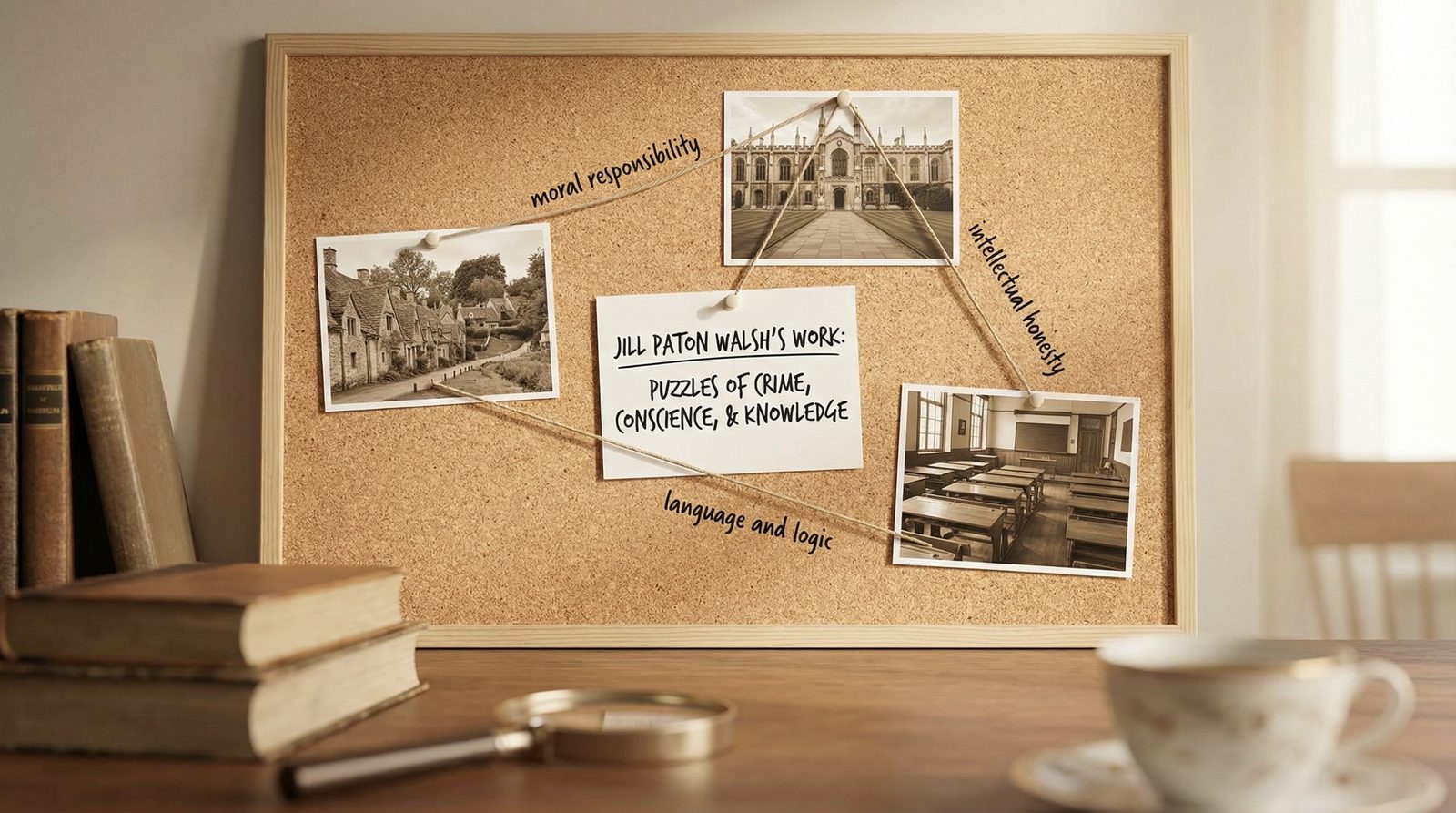
    Paton Walsh often returned to themes of moral responsibility, the fragility of community, and the tension between innocence and knowledge. Her children’s novels frequently feature young protagonists who must navigate ethical complexities usually reserved for adults.

    The Green Book draws on the motif Future Shock as Transformation — ordinary people adapting to extraordinary environments. Many of her works share this interest in how humans respond to change, pressure, and uncertainty.


    STYLE & VOICE

    Her prose is clean, warm, and exact. She writes with the clarity of a teacher and the emotional intuition of a storyteller. Even in her speculative work, Paton Walsh avoids excess — preferring grounded characters, direct description, and simple but resonant imagery.

    She is especially skilled at writing from a child’s point of view without flattening complexity. That control and restraint is part of why The Green Book still holds up: it trusts young readers to understand big ideas without talking down to them.

    Symbolic illustration inspired by 'Jill Paton Walsh'

    KEY WORKS

    Besides The Green Book, Paton Walsh’s notable works include Fireweed, Gaffer Samson’s Luck, and her Lord Peter Wimsey continuations such as Thrones, Dominations and The Attenbury Emeralds. Her range was unusual — few authors moved so easily between speculative fiction, crime fiction, and children’s literature.

    Her work has been widely taught, widely borrowed, and continues to appear on school reading lists, particularly in the UK.


    CULTURAL LEGACY

    Jill Paton Walsh’s literary influence spans several generations. She helped redefine moral complexity in children’s fiction, brought new life to one of the most beloved mystery series in English literature, and contributed to early, humanistic science fiction with works like The Green Book.

    Her reputation is that of a writer who valued truth, clarity, and kindness — and whose stories continue to resonate because they treat readers of all ages as capable of deep thought. Rebuilding her presence on AllReaders strengthens the site’s sci-fi, YA, and literary foundations all at once.

  • Arthur C. Clarke

    Arthur C. Clarke

    INTRODUCTION

    Arthur C. Clarke remains one of the defining voices of twentieth-century science fiction. Known for his clean, technical prose and his unwavering belief in scientific progress, Clarke helped shape the modern genre both through his novels and through his work as a futurist. His writing rarely indulges in melodrama; instead it pursues clarity, scale, and the thrill of discovery. From Childhood’s End to Rendezvous with Rama to the Space Odyssey series, Clarke consistently asked how humanity might grow — not shrink — in the face of the unknown.

    Even his quieter novels, like 2061: Odyssey Three, carry his fascination with physics, exploration, and the belief that the universe is ultimately comprehensible. Clarke’s influence reaches beyond literature: satellites, space policy, and public understanding of astrophysics all bear his fingerprints. Rebuilding his creator profile on AllReaders preserves a cornerstone of classic sci-fi and re-anchors long-standing backlinks from decades of fan and academic references.


    LIFE & INFLUENCES

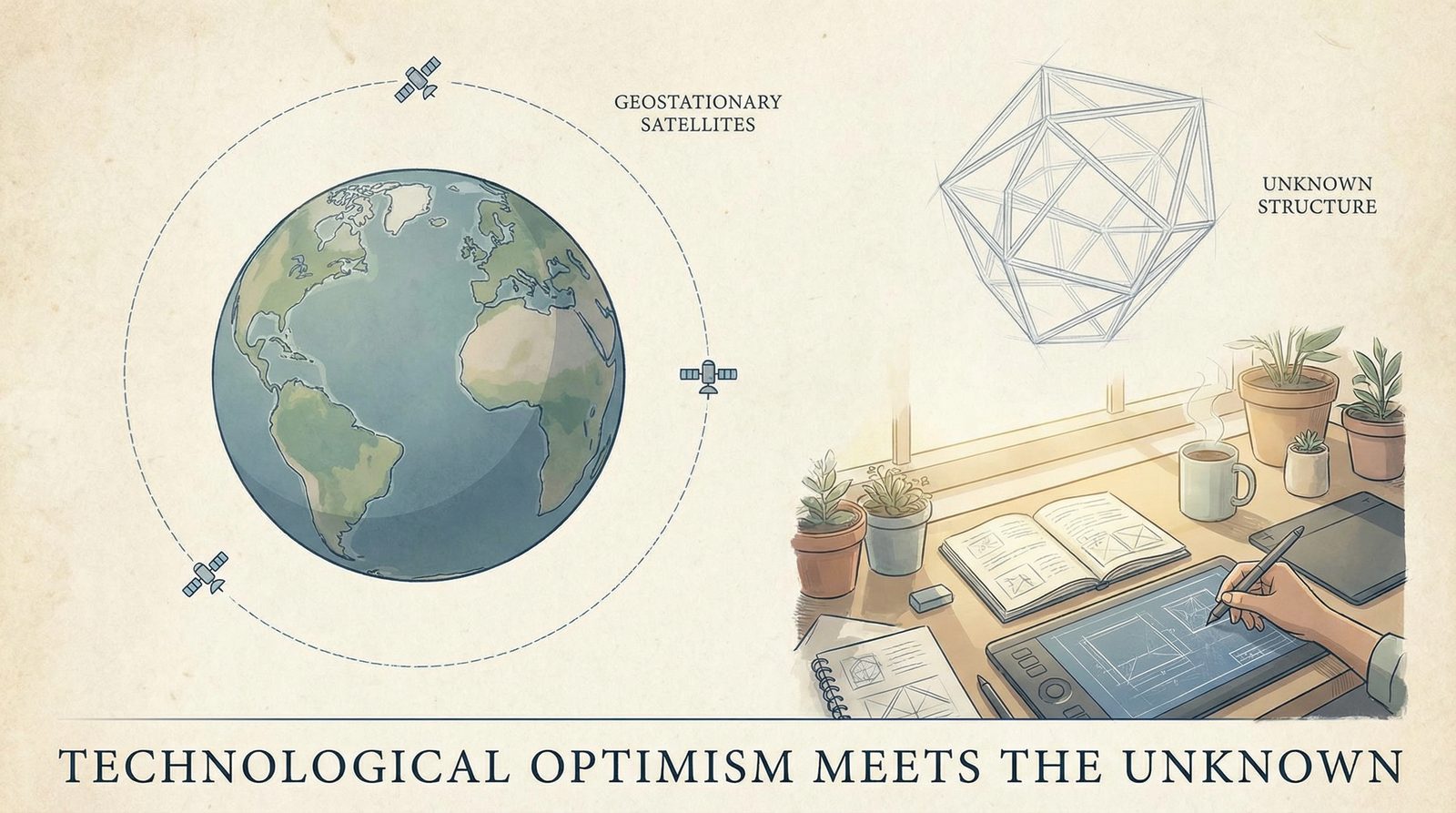
    Born in 1917 in Minehead, England, Clarke grew up on the threshold of the modern space age. His early love of astronomy shaped everything that followed. After serving as a radar specialist in World War II, he became an engineer, writer, and public intellectual. He was among the first to propose geostationary communication satellites — an idea that eventually reshaped global communication.

    Clarke’s literary influences ranged from H. G. Wells to Olaf Stapledon, but his true muse was science itself. He believed technology would transform humanity, not strip it of meaning. This optimism distinguishes him from many later sci-fi writers who leaned into dystopia. For Clarke, the cosmos was a place of possibility, not despair.

    He spent the latter part of his life in Sri Lanka, drawn by the sea, diving, and the island’s slower pace — a setting that subtly informed some of his later writing. His personal philosophy can be felt in the calm, almost meditative quality of his prose: a steady belief that curiosity is our finest trait.

    Editorial illustration inspired by 'Arthur C. Clarke'

    THEMES & MOTIFS

    Clarke’s fiction revolves around a few core themes: humanity’s place in a vast cosmos, the transformative power of technology, and the ethical weight of exploration. Even in the quieter 2061: Odyssey Three, these themes are unmistakable.

    His work regularly intersects with the motif Future Shock as Transformation. For Clarke, technological upheaval isn’t something to fear — it’s the catalyst that pushes humanity into its next phase. He also often engages with Identity Collapse in Isolation, especially in astronauts and explorers confronting environments that dwarf human scale.

    Clarke’s aliens, when they appear, are rarely enemies. They are mentors, mysteries, or glimpses of our potential future. That orientation — curiosity instead of threat — makes his voice distinct among his contemporaries.


    STYLE & VOICE

    Clarke’s style is famously cool and precise. He writes like an engineer building a cathedral of ideas: clean lines, no unnecessary ornament, everything justified by structure. Emotional beats are present but understated; he trusts readers to supply their own wonder.

    He excels at integrating scientific exposition into narrative — orbital mechanics, geology, astrophysics — without sacrificing readability. His characters often feel secondary to the concepts, which is a conscious aesthetic choice rather than a flaw.

    The result is fiction that feels both timeless and distinctly mid-century, shaped by the optimism of an era when humanity believed it might soon live among the stars.

    Symbolic illustration inspired by 'Arthur C. Clarke'

    KEY WORKS

    Clarke’s bibliography is enormous, but a few titles define his legacy. 2001: A Space Odyssey (1968) and its sequels — including 2061: Odyssey Three — remain cultural landmarks for their blend of cosmic mystery and scientific rigor. Rendezvous with Rama (1973) helped solidify the subgenre of “big dumb object” sci-fi. Childhood’s End (1953) remains one of the most influential alien-contact novels ever written.

    His short stories, such as “The Nine Billion Names of God” and “The Star,” continue to circulate as some of the finest examples of tight, conceptual sci-fi in print.


    CULTURAL LEGACY

    Few authors have influenced both science and fiction as profoundly as Clarke. His satellite concept helped reshape global communication. His novels and essays inspired generations of scientists, engineers, and astronauts. His collaboration with Stanley Kubrick permanently altered how cinema depicts space.

    Clarke’s legacy is not a single book or idea, but a worldview: that science and imagination are not opposites but partners. Rebuilding his profile on AllReaders strengthens our sci-fi backbone and restores one of the site’s most important historical figures.

  • 2061: Odyssey Three (1987)

    2061: Odyssey Three (1987)

    By: Arthur C. Clarke
    Genre: Science Fiction, Hard Science Fiction
    Country: United Kingdom


    INTRODUCTION

    2061: Odyssey Three, published in 1987, marks Arthur C. Clarke’s return to the Space Odyssey universe with a story that leans heavily into scientific curiosity and long-view optimism. The novel arrives after the metaphysical ambition of 2001 and the political tension of 2010, and it settles into a calmer mode. Clarke writes with the confidence of a writer who knows how vast the universe is and wants to slow down long enough to study it. This is late-career Clarke: patient, technical, and comfortable letting the grandeur of space speak for itself.

    For AllReaders, this book earns a refreshed page because of its strong legacy presence in the original site archives. Even if the novel is not the boldest of the series, it still attracts readers who want to complete the full Odyssey sequence or who appreciate Clarke’s blend of scientific detail and quiet wonder.


    PLOT & THEMES

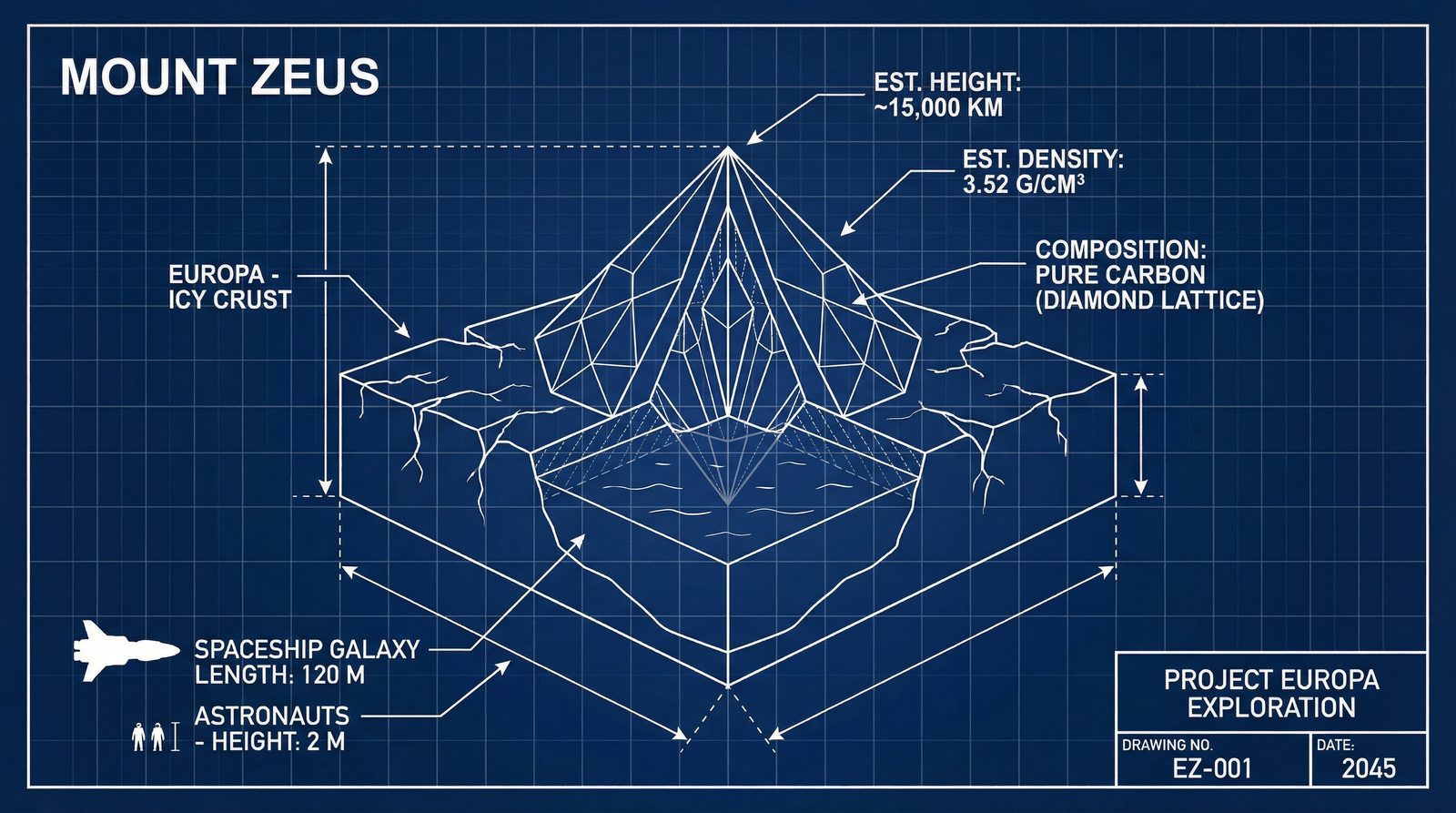
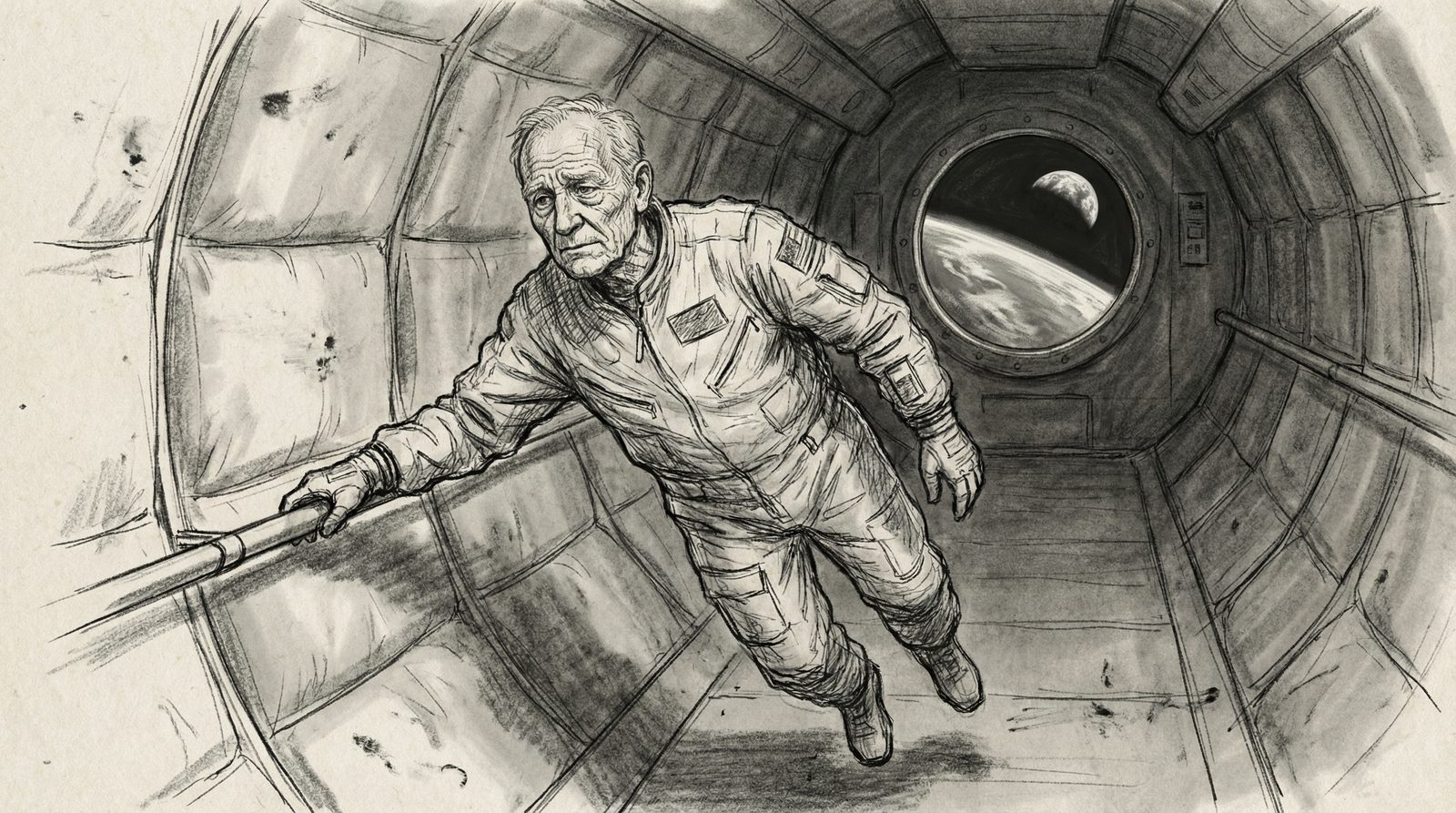
    The story follows two paths. Dr. Heywood Floyd, now elderly, travels aboard a luxury spacecraft heading toward Halley’s Comet. At the same time, the ship Galaxy finds itself stranded on Europa, a world that remains off-limits after the events of 2010. The novel uses this split to create a sense of broad exploration rather than tight suspense. Clarke uses both storylines to highlight physics, geology, orbital mechanics, and the kind of speculative astronomy that shaped his career.

    Themes emerge slowly. Human ambition meets its limits. Curiosity pushes against boundaries set by forces far older than humanity. Clarke also touches on the ethics of exploration, especially when discovery risks disturbing worlds that were never meant to be touched. The motif Future Shock as Transformation appears in the background, since the characters constantly meet technologies and environments that challenge their understanding of what is possible. Clarke frames this adjustment with optimism rather than fear.

    The Europa thread adds a low pulse of danger. Clarke returns to his long-running fascination with alien life as something wondrous and fragile. Even without large set pieces, the presence of life under Europa’s ice casts a quiet shadow over the story. The universe remains beautiful, but it is never entirely safe.

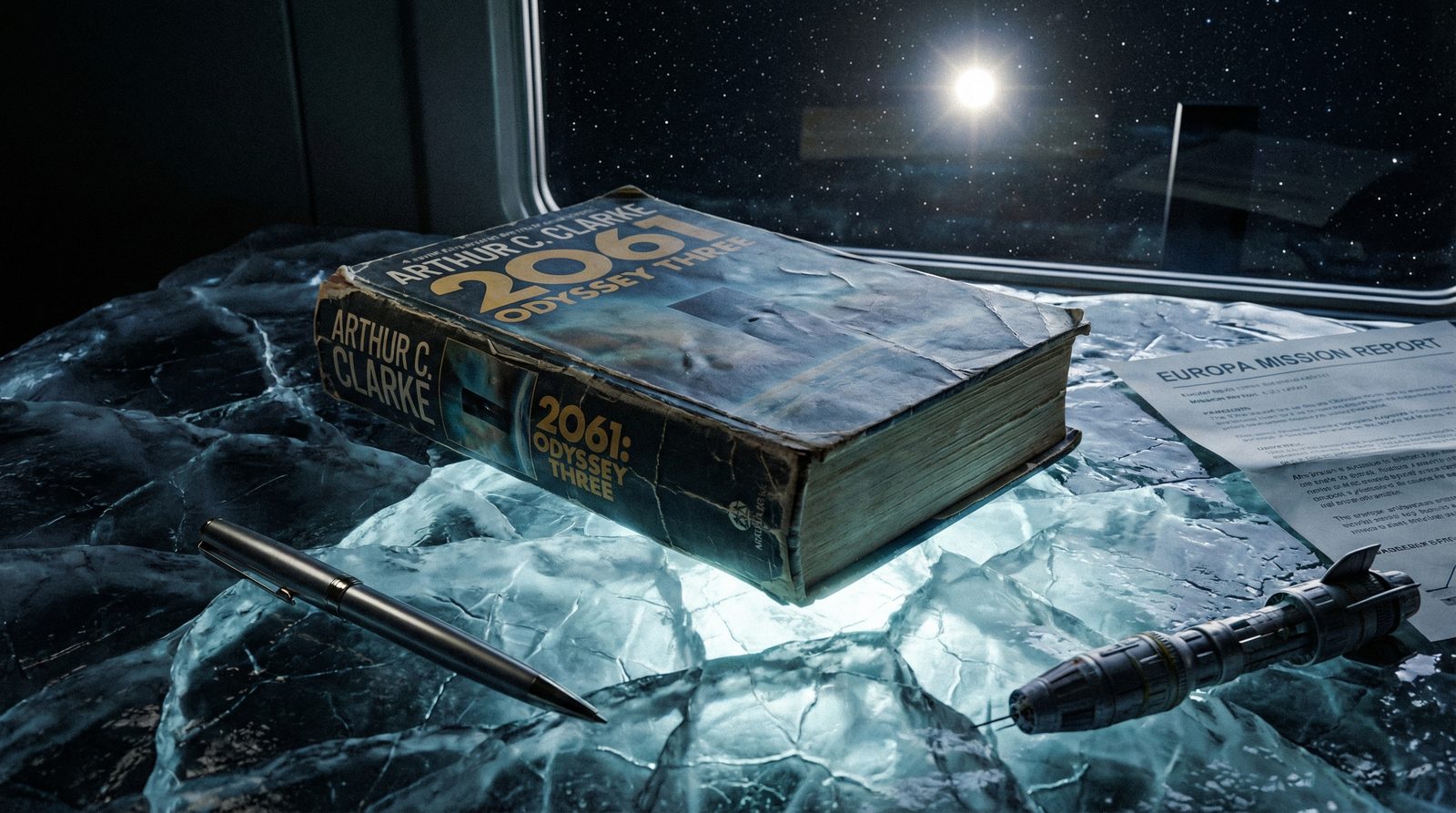
    Conceptual editorial illustration inspired by '2061 odyssey three'

    STYLE & LANGUAGE

    Clarke’s prose is crisp and confident. He writes with the tone of someone explaining the universe to readers he respects. The novel offers long stretches of scientific explanation, including propulsion systems, cometary chemistry, and planetary composition. Fans of hard science fiction will find this deeply satisfying.

    Readers seeking emotional drama may find the story distant. Clarke keeps his focus on ideas, not interpersonal complexity. Still, he offers brief but thoughtful moments that explore Floyd’s aging body and the contrast between his lifelong work and the world of younger explorers now rising around him.

    The pacing moves in waves. Clarke alternates between stretches of technical detail and bursts of incident. This rhythm defines the Odyssey series, and 2061 continues the pattern with quiet confidence.


    CHARACTERS & RELATIONSHIPS

    Heywood Floyd returns as the emotional touchpoint. Age limits his physical ability, but not his curiosity. Clarke uses him to reflect on what it means to keep learning in a universe that changes faster than any human can adapt to. Floyd’s quiet resilience anchors the book’s most human moments.

    The supporting cast serves the story rather than stealing attention. Engineers, scientists, and crew members offer competing interpretations of scientific problems. Their personalities matter less than their expertise. Clarke keeps their interactions clean and functional.

    Europa itself becomes one of the novel’s strongest characters. Clarke describes the moon as a place of beauty and danger, a world shaped by forces no human can fully comprehend. It reminds the reader why the monolith’s warning still holds weight.


    CULTURAL CONTEXT & LEGACY

    2061 belongs to Clarke’s reflective late style. He writes with patience and an eye on scientific discovery rather than dramatic shock. When the novel appeared, research into comets, planetary oceans, and Europa’s icy crust was accelerating, and the book captures that growing excitement. Clarke’s attention to real theories gives the story a sense of authenticity even when it wanders from strict narrative structure.

    The novel lacks the cultural impact of 2001 and the narrative tension of 2010. Even so, it remains an essential link in the Odyssey cycle. Readers who enjoy grounded speculation and careful scientific extrapolation continue to return to it. Clarke’s reputation keeps the book alive, and the ideas inside still spark curiosity.

    Illustration of a core idea or motif from '2061 odyssey three'

    IS IT WORTH READING?

    For fans of hard science fiction, yes. 2061: Odyssey Three offers detailed worldbuilding, thoughtful speculation, and a sense of scientific joy. For readers who want complex interpersonal drama or emotional heat, the book may feel distant. Clarke focuses on ideas rather than intimacy, and he does so with intention.

    Anyone reading the entire Odyssey sequence should not skip it. For casual readers, it is optional but rewarding if you enjoy slow, idea-driven science fiction grounded in astrophysics.


    SIMILAR BOOKS

    Readers who enjoy scientific exploration may appreciate Jill Paton Walsh’s The Green Book, which offers a gentler approach to survival on new worlds. Those drawn to stories where danger arises from unfamiliar environments might also connect with Tabitha King’s Survivor, even though the genres differ.

  • The Green Book (1981)

    By: Jill Paton Walsh
    Genre: Science Fiction
    Country: United Kingdom


    INTRODUCTION

    Jill Paton Walsh’s The Green Book is a slim, sharp piece of early sci-fi that has quietly endured since its release in 1981. Written for younger readers but thoughtful enough for adults, it follows a small group of refugees fleeing a dying Earth and resettling on a strange new planet. The book isn’t trying to be a blockbuster or a grand space epic. Its power comes from its restraint: simple language, exact emotional beats, and worldbuilding delivered in small, carefully chosen details.

    The story centers on Pattie, the youngest child in her family, whose only possession on the doomed starship is an empty notebook she calls her green book. What she writes, and what that writing becomes to the community, is the novel’s quiet heartbeat.


    PLOT & THEMES

    The premise is simple: Earth is dying, and a handful of families escape aboard an overcrowded craft to a habitable but unknown world. Each person is allowed to bring one book. Pattie brings an empty one. That small, almost throwaway decision becomes the novel’s central metaphor.

    Once the colonists arrive, they struggle to adapt. The new planet’s vegetation is edible but strange. Animals behave unpredictably. The familiar rules of agriculture, architecture, and survival do not apply. Through this, Walsh explores classic early sci-fi themes — resource scarcity, community formation, and adaptability — through a gentle, almost fairytale-like lens.

    The emotional theme is about voice and value. Pattie is underestimated throughout the journey, but she becomes the recorder of the colony’s founding — a role that reshapes the community’s identity. This touches lightly on the motif Identity Collapse in Isolation, though the story treats it with far more hope than darkness.

    Conceptual editorial illustration inspired by 'the green book (1981)'

    STYLE & LANGUAGE

    The prose is spare and clear, written for younger readers but not condescending. Walsh refuses melodrama, instead building tension from practical challenges: how to make lamps, how to grow food, how to survive the nights. The simplicity is intentional — it turns the alien world into a space for lessons about cooperation, curiosity, and resilience.

    Some readers may find the storytelling too soft or too brief. It is absolutely a product of children’s sci-fi from the early 1980s. But within those limits, Walsh hits her marks with precision.


    CHARACTERS & RELATIONSHIPS

    Pattie is the emotional center of the novel. Her curiosity, fear, and eventual sense of responsibility give the book its shape. She is written simply, but with enough interiority to feel real.

    Her siblings and father form the secondary cast, offering a grounded portrait of a family under pressure. Their interactions are understated, but Walsh uses small gestures to suggest their exhaustion, worry, and protectiveness.

    The larger colony functions more as a collective presence than a set of distinct characters, but that works for the book’s fable-like structure. These are not heroes and villains, just ordinary people trying to survive a radically new environment.


    CULTURAL CONTEXT & LEGACY

    The Green Book sits comfortably within the tradition of soft, humanistic sci-fi of the 1970s and early 1980s. It shares DNA with books like A Wrinkle in Time and The Giver, though it is smaller in scope. For many readers, it was their first encounter with sci-fi that valued emotional intelligence as much as technology.

    The book’s legacy is modest but persistent. Teachers still assign it. Libraries still stock it. And it shows up year after year on lists of formative sci-fi for young readers. It’s not a complex novel, but it remains surprisingly durable.

    Illustration of a core idea or motif from 'the green book (1981)'

    IS IT WORTH READING?

    If you’re looking for hard sci-fi or intricate worldbuilding, no — this isn’t that book. But if you want a quiet, thoughtful survival story with emotional clarity, The Green Book is worth your time. It especially holds up for readers who appreciate character-driven speculative fiction.

    It’s also a strong recommendation for younger readers and anyone looking for an entry point into early sci-fi that isn’t all lasers, starfleets, and cosmic peril.


    SIMILAR BOOKS

    Readers drawn to quiet, survival-focused sci-fi may enjoy Arthur C. Clarke’s 2061: Odyssey Three, which approaches space and adaptation from a more adult, technical perspective. Laurie Halse Anderson’s Catalyst pairs well thematically in terms of personal reinvention and pressure, even though it’s not sci-fi.