
Genre: Fantasy

  • Ptolemy’s Gate (2005)

    Ptolemy’s Gate (2005)

    INTRODUCTION

    Ptolemy’s Gate (2005) by Jonathan Stroud
    Fantasy · 2000s · United Kingdom


    Ptolemy’s Gate is a series finale that feels both inevitable and genuinely shocking. Stroud takes the familiar summoned-spirit motif and turns it into a meditation on servitude, memory, and the cost of power. The book’s London—an alternate early-2000s Britain where magicians run the state—feels bureaucratic, grimy, and tense with class rage, but the real heat lives inside relationships. There’s a steady bittersweet urgency under the jokes, as if Bartimaeus’s wisecracks are whistling past a graveyard he knows too well.

    By the time the narrative circles back to the ancient boy-scholar Ptolemy and his experiment in mutual recognition, the trilogy has shifted from clever adventure into a question: can empathy survive inside a system built on exploitation?

    PLOT & THEMES

    The plot opens with Britain’s magicians entrenched in a failing war abroad and unrest at home. Nathaniel, now John Mandrake and a senior minister, orchestrates propaganda while commoners seethe. Bartimaeus is summoned into service yet again, but he is dangerously weakened by prolonged time on the material plane. Kitty Jones, presumed dead by the government, has gone underground, studying grimoires and obsessing over the legend of Ptolemy. Her investigations into the Other Place and the boundary between worlds become the key to everything.

    Stroud leans into uneasy allies forced together. Nathaniel, Bartimaeus, and Kitty must cooperate to expose a conspiracy and prevent a catastrophic breach between realms. The rebellion has physical geography: ministerial halls and surveillance rooms above, shadowed streets and resistance cells below. The city reads like an administrative machine under siege.

    Thematically, Ptolemy’s Gate is about the ethics of domination. Summoning is not treated as neutral magic but as institutionalized exploitation. Mirrors, scrying surfaces, and shimmering thresholds echo the way humans and spirits distort each other: surveillance masquerading as knowledge, coercion masquerading as order. The book’s moral question is not “who wins the war?” but “what kind of relationship counts as victory?”

    The ending refuses easy redemption. Nathaniel, already being consumed by Nouda’s essence, dismisses Bartimaeus with his true name before the process is complete. Acting both in response to Nathaniel’s will and to protect Kitty, Bartimaeus strikes and destroys Nouda. Nathaniel dies, the regime collapses, and Kitty is left in a damaged city carrying memory rather than triumph. The closure is fragile peace, not celebration.

    PROSE & NARRATIVE STRUCTURE

    Formally, the book is playful and ruthless at once. Stroud’s most distinctive technique remains Bartimaeus’s first-person chapters with footnotes. These tangents spiral into ancient anecdotes that undercut the main text with sarcasm and grudges, but they also function as an archive of trauma. Every joke is a record of centuries of coercion.

    Nathaniel’s sections are clipped and managerial, full of schedules, reports, and mounting anxiety as the government hollows out beneath him. Kitty’s chapters slow the tempo into investigation and experiment, especially when she approaches Ptolemy’s Gate and risks dissolution in the Other Place. The alternating perspectives create a braid of three “feels”: sardonic endurance, bureaucratic panic, and ethical curiosity.

    Flashbacks to ancient Alexandria provide the moral counterpoint. Ptolemy addressing Bartimaeus as an equal becomes the trilogy’s hidden standard of what the present world has forgotten. Stroud never turns purple; he keeps the language brisk so the ethical weight lands through consequence rather than sermon.
    Conceptual editorial illustration inspired by 'Ptolemy’s Gate (2005)'

    CHARACTERS & INTERIORITY

    Nathaniel’s arc completes his transformation into a fallen prodigy: the idealistic boy from The Amulet Of Samarkand buried under the persona of John Mandrake, all sharper policies and tighter self-editing. His interiority is compartmentalization. He rehearses public lines, edits memory, and treats Bartimaeus as a tool — until the final act forces a brutal return to what he has become.

    Bartimaeus is paradoxically the book’s most emotionally honest figure. His joking is survival, but his exhaustion is real, and his memories of Ptolemy carry tenderness that breaks the armor. Kitty’s growth is the quiet core: she is the only character willing to cross the human–spirit divide with genuine curiosity and risk. Her decision to enter the Other Place is a radical act of empathy rather than conquest.
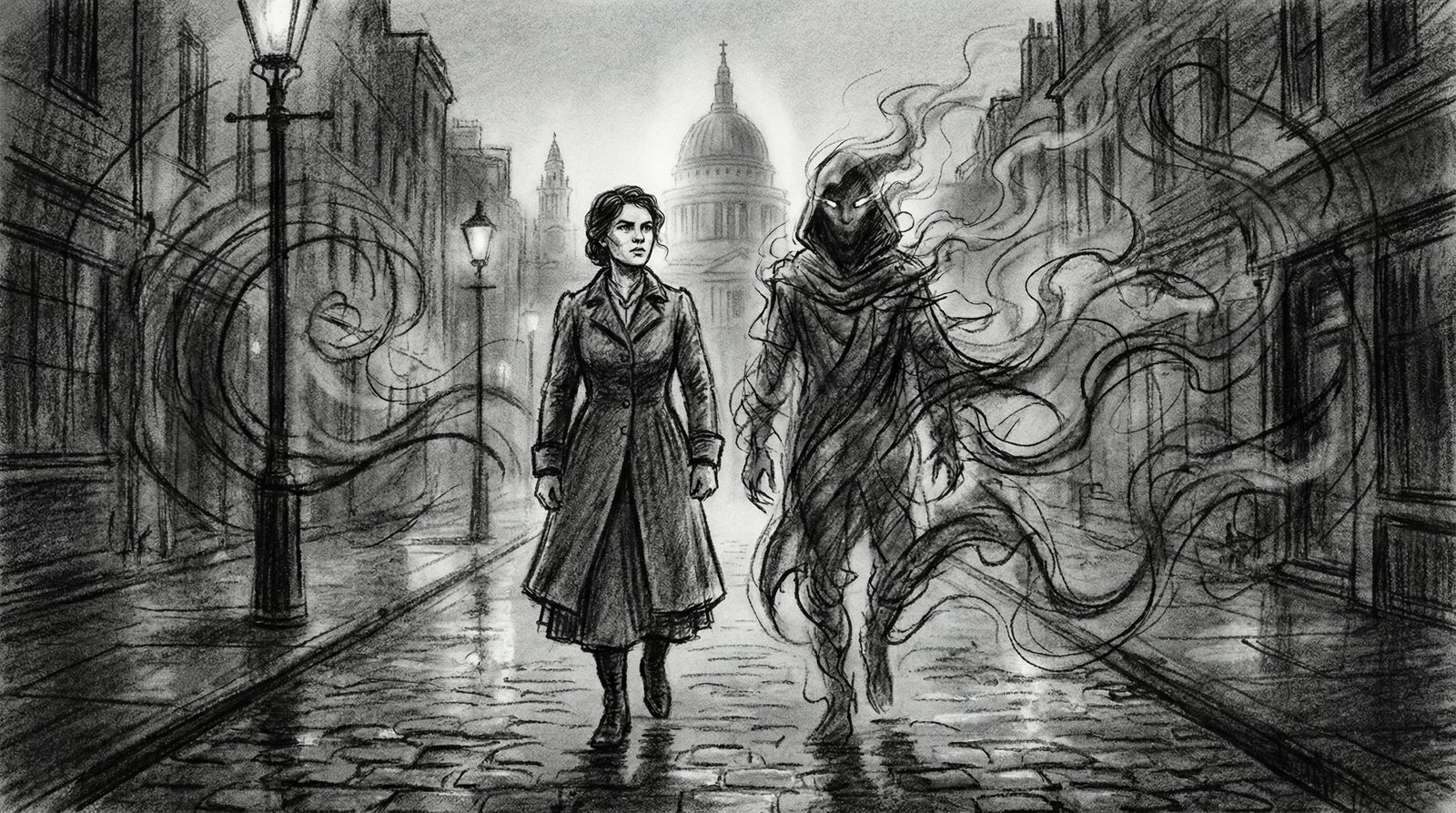
    Illustration inspired by 'Ptolemy’s Gate (2005)'

    LEGACY & RECEPTION

    Ptolemy’s Gate arrived into a market full of chosen-one finales and tidy victories and quietly did something stranger. Its ending refuses comforting closure. The “hero” does not get domestic happiness; the system does not reform itself; the cost is paid in death, exile, and unresolved rebuilding. That ethical seriousness is why readers often cite it as one of the sharpest YA fantasy finales of its decade.

    Readers and critics have singled it out as the point where the trilogy’s political teeth fully show. The blend of slapstick voice, footnoted history, and state violence influenced later YA fantasy that takes class and empire seriously. Debates still circle around whether Nathaniel’s final act redeems him or merely interrupts a corruption that cannot be undone, which is a sign of how thoroughly Stroud commits to moral gray.

    IS IT WORTH READING?

    If you’ve read the first two volumes, this one is essential. It pays off long-running grudges and jokes while deepening emotional stakes, especially in the triangle of Nathaniel, Bartimaeus, and Kitty. This is not a comforting finale, but it is brisk, inventive, and surprisingly moving, with action that never drowns out the ethical questions underneath.

    TRIVIA & AUTHOR FACTS

    Stroud wrote the Bartimaeus books while working as an editor, which shows in their tight structure and sly awareness of genre convention. This volume expands the Other Place into extended scenes where spirit existence is felt as shifting essence rather than fixed body, raising the philosophical stakes of what “freedom” would even mean for a summoned being.

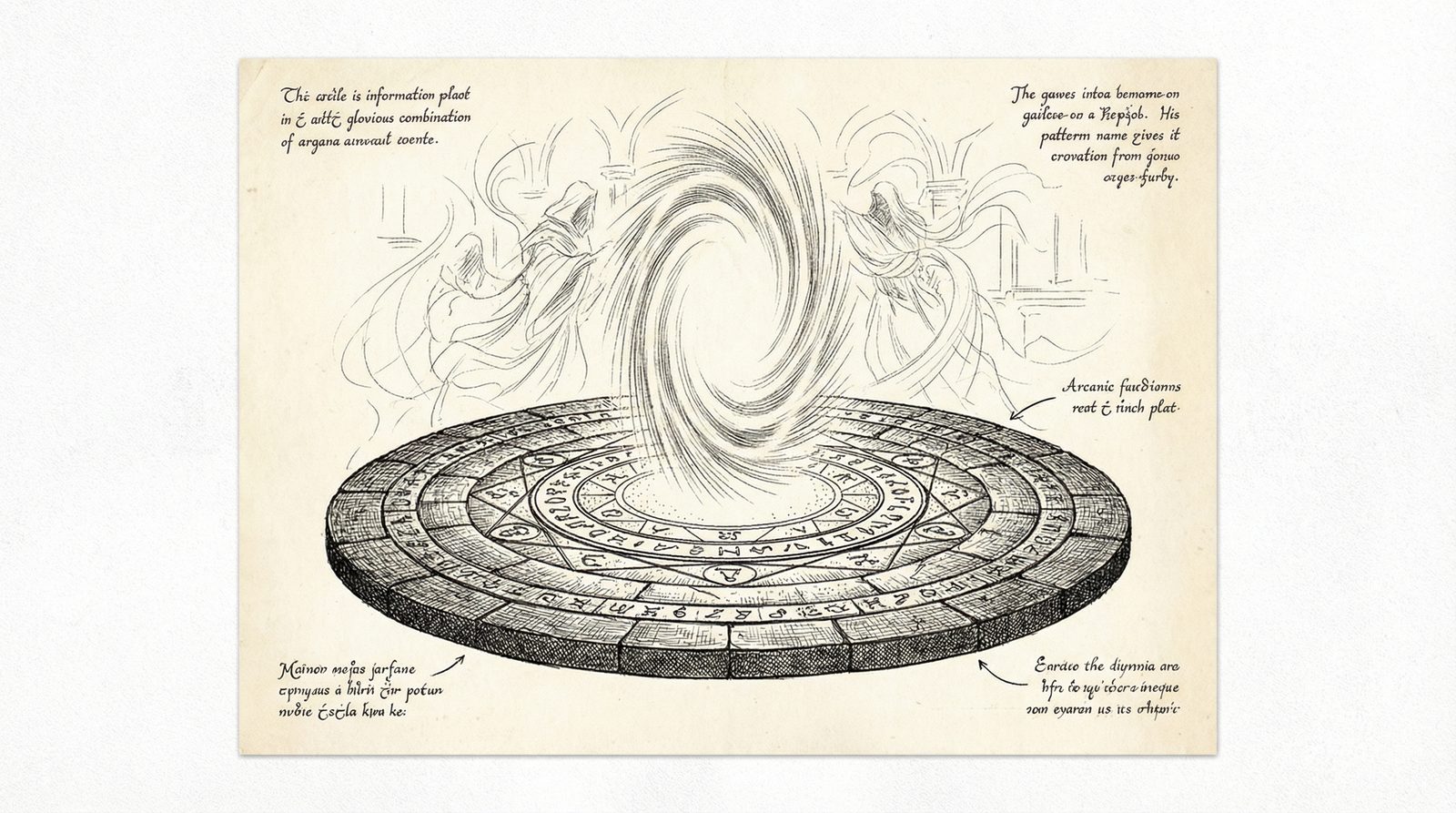
    The title refers both to a literal construct — Ptolemy’s method of entering the spirit realm without coercion — and to a symbolic opening between species: a door into mutual recognition rather than domination.

    SIMILAR BOOKS

    If this book speaks to you, look for fantasies that mix wit with political bite and treat power as a corrupting technology rather than a birthright. The strongest neighbors tend to balance adventurous plotting with real moral consequence, and to treat “system collapse” as emotionally costly rather than triumphant.

    DISCOVERABILITY & LINKS

  • Mannequin (1987)

    Mannequin (1987)

    Mannequin (1987) directed by Michael Gottlieb. Comedy · 89 minutes · United States of America. Released February 13, 1987.


    INTRODUCTION

    Mannequin (1987) is a featherlight 1980s comedy that treats a Philadelphia department store as a fairy-tale kingdom hiding in plain sight. The premise is unabashedly absurd: a struggling artist falls in love with a mannequin who comes to life only for him. The film leans into a fizzy romantic feel, with synth-pop, soft focus, and neon reflections doing as much work as the script.

    What keeps it from floating away entirely is a sincere belief in creativity, love, and the dignity of low-stakes work. Jonathan is a misfit who can’t survive the grind of 1980s capitalism until he finds a place where imagination is treated as useful labor. The result is a retail fantasy that is shamelessly cheesy and oddly tender.

    PLOT & THEMES

    Andrew McCarthy plays Jonathan Switcher, a young sculptor whose perfectionism keeps getting him fired from menial jobs. His one triumph is a mannequin he designs, which later appears at the struggling department store Prince & Company. When the mannequin—inhabited by the spirit of Emmy—comes to life for him alone, Jonathan stumbles into a secret romance and a new career as a window dresser. The core is a Pygmalion fantasy: the artist rewarded when his creation becomes real.

    The story is also a makeover narrative, except the subject is a failing business. Emmy and Jonathan’s elaborate window displays transform Prince & Company into a buzzing 1980s dreamspace. Under the slapstick, the film carries a mild critique of corporate logic: Jonathan’s artistry is only “validated” once it boosts sales, and Emmy’s daylight restriction makes love itself conditional on hiding from the practical world.

    The workplace becomes a family enclave. Misfit employees defend their shared space against corporate raiders, and the movie treats retail labor as something that can still contain dignity when it’s fueled by care, craft, and community rather than fear. That is the film’s soft-hearted trick: it turns fluorescent capitalism into an arena where magic can briefly win.

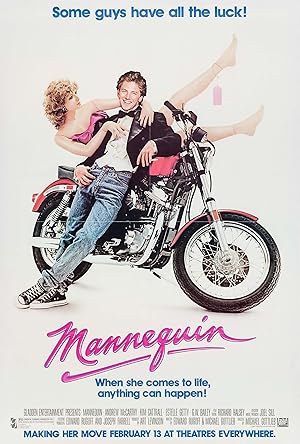
    Official poster for 'Mannequin (1987)'

    CINEMATIC TECHNIQUE & AESTHETICS

    The film’s most reliable tool is the 1980s montage. Jonathan and Emmy’s after-hours escapades unfold in music-driven sequences that feel closer to MTV than classical Hollywood. The famous “Nothing’s Gonna Stop Us Now” montage compresses an entire corporate turnaround into pop anthem logic: if the windows look magical, the world becomes magical.

    Lighting and production design build a clean binary between dead daytime retail and enchanted night. Fluorescent overheads flatten everything during business hours, while the store glows after dark with saturated pinks, blues, and golds that keep the romance buoyant. The camera remains straightforward, but loosens when Emmy is alive, treating the store like a stage for costume changes and physical comedy.

    The transformation effect is charmingly low-tech: match-cuts, practical posing, and simple tricks that ask the audience to play along. That handmade quality is part of the film’s appeal. It never tries to convince you the magic is “real.” It tries to convince you it is worth believing in for 89 minutes.

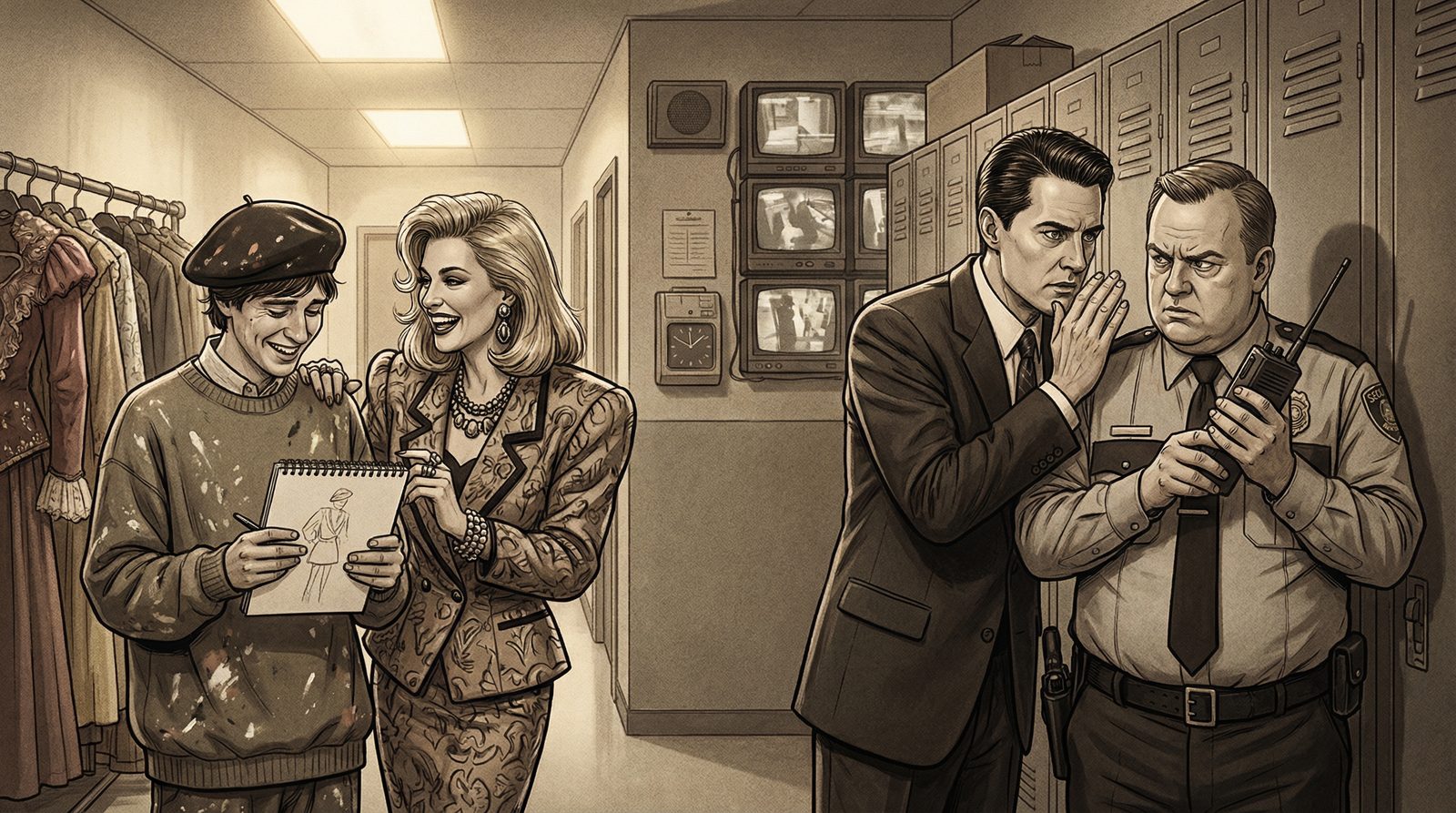
    Editorial illustration inspired by 'Mannequin (1987)'

    CHARACTERS & PERFORMANCE

    Jonathan Switcher is a gentle dreamer archetype. Andrew McCarthy plays him with boyish sincerity; he’s more convincing as a sweet misfit than as a tormented artist. Kim Cattrall’s Emmy provides the film’s spark. She plays the fish-out-of-water variation with physical delight, helping the Pygmalion premise feel less like obsession and more like mutual awakening.

    The most vivid presence is Hollywood Montrose, played by Meshach Taylor. He functions as a flamboyant mentor and protector of the creative bubble inside the store. The performance is broad and rooted in stereotype, but also genuinely warm, which makes Hollywood the emotional center of the workplace family. On the antagonist side, corporate climbers and buffoonish security exist mainly to keep the fairy-tale logic simple: joyless adults threaten the kingdom, so imagination must defend it.

    CONTEXT & LEGACY

    Released in 1987, Mannequin arrived during a wave of 1980s high-concept fantasies that fused romance, consumer culture, and gentle magical disruption. Critics were largely hostile, but audiences responded to its retail fantasy and its sincerity about creativity as salvation. The soundtrack, especially Starship’s “Nothing’s Gonna Stop Us Now,” became more culturally durable than the narrative itself.

    Over time, the film has settled into cult status as an 80s time capsule. Its gender roles and queer coding feel dated, yet Hollywood Montrose has also been reclaimed by some viewers as an early (if imperfect) example of a visibly queer-coded figure in mainstream comedy. The legacy is less about artistic innovation and more about mood: a bright, artificial dream of work, love, and store-window magic.

    IS IT WORTH WATCHING?

    It depends on your tolerance for 1980s cheese and your appetite for high-concept romance. As a narrative, it’s flimsy and often clumsy, with jokes that miss and attitudes that have aged unevenly. As a feel, it’s oddly winning. If you like glossy 80s fantasies and don’t mind a premise that runs on pure charm, it’s a sometimes-charming watch. If you want grounded character realism, the mannequin romance will likely leave you cold.

    Symbolic illustration inspired by 'Mannequin (1987)'

    TRIVIA & PRODUCTION NOTES

    Mannequin was shot largely on location in Philadelphia, with exteriors and many interiors filmed at Wanamaker’s, which adds authenticity to its retail fantasy. The production relied on full-body mannequins, performance posing, and practical editing tricks to sell the transformation. Meshach Taylor’s presence as Hollywood Montrose became one of the film’s most memorable elements, shaping the tone of the store-as-family dynamic.

    The film’s modest box office success was amplified by its soundtrack. Starship’s “Nothing’s Gonna Stop Us Now” became a major hit and helped cement the movie’s place in 1980s pop culture. A sequel followed, recycling the premise with a new cast and setting, which testifies to the durable appeal of department-store magic even when the concept is thin.

    SIMILAR FILMS

    If Mannequin’s retail fantasy and romantic absurdity appeals to you, seek out other high-concept comedies where magic collides with everyday work and consumer life. The best matches tend to share its buoyant tone, its affection for misfits, and its willingness to treat commerce as a stage for invention.

    DISCOVERABILITY & LINKS

  • Jonathan Stroud
    Jonathan Stroud

    ORIGINS & BACKGROUND

    Jonathan Stroud is best known for character-driven fantasy that treats magic and ghosts less as glitter and more as workplace hazards. Across the Bartimaeus books and Lockwood Co, he builds systems where the supernatural is managed through procedure, rivalry, and institutional pressure. The result is adventurous fiction with sharp humor on the surface, but a steady preoccupation with power, responsibility, and the cost of survival.

    Stroud grew up and works in the United Kingdom, and his writing carries a distinctly British blend of dry wit, skepticism about authority, and affection for creaky institutions. Before becoming a full-time author, he worked as an editor in children’s publishing, which shows in his pacing, his clarity, and his instinct for what younger readers can handle emotionally without diluting the stakes.

    In the Bartimaeus sequence, beginning with The Amulet Of Samarkand (2003), Stroud imagines an alternate London run by magicians whose power depends on enslaved spirits. The setting is recognizably urban and modern, but filtered through history and satire. Later, with Lockwood Co and its opening novel The Screaming Staircase (2013), he shifts to a haunted London where children are the only effective defense against ghosts, creating a precarious professional ecosystem built on risk and exploitation.

    Rather than foregrounding personal trivia, Stroud lets background appear sideways: in memos, disciplinary language, petty rivalries, and the weary tone of officials who enforce rules they don’t fully understand. His worlds feel plausible because they behave like institutions, not fairy tales.

    Editorial illustration inspired by 'Jonathan Stroud'

    THEMES & MOTIFS

    A central engine in Stroud’s work is Magical Bureaucracy. In The Amulet Of Samarkand, magicians behave like civil servants and politicians: rule-bound in public, ruthless in private, and willing to weaponize procedure for personal gain. The supernatural is powerful, but the real leverage often sits in permissions, rank, and punishment.

    His later haunted-London world sharpens the logic of the Ghost Hunting Agency. In The Screaming Staircase, child sensitivity to ghosts becomes a professional resource, which turns bravery into an economic model. Young agents are praised, needed, and quietly treated as replaceable. Stroud returns to the tension between competence and vulnerability, showing how systems rely on the people they endanger.

    Power and servitude run through both series. In the Bartimaeus books, magic depends on exploitation, and the narrative keeps circling back to complicity and resistance. Even when characters benefit, the moral abrasion remains. In the ghost-agency world, power sits in information: who controls records, who sets policy, and who is allowed to define what “safe” means.

    Stroud also favors motifs of unreliable authority and buried history. Official explanations are rarely complete, and protagonists win by uncovering what institutions have forgotten or concealed. Alongside this is a quieter thread of found family, where humor and banter function as a survival tactic rather than sentimentality.

    Across his work, the motif systems are not window dressing. They are engines that let Stroud ask how much moral agency is possible inside structures built to reward compromise.

    Symbolic illustration inspired by 'Jonathan Stroud'

    STYLE & VOICE

    Stroud’s style is marked by wit, structural playfulness, and an unhurried confidence with worldbuilding. In the Bartimaeus books, he uses footnotes and a sardonic first-person voice to let the djinni comment on events, undercutting solemnity with sarcasm. The humor sharpens the critique rather than softening it, keeping power and procedure in view even during action.

    In Lockwood Co, the narrative voice is more direct but still dry and observant. Scenes of investigation and confrontation are tightly staged, with clear physical space and escalating dread. Stroud often alternates eerie fieldwork with domestic or office-like scenes inside the agency, which keeps the supernatural grounded in routine and logistics.

    His pacing favors accumulation over shock. Mysteries unfold through clues, conversations, and small revelations, with early details paying off later. Dialogue carries emotional weight, especially when characters test each other’s loyalty under pressure. Even in intense moments, Stroud avoids melodrama, creating a tone that is adventurous, eerie, and quietly bitter.

    KEY WORKS & LEGACY

    The Bartimaeus series, launched with The Amulet Of Samarkand, established Stroud’s signature blend of satire and stakes. It crystallizes his interest in institutions, exploitative power, and the ethics of control, using the human magician and the djinni Bartimaeus to show the same system from opposing angles.

    The Screaming Staircase launched his ghost-agency world, where the horror is constant but the economy is what makes it brutal. Stroud imagines a society reshaped by a long-term haunting crisis and centers young agents whose competence is essential while their safety is treated as negotiable.

    Stroud’s enduring appeal lies in how he marries adventure with skepticism. His worlds are full of djinn and ghosts, yet the real threats are often contracts, ministries, rival firms, and the compromises people make to survive inside systems that reward the worst instincts. That tension gives his fiction resonance beyond its immediate thrills.

  • Ghost Hunting Agency

    Ghost Hunting Agency

    DEFINITION & CORE IDEA

    Ghost Hunting Agency is a motif that turns hauntings into a service industry. Instead of lone mediums or terrified families handling the supernatural in private, we follow an organized group whose job is to investigate ghosts, contain dangerous sites, and resolve cases for clients. The agency has a name on the door, a reputation to protect, and usually a cashflow problem that forces them to keep taking the next job.

    This motif usually sits between horror, mystery, and adventure. Ghosts remain frightening, but the story treats them as problems that can be approached with procedure: intel gathering, equipment, risk assessment, and a plan for the worst-case scenario. The world feels lived-in because the supernatural is not a one-time shock. It is a recognized hazard people adapt to, exploit, and try to manage.

    In The Screaming Staircase (2013), Jonathan Stroud uses the agency structure to make the paranormal feel both immediate and practical. The danger is real, but it is approached like work. A haunted location is not only a place to fear. It is a job site, with costs, deadlines, and consequences when something goes wrong.

    Writers use the Ghost Hunting Agency motif because it builds a reliable story engine. Each new case brings a new setting, a new client, and a different kind of ghost logic. That episodic structure lets characters accumulate history through work, building loyalty and competence while also collecting scars, fear responses, and moral compromises.


    HOW IT WORKS IN STORIES

    Most Ghost Hunting Agency stories begin with a case. A client reports disturbances, a building becomes unsafe, or a location develops a reputation that threatens business or lives. The agency takes the job, and the plot follows a procedural rhythm: interview, research, site visit, escalation, confrontation, and aftermath. The structure often borrows from detective fiction, with the twist that the “evidence” can be lethal.

    The agency itself becomes a character. Its rules, reputation, and resources shape every decision: what cases are accepted, what risks are tolerated, and how much corner-cutting is necessary to keep operating. Rival outfits and competing reputations can add pressure, turning hauntings into both a survival problem and a market problem.

    The team is typically built as a patchwork of complementary skills. One member is better at sensing or confronting the supernatural, another at research and pattern recognition, another at leadership under pressure. Their internal dynamics matter because every case tests trust. A job can be technically “successful” while still being emotionally costly, especially when a haunting is tied to grief, injustice, or betrayal rather than a simple monster.

    Because the work is repeatable, the motif naturally supports series storytelling. Each mission tests a different ethical and emotional edge: what the agency does when a client lies, what compromises they accept when money is tight, and what it costs to keep returning to places that want to kill you. Over time, the growing stack of closed cases becomes a quiet record of what the team has survived and what it has lost.

    This motif also overlaps with Magical Bureaucracy when hauntings are regulated. Licenses, inspections, or official restrictions can determine who is allowed to operate and what methods are legal. In those versions, the agency is not only fighting ghosts. They are also fighting procedural barriers that decide whether help is permitted at all.


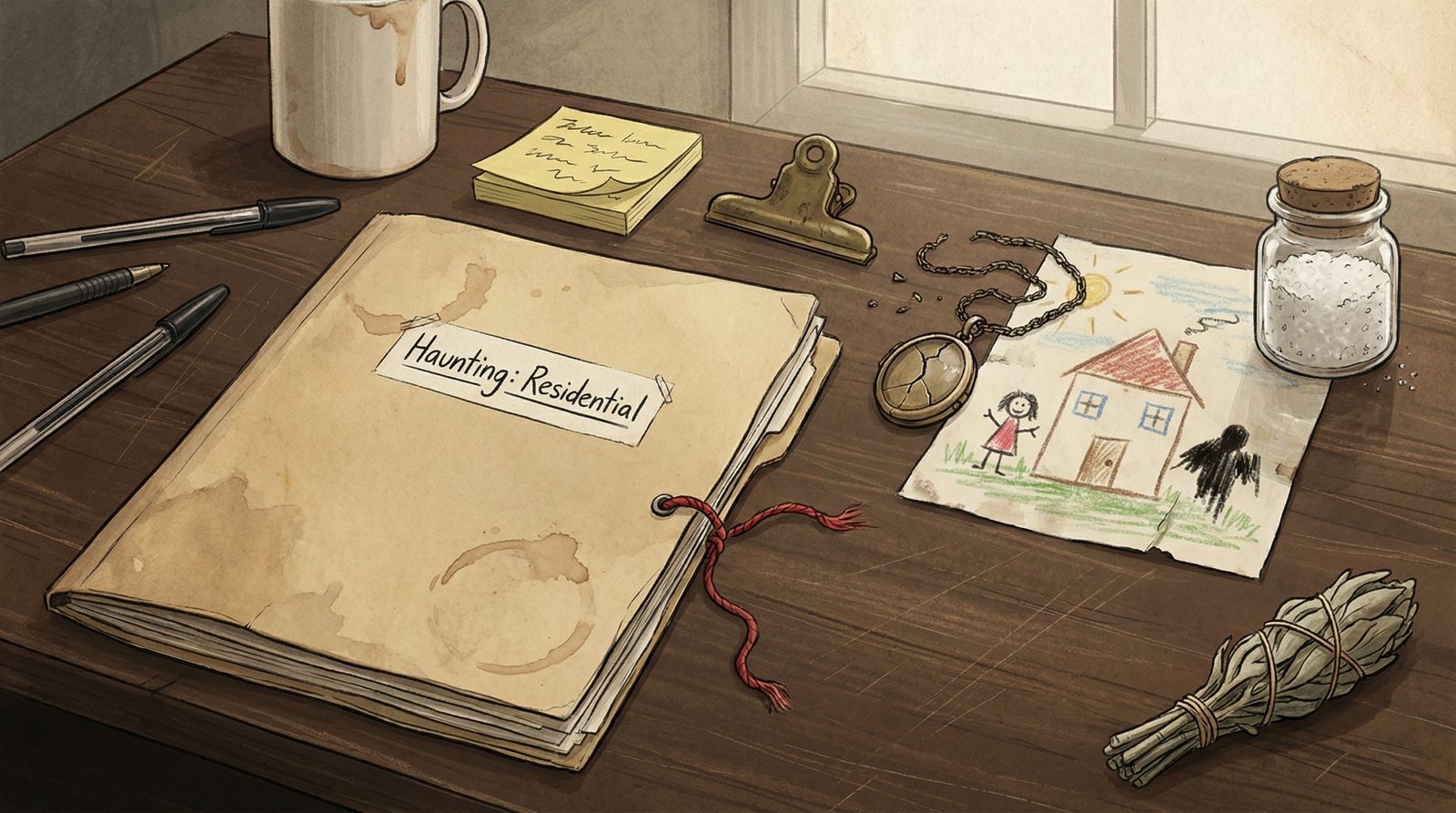
    Editorial illustration inspired by 'Ghost Hunting Agency'

    EMOTIONAL EFFECT ON THE READER

    The Ghost Hunting Agency motif creates a specific comfort-dread blend. Ghosts are terrifying, but there is structure: someone will show up, assess the threat, and try to fix it. That safety-net feeling makes the horror more bearable because the reader faces it alongside a team, not alone in the dark.

    It also produces camaraderie. Readers sit in on planning sessions, post-case debriefs, arguments about risk, and the small domestic moments between jobs. The agency becomes a surrogate home, especially when characters are young, isolated, or estranged. Fear is still present, but it is shared, which changes its emotional texture.

    There is usually a steady hum of melancholy underneath the adventure. Each haunting implies something unfinished. Watching professionals handle these cases can feel oddly healing: it suggests that the worst things might be faced directly, contained, and given a form of closure, even when they cannot be undone.

    At the same time, the grind can feel brutal. Characters keep clocking in, risking their bodies and sanity for clients who may underpay, exploit them, or lie. The motif invites the reader to weigh the thrill of the work against the toll it takes on the people who do it for a living.


    Symbolic illustration inspired by 'Ghost Hunting Agency'

    VARIATIONS & RELATED MOTIFS

    The Ghost Hunting Agency motif comes in a few reliable flavors. One is the scrappy startup: a small team operating job to job, improvising gear and taking risks because they cannot afford caution. Another is the sleek corporate version, where hauntings become a revenue stream and exorcism work is treated like any other contract service. A darker variant turns the agency into a state function, framing hauntings as security threats managed through containment and control rather than empathy.

    Some versions emphasize investigation and forensics, treating ghosts as clues in unresolved crimes. Others emphasize emergency response, focusing on containment, rescue, and survival. A third approach emphasizes mediation, where the work is less about “defeating” a spirit and more about understanding what keeps it anchored.

    When the agency is regulated, this motif pairs naturally with Magical Bureaucracy. In those stories, procedure shapes the danger: who is allowed to respond, what tools are legal, and how much of the truth can be officially recorded. The haunting becomes both a supernatural problem and an institutional one.

  • Magical Bureaucracy

    Magical Bureaucracy

    DEFINITION & CORE IDEA

    Magical Bureaucracy is what happens when magic has paperwork. Instead of solitary wizards on mountaintops, you get departments, regulations, and people whose job title could plausibly include “Junior Undersecretary for Summonings.” Spells are licensed, entities are contracted, incidents are logged, and supernatural action comes with a form, a fee, or a committee attached to it.

    Stories that use Magical Bureaucracy treat the supernatural as a system that can be managed, abused, or jammed, just like tax codes or zoning laws. The wonder still exists, but it is governed by procedure, permissions, and internal politics. Power shifts from “who has the strongest magic” to “who controls access, exceptions, enforcement, and administrative roadblocks.”

    In The Amulet Of Samarkand, Jonathan Stroud frames magic as a government instrument with rank, oversight, and punishment baked into its use. Summoning is spectacular, but it is also institutional. What makes the world tense is not only what a spirit can do, but what the system allows, denies, or quietly covers up.

    Writers use this motif to make magic feel grounded and frighteningly familiar. It lets them explore how institutions can turn the sublime into process, and how control can be exercised through procedure, inertia, and selective authorization. Magical Bureaucracy is less about the spell than about who gets to authorize it.


    HOW IT WORKS IN STORIES

    Magical Bureaucracy typically appears as an institution that claims to keep magic safe and orderly, but in practice exists to keep it controlled. There may be a Ministry, an Agency, a Council, or a Registry. Characters need licenses to cast, permits to summon, approvals to investigate, and signatures to move forward. Conflict often begins as a procedural barrier rather than a direct magical threat.

    The protagonist is frequently low-ranking: an apprentice, a junior functionary, or someone forced to operate inside rules they did not write. They learn that the dangerous parts of the system are not always the monsters. They are the clauses, the disciplinary processes, and the quiet power of officials who can make problems disappear by classifying them correctly.

    Because paperwork becomes a kind of spellcasting, information is a battleground. Case files can hide hazards in their wording. An outdated regulation can become leverage. A missing form can create real consequences. The plot generates tension through access: who can read what, who can authorize what, and who gets punished for doing the necessary thing without permission.

    The tone can swing from comic to sinister. In lighter versions, bureaucracy is absurdist friction: triplicate forms for impossible incidents, audits nobody survives, officials obsessed with protocol while reality burns. In darker versions, bureaucracy becomes a tool of oppression. It protects the powerful, disciplines the useful, and keeps risk concentrated among the people who actually do the dangerous work.

    By turning institutions into active forces, Magical Bureaucracy creates climaxes out of procedural inertia and policy exceptions. The hero may “win” not by casting the strongest spell, but by finding the one rule that breaks a contract, exposes a cover-up, or forces a truth into the open.


    Editorial illustration inspired by 'Magical Bureaucracy'

    EMOTIONAL EFFECT ON THE READER

    Magical Bureaucracy feels both funny and uncomfortably familiar. Readers recognize the frustration of waiting in line, filling out forms, and dealing with smug officials. That recognition sharpens when it happens in a world of demons, ghosts, and sorcerers. The gap between cosmic power and petty process can be hilarious, bitter, or both at once.

    It also creates claustrophobia. Rules are everywhere, written by people who rarely face the consequences themselves. When a character realizes that survival depends on a regulation they never knew existed, the reader feels the same mix of anxiety and anger that real-world systems can produce: the fear of the fine print.

    At the same time, the motif offers competence-catharsis. Watching a character outmaneuver a corrupt superior using procedure against procedure can be deeply satisfying. It reassures readers that knowledge, persistence, and tactical reading matter as much as raw magical talent.

    Depending on tone, the motif can feel cozy or dreadful. In softer versions, paperwork makes the world feel lived-in, with schedules, budgets, and office gossip attached to magic. In harsher versions, the motif implies that wonder is never safe from control. The emotional question shifts from “Can we cast the spell?” to “Who gets to decide whether we’re allowed?”


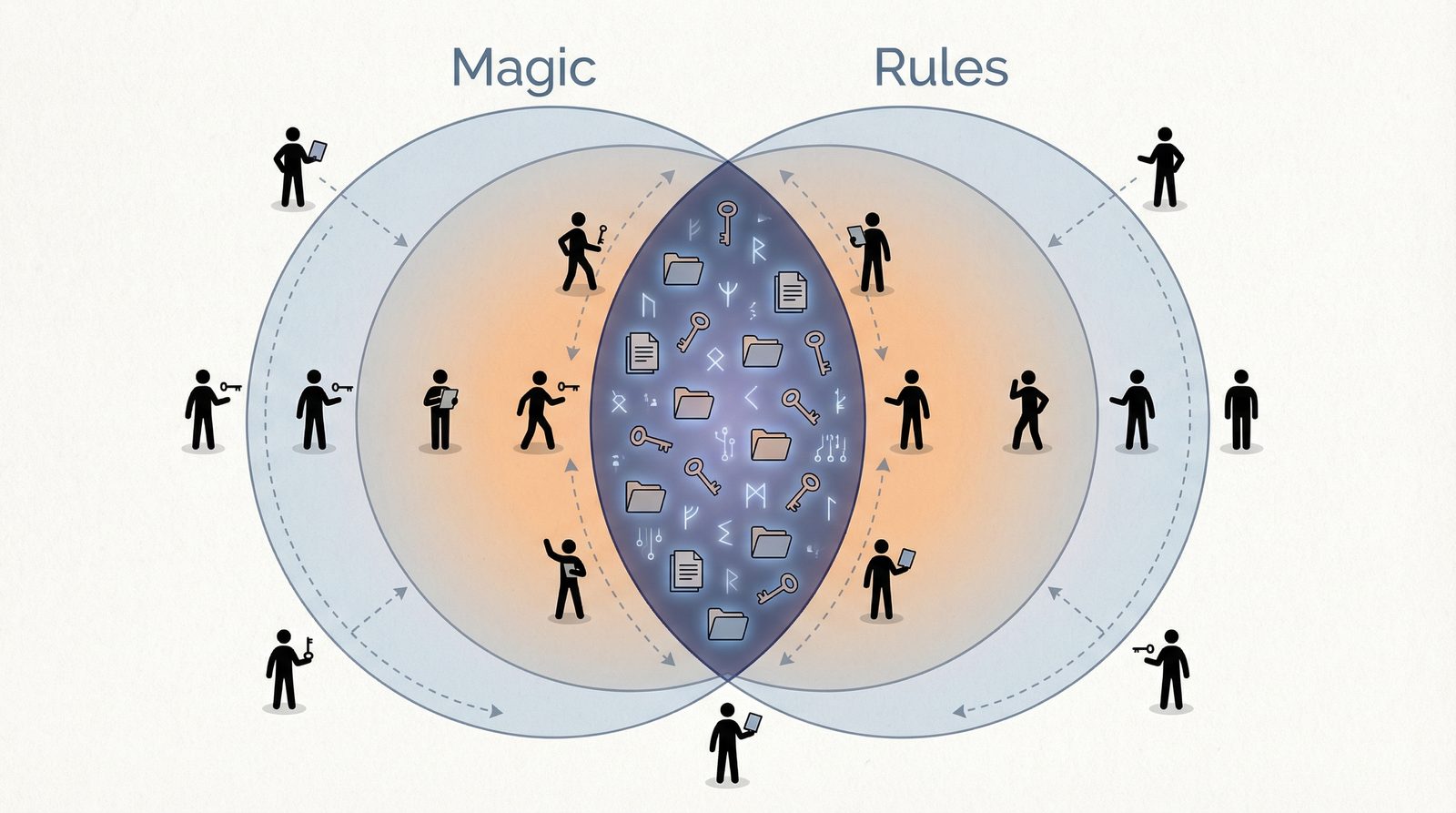
    Symbolic illustration inspired by 'Magical Bureaucracy'

    VARIATIONS & RELATED MOTIFS

    Magical Bureaucracy can take many forms. In some stories, it is a full-blown government apparatus where every spell is a matter of state. In others, it looks more like a professional guild or licensing board where credentials and enforcement define who can practice. There are also corporate versions where magic is controlled by contracts, patents, and policy compliance rather than bloodlines or prophecy.

    One common variation emphasizes enforcement: inspectors, disciplinary boards, and punishment systems that make bureaucracy feel like a second kind of magic. Another emphasizes the archive: record-keepers and administrators who control access to dangerous knowledge simply by controlling what is documented and who can read it.

    Even stories built around rebellion can run through this lens, when the real revolution is not only defeating a villain, but dismantling the procedural system that makes the villain’s power “legal.”

    Magic remains real, but access is controlled. The spell matters, but the stamp decides.

  • Awakening Through Physical Injury

    Awakening Through Physical Injury

    DEFINITION & CORE IDEA

    Awakening Through Physical Injury is a motif where a character’s body breaks before their worldview does. A fall, crash, illness, or sudden accident rips them out of normal momentum. In the forced stillness that follows, they start to question who they are, what matters, and what they have been avoiding. The pain is real and the rehab is real, but the story is less about the wound itself than about what the wound exposes.

    Writers use this motif to make inner change non-negotiable. Instead of a vague decision to “do better,” the character hits a physical limit that cannot be argued with. The injury becomes a hard boundary: the old life is no longer fully available. That constraint forces a re-evaluation of identity, purpose, and the stories the character used to justify their pace.

    In Way Of The Peaceful Warrior, Dan Millman uses injury as a catalyst for a deeper kind of training. Recovery becomes more than repair. It becomes confrontation: with ego, with impatience, with the need to be exceptional, and with the fear of being ordinary. The body is not just a problem to solve. It becomes the teacher that strips away illusions the character could previously outrun.

    This motif sits at the intersection of the physical and the spiritual. Muscles, bones, and nerves become the language through which a character confronts fear, regret, or emptiness. The core idea is simple: when your body can no longer carry the life you built on autopilot, you are forced to build a different kind of life from the inside out.


    HOW IT WORKS IN STORIES

    Awakening Through Physical Injury usually begins with a disruption that cannot be re-framed as “just a bad day.” A car accident, a fall, a collapse during training, or a medical crisis snaps the character out of routine. In stories connected to identity and performance, the injury does double damage: it interrupts the body and also interrupts the self-image built on capability.

    The middle of the story slows down, because recovery slows everything. Hospital rooms, physical therapy sessions, sleepless nights, and repetitive home days create enforced attention. The character cycles through anger, grief, boredom, and denial before the deeper work begins. Supporting figures may appear as stabilizers — a nurse, coach, friend, or mentor — but the pressure comes from the same place: the character cannot distract themselves with their old velocity.

    Writers often use rehab as a mirror. Each exercise, setback, and small victory corresponds to an internal struggle. Learning to walk again, accepting new limits, or rebuilding strength becomes a visible proxy for rebuilding identity. The character may discover practices that were impossible before injury: patience, presence, humility, and a more honest relationship with need.

    By the final act, the story forces a choice about identity attrition. The character can cling to the past, trying to force their old life back into place, or they can accept that the injury has changed the terms. Sometimes they return to their sport or work with a new relationship to effort. Sometimes they leave it behind. Either way, resolution is less about “fixing” the body and more about integrating what the injury made impossible to ignore.


    Editorial illustration inspired by 'Awakening Through Physical Injury'

    EMOTIONAL EFFECT ON THE READER

    Stories built around Awakening Through Physical Injury often feel intensely vulnerable. Pain, dependence, and fear are hard to romanticize, which makes the emotional stakes immediate. Even if a reader has never had a serious injury, the basic experience lands: the terror of losing control over the one vehicle you live inside.

    The reading experience usually carries a mix of discomfort and hope. Early sections can feel claustrophobic as the character fights the new reality and resents their own limits. As the story shifts from resistance to attention, that tension loosens into a steadier feeling: growth is possible, but only on terms the character did not choose.

    For readers who have lived through illness, disability, burnout, or forced pause, the motif can feel deeply validating. It reframes stoppage as a turning point rather than a personal failure. In a narrative like Way Of The Peaceful Warrior, the emotional payoff comes when the character’s value finally detaches from performance. The injury becomes a strange kind of clarity: the reader closes the story with sharper awareness of limits and, often, a softer attitude toward them.


    Symbolic illustration inspired by 'Awakening Through Physical Injury'

    VARIATIONS & RELATED MOTIFS

    Awakening Through Physical Injury can take many forms. In some stories, the injury is dramatic and public, such as a catastrophic sports accident. In others, it is quiet and private, unfolding as illness, chronic pain, or a slow breakdown that finally forces the character to stop. The scale matters less than the effect: the character is pushed into confrontation with themselves.

    One common variation is explicitly connected to discipline. When the protagonist is an athlete or high performer, the injury destroys not only mobility but identity. That overlap is why this motif pairs naturally with Athletic Discipline As Spiritual Practice, where training becomes a path to awareness only after the old “win at any cost” logic fails.

    Another variation frames the awakening as a broader reorientation rather than a single insight. The character does not become “enlightened.” They become more honest about what they were using movement, work, or achievement to avoid. This is where the motif connects to Spiritual Awakening and Inner Journey, because the real outcome is a different relationship to self, time, and control.

    Across these variations, the most resonant stories avoid treating injury as moral punishment or a convenient plot device. They treat it as a real constraint with real grief attached, and they let the awakening emerge from what the character is forced to learn when control is no longer available.

  • Athletic Discipline As Spiritual Practice

    Athletic Discipline As Spiritual Practice

    DEFINITION & CORE IDEA

    Athletic Discipline As Spiritual Practice is a motif where physical training becomes a method of inner change. A character may begin by chasing medals, approval, or bodily perfection, but the story steadily redirects the goal away from external victory. Repetition and pain function as meditative practice rather than punishment, reshaping attention, ego, and self-understanding through the body.

    Writers use this motif to argue that insight does not require a monastery. It can emerge at dawn, under fluorescent lights, through breath control, posture, balance, and endurance. The body becomes a closed system the character can actually work with. By mastering effort inside that finite space, the character develops a template for meeting uncertainty outside it.

    Dan Millman’s Way Of The Peaceful Warrior stands near the center of this motif because the mentor figure reframes training as awareness rather than achievement. Drills are not abandoned, but their meaning changes. What matters is not the score, but what collapses and what remains when the character can no longer hide behind performance.


    HOW IT WORKS IN STORIES

    Stories built on this motif often begin with a narrow definition of progress. The character believes effort produces results in a straight line. Training sequences follow familiar sports beats because the worldview is still mechanical: more work equals more worth.

    The pivot arrives when the body stops cooperating with the ego. Injury, exhaustion, or humiliation exposes the limits of willpower. A mentor, breakdown, or enforced pause introduces a consequence-driven question: who are you when success is unavailable, and what social or internal hierarchy collapses when that identity fails?

    Narrative tension is resolved through physical sensation rather than dialogue. Training is shown in close detail: breath, soreness, boredom, micro-adjustments, the mental noise that surfaces once distraction is stripped away. When the character tries to dominate the process, they become brittle. When they commit to the process without bargaining, the first shift is practical: staying present inside discomfort without turning it into self-punishment.

    By the middle of the story, the competition may still exist, but it no longer functions as the climax. The decisive moment is a choice: leaving a destructive coach, accepting limits without collapse, or returning to training after crisis with a different internal metric. External outcomes matter less than whether the character can remain steady under pressure.

    By the end, the discipline generalizes. The character faces grief, conflict, or uncertainty the way they face a long session: one breath, one repetition, one return to form. In some stories this logic is explicit through martial traditions that frame training as “the way.” In others it remains secular. Either way, training becomes a usable philosophy rather than a machine for validation.


    Editorial illustration inspired by 'Athletic Discipline As Spiritual Practice'

    EMOTIONAL EFFECT ON THE READER

    This motif often leaves readers both energized and calm. There is satisfaction in routine, effort, and incremental mastery, paired with a quieter pleasure: watching mental noise recede as attention narrows to the present task.

    Readers who have trained seriously tend to feel recognized. The motif validates the private hours that never appear on highlight reels. It frames repetition and boredom as meaningful labor, not wasted time, especially when insight arrives through failure rather than applause.

    For other readers, the motif functions as invitation. It suggests meaning does not require ideal conditions. One can begin with breath, posture, and effort. That promise is reassuring precisely because it is ordinary and sustainable.

    There is also a melancholy edge. After the event ends and the crowd disperses, the character still has to live inside their body and choices. The story often closes in that integration space, where discipline must survive everyday life without the scaffolding of competition.


    Symbolic illustration inspired by 'Athletic Discipline As Spiritual Practice'

    VARIATIONS & RELATED MOTIFS

    This motif appears in several stable variations. One emphasizes mentorship: a coach uses paradoxes, chores, or repetitive drills to dismantle status-hunger and redirect attention. Another emphasizes solitude, following athletes who train alone or recover in isolation, where boredom and fear become the primary teachers.

    The motif overlaps naturally with Awakening Through Physical Injury, where pain or limitation forces a reassessment of purpose. It also aligns with Spiritual Awakening and Inner Journey, because insight is earned through repetition rather than revelation.

  • Synchronicity And Meaningful Coincidence

    Synchronicity And Meaningful Coincidence

    DEFINITION & CORE IDEA

    Synchronicity And Meaningful Coincidence is the motif where events align with a precision that feels narratively excessive if everything is truly random. A stranger says the exact phrase the protagonist has been circling internally. A missed train leads to the only meeting that matters. The same symbol appears across unrelated places and moments. The story does not need to prove the supernatural; what matters is that the character experiences these alignments as communication rather than noise.

    In stories built around this motif, coincidence becomes information. The protagonist begins to treat timing, repetition, and interruption as meaningful data rather than background chaos. The explanation may vary — fate, God, a hidden order, the unconscious mind — but structurally the coincidences function the same way: they influence choice. Once the character starts acting as if meaning is real, the story has crossed its threshold.

    This logic is explicit in The Celestine Prophecy, where sequential encounters operate as instructions disguised as chance. In The Tenth Insight, the same mechanism is expanded into a system, training characters to read coincidence as guidance rather than accident. The Alchemist reframes this dynamic more quietly: dreams, omens, and chance meetings grant permission to abandon a stable life in favor of a meaningful one. In Way Of The Peaceful Warrior, coincidence is less mystical and more instructional, nudging attention back to discipline, presence, and embodied awareness.


    HOW IT WORKS IN STORIES

    Synchronicity usually enters a story quietly. The protagonist notices something small and easily dismissible: a repeated number, a perfectly timed interruption, an overheard sentence that lands too close to home. Early scenes preserve plausible deniability so the reader can remain skeptical without breaking immersion.

    The engine activates when coincidences begin to cluster. One coincidence is texture; several in close succession create pressure. These clusters tend to appear at decision points, moments when the protagonist is stuck between options or close to abandoning a path. In narratives like The Celestine Prophecy, each encounter functions as a breadcrumb that must be followed or consciously rejected. In The Alchemist, ignoring omens does not trigger punishment, but it stalls the story, draining momentum until attention realigns.

    Effective uses of this motif always impose cost. Following a “sign” risks embarrassment, loss of stability, or the appearance of irrationality. The character must accept the possibility of being wrong, foolish, or delusional. This risk is essential. Without it, synchronicity collapses into wish fulfillment. The choice to trust coincidence must feel dangerous enough to matter.

    Resolution typically arrives in one of two forms. In affirming narratives, the character learns to live inside a world where meaning does not need constant confirmation. In more ambiguous stories — as in I Origins — coincidences remain interpretable rather than proven, and the payoff is psychological. What changes is not the universe, but the character’s relationship to uncertainty.


    Editorial illustration inspired by 'Synchronicity And Meaningful Coincidence'

    EMOTIONAL EFFECT ON THE READER

    This motif is designed to feel intimate. The reader becomes a co-interpreter, scanning scenes for repetition, echo, and timing. When an early detail reappears in a charged moment, it produces a quiet jolt of recognition, as if the story is rewarding attention.

    At its most comforting, synchronicity offers relief from randomness. Detours feel purposeful. Delays feel protective. In books like The Alchemist, this reassurance is central to the reading experience, allowing setbacks to be reinterpreted as alignment rather than failure. The world feels readable, and the reader is invited to believe that attention itself has value.

    The same mechanics can also generate unease. Too many coincidences create the sense of being watched or guided too forcefully. In more psychological versions of the motif, the reader begins to question whether meaning is emerging organically or being imposed as a defense against chaos. That tension between enchantment and suspicion keeps the motif from becoming sentimental.

    When the motif works, the after-effect is practical. The reader finishes with heightened awareness of how easily meaning can arise once repetition and timing are framed as communication — and how much depends on where attention is placed.


    Symbolic illustration inspired by 'Synchronicity And Meaningful Coincidence'

    VARIATIONS & RELATED MOTIFS

    Synchronicity And Meaningful Coincidence appears in several recognizable variations. The spiritual guidance version treats coincidence as instruction, rewarding trust and punishing inattention. Romantic and literary versions soften the logic into serendipity, where repeated encounters transform chance into inevitability. Philosophical variants retain the pattern but refuse explanation, letting the reader decide whether meaning is discovered or constructed.

    A darker variation reframes synchronicity as a trap. Here, pattern recognition becomes exploitable, and “signs” function as lures rather than help. The story’s tension comes from uncertainty: is the universe speaking, is someone engineering the coincidences, or is the protagonist assembling meaning to avoid confronting randomness?

    This motif naturally overlaps with Spiritual Awakening, where heightened attention makes coincidence feel louder and more personal. It also pairs with Spiritual Pilgrimage and Inner Journey, where movement and reflection create the friction that makes “signs” feel necessary. When coincidence is framed as destiny language, it often converges with Personal Legend And Destiny.

  • Spiritual Awakening

    Spiritual Awakening

    DEFINITION & CORE IDEA

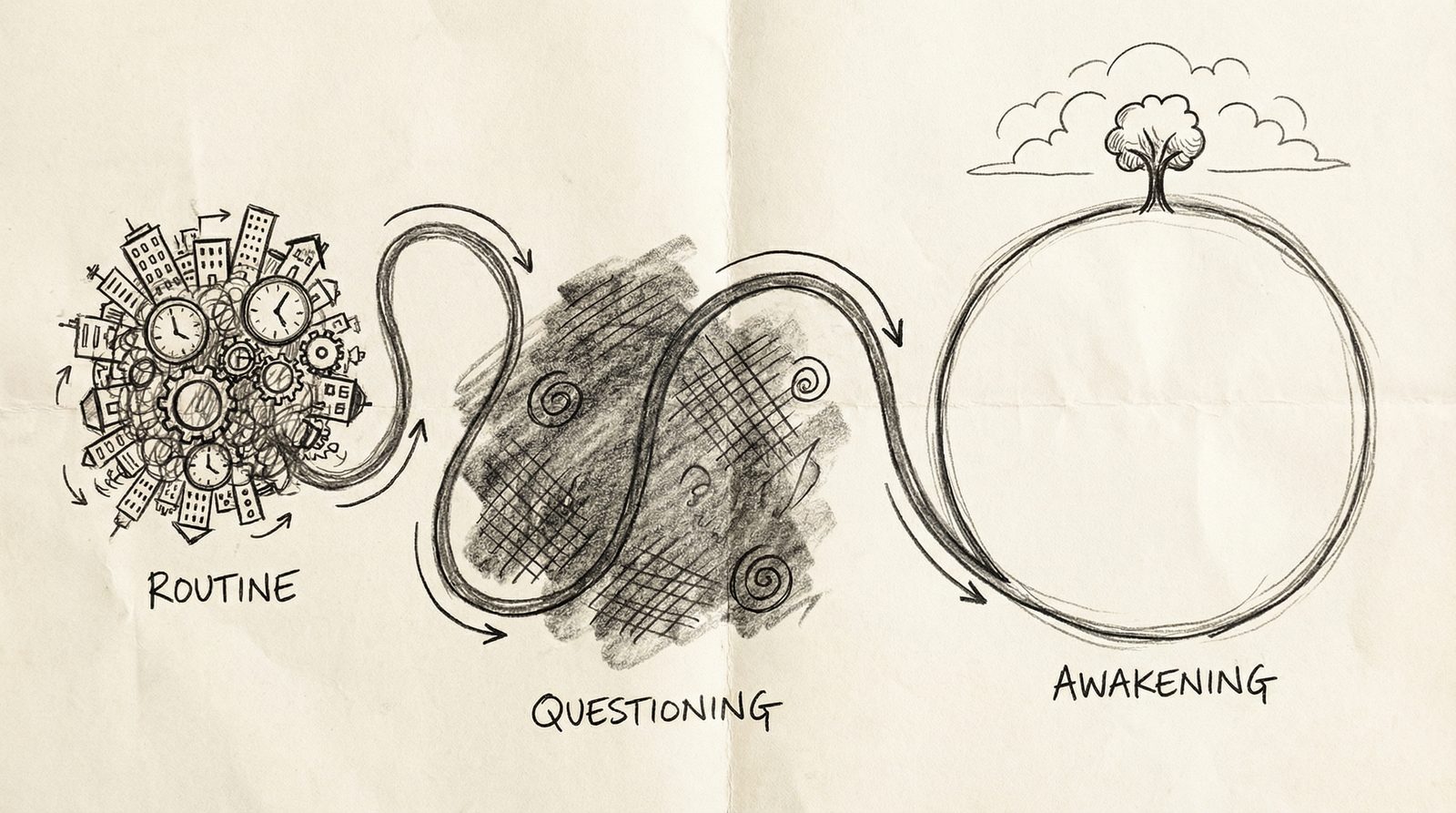
    Spiritual Awakening is the motif where a character’s interpretive frame breaks and re-forms. The person who could previously live on routine, status, or habit begins to perceive meaning, pattern, or selfhood differently. The story treats this shift as real change, not a cosmetic mood swing. What matters is not adopting a label or joining a religion, but the reorganization of attention, value, and identity.

    In awakening narratives, the protagonist often begins inside a life that “works” externally but fails internally. They may chase achievement, romance, or control and discover it does not answer the underlying question of purpose. The plot then follows the conversion process: a new vocabulary for reality appears, the character tests it, and their old identity starts to fail under the new pressure.

    Books such as The Celestine Prophecy, The Tenth Insight, The Alchemist, Way Of The Peaceful Warrior, and Siddhartha are classic examples. The “event” is internal: perception shifts, and that shift changes what the same world means.


    HOW IT WORKS IN STORIES

    Spiritual Awakening usually begins with an existential breach. The character feels restless, stuck, or out of place in a life that looks fine from the outside. A promotion feels hollow, a relationship stops fitting, or a loss cracks certainty. The important point is structural: the old worldview stops functioning as a complete explanation.

    Next, a threshold event provides a new interpretive system. This can be a guide figure, a text, a vision, or a sequence of “coincidences” that the character begins to treat as communication. In The Celestine Prophecy and The Tenth Insight, the engine is sequential insights delivered through encounters that mix guidance with risk. In The Alchemist, a dream and a meeting function as permission to leave the old life and treat omens as navigational data. In Way Of The Peaceful Warrior, a teacher figure reframes discipline and attention as a daily practice rather than an abstract belief.

    The middle phase is testing and attrition. The character tries new practices, interpretations, and choices, then pays the cost of inconsistency. Old identities fall away faster than new ones stabilize. A “dark night” phase is common: the character feels more lost than before because certainty has collapsed but insight is still incomplete.

    Resolution is usually a return to ordinary life with a changed relationship to it. Work, love, and struggle remain, but they are held inside a wider frame. The story closes when the character can sustain the new perception without needing constant signs or external validation.


    Editorial illustration inspired by 'Spiritual Awakening'

    EMOTIONAL EFFECT ON THE READER

    This motif is built to feel personal. The reader is invited to project their own restlessness onto the protagonist’s shift, using the character as a safe container for questions about meaning, purpose, and identity.

    It often produces a “synchronicity high” in the reading experience. The plot rewards attention by making small events feel linked: a conversation, a symbol, or a coincidence lands as guidance rather than noise. That can feel reassuring, because it implies the world is readable.

    The cost is loss. Awakening narratives usually require the character to abandon a comforting interpretation of their life. Relationships strain, identity becomes unstable, and certainty is traded for a framework that is truer but harder to live inside.

    When the motif works, the after-effect is practical rather than sentimental. The reader finishes with heightened awareness of attention itself: what they ignore, what they treat as “just life,” and what patterns they might be using to avoid change.


    Symbolic illustration inspired by 'Spiritual Awakening'

    VARIATIONS & RELATED MOTIFS

    Spiritual Awakening appears in several common variations. The solitary seeker version follows a character cycling through teachers and lifestyles until a stable insight forms, as in Siddhartha. The reluctant mystic version forces awakening through crisis or loss, where the character resists the new frame until resistance becomes impossible. Another variation frames awakening as part of a larger system of human evolution, expanding the personal shift into a collective one, as in the Redfield sequence.

    The motif also has practical variants, where the new awareness is tested in daily routine rather than on mountaintops. Here, the story cares less about visions and more about whether the character can keep behaving differently when the world remains the same.

    This motif commonly overlaps with Synchronicity And Meaningful Coincidence, because meaning is delivered through “pattern recognition” in events. It also pairs naturally with Spiritual Pilgrimage and Inner Journey, where travel or reflection supplies the friction that forces change.

  • Inner Journey

    Inner Journey

    DEFINITION & CORE IDEA

    The Inner Journey motif is about a character whose most important travel happens inside their own mind and heart. The outside world can be busy, dangerous, or beautiful, but the core story is the shift in how this person understands themselves, other people, or reality itself. In Siddhartha, the river, the city, and the forest matter, but the real movement is the protagonist’s changing sense of identity and meaning.

    Writers use the Inner Journey to examine belief, self-concept, and value. The plot might involve travel, romance, work, or crisis, but events function as mirrors: the character encounters situations that reveal what they avoid, what they rationalize, and what they cannot keep pretending.

    This motif often includes reflection, doubt, and contradiction. A character may be pulled between comfort and risk, duty and desire, faith and skepticism. Works such as Zen And The Art Of Motorcycle Maintenance and Demian use daily life, travel, and relationships as the surface action while the real stakes remain internal: whether the character can become honest with themselves.


    HOW IT WORKS IN STORIES

    The Inner Journey usually starts with a fracture of self. The character feels that something is off: success feels empty, a relationship feels misaligned, grief breaks old habits, or a change exposes how little their previous identity can hold. This discomfort becomes the trigger for looking inward.

    Writers often pair the Inner Journey with an outer journey so the reader has concrete scenes to track. In Zen And The Art Of Motorcycle Maintenance, the road trip gives shape to a philosophical search. In Siddhartha, distinct stages of life function as stages of internal change. The external plot provides milestones, but the turning points happen in private moments where the character’s interpretation of the world shifts.

    Structurally, the Inner Journey often moves through cycles of hope, confusion, and partial clarity. The character tries on beliefs or identities, then discovers their limits. They may swing between extremes, such as total freedom and heavy responsibility, intense longing and cool detachment, spiritual devotion and cynical withdrawal. The story tracks how those opposites are integrated into something more stable.

    Small details carry a lot of weight. A recurring object, repeated phrase, or familiar setting can show internal movement without a dramatic plot beat. The same kitchen table or street appears early and late, but it reads differently because the person looking at it has changed. The ending can be quiet, with no grand victory, yet the inner landscape is measurably transformed.


    Editorial illustration inspired by 'Inner Journey'

    EMOTIONAL EFFECT ON THE READER

    Inner Journey stories create recognition rather than suspense. The reader is invited into the space where the character stops lying to themselves. That can feel intimate and uncomfortable, because the questions the character cannot avoid are often questions the reader recognizes.

    The mood is often reflective. Even when events are dramatic, the narrative keeps returning to interpretation: what does this mean, and what does it reveal about who I am? The emotional intensity comes less from plot twists than from the slow accumulation of self-knowledge.

    These stories also create a specific kind of tension: the character may refuse closure. Instead of giving a clean answer, the narrative shows the cost of uncertainty and the cost of certainty, and asks the reader to sit with the same unresolved pressure.

    When the motif works, the after-effect is practical. The reader leaves with a sharper awareness of how a person’s internal frame can change what the same world means. The story does not just entertain; it reorients.


    Symbolic illustration inspired by 'Inner Journey'

    VARIATIONS & RELATED MOTIFS

    The Inner Journey appears in multiple genres. In coming-of-age stories, it is a search for identity and separation from inherited scripts. In spiritual narratives, the focus is on insight, faith, or a direct experience of the sacred. In midlife and late-life stories, the inner journey becomes reevaluation: regret, responsibility, and the attempt to make peace with the person one has been.

    Some versions are explicitly philosophical, using dialogue, essays, or long conversations to argue ideas. Others stay close to daily routine, showing inner change through small acts, habits, and repetitions. The pace can be slow and reflective, or tense, especially when the character’s developing self clashes with obligations and old roles.

    This motif often overlaps with Spiritual Awakening and Spiritual Pilgrimage, where external movement supplies the friction needed for internal change. It also pairs naturally with Intimacy as Healing, where a relationship becomes the mirror that forces honesty and makes transformation possible.