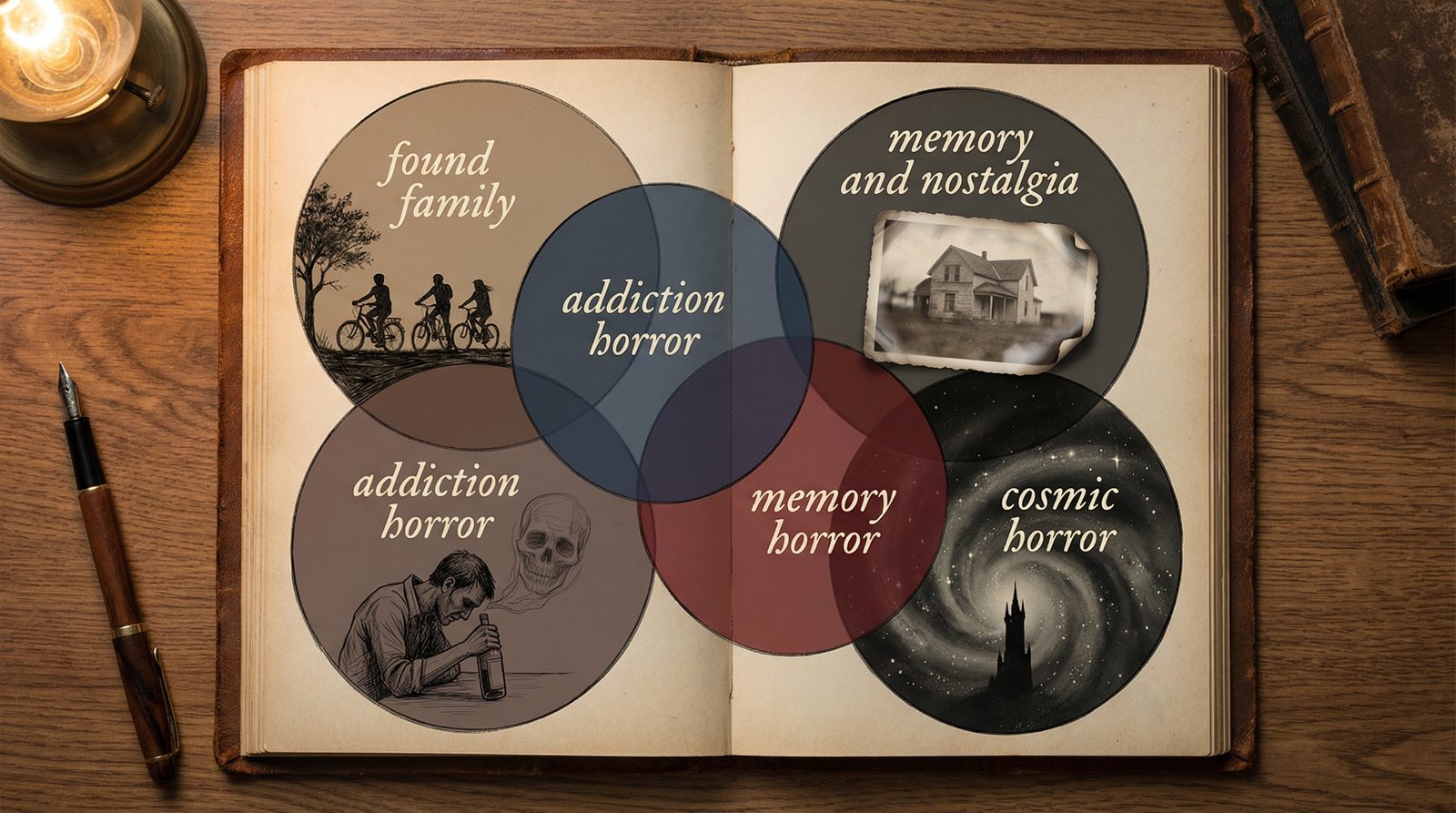
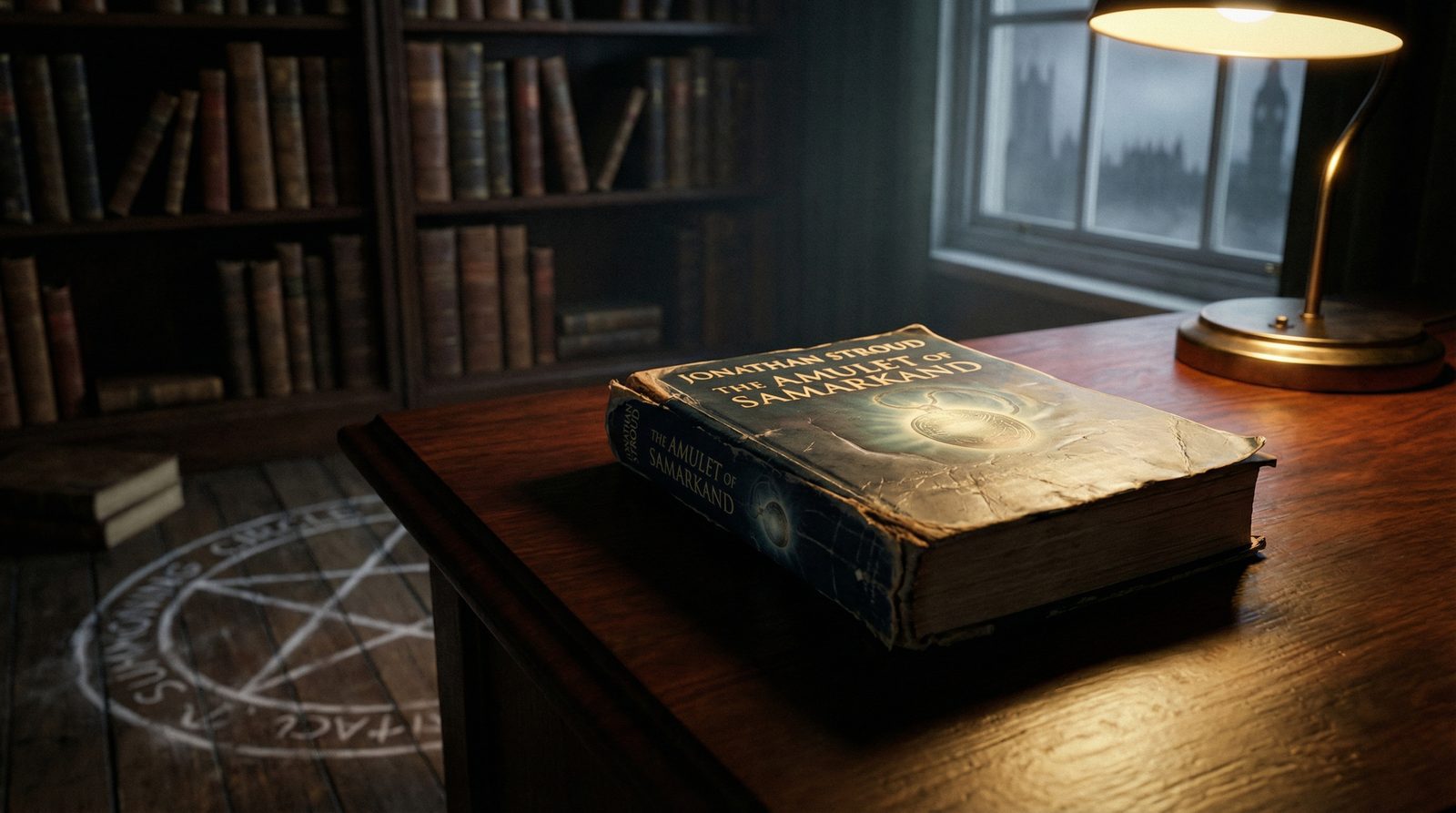
Genre: Fantasy

  • Five Children And It (1902)

    Five Children And It (1902)

    INTRODUCTION

    Five Children and It (1902) by E. Nesbit
    Children’s fantasy · United Kingdom


    Five Children and It begins on a hot, dusty afternoon and never quite loses that grit-in-the-teeth realism. Four siblings and their baby brother, sent to the Kent countryside while their parents are occupied elsewhere, discover a Psammead, a sand-fairy who grants wishes that last only until sunset. The premise sounds sweet and simple. Nesbit’s imagination runs on irony and consequence.

    Every wish curdles into trouble, and the children’s giddy hope keeps colliding with embarrassment, fear, and guilt. The book is funny, but it is not gentle. It remembers childhood from just far enough away to see selfishness and bravery in the same gesture, and to show how quickly desire becomes a mess once it has to live in the real world of servants, shopkeepers, neighbors, and rules.

    PLOT & THEMES

    The structure is episodic. Each chapter revolves around a single wish and its sunset collapse. Cyril, Anthea, Robert, Jane, and their baby brother (nicknamed “the Lamb”) are staying near chalk and gravel pits when they uncover the Psammead buried in sand. It offers one wish per day, with a strict condition: the wish ends at sunset, no matter how inconvenient the timing.

    The children wish for beauty, money, wings, admiration, a besieged castle, and even for their baby brother to be grown up. Every time, the wish arrives like a gift and behaves like a trap. When they wish for gold, they discover that sudden wealth without context attracts suspicion rather than comfort. When they wish to be beautiful, the servants do not recognize them and lock them out. When they wish for wings, they gain spectacle but lose control. Each episode is a small lesson in how literal magic exposes sloppy thinking.

    What makes the book sharper than many later children’s fantasies is its refusal to turn magic into destiny. Nesbit’s enchantment is a stress test. It reveals the children’s appetites, their panic, their capacity for courage, and their instinct to blame one another when things go wrong. By the end, exhausted by accidents and near-disasters, they make the most mature wish in the book: that none of the wishes had happened at all.

    The Psammead grants that erasure. The summer snaps back into place, leaving only a faint residue and a sense of moral growth. The ending does not insist that the adventure “really” happened in a way adults can verify. It insists only that the children have changed.

    PROSE & NARRATIVE STRUCTURE

    Nesbit’s most distinctive technique is her intrusive narrator: a wry adult voice that addresses the reader directly, teases the children’s follies, and occasionally apologizes for dull bits. The voice is affectionate but unsparing, creating a conspiratorial intimacy. We are invited to remember our own childhood blunders while watching these particular ones unfold.

    The prose is deceptively simple and firmly domestic. Servants’ tempers, locked cupboards, awkward meals, and small village routines anchor the stranger episodes, whether the children are defending a magically produced castle or being chased because of a badly worded wish. Sunsets arrive with both relief and dread. The daily reset never wipes away consequences completely; it only changes the form they take.

    Crucially, Nesbit never lets the magic float free of consequence. The rules are strict enough to create real risk, but elastic enough to produce farce. The rhythm of wish, escalation, and collapse becomes almost musical, and by the later chapters that repetition starts to feel heavy, as if the book itself is nudging the children toward a more sober understanding of what they are asking for.

    Conceptual editorial illustration inspired by 'Five Children and It'

    CHARACTERS & INTERIORITY

    The children fall into recognizable patterns, but Nesbit gives them contradictions that feel real. Cyril is brave until he is frightened. Anthea is responsible until she is tempted. Robert blusters, then surprises himself with courage. Jane is dreamy in ways that backfire. Even the Lamb, mostly a catalyst, becomes unsettling in the chapter where a wish ages him into a detached, priggish young man.

    Nesbit does not dwell in long interior monologues. Instead she gives quick flashes of shame, pride, and panic as consequences land. The Psammead is not a cuddly companion. It is weary, cynical, and occasionally cruel, like disappointed experience watching childish ego crash into reality. Adults, meanwhile, remain half-blind to the magic. That mismatch creates a quiet loneliness inside the comedy: the children are learning things their guardians will never quite understand.

    LEGACY & RECEPTION

    When it appeared, Five Children and It helped reshape children’s fantasy by moving magic out of distant kingdoms and into ordinary England. It is a foundational example of “everyday enchantment” where the supernatural does not solve problems but exposes them. Its influence runs forward into later wish-stories and rule-bound magical premises, including modern descendants that keep the same logic: wishes are never neutral.

    Modern readers may notice period-bound assumptions about class and domestic life, but the structural daring and emotional honesty still stand out. Compared with screen adaptations that sentimentalize the Psammead, the novel’s ambiguous farewell feels braver. It leaves no souvenirs, only responsibility.

    IS IT WORTH READING?

    If you come expecting a cozy nursery classic, this book may surprise you. The language is of its time but still brisk, and the humor lands more often than not. Beneath the comic disasters lies a sharp curiosity about what children truly want, and how quickly those wants sour when granted too literally.

    The episodic structure makes it easy to read in pieces, yet the cumulative effect is quietly haunting. For readers interested in the roots of modern fantasy, or in stories where magic exposes rather than fixes human problems, it repays attention.

    Illustration inspired by a core idea from 'Five Children and It'

    TRIVIA & AUTHOR FACTS

    E. Nesbit was a founding member of the Fabian Society, and her politics quietly inform the book’s fascination with money, class, and fairness. The story first appeared in The Strand Magazine before being published as a book. :contentReference[oaicite:1]{index=1}

    The Psammead returns in later books, including The Phoenix and the Carpet and The Story of the Amulet, but here it is at its most mysterious and least domesticated. :contentReference[oaicite:2]{index=2}

    SIMILAR BOOKS

    If you enjoy everyday settings colliding with rule-bound magic, you might try Edward Eager’s Half Magic for a later wish-premise descendant, or Diana Wynne Jones for a more modern version of magical consequences arriving through language and loopholes. Nesbit’s own sequels also continue the Psammead world in a larger, stranger direction.

    DISCOVERABILITY & LINKS

  • The Amulet Of Samarkand (2003)

    The Amulet Of Samarkand (2003)

    INTRODUCTION

    The Amulet of Samarkand (2003) by Jonathan Stroud
    Fantasy · United Kingdom


    The Amulet of Samarkand is a children’s fantasy that refuses to stay safely childish. Set in an alternate London ruled by magicians, it pairs the dry, battered wit of a five-thousand-year-old djinni with the raw ambition of a boy who wants to matter in a system designed to grind him down.

    What begins as a petty act of revenge quickly expands into a political nightmare. Stroud builds a world where magic is bureaucratic, exploitative, and casually cruel. Incense and coal smoke hang in the air, but they do little to disguise the rot beneath the surface. The most honest voice in the book belongs to a spirit who insists he is the villain, and may be the only one telling the truth.

    PLOT & THEMES

    The story unfolds like a heist gone wrong. Nathaniel, a twelve-year-old apprentice in the Ministry of Internal Affairs, summons the djinni Bartimaeus to steal the Amulet of Samarkand from the arrogant magician Simon Lovelace. It is a classic supernatural bargain, but dangerously inverted: the summoner is a child, and he barely understands the contract he has entered.

    The theft draws them into a conspiracy aimed at overthrowing the government during a ceremonial gathering at Heddleham Hall. The amulet is both weapon and leverage, and its power escalates far beyond Nathaniel’s control. Each success deepens his entanglement with the very system he briefly threatens.

    Running beneath the action is the book’s central moral engine: slavery. Spirits are bound by their true names and summoned at great cost to themselves, while human society mirrors the same hierarchy. Commoners are kept ignorant and disposable. Magicians are themselves products of emotional mutilation, trained from childhood to suppress empathy in favor of control.

    The ending is deliberately bitter. Nathaniel uses the amulet to defeat Lovelace and stop a massacre, but his reward is assimilation. He takes a new name, John Mandrake, accepts promotion, and steps deeper into the machine he now understands. There is no triumph, only survival through compromise.

    PROSE & NARRATIVE STRUCTURE

    The novel’s defining technique is its dual narration. Nathaniel’s chapters are written in close third person, tight and defensive, while Bartimaeus narrates in first person, armed with sarcasm, historical digressions, and famously intrusive footnotes.

    This split perspective creates a form of narrative unreliability. Official history, state propaganda, and magician lore are constantly undercut by Bartimaeus’s asides about past empires, botched summonings, and conveniently forgotten atrocities. The footnotes quietly dismantle the authority of the main narrative without ever halting the plot.

    Stroud’s prose is clean and procedural. Magic is described as work: pentacles, summoning circles, planes of existence, and defensive wards. This emphasis on process grounds the fantasy in risk and labor rather than wonder, reinforcing the sense that power here is something managed, rationed, and abused.
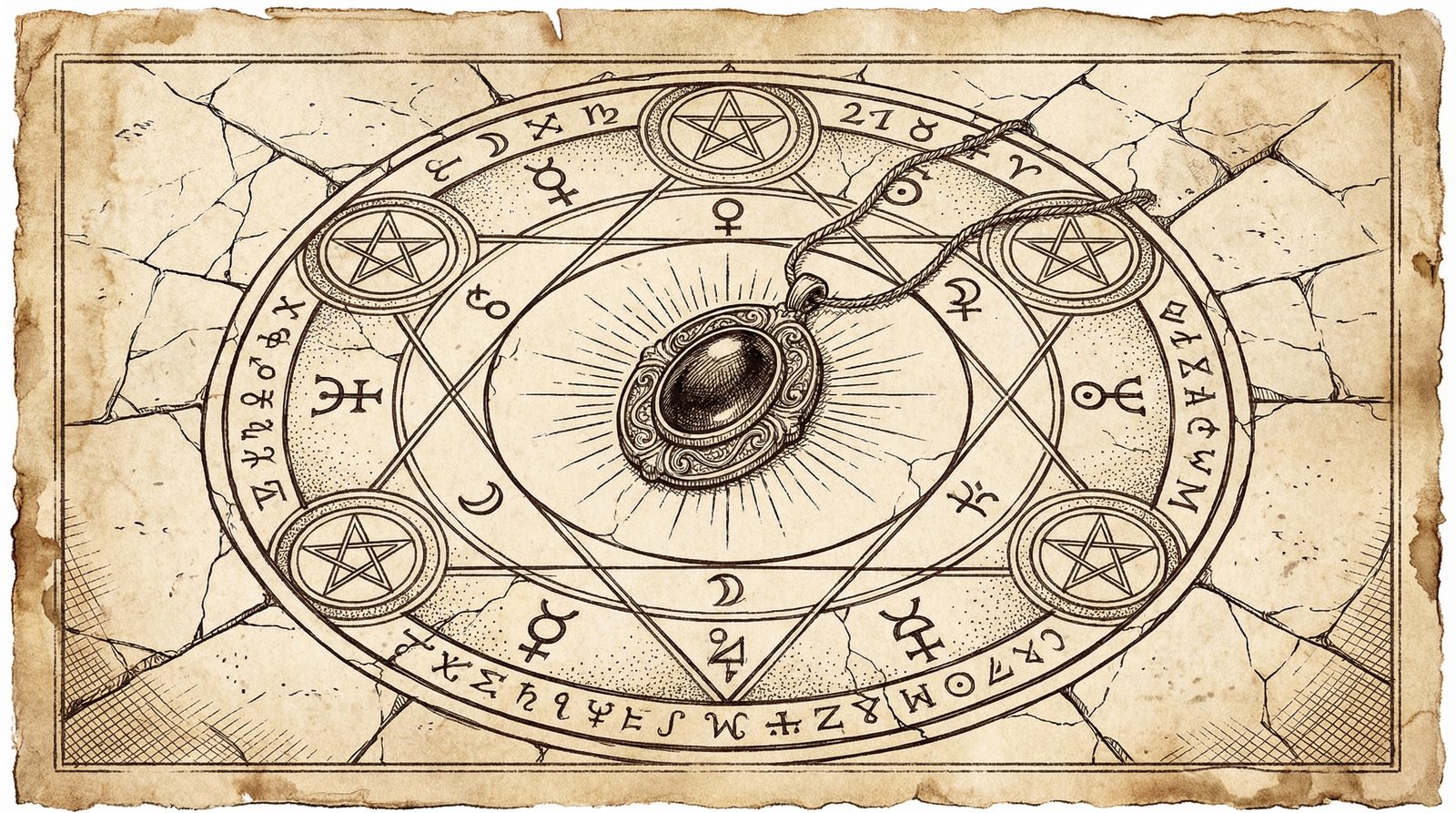
    Conceptual editorial illustration inspired by 'The Amulet of Samarkand'

    CHARACTERS & INTERIORITY

    Nathaniel begins as an ambitious prodigy desperate to escape humiliation. His interior life is defined by resentment, fear, and a relentless need for recognition. When his mentor’s wife, Mrs. Underwood, is killed in a magical attack, his grief is rapidly converted into further ambition. He knows this is wrong, and continues anyway.

    Bartimaeus masks trauma with humor. His boasts about serving Solomon or building ancient cities are a shield against millennia of forced labor. Moments of genuine concern, particularly when Nathaniel is in danger, break through rarely and therefore land hard.

    Secondary characters are sharply etched. Mr. Underwood embodies bureaucratic cruelty born of mediocrity. Kitty, though still peripheral in this volume, stands out for her refusal to accept the system’s logic at all, hinting at a resistance grounded not in magic but in ethics.

    LEGACY & RECEPTION

    Published at the height of the early-2000s fantasy boom, The Amulet of Samarkand distinguished itself by refusing easy heroics. While other series offered hidden schools and secret destinies, Stroud presented a state where magic runs the government and corrupts everyone it touches.

    The book has endured because of its unsentimental ending. Nathaniel survives, London survives, but the moral cost is not erased. That unresolved tension, between power gained and integrity lost, gives the novel its lasting bite and sets the tone for the rest of the trilogy.

    IS IT WORTH READING?

    This is not a comfort read. The humor is sharp, but the world is cruel, and the victories are compromised. If you are looking for fantasy that treats younger readers with seriousness and respects their capacity for moral discomfort, it is absolutely worth reading.

    The book is fast, funny, and deeply uneasy. It understands how systems absorb rebellion, how children are shaped into instruments, and how bargains made in anger rarely end cleanly.
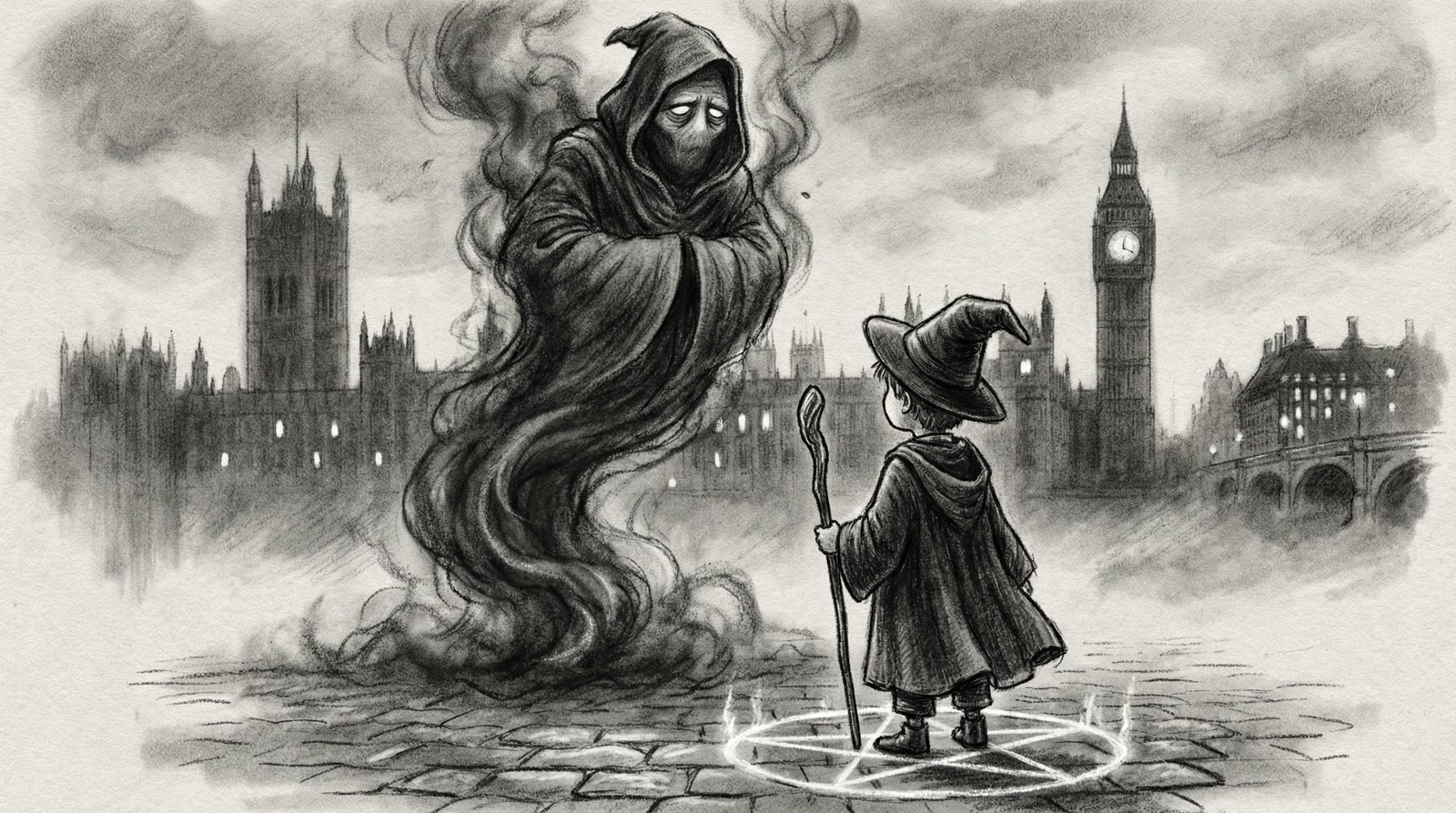
    Illustration inspired by a core idea from 'The Amulet of Samarkand'

    TRIVIA & AUTHOR FACTS

    Jonathan Stroud worked as a children’s editor before writing the Bartimaeus Sequence, and his editorial background shows in the book’s structural confidence. The novel launched a trilogy later expanded by a prequel.

    Bartimaeus’s footnotes were present from early drafts and quickly became the spine of the series. They allow Stroud to critique official history and power structures without halting the narrative, a technique that would influence later fantasy written for younger audiences.

    SIMILAR BOOKS

    Readers drawn to morally tangled magic may also appreciate His Dark Materials for its political theology, or The Magicians for a later, more cynical exploration of power and escapism. For a younger-skewing comparison, Artemis Fowl offers a lighter but still rule-bound take on criminal genius and supernatural bureaucracy.

    DISCOVERABILITY & LINKS

    DISCOVERABILITY & LINKS

  • Body Swap Comedy Between Generations

    Body Swap Comedy Between Generations

    DEFINITION & CORE IDEA

    Body Swap Comedy Between Generations is a story pattern in which people from different age groups—most often a parent and child, or a teenager and an older relative—wake up in each other’s bodies. Overnight, the teenager is trapped in an adult body with adult authority and responsibility, while the adult finds themselves forced to navigate school, peer hierarchies, and adolescent vulnerability from the inside.

    The core idea is simple but potent: if you could literally live inside another generation’s body, what would you finally understand about them? The swap is usually temporary and surrounded by comic mishaps, but it functions as a shortcut to empathy. Instead of arguing across a dinner table, characters are thrown directly into each other’s daily grind, expectations, and social pressures.

    One of the earliest and most influential examples of this motif is Vice Versa (1882) by Thomas Anstey Guthrie. In that novel, a Victorian father and son exchange bodies, using the swap to expose the cruelty of school discipline, the blindness of parental authority, and the false assumptions each generation holds about the other.

    Later, more widely known works—such as Freaky Friday—would popularize the motif for modern audiences, but the emotional logic remains the same. The mechanism may be magical, scientific, or never fully explained at all, because the real focus is not how the swap happens, but what it reveals.


    HOW IT WORKS IN STORIES

    Stories built around Body Swap Comedy Between Generations usually begin with a sharp, familiar conflict. A teenager complains that their parent is controlling, out of touch, or unfair. The parent insists the teenager is lazy, dramatic, or ungrateful. A wish is made in anger, a strange object is activated, or a bizarre accident occurs, and the next morning they wake up in each other’s bodies.

    The middle of the story is driven by a series of comic trials. The adult in the teenager’s body must survive school routines, slang, exams, friendships, and social humiliation they no longer understand. They dress wrong, misread social cues, misuse technology, and underestimate how intense adolescent pressure can be. Meanwhile, the teenager in the adult body struggles with work meetings, financial obligations, parenting expectations, and relationship baggage they never knew existed.

    Everyday tasks become ordeals. A presentation turns into a panic attack. A math test becomes a public failure. A parent-teacher meeting or boardroom discussion exposes how little preparation either character had for the other’s world.

    Underneath the slapstick, insight slowly accumulates. The teenager sees how exhausted their parent is and how much invisible labor holds adult life together. The parent learns how fragile teen friendships are and how suffocating authority feels from the powerless side. In many versions, the story shifts from “look how ridiculous this is” to “look how much they have been missing about each other.”

    The swap usually ends once both characters have changed enough. Apologies are made, hard truths are spoken, or a selfless choice proves that empathy has been learned. The magic reverses itself, returning everyone to their own bodies. External circumstances may remain imperfect, but the emotional landscape has shifted from resentment toward recognition.


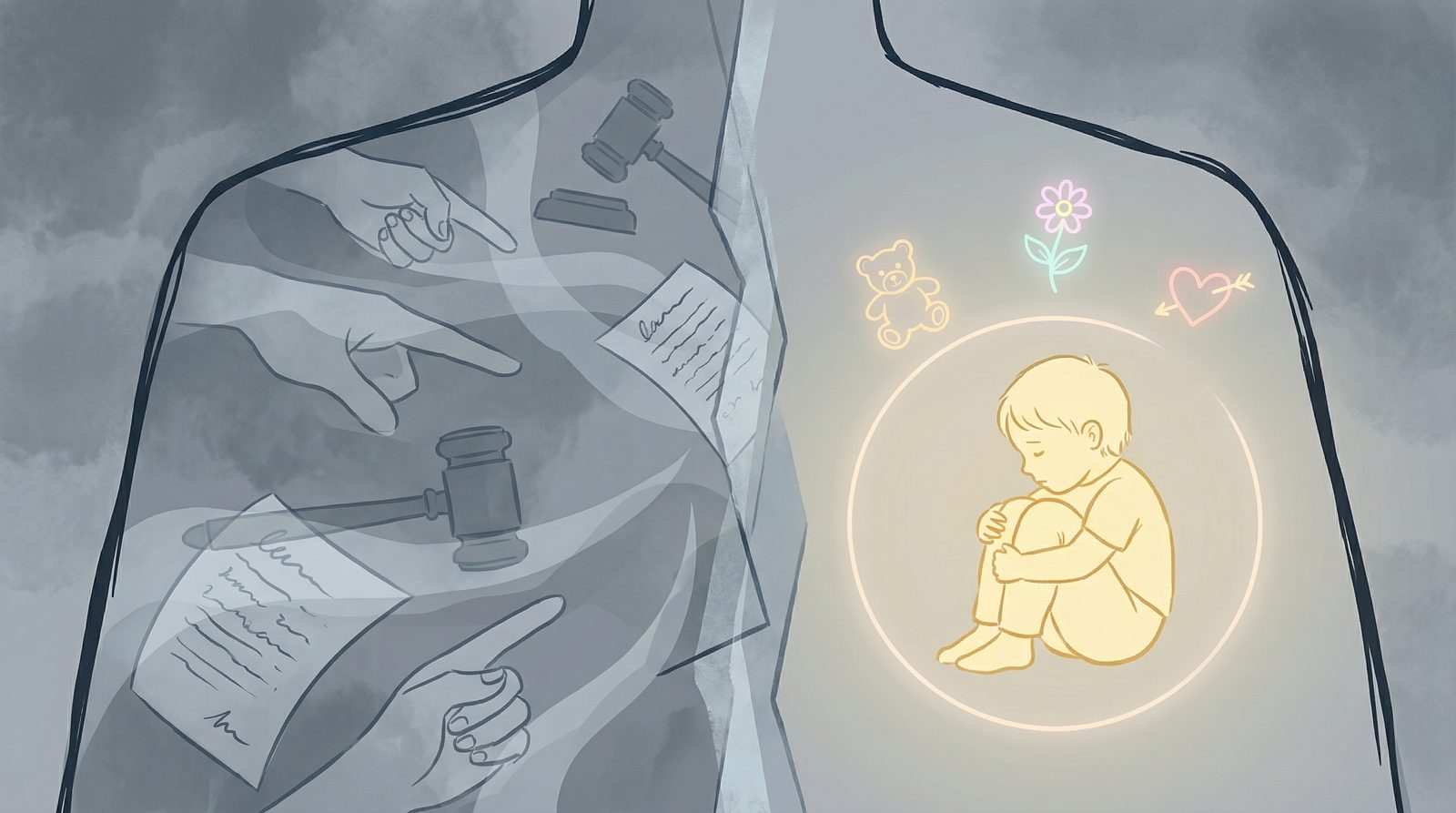
    Editorial illustration inspired by Body Swap Comedy Between Generations

    EMOTIONAL EFFECT ON THE READER

    Reading a Body Swap Comedy Between Generations often feels like getting to argue with your family and finally be heard, safely, through fiction. There is a great deal of secondhand embarrassment: watching a parent butcher teen slang or a teenager flounder through adult responsibility produces laughter that is uncomfortably close to recognition.

    For younger readers, these stories can be deeply validating. They force adult characters to feel the pressure, confusion, and social vulnerability of being young. For older readers, the same stories can sting in a different way, revealing how easily teen struggles are dismissed as trivial when viewed from the weight of adult obligation.

    The motif blends lightness with sincerity. You laugh at the absurdity of a grandparent stuck in a teenager’s body trying to pass an exam, but you also feel a quiet ache when they realize how lonely that teenager has been. The resolution often leaves readers with a hopeful sense that generational divides are bridgeable, even if real life never offers such a literal exchange.


    Symbolic illustration inspired by Body Swap Comedy Between Generations

    VARIATIONS & RELATED IDEAS

    Several variations recur within Body Swap Comedy Between Generations. One common pairing is the strict parent and rebellious teen, where the adult learns how stifling their rules feel and the teen learns how frightening it is to be responsible for someone else’s future. Another variation focuses on an overburdened parent and a self-absorbed teen, exposing hidden sacrifices and unspoken guilt.

    Some versions lean further into fantasy or speculative logic. Devices like the time cheques in Tourmalin’s Time Cheques by Thomas Anstey Guthrie complicate the exchange by allowing characters to glimpse not just another generation’s present, but also their past or future. Other stories keep the mechanism deliberately vague, treating the swap as a fairy-tale curse that lifts only once an emotional lesson is learned.

    Even when played broadly for laughs, this motif is rarely just a gag. It is a structured way to talk about power, dependency, misunderstanding, and family dynamics, using fantasy to reach a grounded emotional truth: most of us secretly wish the people closest to us could feel what our life is like from the inside.

  • Lonely Giant Or Simpleton

    Lonely Giant Or Simpleton

    DEFINITION & CORE IDEA

    The motif of the Lonely Giant or Simpleton centers on a character who looks powerful but lives in a state of emotional or intellectual vulnerability. They might be huge, physically strong, or frightening at first glance, yet their inner life is childlike, trusting, or slow. The world reads them one way, but their actual self is something much softer and more exposed.

    In stories like Of Mice and Men, The Green Mile, or Blaze (2007), the Lonely Giant or Simpleton is usually not the one driving the plot through clever plans. Instead, they are caught up in other people’s schemes, prejudices, and cruelties. Their size or difference makes them useful or threatening to others, but rarely understood. This gap between appearance and reality is the heart of the motif.

    Writers use the Lonely Giant or Simpleton to ask how a society treats its most vulnerable members, especially when those members do not look vulnerable. The motif lets a story contrast brute strength with moral innocence, or social power with inner helplessness. It also gives readers a clear emotional anchor: someone we instinctively want to protect, even as we suspect the world will not be kind to them.


    HOW IT WORKS IN STORIES

    In practice, the Lonely Giant or Simpleton often enters a story as a side character. Their physical presence is undeniable. Other characters react to their body first and their mind or heart second, if at all. This sets up a constant tension between what the audience knows about them and what the world inside the story assumes.

    Plots involving the Lonely Giant or Simpleton usually revolve around three recurring situations:

    1. Exploitation. Someone clever uses the giant’s strength or loyalty for crime, labor, or personal gain, as in Blaze (2007), where a damaged man is pulled into a kidnapping plan he only half understands.

    2. Misunderstanding. A frightened community or authority figure misreads the character as dangerous and overreacts. This is the tragedy at the heart of Of Mice and Men, where Lennie’s size and confusion make him terrifying to people who never look past his body.

    3. Sacrificial suffering. The Lonely Giant or Simpleton is hurt, imprisoned, or killed so that others can feel safe or redeemed. In The Green Mile, John Coffey’s fate exposes how easily a gentle, extraordinary person can be crushed by racist and institutional violence.

    The Lonely Giant or Simpleton typically forms an intense bond with one more worldly character. That person may be a caretaker, a manipulator, or a mix of both. Through that relationship, we see how the giant navigates basic tasks, social rules, and danger. Scenes often focus on simple pleasures or routines – a shared meal, a story repeated at bedtime, a favorite animal. These quiet moments highlight how small their actual desires are compared to the huge consequences swirling around them.

    Conflict escalates when the outside world collides with this fragile bubble. A mistake, an accident, or a moment of panic exposes the giant to public scrutiny. Their inability to explain themselves, understand their rights, or read social cues makes things worse. Institutions like courts, prisons, or mobs move quickly, while the Lonely Giant or Simpleton moves slowly, both mentally and emotionally. The story often tightens around the inevitability of tragedy, with the audience watching powerlessness play out in slow motion.


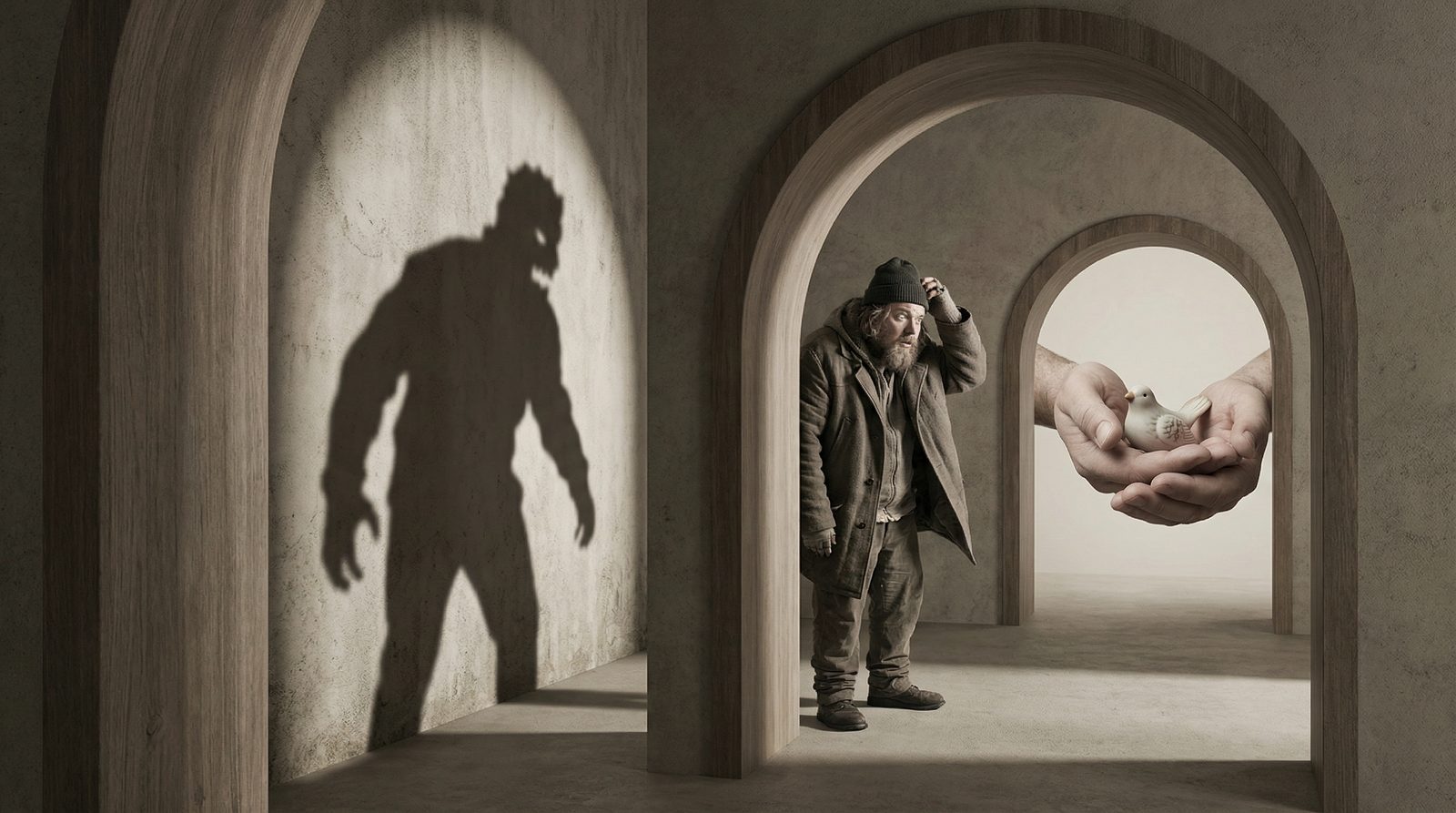
    Editorial illustration inspired by 'Lonely Giant Or Simpleton'

    EMOTIONAL EFFECT ON THE READER

    The Lonely Giant or Simpleton motif is designed to stir a mix of tenderness, dread, and anger. Readers often feel a strong protective instinct toward the character. Their simple joys and straightforward loyalty can be disarming in stories filled with selfishness or moral compromise. We see the world’s complexity bearing down on someone who cannot possibly navigate it, and that imbalance is painful.

    This motif also taps into a deep fear: that being misunderstood can be deadly. Watching a character punished for their body, their difference, or their slowness hits hard because it feels unfair at a basic human level. The reader’s frustration grows every time a character talks over the giant, interprets their silence as guilt, or uses them as a tool. By the time the story reaches its climax, the emotional weight is less about surprise and more about helpless outrage.

    At the same time, the Lonely Giant or Simpleton can bring moments of unexpected comfort. Their limited understanding of the world can strip away cynicism. They often cling to simple moral rules – “don’t hurt things that are kind,” “keep your promises,” “friends stick together.” When those values clash with a cruel or complicated world, readers are forced to ask whether the simple character might actually be seeing something truer than everyone else. That lingering question is part of why stories like Of Mice and Men, The Green Mile, and Blaze (2007) stay with people long after the plot details fade.


    Symbolic illustration inspired by 'Lonely Giant Or Simpleton'

    VARIATIONS & RELATED MOTIFS

    The Lonely Giant or Simpleton can appear in several distinct flavors. The classic gentle giant is physically imposing but morally pure, like John Coffey in The Green Mile. The tragic simpleton, as in Of Mice and Men, has a childlike mind that cannot grasp the consequences of their actions. In crime stories like Blaze (2007), the big simpleton becomes an accomplice who half-understands the plan and trusts the wrong person, blending innocence with genuine danger.

    There is also the holy fool variation, where the character’s simplicity gives them a kind of accidental wisdom. They may say blunt, obvious truths that others avoid, or show compassion where more sophisticated characters are calculating. In fantasy or horror, the motif can intersect with the supernatural: the giant might have mysterious powers or a special connection to suffering, which heightens the sense of them being both feared and exploited.

    This motif often overlaps with others about exploitation, scapegoating, and the commodified body. The Lonely Giant or Simpleton is frequently treated as property – a resource to be owned, controlled, or disposed of. It can also intersect with found family motifs, when a small group chooses to protect the giant against the wider world, or with institutional cruelty motifs when prisons, hospitals, or legal systems grind them down.

    Writers return to the Lonely Giant or Simpleton because it reliably exposes how a culture handles difference, weakness, and raw power. By giving readers someone who is both huge and helpless, the motif strips away excuses. How people treat this character becomes a quick, revealing test of their humanity, and that test is rarely passed without cost.

  • Stephen King

    Stephen King

    ORIGINS & BACKGROUND

    Stephen King is one of the most widely read storytellers of the late 20th and early 21st centuries, and his work has shaped how popular culture imagines horror, suspense, and the supernatural. Born in 1947 in Portland, Maine, and raised largely in working-class New England, he has returned again and again to the textures of small-town life. That sense of place is not just scenery; it is the pressure cooker for his characters.

    His early success with “Carrie (1974)” and “The Shining (1977)” came from blending the supernatural with very ordinary pain. King has spoken and written about his own struggles with addiction, and you can feel that personal knowledge of self-destruction running through his work, especially in “The Shining (1977)” and “Doctor Sleep (2013)”. The line between the haunted house and the haunted mind is thin.

    Across decades and dozens of novels, collections, and novellas, King has moved beyond strict horror into fantasy, crime, and coming-of-age fiction, but he tends to keep the same emotional territory: ordinary people pushed into extraordinary situations where their buried fears and desires become literal. Whether he is writing about a killer clown in “It (1986)” or a prison friendship in “Rita Hayworth and Shawshank Redemption (1982)”, the focus is less on the monster and more on how people respond when their world stops making sense.

    Stephen King grew up in the postwar United States, in a culture saturated with pulp paperbacks, monster movies, and comic books. That mix of high anxiety and low-budget imagination fed directly into his fiction. His New England upbringing, especially in Maine, is crucial to his work. The recurring fictional town of Derry in “It (1986)” and Castle Rock in books like “Cujo (1981)” and “The Dead Zone (1979)” are composites of the places he knew. The small town becomes a laboratory for fear and for community.

    He began as a high school English teacher writing in the margins of his day, and that sense of the working writer never really left. Many of his protagonists are ordinary workers, teachers, writers, or kids, people who do not have special training to face the supernatural. This focus on everyday people deepens his motif of ordinary evil.

    King’s own life has been marked by brushes with mortality, including a near-fatal accident in 1999. That experience sharpened his interest in survival and recovery, visible in works like “Misery (1987)” and “11/22/63 (2011)”, where bodies and timelines are broken and then painfully mended. His long career also means readers have grown older alongside him, moving from the adolescent terror of “Carrie (1974)” to the reflective nostalgia and regret of stories like “The Body (1982)” and “Doctor Sleep (2013)”. The biography matters less as trivia than as a source of his recurring concerns with trauma, addiction, and the persistence of memory.

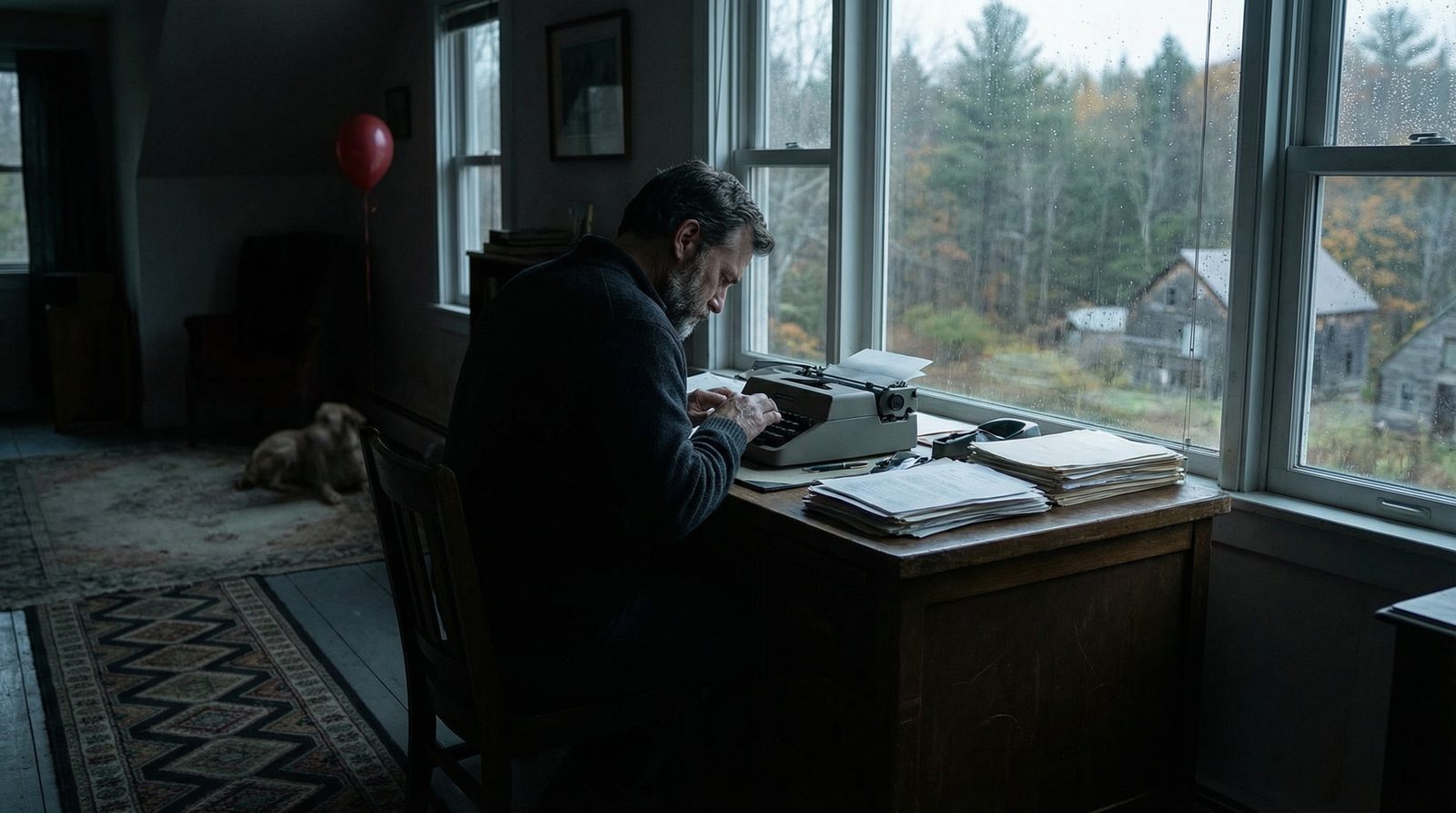
    Editorial illustration inspired by 'Stephen King'

    THEMES & MOTIFS

    At the heart of King’s work is the collision of ordinary life with supernatural horror. He returns again and again to the idea that the uncanny is never far from the surface of the everyday. A prom becomes a massacre in “Carrie (1974)”, a family vacation becomes a descent into madness in “The Shining (1977)”, and a childhood summer becomes a battleground with an ancient evil in “It (1986)”. This ordinary life meets supernatural horror dynamic lets him explore fear without abandoning realism.

    King is also preoccupied with small-town secrets. Towns like Derry and Castle Rock are full of buried crimes, shared silences, and generational guilt. In “It (1986)”, the town’s willingness to look away from violence feeds the creature that preys on children. This motif of small-town secrets links to his broader interest in generational trauma: “The Shining (1977)” and “Doctor Sleep (2013)” trace how alcoholism and violence ripple through a family across decades.

    Another persistent thread is found family. In “It (1986)”, the Losers’ Club is a group of misfits who become a chosen family to survive both bullying and a shapeshifting monster. In “Rita Hayworth and Shawshank Redemption (1982)”, friendship and solidarity inside prison are the only defenses against despair. These found family bonds are often the counterweight to evil, suggesting that connection is the only real magic people have.

    King is fascinated by addiction and redemption. Characters like Jack Torrance in “The Shining (1977)” and Danny Torrance in “Doctor Sleep (2013)” embody addiction horror, where the monster is as much the bottle as any ghost. The horror of losing control of oneself, of becoming a danger to the people you love, is one of his most unsettling themes. Alongside this runs a quieter focus on memory and nostalgia. Stories like “The Body (1982)” and “11/22/63 (2011)” treat the past as both a refuge and a trap, where childhood and history can never be fully recovered or fixed.

    Finally, King often uses cosmic horror, especially in “It (1986)” and “The Dark Tower (1982)”, to suggest that human struggles are set against vast, indifferent forces. Yet his tone rarely sinks into pure despair. Even when facing cosmic horror, his characters cling to compassion, humor, and stubborn courage, which gives his work a distinctive blend of dread and hope.

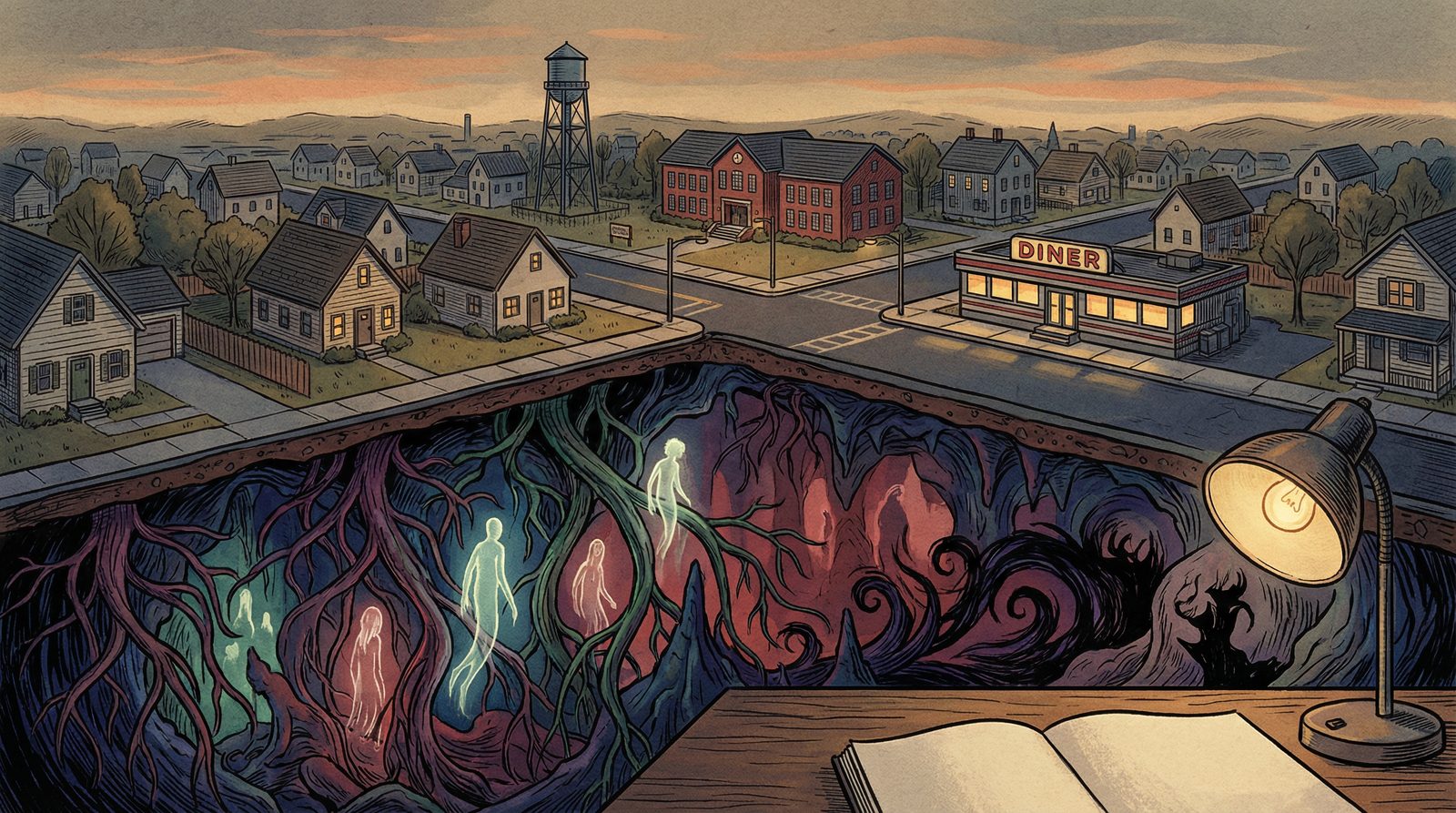
    Symbolic illustration inspired by 'Stephen King'

    STYLE & VOICE

    Stephen King’s style is conversational and plainspoken, closer to someone telling a long story at the kitchen table than to literary ornament. He favors a character-driven horror approach, spending pages on the rhythms of daily life before anything overtly frightening happens. That slow-burn suspense is part of his method. By the time the supernatural appears, readers feel they know the people it threatens.

    He often uses multiple perspectives and braided timelines. In “It (1986)”, the narrative jumps between the protagonists as children and as adults, creating a layered sense of memory and inevitability. In “The Stand (1978)”, he moves among a large ensemble cast scattered across a devastated America, building an epic scale from many intimate viewpoints. This ensemble storytelling lets him explore how different kinds of people respond to the same crisis.

    King’s prose is full of colloquial dialogue, brand names, and pop culture references. That realism can make the horror feel more intrusive, as if it is invading a recognizable world. He is also fond of interior monologue and sudden flashes of dark humor, which keep the tone from becoming monotonously bleak. Even in his grimmest stories, a joke or a stray thought will cut through the tension, reminding readers of the messiness of real minds under stress.

    Structurally, he often blends horror with coming-of-age arcs and crime or fantasy frameworks, as in “Misery (1987)” and “11/22/63 (2011)”. His endings can be divisive, sometimes abrupt or ambiguous, but that inconsistency is part of his risk-taking. Across genres, his voice remains recognizable.

    KEY WORKS & LEGACY

    Certain books have come to define Stephen King for many readers. “Carrie (1974)” announced his blend of high school cruelty and telekinetic horror. “The Shining (1977)” crystallized his obsession with addiction horror and the haunted family. “The Stand (1978)” showed his ability to stretch horror into post-apocalyptic epic, while “It (1986)” became a landmark of small-town secrets, generational trauma, and found family facing cosmic horror.

    His shorter work has also had an outsized impact. The novella “The Body (1982)” became the film “Stand by Me”, a touchstone for coming-of-age storytelling. “Rita Hayworth and Shawshank Redemption (1982)”, another novella in Different Seasons, turned into the film “The Shawshank Redemption” (1994), which many viewers think of less as horror than as a story of endurance and hope. “Misery (1987)” and “Doctor Sleep (2013)” continue his interest in the relationship between creators and fans, addiction, and the fragile process of recovery.

    King’s influence on horror and popular fiction is hard to overstate. He helped normalize the idea that horror could be mainstream, emotionally rich, and focused on character rather than just shock. His work sits alongside that of earlier figures in American horror and suspense, but he brought a distinctly late-20th-century sensibility.

    Beyond specific titles, his legacy includes the many writers and filmmakers who have taken cues from his character-driven horror and his mix of dread and hope. He showed that horror could be a flexible tool for exploring grief, guilt, and the possibility of redemption. Even readers who have never picked up one of his novels live in a culture shaped by his images of haunted hotels, killer clowns, and kids on bikes riding toward something they cannot yet name.


    DISCOVERABILITY & LINKS

    This creator page connects Stephen King to the wider Bachman–King network on AllReaders. Follow the links above to explore how his novels, pseudonymous works, and recurring motifs intertwine across horror, suspense, and character-driven storytelling.