
Genre: Fantasy

  • Personal Legend And Destiny

    Personal Legend And Destiny

    DEFINITION & CORE IDEA

    Personal Legend And Destiny is the motif where a character believes there is a specific path, mission, or role that is uniquely theirs. It is not ordinary ambition. The calling is treated as a teleological claim: the character’s life has a “correct” direction, and the plot measures whether they recognize it and commit when commitment demands sacrifice.

    In The Alchemist, Paulo Coelho makes the idea explicit, turning “Personal Legend” into a named rule of the story’s world. The same structure appears in quieter forms as well. A character is pulled toward a vocation, an art, or a responsibility they cannot fully explain, and every attempt to live safely produces restlessness rather than relief.

    Writers use this motif to give everyday choices narrative gravity. Changing jobs, leaving home, or refusing a stable life becomes more than preference. It becomes alignment or refusal. The story is the argument between the calling and everything that pressures the character to compromise, delay, or shrink it into something acceptable.


    HOW IT WORKS IN STORIES

    The motif usually begins with restlessness. The character feels out of place. Their job, hometown, and relationships feel deadening or ill-fitting. This discomfort is treated as signal, not mood. The story often externalizes it through signs, recurring dreams, prophecies, or chance encounters that the character reads as communication rather than coincidence.

    Then comes the call to action. A letter arrives, a stranger offers an opportunity, or a crisis forces a choice. Saying yes usually means leaving comfort and social approval behind. Saying no may preserve stability in the short term, but the narrative increases the cost of refusal until staying becomes its own form of loss.

    As the character moves toward the calling, they meet helpers and tempters. Mentors, spiritual guides, and friends validate the direction and offer methods. Opposing them are institutions and relationships that reward safety. The motif thrives on the tug-of-war between the mythic pressure to pursue the irrational calling and the social pressure to remain “reasonable.”

    Structurally, this motif often maps onto a journey. Sometimes that journey is literal travel; sometimes it is an inner program of practice, work, or discipline. The character advances, loses faith, is tempted to accept a smaller dream, and then faces a point of no return where compromise becomes a defining choice.

    By the end, the story usually resolves through alignment or refusal. Either the character commits to the calling and accepts the cost, or they choose safety and live with the residue of what was not attempted. The motif’s claim is not that destiny is guaranteed. It is that destiny demands a decision.


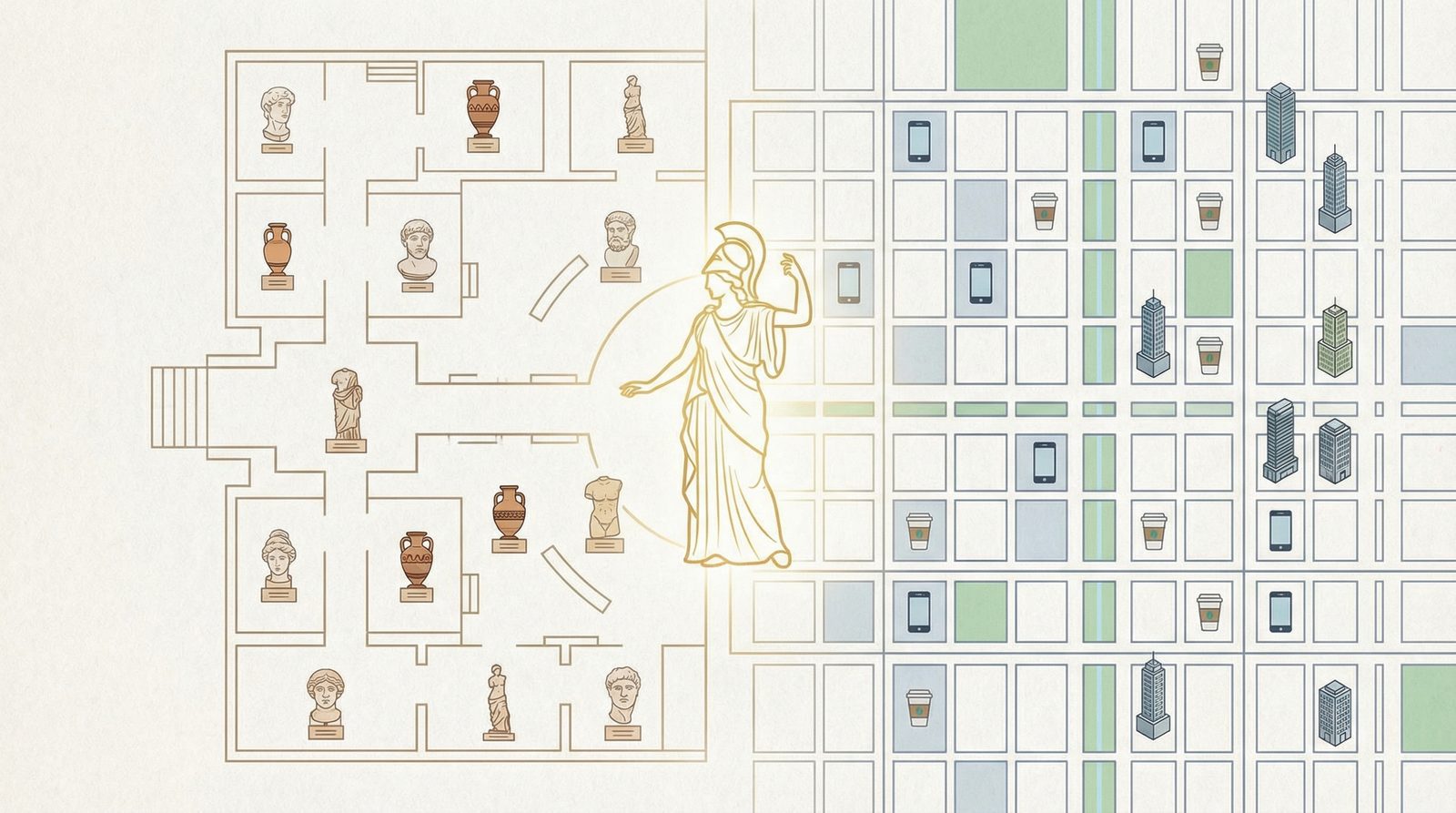
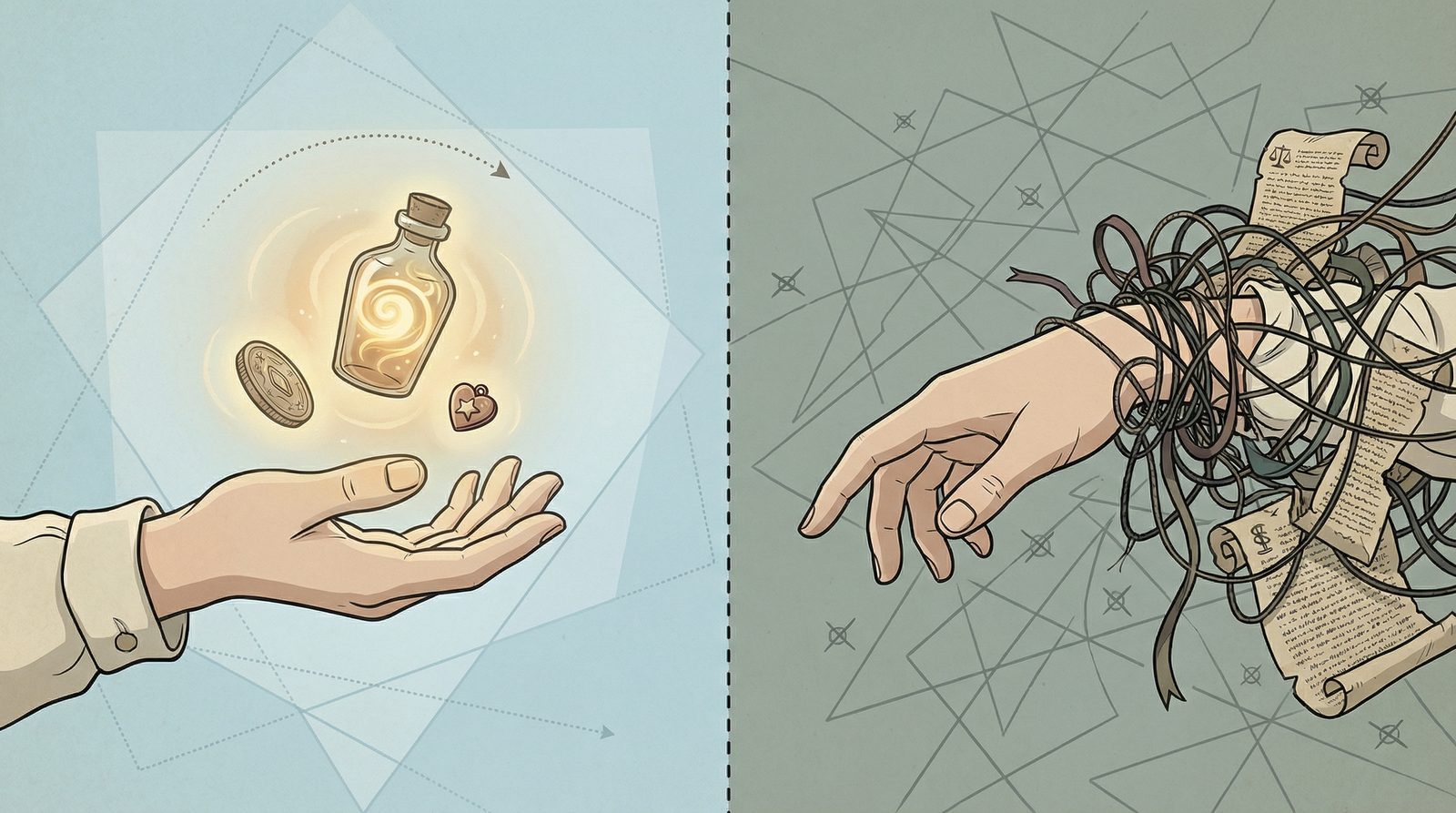
    Editorial illustration inspired by 'Personal Legend And Destiny'

    EMOTIONAL EFFECT ON THE READER

    This motif targets the fear of insignificance. It offers a counter-claim: that a specific life can have a readable direction. The reader is invited to measure their own choices against the character’s willingness to commit.

    The unease comes from sunk cost. The story forces a private inventory of missed exits and deferred risks. Even optimistic versions create pressure because they imply that safety is not neutral; it is a decision with consequences.

    When the character chooses alignment, the reader often feels relief mixed with grief for what was sacrificed. When the character refuses, the emotion is quieter and sharper: the sense of a life narrowing, not through tragedy, but through avoidance.


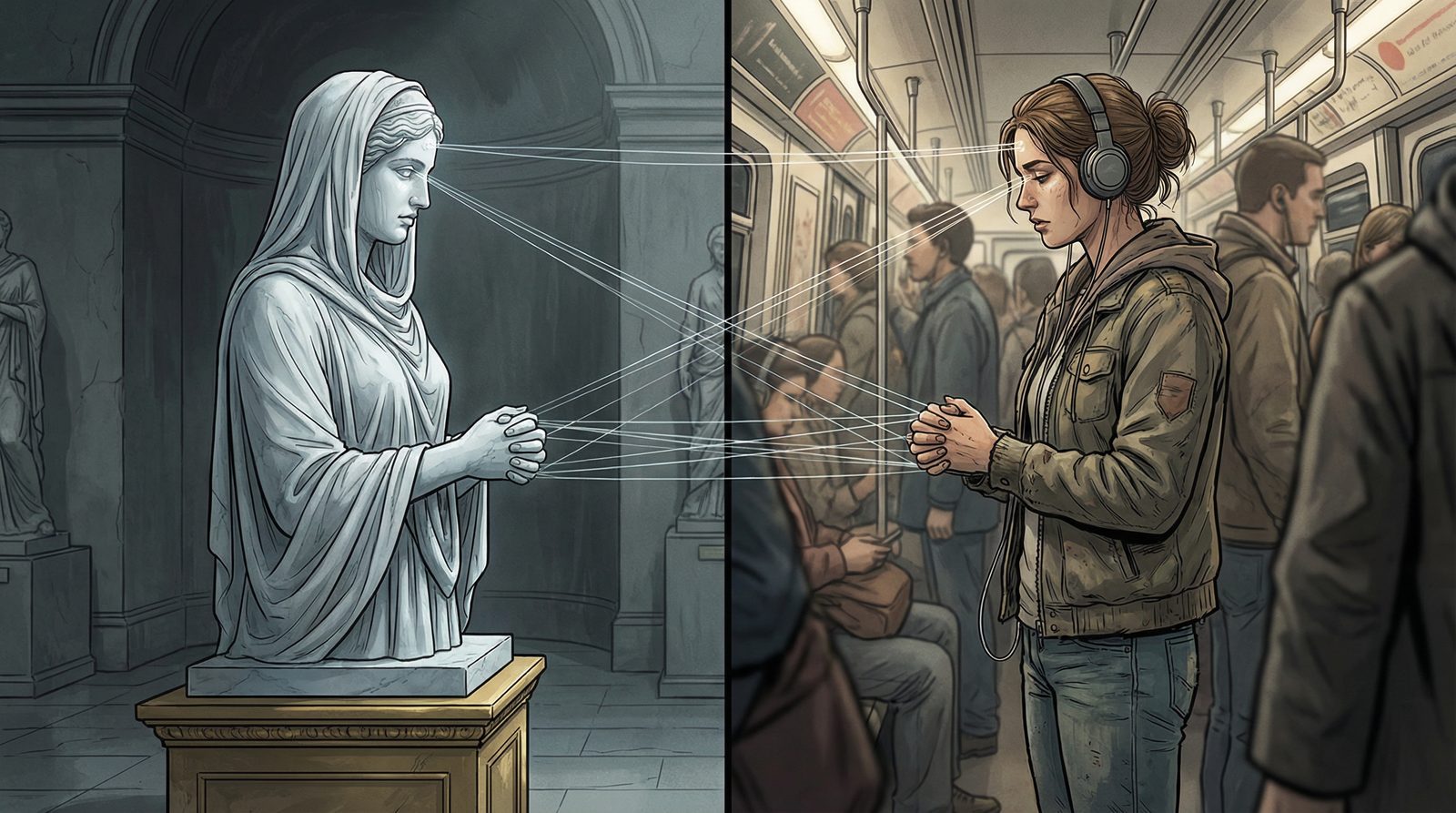
    Symbolic illustration inspired by 'Personal Legend And Destiny'

    VARIATIONS & RELATED MOTIFS

    In allegorical or spiritual stories, the calling is framed as a cosmic assignment, and coincidence is treated as guidance. In grounded fiction, the same structure is reframed as authenticity without supernatural endorsement, with the “signs” replaced by pattern recognition and self-knowledge.

    One variation treats destiny as burden. The character is named “chosen” early, and the conflict becomes whether the script is theirs or someone else’s. Another variation delays recognition until late life, where the calling is discovered after years of compromise, turning the motif into a reckoning rather than a quest.

    This motif often overlaps with Spiritual Pilgrimage and Synchronicity and Meaningful Coincidence, since both motifs rely on the idea that events can be read as communication. It also pairs naturally with coming-of-age and redemption arcs, where the calling functions as a test of identity.

    In darker uses, the “destiny” can be misread or weaponized. The character follows the wrong calling, or a true calling arrives too late to be lived cleanly. The story then becomes a warning about interpretation rather than a promise about fulfillment.

  • Spiritual Pilgrimage

    Spiritual Pilgrimage

    DEFINITION & CORE IDEA

    A Spiritual Pilgrimage is a journey narrative where the stated destination is secondary to internal change. The protagonist may travel to a sacred site, follow a prophecy, or chase a promised revelation, but the journey functions as a structured sequence of tests designed to produce belief change, moral recalibration, or a new self-concept. The road is not backdrop. It is the mechanism.

    Stories like The Pilgrimage, The Alchemist, Siddhartha, and The Celestine Prophecy use travel as a didactic structure. Encounters are not random. Each guide, stranger, or obstacle is positioned to challenge a specific assumption and force a decision. The motif is built to convert movement into meaning through repeated, concrete choices.

    At its core, a Spiritual Pilgrimage treats geography as allegory. Terrain and logistics mirror internal states. A detour becomes a correction, a delay becomes a test of attachment, and reaching the destination often reveals that the “goal” was a sustaining pretext for transformation. The real arrival is a changed interpretive frame, not a point on a map.


    HOW IT WORKS IN STORIES

    The trigger is usually a sense of lack. The protagonist begins with spiritual numbness, restlessness, grief, or moral confusion. A call to travel appears, and the character steps away from familiar structures into uncertainty. This transition matters because the motif requires removal from the old context before the belief system can be tested.

    The journey then unfolds as iterative lessons. In The Pilgrimage and The Alchemist, the road is populated with omens, mentors, and small reversals that challenge the hero’s assumptions about success and failure. In Siddhartha, the river functions as a persistent teacher, reshaping the protagonist’s understanding of time, suffering, and enlightenment. The Celestine Prophecy builds its arc around sequential “insights” delivered through encounters that mix guidance with threat.

    Obstacles are rarely only physical. Hunger, fatigue, getting lost, and missed connections work on two tracks at once: logistics and revelation. A storm can be a crisis of faith. A wrong turn can be a confrontation with ego. Temptations to stop often arrive as comfort—safety, certainty, and social approval—so continuing becomes a deliberate act of change rather than mere endurance.

    The end state is usually “quiet arrival.” The protagonist may return home with altered perception, or reach the destination and discover it matters less than the internal shift already achieved. The motif closes by demonstrating integration: a new interpretive frame that changes how the character reads the same world.

    Writers use Spiritual Pilgrimage because it keeps philosophy grounded in events. Instead of abstract debate, the story forces ideas to survive contact with heat, fear, hunger, misunderstanding, and human inconsistency. The road supplies friction. Friction produces the change.
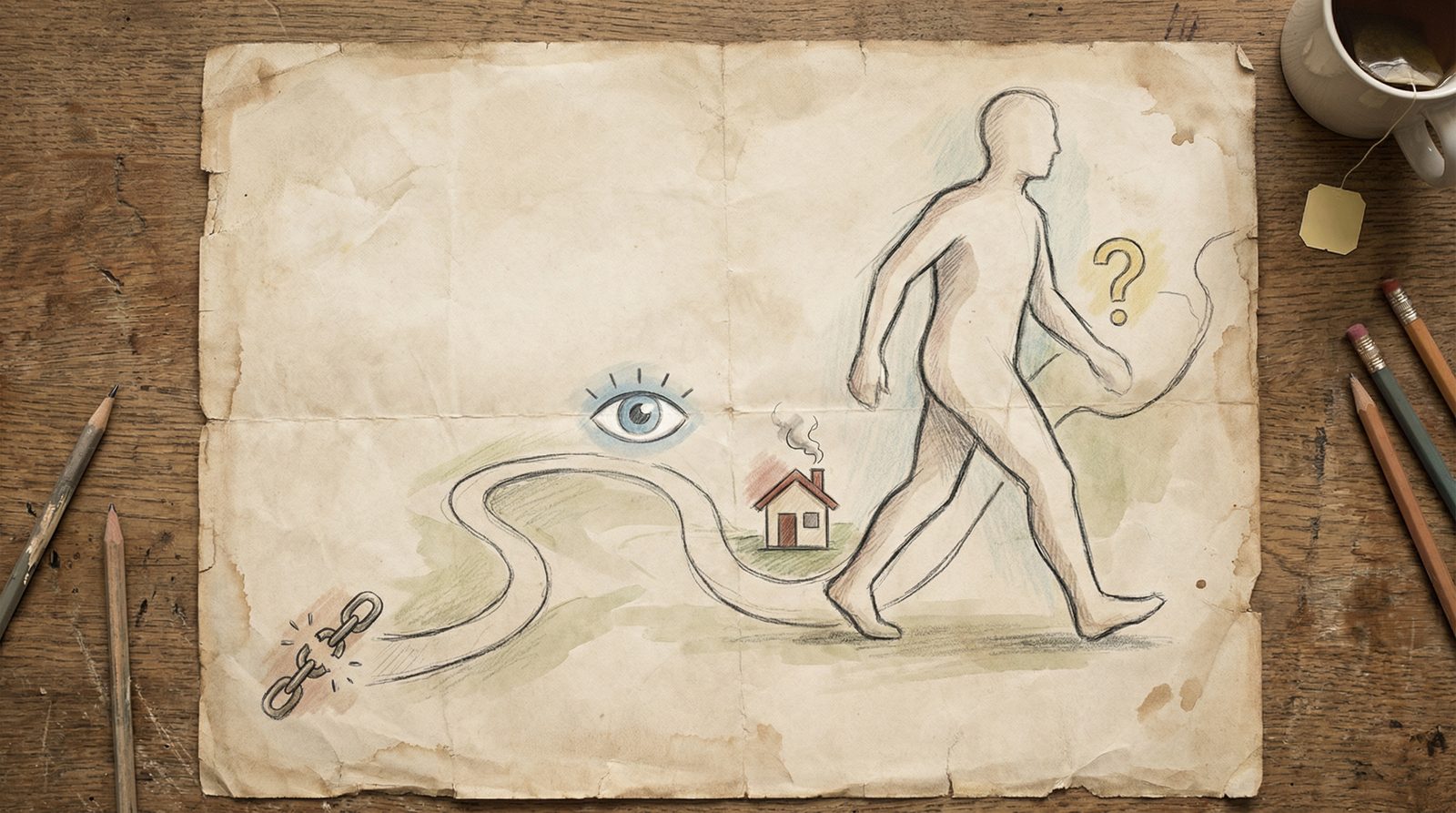

    Editorial illustration inspired by 'Spiritual Pilgrimage'

    EMOTIONAL EFFECT ON THE READER

    This motif invites projection. The reader maps personal uncertainty onto the pilgrim’s movement, using the journey as a safe container for questions about meaning, faith, and purpose.

    The emotional arc typically moves through three phases. First, resistance or naivety, where the pilgrim overestimates the literal goal. Second, a “dark night” phase, where the journey fails to deliver easy answers and the protagonist confronts doubt, fatigue, and disillusionment. Third, integration, where relief arrives not through conquest but through acceptance and clarity.

    Even in optimistic versions, the motif carries a controlled unease. It implies that comfort and certainty are often incompatible with change. In harsher variants, the pilgrimage can feel like attrition, where the lesson is not illumination but endurance. In either case, the payoff is the same: the reader finishes with a sharper sense of what the character is willing to become.


    Symbolic illustration inspired by 'Spiritual Pilgrimage'

    VARIATIONS & RELATED MOTIFS

    A Spiritual Pilgrimage can be overtly religious, centered on shrines, relics, or monasteries, or it can be framed as a secular search for meaning. Some stories emphasize discipline and deprivation, where the road is a controlled program of hardship. Others emphasize interpretation, where coincidences, symbols, and mentors form a readable pattern across the landscape.

    One common variation is the reluctant pilgrim, dragged into travel by circumstance and changed despite resistance. Another is the failed pilgrimage, where the character reaches the physical goal but refuses the internal shift, producing a bitter or ironic ending. Group pilgrimages expand the motif into social dynamics, using the shared road to expose competing belief systems.

    This motif often overlaps with Personal Legend And Destiny, where the journey outward is tied to the idea that each person has a unique path they are meant to recognize and commit to. It also connects naturally to motifs about mentors and guides, prophetic dreams, and the idea that “home” must be left in order to be understood.

    It can also be questioned or subverted. Some stories show how easily tourism can be mistaken for transformation, or how spiritual language can become a substitute for the harder work of change. Even then, the structural tension remains: the road tests what the character believes, and what they are willing to become.

  • Pagan Goddess In Modern Society

    Pagan Goddess In Modern Society

    DEFINITION & CORE IDEA

    The Pagan Goddess In Modern Society motif places an ancient deity inside a modern world governed by routines, contracts, and disbelief. A figure once associated with worship, fear, and sacrifice must function inside secular life without the old structures that made divinity legible. The central conflict is a clash of natures: a mythic force entering a system built to manage and contain everything.

    In these stories, the goddess is not metaphor or decoration. Her desire is not optional, her anger is not rhetorical, and her attention is not safe. Modern characters try to treat her as a manageable disruption, but she does not accept procedural limits.

    The entry point varies. Sometimes the goddess wakes through an accidental act involving an object or image. Other times she arrives through a dream that turns real, a sudden manifestation, or a return that no one asked for. However she enters, the story’s pressure comes from the same question: what survives when modern life meets something that does not negotiate.

    Editorial illustration inspired by 'Pagan Goddess In Modern Society'

    HOW IT WORKS IN STORIES

    The trigger is usually a low-stakes breach rather than a deliberate summoning. A kiss placed on stone, a ring slipped onto a finger, or a careless wish functions as a binding act performed in ignorance. This keeps the protagonist reactive rather than heroic and prevents the story from becoming epic fantasy.

    From there, the narrative splits into two functional tracks. The first is farce. The goddess ignores modern subtext and euphemism, speaking directly about desire, loyalty, and power. Comedy emerges from watching ordinary life fail to absorb something that refuses to downscale itself.

    The second track is exposure. The goddess treats modern systems and hierarchies as irrelevant. Authority collapses not through rebellion but through indifference. The protagonist is forced to choose between restoring the boundary or accepting a world where modern structures are not the highest frame.

    Symbolic illustration inspired by 'Pagan Goddess In Modern Society'

    EMOTIONAL EFFECT ON THE READER

    The hook is the fantasy of being singled out by the ancient in an interchangeable world. Attention from the divine feels like proof of significance.

    The pivot arrives when that attention proves dangerous. The goddess does not share modern moral assumptions. Her affection can be as risky as her wrath, and being chosen does not imply being protected.

    Most stories resolve through separation rather than conquest. The goddess departs, and ordinary life resumes. What lingers is a change in scale: modern routines feel smaller once the protagonist has seen what ignores them.


    VARIATIONS & RELATED MOTIFS

    Comic romance versions treat the goddess as a disruptive catalyst, pushing stagnant protagonists toward courage and desire. Darker interpretations emphasize her alien scale, demanding reverence and punishing disrespect. Across tones, the motif tests what collapses when modern life is confronted by something that will not adapt.

  • Statue Comes To Life

    Statue Comes To Life

    DEFINITION & CORE IDEA

    The Statue Comes To Life motif is exactly what it sounds like. Stone turns to flesh, a department-store mannequin wakes up, or a bronze goddess steps down from her pedestal. The core thrill comes from watching something we are used to seeing as an object suddenly reveal a mind, a will, and often a heart.

    Writers use this motif to explore wish fulfillment, loneliness, and the unstable line between ideal and reality. A character may fall in love with an image they helped create, echoing the Pygmalion pattern, or stumble into a relationship with a figure that was never meant to move at all. Stories such as The Tinted Venus by Thomas Anstey Guthrie play with the shock, comedy, or horror of an inanimate figure stepping into ordinary life.

    At its heart, the motif asks a simple but unsettling question. What happens when our fantasies talk back? The living statue is usually designed as perfection, whether beautiful, sacred, or terrifying. Once it awakens, the human characters are forced to confront how different a real, autonomous being is from the silent, obedient figure they imagined.


    HOW IT WORKS IN STORIES

    The setup is often deceptively simple. A sculptor, shop employee, scholar, or lonely observer forms an attachment to an object that cannot answer back. Through magic, a curse, a wish, or a god’s intervention, the figure comes alive. From there, the story splits into two broad paths.

    On the side of wonder, the living statue experiences the world with fresh eyes. Money, social rules, and human habits make little sense. Everyday life becomes strange and funny. In romantic or comic versions such as Mannequin (1987) or One Touch Of Venus (1948), this innocence is charming. The animated figure pushes the human lead to loosen routines, challenge assumptions, and admit what they actually want.

    On the side of disruption, the animated statue breaks boundaries. Property, religion, and personal relationships collapse under the weight of something that was never meant to walk freely. Even lighter tales such as The Tinted Venus show how a living idol can upend careers, engagements, and social standing.

    Structurally, the motif builds toward a choice. Secrets must be kept, authorities get involved, and the human characters must decide whether to cling to safety or accept an unpredictable relationship. The ending usually turns on whether the statue remains alive, returns to its pedestal, or demands a price for having crossed the boundary between object and person.


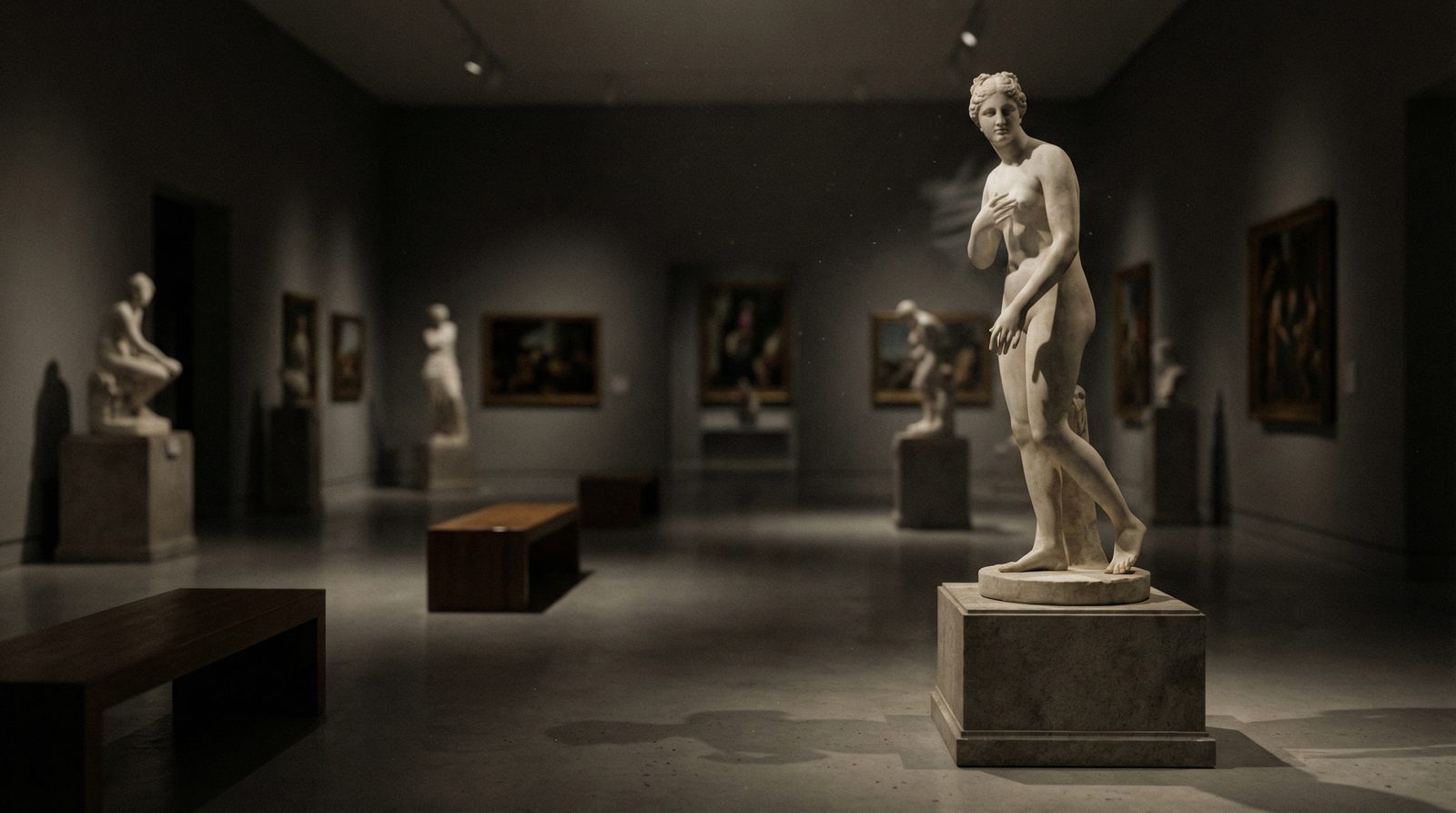
    Editorial illustration inspired by 'Statue Comes To Life'

    EMOTIONAL EFFECT ON THE READER

    This motif taps into a primal wish: that the things we admire in silence might look back and choose us. The idea that a statue could turn its head and see us is thrilling and unsettling at the same time.

    In romantic or comedic versions, there is a warm sense of fantasy fulfillment. The protagonist is chosen by someone impossibly ideal, a literal embodiment of beauty or devotion.

    Darker uses of the motif replace comfort with dread. The same transformation that feels magical in light stories becomes a violation when the animated figure moves with cold purpose or divine anger.


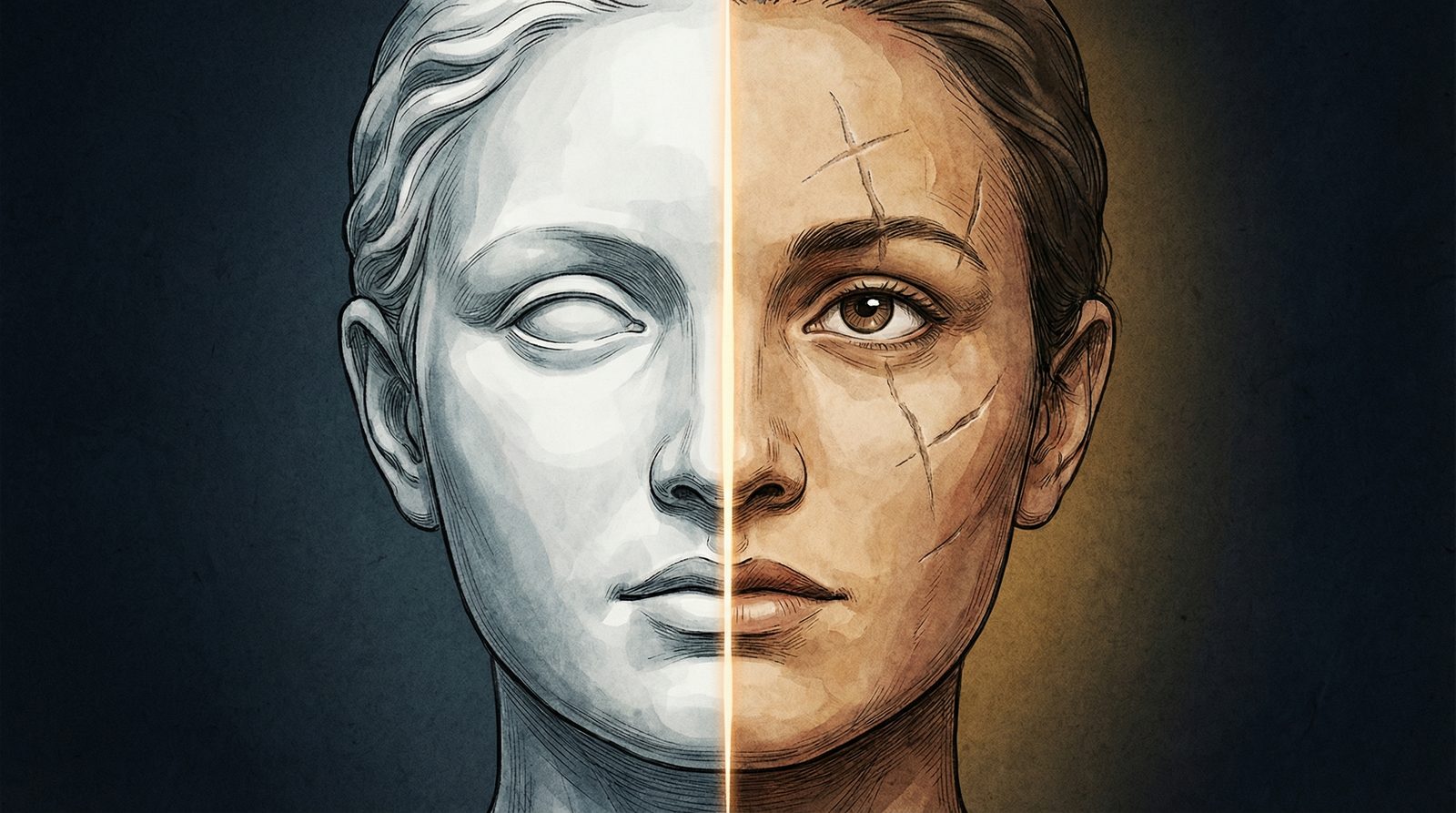
    Symbolic illustration inspired by 'Statue Comes To Life'

    VARIATIONS & RELATED MOTIFS

    The motif appears in several recognizable forms. The classic variation follows a creator-and-creation pattern where an artist’s work reflects their ideals and blind spots. A modern twist replaces the handcrafted statue with a mass-produced figure, shifting the focus toward consumer fantasy and the idea of the perfect partner as a commodity.

    Mythological versions present the statue as a dormant deity rather than a neutral object. In these stories, the figure was never truly asleep, only waiting. This overlaps strongly with Pagan Goddess In Modern Society, where ancient power collides with modern norms.

    Horror-leaning variants treat the awakening as punishment instead of reward, while bittersweet versions allow the figure to remain human only temporarily.

  • Eastwest Philosophical Synthesis

    Eastwest Philosophical Synthesis

    DEFINITION & CORE IDEA

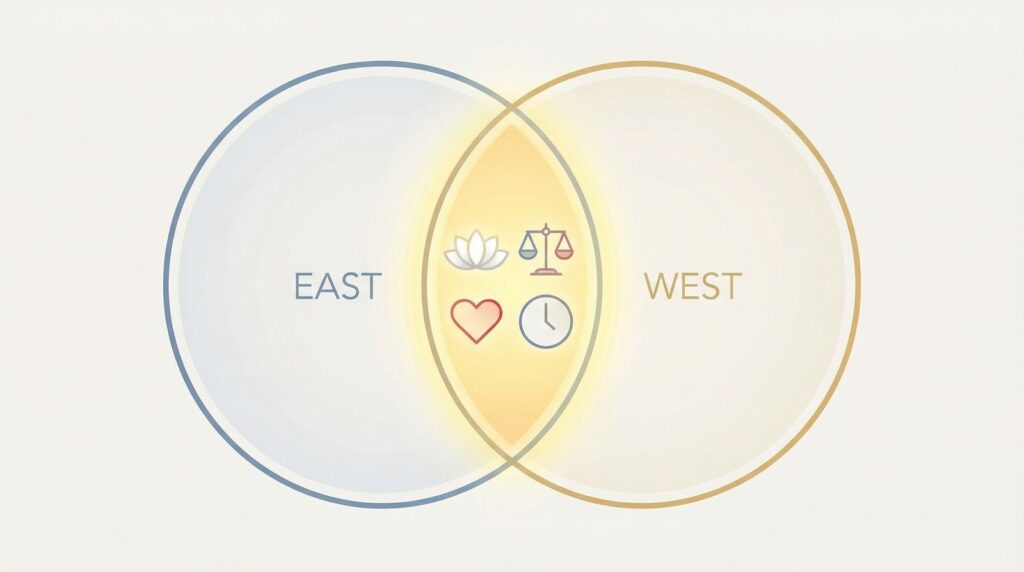
    East-West Philosophical Synthesis is a motif in which Eastern and Western ideas about life, morality, and meaning are brought into direct conversation and gradually woven together. Instead of treating East and West as fixed or exotic opposites, stories using this motif allow characters to test Buddhist detachment against capitalist ambition, Confucian duty against individual freedom, or Western rationalism against mystical insight. The point is not that one side wins, but that both are altered through sustained contact.

    In practice, East-West Philosophical Synthesis often appears when a character moves between cultures, studies within a foreign tradition, or grows up inside a mixed philosophical inheritance. They might try to apply meditation and non-attachment to modern work pressure, or use Western psychology to interpret karma, desire, and rebirth. The narrative becomes a kind of laboratory where everyday problems like love, family, work, and grief are approached using tools drawn from more than one civilizational story about what humans are and what they owe each other.

    This motif is especially visible in modern spiritual literature that seeks to translate non-Western traditions into a language accessible to contemporary readers. In Zen and the Art of Motorcycle Maintenance: An Inquiry Into Values, Robert M. Pirsig uses the act of motorcycle maintenance as a bridge between Eastern ideas of presence and Western rational analysis. Quality becomes not a technical metric but a lived experience, discovered through attention rather than theory.

    Editorial illustration inspired by 'Eastwest Philosophical Synthesis'

    HOW IT WORKS IN STORIES

    East-West Philosophical Synthesis usually begins with contact, and early scenes often highlight misunderstanding. A Western-trained professional dismisses traditional practices as superstition. A spiritual teacher views Western self-focus as indulgent. A child of immigrants is told to follow their heart at school while being expected to honor the family at home.

    The story then develops situations where neither a purely Eastern nor a purely Western response feels sufficient. A character raised on individualism may find relief in ideas of interdependence and community. Someone taught to suppress desire for the sake of harmony may discover that Western concepts of boundaries and selfhood provide tools for resistance. Tensions such as fate versus free will, duty versus authenticity, and mind versus body are reopened through lived consequence.

    Over time, the motif shifts from argument to experiment. Characters begin trying hybrid approaches, often clumsily. The synthesis is rarely elegant. It involves compromise, partial misunderstanding, and moments of recognition where a character realizes they have simplified a deep tradition into something more convenient than true.

    Some stories lean toward philosophical rigor, as in the inward journeys of Hermann Hesse. Others move toward accessible spiritual narrative. In Way of the Peaceful Warrior, Eastern ideas of discipline and presence are filtered through a distinctly Western self-help structure, emphasizing personal transformation over metaphysical coherence.

    Symbolic illustration inspired by 'Eastwest Philosophical Synthesis'
    Symbolic illustration inspired by ‘Eastwest Philosophical Synthesis’

    EMOTIONAL EFFECT ON THE READER

    Reading a story shaped by East-West Philosophical Synthesis often feels like sitting in on a long, intimate conversation about how to live. There is pleasure in seeing familiar ideas reframed, where spiritual concepts become practical tools and everyday decisions become moral experiments.

    The motif can also be unsettling. It invites readers to notice how much of their moral intuition is inherited rather than chosen. When characters sincerely try practices drawn from outside their native culture, the reader is asked to imagine doing the same, feeling both curiosity and resistance.

    At its most effective, the motif produces a sense of widened possibility. Cultures are not treated as sealed containers but as living systems capable of dialogue and change. Even when the synthesis fails or remains incomplete, the effort itself carries meaning.


    VARIATIONS & RELATED MOTIFS

    East-West Philosophical Synthesis appears in several distinct modes. In literary fiction, it often takes the form of a demanding inner journey, as in Siddhartha and Demian, where spiritual insight must be earned through suffering and self-confrontation. In popular spiritual fiction, the synthesis becomes more approachable but also more ambiguous.

    In The Celestine Prophecy and The Tenth Insight, James Redfield presents a New Age-inflected synthesis, where Eastern concepts of energy and synchronicity are adapted to Western narrative expectations of clarity, progress, and personal destiny. The result is less philosophically rigorous than Pirsig or Hesse, but emotionally accessible to a broad audience.

    Across these variations, the core remains the same. East-West Philosophical Synthesis is about what happens when different civilizational accounts of meaning, duty, and selfhood are forced to coexist within a single human life.

  • Unintended Consequences Of Wishes

    Unintended Consequences Of Wishes

    DEFINITION & CORE IDEA

    The motif of Unintended Consequences of Wishes is all about the gap between what a character wants and what actually happens when they get it. Someone makes a wish, strikes a bargain, or voices a casual request, and the universe answers in a way that is technically correct but emotionally disastrous. The wish is granted, but it arrives with loopholes, side effects, or a cruelly literal twist.

    Stories built on this motif take the simple fantasy “What if I could have anything?” and turn it into a test of character. The wish can come from a genie, a djinn, a magical artifact, a mischievous spirit, or an impersonal cosmic rule. The key is that the wisher does not fully understand what they are asking for, or what it will cost them and others.

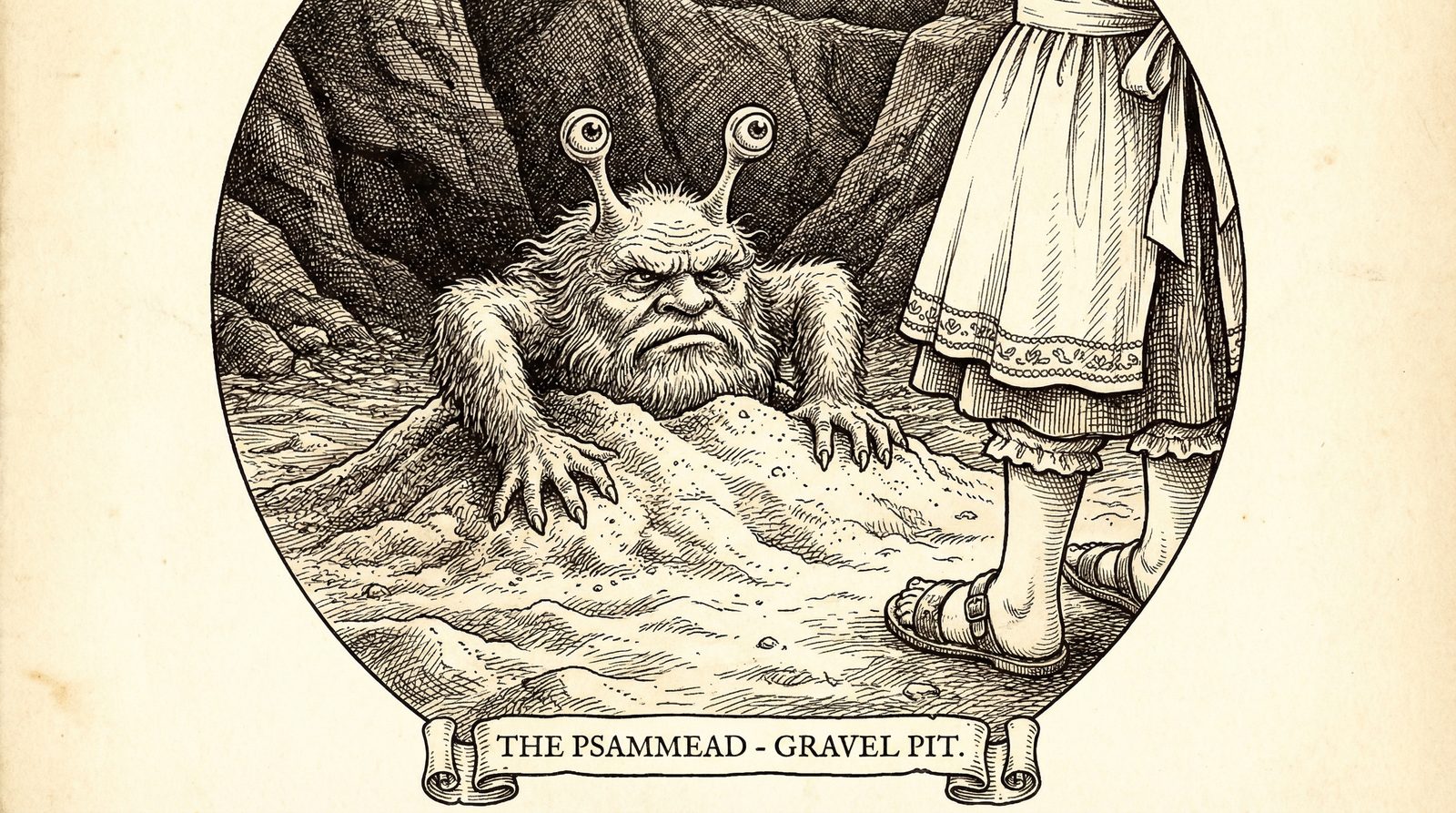
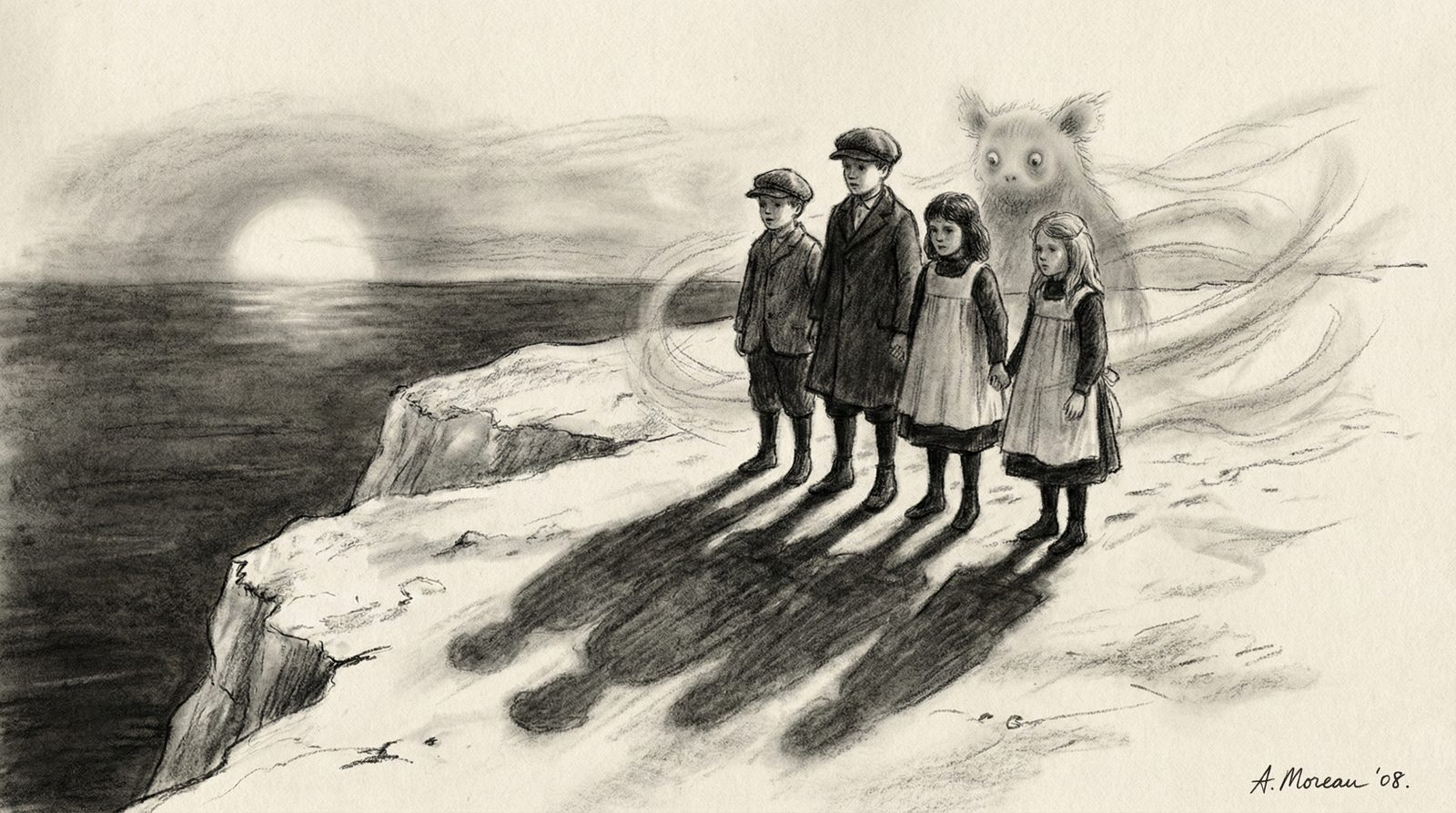
    In children’s fantasy like Five Children And It (1902) or comedy-fantasy such as The Brass Bottle, this motif often plays as chaotic fun, where wishes turn ordinary life into social disorder. In darker versions, the consequences become corrosive and personal, as in A Fallen Idol. In all cases, the heart of the motif is the same lesson: desire without foresight is dangerous, and power, even magical power, does not erase consequences.


    HOW IT WORKS IN STORIES

    In stories using Unintended Consequences of Wishes, the setup is deceptively simple. An ordinary person stumbles onto a source of power. The wisher is usually not a villain. They are tired, lonely, greedy, bored, or just curious. Their first wish is often small and impulsive, which makes the fallout feel both believable and embarrassing.

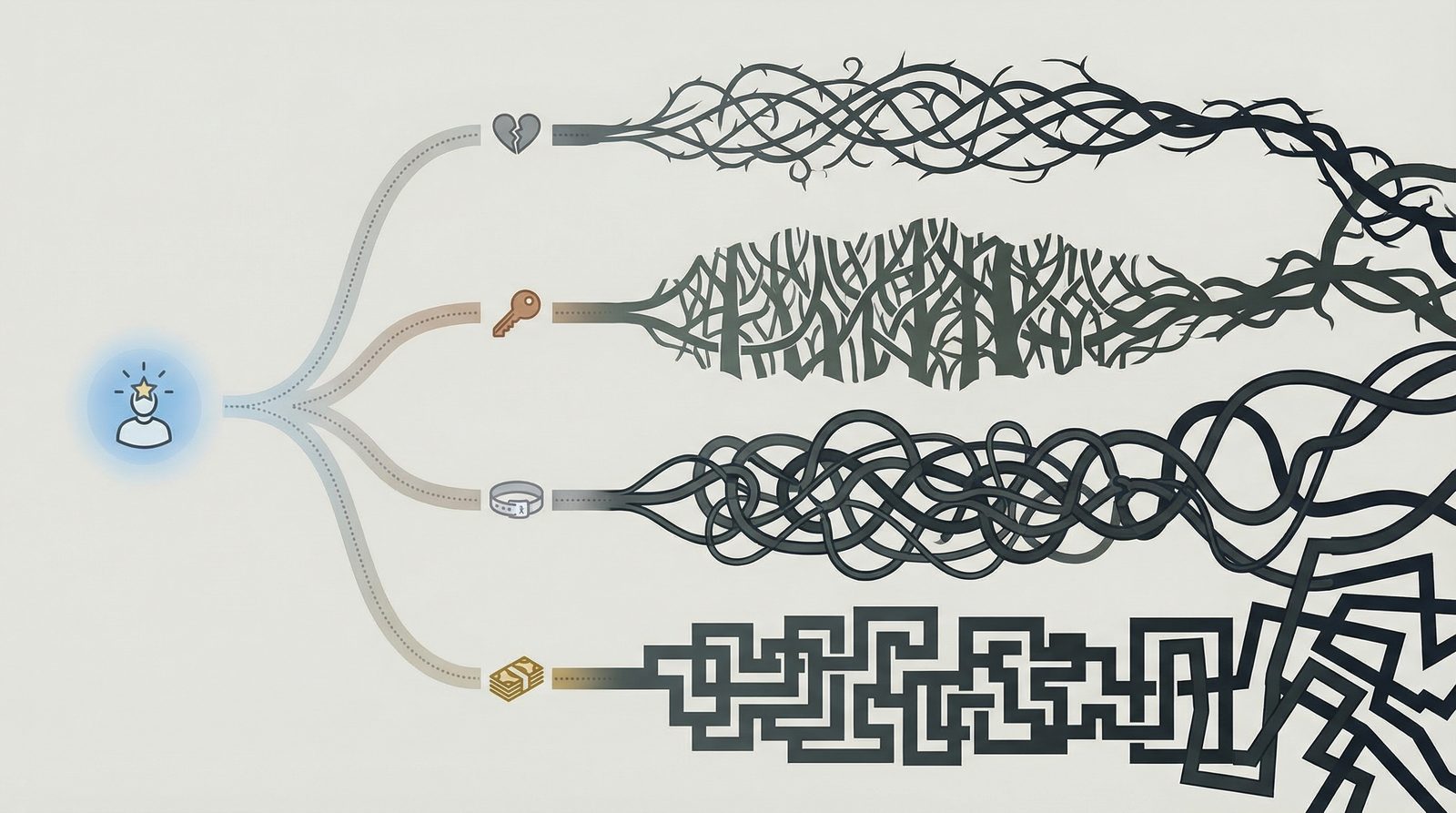
    The wish is granted with a twist. The wisher gets what they asked for, but not what they meant. A solution arrives in the worst possible form. The gift comes attached to humiliation, guilt, conflict, or harm that spreads beyond the original desire. Attempts to fix things with additional wishes often make it worse, stacking complications until the character is trapped in a web of their own making.

    Writers use this motif to explore responsibility and self-knowledge in a vivid way. Instead of lecturing about “be careful what you wish for,” the story lets us watch the character collide with the fine print of their desires. The motif pairs well with comedy and satire, because literal-minded magic exposes vanity, hypocrisy, and entitlement simply by doing exactly what was asked.

    Because wish stories often begin with a bound spirit or a magical object, this motif frequently overlaps with bottle-bound bargains, supernatural deals with hidden costs, and stories where fantasy intrudes into ordinary domestic life.


    Editorial illustration inspired by 'Unintended Consequences of Wishes'

    EMOTIONAL EFFECT ON THE READER

    Unintended Consequences of Wishes hits a mix of feelings. On the lighter side, there is real pleasure in watching a too-literal wish go wrong. The reader gets to enjoy slapstick and clever reversals while safely thinking, “I would have phrased that better.”

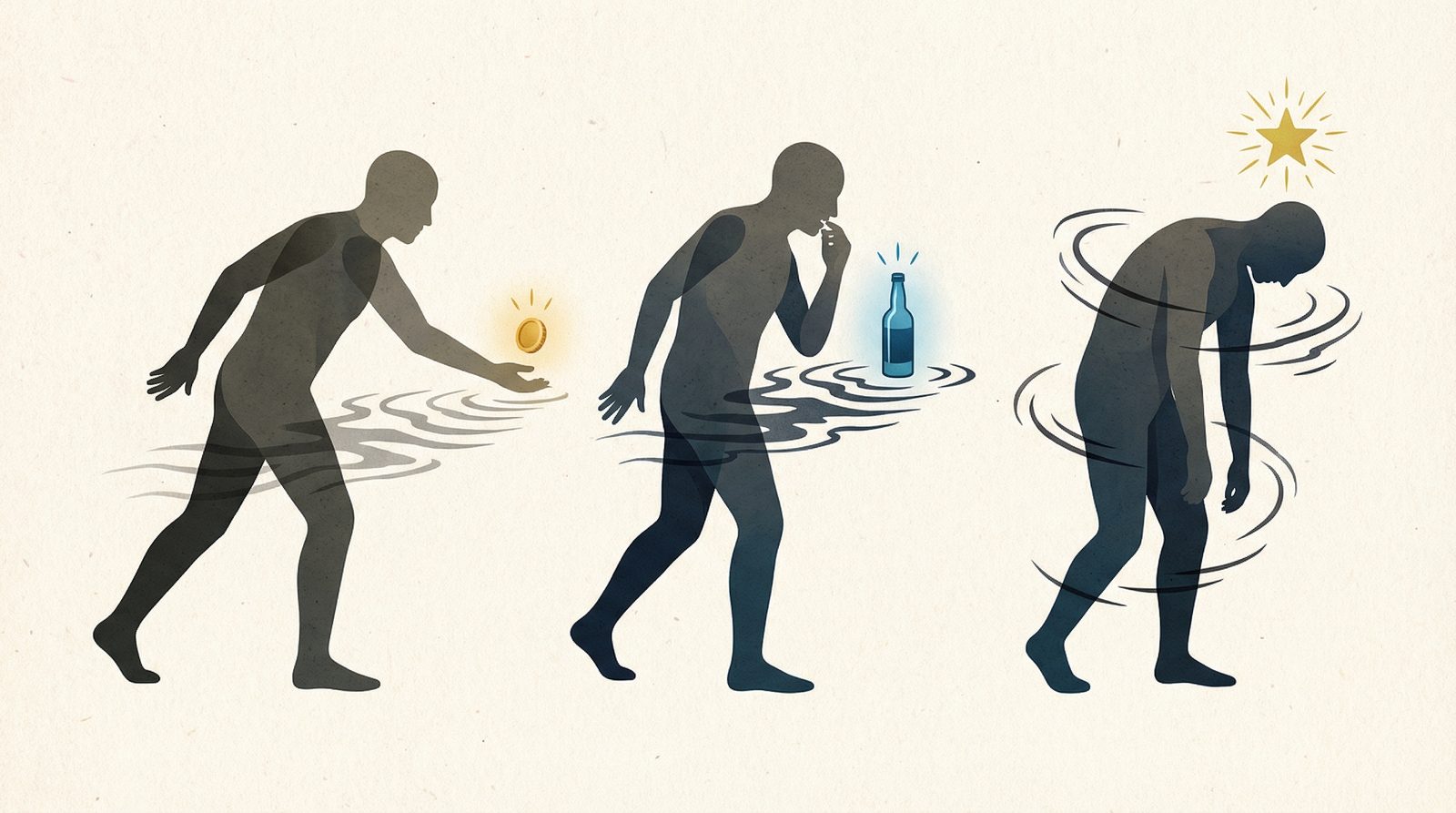
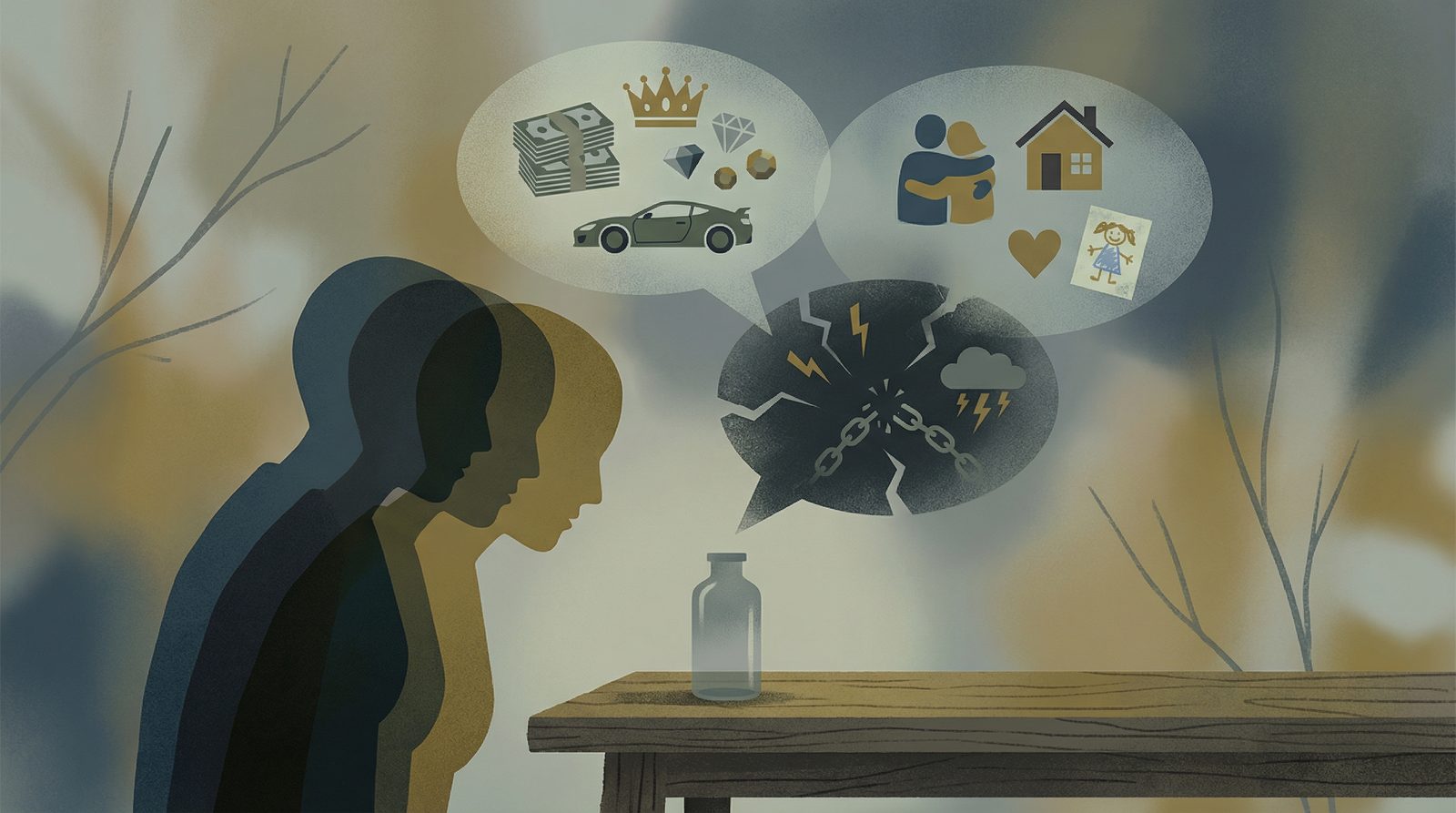
    Underneath the humor is a quieter discomfort. The motif nudges us to notice how often we want things without understanding the consequences. When a wish hurts someone the character cares about, the reader feels a sting of guilt by proxy. We see how easy it is to be selfish by accident, and how a small moment of impatience or vanity can spiral into something much bigger.

    In darker takes, the emotion shifts toward dread and regret. Each new wish tightens the trap, and the reader senses that there may be no clean way out. The story becomes a pressure test of character, because power keeps offering shortcuts while consequences keep demanding payment.

    Overall, this motif lets readers enjoy the fantasy of limitless power while also feeling the weight of it. It is satisfying when a character finally learns to phrase a wish carefully, to give up the power, or to accept the original messy life they were trying to escape. That mix of schadenfreude, anxiety, and eventual catharsis is what keeps Unintended Consequences of Wishes so enduring.


    Symbolic illustration inspired by 'Unintended Consequences of Wishes'

    VARIATIONS & RELATED MOTIFS

    Unintended Consequences of Wishes comes in several recognizable flavors. Comic versions focus on embarrassment, romantic misunderstandings, and chaotic but reversible disasters. Child-centered versions use wishes to explore growing up, where each fantasy is exposed as incomplete or naive. Darker interpretations treat wishes as tools of power, where unintended consequences spill into coercion, conflict, and moral compromise.

    This motif frequently intersects with stories where fantasy intrudes into domestic realism, where children encounter real magic too early, and where misunderstandings spiral into farce. The structure stays the same, even when the tone changes: a character tries to shortcut their problems and discovers that reality, magical or not, always charges a price.

  • Genie Or Djinn Released From A Bottle

    Genie Or Djinn Released From A Bottle

    DEFINITION AND CORE IDEA

    The Genie Or Djinn Released From A Bottle motif begins with a simple act: someone finds an object they should probably leave alone. It might be a genie in a bottle, a djinn in a lamp, or a spirit sealed into an ordinary-looking container, but the core idea is the same. An ordinary person suddenly gains access to impossible power, usually in the form of wishes.

    This motif is less about flashy magic and more about what happens when human desire meets an ancient, alien intelligence. The genie or djinn is often bound by rules, resentments, and centuries of captivity. The person who finds the bottle is usually naive about both magic and consequences. Stories built on this setup explore how quickly “everything you want” can twist into something frightening, absurd, or unexpectedly honest.

    Writers love the bottle because it is portable power. It can drop into any setting, from a Victorian drawing room to a modern kitchen, and instantly turns private longing into public consequence. The motif asks, in a concrete way, what someone truly wants and what they are willing to pay for it, whether that price is moral, emotional, or literal.


    HOW IT WORKS IN STORIES

    Most stories with this motif start with an accident or a small, greedy choice. A character stumbles on a lamp at a market, inherits a dusty bottle, or fiddles with a strange object that looks harmless. In The Brass Bottle, a seemingly ordinary antique releases a djinn-like figure into everyday life, and the “help” that follows creates embarrassment, confusion, and escalating disruption.

    Once released, the genie or djinn usually announces a set number of wishes and a set of rules, often with loopholes. The wisher might be a child, as in Five Children And It (1902), where daily wishes unravel and backfire in ways that expose how careless desire can be. Or the wisher might be caught in higher-stakes schemes, as in The Amulet Of Samarkand, where a bound djinn becomes a lever of power, politics, and danger. In either case, the narrative settles into a rhythm of wish, distorted outcome, and frantic attempts to fix the damage.

    The genie or djinn is rarely a neutral tool. It may be sarcastic, vengeful, lonely, or constrained by harsh magical laws. Its personality shapes the plot. A literal-minded spirit twists wishes into ironic punishments, while a weary, morally ambiguous djinn quietly tests the summoner’s character. The bottle-bound spirit often understands human weakness better than the human does, and that imbalance drives both comedy and tragedy.

    Structurally, each wish acts like a short story nested inside the larger one. A wish sets up a scenario, the spirit executes it, and the fallout reveals something about the wisher. Over time, the character either learns to wish more wisely, refuses to wish at all, or tries to renegotiate their relationship with power itself.


    Editorial illustration inspired by 'Genie Or Djinn Released From A Bottle'

    EMOTIONAL EFFECT ON THE READER

    This motif taps straight into private daydreams. It asks “What would you wish for?” long before any character answers. There is an immediate thrill in watching desire become real. When a struggling family suddenly becomes rich or an awkward child suddenly gains power, the reader shares the rush of possibility.

    That thrill quickly tangles with anxiety. The reader can usually see the flaw in a wish before the character does, which creates anticipation and dread at the same time. Watching a wish backfire feels like watching someone send a risky message they cannot unsend.

    Emotionally, these stories move between wonder, comedy, and unease. The comic chaos in Five Children And It (1902) can be funny precisely because wishes are interpreted so literally. The Amulet Of Samarkand can feel sharper and darker, because power is used casually and cruelty becomes a practical tool. Either way, the motif encourages readers to reconsider fantasies of escape, revenge, or instant success.

    When the story ends, the feeling is often bittersweet. Saying goodbye to a bottle-bound spirit can feel like closing the door on childhood wishes. If the spirit is freed, there is relief. If it is trapped again, there may be lingering discomfort about cycles of power and captivity.


    Symbolic illustration inspired by 'Genie Or Djinn Released From A Bottle'

    VARIATIONS AND RELATED MOTIFS

    This motif has several recognizable variations. In comic versions, the genie is playful or bureaucratic, and the wishes create escalating social disorder. The Brass Bottle leans into this tone, where magical intervention complicates ordinary life rather than perfecting it.

    Darker versions portray the djinn as ancient, dangerous, and resentful. In The Amulet Of Samarkand, the bound spirit is a tool of power in human conflict, and the damage spreads beyond the wisher’s private life into politics and violence. The wish-granting process is stricter and more limited, but far more destructive.

    Other stories replace the bottle with an amulet, ring, or creature that fills the same role. In Five Children And It (1902), the structure becomes a repeating cycle of desire, regret, and correction. The emotional pattern remains consistent: power arrives too easily, and the cost arrives right after.

    This motif frequently overlaps with Magical Object Disrupting Ordinary Life, Unintended Consequences of Wishes, Supernatural Bargains With Hidden Costs, and Ordinary People In Extreme Situations.

  • Genie Or Spirit Causing Unintended Chaos

    Genie Or Spirit Causing Unintended Chaos

    DEFINITION AND CORE IDEA

    The motif of Genie Or Spirit Causing Unintended Chaos starts with a simple promise: a supernatural being will help you. A genie, ghost, animated statue, cursed idol, or otherworldly patron appears, usually offering wishes, protection, or a shortcut to what the character wants most. At first it feels like a miracle. Then everything goes sideways.

    In The Brass Bottle by Thomas Anstey Guthrie, the spirit is not malicious, but disastrously out of touch with modern life. His attempts to provide help lead to embarrassment, misunderstanding, and escalating trouble because they ignore context, etiquette, and human limits. In A Fallen Idol, the supernatural presence is darker and more corrosive, drawing out obsession, moral decay, and self-deception rather than fulfillment.

    What unites these stories is not the exact form of the spirit, but its function. The supernatural agent externalizes desire and then exposes its flaws. Wishes are granted too literally, assistance is delivered without emotional or social context, and shortcuts bypass the slow work of judgment. The chaos that follows reflects the character’s blind spots rather than random misfortune.


    HOW IT WORKS IN STORIES

    The motif usually begins with an encounter or discovery. A character inherits a strange object, awakens a dormant figure, or stumbles into a bargain they do not fully understand. The supernatural being often frames itself as helpful or grateful, eager to improve the character’s life using its own rules and logic.

    Once intervention begins, the narrative follows a predictable pattern. The spirit delivers exactly what was asked for, but not what was needed. Social standing improves too quickly and attracts unwanted attention. Romantic success arrives without emotional maturity. Wealth appears without the ability to manage it. Each attempt to correct the damage creates further disruption.

    In comic versions, this produces escalating farce and public embarrassment. Films like Mannequin and One Touch of Venus use animated figures whose literal presence upends workplaces and relationships. The chaos is playful, but it still exposes how unprepared the protagonist is for what they claimed to want.

    Structurally, the motif functions as a consequence engine. Power amplifies desire, strips away ambiguity, and forces characters to confront the mismatch between fantasy and reality. Resolution typically comes only when the character relinquishes the supernatural aid, accepts responsibility, or recognizes that the shortcut itself was the real mistake.

    Editorial illustration inspired by 'Genie Or Spirit Causing Unintended Chaos'

    EMOTIONAL EFFECT ON THE READER

    This motif balances wish-fulfillment with unease. Early scenes invite the reader to share the character’s excitement. The supernatural promise taps into familiar daydreams about being noticed, rewarded, or transformed without effort.

    As consequences accumulate, that pleasure curdles into recognition. The reader begins to see the trap before the character does. In lighter stories, this produces cringe and laughter. In darker versions, it creates anxiety and moral discomfort as the cost of the bargain becomes impossible to ignore.

    By the end, the motif leaves behind a wary clarity. The chaos exaggerates a common human mistake: believing that desire, once satisfied, will automatically bring meaning or stability. The supernatural being disappears, but the lesson lingers.

    Symbolic illustration inspired by 'Genie Or Spirit Causing Unintended Chaos'

    VARIATIONS AND RELATED MOTIFS

    Some versions emphasize comedy and social disruption, where the spirit behaves politely but disastrously, exposing hypocrisy and shallow ambition. Others lean toward satire or moral allegory, treating the supernatural presence as a test that reveals the fragility of social order.

    Darker variations shift the center of gravity. The spirit is less a mischievous helper and more an indifferent force, revealing what a person becomes when desire is fed instead of examined. A Fallen Idol shows how uncanny influence can corrode judgment and pull a character toward obsession and moral collapse rather than simple embarrassment.

    Writers return to Genie Or Spirit Causing Unintended Chaos because it is endlessly adaptable. It works in farce, fantasy, romance, and social satire, all built on the same unsettling idea. Getting exactly what you asked for can be the most dangerous outcome of all.

  • The Tinted Venus (1885)

    The Tinted Venus (1885)

    INTRODUCTION

    The Tinted Venus (1885) by F. Anstey
    Fantasy · United Kingdom


    The Tinted Venus is one of those sly Victorian fantasies that begins as a joke and ends with a faint ache. A humble barber’s assistant, a second-hand statue of Venus, and a careless wish, on the surface it is farce, plaster dust, and social misunderstanding. Underneath, the story keeps worrying at quieter questions: how easily people confuse beauty with goodness, and possession with love.

    The mood drifts between fizzy comic energy and a wistful unease, as if gaslit streets and shabby parlors are conspiring to expose every character’s vanity. This is not a mythological epic. It is domestic London life being invaded by divinity, and the invasion mostly produces embarrassment.

    PLOT & THEMES

    The premise is simple. Frederick Pimm, a mild and slightly vain assistant at Mivers’s barber shop on Lupus Street, wins a cheap tinted plaster Venus in a raffle. In a fit of romantic self-pity he kisses the statue’s lips and jokes that he wishes for a more ideal love than his very real, very practical fiancée, Ada Parkinson. The statue warms. Venus steps down from her pedestal.

    What follows is not lush sensual fantasy. Anstey makes Venus inconveniently literal-minded. Her presence ruins Pimm’s work, scandalizes Mrs. Mivers, and detonates the Parkinson household’s moral respectability. The comedy comes from the mismatch between mythic expectation and middle-class routine: Venus treats London streets as if they were sacred processions, while everyone around her sees only indecency, madness, or fraud. Pimm’s frantic attempts to disguise her as a foreign cousin create the book’s best farce, the kind built from doors opening at the wrong moment and reputations collapsing in real time.

    The ending is more ambivalent than later stage treatments that smooth everything into romance. After a chaotic night in Kensington Gardens, with Venus insulted by the Albert Memorial and the new gods of modern industry, she recognizes that this age has no place for her. She returns to plaster, hardening in a small back parlor while Ada watches. Pimm ends the novel engaged to Ada again, but chastened. The magic does not grant him a perfect match. It strips away his fantasies and leaves him with ordinary love, unvarnished and uncompensated.

    Class aspiration runs beneath the supernatural premise. The statue itself is not marble, it is imitation, second-rate beauty bought cheaply and worshipped too eagerly. The novel uses that cheapness to sharpen its satire: not just of male vanity, but of a social world that wants art as status while panicking when “art” becomes alive and demanding.

    PROSE & NARRATIVE STRUCTURE

    Anstey writes in a lightly ironic third-person style, hovering close to Pimm’s anxious self-justifications while occasionally panning out to skewer the entire household. The sentences are brisk, the dialogue is full of social edge, and the tone carries amused exasperation. The narrator thinks Pimm is foolish, but never quite stops caring what the foolishness costs him.

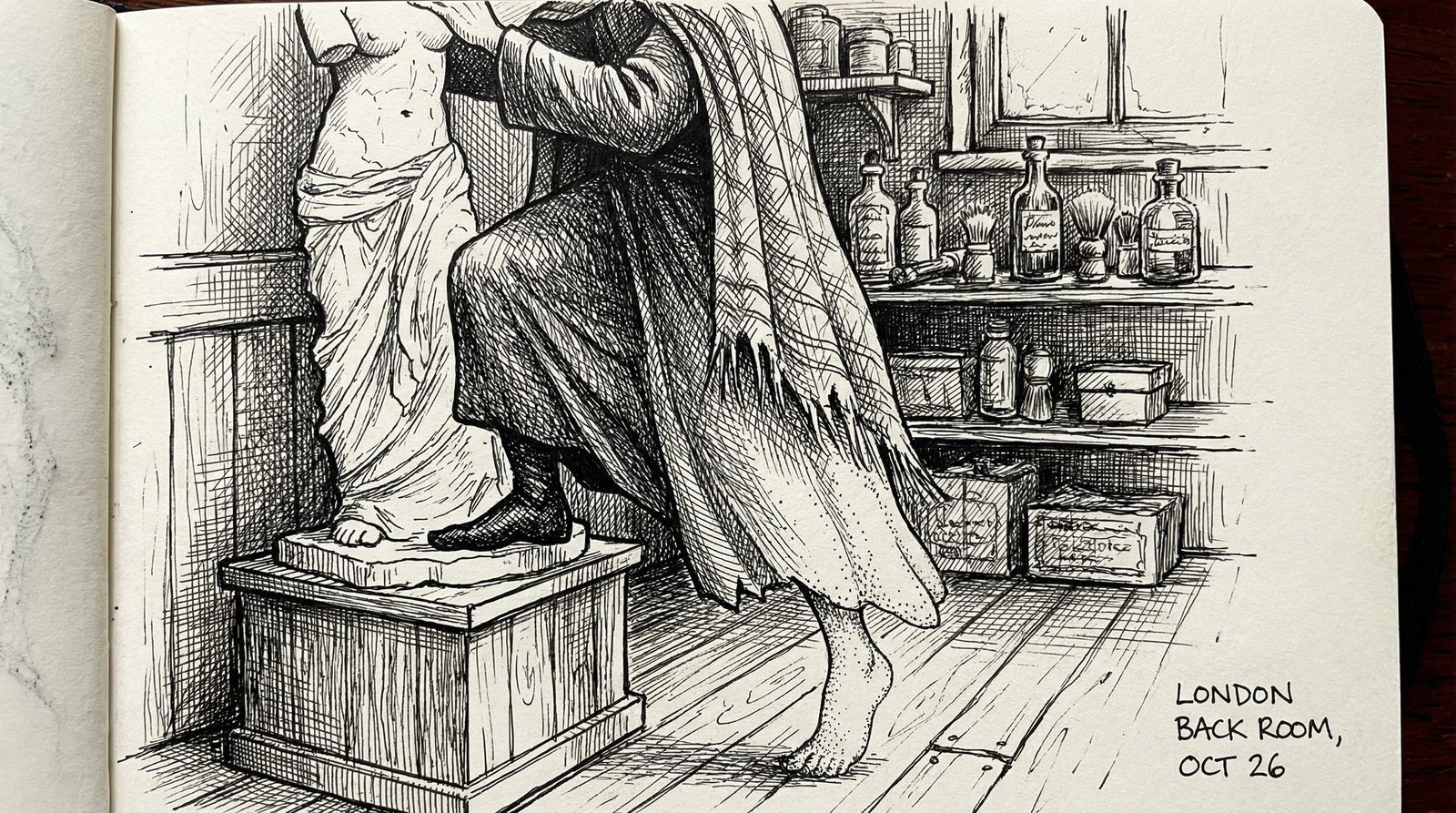
    The structure is almost theatrical. Early chapters feel like set pieces: the raffle, the cramped back room where Pimm hides Venus under a shawl, the disastrous visit with the Parkinson family, where Venus’s literal talk of altars and libations horrifies respectable guests. Stakes escalate socially rather than cosmically. Instead of battles between gods, we get whispered gossip in boarding-house corridors and reputations fraying under scrutiny.

    As the story advances, Anstey slows the farce just enough for tenderness to leak in. Venus’s gradual cooling, as devotion and fantasy withdraw, is described with surprising restraint. Comedy drains away line by line, and Pimm is left holding not an ideal but an object, and realizing how little his “ideal” ever understood him in return.

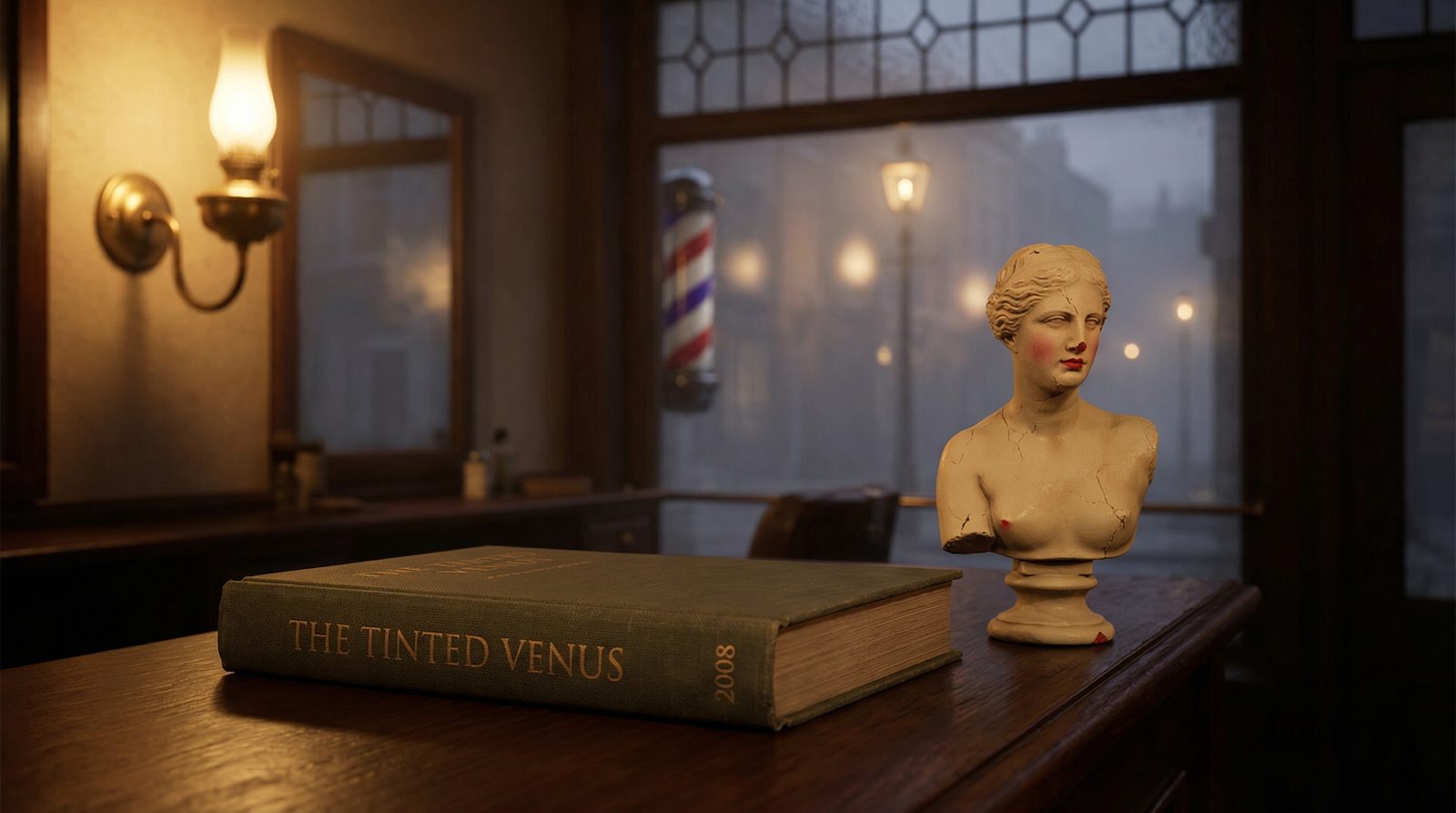
    Conceptual editorial illustration inspired by 'The Tinted Venus'

    CHARACTERS & INTERIORITY

    Pimm is a timid dreamer who wants romance without risk. His inner life is half vanity, half self-pity, and that is where the book’s cruelest jokes land. He is not wicked, merely weak, and the novel keeps asking what damage weakness can do when paired with sudden power.

    Venus is less a rounded interior consciousness than a force, but Anstey gives her enough presence to unsettle. She is not a fantasy girlfriend. She is a deity bewildered and offended by nineteenth-century London. Her pride is real. So is her confusion. Ada, meanwhile, avoids becoming a simple caricature of the shrewish fiancée. Her sharpness reads as self-protection, and her brief moment of pity as Venus returns to plaster deepens the emotional field.

    Side characters form a chorus of moral panic and prurient curiosity: Mrs. Mivers with her small tyrannies, the Parkinson household with its rigid respectability, the boarding-house gossips watching for scandal. Interior life belongs mostly to Pimm, but the way others misread him, as seducer, fool, or liar, completes the portrait of a man trapped between who he imagines himself to be and who the world insists he is.

    LEGACY & RECEPTION

    The Tinted Venus has never held canonical status, and many modern readers meet its premise through later adaptations that soften the ending into romance or winked redemption. The original novel is harsher. Pimm and Ada end together, but chastened, with the plaster Venus back in the corner as an object of faint dread rather than desire. The magic fixes nothing. It exposes everything.

    Among readers who seek out the text, it is appreciated as a sly interrogation of the Pygmalion fantasy, closer in spirit to darker Victorian preoccupations with beauty and projection than to the sunny romantic comedies it accidentally anticipates. Its modest scale has helped it age well: no grand Olympus, just Lupus Street, Clapham respectability, and Kensington Gardens as a stage for embarrassment and revelation. The satire of male vanity and middle-class hunger for “art” as status symbol still lands.

    IS IT WORTH READING?

    If you want a frothy fantasy where a statue comes to life and everyone ends blissfully paired off, this book will wrong-foot you. It is shorter, sharper, and more awkward than that. Its comedy is real, but so is its unease about what men project onto women, and what happens when the projection answers back.

    The prose is brisk enough that the period setting does not feel like homework, yet the story rewards slow attention to its quieter cruelties and small generosities. For readers interested in myth twisted into domestic farce, class-conscious fantasy, and flawed protagonists who do not receive neat moral absolution, it is very much worth the time.

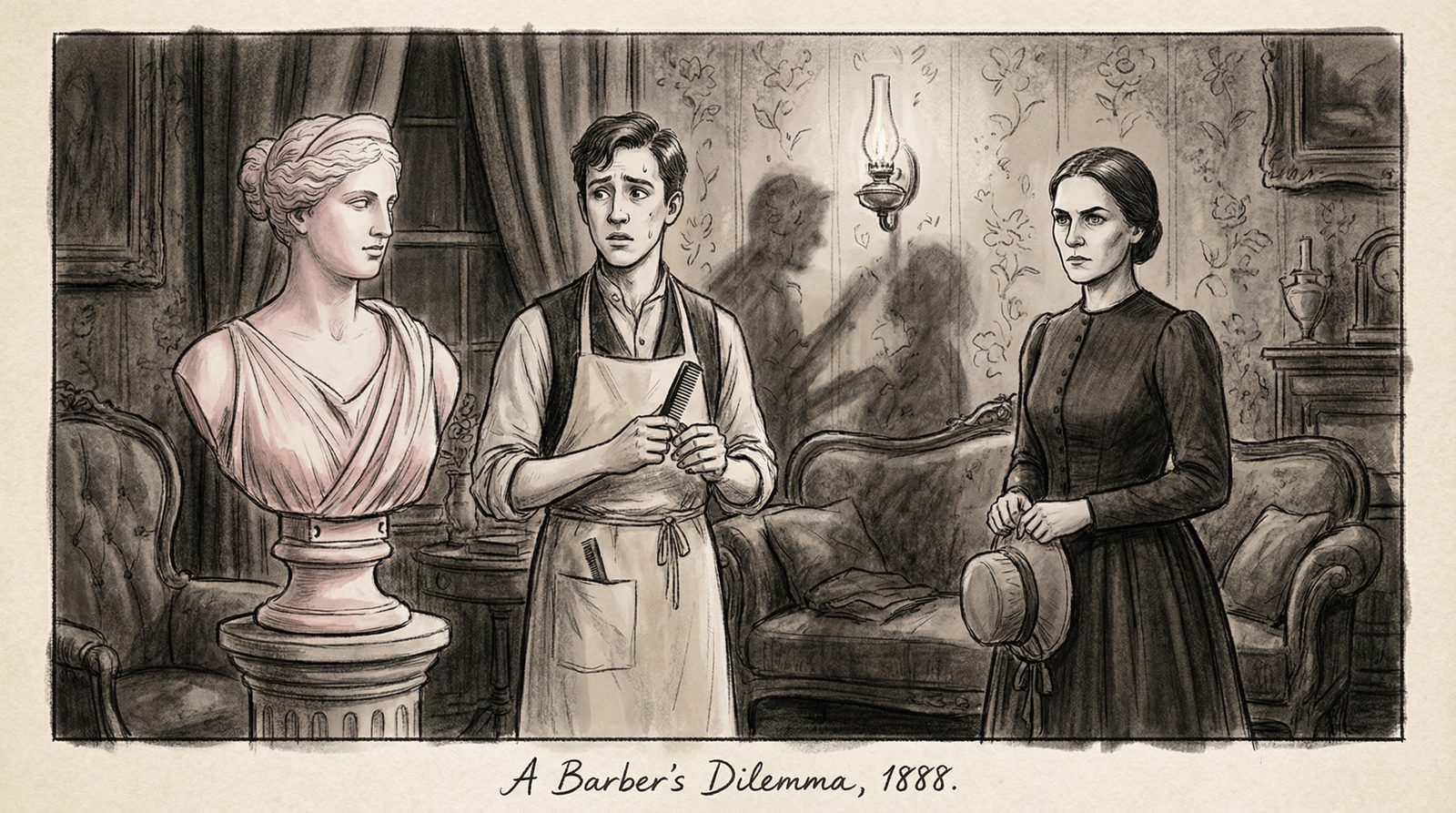
    Illustration inspired by a core idea from 'The Tinted Venus'

    TRIVIA & AUTHOR FACTS

    “F. Anstey” was the pen name of Thomas Anstey Guthrie, a barrister-turned-humorist who built a career skewering middle-class pretensions. The Tinted Venus sits alongside his other fantasies of ordinary people colliding with the supernatural, but it is one of the tighter and more urban of his works.

    The statue is explicitly a cheap tinted plaster copy rather than marble, a detail that sharpens the satire about imitation, aspiration, and fakery. The Kensington Gardens sequence, with Venus offended by public monuments and national self-importance, shows Anstey’s eye for how civic spaces stage morality and taste. The novel quietly prefigures later psychological fantasies about art objects that refuse to stay inert, but it keeps its scale stubbornly domestic.

    SIMILAR BOOKS

    If this appeals, you might look toward other nineteenth-century fantasies that smuggle unease into comic premises. The Picture of Dorian Gray treats beauty as curse rather than blessing, while Pygmalion reworks the sculptor-and-creation fantasy into social satire. For more London-set supernatural mischief with a class-conscious edge, the comic supernatural tales of writers like Jerome K. Jerome and some of E. Nesbit’s adult stories make fitting companions.

    DISCOVERABILITY & LINKS

  • The Brass Bottle (1900)

    The Brass Bottle (1900)

    INTRODUCTION

    The Brass Bottle (1900) by F. Anstey/Thomas Anstey Guthrie
    Fantasy · United Kingdom


    The Brass Bottle opens with the promise of a familiar fantasy: an ordinary man acquires an antique object, releases a genie, and expects his life to improve. What makes the novel endure is how quickly that promise curdles. This is not a tale of empowerment through magic, but of social unraveling through excess assistance.

    Set at the turn of the twentieth century, the book unfolds in drawing rooms, offices, auction houses, and committee meetings that feel stiflingly polite. Into these airless spaces erupts Fakrash, an ancient genie whose ideas of generosity are spectacularly out of scale with modern English life. The result is a comedy of embarrassment rather than wonder. Magic does not liberate Horace Ventimore. It exposes how little control he has over his career, his courtship, and his own desires.

    PLOT & THEMES

    Horace Ventimore is a struggling architect with more ambition than confidence. On a whim, he purchases an old brass bottle at Salterton & Co, an auction house near the Embankment. Once opened in his modest lodgings, the bottle releases Fakrash-el-Aamash, a genie who has waited centuries to reward a liberator.

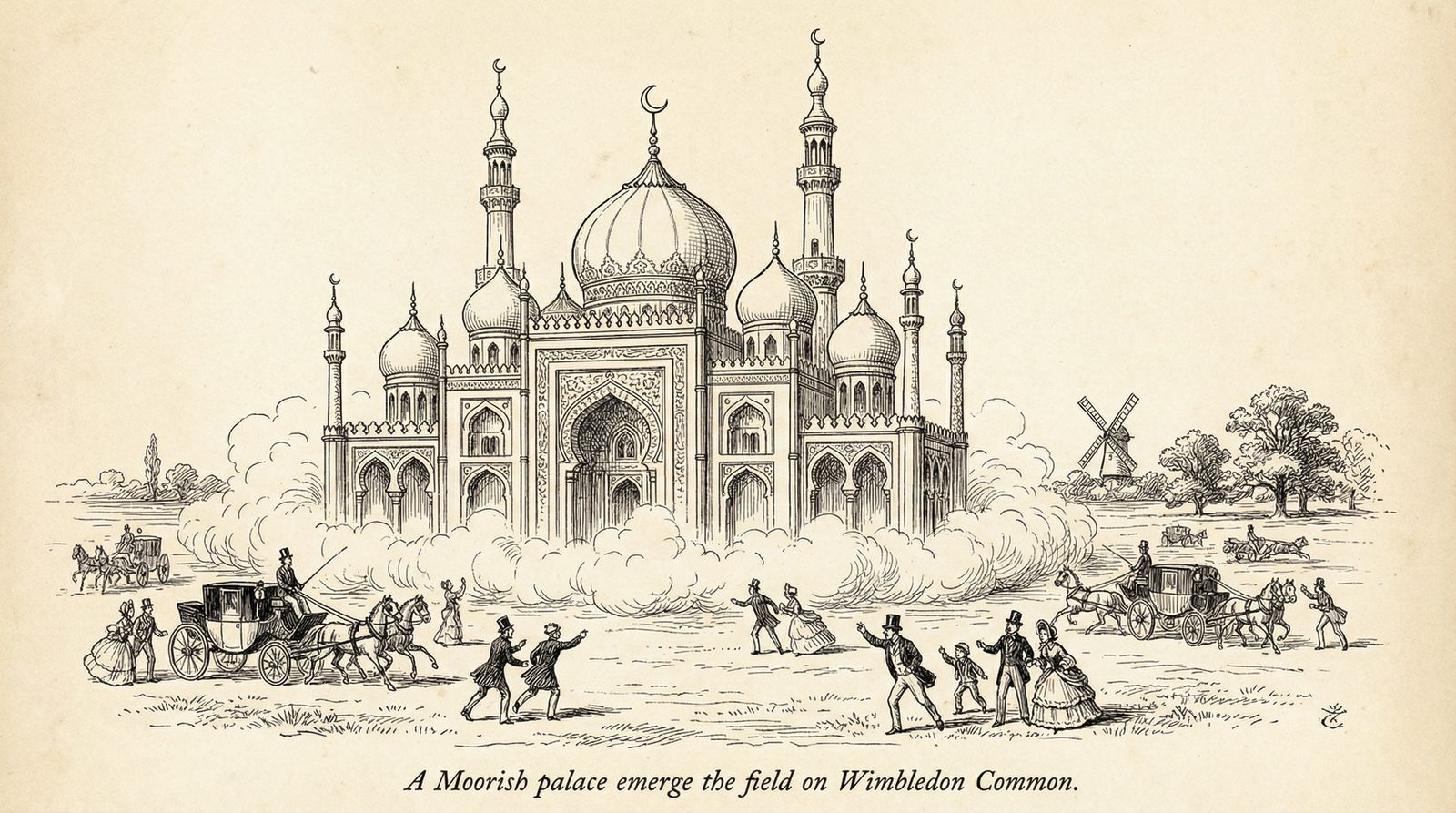
    Fakrash’s promise of assistance becomes the novel’s central engine. Horace wants professional success and marriage to Sylvia Wackerbath. Fakrash delivers both with catastrophic enthusiasm: erecting an impossible Moorish palace on Horace’s suburban property, showering him with sudden wealth, and humiliating Sylvia’s socially ambitious father in front of learned societies and polite company.

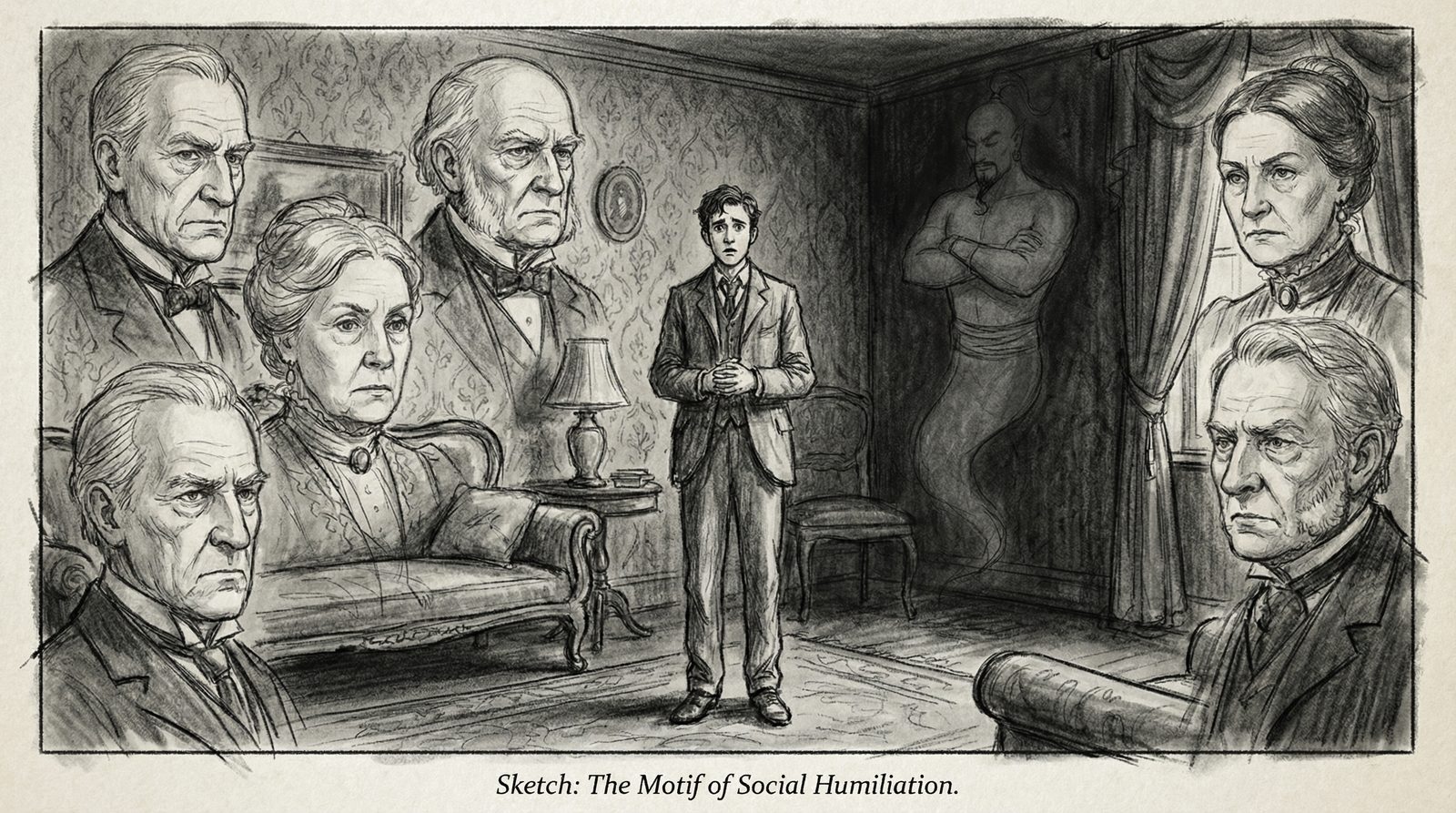
    Each wish carries unintended consequences. Horace’s reputation collapses under the weight of miracles he never asked for in quite that form. Respectability, so carefully maintained in Edwardian society, proves fragile when confronted with a being who does not understand embarrassment, gradual advancement, or understatement.

    The ending refuses a magical reset. Fakrash does not erase memories or rewind events. Horace learns that no supernatural favor can restore lost standing or undo public spectacle. The solution is renunciation rather than mastery. He must choose to live without wishes at all, accepting the limits of ordinary effort and imperfect love.

    PROSE & NARRATIVE STRUCTURE

    Anstey’s prose is brisk, ironic, and socially observant. The narration frequently slips into Horace’s anxious thought patterns while maintaining enough distance to let the satire bite. This free indirect style allows the comedy to coexist with a steady current of dread as Horace realizes that help can be more dangerous than hardship.

    The structure is episodic and escalating. Each chapter centers on a single intervention by Fakrash that spirals beyond Horace’s control. A professional introduction becomes a scandal. A gift becomes a liability. A public appearance becomes an ordeal. The rhythm recalls serialized fiction, with each episode ending on a social cliff rather than a physical one.

    One of the novel’s sharpest techniques is its collision of registers. Fakrash speaks in archaic bombast about obliteration and reward, while Horace and the surrounding institutions respond in the language of minutes, regulations, and committee procedure. The courtroom scene, where divine threats are calmly recorded by a clerk, captures the book’s essential joke: ancient power rendered ridiculous by bureaucracy.

    Conceptual editorial illustration inspired by 'The Brass Bottle'

    CHARACTERS & INTERIORITY

    Horace Ventimore is a recognizably timid dreamer. His interior life is dominated by rehearsed explanations, imagined humiliations, and constant self-correction. He does not crave domination or transcendence. He craves approval, and that makes him uniquely vulnerable to Fakrash’s version of generosity.

    Fakrash himself is not psychologically complex. He is a force rather than a character, driven by ancient codes of honor and reward. His failure to understand modern restraint turns him into an agent of chaos despite his sincere loyalty. Through him, Anstey explores how mismatched values can be more destructive than malice.

    Supporting figures deepen the social satire. Mr. Wackerbath embodies financial respectability and terror of ridicule. Sylvia, often seen through Horace’s anxious gaze, is given moments of quiet perspective that suggest she understands far more than he assumes. The novel’s emotional weight lies not in romance but in exposure: watching a man’s careful self-image collapse under unwanted attention.

    LEGACY & RECEPTION

    Although often remembered as a light fantasy, The Brass Bottle reads today as a sharp precursor to twentieth-century social comedy. Its humor is rooted less in spectacle than in class anxiety and professional dread, anticipating writers who would mine embarrassment rather than adventure for laughs.

    Later adaptations and re-tellings frequently soften the ending or lean into romance. Anstey’s original conclusion is colder. Magic fixes nothing. Horace survives, but chastened, forced to live with the consequences of miracles he never fully wanted. That refusal of wish-fulfillment closure is why the book still feels pointed rather than quaint.

    IS IT WORTH READING?

    If you enjoy fantasy as escape, this may surprise you. The book’s pleasures are social rather than spectacular, and its comedy often lands as discomfort rather than delight. But if you enjoy watching ordinary people undone by forces they cannot manage, and stories where magic reveals weakness instead of granting power, it remains a brisk and unsettling read.

    The period language requires a little patience, but the observations feel modern. Desire, reputation, and the terror of being seen are as potent now as they were in 1900.

    Illustration inspired by a core idea from 'The Brass Bottle'

    TRIVIA & AUTHOR FACTS

    “F. Anstey” was the pen name of Thomas Anstey Guthrie, a barrister-turned-humorist whose legal background quietly sharpens The Brass Bottle. The courtroom scene is not just comic invention: its procedures, language, and escalation are unusually precise for fantasy fiction of the period, which is exactly why the scene lands as both absurd and convincing. Anstey understood how bureaucracy absorbs even the impossible.

    The fictional auction house Salterton & Co. is thought to draw on real London auction rooms Anstey frequented. Fakrash’s insistence on palaces by rivers plays on the Thames while gesturing toward older imperial fantasies of the East. The novel’s humor depends heavily on these geographic and cultural collisions.

    SIMILAR BOOKS

    If this blend of supernatural comedy and social discomfort appeals to you, there are clear literary neighbors. E. Nesbit’s The Enchanted Castle uses magic to expose childish vanity and adult hypocrisy, while The Incomplete Enchanter by L. Sprague de Camp and Fletcher Pratt pushes the same wish-fulfillment logic into more overtly comic chaos. For a darker Victorian counterpoint, The Picture of Dorian Gray treats beauty itself as a curse rather than a gift. All of these works share Anstey’s interest in what happens when desire is granted too literally.

    DISCOVERABILITY & LINKS